



AI account scoring for ABM only works when it tells your team which accounts to act on today, and it fails the moment it produces a confident number nobody trusts enough to chase.
I run account-based programs on LinkedIn, and the scoring I have watched waste the most time is the black-box kind: a vendor surfaces a “spiking” account, a rep chases it, and the spike turns out to be a competitor or a job seeker researching the category.
A score is only useful if you can read what drove it and it points at a real next step, which is why the model I trust stays legible rather than clever.
It is not one opaque prediction, but a transparent, threshold-based score built on signals you generated.
This guide covers the scoring models worth understanding, the LinkedIn and multichannel signals worth feeding them, the exact thresholds that a real program used, and how to build the same thing yourself, either in ZenABM’s interface or by running scoring prompts against its MCP server.
The quick version:
/account-engagement sorts every account into warm, cold, budget-hog, and bad-fit, plus /company-deep-dive, /intent-report, /funnel-movement, and /sales-handoff) run the whole workflow. Exact copy-paste prompts are in the guide for anyone who does not want the packaged skills, and any write action, such as excluding a bad-fit account, stays behind your confirmation.
Before any tool, it helps to be precise about what account scoring actually is, because the word covers two very different machines.
Getting the model right is most of the work, so this is the part to slow down on.
Rule-based scoring, also called threshold scoring, is a set of explicit rules you write: reach 50 impressions and move to Aware, hit 5 clicks and move to Interested, and so on.
You can read every input, and a rep can see exactly why an account scored where it did.
Predictive scoring is a machine-learning model that learns the patterns of accounts you have won and outputs a probability, which is more accurate at scale but opaque, because the answer is “the model says 0.87” rather than a sentence you can defend.
The trade-off is transparency against raw accuracy, and for a focused ABM program the transparent model usually wins, for one blunt reason: a score nobody trusts is a score nobody acts on.
Predictive models also need volume and a data budget that most account-based teams do not have, so they earn their place at enterprise scale, not on a list of a few hundred named accounts.
Whichever machine you use, an effective account score is not one number but three layers that each answer a different question, and the order matters.
Run the layers in that order, and the score means something, because you can read it as “good fit, active intent, engaging with us,” which is a sentence a BDR can act on.
The reason to keep the layers separate rather than blending them into one prediction is exactly that legibility.
When a rep asks why an account is hot, “it fits our ICP, it engaged with three security-themed ads this week, and two of its directors clicked” is a reason they will chase; “the model says 87” is not.
The predictive approach is best understood through the platforms that pioneered it.
6sense assigns buying-stage scores (Awareness, Consideration, Decision, Purchase) from a behavioral graph, built on the idea of the dark funnel, that most of a buying committee’s activity happens before anyone fills out a form.
Demandbase runs a comparable composite of fit, intent, and engagement, and both helped shift the industry metric from the MQL to the Marketing Qualified Account.
The technology is genuinely impressive, but two facts keep it out of reach for most ABM teams: the platforms rarely come in under roughly $60,000 a year, and the score is a black box fed largely by third-party intent, which is the noisiest signal there is.

So the enterprise model is the right benchmark to understand and the wrong one to copy blindly, because the expensive part is the prediction and the valuable part is the transparency it gives up.
The other shift worth internalizing is that you score the account, not the individual lead, because the average B2B buying group runs to around a dozen people (Gartner), and one contact engaging is a weaker signal than four.
ABM, in fact, is all about framing the account-based funnel around coverage, awareness, and engagement rather than lead counts, and using Marketing Qualified Account as the account-level replacement for the MQL.
Kyle Poyar, whose Growth Unhinged newsletter reaches more than 85,000 operators, pushed the product-led version of the same idea from the Product Qualified Lead to the Product Qualified Account, arguing that scoring an account means factoring firmographics and persona alongside behavior, and that the right place to focus sits somewhere in the middle of the old fit signals and the new usage signals.
With the models understood, the practical question is which signals to feed the score, and this is where most programs go wrong.
The wrong signal makes even a good model useless, so it is worth being technical about signal quality before locking in the thresholds.
The intent layer is where scoring fails most often, because the easiest intent to buy is third-party, and third-party intent is the least trustworthy.
A keyword surge tells you a company is researching a category, but it cannot tell you who is behind it.
Hence, a competitor, a job-seeker, an analyst, and a real buyer all look identical in the data.
Emilia Korczynska, VP of Marketing at Userpilot, put the problem sharply when she described how loosely the term gets used.
“You liked someone’s post on LinkedIn? It’s an intent signal for whoever sells whatever the post was vaguely related to.” Emilia Korczynska, VP of Marketing, Userpilot, on LinkedIn
Her deeper point in that post is that when everyone scores the same rented signals with the same tools, everyone ends up hitting the same inboxes with the same message, which is how a signal that is technically real becomes practically worthless.
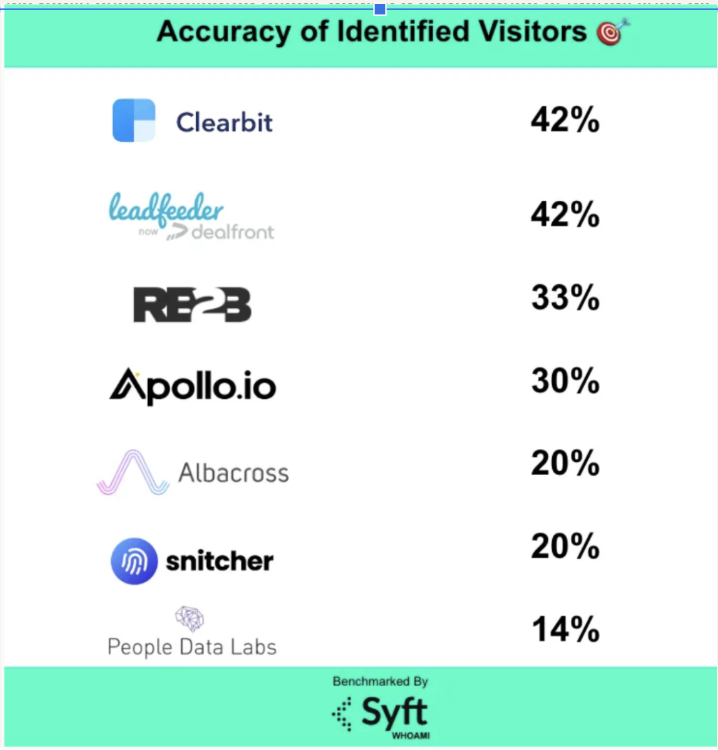
Website de-anonymization has the same problem from a different angle: match rates sit at roughly 20 to 40 percent.
First-party engagement fixes this because you generated it and can name it.
When an account engages with your security-themed ads, that is a Security signal you can stand behind, because you know exactly what they engaged with.
For a LinkedIn-led program, the richest scoring signals are invisible in Campaign Manager, because it reports clicks without company identity.
The ones worth scoring are the company-level ad engagement itself, the split between a current and a total engagement score (engagements over impressions in your chosen window versus all-time, so you can tell a freshly heating account from a consistently warm one), how much of the buying committee engaged rather than a single contact, and the intent theme the account leaned into.
Then extend the same logic across channels: a first-party score should count engagement on Google, Reddit, organic traffic, and even AI chatbot referrals, not LinkedIn alone, so an account warming up in three places scores higher than one warming up in one.
That multichannel view is the difference between a LinkedIn engagement metric and a genuine account score.
ZenABM does all of that.



The Userpilot program is the cleanest example of a transparent, threshold-based account score, and its structure is worth copying almost verbatim.
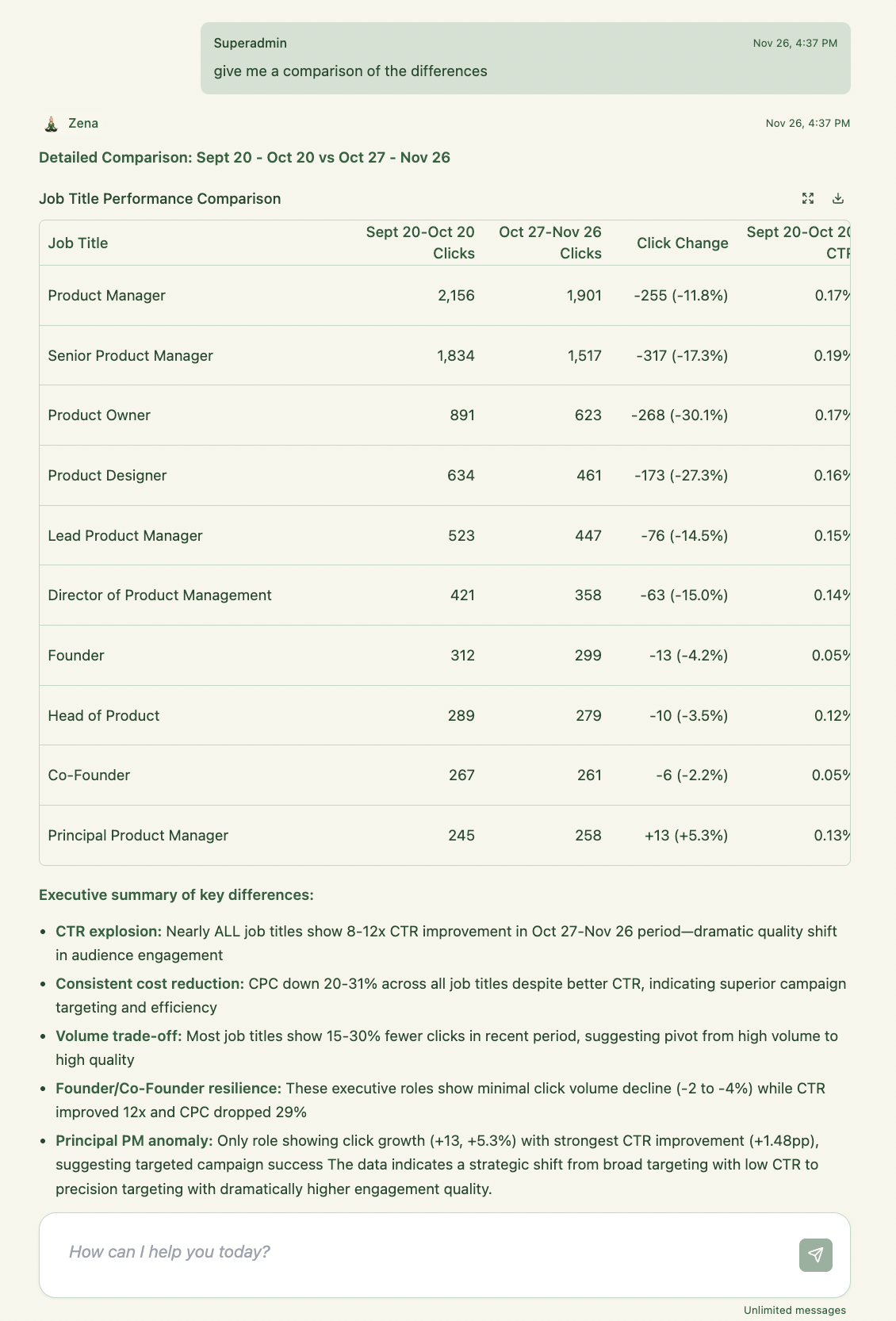
It used five stages, and an account moved between them on cumulative engagement thresholds rather than a weighted formula.

| Stage | Threshold to enter it | What it means |
|---|---|---|
| Identified | On the target account list | Every account in the campaign |
| Aware | 50 or more ad impressions | The account has seen you enough to register |
| Interested | 5 or more ad clicks, or 10 or more engagements | Real interaction, not just reach |
| Considering | Booked a demo or started a trial | A hand raised |
| Selecting | An open deal in the CRM | In an active buying cycle |
Two design choices make this work.
The quantitative threshold decides the stage, and a qualitative layer, which of your themed campaigns the account engaged with, personalizes the outreach once a rep picks it up.
The payoff of that simplicity was not small.
Over sixteen months, the program targeted 26,315 accounts, spent $490,000, and generated $5.29M in pipeline at $10.79 per dollar and better than 2x closed-won ROAS, and even the first 90 days returned roughly $650,000 in pipeline at $12 per dollar (access the full playbook here).
For context on what good looks like, the ZenABM 2026 benchmark of 211 companies puts median influenced pipeline at $5.21 per dollar against $15.20 for top performers, so a transparent score pointed at the right accounts is a large part of what separates the two.

The blueprint above is exactly what ZenABM was built to run, so you do not have to assemble it from scratch or reach for a six-figure platform.
Here is how each piece of the score maps to a capability you can turn on today.
ZenABM assigns every account a current and a total engagement score from company-level LinkedIn ad engagement pulled straight from the LinkedIn Ads API. Current is engagements over impressions in the window you pick, and total is all-time, which is the distinction that lets you separate an account heating up this week from one that has been steadily warm for a quarter.
That single split is what turns a raw engagement count into something you can prioritize on.
The five-stage ladder is not a ZenABM default you are stuck with; it is a set of thresholds you define. ZenABM’s customizable ABM funnel stages let you set the entry rule for each stage from any mix of ad engagement, CRM properties, form fills, webinar signups, and deal stages, so you can rebuild the Userpilot thresholds exactly or tune them to your own account.
The account then carries its stage as a property, and crossing a threshold moves it automatically.

The intent theme that personalizes the outreach comes from ZenABM’s first-party intent: you tag campaigns with themes such as Analytics, Security, or AI Features, and any account that engages inherits the label, which is pushed to the CRM.
Because you know what they engaged with, the label is verifiable rather than a mystery spike like keyword surges.
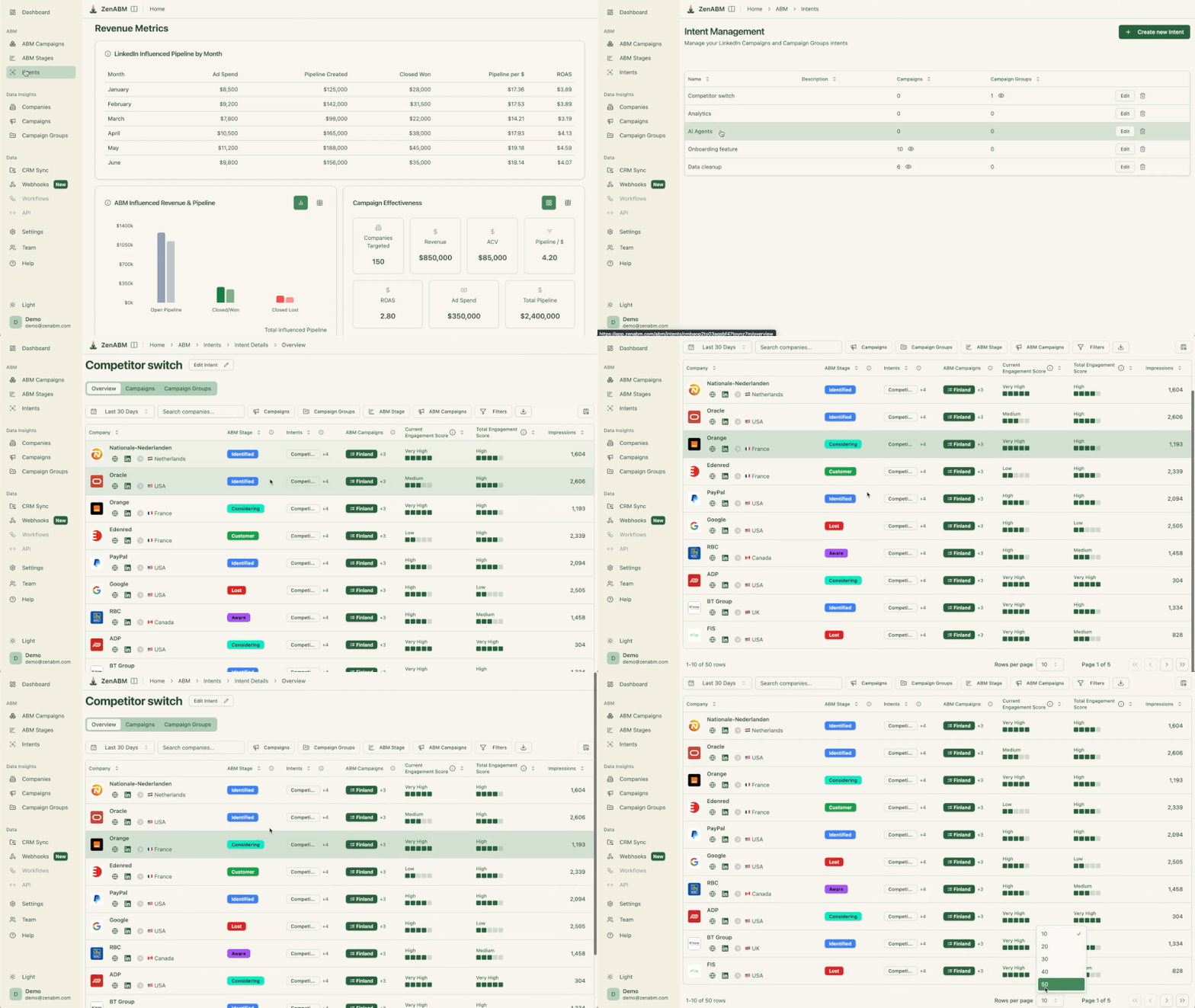
Just as important for the score, ZenABM’s multichannel attribution counts first-party engagement across LinkedIn, Google Ads, Reddit Ads, organic traffic, and AI chatbot referrals, so the engagement layer of your score reflects every place an account is warming up, not LinkedIn in isolation.
A score that sits in a dashboard is decoration; the point is to trigger work.
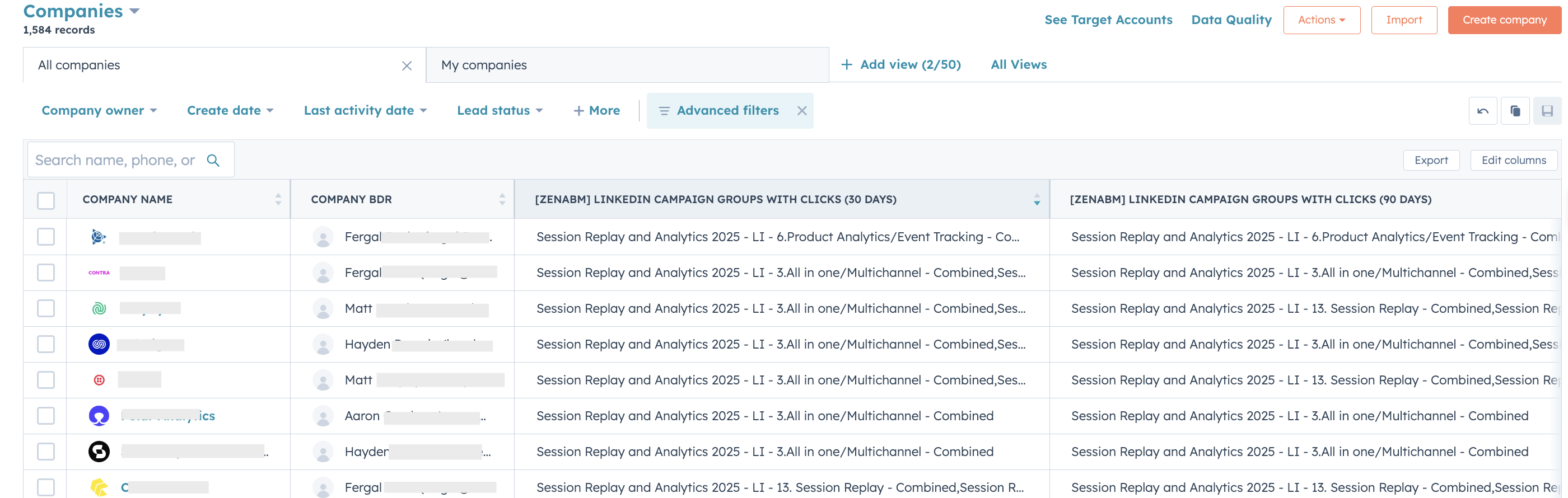
ZenABM’s bidirectional CRM sync writes the engagement scores and ABM stages onto your HubSpot and Salesforce company records as properties, with webhooks for Clay, Attio, and Pipedrive, so a rep filters “Interested stage, engaged in the last 7 days” inside the tool they already use.
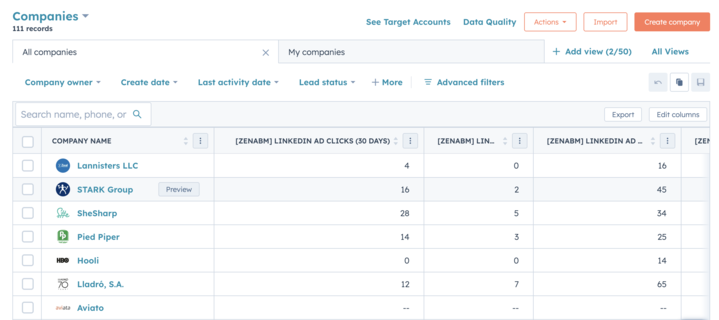
When an account crosses your threshold, it lands in the Interested stage and can be assigned to a BDR with the context attached, the themes it engaged with, the titles that clicked, and the engagement journey view gives that rep the full timeline of touchpoints against deal events so the score always comes with its reason.


Not everyone will open a settings panel, and they should not have to.
Zena, the AI analyst inside ZenABM, answers scoring questions in plain language from the live account: which accounts are surging, which crossed into Interested this week, which show intent with no open deal.
Zena Proactive goes further and surfaces the five accounts surging in engagement on a schedule, so the scored, sales-ready accounts arrive on the dashboard before anyone asks.
You can try Zena free without a full account, which is the fastest way to feel the difference between a static score and one that routes itself.

If your team lives in ChatGPT or Claude rather than a dashboard, the same data is available through the ZenABM MCP server, which exposes company-level engagement, the engagement scores, ABM stages, intent themes, multichannel signal, and CRM deals to any connected agent.
Scoring then becomes a prompt, and you can either run the packaged skills or paste the exact prompts below.
The server ships a set of skills that are, in effect, account-scoring workflows.
The core one is /account-engagement, which sorts every account into warm, cold, budget-hog, and bad-fit for the last 30 days and hands back an exclusion candidate list, which is a four-bucket score you can act on immediately.
Around it, /company-deep-dive assembles everything on a single account and ends in a verdict of hand to sales, keep nurturing, or exclude; /intent-report ranks who showed which intent and which intent predicts deals; /funnel-movement reports who crossed a stage threshold and who stalled; and /sales-handoff produces the call list scored by stage moves, fresh intent, and engagement spikes.
If you would rather drive the score yourself, these prompts run against the connector and return the same reads.
Start with the four-bucket account score, which is the closest thing to a one-shot scoring pass.
Using the ZenABM tools, sort every account I reached in the last 30 days into warm, cold, budget-hog, and bad-fit, based on engagement relative to spend and whether the account matches my ICP. For the warm accounts, show the campaigns and intent themes that drove the engagement, and list the bad-fit and budget-hog accounts as exclusion candidates with the monthly spend I would save.

To apply your own stage thresholds and see who moved, use the blueprint numbers directly so the model stays yours.
Apply my ABM stage thresholds to the last 7 days: Aware is 50 or more impressions, Interested is 5 or more clicks or 10 or more engagements, and Considering is a booked demo or trial. Tell me which accounts crossed into a new stage this week, which intent theme drove each move, and which of them have no open deal in the CRM yet.

Because the score should weight committee coverage, ask for the multi-threading read explicitly.
For my top 20 engaged accounts in the last 30 days, show how many distinct buying-committee job titles engaged at each, and flag the accounts where only a single contact has engaged so I know which ones need multi-threading before I hand them to sales.
For the intent layer, rank accounts by first-party intent and tie them to the pipeline.
Rank my accounts by first-party intent for the last 30 days: which intent themes each account engaged with, which themes correlate most with open deals, and which accounts show fresh intent this week that a BDR should act on.
Finally, turn the score into a call list a rep can work today.
Give me the accounts a BDR should contact today, scored by stage moves, fresh intent, and engagement spikes, each with a one-line talking point pulled from what the account actually engaged with rather than a generic pitch.
Every one of these is a read, so nothing changes in your account.
The one action a scoring workflow might propose, excluding the bad-fit and budget-hog accounts, is a write action that waits for your explicit confirmation before it runs.
AI account scoring ranks your target accounts by how ready they are to engage or buy, so sales and marketing focus on the right ones. For ABM the model that works layers three inspectable signals: ICP fit, intent, and first-party engagement, and the AI weights, updates, and routes the score continuously while the layers stay legible. The key word is account, not lead: because a buying group is around a dozen people, you score the company, not one contact.
They do different jobs, so the order matters more than the ranking. Fit gates the list, because scoring an account that will never buy is wasted effort. Intent prioritizes within the fitting accounts, telling you who is active now. Engagement confirms who is actually interacting with you rather than the category. A score that reads “good fit, active intent, engaging with us” is one a BDR will act on, which is the whole point.
First-party intent is more reliable because you generated it and can verify what drove it, while a third-party spike could be a competitor, a job-seeker, or an analyst you cannot identify. First-party intent tags your own campaigns with themes, so an account that engages with your security ads earns a Security label tied to known behavior. Third-party intent covers a wider universe at lower confidence, so the strongest scores lead with first-party signals and use third-party data only as a broad prompt.
Use cumulative, numeric thresholds so the score stays legible. A proven blueprint from a program that generated $5.29M in pipeline: Aware at 50 or more impressions, Interested at 5 or more clicks or 10 or more engagements, Considering at a booked demo or trial, and Selecting at an open deal. Tune the numbers to your own volume, but keep them explicit rather than blending them into a black-box formula, because a threshold a rep can read is a threshold a rep will trust.
No, and for many LinkedIn-led ABM programs a transparent score works better. Predictive platforms are powerful but opaque and rarely under roughly $60,000 a year, and they lean on third-party intent. A score built on ICP fit plus first-party engagement, company-level ad interaction, and the intent themes accounts engaged with, is fully actionable without one, and tools like ZenABM provide the engagement scoring, stages, and CRM sync at a fraction of the cost.
Connect ChatGPT or Claude to your account data through an MCP server such as ZenABM’s, then run a scoring prompt in plain English. The fastest one asks the model to sort every account into warm, cold, budget-hog, and bad-fit based on engagement relative to spend and ICP fit, and to list exclusion candidates. From there you can apply your own stage thresholds, check committee coverage, and build the sales handoff list, all as prompts, with the packaged skills available if you would rather not write them.
