

©2026 ZenABM - All Rights Reserved.

Most lists of B2B intent data providers skip the question that matters most, which is whose intent you are actually buying.
The majority of data sold by the big platforms is third-party topic data scraped from a publisher network, and once the difference between that and first-party intent is clear, the overpaying for guesses stops.
This guide covers a clear split between first-party and third-party intent, a side-by-side review of the major B2B intent data providers (6sense, Demandbase, Bombora, ZoomInfo, G2, Madison Logic, RollWorks, Common Room, RB2B, Factors.ai, ZenABM), the pros and cons of each, and a simple decision framework for picking the right tool for ABM.
Short on time?
The following table maps the providers worth evaluating, the kind of intent each one sells, where it fits, and roughly what it costs.
Provider | Primary intent type | Best for | Approximate pricing |
|---|---|---|---|
6sense | Aggregated third-party plus AI predictions | Enterprise ABM with dedicated RevOps | $60K to $150K+/year |
Demandbase | Third-party (Bombora resold) plus ABM orchestration | Mid-market to enterprise running display ABM | $50K to $100K+/year |
Bombora | Cooperative third-party topic surge | Adding topic intent to an existing stack | $25K to $75K/year |
ZoomInfo | Bombora-powered intent plus contact data | Sales-led teams that already use ZoomInfo | $15K to $40K+/year (intent add-on extra) |
G2 | First-party review-site intent | Categories where buyers compare on G2 | $25K to $80K/year |
Third-party plus media activation | Content syndication and ABM display | $50K+/year | |
RollWorks | Bombora intent plus ABM display | SMB and mid-market ABM display | $10K to $30K/year |
Community plus first-party signal aggregation | PLG and community-led GTM | $20K to $60K/year | |
RB2B | First-party website visitor identification (US) | Identifying US website visitors at the person level | From free, $99 to $499/month |
Factors.ai | First-party LinkedIn plus web plus CRM stitching | Mid-market LinkedIn-first ABM | From $1K/month |
ZenABM | First-party LinkedIn ad engagement, Google Ads, Reddit Ads, organic, LLM citations, website, and CRM | LinkedIn-first multi-channel ABM at SMB to mid-market price | From $59/month |
Each one is covered below with the pros and cons that surface when running ABM programs, drawing on real customer conversations, account audits, and the public benchmarking work in the 2026 LinkedIn ABM Performance Benchmarks Report.
Note: If there is one thing to take from this comparison of B2B intent data providers, it is that the cheapest and most accurate signal available usually comes from your own ad account, your own website, and your own CRM, with everything else acting as a supplement.

Before comparing tools, it helps to understand the two halves of the market, because most B2B intent data providers sell some mix of these two:
Third-party topic data tells you that “someone at Acme Corp researched ABM tools,” but it does not tell you who, on what page, with what title, or whether that person is a buyer or an intern writing a thesis.
First-party intent is concrete because it shows that a VP of Demand Gen at Acme clicked your Thought Leader Ad twice this week, spent four minutes on your pricing page, and opened a sales rep’s profile.
That is a buyer.
For a typical LinkedIn-led ABM program, the order of accuracy looks like this: LinkedIn ad clicks and reactions from the LinkedIn API, then Google Ads engagements, then Reddit ad engagements, then website visits, then CRM-stitched AI Overview traffic. Bombora-style topic data sits a long way below all of that, which makes it useful for tier-2 prospecting at scale but not the place to start.
“We’re living in the golden era of warm intent. Thanks to tools like Vector, RB2B, Trigify.io and Fibbler we can now identify who’s been on your website, who’s engaging with your LinkedIn posts, and who’s showing buyer intent right now.” Philip Ilic, Founder at KiiN, in his LinkedIn post.
That quote captures where the B2B intent data category is moving, because the cooperative third-party model is not dead, but it is no longer the centre of gravity.
The most actionable signals in 2026 are first-party engagement signals captured from ad platforms, your website, and your community.
When planning a program, intent breaks into five layers:
Let’s look at the major B2B intent data providers in more detail, one by one.

6sense is the category leader for predictive intent and the most polished platform for enterprise ABM, because it blends third-party topic intent (much of it Bombora-derived), reverse-IP visitor data, technographics, and AI-driven buying-stage predictions into one account view.
Pros:


Cons:


“Don’t overengineer your LinkedIn Ads accounts. We all get inspired with an idea – what if we showed these ads to these guys, then if they click on this ad we’ll show them that, then we’ll use the intent data from 6sense to show them BOFU ads. I’ve audited so many accounts that are just overengineered like this. It’s killing your account. It makes everything more expensive. It doesn’t match the reality of how orgs actually buy things.” Gabriel Ehrlich, Remotion, in his LinkedIn post.


Demandbase is the other big enterprise platform, bundling Bombora intent, its own proprietary signals, ABM orchestration, and a built-in display ad network.
Where 6sense leans into AI predictions, Demandbase leans into media activation.
Pros:

Cons:

For teams weighing this against ZenABM, the Demandbase vs ZenABM comparison walks through the trade-offs in detail.

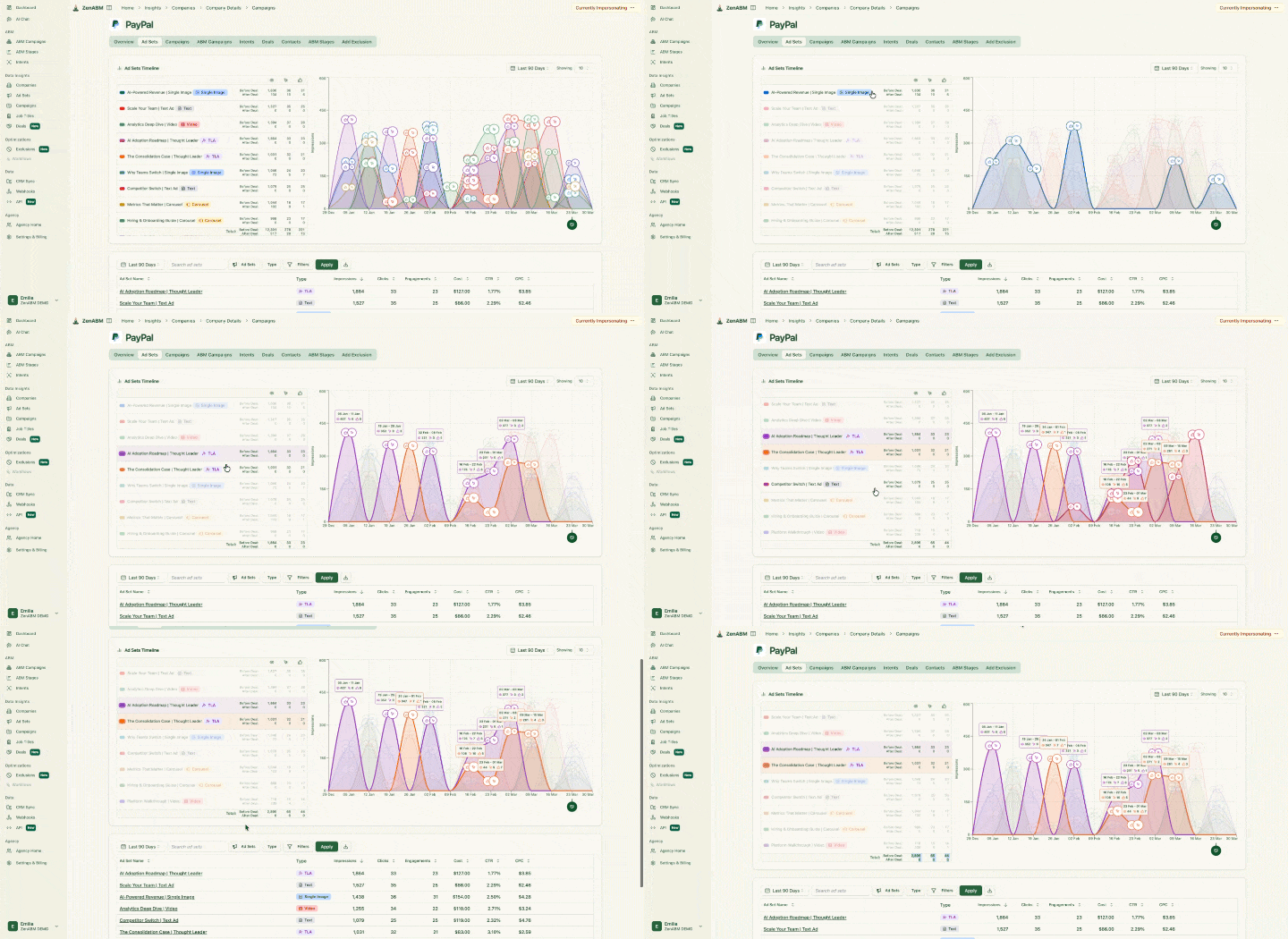
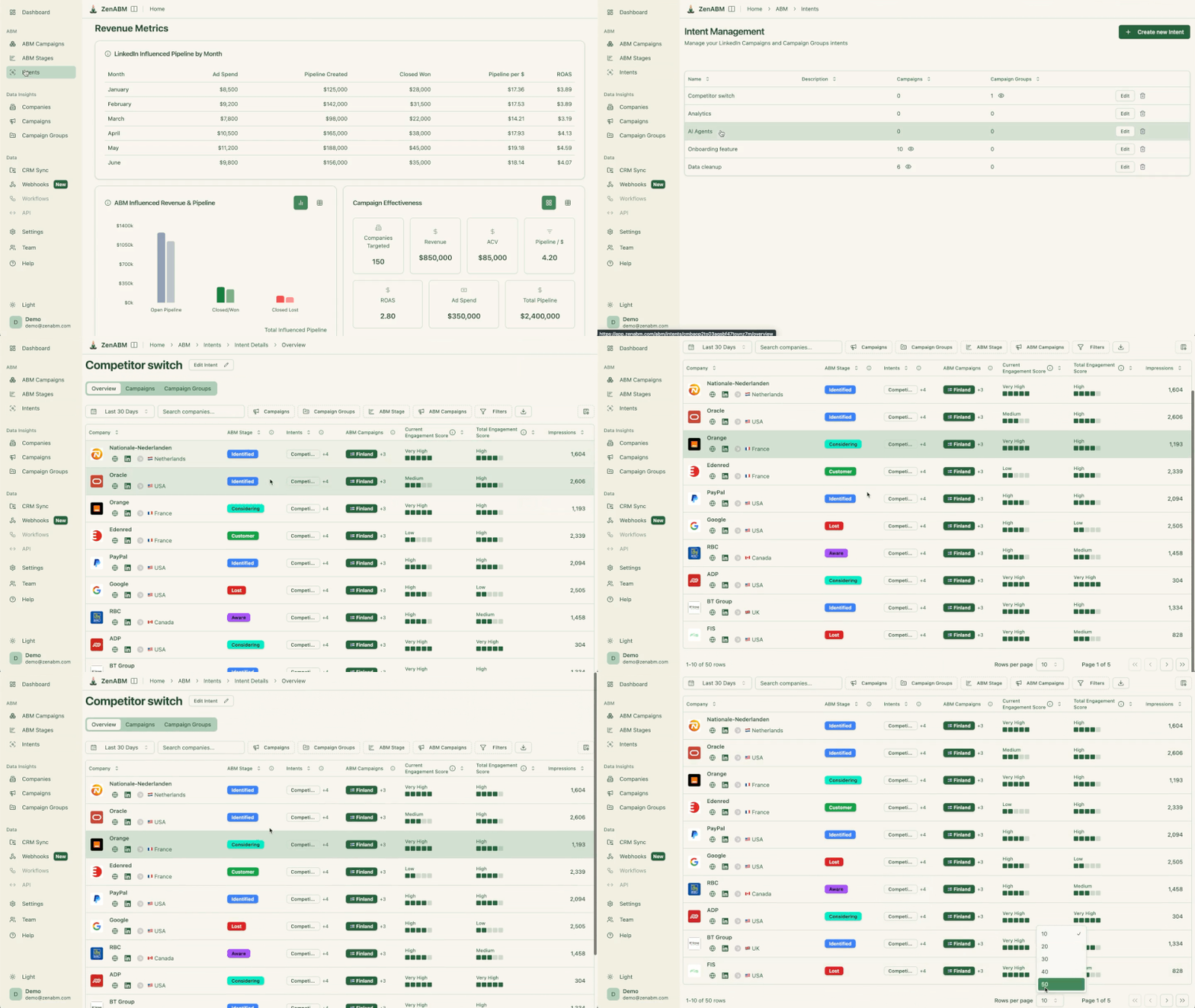
ZenABM is a LinkedIn-first ABM tool that captures first-party intent from the LinkedIn API (impressions, clicks, and reactions on TLAs and standard formats), Google Ads, Reddit ads, organic website visits, and AI Overview-driven CRM traffic, and then combines it into a single account dossier.
Pros:




Cons:
For more on how this stacks up against the legacy platforms, see the 6sense vs ZenABM comparison.

Bombora is the original third-party intent provider, and its Company Surge product tracks anonymous research activity across a co-op of more than 5,000 B2B publisher sites, then surfaces accounts spiking on topics relevant to your category.
Pros:
Cons:

ZoomInfo bundles its (Bombora-powered) intent data with the most complete B2B contact database in the market, which makes intent a sensible add-on for sales-led teams that already pay for ZoomInfo.
Pros:

Cons:


G2 sells first-party intent signals from buyers actively comparing software on g2.com, so when someone reads your product page, your reviews, or your competitor comparison, you see the company.
Pros:
Cons:

Madison Logic combines third-party intent, content syndication, and ABM display media into a single platform, which makes it closer to a media buying tool with intent attached than a pure intent provider.
Pros:

Cons:

RollWorks (NextRoll) is the most accessible enterprise-style ABM platform, bundling ICP scoring (firmographic plus technographic plus Bombora intent), display retargeting, and CRM workflows.
Pros:

Cons:

Common Room is the cross-channel community signal player, stitching Slack, Discord, GitHub, Reddit, podcasts, and YouTube comments, plus traditional first-party signals, into a single person and account view.
Pros:

Cons:


Factors.ai stitches first-party LinkedIn ad engagement, website visits, and CRM data into one account view, sitting between the SMB tools and the enterprise platforms in both price and complexity.
Pros:


Cons:

RB2B is a first-party website visitor identification tool focused on US-based traffic, so once you install a script you get person-level identification of LinkedIn profiles for visitors to your site, free up to a limit and paid above it.
Pros:
Cons:
A question that comes up almost every week is “We have $30K to spend on intent, what do we buy?” and the answer depends entirely on how you sell.
Start with first-party intent from your own LinkedIn ad account, because the number one mistake that turns up in ABM stack audits is a $60K Bombora-fed platform sitting next to an unanalyzed LinkedIn Companies tab.
Pull engagement data through the LinkedIn API into ZenABM or Factors.ai, layer in your website data, and only add Bombora-style topic surge once that source is exhausted.
Add ZoomInfo Intent, route surges to SDRs, and stop, because the marginal value of a second third-party intent feed is low. The budget that frees up is better spent on intent-based outbound workflows in Clay or Smartlead.
6sense or Demandbase are reasonable choices, but it is worth being honest about whether display ABM is still a strong channel for you.
In 2026, benchmark data shows LinkedIn Thought Leader Ads at a 2.68% median CTR versus B2B display under 0.5%, which means the intent platform you pick matters less than where you run the ads.
G2 Buyer Intent is the highest-quality cheap signal you can buy, and pairing it with first-party LinkedIn engagement covers both research and consideration intent.
Common Room owns this category, since there is not really a substitute for cross-community signal stitching at this point.
Five mistakes show up in almost every audit:
“There are tons of third-party tools that will blast countless messages to prospects, but they can get you blocked, since LinkedIn isn’t a fan of mass spamming. Even if they get short-term results, cold, automated outreach alone isn’t sustainable. A better approach: combine Thought Leader Ads with Conversation Ads to build trust first.” Maximilian Herczeg. Read the full post.
Intent data is not magic, because it is only a way to prioritise the work that would have happened anyway.
The teams that get the most out of any of these B2B intent data providers are the ones that designed a clear “if intent, then action” playbook before they signed the contract.
The intent data market is built to sell you guesses about accounts you have never touched, when the highest-accuracy signal is already sitting in your own LinkedIn ad account, your website logs, and your CRM.
The buying decision comes down to your motion, not the vendor’s feature list. LinkedIn-led teams start with first-party engagement and add third-party topic surge only after that source is exhausted.
Sales-led teams with a ZoomInfo seat add ZoomInfo Intent and stop. Enterprise display teams pick 6sense or Demandbase but should question whether display still earns its budget against a 2.68% LinkedIn Thought Leader Ad CTR. PLG teams go to Common Room.
And nobody should pay for Bombora data twice across four platforms that all resell it.
Before signing any contract, build the “if intent, then action” playbook first. An intent score with no ad, email, or call wired behind it is just an expensive dashboard.
If your motion is LinkedIn-first, the fastest place to start is the data you already own. ZenABM pulls first-party LinkedIn ad engagement at the company level straight from the LinkedIn API, stitches it with Google Ads, Reddit Ads, website, and CRM signals into one account dossier, and starts at $59 per month with a 37-day free trial, so you can layer real first-party intent onto your ABM stack before you ever evaluate a six-figure platform.
Start your 37-day free ZenABM trial now or book a demo to know more!
Some common questions about choosing among the many B2B intent data providers and their answers:
The leading B2B intent data providers are 6sense, Demandbase, Bombora, ZoomInfo, G2, Madison Logic, RollWorks, Common Room, RB2B, Factors.ai, and ZenABM, and the best one depends on your GTM motion. For LinkedIn-led ABM, the strongest starting point is first-party tools like ZenABM and Factors.ai. For enterprise display ABM, 6sense and Demandbase are the standards. For G2-aware categories, G2 Buyer Intent is the cleanest third-party signal you can buy.
First-party intent is behavior an account performs on assets you own, such as LinkedIn ads, your website, your CRM, and your community. Third-party intent is behavior on someone else’s property, such as publisher cooperatives like Bombora, review sites like G2, and technographic shifts. First-party is more accurate and consent-clean, while third-party is broader but noisier.
Bombora is worth it as a layer on top of solid first-party intent, not as your primary signal, because it surfaces accounts you have never engaged who are researching your category. The downside is that it is anonymous at the company level only, the topic taxonomy is broad, and many other “intent providers” are essentially reselling the same Bombora feed.
ZenABM is built around first-party LinkedIn ad engagement, website intent, and CRM signals rather than third-party topic data, which makes it much cheaper (from $59 per month) and faster to deploy than 6sense or Demandbase, both of which run six-figure annual contracts and 3 to 6 month implementations. The fairer comparison is “first-party LinkedIn-first stack” versus “third-party Bombora-fed enterprise platform,” and for most teams under 200 employees the LinkedIn-first stack wins on ROI. For a deeper write-up, see the guide to running ABM on LinkedIn.
Yes, because the cheapest and most useful intent data is already sitting in your LinkedIn Campaign Manager and Google Analytics. Pull LinkedIn ad engagement at the company level, deanonymise high-intent website pages, and stitch the two into your CRM, and that is a complete first-party intent stack costing less than $100 per month with the right tooling.
