

©2026 ZenABM - All Rights Reserved.

Polished brand ads are easy to ignore.
Founder-led LinkedIn ads are harder to ignore because they feel like a real person sharing a useful point of view, not a marketing department running a quarterly campaign, which is why founder-led LinkedIn ads, especially when amplified through Thought Leader Ads, are quietly becoming one of the highest-leverage formats in B2B SaaS.
This is primarily because Founders carry product context, conviction, and customer experience that no agency copywriter can replicate, and when paid spend goes behind that voice, cost per click drops, engagement goes up, and the right companies start showing up in the CRM.
This guide walks through how to structure founder-led LinkedIn ads for B2B SaaS, why founder-led marketing works as a paid strategy and not just an organic one, and how to measure whether founder-led ads are actually moving target accounts toward pipeline using ZenABM.

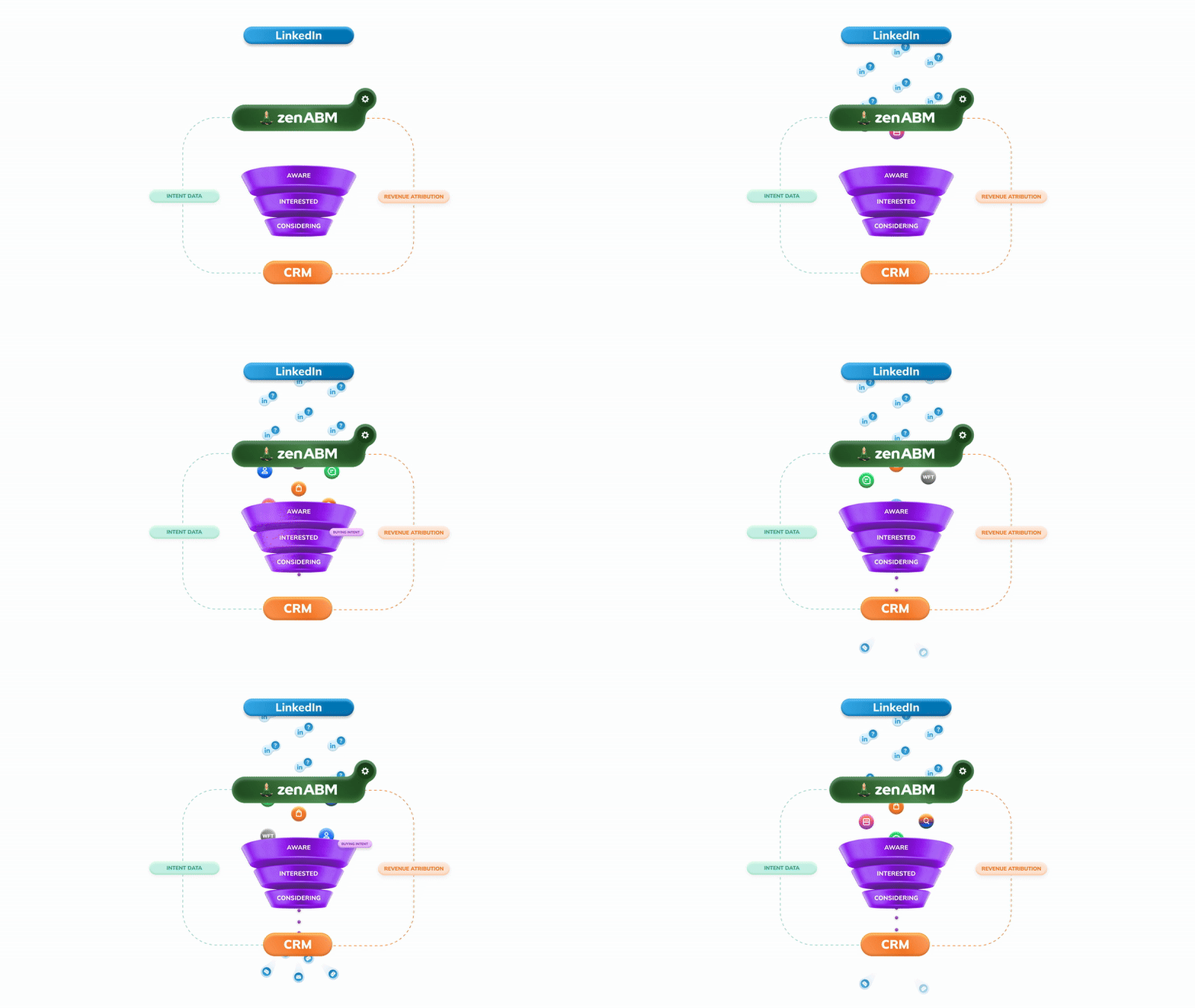

Short on time?
Here’s a quick rundown:

Founder-led LinkedIn ads are LinkedIn ads where the creative is built around the founder’s voice, profile, story, or point of view rather than around a polished company message.
The most common formats in 2026 are:
The key distinction is that founder-led ads are not simply ads with the founder’s face on them.
They are paid distribution for the founder’s actual thinking, and if a generic company message gets a founder’s face attached to it, the result is the worst of both worlds: a brand ad with a person’s photo glued on.
The voice has to be genuine, or the format does not work.
The reason founder-led marketing works on LinkedIn is not mystical.
It is the same reason podcast advertising works and the same reason a personal recommendation closes deals faster than a cold email: people trust people more than brands. Founders feel closer to the product, the customer pain, and the company mission.
Personal stories create memory in a way bullet-point benefit copy never will, and strong founder points of view also create category association, which is why a small SaaS company with a founder who posts every week can outflank a much larger competitor on share of voice in their niche.
The other factor that separates founder-led marketing from generic brand marketing is timing.
Most B2B buyers are not in-market today.
Strong founder content keeps building familiarity in the background, week after week, so when buyers do come into market, they already trust the person behind the product.
The paid layer compresses this process; instead of waiting six months for organic reach to compound, founder-led TLAs can be placed in front of every account on a target list within days.
For niche B2B SaaS products, especially those creating a new category or attacking an established one with a contrarian point of view, there is no existing search demand to capture.
Nobody is Googling for the thing yet because most of the market does not know it exists.
Founder-led content is how awareness gets created, the market gets educated, and trust gets built before buyers are actively shopping.
The target accounts worth pursuing are often the ones still discovering that company-level LinkedIn ad reporting is even possible, and founder-led posts about the problem are how those accounts get reached, not demo ads.
The most common mistake is founders treating LinkedIn as a personal brand vanity project filled with generic “lessons from the journey” posts.
The founder content that drives the pipeline is specific; it talks about customer pain, product lessons, market mistakes, and the actual messy story of building the thing.
Adam Robinson is a good example of this in action.
He runs founder-led customer testimonial ads for RB2B that are explicitly built around personas at target accounts:
“Six weeks ago I had no idea how our best customers were winning. Now I have a 47-minute video compilation of them telling me exactly how they are crushing it. Make posts and put adspend behind each of the short testimonials. Understory is running these to our founder, marketing, and sales personas. The customer wins because they get visibility from my account, we win because people are learning how to use RB2B.” – Adam Robinson in LinkedIn post
The structure is worth noting: customer pain, customer voice, founder amplification, paid distribution to specific personas.
That is what founder-led marketing looks like when it is taken seriously as a GTM motion rather than a content hobby.
Thought Leader Ads are LinkedIn’s format for boosting a personal profile post as a paid ad with permission from the post’s author.
That single design choice is why TLAs are the best-paid format for founder-led LinkedIn ads.
The ad does not get reformatted, repackaged, or run from a company page; it runs from the founder’s actual profile, with the original copy, the original engagement, and the original comments intact.
That preserves five things that get destroyed when founder content is recreated as a regular sponsored post:
TLAs work best when a founder post shows strong organic engagement, a clear point of view, a useful lesson or framework, category education content, or a customer or market insight that already resonated with the audience.
If a post underperformed organically, paid spend will not fix it.
If it landed, scaling it with TLAs makes sense.
Philip Ilic at KiiN summed up the cost advantage of this format clearly:
“I am getting clicks for £3.50 (like $4) to a landing page from Founders, VPs, Heads of Demand Gen in tech companies. Whoever said LinkedIn ads was expensive. This is only possible with thought leader ads. And the posts need to be actually really good. But the costs are a fraction compared to a standard ad from the company page. If you are sleeping on thought leader ads, you are basically not utilising the best thing to happen to LinkedIn ads.” – Philip Ilic in his LinkedIn post

That cost gap is consistent across the accounts tested.
TLAs from a founder regularly produce 60 to 70% lower CPCs than the same message run from a company page, partly because of the format, partly because of the algorithm, and partly because buyers actually click on posts from people rather than on display ads dressed up to look like content.
For a deeper walkthrough of the format, the complete guide to LinkedIn Thought Leader Ads covers setup, creative, and bidding in detail.
The Valueships campaign is the clearest proof point.
The team ran founder-led TLAs alongside traditional company-page LinkedIn ads against the same audience and tracked the results in ZenABM.
The numbers tell the story:
| Metric | Result |
|---|---|
| Impressions | 169,571 |
| Clicks | 18,113 |
| Landing page clicks | 2,669 |
| CTR | 10.68% |
| Landing page CTR | 1.57% |
| CPM | $2.31 |
| Cost per landing page click | $0.15 |
| Share of total website clicks | 83% from TLAs |
| Share of total ad budget | 6% on TLAs |
| Meetings booked from cold | 12 in under two weeks |


Founder-led TLAs drove 83% of all website clicks while consuming only 6% of the total budget.
That is not a marginal improvement; it is the same audience responding ten times more to the same message when it comes from a founder’s profile instead of a company page.
The full breakdown is in the Valueships TLA case study for those who want the campaign-level detail.
Another expert saw the same pattern: Ali Yildirim at Understory ran the math on a single TLA campaign that closed a $120K ACV deal:
“We just closed a $120K ACV contract with a publicly traded company off $2,035.17 in spend on a Thought Leader ad. Most people think success with Thought Leader ads comes down to budget or optimization tricks. That’s not where this gets won or lost. Good content. Precise targeting. Clean tracking.” – Ali Yildirim on LinkedIn
The throughline across all three examples is that the format is doing real work, but measurement matters equally.
CTR alone would not have surfaced the $120K deal; company-level engagement and pipeline movement are what count, which is exactly what ZenABM was built to track.
ZenABM pulls company-level ad engagement data for each ad and matches ad-engaged companies with the deals in your CRM to provide revenue and pipeline attribution for each deal at the ad level.


The LinkedIn ABM Performance Benchmarks Report has the format-by-format comparison for those who want to see how TLAs stack up against other LinkedIn formats across the full dataset.

The content question is where most founder-led ad programs fall apart.
The founder posts something corporate and watered down, marketing boosts it, engagement is flat, and everyone concludes the format does not work.
The format works fine; the content was wrong.
The most reliable angles for founder TLA programs:
When helping a founder build a TLA pipeline from scratch, a seven-step framework covers the essentials, whether the company is pre-seed or Series C.
What painful job is the target audience trying to solve?
Not the abstract version, but the specific Tuesday-morning version.
If that pain cannot be articulated in one sentence, the post will not land.
What does the founder believe the market gets wrong about that pain?
The point of view is what separates a useful post from generic advice.
Use numbers, examples, screenshots, mistakes, and lessons.
Specificity is how buyers decide whether the founder actually understands what they are talking about.
First-person, direct, opinionated.
Short paragraphs.
No hedging.
Founder content that reads like a press release will not perform as a TLA regardless of the budget behind it.
Read the guide, see the benchmark, join the bootcamp.
Founder-led TLAs are usually wrong for “book a demo” CTAs at this stage because the job is to deepen engagement rather than force a meeting.
Boost posts that already showed organic traction.
A post with 5 likes organically will not improve with paid spend. A post with 200 likes and active comments is the TLA candidate.

Use ZenABM to see which companies actually engaged and whether they moved ABM stages.
This turns founder-led content from a brand exercise into a pipeline exercise.
Founder-led TLAs are not just a top-of-funnel awareness format; they work across the funnel when the content matches the stage.
Here is how they map to the ABM funnel:
| Funnel Stage | Content Types | Account Movement Goal | Key Principle |
|---|---|---|---|
| Cold Awareness | Founder POV posts, category education, market mistakes, contrarian takes | Identified to Aware | Impressions on target accounts are a real signal even without a click; track which companies saw each ad, not just who clicked |
| Warm Consideration | Customer lessons, social proof, product philosophy, comparison angles | Aware to Interested or Considering | Consideration is a trust problem, and trust transfers from the founder more easily than from a feature page |
| Bottom of Funnel / Selecting | Founder trust posts, implementation confidence, risk reduction, executive proof | Considering to Selecting | TLAs here reduce buying committee anxiety; the job is to support the sales process, not replace it |
The common mistake is treating TLAs as one-off boosted posts: marketing notices a post performed well, boosts it, sees a spike, and then waits for the next accidental hit.
That is not a program; it is a hobby.
The teams getting outsized results from founder-led ads have built a repeatable system:

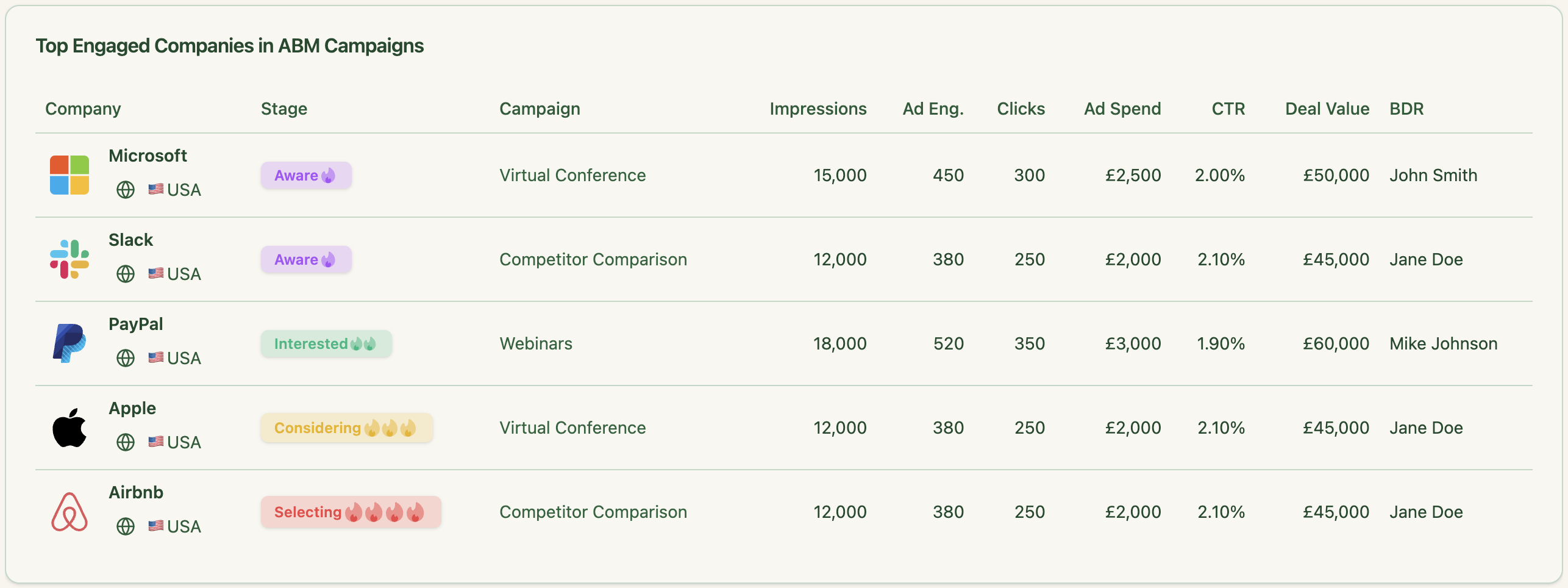
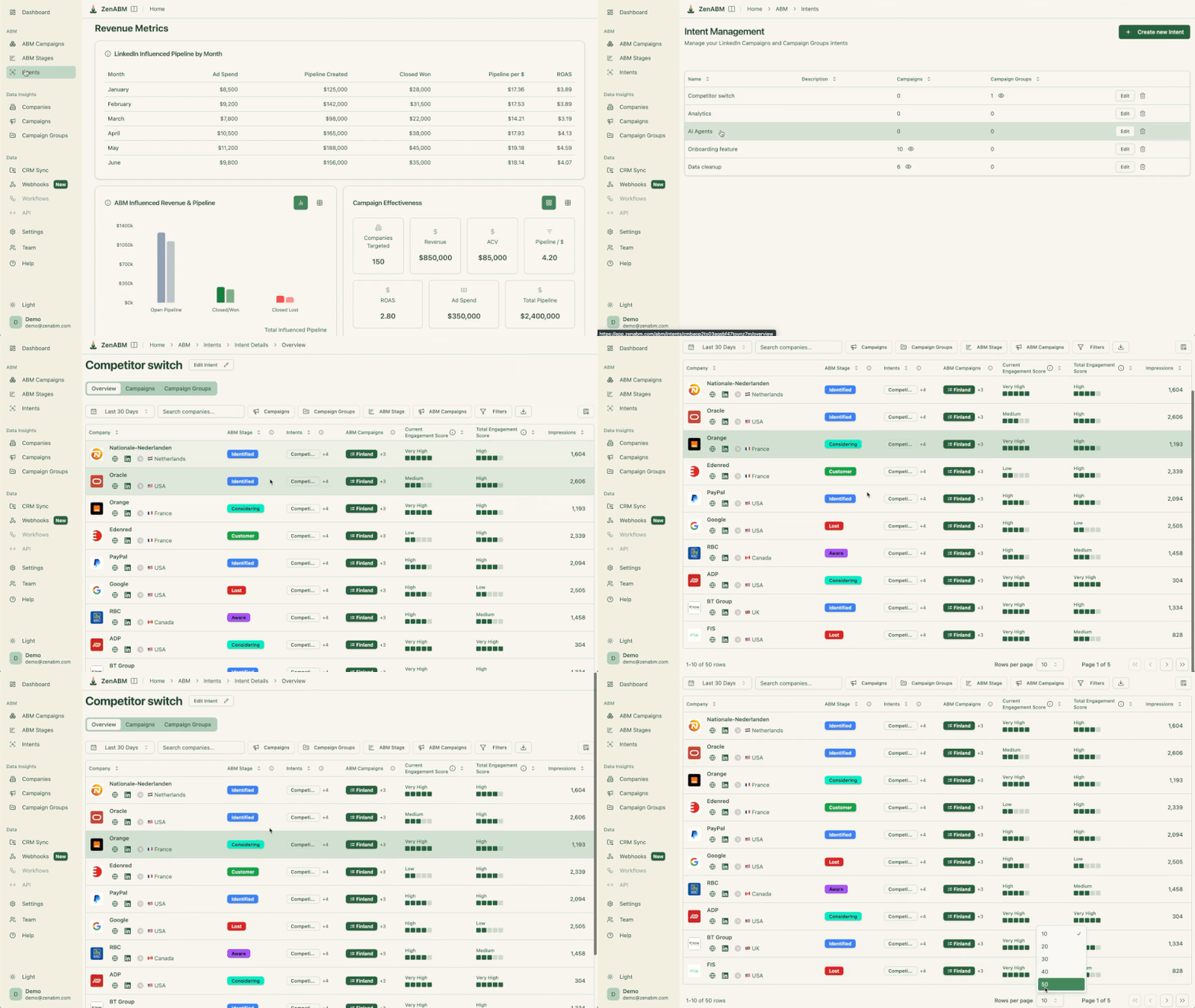
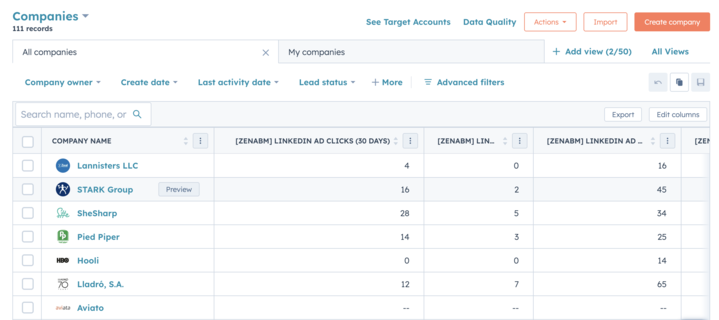
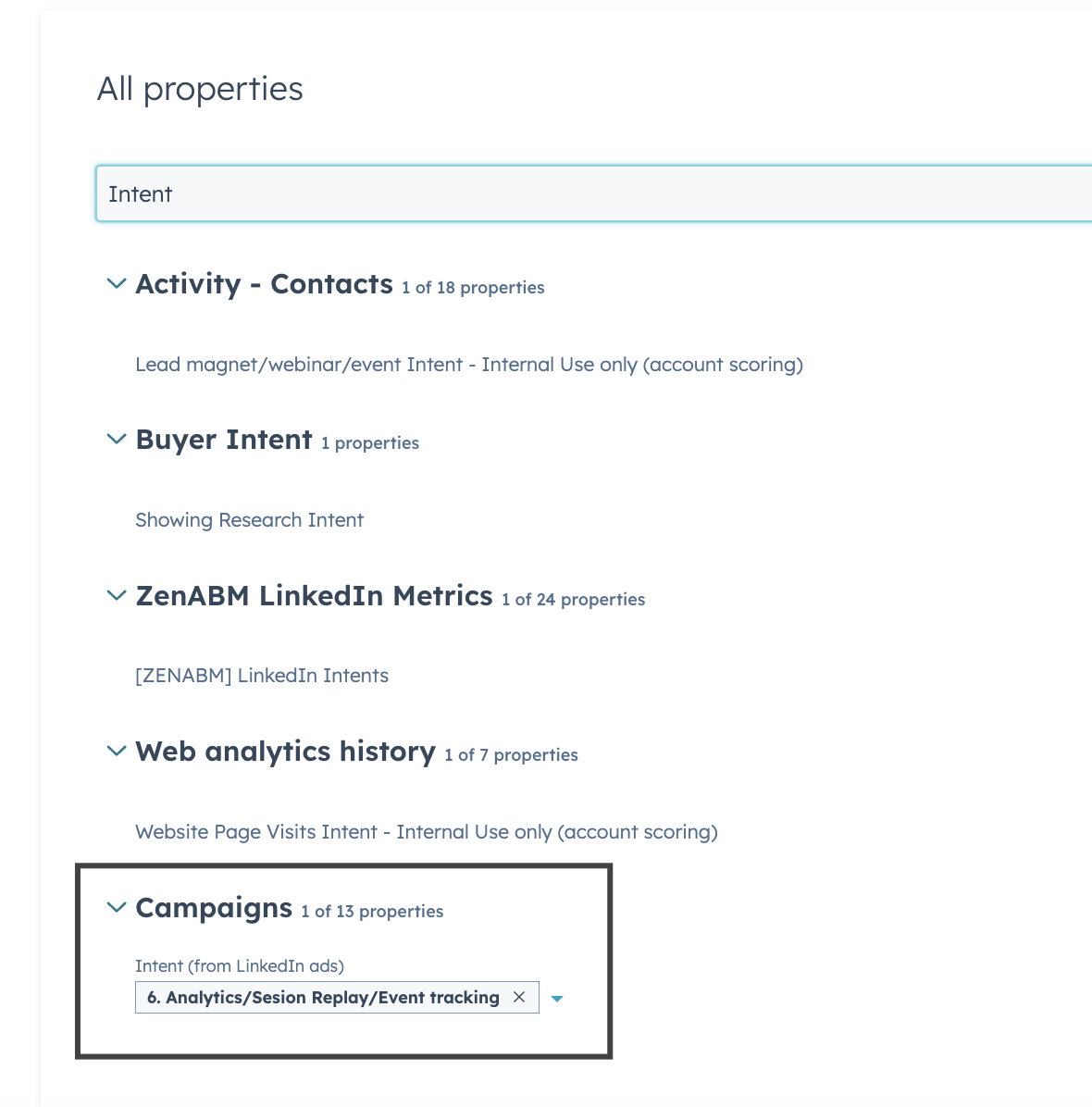
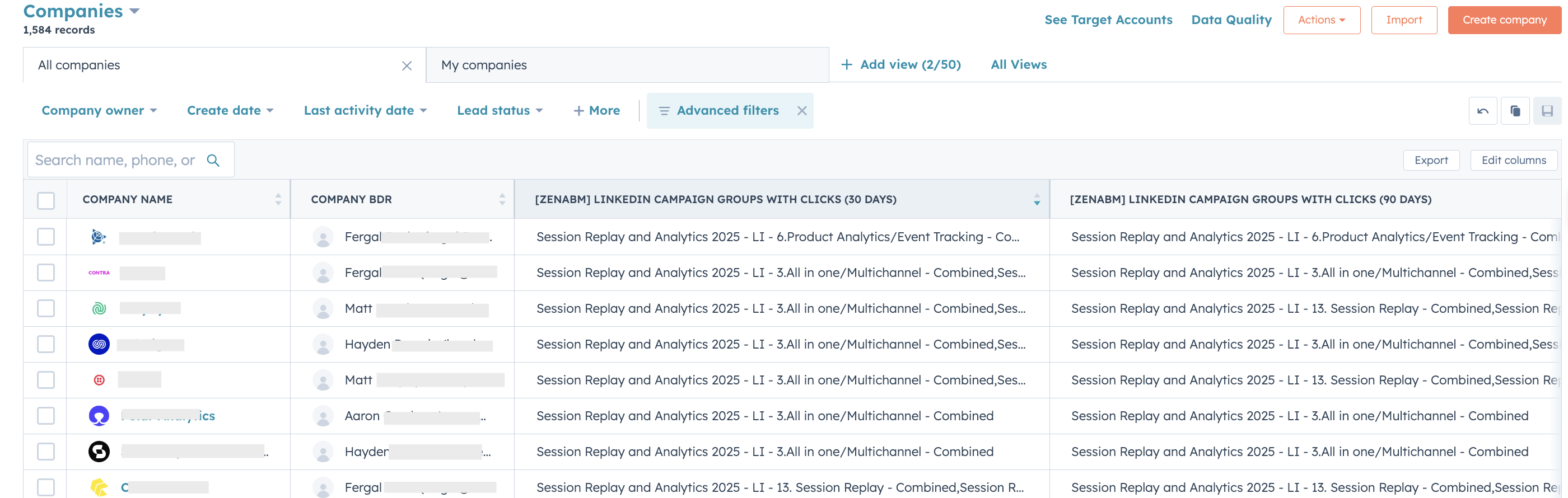
The highest-leverage move with founder-led LinkedIn ads is to treat the engagement itself as an intent signal.
When an account spends three weeks reacting to founder posts about LinkedIn attribution, it is communicating something specific about what it is working on right now.
The challenge is to make that signal usable rather than letting it die in Campaign Manager.
The approach is to tag each founder-led campaign by theme.
Some themes that work well for a ZenABM program (you can build your own from your business inspired by these):
ZenABM then identifies, by theme:

A concrete example shows how this works end-to-end.
An account engages with a founder’s post about LinkedIn attribution.
ZenABM tags that account as “Attribution intent.”
That account moves into an attribution-focused retargeting campaign, and the intent signal also pushes into HubSpot or Salesforce as a company property.
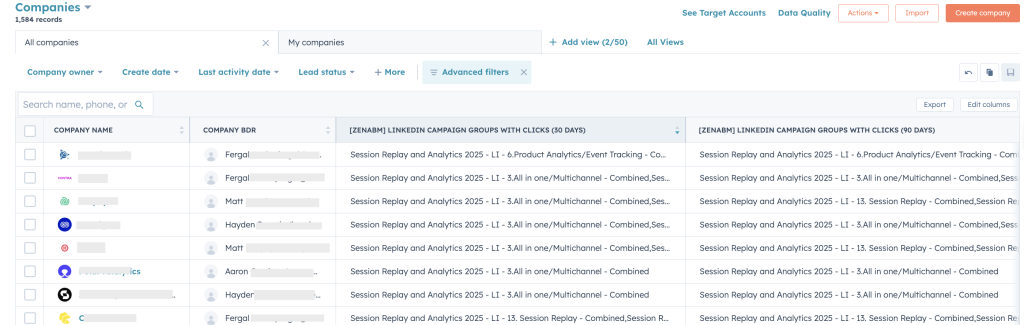
That company property triggers a BDR follow-up sequence themed around the same pain, which in turn surfaces the account directly in the CRM for the assigned rep.
That sequence does not say “saw your ad.”
It says, “noticed you have been thinking about LinkedIn attribution lately, here is how it is being approached.”
That is the difference between using founder-led ads as media and using them as a signal layer for ABM.
For more on this pattern, see the guide on intent signals for ABM on LinkedIn across the broader program.
Also, this was just one workflow. ZenABM provides custom webhooks, MCP, and API, so you can build all kinds of workflows with it.
Here’s another example:

Most founder-led ad programs underperform for predictable reasons.
These are the most common mistakes visible in LinkedIn ads audits:
Founder-led LinkedIn ads are not a brand awareness play dressed up in paid media clothing.
They are a pipeline motion when built correctly: the right content angle, organic validation before paid amplification, campaign themes mapped to buyer pain, and account-level measurement instead of vanity metrics.
The teams getting outsized results are not boosting every post.
They are running a system where the founder posts consistently, marketing picks the winners, TLAs amplify what already resonated, and ZenABM shows exactly which target accounts engaged with which themes so sales knows who to follow up with and why.
If you want to see which companies are engaging with your founder-led ads, which accounts are moving stages, and which TLAs are actually influencing the pipeline, ZenABM connects all of that directly to your CRM.
Try ZenABM free for 37 days or book a demo to know more!
Regular LinkedIn ads run from a company page and use polished brand creative. Founder-led LinkedIn ads run from a founder’s personal profile (usually as Thought Leader Ads) and use the founder’s actual voice, point of view, and stories. Both the format and the voice are different, which is why founder-led ads typically see lower CPCs, higher engagement, and stronger trust signals.
No. Founder-led marketing works at every stage. Early-stage founders use it because they have no other distribution. Series B and C founders use it because the format is more efficient than scaling brand ads. Public-company executives use it for category leadership. The constraint is whether the founder will actually post, not company stage.
Once a week is the floor. Two to three times a week is better. The goal is not volume; it is giving marketing a steady supply of organically validated content to test as TLAs. If the founder posts once a quarter, there is nothing to amplify.
It is much harder. The post needs to read like the founder actually wrote it, and TLAs require the founder to grant permission post by post. If the founder will not write or approve content, the format does not work. Ghostwritten drafts are possible, but the founder has to be willing to engage with comments and own the voice.
Measure at the account level. Tag each founder-led campaign by theme, track which target accounts engage with each theme, and watch whether those accounts move ABM stages and open pipeline. ZenABM does this automatically by syncing LinkedIn ad engagement with company-level data and CRM records, making it possible to show which TLAs influenced which deals rather than arguing about CTR. The ABM revenue attribution guide walks through the measurement model in detail.
