 AI for ABM & LinkedIn Ads Week28 Sep – 2 Oct · Reserve your seatAI for ABM & LinkedIn Ads Week · 28 Sep – 2 Oct · Reserve your seat
 AI for ABM & LinkedIn Ads Week28 Sep – 2 Oct · Reserve your seatAI for ABM & LinkedIn Ads Week · 28 Sep – 2 Oct · Reserve your seat
What does account-based marketing software actually need to do for B2B teams?
The honest answer in 2026 is that no single platform covers the full ABM stack, so the question is not “which ABM tool wins” but “which 4 to 5 categories do I need, and who is best in each one.”
This buyer’s guide breaks the account-based marketing software market into five jobs to be done:
For each one, I list three tools I see working in real B2B programs, what they cost, and where they fall short.
By the end, you should be able to assemble an ABM stack that fits your motion instead of paying $80,000 for a giant suite that does 30% of what your team needs.
Note: The big shift in 2026 is consolidation pressure. The classic all-in-one ABM platforms (Demandbase, Terminus, 6sense, RollWorks) still exist, but most growth teams I work with are pulling apart the bundle and buying point solutions in each category.
Short on time?
Here’s a quick reference table to choose your ABM stack:
| Team Profile | Recommended Stack | Est. Annual Cost | What You Skip |
|---|---|---|---|
| Solo GTM or early-stage startup (1 to 3 people, sub-$50K ACV, LinkedIn-first) | Apollo + ZenABM Starter + RB2B Free + Smartlead | $2,500 to $5,000 | Clay, HeyReach, Intent Suite |
| SMB GTM team (3 to 8 people, $20K to $80K ACV, LinkedIn plus email) | Clay + Apollo + ZenABM + RB2B + HeyReach + Smartlead | $18,000 to $28,000 | Bundled platforms, Bombora, Salesloft |
| Mid-market GTM team (8 to 20 people, $50K to $200K ACV, multichannel) | Clay + ZoomInfo + ZenABM + Bombora + HeyReach + Salesloft | $35,000 to $65,000 | 6sense full suite, Demandbase, display ABM |
| Enterprise ABM program (20-plus people, $200K-plus ACV, 9 to 18-month deal cycles) | 6sense or Demandbase (bundled) + ZoomInfo + Salesloft + Clay for prospecting | $100,000 to $250,000 | Point solutions for display and intent (bundled covers both) |
| Display-heavy enterprise program ($1M-plus ABM budget, brand awareness plus demand capture) | 6sense (display) + Demandbase (web personalization) + ZoomInfo + Salesloft | $150,000 to $300,000 | LinkedIn-first point solutions, Clay enrichment (usually replaced by ZoomInfo workflows) |
Before I get into the categories, here is the lens I use.
Most “best ABM software” lists rank tools by feature checklists, which is the wrong frame.
I score every category against four things: input data quality, activation surface, attribution back to revenue, and total cost of ownership for a 4-person GTM team.
I run my own program at Userpilot with a tool stack instead of one bundle, and we hit a $5.29M pipeline number on a 1:Many LinkedIn ABM motion last year.
The rest of this guide covers the actual sub-categories I would buy again, in priority order.
The first job of any account-based marketing software stack is to figure out which accounts you should target and who inside them you should reach.
This category replaces what used to be done by an SDR with a Sheets file and an Apollo seat.
In 2026, it is mostly Clay, with Apollo and ZoomInfo as the data sources sitting underneath.
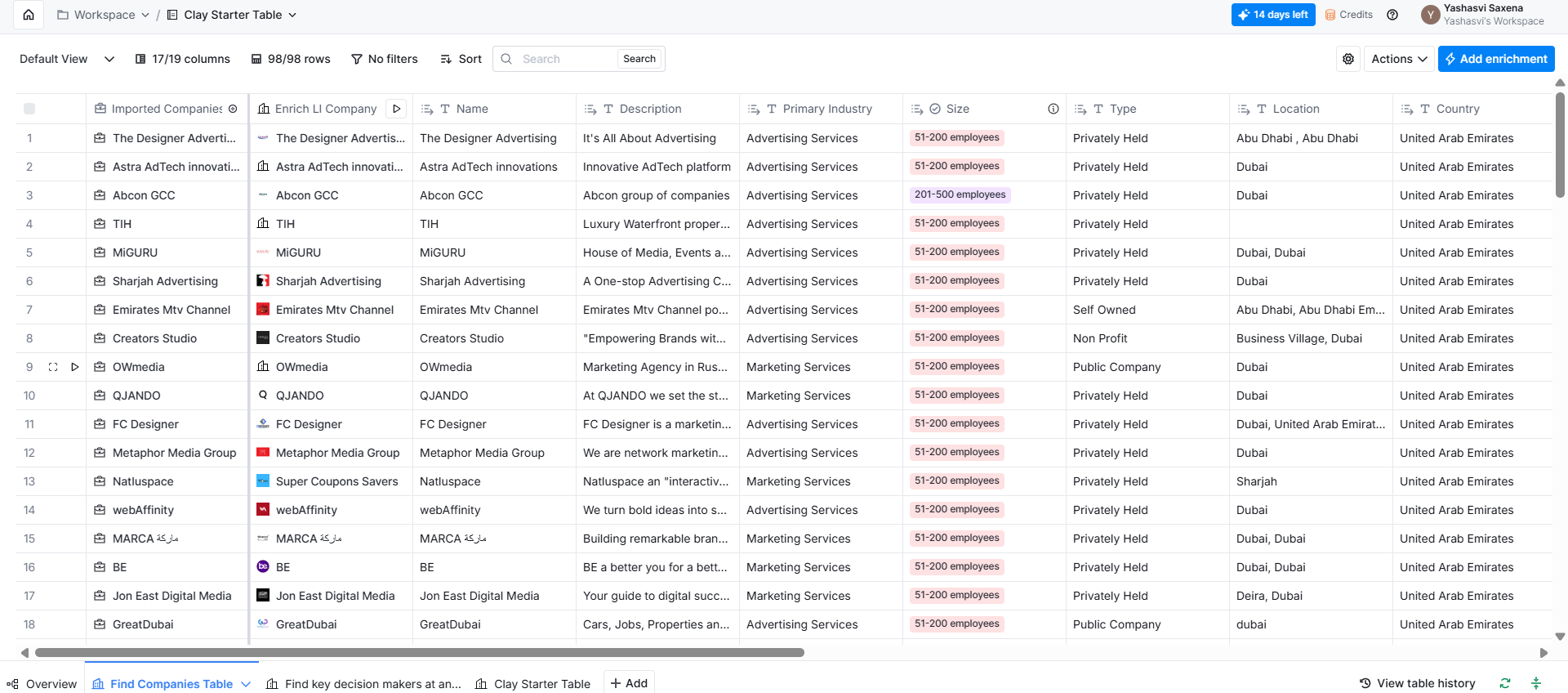
Clay is the tool I see show up in every well-run ABM program in the last 18 months.
It is a spreadsheet that knows how to call Apollo, ZoomInfo, LinkedIn, ChatGPT, and roughly 100 other data providers in a waterfall.
You feed it a list of domains or an ICP definition, and it gives you back enriched accounts plus the right contacts at each one.
What makes Clay best for the research and prospecting layer is the combination of waterfall enrichment (so you get coverage instead of being locked to one data vendor’s coverage) and AI agents that can read a prospect’s website, summarize their pricing page, identify their tech stack, and write a personalization line.


That used to be a 30-minute manual research task per account.
With Claygents, it runs in seconds at fractions of a cent.
Clay overhauled its pricing structure in March 2026, replacing the legacy Starter, Explorer, and Pro tiers with two self-serve plans: Launch at $185 per month and Growth at $495 per month, with annual billing reducing both by roughly 10%.

The honest weakness remains the learning curve, since Clay rewards people who think like engineers and teams without workflow-building experience should expect a four-week ramp before running production-grade enrichment.
“Most B2B marketers waste anonymous company engagement data from their LinkedIn ads. Here’s the system we built to turn those clicks into actual contacts. Pull engaged companies from ads into HubSpot via Fibbler, push to Clay, match your target job titles at those companies, get LinkedIn profiles, send back to CRM. Now when a company clicks your ad, you get every VP of Sales at that company, every Director of Marketing, every decision maker you’re targeting. One person doesn’t buy six-figure software. Having the full buying committee in your CRM when they’re actively engaging with your ads does.”
Ali Yildirim, Founder at Understory in his LInkedIn post
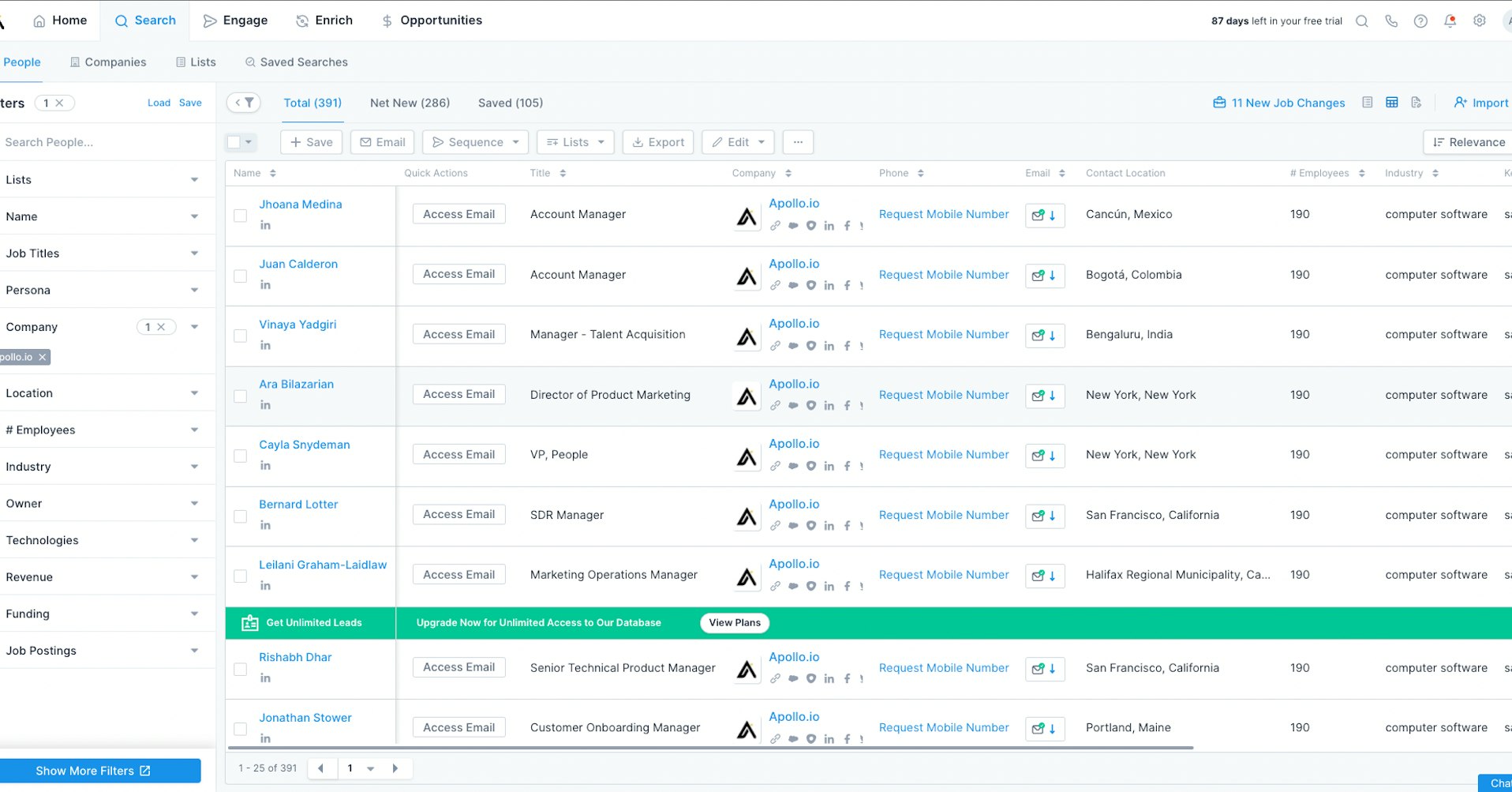
Apollo is what I recommend for early-stage teams that need a contact database, sequencer, and basic LinkedIn integration in one product without writing a check to ZoomInfo.
The free plan provides access to the 270M+ contact database with limited monthly credits, enough to evaluate data quality before committing.
The Basic tier starts at $59 per user per month on monthly billing (or $49 per user per month on annual) and is where Apollo becomes genuinely usable for small sales teams.
What Apollo is best for: pulling a target account list with verified emails and direct dials at a price a bootstrapped startup can afford.
The database is reasonable for the price, and the filters cover most ICP definitions.
Where it falls down: data quality on emails outside North America gets thinner, and Apollo has historically had a complicated relationship with LinkedIn, which means the LinkedIn auto-engage features should not be the load-bearing part of your stack. Pair Apollo with Clay so that Apollo functions as one of the enrichment data sources rather than the sole pipeline for contacts.

ZoomInfo is the option I recommend for enterprise teams that need a database with depth, intent layers, and org chart features.
Typical contracts land in the $25K to $50K range, though ZoomInfo Marketing Hub goes higher, making it overkill for a five-person GTM team.
For a 200-person sales org with rigorous data governance, it is still the safest bet.
ZoomInfo’s strength is the org chart layer and the Streaming Intent product, which bundles intent topics from Bombora plus first-party engagement on your own site.
The 2026 release added more AI-driven prospecting workflows that automate which contacts get pulled into outreach when intent spikes.
Display ads ABM is the category I am most cautious about in 2026.
The premise (run banner ads to a target account list across the open web) was the original ABM use case, but the pricing, attribution, and creative quality issues mean I generally tell SMB and mid-market clients to skip it and go LinkedIn-first.
For enterprise teams with $1M+ ABM budgets, the three tools below are the legitimate contenders.
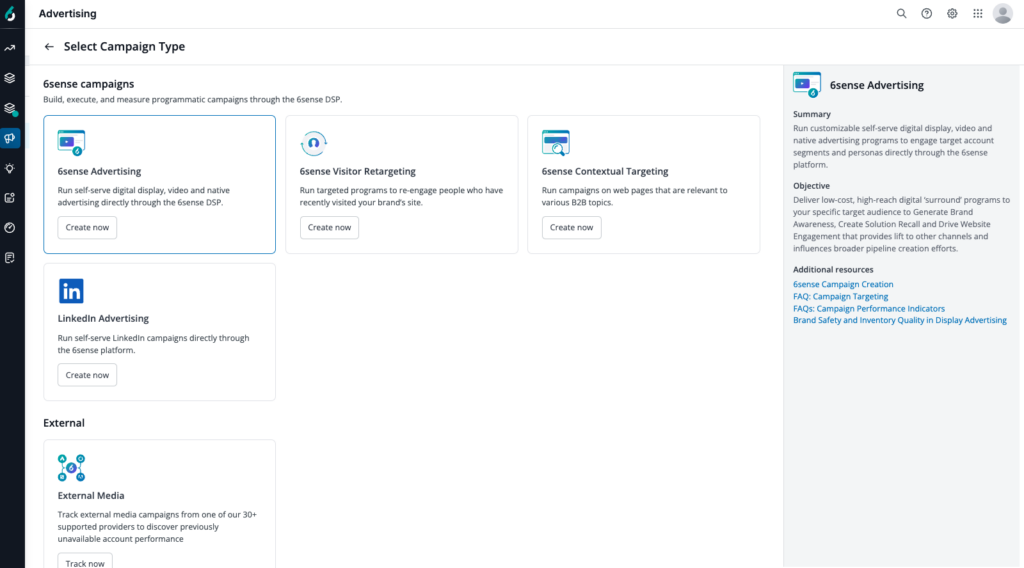
6sense is the platform I see most often in $200K+ ABM programs.
The 6sense bid stream pushes ads to a target account list across the open programmatic web (DV360-quality inventory), with frequency capping at the account level and brand safety filters.
The killer feature is the predictive intent model, which combines third-party intent from anonymous IP reverse-resolution with first-party signals to score where each account is in the buying journey.
What 6sense is best at: identifying anonymous in-market accounts and serving display ads to them before they have ever filled out a form. For enterprise sales motions where the deal cycle is 9 to 18 months, that early identification is worth the cost.
What it is bad at: pricing.
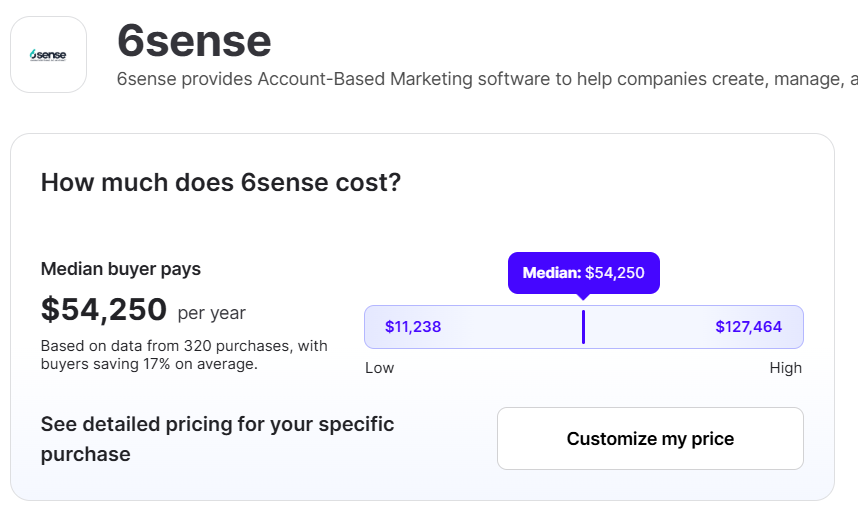
Average 6sense contracts in 2026 land between $80K and $200K per year and require an annual commitment, and the platform is also overkill for teams without a dedicated ABM ops person.
Vendr keeps the median pricing at about $52k per year.

Demandbase is the longest-running ABM platform on this list.
The Demandbase One product line includes account identification, intent, advertising, sales intelligence, and orchestration, making it the most complete offering for an enterprise team that wants one platform for all of that.
The display advertising side handles target account list ad delivery, frequency capping, and creative library management.
Vendr’s median pricing data shows Demandbase contracts around $65K per year, with platform fees plus per-seat fees stacked on top. G2 reviews regularly call out the implementation curve, with several reviewers reporting six to nine months before they were fully productive on the platform.

Where Demandbase wins is on the website personalization layer.
The same platform that runs your display campaigns can also rewrite headlines and CTAs on your own site for a target account, which closes the loop between ad and landing page in a way that is genuinely hard to replicate with a stitched-together stack.
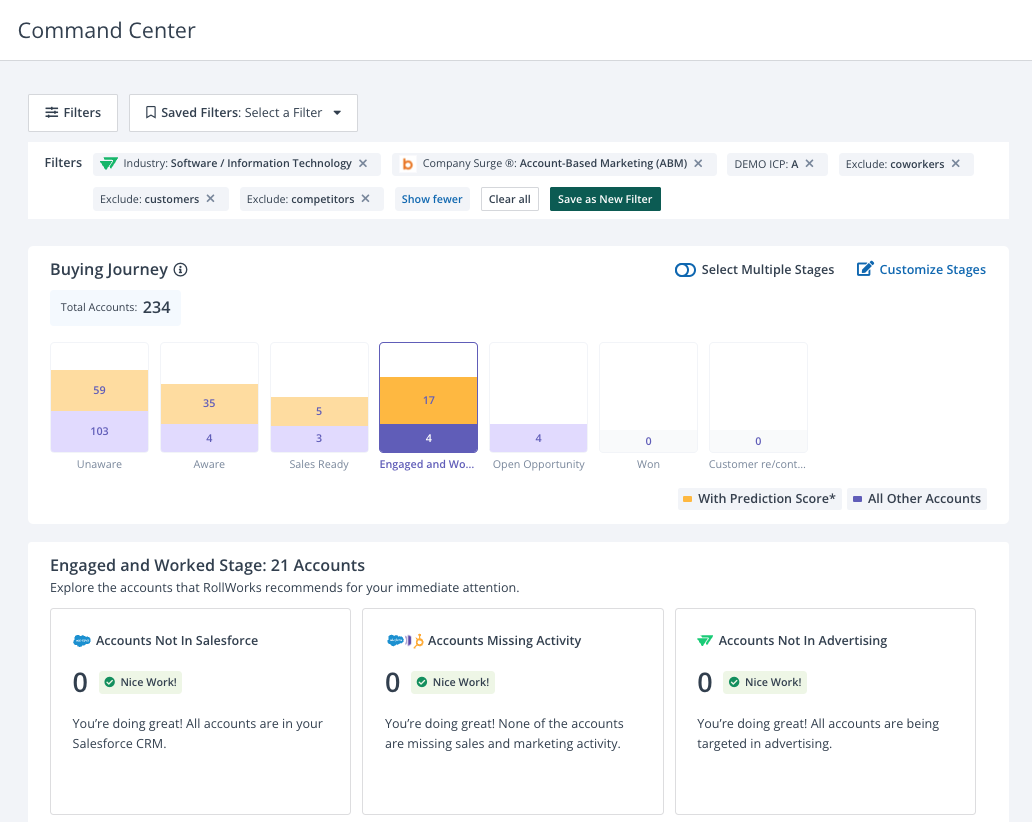
RollWorks is the platform I recommend for mid-market teams ($200M to $1B revenue) that want display ABM without 6sense or Demandbase pricing.
RollWorks owns its own DSP, has a respectable intent data layer through the NextRoll parent company, and is meaningfully easier to operate than the enterprise alternatives.
The Account Targeting Playbooks feature is the differentiator.
Instead of building campaigns from scratch, you pick a playbook (cold awareness, MQL acceleration, opportunity acceleration) and the platform sets up the audience, channels, and frequency caps for you.
If you want a deeper read on whether display ads ABM is even worth it as a channel, read our dedicated article on why display ads fail in ABM for most teams.
LinkedIn ads ABM is where I spend most of my time and budget in 2026.
LinkedIn is the single largest activation surface for B2B account-based marketing software because it has both the firmographic data (company size, industry) and the contact data (job title, function, seniority) inside one platform.
The problem is that LinkedIn Campaign Manager itself reports at the campaign level rather than the account level, which is a fatal gap for ABM.
The three tools below close that gap.

The reason ZenABM is that everyone who was running LinkedIn ABM was exporting Campaign Manager CSVs into Sheets and matching them against HubSpot to figure out which target accounts had actually engaged, and ad-level view-through engagement tracking was almost absent.
ZenABM does that natively by pulling the LinkedIn API for company-level engagement data per campaign and campaign group.
What that gives you: a dashboard that shows which target accounts saw exactly which of your ads, which ones clicked, which ones engaged with thought leader ads, and which ones moved into a “warm” stage based on a configurable threshold, and also connects to the CRM to match ad-engaged companies with the deals in your CRM to give pipeline and revenue attribution, and ROI and similar metrics.

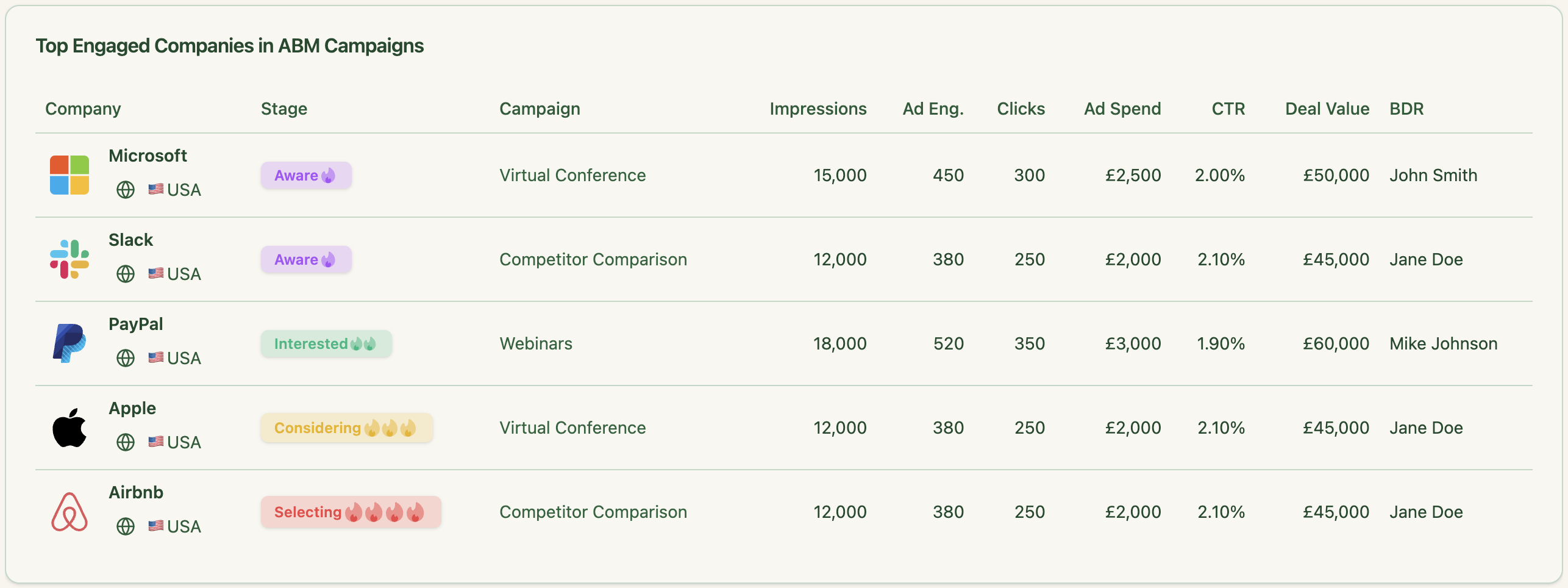
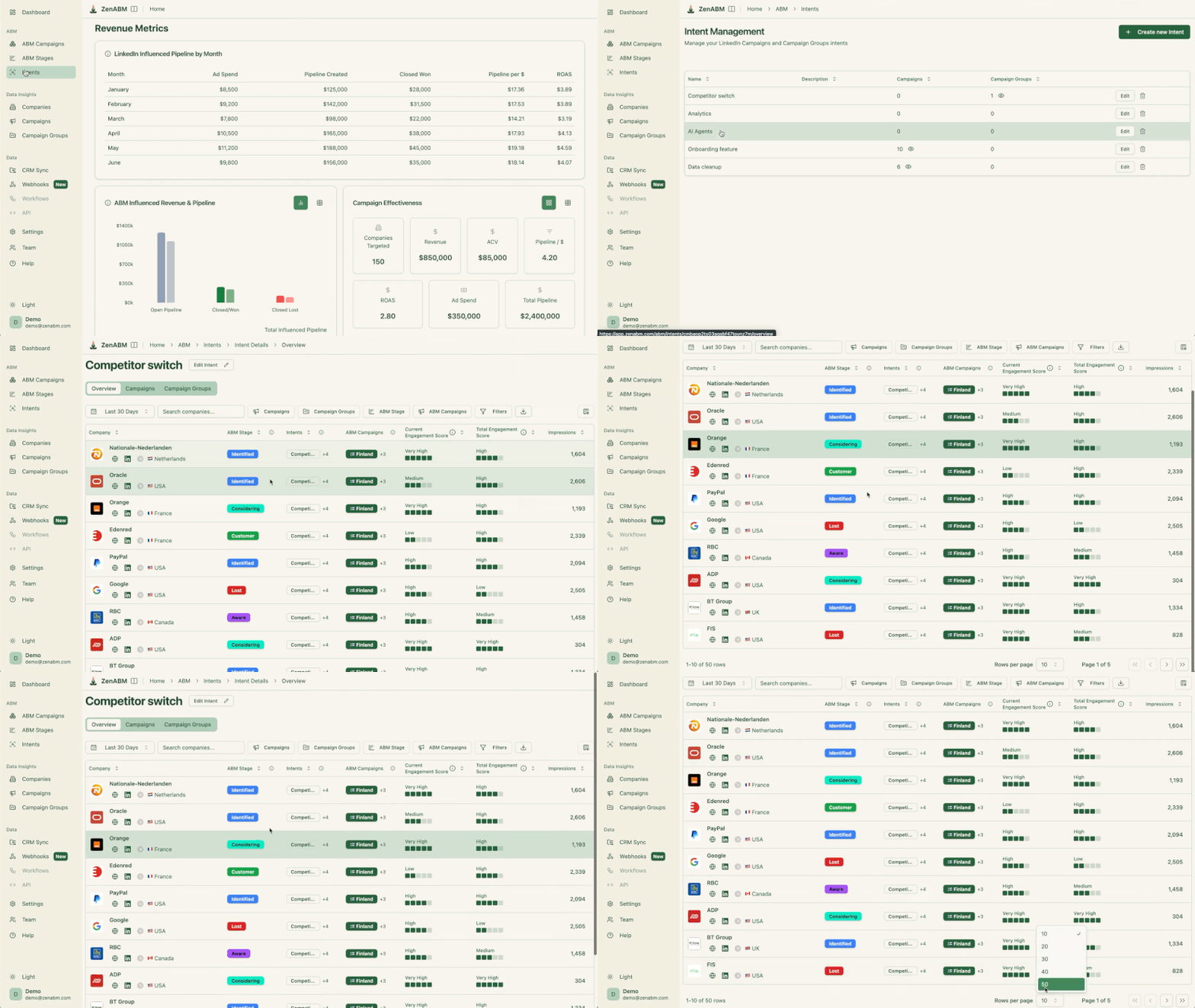


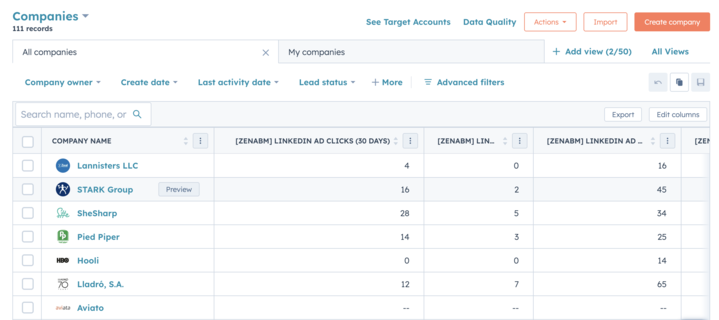

This account-level visibility given by ZenABM is the foundation of every other ABM workflow (intent-led outbound, sales alerts, retargeting).
Also, ZenABM now tracks other channels like Google Ads, Reddit Ads, LLM referral traffic, website visitors, etc.

What is ZenABM walks through the product in more detail.
Pricing starts at $59 per month with a 37-day free trial.
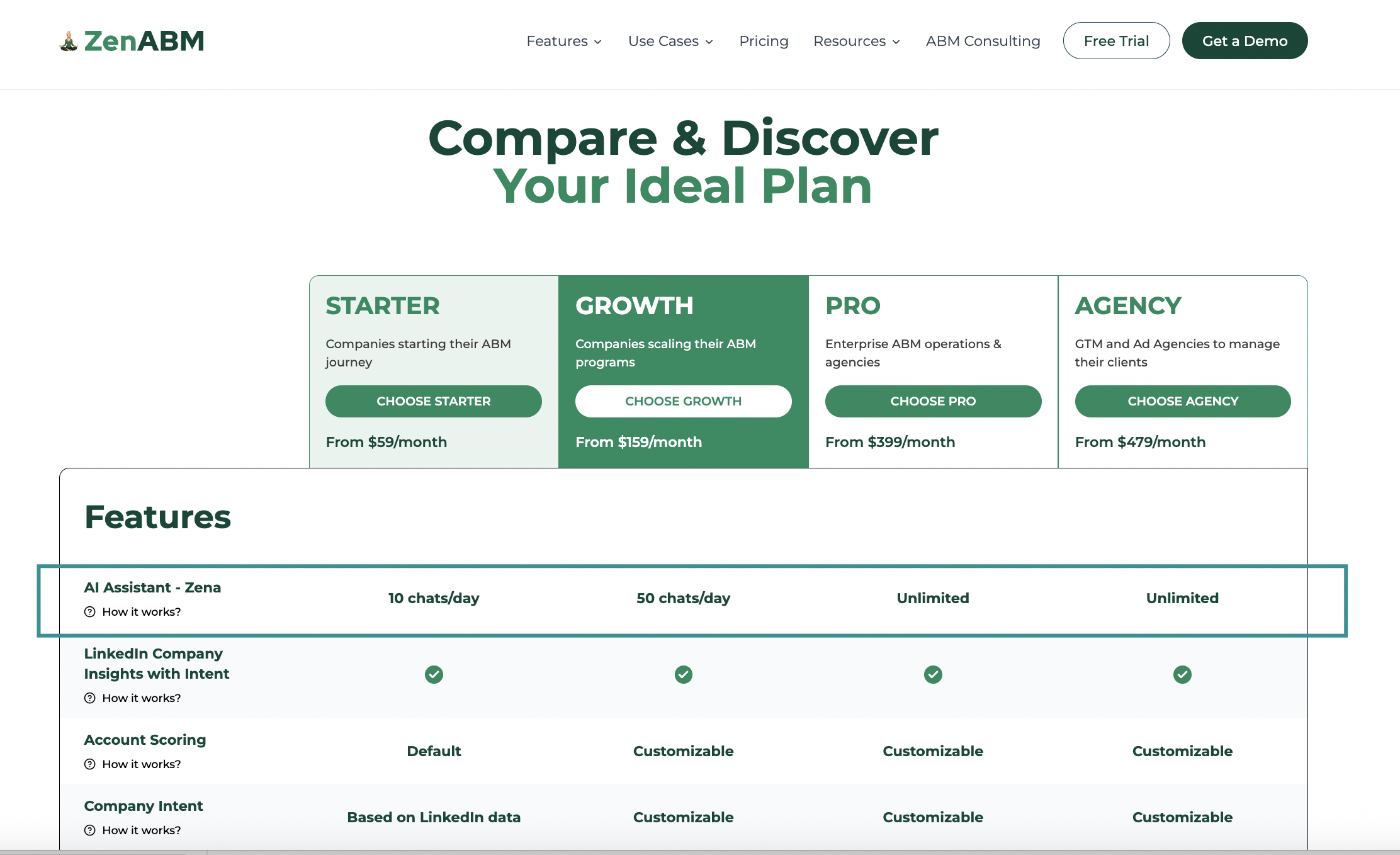
The product is purpose-built for LinkedIn-first ABM, so if your channel mix is 50% LinkedIn ads or higher, this is the right fit.
If you run mostly display or programmatic, look at 6sense or Demandbase instead.

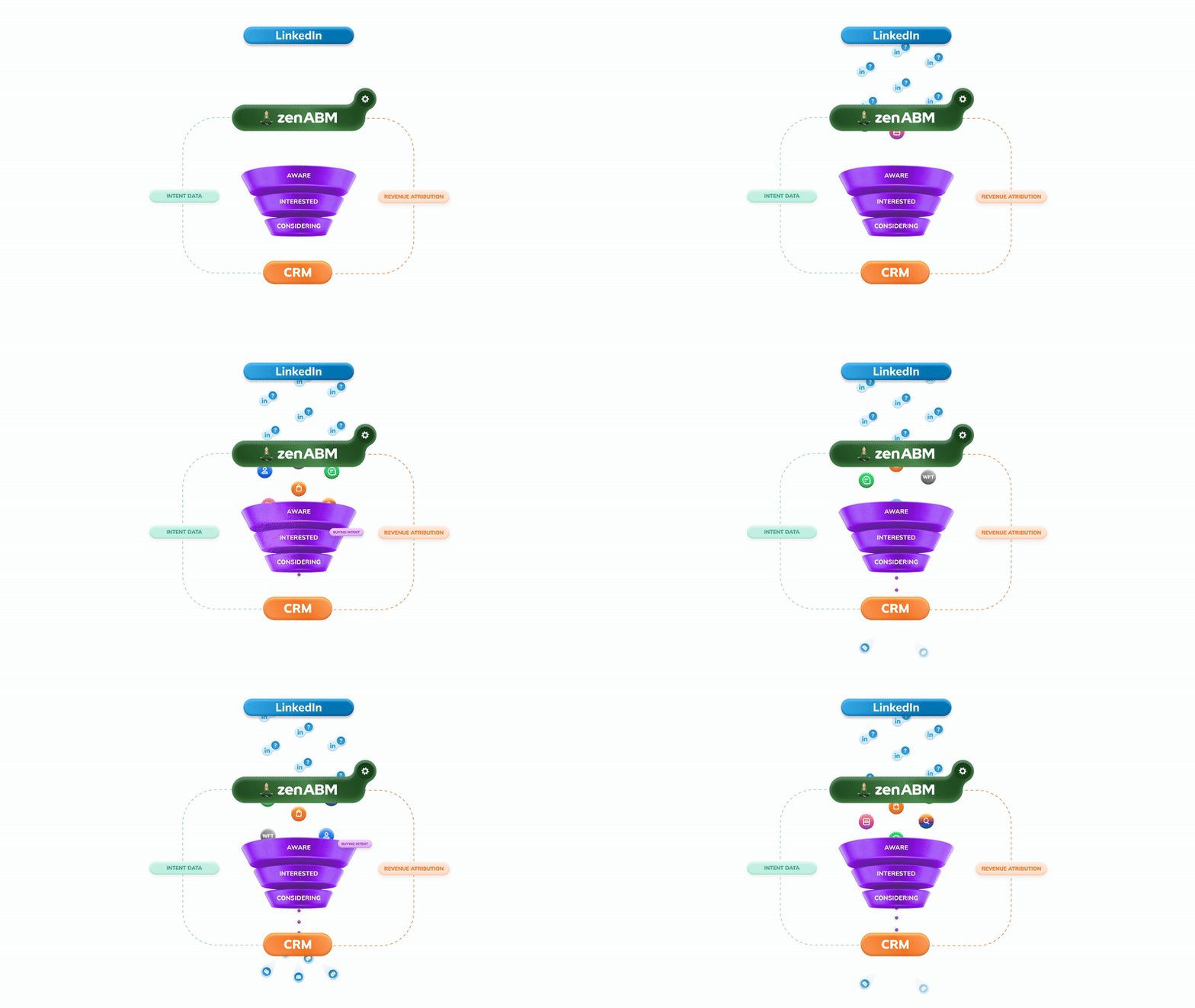

Influ2 takes a different approach.
Instead of measuring engagement at the company level, Influ2 measures it at the named-contact level, showing you which specific person at a target account viewed and clicked your ad.
That contact-level resolution closes the gap between marketing and sales because the SDR can call the person who actually engaged rather than guessing who inside the account is warm.
Influ2 has its own ad-serving infrastructure and does not run inside LinkedIn Campaign Manager, which means you trade off LinkedIn’s organic-feed placement for the contact-level visibility.
That trade-off is worth it for high-ACV enterprise sales motions where knowing who engaged is more valuable than maximum impression volume.
Pricing starts in the $25K to $50K per year range, making Influ2 best for enterprise teams selling six-figure deals where the buying committee is identifiable, and the CAC math supports premium tooling.

DemandSense is a newer entrant focused specifically on LinkedIn ABM that overlaps with ZenABM in scope (company-level engagement, ad scheduling, frequency capping) but indexes more enterprise on pricing and contract structure.
If you want a SOC 2 Type 2 vendor with custom MSAs and a CSM relationship, DemandSense is the alternative to look at.
What DemandSense does well: hourly reporting on LinkedIn ad performance, audience tuning workflows, and HubSpot and Salesforce CRM integrations that push engagement data into the CRM as account-level activity.
The product is solid, and the decision tends to come down to budget and the level of hand-holding you want from your vendor.
Intent data is the layer of account-based marketing software that tells you which accounts are actively researching your category.
There are two camps in this category:
You should buy from both camps.

Bombora is the data co-op that powers most third-party intent products you have seen, including pieces of 6sense, Demandbase, and RollWorks.
Buying Bombora directly gets you Company Surge data (which accounts are showing topical search spikes) at the data layer, without the wrapper of an ABM suite.
Bombora’s median pricing per Vendr is around $25K per year, which is real money for a data subscription, but if your sales team relies on intent signals to prioritize outreach, the ROI math works once you tie a single intent-led closed deal back to it.
Where Bombora is weak: it does not deliver actionable workflows.
You get data, and you still need a Clay, a HubSpot, or a 6sense to act on it.
For teams that already have an orchestration layer, Bombora is the cleaner buy, since a bundled platform like 6sense only makes sense if you also need activation and not just the data itself.

RB2B identifies anonymous US-based visitors to your website and resolves them to LinkedIn profiles.
The free tier covers up to 500 person-level identifications per month, which is more than enough for most SMB sites, and paid plans cover higher volumes and add team features.
What RB2B does that Bombora cannot: it tells you which specific person from a target account hit your pricing page yesterday.
That contact-level resolution on first-party traffic is the single highest-intent signal you have access to as a B2B marketer in 2026.
The trade-off is that RB2B is US-only on the person-level resolution; outside the US, it falls back to company-level identification.
For deeper first-party intent on your LinkedIn ads and other ad channels (not just your website), the company-level engagement layer in ZenABM closes that loop.
6sense gets a second mention here because the intent product on its own is worth considering separately from the full ABM suite.
The 6sense Sales Intelligence product (priced lower than the full ABM platform) gives you anonymous IP reverse-resolution, predictive intent scoring, and account journey stages without committing to the display ads side.
If you already have a LinkedIn-first activation layer (ZenABM, Influ2) and an outbound layer (Clay, Apollo), and you just need predictive intent fed into both, 6sense Sales Intelligence is the cleaner buy at roughly $40K to $60K per year for a mid-market team.
“Don’t overengineer your LinkedIn Ads accounts. We all get inspired once in awhile with an idea that we believe will perform amazingly. What if we showed these ads to these guys and then only if they click on this ad we’ll show them that. Then we’ll use the intent data from 6sense to show them BOFU ads, and that’ll do the trick. I’ve audited so many accounts that are just overengineered like this. It’s killing your account. It makes everything more expensive. It doesn’t match the reality of how orgs actually buy things.”
Gabriel Ehrlich, Founder at Remotion, in his LinkedIn post

The last category is the activation layer that turns intent into conversations.
Whether you call this sales engagement, sequencing, or outreach automation, it is the part of the ABM stack where signals become meetings.
Three tools cover the spectrum from SMB to enterprise.

HeyReach is the LinkedIn outbound tool that has earned the trust of agencies running B2B ABM in 2026.
It rotates LinkedIn accounts (one of the few tools that lets you operate multiple sender accounts compliantly), supports connection requests with personalization, and integrates cleanly with Clay for the data side.
Pricing starts at $79 per month for one sender account, and the platform charges per LinkedIn sender rather than per user, which means your whole team can manage campaigns from one subscription without the bill multiplying.
For the workflow that ties LinkedIn ABM data to outbound, the ZenABM warm outbound with Clay playbook walks through the exact automation.


Smartlead is the cold email platform we run for ZenABM’s own outbound.
The differentiator is the unlimited inbox warming and the deliverability infrastructure (rotating domains, IPs, automatic sender rotation) that keeps emails landing in the primary tab instead of spam.
Pricing starts at $39 per month for the Base plan, which covers unlimited email accounts and 6,000 sends per month, so you are not paying per mailbox as your infrastructure scales.
For a fraction of what Outreach.io or Salesloft costs, Smartlead handles the infrastructure layer of cold outbound and lets Clay handle the personalization layer.
Where Smartlead is weak: native CRM integrations, reporting dashboards, and the governance enterprise teams need.
For a 4-person SMB GTM team, it is more than enough, but a 40-person sales org with strict pipeline reporting should look at Salesloft instead.
Salesloft is the enterprise-grade sequencing platform with deep Salesforce integration, conversation intelligence (recording and AI summary of every sales call), and the kind of reporting that lets sales leadership track activity at the rep level.
It is overkill for a five-person team, but for a real sales org, it is still the standard.
Pricing is custom-quoted and not published, with most mid-market buyers landing between $125 and $165 per user per month at list price before negotiation.
Salesloft’s tight integration with 6sense (which now owns Bombora) lets you pull intent signals directly into the rep’s sequencer view, so the AE sees surging intent topics at an account before the next call.
That account intelligence is the actual workflow ABM was supposed to deliver.
Picking three tools per category is not the same as having a working ABM stack.
The stack only works when the tools share data and trigger each other.
Here is the rough architecture I see working in the best ABM programs in 2026:
The mistake I see most often is teams skipping Layer 3 entirely.
Without intent and engagement signals feeding into outbound, your sequences fire at every account on the TAL with the same urgency, because without intent data, there is no way to rank one account above another.
With intent signals, the sequences fire when the account is actually in market, and that single change is what moves reply rates from 1% to 5 to 7%.
At ZenABM, we have built a Claude plugin that sets up an automated outbound engine:

Here is the rough cost comparison I run when I help teams decide between a bundled enterprise ABM platform and a stack of point solutions.
| Approach | Annual Cost (Approx) | Setup Time | Best For |
|---|---|---|---|
| Demandbase One (bundled) | $65K to $120K | 4 to 9 months | Enterprise with dedicated ABM ops |
| 6sense Revenue AI (bundled) | $80K to $200K | 3 to 6 months | Enterprise with high-ACV motion |
| Terminus (bundled) | $23K to $87K | 1 to 3 months | Mid-market display ABM |
| RollWorks (bundled) | $30K to $60K | 4 to 8 weeks | Mid-market display + CRM signals |
| Best-in-class point stack (Clay + ZenABM + RB2B + HeyReach + Smartlead) | $18K to $42K | 2 to 4 weeks | SMB and mid-market LinkedIn-first ABM |
The point stack is between half and a fifth of the cost of the bundled enterprise platforms, and it ships in weeks instead of months.
The trade-off is that you need someone on the team who can wire integrations together, and if you do not have that person, the bundled platform makes sense even at the higher price.
The mistake most teams make when evaluating account-based marketing software is treating it as a single purchasing decision rather than five separate ones.
Every category covered in this guide solves a different problem: Clay enriches and qualifies your target account list, ZenABM tells you which accounts are actually engaging with your LinkedIn ads (and other ads too) and ties that engagement back to the pipeline, Bombora surfaces third-party intent before accounts ever visit your site, HeyReach and Smartlead convert those signals into conversations, and your CRM holds it all together as the system of record.
None of the bundled enterprise platforms does all five jobs better than the point solutions in each category.
What they offer instead is a single vendor relationship and a unified interface, which is a real operational benefit for a 200-person sales org with a dedicated ABM ops function but an expensive trade-off for a four-person GTM team that needs to move in weeks rather than quarters.
The right stack is the one that gets intent signals into your outbound sequences and ad audiences without requiring a full-time admin to keep it alive.
If your channel mix is 50% LinkedIn ads or higher, ZenABM is the fastest path to company-level engagement data in your CRM and the attribution layer that makes every other tool in the stack more useful.
Try ZenABM on your own (37-day free trial) or book a demo with us to know more!
Some questions about account-based marketing software:
For B2B SaaS, the best stack depends on ACV.
Below $50K ACV, I recommend Clay for prospecting, plus ZenABM for LinkedIn ABM, plus HeyReach and Smartlead for outreach.
Above $100K ACV with enterprise sales motion, 6sense or Demandbase as the bundled platform is justified by the higher CAC math.
Pricing ranges widely.
A best-in-class point stack of Clay, ZenABM, RB2B, HeyReach, and Smartlead lands at $18K to $42K per year.
Bundled enterprise platforms (6sense, Demandbase) run $65K to $200K per year with annual contracts.
The right answer is whatever produces the highest pipeline-to-cost ratio for your motion.
Yes.
The CRM is the system of record, but it is not an activation or measurement layer for ABM.
Your CRM does not pull LinkedIn ad engagement at the company level, does not run waterfall enrichment, and does not surface third-party intent signals.
ABM software fills those gaps and writes the resulting signals back into the CRM.
The LinkedIn Campaign Manager and HubSpot integration guide covers the gap in detail.
6sense wins on predictive intent and the AI-driven account scoring model.
Demandbase wins on website personalization and the depth of the orchestration layer.
For most enterprise teams, the deciding factor is which CRM and ad ecosystem they already use.
6sense’s tight Salesloft integration is a tiebreaker for Salesforce shops; Demandbase’s website personalization is a tiebreaker for content-heavy GTMs.
For under $200 per month, the working stack is Apollo (for contacts and basic sequencing) plus ZenABM Starter (for LinkedIn ABM engagement), plus RB2B Free (for site intent).
That gets you a working ABM motion at roughly $150 to $200 per month.
It will not scale to enterprise, but it is enough to validate the channel and prove out pipeline before you invest in heavier tooling.
