



Most account-based marketing (ABM) platforms and even agencies pitch you to run B2B display advertising with banner ads across thousands of websites to your target accounts.
They claim that it creates “surround sound” and builds awareness everywhere your prospects browse.
But the actual data, I saw, says otherwise.
B2B display ads have a CTR below 0.5%.
They cannot target by company natively without a third-party data layer.
And the “company-level targeting” they offer is based on reverse IP matching, which peaks at a mere 40% accuracy (as reported by a Syft study and several other ones).
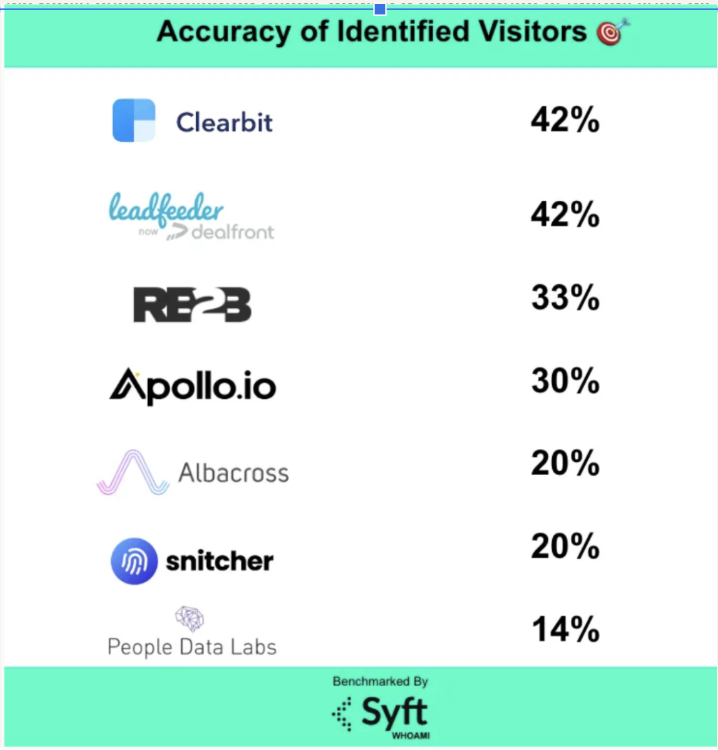
This means atleast 60% of your ad impressions go to people you cannot verify are at target accounts.
Meanwhile, LinkedIn has been delivering company-level targeting natively, returning engagement data per company via the API, and producing a pipeline at $10.+ per dollar spent in examples like Userpilot’s ABM campaign.
The comparison is not close at all.
This post breaks down where display advertising fits in B2B ABM (yes, it has a role), where it does not (primary channel), and why LinkedIn should be the foundation of your ABM ad stack.

In case you want a quick summary:
Display advertising was built for consumer brands.
The targeting model is based on cookies, browsing behavior, and audience segments, not company identity.
When you try to use it for ABM, you hit four structural problems that no amount of optimization can fix.
The Google Display Network does not have a “target employees at these 3,000 companies” feature.
To do company-level targeting with display, you need a third-party layer (Demandbase, 6sense, RollWorks, or similar) that matches IP addresses to companies and serves display ads accordingly.
This adds cost (these platforms start at $20K+ per year), complexity, and a fundamental accuracy problem: reverse IP matching works at 20 to 40% accuracy for B2B traffic (as we disucsses in the intro).
The rest of your impressions go to unidentified visitors who may or may not be at target accounts.
The accuracy problem gets worse in the remote work era.
IP-based targeting identifies office networks, not individual professionals.
When your target VP of Marketing is working from a home office, a coffee shop, or a co-working space (which is the majority of knowledge workers in 2026), IP targeting misses them entirely.
The 20 to 40% match rate was measured before remote work became the default; in practice, the real accuracy for reaching specific individuals at target accounts is likely even lower now.
LinkedIn, by contrast, lets you upload a company list and target employees at those companies natively, and also lets you narrow down with a variety of firmographic and other filters.


No third-party layer needed.
The targeting is based on LinkedIn’s own first-party professional identity data (company name, job title, seniority), which works whether the person is in an office, at home, or on a plane.
That is an architectural advantage that display cannot replicate, regardless of which ABM platform you add on top.
Display advertising tells you that an ad was shown and someone clicked.
It does not tell you which company that person belongs to (unless you add reverse IP on your landing page, which again is 20 to 40% accurate).
This means you cannot answer the most basic ABM question: “Did our ads influence Acme Corp’s buying journey?”
LinkedIn’s API returns engagement data broken down by company.
You can see that Acme Corp received 47 impressions and 3 clicks on your ABM campaign.
Tools like ZenABM pull this data to build account scoring, qualitative intent classification (which campaigns and creatives each account engaged with most), and deal attribution that connects specific ad engagement to pipeline and revenue.
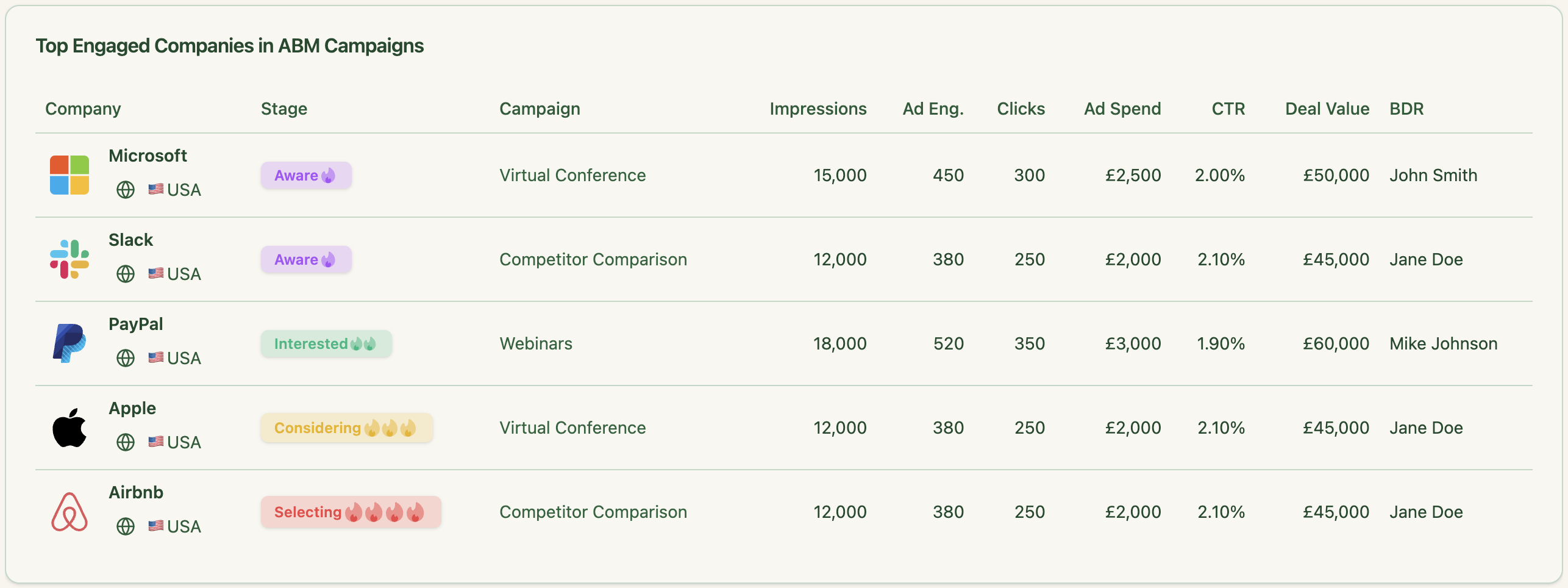
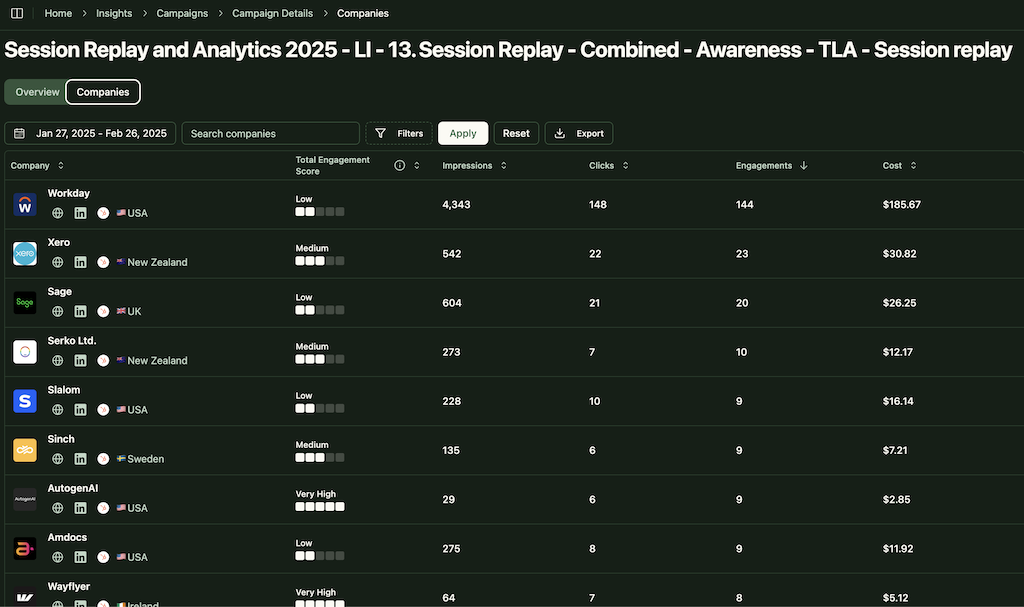
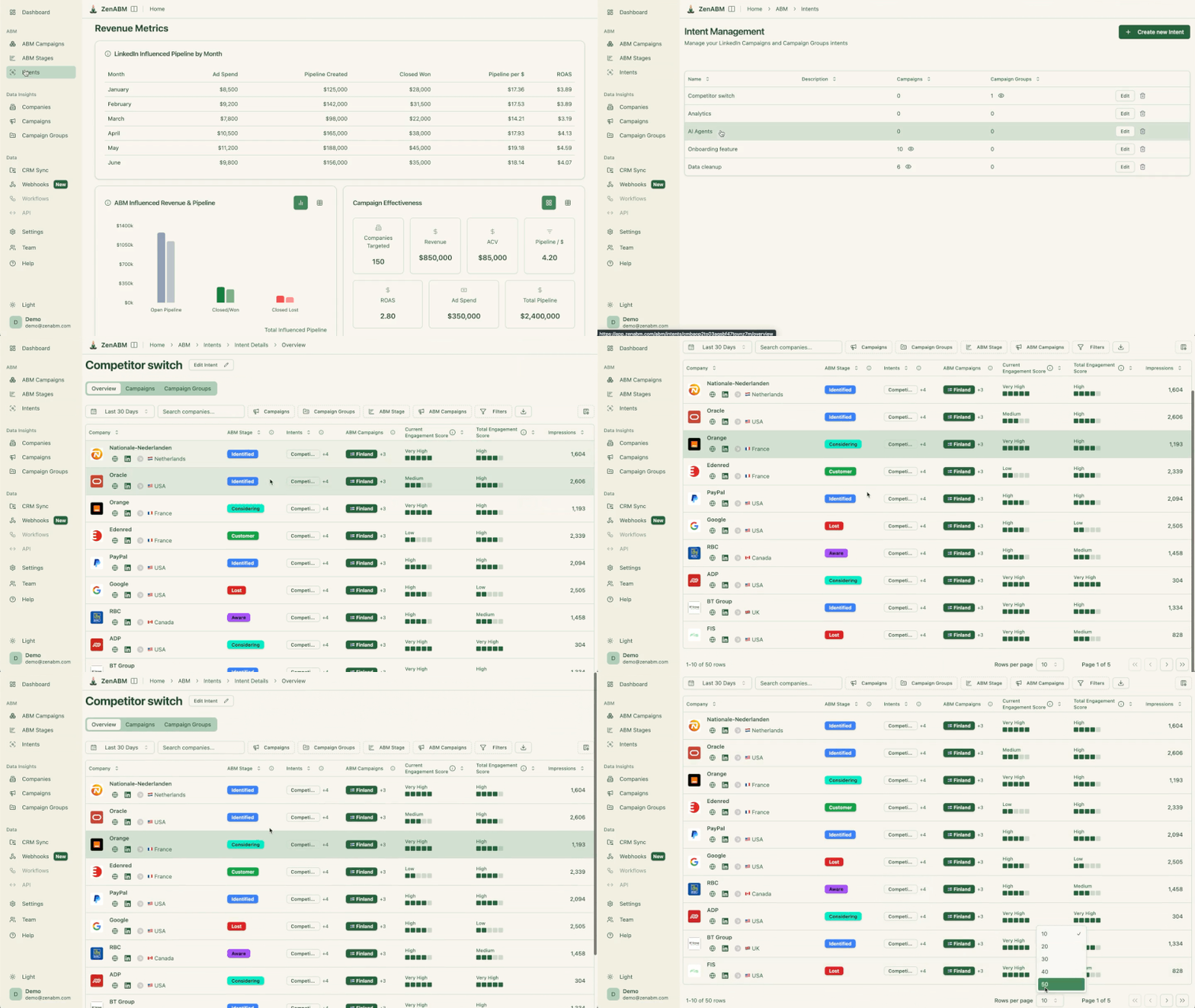

This company-level visibility is essential for ABM; without it, you cannot score accounts, route them to sales, or measure pipeline influence.
Display ads appear on news sites, blogs, recipe pages, and random corners of the internet.
The context is consumer, not professional.
Your $80K per year ABM software ad is appearing next to weather updates and celebrity gossip.
LinkedIn ads appear in a professional context where people are thinking about work, industry trends, and business tools.
The mental context alignment is dramatically better for B2B messaging, and the conversion data reflects it: LinkedIn’s overall U.S. conversion rate averages 6.1%, which is 63% higher than Google Search and 692% higher than Google Display (0.77%), according to industry benchmark data compiled from HubSpot and WordStream.
Moreover, the engagement rates for display ads are too low:


This is the problem most display advocates never mention.
When you run display ads through the Google Display Network or programmatic exchanges, a meaningful percentage of your “impressions” and “clicks” are not real people.
They are bots designed to mimic human browsing patterns and drain your budget.
LinkedIn’s closed ecosystem is not immune to all fraud, but the professional identity verification layer (real profiles, real companies, real job titles) makes bot-driven fraud dramatically harder to execute at scale.
For ABM programs where every dollar needs to reach a real person at a real target account, the fraud exposure of display is a material risk that most ROI calculations ignore.
For the detailed comparison with real data, see the full LinkedIn vs display ads for ABM post.
The most common argument for display in ABM is “surround sound”: the idea that your target accounts should see your brand everywhere they browse, creating the impression of ubiquity.
Every ABM platform (Demandbase, 6sense, RollWorks, Terminus) pitches this as a core benefit.
The problem is that “surround sound” through the display is mostly an illusion.
When 60 to 80% of your display impressions go to people you cannot verify are at target accounts, you are not surrounding your buying committee; you are surrounding random internet users with your brand while hoping some of them happen to work at the right companies.
Real surround sound for ABM requires verified reach to known accounts.
LinkedIn provides this natively because every impression is served to a verified professional at a company you can identify.
When you combine LinkedIn ads with retargeting (covered below) and direct outbound from your BDR team, you create actual surround sound: the same account sees your TLA in their feed, your retargeting ad on a news site, and a personalized email from your BDR, all within the same week, all referencing the same message.
That is orchestrated surround sound. Display-only “surround sound” is just expensive wallpaper on websites your buyers may or may not visit.
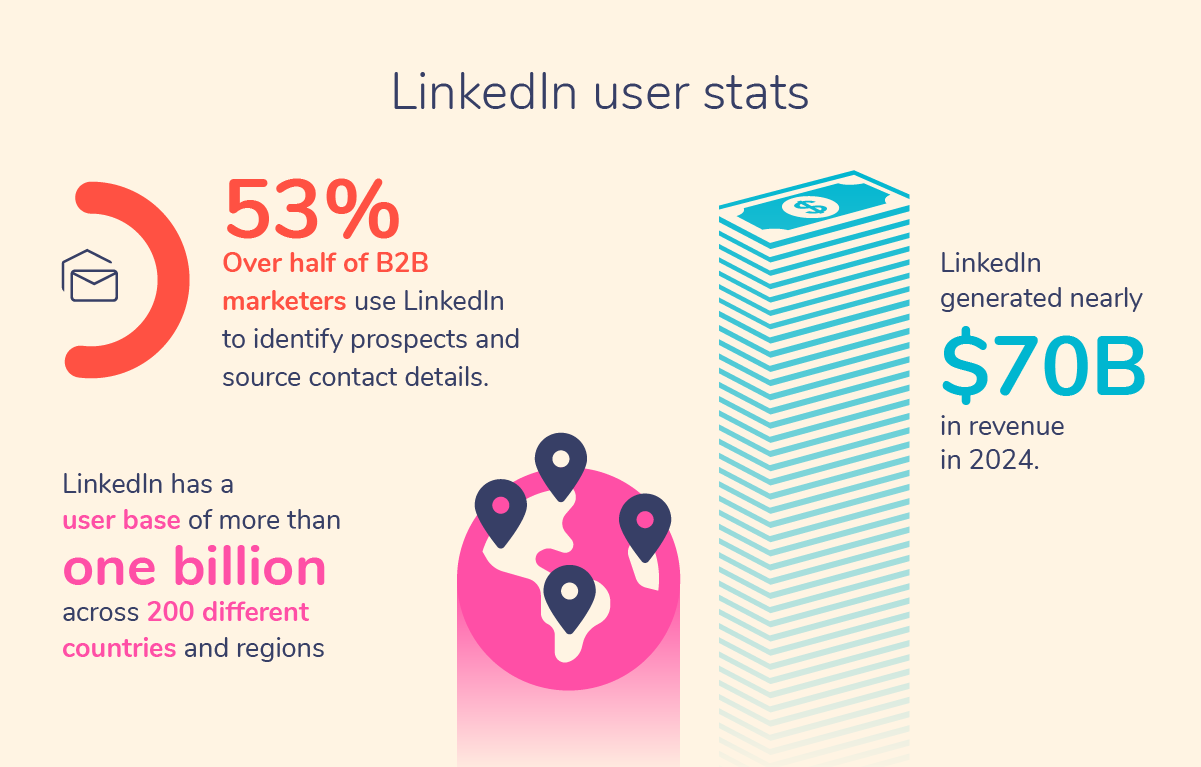
Here’s a side-by-side comparison of why LinkedIn ads work better than Display Advertising for account-based marketing:
| Dimension | LinkedIn Ads | B2B Display (GDN/Programmatic) |
|---|---|---|
| Company targeting | Native: upload company list | Requires 3rd-party layer ($20K+/yr) |
| Targeting accuracy | First-party professional identity (works for remote workers) | IP-based inference (20 to 40% match, misses remote workers) |
| Company attribution | Yes: API returns per-company engagement data | No: requires reverse IP on landing page |
| Qualitative intent | Yes: campaign/creative-level engagement reveals what the account cares about (via ZenABM) | No: no visibility into which message resonated |
| Median CTR (ABM) | 0.42% (image), 2.68% (TLA) | Below 0.5% (all formats) |
| Conversion rate | 6.1% (U.S. average) | 0.77% (Google Display) |
| CPC | $2.29 (TLA), $13.23 (image) | $1 to $5 (but lower quality clicks) |
| CPM | $40 to $60 | $5 to $15 |
| Ad fraud exposure | Low (professional identity verification) | High (40% of spend wasted on non-human traffic) |
| Context | Professional feed | Consumer websites |
| Best ABM role | Primary: prospecting + retargeting | Secondary: retargeting only |
| Account scoring | Yes (via ZenABM) | No native capability |
| ROAS (B2B) | 113% (Dreamdata 2026) | 29% for Facebook; display typically lower |
Display is not useless for ABM.
It has a specific, narrow role: retargeting. And in that role, it is genuinely effective and cost-efficient.
When someone clicks a LinkedIn ad and visits your website, you can retarget them with display ads across the Google Display Network.
This creates the actual surround sound effect at much lower CPMs than LinkedIn.
The approach:
This works because the audience is pre-qualified.
They are target account contacts (they came from LinkedIn ABM campaigns), and they have shown interest (they clicked).
Display retargeting reinforces the message at a fraction of LinkedIn’s cost.
See the problem with the display occurs when you use it for cold prospecting, not retargeting.
For retargeting a pre-qualified audience, display CPMs ($5 to $15) are much cheaper than LinkedIn CPMs ($40 to $60) and the job is different: reinforcement and frequency, not targeting and qualification.
Not all retargeting is equal.
Structure your display retargeting by intent level to match the creative to the visitor’s stage:
Set frequency caps (3 to 5 impressions per user per week) to avoid ad fatigue, and exclude converted contacts from retargeting audiences so you do not waste impressions on people who already booked a meeting.
There is one scenario where programmatic display (not basic GDN) adds genuine value beyond retargeting: when you have a large enough target account list, a long enough sales cycle, and the budget to invest in a proper ABM display platform.
Companies running programmatic ABM campaigns report +208% sales on influenced accounts and 2 to 3x higher meeting likelihood, according to Hey Sid’s 2026 B2B programmatic research.
But this requires:
For enterprise teams with $40K+ monthly ABM budgets and dedicated RevOps resources, layering programmatic display alongside LinkedIn can genuinely expand buying committee reach beyond the LinkedIn feed.
For teams under $20K per month, the complexity and cost of programmatic display will almost always produce worse ROI than simply investing more in LinkedIn.
Here is the recommended budget allocation and stack to maximize pipeline per dollar spent:
Company-level targeting, TLAs for awareness (at $2.29 median CPC, dramatically cheaper than image ads), image and video for product messaging, and full attribution via ZenABM.

This is where you do all cold prospecting, all account warming, and all intent signal generation.

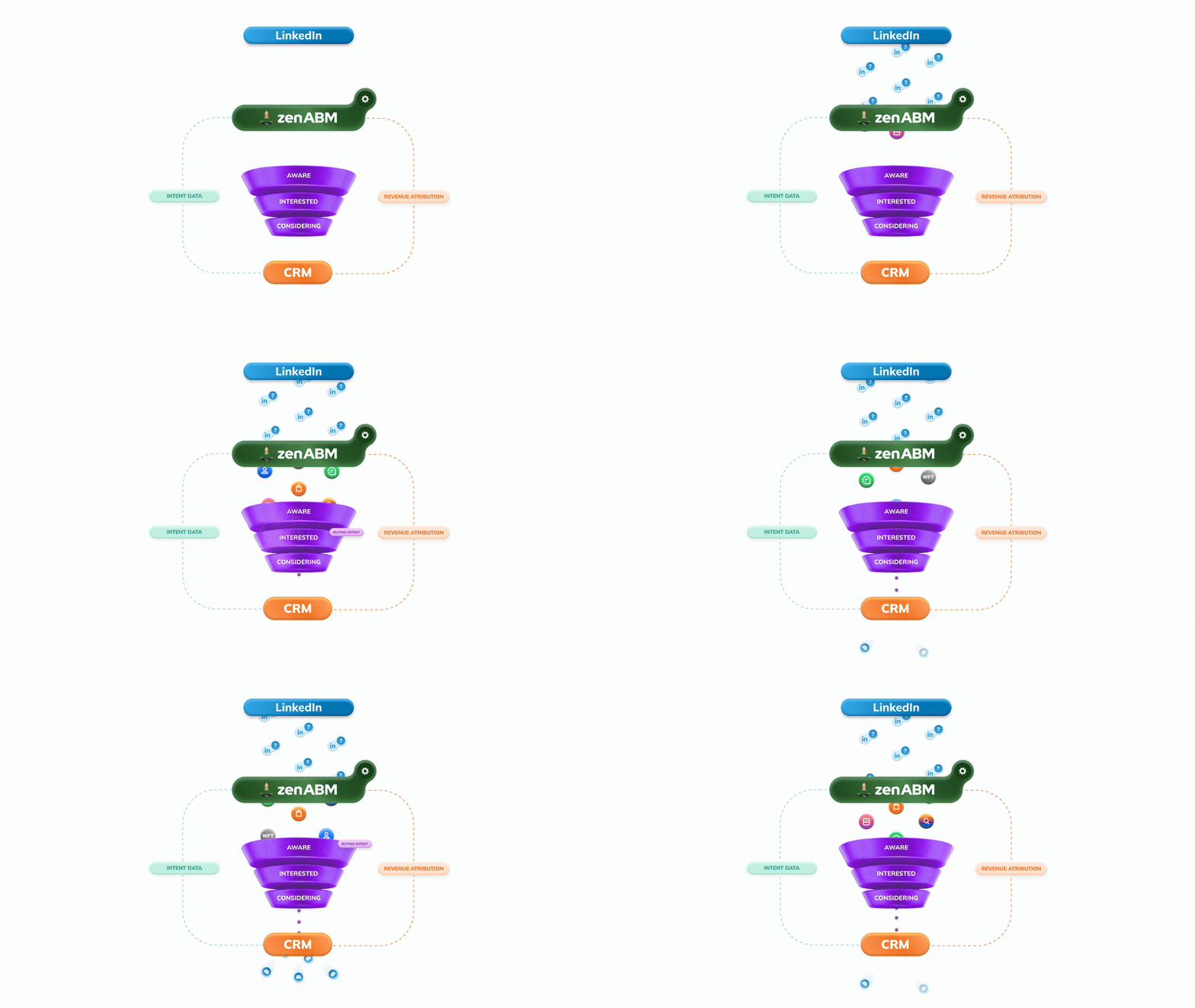
Retarget visitors from LinkedIn-exclusive landing pages with structured retargeting layers (pricing page visitors get case studies, blog visitors get thought leadership, non-converters get alternative CTAs). Low CPMs ($5 to $15) provide brand reinforcement at a fraction of LinkedIn’s cost.
Same retargeting approach on Facebook and Instagram.
Different context (personal), but adds touchpoint frequency.
Research shows that prospects who receive touches across both marketing and sales channels move down the pipeline 234% faster than those with sales outreach alone, and adding a third retargeting channel (Meta) further compounds that multi-channel effect.
Do not start with the display.
Do not split the budget equally between LinkedIn and display.
Build on LinkedIn first, prove pipeline, then add display retargeting as an amplification layer once your LinkedIn campaigns are generating enough click volume to build meaningful retargeting audiences.
The full ABM on LinkedIn guide covers the complete campaign structure.
B2B display advertising has no place in your primary ABM prospecting funnel.
The infrastructure is broken: IP matching fails for remote workers, you cannot see which accounts engaged with your messages, and the “surround sound” narrative is marketing fiction hiding 60% wasted spend on unverifiable visitors.
LinkedIn is the channel; ZenABM is the tool that makes it work.
This is ABM at unit economics that actually scale.
Try ZenABM free for 37 days (starting at $59/month) or book a demo now to know more!
Some common questions about display advertising for account-based marketing:
Only for retargeting. B2B display advertising lacks native company-level targeting and attribution.
For cold ABM prospecting, LinkedIn is far more effective because it offers native company list targeting and returns company-level engagement data via the API that tools like ZenABM use for account scoring, qualitative intent classification, and deal attribution.
Display works well when retargeting visitors from LinkedIn ABM landing pages, because the audience is pre-qualified and the job is frequency and reinforcement rather than targeting and qualification.
Five reasons: (1) LinkedIn offers native company-level targeting without third-party tools, (2) the LinkedIn API returns engagement data per company for scoring and attribution via ZenABM, (3) LinkedIn’s professional context means ads appear where people think about business decisions, (4) LinkedIn’s conversion rate of 6.1% is 692% higher than Google Display’s 0.77%, and (5) LinkedIn’s first-party identity data works for remote workers while display’s IP-based targeting does not. See the full comparison analysis for detailed benchmarks.
80%+ to LinkedIn, 10 to 15% to display retargeting, 5 to 10% to Meta retargeting. LinkedIn should be the primary ABM channel where you do cold prospecting and build engagement data. Display and Meta are retargeting amplifiers that add touchpoint frequency at a lower cost. Do not start with display; build LinkedIn first, prove pipeline, then layer retargeting on top once you have enough click volume. Use the ZenABM ABM Budget Calculator for specific budget allocation guidance.
Programmatic ABM platforms add genuine value for enterprise teams with large budgets ($40K+ per month), long sales cycles, and dedicated RevOps resources. Companies running programmatic ABM campaigns report +208% sales on influenced accounts. However, these platforms start at $20K+ per year for the software alone (plus media spend), and they still rely on IP-based matching with its accuracy limitations. For teams under $20K per month in total ABM budget, investing in LinkedIn plus ZenABM ($59 per month) will almost always produce better pipeline ROI than splitting the budget across LinkedIn and a programmatic display platform.
The concept is valid; the execution through display alone is not. Real surround sound requires verified reach to known accounts across multiple channels. LinkedIn provides verified impressions natively. Display retargeting of LinkedIn-sourced visitors adds a second verified layer. BDR outreach coordinated with ad content adds a third. That is genuine surround sound. Running display ads through a third-party ABM platform with 20 to 40% match accuracy and hoping your buying committee happens to see them is not surround sound; it is expensive guesswork with a marketing label on it.
