

©2026 ZenABM - All Rights Reserved.

A buying signal is any observable behavior that suggests a company is moving toward a purchase decision.
The challenge in B2B is that the majority of the buying journey happens anonymously.
Prospects research your category, read reviews, ask peers in Slack channels, and compare vendors long before they fill out a demo form.
By the time an account fills out a form, the evaluation is already done, and the shortlist is already set.
The vendors already on the buyer’s shortlist win.
The ones who only show up after the form is filled are too late.
But here is the part most “buying signals” advice gets wrong: the hard problem is not detecting signals, but building the operational system that turns a detected signal into personalized outreach within hours, not days, while filtering out the noise that drowns BDRs in false positives.
As Brendan Short (The Signal Newsletter) puts it in his LinkedIn post:
“We are at an inflection point. We used to live in a market starved for data. Now flooded with it. There is too much data for a human to parse through manually. But if you can effectively separate the signal from the noise at scale, you will be in the 1% of GTM teams.”

In this post, I will cover:

Short on time?
Here’s a quick rundown:
Not all buying signals are equal.
The distinction between first-party and third-party signals is fundamental to how you prioritize and act on them, and most teams get this hierarchy backwards by investing in expensive third-party intent data before they have operationalized their own first-party signals.
These come from accounts interacting directly with your company. They are the most reliable buying signals because the account is engaging with you specifically, not just your category.
The most valuable first-party signals, ranked by reliability:
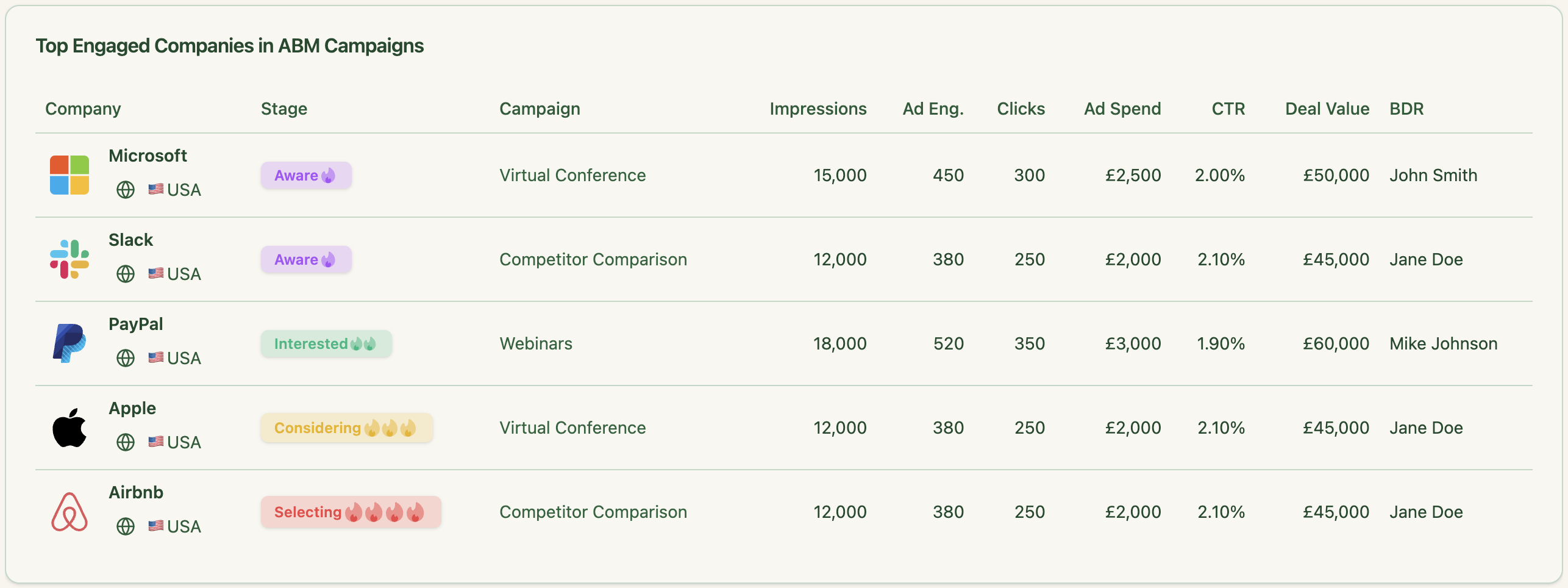
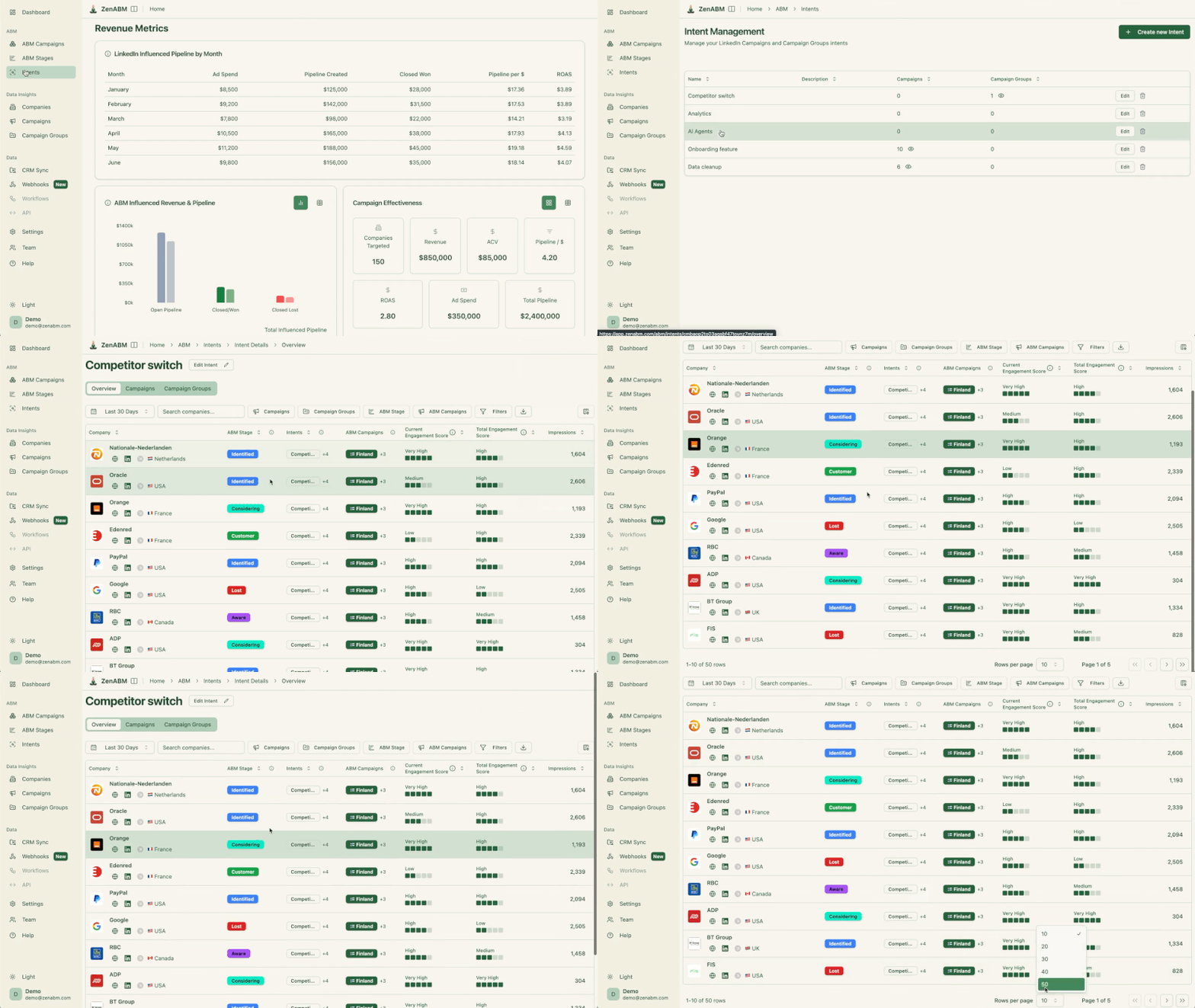
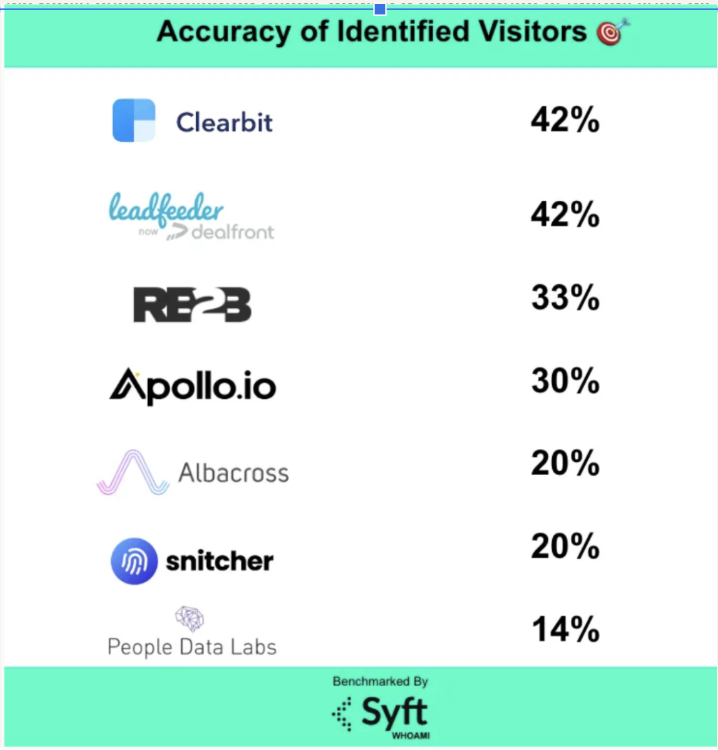
The thing is that legacy intent providers don’t offer the identity of the person behind the intent signal.
First-party signals solve this because you know the company, and often the specific contacts, behind the engagement.
These come from accounts researching your category elsewhere: review sites, industry publications, competitor websites.
They indicate in-market intent but not necessarily intent toward your specific product.
First-party signals are higher intent but lower volume.
Third-party signals are higher volume but lower specificity. The best strategies combine both, but always start with first-party.
LinkedIn is unique among ad platforms because it returns engagement data at the company level.
When you run LinkedIn ads targeted at your account list, you can see which specific companies saw your ads, clicked them, and engaged with them, without any third-party tools or reverse IP matching.
This makes LinkedIn ad engagement the most reliable and actionable first-party buying signal in B2B, for three reasons that no other signal source can match:
The data comes directly from LinkedIn’s API.
Unlike reverse IP (40% match rate at best, as we discussed before) or third-party intent (which can be noisy and stale), LinkedIn engagement data is accurate and complete.
If a tool like ZenABM shows that Acme Corp had 47 impressions and 5 clicks on your campaign, that is a verified data point, not a probabilistic match.
An account engaging with your LinkedIn ads is engaging with you, not just reading about your category on a publisher site.
Bombora tells you “Acme Corp is researching CRM software.”
ZenABM tells you “Acme Corp clicked your competitor-switching campaign 5 times and your pricing-focused ad twice.”
The second signal tells the BDR exactly what to say.
This is what makes LinkedIn ad engagement categorically different.
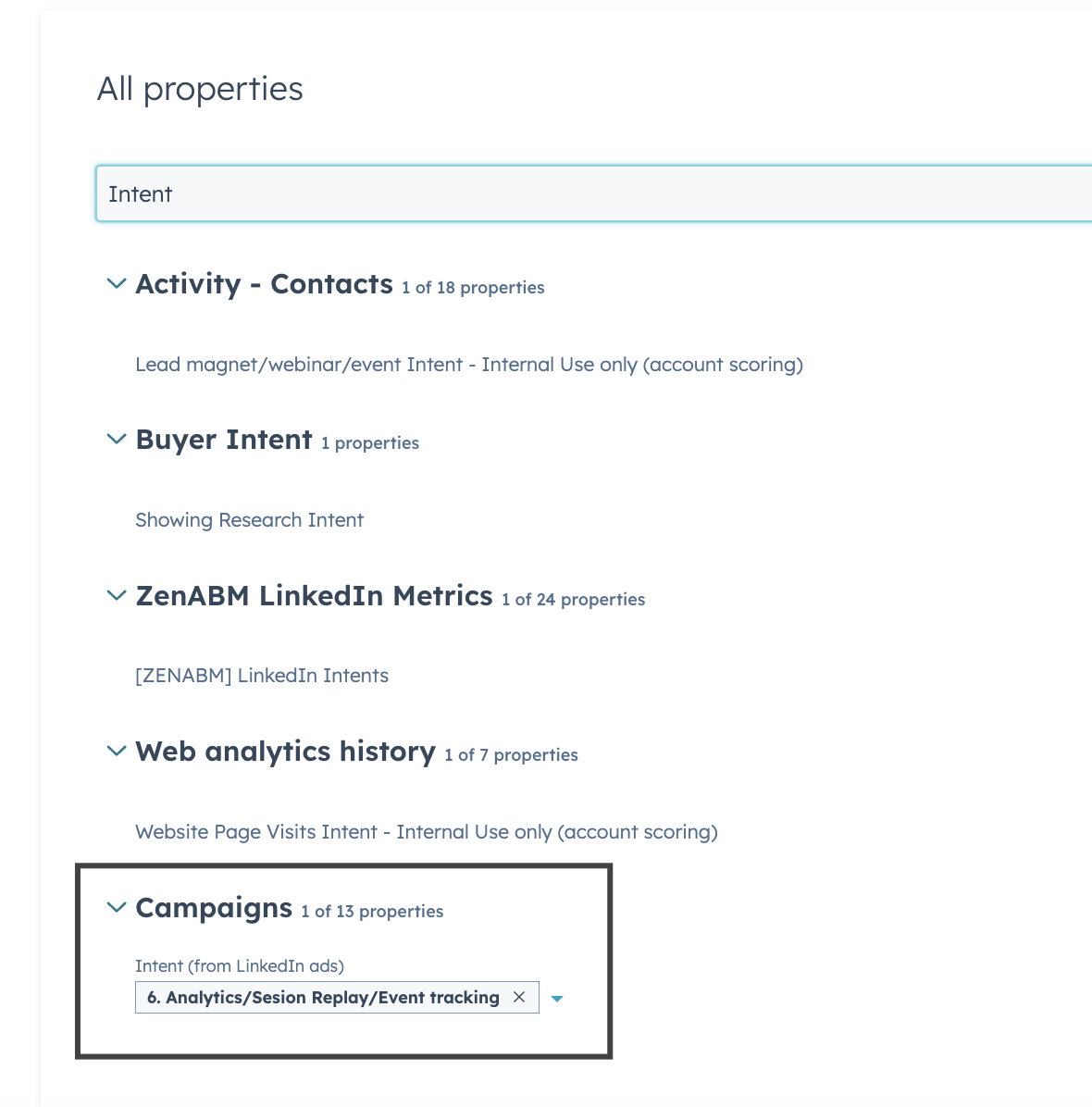
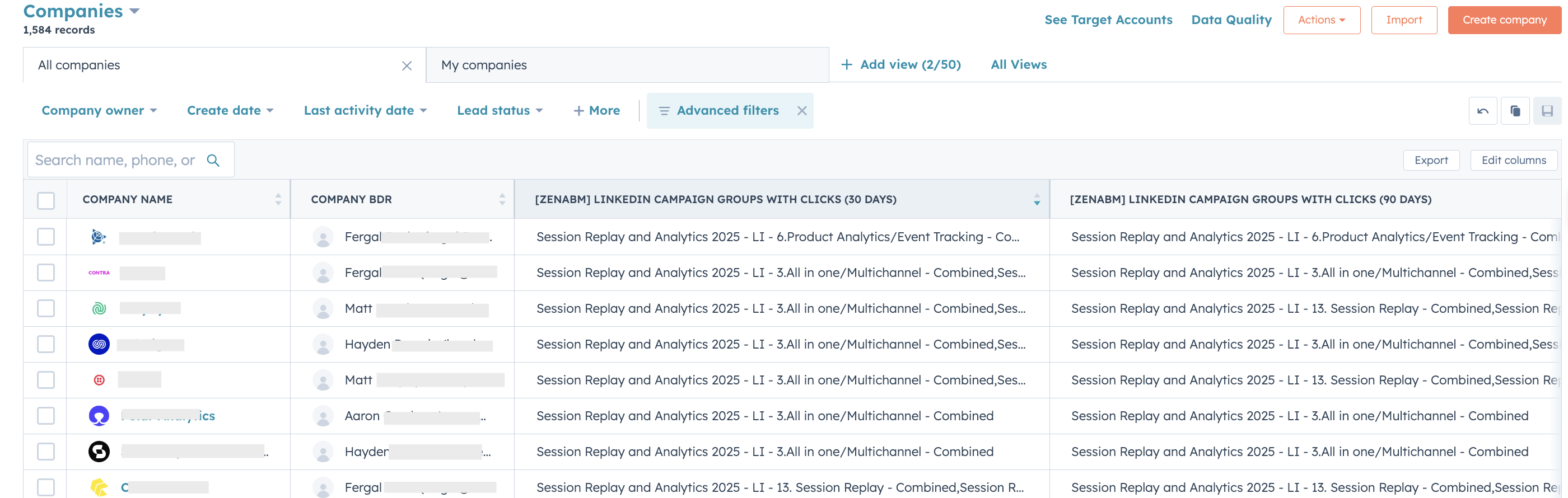
Because ZenABM tracks engagement at the individual campaign and creative level, it knows whether an account engaged most with your competitor-switching campaign, your onboarding analytics campaign, your enterprise security creative, or your pricing offer.
That qualitative detail is functionally the same insight that tools like Bombora provide through topic-level research surges, except ZenABM’s version is first-party (from your own campaigns, not third-party publisher networks), tied to your specific messaging and positioning (not generic category keywords), and starts at $59 per month rather than $25,000 to $75,000 per year.
A single buying signal (one ad click, one website visit) is directional but not conclusive.
The account might have been curious, or someone tapped a link accidentally on mobile.
Signal stacking means waiting for two or more signals to converge on the same account before treating it as high-priority.
Each additional signal reduces the probability that the engagement is coincidental and increases the probability that the account is genuinely in-market.
The difference between useful signal-based outreach and creepy surveillance outreach is whether the signal genuinely predicts a need, and stacking multiple signals is how you confirm that prediction.
| Signal Stack | What It Means | Recommended Action |
|---|---|---|
| LinkedIn ad clicks (5+ in 30 days) + pricing page visit | Engaging with your ads AND evaluating your pricing. This is a P0 signal. | Priority BDR outreach, same day. Lead with the qualitative intent from ZenABM (which campaign they engaged with most). |
| LinkedIn ad engagement + new VP hire | Aware of your brand, AND a new decision-maker is building their vendor stack. | Personalized outreach to the new hire, referencing their likely priorities. Window: 30 to 90 days. |
| LinkedIn ad clicks + G2 category page visit | Engaging with your content AND actively comparing alternatives on a review site. | Competitive comparison outreach. Lead with differentiation and social proof. |
| Recent funding + LinkedIn ad engagement | Has a new budget AND is paying attention to your category. | High-priority outreach within 48 hours. Reference their growth trajectory. |
| LinkedIn engagement acceleration + outbound email reply | Ad engagement is spiking, AND they responded to direct outreach. | Book the meeting immediately. Every hour of delay reduces booking probability. |
| Multiple contacts from the account read your report | The buying committee is circulating your content internally. | Send a follow-up sequence with a calculator to see how they compare against benchmarks (Emily Kramer’s play). |
Emily Kramer (Founder at MKT1) cuts through the noise with a key principle:
“Lots of intent signals are just noise. But here are 16 signal-based campaign ideas I actually like.”
Her most actionable trigger-to-action pairs for B2B teams:
The pattern across all of Kramer’s plays: the signal dictates both the timing AND the message. You are not just reaching out faster; you are reaching out with a reason that is specific to what the account just did.
The practical challenge with signal stacking is that signals come from different tools.
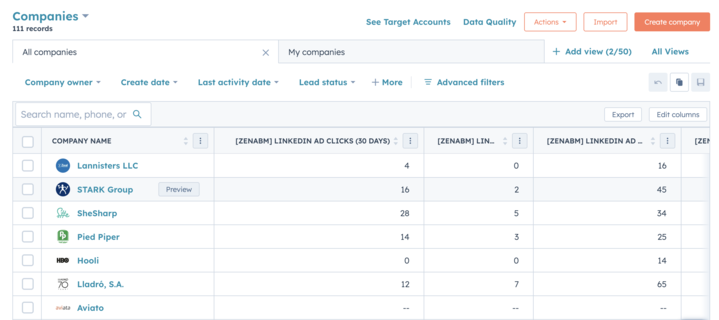
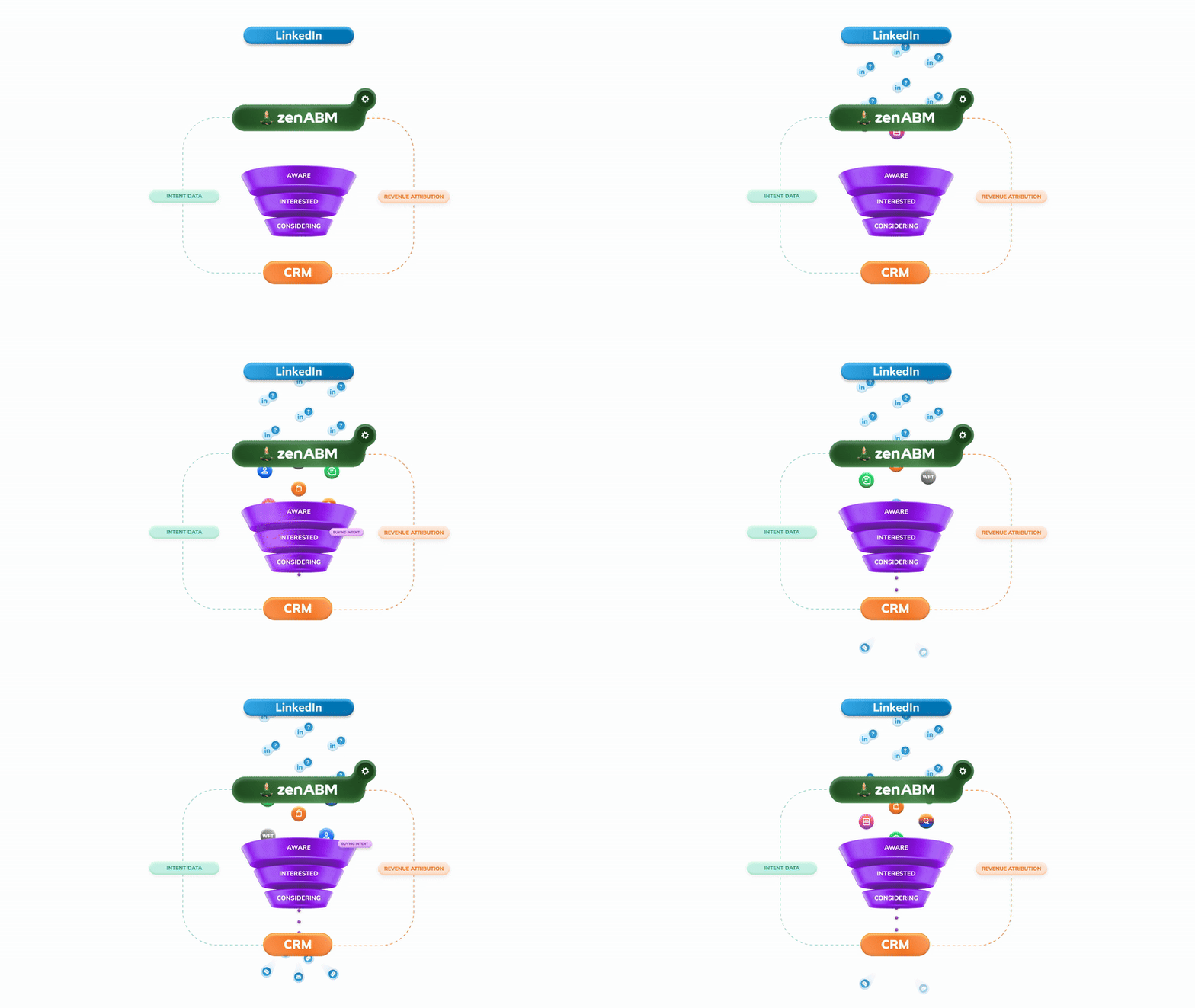
To stack signals, all of these need to flow into one system (the CRM) where they can be combined at the account level.
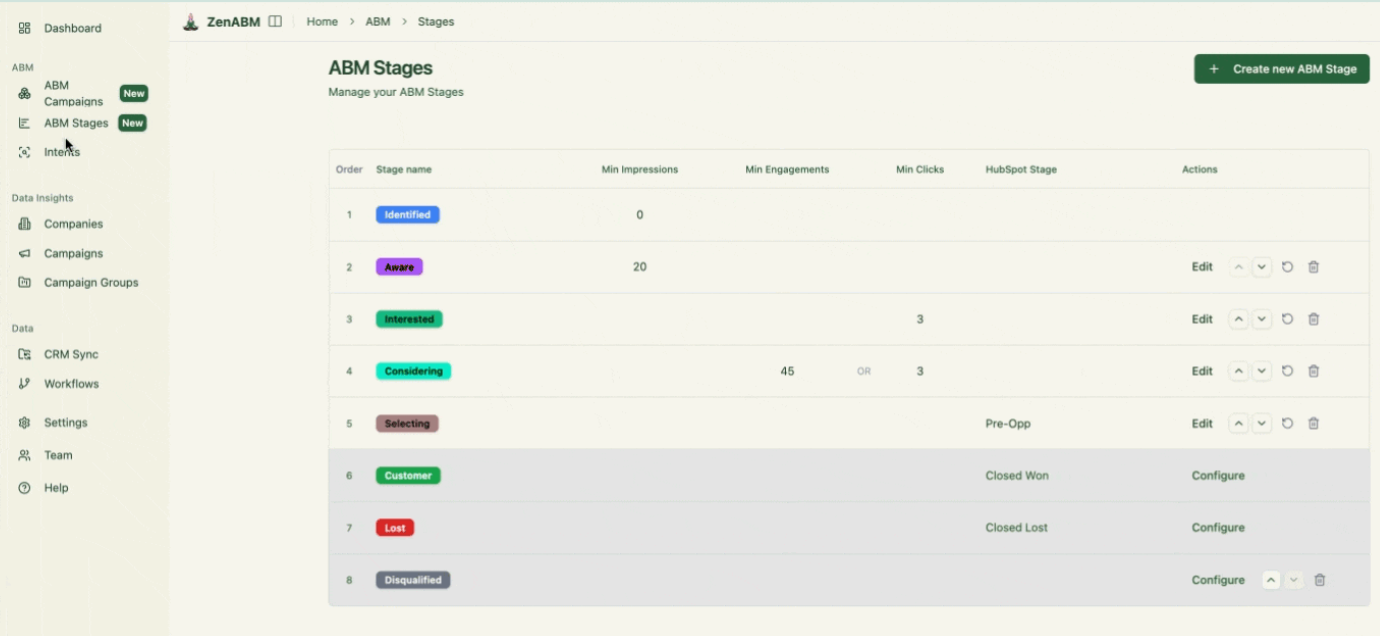
The configuration:
That last step is what turns signal stacking from a concept into a system.
Without the CRM workflow that evaluates combinations and fires alerts, signal stacking is just an analyst manually reviewing multiple dashboards, which means it does not scale and does not happen consistently.

The default “chase the hottest signals” approach doesn’t always work.
Two rules that most teams overlook:
The most optimal allocation of resources should be concentrated on lower-intent, and higher-frequency signals.
Why?
Because the high-intent signals (demo requests, pricing page visits) often convert themselves with minimal effort, while the medium-intent, high-frequency signals (LinkedIn ad engagement trends, content consumption patterns, social engagement) represent a much larger volume of accounts that need active outreach to convert.
This is exactly where ZenABM’s engagement scoring adds the most value: it surfaces the accounts in the medium-intent band (consistent ad engagement, accumulating clicks, moving from “Aware” to “Interested”) that represent your biggest outreach opportunity.
These accounts will not fill out a form on their own, but they are paying enough attention that a well-timed, well-contextualized outreach converts at dramatically higher rates than cold.

Identifying buying signals is half the job.
The other half is acting on them fast enough to matter.
Here is the complete workflow, covered in detail in the intent-based outbound guide.
ZenABM monitors LinkedIn ad engagement continuously and updates account scores and stages as engagement accumulates.
When an account crosses a threshold (e.g., 5+ clicks in 30 days), ZenABM automatically moves the account to the “Interested” stage and tags it with qualitative intent based on which campaigns the account engaged with most.
Simultaneously, third-party signals (hiring, funding, G2 visits, tech stack changes) feed into the CRM via Clay enrichment or direct integrations.
Not every signal warrants the same response. Route based on signal priority:
When ZenABM detects a stage change, a webhook pushes the account to Clay or LeadMagic.
Clay runs an enrichment waterfall: finds contacts matching your buyer personas at the account, enriches them with email and LinkedIn profiles, and pushes them back to HubSpot.

By the time the BDR sees the Slack alert, the contact list is already ready. This parallel automation (notification + prospecting running simultaneously) is what eliminates the 45-minute manual research gap that kills urgency.
The BDR’s outreach references the specific signal, not a generic pitch.
The qualitative intent from ZenABM makes this possible:
The message is specific because the signal is specific.
Email via SmartLead or Instantly, plus LinkedIn via HeyReach or Expandi.
The same message angle, different channels.
As Philip Ilic (LinkedIn ads specialist) describes in his post:
“LinkedIn ads function as a demand creation foundation before outbound conversion efforts begin. Full-funnel LinkedIn ads strategy creates AND captures demand, not just one or the other.”

The buying signals from the demand creation phase are what make the capture phase work.
Most buying signal content focuses exclusively on the prospecting phase: detecting in-market accounts and triggering outreach.
But as Gal Aga (CEO at Aligned) pointed out in his post:

“Most AEs just work all deals, not knowing who’s serious.”
The thing is: Signal-based selling is mostly talked about from a prospecting perspective.
The idea of mid-sales signals to help with forecasting, helping reps understand who is serious and evaluating vs just looking at email opens, can be tranaformative!
After all, buying signals exist at every stage of the deal, not just the top of the funnel.
Active deal signals can be divided into three categories that determine your next move:
Buying signals do not end at closed-won. For customer accounts, the same engagement infrastructure that detected purchase intent now detects expansion and churn signals:
Beyond the standard buying signals, three signal types get overlooked consistently.
This is the single strongest predictor of active evaluation in LinkedIn ad data.
An account that went from 2 clicks per month to 8 clicks this week is not casually browsing; they are actively comparing solutions, and the window to reach them is measured in days.
ZenABM’s week-over-week comparison surfaces these acceleration patterns.
A sudden spike matters more than a gradual accumulation because spikes indicate a trigger event (a new budget cycle, a competitor failure, a board mandate) that created urgency.

A comment on your TLA from a VP at a target account is a high-intent signal that most teams miss because nobody is systematically checking for it.
Someone who shares your content or comments on your thought leader ad is publicly associating themselves with your brand.
An account that was engaging consistently (50+ impressions per month, 2 to 3 clicks per month) and then goes silent is a signal too.
For prospect accounts, silence may mean they chose a competitor or deprioritized the initiative. For customer accounts, declining engagement is an early churn signal that surfaces months before product usage metrics show the decline.
An engagement score trending downward on a customer account, tracked in a tool like ZenABM, should trigger a CS alert, not just a marketing concern.
Most teams treat buying signals as a research exercise.
They set up the alerts, pull the dashboards, and then still prospect the same way they always have.
The teams winning on signal-based outreach have one thing the others do not: a system. Signals flow into a CRM, combinations trigger alerts, and BDRs show up to accounts that are already paying attention, with a message that references exactly what those accounts engaged with.
That is not luck.
That is infrastructure.
ZenABM gives you the first-party signal layer that makes this possible: company-level LinkedIn ad engagement, qualitative intent by campaign, account scoring, and direct CRM push, starting at $59/month.
No six-figure intent data contracts.
No probabilistic matching.
Just clean, verified data on which accounts are watching you and what they care about.
If you are ready to stop prospecting blind, start ZenABM’s 37-day free trial and see which accounts on your list are already in-market, or book a demo with us to know more.
Some common questions about B2B buying signals and their answers:
B2B buying signals are observable behaviors or data points that indicate a company is moving toward a purchase decision. They range from digital engagement (ad clicks, website visits, content downloads) to corporate events (funding rounds, leadership changes, hiring surges). In ABM, the most actionable buying signals come from LinkedIn ad engagement data, which shows which companies are engaging with your specific campaigns and, through tools like ZenABM, which campaign topics resonated most with each account.
The LinkedIn Ads API returns company-level engagement data: impressions, clicks, and engagements per company per campaign. ZenABM pulls this data automatically, scores accounts based on engagement thresholds, classifies qualitative intent based on which campaigns accounts engaged with, and pushes stages and intent data to your CRM as company properties. This transforms raw engagement data into actionable buying signals that BDRs see in their daily workflow.
Signal stacking means waiting for two or more buying signals to converge on the same account before treating it as high-priority. For example: an account that clicked your LinkedIn ads 5 times AND visited your pricing page is a dramatically stronger signal than either event alone. The operational requirement is that all signal sources (ZenABM, HubSpot, Clay, G2) push data into one CRM where workflows can evaluate combinations and fire alerts automatically.
For stacked P0 signals (pricing page visit + ad engagement): same day, within 2 hours if possible. For P1 signals (ZenABM stage change to “Interested”): same day. For P2 signals (G2 activity, social engagement): within 24 hours. For P3 contextual signals (funding, new hire): 48 hours to 1 week. The companies that respond to buying signals first win disproportionately.
Intent data is a subset of buying signals. Intent data specifically refers to third-party data about accounts researching topics related to your category (tracked by providers like Bombora at $25K to $75K per year or 6sense at $50K to $150K+ per year). Buying signals is the broader category that includes first-party data (your own engagement data from LinkedIn ads via ZenABM, website via HubSpot, CRM) plus third-party intent data plus corporate event signals. For most B2B teams, first-party buying signals from LinkedIn ABM campaigns are the most actionable and affordable starting point at $59 per month.
Three commonly overlooked signals: (1) Engagement acceleration, a sudden spike in ad clicks from an account that indicates a trigger event and active evaluation. (2) Champion signals: comments and shares on your TLAs from contacts at target accounts (Emily Kramer recommends scraping these and connecting personally). (3) Negative signals: declining engagement scores on customer accounts that predict churn 3 to 6 months before product usage metrics show the decline. And as Gal Aga and Melissa Gaglione emphasize, mid-deal signals (procurement involvement, champion going quiet, committee members looping in) are equally actionable but rarely tracked systematically.
