

Looking for Terminus alternatives for your ABM program?
Terminus is one of the most recognizable “orchestration-first” ABM platforms: run account-based ads, coordinate plays across channels (display, LinkedIn, email, chat), and keep engagement reporting in one place.
That is also why teams start shopping around.
Not because Terminus is not god, but because a lot of ABM teams do not actually need a suite built to manage everything for everyone.
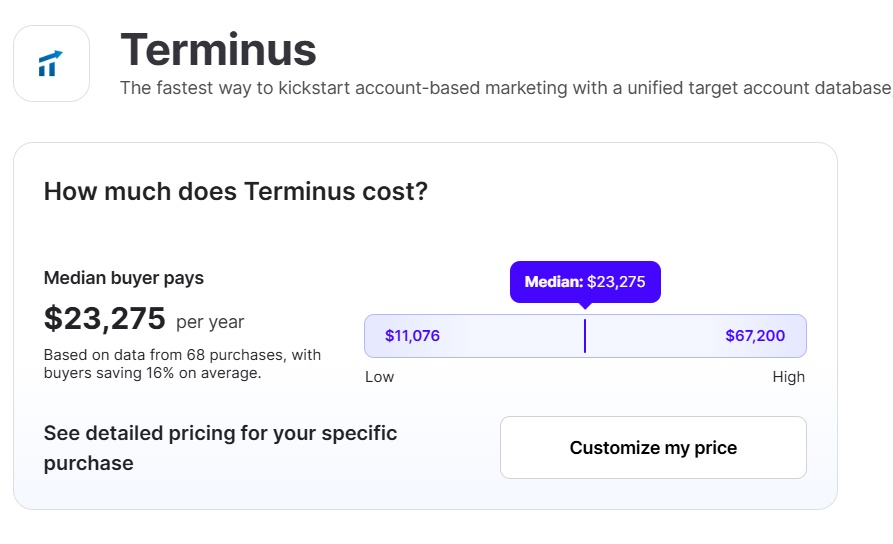
They need reliable account signals, audiences they can activate quickly, CRM-triggered follow-up, and attribution tied to pipeline (without months of rollout work and a bill above $23k+ per year).
In this guide, I’ll break down the top 10 Terminus alternatives for 2026, plus a fast way to pick based on what you actually need.
| Tool | Category | Starting Price | Core Strength | Best For |
|---|---|---|---|---|
| RollWorks | ABM Ads + Account Targeting | Custom pricing | Account-based advertising, audience building, and engagement reporting designed for practical mid-market ABM execution | Teams that want ABM ads orchestration and targeting outcomes without an enterprise “everything platform” |
| ZenABM | Measurement + Intent (LinkedIn-first ABM) | $59/mo |
|
LinkedIn-first ABM teams needing sales-ready account insights without suite overhead |
| N.Rich | ABM Execution Platform + DSP | Starts from $10k annually, growth package costs $23.8k annually, and bigger packages are custom quoted. | All-in-one ABM execution layer (including its own DSP) with segmentation, personalization, and activation | Teams and agencies that want execution controls, not just dashboards |
| 6sense | Enterprise Intent + Orchestration | Custom pricing (Vendr lists median around ~$54k annually) | Predictive intent, buying stages, and orchestration for large TAM programs | Enterprise teams that want a heavier predictive layer than Terminus typically emphasizes |
| Demandbase | Enterprise ABM Suite | Custom pricing (Vendr lists median around ~$62k annually) | Account intelligence + intent + audience activation and advertising in one enterprise suite | Enterprise teams that still want a suite, but prefer a different “data + activation” approach |
| DemandSense | Account Intelligence + AI Prioritization | Custom pricing | AI-driven scoring, intent signals, and “next best action” guidance for ABM | Teams that want prioritization and play recommendations without buying a full suite |
| HubSpot Marketing Hub | Marketing Automation + Attribution | Starter: $20/mo, Pro: $800/mo, Ent: $3,600/mo | All-in-one marketing platform with automation + attribution when CRM is already HubSpot | Teams that want a smoother “single-platform” path instead of ABM-suite complexity |
| Dreamdata | Multi-Channel Attribution | Custom pricing (Vendr lists median Dreamdata pricing at ~$27k annually) | Cross-channel revenue attribution and journey tracking at the account level | B2B teams that mainly want pipeline truth, not orchestration-first tooling |
| Factors.ai | Attribution + Journey Analytics | $999/mo | Account journey analytics and attribution tied to pipeline movement | Growth teams replacing “ABM reporting theater” with funnel truth |
| Recotap | Account-Based Retargeting + Personalization | Custom pricing | Turns web and account engagement into automated retargeting and personalization plays | Teams that want reactivation outcomes without buying a heavy orchestration suite |
| Your Situation | Recommended Tool | Why |
|---|---|---|
| You want a leaner alternative to Terminus for LinkedIn ABM | ZenABM | Turns LinkedIn engagement into account lists sales can use, with intent themes, scoring, and CRM activation |
| You want ABM ads execution + account targeting, but don’t want an enterprise platform rollout | RollWorks | Built for practical ABM advertising, audience activation, and reporting without the “suite gravity” |
| You want an execution-heavy ABM platform (personalization + segmentation + DSP-style controls) | N.Rich | More “do ABM inside the platform” than “report ABM after the fact,” especially useful for agencies and execution-heavy teams |
| You want predictive intent and buying stages for a large TAM | 6sense or Demandbase | More predictive and enterprise-grade intent modeling than an orchestration-first tool alone |
| You need ABM dashboards + revenue attribution tied to pipeline | ZenABM or Dreamdata | Connects ABM initiatives to pipeline and revenue without turning reporting into a monthly spreadsheet ritual |
| You want AI-led prioritization and “next best action” guidance | DemandSense | More prescriptive prioritization, scoring, and action cues, especially when you have enough signal volume |
| You’re already deep in HubSpot and want one-platform workflows | HubSpot Marketing Hub | Native CRM + workflows + attribution in one place (ABM depth depends on tier) |
| You need cross-channel attribution beyond LinkedIn | Dreamdata or Factors.ai | Multi-touch attribution across channels, useful when you’re optimizing for pipeline proof |
| You mainly want account-based retargeting and personalization | Recotap | Focuses on reactivation and personalization plays without needing a full orchestration suite |

Try Zena AI by ZenABM Now
Terminus is orchestration-first. So your replacement should match the outcome you actually want, not the platform fantasy you will never implement.
Use these 6 criteria to evaluate alternatives:
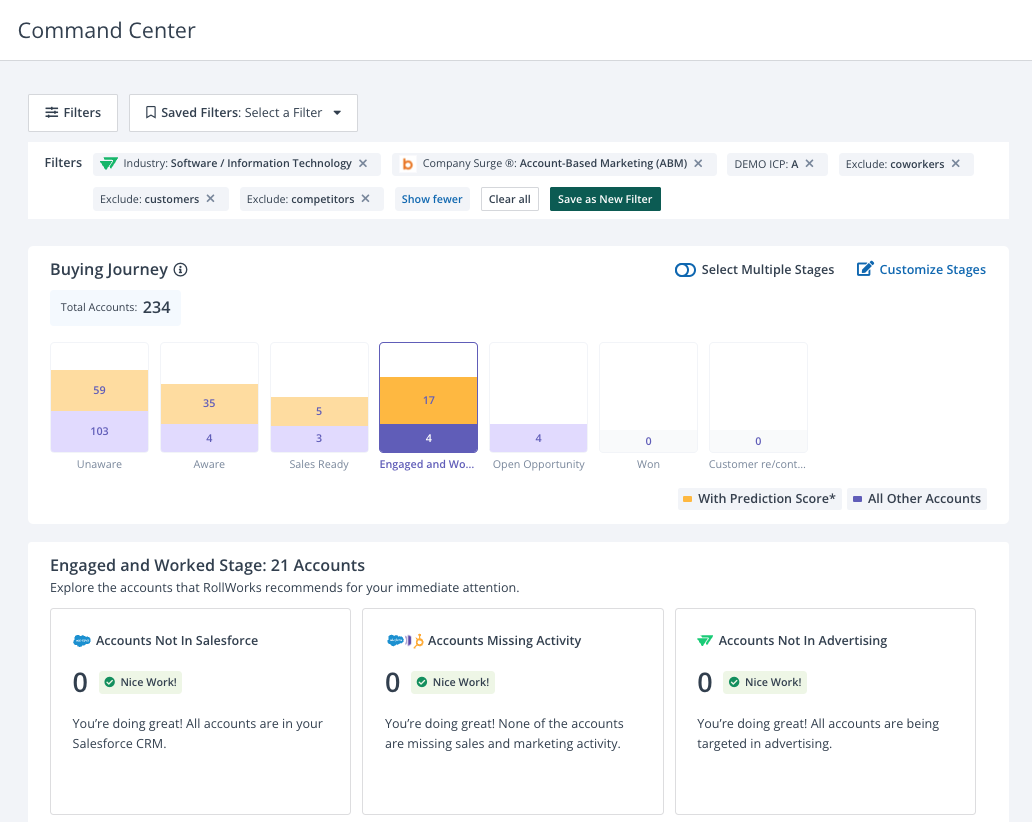
Best for: Teams that want account-based ads, targeting, and measurement outcomes without adopting a full-suite orchestration model.
RollWorks is typically positioned around account targeting and ABM advertising execution. If your primary pain with Terminus is cost-to-value or suite complexity, RollWorks is often a more “do the core job” alternative.
| ABM Criteria | Terminus | RollWorks |
|---|---|---|
| 1) Account-level engagement visibility | Strong suite reporting across orchestrated plays (ads, web, chat, email integrations). | Account engagement reporting focused on advertising and audience performance, designed for ABM execution loops. |
| 2) Audience activation | Suite-first orchestration and audience activation across channels. | Core strength. Audience building, targeting, and refresh for ABM advertising is the center of the product. |
| 3) Explainable intent | Engagement-led intent signals and play context, depending on configuration. | More engagement and activation oriented. Great for “activate accounts” workflows, less about heavy predictive intent. |
| 4) ABM dashboards + revenue attribution | Program dashboards and influence reporting in the suite context. | Performance reporting and engagement lift. For deep revenue attribution, many teams pair with attribution tools. |
| 5) CRM activation | CRM integrations plus playbook orchestration. | Integrations vary by setup, commonly used to sync account lists and support handoff workflows. |
| 6) Integrations | Broad suite integrations. | Integrates to support ABM ads workflows and audience syncing; best when paired with a CRM-first activation layer. |
RollWorks pricing often starts just under $1,000 per month.

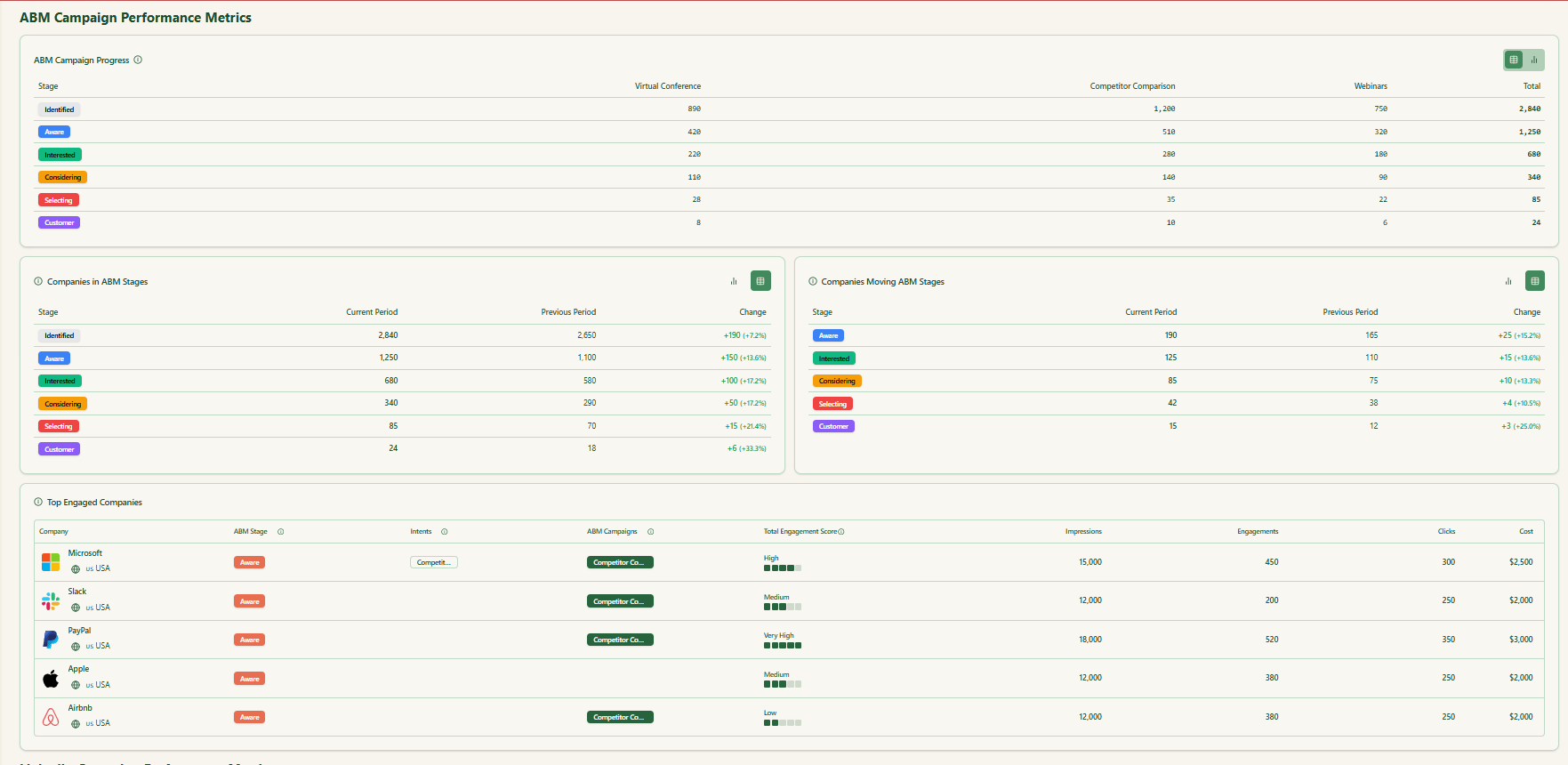

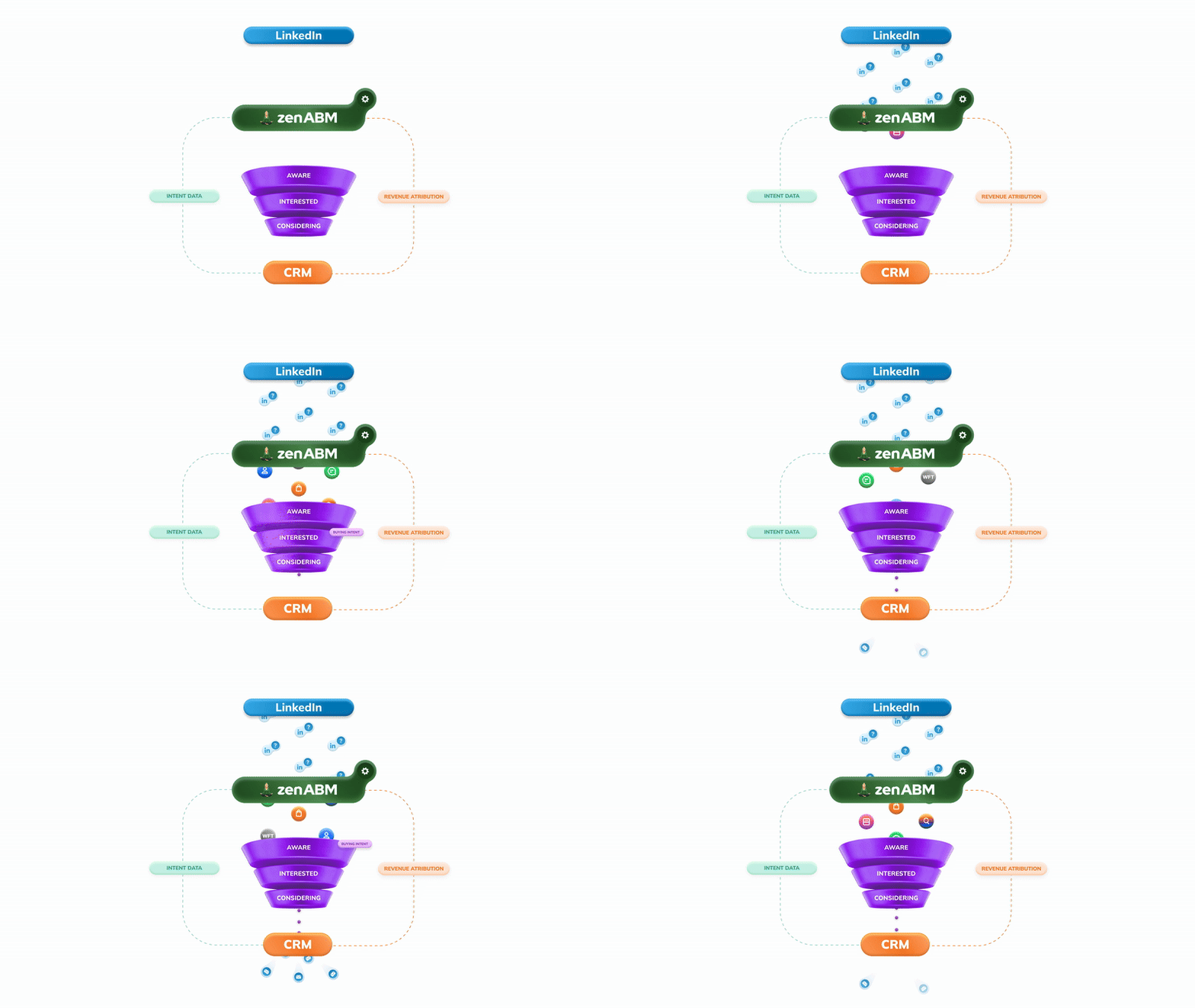
Best for: LinkedIn-first ABM teams that want account-level engagement + intent themes + scoring + CRM activation + ABM dashboards, but do not want a multi-channel suite just to answer “which accounts are warming up?”
| ABM Criteria | Terminus | ZenABM |
|---|---|---|
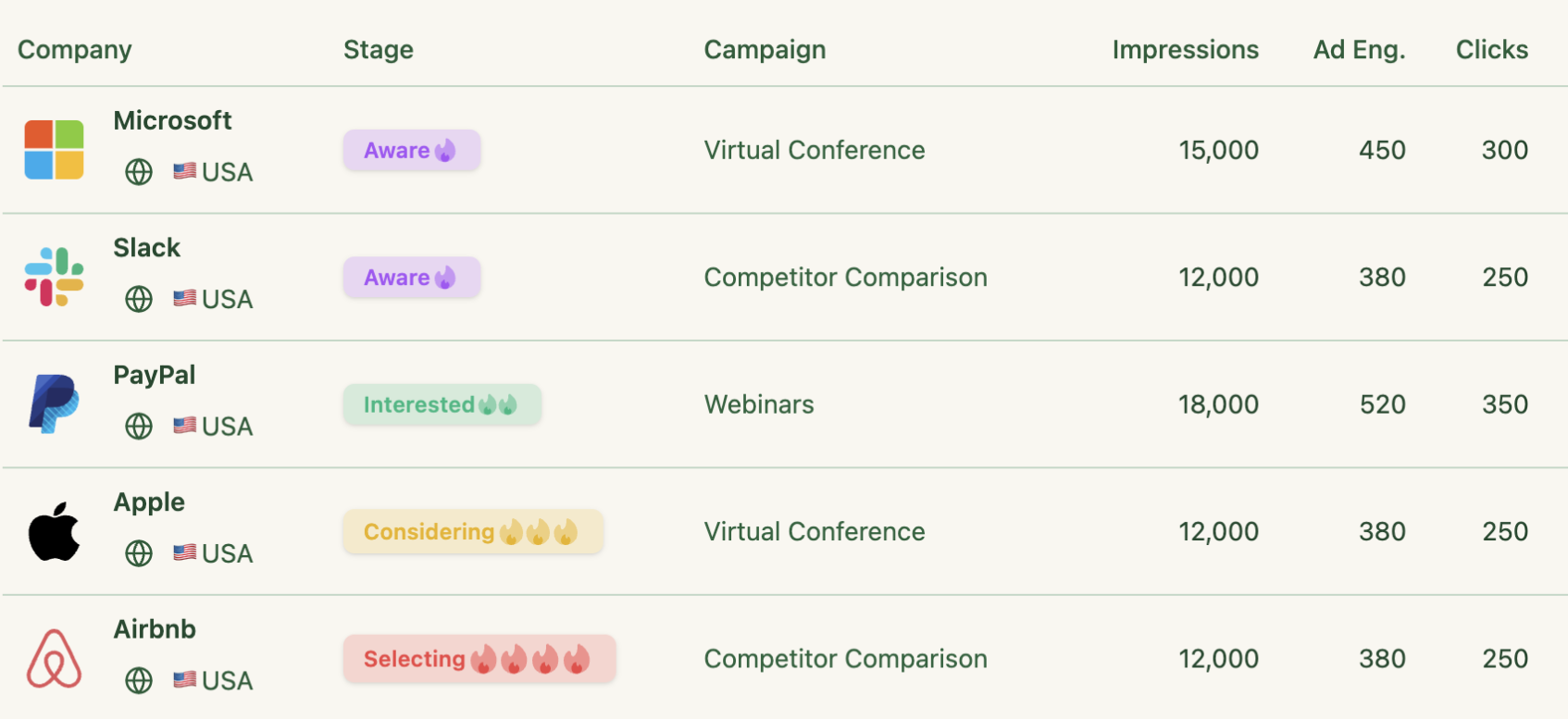
| 1) Account-level engagement visibility | Strong multi-channel engagement views tied to orchestration plays (ads, web, chat, email integrations). | LinkedIn-first depth: raw + processed signals (stage, score, intent themes) with drill-down by campaign/creative and company timelines. |
| 2) Audience activation | Built for orchestrating and activating account audiences across channels as part of the suite motion. | Activates via CRM properties + workflows and integrations. Best when LinkedIn is the core ABM channel and sales activation is the goal. |
| 3) Explainable intent | Often engagement-led intent from campaign + site behavior, plus orchestration context. | First-party intent based on what accounts engage with in your LinkedIn campaigns. Tag campaigns by intent (security, ROI, integrations) and push intent into CRM properties. |
| 4) ABM dashboards + revenue attribution | Program dashboards and influence reporting across orchestrated ABM plays. | ABM dashboards (ROAS, pipeline per $, funnel progression per ABM campaign, deals and deals-per-campaign). Built for LinkedIn-first measurement. |
| 5) CRM activation | CRM integrations plus playbook-style workflows, often stronger when adoption and governance are consistent. | Bi-directional HubSpot/Salesforce sync. Pushes score, stage, intent, campaign signals into CRM properties for workflow triggers. |
| 6) Integrations | Integrates with major CRMs, MAPs, and ad tooling to support orchestration. | Webhooks for Clay, Attio, Pipedrive, Slack, and more. Send processed signals (intent, stage, score) to automation. |
Terminus: Broad multi-channel engagement visibility built to support coordinated ABM plays across ads, web experiences, and sales touches.
ZenABM:

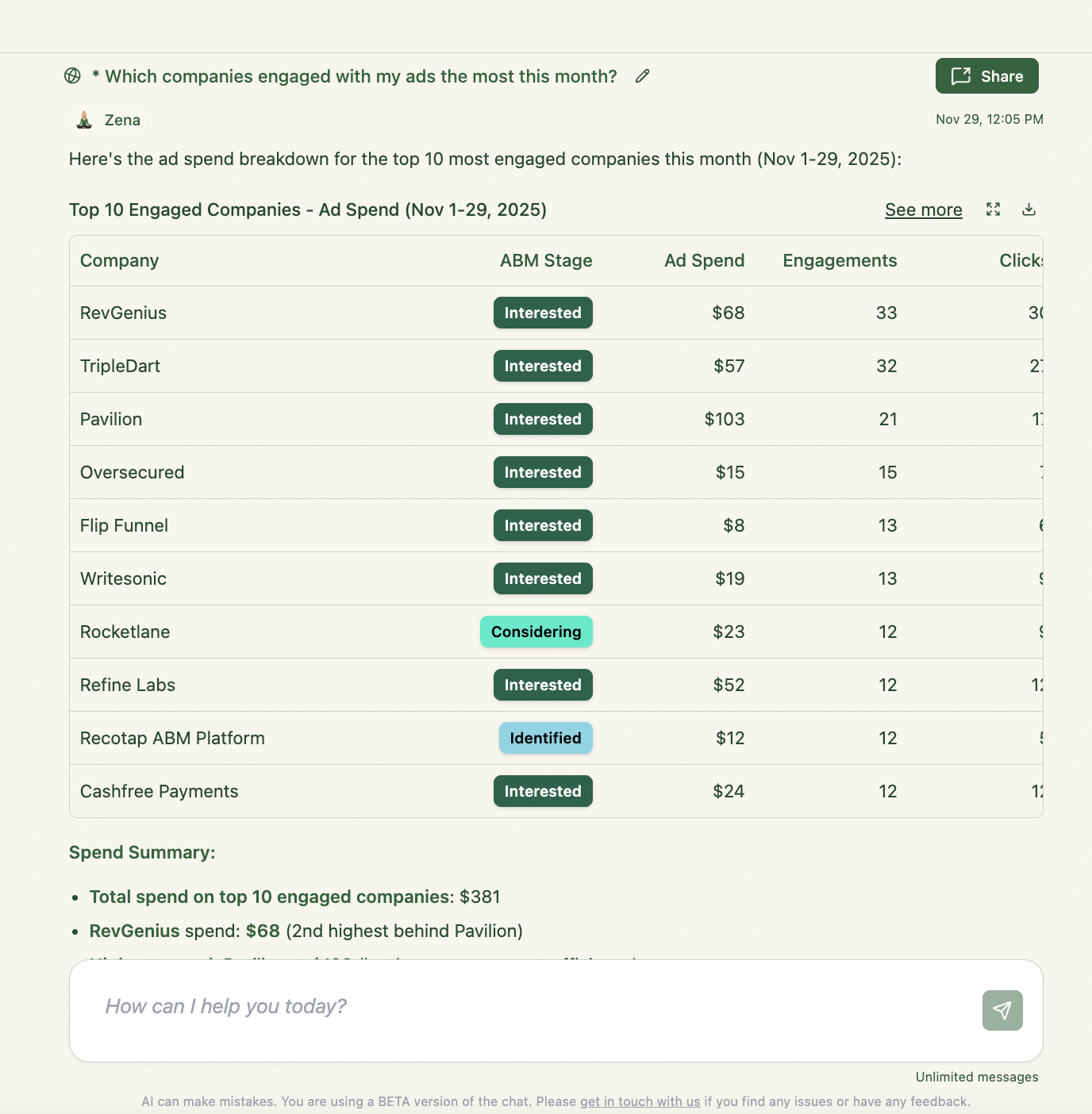
If you’re switching from Terminus because you want faster answers than “export, analyze, explain,” the analysis layer matters. ZenABM’s advantage is that Zena AI is designed as a LinkedIn ABM Ads Analyst, not a generic chatbot bolt-on.

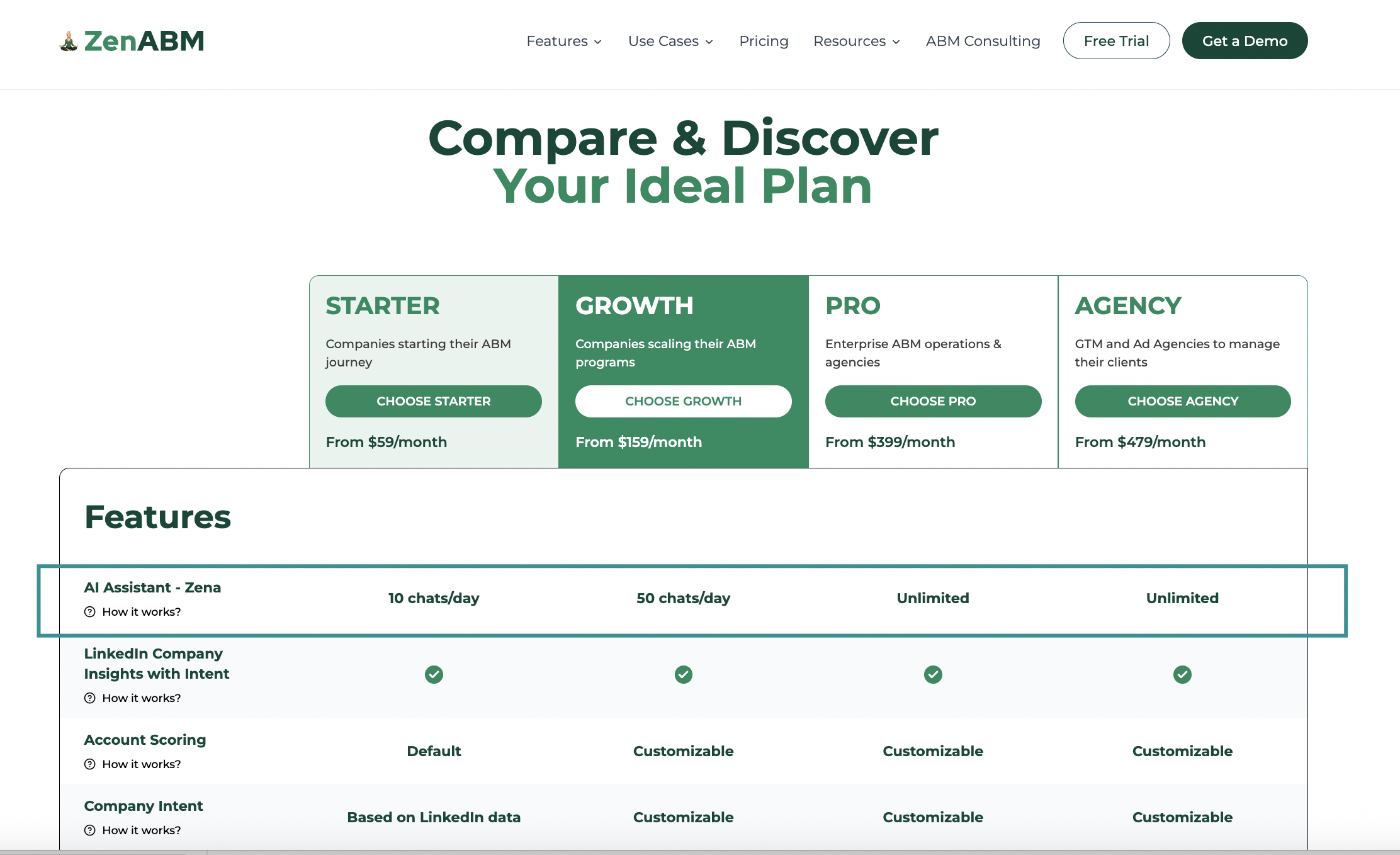
Terminus pricing: Custom suite pricing often in the five-figure annual range ($27k annual median pricing as per Vendr) depending on modules and volume.
ZenABM pricing: Paid plans start at $59/month, up to $499/month for agency plan (3 client seats + $199 per additional seat). 37-day free trial.

Best for: Teams that want an execution layer (often with DSP-style controls) more than a reporting dashboard.
N.Rich is typically discussed as an all-in-one ABM execution platform, including advertising and orchestration-style workflows. If Terminus feels too suite-heavy or you want different execution controls, N.Rich is often evaluated as an alternative.
| ABM Criteria | Terminus | N.Rich |
|---|---|---|
| 1) Account-level engagement visibility | Strong multi-channel reporting tied to suite orchestration. | Execution-oriented reporting designed around campaigns, segmentation, and activation outcomes. |
| 2) Audience activation | Suite orchestration across channels. | Core strength. Activation workflows and campaign execution controls are central. |
| 3) Explainable intent | Engagement-led signals, plus suite context. | More “signal-to-action” oriented, commonly paired with segmentation and personalization. |
| 4) ABM dashboards + revenue attribution | Influence reporting and program dashboards. | Reporting varies by setup. Some teams still pair with attribution platforms for deeper revenue modeling. |
| 5) CRM activation | CRM and MAP integrations plus playbooks. | Integrates for activation workflows; best when your team wants execution-first orchestration and handoff. |
| 6) Integrations | Broad suite integrations. | Integration story is typically built around campaign activation, CRM sync, and workflow enablement. |

N.Rich pricing starts from $10k annually, growth package costs $23.8k annually, and bigger packages are custom quoted.

Best for: Enterprise teams that want predictive intent, buying stages, and modeled “in-market” signals at scale, not just orchestration workflows.
If your reason for leaving Terminus is “we need stronger predictive discovery and stage modeling,” 6sense is the common alternative. Just know you are trading “orchestration-first” for “prediction-first,” which changes implementation and governance requirements.
| ABM Criteria | Terminus | 6sense |
|---|---|---|
| 1) Account-level engagement visibility | Multi-channel engagement views framed around orchestrated plays. | Broad engagement visibility plus predictive layers designed around buying stages. |
| 2) Audience activation | Suite-driven orchestration and audience activation. | Strong activation workflows, typically paired with intent stages and prioritization. |
| 3) Explainable intent | More engagement-led and play-context oriented. | Stronger third-party intent modeling, can feel opaque without enablement. |
| 4) ABM dashboards + revenue attribution | Program dashboards and influence reporting for orchestrated campaigns. | Enterprise dashboards for stage progression and influence reporting, depends on setup and adoption. |
| 5) CRM activation | CRM integrations plus playbooks. | Deep CRM integrations and orchestration potential, often paired with ops governance. |
| 6) Integrations | Broad suite ecosystem integrations. | Enterprise integration ecosystem designed for complex stacks. |
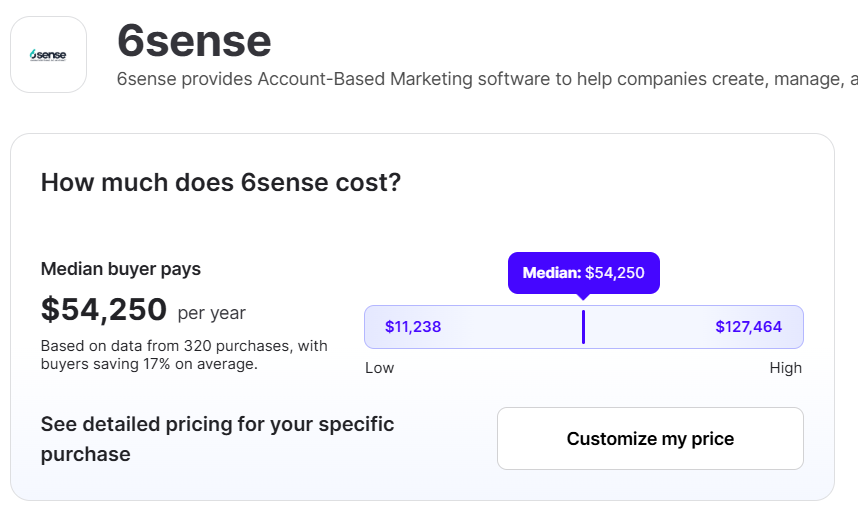
6sense pricing is custom quoted with a median pricing of $54k as per Vendr.
Best for: Enterprise teams that want a full suite (account intelligence, intent, audience activation, and advertising), but prefer Demandbase’s approach to data and activation workflows.
| ABM Criteria | Terminus | Demandbase |
|---|---|---|
| 1) Account-level engagement visibility | Multi-channel engagement tied to orchestration plays. | Broad multi-channel engagement tracking and account reporting, strong for segmentation and consolidated ABM programs. |
| 2) Audience activation | Suite orchestration across channels. | Strong audience activation and advertising capabilities in a suite model. |
| 3) Explainable intent | More engagement-led intent story for play orchestration. | Strong intent story when paired with account intelligence and activation, often suite-driven. |
| 4) ABM dashboards + revenue attribution | Influence reporting and program dashboards. | Suite dashboards across segments and programs. Time-to-value depends on setup and ops maturity. |
| 5) CRM activation | CRM integrations plus playbook workflows. | Deep CRM integration and workflow potential, typically paired with governance for mapping and adoption. |
| 6) Integrations | Broad suite integrations. | Broad integration ecosystem, best when you’re centralizing a large ABM stack under one suite. |
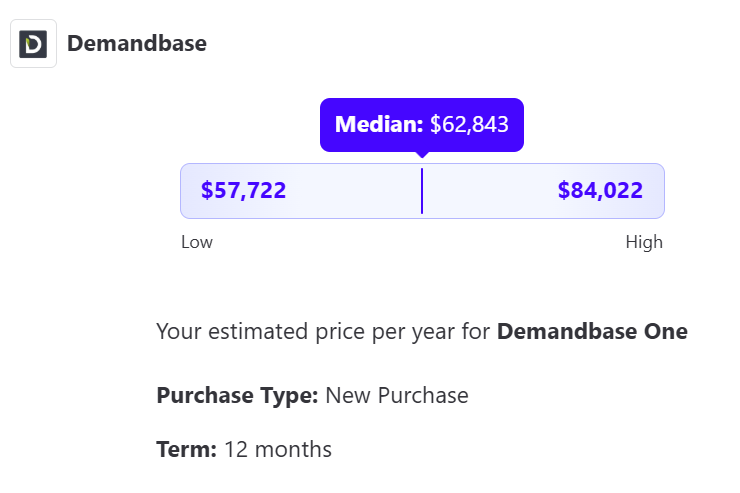
Demandbase Pricing is custom pricing, typically positioned for mid-market to enterprise programs. Vendr claims median Demandbase pricing is $62K annually (source).

Best for: B2B teams and agencies running demand gen or ABM who want (1) company identification and intent signals, (2) prioritization, and (3) prescriptive guidance to reduce wasted spend and ad fatigue.
| ABM Criteria | Terminus | DemandSense |
|---|---|---|
| 1) Account-level engagement visibility | Strong engagement visibility across orchestrated plays. | Engagement tracking plus AI-driven scoring designed to prioritize action. |
| 2) Audience activation | Suite activation across channels. | Activation through playbooks, alerts, and workflows, depending on package. |
| 3) Explainable intent | Engagement-led intent signals, often tied to campaign and site behavior. | AI-driven intent from first-party signals plus enrichment (technographics, job changes, funding), paired with “next step” cues. |
| 4) ABM dashboards + revenue attribution | Program dashboards and influence reporting. | ABM dashboards with pipeline influence and progression views, often paired with recommendations. |
| 5) CRM activation | CRM integrations plus playbook workflows. | Deep CRM integration (Salesforce, HubSpot) with alerts routed to sales channels and workflows. |
| 6) Integrations | Broad suite integrations. | Integrations with major MAPs, CRMs, and ad platforms. Insights distributed via Slack, email, or in-app. |
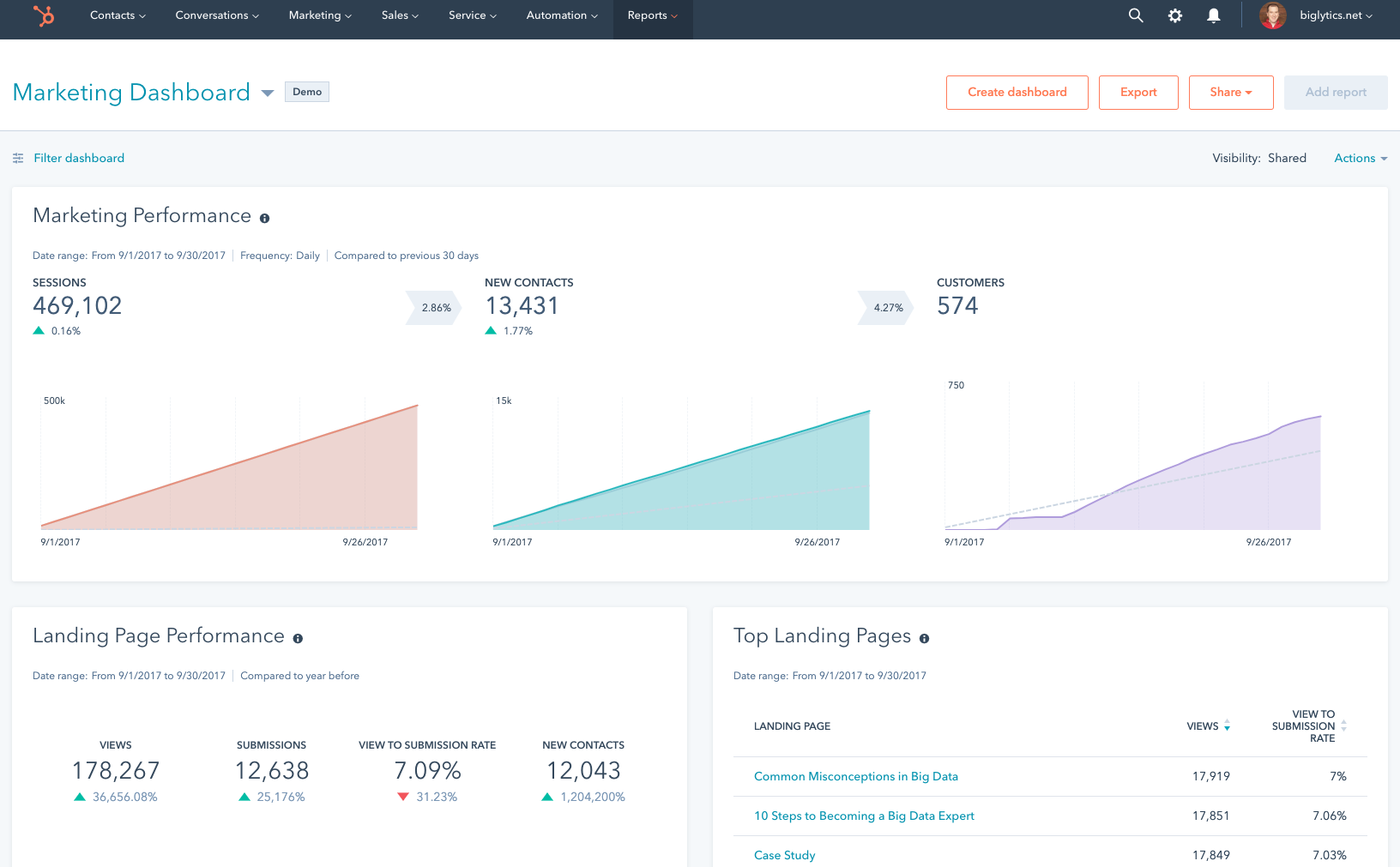
Best for: Teams already using HubSpot CRM who want built-in automation, email, ads management, and attribution in one platform.
| ABM Criteria | Terminus | HubSpot Marketing Hub |
|---|---|---|
| 1) Account-level engagement visibility | Suite engagement across orchestrated plays and channels. | Multi-channel engagement (ads, email, web, forms). Company insights dashboards. |
| 2) Audience activation | Suite orchestration and activation. | Strong segmentation and workflows inside HubSpot, plus ads audiences depending on setup. |
| 3) Explainable intent | Engagement-led signals used to drive plays. | First-party behaviors (site visits, email engagement, downloads). More owned-signal driven than predictive. |
| 4) ABM dashboards + revenue attribution | Influence reporting and program dashboards. | Attribution and campaign influence reporting (more powerful in Pro/Enterprise tiers). |
| 5) CRM activation | CRM integrations plus playbooks. | Native CRM + workflows (same platform). ABM depth depends on tier. |
| 6) Integrations | Broad suite integrations. | Large marketplace, APIs, and webhooks. |
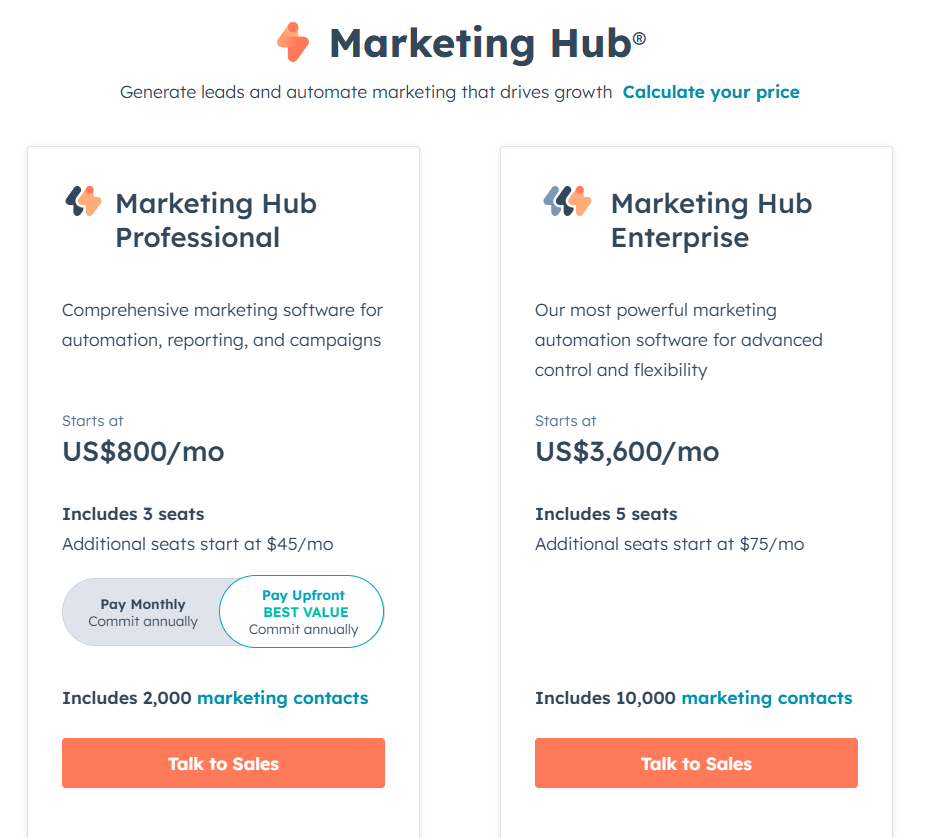
HubSpot Marketing Hub pricing:

Best for: Teams stepping away from “orchestration-first suites” and moving toward measurement-first truth.
Dreamdata is a B2B revenue attribution platform that maps account journeys across marketing and sales touchpoints. Terminus can help coordinate plays, but many teams realize their pain is simpler: “What actually influenced pipeline, and what is pipeline per $?” Dreamdata is built for that.
| ABM Criteria | Terminus | Dreamdata |
|---|---|---|
| 1) Account-level engagement visibility | Engagement views designed to support orchestration plays. | Multi-channel engagement tracking (LinkedIn, Google, organic, email, web). Account journey timelines across touchpoints. |
| 2) Audience activation | Built for coordinated ABM execution. | Not the core product. Built to measure, attribute, and report (activation typically happens elsewhere). |
| 3) Explainable intent | Engagement-led signals tied to campaign and web behavior. | Intent inferred from content/journey behavior across channels (what accounts actually did). |
| 4) ABM dashboards + revenue attribution | Program dashboards and influence reporting across orchestrated campaigns. | Multi-touch attribution models with account journey visualization tied to revenue. |
| 5) CRM activation | CRM integrations plus playbooks. | HubSpot and Salesforce integrations. Attribution data synced back to CRM. |
| 6) Integrations | Suite integrations for orchestration. | Wide integrations (ads platforms, analytics, CRM, warehouses), built for attribution pipelines. |

Dreamdata pricing is custom. Vendr lists median around $27k annually.
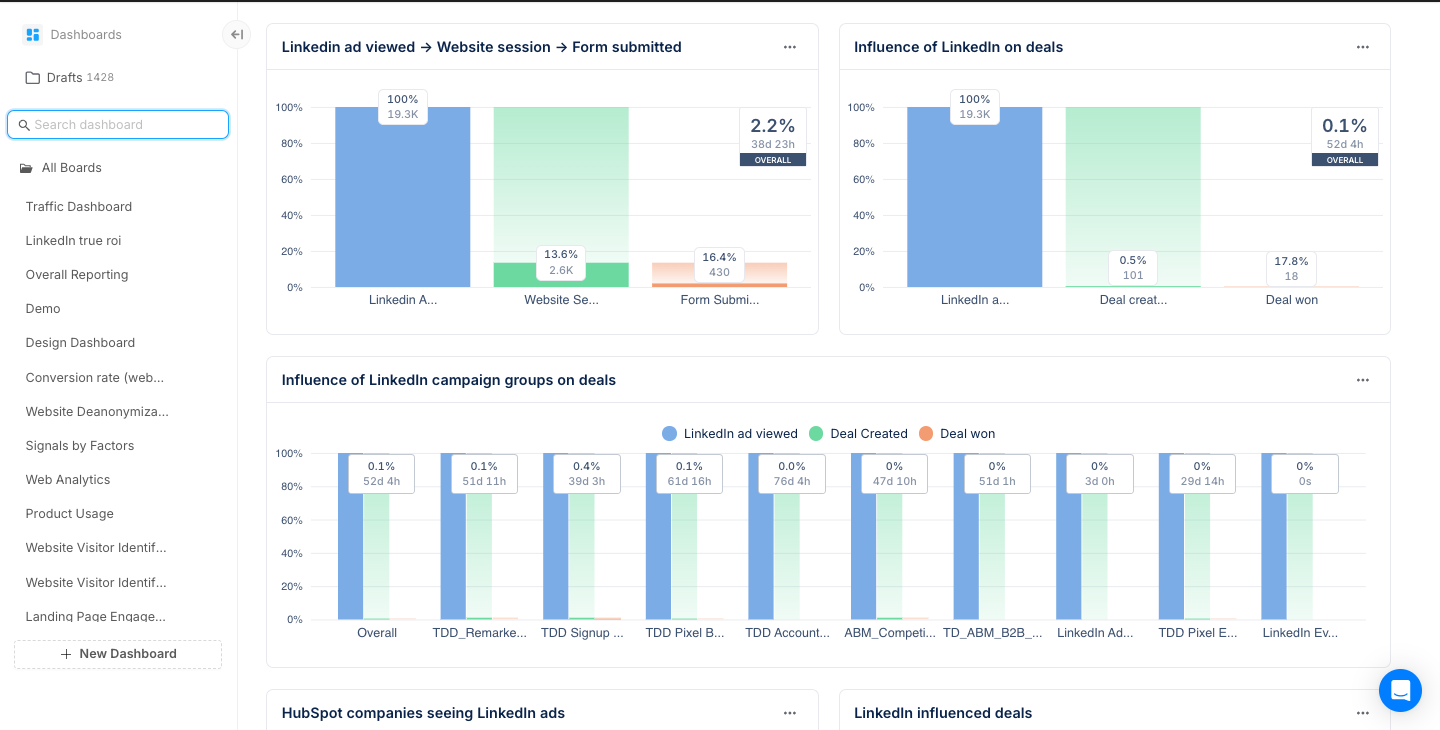
Best for: Growth teams that want account journey analytics, funnel visibility, and attribution truth. Factors.ai is built around account journeys and multi-touch measurement.
| ABM Criteria | Terminus | Factors.ai |
|---|---|---|
| 1) Account-level engagement visibility | Engagement views aligned to orchestrated plays. | Multi-channel engagement tracking plus account journey visualization across touchpoints. |
| 2) Audience activation | Suite activation across channels. | More measurement-first. Activation typically happens through integrations and workflows outside the platform. |
| 3) Explainable intent | Engagement-led signals tied to campaigns and web behavior. | Intent signals from website behavior, content engagement, and product usage (for PLG companies). |
| 4) ABM dashboards + revenue attribution | Program dashboards and influence reporting. | Detailed funnel analytics with multi-touch attribution tied to revenue. |
| 5) CRM activation | CRM integrations plus playbooks. | HubSpot and Salesforce integration. Attribution data synced to CRM. |
| 6) Integrations | Suite integrations for orchestration. | Integrations with ad platforms, analytics tools, CRMs, and data warehouses. |
Factors.ai: Starts at $999/month for growth plan. Custom pricing for enterprise.

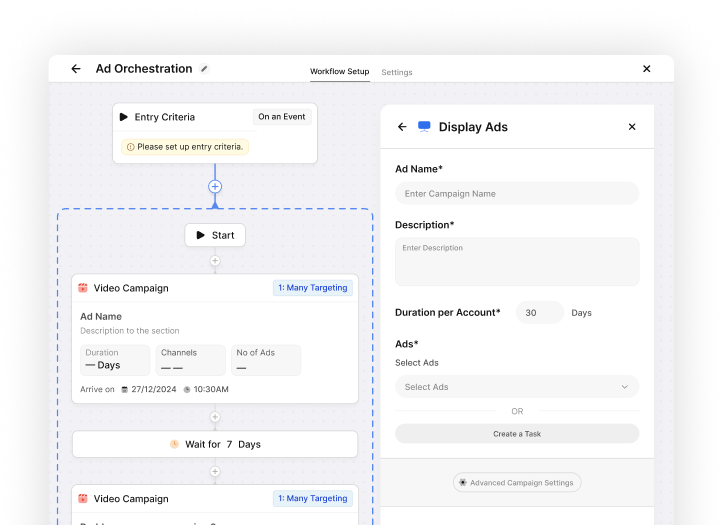
Best for: Teams that want to retarget engaged accounts with personalized ads and content (LinkedIn, display, email) without committing to a broad ABM suite.
| ABM Criteria | Terminus | Recotap |
|---|---|---|
| 1) Account-level engagement visibility | Broad engagement views across orchestrated ABM plays. | Engagement tracking focused on retargeting signals (website, ads, content) plus audience creation for re-engagement. |
| 2) Audience activation | Suite activation across channels. | Core strength. Audience creation and retargeting workflows are central. |
| 3) Explainable intent | Engagement-led intent signals tied to play context. | Intent inferred from first-party web behaviors (pricing visits, repeat sessions), content engagement, and ad interactions to prioritize retargeting. |
| 4) ABM dashboards + revenue attribution | Program dashboards and influence reporting. | Retargeting-centric dashboards measuring lift and reactivation outcomes, focused on the re-engagement slice. |
| 5) CRM activation | CRM integrations plus playbooks. | CRM and MAP integrations for retargeting workflows triggered by stage changes or engagement patterns. |
| 6) Integrations | Suite integrations for orchestration. | Integrations with LinkedIn Ads, display networks, email tools, and pixels for web tracking. |
The best Terminus alternative depends on your ABM motion, channel mix, ops maturity, and tolerance for suite overhead.
For teams replacing Terminus with best-of-breed tools (without losing outcomes):

Orchestration suites like Terminus are designed to coordinate ABM plays across multiple channels (ads, web experiences, chat, email integrations) and report engagement in one system. LinkedIn-first ABM analytics tools (like ZenABM) go deep on company-level LinkedIn engagement, intent themes from messaging, scoring, CRM activation, and LinkedIn-specific ABM reporting. If LinkedIn is your primary ABM channel and your bottleneck is “what do we do next?”, LinkedIn-first analytics often wins on clarity and time-to-value.
Most teams do not need a 1:1 replacement. They need outcomes: identify warm accounts, understand intent, activate sales, and prove pipeline influence. A lean stack can do that if it covers engagement signals, intent themes, scoring, CRM sync, and attribution. You trade “one suite” for “clean integration,” but you also avoid suite bloat and long implementations.
Use a tool that pushes processed account signals (score, intent, stage) into your CRM as company properties. That keeps workflows simple: “If ABM Stage = Interested AND Intent = Security, assign to security BDR.” Tools that only push raw metrics force you to build translation logic, which is how ops teams slowly lose faith in humanity.
No. If you are running coordinated ABM across channels and you will actually use orchestration and playbooks, Terminus can be a practical fit. It becomes overkill when your team is lean, your ABM is mostly LinkedIn-first, and your true needs are explainable intent themes, CRM activation, and pipeline per $.
Day 1: Define requirements using the 6 criteria (engagement, activation, intent, dashboards, CRM sync, integrations). Separate must-haves from “platform fantasies.”
Day 2: Trial your shortlist (ZenABM, one execution-heavy ads option like RollWorks or N.Rich, and an attribution tool if needed). Connect LinkedIn Ads and CRM. Pull one ABM initiative worth of data.
Day 3: Test real workflows: (1) Can you find hot accounts fast? (2) Can you explain why they are hot (intent + engagement)? (3) Can you activate sales without custom engineering? (4) Can you report pipeline per $ in a way execs will believe?