

©2026 ZenABM - All Rights Reserved.

Factors.ai no longer publishes pricing on their website.
All paid plans now require you to book a demo to get a number, which makes independent cost analysis harder but also more necessary.
This guide pulls together what Factors.ai last publicly listed, confirmed by their own blog posts and third-party sources, to give you a realistic picture of what the platform actually costs once you account for usage limits, add-ons, and scaling.
Treat the figures below as the last known public pricing rather than guaranteed current rates, and verify directly with their sales team before budgeting.
Short on time?
Here’s a quick rundown:
Why ZenABM may suit you better:
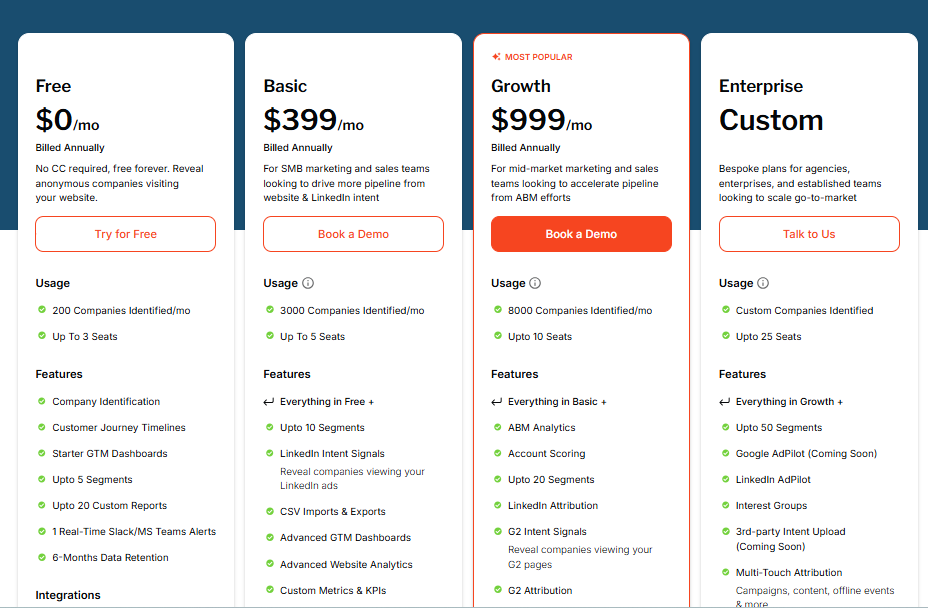
To start, let’s outline Factors.ai’s standard plans and what they include.
Factors.ai has removed published pricing from their website as of 2026 and now requires a demo call for all paid tiers.
The figures below are based on their last publicly listed prices, confirmed by Factors.ai’s own blog posts and third-party review platforms. Verify current pricing directly with their sales team before making a budget decision.
Factors.ai uses a usage-based tiered model: you pay for a set number of accounts (companies) that can be tracked each month, with additional charges if you exceed those limits.
The four plan tiers are:
Factors.ai’s value proposition includes website visitor deanonymization, but what does it actually cost in practice to deanonymize, say, 1,000 visitors?
The free tier covers only 200 identified companies per month, so 1,000 visitors exceeds that fivefold.
You’d need at least the Basic plan (3,000 companies/month) to accommodate 1,000 visitors, at roughly $399 per month on an annual contract or $549 on a monthly basis.
If you fully utilize the Basic plan’s 3,000 identification quota, the cost averages to around $0.13 per identified visitor.
However, if you only have ~1,000 visitors to deanonymize, you’re paying $399 for those 1,000 records, which works out to $0.40 per identified visitor.
The unused capacity (the other 2,000 slots in your plan) is effectively wasted budget.
Paying to “identify” 1,000 visitors does not mean you actually get 1,000 companies identified.
Anonymous visitor identification through IP-based lookup is accurate only 20 to 40% of the time at best, according to a study by Syft:

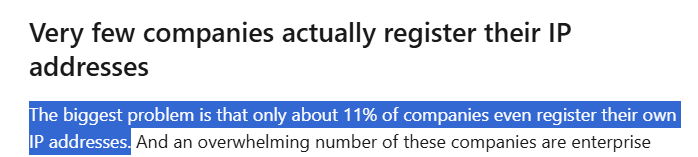
This is because of remote work, VPNs, public WiFi, and the simple fact that most companies don’t register their IP addresses publicly:
This first-hand account from Emilia Korczynska (VP of Marketing at Userpilot) illustrates how that plays out in practice:
“The accounts we were targeting simply wouldn’t show up in any website visits, even though we knew they landed on the landing pages for the ABM ads we created specifically for them.How do we know? We’ve actually set up a separate no-index domain for our ABM ad campaigns to be sure 100% of the traffic landing there is our ‘target accounts’. And sadly, from the ~300 visitors to a certain page path on that website, in 90 days, Breeze Intelligence (based on Clearbit’s API) identified only 1 company… ourselves!”
In short: you might pay to identify 1,000 visitors but only successfully match a fraction of them.
The effective cost per identified account can be several times higher than the headline figure once you account for unmatched traffic.
Because website visitor deanonymization is expensive and often imprecise, some ABM platforms take a fundamentally different approach.
ZenABM does not rely on website visitor identification at all.
Instead, it uses LinkedIn’s official API to capture company-level engagement data directly: impressions, clicks, and engagements for every target account across every LinkedIn campaign, with 100% company-level accuracy because the data comes straight from LinkedIn’s own infrastructure.
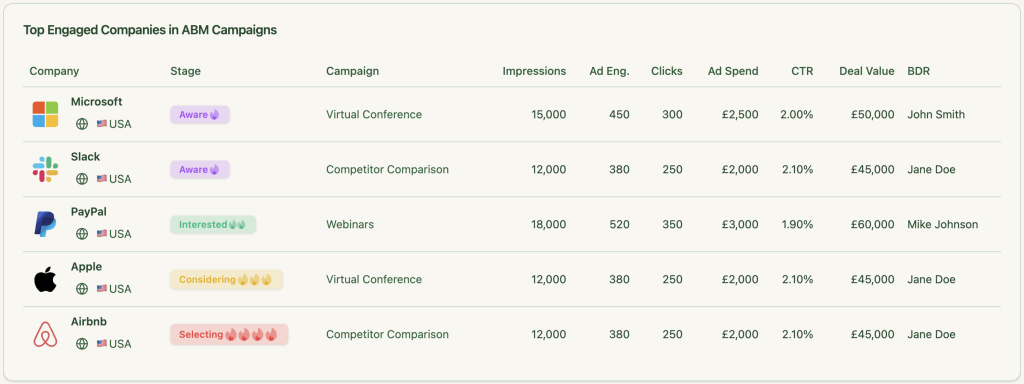
The takeaway: if your ABM strategy depends on deanonymizing site traffic, budget for at least the Basic plan on Factors.ai and understand that you’ll still miss a significant portion of visitors. Tools that use LinkedIn’s company-level data directly sidestep the accuracy problem entirely. Factors.ai does bundle LinkedIn ad viewer deanonymization alongside website visitor identification, but the two are packaged together, so you end up paying for the unreliable website side as well.
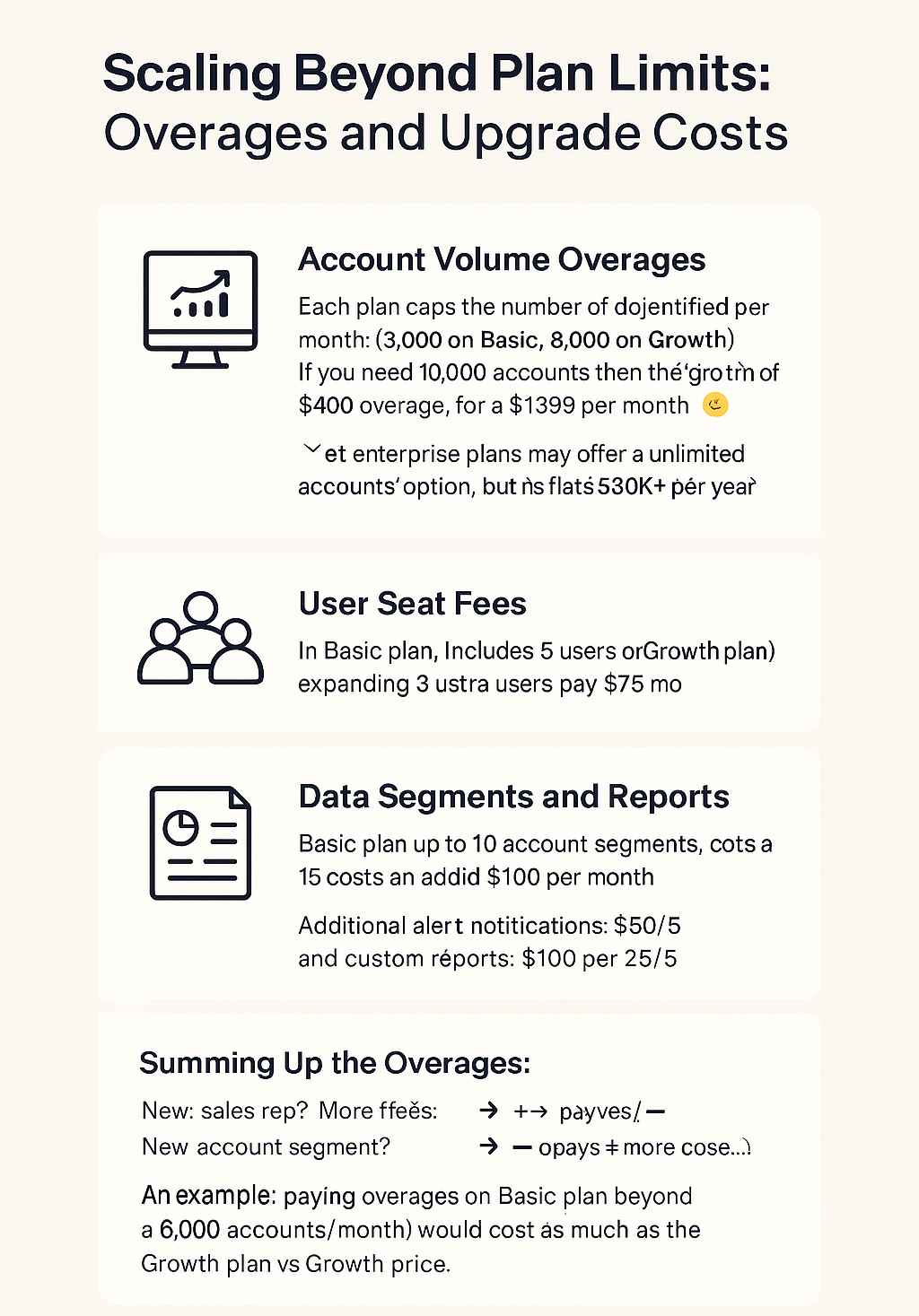
A critical cost factor is what happens when your ABM program grows beyond its initial scope.
Each plan caps the number of companies identified per month: 3,000 on Basic, 8,000 on Growth.
If you need to track more accounts than your plan allows, Factors.ai charges $100 per month for each additional 500 accounts beyond the limit.
In practice, if you’re on the Basic plan and want to monitor 4,000 accounts instead of the included 3,000, you’d pay an extra $200 per month (two increments of 500), bringing your total from $399 to $599.
A Growth plan user tracking 10,000 accounts (2,000 over the 8,000 limit) would pay an extra $400 in overages, pushing their total to roughly $1,399 that month.
Enterprise plans may offer an “unlimited accounts” option, but that’s at $30,000+ per year.
Each tier includes a limited number of user logins: Basic allows 5 users, Growth allows 10, and Enterprise allows 25. If your marketing and sales team has more people who need access, you’ll pay $25 per month for each additional seat.
An ABM team of 8 on the Basic plan (which includes 5 seats) would pay an extra $75 per month for the 3 additional users.
Factors.ai also limits the number of intent segments, alerts, and custom reports included in each plan, with fees to expand beyond those limits.
The Basic plan includes up to 10 account segments; Growth includes 20. If you need more refined segments (for instance, tracking intent for 30 different product categories or regions), it costs $100 per month for each additional 5 segments over the limit.
Additional alert notifications cost $50 per 5 alerts, and additional custom reports cost $100 per 25 reports.
While these may not seem large individually, they compound quickly as your team builds custom dashboards and monitoring rules.
All of the above illustrate a classic usage-based pricing dynamic: as your ABM program scales in scope (accounts, team members, data segmentation), your costs rise step by step.
A new sales rep means more fees. A new account segment means more fees. Expanding your account list means hundreds of extra dollars per month.
As a concrete example: if you pay overages on the Basic plan beyond ~6,000 accounts per month, your total actually exceeds the Growth plan price (Basic $399 plus $600 in overages equals $999, the same as Growth).
At that point, upgrading directly is cheaper.
ZenABM does not charge extra based on account volume, user seats, or intent segments.
Its pricing is flat by plan, with no metered components, so whether you track 500 accounts or 50,000, or have 3 users or 30 users, the subscription fee stays the same.
Factors.ai offers powerful add-on modules, including Interest Groups, LinkedIn AdPilot, and Google AdPilot.
Each comes at a high additional monthly cost that is easy to miss during initial budget planning.
This add-on provides advanced buyer intent signals by grouping accounts based on interests, essentially intent topics or keyword clusters derived from behavioral data. It is not included in any standard plan.
The cost for Interest Groups is $750 per month (billed annually).
A Basic plan user at $399 who opts for Interest Groups is now paying $1,149 per month.
A Growth user at $999 would pay $1,749 per month with this add-on.
Before adding it, verify that the incremental intelligence it provides actually justifies the additional $750 relative to what your LinkedIn campaign engagement data is already showing you.

Factors.ai’s LinkedIn AdPilot is an automation and optimization feature that connects Factors.ai account signals to LinkedIn Campaign Manager, allowing teams to automatically push high-intent account lists to LinkedIn for retargeting and bid optimization.
This is also an add-on across all plans, priced at $1,000 per month (annual billing), which is often as much as or more than the base platform itself.
For perspective, a Growth plan plus LinkedIn AdPilot runs nearly $2,000 per month in total.
If your ABM strategy is LinkedIn-heavy, you’ll need to weigh this cost against the pipeline uplift it generates to justify the spend.
ZenABM includes LinkedIn ad ROI tracking, company-level engagement analytics, and intent data as part of its core plans without any separate add-on fee.
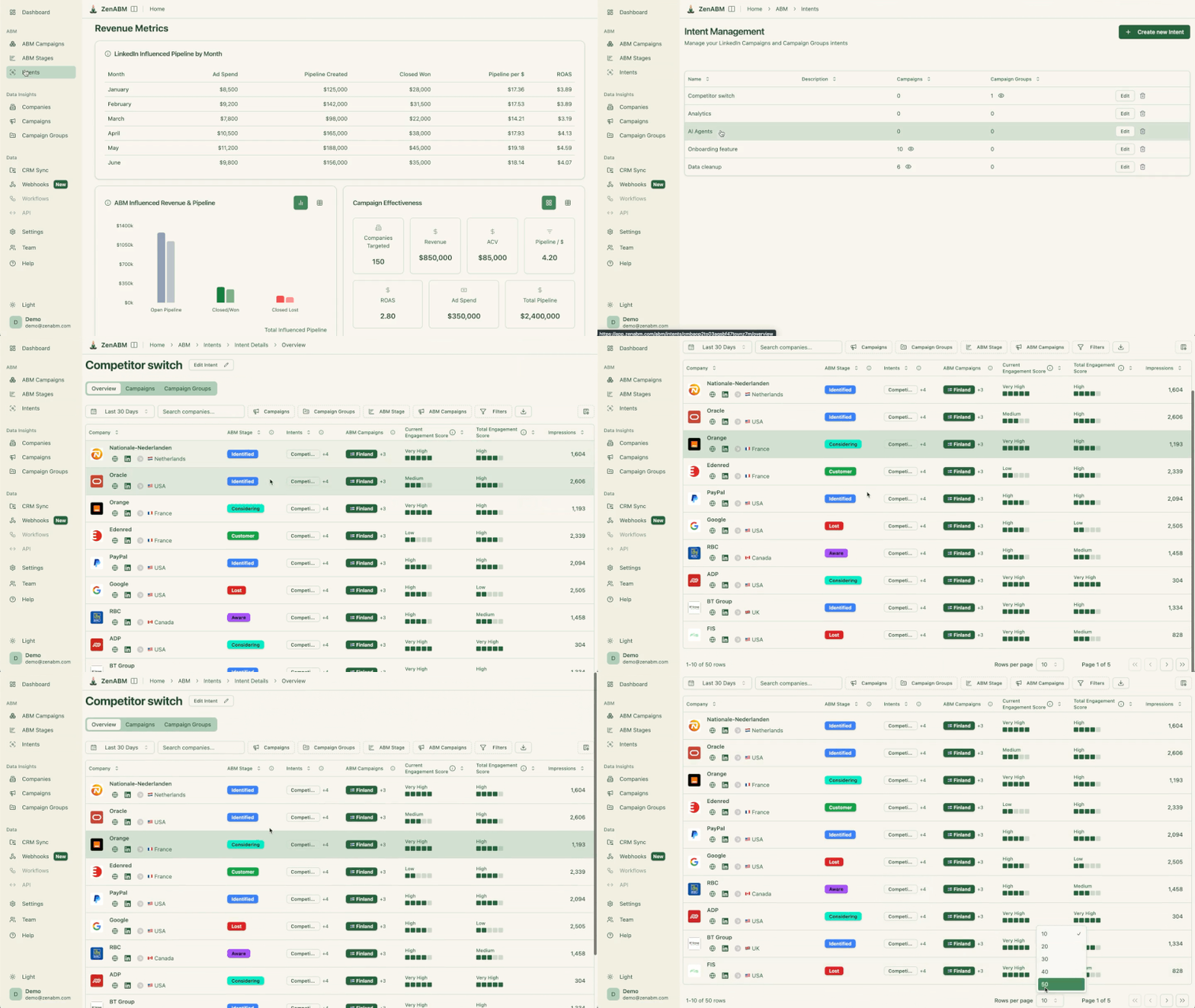
Factors.ai has also added a Google AdPilot module that connects account signals to Google Ads campaigns, enabling B2B teams to extend account-based targeting beyond LinkedIn into search and display.
Like LinkedIn AdPilot, this is a standalone add-on priced at $1,000 per month.
If your team runs both LinkedIn and Google Ads as part of your ABM motion and you want Factors.ai’s automation layer across both channels, you’re looking at an additional $2,000 per month in add-ons on top of your base plan.
A Growth plan subscriber using both AdPilot modules would pay $2,999 per month before any account overages or seat fees.
To make this concrete, here’s what a realistic Factors.ai bill looks like at different usage scenarios:
| Scenario | Monthly Cost | Annual Cost |
|---|---|---|
| Basic plan only | $399 | $4,788 |
| Basic + LinkedIn AdPilot | $1,399 | $16,788 |
| Basic + Interest Groups | $1,149 | $13,788 |
| Basic + both AdPilots + Interest Groups | $3,149 | $37,788 |
| Growth + LinkedIn AdPilot | $1,999 | $23,988 |
| Growth + both AdPilots + Interest Groups | $3,749 | $44,988 |
These figures don’t include account overages, extra user seats, or additional segments and reports, which can add hundreds more per month as your program scales.
Most SaaS vendors incentivize annual commitments with discounted rates, and Factors.ai is no exception.
Monthly billing might seem attractive if you want flexibility, but the 30 to 37% premium compounds significantly over time.
Switch to annual billing as soon as you’ve validated the tool, and evaluate that decision carefully before committing to a full year with add-ons included.
When deploying a complex ABM platform, time and utilization factors affect the value you get for what you pay, even if they don’t appear on an invoice.
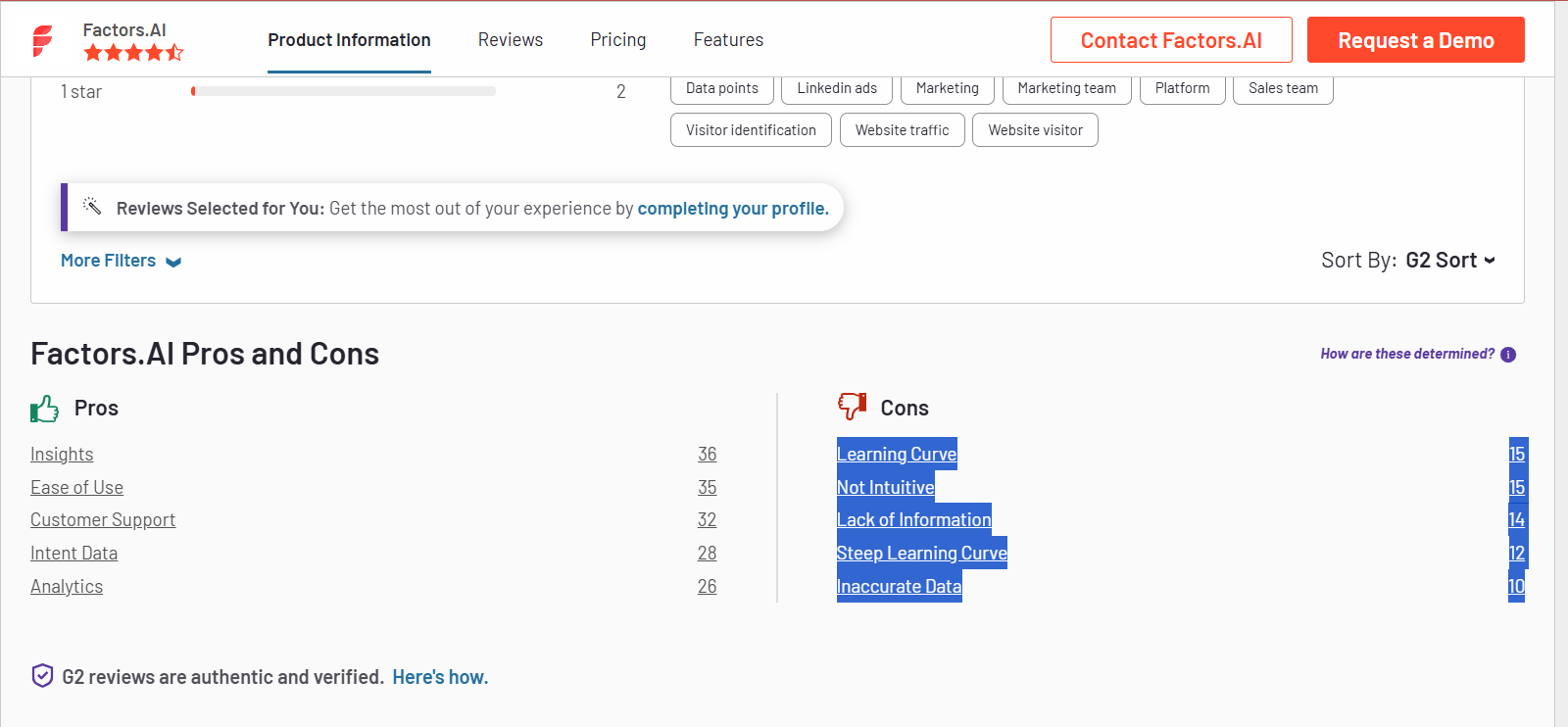
Learning curves are real.
During the first one to two months, you’re likely to use the platform well below its full capacity while you implement tracking, set up integrations, load account lists, and train your team.
All of that happens while the subscription clock is running.
For Basic and Growth plan users, onboarding support is primarily documentation and standard support channels.
Only Enterprise subscribers receive white-glove onboarding assistance.
A two-month ramp-up period represents $800 to $2,000 of subscription spend consumed primarily by setup rather than active program execution.
Every feature not used is value left on the table. If you’re on Growth at $999 per month but only operating at Basic-plan capacity during the first few months (tracking well under 8,000 accounts, not yet running LinkedIn campaigns, etc.), your effective cost per output is high.
Some teams mitigate this by starting on Basic and upgrading once they’re ready to use the higher-tier features, though that approach means forgoing capabilities that could accelerate early success.
ABM activity is rarely uniform throughout the year.
There are quarters where campaigns run lighter, budgets get reallocated, or teams are transitioning between programs.
Unless you actively downgrade or pause, you’ll pay the full subscription during those slower periods.
This is one of the few arguments for month-to-month billing if your ABM motion is seasonal, but most companies maintain the subscription year-round to preserve data continuity.
Here’s why ZenABM is worth evaluating as an alternative to Factors.ai for LinkedIn-focused ABM teams:
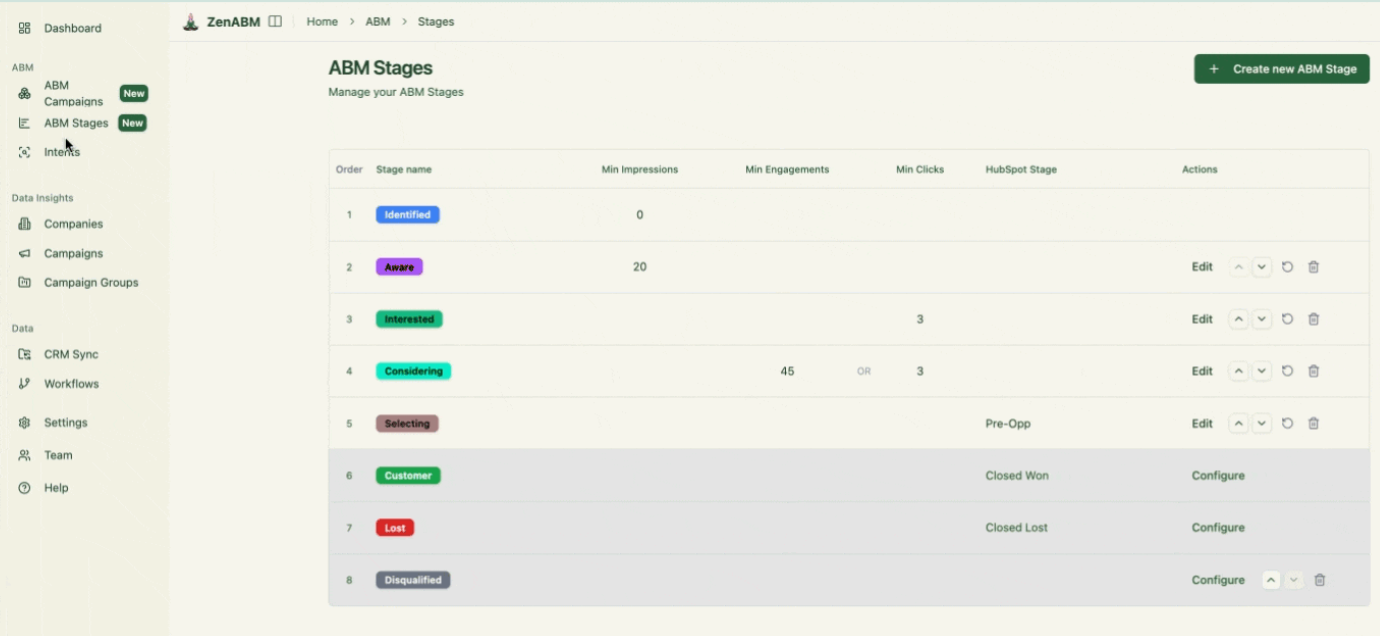
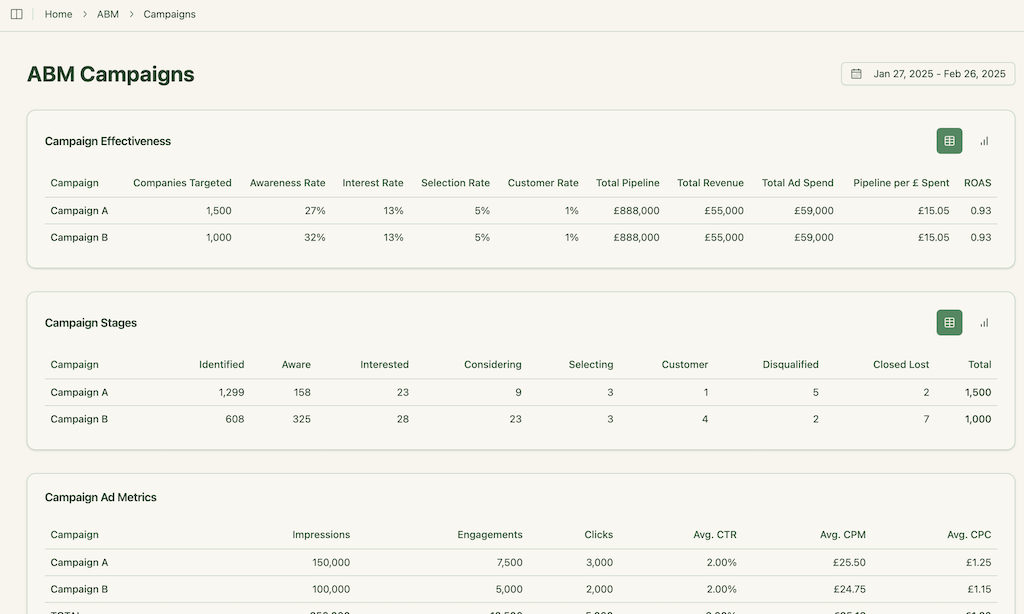


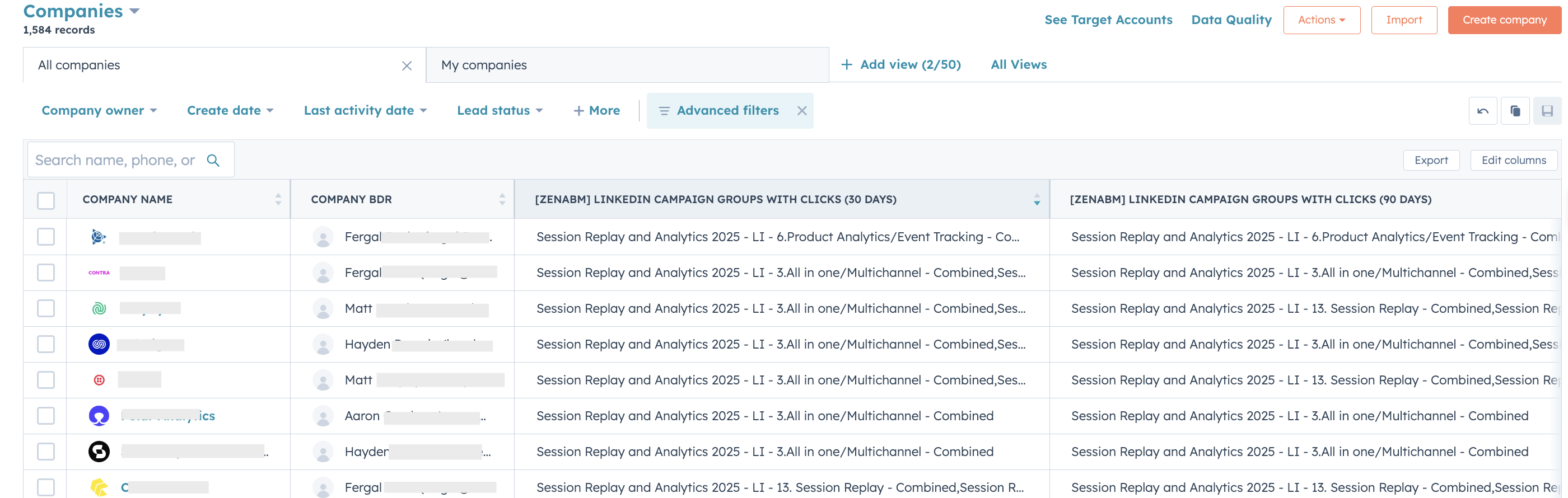
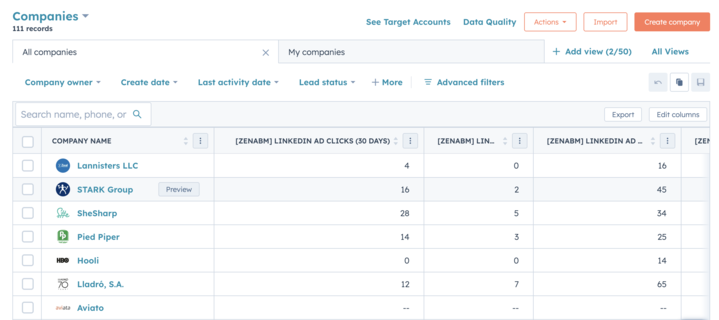
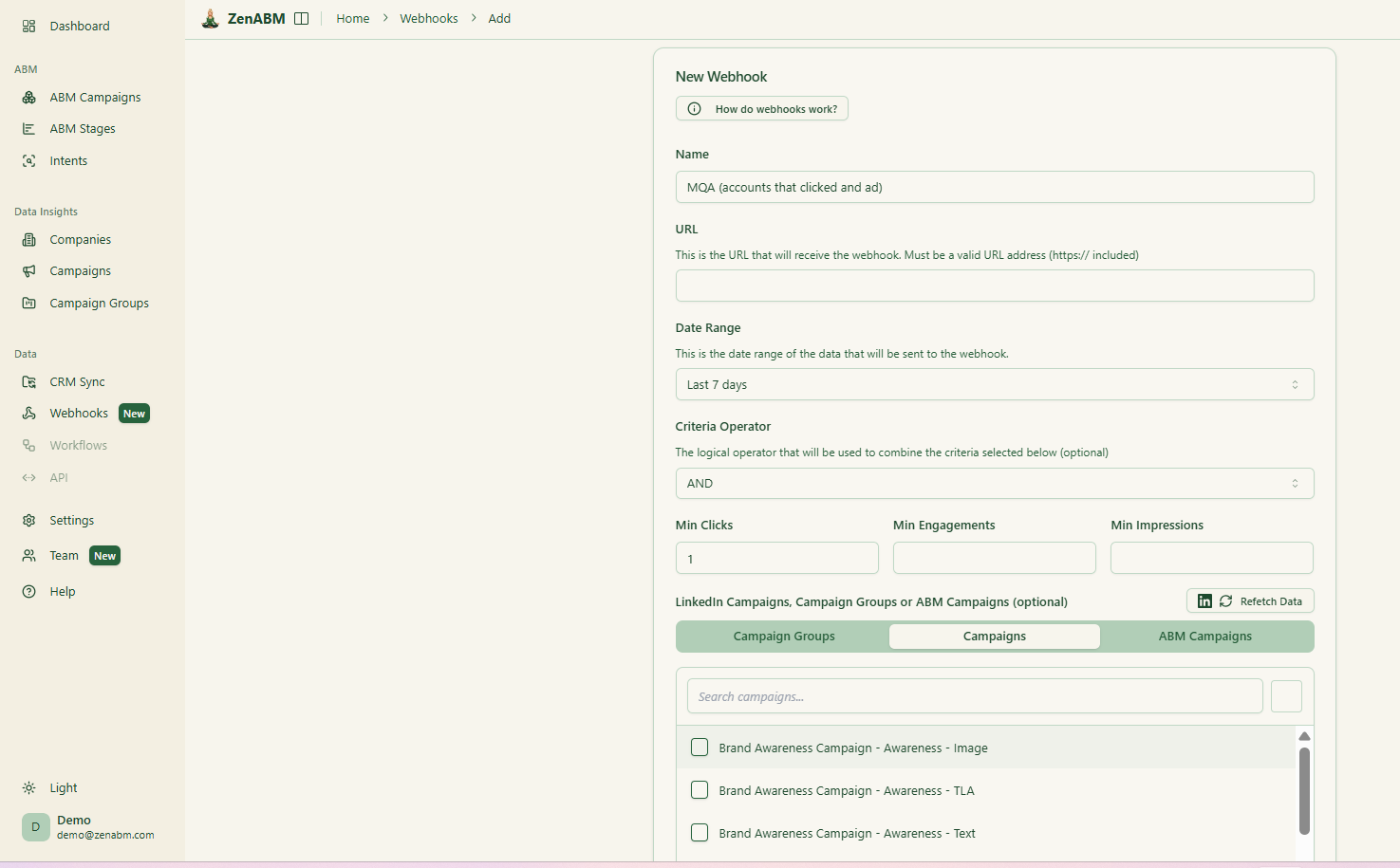
Bottom Line: ZenABM provides reliable LinkedIn-first data, transparent and predictable pricing, and no unnecessary bundled costs, making it a cost-effective and operationally cleaner choice for teams running LinkedIn-focused ABM programs.
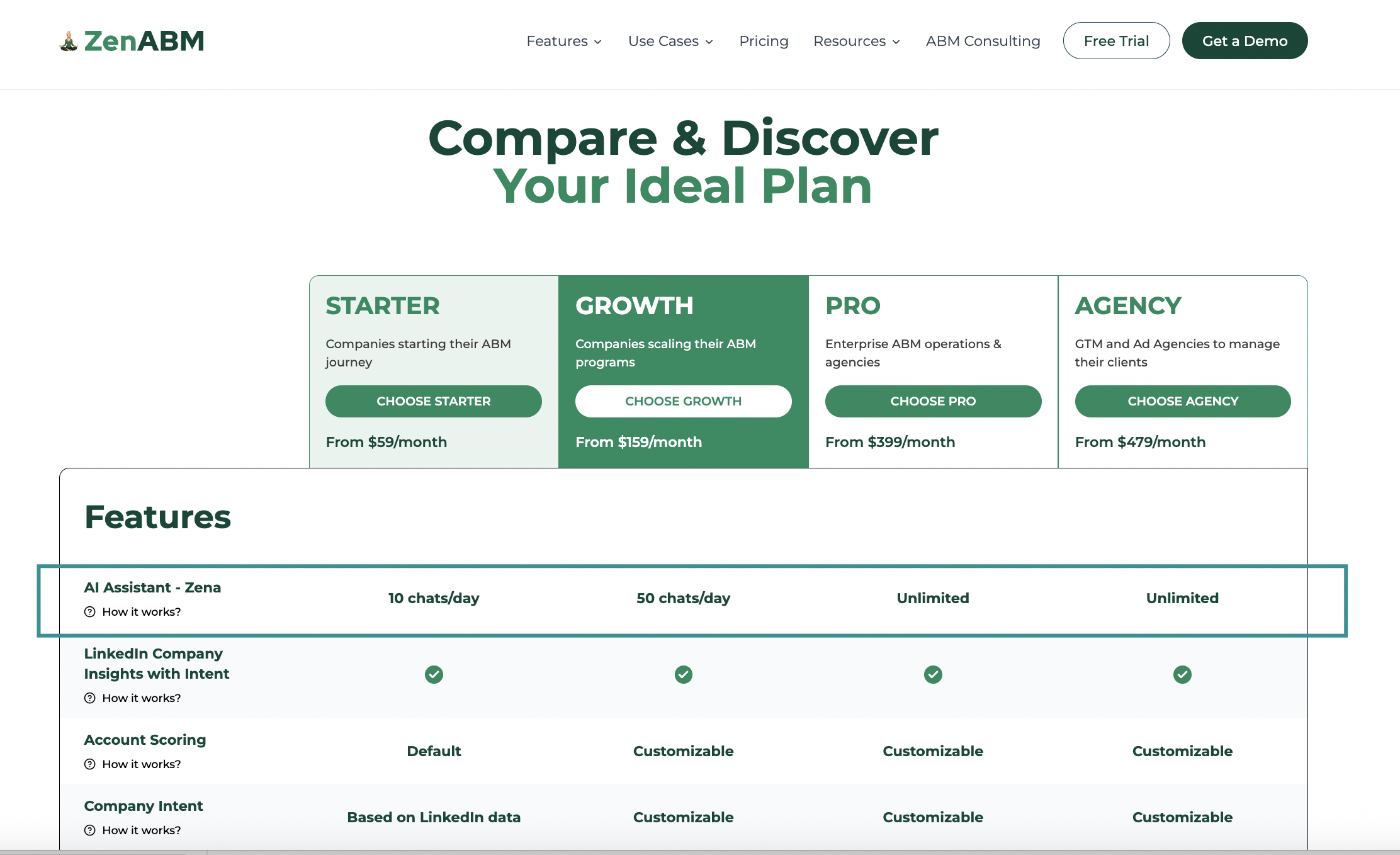
ZenABM offers four straightforward plans with no usage-based overages, no seat fees, and no add-on charges for intent data or CRM sync.
The Starter plan at $59/month gives smaller teams LinkedIn company-level engagement insights, default account scoring based on ad and CRM data, campaign-level intent signals, one ABM campaign, and native bi-directional HubSpot sync.
The Growth plan at $159/month adds customizable scoring, up to three ABM campaigns with separate dashboards, Salesforce integration, BDR assignment automation, Slack alerts, and weekly email reports.
The Pro plan at $399/month unlocks unlimited ABM campaigns, client-specific dashboards for agencies, AI-powered features, and advanced enterprise integrations.
The Agency plan at $479/month includes multi-client support with three client seats plus $199 for each additional client, making it purpose-built for LinkedIn ads agencies that need clean client-level reporting.
All plans include a 37-day free trial with full functionality. Use coupon code “salesforge” for 10% off Growth and Pro plans. To learn more, you can view pricing details or book a demo.
Factors.ai offers clear upfront pricing, but the hidden costs from account overages, add-on modules (LinkedIn AdPilot at $1,000/month, Google AdPilot at $1,000/month, Interest Groups at $750/month), and the structural inefficiency of paying for IP-based deanonymization that matches only 20 to 40% of visitors add up quickly, especially as your ABM program scales.
If your ABM motion is LinkedIn-first and you want company-level intent data, automated BDR routing, pipeline attribution, and CRM sync without those compounding add-on costs, ZenABM is worth evaluating directly. Start with the 37-day free trial and compare what you get for $59 to $399 per month against what Factors.ai delivers once you’ve accounted for the full cost of the add-ons your program actually needs.
Try ZenABM free for 37 days or book a demo to see it in action.