

©2026 ZenABM - All Rights Reserved.

Most one-channel ABM programs start on LinkedIn, and rightly so, but relying on just one channel leaves significant revenue on the table.
Your “dream accounts” might never get hooked with a single channel.
A multi-channel ABM strategy solves this by surrounding target accounts with coordinated touchpoints across paid media, email, and outbound, where each channel reinforces the others rather than operating in isolation.
This post is based on Ali Yildirim’s session at the ZenABM ABM Bootcamp 2026 (watch the full session on YouTube here), where he covered how to build a multi-channel ABM strategy that combines paid media with GTM engineering.


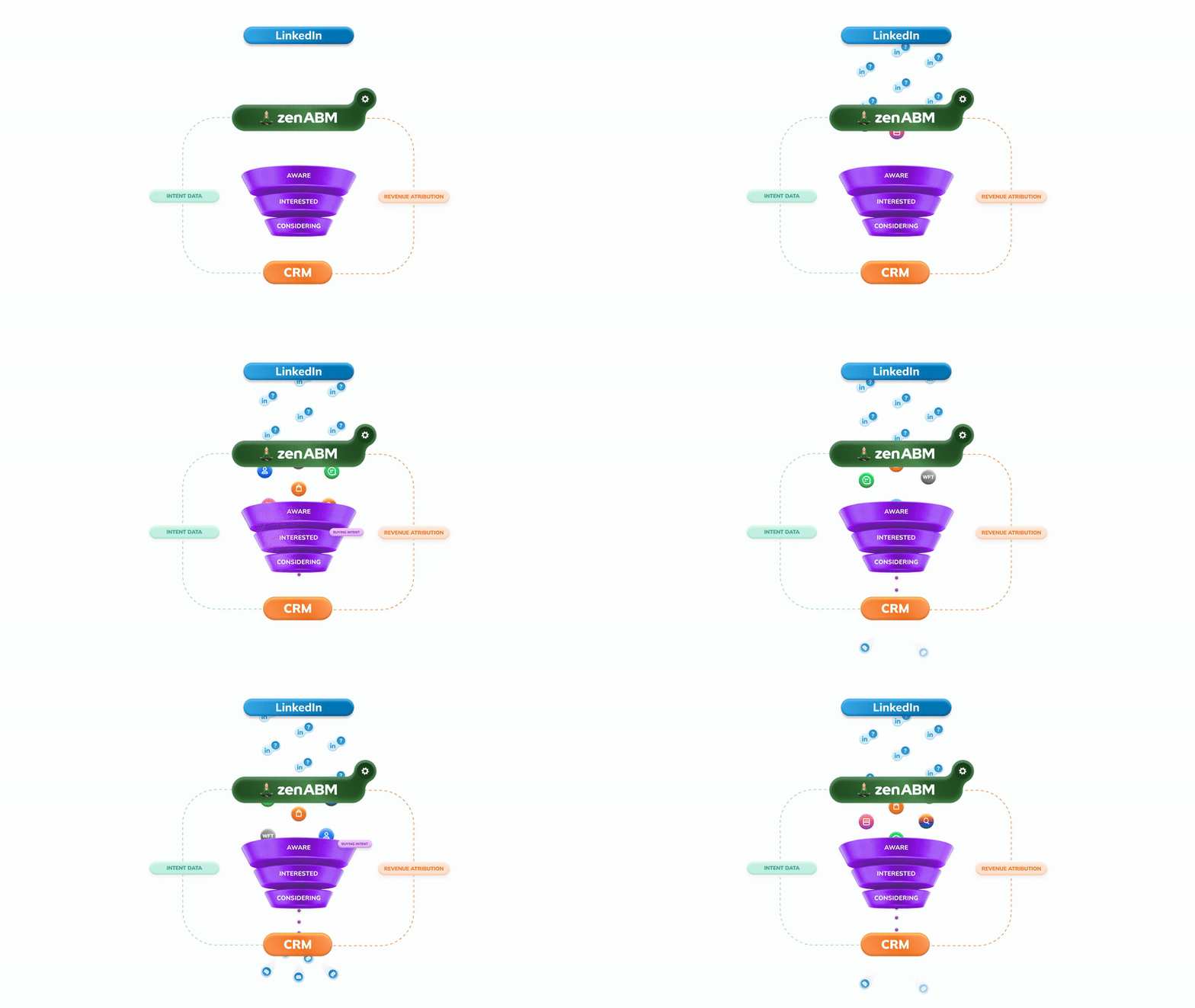
In case you want a quick rundown:
1. Single-channel ABM (only LinkedIn) leaves revenue on the table because you won’t reach a large chunk of your target accounts consistently.
2. LinkedIn has a structural coverage limit: many practitioners cite an “ideal” 10–40% audience penetration range, meaning a big portion of your list stays lightly touched each month.
3. Multi-channel ABM fixes this by letting channels cover each other’s blind spots: LinkedIn warms, email and outbound convert, events/direct mail unlock high-ACV conversations.
4. Ali’s budgeting principle: allocate budget by signal strength and pipeline per dollar, not by channel bias.
5. Suggested $20K/month starting split:
6. Ali’s recommended channel sequence:
7. Common mistakes: launching all channels on day one, using different account lists per channel, measuring channels in isolation, and personalizing by channel instead of stage.
8. ZenABM supports the system by capturing account-level LinkedIn engagement, scoring/staging accounts, pushing signals into HubSpot/Salesforce, triggering workflows via webhooks, and enabling multi-channel follow-up based on real engagement.
LinkedIn ad reach for any given target audience maxes out at around 40% active penetration.
In fact, many marketers paid media experts on LinkedIn claim LinkedIn itself advises that a penetration rate of 10-40% is ideal.

So, even when all’s great about your campaign, the other 60% of your target accounts are bound to be not penetrated very actively.
Reasons could be that they are not active on LinkedIn at that moment, or LinkedIn’s algorithm is failing to serve your ad to the right person at the right company (something that’s not uncommon).
If your entire ABM strategy lives on LinkedIn, you are structurally unable to reach a majority of your target accounts in any given month.
This is not a creative problem or a bidding problem, but a channel coverage limitation.
A multi-channel ABM strategy fixes that.
See, when LinkedIn does not reach a decision maker, email might.
Or when email goes unanswered, a well-timed LinkedIn connection request from your BDR, sent after that person has already seen your ads a few times, often converts.
Each channel compensates for the others’ blind spots.

Ali’s budgeting philosophy for multi-channel ABM is that budget allocation should follow signal strength, not arbitrary channel preferences.
He emphasizes that there is no rule that says LinkedIn gets 60% of your ABM budget.
The allocation should be driven by where you are seeing the best engagement and conversion at each stage of your funnel.
For perspective, here’s a starting allocation for a $20,000/month multi-channel ABM program:
Remember: Review allocation quarterly based on pipeline per dollar spent by channel, not impressions, or CTR. Pipeline per dollar is the primary metric that tells you where to put more money. See how to measure LinkedIn ABM ROI for the full attribution framework.

The channels Ali recommends combining for a strong multi-channel ABM strategy, in order of priority:
Start with LinkedIn paid.
LinkedIn gives you the most precise targeting by job title, company, and seniority of any ad platform.
It also generates the engagement signal data like which accounts are clicking, which are visiting high-intent pages, etc., that informs the rest of your multi-channel strategy.
Next is email outbound, but here you don’t have to run cold email to your entire target account list in parallel with LinkedIn ads.
That’s not multi-channel ABM, but spray and pray with extra dollars spent.
Instead. run email to accounts that have already engaged with your LinkedIn ads.
The open and reply rates are 3-5x higher when the account has prior brand exposure.
Then comes LinkedIn outbound, where you send LinkedIn connection requests from your sales team, triggered by ad engagement signals.
The principle is still the same: reach out after the account has seen your ads, not before.
When a BDR connects with someone who has already clicked through your ads twice, the connection rate is significantly higher than cold outreach.
Finally, your ABM strategy should also have in-person or physical touchpoints like direct mail, gifts, events, etc.
But this channel is only for accounts with $100K+ ACV potential.
And it works!
For example, a personalized gift or an invitation to a private dinner can unlock a conversation that no digital channel could.
By the way, there are dedicated platforms for ABM gifting like Sendoso, if you are looking for one.


GTM engineering is the connecting link between your channels.
Without it, you have separate teams running separate motions that occasionally happen to target the same accounts. That’s not multi-channel ABM.
With it, you have a coordinated system where a LinkedIn ad engagement automatically triggers the right next step in the right channel.
Here’s Ali’s core GTM engineering workflow that keeps his multi-channel ABM together:
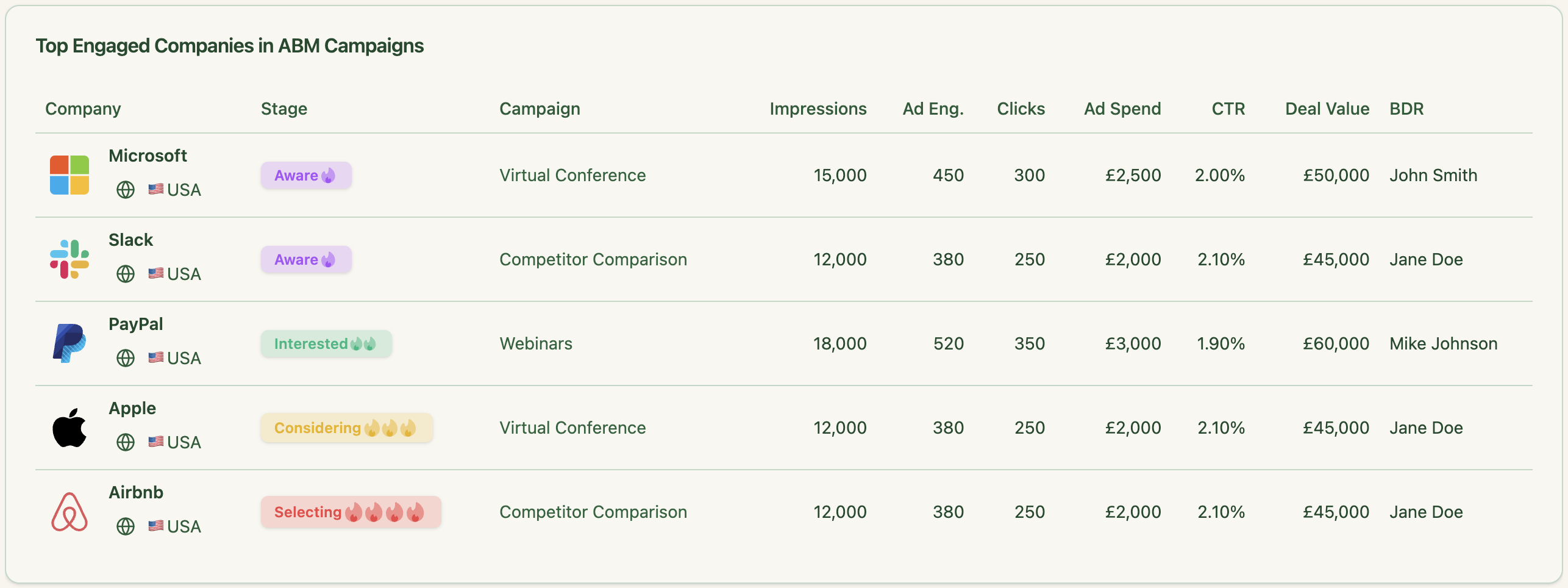
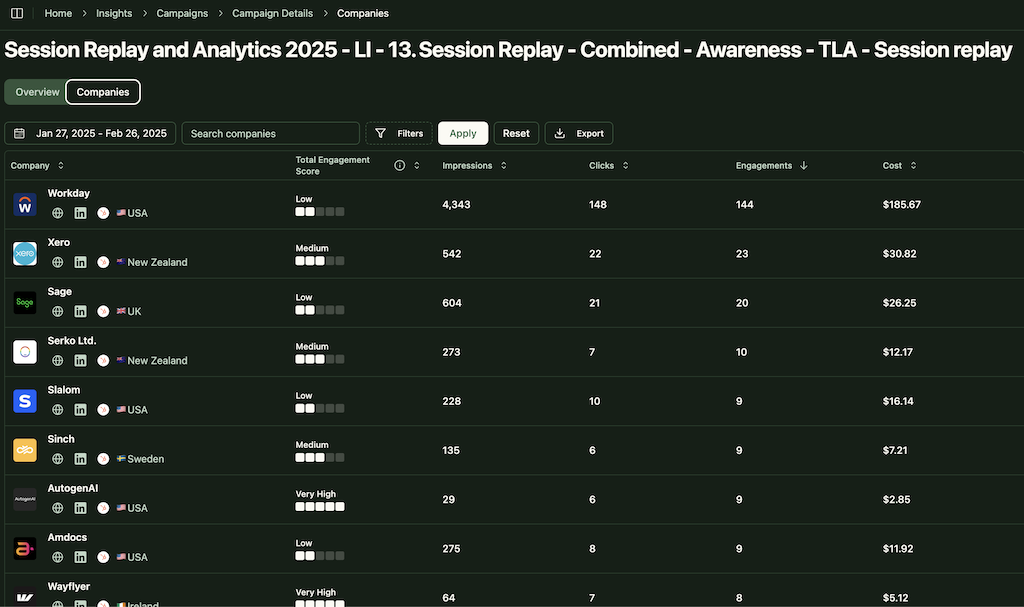
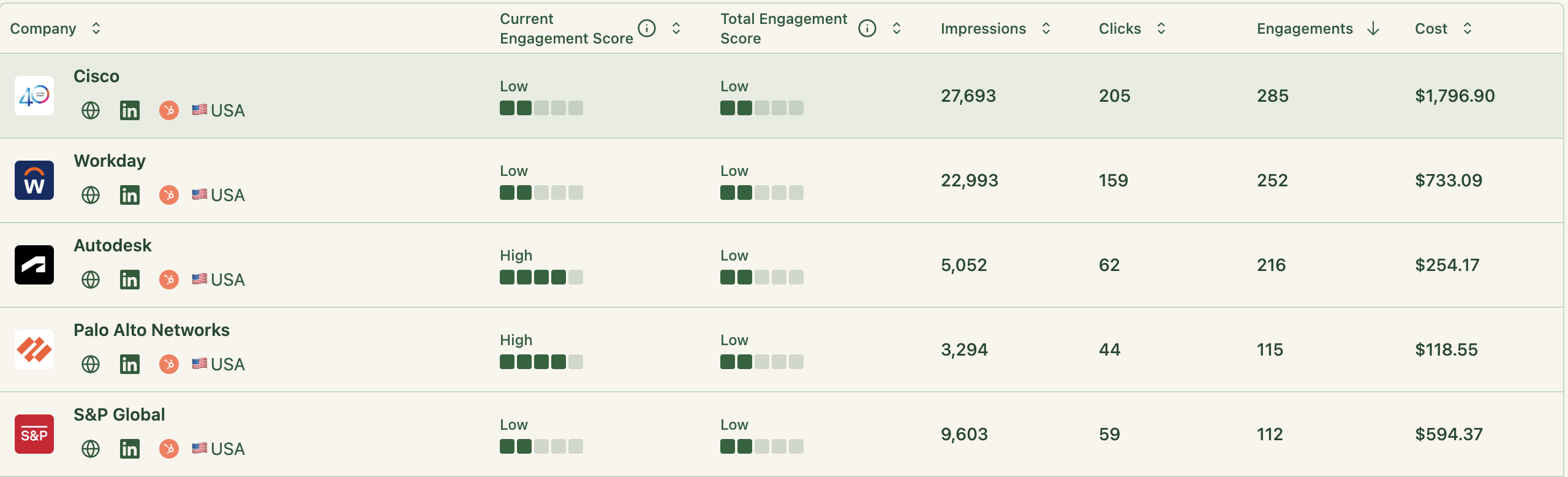

This is what separates modern LinkedIn ABM from the older model of manually reviewing campaign dashboards and hoping sales picks up the hot leads.
Done with the theory, let’s look at some mistakes people commit in practice:
Don’t hop on all channels from the first day.
Start with LinkedIn and acquire some signal data.
Then layer in email outbound triggered by that signal and add LinkedIn outbound.
Without this sequence, you’ll have no data, and therefore no ABM – just expensive cold outreach on plenty of channels.
Next common mistake is using different account lists per channel.
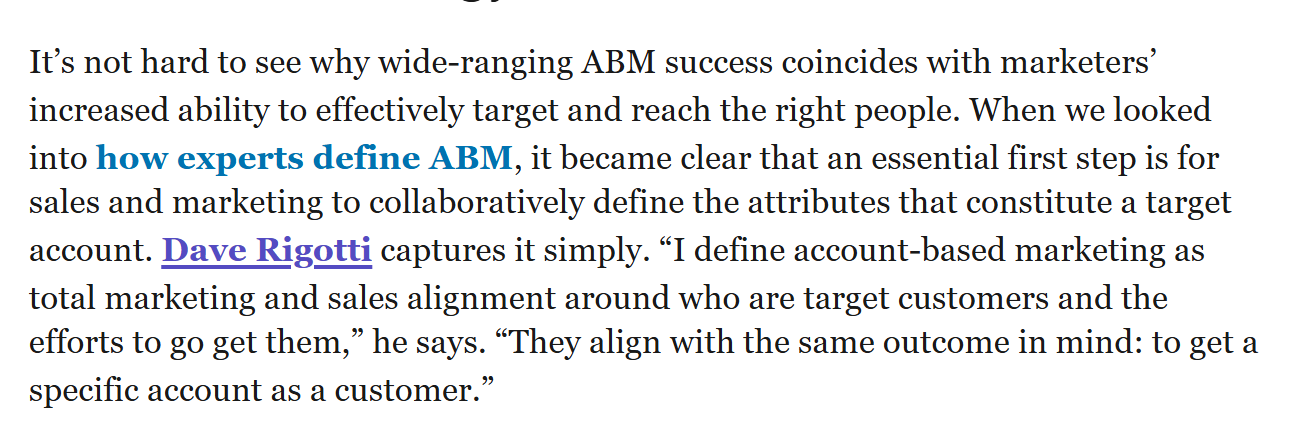
That’s not ABM again, because ‘all departments that have a say coming together to pursue a defined set of accounts’ is the very definition of account-based marketing.
So, scenarios where marketing is running LinkedIn ads to 5,000, while sales is prospecting from a different 3,000 end up in campaigns where nobody knows which accounts are being touched by both channels, and there is no coordinated story.
So, etch this in stone: All channels must work from the same target account list, stored in your CRM.
Regarding measurement, do not measure a channel’s performance only in isolation.
ABM is all about these channels working together to give compounded results, so measuring their performance only in isolation makes no sense.
For example, if LinkedIn CTR is good but the accounts clicking are not opening deals, the problem might not be LinkedIn. It might be that email follow-up is not reaching the right people, or sales is not following up quickly enough.
Company-level engagement tracking across all channels gives you the full picture.
Another mistake is personalizing messaging by channel, and not by stage.
See, what a company needs to hear in their first week of seeing your ads is completely different from what they need to hear in week eight when they have visited your pricing page three times.
Coordinate the message across channels based on where the account is in their journey, not just which channel is reaching them.
Yes, you need to adapt the messaging style based on channel, but that doesn’t mean the messaging has to be different.
Multi-channel ABM only works when your channels are connected by a shared signal layer.
Otherwise, you just have multiple teams running multiple plays at the same accounts, with inconsistent timing and no coordination.
ZenABM supports Ali’s “paid media + GTM engineering” approach by turning first-party LinkedIn engagement into the triggers, context, and routing logic that makes email, outbound, and high-touch channels work together.
ZenABM connects to the official LinkedIn Ads API and captures company-level engagement across your campaigns, so you can see which target accounts are actually interacting with your ads.
This is the foundation of Ali’s GTM engineering workflow: LinkedIn is your primary channel, but the real value is the engagement signal it generates. Those signals decide which accounts get email outbound, which get LinkedIn outbound, and which are worth expensive high-touch plays.
Because this is first-party LinkedIn data, it is far more actionable for routing than generic “intent” flags that do not tell you who actually engaged with your brand.
Multi-channel ABM breaks when you treat every target account the same. Some accounts are warming, some are evaluating, and many are simply not active.
ZenABM turns engagement into real-time scoring so you can focus outbound and budget where it actually has leverage. Instead of running email and outbound to your entire TAL, you can trigger those plays only for accounts that have already shown intent through LinkedIn engagement.
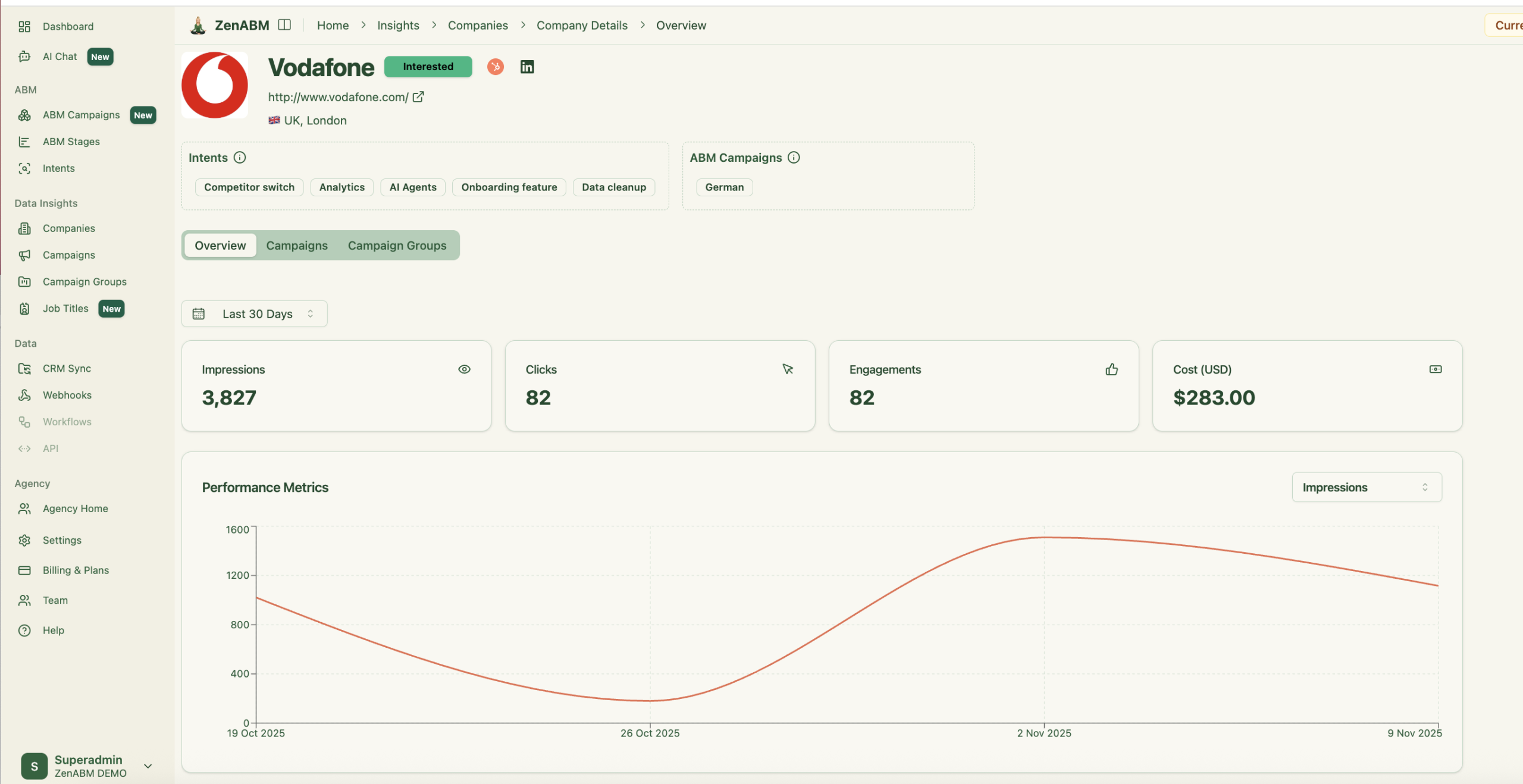
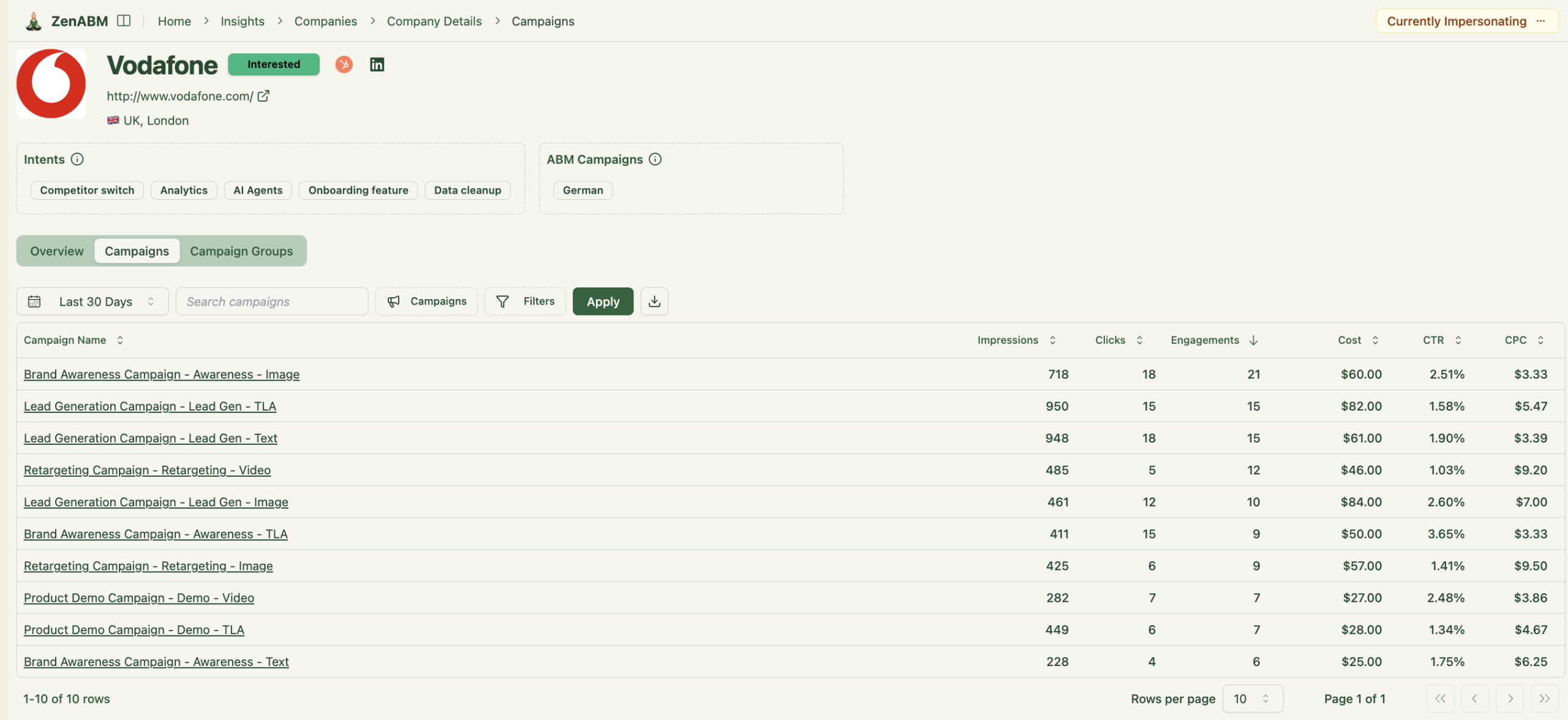
That timeline view matters for multi-channel coordination: sales can see what the account engaged with, marketing can see which campaigns influenced the journey, and both teams can align on the next best touchpoint.
In multi-channel ABM, the same message should not be blasted everywhere. Messaging needs to match account stage: awareness, interest, evaluation, and selection.
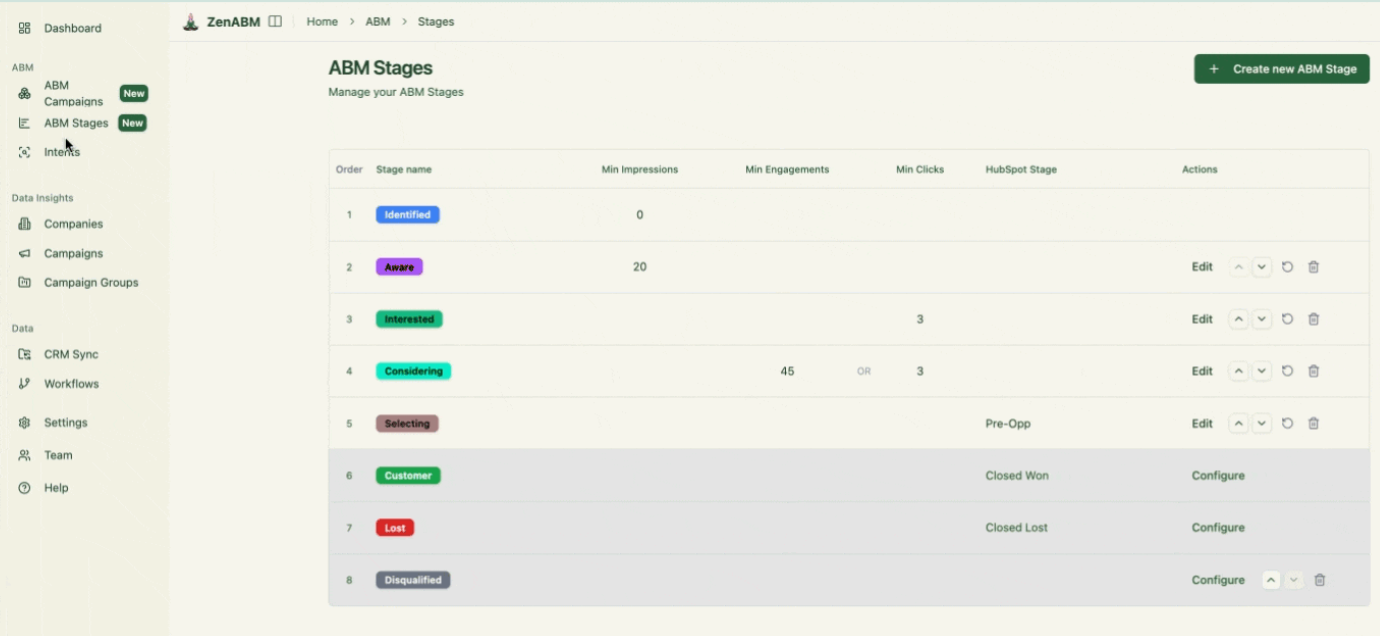
ZenABM lets you define stages such as Identified, Aware, Engaged, Interested, and Opportunity, then automatically places accounts in the right stage using engagement scores and CRM data.
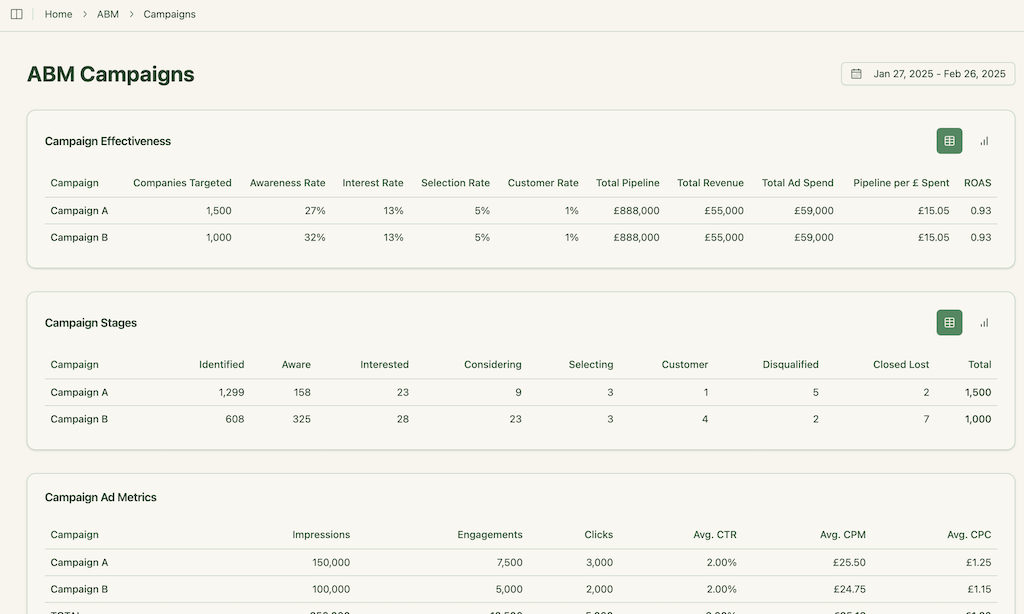
This gives you a clean coordination framework: LinkedIn paid warms the account, and once it hits “Interested,” you trigger email outbound, LinkedIn outbound, or a higher-touch play depending on ACV potential and engagement strength.
ZenABM integrates bi-directionally with CRMs like HubSpot and adds Salesforce sync on higher tiers. LinkedIn engagement flows into the CRM as company-level properties, so sales can self-serve their prioritized account list.
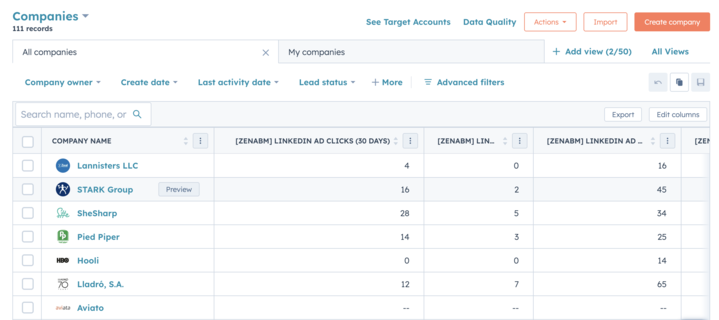
Once an account crosses your engagement threshold, ZenABM can update the stage to Interested and automatically assign a BDR, which is the core “handoff” mechanism in signal-triggered multi-channel ABM.
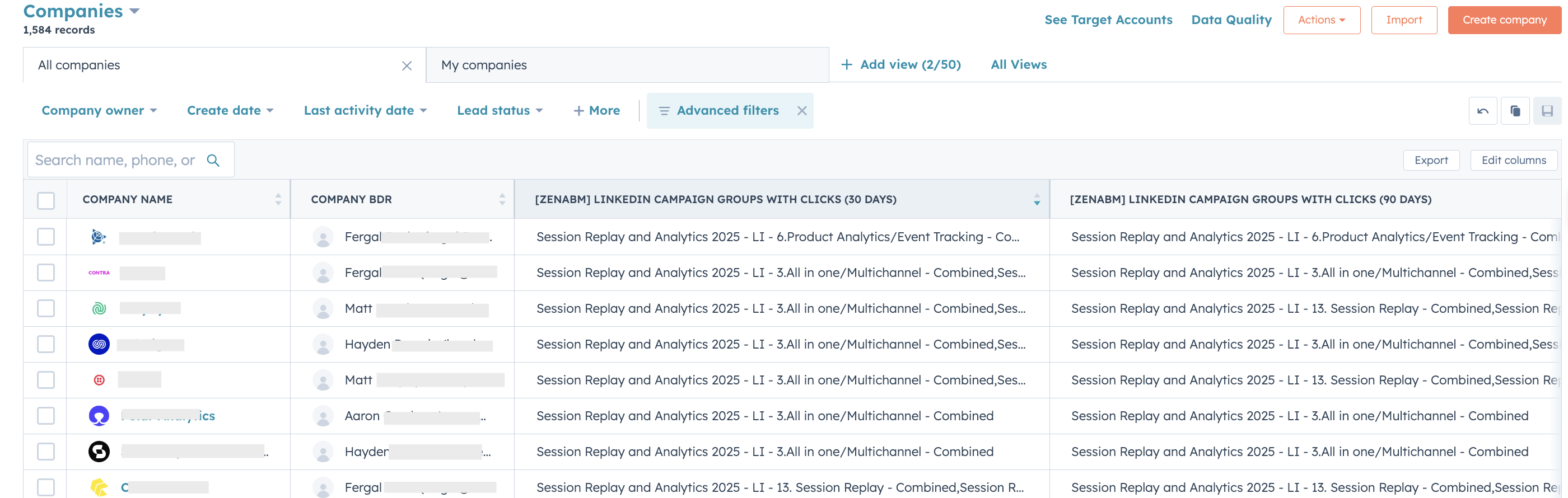
Multi-channel ABM fails when outbound is generic. To make email and LinkedIn outreach convert, it needs context: what the account engaged with and who inside the account is active.
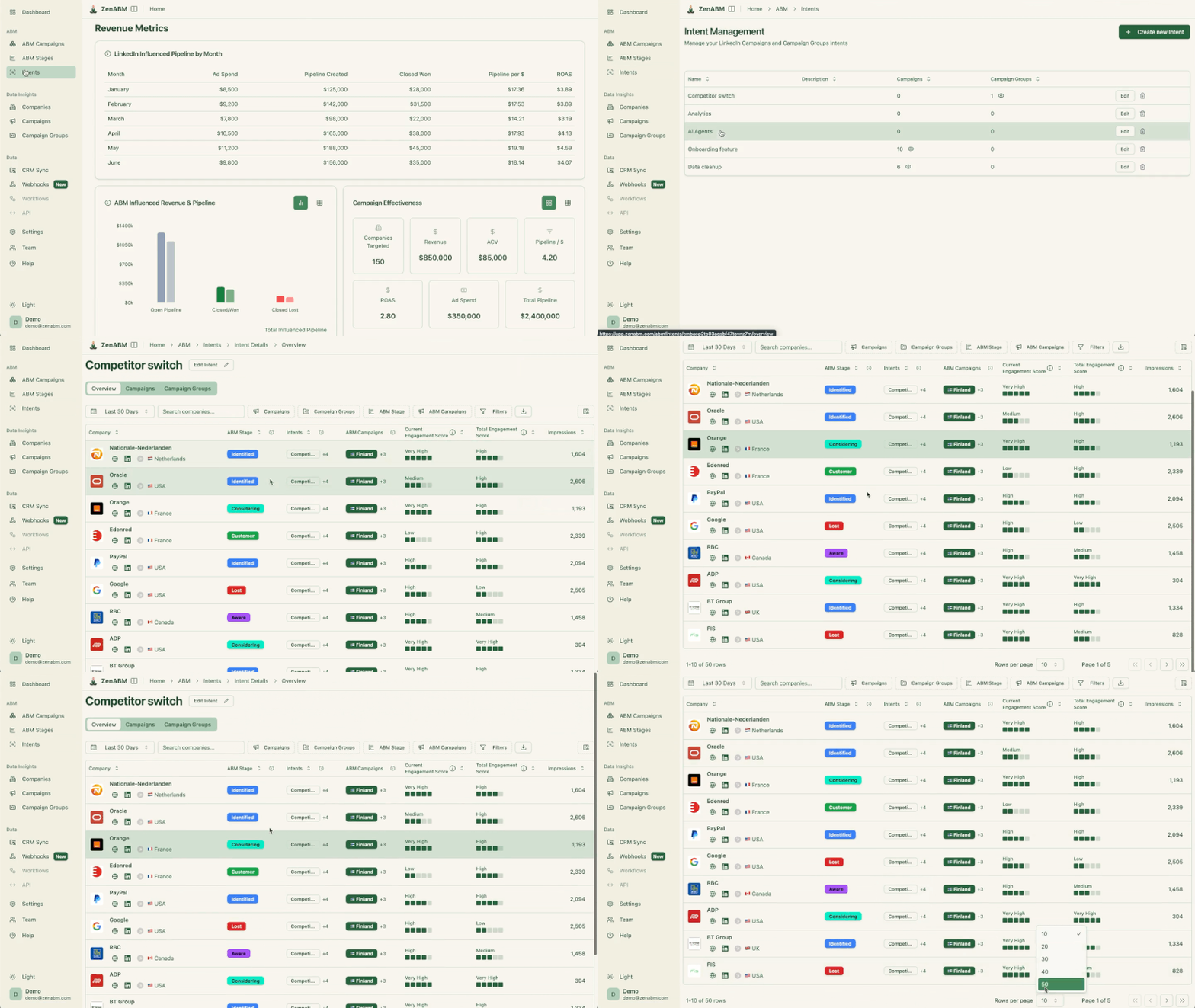
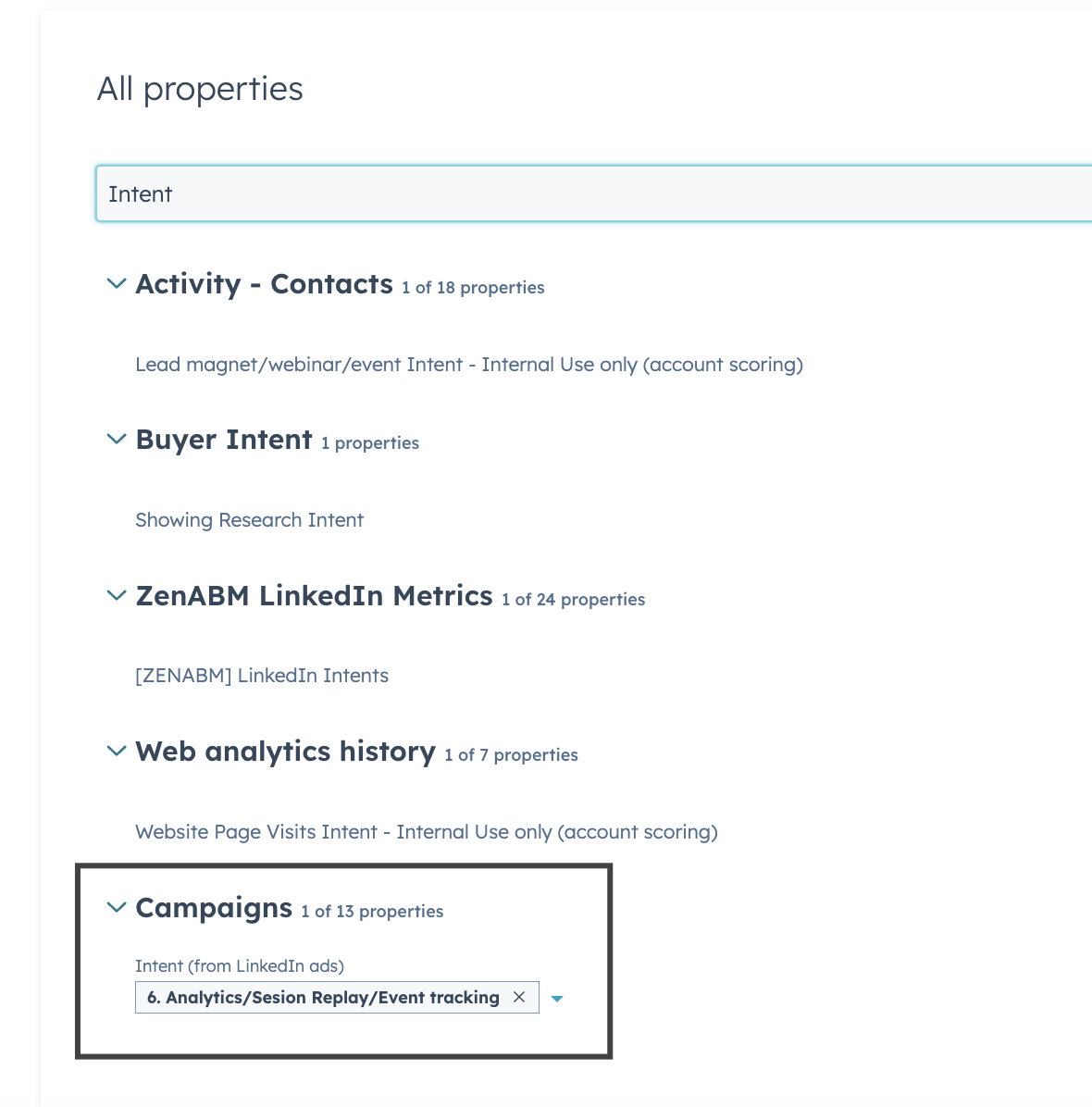
ZenABM helps you see what themes accounts engaged with by tagging campaigns by feature, use case, or offer, then mapping engagement back to accounts.
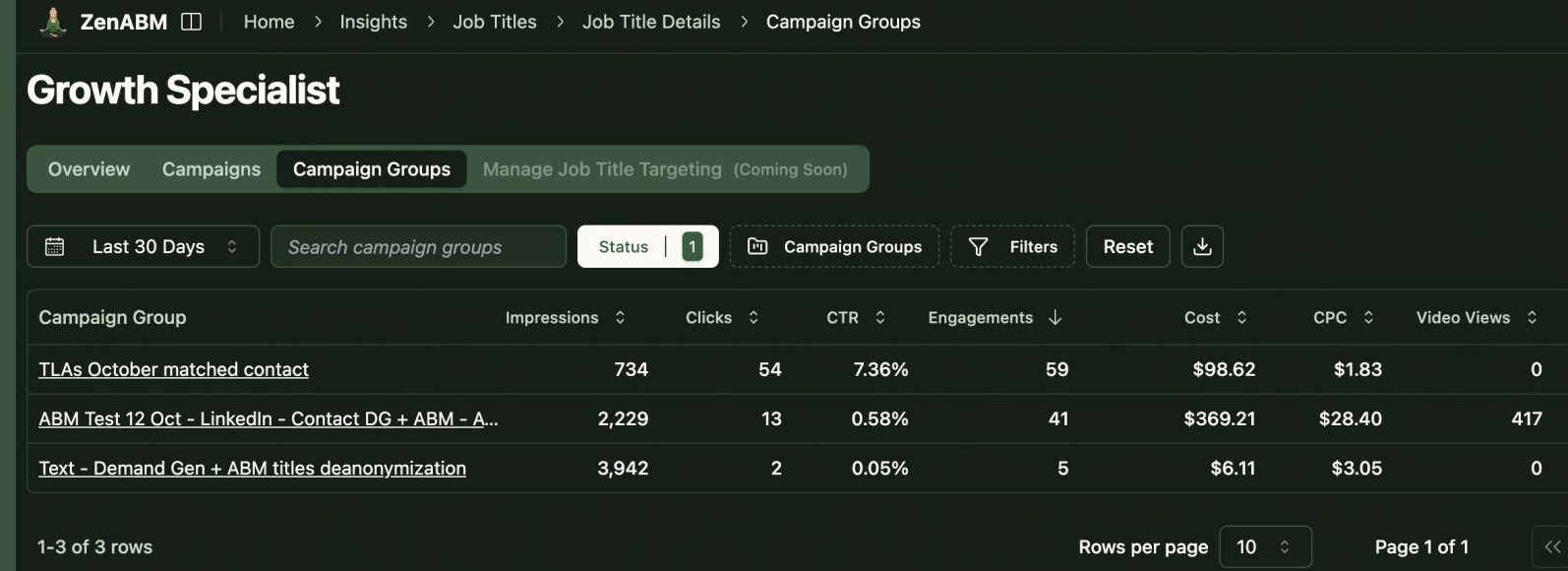
ZenABM also shows which job titles engaged with your creatives, which helps your BDR tailor messaging to the right stakeholders instead of sending one generic pitch to everyone.
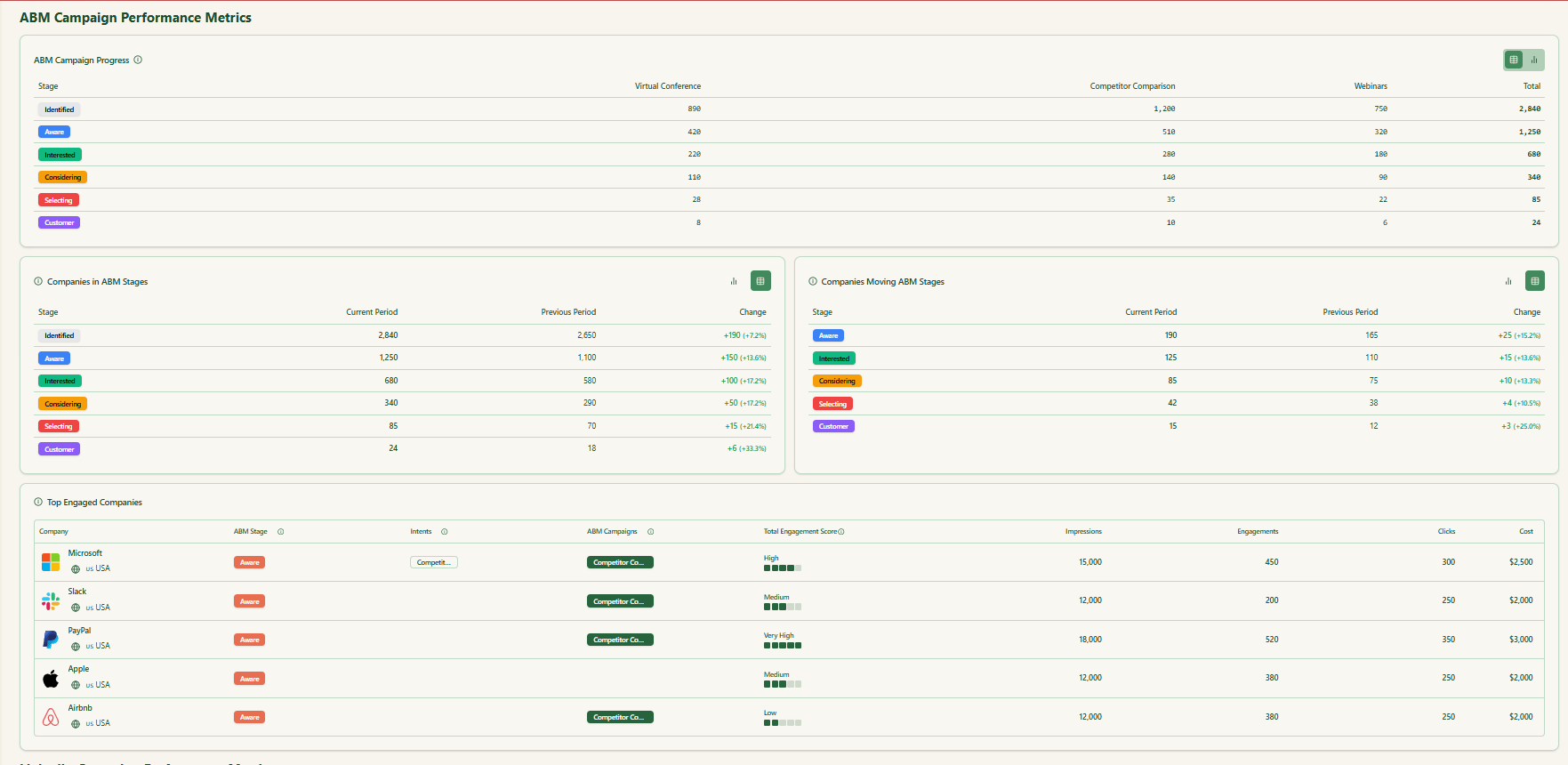
ZenABM ships with dashboards that connect LinkedIn engagement, stage movement, and revenue outcomes, which is essential for multi-channel ABM where one channel often “opens the door” and another channel “closes the deal.”
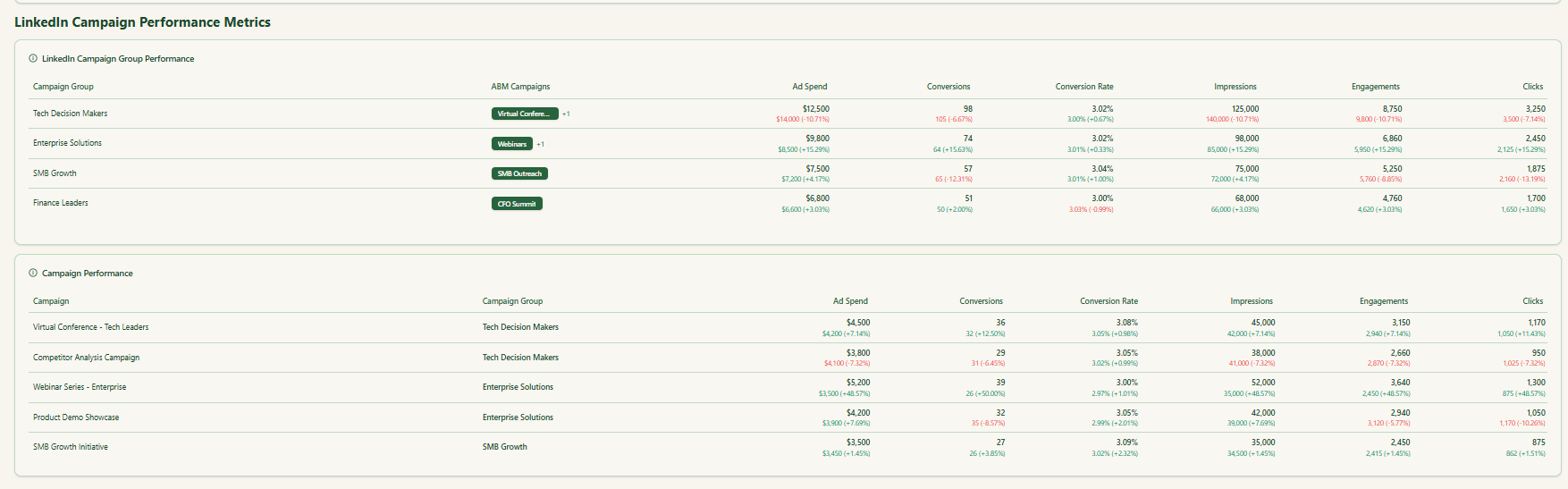
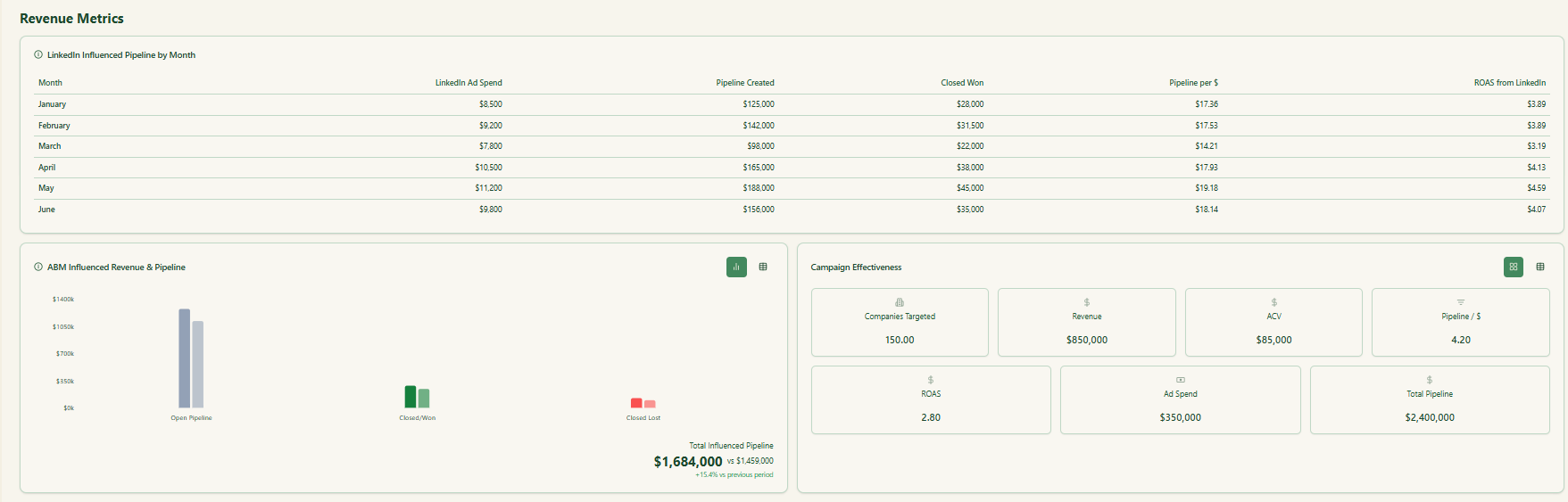
Multi-channel ABM also requires controlling reach distribution. If a few large accounts absorb too many impressions, they dominate your signal and starve the rest of the list.
ZenABM allows you to exclude companies that have reached a defined impression threshold from one or multiple campaigns, keeping coverage balanced across your TAL.

ZenABM’s AI chatbot, Zena, answers performance questions in natural language, which is useful in multi-channel ABM where you are constantly asking “Which accounts are heating up?” and “Which stage moved this week?”
This reduces the reporting overhead and speeds up channel decisions, so your multi-channel motion stays responsive rather than slow and manual.
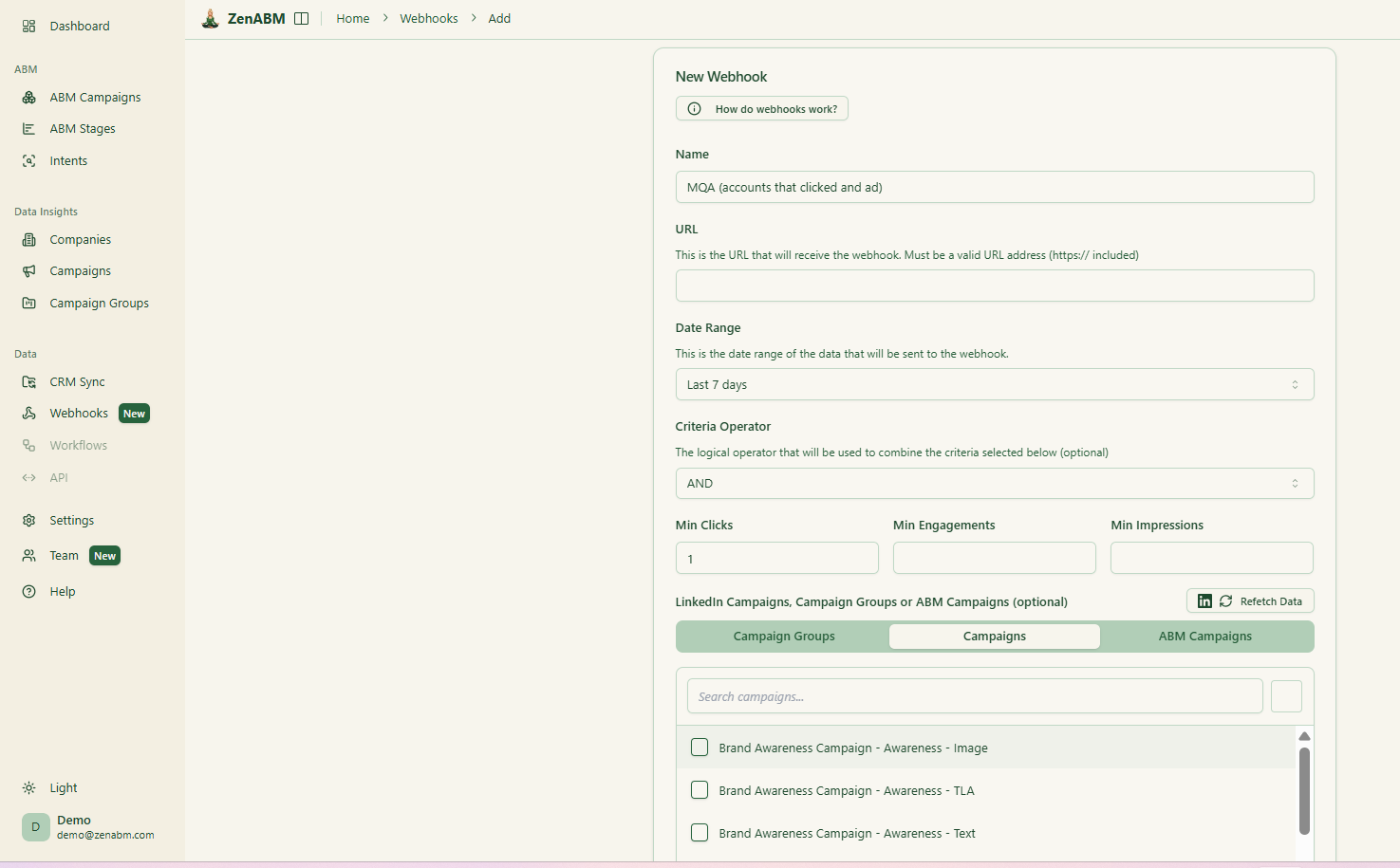
ZenABM’s custom webhooks let you push engagement and stage-change events into your GTM stack (Clay, Slack, enrichment flows, outbound tooling), which is the actual “engineering layer” that connects channels.

ABM Campaign Objects let you group multiple LinkedIn campaigns into one initiative so you can evaluate performance across regions, personas, and creative clusters without juggling fragmented reports.
Multi-channel ABM works when every channel earns its turn, triggered by real account engagement instead of blasting your whole list everywhere.
Start with LinkedIn as the signal engine, then route the next touch (email, outbound, events) based on stage, fit, and intent, not guesswork.
If you want that signal-to-activation loop without manual reporting, ZenABM can surface engaged accounts at the company level and push those triggers into your CRM and workflows.
Give ZenABM a try for free now or book a demo to know more!
A multi-channel ABM strategy coordinates multiple marketing and sales channels – LinkedIn ads, email outbound, LinkedIn outbound, events, direct mail – to reach target accounts with consistent, stage-appropriate messaging. The key difference from single-channel ABM is that channels are connected and triggered by signals from each other, not run in parallel independently.
LinkedIn paid advertising is the most effective starting channel because it provides precise targeting and generates engagement signal data. Email outbound is the highest-leverage second channel when triggered by LinkedIn engagement signals. For high-ACV accounts ($100K+), in-person events and direct mail can unlock conversations that digital channels cannot.
Use ZenABM to detect when target accounts hit your engagement threshold on LinkedIn (typically 3+ clicks in 30 days). Trigger a webhook to Clay, which enriches the account and finds contacts. Then route those contacts to SmartLead or LemList for an email sequence personalized to the LinkedIn content they engaged with.
Start with a minimum of $10,000/month on LinkedIn. Add email and LinkedIn outbound tooling for another $2-3K/month. For high-ACV programs targeting $100K+ accounts, budget an additional 20-30% for events and direct mail. Use the ZenABM budget calculator to reverse-engineer from your specific revenue goal.
