



Linklo is a LinkedIn Ads campaign automation platform.
It layers on top of LinkedIn Campaign Manager and adds execution controls Campaign Manager does not really optimize for, especially hour-level scheduling (dayparting), delivery guardrails, and rule-based logic that shapes how impressions spread across your target companies.
In ABM terms, Linklo is best described as a LinkedIn delivery and execution control layer, not an end-to-end ABM suite.
This breakdown covers Linklo features, what the platform actually handles, what it does not, and how it stacks up against ZenABM (a first-party, LinkedIn-focused ABM analytics and activation platform).

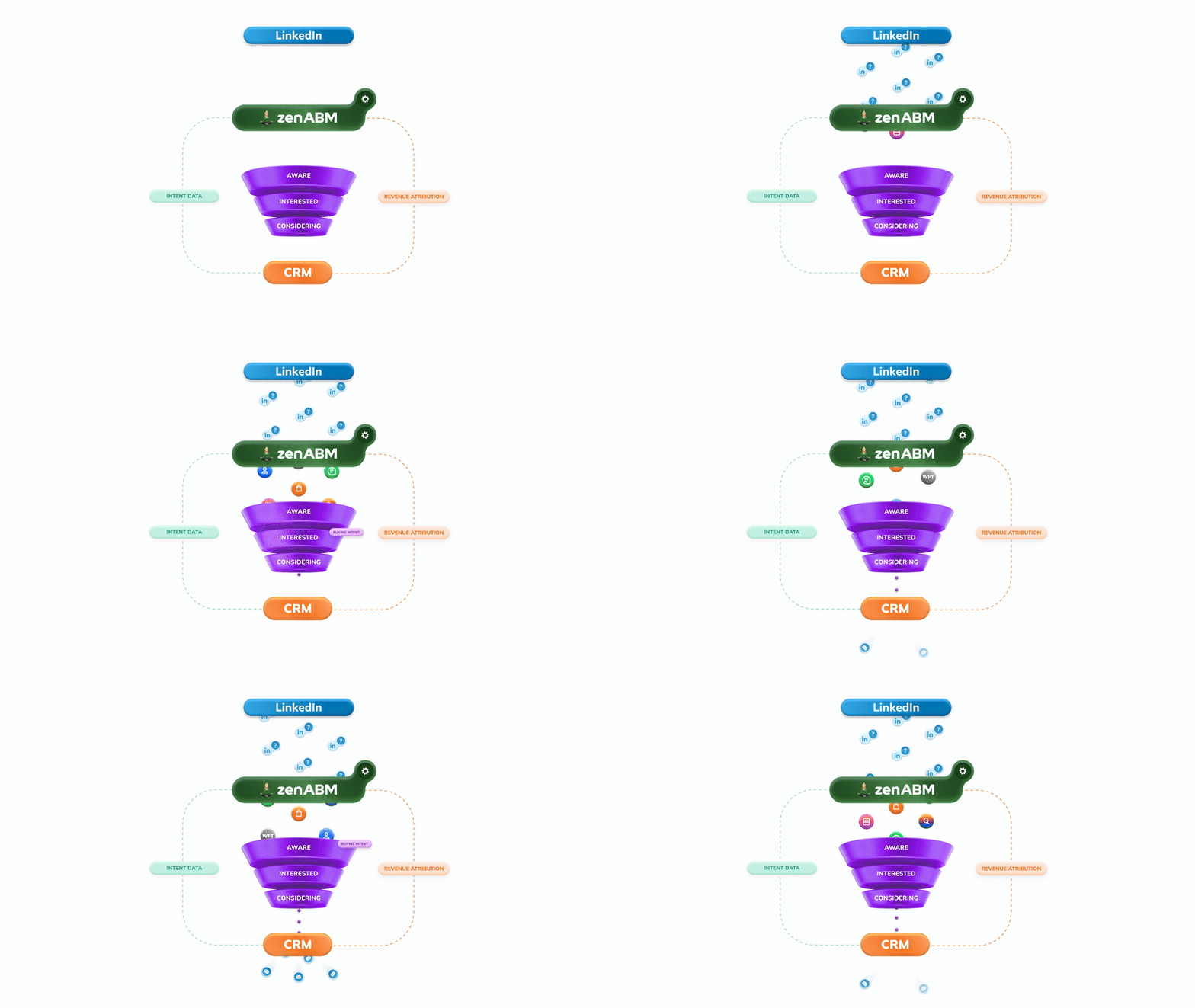
If you want the fast version:

Linklo is designed exclusively for LinkedIn Ads.
It connects to your LinkedIn Ads account and aims to remove repetitive manual work while adding operational guardrails that Campaign Manager does not really emphasize, especially for teams managing many campaigns, time zones, and target accounts.
In practice, Linklo functions as an “operations + delivery control” layer for LinkedIn advertising, most relevant when you want tighter execution discipline than Campaign Manager makes convenient.
Its core Linklo features include:
Linklo’s most immediate value is campaign scheduling automation for LinkedIn.
Instead of only relying on start and end dates, Linklo focuses on hour-level control, so you can push delivery into business hours or your historically strongest engagement windows (for example, weekdays during working hours instead of late-night spend).
This is mainly a spend-efficiency play: concentrate budget where engagement tends to happen, and reduce wasted delivery in low-response windows.
Beyond scheduling, Linklo positions budget protection as a key part of the workflow.
The use case is simple: during experiments (new audiences, new creative, new offers), spend can drift or spike faster than you notice.
Budget guardrails (often framed as “budget alerts” and overspend protection) lower the risk of paying LinkedIn tuition because nobody checked the campaign for two days.
This matters most for lean teams running multiple campaigns across regions, where manual monitoring gets expensive fast.
Linklo offers a feature called Company Flows to manage how impressions distribute across companies.
The ABM delivery pattern it targets is common: delivery concentrates into a subset of accounts, while many other target accounts receive minimal exposure.
Company Flows aims to rebalance this with rule-based logic, for example:
This is still LinkedIn execution logic. It does not coordinate sequencing across email, website, outbound, or other channels.
Linklo also positions testing workflows and creative review operations as part of its value.
For teams shipping lots of creatives, the bottleneck is rarely “we cannot test.” The bottleneck is “we cannot test without operational chaos.”
That is why structured A/B testing, performance visibility, and repeatable review workflows can be a real execution advantage, especially for agencies and multi-stakeholder in-house teams.
Linklo is not an intent data provider in the way full ABM suites or third-party intent networks present themselves.
Its intent-adjacent value is mostly operational: noticing better-performing time windows and applying rules (scheduling + flows) to concentrate delivery and cut waste.
That can improve efficiency, but it is different from account-level intent interpretation tied to messaging themes, buying stage, or pipeline outcomes.
Pro Tip: “Timing intelligence” is not the same as buyer intent. Timing can suggest when an audience is more likely to click or convert, but it does not explain what themes, pains, or product areas the buying committee is responding to. ZenABM focuses on first-party company-level intent derived from your own LinkedIn ad engagements, showing which accounts engaged with which themes, how interest shifts over time, and how that maps to ABM stages and CRM context.
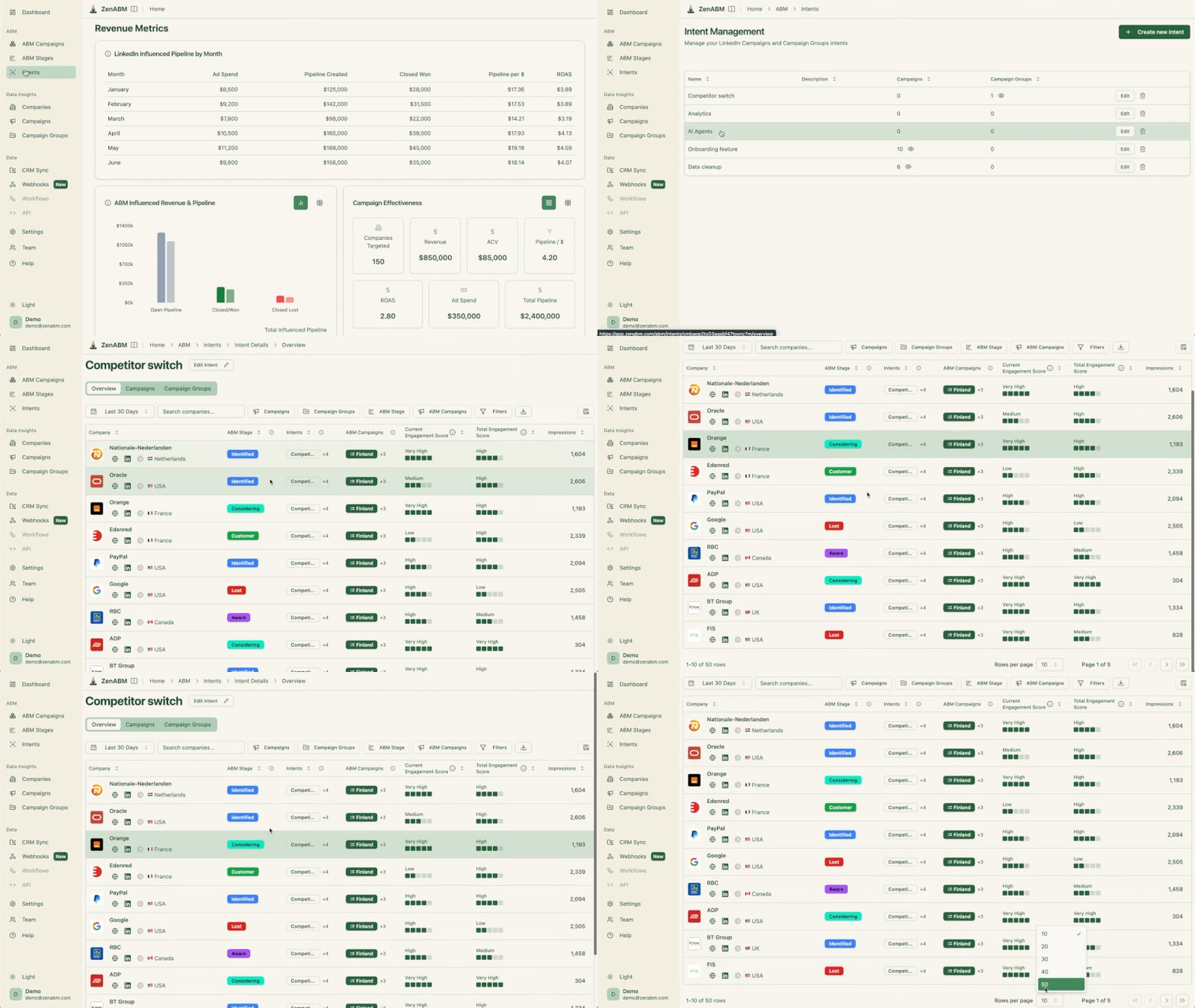
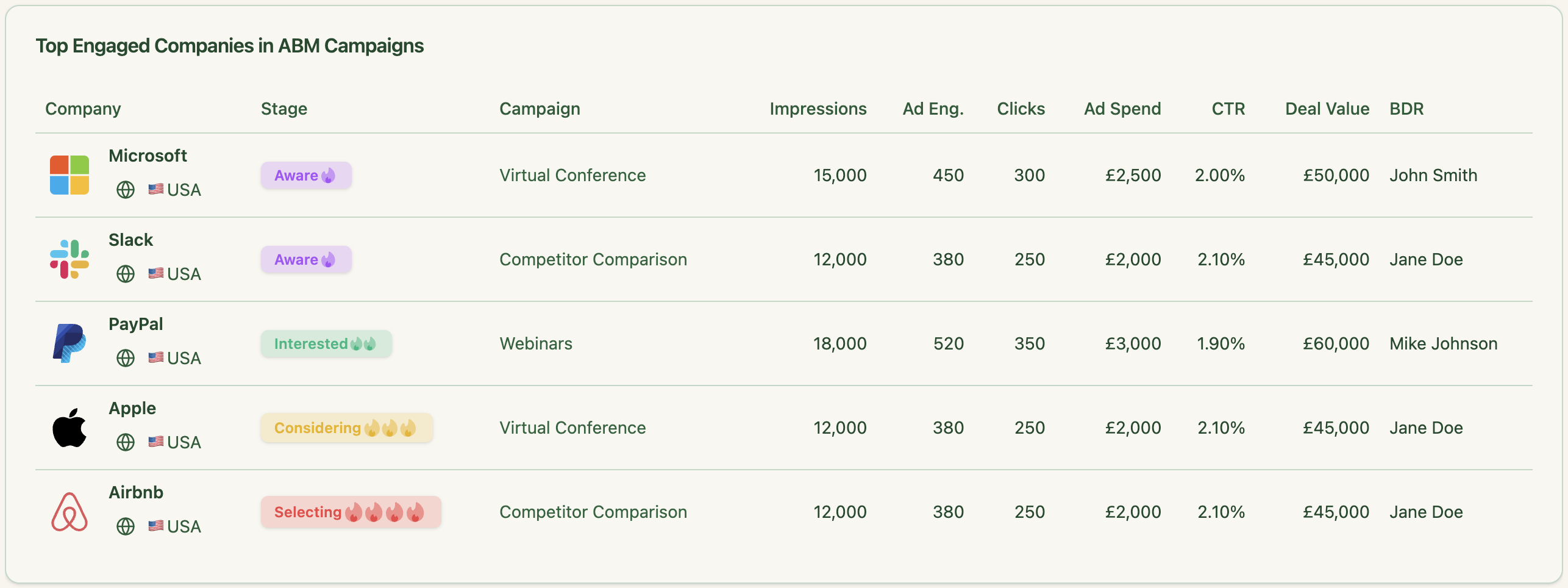
Userpilot, using ZenABM, built their entire ABM campaign structure around this first-party company-buyer’s intent sourced from LinkedIn ads instead of leaning on third-party tools:

Linklo’s public positioning is centered on LinkedIn execution controls (scheduling, budget guardrails, A/B testing, and company exposure logic).
It does not publicly position itself as a product that pushes account-level engagement insights into a CRM or provides bi-directional sync with HubSpot or Salesforce.
In practice, leads still flow through your LinkedIn lead gen forms and whatever connector or automation you already run, but Linklo is not framed as the system that enriches CRM company records with LinkedIn engagement intelligence.
ZenABM, by contrast, is explicitly built around bi-directional CRM sync:

Linklo does not create personalized ads or write your messaging.
Any account-level personalization still depends on how you structure audiences, campaigns, and creatives inside LinkedIn.
Where Linklo helps is delivery control: ensuring the right companies get enough exposure, suppressing already-converted companies, and progressing companies between campaigns based on measurable thresholds.

Linklo pricing is not consistently available in a detailed public format.
That means there is no dependable public breakdown of tiers, feature limits, account limits, or exact inclusions by plan.
If pricing clarity matters for procurement, the practical route is to start a free trial (if eligible) or request a demo and ask for:
As a general benchmark, LinkedIn utilities in this category are often subscription-based and cancelable, which is typically lower commitment than large ABM suites with annual contracts.
If the goal is a LinkedIn-first ABM platform with transparent pricing plus a stronger analytics and CRM activation layer, ZenABM is positioned as the more comprehensive option.

ZenABM offers account-level LinkedIn ad engagement tracking, ad engagement-to-pipeline analytics with plug-and-play dashboards, account scoring, ABM stage tracking, CRM sync, first-party qualitative intent, automated assignment of BDRs to hot accounts, custom webhooks, and job-title-level engagement tracking.

Public third-party review coverage for Linklo is still thin.
On G2, Linklo is listed but does not currently show published user reviews, and the listing also notes that pricing information is not available.

That means most evaluations happen via demos, trial usage, and peer recommendations rather than a large pool of validated reviews.
On social platforms and forums, Linklo shows up mainly as a workaround for LinkedIn’s lack of hour-based scheduling.
In one thread about scheduling LinkedIn ads (a recurring practitioner pain point), Linklo is mentioned as a known option, even when the commenter has not personally run it.

One alternative to Linklo is ZenABM.
ZenABM is built specifically for LinkedIn ABM. That makes it a strong primary platform if your ABM execution is mostly LinkedIn, and a clean complementary layer if you use a broader suite but still want first-party LinkedIn engagement data, stage tracking, and revenue dashboards.
Let’s look at those features:
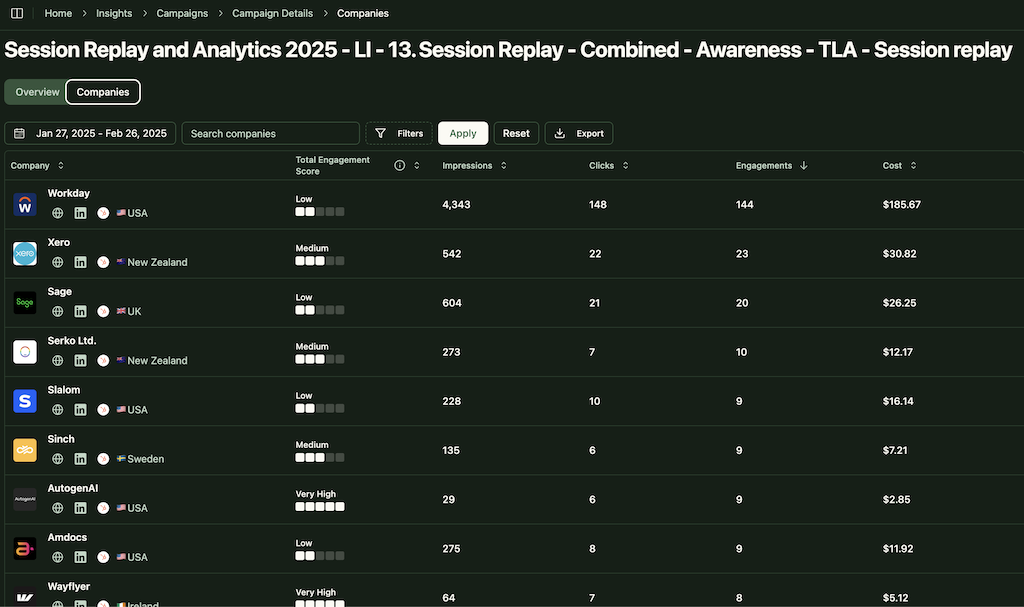
ZenABM connects to the official LinkedIn Ads API and captures account-level data for all campaigns.
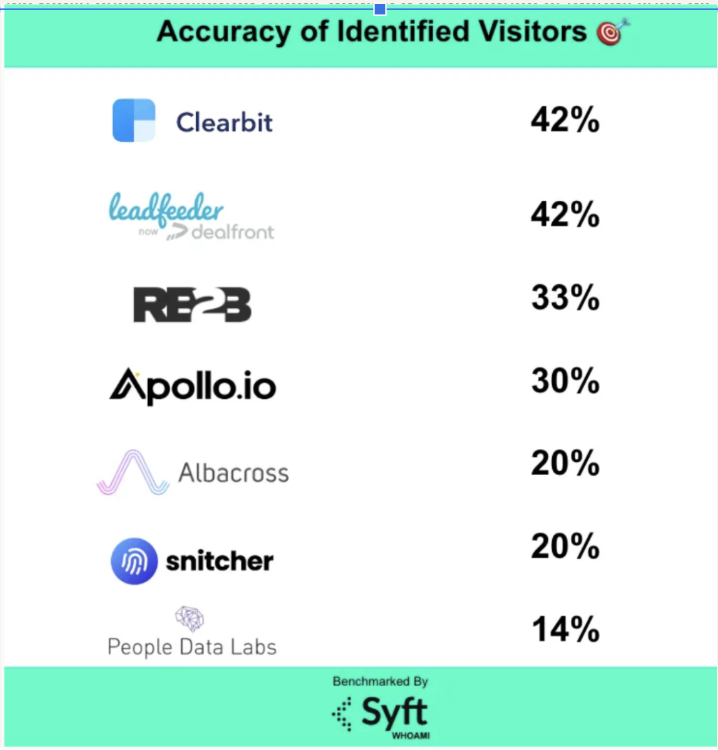
Because this is first-party data from LinkedIn, it is more reliable than IP or cookie-based visitor identification. A Syft analysis puts IP-based identification at around 42 percent accuracy.
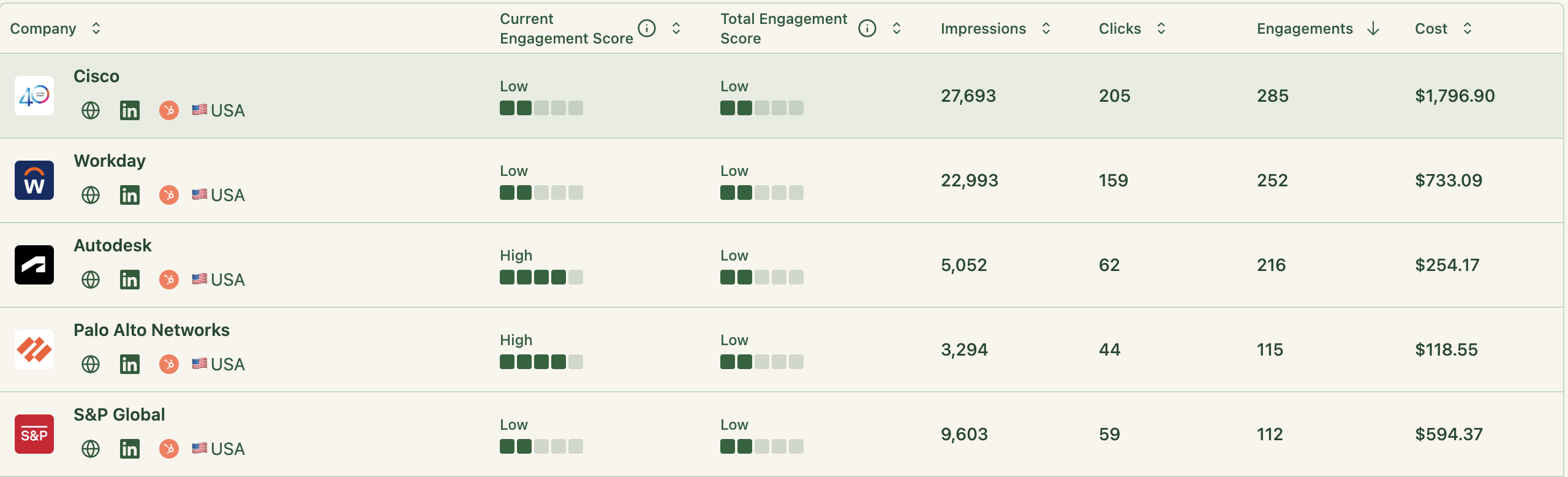
ZenABM updates engagement scores as accounts interact with your ads, so teams can prioritize accounts that show real intent.
ZenABM also shows the full touchpoint timeline for each company:
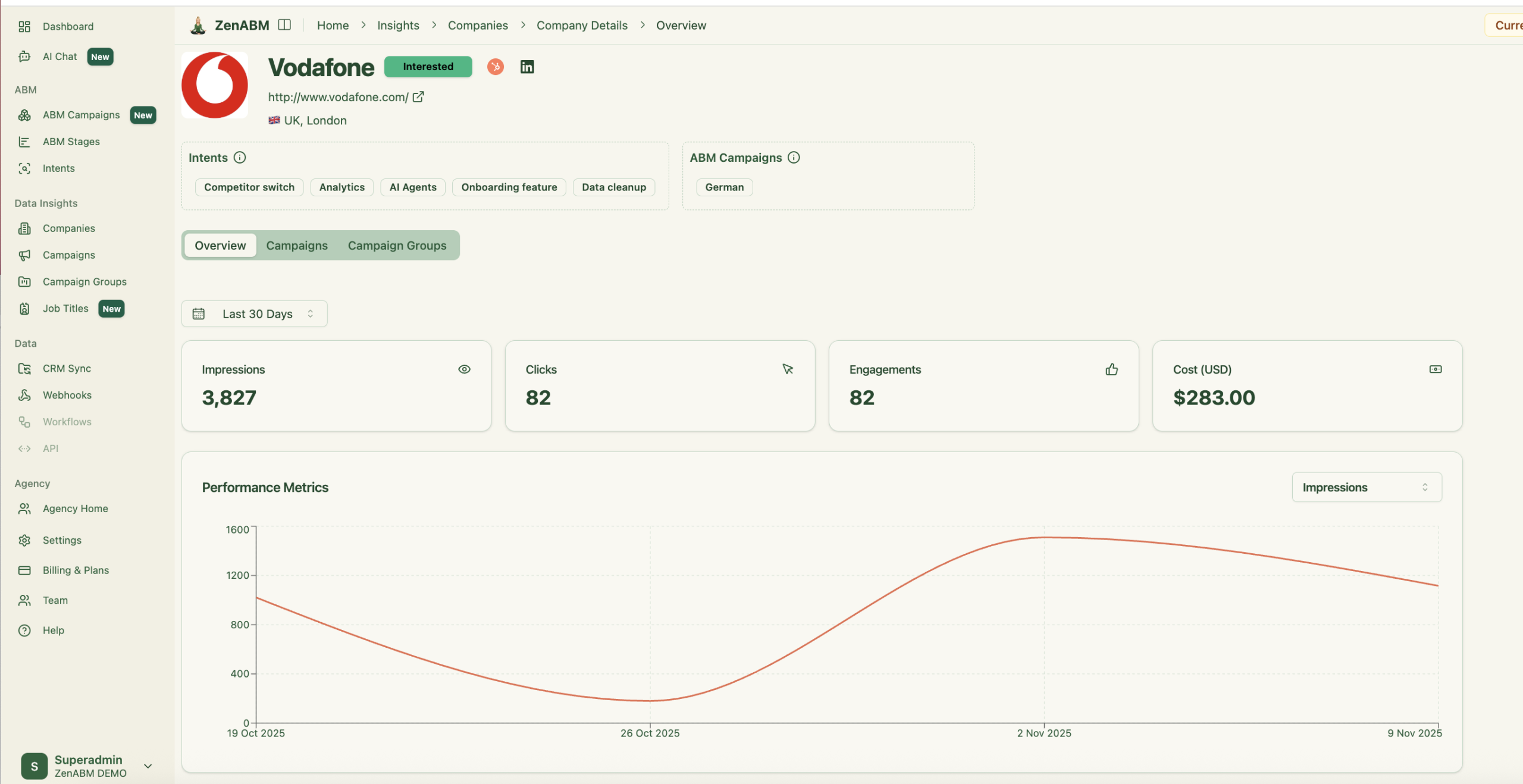
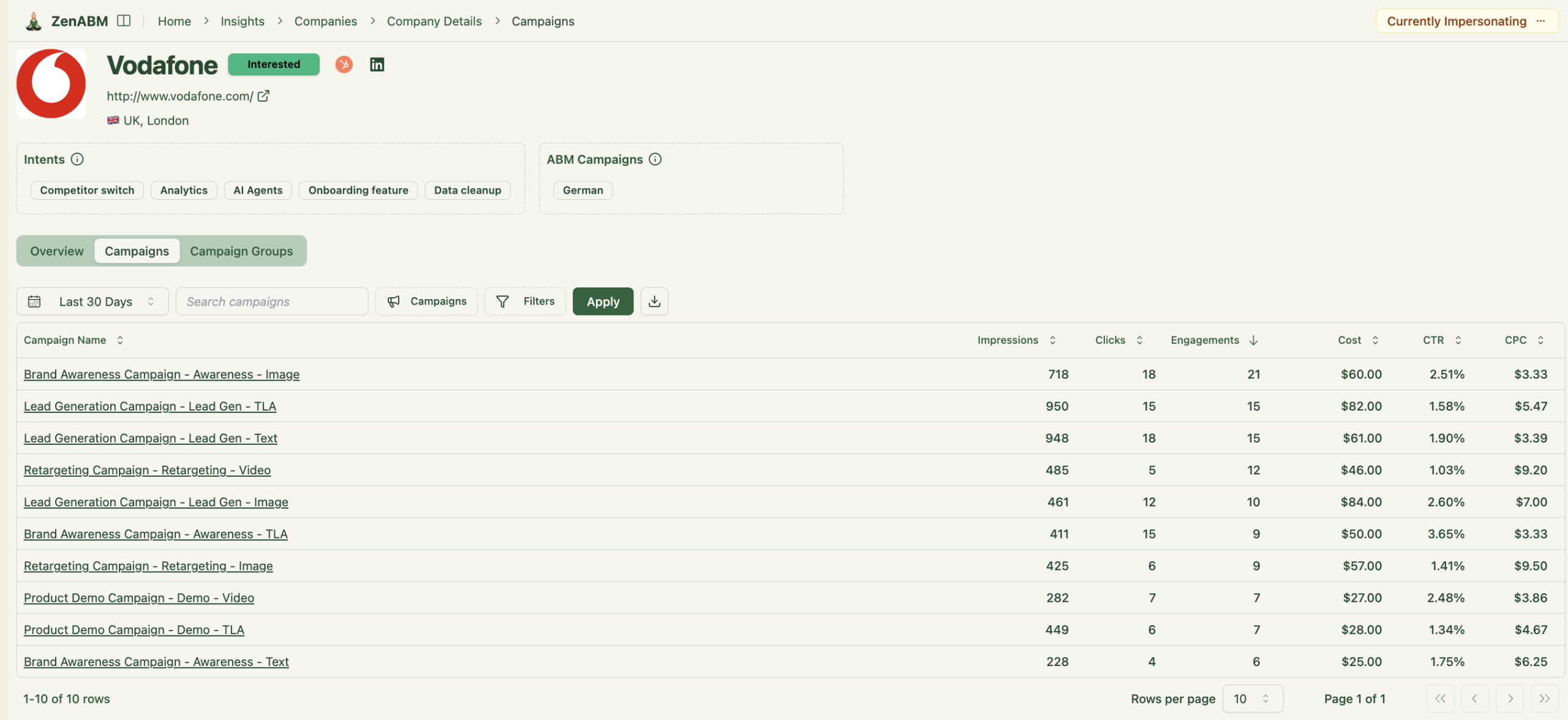
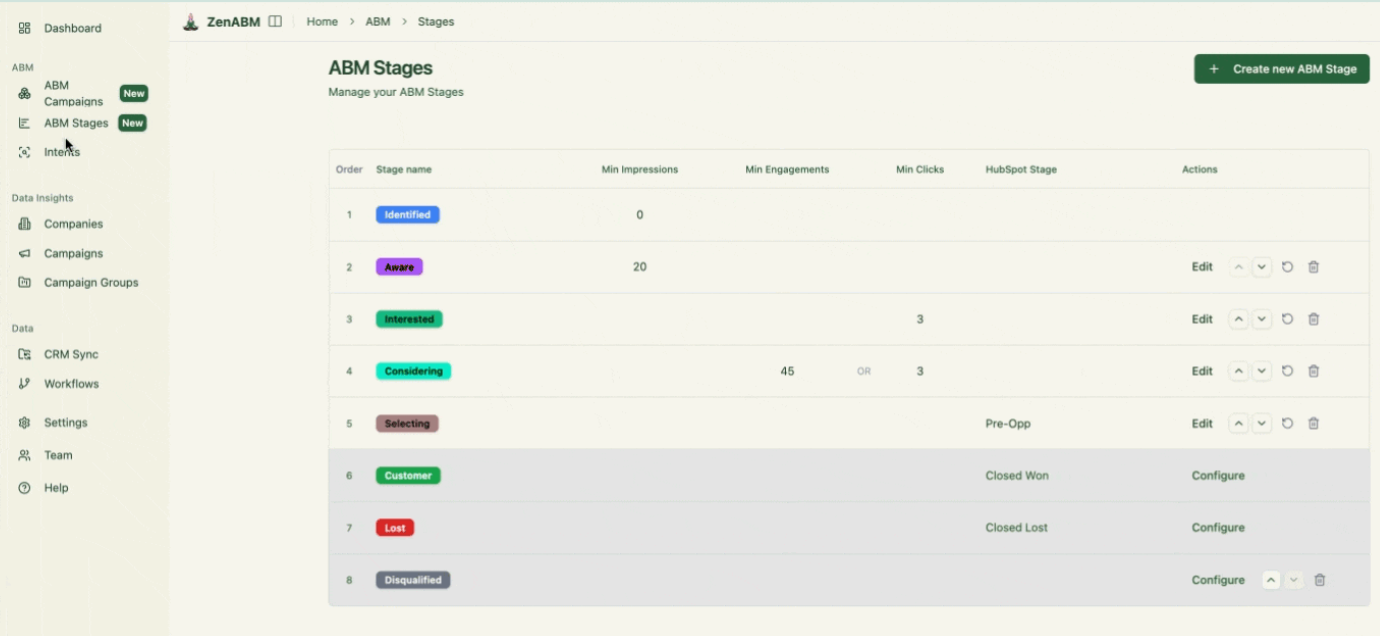
ZenABM lets you define stages such as Identified, Aware, Engaged, Interested, and Opportunity and automatically places accounts in the right stage using scores and CRM context.
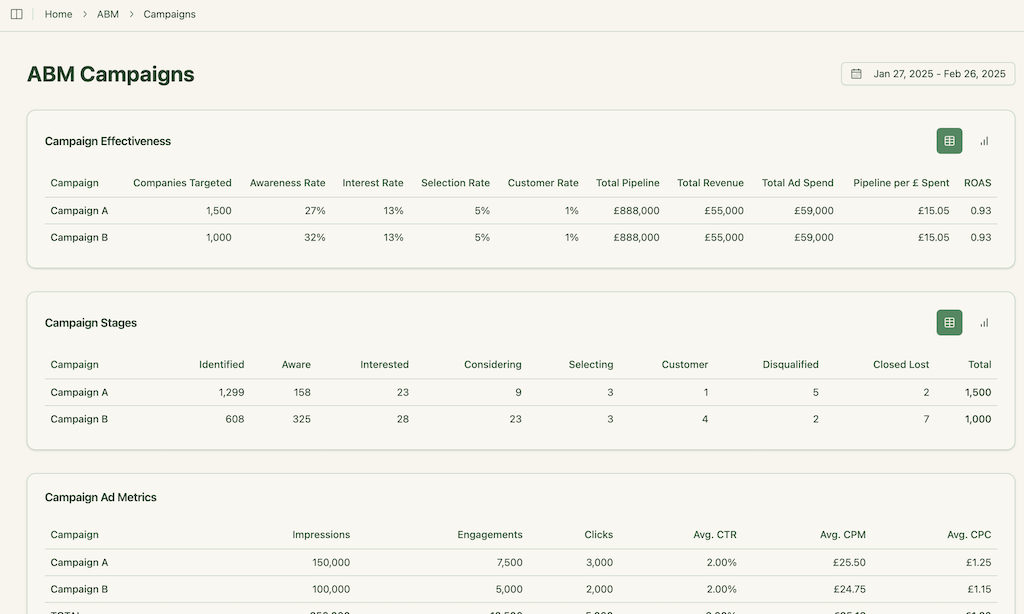
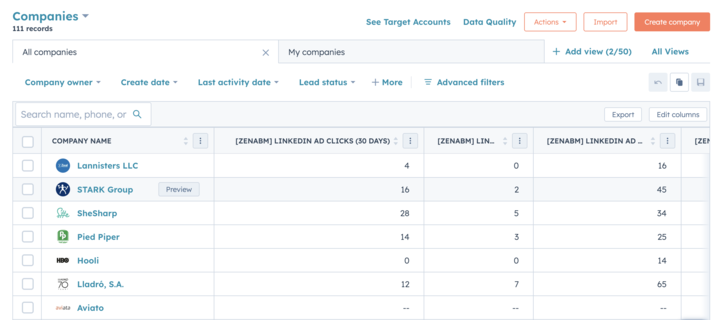
ZenABM integrates bi-directionally with CRMs like HubSpot and adds Salesforce sync on higher tiers.
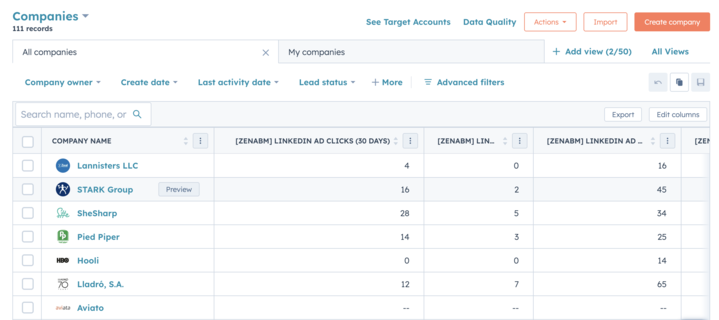
LinkedIn engagement data flows into the CRM as company-level properties:
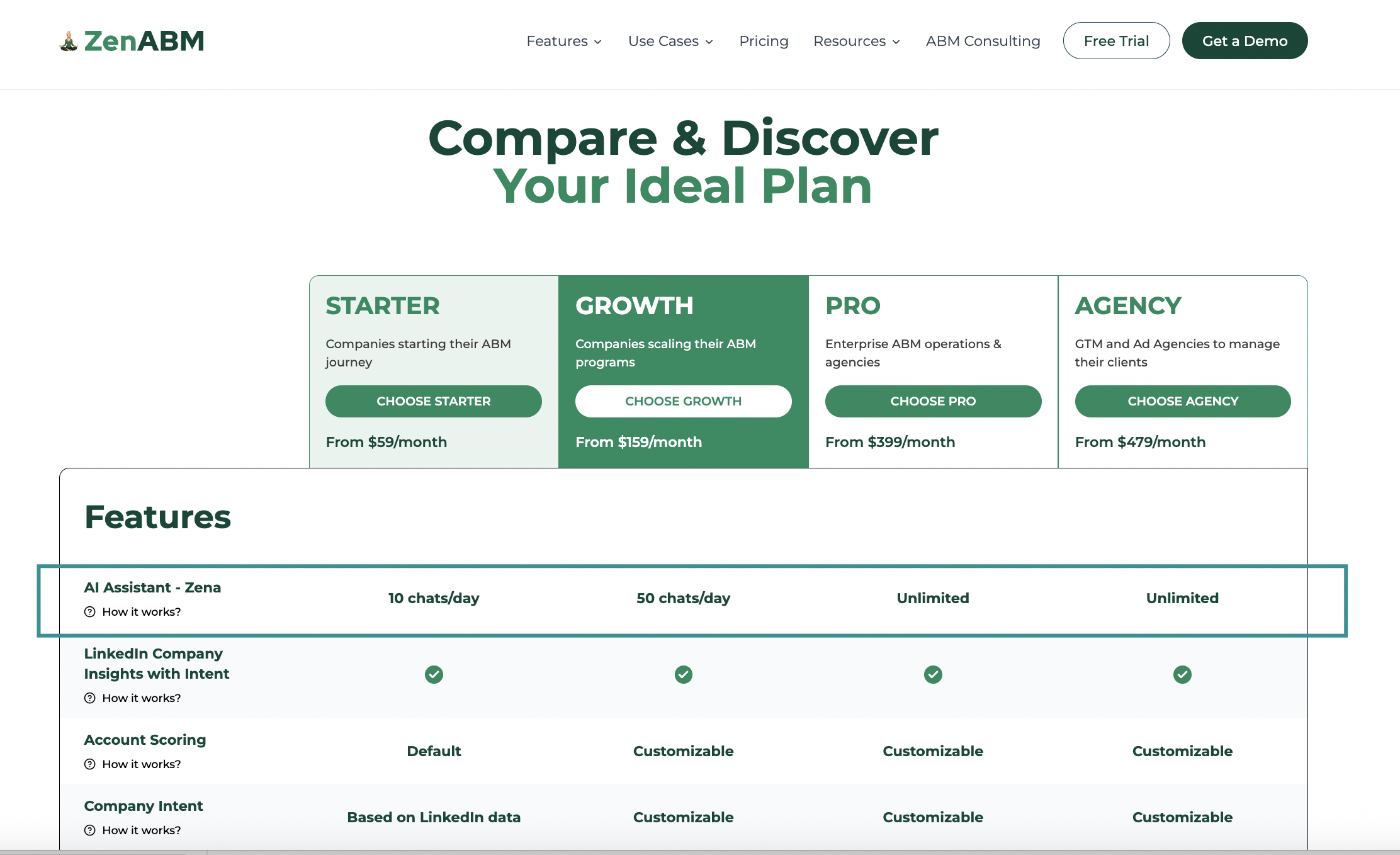
ZenABM pricing details:
Linklo is a LinkedIn Ads automation product focused on execution control.
It is most relevant when the problem is operational: hour-based scheduling (dayparting), budget overspend prevention, scalable testing workflows, and controlling company-level exposure so a small set of accounts does not absorb the majority of delivery.
It is not positioned as an ABM measurement layer, a CRM activation layer, or a pipeline attribution system.
For teams that need account-level LinkedIn engagement intelligence, buyer intent interpretation tied to messaging themes, ABM stage progression, CRM sync, and pipeline reporting, ZenABM covers the strategic analytics layer that Linklo does not aim to provide.
In fact, the two can be complementary: Linklo for delivery guardrails and dayparting, ZenABM for first-party account engagement, scoring, stage tracking, CRM workflows, and ROI dashboards.
