


LinkedScope is a LinkedIn Ads analytics tool focused on company-level reach and engagement reporting, account list building, intent-style scoring, and CRM attribution workflows.
This makes LinkedScope valuable, but it is not the whole solution.
Most LinkedIn-first ABM teams still need either alternatives or complementary tools, depending on what LinkedScope does not cover for them.
In this comprehensive guide, I’ll show you 8 tools you can consider as LinkedScope alternatives for LinkedIn-first account-based marketing, and help you choose the right option based on what LinkedScope does not solve for your team.
While writing this guide, I have kept these requirement-based categories in mind:
Note: Some tools cover more than one category (like ZenABM), but most teams do not need an enterprise suite that costs $25k+/year and bundles features they will not touch. So I have also pointed out affordable, practical combinations.
Let’s go!
Here’s a quick overview of the LinkedScope alternatives:
| Tool | Category | Starting Price | Core Strength | Best For |
|---|---|---|---|---|
| Satlo | Insights & Intent (LinkedIn-first) | Affordable (public pricing) | Company-level engagement dashboards + lightweight buyer signals | Teams that want “who is engaging” visibility without building a heavy ABM stack |
| ZenABM | Measurement, Attribution, CRM activation, account intent, and agency workflows (All-in-One, only lacks ad delivery controls) | $59/mo | Company-level LinkedIn intent signals + CRM activation + attribution dashboards | LinkedIn-first ABM teams who want insights that turn into sales action and pipeline proof |
| Factors.ai | Analytics & Attribution | $399/mo+ | Multi-channel tracking, visitor ID (IP↔CRM) and attribution models | Data-driven teams that need cross-channel journeys and defensible ROI reporting |
| Recotap | Full ABM Suite (Multi-Signal) | ~$1,499/mo (annual) | Multi-signal intent hub + LinkedIn orchestration + personalization | Mid-large B2B teams needing LinkedIn-centric ABM orchestration beyond reporting |
| Linklo | Control (Scheduling/Pacing) | $199/mo | Dayparting, pacing discipline, and delivery fairness style workflows | Teams that need LinkedIn delivery control that reporting tools do not handle |
| DemandSense | Control + Visitor ID (Ad Ops Companion) | $99/mo | Scheduling/pacing/frequency control + optional visitor ID (IP/cookies) | Teams that want tighter LinkedIn delivery control and basic “who visited” workflows |
| Campainless | Control (Monitoring/Automation) | $49–$199/mo | 24/7 monitoring, alerts, optimization nudges, dayparting support | Advertisers and agencies wanting always-on oversight and fewer manual checks |
| Dreamdata | Measurement (Revenue Attribution) | Free tier; Paid $750/mo+ | End-to-end B2B journey tracking and account-based attribution across channels | Teams prioritizing multi-touch revenue proof over LinkedIn-only reporting |
Also, here’s a quick situation or requirement-based recommendation table:
| Your Situation | Recommended Tool | Rationale |
|---|---|---|
| You want LinkedIn-first company engagement dashboards and quick exports, but you do not need a heavy activation layer. | Satlo | Satlo focuses on simple company-level reporting, fast visibility, and lightweight intent cues. It is a clean insights layer when you want speed and simplicity. |
| You like LinkedScope’s reporting, but you need CRM-ready activation (scores, stages, routing, alerts), not just dashboards. | ZenABM | ZenABM pulls first-party LinkedIn account engagement and pushes it into HubSpot/Salesforce as usable properties, stages, and workflows. It is built for “insights to action,” not just “insights to screenshots.” |
| Your pain is delivery behavior (dayparting, pacing stability, frequency discipline), not reporting. | Linklo, DemandSense or Campainless | These are control companions. Linklo is control-first, DemandSense adds optional visitor ID, and Campainless leans into monitoring and ops automation. |
| You need cross-channel attribution and deep analytics to connect LinkedIn efforts to revenue, not just LinkedIn-only narratives. | Factors.ai or Dreamdata | These platforms map multi-touch journeys across ads, site, email, and CRM. They are designed for defensible ROI reporting, not just LinkedIn account reporting. |
| You want a full ABM suite with orchestration, segmentation, personalization, and multi-signal intent (and you have the budget). | Recotap (or ZenABM) | Recotap is a broad ABM platform with orchestration and personalization. ZenABM is the leaner route if you want ABM coverage without enterprise bloat. |
Now, done with the summary, let’s deep dive into each LinkedScope alternative and where it fits.
Best for: Teams that want LinkedIn-first company-level engagement dashboards and lightweight buyer signals, without turning the stack into a full ABM platform.
LinkedScope leans into reporting plus list building, intent-style scoring, and CRM attribution narratives.
Satlo is a simpler insights layer when you mainly want to answer “which companies engaged” and move on.
Satlo’s core offerings:
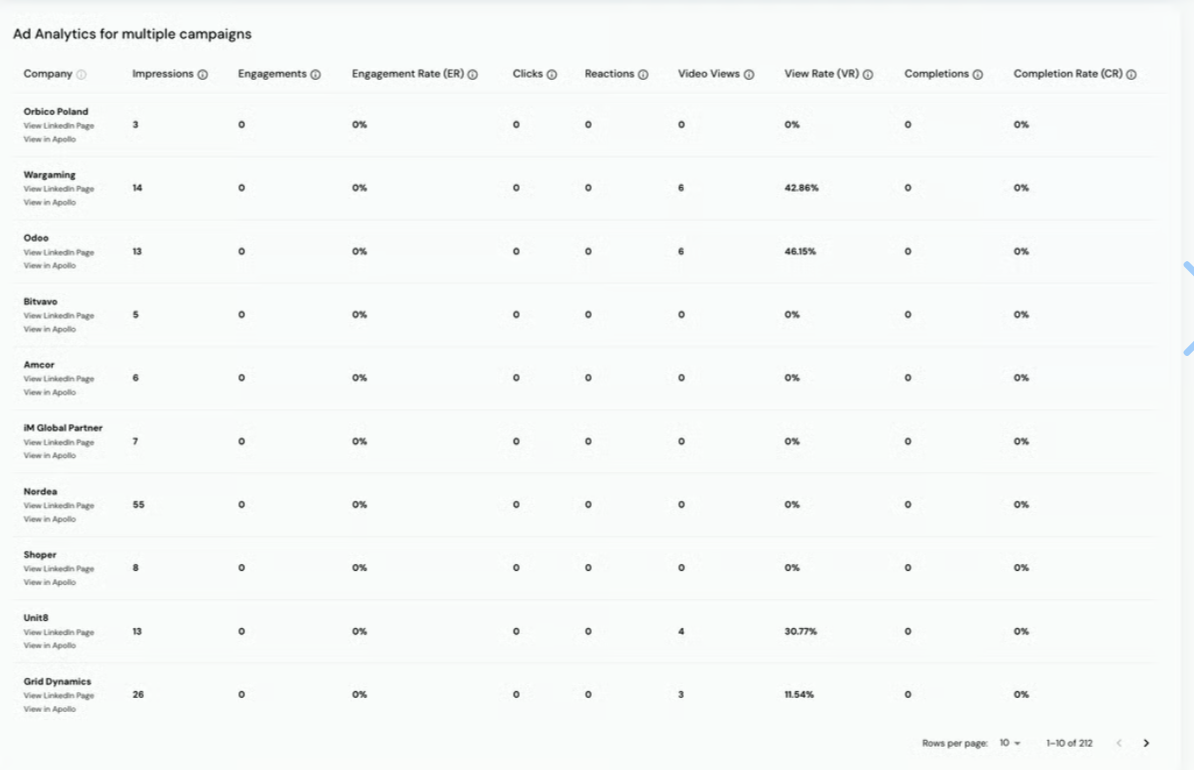
Satlo provides company-level LinkedIn engagement data (impressions, clicks and so on), which LinkedIn Campaign Manager does not expose directly.
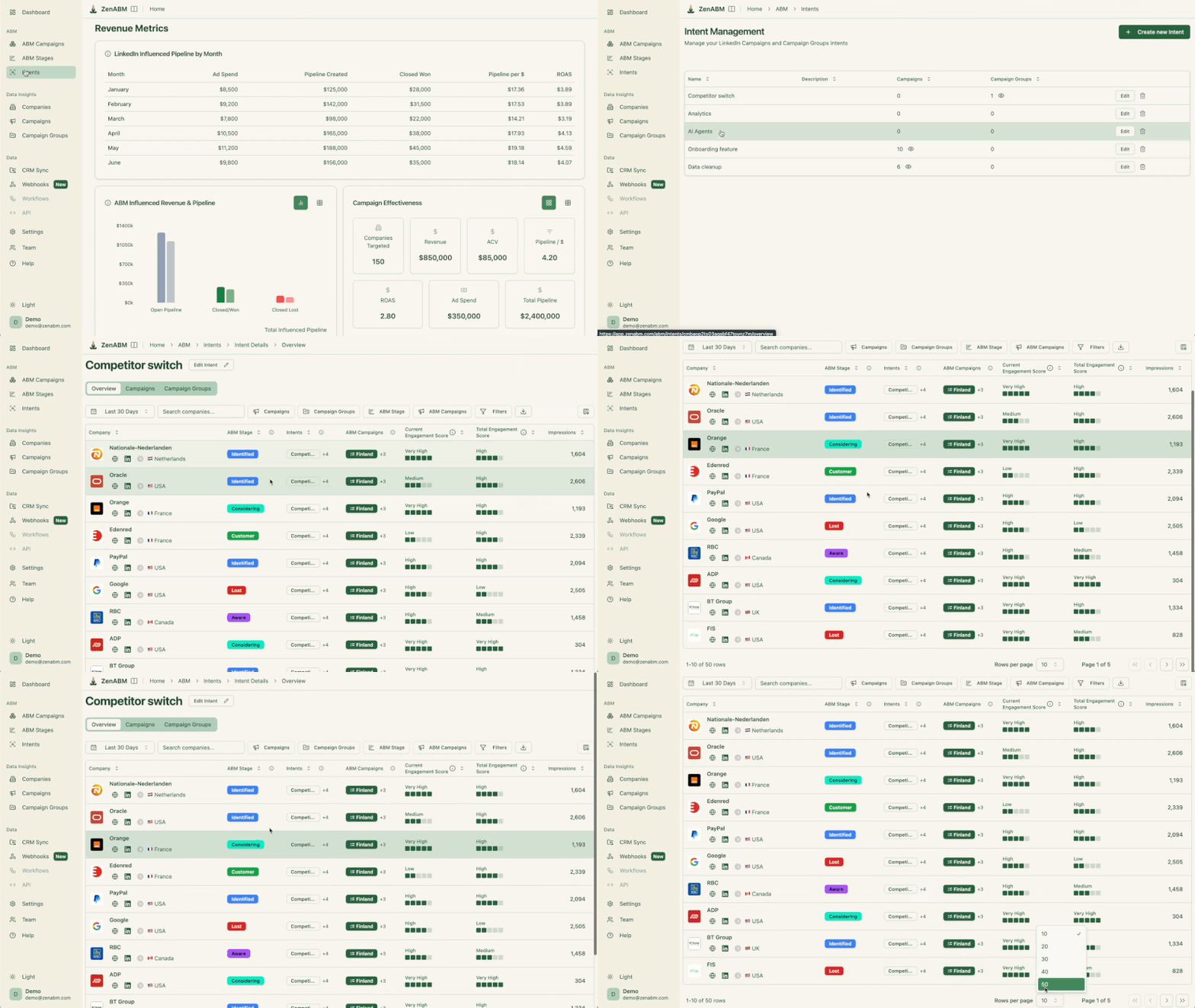
ZenABM offers similar company-level views:
Satlo integrates with tools like HubSpot and Apollo to push company lists into sales workflows.
It identifies which companies engaged with your ads and writes those accounts into your CRM.
ZenABM also focuses on CRM sync (HubSpot and Salesforce) but goes deeper:
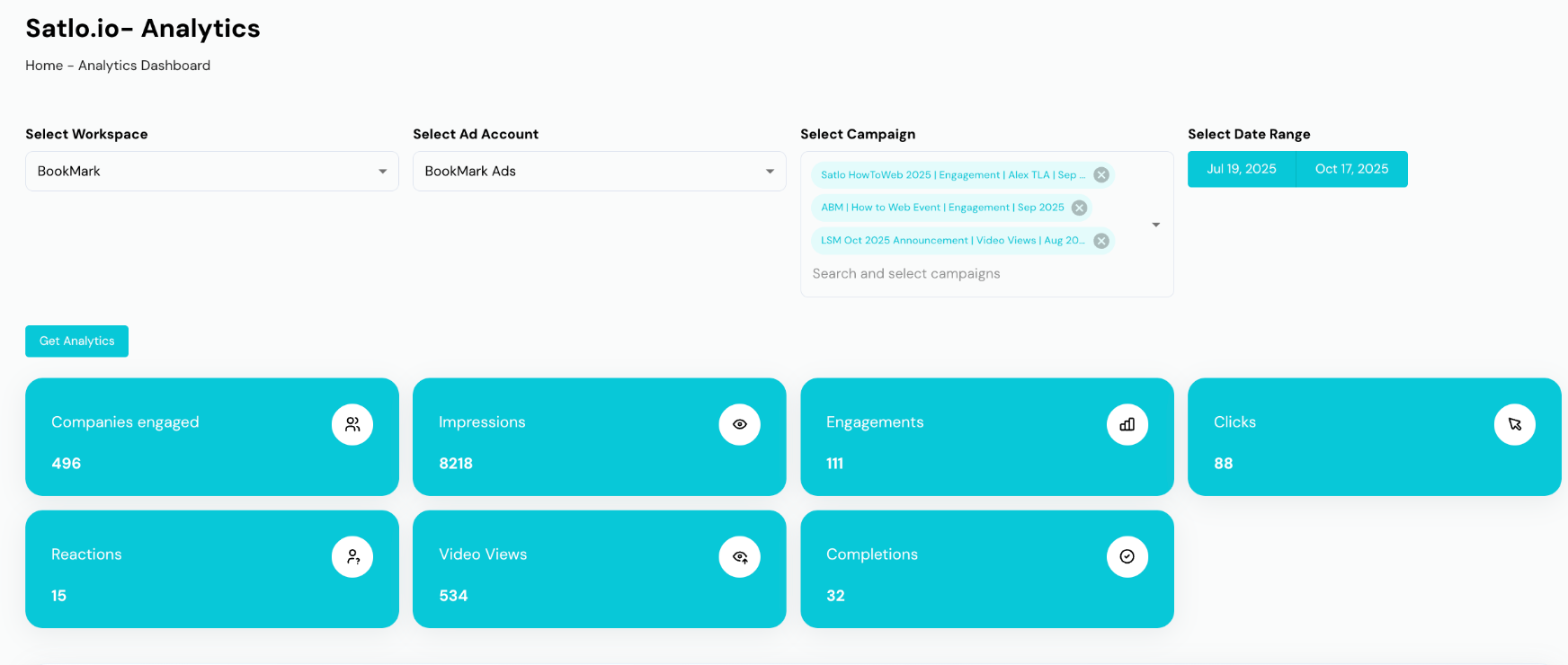
Satlo gives dashboards and exports that let marketers slice LinkedIn performance by account. Highlights include:
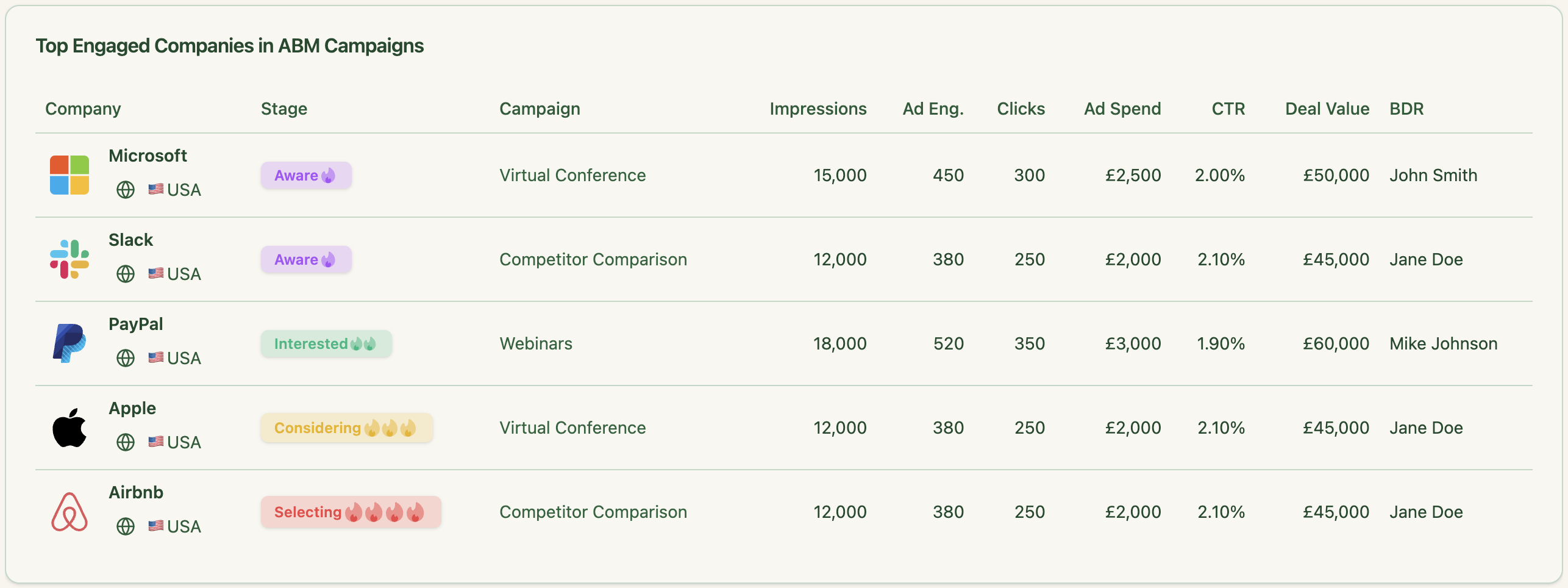
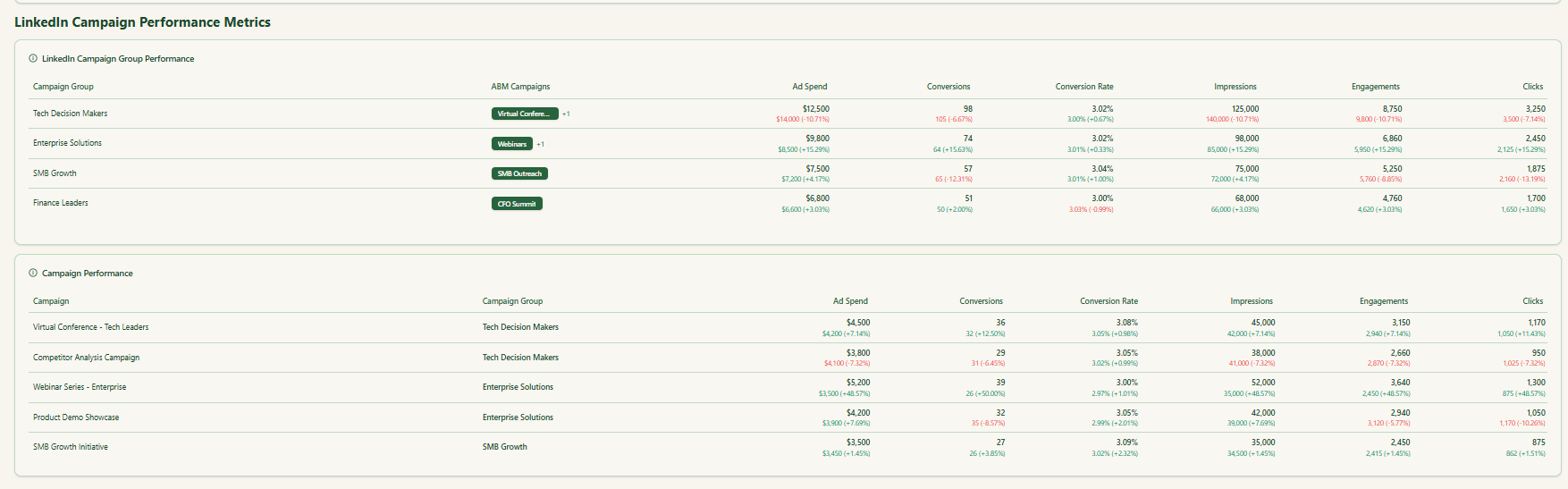
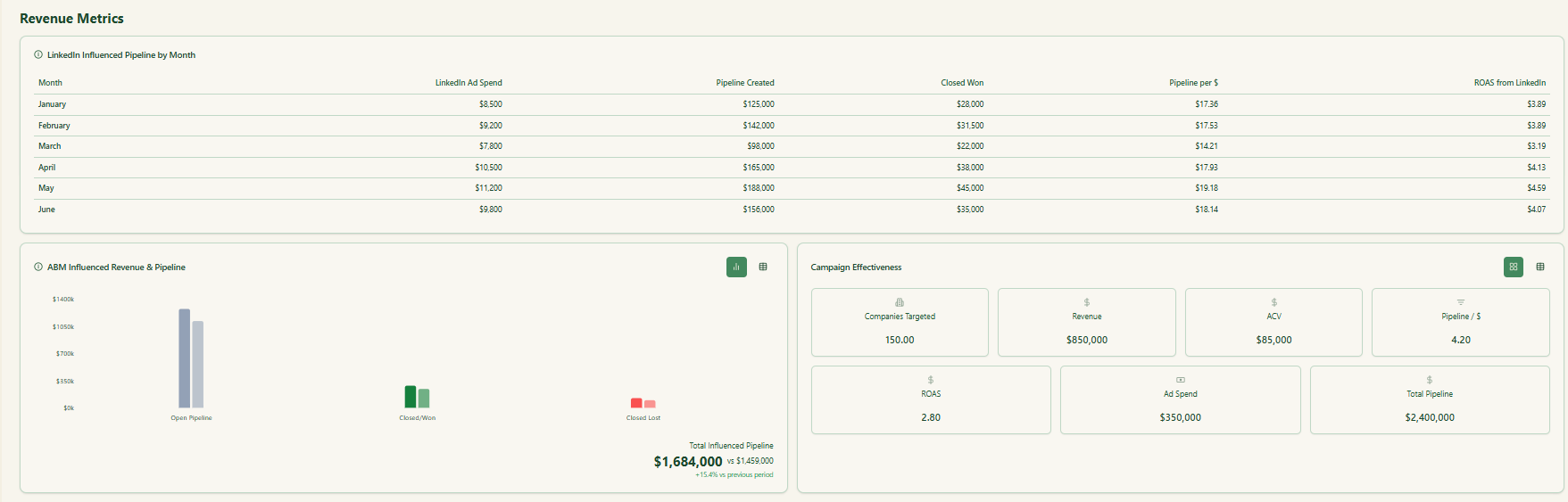
ZenABM provides a more sophisticated unified dashboard for revenue metrics and campaign performance data:

Satlo’s AI companion runs across all companies reached by your LinkedIn ads, surfaces sales actions, and provides intent signals for key accounts.
It works across your ad accounts and unlimited data history and is available from the Pro tier onward.
The aim is to highlight accounts that shifted from passive exposure to active interest based on campaign interactions and company engagement, not just single clicks.
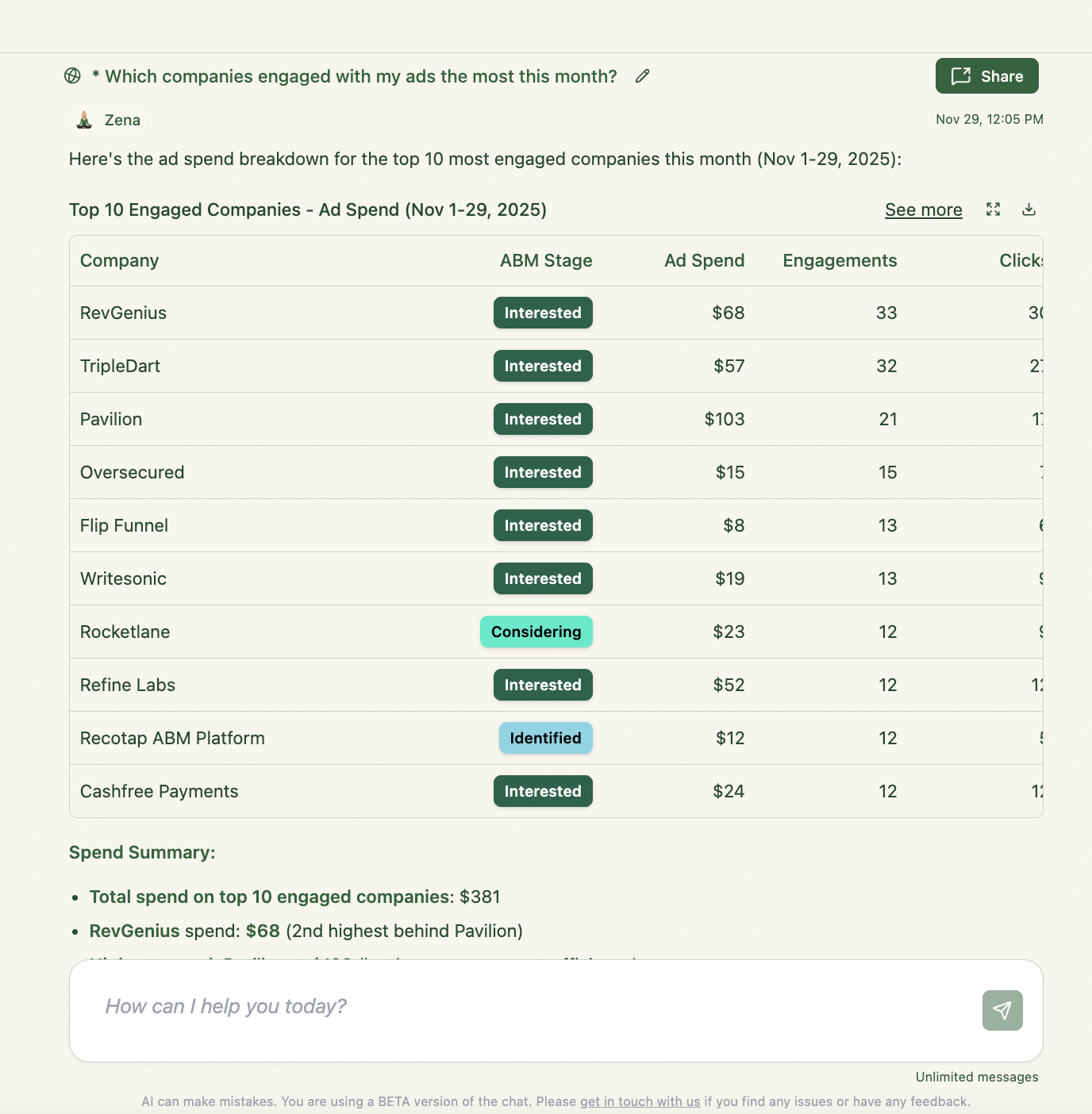
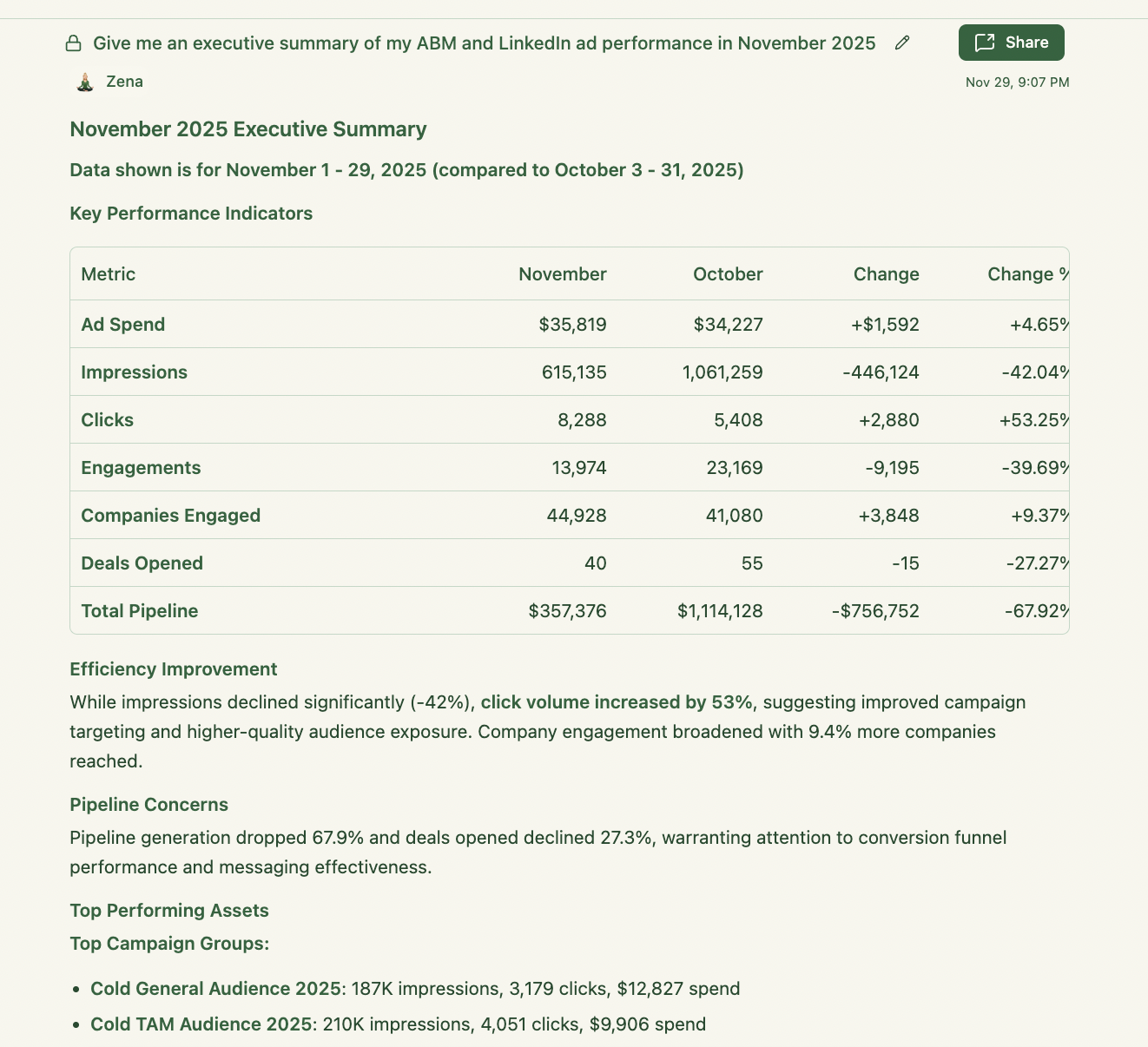
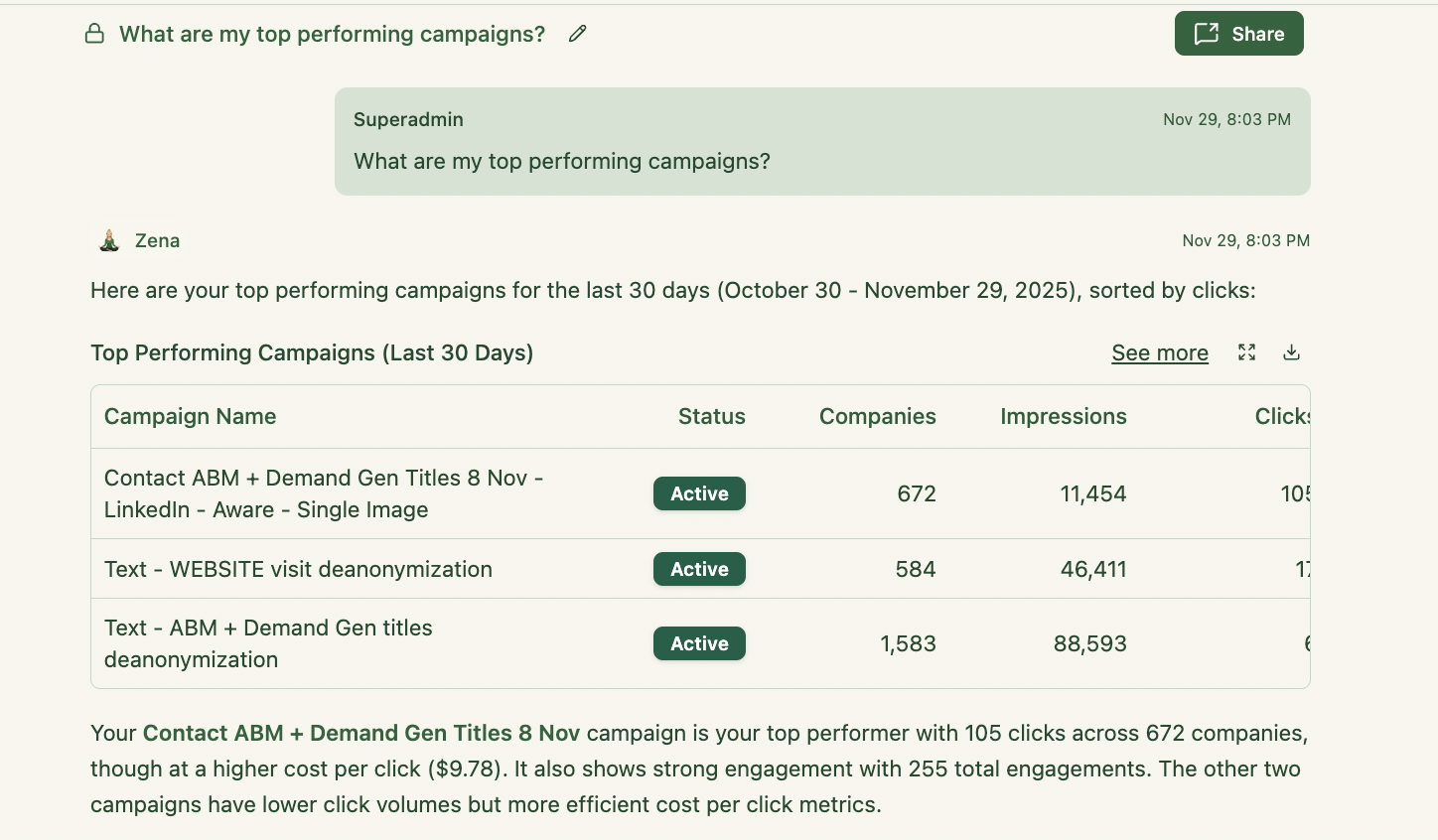
ZenABM also provides an AI agent (Zena) that provides deep LinkedIn ABM analytics in natural language:
Satlo pricing is structured around the number of LinkedIn ad accounts and the depth of insight.
It has three plans that include unlimited historical LinkedIn Ads data and the ability to export audiences and performance to Excel.
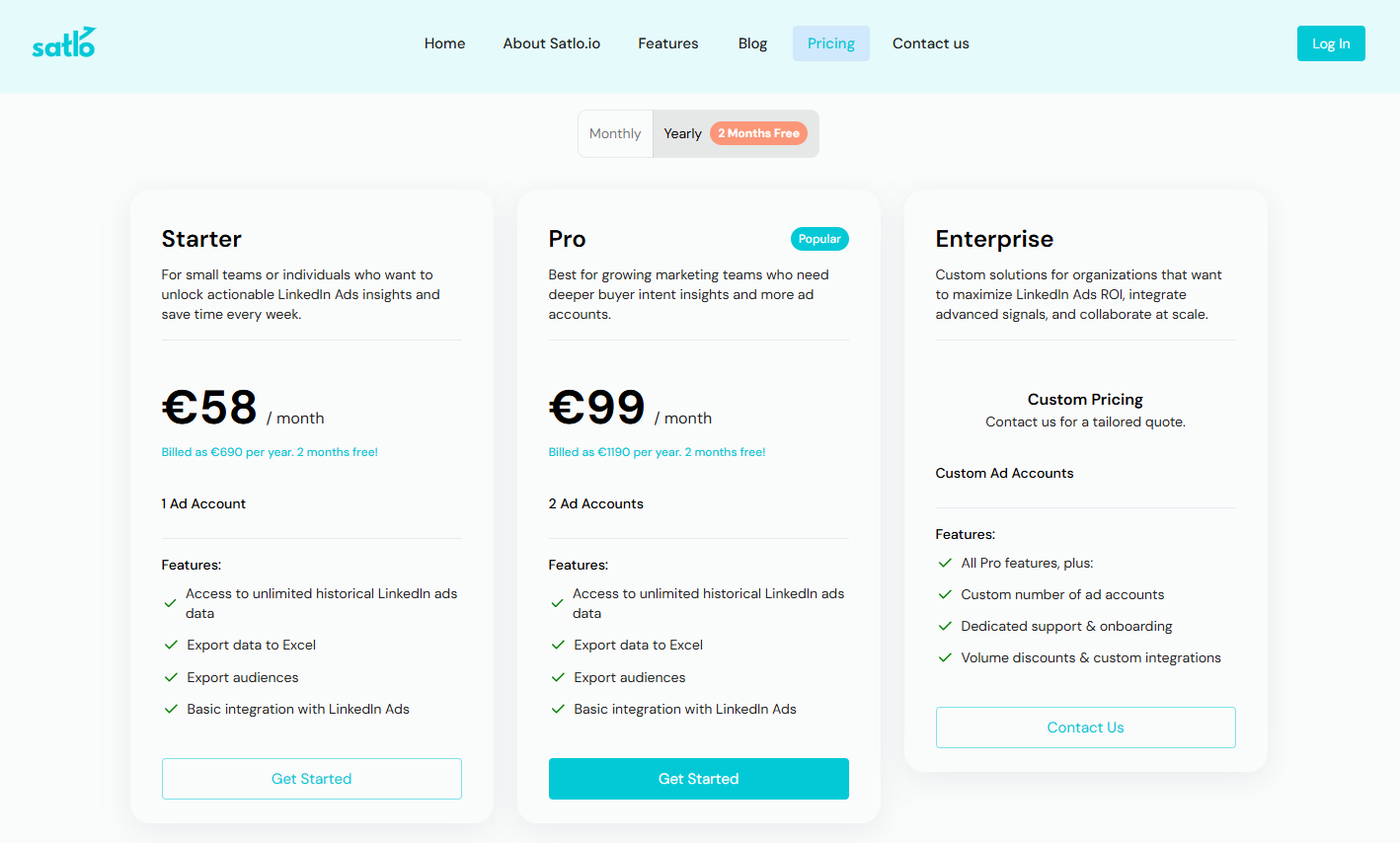
For individuals or small teams that want faster LinkedIn analysis without complexity.
Includes:
For growing teams that need broader coverage and deeper buyer insights.
Includes:
For larger organizations managing multiple accounts or needing custom integrations and support.
Includes:
Satlo also offers a 14-day free trial and uses Stripe for billing.
ZenABM’s pricing is similar to Satlo and starts at just $59/mo.
Satlo works well as a light insights layer, but it is not trying to be a structured attribution-and-CRM narrative product.
If your core requirement is stakeholder-ready reporting, stronger attribution framing, and list building workflows, LinkedScope can feel more “guided.”
If your requirement is “insights to action” (stages, routing, CRM objects, attribution dashboards), you may prefer ZenABM or pair Satlo with deeper activation tooling.

Best for: LinkedIn-first ABM teams that want account intent + CRM activation, not just reporting.
ZenABM goes beyond a reporting layer while staying lean and affordable, starting at $59/month.
LinkedScope is strongest when you need LinkedIn-first visibility, account-level reporting, and CRM attribution narratives.
ZenABM is built for teams that want to turn that visibility into action, like:
It focuses on company-level LinkedIn engagement and pushes it into HubSpot/Salesforce as usable account intelligence and workflows.
ZenABM does much more than just account intent or CRM activation.
Here’s the list:
ZenABM de-anonymizes LinkedIn ad engagement at the account level, so you can see exactly which target accounts viewed or clicked your ads.
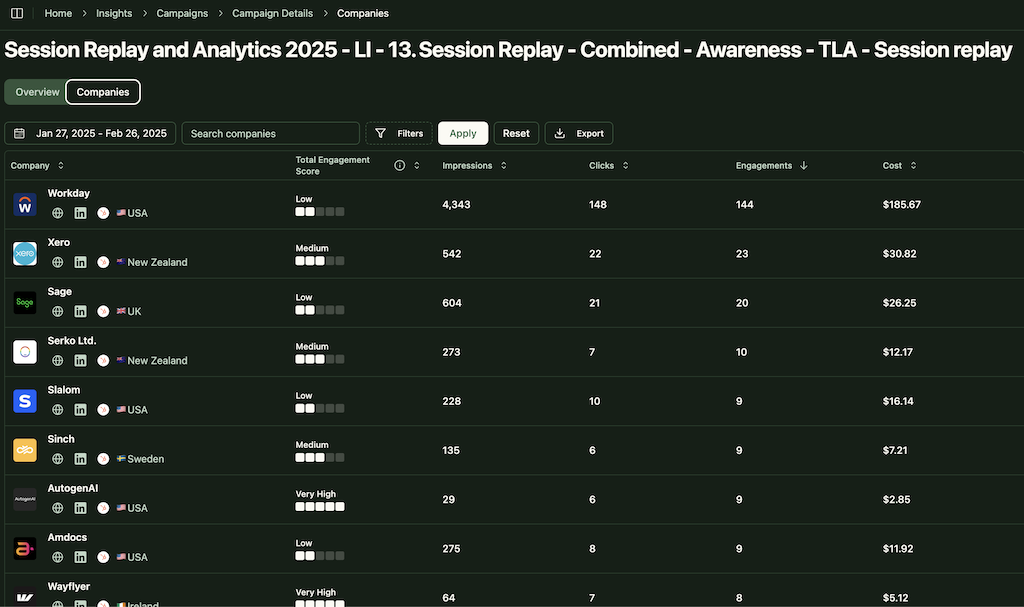
This data is pulled directly from the official LinkedIn Ads API.
You get first-party clarity on which companies view and engage with your ads, instead of relying on noisy IP or cookie matching.
Multiple studies question IP-based identification.
A Syft study, for example, suggests accuracy often peaks around 42 percent.
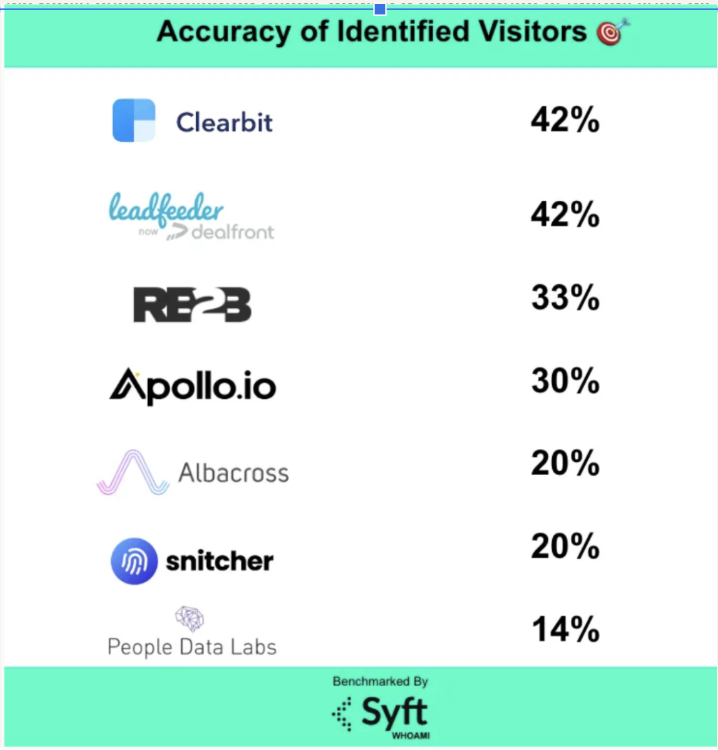
That’s why ZenABM treats ad engagement as a stronger intent signal than anonymous deanonymization that depends on third-party sources.
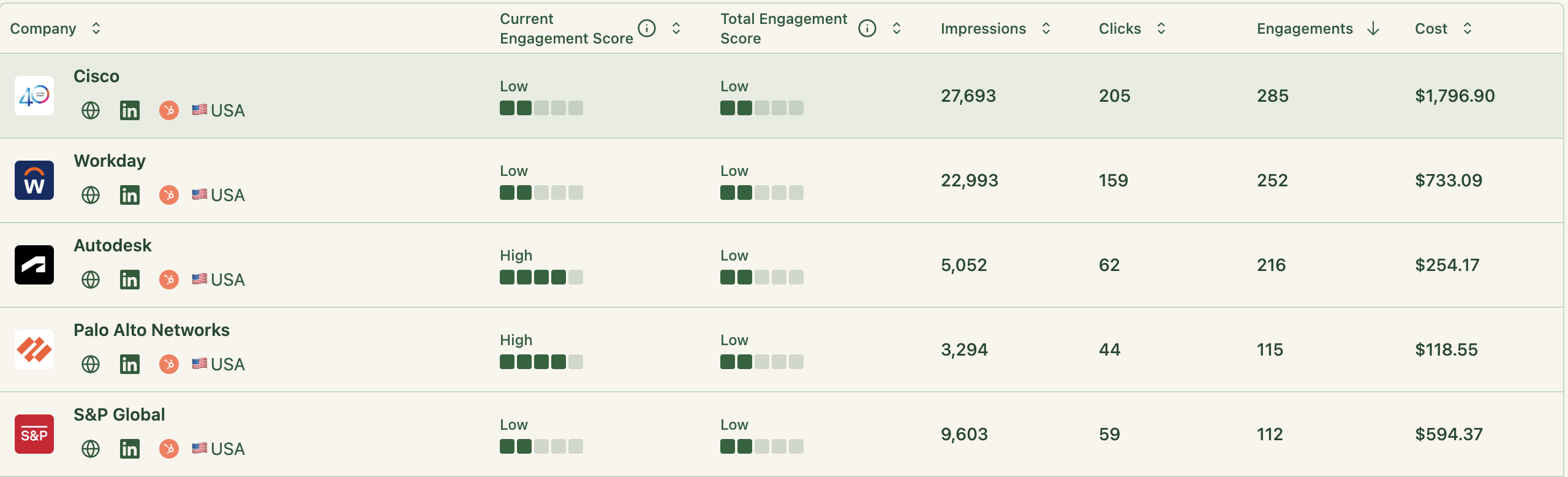
ZenABM updates engagement scores in real time as accounts interact with your ads.
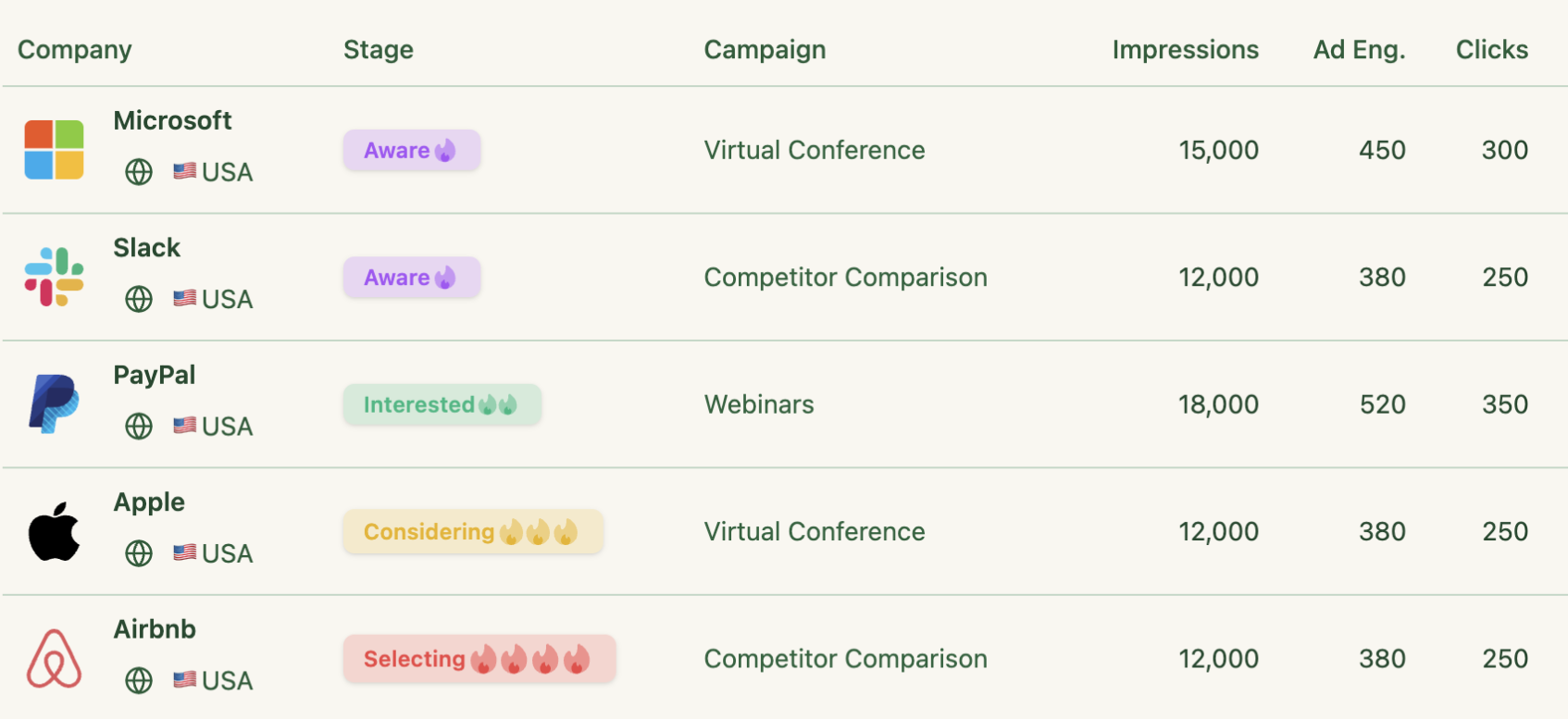
You get a full touchpoint history and can define stages like Identified, Aware, Engaged, Interested, and Opportunity.
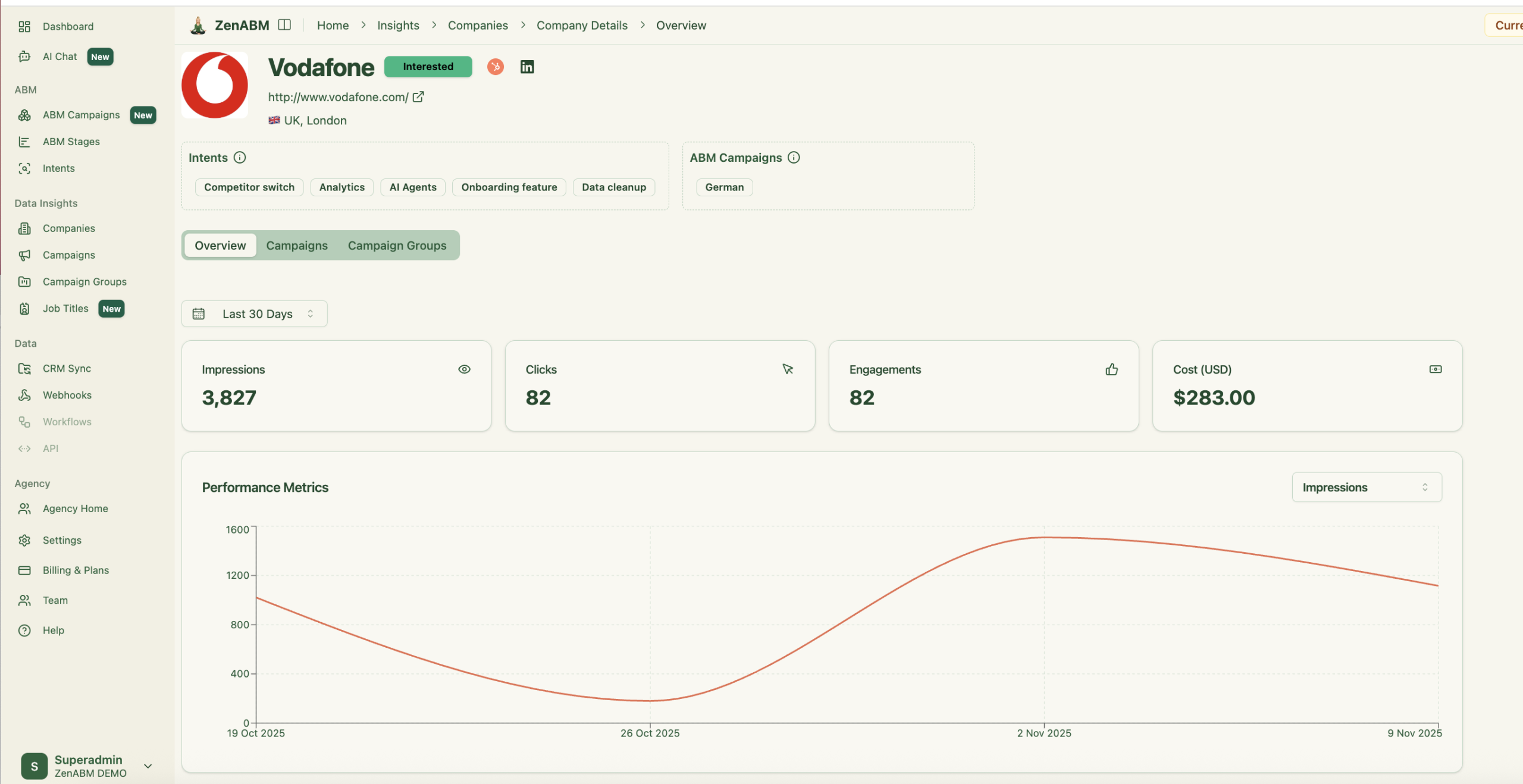
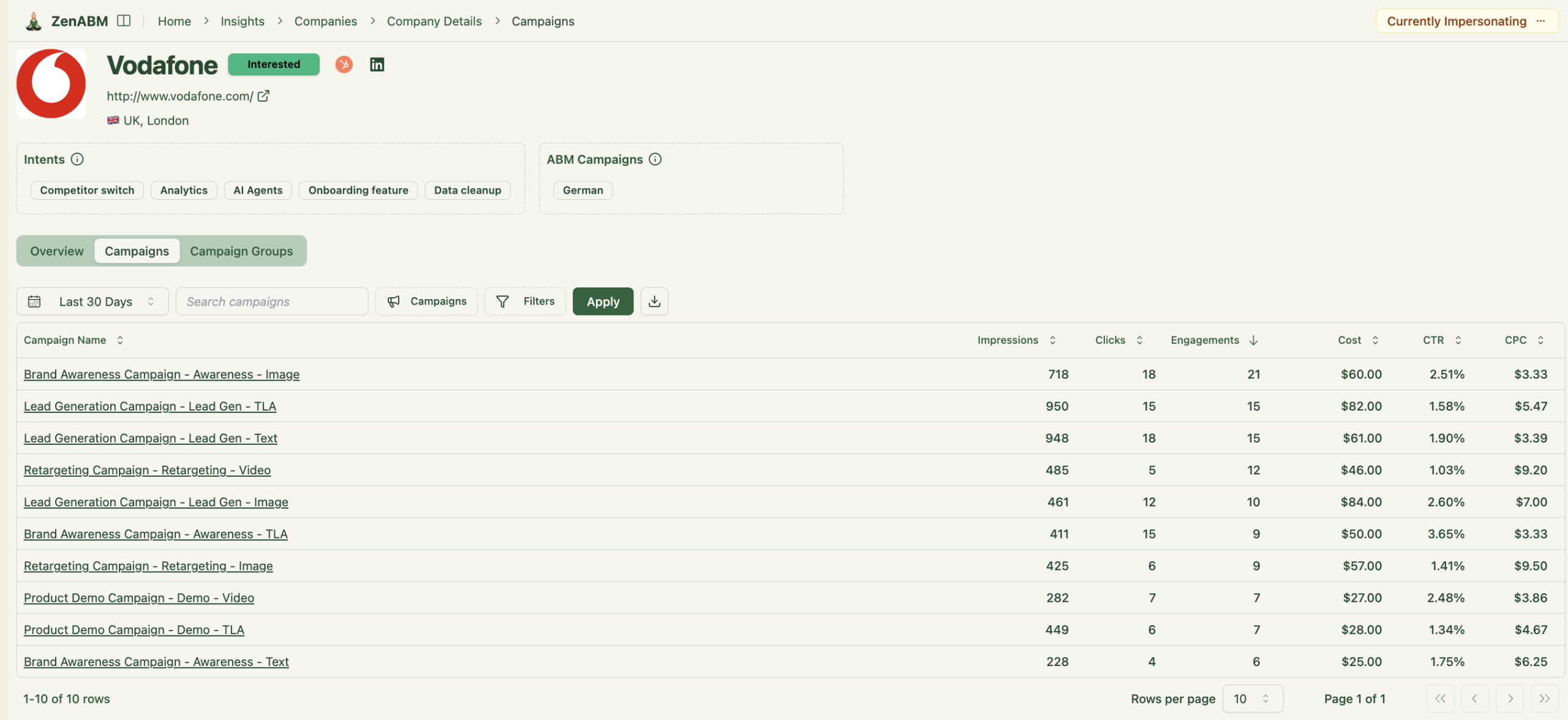
ZenABM also shows the full touchpoint timeline for each company:
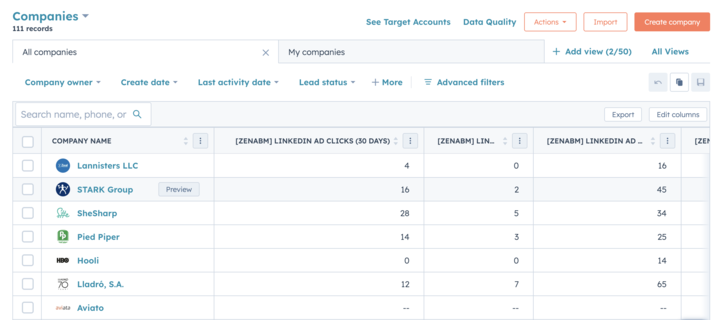
ZenABM syncs bi-directionally with HubSpot and supports Salesforce on higher plans.
All LinkedIn metrics can be written as company properties in your CRM.
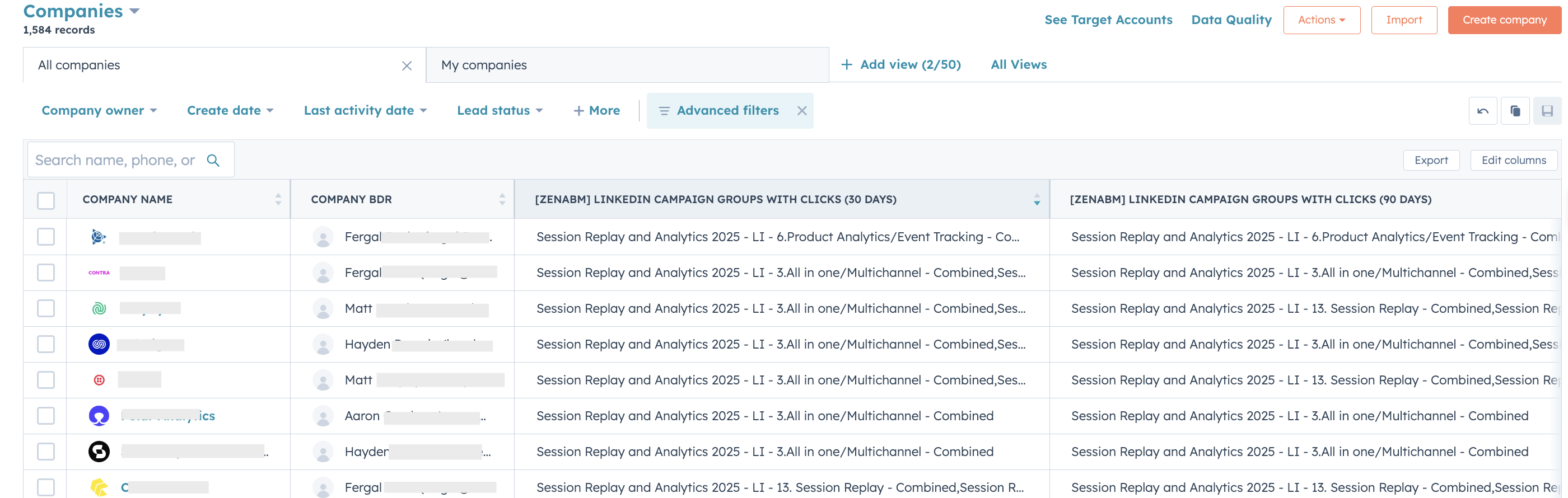
When an account crosses your scoring threshold, ZenABM can update its stage and auto-assign a BDR for timely outreach.
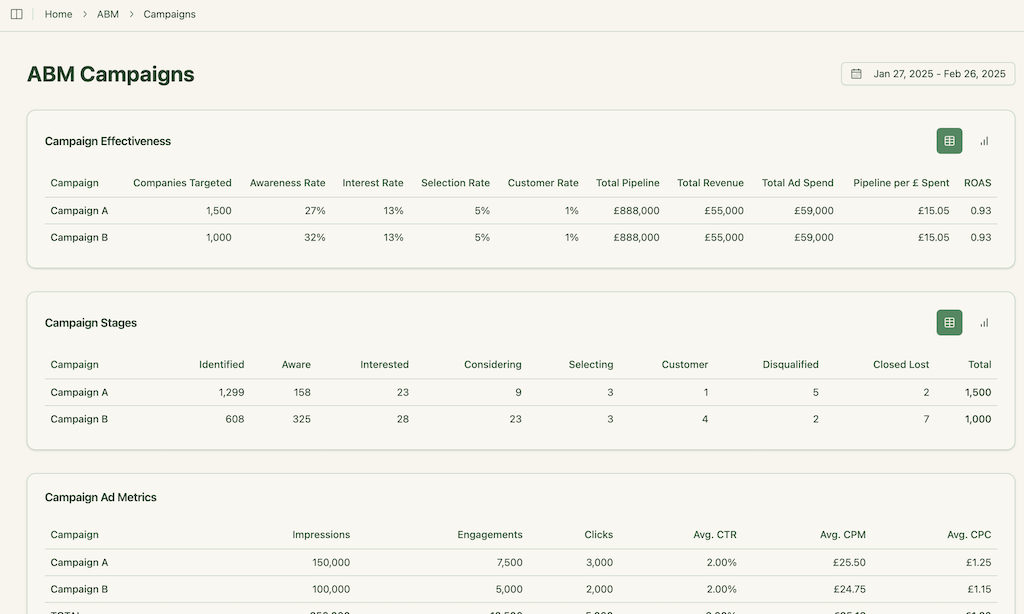
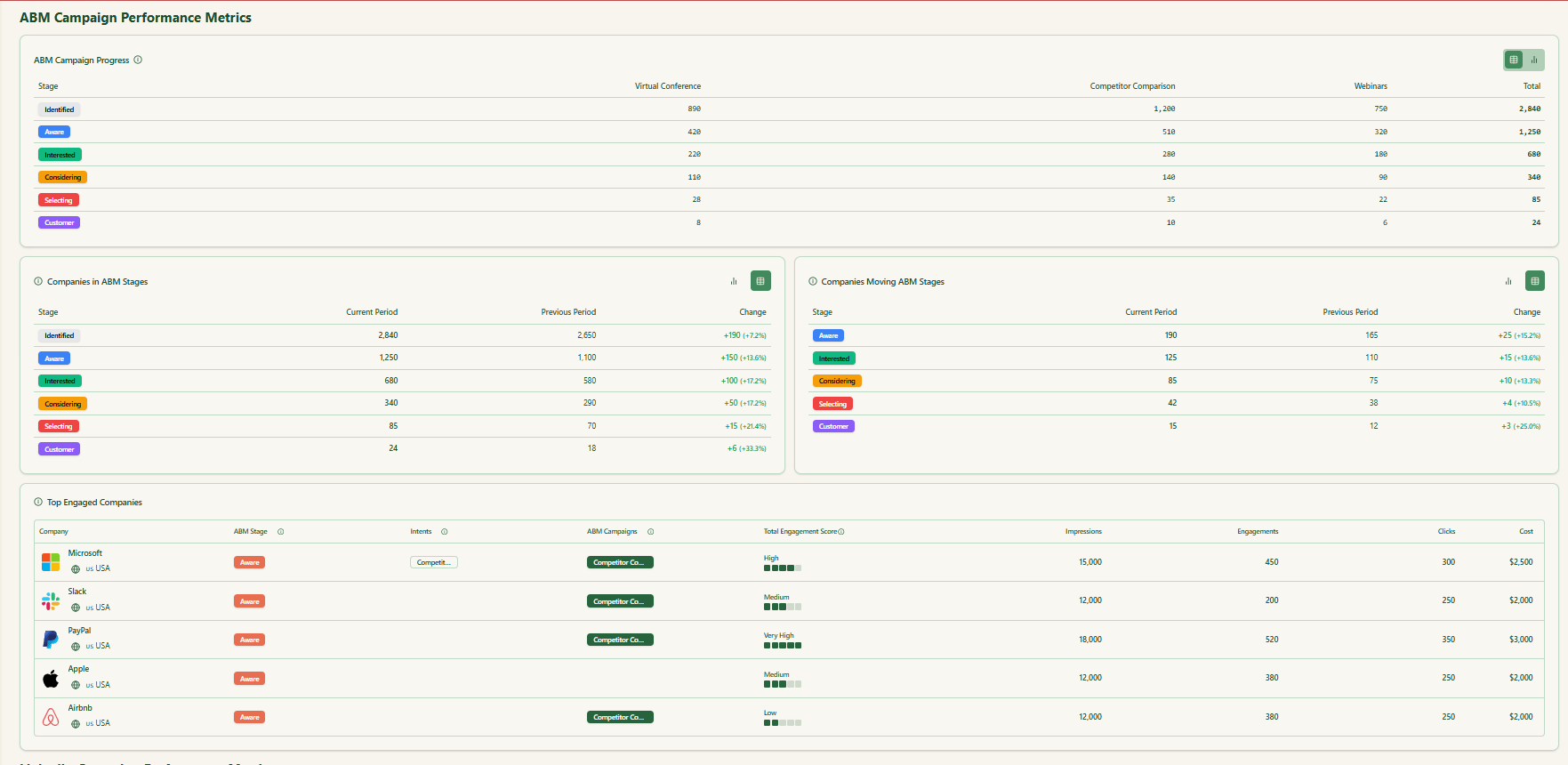
ZenABM ships dashboards that connect LinkedIn ads to account engagement, stage movement, and revenue.
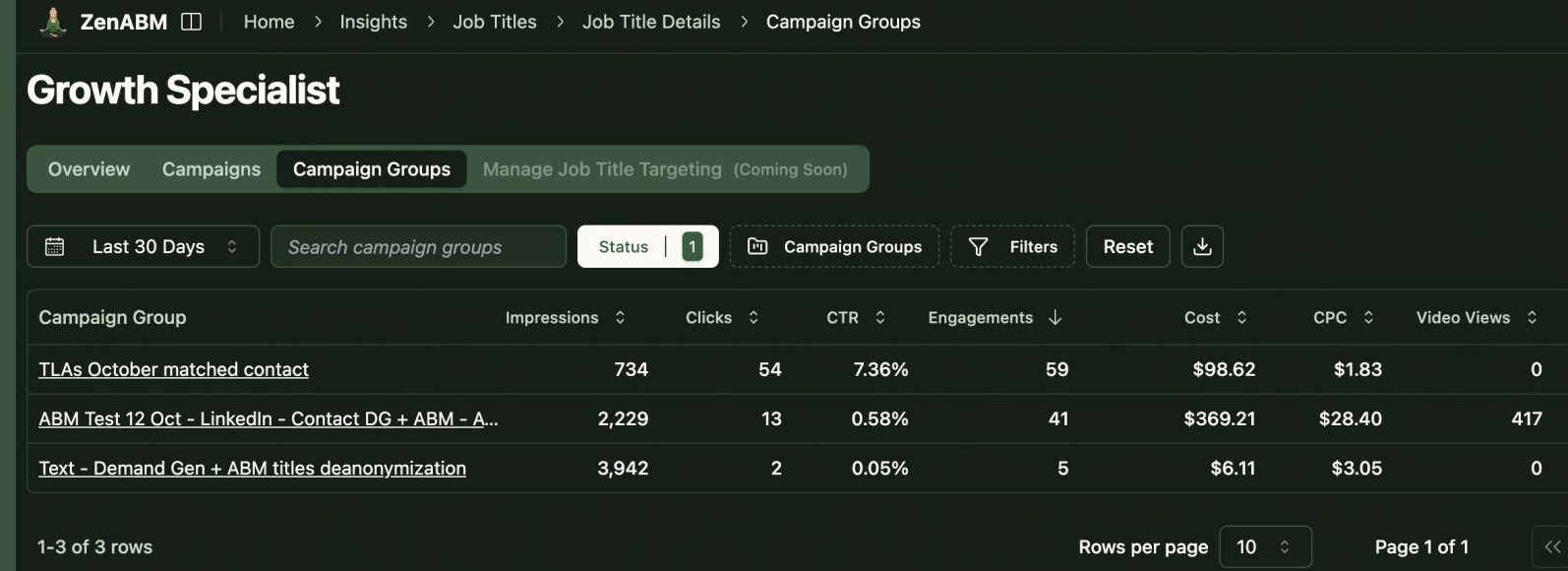
ZenABM shows which job titles engage with your creatives, plus dwell time and video funnel analytics.
ZenABM captures first-party qualitative intent by showing which ad, message, and value proposition resonated with each company.
You can see whether an account responds more to Feature A vs Feature B messaging, pricing-led vs problem-led narratives, or demos vs thought leadership.
You can tag campaigns and creatives with intent themes like “security-led,” “integration-led,” or “ROI-driven,” and ZenABM associates accounts with those themes based on real engagement.
ZenABM also groups companies with similar intent together, making it easy to spot clusters responding to the same narrative.
These insights appear next to each company record and are pushed into your CRM as structured properties, so sales knows what to say, to whom, and why, before the first outreach.
This intent is more reliable than Bombora-style third-party intent because it’s based on real interactions with your own messaging, not rented keyword surges.
This feature is pretty unique to ZenABM.
ZenABM provides its AI chatbot, Zena, which answers questions in natural language like a smart analyst.
You can ask Zena questions and get company-level answers about:
Under the hood, Zena combines OpenAI with prompt logic and endpoints that join ad engagement, spend, and CRM deals. It can explain what drove pipeline, which accounts became opportunities, what formats work best, and which high-intent accounts sales hasn’t touched.


Most tools treat each LinkedIn campaign as separate. ZenABM lets you group multiple campaigns into one ABM campaign object, so you can track performance across regions, personas, or creative clusters.
ZenABM includes a multi-client workspace for agencies.
You can manage multiple ad accounts in one place, each with its own ABM strategy, dashboards, and reporting, without constantly switching accounts in Campaign Manager.
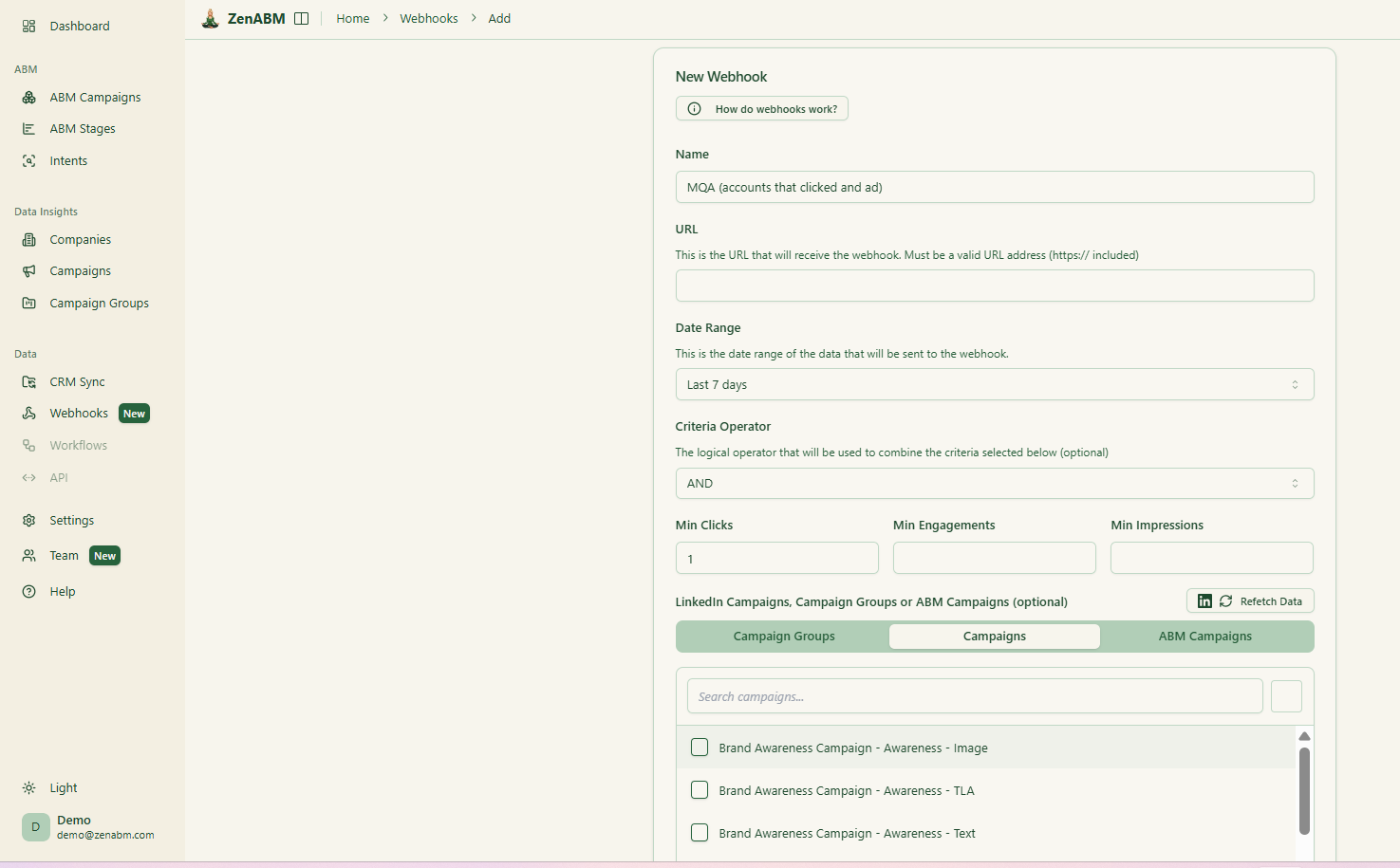
ZenABM’s webhooks let you push events into your stack, such as Slack alerts, enrichment flows, or other ops automations.
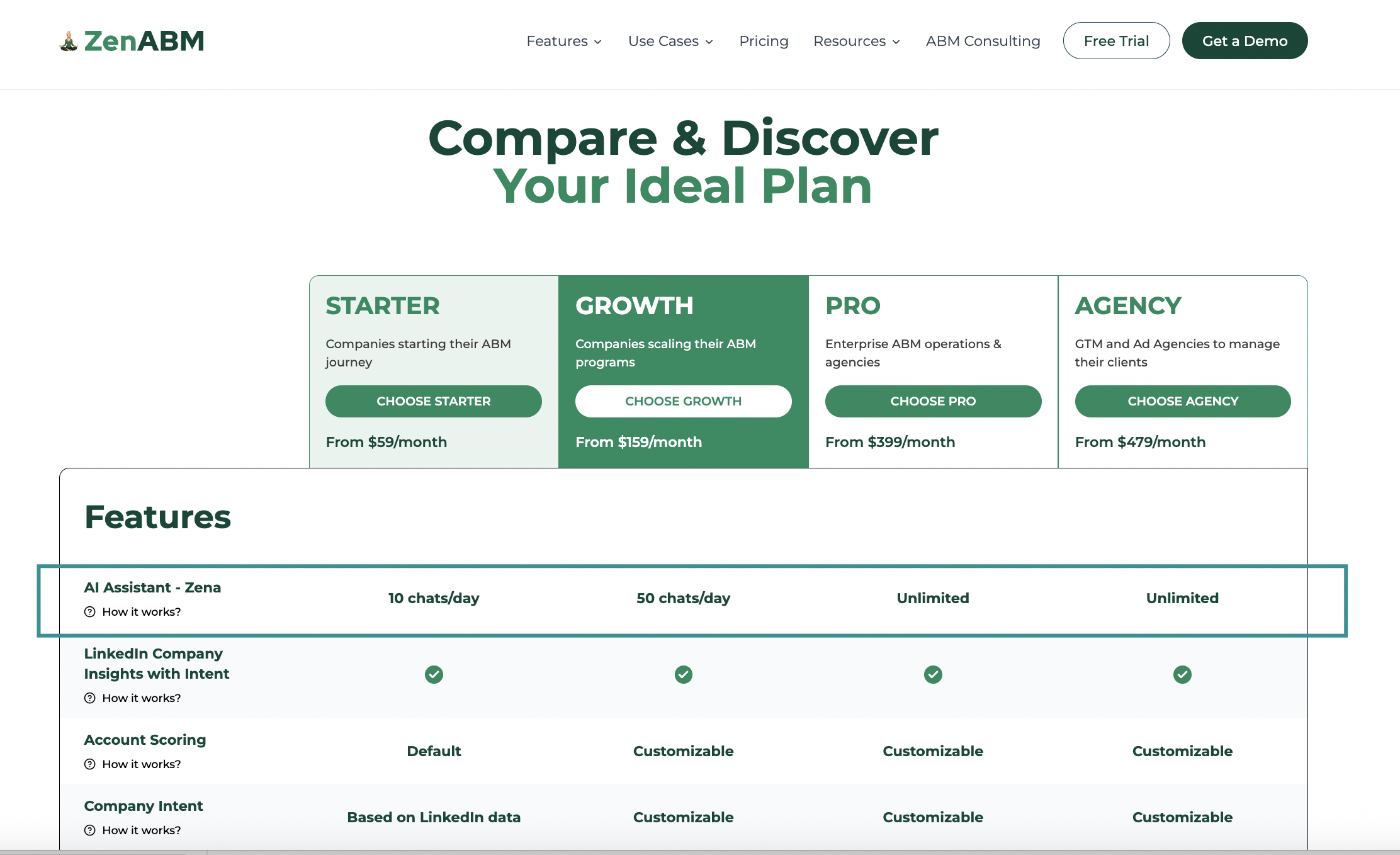
ZenABM is a lean SaaS
Moreover, ZenABM pricing isn’t tied to ad spend or a percent of media (unlike some ABM tools), which keeps it attractive for startups and mid-market teams.
If you only need LinkedIn-first reporting, a simple intent-style score, and CRM attribution narratives, LinkedScope may be enough.
ZenABM is the better LinkedScope alternative when the real pain is not “missing reports,” but “missing actionability.”
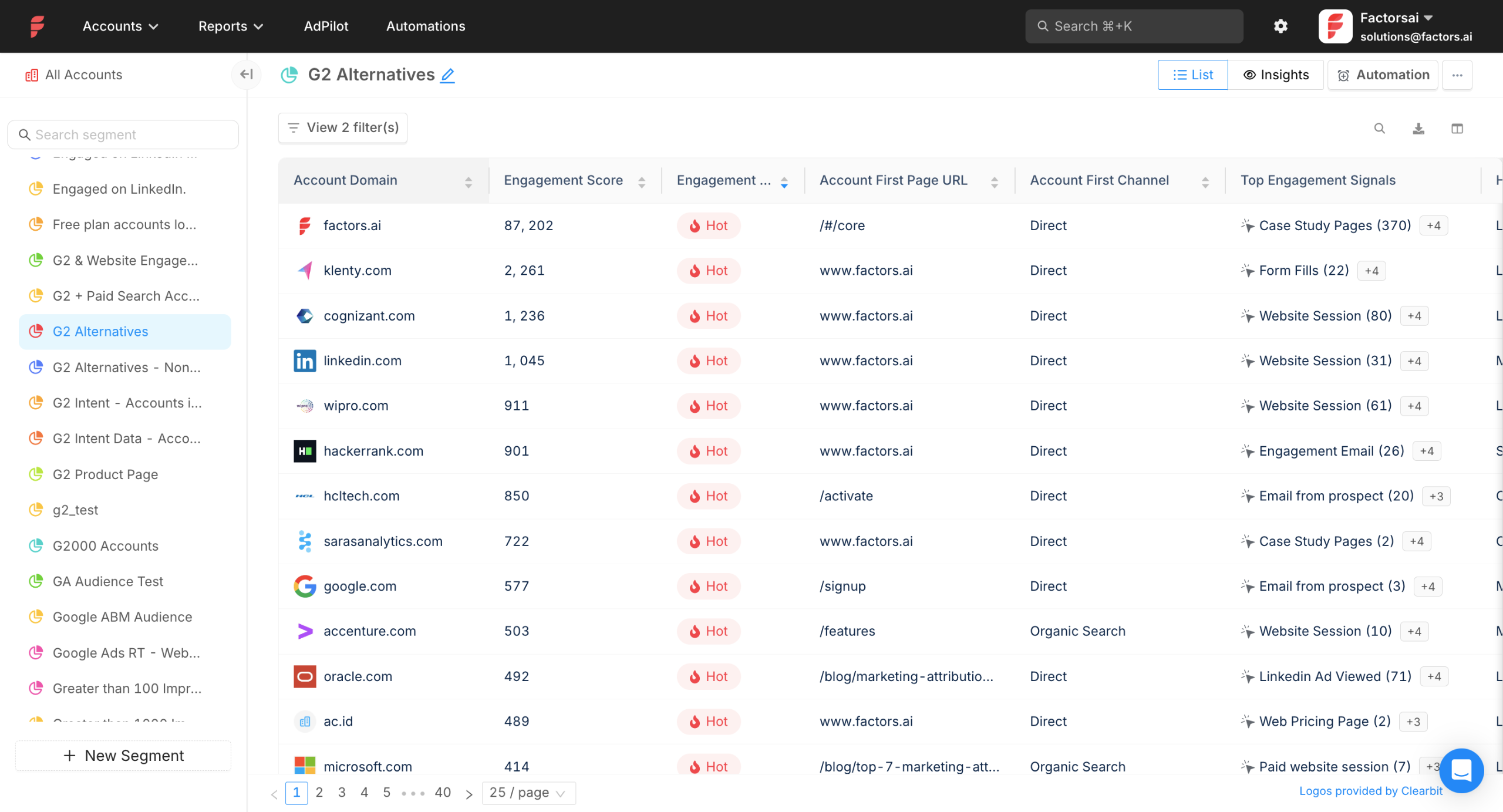
Best for: Teams that want attribution depth, multi-channel analytics, and visitor identification in one analytics layer.
LinkedScope is a LinkedIn-first reporting and attribution narrative layer.
Factors.ai is a broader measurement system that connects ads, site behavior, and pipeline across channels.
Factors.ai’s core offerings:
Factors.ai can capture and attribute touchpoints across channels such as site, ads, email, and CRM activities, then apply multiple attribution models.
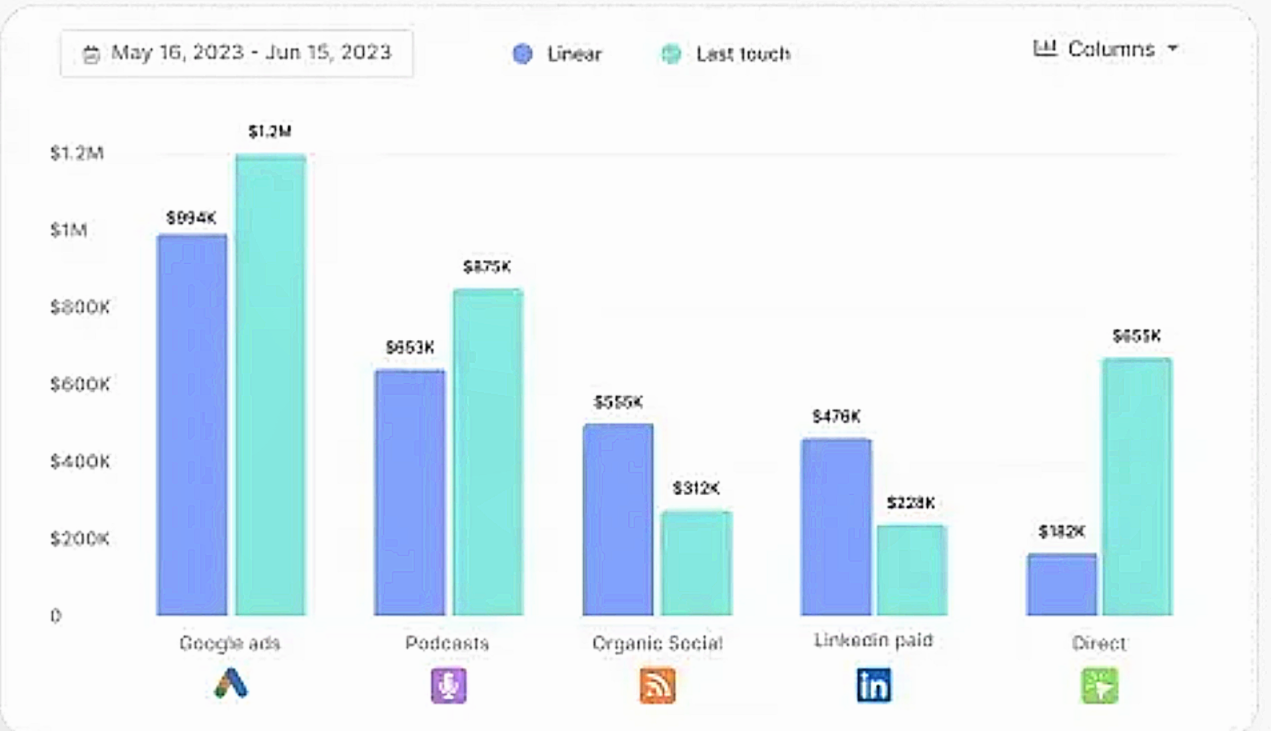
It supports roughly nine models, including first-touch, last-touch, linear, time-decay, U-shaped, and W-shaped, and lets you compare two models side by side.
This gives marketers a defensible read on which campaigns and assets influenced pipeline and revenue instead of relying on single-touch views.

All activity flows into an Account Timeline that maps each company’s chronological path across anonymous sessions, ad interactions, and sales engagement.
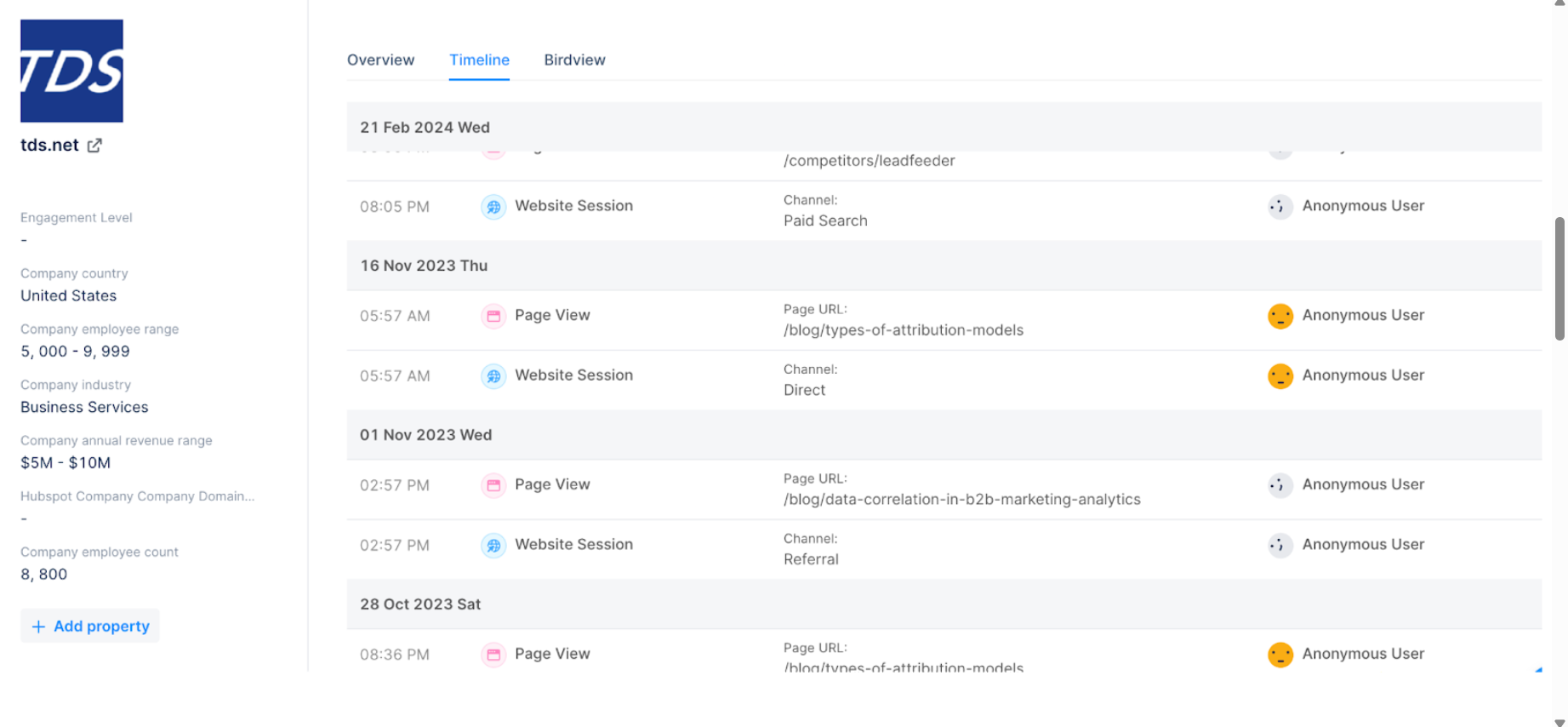

A key capability in Factors.ai is linking anonymous visitors to the companies browsing your site.
By using IP data and partners like Clearbit Reveal and 6sense, Factors.ai notes it can deanonymize up to roughly 64 percent of traffic by matching IPs to corporate domains.
Factors.ai augments accounts with firmographics and intent data.
Using Clearbit, it can enrich industry, headcount, revenue band, location, and similar attributes.
Through 6sense or other providers, it can reflect buying stages or topic-level intent.
All account engagement, including pageviews, ad impressions or clicks, and form fills rolls into an engagement score.
Scoring is configurable.
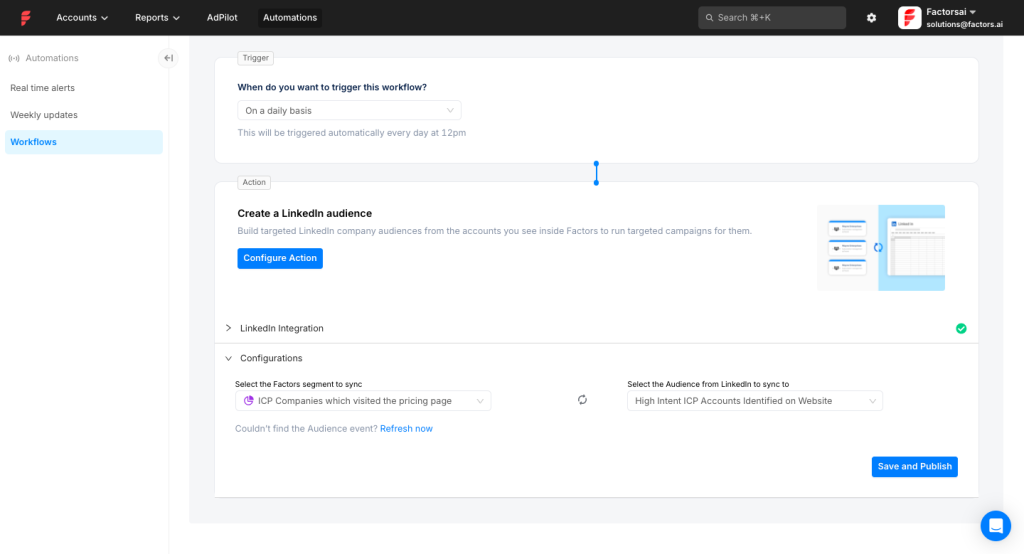
Factors.ai connects with major ad platforms like LinkedIn, Google Ads, Meta, and Microsoft Ads to ingest performance and sync audiences.
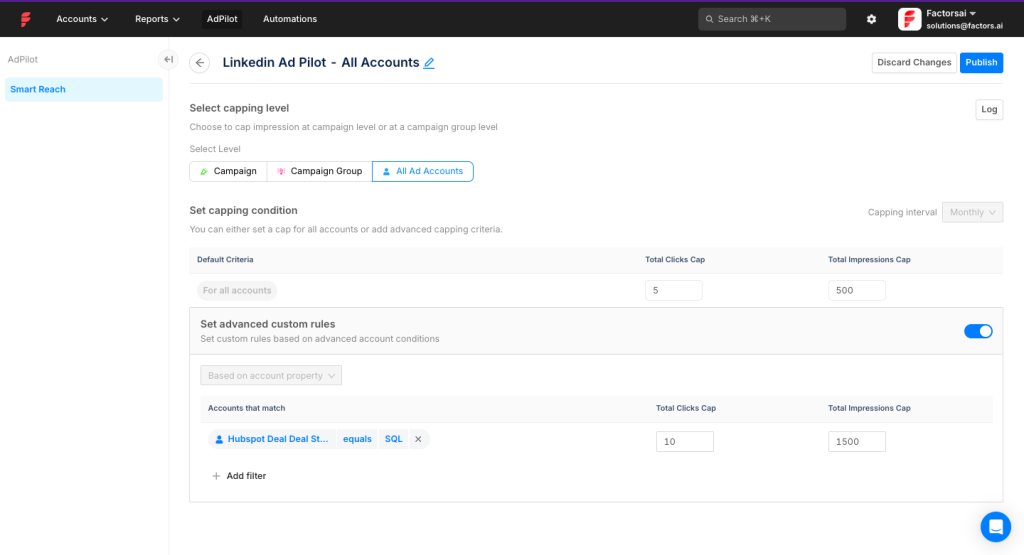
It also provides an AI-assisted LinkedIn AdPilot that helps streamline LinkedIn ABM operations.
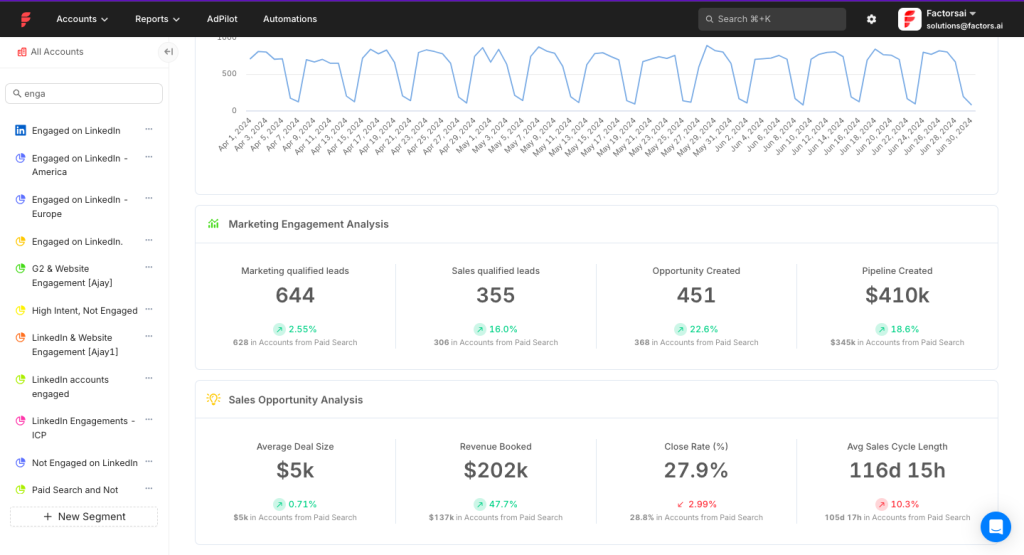
AdPilot can auto-build audiences from Factors segments and set impression limits per account, so you avoid over-serving the same companies.
Factors.ai also captures impression-level LinkedIn data, not just clicks, enabling view-through attribution so you can credit influence without a click.
Pro Tip: Like Factors.ai, ZenABM records company-level LinkedIn engagement down to impressions, and goes further by showing which ads a given account interacted with, so you get real interests, not just raw activity.
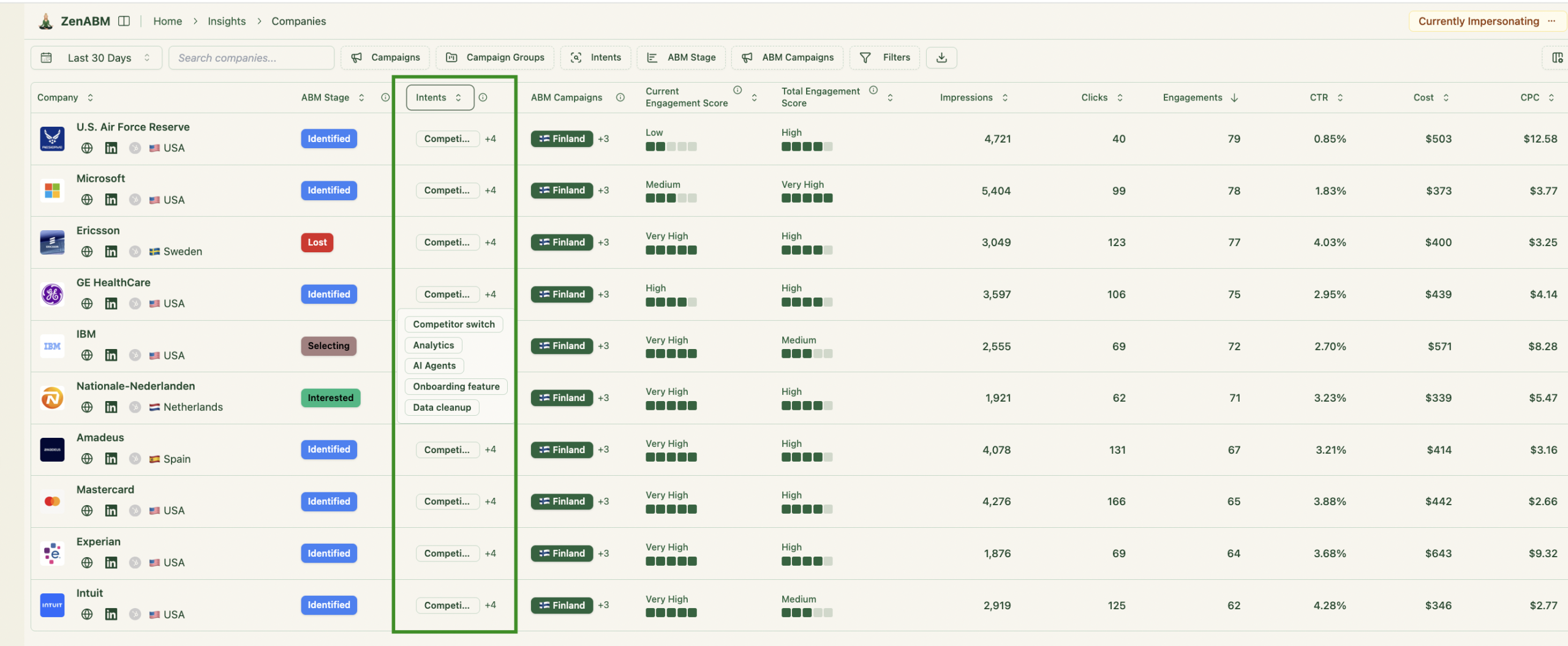
You can tag campaigns by theme or feature, and ZenABM will surface each account’s intent and sync both qualitative and quantitative insights to your CRM.
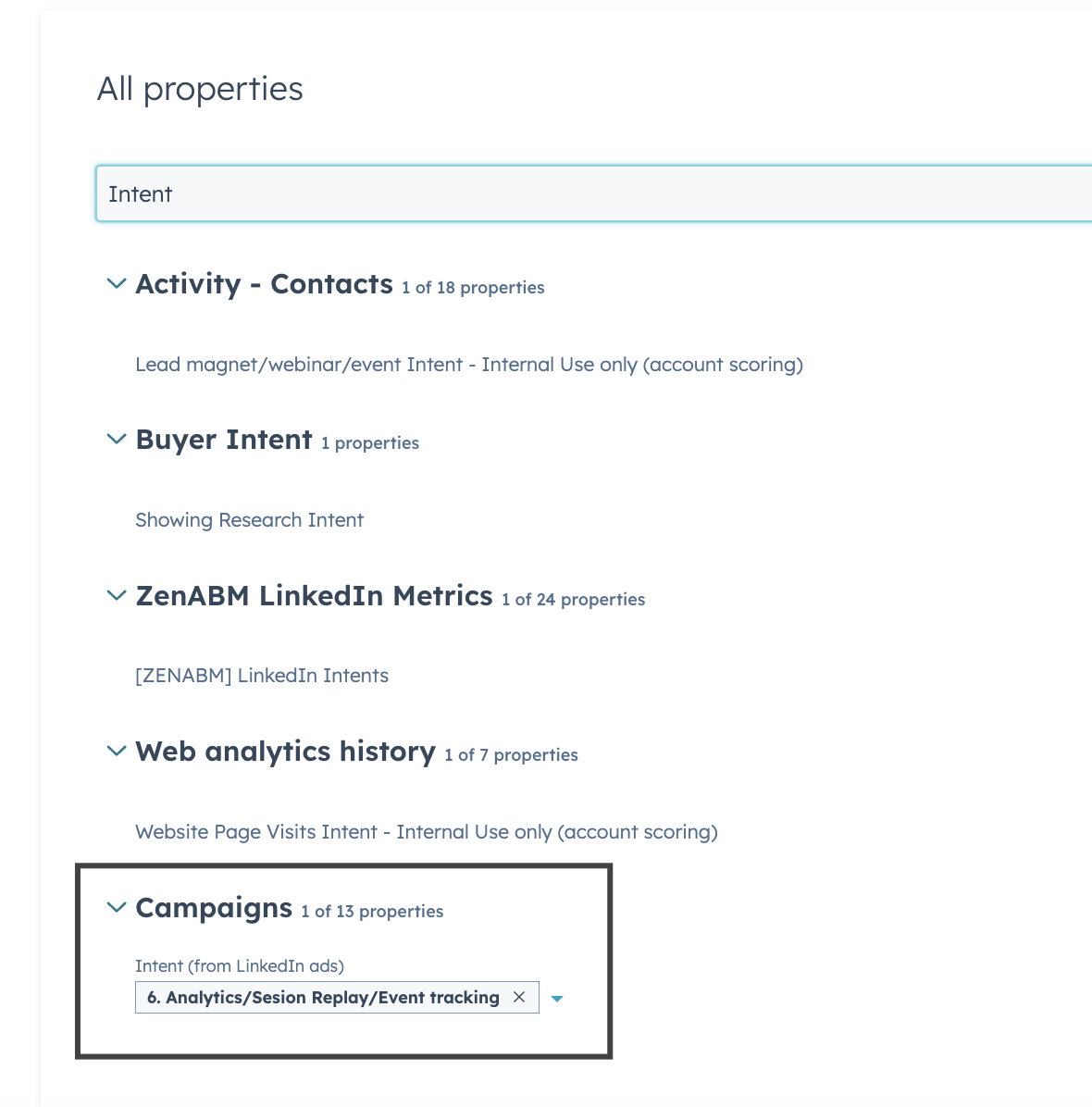
This gives BDRs immediate context on who is heating up and which topics to lead with during outreach.
Beyond attribution, Factors.ai offers ABM analytics dashboards.
You can monitor metrics like Visits by target account, Pages per account, and Ad impressions per account to gauge engagement across the site and ads.
Higher tiers unlock prebuilt ABM dashboards showing which campaigns lift account engagement, how targets distribute by funnel stage, and which opportunities marketing influenced.
You can also build custom reports.
Factors.ai follows a multi-tier approach with a free plan plus paid packages.
But, exact pricing is not public.
As a directional benchmark, Factors.ai often falls in the $10k to $25k annual band.
Factors.ai is heavier to implement and maintain because it spans attribution, visitor ID, enrichment, and multi-channel data stitching.
If your world is mostly LinkedIn and you mainly need account-level reporting with a clean narrative, LinkedScope may feel simpler.
Best for: Teams that want a LinkedIn-first ABM suite, including multi-signal intent and orchestration.
LinkedScope helps you see and report account impact.
Recotap helps you run ABM end-to-end, including orchestration and personalization.
Recotap’s core offerings:
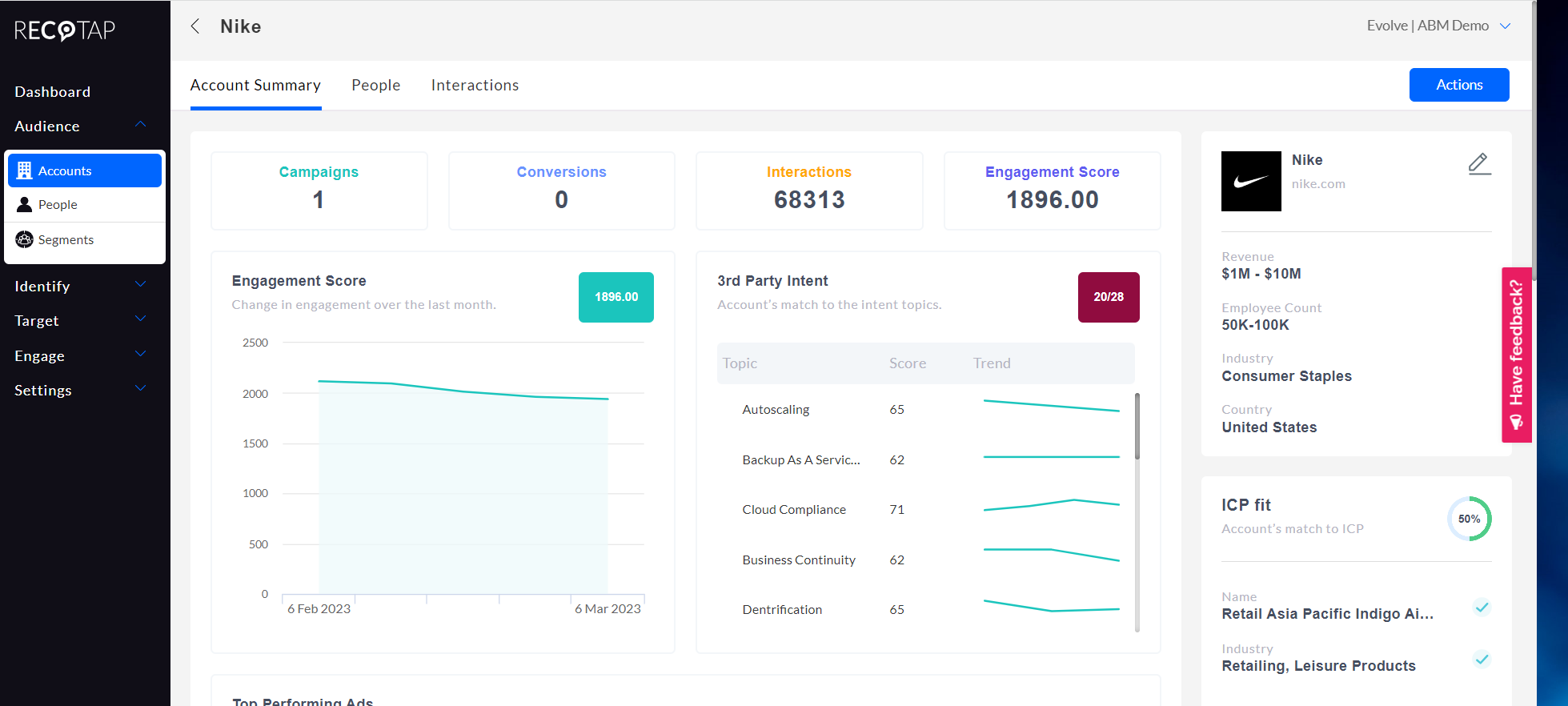

Recotap pulls data from your CRM, marketing automation stack, website and third-party intent providers into a single account view.
It combines signals like site visits, ad clicks, external intent from Bombora, G2 and TrustRadius, plus CRM activity, so you can segment and score accounts by fit and activity.
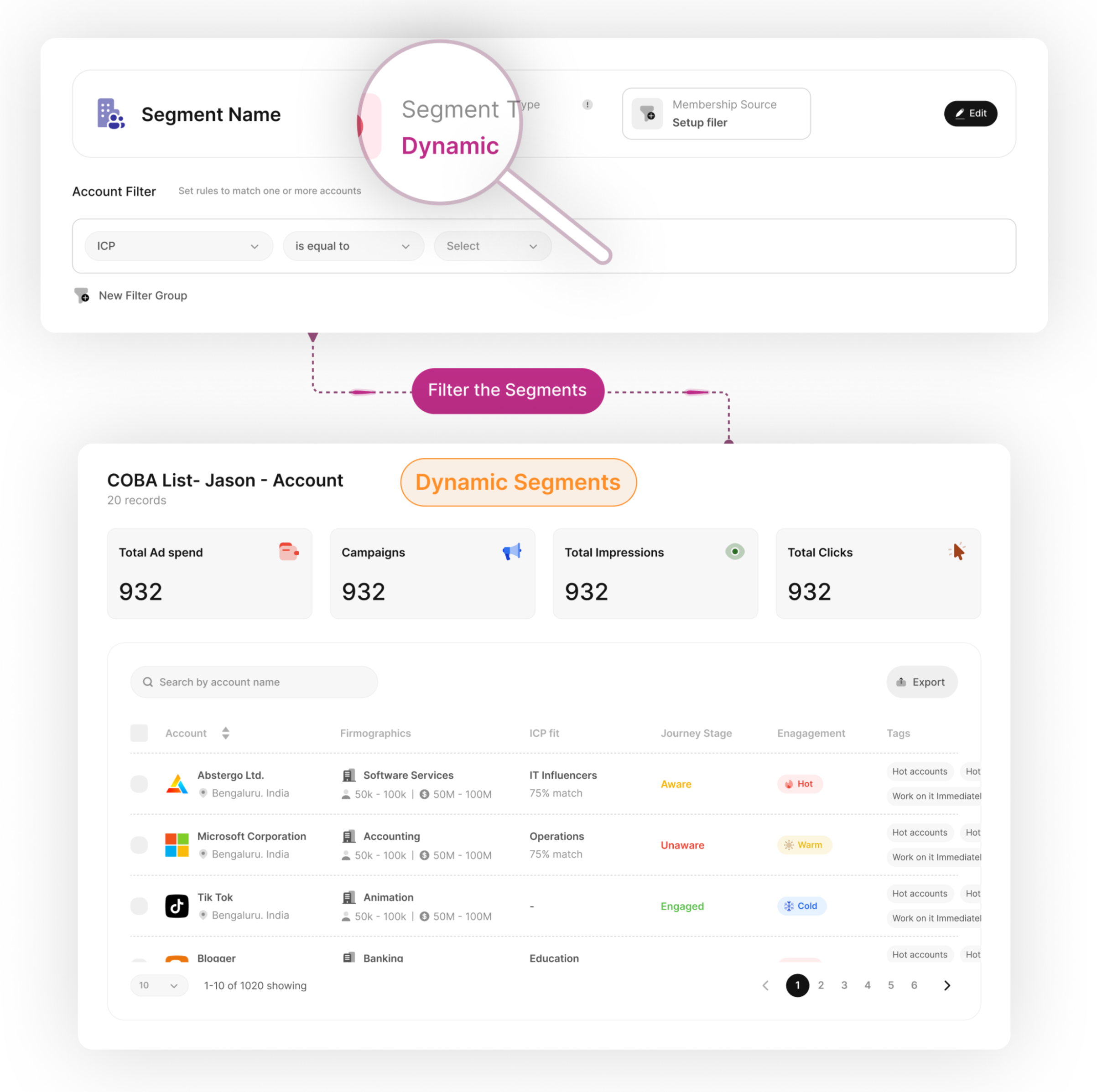
Recotap leans heavily on dynamic segments and AI-based scoring.
You define segments using firmographics, engagement, ICP fit and intent level, and the system refreshes lists as data changes.
Its AI can also tag journey stages so you see which accounts are still researching, which are engaged and which are close to handoff.
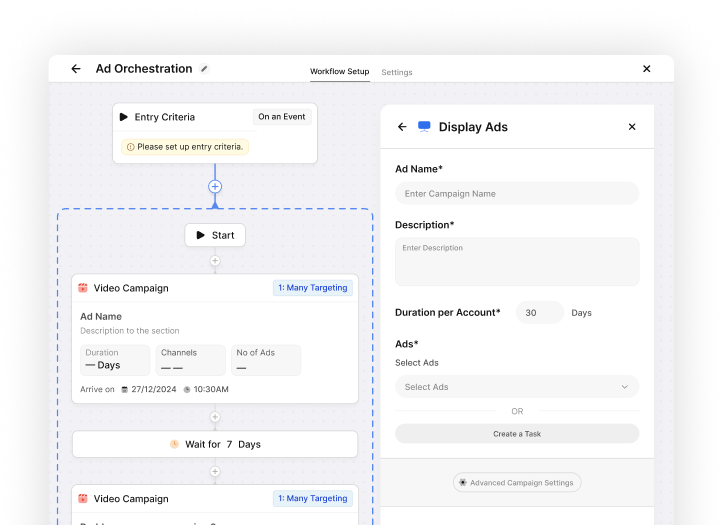
Recotap supports account-based LinkedIn campaigns and lets marketers roll out highly tailored LinkedIn ads for dozens or hundreds of accounts in one motion.
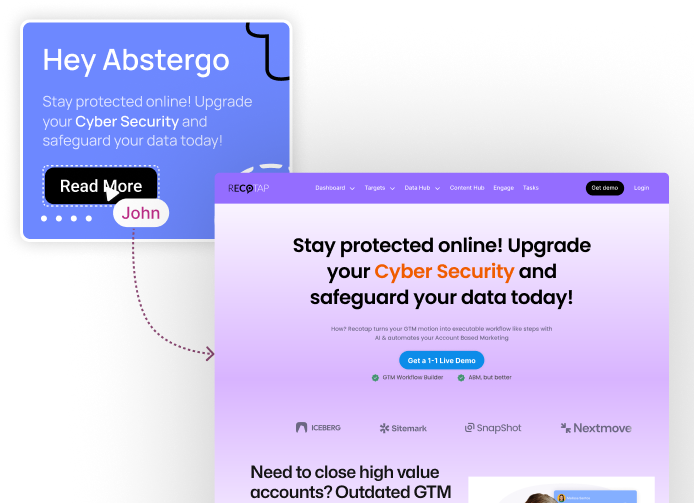
Recotap helps you spin up 1 to 1 landing experiences for target accounts with minimal engineering.
Recotap integrates with major CRM and marketing automation platforms so sales and marketing can work from one shared view.
Salesforce and HubSpot CRM are supported with bi-directional sync for accounts, contacts and deals, alongside Marketo and Pardot for marketing automation.
It also connects to sales tools like Outreach and Salesloft, plus Slack and Microsoft Teams, so BDRs can be alerted whenever a target account crosses a key threshold.
Recotap includes AI-powered analytics and revenue attribution dashboards.
Its Revenue Impact view links campaigns to pipeline and revenue, so you can see which initiatives drive deals and how account journeys evolve from first touch to closed won.
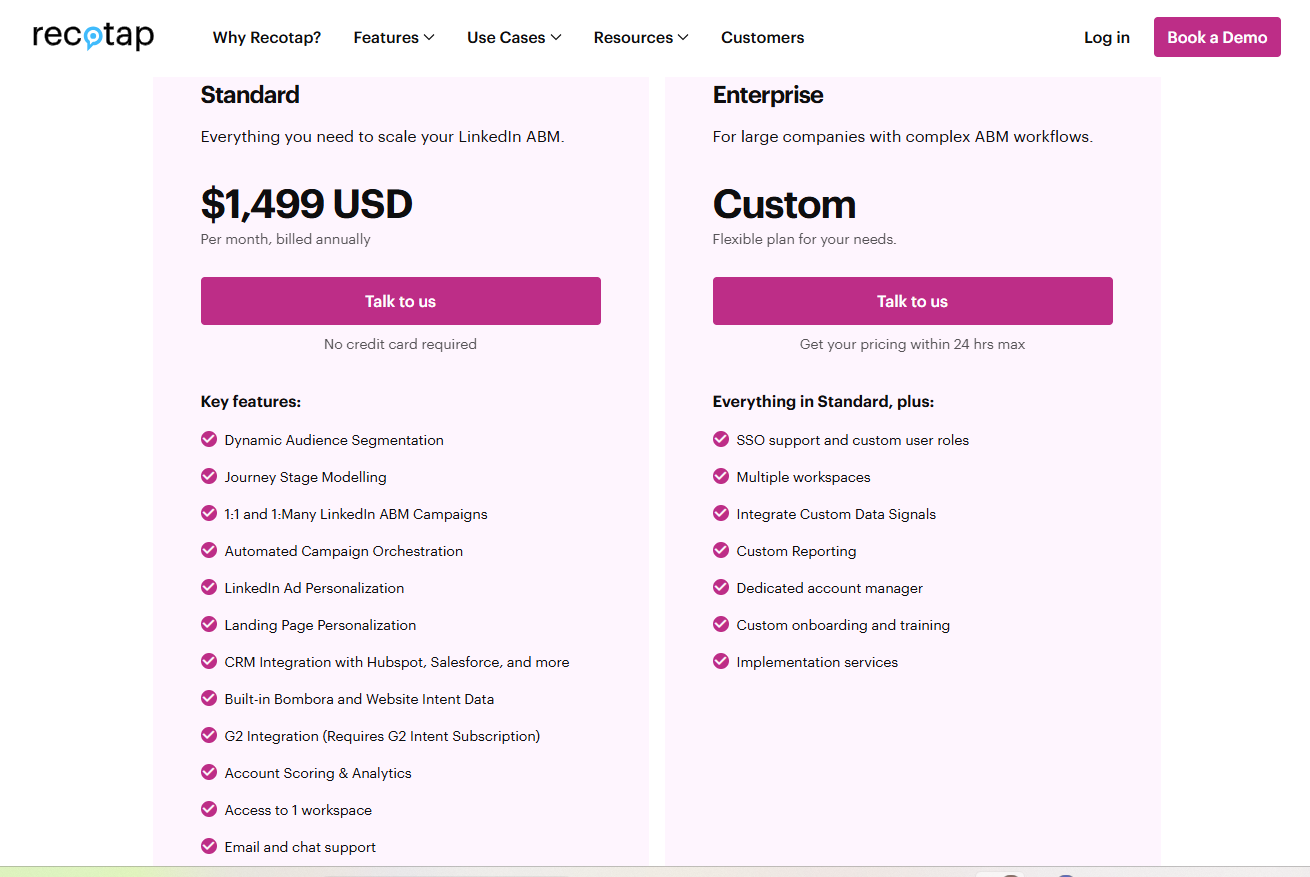
Recotap’s plans:
Given that Recotap’s entry tier already crosses $10K per year, ZenABM stands out as a leaner option, starting at ~$59/month for the Starter plan, with the top tier still under $6K per year.
ZenABM still covers core LinkedIn ABM needs such as account-level ad engagement tracking, account scoring, ABM stage tracking, routing hot accounts to BDRs, bi-directional CRM sync, custom webhooks, qualitative company intent and plug and play ROI dashboards.
If you do not want a full ABM suite and your needs are mostly reporting and attribution narratives, Recotap will feel like buying a spaceship to commute two streets.
Recotap is a better LinkedScope alternative when the goal is orchestration and execution, not just reporting.

Best for: Teams that want strict LinkedIn Ads delivery control, including scheduling, pacing, frequency discipline, and delivery fairness style workflows.
LinkedScope is built to explain what happened at the account level, especially reach, engagement, and CRM attribution narratives.
Linklo is built to control what happens next, mainly how and when delivery happens, and how evenly impressions distribute across target accounts.
Here’s what Linklo focuses on:
Linklo lets you run campaigns only within specific windows (weekdays, business hours, time-zone aligned schedules), so you stop wasting delivery during low-quality hours.
Instead of LinkedIn delivery surging unpredictably, Linklo pushes for tighter spend distribution so you are not burning budget early and improvising explanations later.
Linklo is positioned around avoiding the “a few accounts got everything” problem, so coverage stays more even across your target list.
Linklo starts at $199/month. Yes, that’s all available.
Linklo is a control layer, not an account reporting and attribution narrative tool.
Best for: Teams that want LinkedIn ad control (scheduling, pacing, frequency) plus lightweight website visitor identification, and are okay with IP/cookie-based matching.
These tools solve different layers.
DemandSense is more of an ad ops companion, focused on control and optional visitor ID.
LinkedScope is an account reporting and attribution narrative layer.
Here’s what DemandSense is built around:
DemandSense is positioned for advertisers who want more control over when LinkedIn campaigns run, especially when Campaign Manager’s native workflow feels too limiting.

DemandSense emphasizes frequency control, so you can reduce over-serving the same audience and manage repetition more intentionally.
A core part of DemandSense is “Audience Tuning,” which is essentially a workflow to discover which companies saw or interacted with your ads and refine targeting based on that feedback loop.

DemandSense also bundles advanced reporting positioned as “deeper LinkedIn insights,” which helps teams that want more visibility than Campaign Manager’s default views.

On higher plans, DemandSense unlocks a website visitor identification module (often framed as “Reveal Intent”), which uses IP matching and cookies to identify companies visiting your site.
This is useful if your workflow depends on “who visited” alerts, but it’s still a different category of signal than LinkedIn’s company-level ad engagement data.
DemandSense’s higher tier includes monthly data credits that can be used for either visitor identification or uncovering sales leads (contact info) from key accounts.
DemandSense is publicly positioned with a self-serve entry tier and a Plus tier:
DemandSense also publishes tiered pricing for “Basic Plan + Identified Visitors” (with identified visitor volume and traffic ranges scaling up as price increases).
DemandSense is strongest when you want control plus an optional visitor ID module.
If your main requirement is LinkedIn-first account reporting and attribution storytelling, LinkedScope is closer to that need.
Also, DemandSense’s visitor identification relies on IP/cookie-based matching, which can be unreliable.
Best for: Advertisers and agencies that want always-on LinkedIn monitoring with optimization nudges (and optional automation).
LinkedScope is built for account reporting and attribution narratives.
Campainless is built for operational vigilance, it monitors campaigns continuously and flags issues early.
Campainless’s core offerings:
Campainless continuously watches your LinkedIn campaigns so you don’t have to babysit performance. It’s built to catch meaningful changes in results as they happen, not after you’ve burned a week of budget.
It flags issues and shifts in performance with alerts, so you can act when something goes sideways (or unexpectedly works).
It generates optimization recommendations based on campaign performance and settings, but the point is assistance, not autopilot. You review and approve changes.
Instead of jumping between screens, you get a single place to manage and review spend and performance across campaigns.
It tracks ad spend and pacing so you can see where money is going and whether delivery is behaving.
Campainless helps you break down performance by segments, so you can spot what’s working across slices of targeting and adjust accordingly.

Campainless pricing is simple: it scales by monthly LinkedIn spend and number of ad accounts.
Plans:
Campainless is not an account reporting and attribution narrative product.
If your biggest pain is “show me account-level impact and tie it into CRM outcomes,” LinkedScope is closer to that.

Best for: Teams that want multi-touch revenue attribution and journey tracking across channels.
LinkedScope helps you report LinkedIn account impact.
Dreamdata helps you prove what marketing does to revenue across the entire journey, not just LinkedIn.
So, if multi-channel attribution is not your requirement, Dreamdata may be unnecessary complexity.
Dreamdata’s core offerings:

Dreamdata provides several attribution models, such as first touch, last touch, W-shaped, time decay, and data-driven options. It aggregates CRM, website, and ad data into a single timeline so you can see how content and campaigns contributed to a deal, not just the last click.

Dreamdata rolls data into revenue analytics dashboards, showing pipeline and ROI by channel, campaign, and content. You can track metrics like Time to Revenue and pipeline velocity by stage.
Some users on G2 note that not all pre-built reports are useful, and the learning curve is real.


Dreamdata automatically organizes contact-level touchpoints into account journeys so you see how buying committees move from first touch to close.
Its ABM view helps marketing show influence on deals and track account-level engagement.

The “Reveal” module identifies which companies are engaging most, scores their activity, and flags high fit visitors.

ZenABM also provides journey visualizations showing the impact of LinkedIn ads on a deal progression.
Dreamdata lets you build audiences using filters across all your data and sync them to ad platforms. For example, you can create a segment of accounts that visited your pricing page twice and retarget them on LinkedIn.

It also supports one-click conversion syncing, so events like SQLs or closed deals flow back into ad platforms for revenue-based optimization.

Dreamdata has 40+ integrations across CRMs, marketing automation, ads, analytics, and more.
Big ones:
Dreamdata pricing isn’t clear on the site.
Here is what is publicly available:

Dreamdata is a full revenue attribution and journey analytics platform, so it will not replace LinkedScope if your goal is LinkedIn-first account reporting.
Dreamdata is the LinkedScope alternative when leadership demands revenue proof across channels, not just account-level reporting for LinkedIn.
LinkedScope is useful when your biggest pain is “I need account-level reporting and a clean story for what LinkedIn influenced.”
But LinkedIn-first ABM breaks when you stop at reporting and never solve the adjacent problems:
That’s why the most suitable LinkedScope alternative depends on what you are actually missing.
If you want lightweight LinkedIn dashboards and exports, pick Satlo.
If you want an activation layer that turns LinkedIn engagement into CRM-ready account intelligence, pick ZenABM (starts at $59/month).
If you need delivery control, use Linklo (or DemandSense, Campainless depending on whether you want visitor ID or monitoring).
If you are attribution-obsessed and have a multi-channel stack, go for Dreamdata (or Factors.ai).
But if you want the widest ABM coverage without enterprise bloat, ZenABM still tends to be the cleanest “do more with fewer tools” option, especially because it adds first-party qualitative intent and AI reporting in natural language.
Try ZenABM now (37-day free trial), or book a demo to know more!