 AI for ABM & LinkedIn Ads Week28 Sep – 2 Oct · Reserve your seatAI for ABM & LinkedIn Ads Week · 28 Sep – 2 Oct · Reserve your seat
 AI for ABM & LinkedIn Ads Week28 Sep – 2 Oct · Reserve your seatAI for ABM & LinkedIn Ads Week · 28 Sep – 2 Oct · Reserve your seat
LinkedIn Thought Leader Ads have one of the worst signal-to-noise ratios of any ad format.
The CTR metrics LinkedIn reports for TLAs are misleading.
The budget guidance most teams use is too low.
Getting TLAs right requires someone who has managed 250+ LinkedIn ad accounts and seen what actually works across different industries and spend levels.
So, we organized a live Q&A session with Gabriel Ehrlich at the ZenABM ABM Bootcamp 2026 (watch the full session on YouTube here).
Gabriel is the founder of Remotion, one of the leading LinkedIn ads agencies, with clients including Monday.com, Gong, and Yotpo.

This post covers all he had to share about LinkedIn TLAs based on his extensive experience.
Let’s go!

In case you want a quick rundown:

The first thing Gabriel addressed was that the CTR on the LinkedIn performance tab for TLAs is not what you think.
See, for most businesses, the goal of TLAs is to get landing page visits.
But, when LinkedIn reports a 12% or 17% CTR for a Thought Leader Ad in the Performance tab, that number includes likes, comments, shares, “see more” clicks (expanding the post), and clicks to the author’s profile. not just clicks to your landing page.
So, a TLA that shows 17% CTR in the Performance tab might have zero actual landing page clicks.
To find the real click-through rate for TLAs:

Example from our Workshop 4 live campaign data: 74 clicks to landing page / 6,277 impressions = 1.18% real CTR. The Performance tab was showing approximately 10%. Never compare TLA “CTR” from the Performance tab to single image ad CTR – they are measuring completely different things. For more on this, see our complete LinkedIn Thought Leader Ads guide.
With LinkedIn Thought Leader Ads, cost per engagement (CPE) is the lever most teams ignore.
When your post generates high engagement rates (10–20%+), LinkedIn’s auction kind of rewards you – you can bid lower and still win impressions.
That reduces CPE down, sometimes to $1 or even $0.50, as per Gabriel.
Now here’s where it gets interesting.
If engagement is cheap and strong, your effective CTR (real landing page clicks, not vanity clicks) also rises.
That means you’re generating website visits at a lower effective CPC.
Lower CPC × normal conversion rate = lower cost per lead.
Example:
CPE = $0.50
Effective CTR = 10%
Website CPC ≈ $5
Conversion rate = 1%
Your cost per lead becomes ~$500 instead of $2,000 on standard $20 CPC traffic.
The logic is simple: Stronger hook → higher engagement rate → lower CPE → cheaper clicks → cheaper leads.

Gabriel was direct about budget minimums for LinkedIn thought leader ads:
TLAs are the most efficient format for reaching your budget minimum.
At a median CPC of $2.29 from our 2026 benchmarks report, they deliver clicks at roughly 77% less than single-image ads.
For teams with limited budgets, TLAs enable you to generate meaningful reach and engagement data before committing to larger budgets for more expensive formats.
Now, regarding whether you should go for company lists or contact lists for TLAs, Gabriel clearly vouches for company lists over contact lists in almost every scenario.
Company lists work because LinkedIn matches by the company’s presence on LinkedIn, which is stable and reliable.
Contact lists, on the other hand, work by matching individual emails to LinkedIn profiles, which requires that the email in your list is the same email the person uses for their LinkedIn account.
Now, most people use personal emails for LinkedIn and work emails for business databases, so match rates for contact lists are typically 40-60%, while they’re 80-90% for company lists.
The exception: if you have a very large contact database (tens of thousands) collected through a channel where people are likely to have used their LinkedIn email, like event registrations, for example, where attendees sign up with work accounts. In that case, contact lists can work. For ABM targeting, where you have a defined list of target companies, company lists are always the better choice.
Here’s Gabriel’s recommended attribution stack for LinkedIn Thought Leader Ads:
UTMs are the most basic, essential, and non-negotiable part of your attribution strategy for any kind of ads, not just TLAs.
So, ensure that every TLA link has UTM parameters in order for you to track which specific ad drove traffic to which landing page.
Second comes utilizing self-reported attribution.
This can include a free text field on your demo request or signup form asking “How did you hear about us?”
But it shouldn’t be a dropdown and must only be an open text field.
This distinction matters: dropdowns bias toward the most prominent option (usually “Google” or “LinkedIn”).
Open text fields produce answers like “saw your founder’s post about enterprise onboarding”, which tells you specifically which TLA content is resonating and driving intent.
One Remotion client, for instance, attributed 70% of the total pipeline from a UK market launch to UTMs + self-reported attribution combined.
Also, your LinkedIn conversionsAPI (CAPI) must be correctly set up to pass conversion data back to the LinkedIn server-side, bypassing ad blockers and cookie restrictions.
This shows you which campaigns are driving conversions at the aggregate level, not individual-level, but it is more complete than pixel-only tracking.
Finally, comes view-through attribution for the accounts that saw your TLA but did not click, and then converted later through a different channel.
This is, in fact, where a significant portion of TLA value sits.
I mean, scenarios like a buyer seeing your TLA ad without clicking/engaging, then later searching your brand on Google are very common.
And in such instances, your CRM ends up attributing the deal to organic (thanks to last touch attribution models), and your TLAs don’t get the deserved credit.
Pro Tip: ZenABM can take care of all your LinkedIn ads attribution needs. It fetches impressions, clicks, etc. for each ad and for each, calculates an engagement score, determines the ABM stage, and pulls deal value from your CRM by company matching to finally give closed-loop attribution dashboards!

Plus, it also provides an AI agent to answer all attribution math in natural language.

Gabriel was blunt about company page organic: “Think about yourself – how often do you follow a vendor’s company page? Almost never.”
Most company page followers are not potential customers but current employees, past employees, job candidates, and people selling to your company.
The overlap with your actual ICP buyers is small.
Moreover, organic reach from company pages has declined significantly over the past three years.
So, investing marketing resources in company page content as a demand generation channel is rarely the right allocation.
The exception: If the company page content serves as social proof for buyer research, it’s worth it, because then prospects evaluating your product will look at your company page. So, you must keep it updated with case studies, customer testimonials, and product updates. But, again, it will never be a demand gen lever.
The better investment: Individual LinkedIn organic reach from your founders, executives, and subject matter experts (the most important). After all, posts from real people reach real people. Later, if that content is performing great, it can be amplified as Thought Leader Ads for ABM to reach your target accounts specifically. In fact, turning high-performing influencer posts that mention your brand into TLAs is a proven strategy. No wonder LinkedIn launched Brandlink for influencer marketing in late 2025.

Note: Choosing the right influencer for running TLAs from their accounts is very important. I couldn’t emphasize it more. Or else, you might have an underwhelming experience like multiple users on Reddit who got no leads, only spam in their inbox.

As Gabriel explained, LinkedIn Thought Leader Ads have a signal-to-noise problem.
The Performance tab inflates CTR.
Engagement includes likes, comments, “see more” clicks, and profile visits.
What you actually care about for ABM is landing page clicks and which target accounts are engaging.
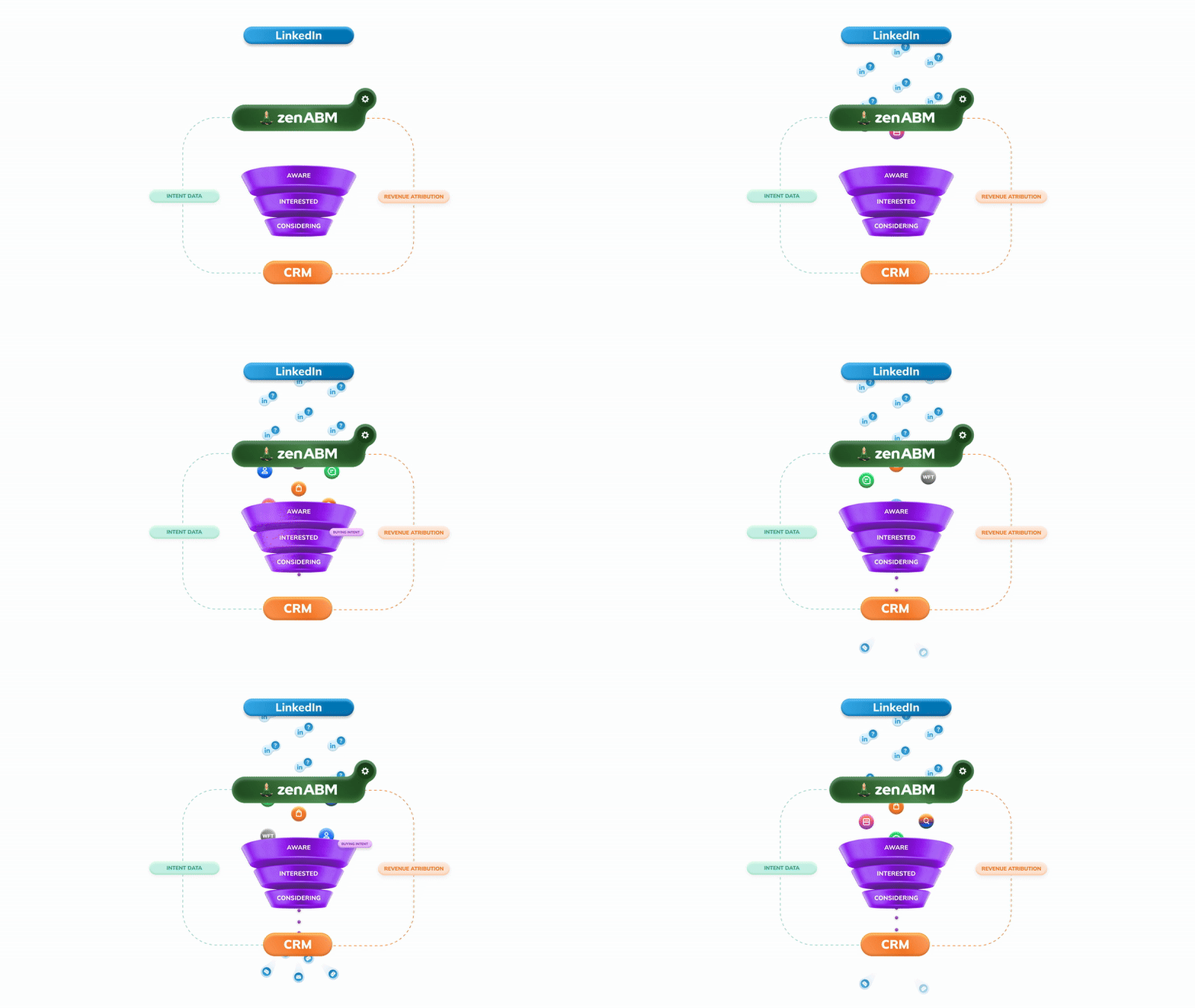
ZenABM solves this by turning LinkedIn Thought Leader Ads from a vanity-metric channel into a company-level ABM signal you can act on.
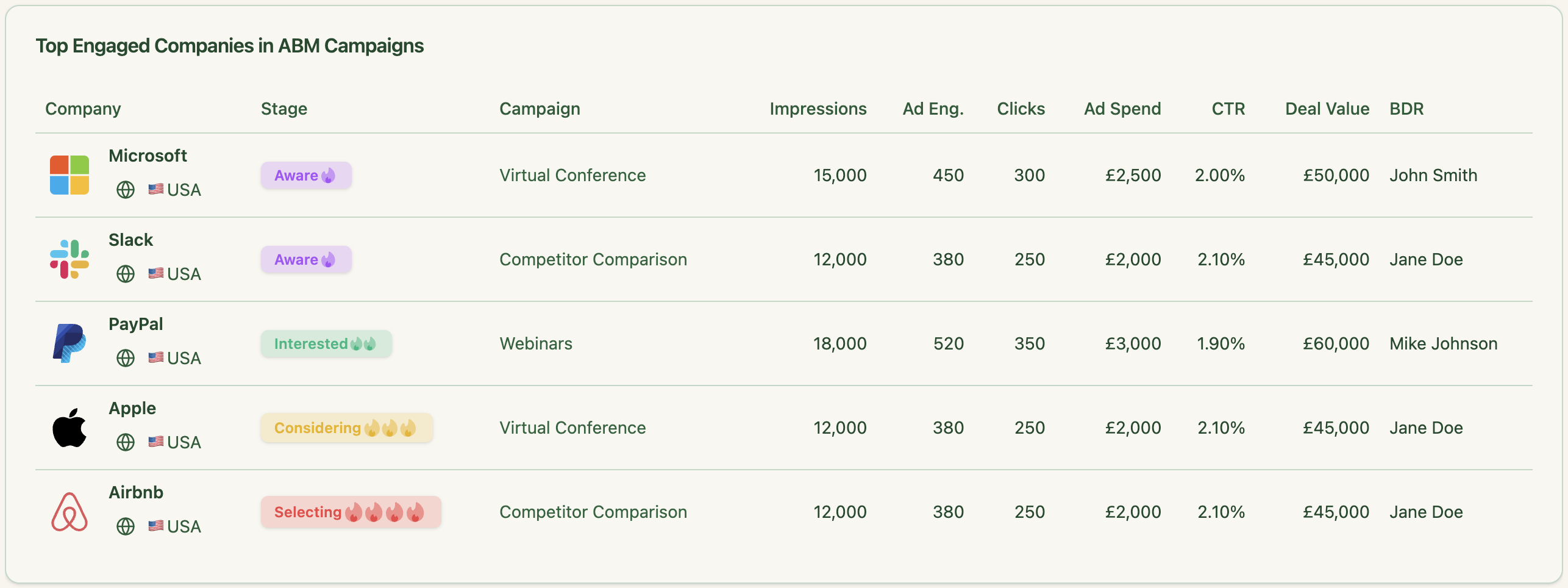
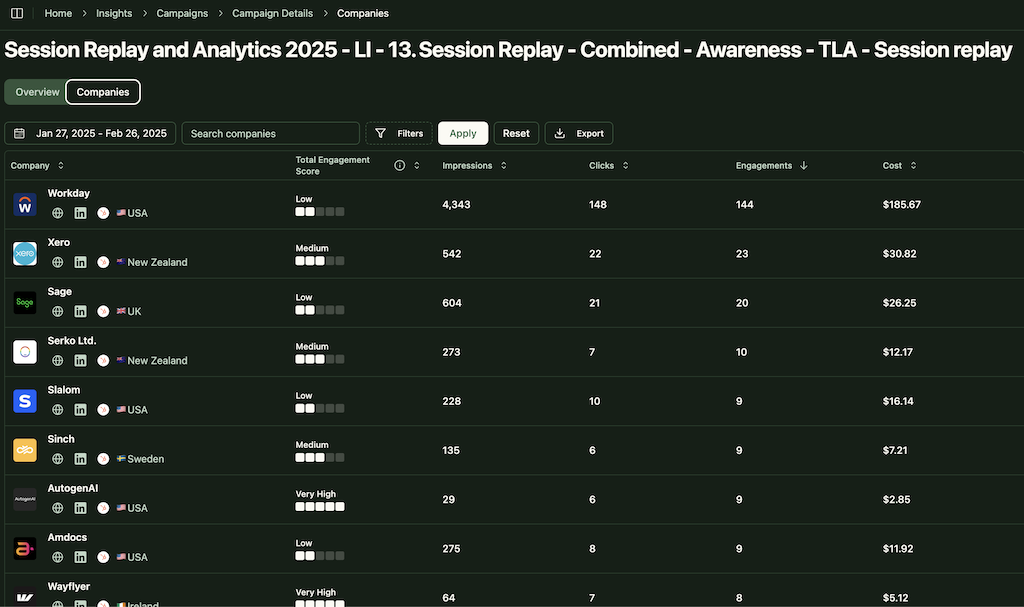
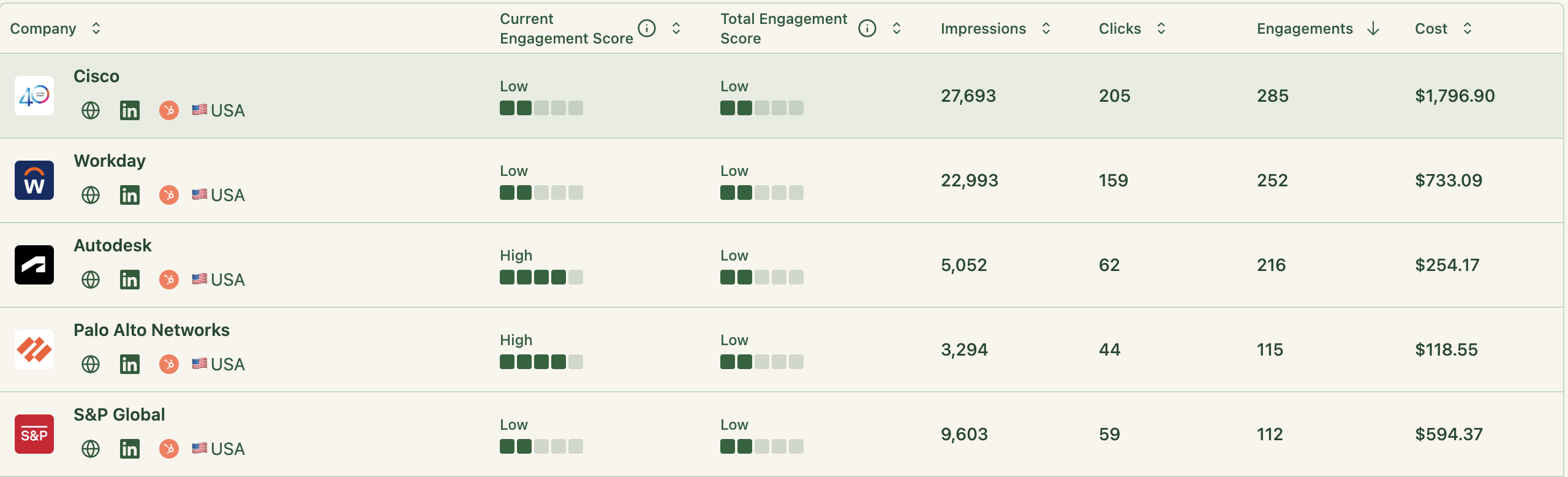
ZenABM connects directly to the official LinkedIn Ads API and captures engagement at the company level.
Instead of celebrating a “12% CTR” that includes profile clicks and comment expansions, you can see:
This turns TLAs into a first-party ABM signal instead of a surface-level engagement metric.
Thought Leader Ads generate conversation. But conversation does not equal pipeline.
ZenABM focuses on meaningful engagement: impressions, landing page clicks, repeat exposure, and multi-touch engagement across campaigns.
When multiple stakeholders from the same target account engage with your founder’s TLA over time, that is a buying signal. ZenABM makes that visible.
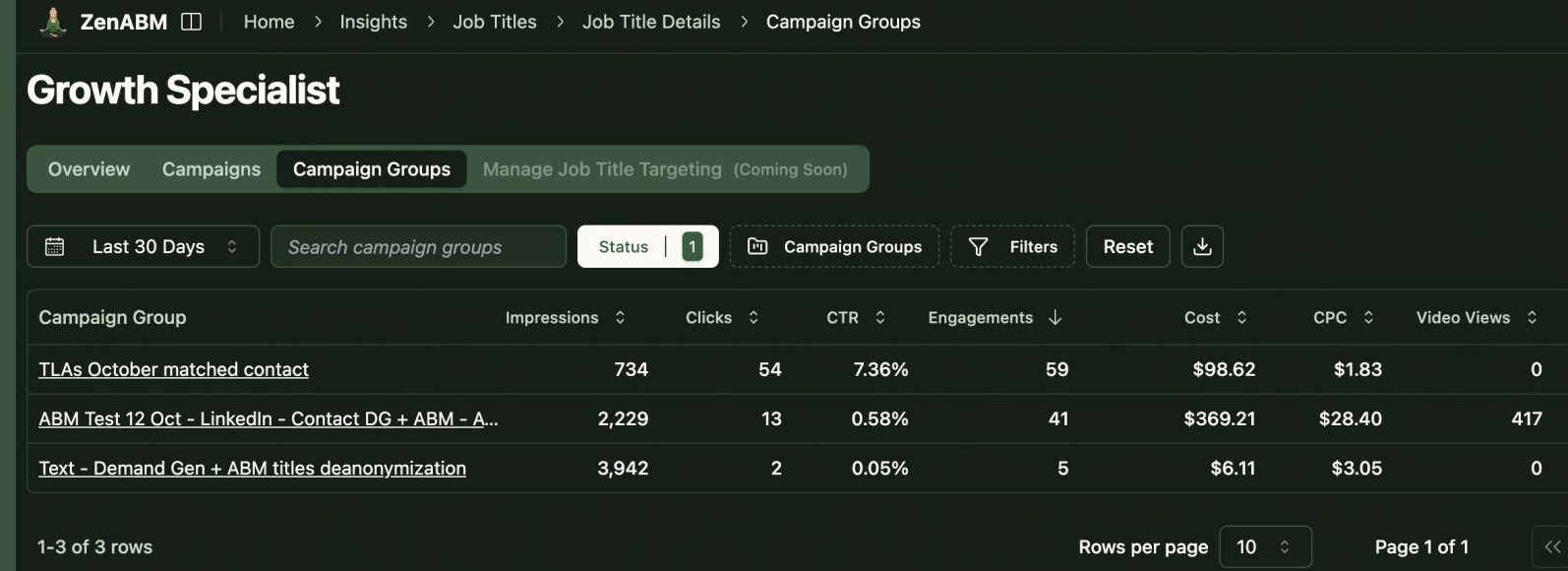
You can also see which job titles are interacting with your Thought Leader Ads. Are you reaching CFOs? Heads of RevOps? Or only junior roles?
This is critical for ABM because TLAs often create wide engagement, but not always from the right personas.
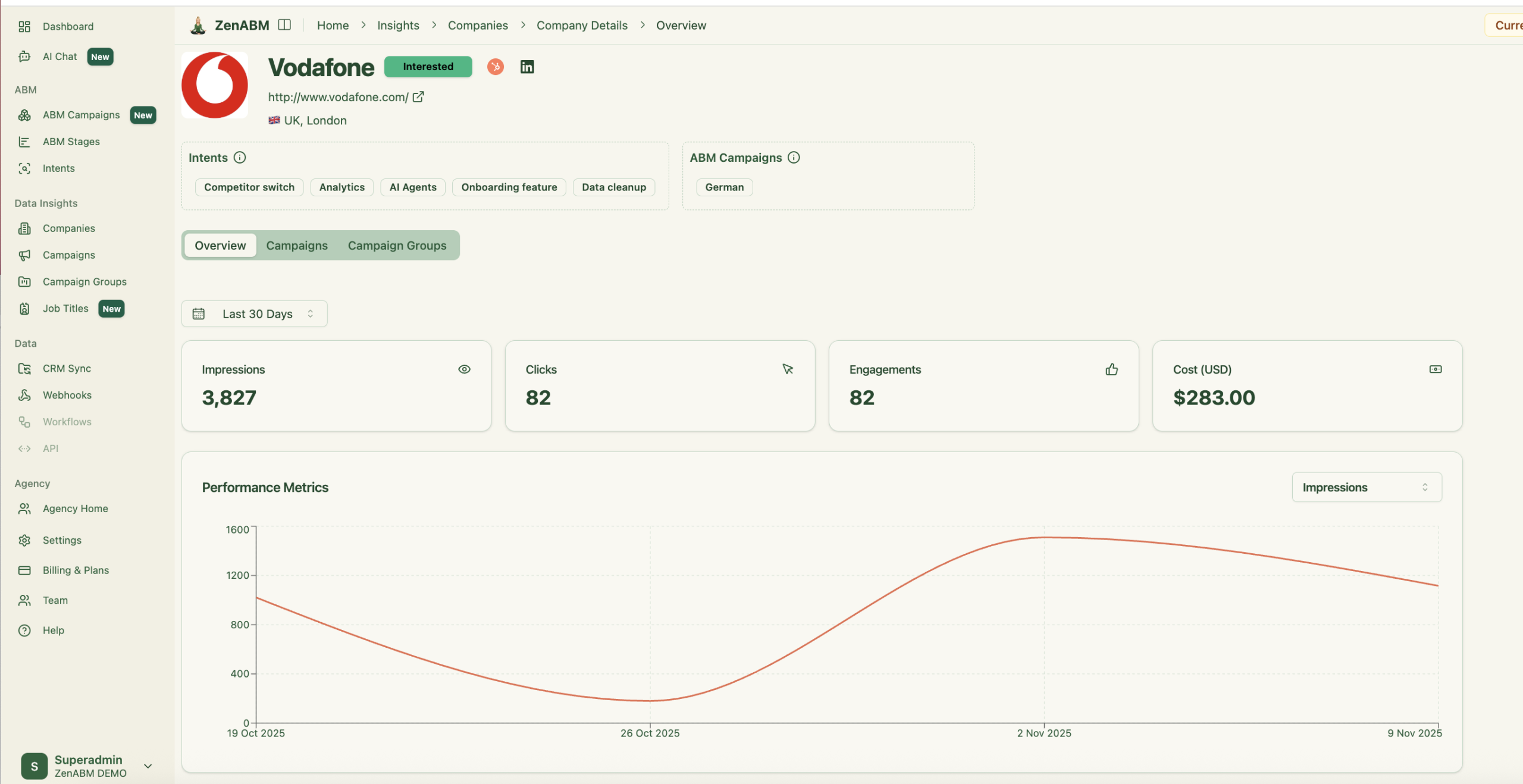
Thought Leader Ads rarely convert on first click. Their value is cumulative.
ZenABM scores engagement over time and visualizes a full account timeline, showing how TLAs contributed to account heating before demo requests or opportunities appear.
This is how you move beyond last-touch attribution and understand true TLA influence.
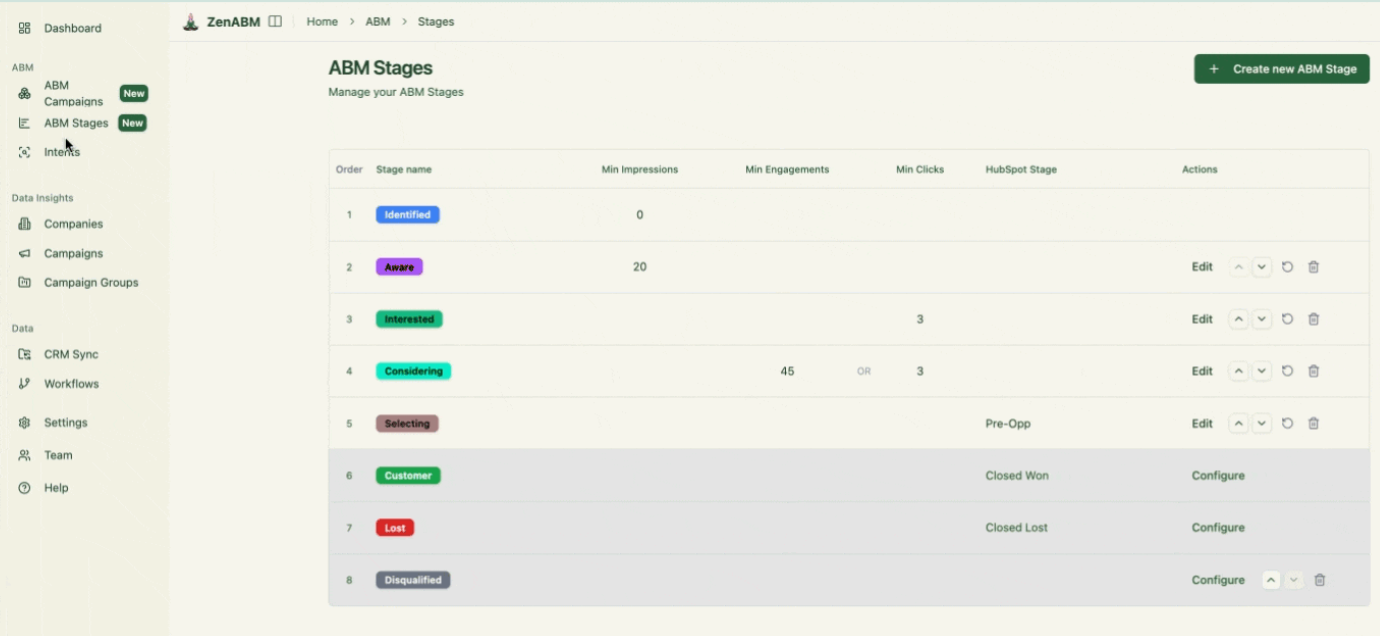
ZenABM allows you to define ABM stages such as Identified, Aware, Engaged, Interested, and Opportunity.
When an account crosses a defined engagement threshold driven by TLAs, ZenABM can:
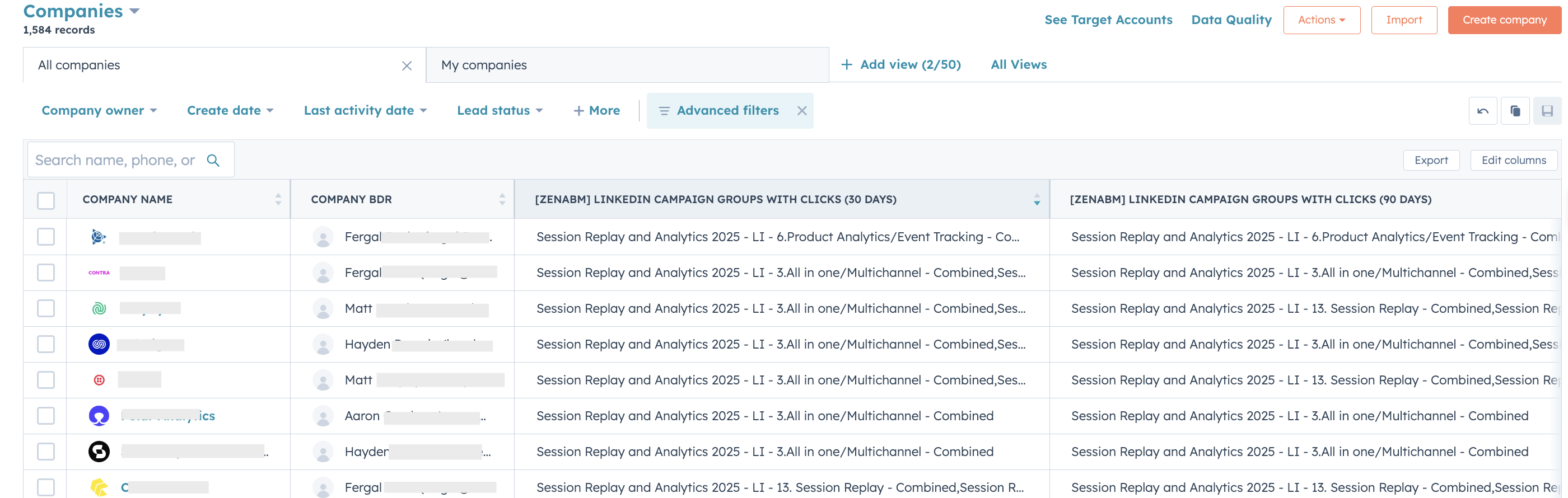
This directly solves the most common ABM failure: engagement generated, but never followed up.
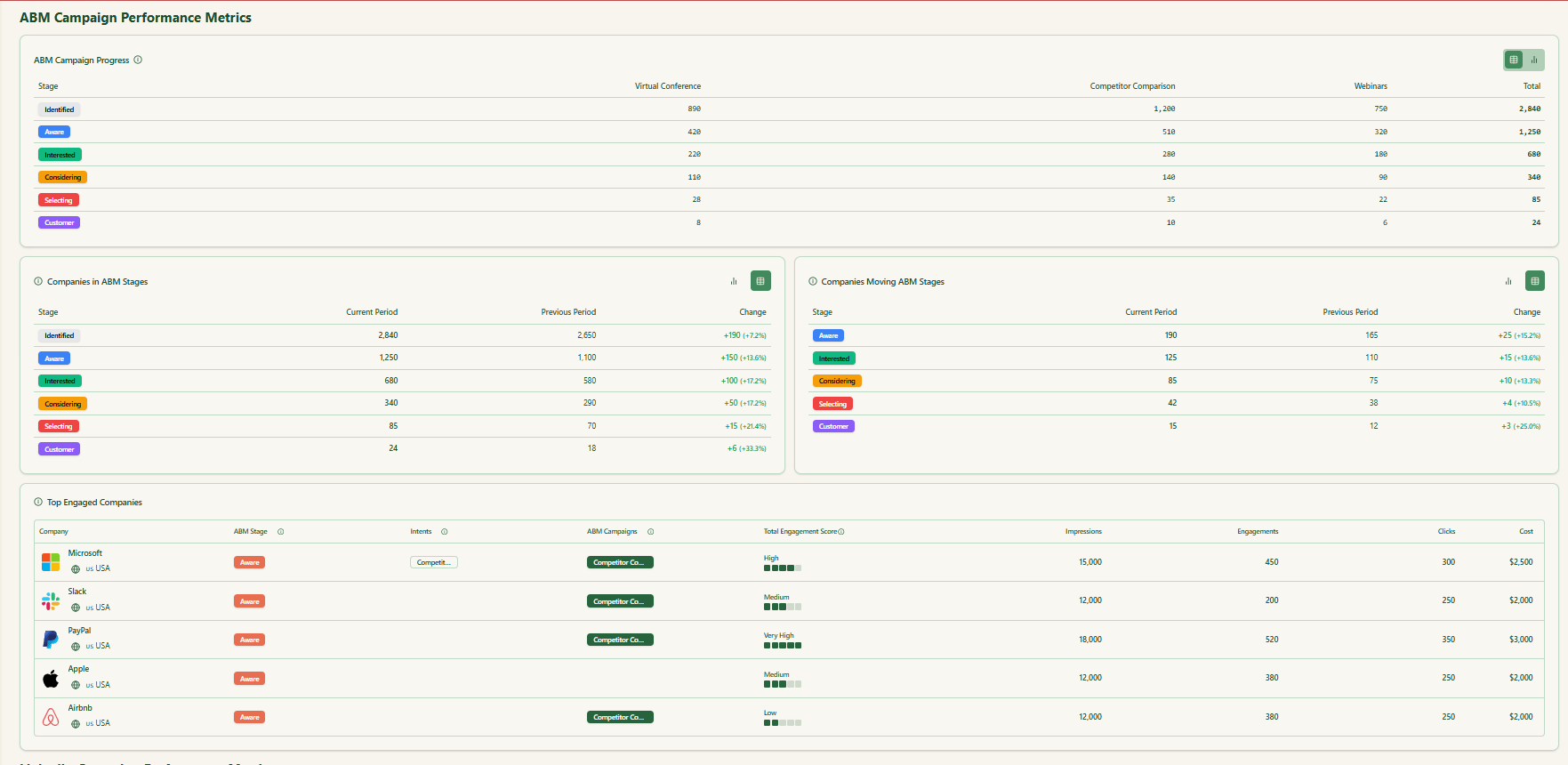
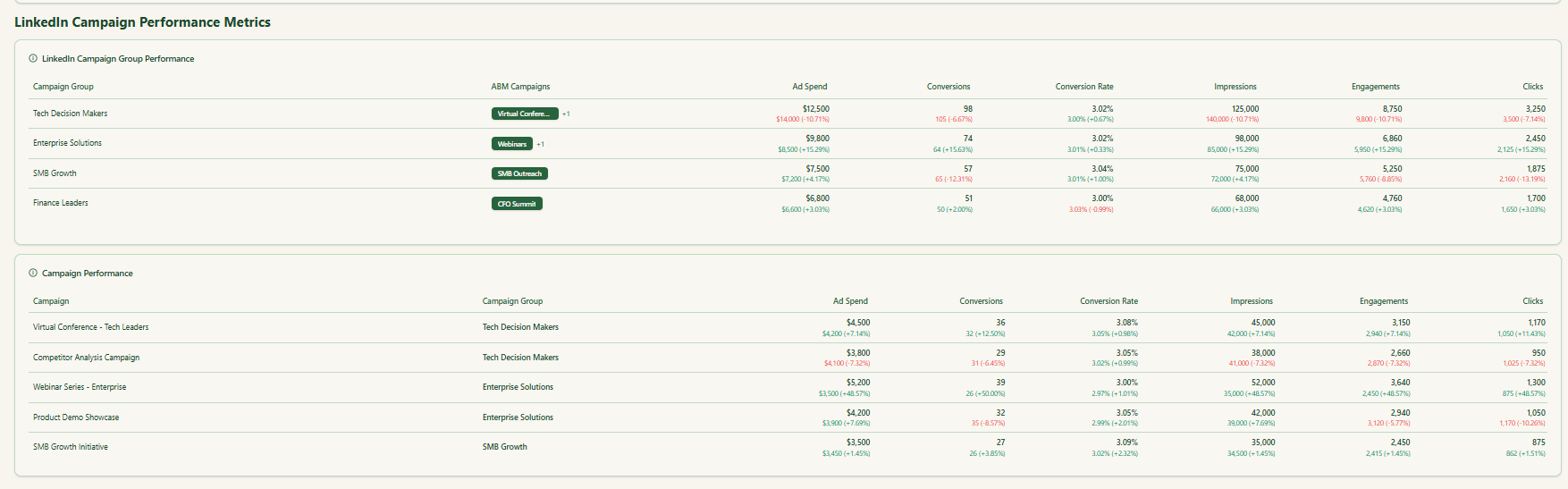
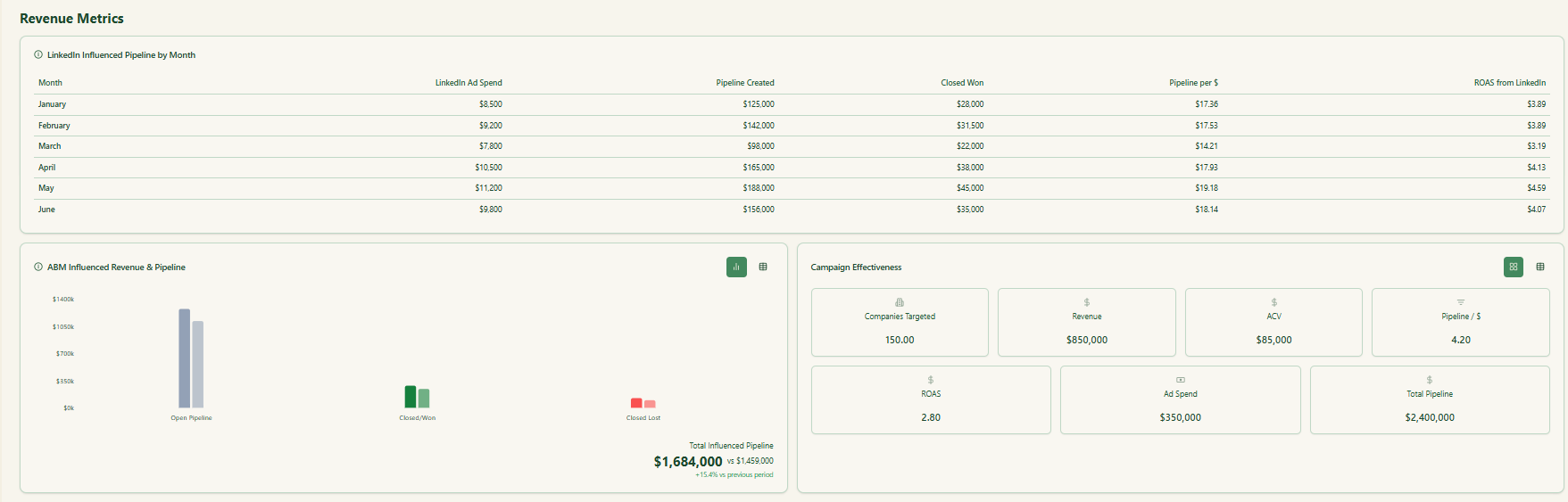
Thought Leader Ads are often undervalued because last-touch models credit branded search or direct traffic instead.
ZenABM connects exposure, engagement, stage movement, and revenue at the account level, giving TLAs the credit they deserve within your ABM system.
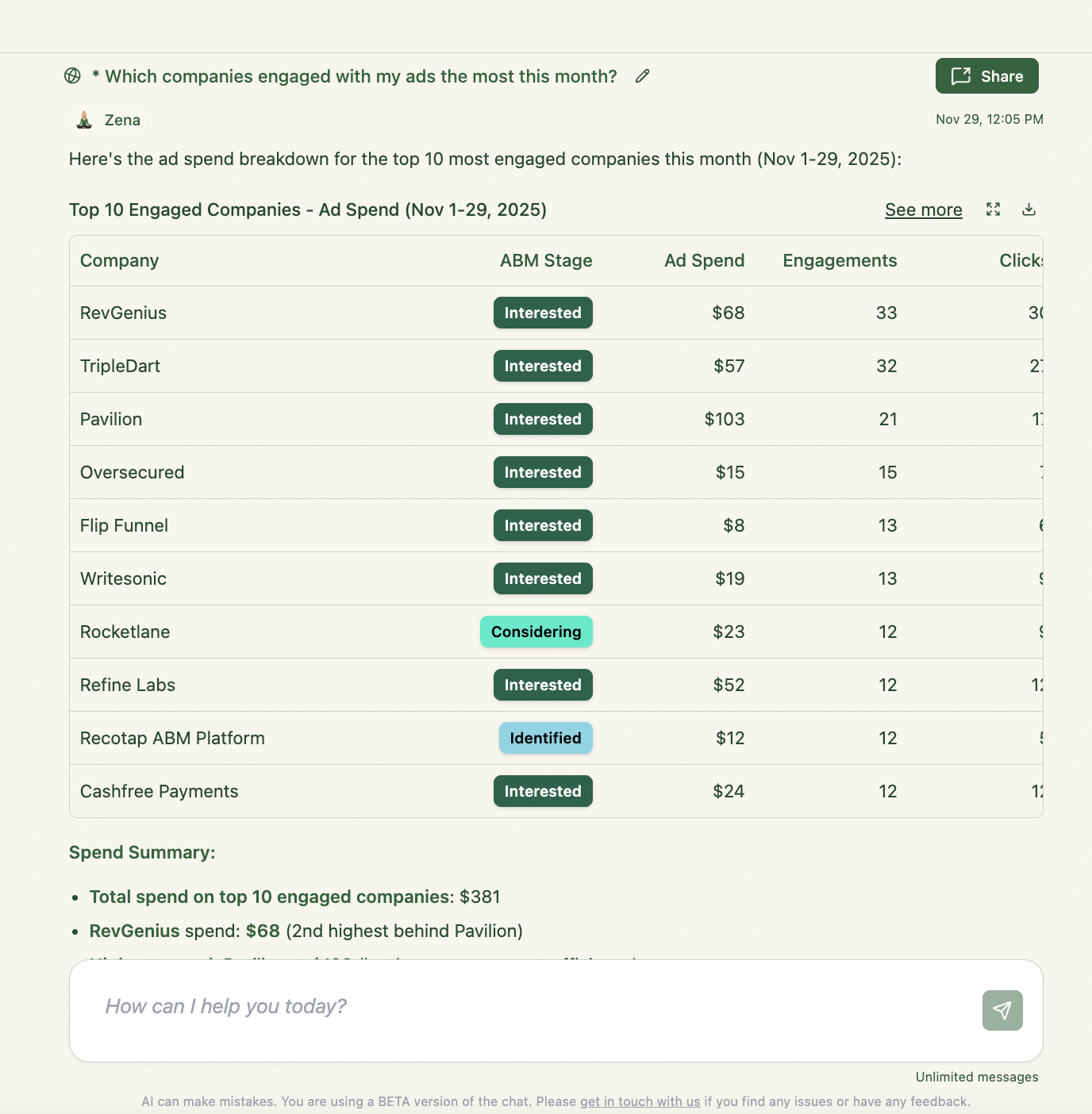
If you do not want to dig through dashboards, you can ask Zena, ZenABM’s AI analyst:
Instead of interpreting inflated LinkedIn metrics, you get company-level answers tied to revenue.
In short: LinkedIn Thought Leader Ads are powerful for ABM when measured correctly. ZenABM ensures they become a structured first-party signal that drives prioritization, routing, and pipeline, not just engagement noise.
TLAs work when you stop trusting the Performance tab and start measuring what actually matters: landing page clicks, target-account engagement, and assisted pipeline.
Once you hit the right budget floor and attribution stack, TLAs become a scalable way to warm accounts before heavier conversion plays.
If you want to see which target companies are truly engaging with your Thought Leader Ads (not just “17% CTR” vibes), ZenABM’s company-level tracking makes that painfully clear.
Try ZenABM for free (37-day free trial) or book a demo now to know more!
The CTR shown in LinkedIn’s Performance tab for TLAs includes all engagement (likes, comments, shares, profile clicks, “see more” expansions) – not just landing page clicks. To find the real click-through rate, go to the Engagement tab and divide Clicks to Landing Page by total impressions. Real landing page CTRs for well-performing TLAs typically range from 0.5% to 3%.
Gabriel Ehrlich recommends a minimum of $2,000-$3,000/month to see meaningful results. At a median CPC of $2.29, this delivers roughly 900-1,300 landing page clicks per month – enough volume to test and iterate. Below $2,000/month, the data is too sparse for reliable optimization decisions.
Company lists for ABM, almost without exception. Match rates for company lists are 80-90% with LinkedIn company page URLs included. Contact list match rates average 40-60% due to the email mismatch problem (LinkedIn email vs. work email). The exception: very large contact databases (50K+) from channels where LinkedIn emails are likely.
Use UTMs to track traffic from each TLA to your landing pages. Add a self-reported attribution open text field on your demo/signup forms. Implement LinkedIn Conversion API for aggregate conversion data. Account for view-through attribution – buyers who saw your TLA and converted later through another channel. See LinkedIn ABM ROI measurement for the full framework.
