



LinkedIn ads are expensive.
That does not mean they do not work.
They fail when B2B SaaS teams optimize for cheap leads and last-click conversions instead of the right accounts and the right buying committees.
This playbook draws on years of running LinkedIn ads for SaaS companies, reviewing hundreds of accounts inside ZenABM, and helping teams turn paid social from a cost center into a pipeline channel.
It is the playbook for SaaS marketers who want LinkedIn ads to actually move the pipeline, not just impressions.
If you sell SaaS to a buying committee with an ACV that justifies the CPM, LinkedIn ads should help you reach the whole account, educate the market, build trust, capture intent, and influence the pipeline.
With ZenABM, you can also see which companies engage with each ad and whether those accounts are turning into opportunities.
If you only read this section, here is the short version of the playbook.

For a deeper view of the channel mechanics, the ABM on LinkedIn playbook is the foundation of everything covered below.
The honest answer is usually yes, but not always, and not the way most teams run them.
Run LinkedIn ads if:
Be careful with LinkedIn ads if:
Philip Ilic, who runs LinkedIn ads for over 150 B2B SaaS companies, put this clearly in a recent post.
“The #1 reason your LinkedIn ads will fail has nothing to do with me. I’ve run campaigns for over 150 B2B SaaS companies. When they work, I get the credit. When they flop, I get the blame. But honestly, advertising will just amplify what you already have. If you’ve nailed product-market fit, your positioning is tight, you know your ICP, LinkedIn ads will help you scale and I’ll look like a genius. But if your offer is weak, your messaging is confusing, or you’re targeting the wrong crowd then we will probably struggle.” – Philip Ilic in LinkedIn post

The bottom line: LinkedIn ads are not expensive if they help open a high-value pipeline. They become expensive when teams use them to chase low-intent leads that sales never follows up on.
The most common mistake is treating LinkedIn like a single-stage lead-gen channel.
For B2B SaaS, the smarter model is full-funnel ABM, with creative and audiences mapped to where each account currently is.

Most experts now agree that a rigid TOFU-BOFU-MOFU approach doesn’t work anymore.
The three major layers of the modern funnel:
A well-structured ABM program inside ZenABM is built around clear account stages: Identified, Aware, Interested, Considering, Selecting, Customer, and Closed-lost.
Example thresholds:

ZenABM tracks these stages automatically from LinkedIn engagement and CRM data, providing the foundation for internal and investor-facing reporting.

Tim Davidson, founder of B2B Rizz, calls this kind of clarity the antidote to “in theory” marketing.
“In theory marketing is the silent killer of many B2B marketing campaigns. You’ve heard the symptoms. You’ve probably said some of the symptoms. In theory we can sell to that persona. In theory we can go after that industry. In theory we can target bigger companies. But when you’re running paid campaigns with limited budget, limited time, and limited people, every in theory idea just waters down what actually works from who is paying you.” – Tim Davidson on LinkedIn
Here is the campaign structure for SaaS teams to start with.
Each group has a clear job, a clear audience, and clear creative rules.
| Campaign Group | Audience | Message | Formats | CTA |
|---|---|---|---|---|
| Cold ICP Awareness | Named accounts or ICP segments | Pain points, market mistakes, category education | Thought Leader Ads, single image ads, document ads | Read, learn, see benchmark, view framework |
| Warm Consideration | Accounts with clicks, engagements, website visits, document opens, or video views | Product relevance, use cases, customer proof | Case study ads, demo GIFs, product screenshots, TLAs, document ads | See how it works, watch demo, join webinar, book consultation |
| Bottom of Funnel and Pipeline Acceleration | High-intent accounts, demo and pricing page visitors, open opportunities | ROI, implementation, security, comparison, social proof | Customer stories, founder and executive TLAs, comparison ads, ROI ads | Book demo, talk to sales, build a business case |
| Closed-Lost and Reactivation | Closed-lost accounts showing renewed engagement | What changed, new feature, objection handling | Revisit, see what changed, talk again |
Ali Yildirim from Understory shared a useful note on how Campaign Manager itself is moving in this direction.
“LinkedIn is restructuring Campaign Manager to match how other platforms work. Starting in October 2025, campaign groups become campaigns. Campaigns become ad sets. We’ve been organizing campaign groups around broad themes. Demand Capture, Demand Creation, Pipeline Acceleration. Three buckets with campaigns living inside them. The new setup collapses everything up one level. Campaigns become the primary organizing layer, with ad sets nested underneath. Campaign naming matters more now since the themes that used to live in campaign groups need to be reflected in how you name your campaigns.” – Ali Yildirim in his LinkedIn post


Format choice is where most SaaS teams overspend.
The brief from leadership is usually “make a video,” but the data tells a different story.
Based on the ZenABM benchmarks, this is how the main formats compare on a like-for-like basis:
| Format | Median CTR | Median CPC | Best for |
|---|---|---|---|
| Thought Leader Ads | 2.68% | $2.29 | Founder-led POV, trust, demand creation |
| Single image ads | 0.42% | $13.23 | Hooks, diagrams, scalable testing |
| Carousel ads | 0.32% | $13.30 | Step-by-step content, proof carousels |
| Video ads | 0.24% | $15.61 | Warm audiences only |
That gap between Thought Leader Ads and traditional formats is one of the strongest patterns visible in B2B SaaS ad data. TLAs are roughly 77 percent cheaper per landing page click in the ZenABM dataset, and 65 percent of the top performers use first-person voice.
Where each format earns its place:
Most SaaS LinkedIn ads sound the same: “all-in-one platform,” “trusted by,” “scale faster.”
That copy gets ignored.
The angles that consistently work are sharper and more specific.
Angles that work:
Angles to avoid
Some examples of hooks that work well across LinkedIn ABM programs (these are for ZenABM – you can of course take inspiration and draft similar ones for your business/niche):
Gabriel Ehrlich from Remotion captured what bad TLA creative looks like in a recent post about a Mastercard ad he was targeted with.
“I just got targeted with this Thought Leader Ad from Mastercard, and it’s a masterclass in everything you’re doing wrong with TLA. Targeting is way off. I’m not your ICP. The whole post smells of AI – the em dashes, the vocabulary – it’s all AI. What’s the point of the link in comments? If the interview has any meat in it, that ought to be the post itself. The hook is weak. Don’t use hashtags in TLA. Fortunately for Mastercard, they can afford to make dumb mistakes like this. Unfortunately for you, you can’t.” – Gabriel Ehrlich in his LinkedIn post

Targeting is where most SaaS programs leak budget.
The default is to layer too many filters, push the audience under 20,000, and then complain that LinkedIn is expensive.
The right starting point for B2B SaaS LinkedIn ads is the ICP and the account lists.
Some reliable audience sources you can consider:
On top of the account list, layer carefully:
Avoid Audience Expansion for strict ABM, since it pulls the audience away from the accounts that actually matter. Avoid over-narrowing too early: broad enough to reach the buying committee, narrow enough to stay inside ICP.


From the latest ZenABM benchmarks across LinkedIn ABM programs:
Real budgets depend on a handful of variables: account list size, CPM in your geo, target frequency, funnel stage, ACV, sales cycle length, and competition for the same audience.
The key principle: do not scale the budget without scaling account coverage or improving message quality.
Spend plus coverage drives more pipeline, but efficiency comes from targeting, messaging, offer, landing page, and follow-up.
If those are weak, more spending just buys more impressions for a campaign that does not work.
For a deeper view of the numbers, the ZenABM LinkedIn ABM benchmarks report has the full picture across spend, account volume, and pipeline.
Free tool: ZenABM’s Free LinkedIn ABM Budget Calculator

This is the part where most B2B SaaS LinkedIn ad programs lose internal credibility.
CMOs ask, “What is the pipeline impact?” and the team comes back with CTR, CPC, and form fills.
Stop stopping at:
Start tracking:
This is exactly the gap ZenABM was built to close.
ZenABM connects LinkedIn ad engagement with CRM opportunities, so SaaS teams can report pipeline and revenue influence, not just ad metrics.



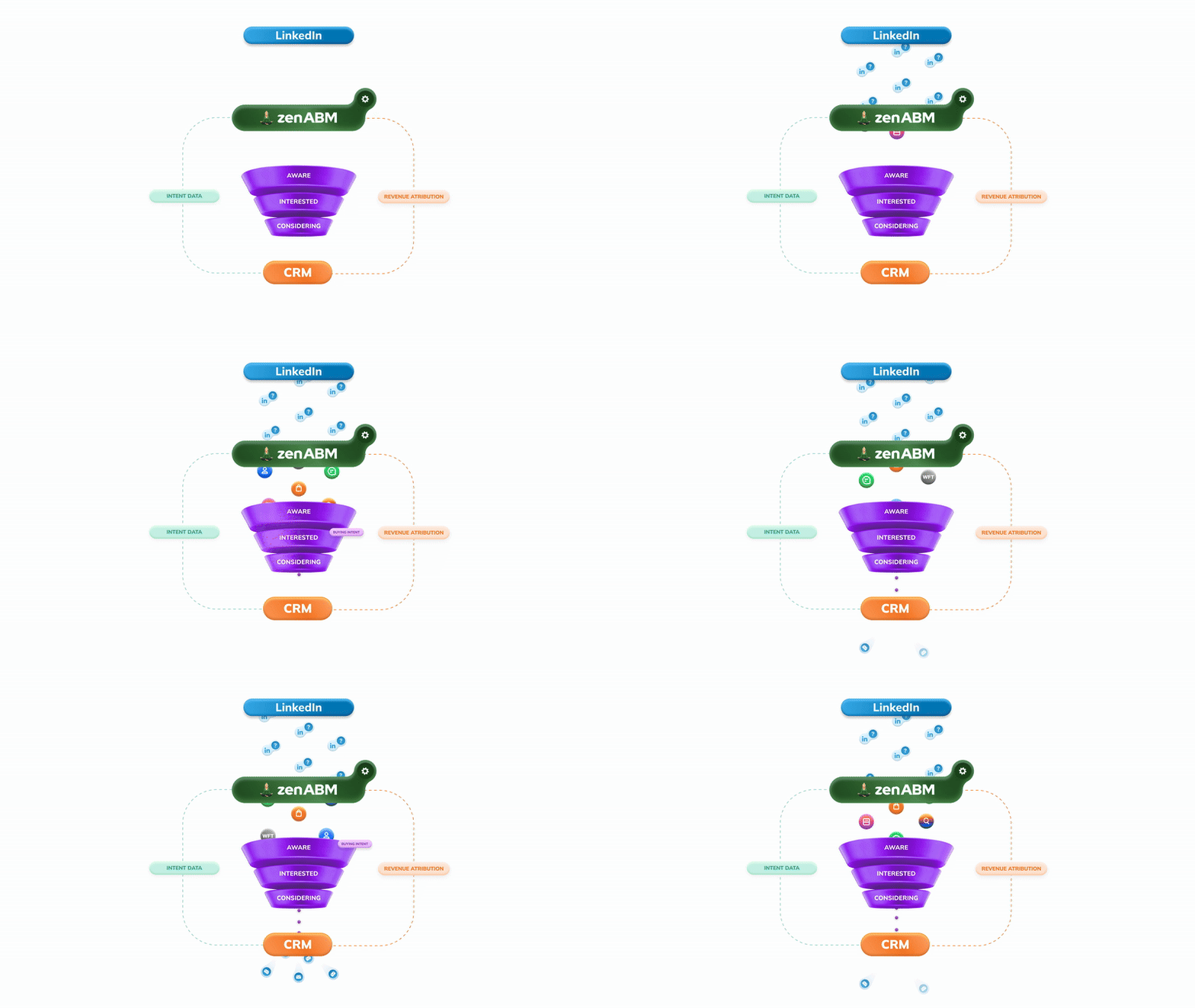
LinkedIn ad engagement should trigger sales action, because without that follow-up, teams are paying to warm up accounts that no one ever calls.
Example workflows:
Topic-level personalization beats engagement-level personalization.
Do not say “I saw you clicked our ad.”
Say something like: “A lot of teams exploring LinkedIn attribution are trying to understand which campaigns actually create pipeline.” That works because it talks about the topic the account just engaged with, not the ad itself.
And ZenABM can help you with it.
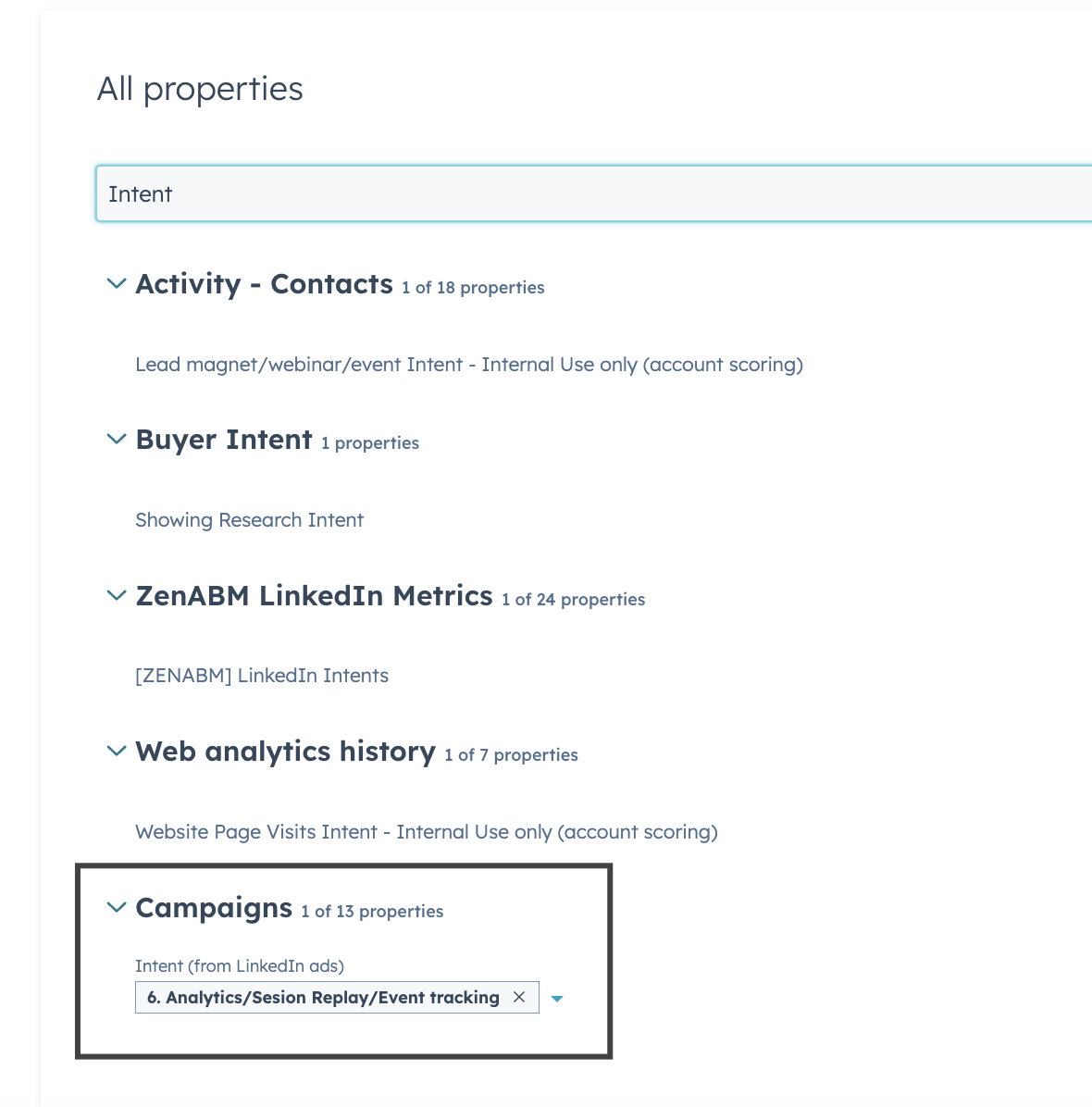
It tracks the ads each company is engaging with and then tags them with the theme called “intent.”
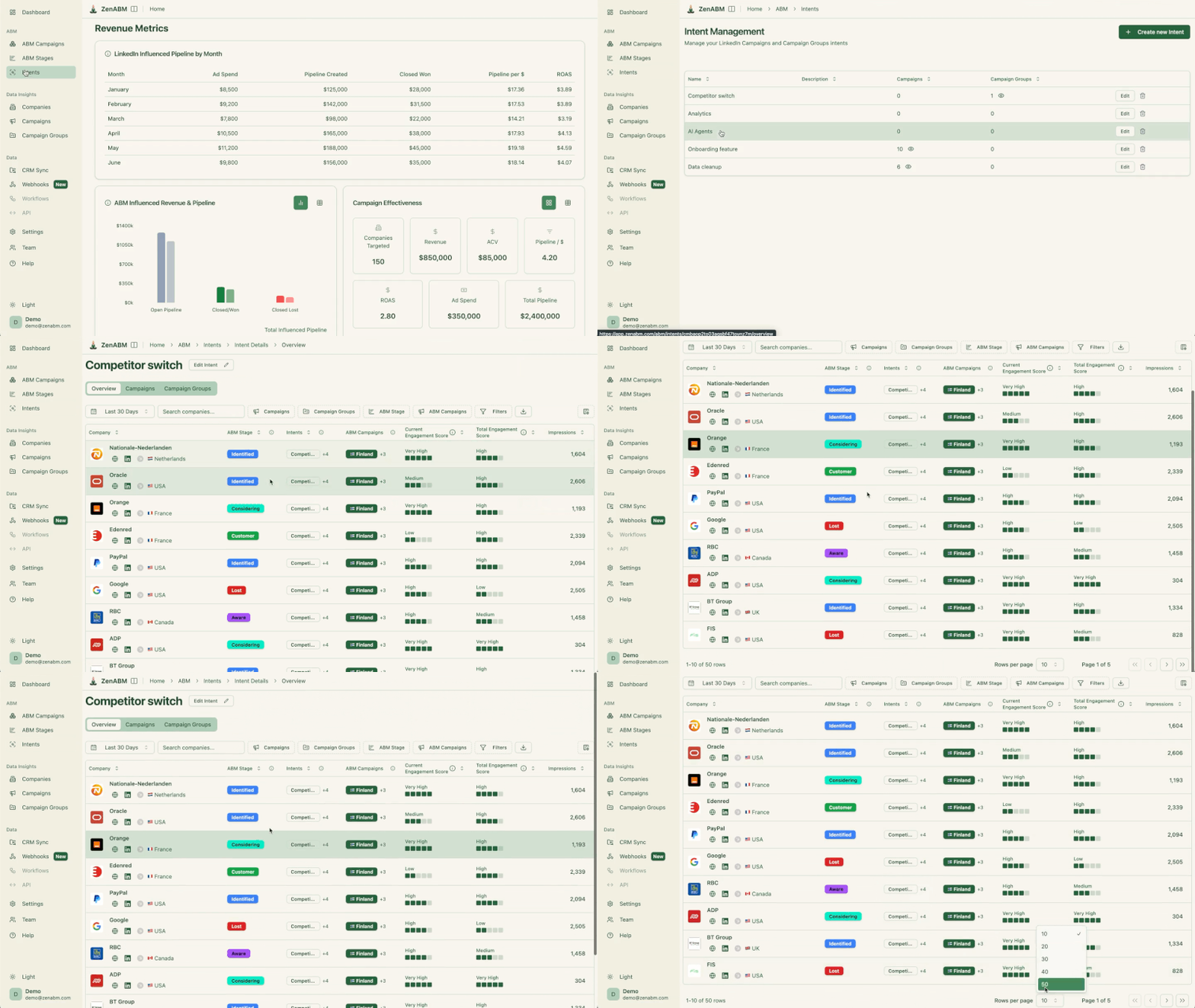
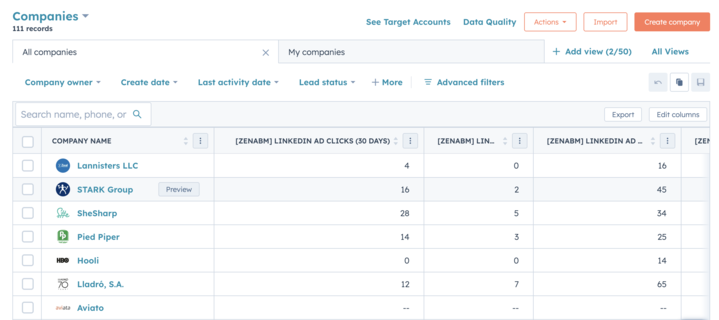
ZenABM then pushes stage, score, intent, campaign names, clicks, and engagements into HubSpot and Salesforce, and triggers Clay, Smartlead, and HeyReach workflows from engaged accounts.

Philip Ilic(described one of the cleanest versions of this combo for B2B SaaS.
The same mistakes appear repeatedly across SaaS LinkedIn ad accounts:
LinkedIn ads do not fail because the platform is too expensive.
They fail because teams measure the wrong things, target the wrong way, and never close the loop with sales.
Run the channel like an ABM program: map creative to account stages, trigger outreach from engagement signals, and report on pipeline movement rather than form fills.
If connecting LinkedIn ad engagement to CRM stages, account intent, and revenue attribution is the gap holding the program back, that is exactly what ZenABM was built for.
And ZenABM tracks other channels also now (Google Ads, Reddit Ads, LLM citations, organic, etc.), to give you an even fuller picture of the buyer journey.
Try ZenABM for free now (37-day free trial) or book a demo to know more!
Yes, when the ACV justifies the CPM, the audience is on LinkedIn, and the team is set up to follow up on warmed-up accounts. They stop being worth it when teams use them as a generic lead-gen channel and judge them by CPL alone.
From the ZenABM benchmarks, the median LinkedIn ABM program spends around $2,700 per month, upper-quartile programs spend around $6,900 per month, and aggressive scale programs run around $20,000 per month. The right number depends on account list size, ACV, and how much of the funnel to cover. The 2026 LinkedIn ABM benchmarks have the full picture.
Thought Leader Ads are the strongest first test for most SaaS companies. In the ZenABM benchmarks, TLAs hit a 2.68 percent median CTR and a $2.29 median CPC, far ahead of single image, carousel, and video. Pair TLAs with single image ads for testing and document ads for benchmark or playbook content.
Stopping at CTR, CPC, and CPL will cost internal credibility fast. Track target account reach, engaged accounts, stage movement, pipeline per dollar spent, and revenue influenced. ZenABM connects LinkedIn ad engagement to CRM opportunities so teams can report pipeline and revenue, not just ad metrics.
Lead gen forms can work for content offers and webinars, but they should not be treated as the primary success metric for SaaS LinkedIn ads. The number that matters is whether engaged accounts move into pipeline, regardless of whether they fill out a form. Account-level engagement plus sales follow-up beats raw form fills almost every time.
