

©2026 ZenABM - All Rights Reserved.


This model also leaves room for some meaningful personalization.
See, when an account engages with a specific ad, you know something about what they care about.
For example, if they clicked on your competitor comparison ad, they are evaluating alternatives.
If they clicked on your onboarding analytics ad, they have an onboarding problem.
If they clicked on your enterprise security ad, compliance or security is on their radar.
This means your outbound messaging can be personalized to the exact pain point they have signalled interest in, instead of a guess or a generic ICP assumption.
The outreach workflow Philip described:
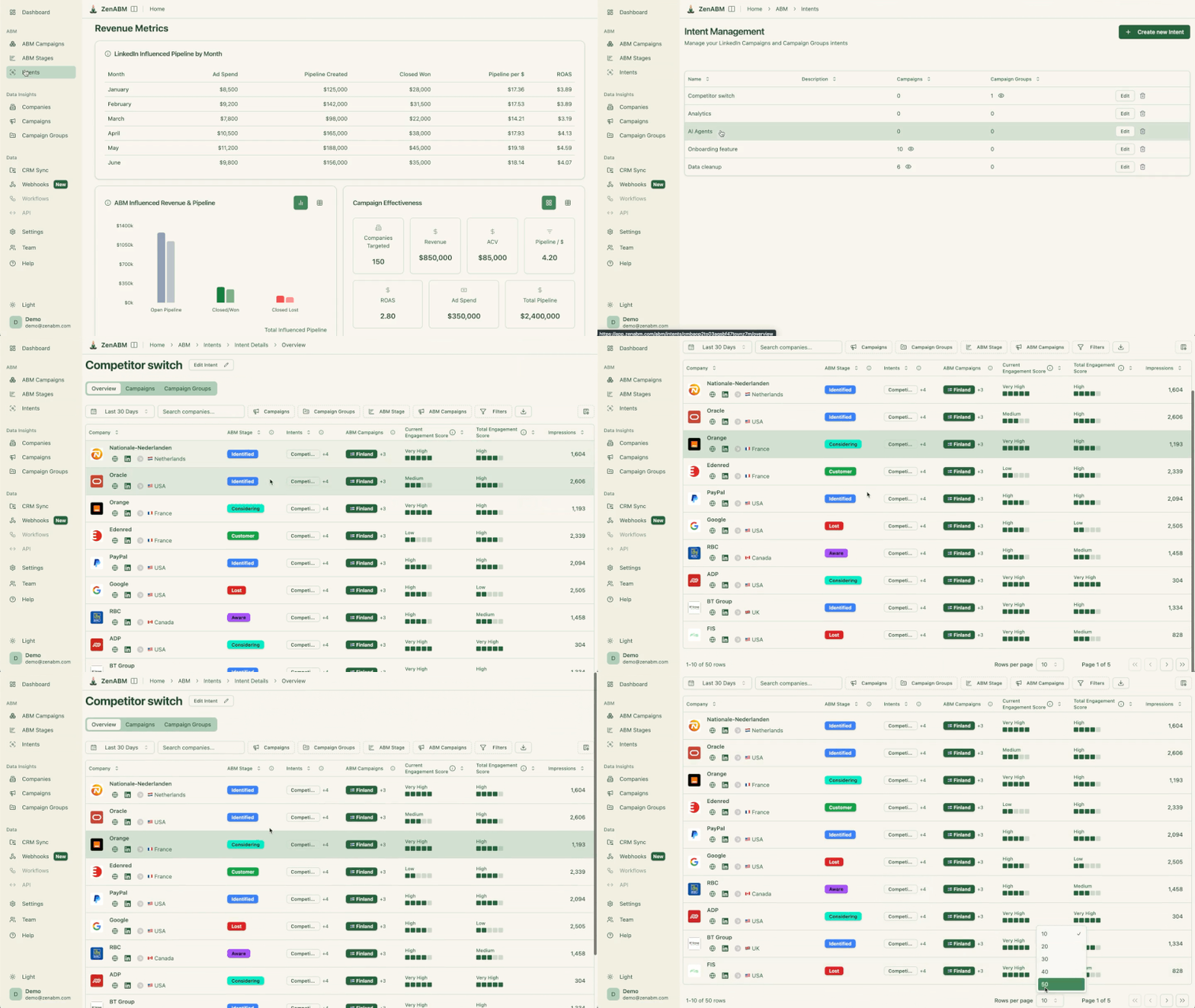


This entire flow can be automated.
Once you set it up, every account that hits your “Interested” threshold gets an outbound sequence triggered within hours (no manual BDR review required).
See the full intent-based outbound guide for the technical setup.

Now, not all ad formats are equally effective at warming accounts for outbound.
Here are Philip’s recommendations based on running this model across multiple B2B SaaS clients:
Philip recommends that TLAs work best for the initial warm-up layer.
This is because they come from a real person, build trust and familiarity, and generate the cheapest cost-per-impression.
Also, TLAs ensure that when your BDR reaches out, there is a face behind the brand that the prospect has already seen.
Resource: The Ultimate Guide to Thought Leader Ads for Account-Based Marketing
Philip adds that once an account has seen two to three of your TLAs, it’s time for single image ads, because mid-funnel is where they perform best.
Reason?
By this point, they know your brand. So, a product-specific single image ad with a clear problem-solution message lands differently than it would cold.
Regarding the best signal, competitor-based intent is the best signal, because accounts that click on your competitor comparison content are, by definition, evaluating their options.
The biggest obstacle to combining LinkedIn ads with outbound GTM is not technical, but organizational.
I mean, in many companies, scenarios like ‘Marketing is running ads to one list, while Sales is prospecting from a different list’ are pretty common.
And this defeats the purpose of account-based marketing.
Sales and marketing alignment is, after all, the very essence of it.

Fixing this requires one shared source of truth for target accounts stored in your CRM, visible to both teams, with account stage data that updates in real time.
At Userpilot, this looks like:

Without this coordination, your LinkedIn ads and outbound GTM motion are not a strategy.
They are two separate activities that occasionally happen to the same companies.
For the full framework on running ABM on LinkedIn, including how to set up sales and marketing alignment, see the ultimate guide.
The biggest takeaway from Philip Ilic’s framework is simple but often overlooked.
LinkedIn ads and outbound are not separate growth channels. They are two parts of the same motion.
Your ads create familiarity and surface buying signals. Your outbound motion converts those signals into conversations.
When these two operate in silos, you waste budget warming accounts only for your BDRs to approach them cold. But when they are coordinated, the dynamic changes entirely.
By the time outreach happens, the prospect has already seen your brand multiple times, understands the problem you solve, and is far more receptive to a conversation.
The real shift here is moving from ICP-based outreach to signal-based outreach.
Instead of contacting accounts simply because they fit your target profile, you reach out because they have demonstrated intent through their engagement with your LinkedIn ads.
That is the difference between guessing who might be interested and responding to people who already are.
Of course, executing this model requires one key capability: knowing which accounts are actually engaging with your ads and when they cross the intent threshold.
Platforms like ZenABM make that coordination possible by turning LinkedIn ad engagement into account-level signals that sales can act on immediately.
Try ZenABM for free now (37-day free trial) or book a demo to know more!
Run LinkedIn ads to your target account list for 2-3 weeks first. Monitor which accounts engage (3+ clicks, high-intent page visits). When an account hits your “Interested” threshold, trigger an automated outbound sequence personalized to the content they engaged with. The key is using the LinkedIn ad signal to inform the outbound timing and messaging – not running them in parallel with no connection.
I use 3+ clicks in 30 days combined with at least one high-intent page visit (pricing, demo, competitor comparison) as the trigger. Within 48-72 hours of hitting that threshold. The faster you follow up while the intent signal is hot, the higher the conversion rate.
ZenABM for detecting which companies are engaging with your LinkedIn ads, Clay for enrichment and finding contacts, and SmartLead or HeyReach for running the outbound sequences. ZenABM fires a webhook to Clay when an account hits your engagement threshold – the rest is automated.
ZenABM tracks which specific campaigns and ad types each account engaged with. When the webhook fires to Clay, it includes the campaign names. Your Clay table can use those campaign names to select the appropriate outbound messaging template – one for each job-to-be-done or pain point your ads address.
Running LinkedIn ads in isolation is one of the most common ABM mistakes.
The accounts you are warming up with paid media are the same accounts your sales team should be reaching out to, but in most companies, marketing and sales are working completely different lists and have no idea what the other is doing.
The result?
You pay to warm up an account, then your BDR cold-messages them as if they have never heard of you.
This post covers the key lessons from Philip Ilic’s session at the ZenABM ABM Bootcamp 2026 (watch the full session recording on YouTube here) on how to build a combined LinkedIn ads and GTM outbound strategy motions so that paid and outbound reinforce each other rather than working in silos.
Philip, by the way, is an experienced LinkedIn ads specialist (5+ years experience with LinkedIn ads and 9+ years in the paid ads space) and the founder of Kiin.co LinkedIn ads agency.

In case you want a quick rundown:

LinkedIn ads and outbound GTM motions target the same people.
The question is whether they are coordinated or accidental.
Philip’s core framework: ads go first, and outbound follows the signal. You do not reach out to an account just because they match your ICP. You reach out because they have demonstrated engagement with your ads, like clicking through, visiting high-intent pages, or interacting with your content multiple times. That is a fundamentally different and stronger trigger than “they are in our target account list.”

The LinkedIn ads and GTM outbound sequencing model works in three phases.
Phase 1 is about warming the account with LinkedIn ads by running your cold layer campaigns to your target account list.
Goal: get each account to 50+ impressions.
Remember: Do not reach out yet. You are building familiarity, not converting.
The second step involves detecting signals.
Start with monitoring which accounts are moving from Aware to Interested (defined as 3+ clicks in 30 days plus at least one high-intent page visit).
Accounts in the ‘interested’ stage are not cold anymore.
Finally, when an account hits the Interested stage, initiate the outbound sequence.
Also, the messaging must reference what they have been engaging with, and not a generic cold pitch.
Go for awarm outreach like this (it converts at 3-5x the rate of a cold one):
“I noticed a few people from your team have been looking at how we handle onboarding analytics for product teams – happy to share what we have seen work for companies in your space.”
More on outreach-personalization in the next section.
This model also leaves room for some meaningful personalization.
See, when an account engages with a specific ad, you know something about what they care about.
For example, if they clicked on your competitor comparison ad, they are evaluating alternatives.
If they clicked on your onboarding analytics ad, they have an onboarding problem.
If they clicked on your enterprise security ad, compliance or security is on their radar.
This means your outbound messaging can be personalized to the exact pain point they have signalled interest in, instead of a guess or a generic ICP assumption.
The outreach workflow Philip described:
This entire flow can be automated.
Once you set it up, every account that hits your “Interested” threshold gets an outbound sequence triggered within hours (no manual BDR review required).
See the full intent-based outbound guide for the technical setup.
Now, not all ad formats are equally effective at warming accounts for outbound.
Here are Philip’s recommendations based on running this model across multiple B2B SaaS clients:
Philip recommends that TLAs work best for the initial warm-up layer.
This is because they come from a real person, build trust and familiarity, and generate the cheapest cost-per-impression.
Also, TLAs ensure that when your BDR reaches out, there is a face behind the brand that the prospect has already seen.
Resource: The Ultimate Guide to Thought Leader Ads for Account-Based Marketing
Philip adds that once an account has seen two to three of your TLAs, it’s time for single image ads, because mid-funnel is where they perform best.
Reason?
By this point, they know your brand. So, a product-specific single image ad with a clear problem-solution message lands differently than it would cold.
Regarding the best signal, competitor-based intent is the best signal, because accounts that click on your competitor comparison content are, by definition, evaluating their options.
The biggest obstacle to combining LinkedIn ads with outbound GTM is not technical, but organizational.
I mean, in many companies, scenarios like ‘Marketing is running ads to one list, while Sales is prospecting from a different list’ are pretty common.
And this defeats the purpose of account-based marketing.
Sales and marketing alignment is, after all, the very essence of it.
Fixing this requires one shared source of truth for target accounts stored in your CRM, visible to both teams, with account stage data that updates in real time.
At Userpilot, this looks like:
Without this coordination, your LinkedIn ads and outbound GTM motion are not a strategy.
They are two separate activities that occasionally happen to the same companies.
For the full framework on running ABM on LinkedIn, including how to set up sales and marketing alignment, see the ultimate guide.
The biggest takeaway from Philip Ilic’s framework is simple but often overlooked.
LinkedIn ads and outbound are not separate growth channels. They are two parts of the same motion.
Your ads create familiarity and surface buying signals. Your outbound motion converts those signals into conversations.
When these two operate in silos, you waste budget warming accounts only for your BDRs to approach them cold. But when they are coordinated, the dynamic changes entirely.
By the time outreach happens, the prospect has already seen your brand multiple times, understands the problem you solve, and is far more receptive to a conversation.
The real shift here is moving from ICP-based outreach to signal-based outreach.
Instead of contacting accounts simply because they fit your target profile, you reach out because they have demonstrated intent through their engagement with your LinkedIn ads.
That is the difference between guessing who might be interested and responding to people who already are.
Of course, executing this model requires one key capability: knowing which accounts are actually engaging with your ads and when they cross the intent threshold.
Platforms like ZenABM make that coordination possible by turning LinkedIn ad engagement into account-level signals that sales can act on immediately.
Try ZenABM for free now (37-day free trial) or book a demo to know more!
Run LinkedIn ads to your target account list for 2-3 weeks first. Monitor which accounts engage (3+ clicks, high-intent page visits). When an account hits your “Interested” threshold, trigger an automated outbound sequence personalized to the content they engaged with. The key is using the LinkedIn ad signal to inform the outbound timing and messaging – not running them in parallel with no connection.
I use 3+ clicks in 30 days combined with at least one high-intent page visit (pricing, demo, competitor comparison) as the trigger. Within 48-72 hours of hitting that threshold. The faster you follow up while the intent signal is hot, the higher the conversion rate.
ZenABM for detecting which companies are engaging with your LinkedIn ads, Clay for enrichment and finding contacts, and SmartLead or HeyReach for running the outbound sequences. ZenABM fires a webhook to Clay when an account hits your engagement threshold – the rest is automated.
ZenABM tracks which specific campaigns and ad types each account engaged with. When the webhook fires to Clay, it includes the campaign names. Your Clay table can use those campaign names to select the appropriate outbound messaging template – one for each job-to-be-done or pain point your ads address.
