Enterprise ABM GTM Strategy: The BAM Framework for B2B Companies That Want Pipeline, Not Just Impressions
Emilia Korczynska
Share this post
Most ABM programs fail not because of bad ads, wrong targeting, or weak creative, but due to about half of the leads generated never being touched by sales.
So, it’s not a campaign problem, but the lead-nurturing system that follows.
This is the central insight from Kamil Rextin’s session at the ZenABM ABM Bootcamp 2026 (watch the full session on YouTube here), and it reframes what “improving ABM performance” actually means.
Kamil is the founder of 42 Agency, a demand gen, RevOps, and GTM strategy firm with 8 years of experience and clients across B2B SaaS, enterprise software, and services.
This post covers all he shared in the bootcamp regarding his enterprise ABM GTM strategy, why he is a self-claimed “generational hater” for enterprise tools like 6sense, Terminus, etc., and how ZenABM is different.
Deanonymize LinkedIn ad engagements, get intent, accounts scoring (starting @$59/month!)
Most ABM programs fail because the system after engagement is broken, not because ads or targeting are bad.
In one audit, 42 Agency found 47% of ABM leads were never touched by sales due to broken routing.
“A channel cannot outperform the system it sits in.” Fix routing, follow-up ownership, and speed before optimizing campaigns.
ABM is fundamentally marketing + sales alignment around target accounts, not just a media strategy.
Kamil’s BAM framework (Build, Activate, Measure) treats enterprise ABM as a GTM system, not a tactics pile.
Build: Define ICP from closed-won data, learn from closed-lost reasons, tier accounts beyond revenue, use AI to mine deal patterns.
Activate: Orchestrate across the whole buying committee, not just the champion.
CTV can be a strong enterprise activation channel but should run via dedicated CTV platforms, not LinkedIn Audience Network.
Private dinners/events often outperform expensive conference booths for enterprise pipeline.
In mature enterprise ABM, BDRs should operate as marketing’s activation arm, triggered by engagement signals.
Measure: Stop using CPL and last-touch attribution as the truth. They capture harvest, not trust-building.
Use holdout tests to measure true ABM lift (80% exposed, 20% control).
Track account stage progression as a leading indicator before pipeline shows up.
Don’t kill CTV because CPL is “infinity”; that metric is wrong for the channel.
Kamil critiques 6sense/Demandbase/Terminus because teams use intent as strategy, and signals are often too generic/black-box.
Best practice: use third-party intent as one input, layered with first-party signals (LinkedIn engagement, site visits, CRM history).
RevOps requirements: fast routing (hours, not days), weekly sales-marketing account reviews, segmented closed-lost reactivation, shared pipeline metrics.
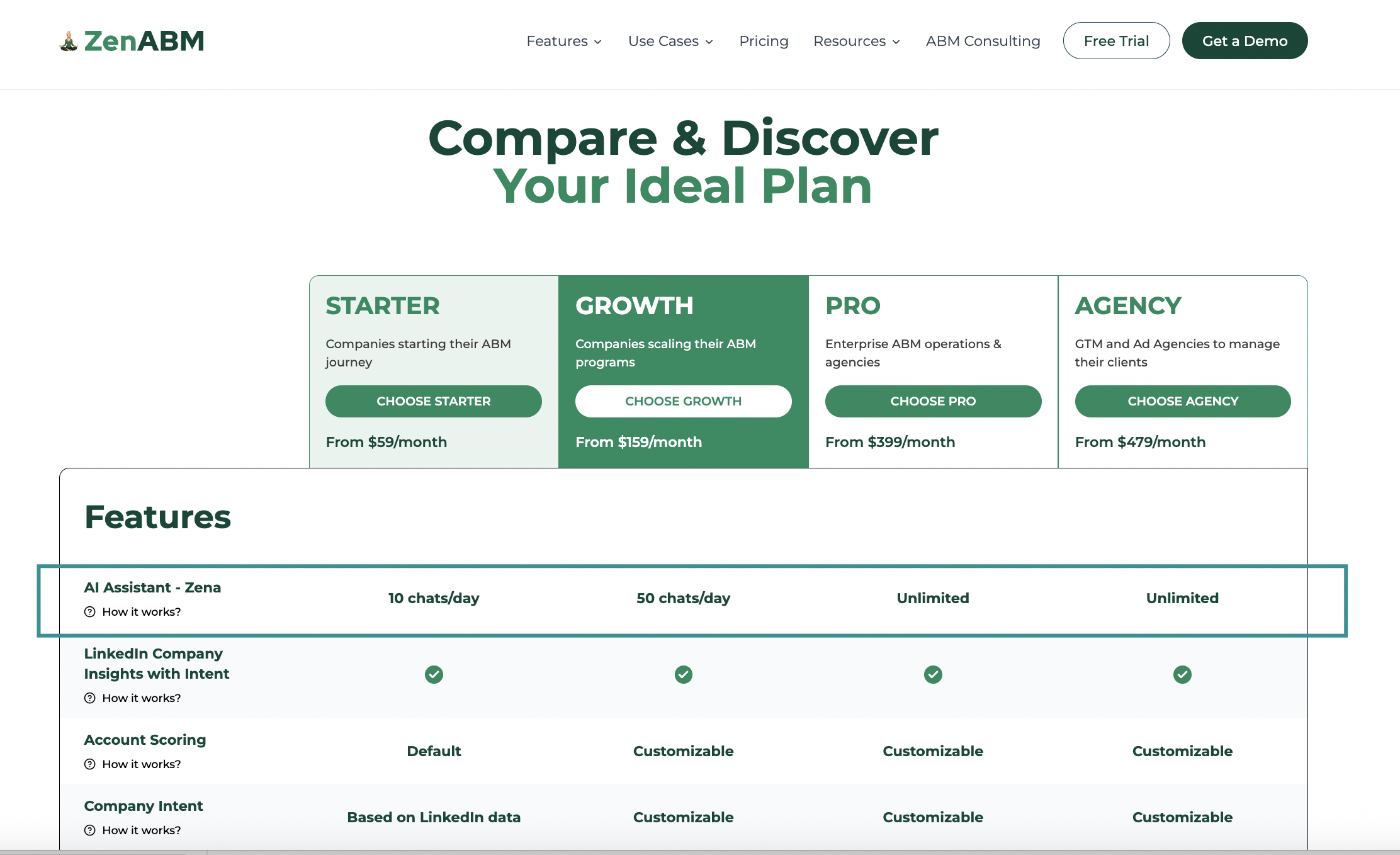
ZenABM supports the system by providing gives account-level LinkedIn ad engagement, pipeline dashboards, account scoring, ABM stages, CRM sync, first-party qualitative intent, automated BDR assignment, custom webhooks, impression-capping via company exclusion, job-title analytics, and AI chatbot Zena for natural language analytics starting at just $59 per month.
ZenABM pricing
The System Problem: Why Fixing Your Channels Will Not Fix Your ABM
“A channel cannot outperform the system it sits in.”
This is Kamil’s core thesis, and the data from hirs client work backs it up.
While auditing one client’s ABM program, 42 Agency discovered that 47% of leads generated were never touched by sales (no, it wasn’t bad timing, or wrong message – those leads had been completely ignored!).
The campaigns were generating leads at a reasonable cost. but the routing system for those leads to the right sales rep was broken.
So, the fix wasn’t better creative, higher bids, or a new ad format, but the routing logic between marketing and sales.
Once that was resolved, the same campaigns with the same budget produced dramatically more pipeline.
This is why Kamil frames ABM as a system problem first and a channel problem second.
Before you optimize your LinkedIn targeting or test new TLA content, please audit your system:
what happens to an engaged account after it hits your “Interested” threshold?
Who follows up?
How quickly?
With what message?
What happens if they do not respond?
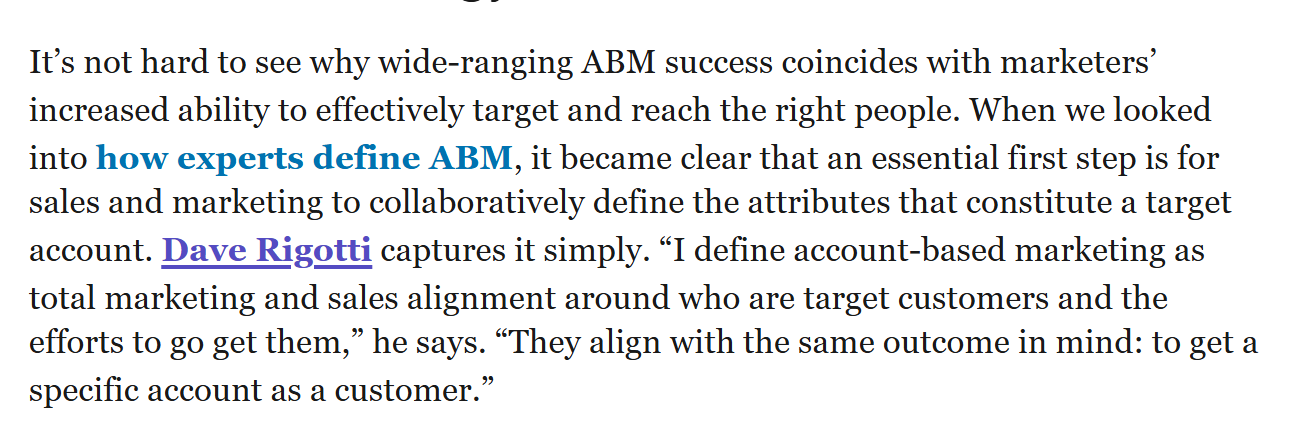
In fact, this observation reminds me how important it is to revisit the boring-classical definitions of account-based marketing popularized by ABM veterans like Dave Rigotti “I define account-based marketing as total marketing and sales alignment around who are target customers and the efforts to go get them.”
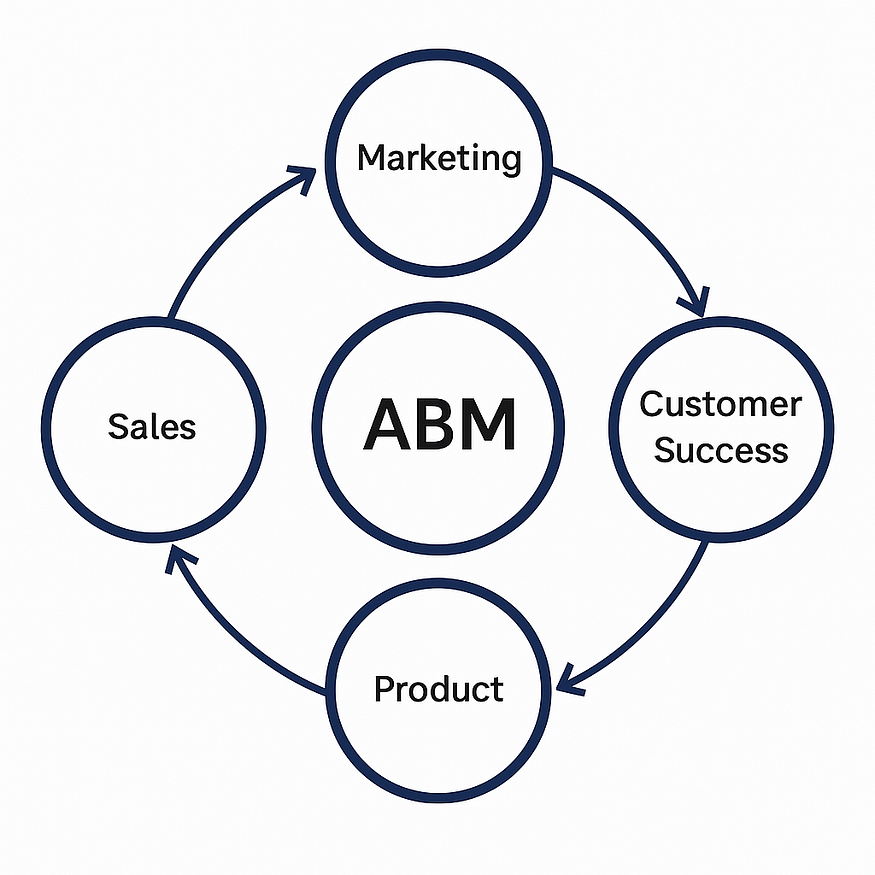
B2B ABM experts like Dave Rigotti explain that marketing and sales alignment is not just beneficial to ABM but the very essence of it.
In fact, ABM theory goes on to include departments like customer success and product management in the loop too!
This is why ZenABM hosts multiple marketing and sales alignment features:
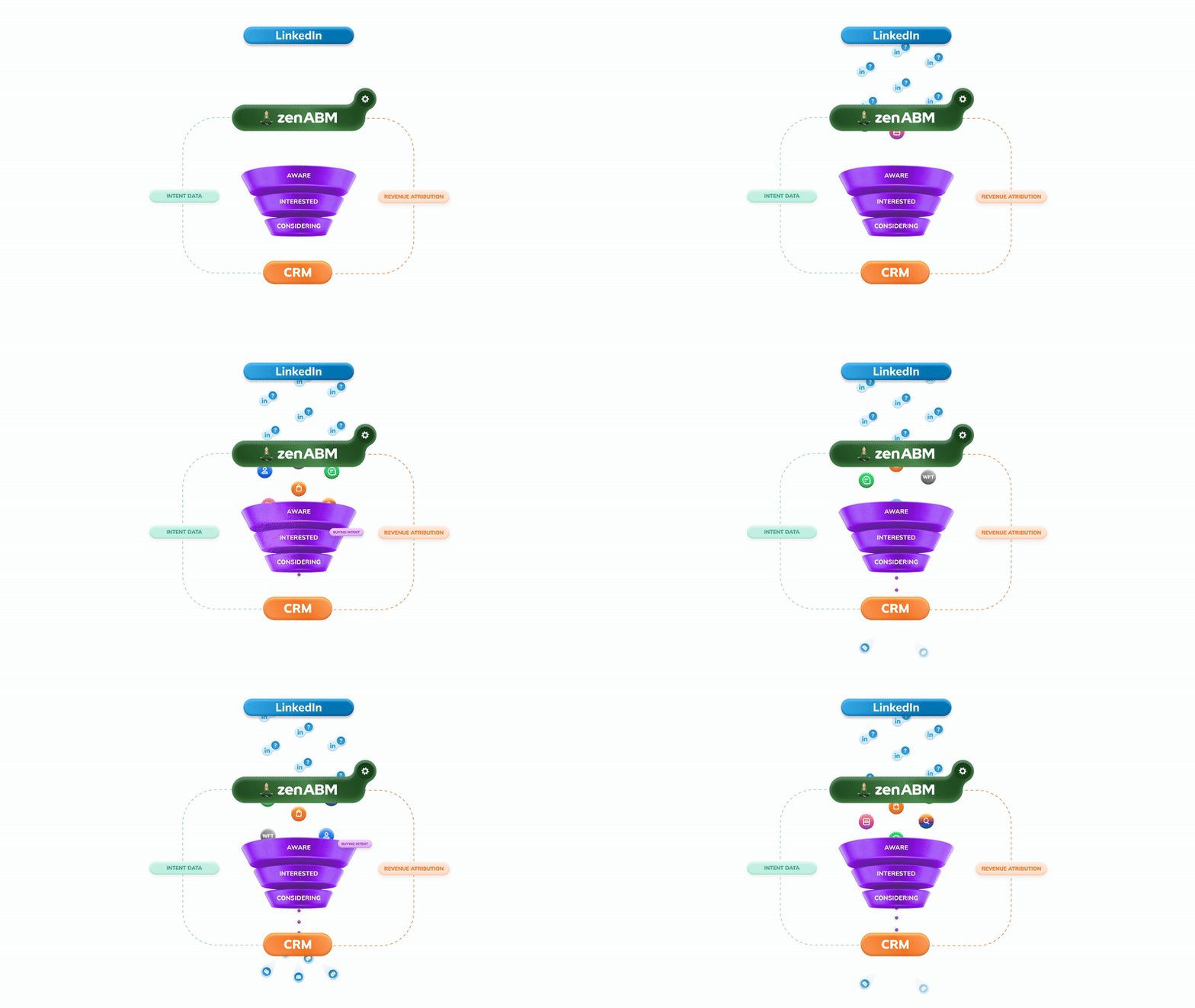
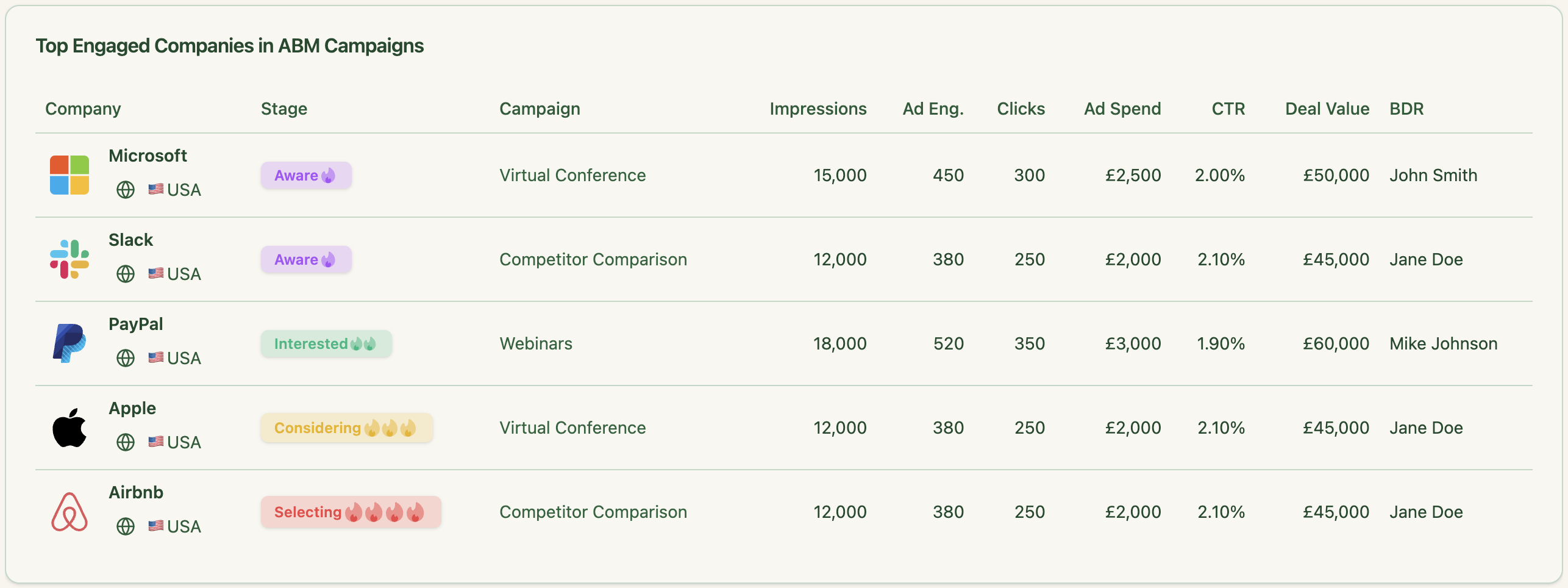
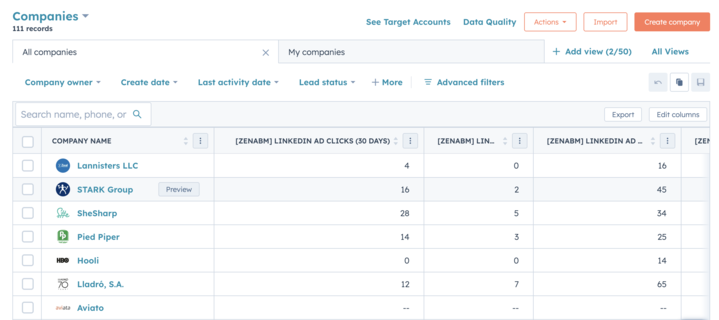
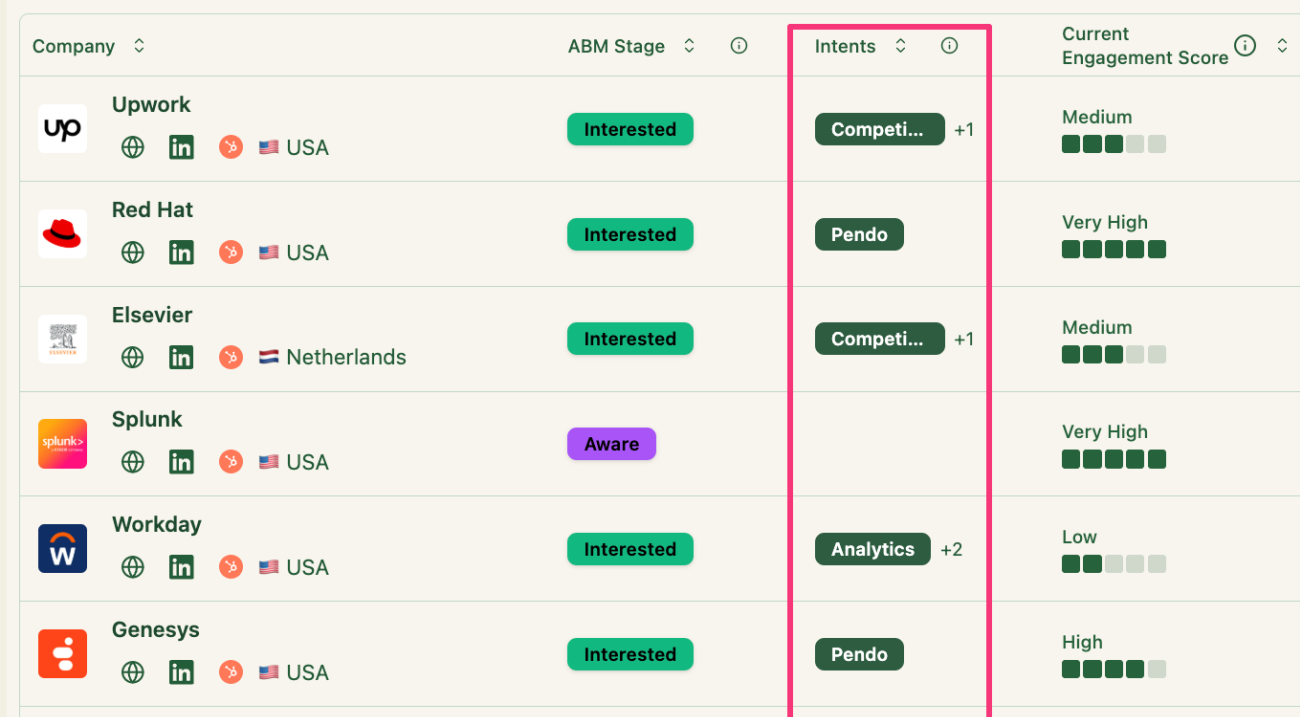
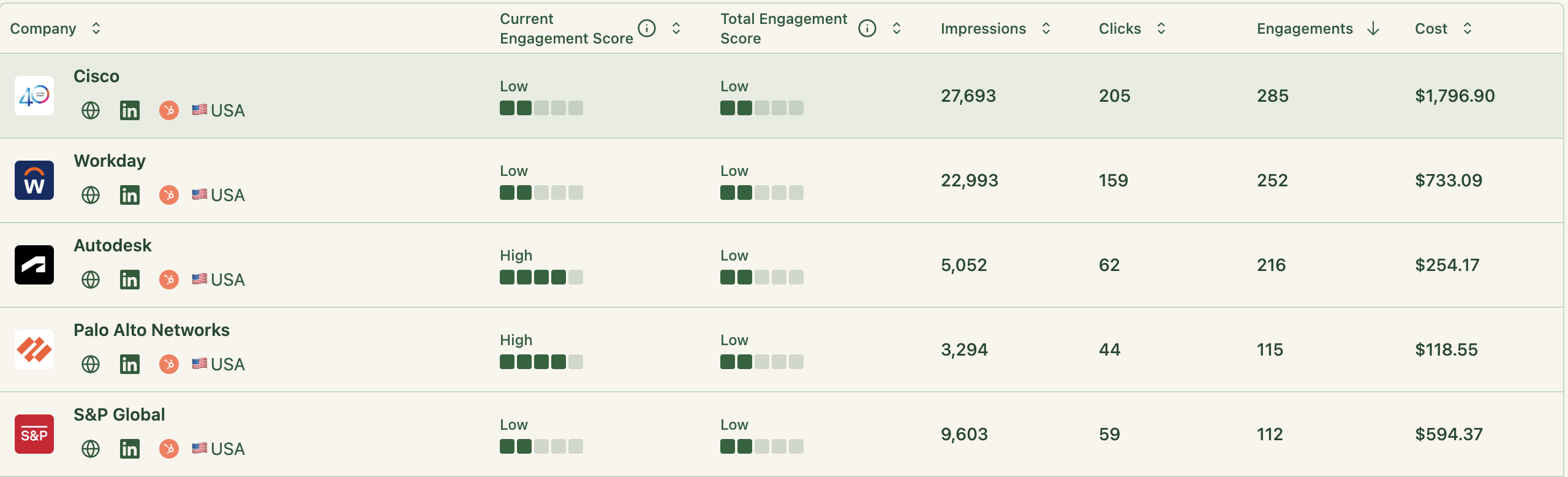
ZenABM not only pulls LinkedIn ad engagement data for each company from the LinkedIn ads official API, but also pushes that data to your CRM as a company property.
ZenABM dashboard showing company-level ad engagement data per campaign by pulling first-party intent signals from the LinkedIn APILinkedIn ad data pushed to company lists in the HubSpot CRM using ZenABM
ZenABM scores accounts and assigns them ABM stages based on LinkedIn ad engagement data and CRM data and then assigns hot accounts to BDRs in your CRM, ensuring your sales team is always immediately aware of hot accounts that they must reach out to.ZenABM assigns your BDRs to accounts in the “interested” st
ZenABM helps BDRs enhance their outreach messaging by tracing company-level ad engagement activity for each ad theme.
The BAM Framework: Build, Activate, Measure
Kamil’s BAM framework (credited to Pete Caputa) provides a structure for thinking about enterprise ABM GTM strategy as a system rather than a collection of tactics.
B – Build: The Foundation
Build is the audience and data foundation.
Most companies treat it as a one-time task.
Build a list, upload it to LinkedIn, move on, but, it should be an ongoing process.
Key Build principles:
Reverse-engineer your ICP from closed-won data, not just theoretical personas. “Marketing Mary, 24 years old, loves yoga” is not an ICP. Which industries have the highest win rates? Which company sizes have the shortest deal cycles? Which job titles appear as champions in every won deal? Answer these with data from your CRM, not assumptions from a brainstorm.
Closed-lost accounts are underused signal. Why did you lose? Budget? Product gap? Champion left? Went dark? Each reason points to a different reactivation strategy and a different lookalike segment to avoid or prioritize.
Use AI to analyze closed-won deal communications. Feed AI your call recordings, email threads, and deal notes for won accounts. Ask it to identify the patterns: what language did they use when they were ready to buy? What objections appeared in every conversation? What was the typical event that accelerated the deal?
Tiering goes beyond revenue. Tier accounts by: potential revenue, product fit, historical performance of similar accounts, and strategic value (does winning this account open a vertical or use case you want to develop?).
A – Activate: Coordinating Across All Stakeholders
Most ABM teams focus 90% of their attention on Activate that involves running campaigns, writing sequences, and booking events.
Kamil’s point: Activate is only as effective as the Build phase that precedes it and the Measure phase that follows it.
Key Activate principles for enterprise ABM:
Enterprise ABM requires orchestrating touchpoints across all buying committee members, not just the direct buyer. CFO, procurement, finance, legal, and technical evaluators all need to see your message. LinkedIn targeting to just the champion misses the 70% of the buying committee who also influence the decision.
CTV as an underused enterprise activation channel. Connected TV (Hulu, Netflix, Paramount via programmatic platforms) reaches buying committee members when they are not on LinkedIn or at their desk. CPMs are 50% cheaper than LinkedIn feed. View rate is 100% because nobody can skip CTV ads. 42 Agency measured 8x higher conversion to opportunity for accounts that saw CTV advertising vs. a control group that did not. One client of Kamil said verbatim: “I saw you during a sports thing on TV and your ad came up.” By the way, CTV runs through platforms like Stackadapt, not through LinkedIn’s LAN.
Private events beat conference booths. A $5,000-$10,000 private dinner for 20-30 target account decision makers generates more pipeline than a $75,000 conference booth. This is because the environment creates real conversations rather than badge scans.
BDR/SDRs reporting to marketing in enterprise ABM. In a mature enterprise ABM program, BDRs function as the activation arm of marketing, not sales. They are deployed based on marketing signals (which accounts are engaged, which message landed, which decision makers are active) rather than working cold lists independently.
M – Measure: Beyond CPL and Last-Touch Attribution
They apply performance marketing metrics (cost per lead, demos booked, last-touch attribution) to a channel that does not work like performance marketing.
Kamil’s reframe:
Attribution captures the harvest. When someone fills out a form, that is when attribution fires. But the trust-building that made them fill out the form started weeks or months earlier with the ads they saw, content they read, conversations at events they attended, etc. Last-touch attribution gives credit to the thing that triggered the form submission, not to the 15 things that built the trust to do it. This reminds me of a hilarious Reddit post that said “last-touch attribution is marketing’s flat Earth theory.”
Use holdout tests to measure true lift. Divide your target account list: 80% receive your full ABM activation stack (LinkedIn ads + CTV + BDR outreach), and 20% receive nothing. Measure the difference in opportunity creation rate, velocity, and win rate. The difference is your true ABM lift, not what any attribution model shows you.
Measure account progression as a leading indicator. How many accounts moved from Aware to Interested? From Interested to Considering? These stage progressions happen weeks to months before pipeline shows up. They are your early warning system for whether the program is working.
Do not kill CTV because CPL is infinity. CTV is not a direct response channel. Nobody clicks on a streaming ad. Measuring CTV on CPL is like measuring a billboard on click-through rate – the metric is wrong for the channel.
Kamil Explains the Problem with 6sense, Demandbase, and Terminus
Kamil is direct about why he does not lead with third-party intent platforms: “They promise to tell you who is in-market based on intent signals. The problem is the signals are too black-box and too generic.”
The core issue: intent data from these platforms typically comes from website bidstream data.
A company visits a website with an ad tag, the platform infers intent.
When the platform tells you “Microsoft is in-market for CRM software,” Microsoft has 100,000 employees globally.
Anyone from Microsoft could be the source of the signal.
The right use of third-party intent data: as one input into your account scoring model, layered on top of first-party data (your LinkedIn ad engagement, website visits, CRM history). An account with 3 clicks on your LinkedIn ads, 2 visits to your pricing page, and a 6sense intent signal is very different from an account with only the 6sense signal.
Pro Tip: As we just discussed, enterprise tools like 6sense, Terminus, and the like rely on third-party keyword surge data, which often surfaces early-stage curiosity rather than true buying intent and typically comes at an added cost.
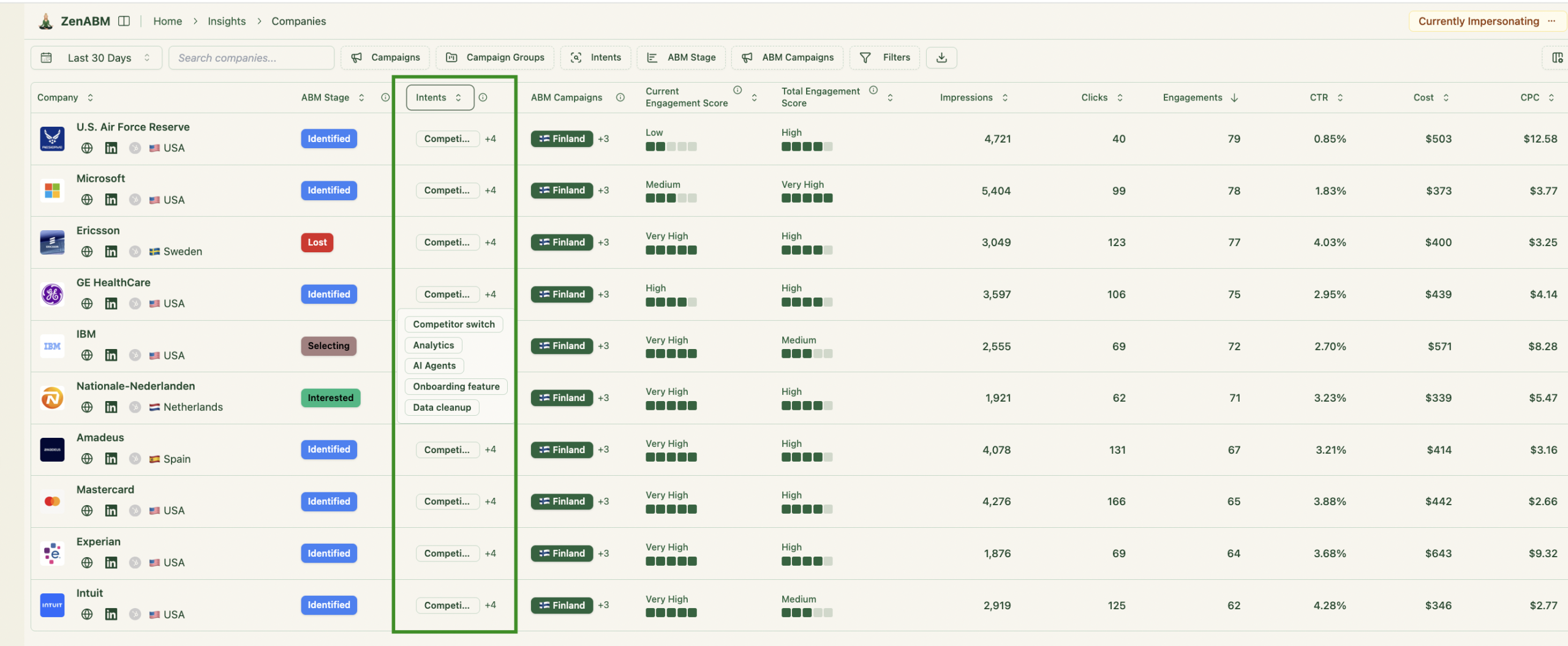
ZenABM takes a different approach by capturing first-party qualitative intent through company-level LinkedIn ad engagement. Campaigns can be tagged by theme, allowing ZenABM to group companies by what messaging they respond to. This reveals not just who is engaging, but why.
Hot lead routing rules that get high-engagement, high-fit accounts to the right AE within hours, not days. If an account hits your “Interested” threshold and the BDR follow-up takes 4 days, you have a system problem that no amount of creative optimization can fix.
Weekly sales and marketing sync on the prioritized account list. Which accounts moved stages this week? Which accounts should sales focus on? What messaging did the engaged accounts respond to, and how should that inform the sales conversation?
Closed-lost accounts in re-engagement campaigns, segmented by reason for loss. “Budget timing” accounts go into a re-engagement campaign for 6 months later when the budget cycle resets. “Product gap” accounts go into a watch list for when the feature ships.
Marketing and sales measured on the same goals. If marketing is measured on impressions and sales is measured on meetings booked, you will always be at odds. Pipeline influenced and pipeline per dollar spent are metrics that both teams own.
Get the first-party LinkedIn engagement data that makes your enterprise ABM GTM system work
As we just discussed, Enterprise ABM rarely fails because of weak ads or imperfect targeting.
It fails because engagement does not reliably turn into action, and that is a systems problem: routing, prioritization, follow-up ownership, and measurement.
ZenABM helps you operationalize enterprise ABM as a GTM system by connecting first-party LinkedIn engagement to account scoring, stages, CRM workflows, and revenue reporting.
Turn LinkedIn Engagement Into a Trustworthy First-Party Signal (Not a Black Box)
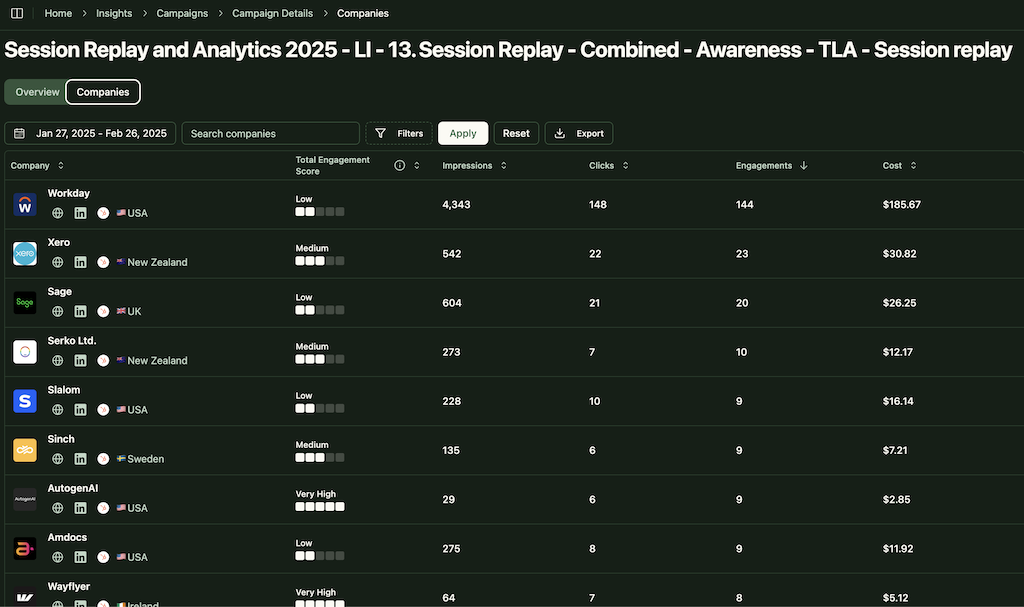
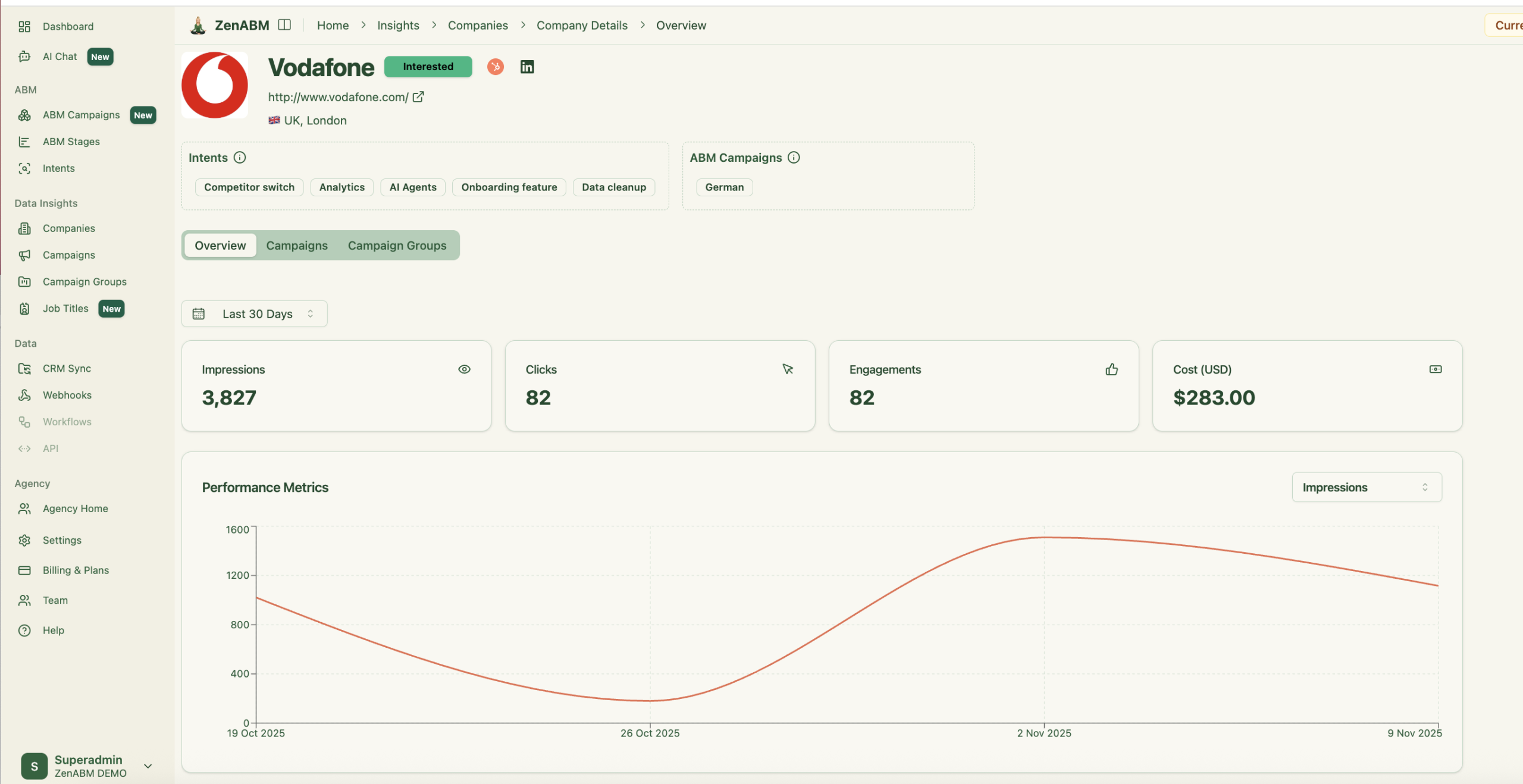
ZenABM dashboard showing company-level ad engagement data per campaign by pulling first-party intent signals from the LinkedIn APICompany-level LinkedIn ad engagement data for each campaign for a selected time period in ZenABM
ZenABM connects to the official LinkedIn Ads API and captures account-level engagement across your campaigns so you can see which target companies saw, clicked, and engaged with your ads. This gives enterprise ABM teams a first-party, action-ready signal that is far more operational than generic third-party intent flags.
Because this is first-party data from LinkedIn’s environment, it avoids the uncertainty that comes with probabilistic deanonymization approaches that often produce mixed coverage and precision.
Fix the “Leads Never Touched” Problem With Real-Time Scoring and Account Timelines
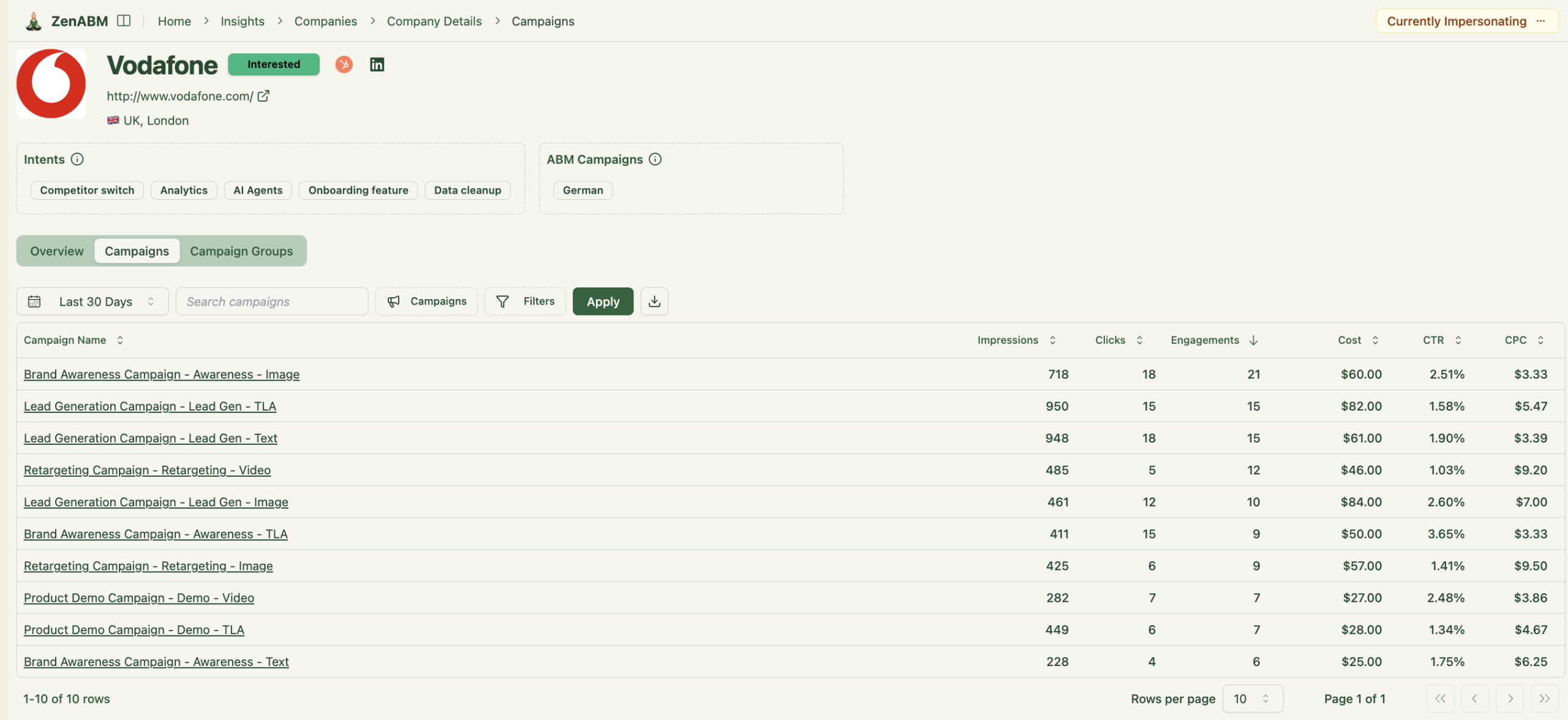
Enterprise ABM collapses when an engaged account is not followed up quickly and consistently. ZenABM solves this by turning engagement into a real-time score and a clear account timeline so RevOps and sales can see what happened, when it happened, and what should happen next.
Company-level engagement timeline in ZenABMCompany-level engagement overview showing all campaigns that were part of the journey
Instead of treating engagement as a dashboard metric, ZenABM makes it a GTM control surface. You can prioritize accounts that show meaningful intent, identify patterns across stakeholders, and prevent high-fit accounts from silently falling through routing gaps.
Operationalize ABM Stages So “Interested” Actually Means Something
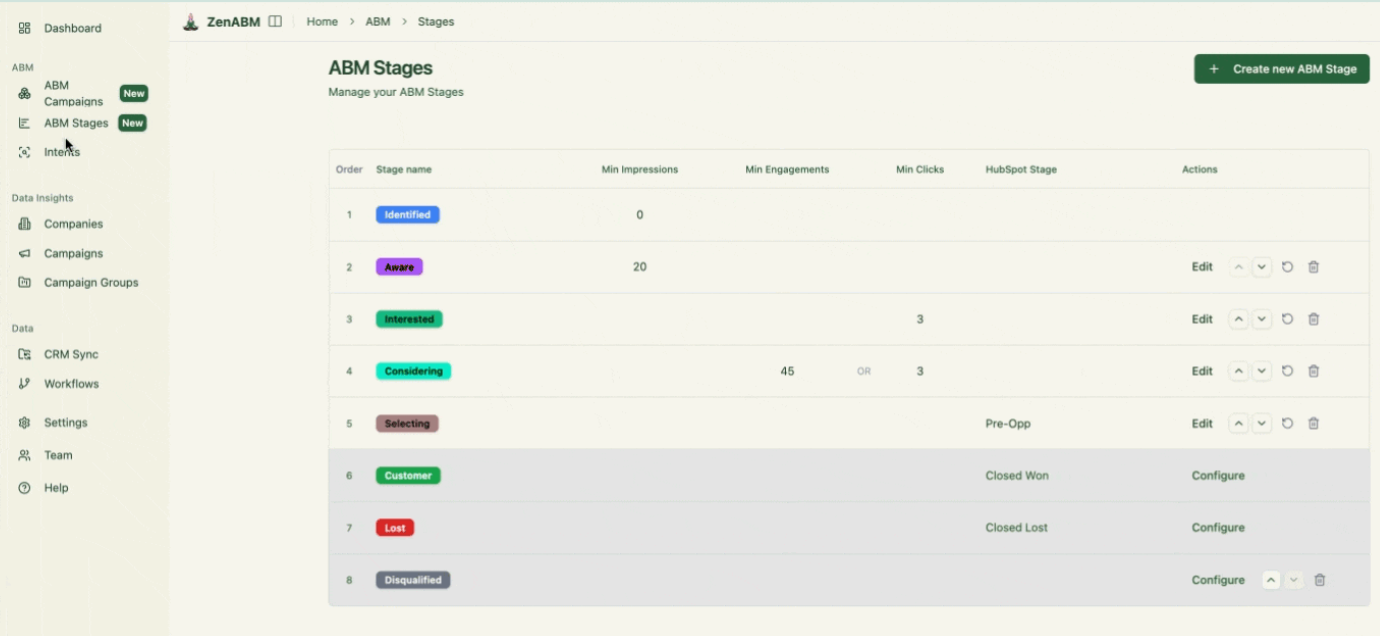
ZenABM lets you define stages such as Identified, Aware, Engaged, Interested, and Opportunity, then automatically places accounts in the right stage using engagement scores and CRM data.
This matters because stage movement is the leading indicator enterprise ABM teams actually need. It also creates accountability: once an account hits “Interested,” the system should enforce what happens next.
Close the Loop With CRM Sync and Automated Routing Workflows
ZenABM integrates bi-directionally with CRMs like HubSpot and adds Salesforce sync on higher tiers. LinkedIn engagement flows into the CRM as company-level properties, so sales can see why an account is prioritized and act on it fast.
LinkedIn ad data pushed to company lists in the HubSpot CRM using ZenABM
Once an account crosses your threshold, ZenABM can update the stage to Interested and automatically assign a BDR.
ZenABM assigns hot accounts to BDRs in the “interested” stage
Add Message-Level Context With Intent Tagging and Job-Title Analytics
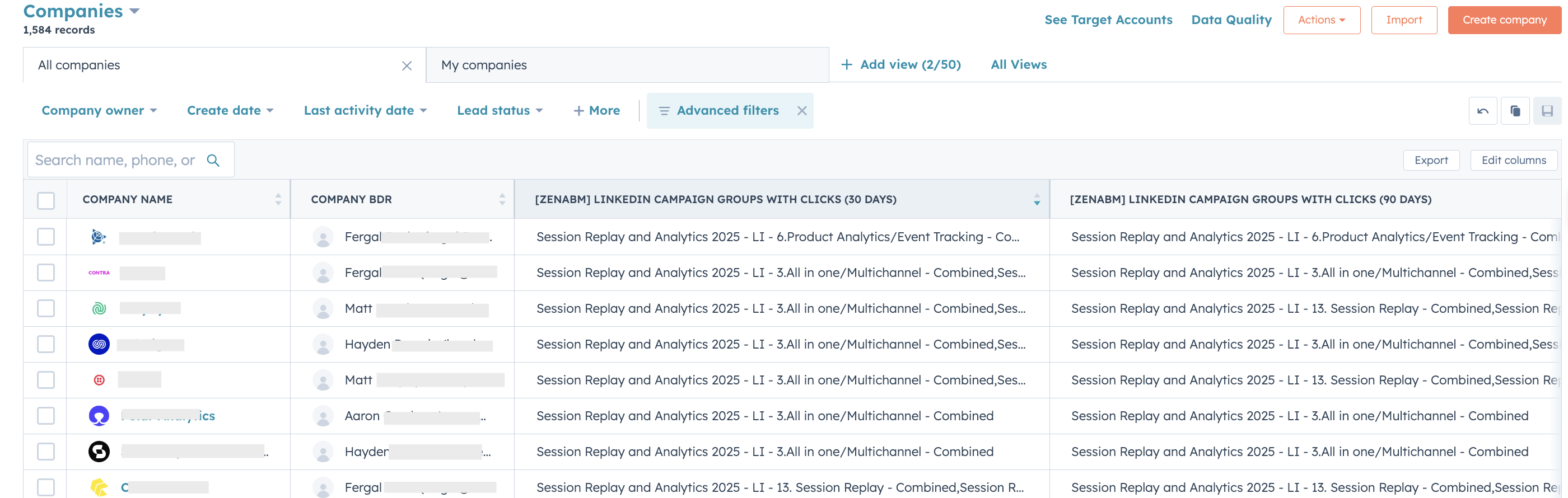
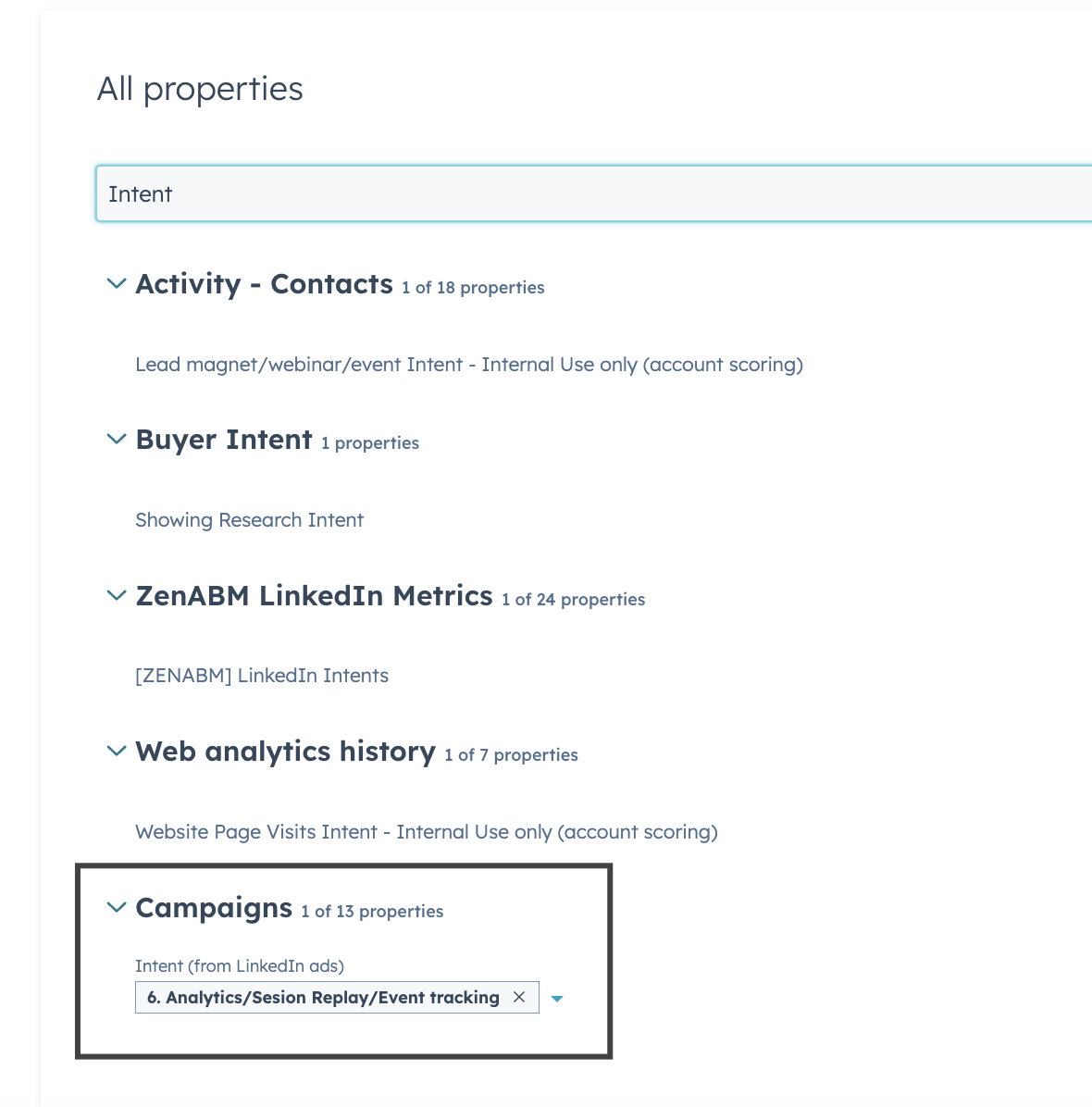
ZenABM helps you see what themes accounts engaged with by tagging campaigns by feature, use case, or offer, then mapping engagement back to accounts.
Pushing intent as property in ZenABM
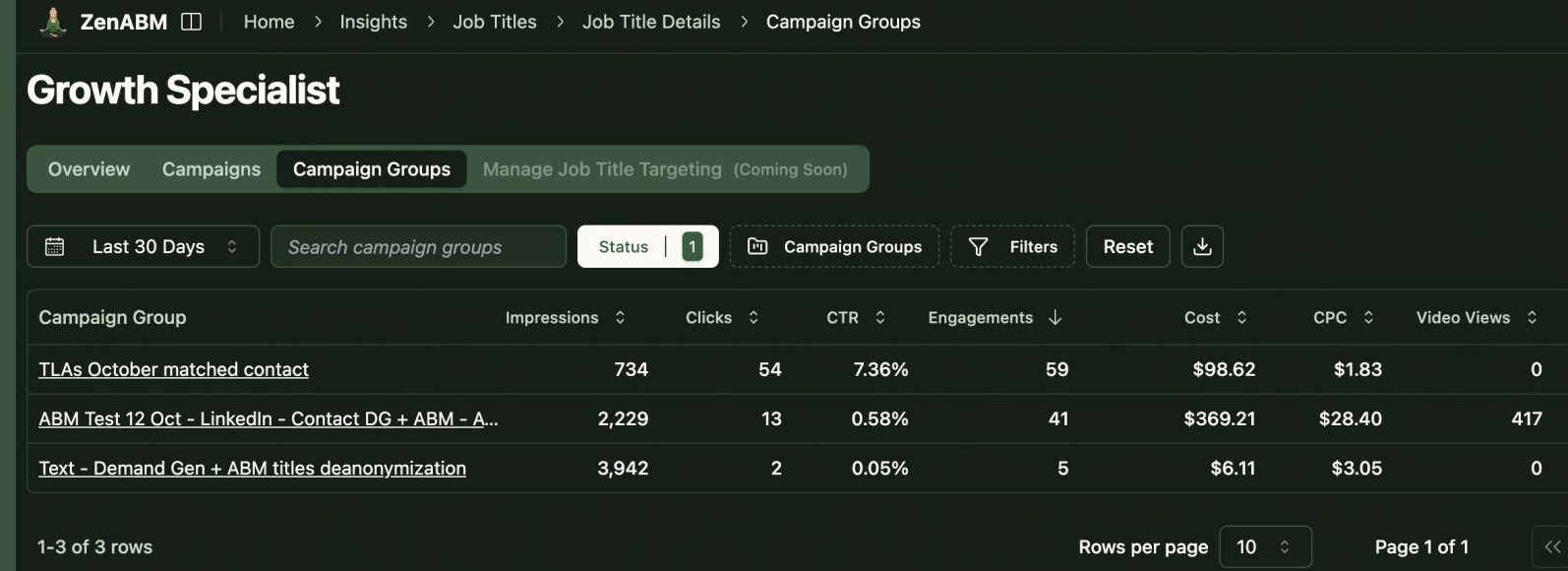
ZenABM also shows which job titles engaged with your creatives.
Measure Enterprise ABM Like a System
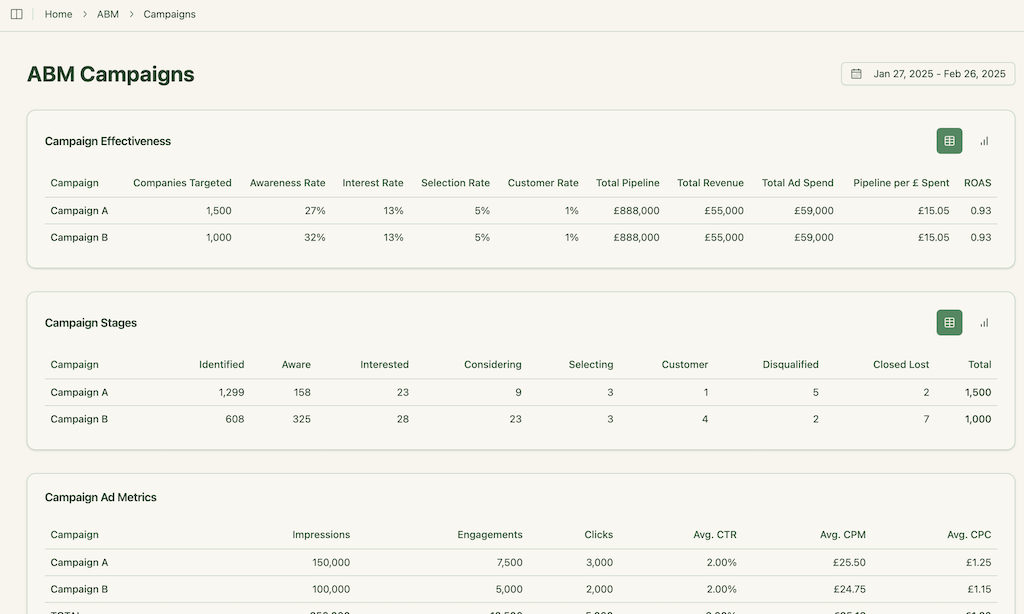
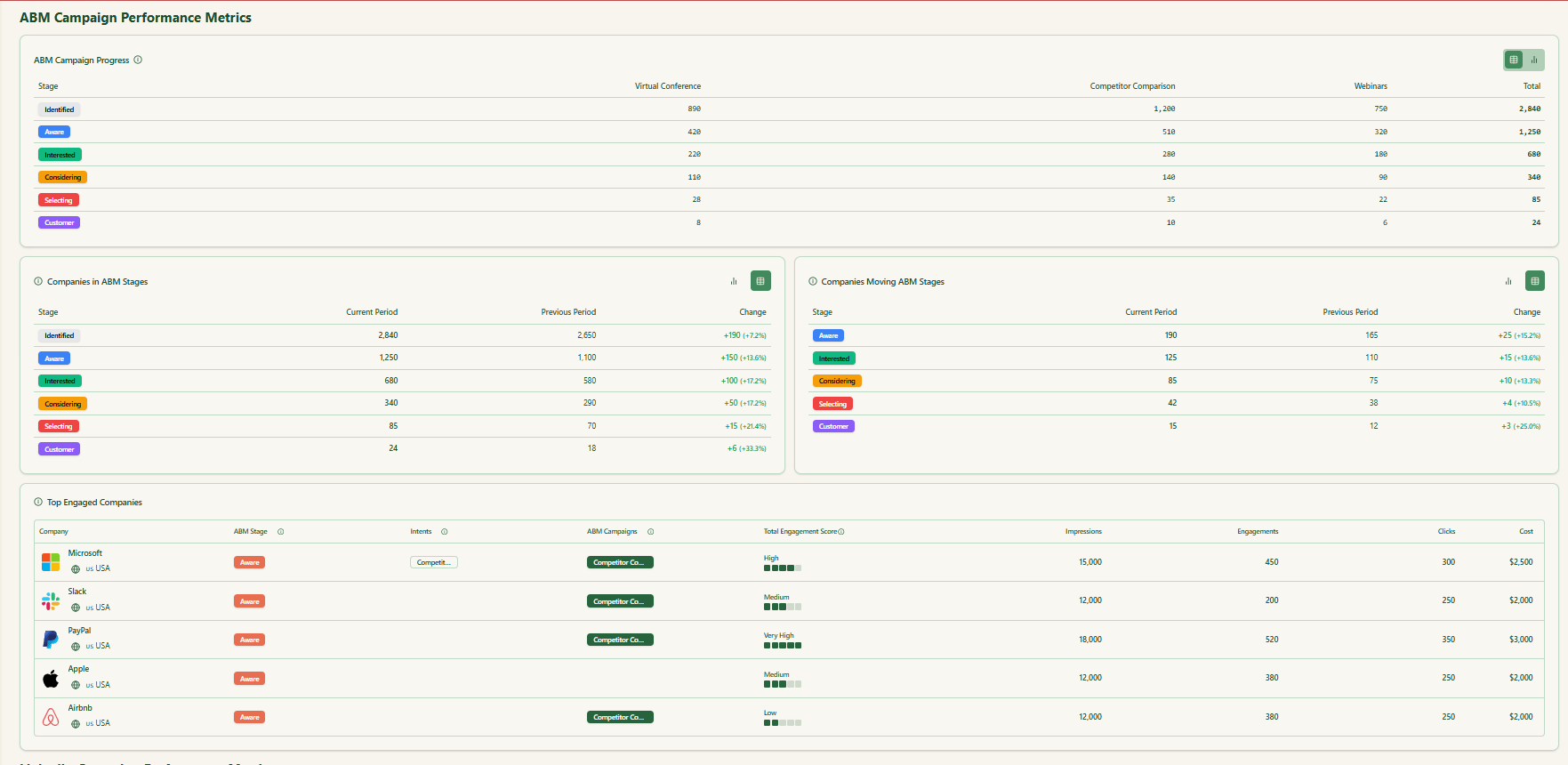
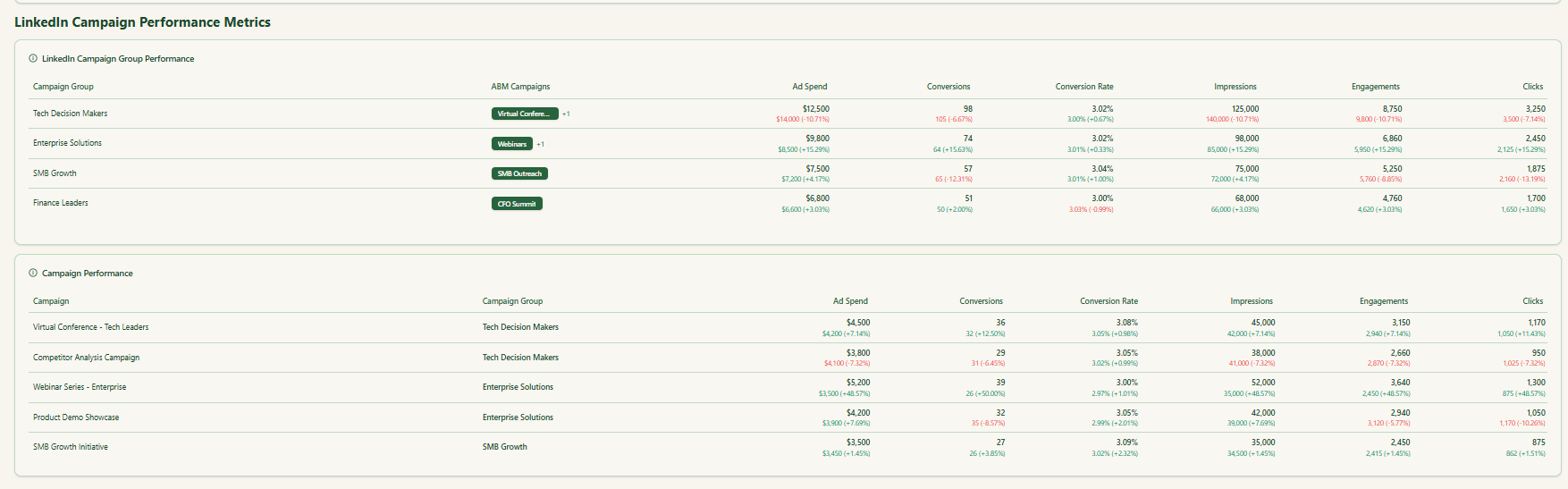
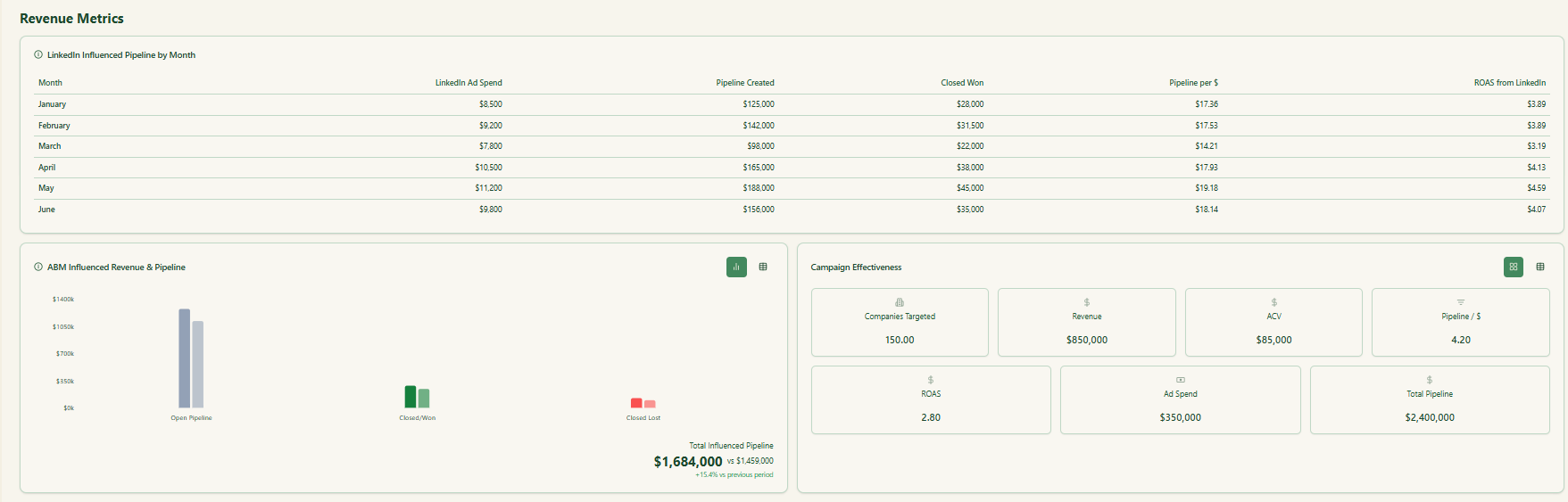
ZenABM ships with dashboards that connect LinkedIn engagement, stage movement, and revenue outcomes.
You can monitor performance from high-level ABM campaigns down to LinkedIn campaign groups and individual ads:
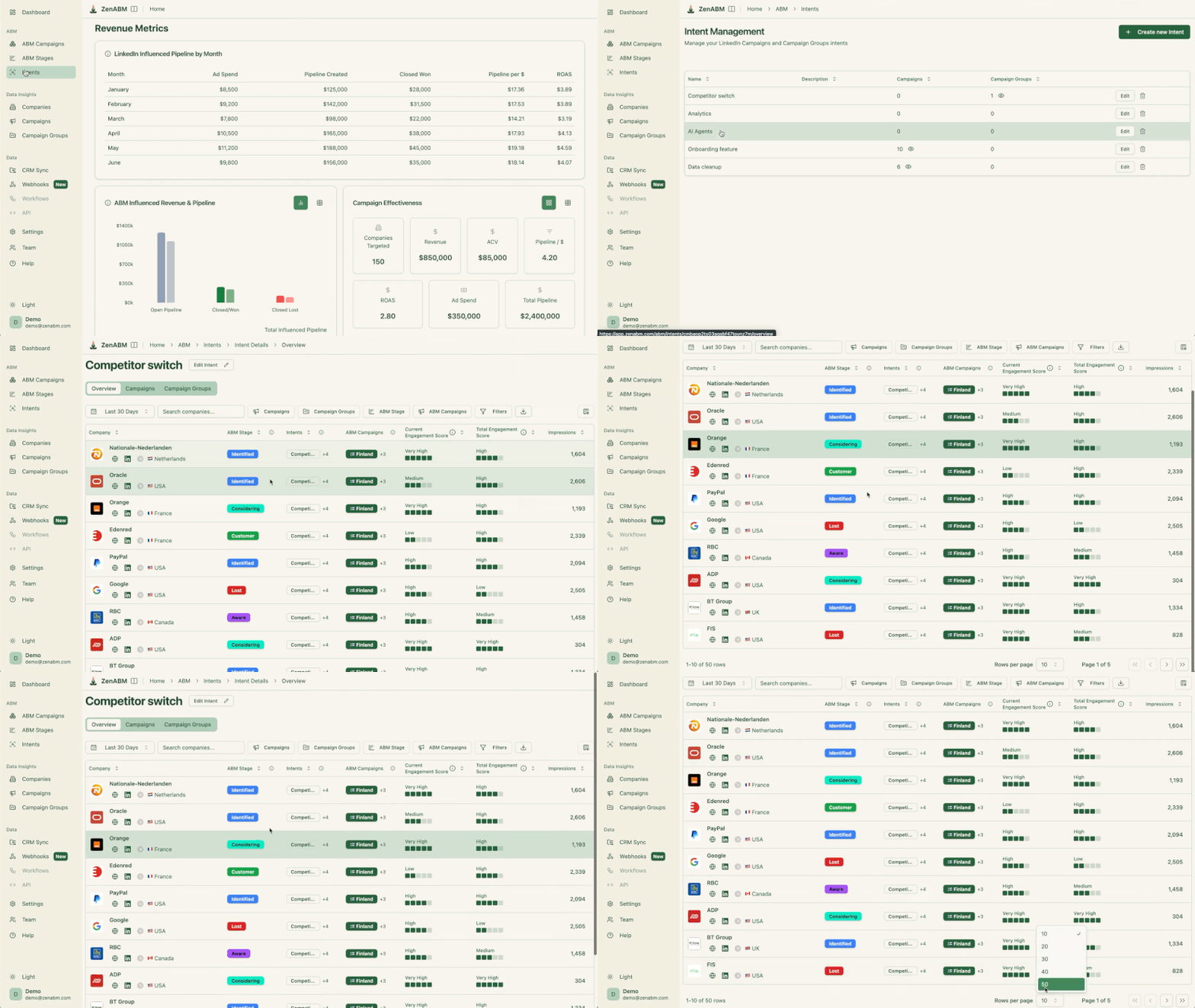
ZenABM stores deal value and ad spend per company and per campaign to calculate ROAS, pipeline per dollar, and pipeline contribution.
Control Spend Distribution With Company-Level Exclusions
ZenABM allows you to exclude companies that have reached a defined impression threshold from one or multiple campaigns.
Exclude companies straight from ZenABM’s interface
Analyze Faster With Zena
ZenABM’s AI chatbot, Zena, answers performance questions in natural language, helping enterprise teams quickly understand which accounts are heating up, which campaigns moved stages, and where budget is being wasted.
Make Enterprise ABM Operational With Webhooks and ABM Campaign Objects
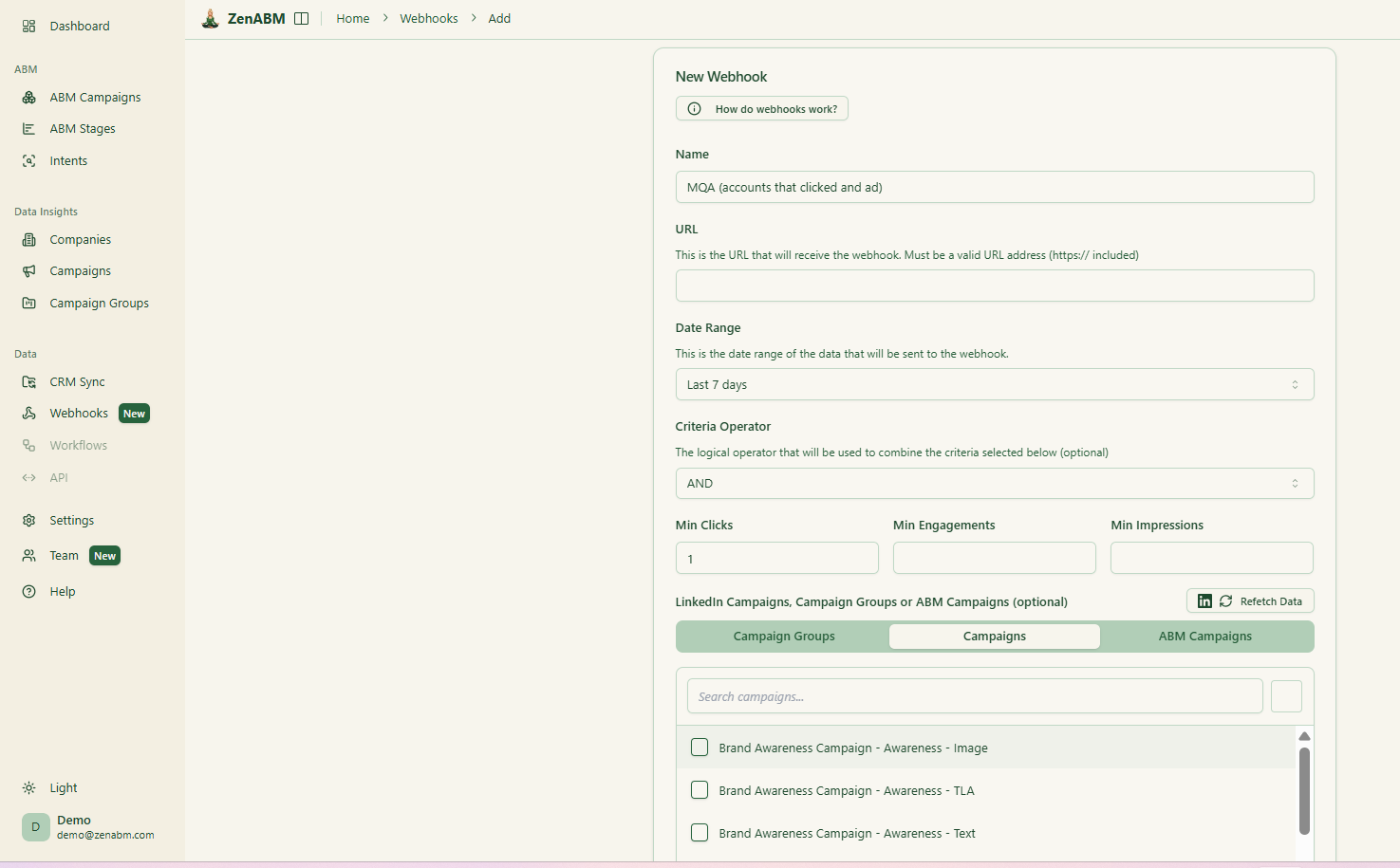
ZenABM’s custom webhooks let you push engagement and stage-change events into your GTM stack.
ZenABM also supports ABM campaign objects so you can group multiple LinkedIn campaigns into a single initiative and measure performance across regions, personas, and creative clusters.
Bottom Line
Enterprise ABM doesn’t lose because your ads are mediocre, it loses because engaged accounts go nowhere when sales never touches them.
Fix the system (routing, ownership, speed, measurement) and the same campaigns suddenly print pipeline.
If you want that system to run on first-party LinkedIn engagement instead of guesswork, ZenABM turns account activity into CRM signals, stages, and immediate follow-up triggers (starting at $59/month, 37-day free trial).
Build, Activate, Measure. Build means creating and maintaining a living ICP based on closed-won data, properly tiered and enriched. Activate means orchestrating coordinated touchpoints across all buying committee members through the right channels at the right stages. Measure means using holdout tests and account progression metrics rather than CPL and last-touch attribution to evaluate what the program is actually contributing to revenue.
Why did 47% of ABM leads never get followed up by sales?
Broken routing logic. The marketing system generated leads and pushed them to the CRM. The CRM routing rules did not correctly assign the high-value enterprise leads to the right AEs. Some were assigned to reps with no capacity. Some fell through gaps in the routing logic. None of this showed up in the campaign metrics – CPM, CTR, and impression counts all looked fine. Only a revenue-level audit surfaced the problem.
Should I use 6sense or Demandbase for enterprise ABM?
As one input into your account scoring model, layered on top of first-party data – yes. As the primary driver of your account prioritization – no. Third-party intent data is too broad and too black-box to act on without first-party signal confirmation. An account with a 6sense intent signal AND 3 LinkedIn ad clicks AND a pricing page visit is worth prioritizing. A 6sense signal alone is background noise.
How do I measure the ROI of enterprise ABM?
Use holdout tests: 80% of target accounts receive your full ABM activation, 20% receive nothing. Measure the difference in opportunity creation rate and win rate over 6-12 months. This is the most accurate measure of true ABM lift. Supplement with account stage progression (leading indicator), pipeline influenced (lagging indicator), and pipeline per dollar spent (efficiency metric).