



ABM focuses on targeting the right accounts with marketing.
ABX asks a bigger question: what happens to those accounts after they engage?
Account-based experience (ABX) extends the account-based approach beyond marketing into sales, customer success, and product.
Instead of one team running targeted campaigns and hoping someone else follows up properly, ABX coordinates every team that touches the account, from the first ad impression to the closed deal to the renewal conversation.
The formula: ABM + CX = ABX.
Emilia Korczynska, VP of Marketing at Userpilot has seen this gap firsthand.
She shared:
“Our ABM program was generating strong pipeline ($5.29M over 16 months, at $9.58 pipeline per dollar spent). But the handover between marketing and sales was messy. Accounts that showed high engagement through our ads would get generic BDR emails with no reference to the content they had consumed. Customer success had no visibility into which accounts had been through ABM campaigns. The account-level intelligence that marketing had built was locked in marketing’s tools.”
ABX fills the gaps and is the differentiator between an ABM campaign that fills dashboards and one that acquires new customers, retains those customers, and even upsells to those customers.
This post is the practitioner’s guide to making that shift.
Not just the theory of ABX, but the steps, tools, workflows, and configurations that turn “shared account intelligence” from a slide deck concept into a daily operating system.
What you will learn:

Short on time?
Here’s a quick rundown:
ABM, as most teams practice it, is a marketing function.
Marketing and sales select accounts.
Then marketing runs campaigns, generates engagement, and hands “interested” accounts to sales.
What happens next is sales’ problem.
ABX flips this model: instead of a handover, there is a shared journey where every team sees the same account data and coordinates actions based on where the account is in the lifecycle, not just the marketing funnel.
Jon Miller, former CMO of Demandbase and co-founder of Marketo, characterizes this evolution as:
“a customer-centric rethinking of an account-based go-to-market strategy.”
The practical difference: ABM stops at opportunity creation, but ABX runs from first impression to renewal to expansion.
Here’s a side by side comparison:
| Dimension | ABM | ABX |
|---|---|---|
| Teams involved | Marketing (primarily) and Sales | Marketing + Sales + Customer Success + Product |
| Lifecycle stage | Pre-sale (awareness to opportunity) | Full lifecycle (awareness to renewal/expansion) |
| Handover model | Marketing hands to sales at MQL/MQA | Shared account ownership, continuous: no handoff |
| Data sharing | Marketing tracks engagement; sales gets a lead | All teams see engagement history, intent, stage, and usage |
| Success metric | Pipeline generated | Customer lifetime value, expansion revenue, NRR |
| Personalization scope | Ads and landing pages | Ads, outreach, onboarding, support, renewal offers, in-app messaging |
| Marketing’s endpoint | Deal enters pipeline; marketing pauses | Marketing continues through evaluation, onboarding, renewal, and expansion |
The performance data supports the shift: companies prioritizing customer experience throughout the lifecycle grow revenue 40% faster and improve retention rates by 70% (Martal Group 2026 analysis). And the improvement come from eliminating the experience gaps between teams, not from better targeting.
The shift to ABX is driven by a hard financial reality, not a branding exercise.
In 2026, the market rewards retention and expansion far more than pure acquisition.
Companies with high NRR grow 2.5x faster than their low-NRR counterparts, according to High Alpha SaaS Benchmarks Report.
The same report’s stats on expanison are equally clear: For SaaS companies over $50M ARR, expansion revenue surpasses new sales entirely.
And it makes sense.
I mean, picture this: a customer with $10K initial ACV who stays 3 years at flat pricing generates $30K CLV. That same customer expanding to $15K in year 2 and $20K in year 3 generates $45K CLV, which is 50% higher from expansion alone.
Yet only a fraction of B2B marketers actively market to existing customers.
As Kyle Poyar (founder at Growth Unhinged) has noted:
“Customer marketing is the most under-invested function in B2B.”
This is where ABX becomes a growth strategy rather than a buzzword.
ABM drives acquisition.
ABX drives the expansion and retention that determine whether your SaaS business compounds or stagnates. When marketing, sales, CS, and product all share the same account intelligence, every team contributes to the NRR number.
ABX coordinates four functions around target accounts.
This is the operational breakdown of what each team does at each stage.
Marketing’s role in ABX is the same as in ABM for the acquisition phase, with three critical additions: marketing does not stop at opportunity, it runs expansion campaigns to existing customers, and it runs retention campaigns to at-risk accounts.
The kind of pre-sale workflow you already run:
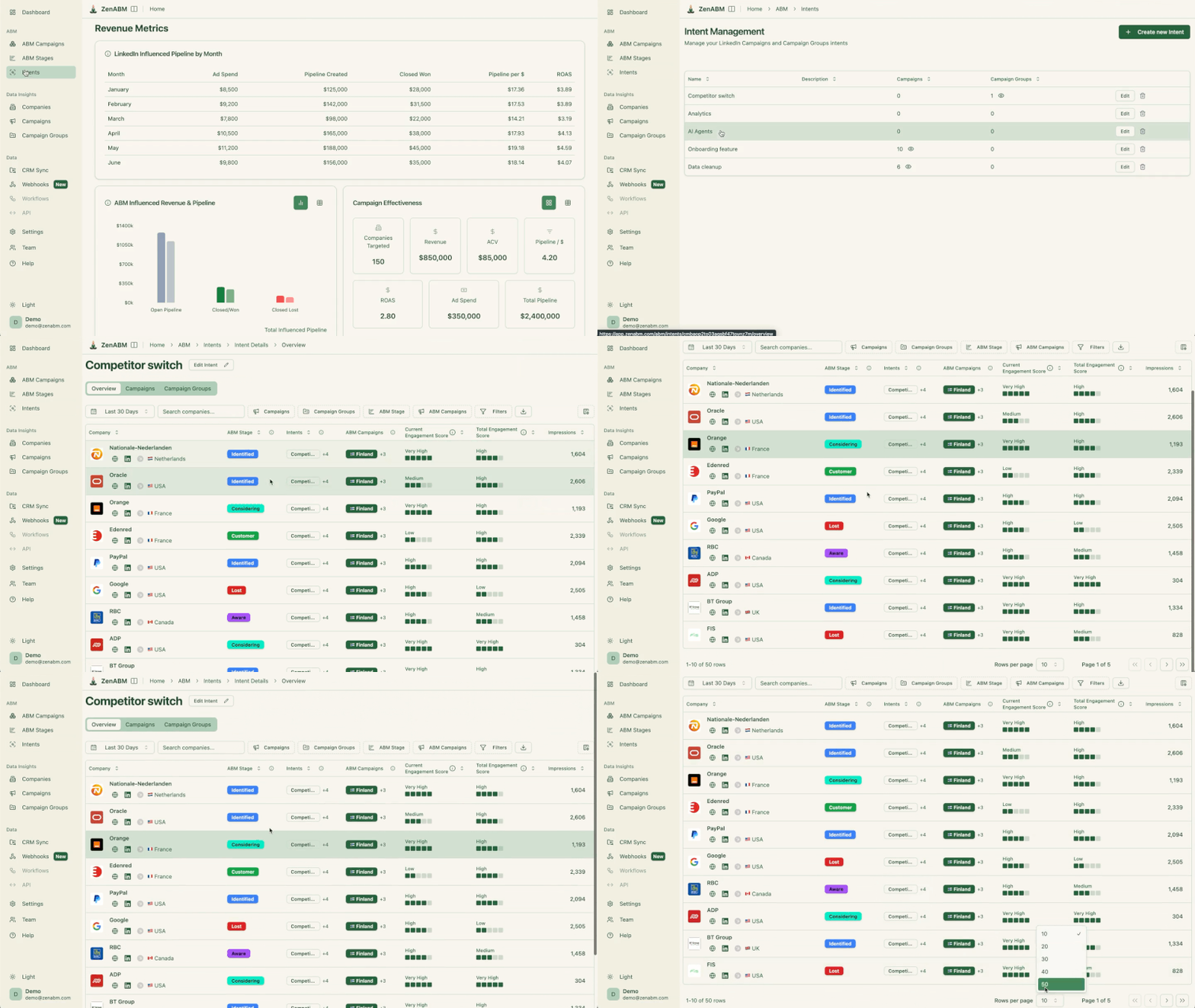
What ABX adds to marketing’s scope:
MarketOne’s research confirms why this matters: 70% of B2B buyers are not ready to engage with a vendor when first approached, which means stopping marketing at opportunity creation abandons accounts during the most critical evaluation period.
As Emilia Korczynska described when shifting away from siloed thinking:
“In 2026, there is no inbound/outbound. You want to run your campaigns ALLbound.”
That principle extends to pre-sale/post-sale: in ABX, there is no marketing endpoint.
Marketing supports the account at every stage.
Sales development in ABX operates from the same engagement data that marketing generates, not from arbitrary calling lists.
The key difference: outreach is triggered by ABM stage changes and intent signals captured by a tool like ZenABM, with messaging that matches the campaign content the account engaged with.
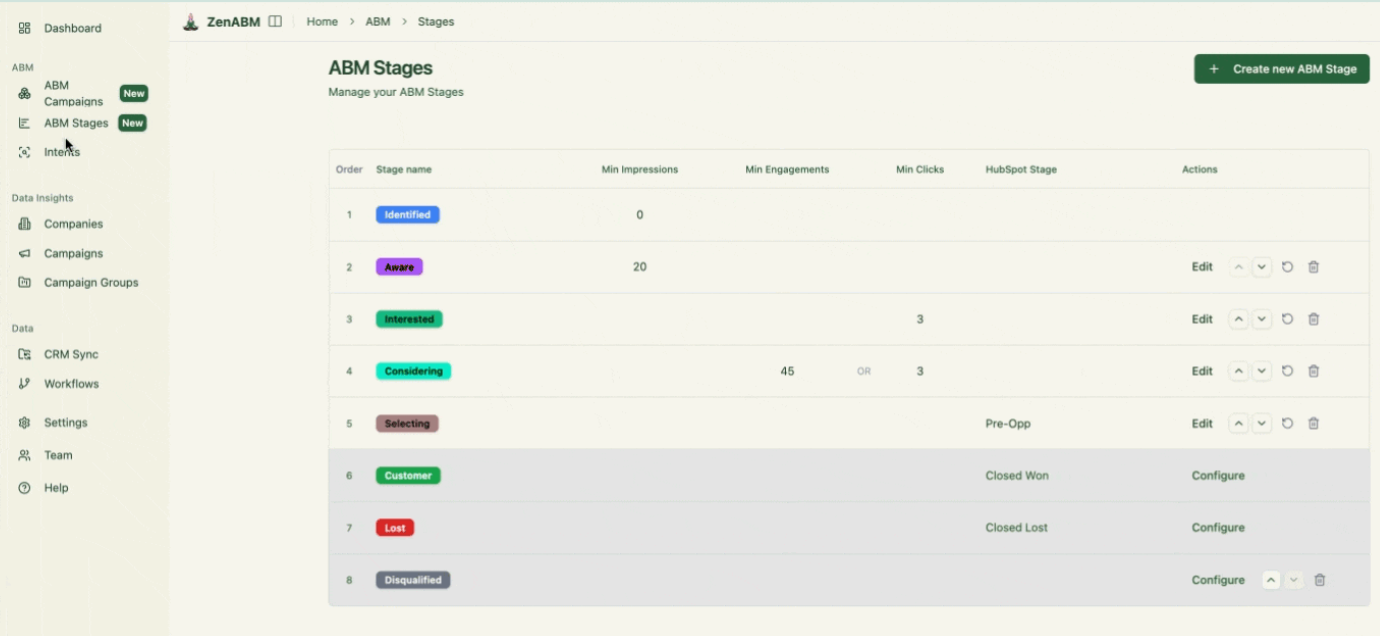
We have covered this workflow in detail in the account-based sales development post.
In an ABX model, BDRs:
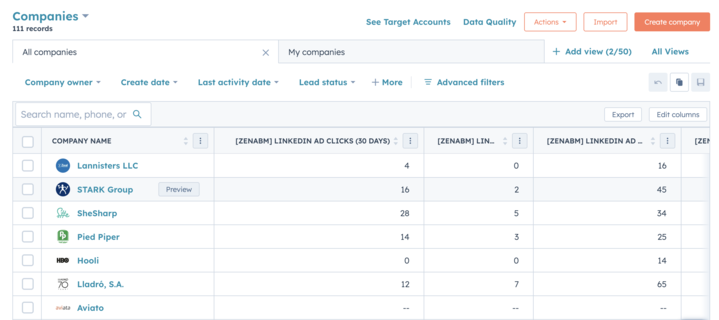
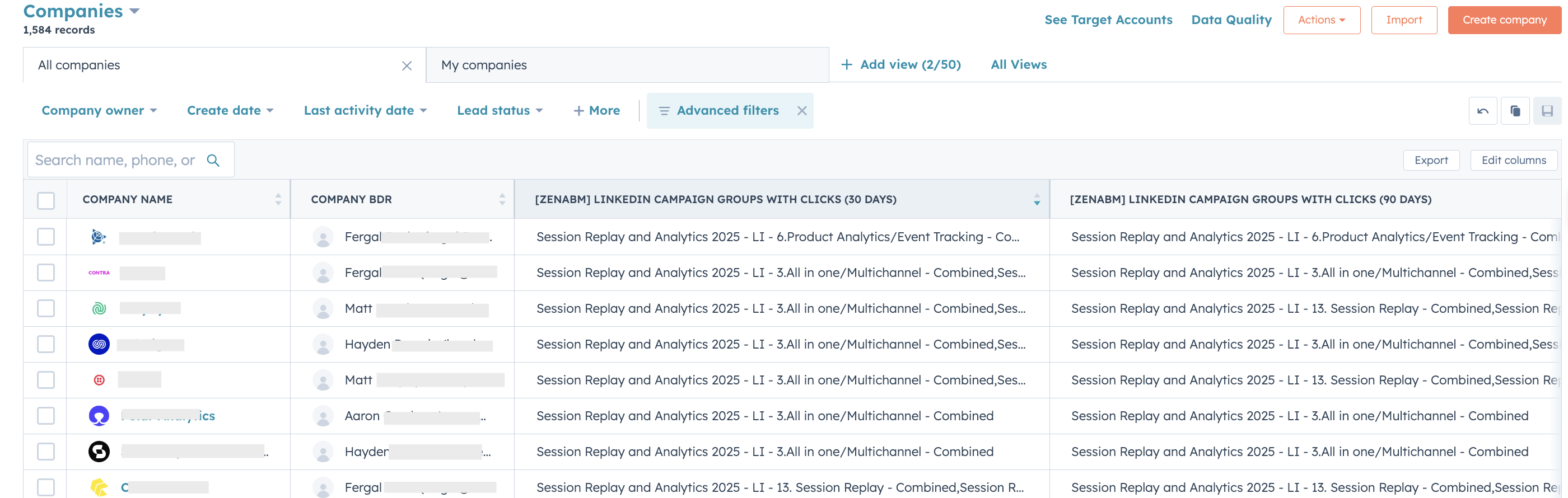
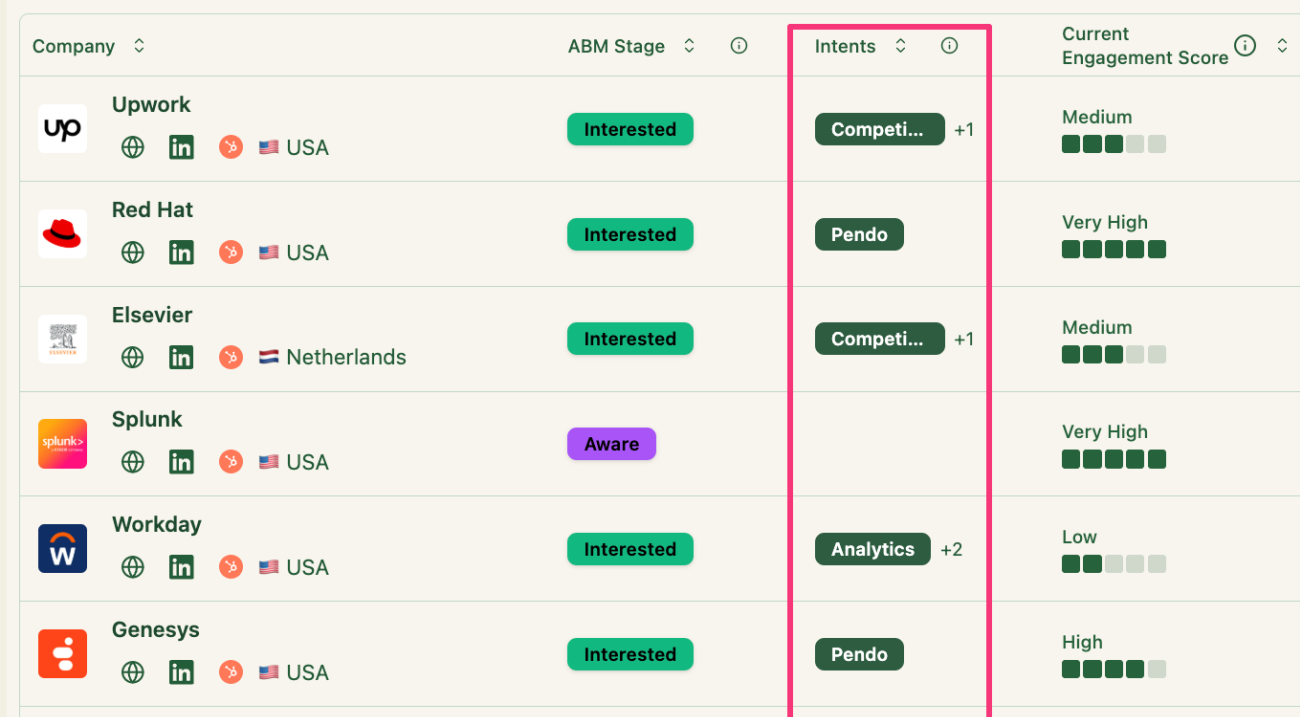
As Philip Ilic’s post describes:
“LinkedIn Ads + Outbound are far the best combo for B2B SaaS. Signals-Based Outbound + LinkedIn Ads: Social Engagement to Outbound, Company-Level Engagement to Warm email campaigns.”

This is ABX in action: marketing and sales working from the same signals on the same accounts.
The buying committee complexity makes this coordination essential.
Marketing can no longer simply hand qualified leads to sales; both teams must work in harmony throughout the entire process.
Emilia Korczynska’s LinkedIn post shows what this looks like operationally: a “BDR team of zero” using ZenABM (for LinkedIn ad engagement signals), Clay (for enrichment and orchestration), SmartLead (for email), and HeyReach (for LinkedIn) to open low six figures in pipeline at a total cost of $1,597.80 per month.
That is less than a single BDR’s salary, running on shared signals from the ABM program.

This is where ABX diverges most clearly from ABM, and where the biggest ROI improvements typically come from.
In traditional ABM, customer success operates in a data desert: they have product usage data and support tickets, but no visibility into the account’s marketing journey.
In an ABX model, customer success operates differently:
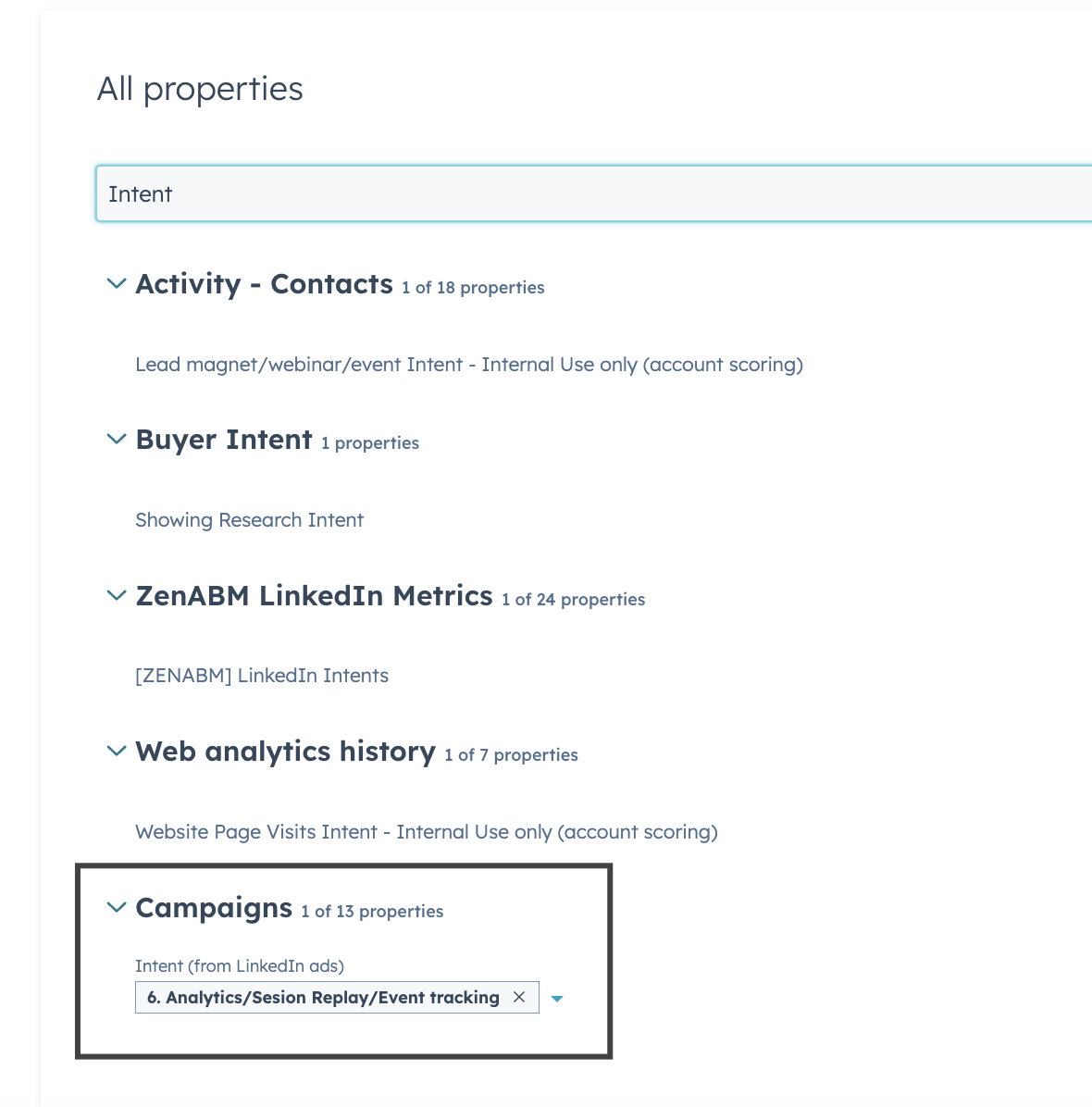

Firms with dedicated CSMs see higher NRR than those without and when CS also has access to marketing engagement intelligence through ABX, the advantage compounds because they can identify both churn risk and expansion opportunity earlier than usage data alone would reveal.
The product function in ABX contributes by sharing usage intelligence that closes the loop between what marketing promises and what customers actually do:
Kyle Poyar calls product usage data “the new intent data for your existing customer base,” and he is right: just as ad engagement signals tell you what prospects care about, feature adoption signals tell you what customers need next.

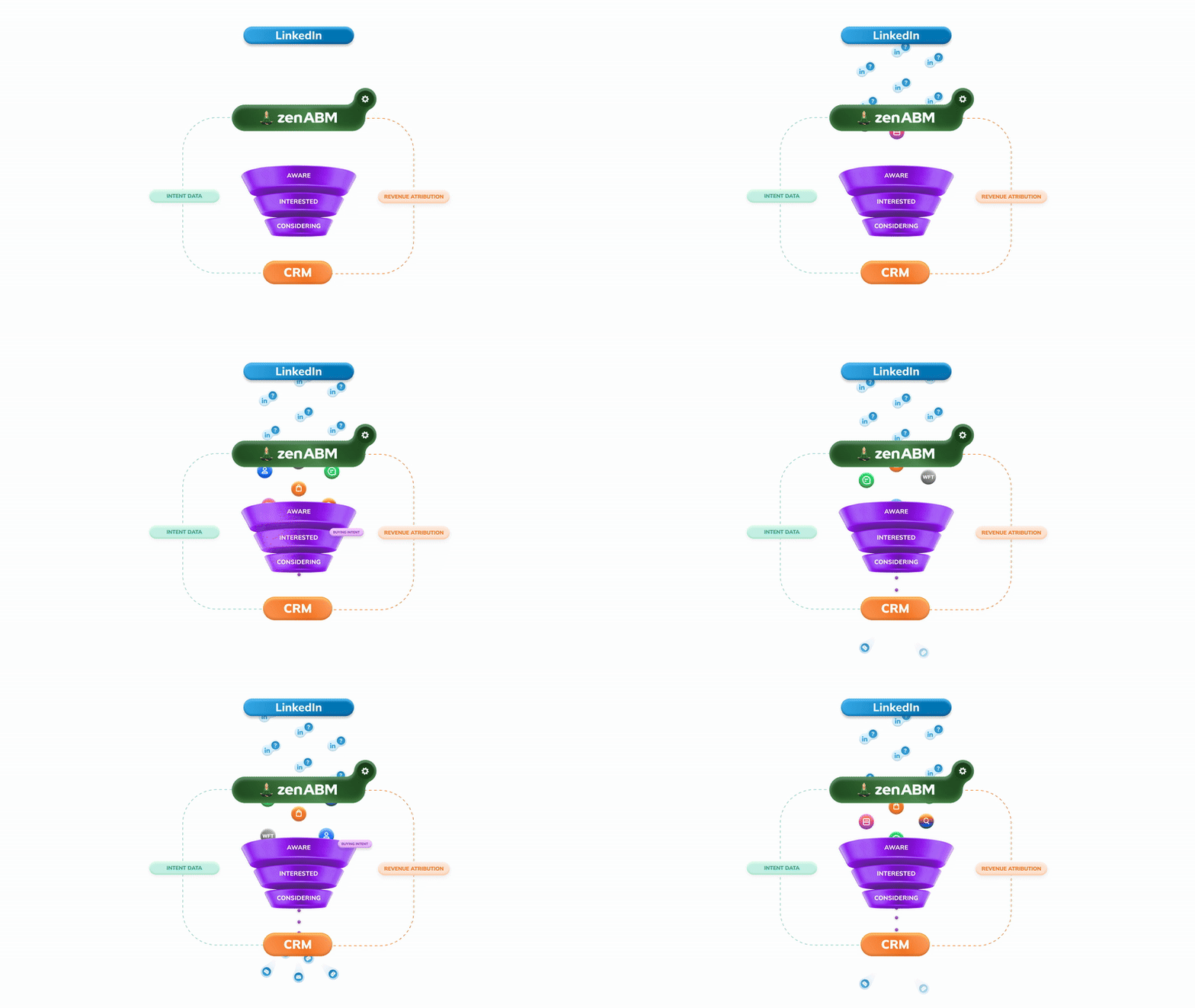
The operational backbone of ABX is a shared account timeline that every team sees in the CRM.
Not a dashboard one team checks occasionally; the view every rep, CSM, and marketer uses daily.
Here is what it looks like for a single account moving through the full lifecycle:
| Month | Marketing | Sales Dev | Customer Success | Product |
|---|---|---|---|---|
| 1 to 3 | COLD campaign: TLAs + educational content. ZenABM tracks engagement, account reaches “Aware” stage at 50+ impressions. | No outreach yet: account is warming. BDR can see engagement building in CRM but holds. | N/A | N/A |
| 4 | Account hits 5+ clicks. ZenABM auto-moves to “Interested” with qualitative intent: “competitor switching.” | Receives Slack alert. Starts multi-channel outreach (SmartLead email + HeyReach LinkedIn) referencing competitor angle. | N/A | N/A |
| 5 | WARM campaign: case studies, product comparisons, ROI data served to the buying committee. | Meeting booked. BDR hands to AE with full engagement history visible in CRM. | N/A | N/A |
| 6 to 7 | Continues WARM ads to buying committee members the AE cannot reach in meetings. Reinforces value during evaluation. | AE works the deal with intent context from ZenABM. Knows the account cares about competitor switching, not product education. | N/A | Trial access provided. Product tracks feature adoption. |
| 8 | Deal closed. Marketing shifts to onboarding content ads: getting-started guides, best practices, implementation tips. | N/A | CS onboards with full context: knows which pain points drove the purchase, which personas engaged, which competitive angle resonated. | Tracks feature adoption depth. Flags low-usage accounts within 30 days. |
| 9 to 14 | Customer nurture campaigns: new feature announcements, community content, customer stories, industry reports. | N/A | Monitors engagement scores in CRM. Flags accounts with declining scores (early churn signal). Runs QBRs informed by both usage and engagement data. | Sends usage data to CRM. Identifies PQLs (high usage on starter plan). Surfaces in-app prompts for underused features. |
| 15 | Pre-renewal campaign: ROI data, customer stories, new capabilities showcase. If engagement score dropped, runs targeted win-back ads. | Expansion outreach if cross-sell signals detected (customer engaging with campaigns about features they do not currently use). | Renewal conversation informed by engagement + usage data. Knows exactly what value the customer has received and what they care about next. | In-app messaging about premium features. Personalized upgrade prompts based on usage patterns. |
The key insight: no team operates in isolation. Every action is informed by data from other teams. The CRM (with engagement data from a tool like ZenABM, product usage data, and CS health scores flowing in) is the shared operating system that makes ABX work.
As Emilia Korczynska reflected in her LinkedIn post after her year-end planning meeting: the year of fastest growth was the year the team stopped operating in silos, with marketing, sales, and product each contributing their piece but working from shared data and shared goals. Her GTM engineer “orchestrated an extremely robust account scoring model in Clay, enriched the entire SAM, managed the operations for their high-six-figure ABM program, and built AI-powered automated outreach” across HubSpot, ZenABM, Clay, SmartLead, and HeyReach.
That is ABX infrastructure in action.
ABX does not just require new tools.
It requires connecting the tools you already have around a shared account view.
The mistake most teams make is buying an “ABX platform” when what they need is better data flow between their existing stack.
As Scott Brinker (VP Platform Ecosystem, HubSpot) has cautioned:
“Be careful with the ABX label. Sometimes it is just ABM vendors rebranding their product to justify a bigger platform sale. The question is not ABM vs. ABX; the question is whether your organization actually has the cross-functional operating model to support either one.”
So here’s the stack and more importantly how to stitch its components together for ABX:
| Function | Tools | Monthly Cost | What They Contribute to ABX |
|---|---|---|---|
| CRM (shared hub) | HubSpot or Salesforce | $50 to $150+ per user | The single source of truth. All account data, stages, engagement, and usage flows here. Every team reads from and writes to this system. |
| Ad engagement + scoring | ZenABM | $59 | LinkedIn engagement data, account stages, qualitative intent (which campaigns/creatives resonated), deal attribution. Pushes to CRM as company properties visible to all teams. The engagement intelligence layer ABX depends on. |
| Marketing automation | HubSpot Marketing | Included in HubSpot | Campaign execution, audience routing, lifecycle email automation. Extends into post-sale sequences for retention and expansion campaigns. |
| Sales outreach (email) | SmartLead or Instantly | $94 to $97 | Multi-channel email outreach triggered by engagement signals. Messaging matches ad content the account engaged with. |
| Sales outreach (LinkedIn) | HeyReach or Expandi | $501 (HeyReach) | LinkedIn automation for connection requests, DMs, and engagement sequences. Coordinates with marketing campaigns. |
| Enrichment + orchestration | Clay | $853 (at scale) | Contact discovery at interested accounts. Signal aggregation from CRM, website, third-party data. Enrichment for personalization. The operational glue between tools. |
| Customer success | Gainsight, ChurnZero, or HubSpot Service | Varies | Health scores, renewal tracking, churn signals. In ABX, these tools receive marketing engagement data from CRM for a complete account picture. |
| Product analytics | Amplitude, Mixpanel, or Pendo | Varies | Usage data, feature adoption, PQL identification. Feeds into CRM account scoring and informs both marketing creative and CS priorities. |
| Visitor de-anonymization | Vector, RB2B | Free tier available | De-anonymize website visitors from target accounts. Feeds into CRM and Clay for signal stacking. |
ZenABM can play a central role in your stack because it generates the engagement intelligence that all teams use.
When ZenABM’s data (account stages, qualitative intent, engagement scores) is in the CRM, sales knows when to reach out and what to say, CS knows what drove the purchase and what the account cares about, and marketing knows which campaigns actually influenced revenue.
At $59 per month, it is the most affordable way to add account-level intelligence to your ABX stack.
You do not need to rebuild everything. ABX is an extension of ABM, not a replacement.
Here is the transition path, in the order that produces results fastest:
This single change enables everything else.
ZenABM pushes LinkedIn ad engagement data (impressions, clicks, engagement score, ABM stage, qualitative intent) into HubSpot or Salesforce as company properties.
These properties must be visible in the views that BDRs, AEs, and CSMs use daily, not buried in a marketing dashboard nobody checks.
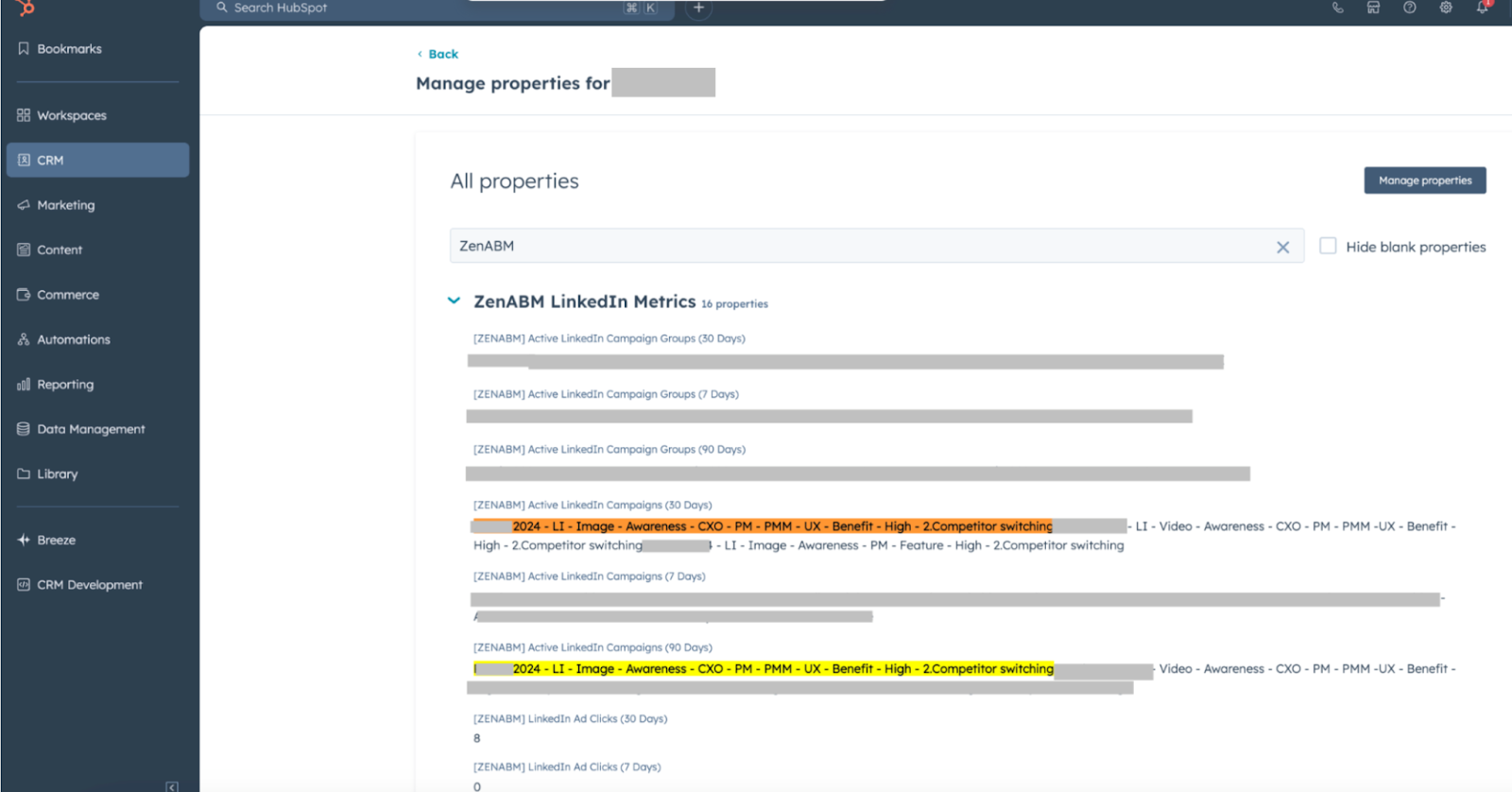
Configuration: create CRM views for each role (BDR: filter by Stage = “Interested” sorted by engagement score; AE: active deals with intent data visible; CS: customer accounts sorted by engagement score with declining-score alerts; Manager: accounts per stage per week with stage velocity).
Do not stop running ads when a deal enters pipeline.
Continue serving WARM campaign content (case studies, product comparisons, ROI data) to the buying committee during evaluation.
The committee members the AE never meets are forming opinions based on whatever content they can find, and your ads should be that content.
After the deal closes, shift to onboarding content ads for the first 30 to 60 days (getting-started guides, best practices, implementation tips), then transition to ongoing customer nurture campaigns (new features, community content, industry reports).
When CS has visibility into which campaigns drove the account’s engagement (visible in CRM as ZenABM company properties), they can onboard with context instead of starting from zero.
If the account engaged most heavily with “competitor switching” content, CS knows the customer switched from a competitor and can tailor onboarding around migration pain points.
If they engaged with “enterprise security” content, CS knows security compliance is a priority and can front-load the security documentation.
Additionally, set up declining engagement score alerts for CS: when a customer account’s ZenABM engagement score drops below a threshold (they stop clicking ads, stop visiting your site), that is an early churn signal that appears before product usage metrics decline.
Replace “marketing pipeline” and “sales quota” with account-level metrics that all teams own together.
The three-tier structure that works best:
When marketing, CS, and sales all share an NRR target, behavior changes across the board.
Marketing stops treating closed-won as the finish line. CS stops operating in a data desert.
Sales stops ignoring post-sale account health.
That behavioral shift is the operational outcome ABX is designed to produce.
Feature adoption and usage patterns enrich the account profile for every team.
Product analytics (Amplitude, Mixpanel, Pendo, Userpilot, etc.) should push key usage metrics into the CRM: DAU/MAU ratio, core feature adoption, integration setups, and usage trends.
This data transforms the CRM account view from “what the account did in marketing” to “what the account does in the product,” completing the 360-degree view that ABX requires.
The trigger-to-action framework for post-sale signals:
ABX fails more often from execution gaps than from strategy problems.
These are the patterns that kill ABX programs:
Some teams rename their ABM program to ABX without changing who owns account data or how teams coordinate.
If only marketing can see engagement intelligence and sales still gets a lead with a “marketing” source tag, you have not built ABX; you have relabeled ABM.
The fix: ZenABM data must push to the CRM as company properties visible to every team. If your BDRs, AEs, and CS reps cannot see account engagement history in their daily workflow, ABX is not operational.
The most common ABX failure is a great pre-sale experience followed by a generic post-sale handoff. CS onboards without context, marketing stops running ads, and the account that received orchestrated attention for six months suddenly gets treated like every other customer.
Over 20% of voluntary churn traces to poor onboarding.
The fix: CS must have access to intent data from the marketing phase, and marketing must continue campaigns to customer accounts.
If marketing tracks engagement in ZenABM, sales tracks pipeline in Salesforce, and CS tracks health in a tool like Gainsight, nobody sees the combined picture.
The fix: the CRM must be the single hub. All other tools push data into it. Every team’s daily view is a CRM view, not a standalone platform.
If your primary success metric is “pipeline generated,” you are measuring ABM, not ABX. ABX success requires full-lifecycle metrics: CLV, NRR, expansion revenue, renewal rate, time-to-value.
These metrics require all teams to contribute, which is exactly the point.
The shift from “marketing pipeline” to “account NRR” as the north star aligns incentives across teams.
The practitioner community consistently warns against this: do not buy a $60K to $150K enterprise ABX platform (Demandbase, 6sense) before your teams actually coordinate around shared account data.
Start with the tools you have, prove the model with 10 to 20 Tier 1 accounts, then scale.
ABX is not a terminology upgrade from ABM.
It is the recognition that the account relationship does not end at closed-won, and that the same intelligence infrastructure companies build to win accounts should be used to keep and grow them.
The gap between ABM and ABX is the gap between a marketing program and a company-wide operating system.
ABM generates pipeline.
ABX generates pipeline, then ensures the accounts that close actually onboard successfully (because CS has the engagement context), expand over time (because marketing runs campaigns to the installed base and CS spots cross-sell signals), and renew at higher rates (because declining engagement scores surface churn risk months before the renewal conversation).
The implementation is not complicated.
It starts with one change: making account engagement data visible to every team in the CRM.
ZenABM pushes LinkedIn ad engagement (impressions, clicks, ABM stages, qualitative intent showing which campaigns and creatives each account engaged with) into HubSpot or Salesforce as company properties that BDRs, AEs, and CSMs see in their daily workflow.
That single data connection is the foundation that enables everything else: intent-led outreach, contextual onboarding, churn detection, expansion signals, and shared KPIs that align incentives across teams.
The total cost of the core ABX stack is $1,597.80 per month for outbound execution (Clay, HeyReach, SmartLead) plus $59 per month for ZenABM’s engagement intelligence layer.
That is less than a single BDR’s salary for the infrastructure that makes marketing, sales, CS, and product operate as one team rather than four silos passing accounts between them.
Start with 10 to 20 Tier 1 accounts. Prove that shared account intelligence changes team behavior and account outcomes. Then scale.
Try ZenABM free for 37 days and give every team the engagement context they need to stop operating in silos or book a demo to know more!
Some common questions about ABX and their answers:
ABX (account-based experience) is a go-to-market strategy that extends ABM across the entire customer lifecycle. It coordinates marketing, sales, customer success, and product around shared account intelligence so every team delivers a consistent, personalized experience. The core formula: ABM + CX = ABX. As Jon Miller (former CMO of Demandbase) describes it, ABX is “a customer-centric rethinking of an account-based go-to-market strategy” that enables the entire GTM function to work as a unified team rather than a relay race with fumbled handoffs.
ABM primarily focuses on marketing’s role in targeting and engaging accounts pre-sale. ABX extends this to the full lifecycle: sales uses marketing intent data for outreach, customer success uses engagement history for onboarding and retention, and product usage data feeds back to all teams. The structural shift is from a handover model (marketing passes to sales) to shared account ownership where all teams see the same data. The metric shift follows: ABM measures pipeline generated; ABX measures CLV, NRR, and expansion revenue.
Five steps: (1) Make engagement data visible to all teams in the CRM via ZenABM company properties, (2) extend marketing past opportunity creation into evaluation, onboarding, and retention, (3) share intent data with CS so they onboard with context, (4) build shared KPIs (NRR, CLV, expansion revenue) that all teams own together, (5) add product usage data to the CRM account view. Start with 10 to 20 Tier 1 accounts as a pilot.
Customer success typically sees the biggest improvement. In traditional ABM, CS onboards with no knowledge of what drove the purchase. In ABX, CS has full visibility into engagement history and intent data, enabling more relevant onboarding and earlier churn detection through declining engagement scores. Companies with dedicated CSMs who have this intelligence see up to 25% higher NRR (Benchmarkit).
Not more budget; more coordination. The ad spend structure is the same as ABM. The additional investment is in extending campaigns beyond acquisition (retention/expansion ads), connecting data between teams (CRM configuration, not new tools), and aligning KPIs across functions. Teams already running ABM on LinkedIn with ZenABM and HubSpot have the data infrastructure in place. ABX is primarily an operational shift.
Three tiers: (1) North Star metrics shared by all teams: NRR, CLV, qualified account pipeline. (2) Shared leading indicators: account engagement score trends, buying committee coverage, expansion pipeline created, time-to-value. (3) Function-specific: marketing owns MQAs and campaign influence; sales owns win rate and deal velocity; CS owns logo retention and feature adoption. The shift from ABM metrics to ABX metrics is the shift from “pipeline generated” to “lifetime account value,” which is what aligns incentives across teams.
Core stack: HubSpot or Salesforce (CRM), ZenABM ($59 per month for engagement intelligence), SmartLead ($94 per month for email), HeyReach ($501 per month for LinkedIn), and Clay ($853 per month for enrichment and orchestration). Add Gainsight or ChurnZero for CS health scoring and Amplitude or Pendo for product analytics. The total signal-based outbound stack costs $1,597.80 per month (less than a single BDR salary), as documented in Emilia Korczynska’s operational breakdown.
