



The offer is the most underinvested element of most ABM campaigns, and it is not even close.
Teams spend weeks on creative design, copy testing, and bidding optimization, then put “Book a Demo” as the offer and wonder why conversion rates are flat.
But “Book a Demo” is not an offer; it is a request for your prospect’s time in exchange for a sales pitch, and almost nobody wants to trade 30 minutes for that when they are still trying to figure out whether the problem is even worth solving.
This post covers Ishaan Shakunt’s session at the ZenABM ABM Bootcamp 2026, where he shared his three-level offer framework for creating ABM offers that convert, with real campaign data showing what a genuinely strong offer can do.
You can watch the full session on YouTube here.
Short on time?
Here’s a quick overview:

Ishaan Shakunt runs Spear Growth, an agency specializing in LinkedIn ads for B2B SaaS, and he has tested hundreds of offers across dozens of clients.
His diagnosis of why most ABM offers fail is blunt: “Schedule a call with our agency” scores 2/10 on every dimension that matters, so do not run it.
The failure modes all stem from a common root, which is that the offer asks the prospect to invest effort before delivering any value in return:
The prospect cannot immediately see what they get, because “let’s talk” is not a value exchange but simply an ask for their time.

Every competitor is also offering demos, calls, and consultations, which means your offer is indistinguishable from theirs before the prospect has any reason to prefer you.
The prospect has to wait for the call to be scheduled, then sit through the call, just to find out if you can even solve their problem. That is a high-friction, delayed-value experience that most busy buyers will not tolerate.
The prospect finishes the call and thinks “that was fine” rather than “I did not realize how big this problem actually is and I need to solve it now.”
Without that realization, there is no urgency to move forward.
The offers that do work have a fundamentally different structure: they deliver value before the prospect commits to anything significant, and in the process, they make the prospect realize a larger problem they need to solve.

Ishaan’s framework evaluates offers against six criteria organized into three levels, and each level builds on the one before it:
This sounds obvious, but it matters more than most teams realize.
Ishaan added Level 0 to his framework after promising a Google Ads audit to prospects and then discovering that SEMrush could not pull the data they needed for half the companies.
An offer you cannot reliably fulfil destroys trust faster than no offer at all, because it teaches the prospect that your promises are unreliable before you have even started a sales conversation.
Does the prospect immediately see the value, and can they understand what they get in 15 seconds?
These are two separate questions that both need to be answered yes.
An offer can be genuinely valuable but opaque (the prospect cannot understand it quickly enough to click), or it can be perfectly clear but low-value (the prospect understands exactly what they get and decides it is not worth their time).
Is this something they cannot get easily elsewhere, and how quickly do they actually receive the value?
The best Level 2 offers deliver something valuable immediately, not after a 30-minute call and not after a sales process, but at the moment of engagement.
An eBook is low time to value (they can read it now), but usually not unique, while a live audit of their specific setup is unique but high time to value.
The ideal Level 2 offer scores well on both dimensions simultaneously.
After consuming the offer, the prospect realizes a larger problem exists that you can solve.
This is the highest-leverage offer structure in ABM because the prospect comes for the free thing and leaves understanding they have a serious problem, and that you are the one positioned to solve it.
This is the offer structure that shortens sales cycles and increases deal velocity, because by the time the prospect gets on a demo call, they have already convinced themselves they need a solution.
Ishaan shared the results from a campaign that used a free software feature as the offer, specifically a Reddit monitoring tool given to ICPs at no cost.
Results:
The free feature was a textbook Level 3 offer: it delivered immediate value (they could use it right now), it was unique (not something they could get from a competitor), and using it revealed to them a larger problem, specifically how much Reddit activity relevant to their business they had been missing entirely.
The demo pitched itself because the prospect had already experienced the gap between what they were doing and what was possible.
Compare this to their best traditional lead generation result: $2,000 to $4,000 in ad spend for 100 to 120 leads, of which approximately 60 were ICP.
The conversion rate to discovery calls was significantly lower than the 100% ICP-to-demo-agreed rate of the Level 3 offer.
The offer quality did more work than the creative, targeting, or budget combined, which is Ishaan’s central point: the offer is the highest-leverage variable in your entire campaign, and most teams treat it as an afterthought.
And once you start testing offer quality seriously, measurement becomes a big advantage.
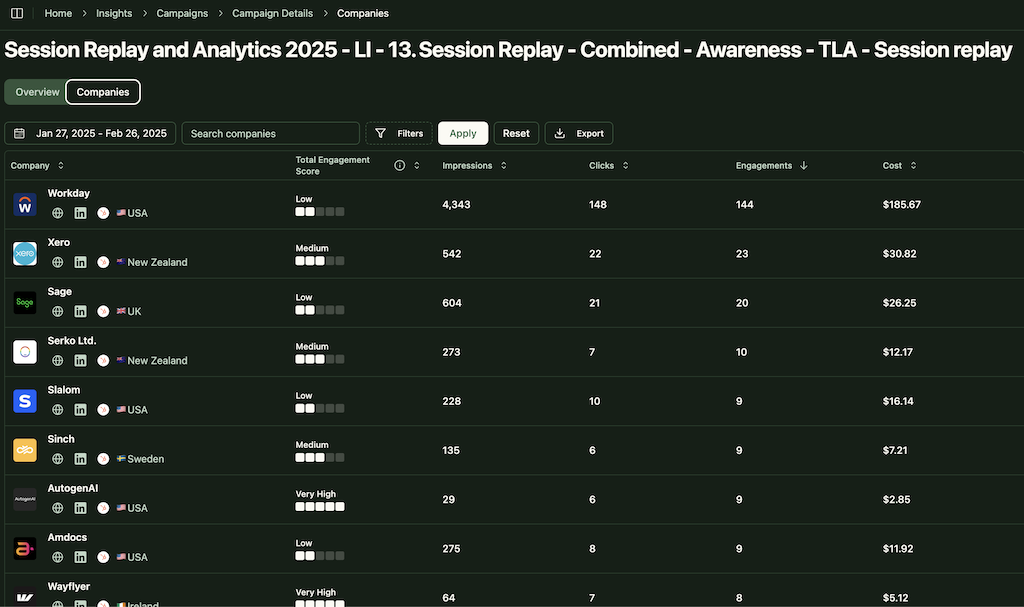
ZenABM helps here by showing which named accounts engaged with each offer-driven campaign, which ad messages resonated most, and which campaigns influenced the most pipeline.
That gives you a much better signal than CTR alone when deciding which offer deserves more budget.


Ishaan’s process for developing offer ideas in a client workshop:
Sales participation is non-negotiable because they know what prospects actually respond to in conversations, which is intel your marketing team almost certainly does not have in enough detail.
Ishaan’s example: “A trip to the Bahamas during year-end closing” for CFO software prospects.
The stupid ideas loosen the thinking and often contain the kernel of something that actually works once you strip away the absurdity.
These should range from content offers to free tools to audits to original research.
Cast a wide net at this stage because you need volume before you can filter for quality.
Ask:
Any idea that fails Level 0 gets eliminated immediately regardless of how exciting it sounds.
Offer performance is highly context-dependent, and what works for one ICP in one industry may fail completely for a different audience.
Build the testing budget into the plan from the start so you are not forced to bet everything on your first guess.
One creative approach that consistently surfaces good offers: think about what your ICP needs to do their job better right now, not to evaluate your product but to do their actual day-to-day job.
If you can deliver that, you likely have a Level 3 offer on your hands.
They use your free tool or resource to do something genuinely useful, and in the process, they discover exactly what your paid product does that they now need.
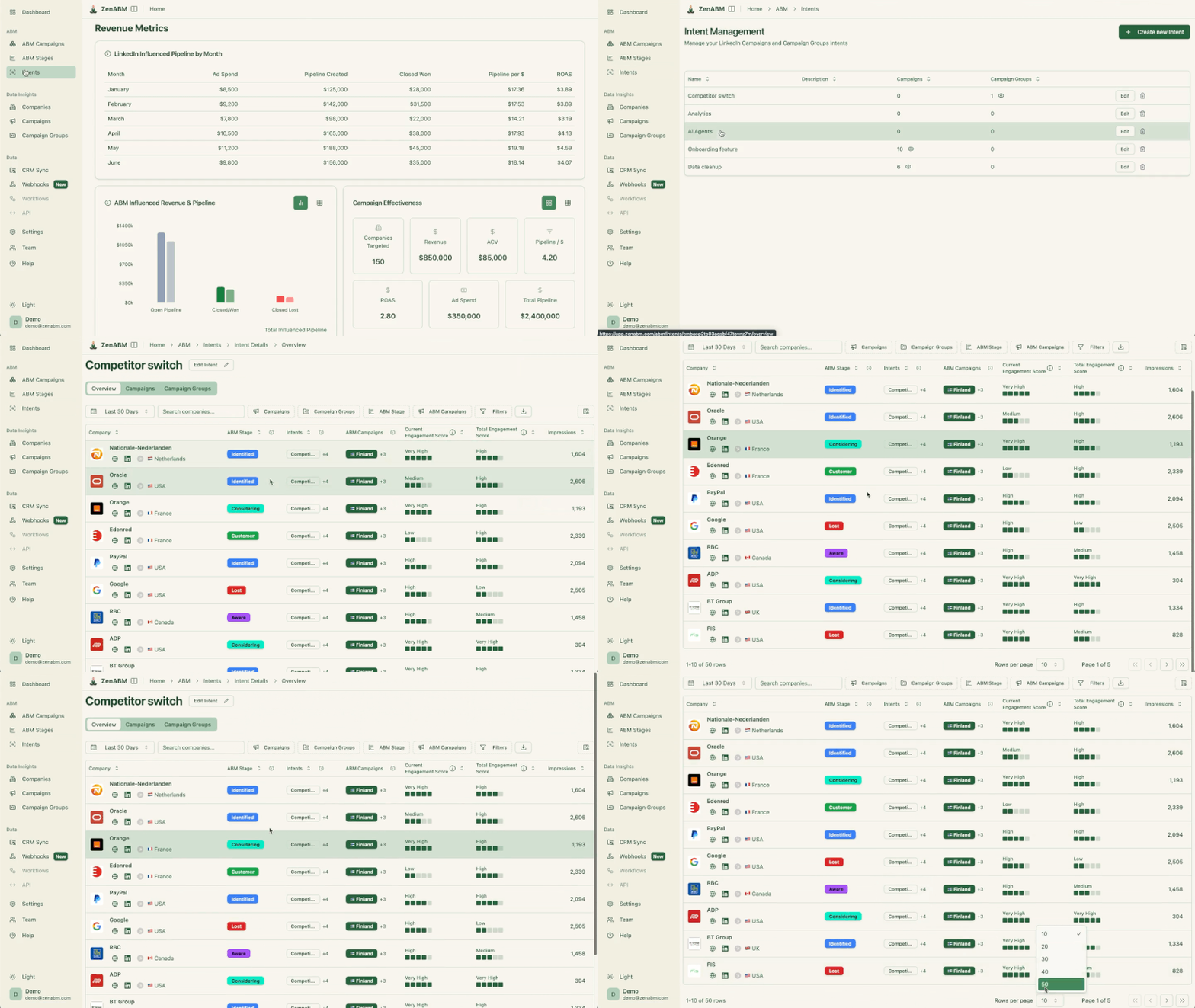
ZenABM can support this testing process well because it gives you a way to compare offers at the account level, not just the campaign level.
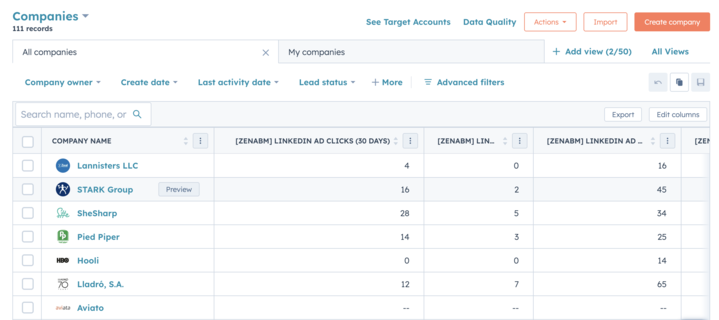
With company-level engagement data, first-party intent signals, and CRM-connected reporting, you can tell whether one offer is simply generating curiosity or actually pulling the right ICP accounts closer to the pipeline.
Ishaan tested an extensive 7-minute product demo video against a 2-minute GIF showing the same product in action, and the GIF won by a significant margin.
This is counterintuitive but consistent with what the ZenABM 2026 benchmarks report shows for video ads: 0.24% median CTR versus 0.42% for single-image ads, making video ads the worst-performing format by CTR in our dataset.

The exception is UGC-style video (authentic, personal, day-in-the-life format), but even then, it requires significantly more production investment to get right.
The lesson from the GIF test is that you do not have to show the product to show the product.
Motion communicates what the product does without requiring the viewer to commit to watching a full video, and a GIF of the key product moment (the moment of value delivery) converts more effectively than a lengthy explanation of what that moment means. S
Show the action, not the rationale.
A hybrid approach that combines offer testing with format testing: post organically on LinkedIn first, and let organic reach test the hook and format before you spend anything.
Then add paid promotion to the content that performs organically, which pre-validates your offer before committing ad budget to it.
For more on the full LinkedIn ABM strategy, including how to structure campaigns around different offer types, see the ultimate guide.

Most ABM teams treat the offer like a supporting detail, but this article makes the opposite case very clearly: the offer is often the highest-leverage variable in the entire campaign.
If the offer has low value, low uniqueness, and no real “aha” moment, even strong creative and solid targeting will struggle to compensate.
But when the offer is genuinely useful and reveals a larger problem worth solving, conversion gets much easier because the prospect starts persuading themselves.
The more mature way to evaluate offers is not by clicks alone, but by account quality and pipeline movement.
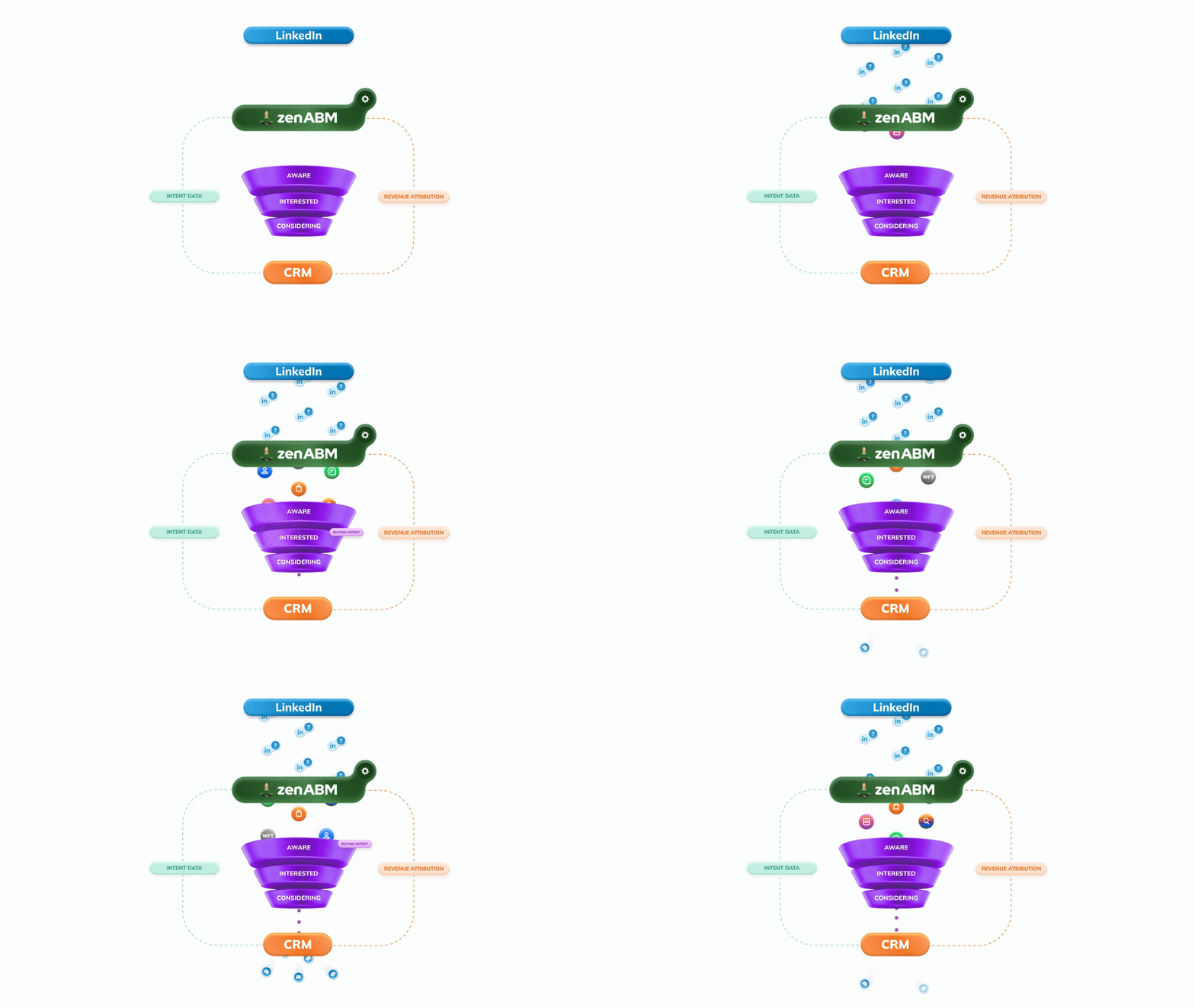
That is where ZenABM becomes especially useful. Its company-level engagement tracking, qualitative intent insights, CRM sync, and campaign-level pipeline visibility help you see which offers are pulling the right accounts forward, not just generating activity.
If you are serious about improving ABM conversion rates, ZenABM is a strong layer to add while you test and refine your offer strategy.
Try ZenABM for free (37-day free trial) or book a demo now to know more!
Some common questions about ABM offer strategy and their answers:
A good ABM offer has high perceived value (the prospect immediately understands what they get), is unique (not available from competitors), delivers value quickly (ideally at the moment of engagement), and creates a “Level 3 moment” where the prospect uses the offer and realizes a larger problem they need to solve, which your product addresses.
“Book a Demo” meets none of these criteria, which is why it consistently underperforms as a standalone offer.
Free tools or features that let prospects experience your product’s core value without a sales conversation are the gold standard.
Customized audits of their specific setup score high on perceived value and uniqueness.
Research or benchmarks they cannot get elsewhere, along with peer comparison data that reveals gaps in their current approach, also perform well.
The best offers deliver genuine value independently of whether the prospect buys anything, because the value builds trust rather than replacing it.
Start by posting organically on LinkedIn to test your hook and format without any ad budget at risk.
Then run your top 2 to 3 offers simultaneously in separate ad sets targeting the same audience, and evaluate after 1,000 or more impressions per offer at a frequency of 2 or higher. Measure CTR, landing page conversion rate, and downstream demo or trial rate rather than just top-of-funnel clicks, because an offer that generates cheap clicks but no pipeline is worse than one with fewer clicks that actually converts.
Test at least 4 offers before making conclusions about what works for your audience.
Single-image ads and Thought Leader Ads outperform video ads in ABM contexts based on ZenABM’s 2026 benchmark data, and the gap is substantial.
The exception is UGC-style video (authentic, first-person, day-in-the-life format) which can achieve 1% or higher CTR. GIFs often outperform full videos at a fraction of the production cost because they communicate motion and product value without requiring the viewer to commit to watching an entire video.
