



Influ2 is a person-based, contact-level ABM platform built for one core job: reaching specific people inside target accounts with ads, then showing you exactly who engaged so sales can follow up with context.
Instead of optimizing around account reach or anonymous site traffic, Influ2 centers everything on named contacts (or buying-group lists) you already have: decision-makers, champions, and influencers.
This deep dive explains what Influ2 is, how it works, its key features, pricing signals, user feedback, and when it makes sense versus when it becomes an expensive layer of complexity.
We’ll also see how ZenABM (a first-party LinkedIn-focused ABM platform) can be a better alternative for LinkedIn-first teams, or a complementary analytics and activation layer alongside Influ2 or another ABM suite.

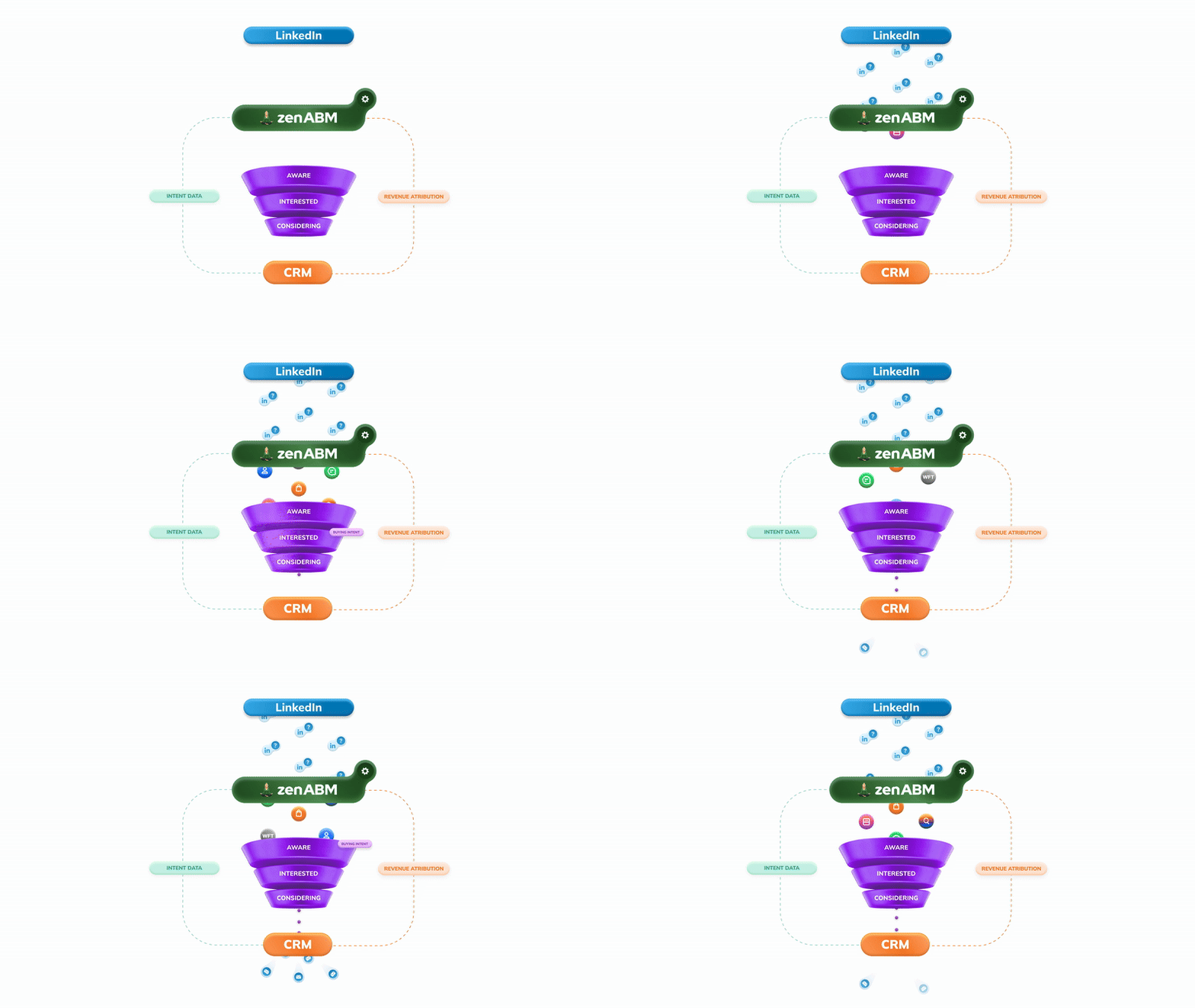
In case you want it short:


Influ2 is a person-based ABM platform that lets B2B teams target ads to specific individuals inside named target accounts, then measure engagement at the contact level so sales can act on it.
You typically connect your CRM or upload buying-group lists, run campaigns across supported ad channels, and track which contacts saw ads, clicked, and influenced downstream outcomes like site visits, opportunity creation, and deal progression.
The value is precision and sales alignment: instead of “account engagement” as a vague score, you get named-buyer signals you can route into CRM workflows, alerts, and outreach.
Influ2 is built around one theme: person-based targeting plus contact-level engagement intelligence.
Here are the core capabilities that matter in practice:
Most ABM platforms focus on accounts as the targeting unit. Influ2 focuses on people.
You can run ads specifically to named contacts at your target accounts (for example, the buying group you already track in your CRM), so impressions concentrate on decision-makers rather than drifting to non-buyers inside the same company.
This is not an “anonymous visitor identification” product. It works best when you already have reliable contact data and a defined buying group.
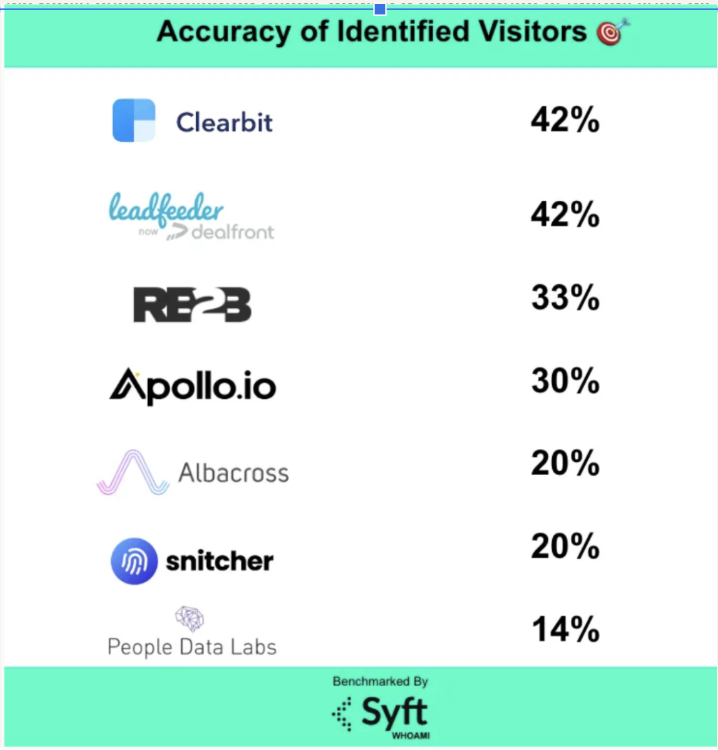
If you’re comparing it to IP-based visitor matching tools, keep expectations realistic. Those tools often struggle with accuracy (and they solve a different problem entirely).
A study by Syft found that IP-matching accuracy for website visitor identification can be far from dependable in many setups.


Influ2’s main reporting value is simple: it shows engagement by person.
Instead of only seeing “account engaged,” you see which contacts saw ads, clicked, and (in many setups) whether they later visited your site or influenced downstream pipeline.
This gives sales a usable signal like:
“John Doe at Account X saw 45 impressions and clicked 3 times,” which is far more actionable than broad audience metrics.

Influ2 can surface intent-like signals at the contact or buying-group level, combining ad engagement with downstream activity and (in some packages or integrations) additional behavior or intent inputs.
Pro Tip: Third-party intent signals can be directionally useful, but they’re often noisy and hard to map to true buying momentum. ZenABM approaches intent differently by using first-party LinkedIn ad engagement as the signal. You see which companies engaged with which message themes and creatives, then route outreach based on what they actually responded to.

Influ2 supports sequencing ads to contacts based on engagement triggers.
If a contact clicks (or meets another threshold), you can move them into the next message set, essentially running rule-based journeys via ads.
This works when you have enough creative variety and clear journey logic. If you run one or two generic ads to the whole list, you’ll get generic results.
Influ2 is designed to plug into common revenue workflows.
It integrates with major CRMs and marketing automation systems (for example, Salesforce, HubSpot, and Marketo) and also connects with sales engagement and collaboration tools so contact-level signals can reach sales in the places they already work.
The practical value is operational: contact engagement data can be synced into CRM fields, used for alerts, and used to prioritize outreach based on real ad exposure and engagement.
Implementation is usually faster than full-suite ABM platforms, but it still requires field mapping and workflow decisions to avoid “another dashboard nobody checks.”

Influ2 provides revenue influence reporting that ties contact-level engagement to pipeline movement.
The key idea is not “Influ2 replaces your attribution stack,” but “Influ2 gives a clear view of which targeted people engaged and how that mapped to opportunity creation, progression, and wins.”
Person-based targeting means privacy and security scrutiny is unavoidable.
Influ2 positions itself as privacy-compliant for enterprise teams and highlights common procurement requirements (for example, GDPR/CCPA alignment and enterprise security posture).
If your org is strict about vendor risk, you should validate requirements in the vendor’s security documentation and your own legal review, especially around data sharing, retention, and identifiers used for matching.
Plus, the tool has built-in ad creative storage too:


Influ2 surfaces hot accounts and highlights the specific contacts driving engagement.
This is most useful when sales wants a ranked list of “who is paying attention” inside the account, not just a generic account engagement score.
Influ2 pricing is not transparently listed on the vendor’s website in a self-serve way.
Most buyers see quote-based pricing that scales with the number of people (contacts) they want to target and monitor.
Here’s what third-party sources and user feedback commonly indicate:

 This reinforces that Influ2 can work financially when your sales motion can convert person-level engagement into pipeline, especially in enterprise deals.
Influ2 holds a strong average rating on G2 with a large number of verified reviews, but the details matter.
What users applaud about Influ2:
Where users report pain points or limitations:
One alternative to Influ2 is ZenABM.
It is designed specifically for LinkedIn ABM, so it can be a lean and affordable alternative for teams where LinkedIn is the primary ABM channel.
Even for teams running multi-channel ABM, ZenABM can be a complementary layer because it provides first-party LinkedIn engagement, account scoring, stage movement, and pipeline analytics without requiring a large multi-channel suite.
Let’s look at those features:
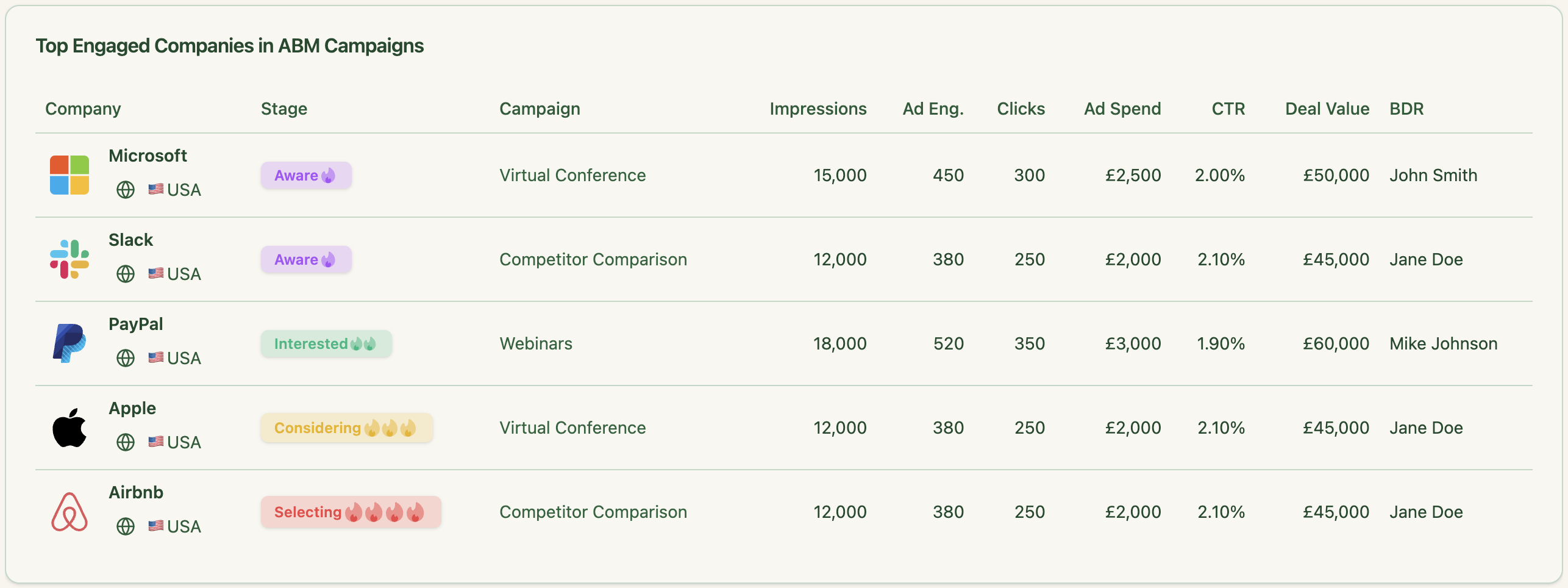
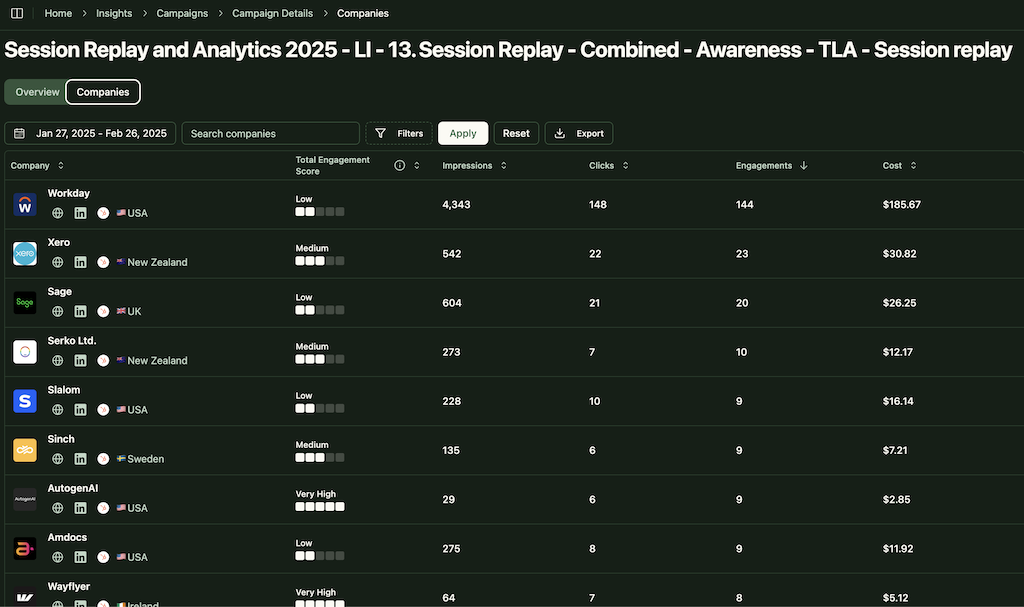
ZenABM integrates directly with the LinkedIn Ads API to pull account-specific data from all campaigns.
This allows you to identify precisely which target accounts are interacting with your LinkedIn ads (impressions, clicks, etc.), all mapped to individual companies.
Pro Tip: ZenABM can also reveal anonymous website visitors for free. Retarget them with inexpensive LinkedIn text ads, and ZenABM will identify the companies that saw your impressions.
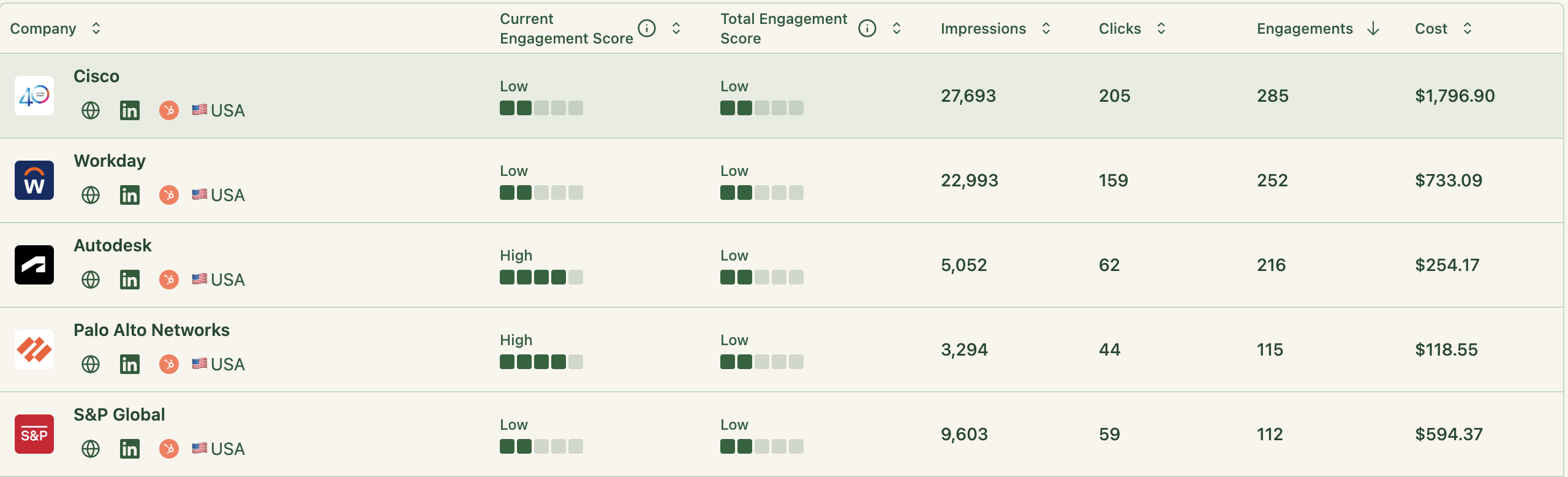
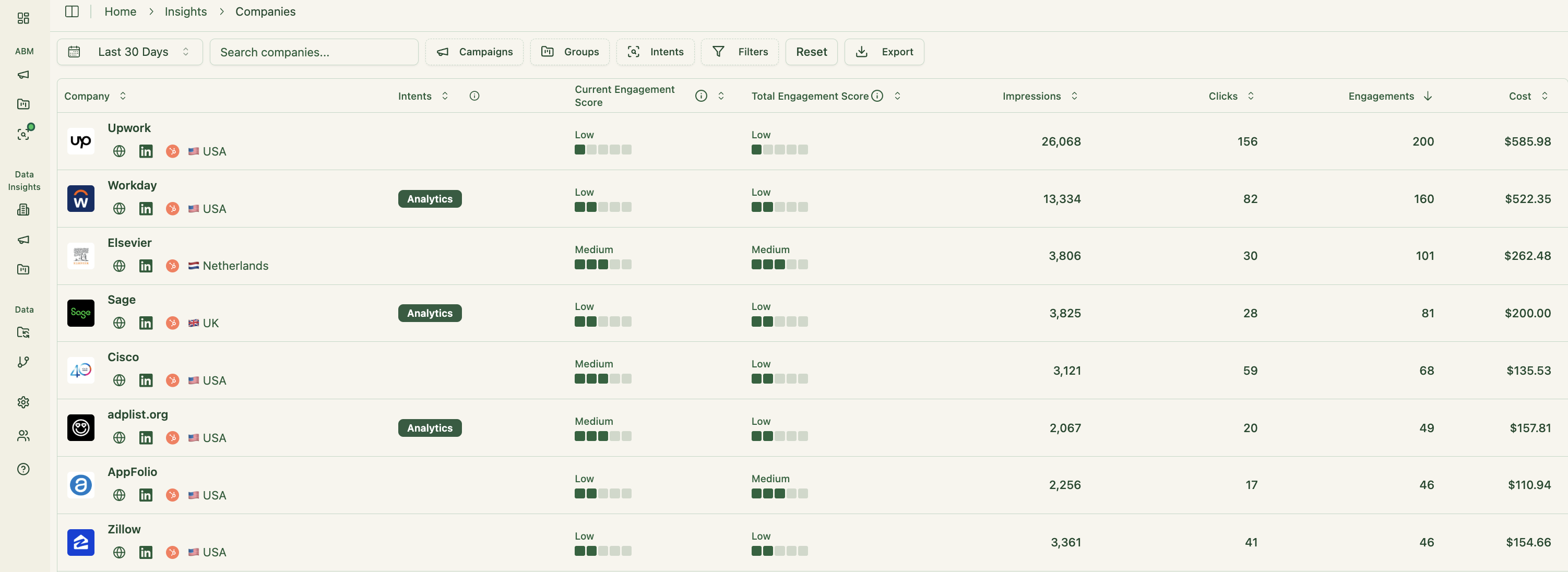
ZenABM continuously updates engagement scores from ad interactions. You can monitor recent trends (like the past week) or historical patterns to identify accounts heating up.
These scores help marketing and sales prioritize high-value accounts for follow-up.
ZenABM enables you to define your ABM funnel stages (e.g., Identified → Aware → Engaged → Interested → Opportunity) and automatically classifies accounts using engagement and CRM information.
You can set your own thresholds for “Engaged” or “Interested,” and ZenABM will track stage transitions automatically.
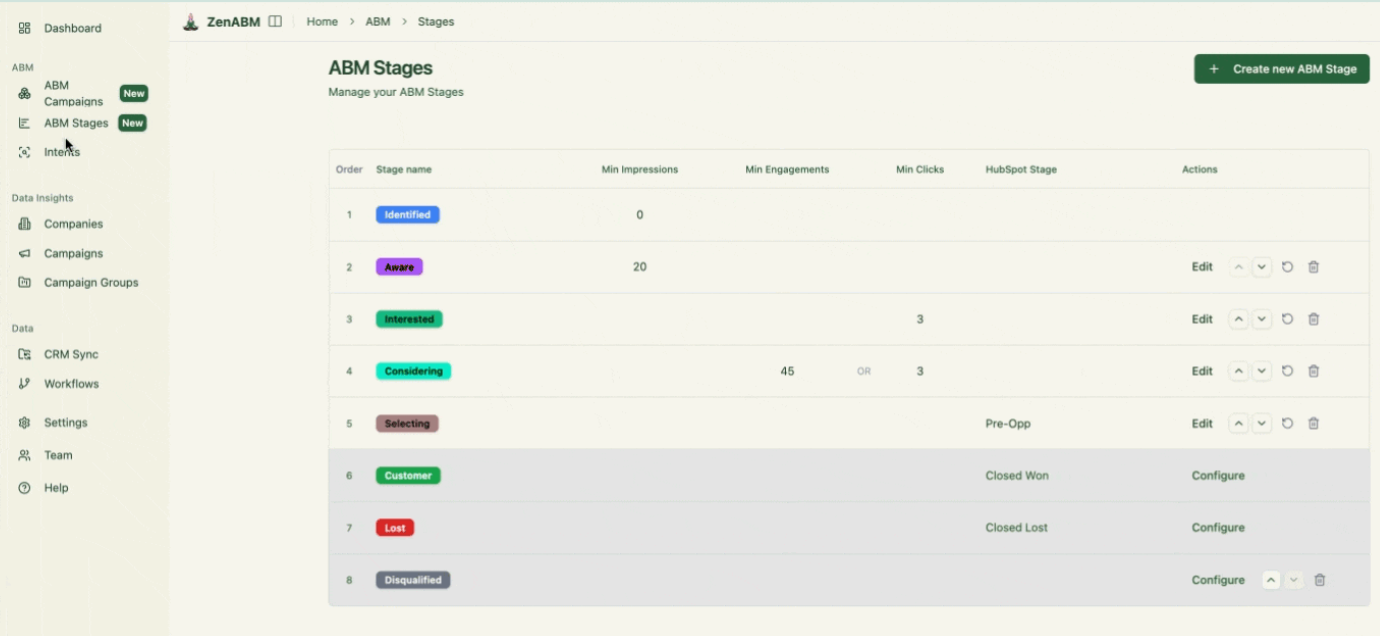
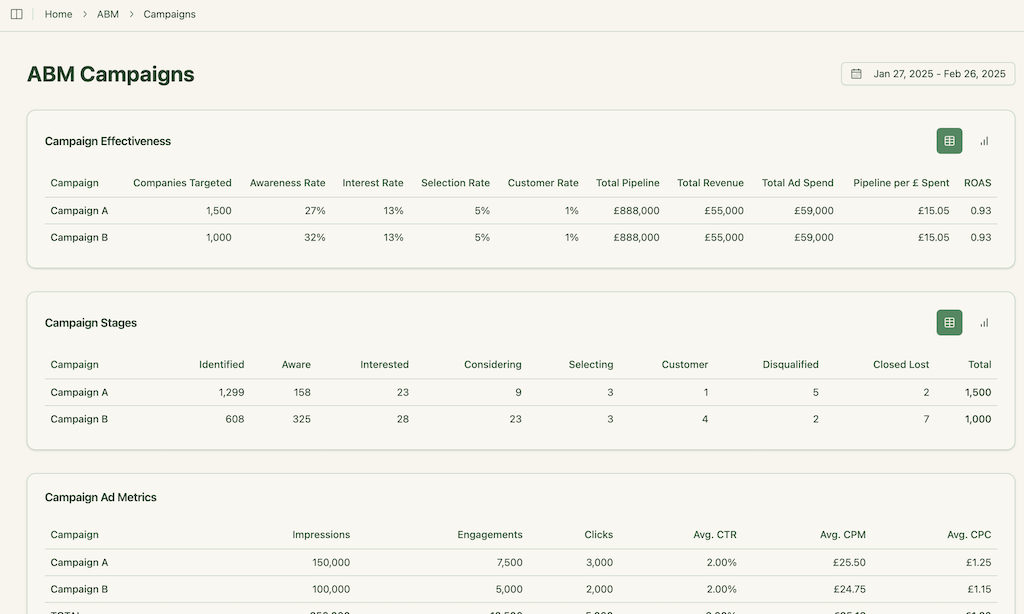
This delivers full-funnel visibility like enterprise ABM platforms, highlighting where accounts stall and where progress accelerates.
ZenABM integrates bidirectionally with CRMs such as HubSpot (Salesforce available on higher plans).
LinkedIn engagement data feeds directly into your CRM as company-level properties, keeping sales teams informed:
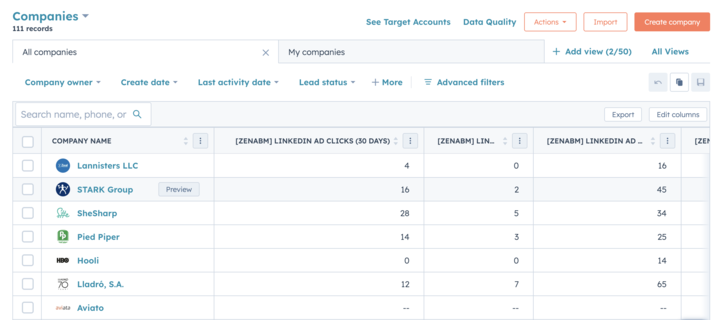
ZenABM can auto-update account stages to “Interested” when engagement passes a set threshold and assign accounts to specific BDRs for follow-up.
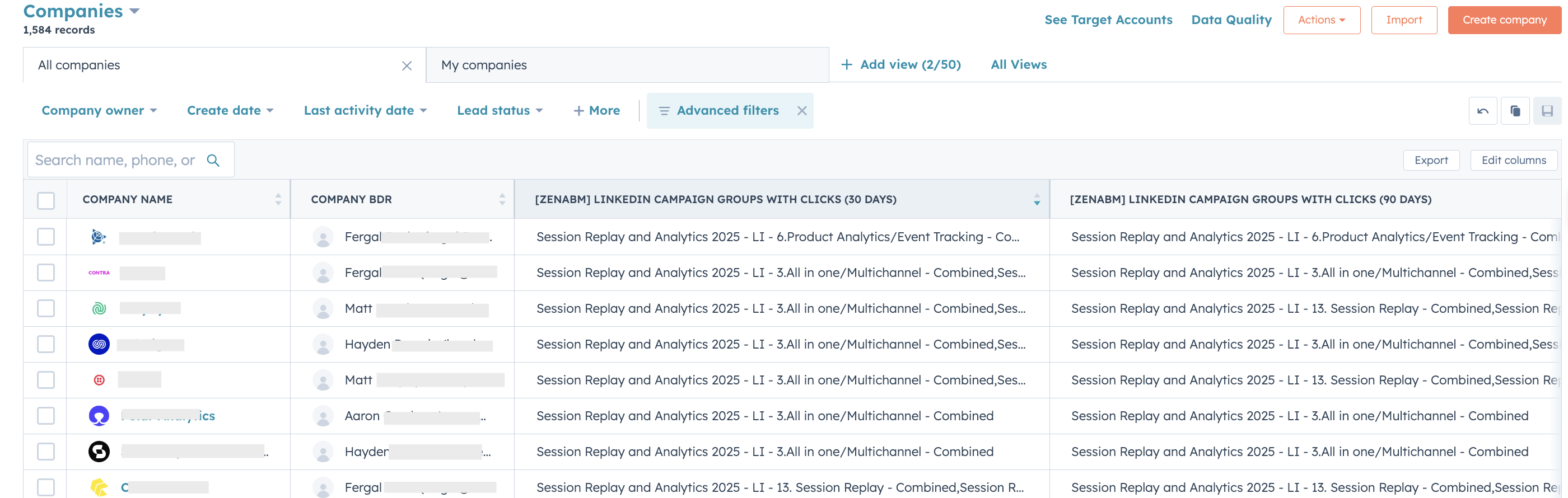
ZenABM allows you to tag campaigns by theme (like “Feature A” vs. “Feature B”) and shows which accounts engage with which themes, revealing their priorities.
These insights also sync to your CRM, supporting targeted outreach and relevant messaging.
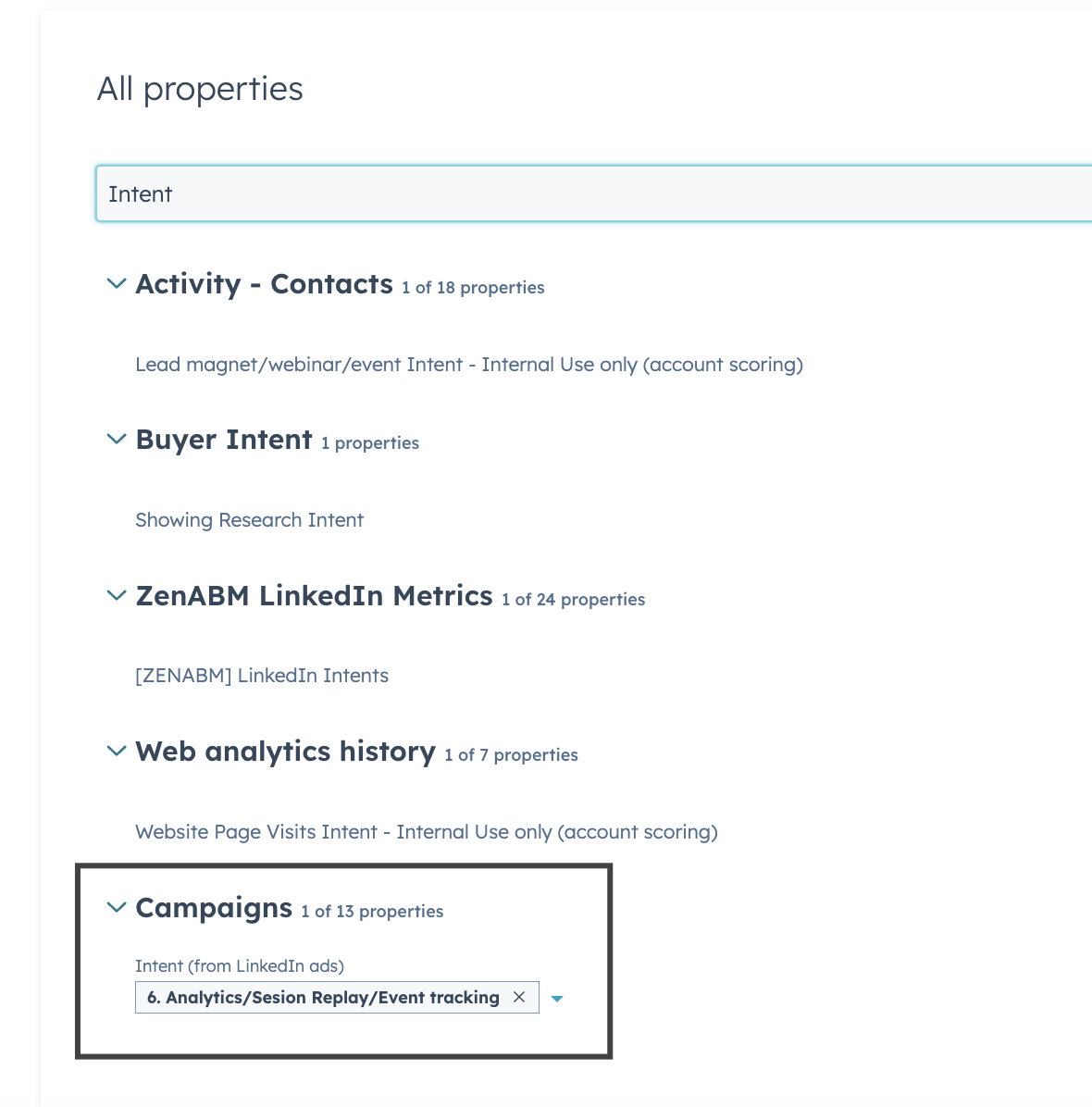
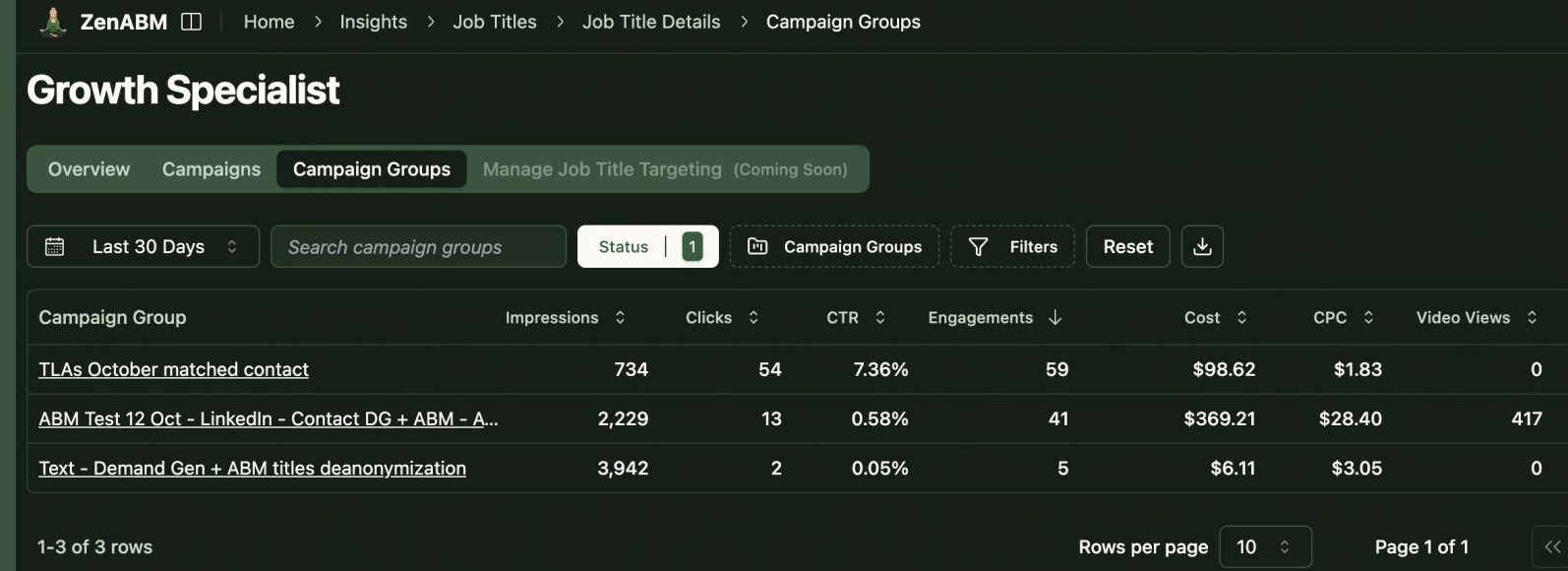
ZenABM also gives a breakdown of the specific job titles that interact with your ads.
Raw metrics, dwell time, full video funnel, all available out of the box.
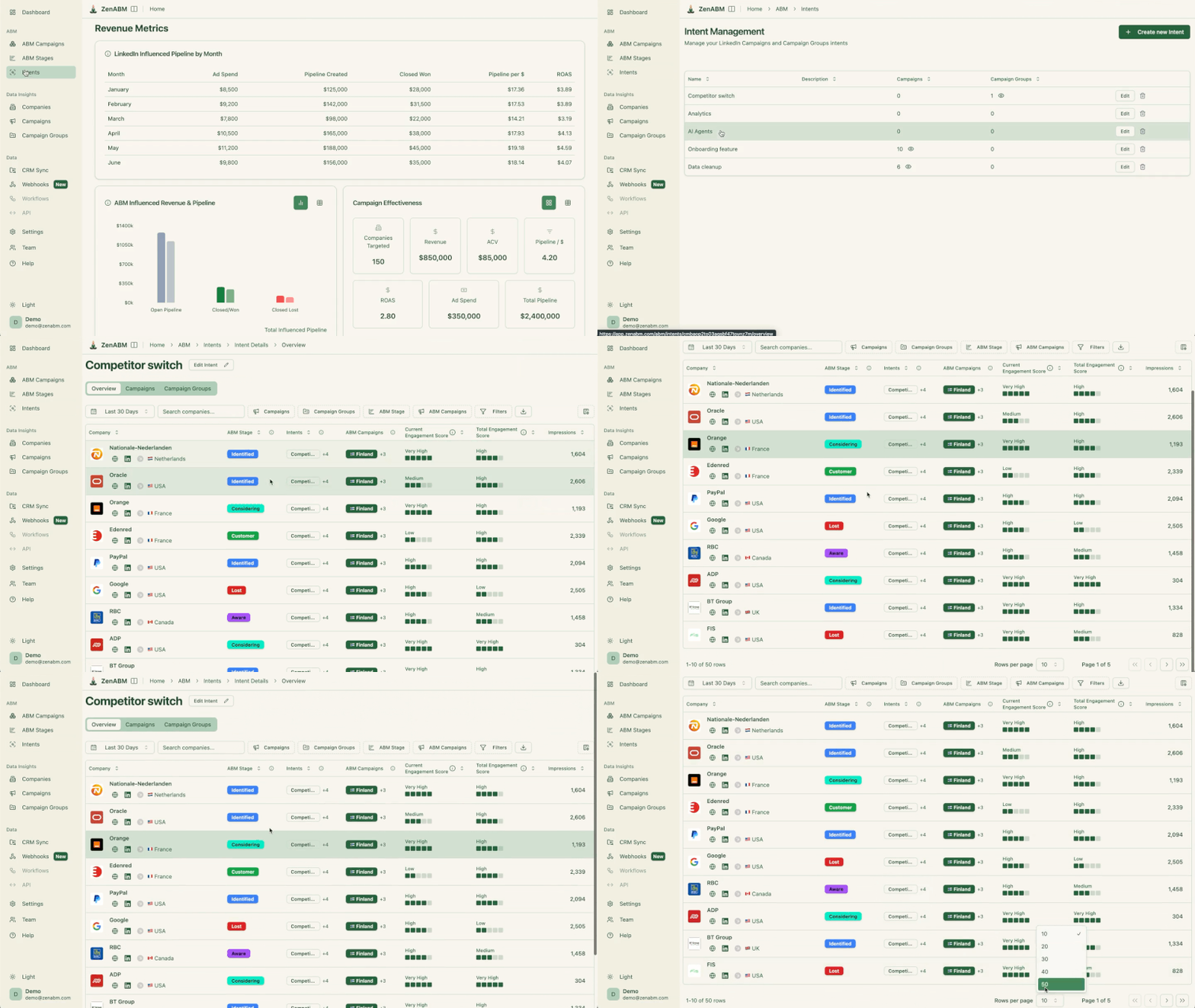
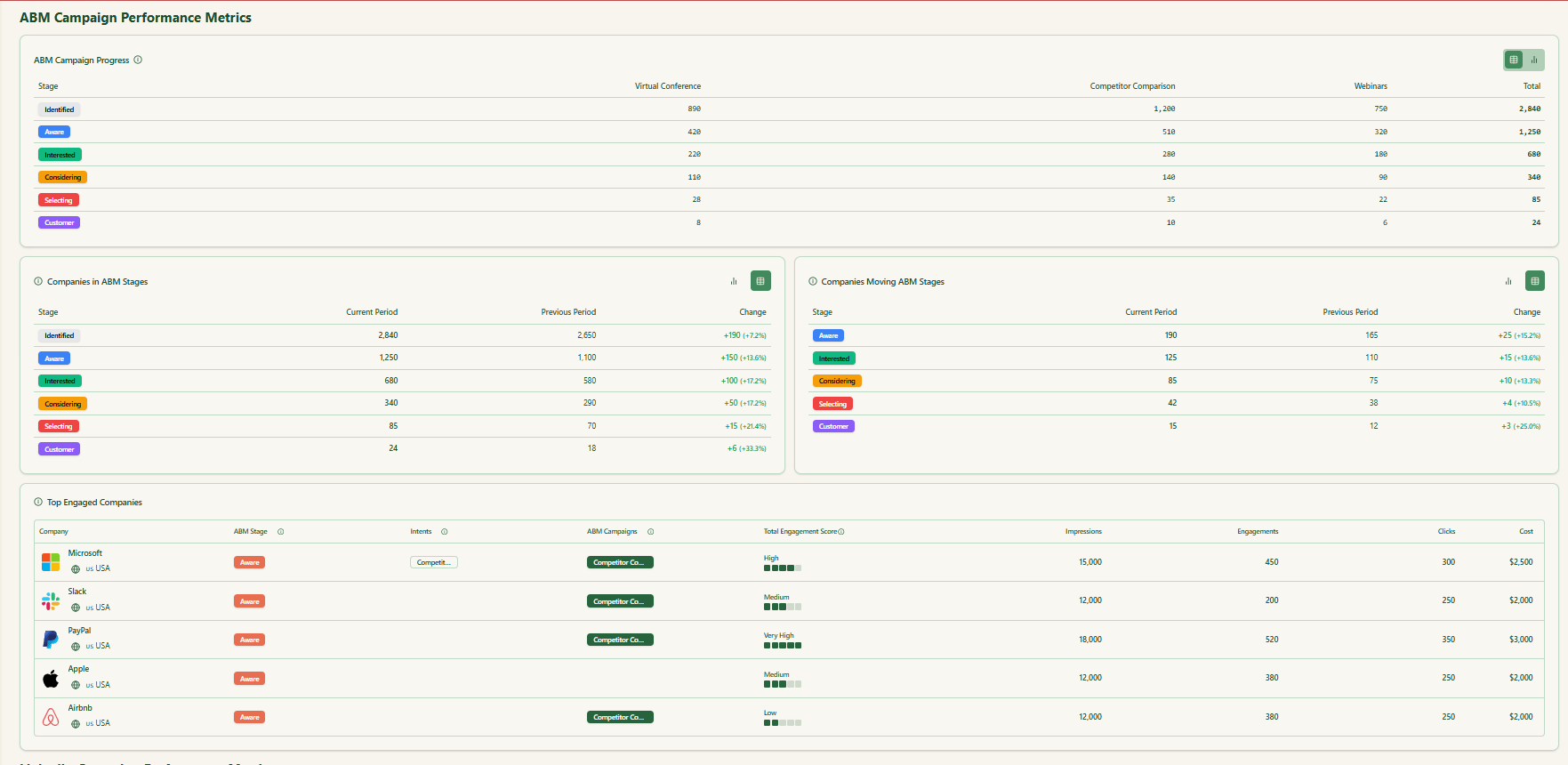
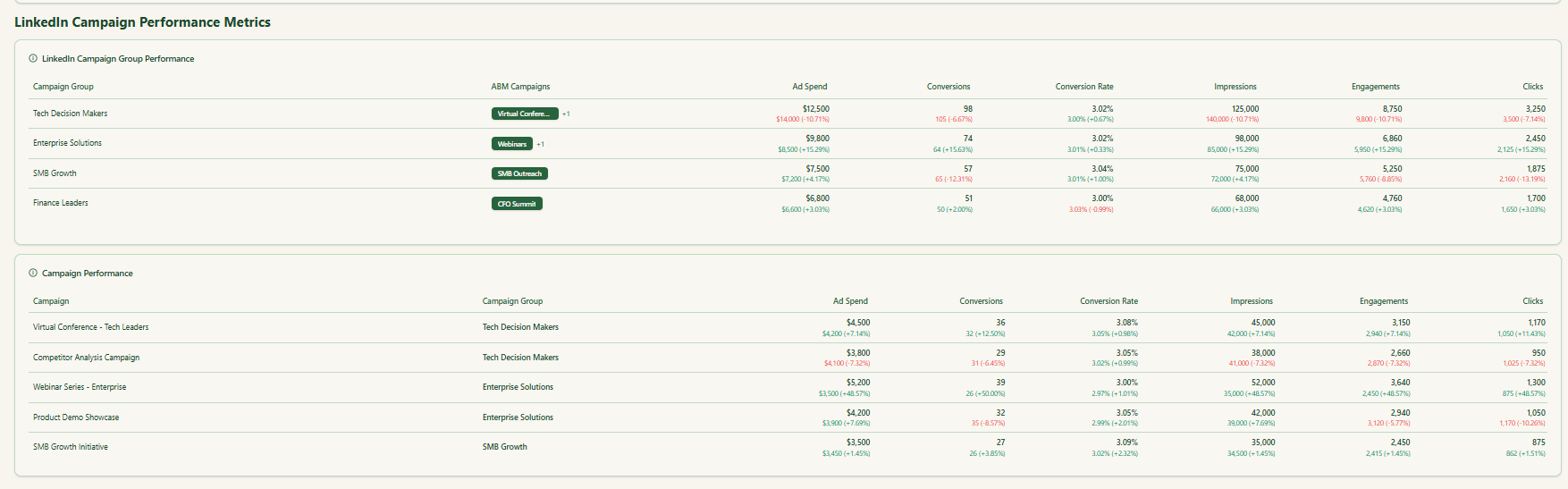
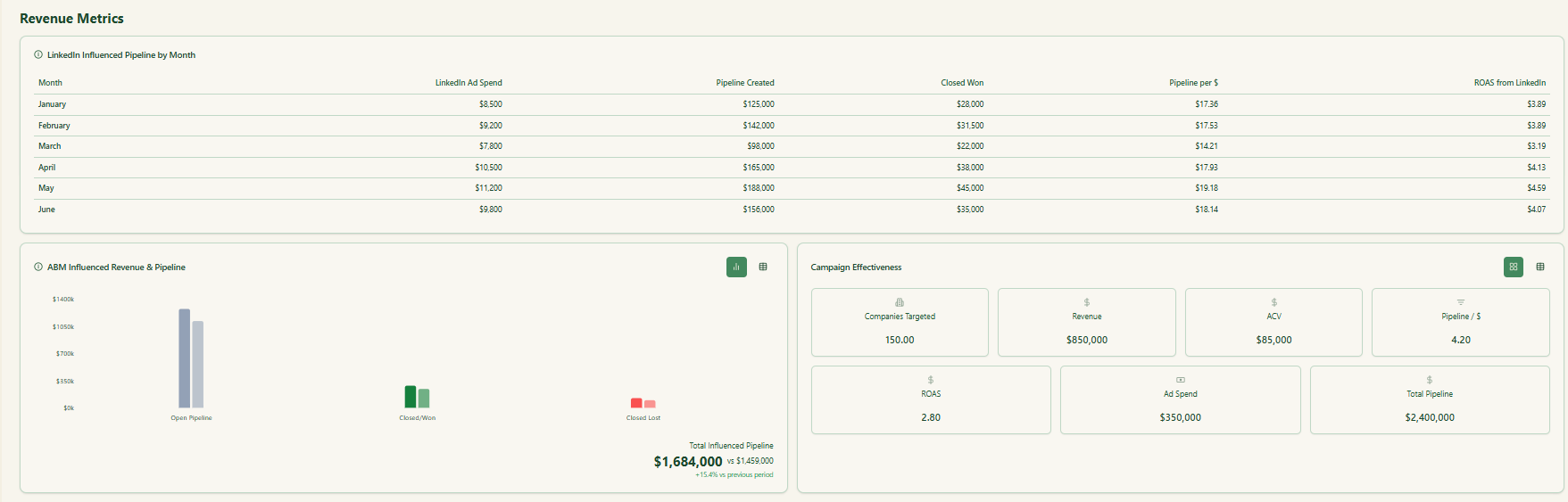
ZenABM includes pre-built ABM dashboards linking ad exposure, engagement, funnel stages, and pipeline metrics.
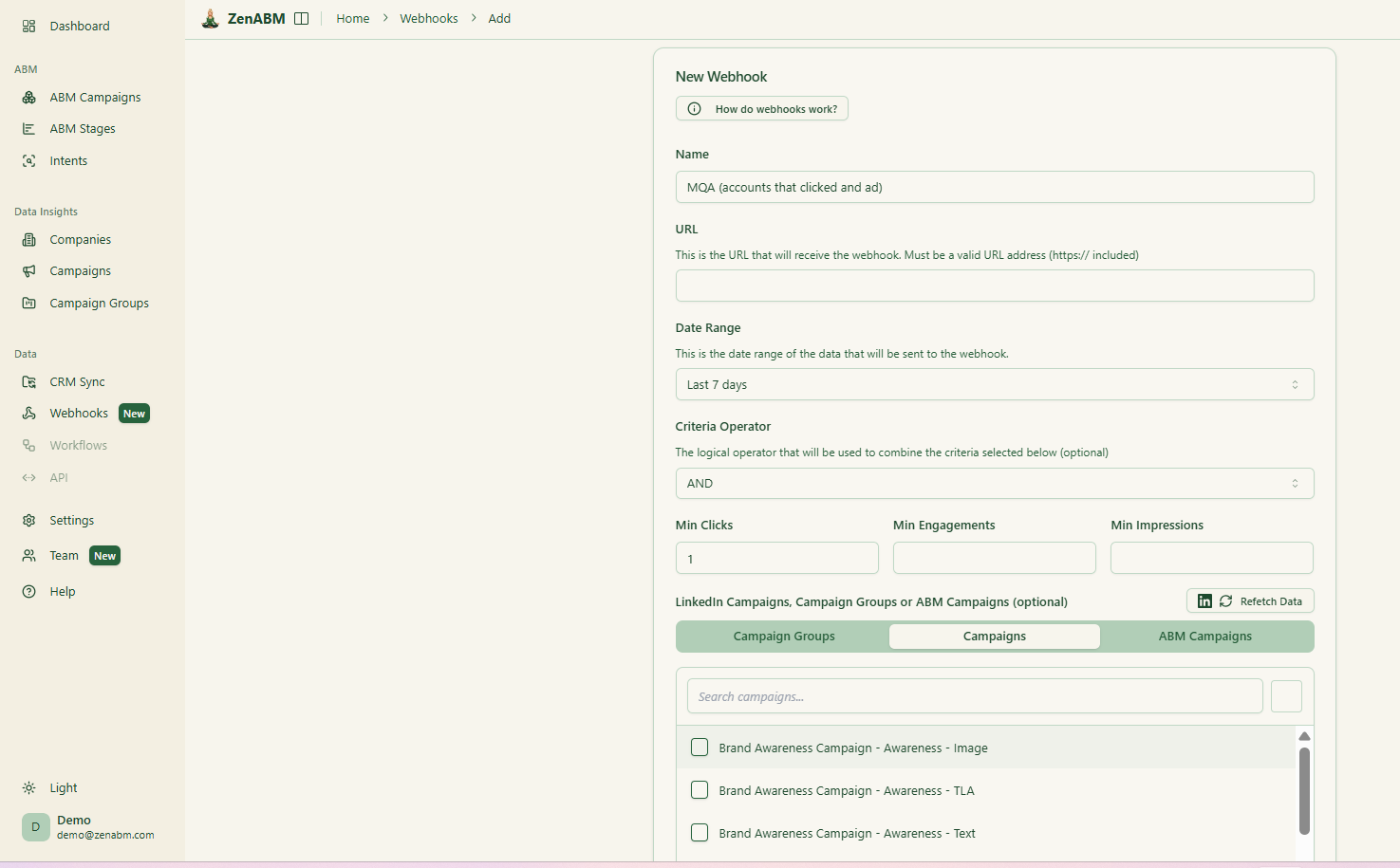
With the newly rolled out custom webhooks, ZenABM can fit into any of your workflows as needed.
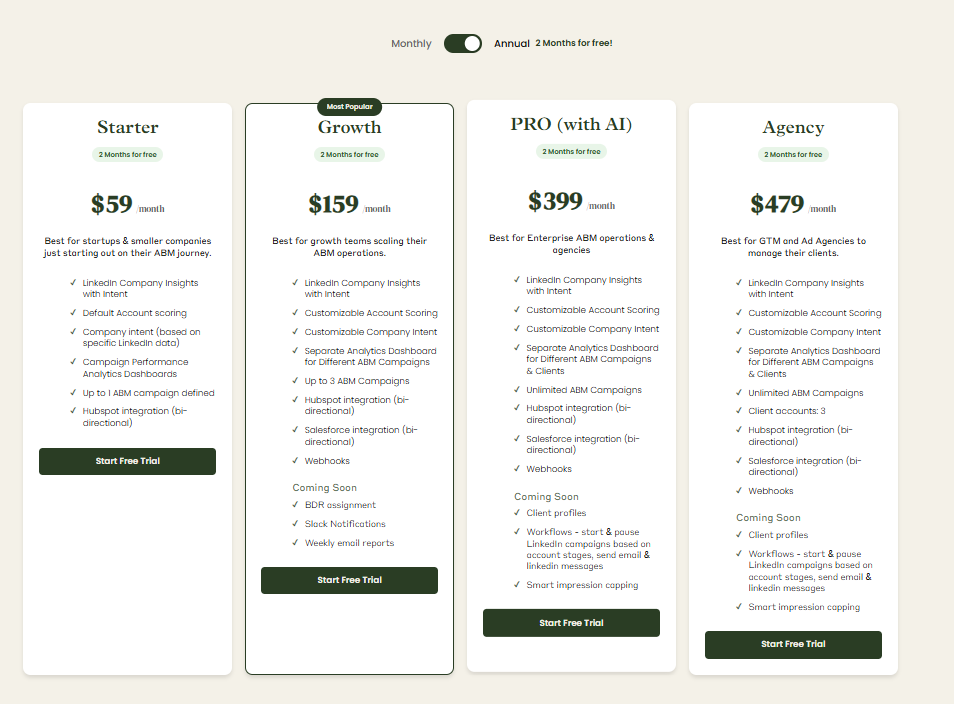
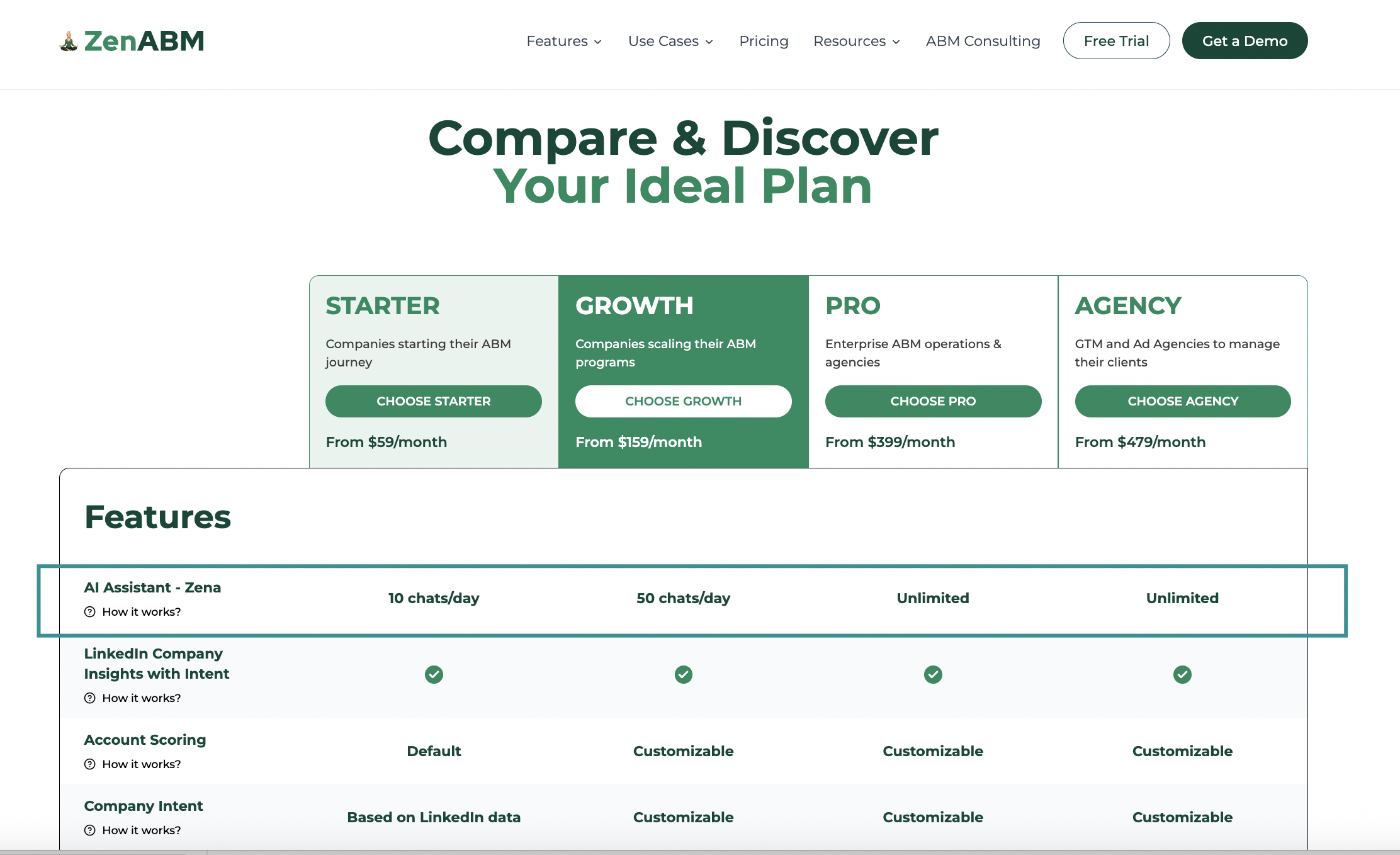
Plans start at $59/month for Starter, $159/month for Growth, $399/month for the Pro (AI) tier, and $479/month for the agency tier.
Even the highest tier costs under $6,000/year, far less than many enterprise ABM platforms.
All plans cover essential LinkedIn ABM functions, with higher tiers mostly expanding limits or adding Salesforce integration.
Pricing is flexible (monthly or annual with two months free), and a 37-day free trial allows teams to try before buying.
Influ2 is best understood as contact-level ABM through ads: you target specific people inside target accounts and use engagement signals to guide sales outreach and measure influence.
For teams with strong buying-group data, enterprise deal sizes, and a disciplined ABM motion, Influ2 can improve precision and reduce wasted impressions.
But if your contact lists are messy, your sales motion cannot operationalize person-level signals, or you need straightforward pipeline attribution without high per-contact economics, it can become a costly layer.
If your primary focus is LinkedIn ABM and you want first-party engagement insight, cleaner pricing, and faster pipeline visibility, ZenABM is often the more practical fit.
Whether you’re starting your ABM journey or trying to remove blind spots in your current stack, it’s worth exploring ZenABM’s 37-day free trial.
