



Dreamdata is a well-known B2B revenue attribution platform used to analyze marketing spend, measure ROI, and optimize campaigns.
However, many teams report complex setup, a steep learning curve, weak reporting, and a limited free plan.

For LinkedIn-first ABM teams, Dreamdata often lacks actionable account-level insights from LinkedIn ads and intent signals.
The good news: agile alternatives (like ZenABM) offer simpler UX, faster onboarding, and deeper ABM analytics out of the box.
In this guide, I’ll cover the top 10 Dreamdata alternatives for 2026, spanning attribution tools, account intelligence platforms, and ABM orchestration suites.
You’ll be able to pick the best-fit option for your exact use case.
Before comparing Dreamdata alternatives, get clear on what you actually need.
Different tools win in different use cases:
Note: ZenABM spans multiple categories. It delivers attribution-style analytics, account-level LinkedIn intent signals, and lightweight orchestration by organizing LinkedIn initiatives and syncing insights to your CRM.
For a high-level view, here’s how these 10 tools compare by primary use case, standout features, and pricing tier:
| Tool | Primary Use Case | Standout Features | Pricing Tier |
|---|---|---|---|
| ZenABM | LinkedIn-first ABM analytics & attribution | De-anonymizes LinkedIn ad engagement, account intent & scoring, CRM sync, pipeline & ROAS dashboards | Low (affordable SaaS. Starts at just $59/month!) |
| Ruler Analytics | Closed-loop revenue attribution (including calls + offline) | Tracks forms, calls & chat, connects journeys to CRM revenue, pushes revenue back to analytics and ad platforms | Mid (traffic-based tiers) |
| LeadsRx | Multi-channel marketing attribution | Tracks online & offline touches (podcasts, radio, TV), flexible attribution windows | Mid (custom quotes) |
| N.Rich | Full-scale ABM execution (ads + intent) | Own B2B DSP for programmatic ads, third-party intent data, and account-based pipeline attribution | Mid to High (mid-market) |
| Recotap | LinkedIn ABM campaign automation | 1:1 personalized LinkedIn ads at scale, intent-driven targeting, unified ABM workflow for SMB SaaS | Mid (SMB-friendly) |
| Influ2 | Person-based ABM advertising | Targets individual buyers, person-level engagement visibility, CRM integration for sales follow-up | High (enterprise) |
| RollWorks | Broad ABM platform (ads, site, sales) | Native DSP, multi-channel ads, account scoring, journey stage tracking, CRM & MA integrations | High (tiered packages) |
| Terminus | All-in-one ABM cloud | Cross-network ads, chat, web personalization, BrightFunnel attribution, sales alerts | High / Enterprise |
| DemandSense | LinkedIn ads optimization & attribution | Ad scheduling, frequency capping, LinkedIn + Google + Meta ROI tracking | Low (self-serve SaaS) |
| Factors.ai | B2B marketing analytics & attribution | No-code multi-touch attribution (7+ models), real-time journey tracking, LinkedIn view-through attribution | Mid (custom pricing) |
As you can see, each tool plays a different role.
Now let’s break down each Dreamdata alternative and when it makes sense over it.

Best for: B2B teams running LinkedIn-heavy multichannel ABM who want plug-and-play visibility into which accounts engage with LinkedIn ads, and how that converts into pipeline, and how other channels (Google Ads, Reddit Ads, etc.) support the buyer journey.
It’s especially useful for LinkedIn-first teams that find Dreamdata too generic or too heavy for social ad attribution.
Here’s why:
ZenABM solves a gap Dreamdata doesn’t.
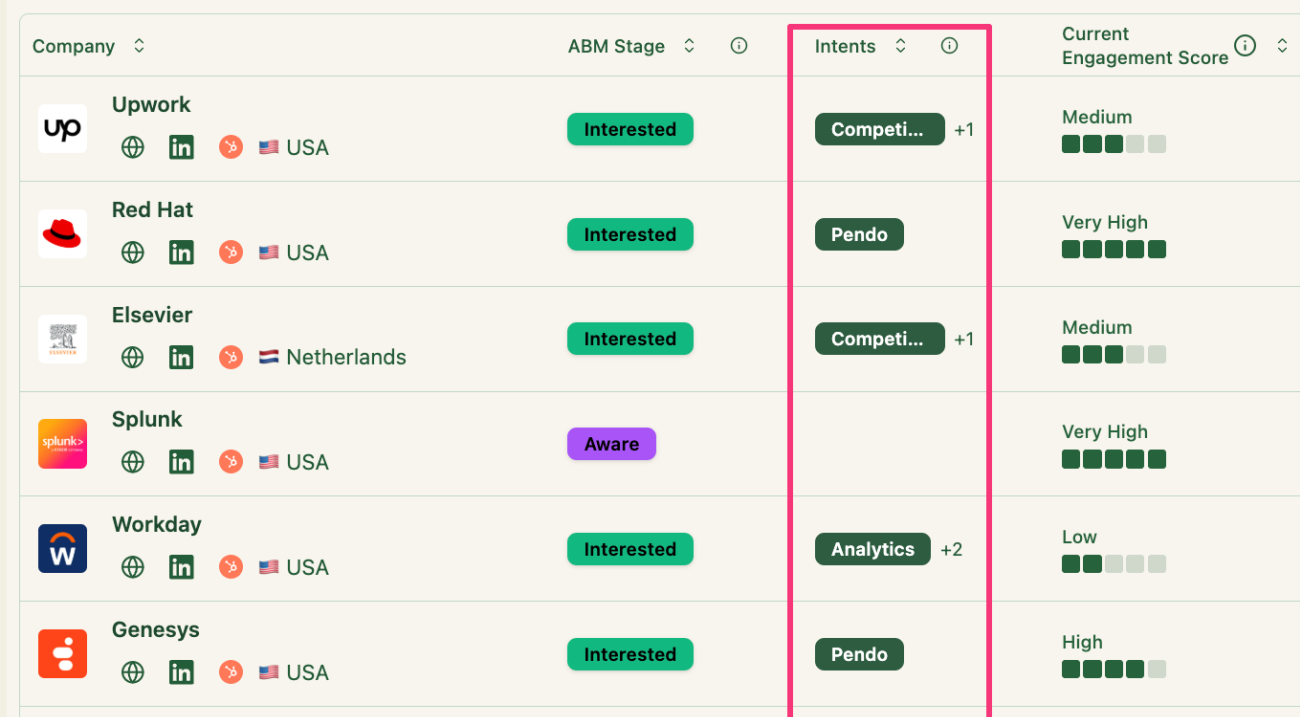
It de-anonymizes LinkedIn ad engagement at the account level, so you can see exactly which target accounts viewed or clicked your ads.
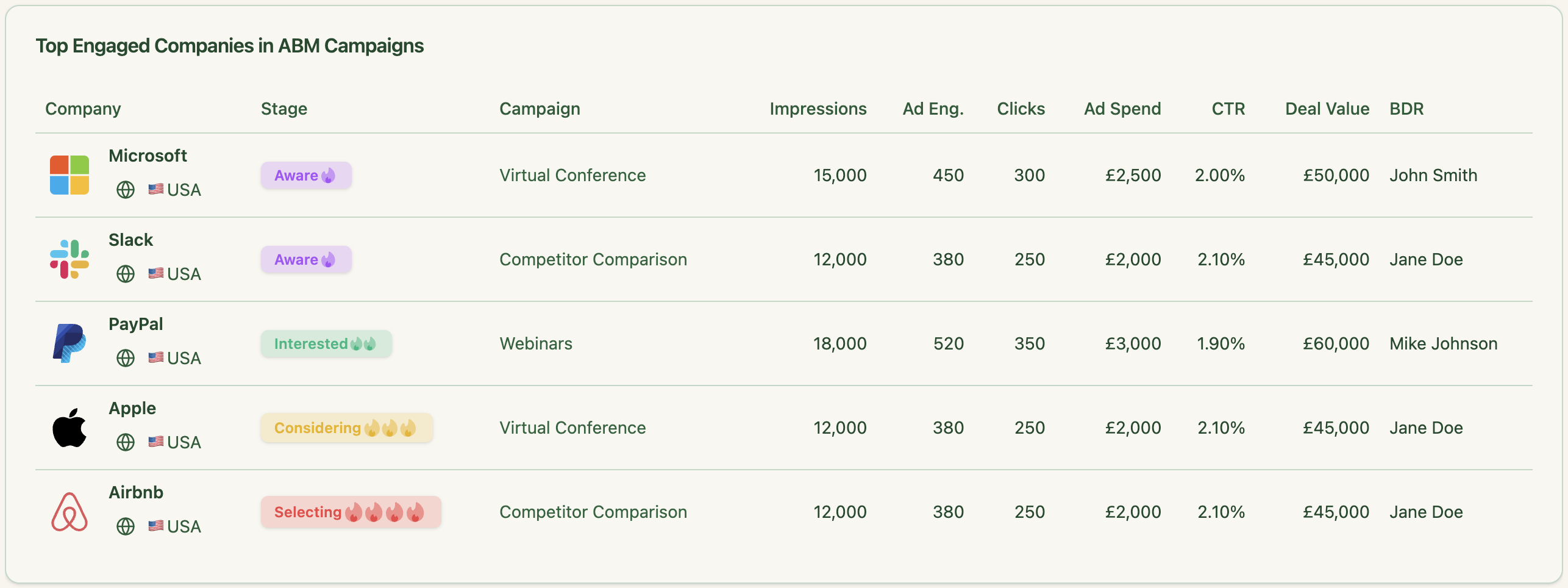
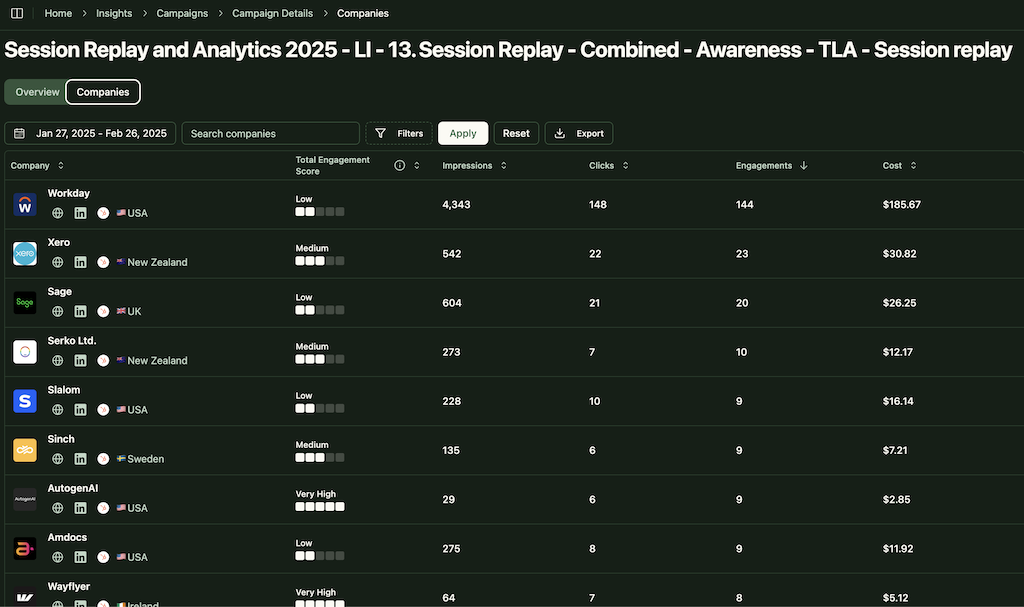
This data is pulled directly from the official LinkedIn Ads API.
You get first-party clarity on which companies view and engage with your ads, instead of relying on noisy IP or cookie matching.
Multiple studies question IP-based identification.
A Syft study, for example, suggests accuracy often peaks around 42 percent. That’s why ZenABM treats ad engagement as the stronger intent signal, rather than anonymous website deanonymization that depends on third-party sources.

ZenABM updates engagement scores in real time as accounts interact with your ads.
You get a full touchpoint history and can define stages like Identified, Aware, Engaged, Interested, and Opportunity.

ZenABM also shows the full multichannel buyer journey for each company:


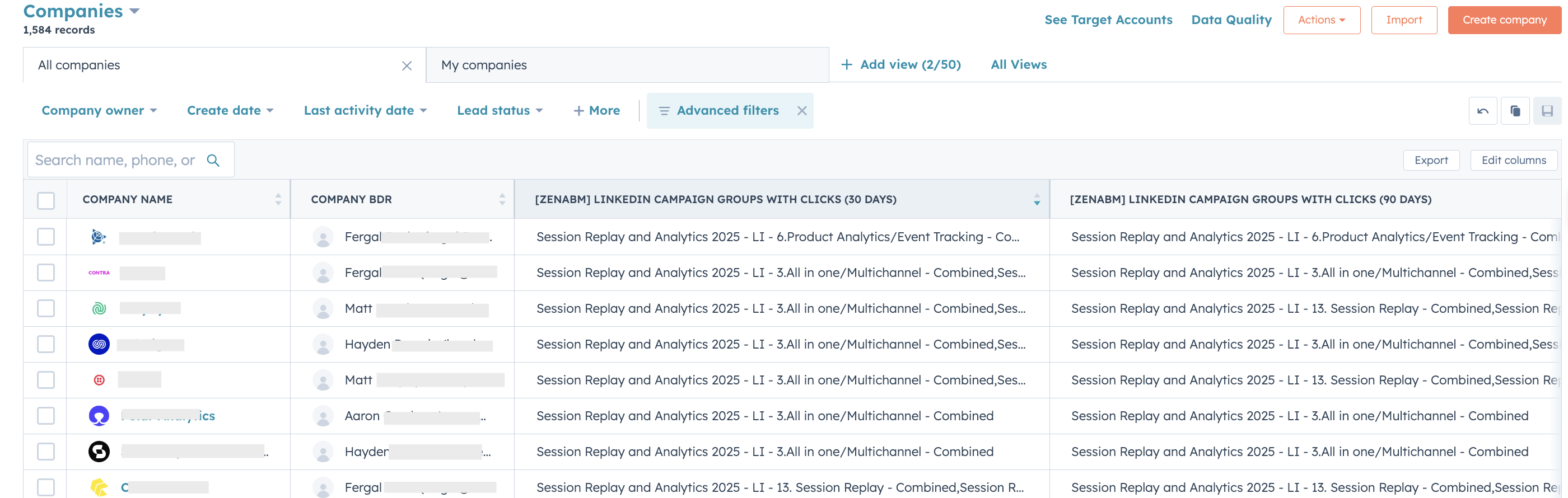
ZenABM syncs bi-directionally with HubSpot and supports Salesforce on higher plans. All LinkedIn metrics can be written as company properties in your CRM.
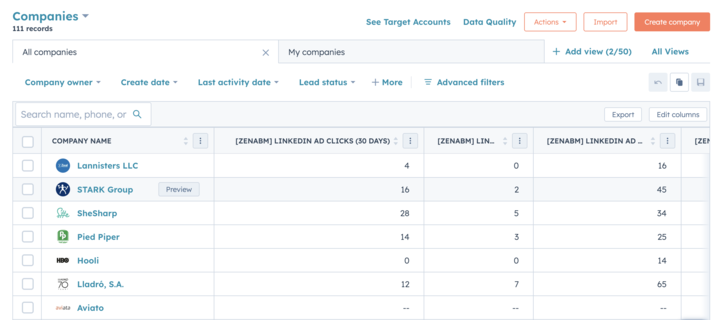
When an account crosses your scoring threshold, ZenABM can update its stage and auto-assign a BDR for timely outreach.
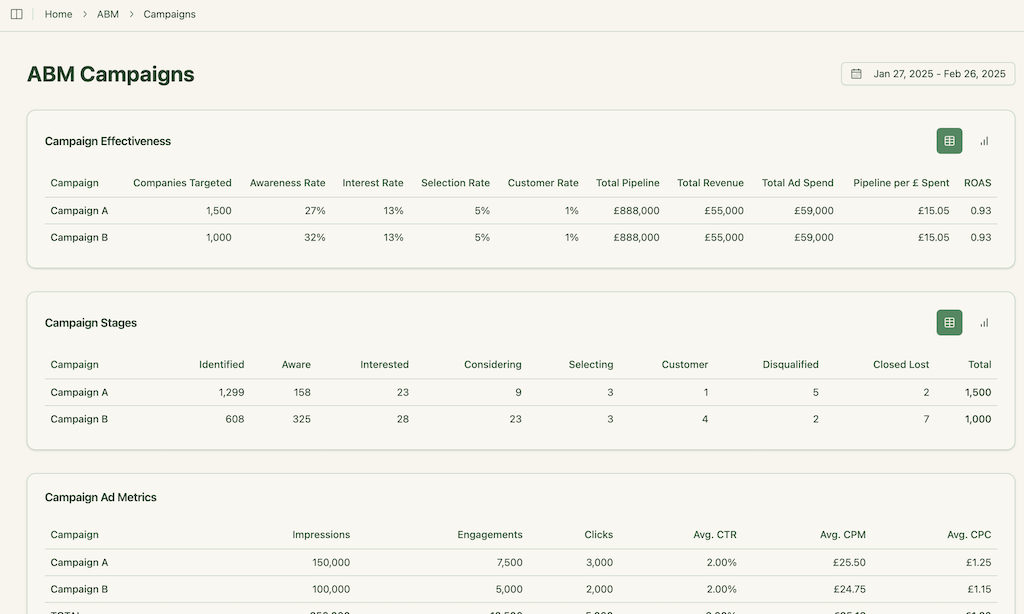
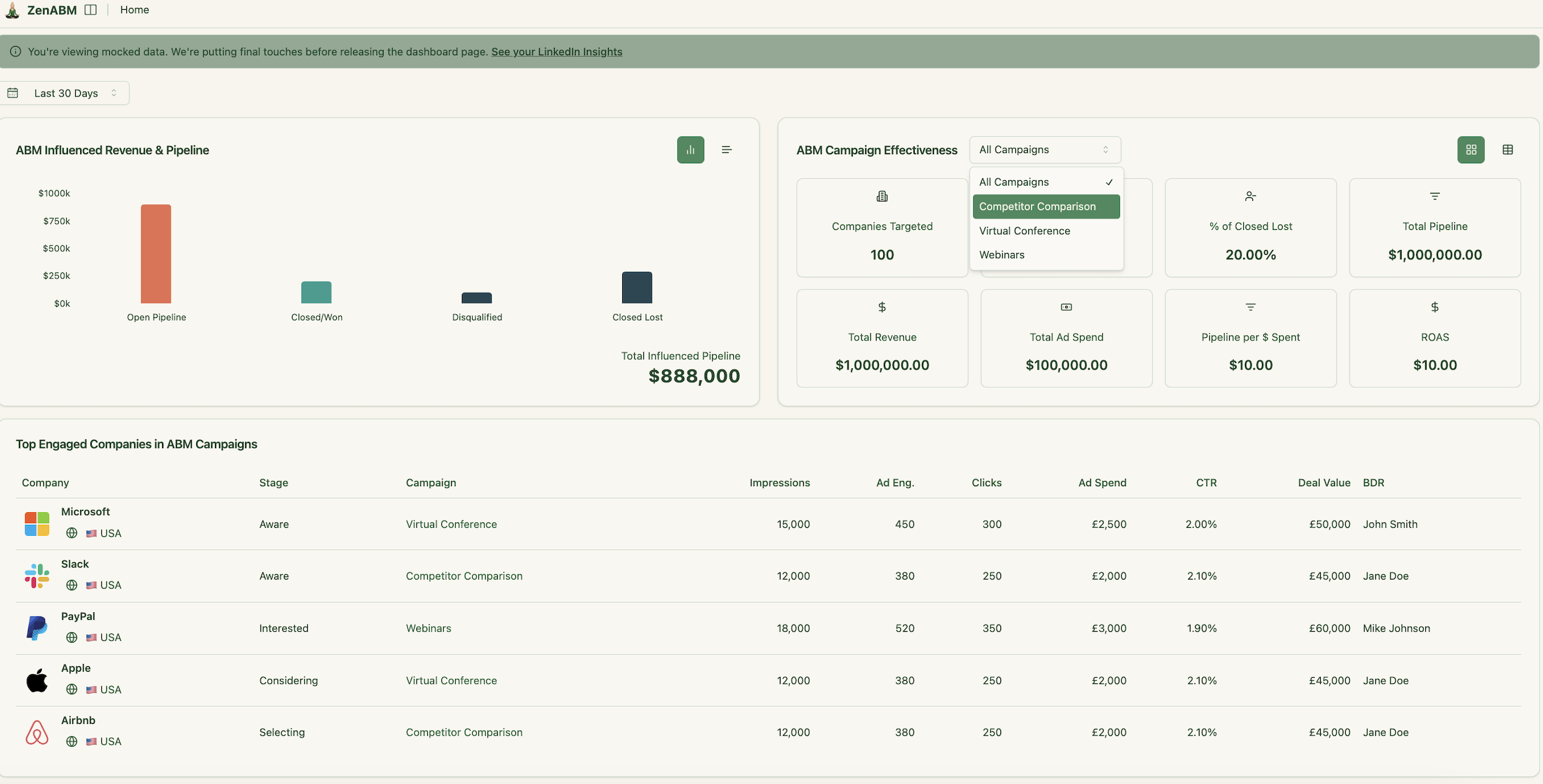
ZenABM ships dashboards that connect LinkedIn ads to account engagement, stage movement, and revenue.
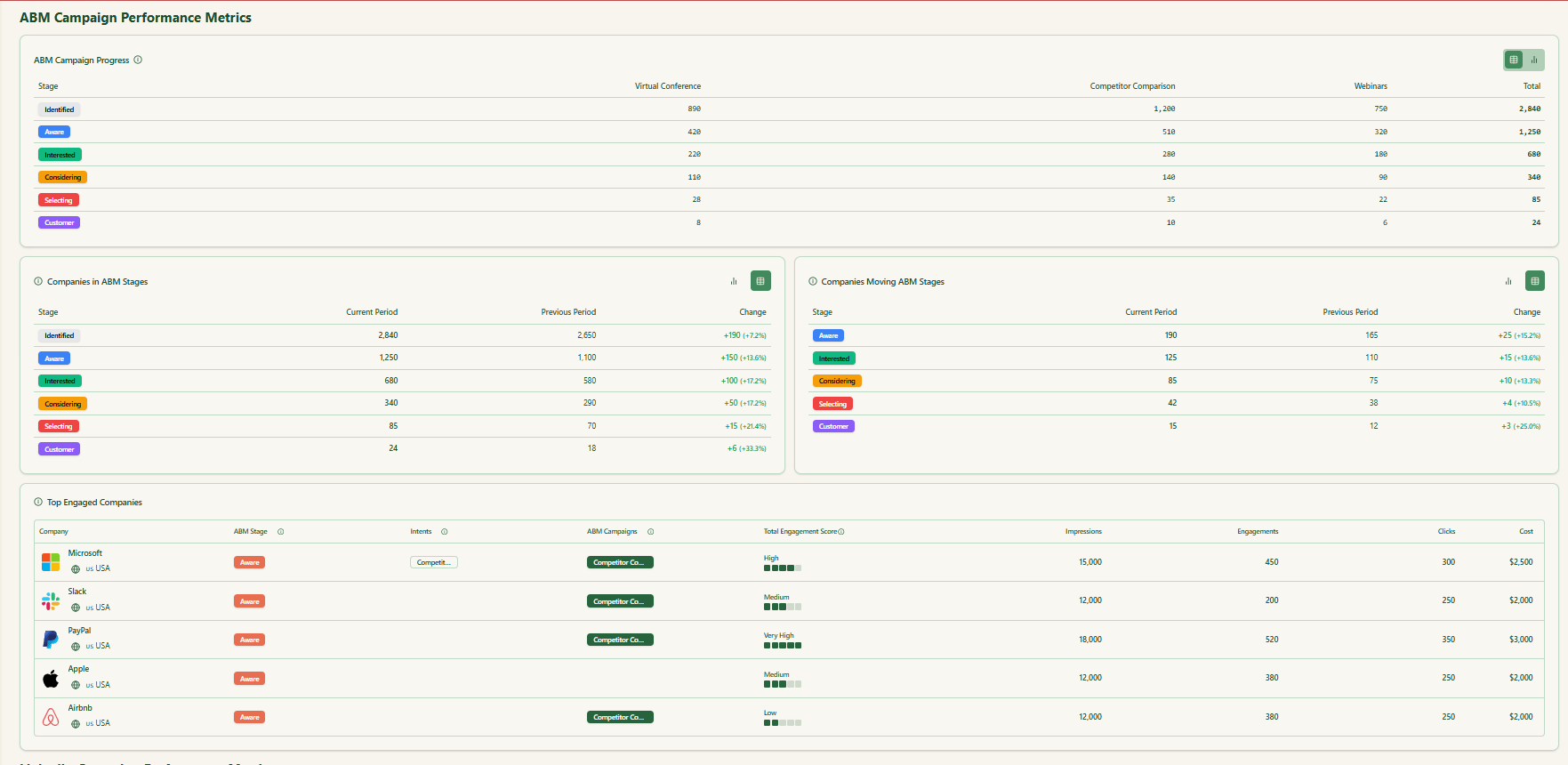
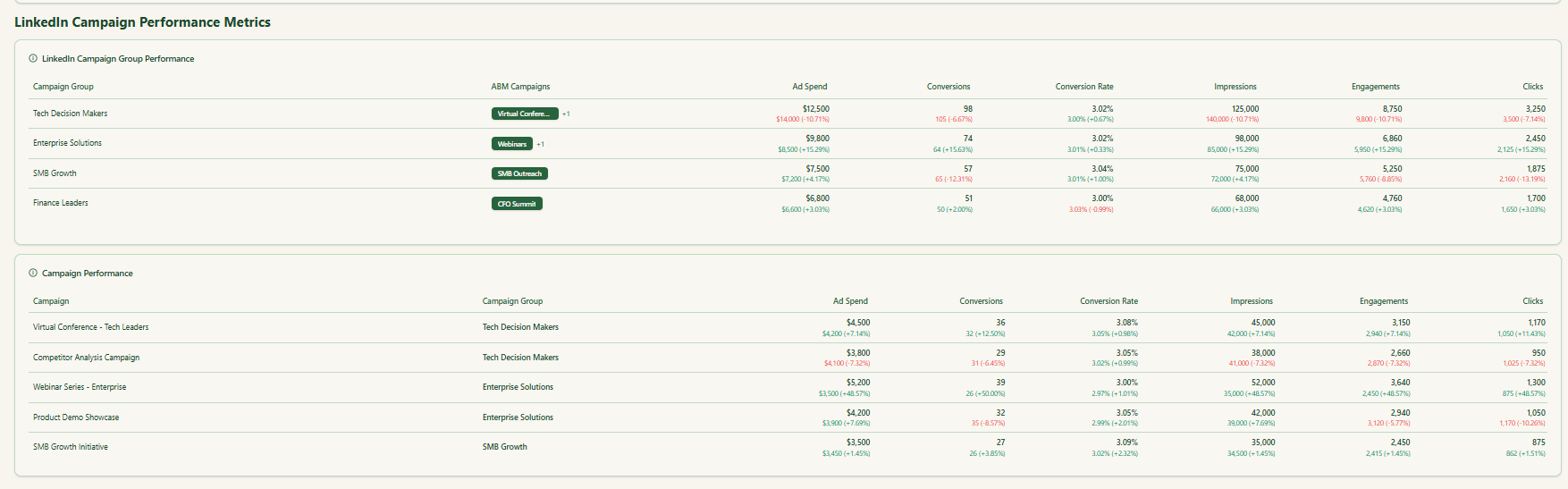
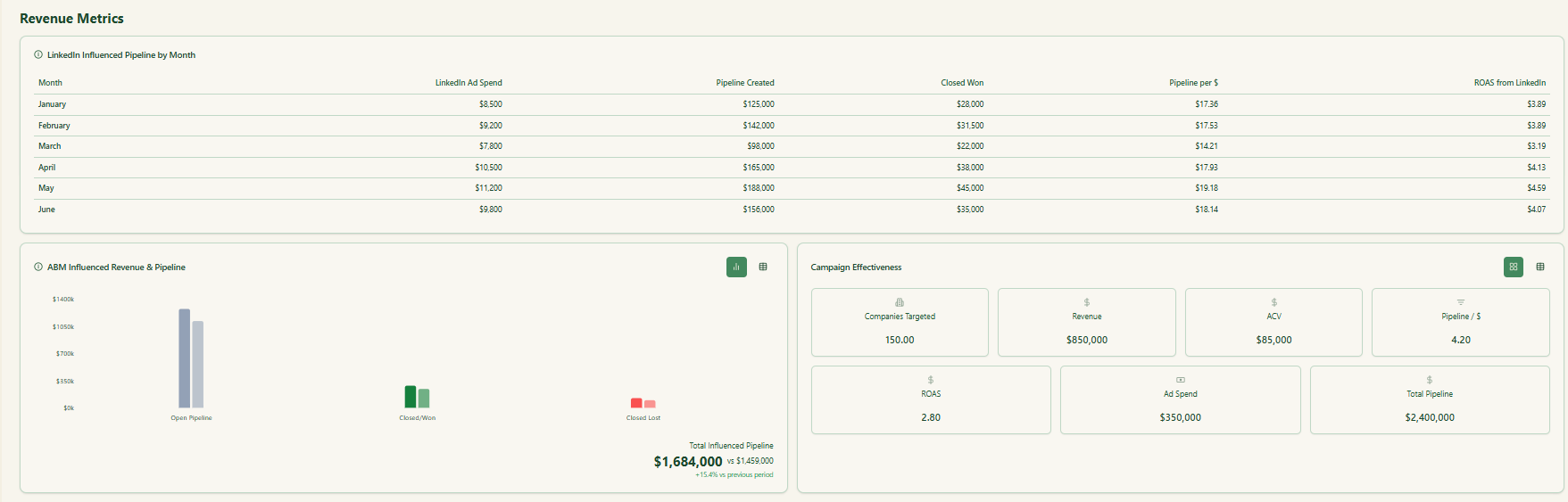
Dreamdata often stops at click-based attribution and can depend on fragile IP tracking for anonymous visitors. ZenABM instead pulls direct account data from LinkedIn’s API for more reliable account insight.
That makes it easier for sales to prioritize hot accounts (which Dreamdata doesn’t natively surface).
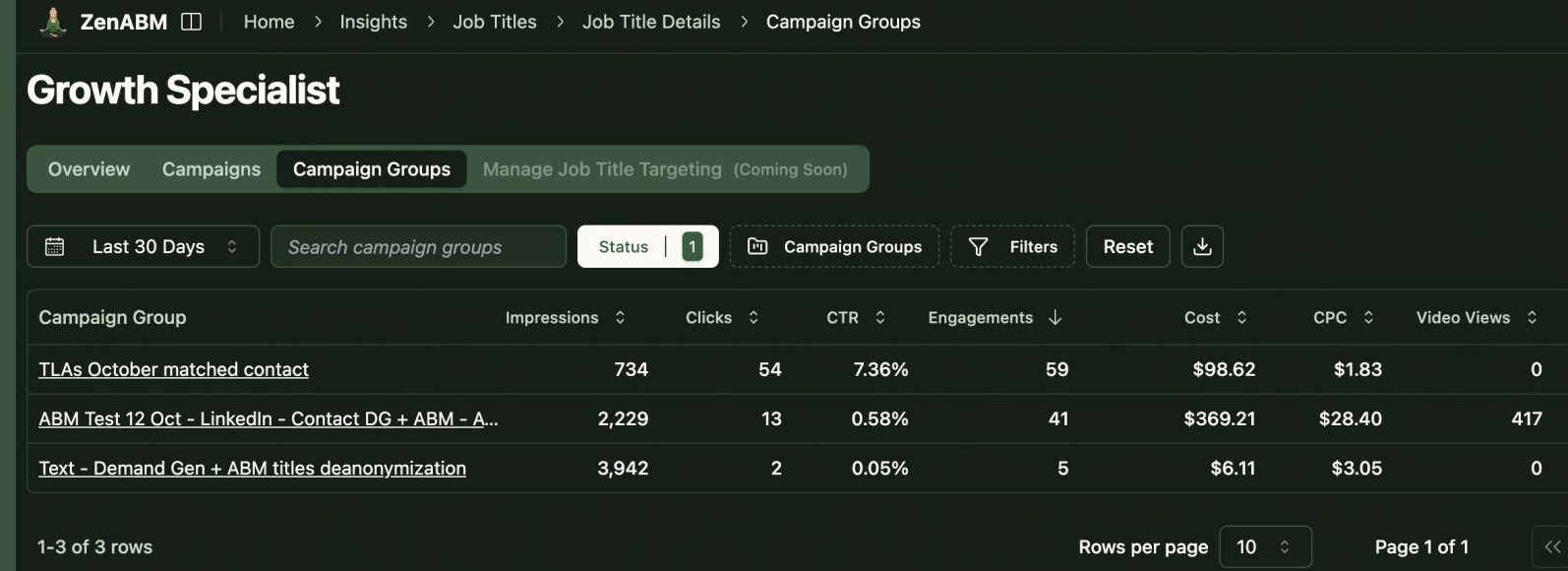
ZenABM shows which job titles engage with your creatives, plus dwell time and video funnel analytics.
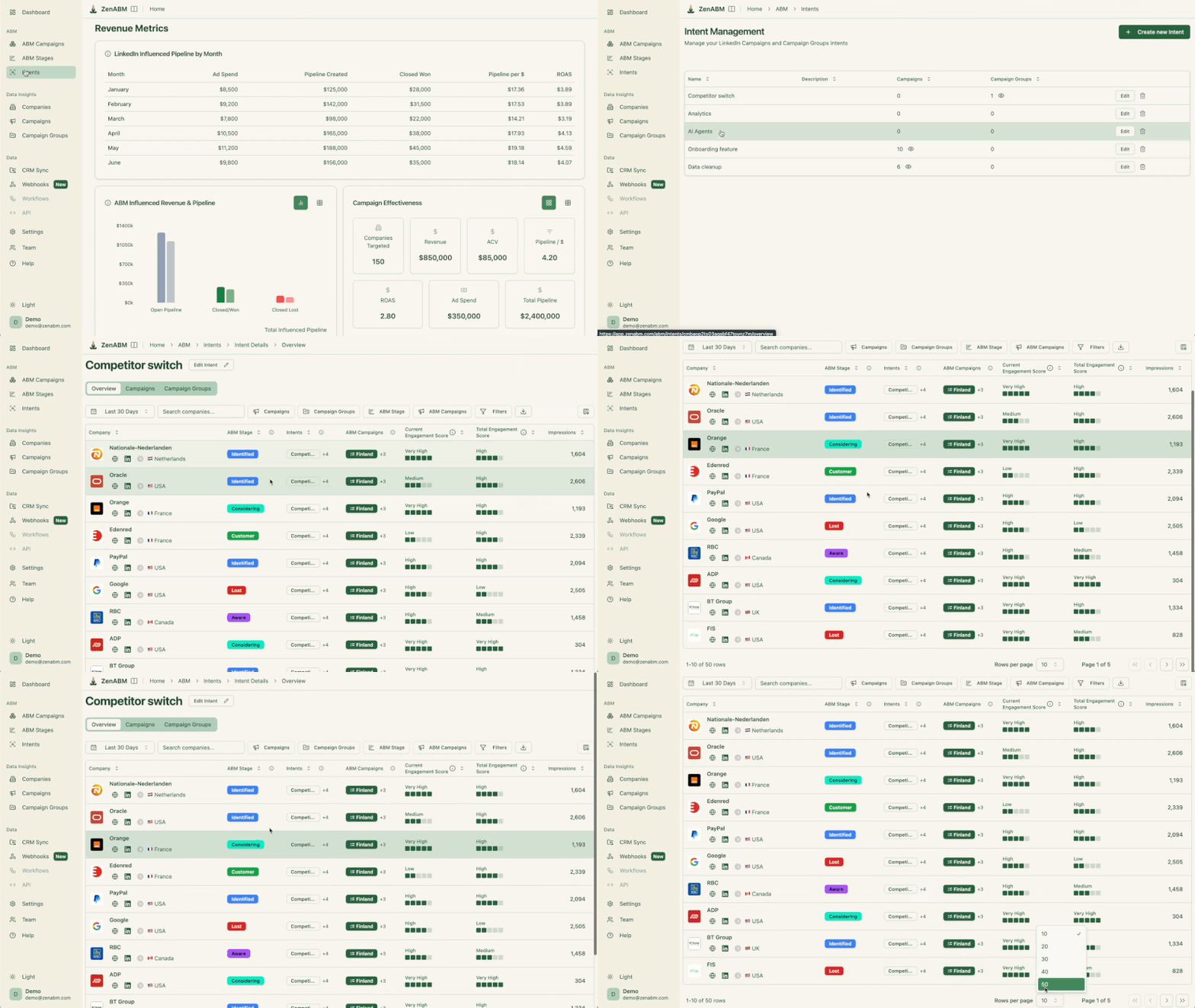
ZenABM captures first-party qualitative intent by showing which ad, message, and value proposition resonated with each company.
You can see whether an account responds more to Feature A vs Feature B messaging, pricing-led vs problem-led narratives, or demos vs thought leadership.
You can tag campaigns and creatives with intent themes like “security-led,” “integration-led,” or “ROI-driven,” and ZenABM associates accounts with those themes based on real engagement.
ZenABM also groups companies with similar intent together, making it easy to spot clusters responding to the same narrative.
These insights appear next to each company record and are pushed into your CRM as structured properties, so sales knows what to say, to whom, and why, before the first outreach.
This intent is more reliable than Bombora-style third-party intent because it’s based on real interactions with your own messaging, not rented keyword surges.
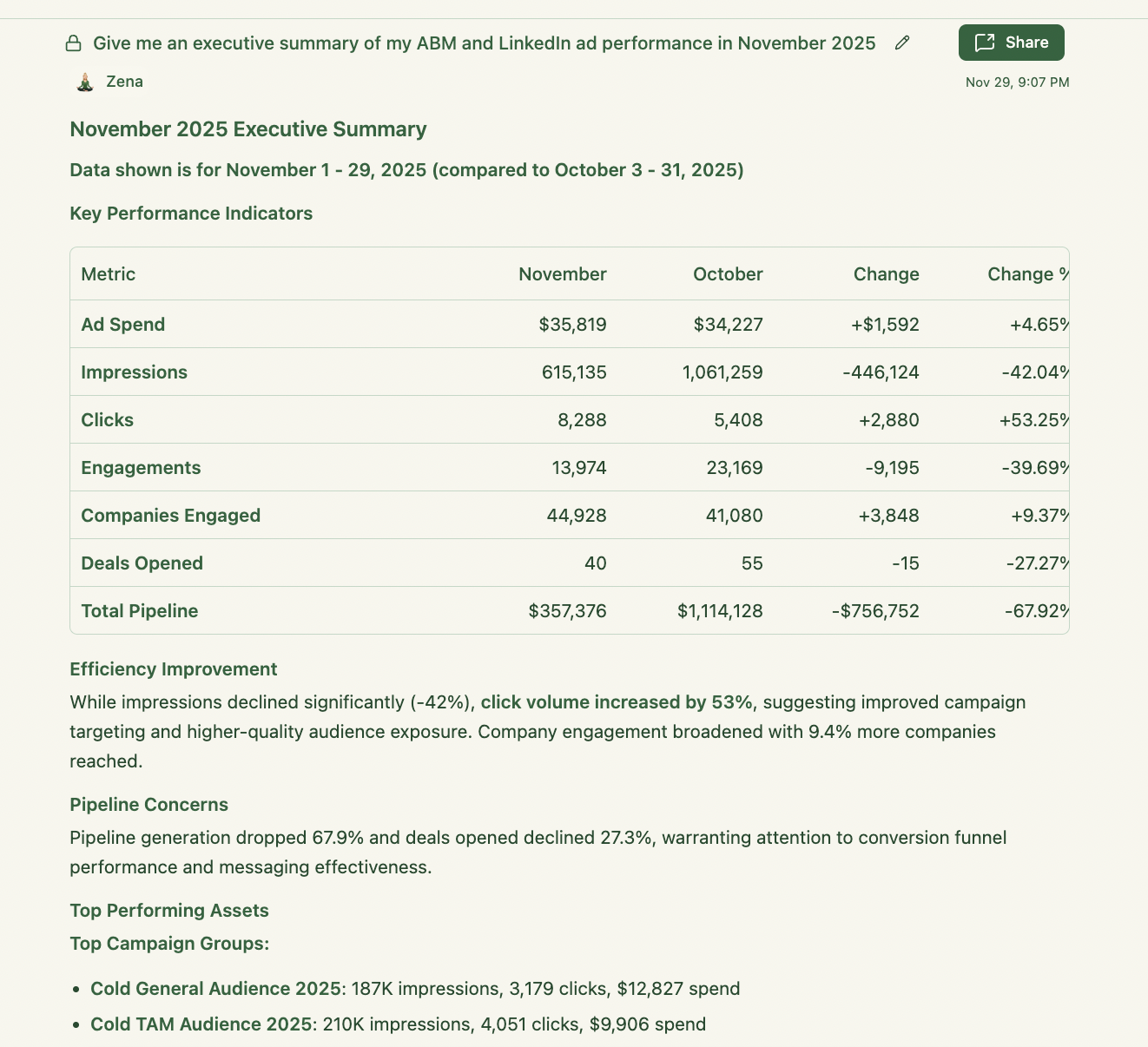
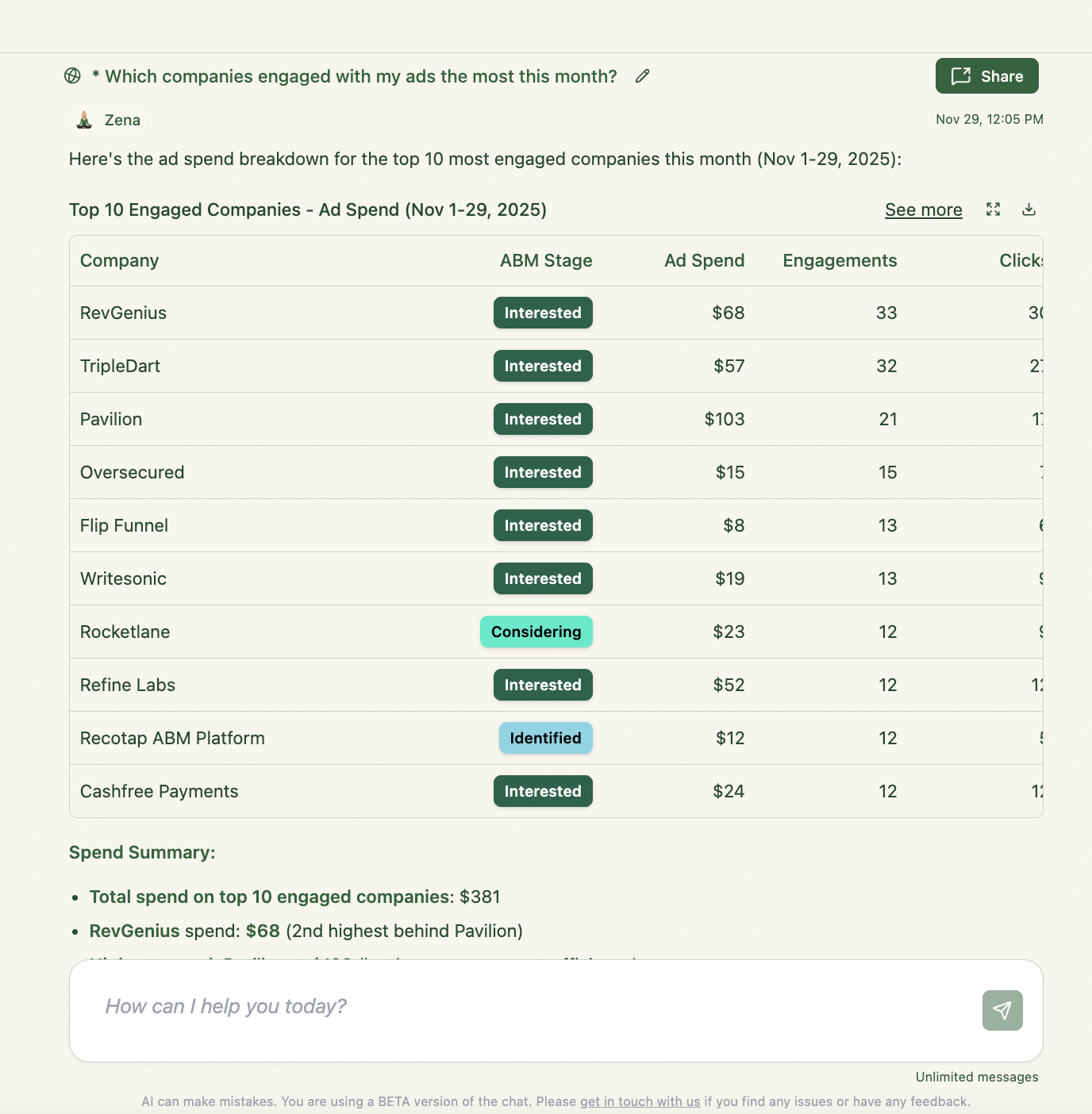
ZenABM provides its AI chatbot, Zena, which answers questions in natural language like a smart analyst.
You can ask Zena questions and get company-level answers about:
Under the hood, Zena combines OpenAI with prompt logic and endpoints that join ad engagement, spend, and CRM deals. It can explain what drove pipeline, which accounts became opportunities, what formats work best, and which high-intent accounts sales hasn’t touched.
Instead of exporting sheets and building pivot tables, you get plain-language insights ready for reviews, sales standups, and exec updates.


Most tools treat each LinkedIn campaign as separate. ZenABM lets you group multiple campaigns into one ABM campaign object, so you can track performance across regions, personas, or creative clusters.
Instead of juggling fragmented reports in Campaign Manager, you see spend, pipeline, account movement, and ROAS for the full initiative.
ZenABM includes a multi-client workspace for agencies.
You can manage multiple ad accounts in one place, each with its own ABM strategy, dashboards, and reporting, without constantly switching accounts in Campaign Manager.
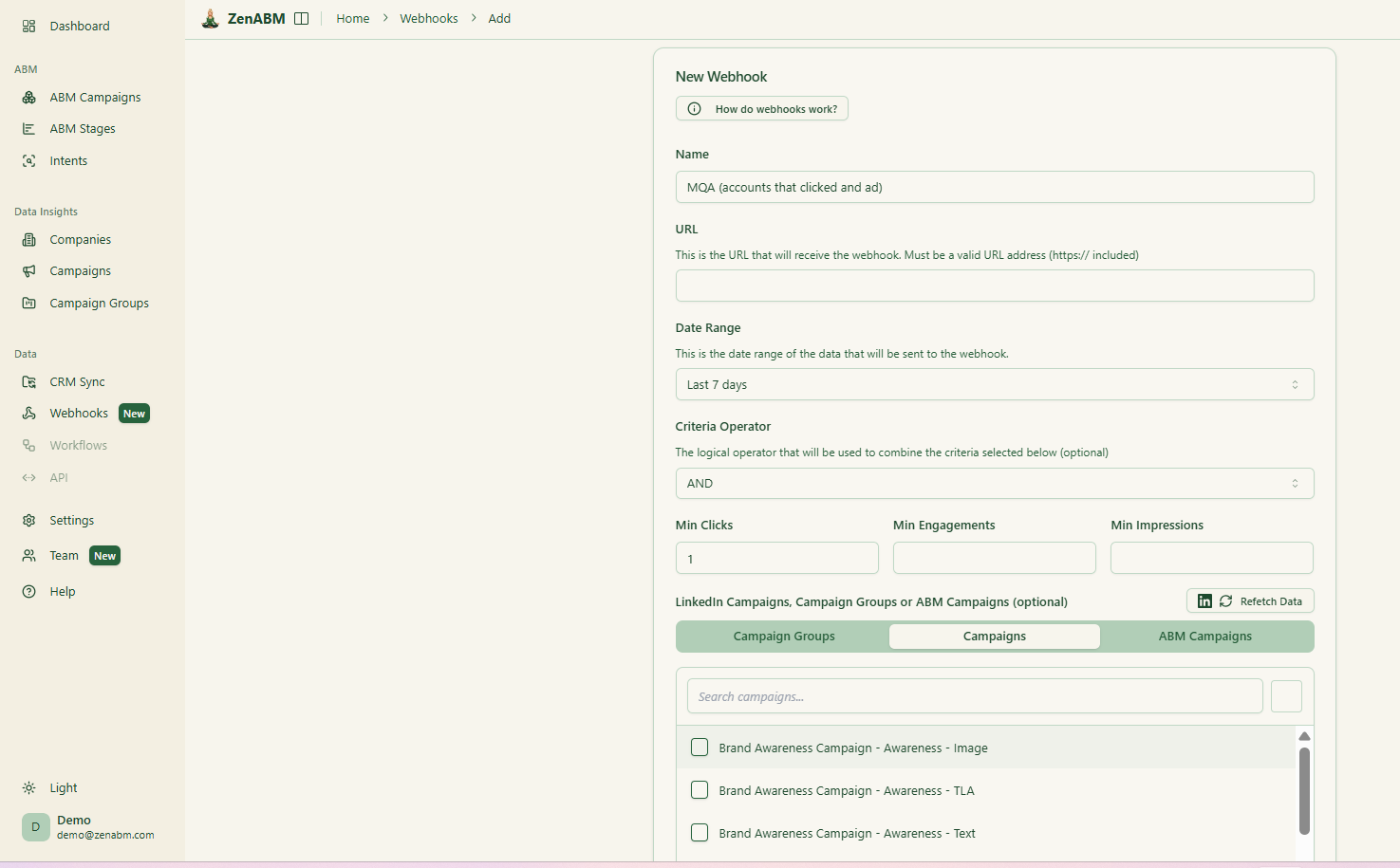
ZenABM’s webhooks let you push events into your stack, such as Slack alerts, enrichment flows, or other ops automations.
No heavy data engineering.
Connect LinkedIn Ads and your CRM, and ZenABM can be live in minutes.
It analyzes LinkedIn data and ties it to CRM opportunities without complex RevOps setup.
ZenABM starts at just $59/month and annual lock-ins ain’t necessary.
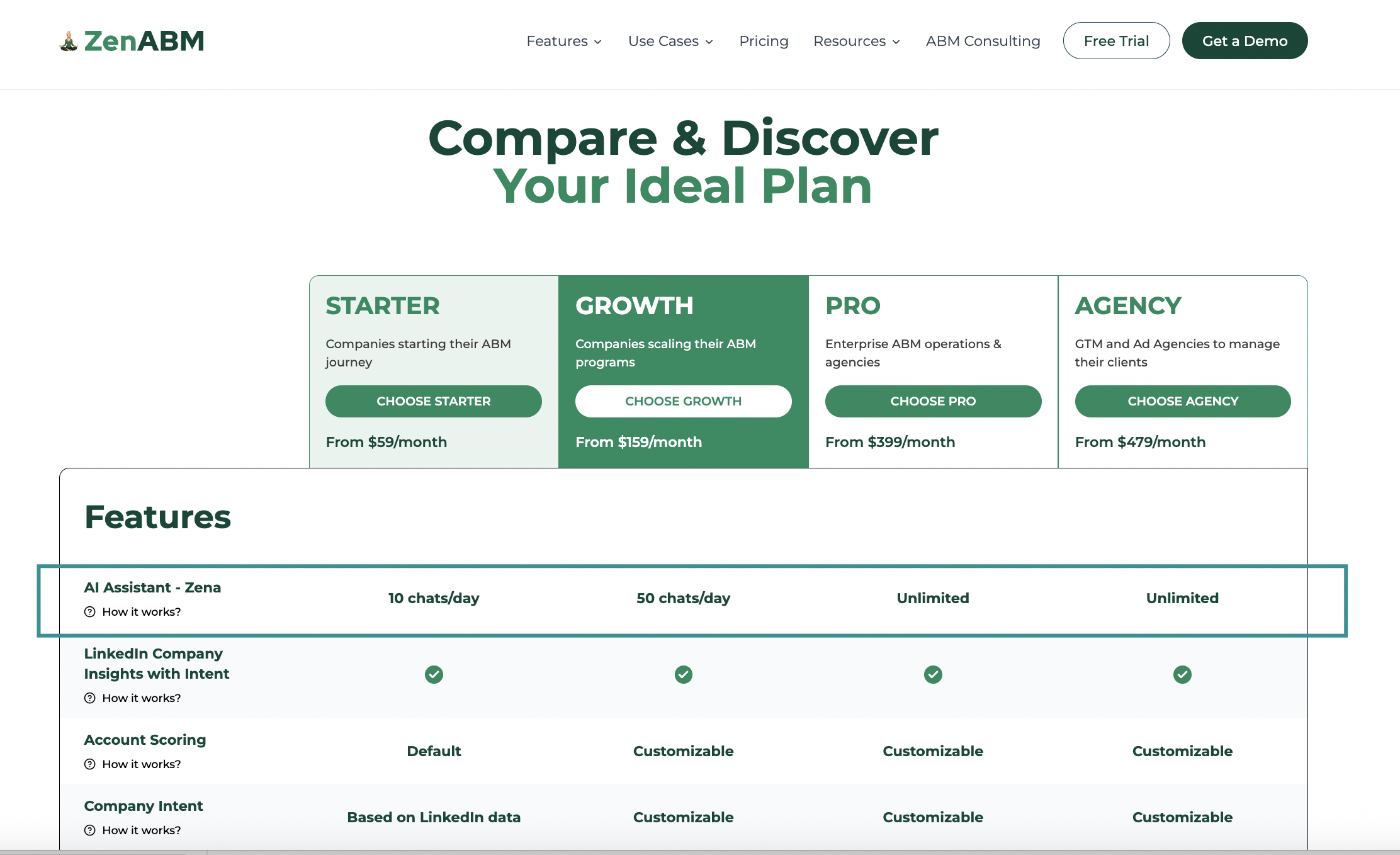
ZenABM is a lean SaaS
Moreover, ZenABM pricing isn’t tied to ad spend or a percent of media (unlike some ABM tools), which keeps it attractive for startups and mid-market teams.
ZenABM is purpose-built for LinkedIn-heavy multichannel ABM.
So, yes, ZenABM provides multichannel attribution now, but it still depends on pulling attribution data from your CRM for channels other than LinkedIn.
For teams needing email attribution or DSP-style ad execution beyond LinkedIn, broader tools like Dreamdata or Factors.ai may be a better fit.
If your marketing isn’t leveraging LinkedIn Ads at all, ZenABM isn’t a Dreamdata alternative at all.

Best for: B2B teams that want to connect anonymous website journeys → leads (forms/calls/chat) → CRM revenue, and push that revenue back into tools like GA/ads for real ROI reporting.
Here’s what makes Rule Analytics stand out:


Ruler is an attribution and tracking specialist, not an ABM orchestration platform.
It won’t run LinkedIn ABM campaigns, surface deep account-level intent like LinkedIn company engagement, or orchestrate plays.
Also, like any tag-based system, data gaps can happen (cookie blockers, setup issues), and some CRM changes (like cancellations/refunds) may not auto-update unless you manually adjust reporting.

Ruler’s pricing is tiered mainly by monthly website traffic volume (12-month agreements are standard).
Indicative pricing starts at £199/month (Small Business, ~5k visits), £649/month (Medium, ~50k visits), £1149/month (Large, ~100k visits), with Advanced (200k+ visits) as POA.
Annual billing shows discounted “from” prices (for example £179/month for Small Business annually).
Call tracking can add extra charges for numbers and call minutes.
If your primary pain is LinkedIn-first ABM account insight (which accounts engaged, what message resonated, what job titles clicked), Ruler won’t replace that.
For that, go with ZenABM.
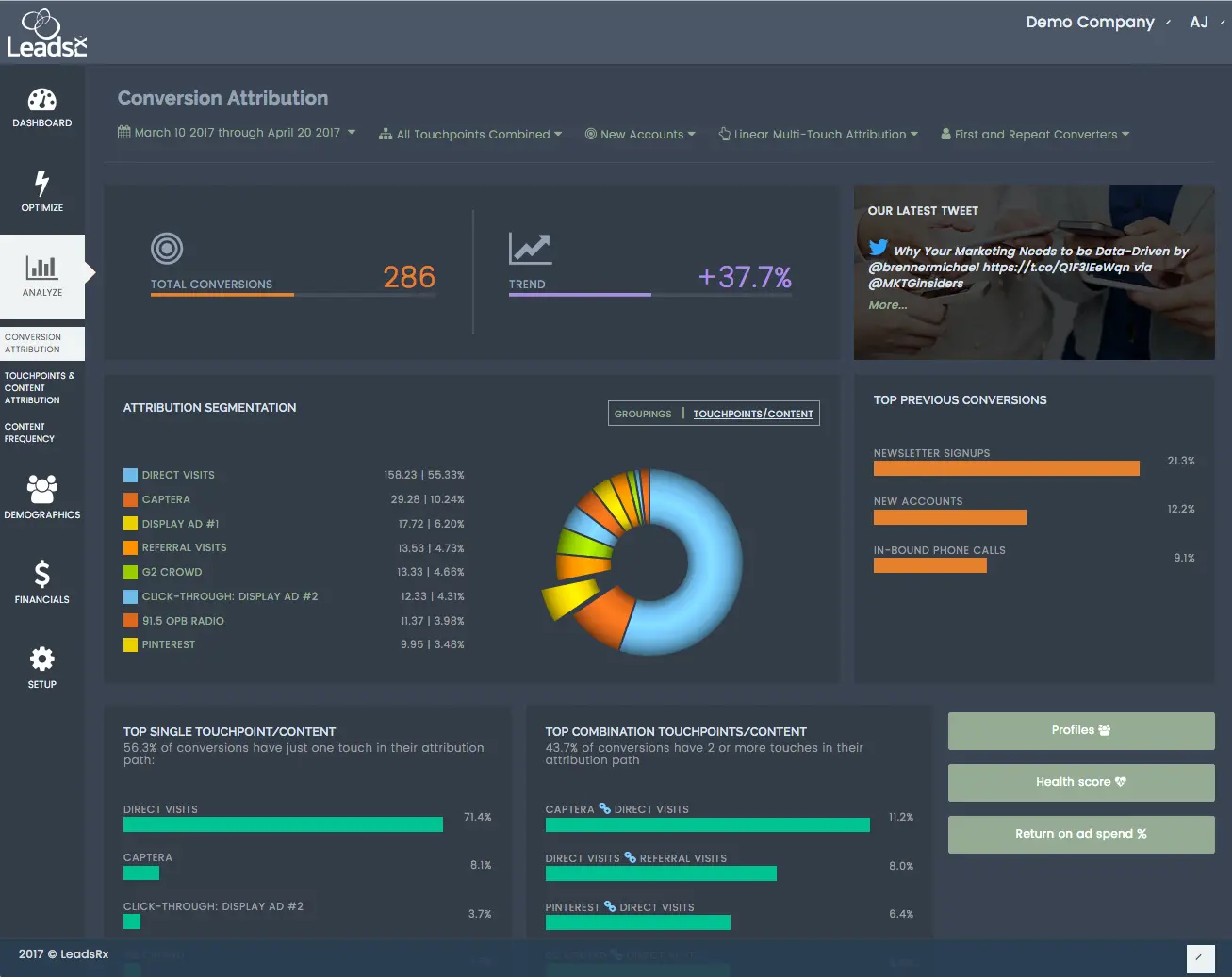
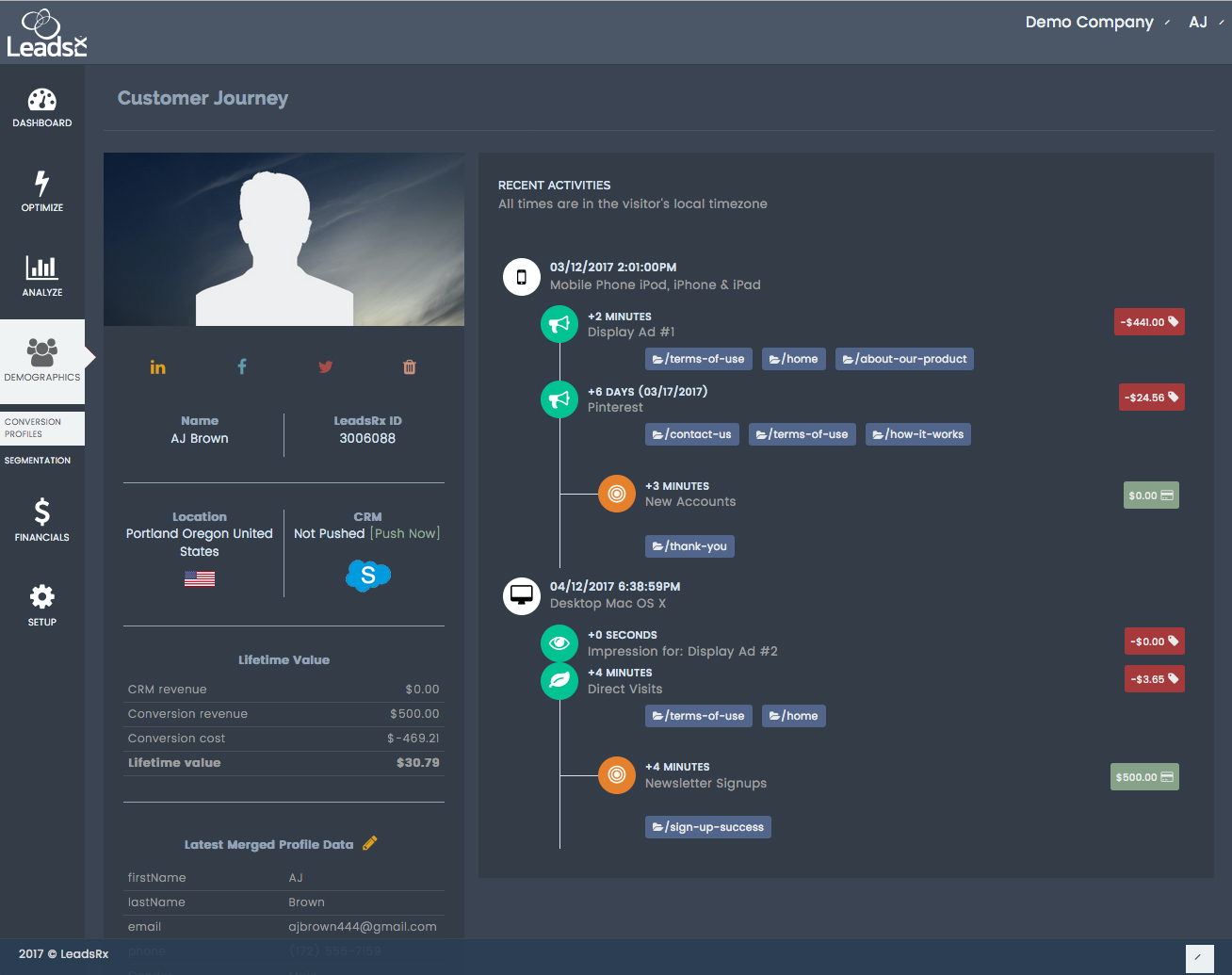
Best for: Marketing teams (including agencies) that need a broad multi-touch attribution system covering both digital and traditional channels. If you’re measuring TV, radio, podcasts, or other offline ads in addition to digital campaigns, LeadsRx is a strong Dreamdata alternative, especially for attribution.
Here’s why:

LeadsRx pricing falls in the mid-tier, but isn’t publicly stated in exact numbers.
It has had plans for small businesses and large enterprises, but you’ll need to contact them.
There’s no self-serve free tier; budget a few hundred to a couple thousand USD a month depending on traffic volume and features.
LeadsRx is primarily an attribution tool and lacks ABM-specific capabilities such as account-level intent, predictive scoring, ad orchestration, or competitive intelligence, so teams typically pair it with a separate ABM platform.
While onboarding is easier than some alternatives, it still requires integrating multiple data sources like CRM, ad platforms, and web analytics, and data quality issues can limit results, similar to Dreamdata.
Pricing is also not available publicly, is quote-based, and some users report costs rise significantly as data volume or advanced feature needs increase.
If your marketing is almost entirely digital and you don’t have offline channels, LeadsRx’s specialty doesn’t serve you.
A simpler (even free) digital analytics tool like might suffice or a more ABM-cum-attribution-centric tool Like ZenABM could add more value.

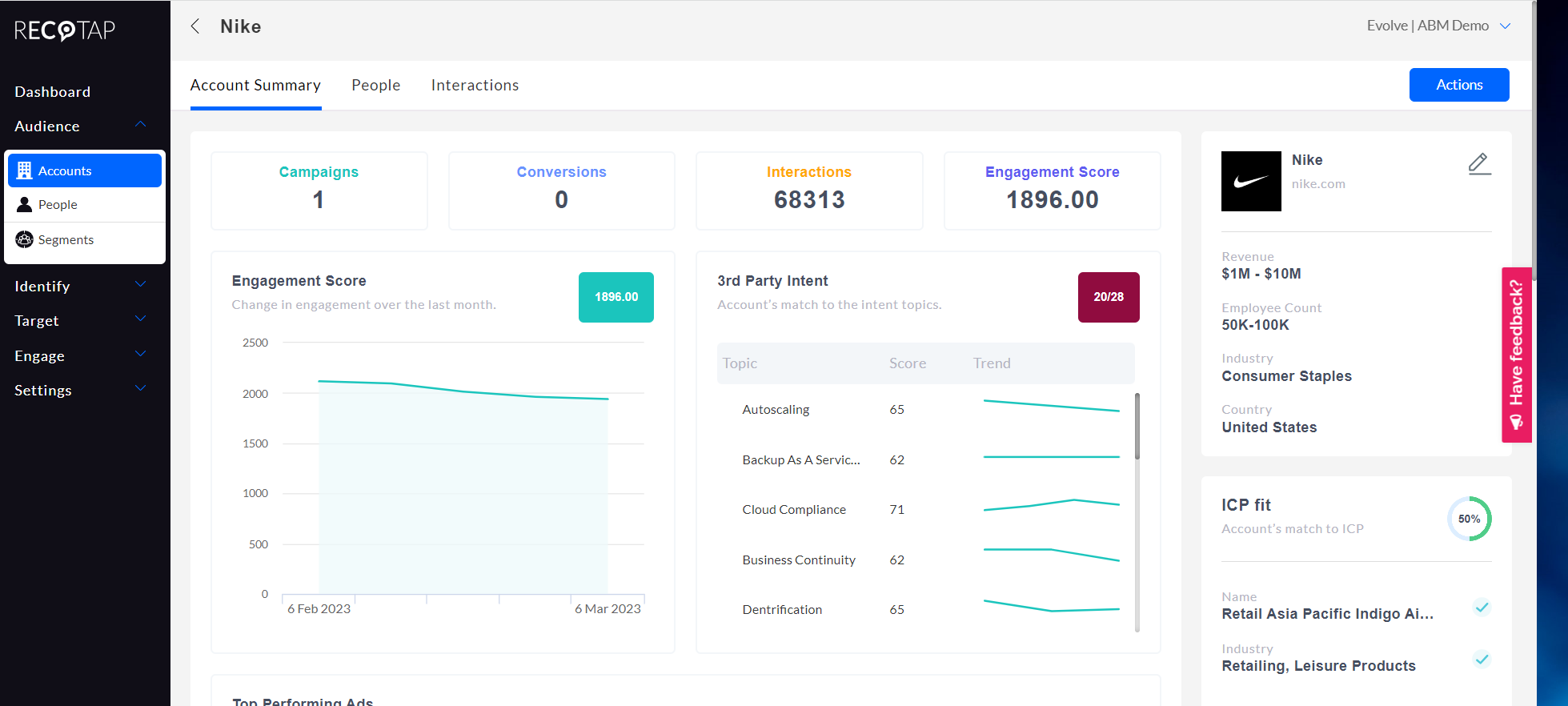
Best for: Fast-growing mid-market companies that want a full ABM advertising platform including a programmatic ad network, intent data, and account-based analytics without the complexity of enterprise suites.
Here’s why:


N.Rich is powerful but comes with a steeper learning curve. It requires hands-on setup across DSP campaigns, intent data, and CRM integrations, making it less plug-and-play than simpler tools like Dreamdata.
Small teams without a dedicated owner may struggle early on.
Pricing is premium, closer to Demandbase or 6sense than attribution-only tools, which can feel heavy if you only need reporting.
It’s best suited for mid-market and select enterprise teams, while very large enterprises may want deeper custom ecosystems and very small teams may find it overbuilt.

N.Rich uses tiered pricing based on team size and ABM maturity, with all plans focused on converting intent data into revenue.
All plans leverage N.Rich’s data depth and native ABM orchestration, with final pricing confirmed via sales.
Note: because N.Rich starts above $10K per year, ZenABM often looks leaner for LinkedIn first teams, starting at ~$59/month with the top tier still under $6K per year. You still get core LinkedIn ABM essentials: account-level ad engagement tracking, account scoring, ABM stage tracking, hot account routing, bi-directional CRM sync, custom webhooks, qualitative intent and plug and play ROI dashboards.
If you’re not ready to actively run ad campaigns as part of your strategy, N.Rich is overkill. Teams looking purely for an attribution add-on (and not intending to launch programmatic ads) should consider other tools like ZenABM.
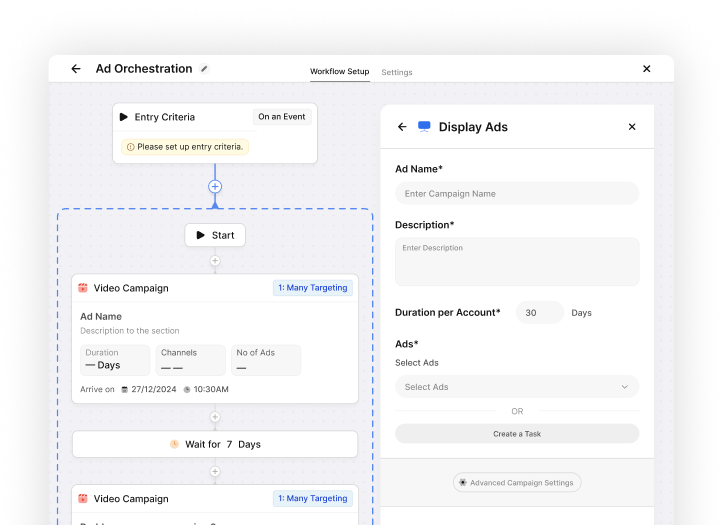
Best for: Small to mid-sized B2B teams (especially in SaaS) who primarily use LinkedIn for ABM and want to scale personalized campaigns without a large ops effort.
Here’s what Recotap has that Dreamdata doesn’t:

Recotap is for LinkedIn-only.
Moreover it is a growing player with lack of much social proof.
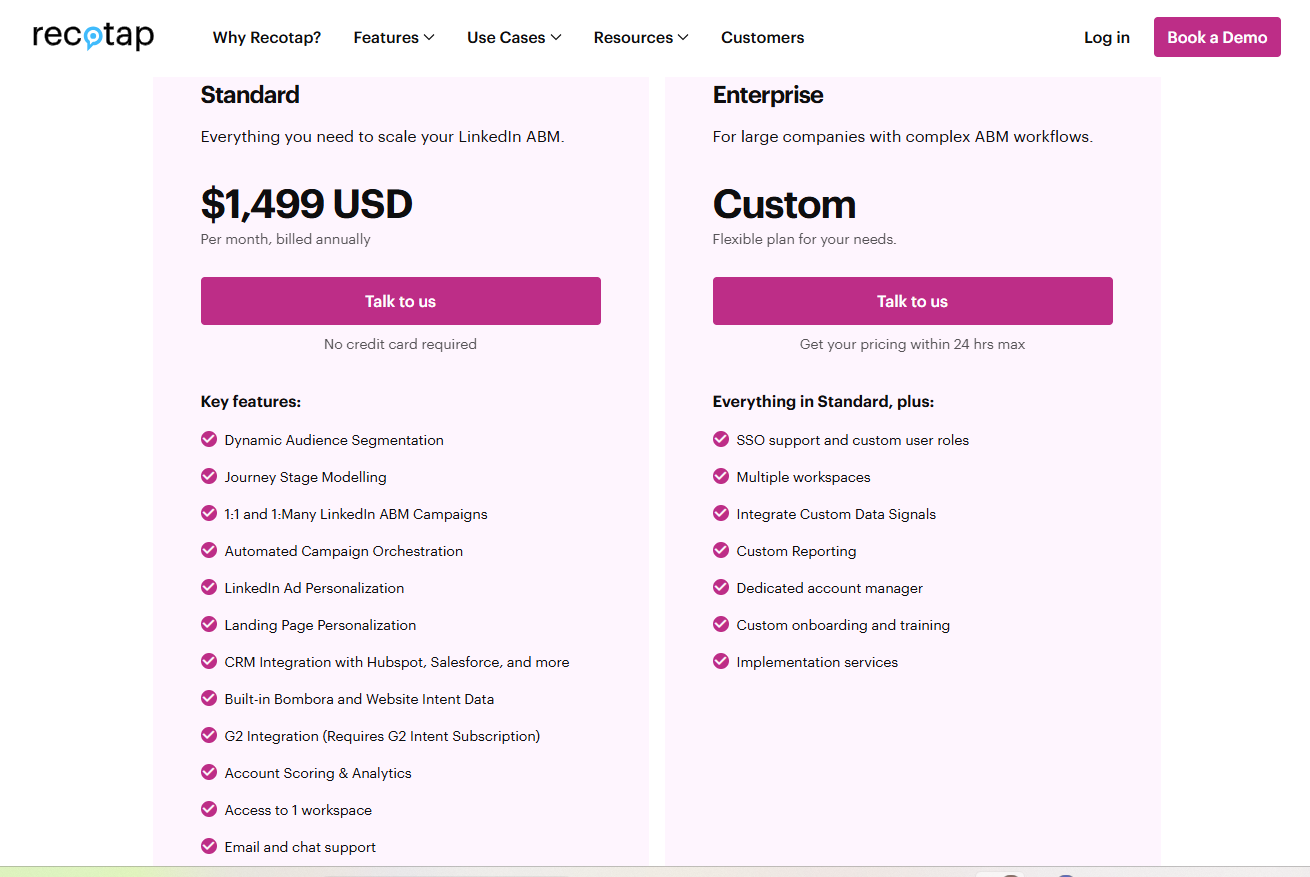
Recotap pricing is public on their site:
By the way, ZenABM is also purpose-built for LinkedIn ads and starts at just $59/mo.
If you don’t use LinkedIn Ads for ABM or have no plans to personalize content by account, Recotap’s key strengths won’t shine.

Best for: B2B teams that believe sales happen at the individual level and want their advertising to target and track specific people (not just accounts). Companies frustrated that Dreamdata shows account touchpoints but not which personas engaged often look at Influ2.
Here’s what distinguishes Influ2:


Influ2 requires contact data and large audiences. So, you need a well-defined list of contacts to target. If your data is sparse or you’re trying to go after completely unknown accounts, Influ2 can’t magically find the individuals (it’s not a database like ZoomInfo; you feed it contacts). Dreamdata, conversely, can track unknown visitors (just anonymously).
Moreover, Influ2 runs ads on display networks and social channels by matching contacts. Now, I despise Display ads because they are plagued by all sorts of bots and frauds.

Finally, unlike Dreamdata, Influ2’s attribution ends at ads.
It doesn’t track other marketing touchpoints.
Influ2’s pricing isn’t published on their site.
Here’s what third-party sources say:


If your ABM approach isn’t highly personalized (e.g., you do broad inbound or spray-and-pray ads), Influ2 doesn’t fit.
It’s for targeted plays.
Also, if budget is a major constraint, the cost of person-based advertising might be prohibitive; such teams might be better off with account-based advertising and ABM using tools like ZenABM.
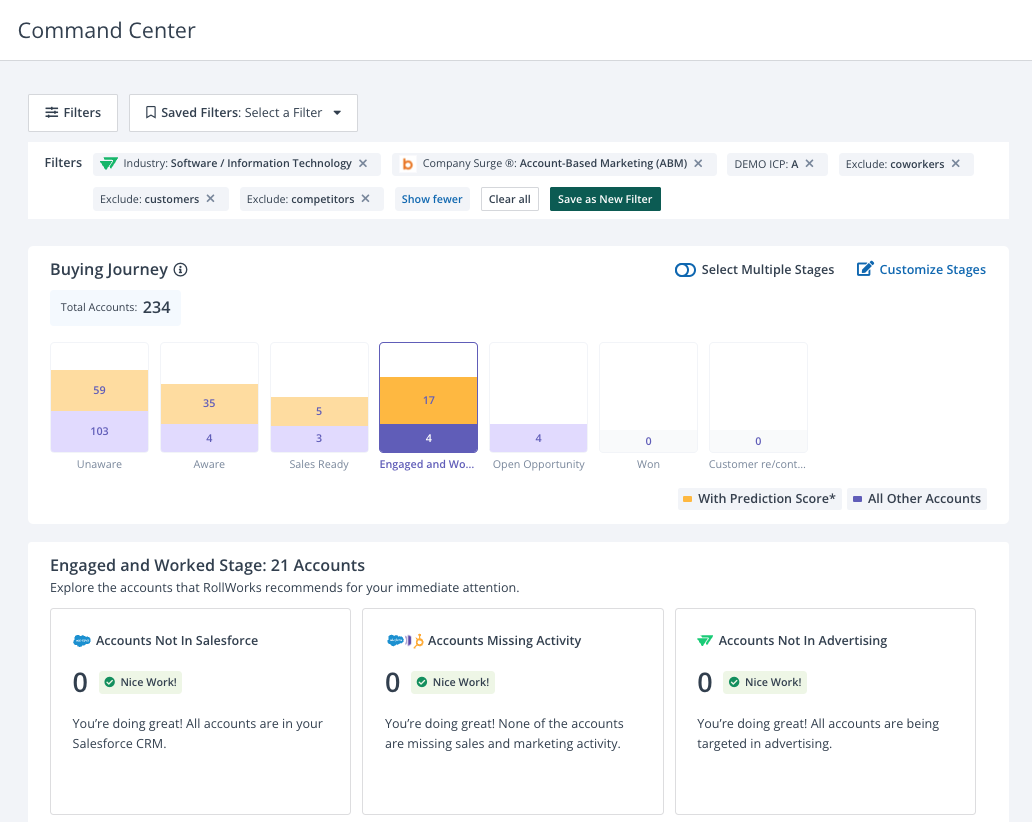
Best for: Marketing teams seeking a one-stop ABM platform that can identify target accounts, run multi-channel digital ad campaigns, and provide account-level analytics. It’s often chosen by those who find Dreamdata’s attribution useful but need a more actionable platform to engage and track target accounts (and don’t want to jump to ultra-expensive enterprise solutions).
Here’s how RollWorks might serve you better:
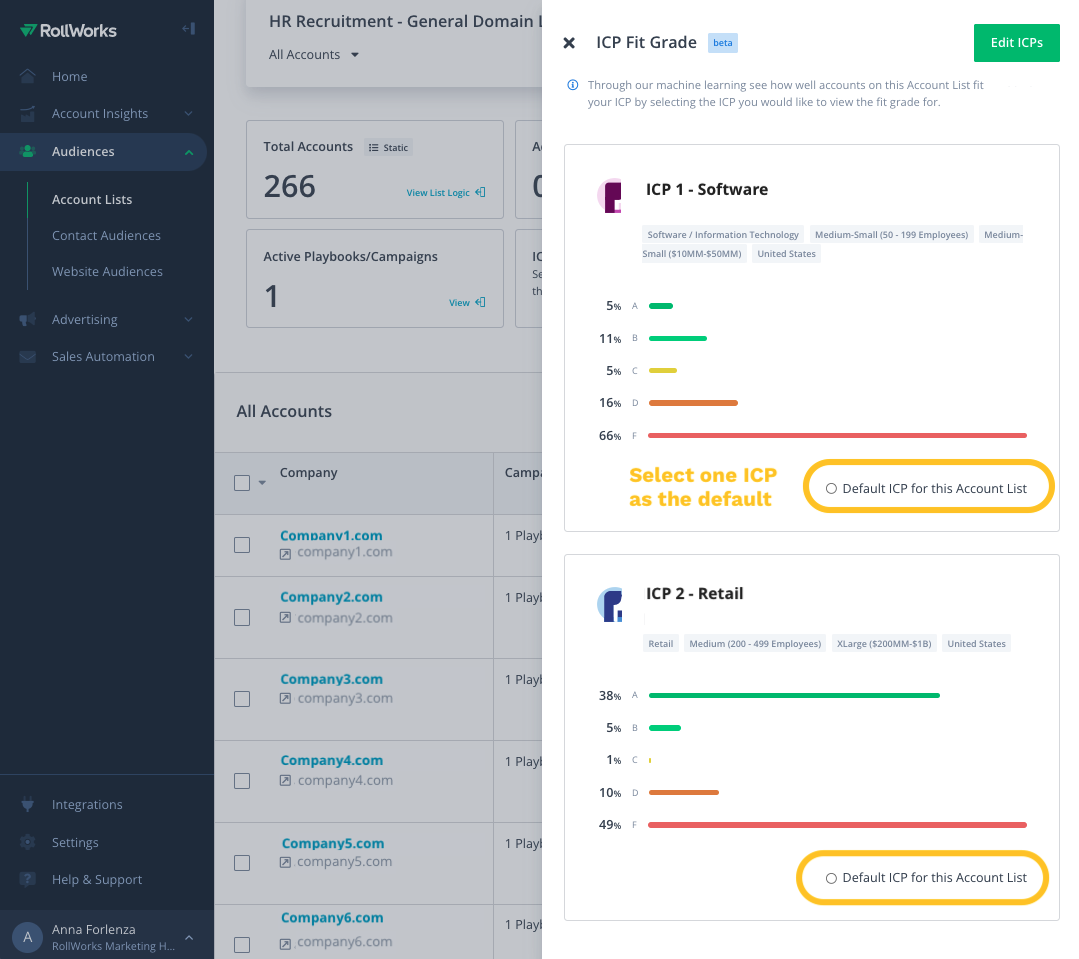
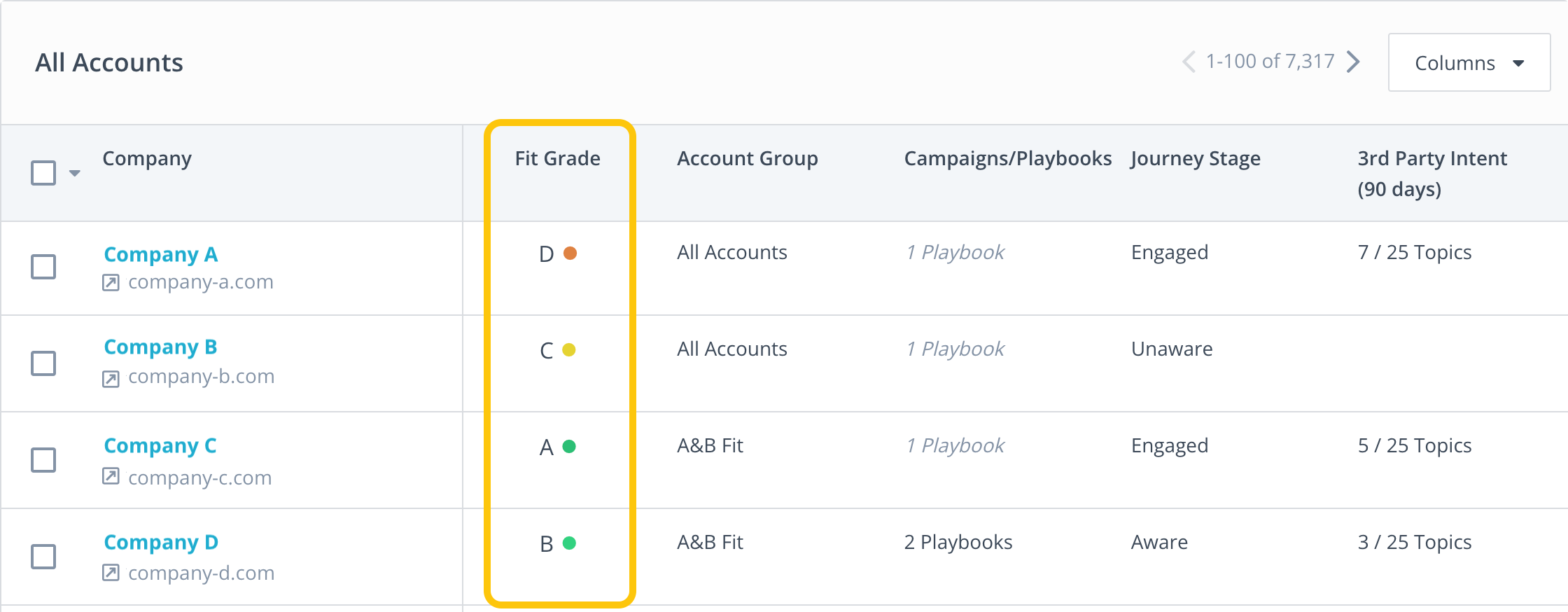

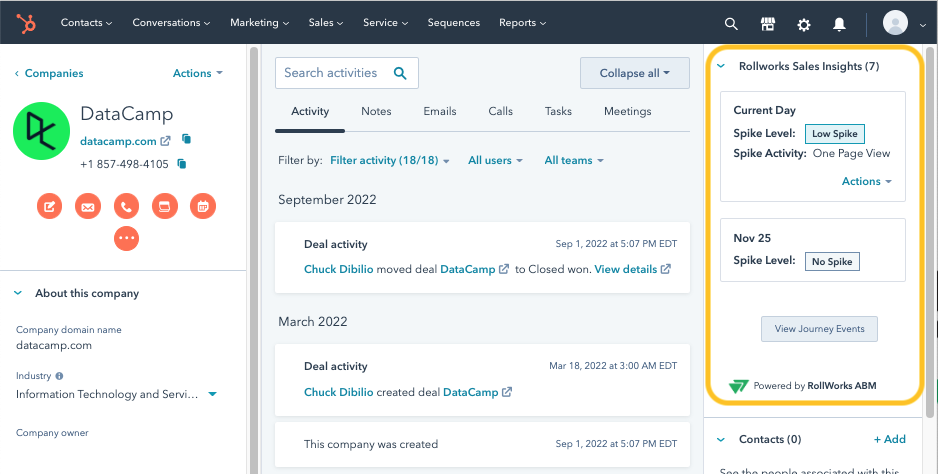
RollWorks is strong on account-level ad engagement and influence but offers less flexible multi-touch attribution than dedicated tools like Dreamdata.
It also stays largely ad- and web-focused with limited coverage for one-to-one ABM tactics outside advertising, and can get expensive at scale once higher-tier platform fees and ongoing media spend are added.
RollWorks uses a tiered and usage-based structure rather than a simple self-serve plan. Parts of the product now appear under the AdRoll ABM umbrella.
There is a limited free or self-service level that lets you run retargeting and basic account targeting by paying for media only.
Richer ABM features live in paid packages that require a sales quote.
The entry cost is lower than heavier enterprise suites.
For smaller to midsize teams, RollWorks often starts just under $1,000 per month.
If you purely need attribution analytics and don’t plan to run significant ad campaigns, RollWorks might be unnecessary.
Also, companies with extremely tight ad budgets or who primarily get business through channels like inbound SEO or referral (where ABM ads are less relevant) won’t see as much value.
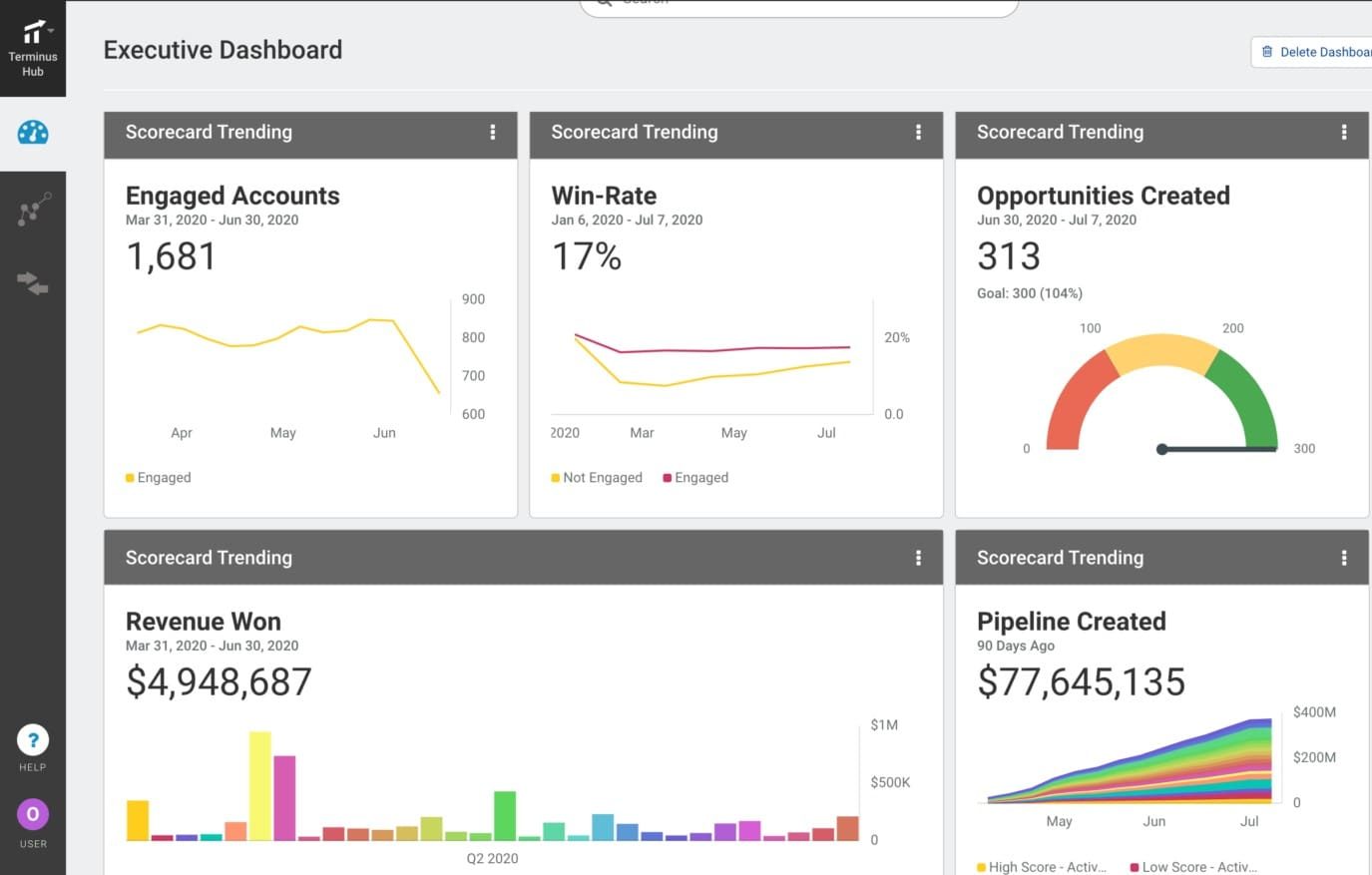
Best for: Established B2B organizations (mid-large) that want a comprehensive ABM solution encompassing advertising, web personalization, chat, email experiences, and attribution. Terminus is often chosen by companies ready to invest in a broad ABM strategy and who might be outgrowing point solutions like Dreamdata or basic ad platforms.
Here’s why:
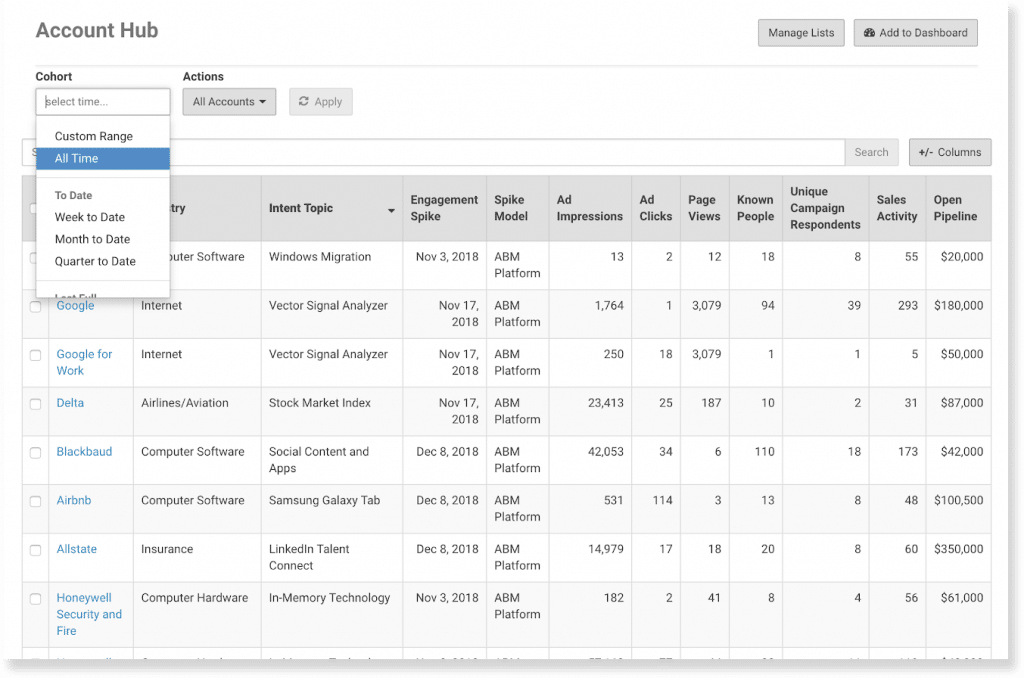
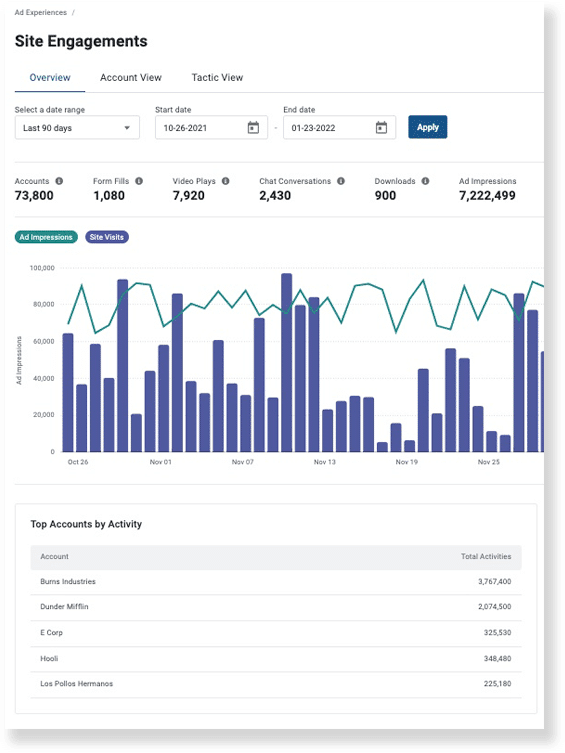
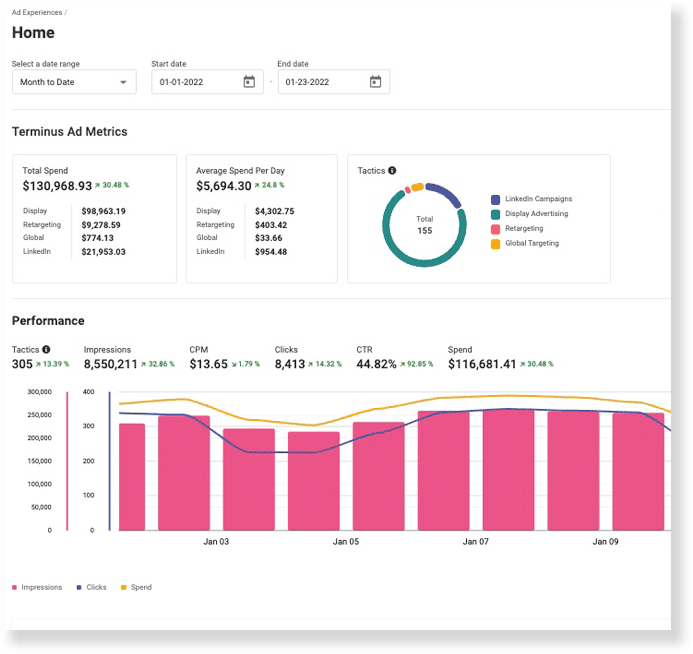
ZenABM, too, is great at ABM analytics, give in its plug-and-play comprehensive, and closed-loop dashboards:  In fact, you don’t even have to interpret these dashboards. ZenABM also provides Zena (AI agent) that can answers all your ROI/attribution/campaign performance and other related queries in natural language: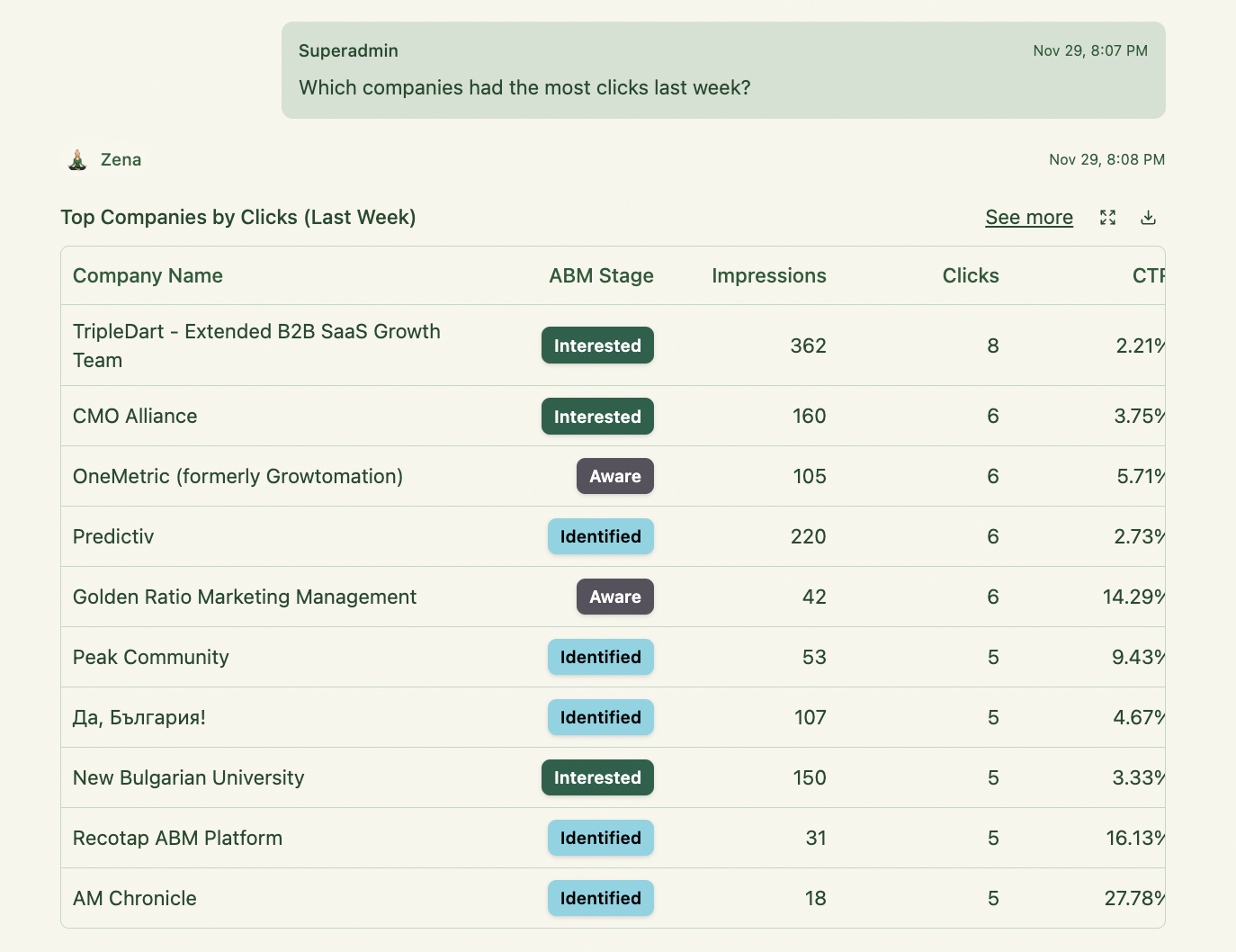
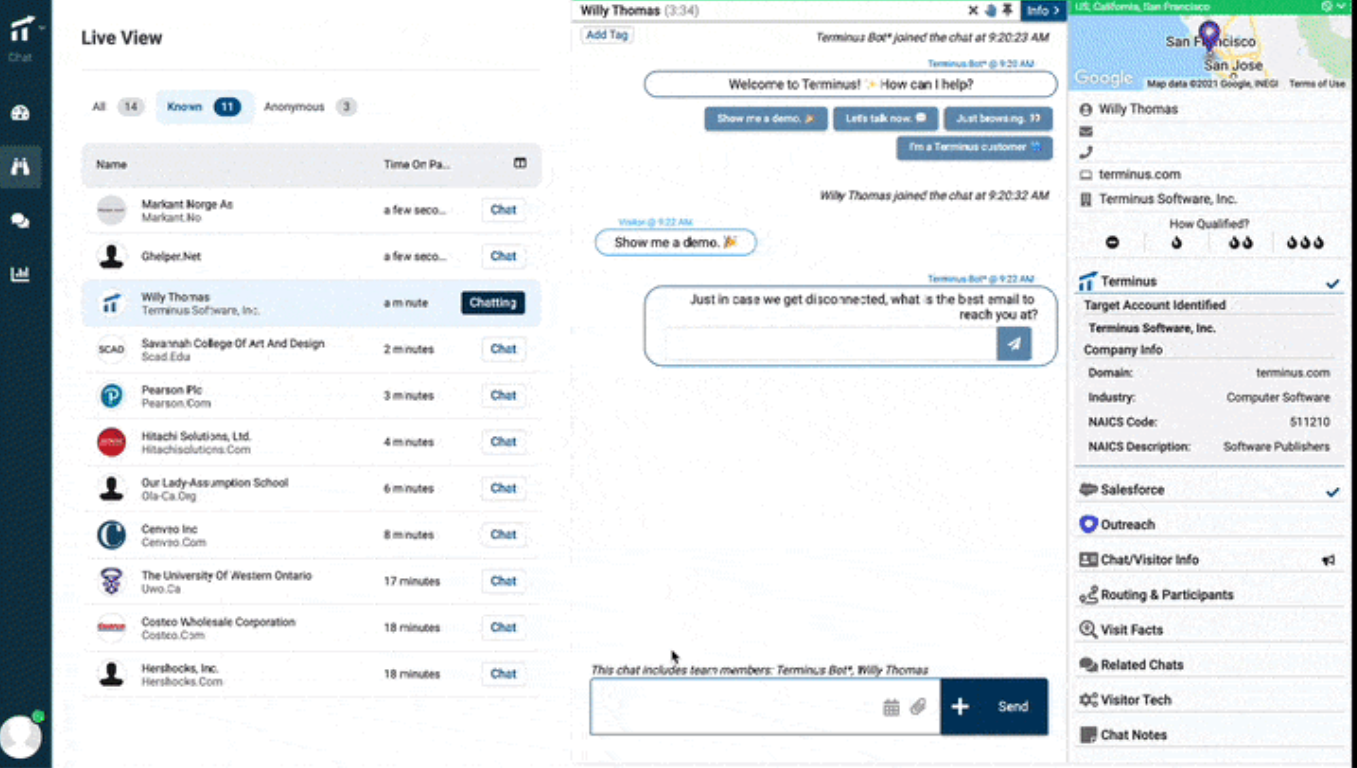
Terminus falls short at these pointers:
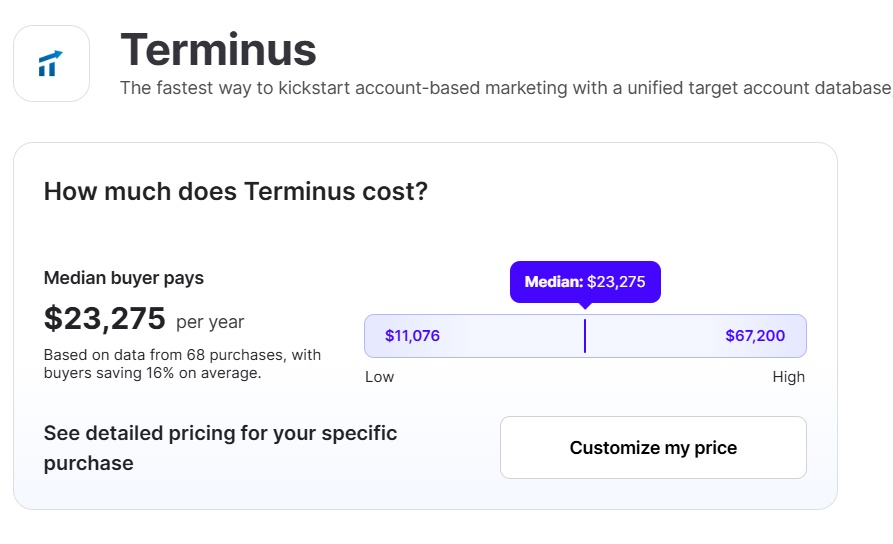
Pricing is custom and typically lands in the mid five figures per year, reaching $100K to $250K+ for large enterprises.
Vendr shows a $23K median, while CMO.com lists starting costs around $57,500 annually.
If you’re not prepared to commit budget and team to an ongoing ABM program, Terminus will be overkill.
Also, if your marketing stack is heavily centered on say, an all-in-one like HubSpot, you might get enough ABM functionality there combined with a lighter attribution tool like ZenABM, without needing Terminus.

Best for: LinkedIn advertisers (both in-house teams and agencies) that need to optimize LinkedIn ad performance and get better attribution on that channel specifically.
Here’s why:


DemandSense is a LinkedIn-centric, relatively early-stage tool that requires LinkedIn API setup and basic tracking, works best when LinkedIn is a core channel rather than a small part of the mix, and may lack the polish and breadth of mature full-funnel analytics platforms like Dreamdata.
DemandSense pricing starts with a basic plan of $99 per month gives marketers and sales a self-serve entry.
It includes audience tuning so users can see which companies interact with LinkedIn ads, plus ad scheduling, frequency capping, and richer reporting.
For companies that want intent data flowing directly from their website into sales, DemandSense Plus starts at $149 per month.
It adds everything in Basic plus 250 monthly data credits to identify anonymous website visitors or uncover leads from target accounts and unlocks the Website Visitor ID module.
The $99 and $149 plans look attractive until you notice the Plus tier’s 250 credit cap. Any decent traffic or outbound research can burn through that fast, and overages are where the real costs sit, turning a friendly sticker price into a classic intent data upsell.
ZenABM often comes out smarter, starting at about $59 per month for Starter, with the highest agency tier (unlimited, no credits) still under $6K per year.
You get what you actually need for LinkedIn ABM: account-level engagement tracking, account scoring, ABM stage tracking, automatic routing of hot accounts to BDRs, bi-directional CRM sync, custom webhooks, qualitative buyer intent, job title level engagement, and plug-and-play ROI dashboards.
ZenABM also gives you unlimited website visitor identification if you retarget site visitors with cheap LinkedIn text ads and read back which companies were served impressions.
You get deanonymization and awareness in one go.

If you’re not running LinkedIn campaigns or you only dabble with a few hundred dollars on LinkedIn, DemandSense isn’t the Dreamdata alternative you’re looking for.
Best for: B2B marketing teams that want a modern, AI-powered analytics platform to understand full-funnel performance, from anonymous visits to revenue, without needing data scientists or complex coding.
Here’s why:
Factors.ai is a newer, analytics-only platform with growing but not fully exhaustive integrations.
As, of early 2026, Factors.ai’s pricing is opaque.
They mention four tiers (free to enterprise), but don’t put numbers there.
Third-party sources suggest Factors.ai starts at $750/month.
If you’re eager to pick a DemandSense alternative without spending months in analysis paralysis, here’s a practical 3-day evaluation sprint:
Gather your marketing and sales stakeholders for a quick meeting. Clearly outline the top 2-3 problems you need to solve. Is it “We need to lower our LinkedIn CPL” or “We can’t see which accounts are engaging” or “We have tons of anonymous traffic we want to identify”? Prioritize these. With problems in hand, shortlist tools from this list that squarely address them.
Spend this day in the platforms you shortlisted. If they offer a free trial or demo login, use it. Bring your own data: for a LinkedIn-focused tool, connect it to a real LinkedIn Ads account (even a sandbox one) and see what it surfaces. Upload a small target account list (like 10 known accounts) to see how it handles them. If testing a scheduling tool, set up a dummy campaign schedule.
Essentially, simulate one of your real workflows:
Convene your team again.
Share what you did on Day 2 – maybe even show screenshots or invite them to the trial accounts to look.
Now run a scenario simulation: e.g., “If we had Tool X last quarter, how would our workflow have been different?” Walk through the lifecycle: generating ads, monitoring, passing leads to sales, measuring results, etc., and plug in the tool’s features. Does it save significant time or provide new visibility at each step?
Also discuss integration: Can Tool X fit into our stack with reasonable effort (CRM, existing reporting)?
Finally, consider the “who should not buy” caveats I listed for each tool. Do any of those apply strongly to you? If a tool fails a major requirement (e.g., sales won’t use it, or it can’t connect to your CRM which is a deal-breaker), eliminate it. By end of Day 3, you should have a front-runner tool (or a decision to pair two tools).
Pro Tip: As you evaluate, pay attention not just to features, but also vendor support and roadmap. LinkedIn’s landscape evolves. Ensure your partner tool is keeping up (for instance, LinkedIn may eventually add its own scheduling – will the vendor pivot to add more value beyond that?). The content and frequency of their updates (check their blogs or release notes) can be telling.
By the way, ZenABM gives a 37-day free trial to try it all.
Multiple brands are already loving ZenABM 🙂

The right Dreamdata alternative depends on what you’re actually trying to fix.
The simplest choice?
If your growth motion is LinkedIn-centric multichannel ABM, and you’re tired of tools that tell you “LinkedIn influenced revenue” but don’t show which accounts, which message, and what to do next, start with ZenABM.
It’s the most direct replacement for Dreamdata in LinkedIn-heavy pipelines, and the easiest to pilot without a data-engineering project.
