



In this guide, I compare Recotap vs. LinkedScope on features, pricing and ABM fit so marketing and sales teams can quickly see which platform lines up with their ABM motion.
I also cover how ZenABM can work as a better alternative or serve as a complementary layer due to its unique features.

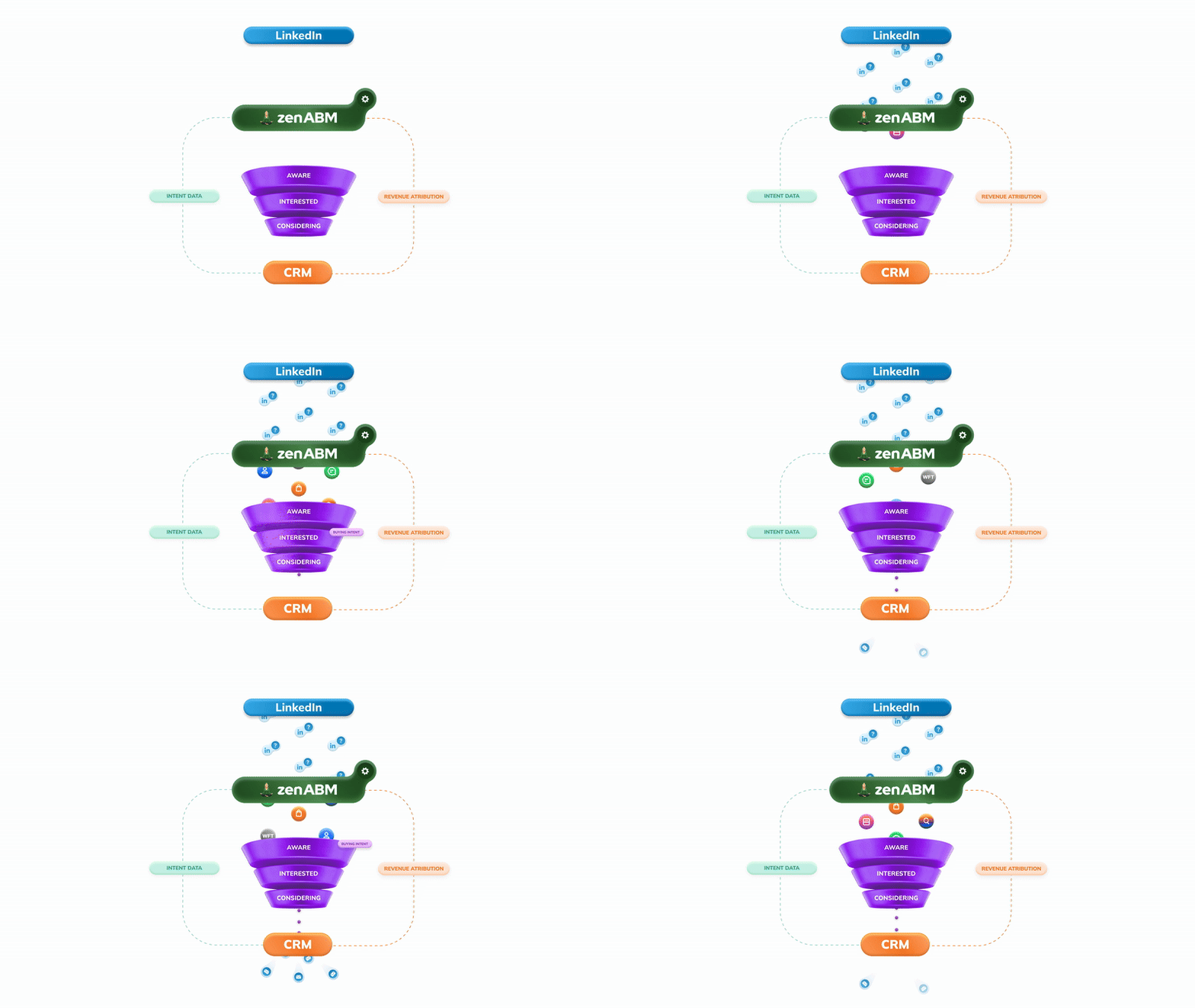
In case you’re short on time, here is the snapshot:
Recotap presents itself as a LinkedIn-first ABM platform for B2B teams that want to identify, engage and convert high-value accounts with more precision.
Recotap is an all-in-one ABM system that covers data, advertising, web experience and analytics.
Recotap pulls data from your CRM, marketing automation, website and third party intent providers into a single account view.
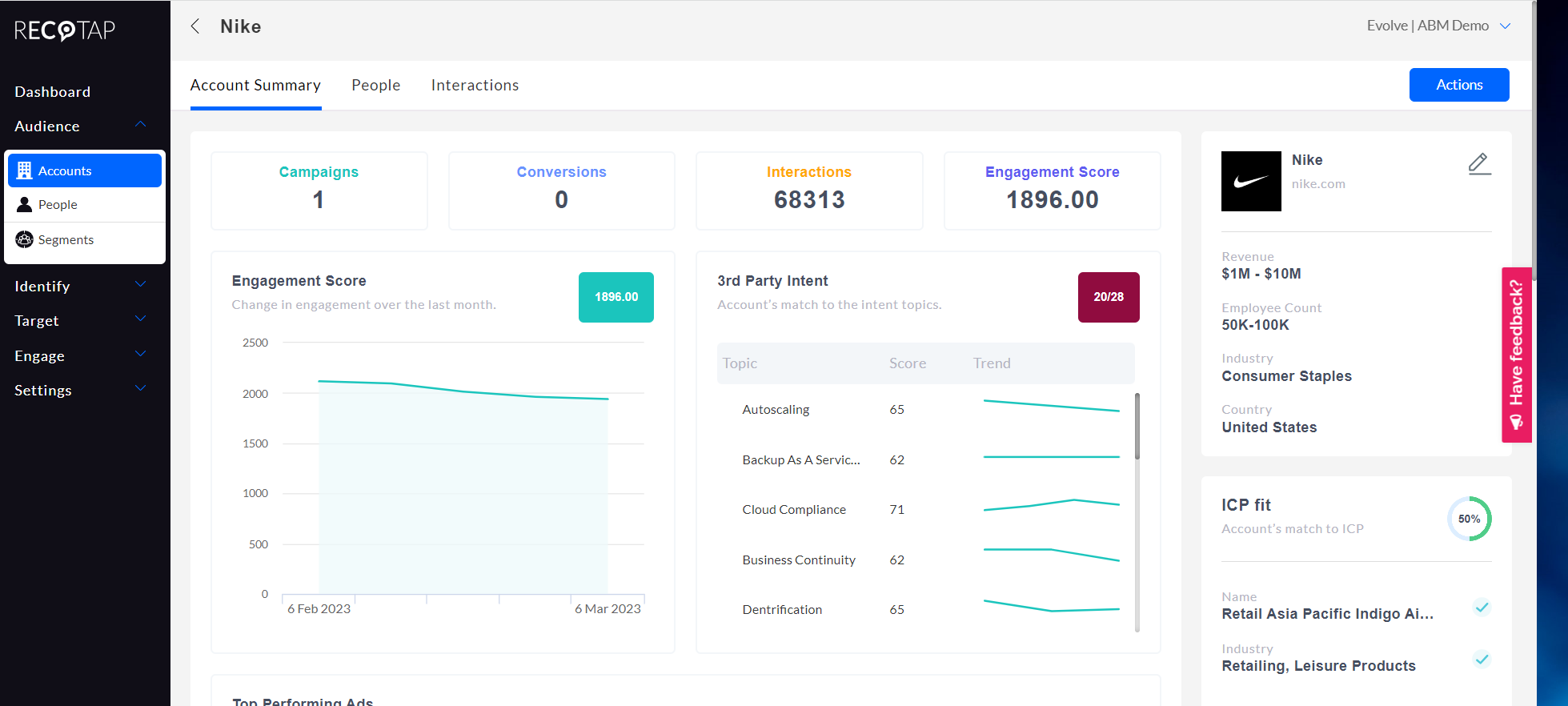
In practice, it joins signals like site visits, ad clicks, external intent (Bombora, G2, TrustRadius) and CRM data so you can segment and score accounts by fit and activity.

The aim is to understand where each account is in its buying journey and point campaigns at those that match timing and fit.
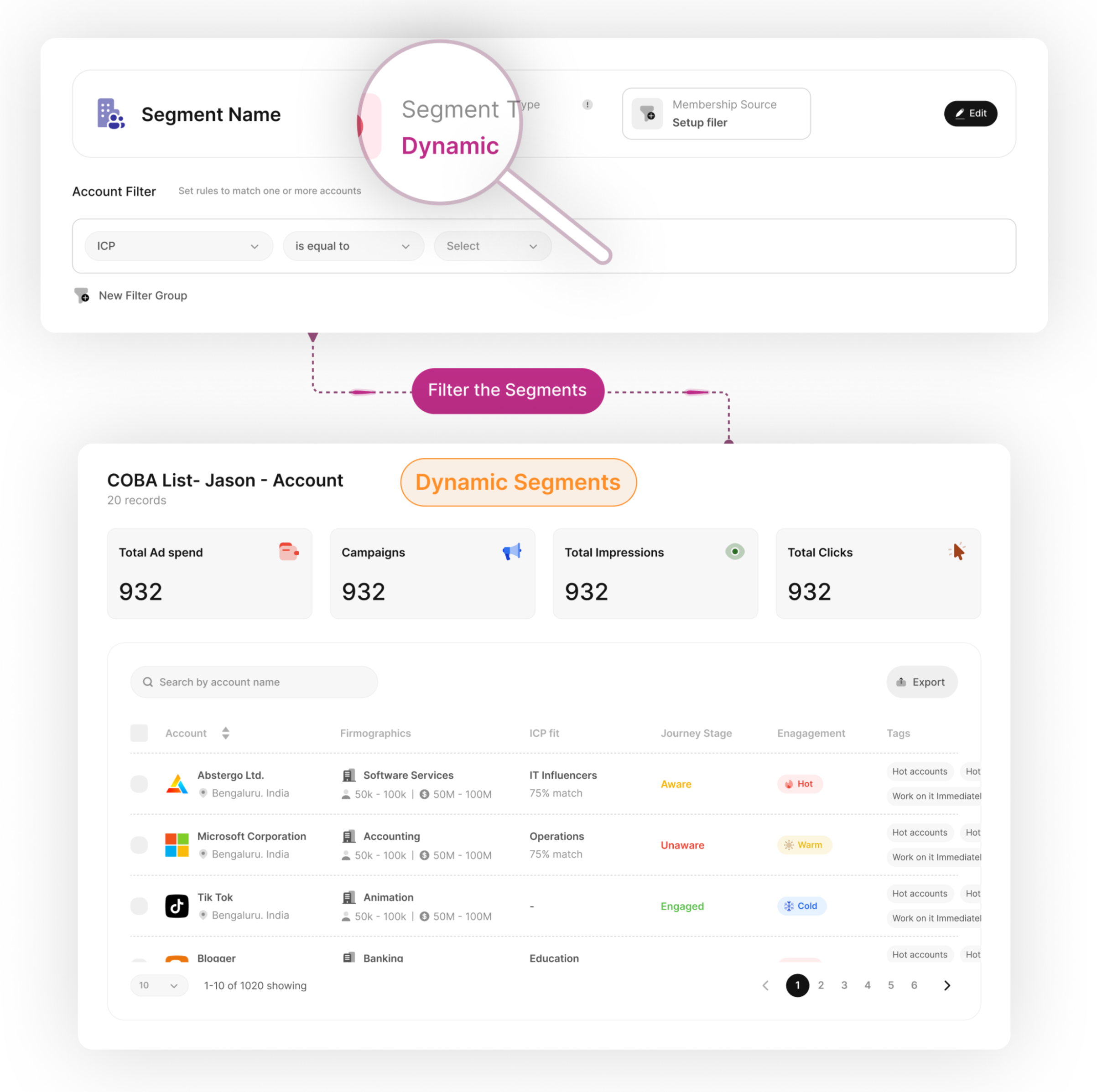
Recotap leans on dynamic segments and AI scoring. You define segments using firmographics, engagement, ICP fit and intent level, and the system keeps these lists refreshed automatically as data changes.
This cuts down manual work on target account lists. Recotap’s AI can also estimate journey stages so you know if an account is early research, actively engaged or close to sales.
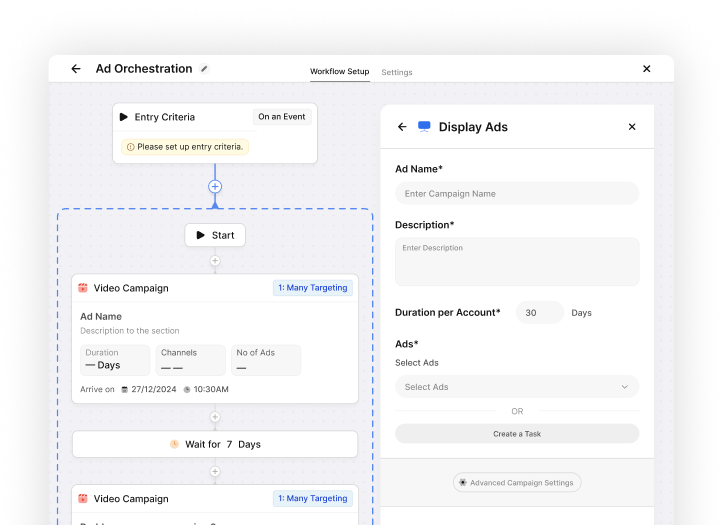
As an official LinkedIn Marketing Partner, Recotap is built for advanced LinkedIn Ads management.
It supports account based LinkedIn campaigns and helps marketers roll out highly tailored LinkedIn ads for dozens or hundreds of accounts at once.

Recotap extends personalization to your website. You can set up 1:1 landing page experiences for target accounts without heavy engineering, putting it closer to web personalization modules in tools like Terminus or Demandbase.
Recotap integrates with major CRM and marketing automation platforms so sales and marketing can work from shared data.
Salesforce and HubSpot CRM are supported with bi-directional sync for accounts, contacts and deals, alongside Marketo and Pardot for marketing automation.
It also connects to sales tools like Outreach and Salesloft, plus Slack and Microsoft Teams, so BDRs get alerts when a target account crosses a threshold.
Recotap includes AI-powered analytics and revenue attribution dashboards.
Its Revenue Impact view links campaigns to pipeline and revenue so you can see which programs drive closed deals and how account journeys progress from first touch to conversion.
Recotap automates repetitive ABM tasks so lean teams can still run complex programs.
It tracks intent spikes, refreshes segments and triggers outreach when an account hits a hot score. One G2 reviewer notes that Recotap’s UX is built to simplify ABM without sacrificing outcomes.
Recotap’s main differentiator is how it merges and interprets intent data to run smarter ABM campaigns.
Its ABM Signal Hub blends first-party engagement data from CRM, website and marketing tools with third-party intent from G2, TrustRadius and Bombora, removing data silos and giving a more complete view of each account.
The intent scoring engine aggregates these signals, ranks accounts by readiness and pushes hot ones into campaigns or sales queues. Because sync is real-time, Recotap can trigger LinkedIn ad sequences as soon as an account shows buying behavior.
The upside is precise targeting with less manual monitoring, though the flexibility introduces some complexity. Reviewers say that once configured, intent orchestration feels close to what you get in tools like 6sense or Demandbase.
Recotap publishes pricing on its site, which makes budgeting easier.
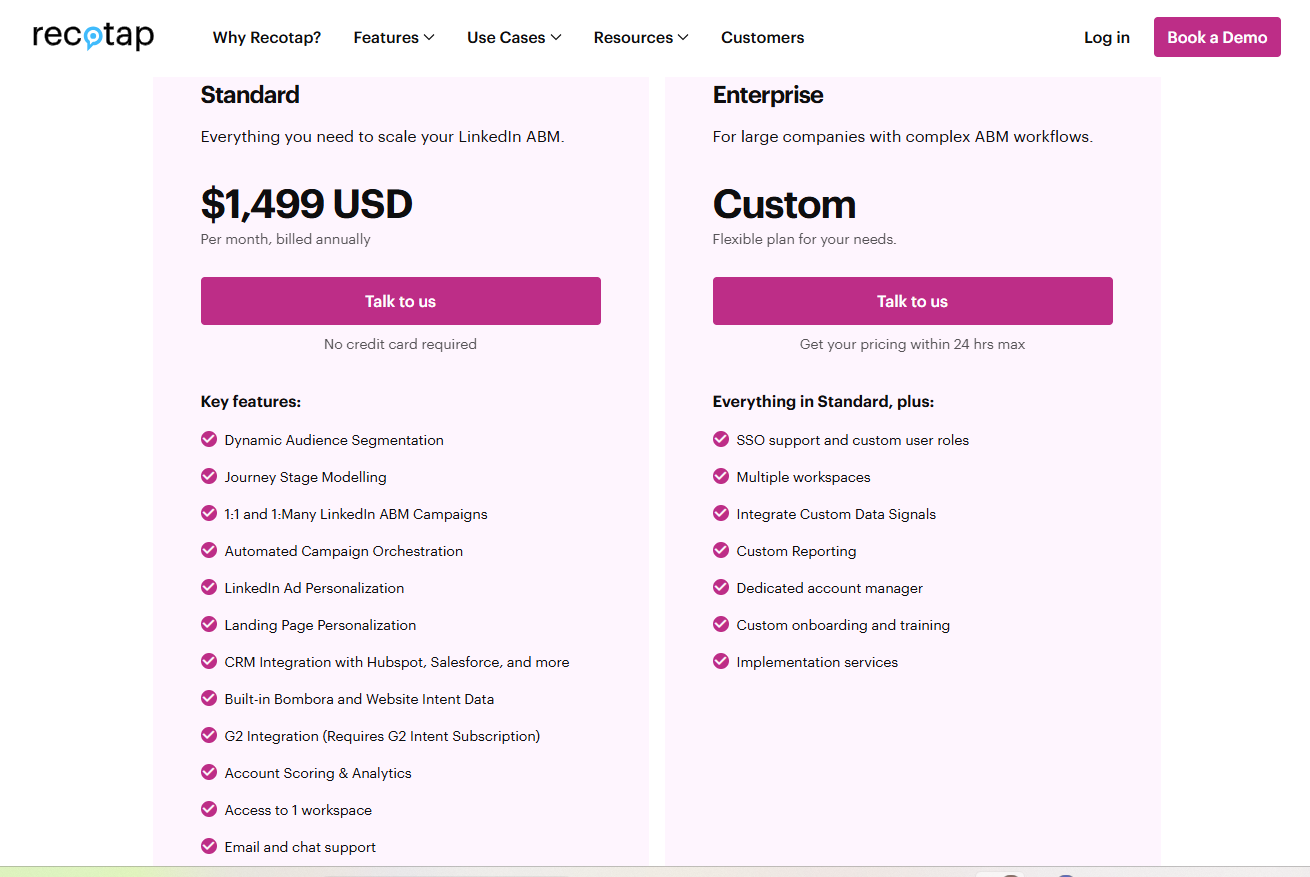
Given that Recotap’s entry plan already comes in above $10K per year, ZenABM stands out as a more budget-friendly option, starting at ~$59/month for the Starter plan, with the top tier still under $6K per year.
ZenABM still covers core LinkedIn ABM needs such as account-level ad engagement tracking, account scoring, ABM stage tracking, routing hot accounts to BDRs, bi-directional CRM sync, custom webhooks, qualitative company intent and plug and play ROI dashboards.
Recotap holds a 4.7 out of 5 rating on G2 from 47 reviews.
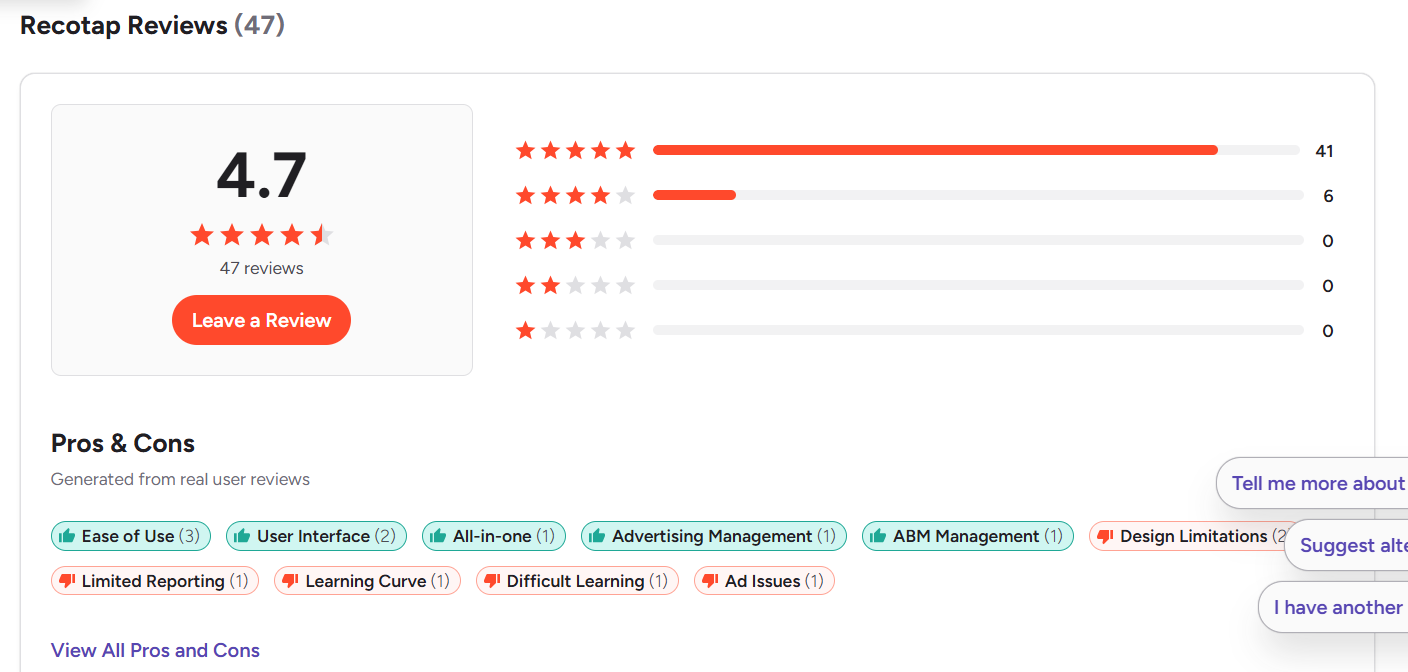
Most reviewers are based in Asia, which hints that Recotap’s GTM motion is currently APAC heavy.
Users often praise:
Common issues include:
TrustRadius and other review platforms are still relatively quiet on Recotap.
LinkedScope markets itself as a LinkedIn-centric account-based marketing attribution and optimization platform.
Let’s take a deeper look at its features and see its pricing and user reviews.
LinkedScope is essentially a LinkedIn Ads analytics layer + CRM connector with a sprinkling of intent scoring. I
It promises to tell you exactly which companies your LinkedIn ads reached, how they engaged, and whether they turned into pipeline or deals.
It even cooks up weekly prospect lists (accounts with high engagement metrics), so sales can pursue the most interested leads.
Let’s take a closer look at its core features:
It taps LinkedIn’s official API to pull all the company names and job titles exposed to your ads (no 25-title cap like Campaign Manager).

You can build target-account lists in LinkedScope and auto-sync them into LinkedIn campaigns in real time.

You also get dashboards for campaign reach, company penetration, and (via LinkedIn API) post-click engagement.

All data comes straight from your LinkedIn ad campaigns via the official API.
LinkedScope does not invent third-party insights.
Because of LinkedIn’s rules, it only shows you analytics that LinkedIn itself has, just presented more fully.
On top of raw stats, it computes a proprietary Intent Index: basically an engagement score (clicks, conversions, comments, etc.) to highlight “Spark Prospects.”
Sales reps supposedly get a prioritized list of accounts already warmed up by ads.

LinkedScope matches the companies hit by your ads to deals in any CRM (HubSpot, Pipedrive, RD Station, Salesforce, etc.).
It does this by matching website domains or exact company names.
This lets you attribute revenue to LinkedIn Ads: e.g. “$8M in closed deals came from accounts we had advertised to,” as their case study graphic brags.
Essentially, LinkedScope shifts LinkedIn Ads analytics from top-of-funnel vanity into supposed bottom-line visibility.
It also pushes the LinkedIn reach/intent data into tools like Slack or Zapier via webhooks, so you can automate alerts or import lists of engaged accounts into other systems.
By the way, ZenABM also provides detailed plug-and-play account-based LinkedIn ad revenue attribution dashboards for a starting price of just $59/month.
It does that by matching ad-engaged companies to the deals in your CRM, just like LinkedScope.
But there’s a difference: ZenABM doesn’t just match website domains to exact company names, but uses advanced algorithms to ensure minor spelling differences, etc., don’t leave companies unmatched.

LinkedScope’s site doesn’t mention anything except the fact that the subscription is month-to-month with no contract, and you get a 15-day free trial with no credit card.
Since many enterprise ABM tools (Demandbase, 6sense, Terminus, etc.) run into the tens of thousands per year, it’s fair to wonder where LinkedScope sits on the spectrum.
My guess: it’s probably priced for mid-market marketers or agencies who spend heavily on LinkedIn. If it were dirt-cheap or free, I doubt they’d omit it so pointedly.
In lieu of official rates, I checked the usual place: G2.
No luck there either.
LinkedScope has zero reviews on G2 and no user-submitted pricing.
Reddit and TrustRadius turned up nothing either.
In short, there’s no independent word on what it costs or whether any budget-conscious marketer ever questioned the bill.
If you are looking for a leaner yet effective tool, I present ZenABM, starting at just $59/month.
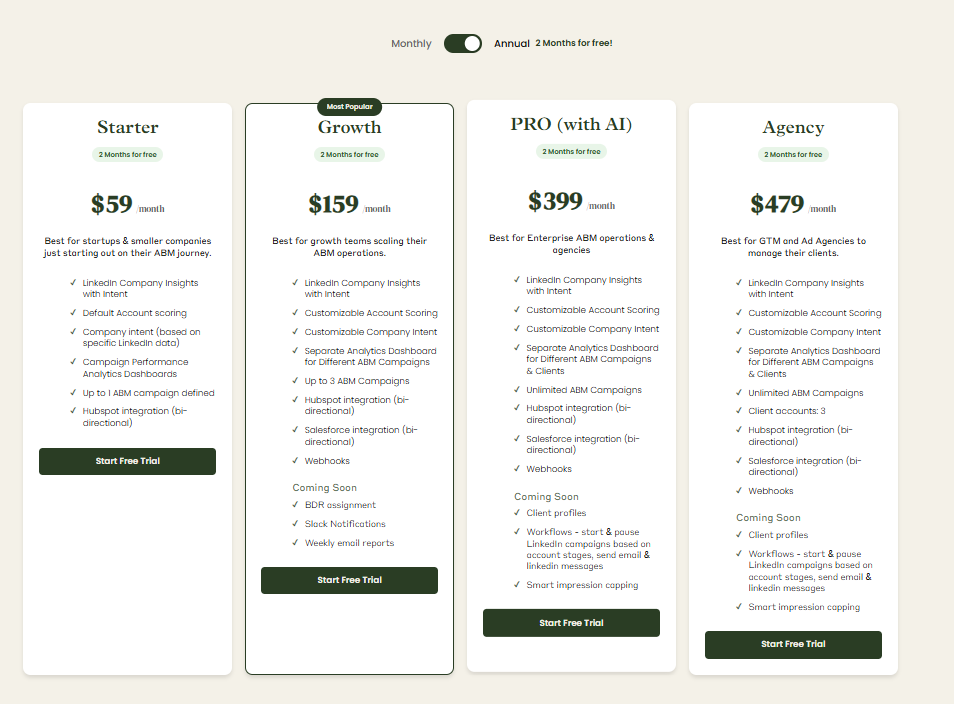
ZenABM offers account-level LinkedIn ad engagement tracking, ad engagement-to-pipeline analytics with plug-and-play dashboards, account scoring, ABM stage tracking, CRM sync, first-party qualitative intent data, automated assignment of BDRs to high-priority accounts, custom webhooks, an AI chatbot, impression capping, ABM objects, and ad engagement tracking at the job title level.
It’s hard to analyze user sentiment when nobody’s talking.
As of now (late 2025), the only feedback I found on LinkedScope is marketing testimonials in Portuguese/Spanish on their site.
No one on Reddit or LinkedIn has posted a “I love/hate LinkedScope” rant that I could find.
G2 explicitly notes that there are not enough reviews to give any insight.
The key differences between Recotap and LinkedScope are summarized here.
| Aspect | Recotap | LinkedScope | Best suited for |
|---|---|---|---|
| Core positioning | LinkedIn first ABM platform for identifying, engaging and converting high-value accounts | LinkedIn-centric attribution and optimization platform for ads and account insights | Teams choosing between an ABM suite and a LinkedIn analytics layer |
| Main problem solved | Who to target, how to move accounts through ABM journeys and how to prove revenue impact | Which companies were reached by LinkedIn ads, and which of them became pipeline or revenue | ABM program owners vs performance marketers focused on LinkedIn |
| Data and intent | ABM Signal Hub merges CRM, MAP, web data and Bombora or G2 or TrustRadius intent into account scores and stages | Uses first-party LinkedIn API data only and computes an internal Intent Index to rank engaged accounts | Stacks needing broad account intent vs stacks that mainly trust LinkedIn ad engagement |
| LinkedIn execution | Runs 1-to-1 and 1-to-many LinkedIn ABM campaigns with orchestration and journey modeling | Builds target account lists, syncs them to LinkedIn and reports on reach and engagement | Teams designing ABM programs vs teams tightening reporting around existing LinkedIn ads |
| Website and experience | Supports 1-to-1 landing pages and personalized web experiences for accounts | No native web personalization, focuses on ad analytics | Orgs needing aligned ad plus web journeys vs orgs satisfied with better ad reporting |
| CRM and MAP integrations | Bi-directional sync with Salesforce and HubSpot, MAPs like Marketo and Pardot, sales tools and chat tools | Connects to CRMs such as HubSpot, Pipedrive, RD Station and Salesforce for attribution and lists | Revenue teams wanting a central ABM layer vs teams wanting LinkedIn data inside CRM |
| Analytics and attribution | Revenue Impact dashboards tie ABM campaigns to pipeline and revenue at the account level | Shows LinkedIn reach, company penetration and revenue from accounts exposed to ads | ABM teams needing cross-channel views vs teams focused on LinkedIn-specific ROI |
| Personalization model | Segment and account-level ad and web personalization with journey stages | Prioritized lists of engaged accounts for sales, no creative personalization | Teams designing journeys vs teams only prioritizing outreach |
| Pricing level | Standard at about 1,499 USD per month on an annual, Enterprise custom | No public pricing or third-party benchmarks, month to month subscription with 15 15-day trial | Mid-market ABM budgets vs teams willing to bet on an opaque but focused LinkedIn tool |
| Social proof | 4.7 out of 5 on G2 from dozens of reviews, mostly APAC | No reviews on G2 or TrustRadius yet, limited testimonials on the vendor site | Risk-averse buyers vs early adopters comfortable with newer tools |
| ABM breadth | Covers data, LinkedIn ads, web personalization, segments, automations and ABM analytics | Narrow LinkedIn analytics and attribution scope with some intent scoring | Companies choosing an ABM execution platform vs a LinkedIn analytics companion |
If you are actually trying to run ABM, Recotap behaves like a LinkedIn-first ABM platform: unified account profiles, dynamic segments, LinkedIn orchestration, 1:1 landing pages and account-level revenue impact.
LinkedScope is more of an analytics and attribution lens. It is useful if your main question is “Which companies did our LinkedIn ads touch and how much pipeline came from those accounts”, rather than “How do we design and orchestrate ABM journeys.”
The weak spot with LinkedScope is the black box around pricing and the lack of real user reviews.
You get interesting LinkedIn visibility, but you are flying on vendor claims more than community proof.
If you primarily care about first-party accuracy on LinkedIn, account scoring, ABM stages, CRM sync and revenue attribution, consider ZenABM.
In fact, even for teams running heavy multi-channel ABM, ZenABM can be a meaningful complementary layer over the existing tech stack due to the following unique features:
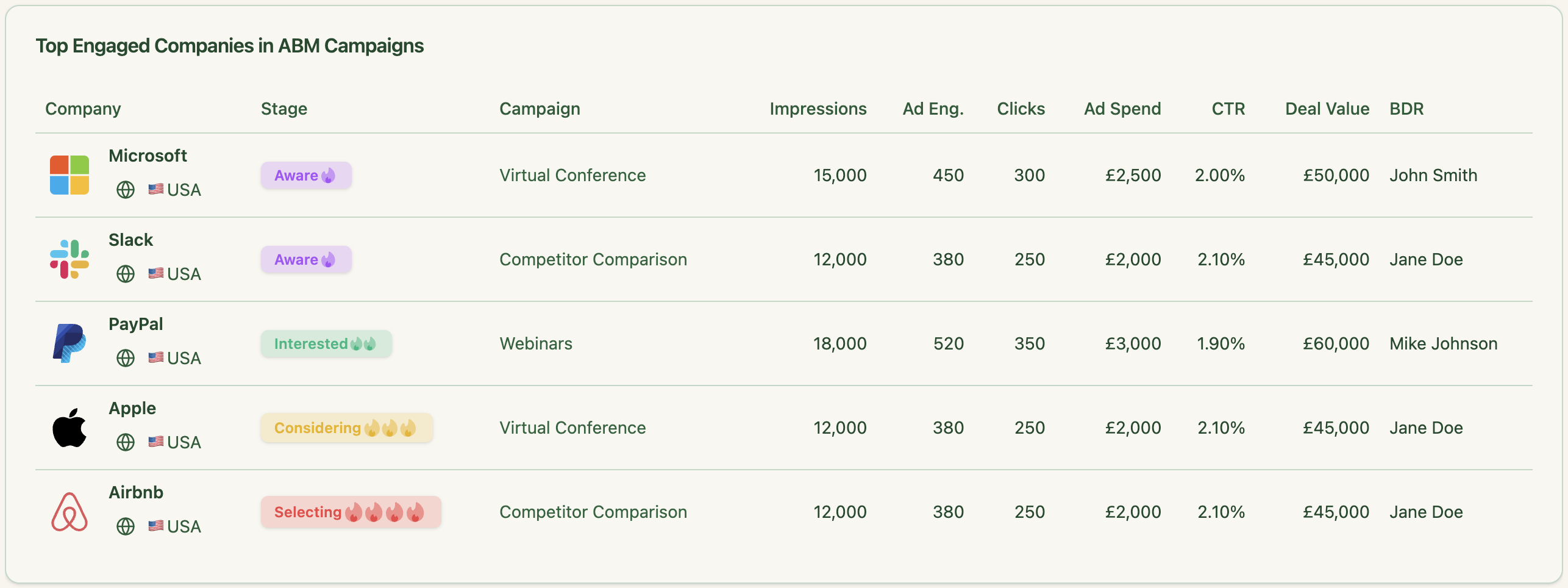
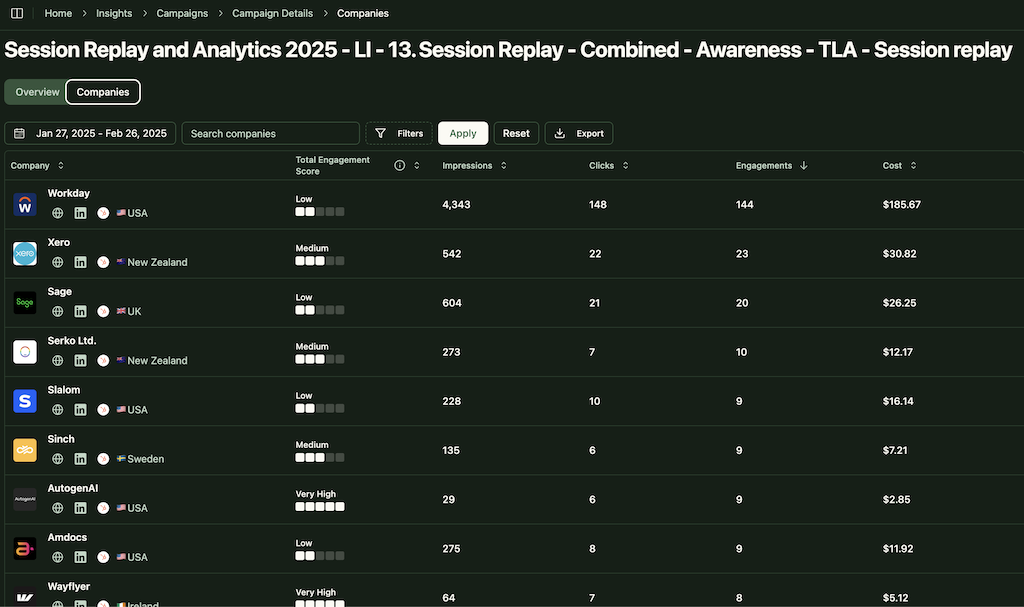
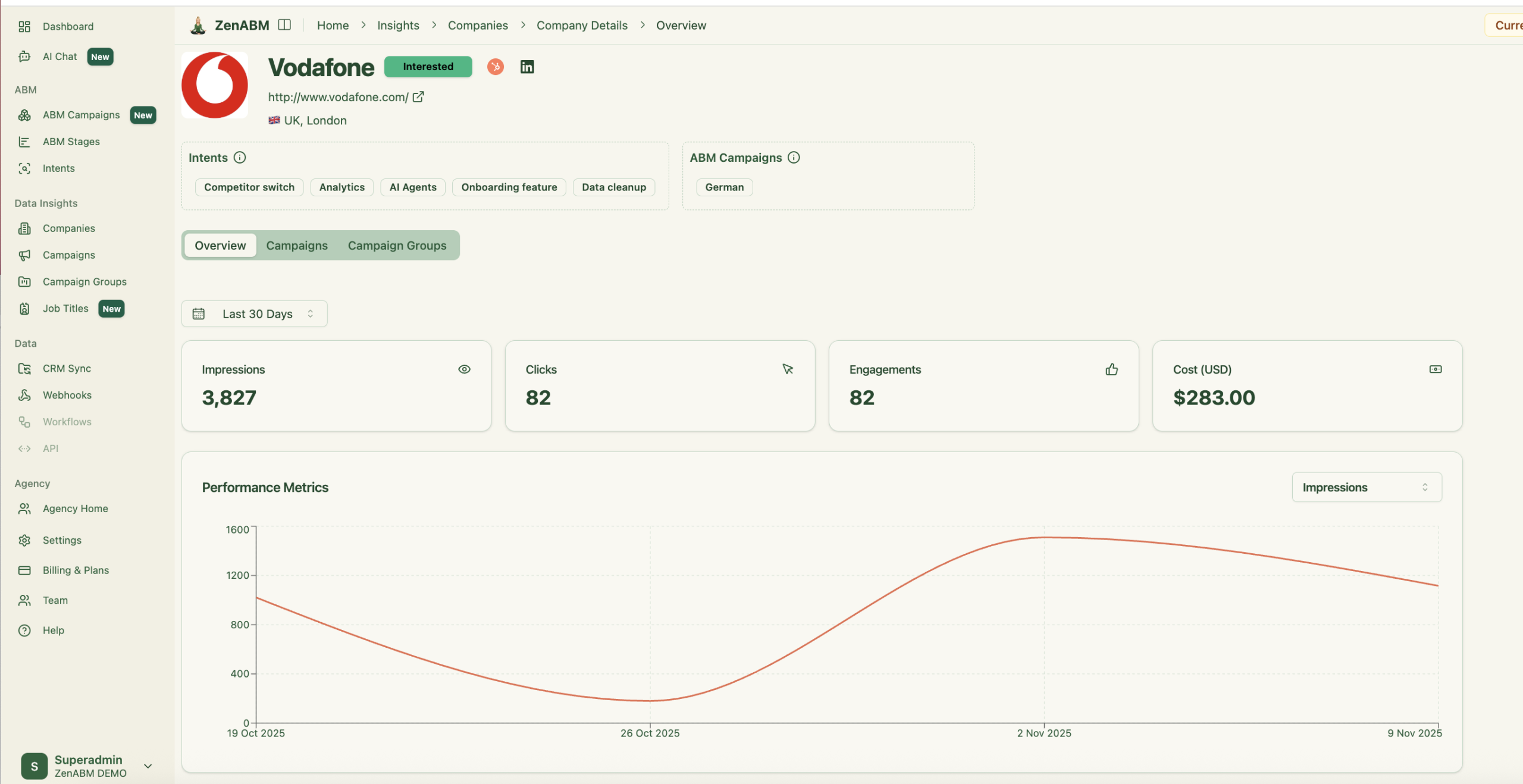
ZenABM connects directly to the official LinkedIn Ads API and records account-level data per campaign.
You see which companies view and engage with your ads using first-party LinkedIn data instead of IP or cookie matching. A Syft study suggests IP identification often peaks near 42 percent accuracy, so ZenABM treats ad engagement as the stronger intent signal.
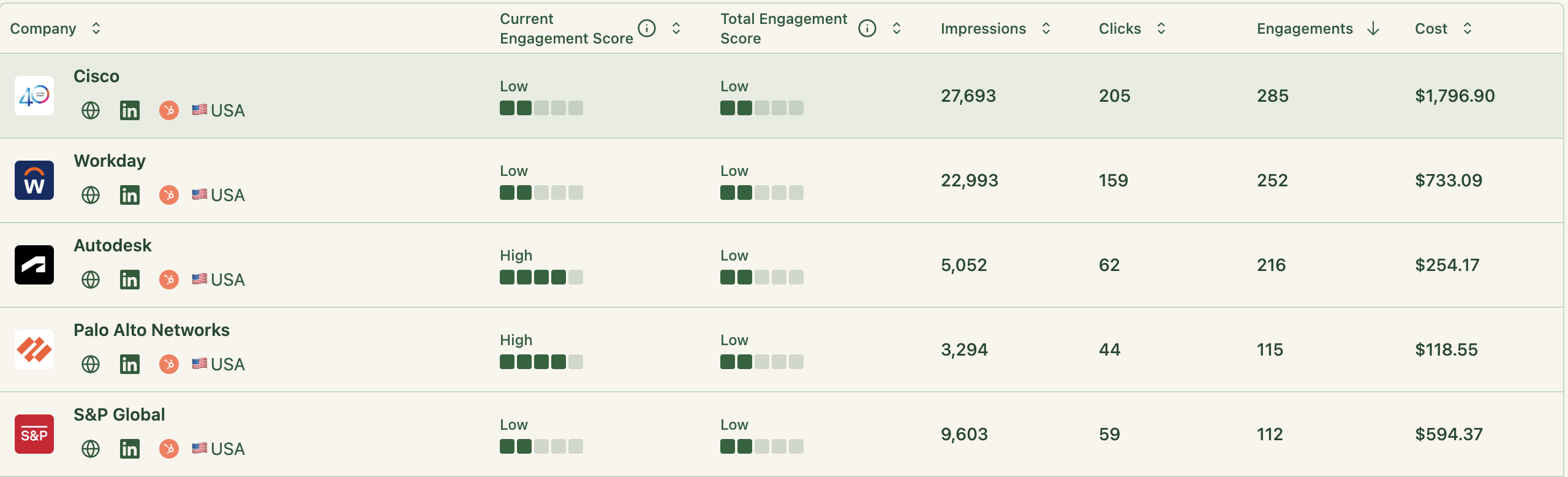
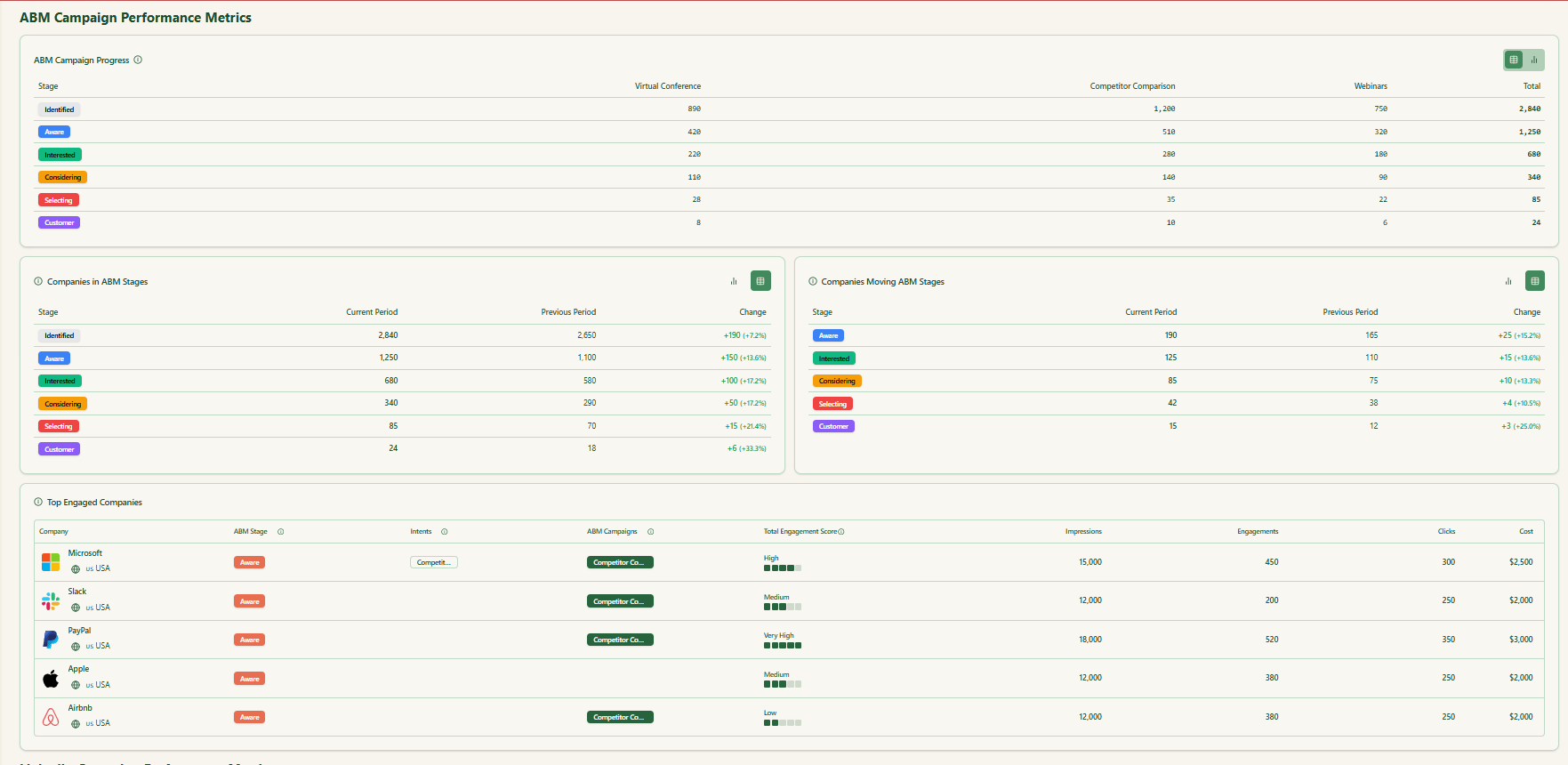
ZenABM updates engagement scores continuously as accounts interact with your ads. You get a full touchpoint history and can define stages such as Identified, Aware, Engaged, Interested and Opportunity.
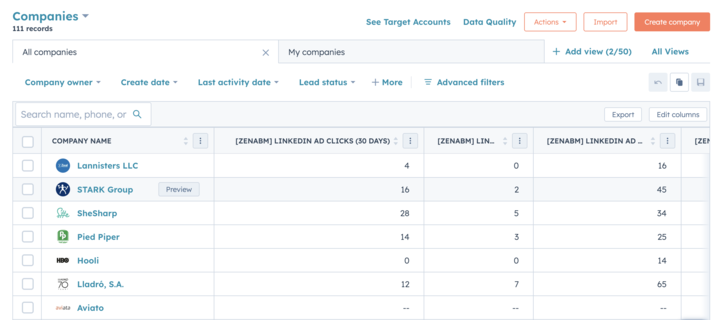
ZenABM syncs bi-directionally with HubSpot and supports Salesforce on higher plans. All LinkedIn metrics can be written as company properties inside your CRM.
When an account crosses your scoring threshold, ZenABM can update its stage and auto assign a BDR for timely outreach.
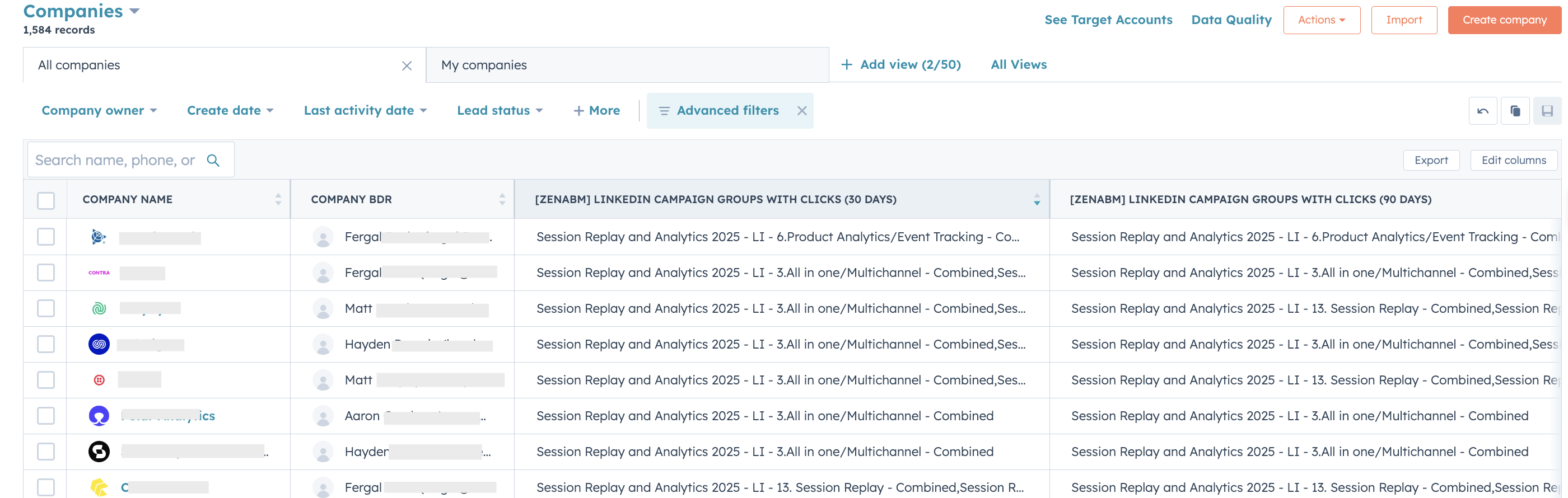
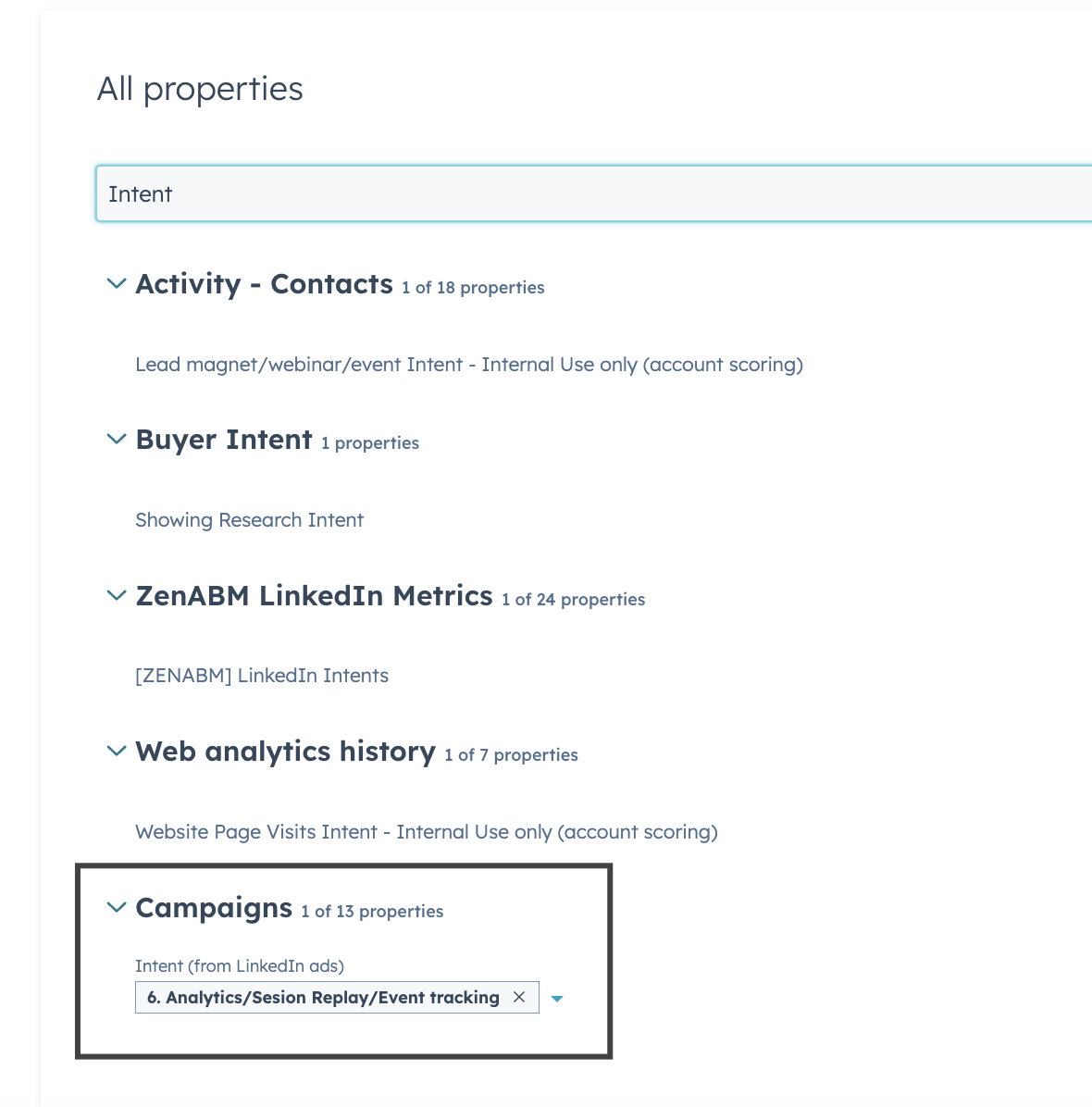
ZenABM lets you pull intent topics from LinkedIn campaigns and tag campaigns by feature, use case or offer.
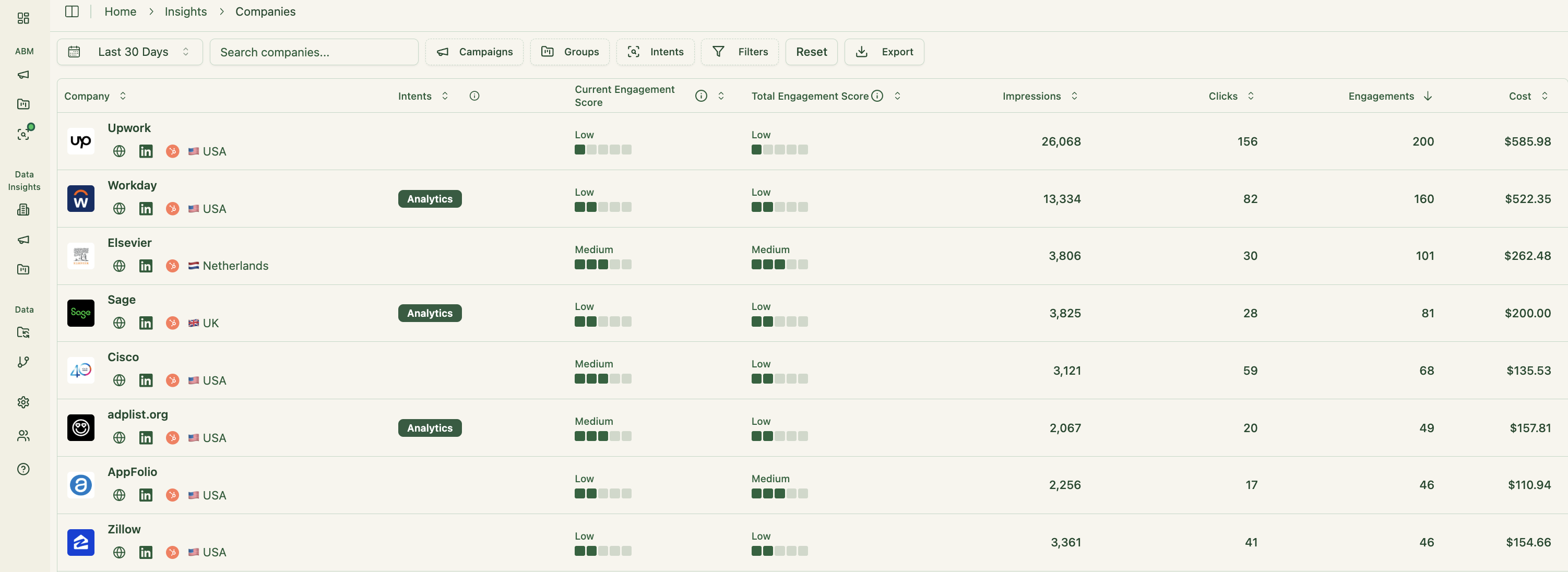
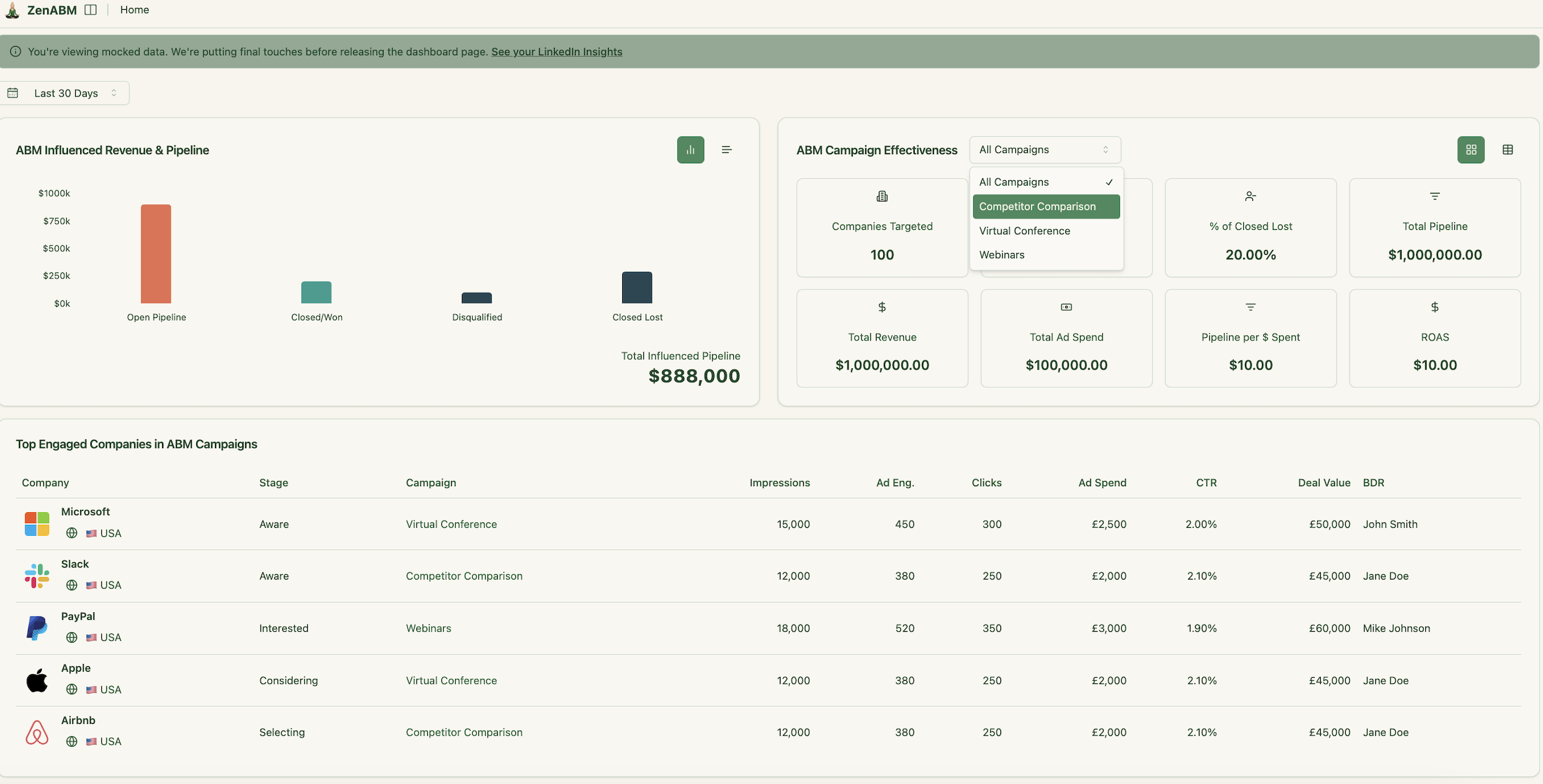
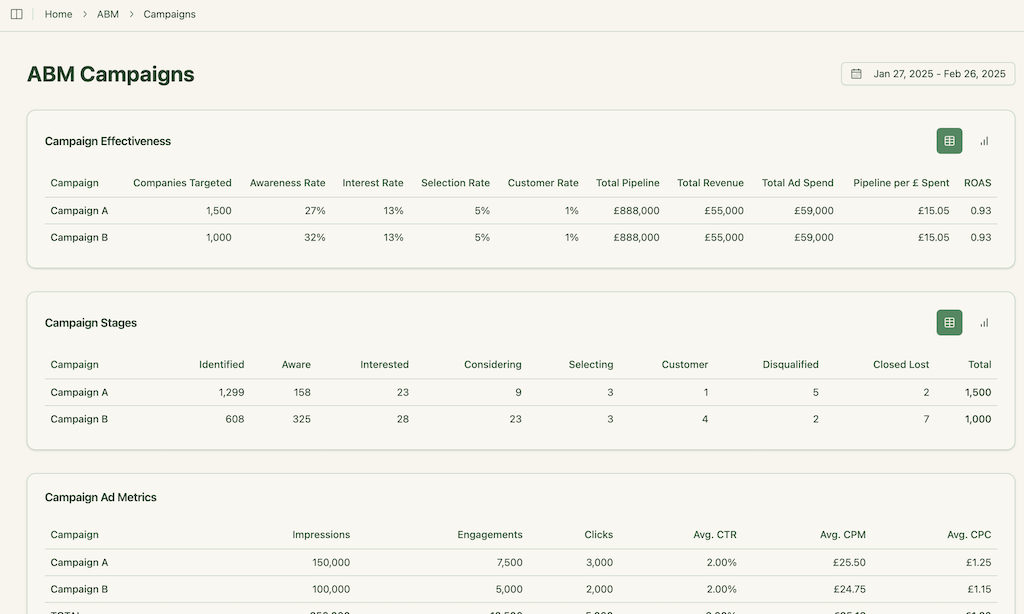
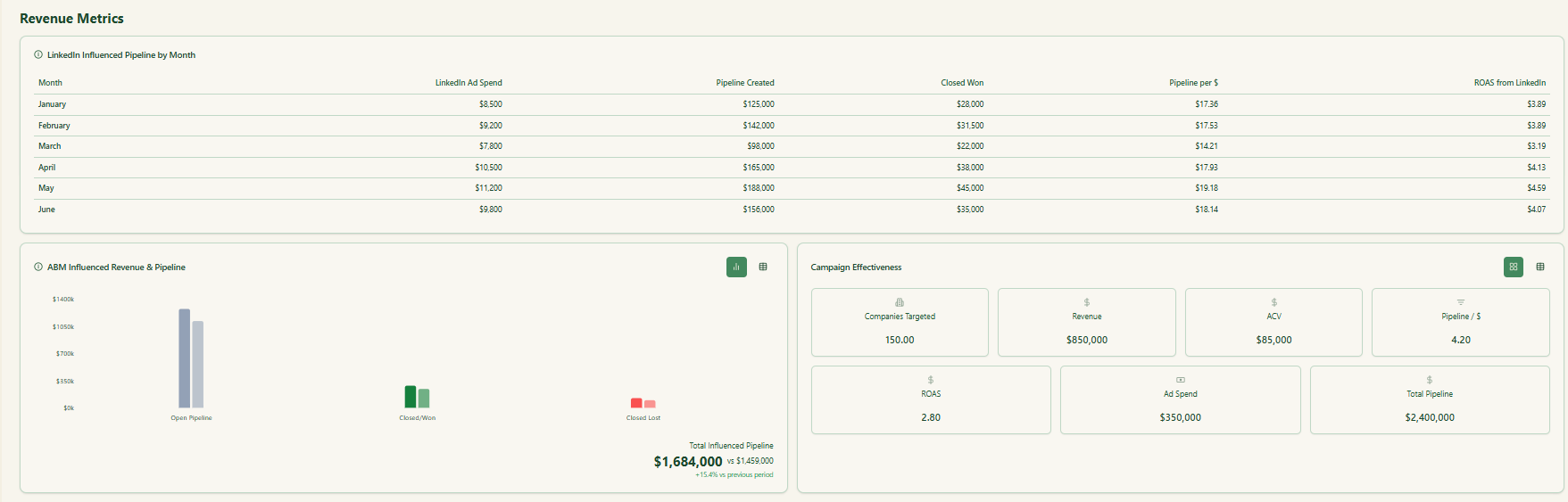
Its ABM dashboards connect LinkedIn ads to account engagement, stages and revenue. Because ZenABM tracks deal value and ad spend per company and campaign, it can calculate ROAS and pipeline per dollar automatically.
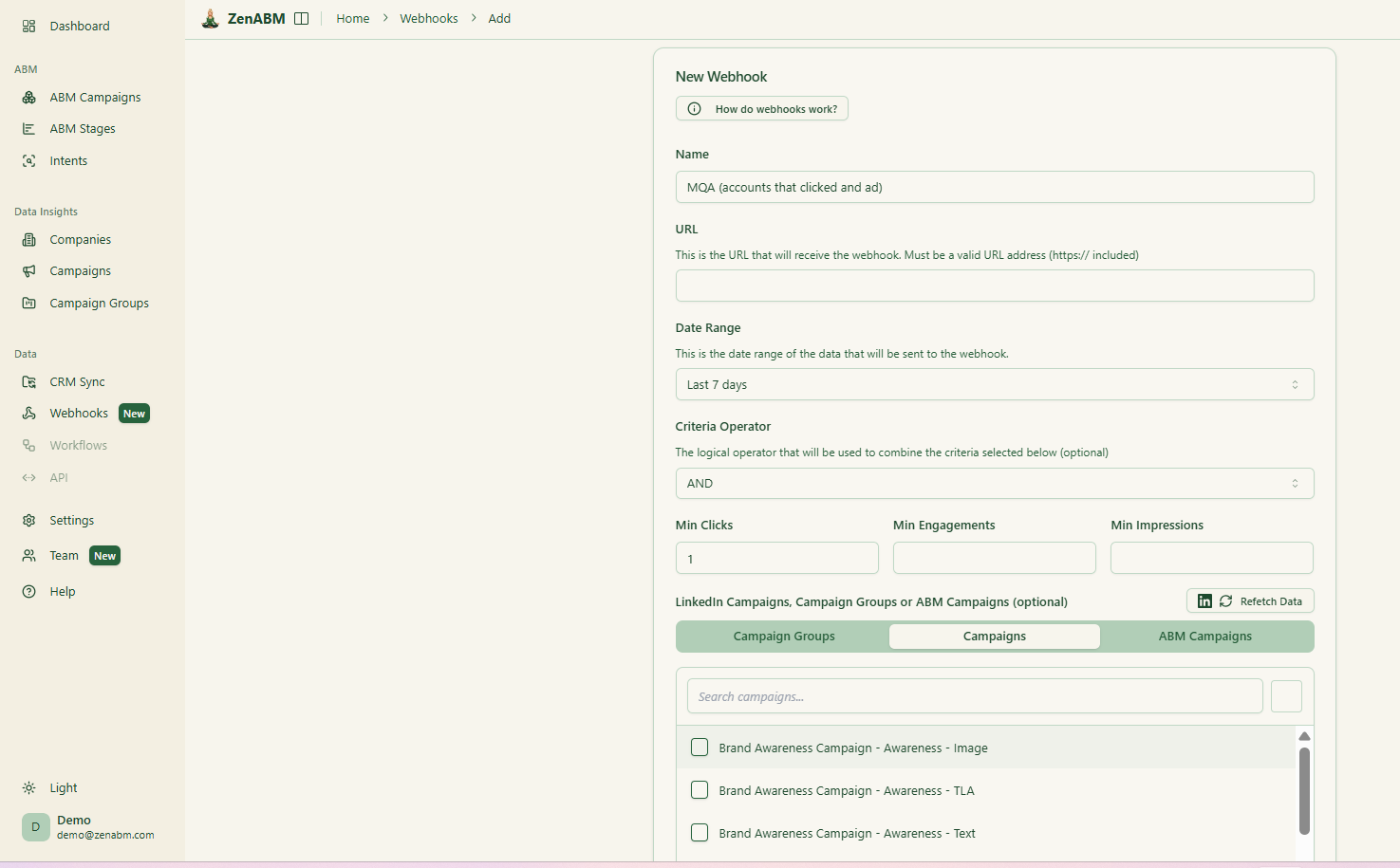
ZenABM webhooks send events into your stack for Slack alerts, enrichment flows and other automation.
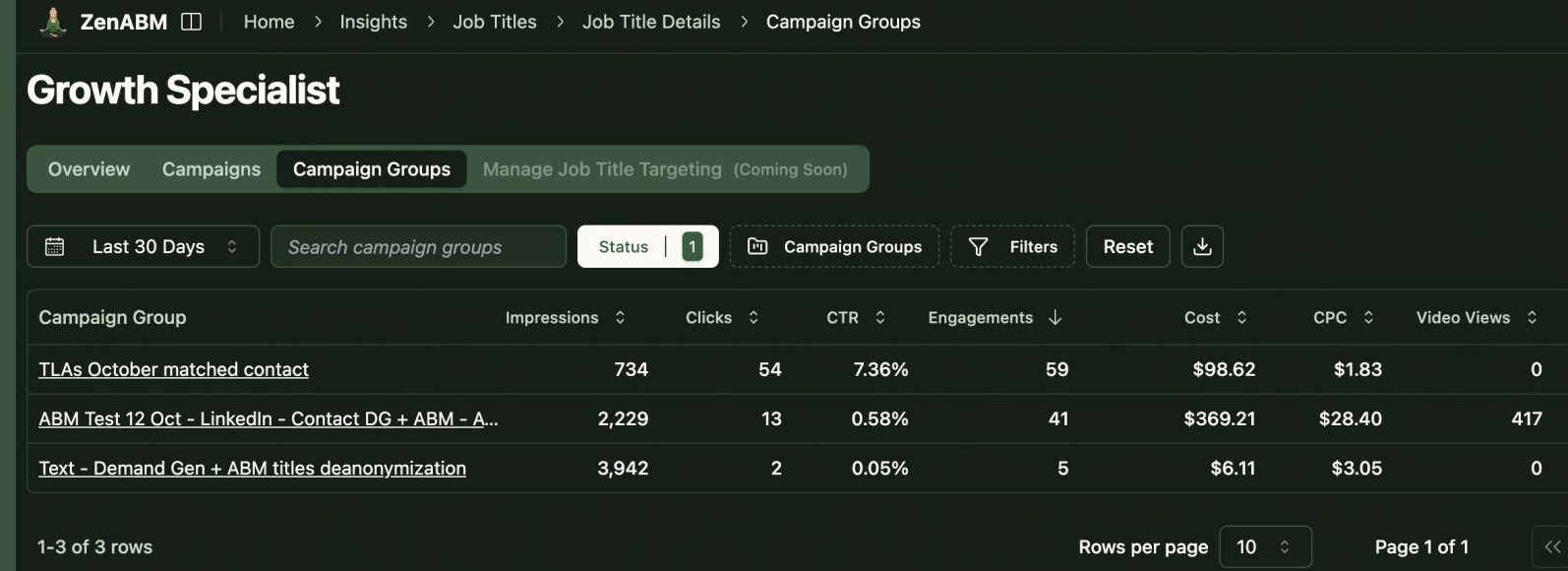
You can group LinkedIn campaigns into ABM campaign objects and view performance across markets, personas or creative clusters rather than juggling individual reports.
ZenABM includes an AI chatbot on top of your LinkedIn API data and ABM model so you can ask questions like “Which accounts moved from Interested to Selecting last month?” or “What is my pipeline per dollar on retargeting campaigns?”
Agencies can use the multi-client workspace to run several ad accounts and ABM campaigns with separate dashboards and reporting without constant switching in Campaign Manager.
Plans start at $59 per month for Starter, $159 per month for Growth, $399 per month for Pro (AI) and $479 per month for Agency.
The Agency plan still stays under $6,000 per year, and all tiers include core LinkedIn ABM capabilities. Higher tiers mainly lift limits and add Salesforce sync.
Every plan comes with a 37-day trial.
Recotap is a proper LinkedIn-focused ABM suite: unified account data, intent, LinkedIn orchestration, web personalization and account-level revenue views, priced at classic ABM platform levels.
LinkedScope is a narrower LinkedIn analytics and attribution layer: ideal if you are already committed to LinkedIn ads and mainly want to know which companies you actually reached and what deals followed, but with thin public pricing and review data.
If what you actually need is first-party LinkedIn intent, account scoring, ABM stages, CRM sync, job title analytics and ROAS per account without drifting into 5-figure contracts, ZenABM comfortably fills that gap and can sit alongside either as the LinkedIn brain of your ABM stack.
