
©2026 ZenABM - All Rights Reserved.

In this guide to one-to-one ABM, I have covered the whole motion end-to-end. From selecting and tiering target accounts to orchestrating personalized plays at scale. From RevOps alignment to advanced qualification frameworks like SPICED and MEDDPICC. From measurement to iteration.
I have also discussed how ZenABM can support your ABM strategy at every step.
Read on…
One-to-one ABM is the varsity level of B2B go-to-market.
Think multi-million dollar opportunities, double-digit buying teams, and long enterprise cycles. Spray-and-pray demand gen won’t move these deals.
You don’t approach a Fortune 500 the way you’d approach an SMB. One-to-one ABM treats each target as a market of one. You execute coordinated, personalized plays that outmaneuver competitors and win over entire organizations.
Complexity is part of the game.
You’ll navigate:
Before execution, anchor your approach in frameworks and operating principles that scale.
Traditionally, ABM runs in three modes:
Hyper-personalized programs for top-tier “whales.” Messaging, content, and outreach tuned to a single account’s context. Reserved for accounts worth seven or eight figures.
Personalized campaigns for clusters of look-alike accounts (e.g., 5–15) within a vertical or segment. Templated at the cluster level, customized where it matters.
Broader, tech-powered touches for dozens or hundreds of accounts. Dynamic ads. Automated nurtures. Your scale layer.
This is usually drawn as a pyramid of effort vs. reach:
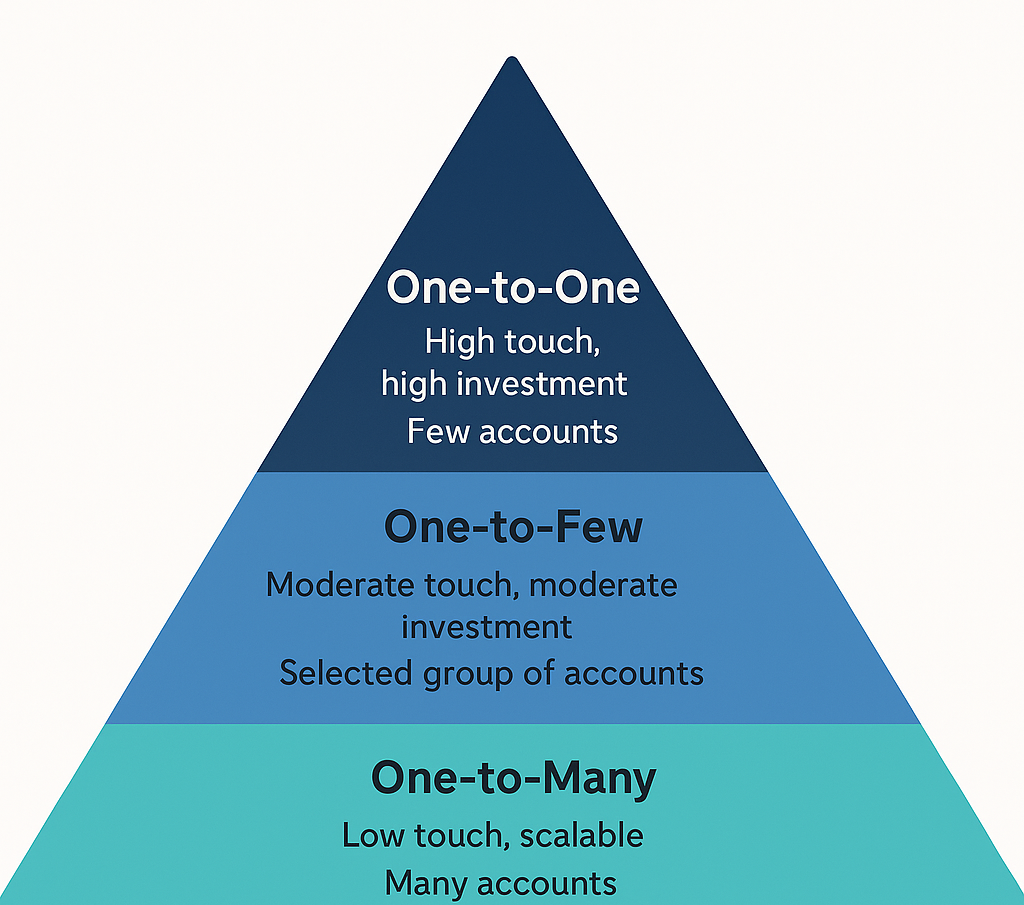
Few accounts receive true white-glove 1:1 at the top; many get lighter programmatic touches at the base.
That model still helps.
The Global Account-Based Marketing Benchmark shows most programs run multiple motions in parallel.
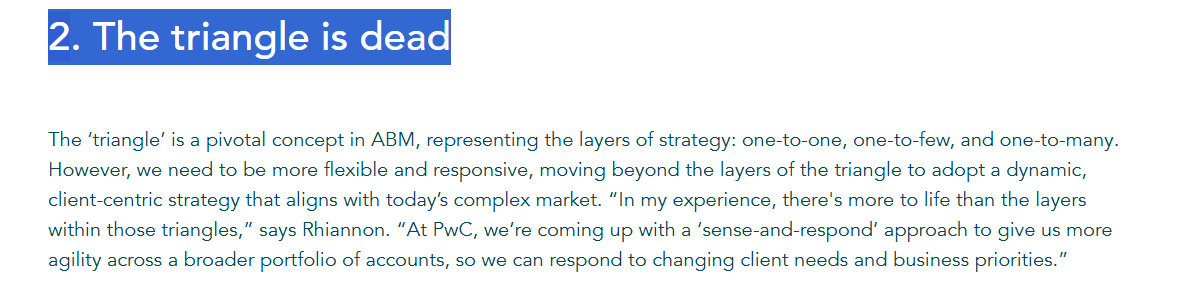
Avoid rigid silos. Leading practitioners call for agility. As Rhiannon Blackwell notes in a Momentum ITSMA piece, the playbook must be dynamic and client-centric.
In practice, you’ll dial investment up or down in real time. If a mid-tier account signals urgent, strategic pain, escalate it to 1:1 treatment. If a supposed Tier 1 goes cold, scale back until they re-engage.
Bottom line: Keep tiers, stay fluid.
Pro Tip: New to enterprise? Nail true 1:1 for five flagship accounts rather than “ABM” a list of 500 with generic touches. Expand to 1:few and 1: many once the foundation is solid. Some teams even begin with existing customers to land expansion before chasing net-new.
Now let’s execute one-to-one ABM step by step.
Your list is your strategy.
That’s true for all ABM, but it’s existential for 1:1.
Here’s how to build a list that deserves a one-to-one motion:
Don’t settle for vague personas. Build a data-backed picture of accounts most likely to become high-value customers.
Blend firmographics, technographics, pains and use cases, and any predictors tied to wins.
If you have enterprise customers already, mine what your best logos share.
Use CRM and third-party data to score accounts against ICP criteria (revenue, headcount, growth).
Layer intent. If Bombora or 6sense shows surging interest in a topic you solve, that’s a heat signal.
Add field intel. Sales and CS know whose priorities align with you. Run weekly RevOps reviews to weigh data plus judgment.
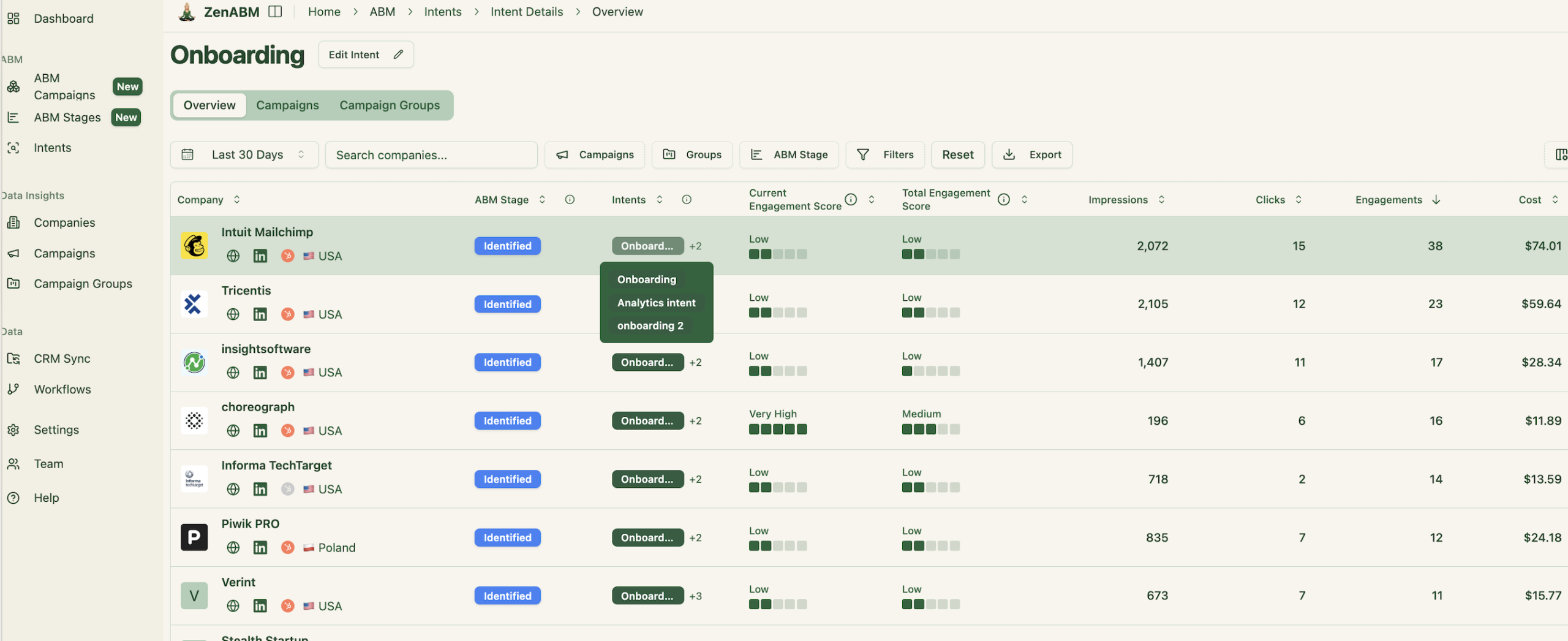
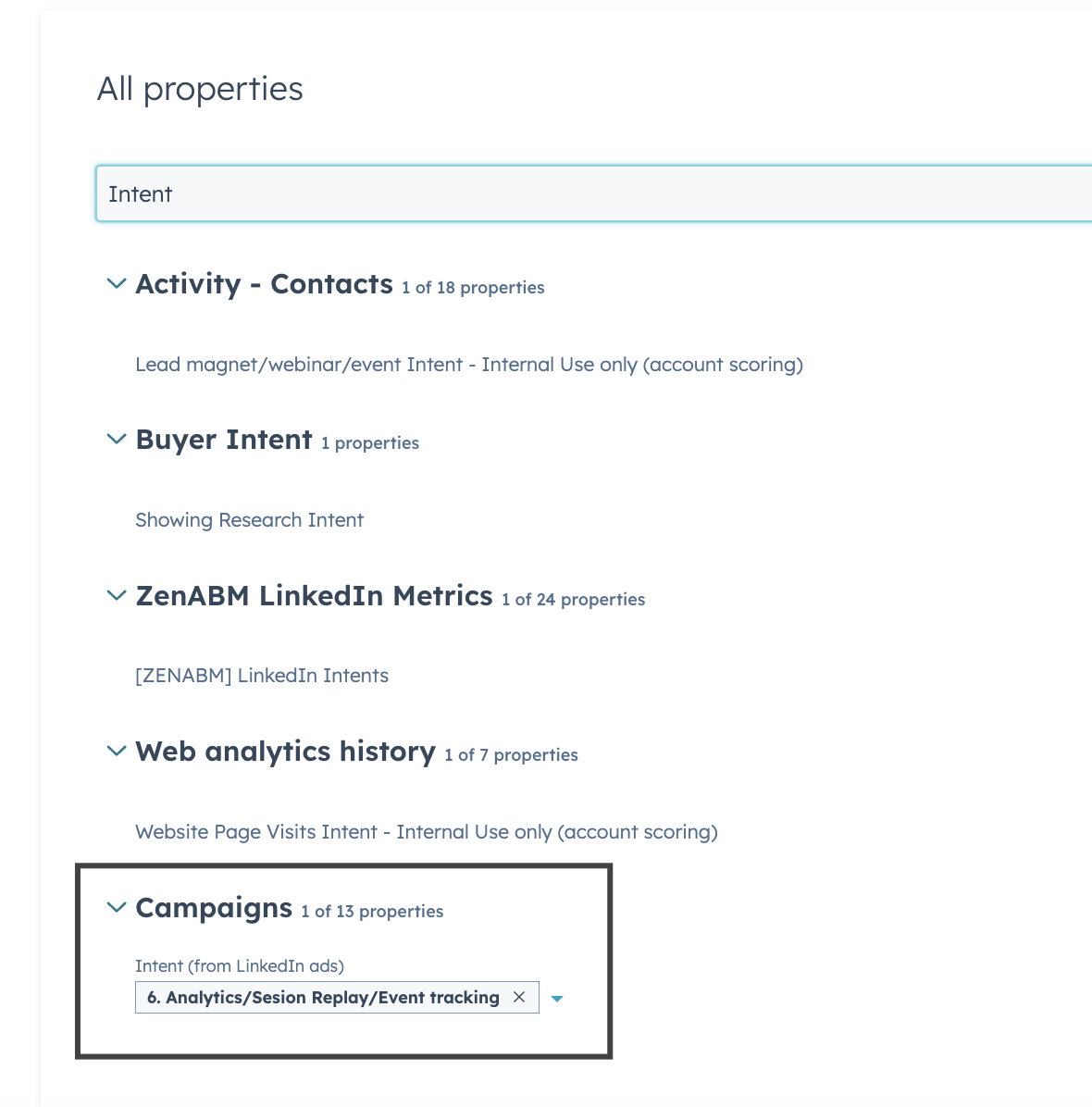
Pro Tip: You can “bake in” intent via ad structure. If you sell product tooling, split campaigns by features like analytics or session replay.
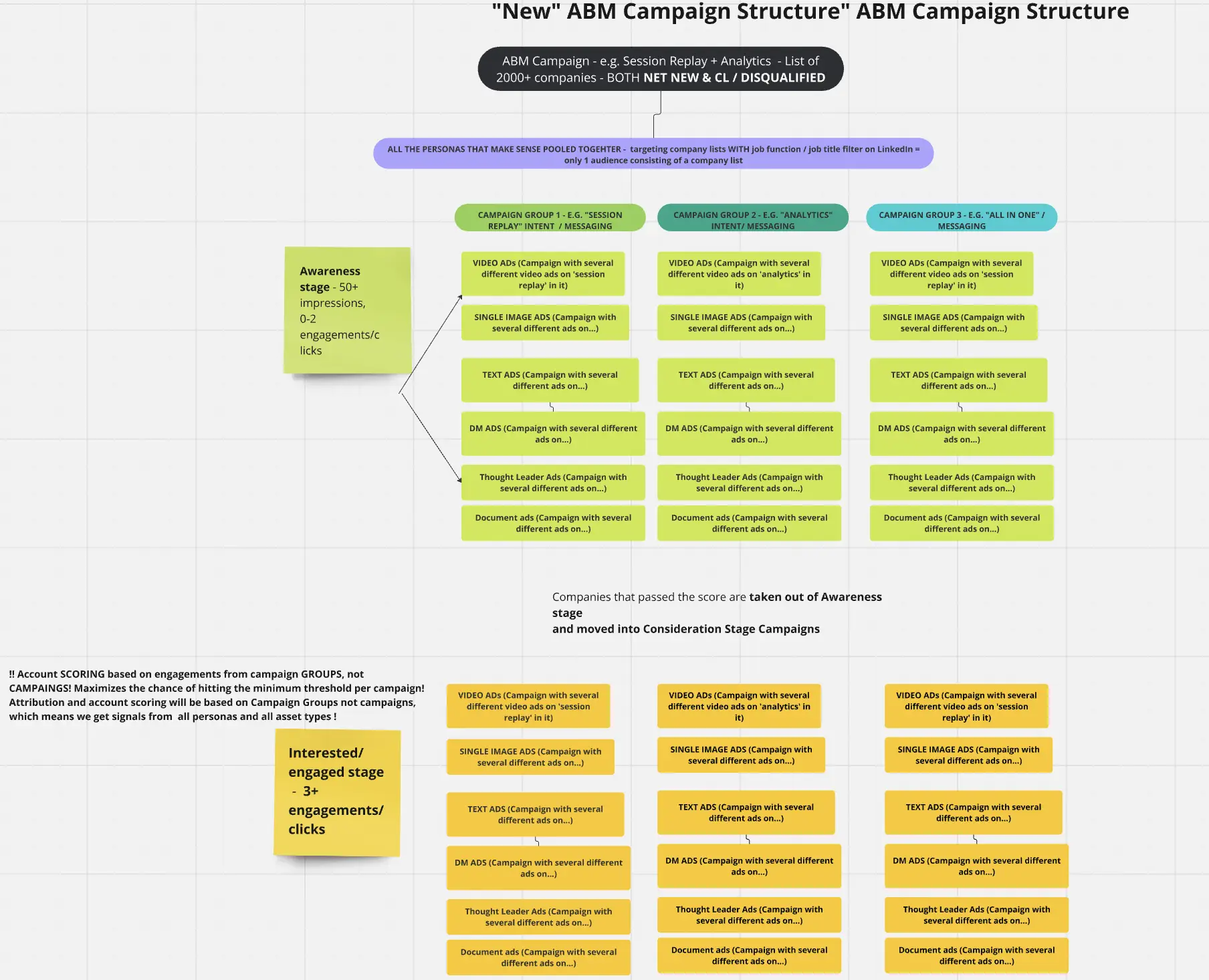
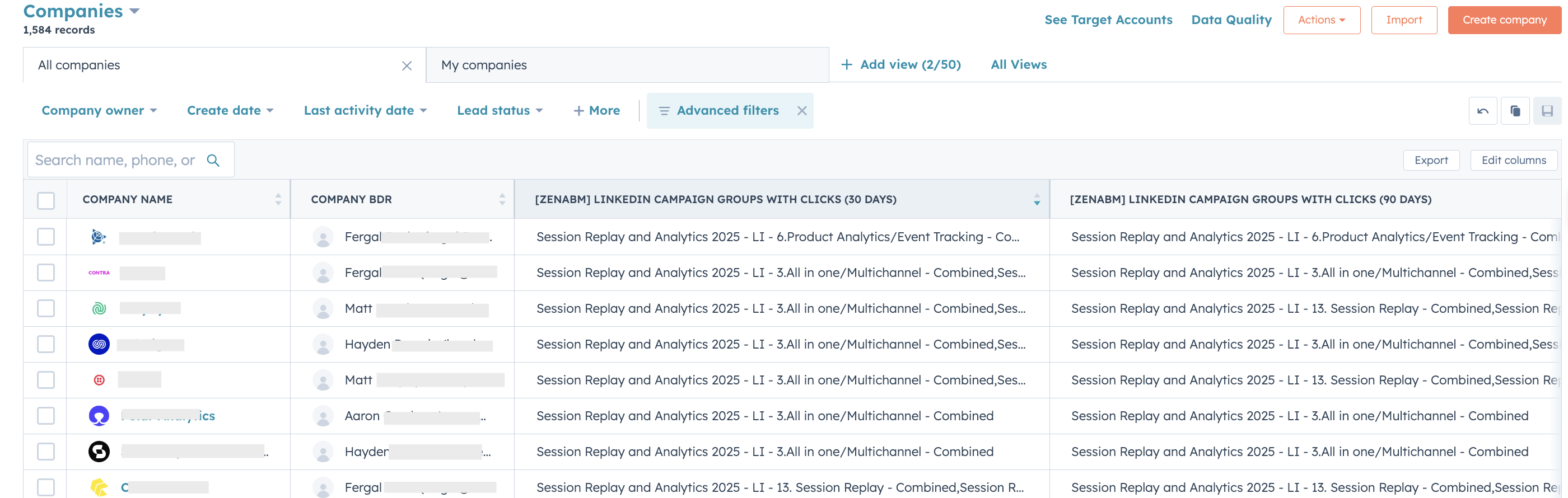
Then, in ZenABM, tag each ad with intent. Once live, ZenABM groups companies by similar intent:
It also pushes intent into your CRM as a company property so sales can act fast:
Your candidate list will exceed your capacity.
Create tiers. Example: Tier 1 = 10–20 accounts (1:1), Tier 2 = next 50 (1:few by vertical/region), Tier 3 = next 200 (programmatic nurture).
Prioritize by potential value and likelihood to win.
A Reddit practitioner put it well: focus segmentation on deal size, not “account type.”

If a small company represents a big deal, give it enterprise-grade, one-to-one ABM.
Selection isn’t one-and-done.
Markets shift. Orgs reorganize.
Review quarterly or twice a year. Add emergent winners. Park the zombies.
High performers start narrow and scale. Many pilot with ~20 accounts, then expand once the model works.
Secure early buy-in on the target list from sales leadership. ABM dies when there’s no agreement on must-win accounts. Choose targets together and get sign-off from the CRO or VP Sales. When sales co-owns the list, they work it.
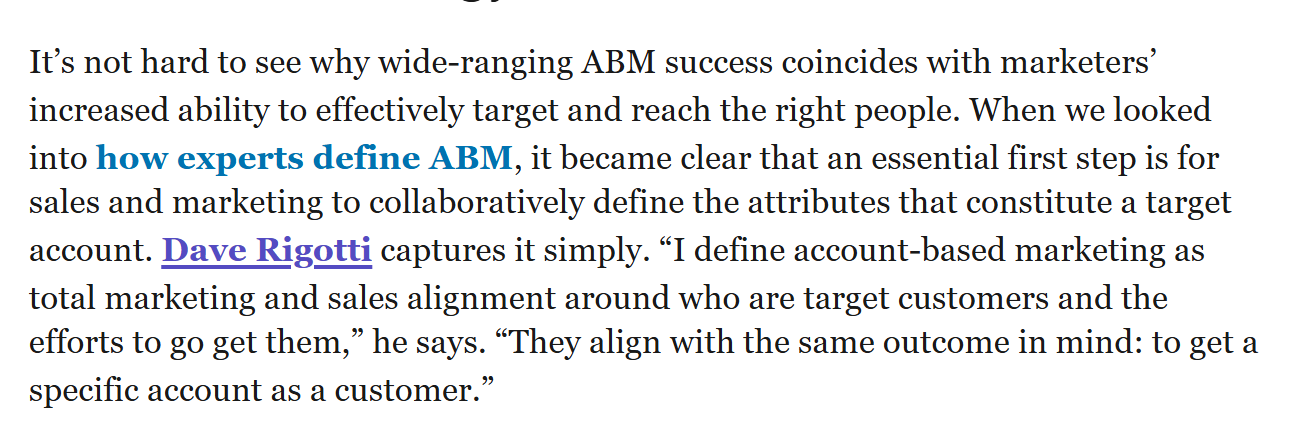
Alignment is the essence of ABM, per experts like Dave Rigotti.
Real-world: In CrossKnowledge’s ABM pilot, the team agreed early to an account-centric approach and a shared list. That alignment helped the program source 60% of the enterprise pipeline.
At the enterprise level, “Hi <Name>” is table stakes.
You need account-level insight, pinpoint messaging, and bespoke content that fits their world.
ABM often feels like detective work plus strategy.
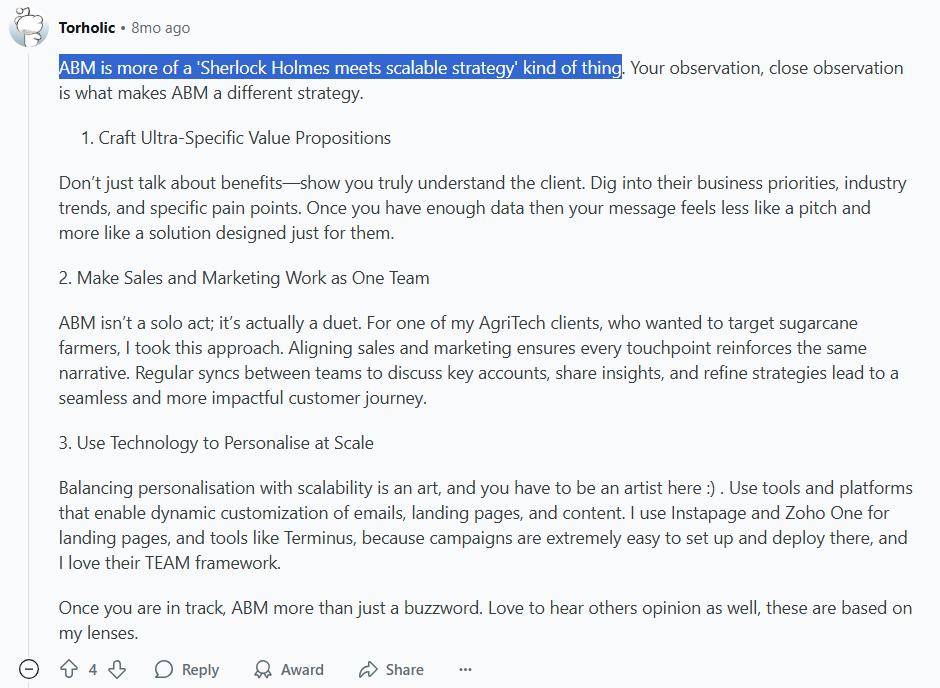
A marketer on Reddit called it “Sherlock Holmes with a scalable plan.”
Investigate deeply:
Know their priorities and constraints almost as well as they do.
Then craft value propositions that are unmistakably for them.
Here are practical ways to scale personalization in a one-to-one ABM program:
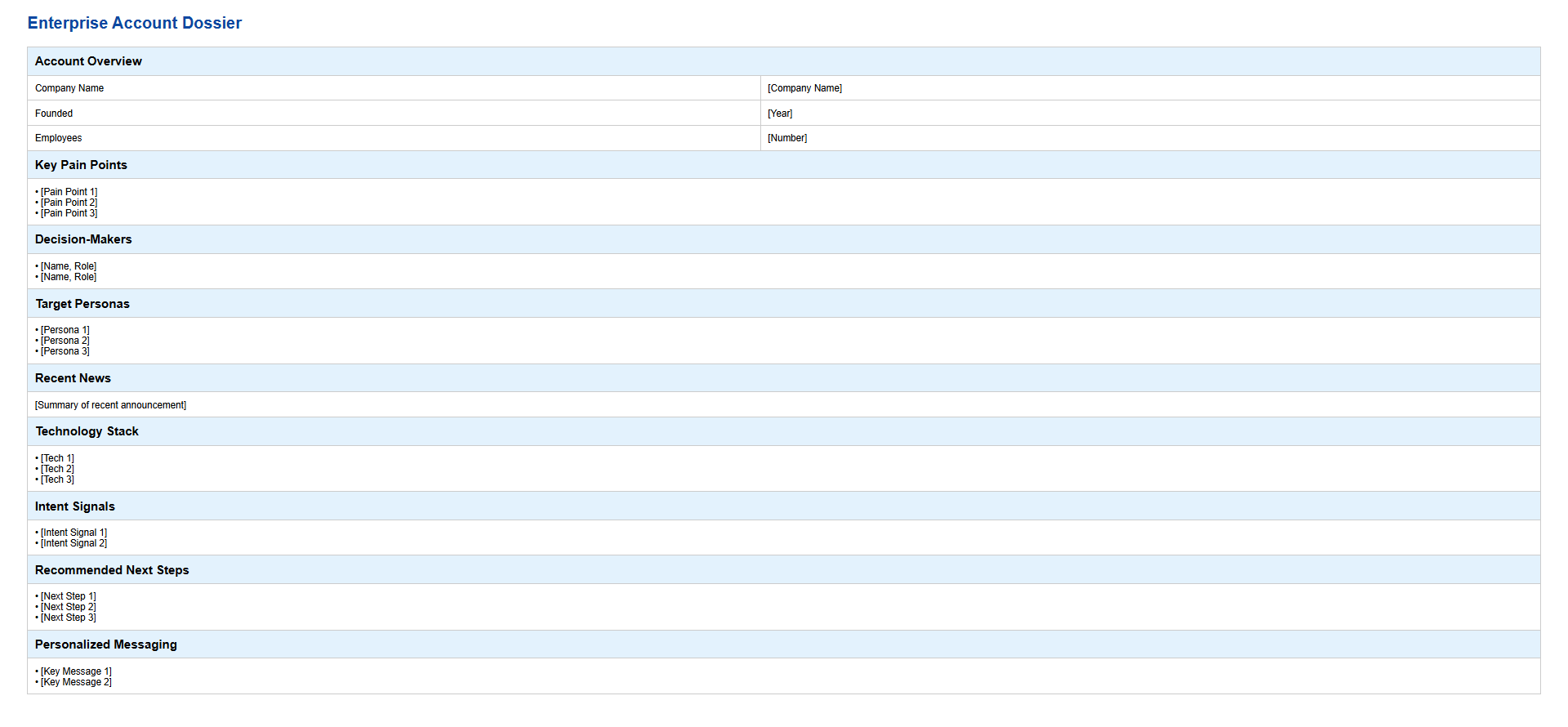
Create a one-pager or wiki per target capturing:
For hot accounts, make it richer and keep it fresh.
Template:
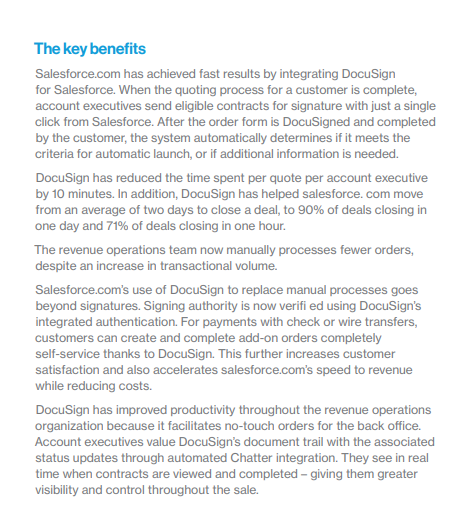
Pro Tip: Add look-alike proof. Show how you solved a similar company’s pains and how you’ll tailor that playbook here.
Deliver content and offers designed for that account.
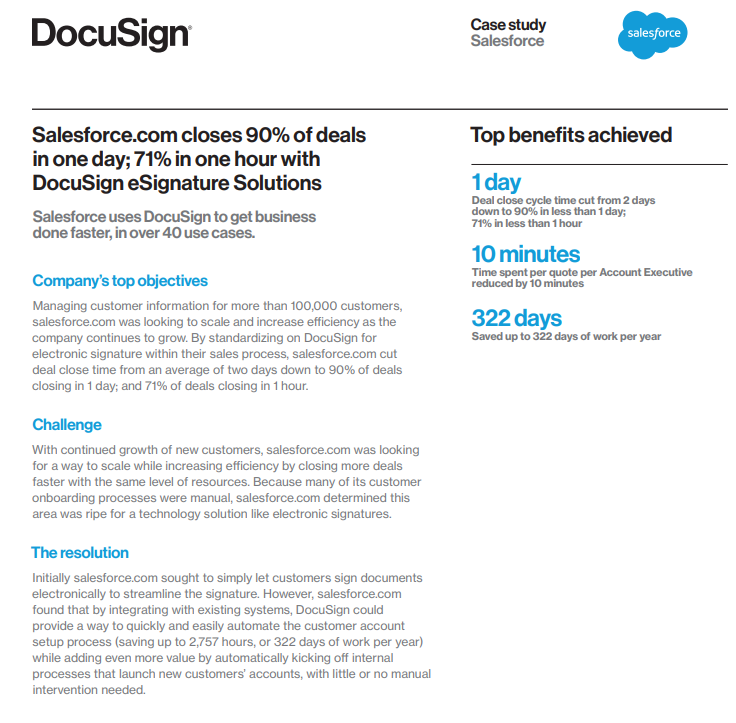
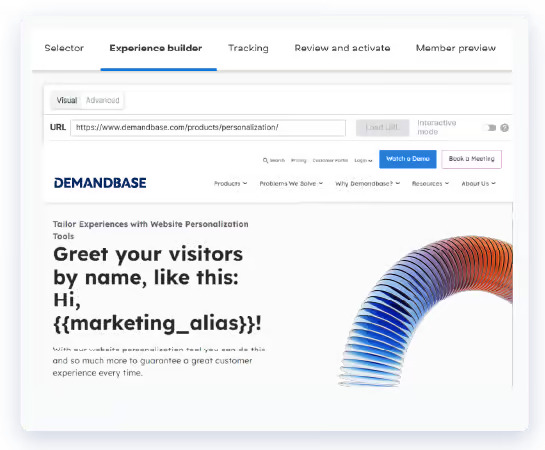 If you want targeted hubs without a full-stack platform, here are focused tools for microsites and hyper‑personalization:
| Tool Name | Unique Features | Pricing (Approx) |
|---|---|---|
| Mutiny | AI website personalization and ABM microsites; Salesforce and Marketo integrations | Starts at $3,000/month |
| PathFactory | Dynamic content tracks and tailored flows with deep analytics | Custom pricing |
| Folloze | No-code personalized microsites; AI-assisted content curation and targeting | Starts at $2,500/month |
| Uberflip | Drag-and-drop hubs and personalized pages for ABM | Starts at $2,000/month |
| Ion Interactive | Interactive experiences like quizzes and ROI tools with CRM/MAP integrations | Custom pricing |
| Turtl | Personalized content hubs with engagement analytics | Starts at $1,200/month |
| Knak | Modular email and landing page builder with governance controls | Starts at $1,500/month |
| Paperflite | Per‑account content experiences with engagement heatmaps | Starts at $1,200/month |
| EngageSoft | Account-level personalization for microsites and ABM pages | Custom pricing |
| Ceros | Highly interactive content with motion, animation, and tracking | Starts at $3,000/month |
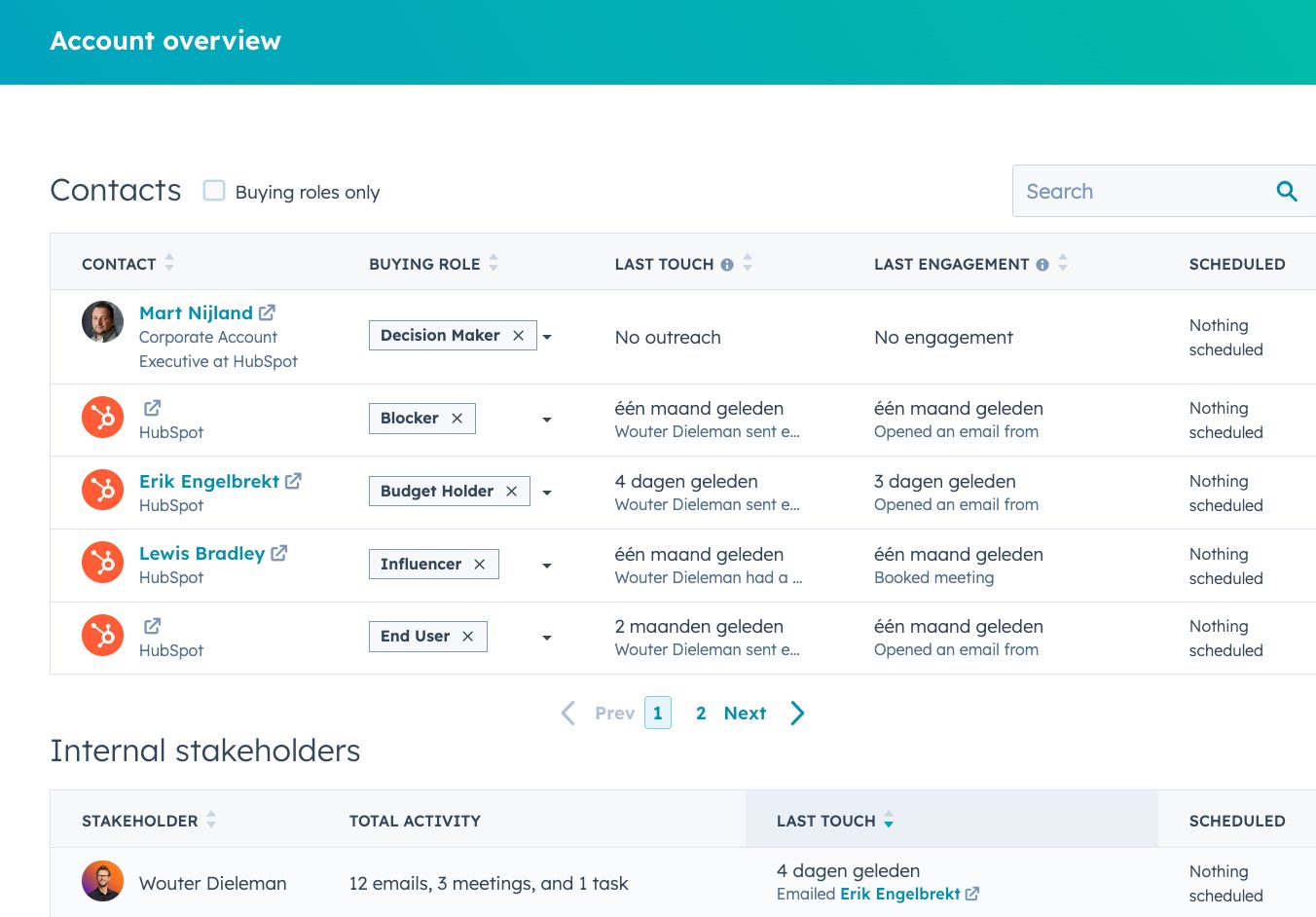
Enterprise deals involve many roles: users, technical evaluators, finance, legal, and the executive buyer.
Don’t wait until the late stages to map them. Modern DMUs can be large. Consultants like Debjit Sen (Engrow) stress this point:
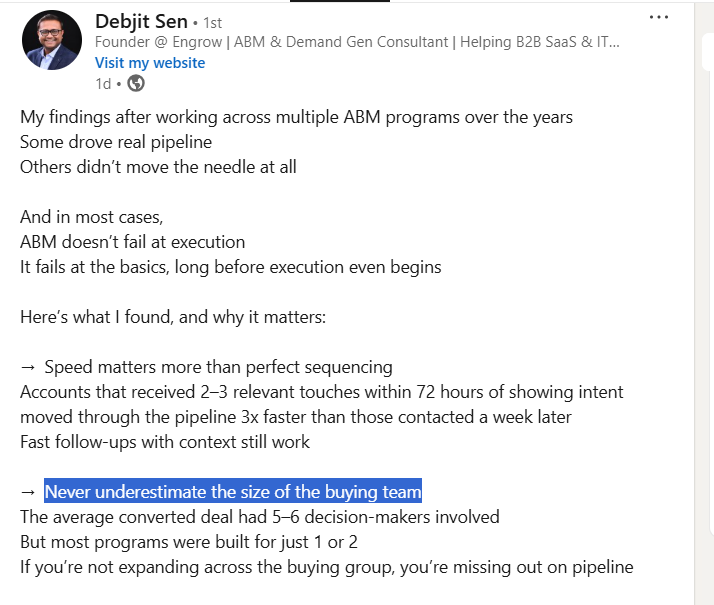
And it’s not rare to see 11+ in a committee per industry studies.
So personalize at the persona level inside the account.
Make it part of your core motion, not a last-minute patch.
Use SPICED to structure this:
It helps you diagnose what each role cares about.
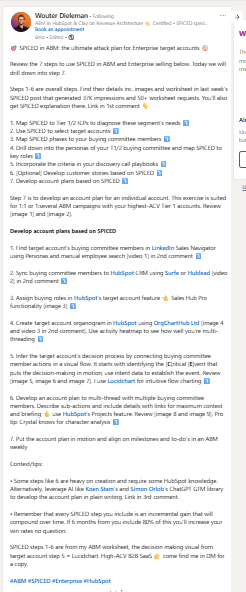
Expert Tip: Wouter Dieleman maps SPICED factors to each persona so every message lands in context:
Personalization is also timing.
New CTO hired? Congratulate and show how peers onboard tech leadership quickly with your platform.
New product line? Share a specific plan to de-risk launch and accelerate adoption.
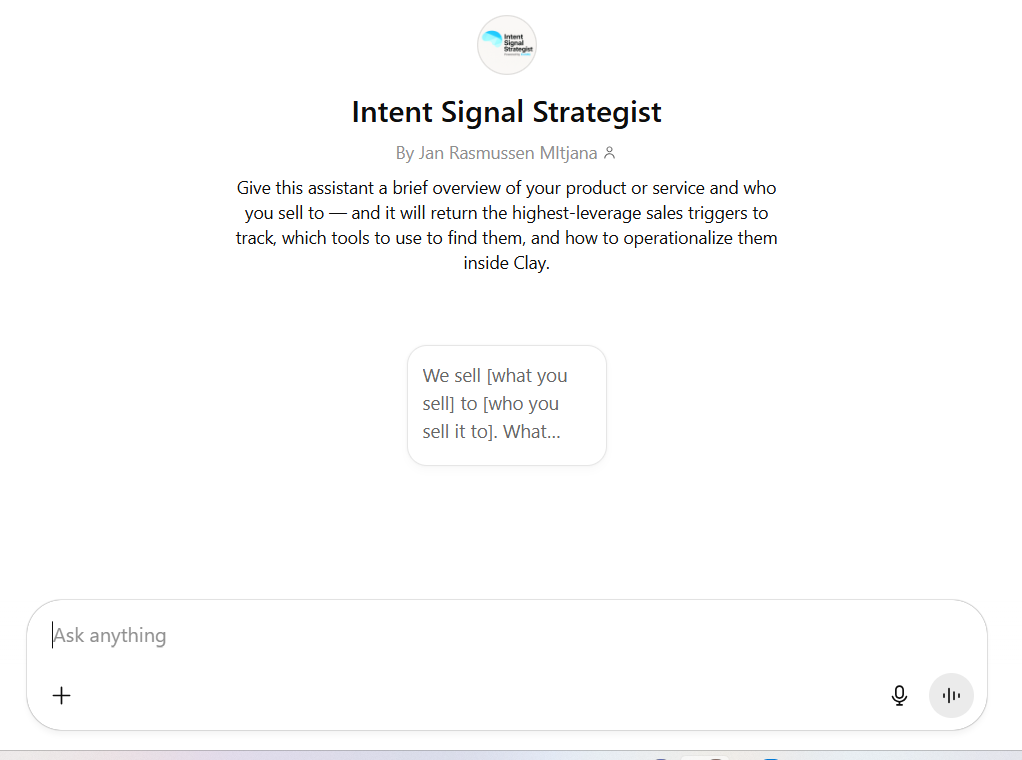
Free Resource: The ColdIQ team published a list of 93 sales triggers:
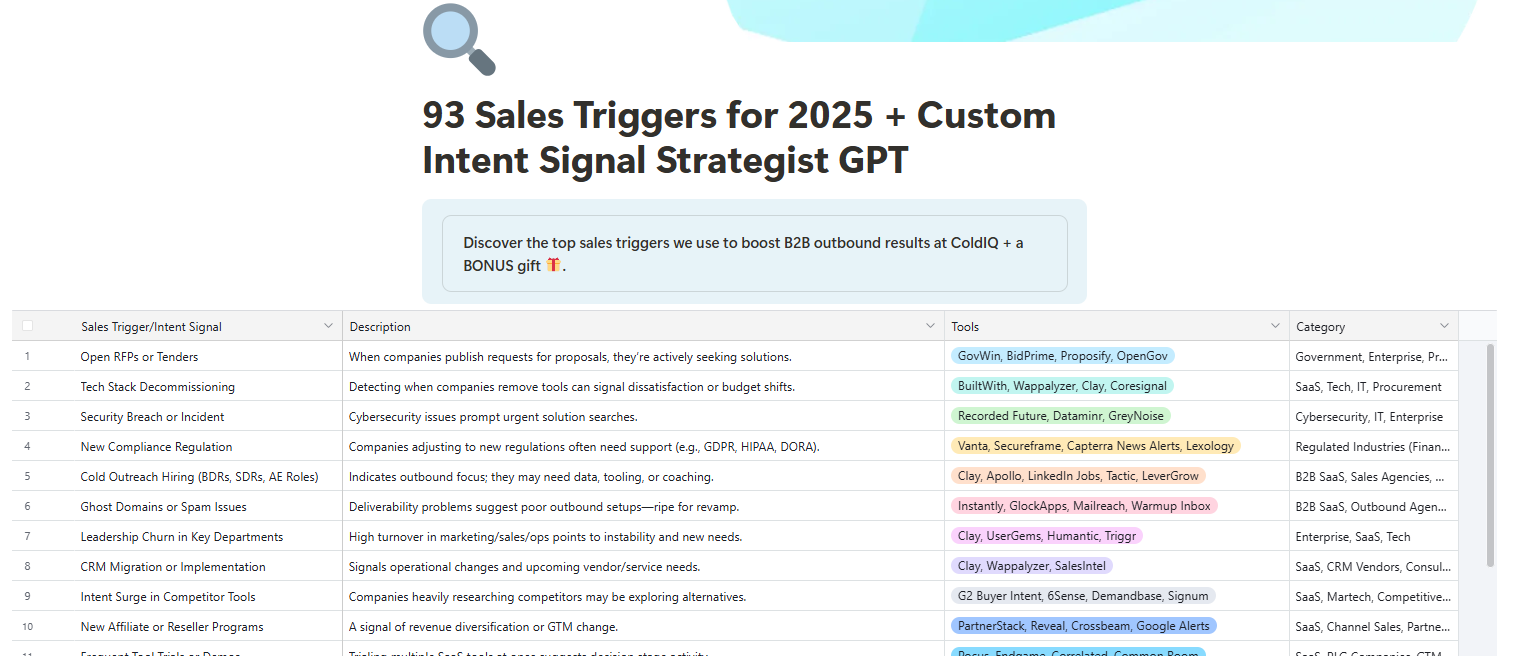
They even built a Custom GPT to help teams select and track the right triggers:
Trust wins enterprise deals. Prove you understand the account and are committed to its outcomes.
One-to-one ABM surrounds the account with coordinated, channel-spanning touches.
You’re influencing a committee over time. No single email or ad will do the job.
Design a campaign arc where each touch reinforces the same narrative from different angles.
Core channels in the ABM playbook:
Email still works when it’s relevant and human.
LinkedIn is a one-to-one ABM powerhouse:
Demandbase, 6sense, Terminus, and LinkedIn enable account-specific targeting.
Sequence the creative by stage. Awareness gets the problem education. Consideration gets proof. Decision gets ROI and risk removal.
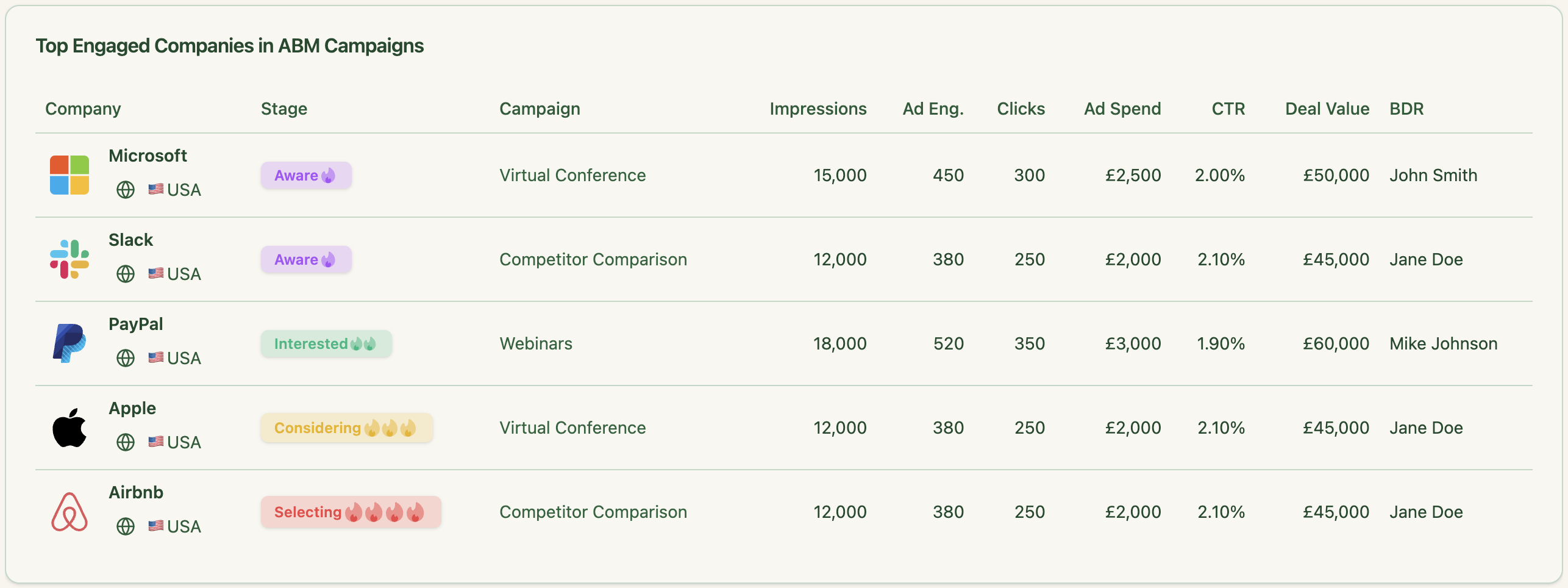
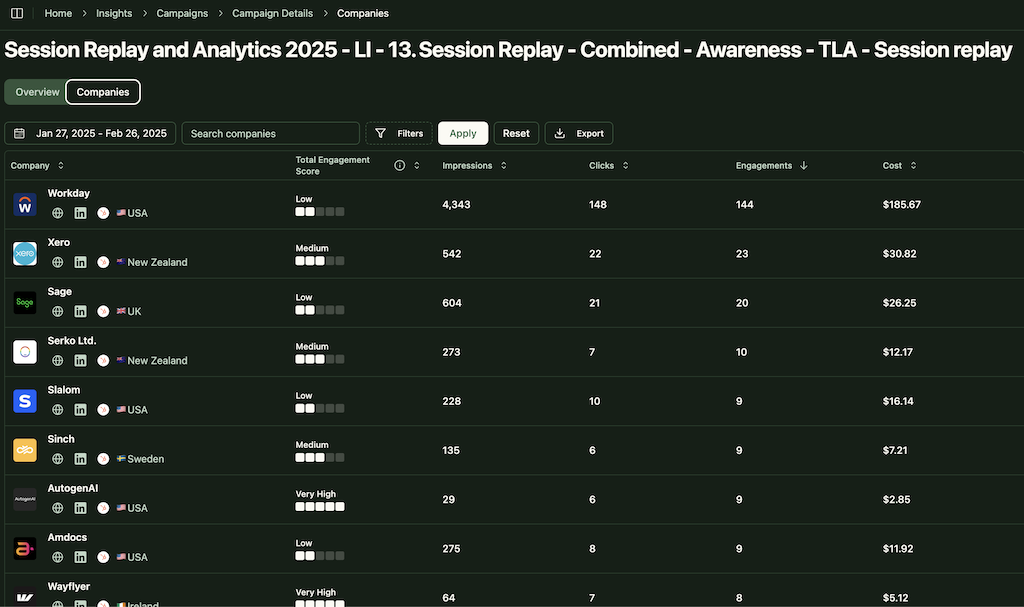
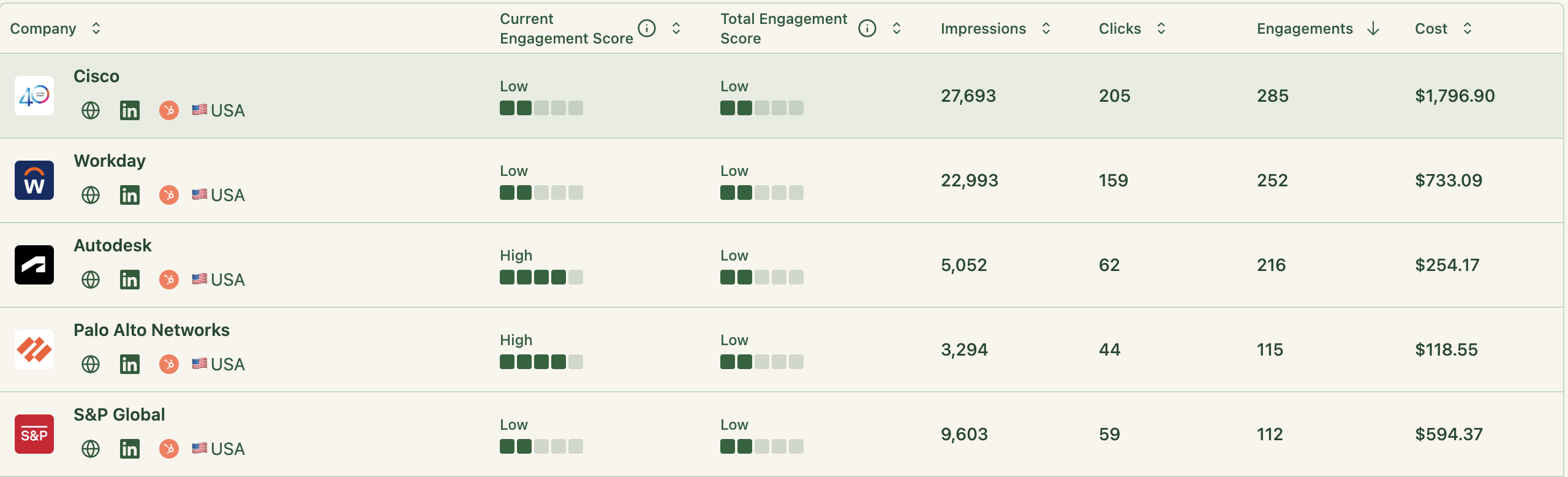
If you buy LinkedIn, use ZenABM to track account engagement.
It shows impressions, clicks, and engagement per company for each LinkedIn ad:
Use thoughtful direct mail or e-gifts at key moments.
After a strong multi-stakeholder call, send a relevant thank-you. It builds goodwill and momentum.
Beyond the big three, mix in:
ABM works when sales and marketing interleave their touches.
Warm with ads and content. Then a rep references that activity in outreach.
Build an account playbook with weekly steps and owners:
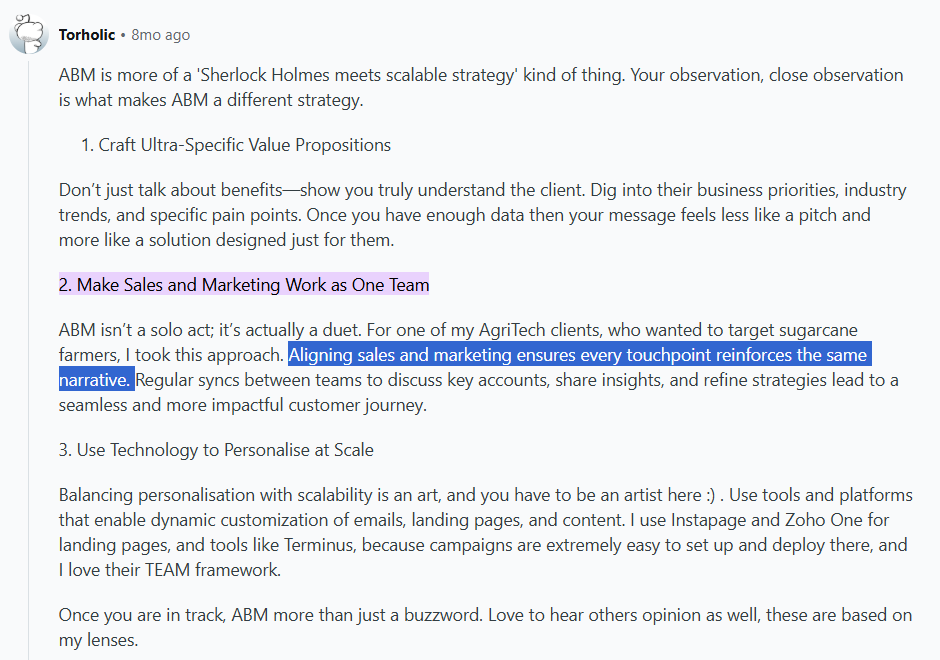
Caution: Keep one narrative. Don’t let channels or teams contradict each other. As one Reddit expert put it, alignment ensures every touch compounds impact.
Here are advanced patterns elite teams use:
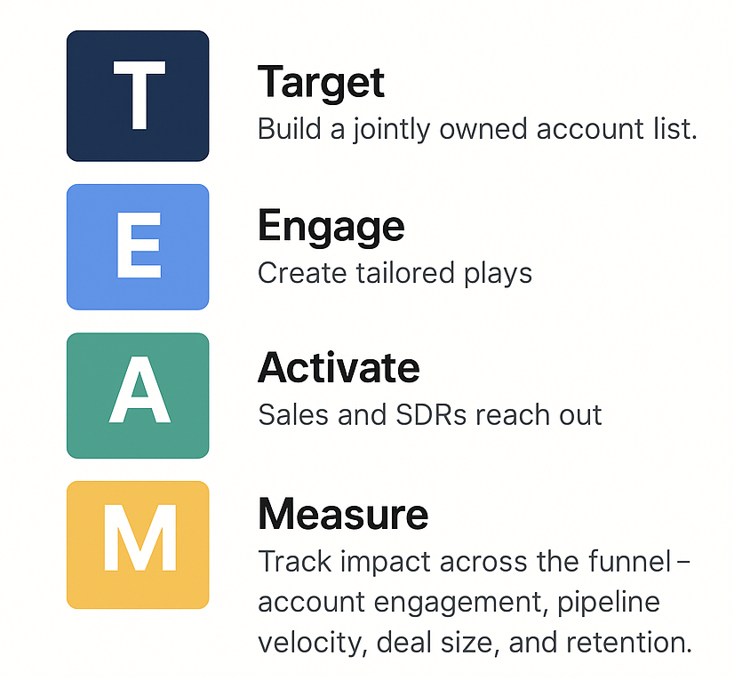
Popularized by Terminus, TEAM gives a plain-English operating loop:
It’s easy for cross-functional teams to align on.
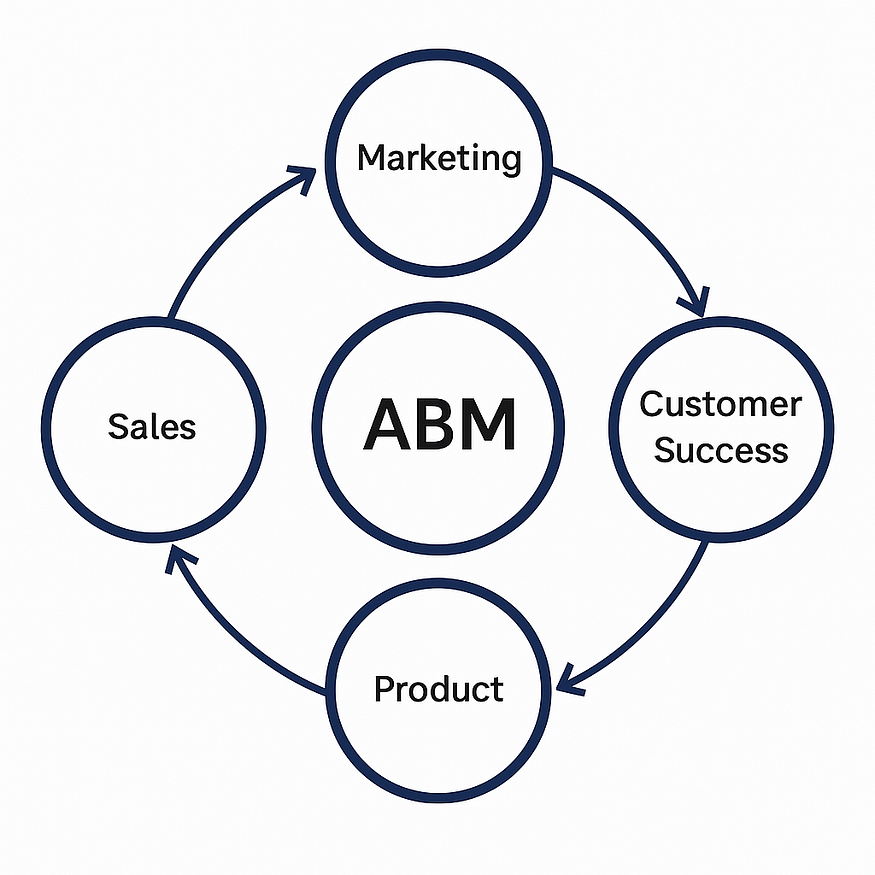
You can even structure dashboards around the four pillars.
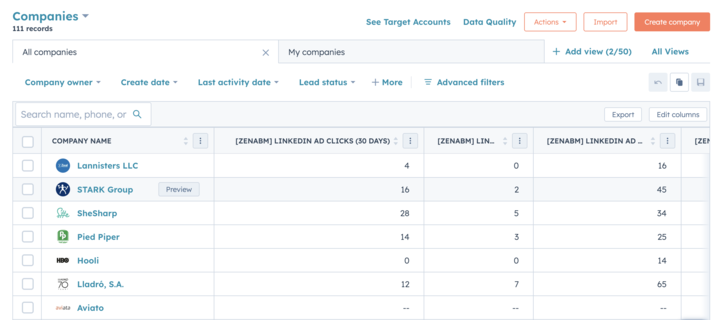
ZenABM mirrors this on LinkedIn:
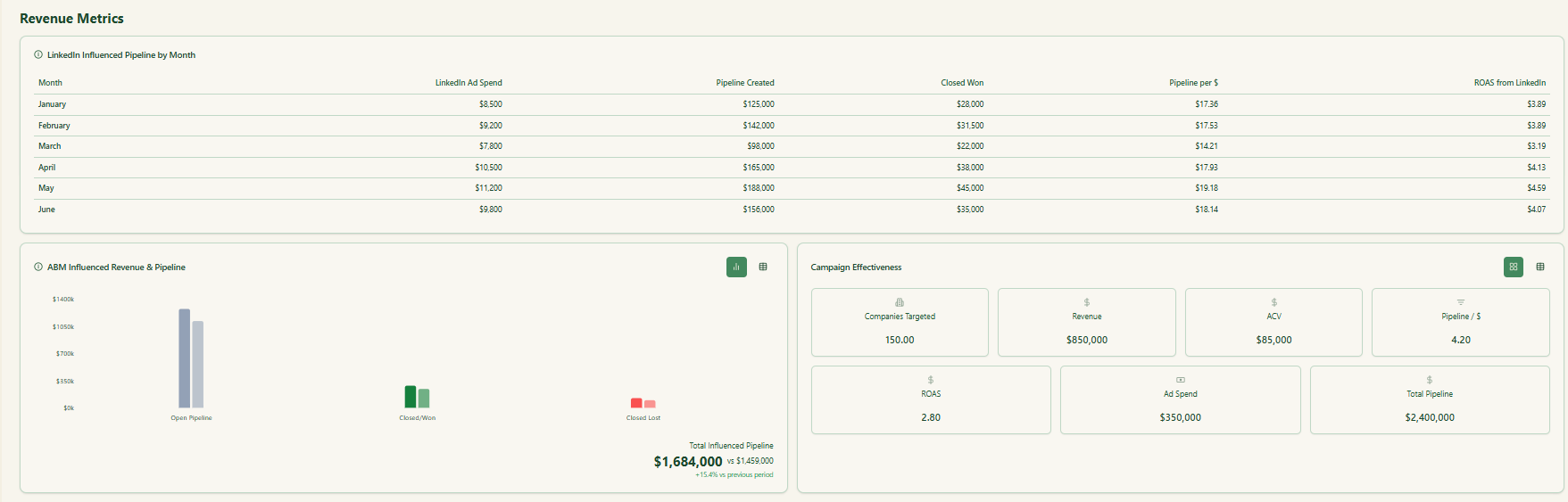
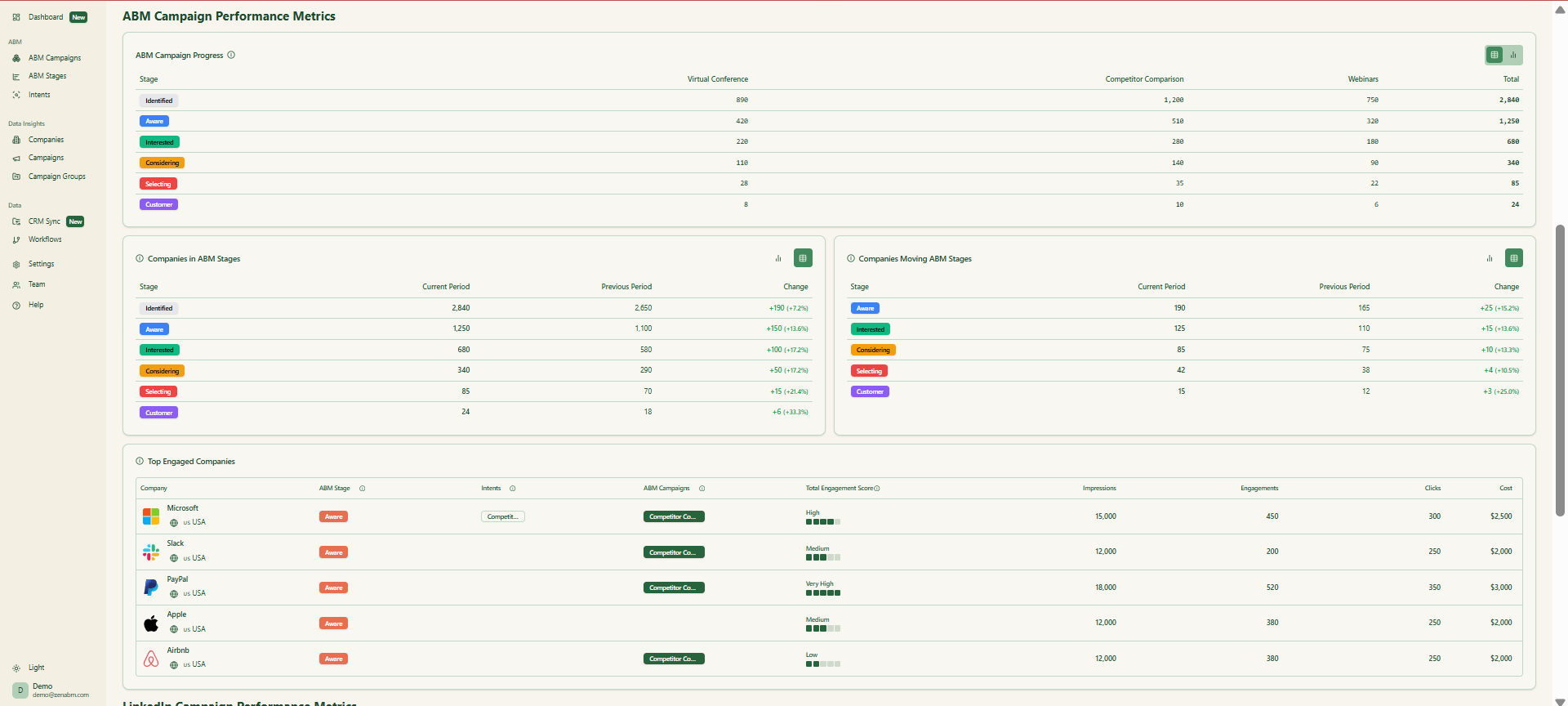
SPICED and MEDDPICC are sales frameworks. Smart ABM teams borrow them.
From Winning by Design: Situation, Pain, Impact, Critical Event, Decision.
Wouter Dieleman shows how to craft one-to-one account plans with SPICED in his post:
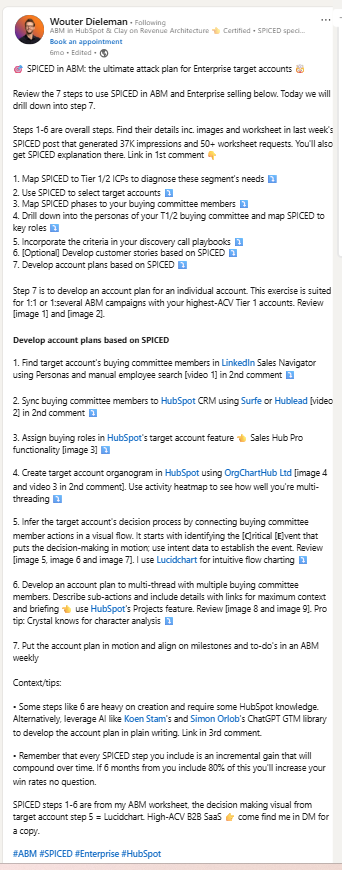
For each account (and key personas), outline:
Then align content and timing to those realities.
He also details a seven-step SPICED approach for one-to-one ABM:
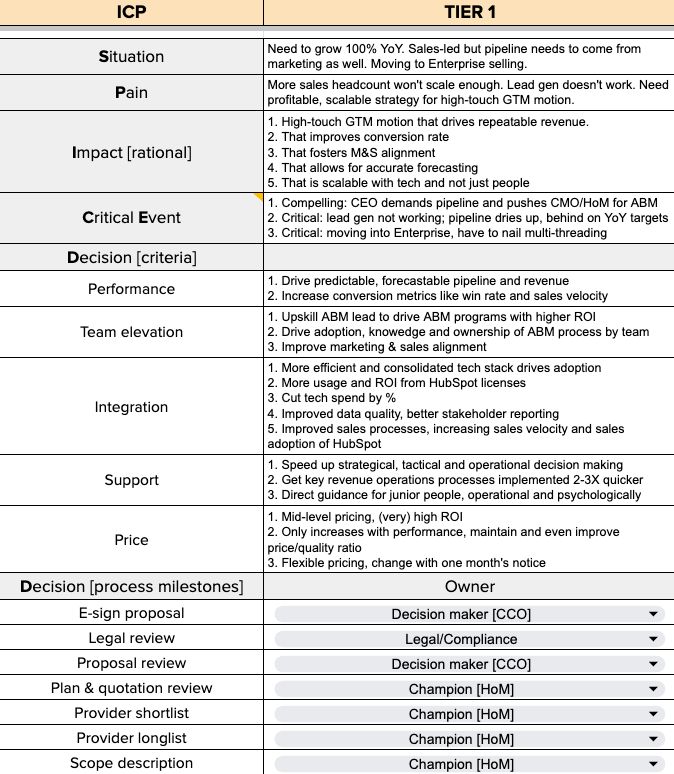
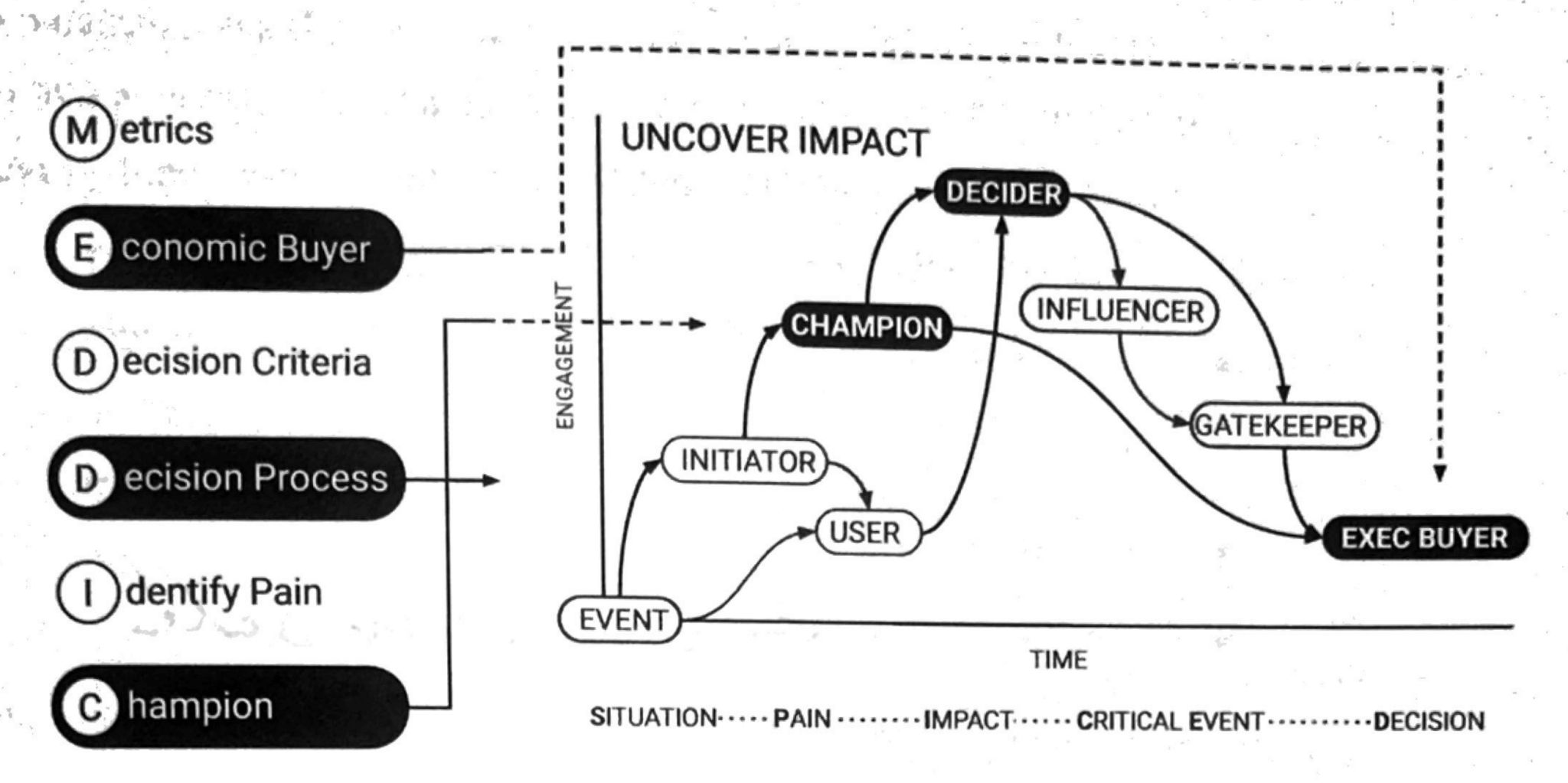
The elements:
Use it to ensure your ABM content covers what sales needs to close.
Jen Collins argues ABM + MEDDPICC is a strong alignment model:
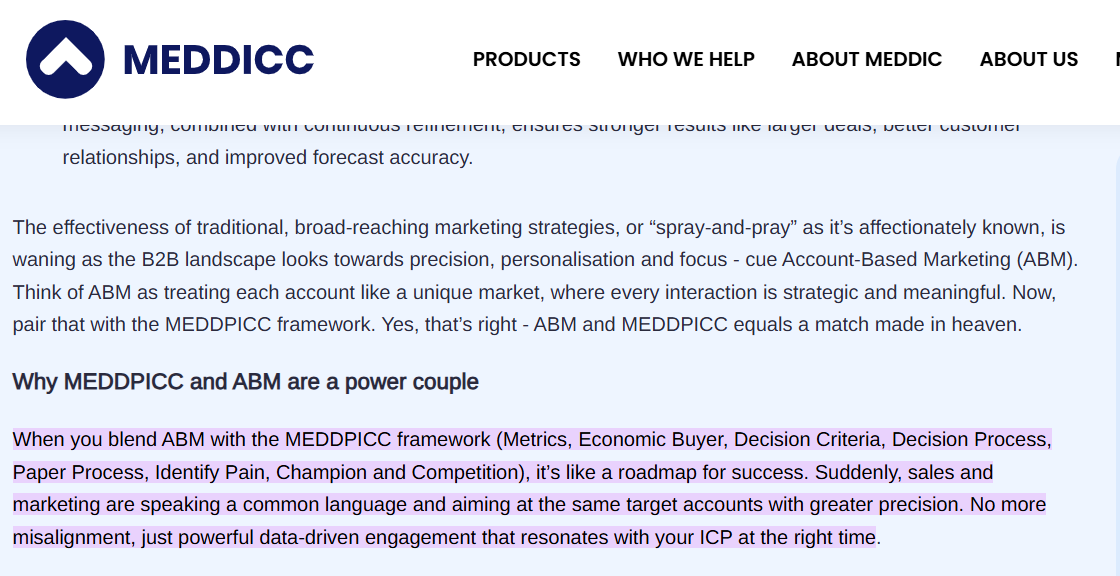
Examples:
| Tech Stack Component | Purpose & Key Functions | Example Tools & Usage Tips |
|---|---|---|
| Account Data & Intelligence | Fuel selection and personalization with firmographics, org charts, contacts, and intent. | Tools: ZoomInfo, LinkedIn Sales Navigator, Clearbit; intent from Bombora, 6sense, Demandbase.
Use these to build lists and messaging. Intent reveals who’s researching topics like “zero‑trust.” Sales intel and LinkedIn alerts supply timely triggers. |
| ABM/Marketing Automation Platforms | Integrated suites for identification, ads, web personalization, and analytics across many accounts. | Demandbase, 6sense, Terminus, Triblio, RollWorks.
They deanonymize account visits, model buying stages, run account-targeted media, and centralize engagement. Powerful, but pricier. Pilot with lighter tools if you’re early, then scale. |
| CRM & Marketing Automation (MAP) | Core systems configured for account-centric work. Keep account objects clean and connected. | Salesforce, HubSpot for CRM; Marketo, HubSpot Marketing Hub, Pardot for MAP.
Enable lead-to-account matching, tier fields, and account views. Integrate your ABM platform so engagement auto-creates tasks for reps. This prevents signal loss. |
| Personalization & Sales Engagement | Operationalize human, multi-touch outreach at scale without losing authenticity. | Outreach, Salesloft for sequences; Drift for targeted chat; Sendoso, Alyce for direct mail.
AI can draft first-pass personalization; humans should refine. Don’t over-automate. Relationships still win one-to-one ABM. |
| Analytics & Reporting | Expose account engagement and business impact so you can optimize, not guess. | ABM platforms include dashboards. Attribution tools like Bizible help, though account-centric metrics often suffice.
ZenABM connects LinkedIn ad engagement to CRM opportunities to show which campaigns drive pipeline and revenue. Build account-level dashboards to track stage progression and heat. |
| Data Quality & Maintenance | Accurate, current data so personalization lands and ops run smoothly. | Assign ownership for hygiene in RevOps. Merge dupes, refresh titles, enrich firmographics, fix industries/tags. Poor data breaks one-to-one ABM. |
| Strategy & Alignment | Keep tech in service of strategy. Prove ROI, then expand. | Strategy first. Tools second. Pilot with CRM/MAP + LinkedIn + a light intent feed. Scale once the motion proves pipeline. |
ZenABM is built for LinkedIn-first ABM analytics and orchestration.
It closes the gap between ad engagement and revenue outcomes.
Key capabilities:
ABM is finally getting the focus it deserves.
Enterprise teams are pushing into advanced approaches and smarter tooling.
Key shifts:
In short: the principles behind one-to-one ABM stay constant. Execution gets smarter, more connected, and more data-driven.
Winning with one-to-one ABM takes sharp personalization, airtight alignment, and disciplined orchestration backed by the right data.
Use this playbook and platforms like ZenABM to outpace competitors and turn target accounts into customers.
Try ZenABM for free now or book a demo.