



HockeyStack is an account-based marketing (ABM) analytics platform that gives B2B revenue teams full visibility from the first ad impression to closed revenue.
In this article, I’ll break down everything B2B marketers need to know about HockeyStack:
I’ll also discuss whether it’s the right fit for your ABM strategy or an expensive overkill (sites like Vendr put Median HockeyStack pricing at $27k+ per year!), and where a smarter, more agile alternative like ZenABM might make more sense as a replacement or a complement due to its unique focus on LinkedIn ABM.

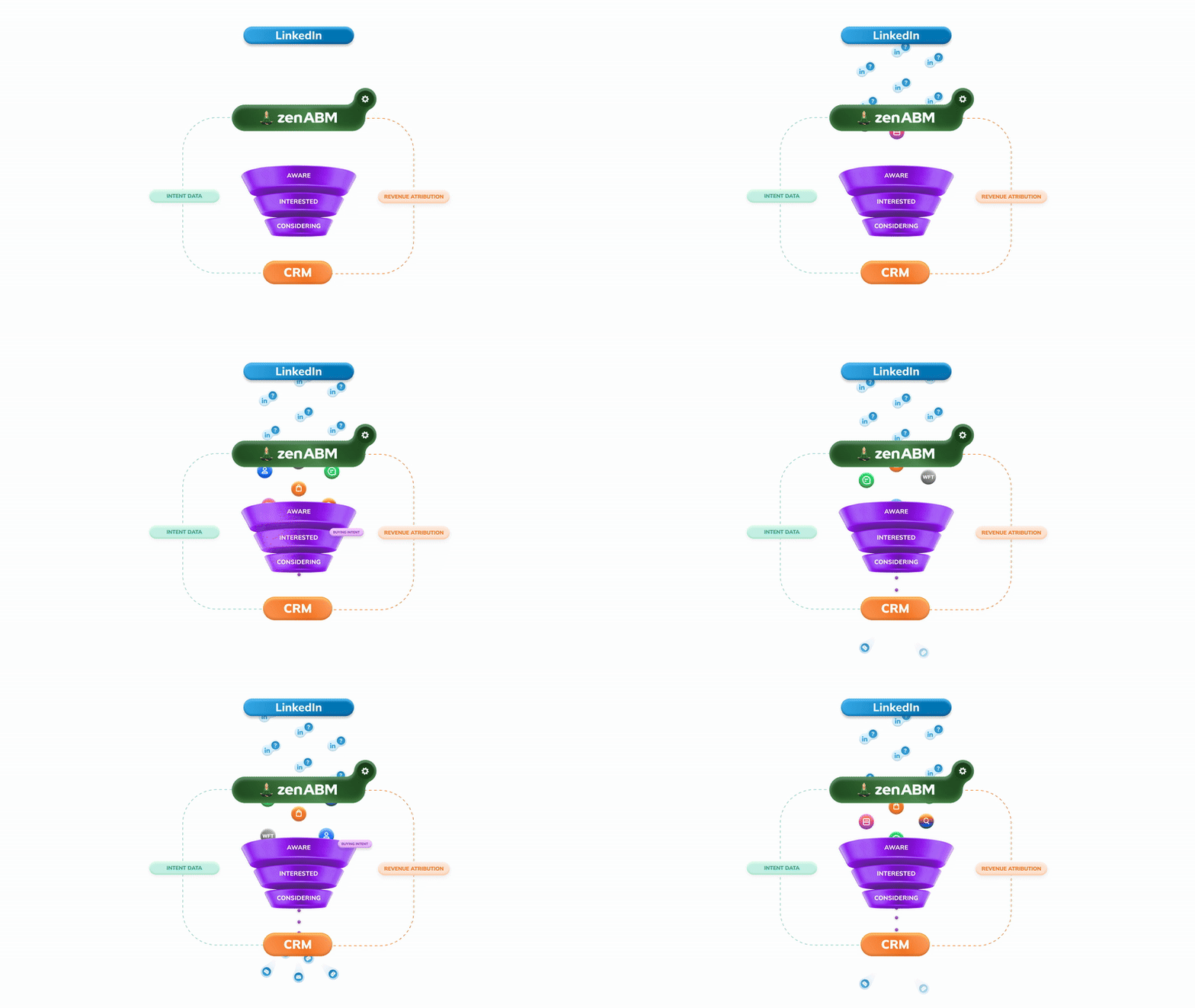
In case you want a quick rundown:

HockeyStack is essentially an AI-powered B2B revenue analytics platform designed for account-based marketing.
It enables marketing teams to drive pipeline more efficiently and helps sales close deals faster by providing “modern attribution, holistic buyer journeys, and account insights,” to quote the company’s own description.
In plainer terms, HockeyStack centralizes all your go-to-market data from marketing touchpoints to sales activities and connects them to revenue outcomes.
As a LinkedIn Marketing Partner tool, HockeyStack specializes in tying LinkedIn ad efforts to pipeline impact.
It pulls in LinkedIn Ads engagement data (impressions, clicks, etc.) at the account level and matches it with your CRM and website analytics.


The goal is to let you see exactly which accounts saw or engaged with your ads and how that influenced downstream events like website visits, form fills, opportunities, and revenue.
Under the hood, HockeyStack uses a combination of first-party tracking and integrations to build this unified view.
A single script on your site collects all visitor interactions “with one line of code” and it even works cookieless by default, fingerprinting users in a privacy-friendly way while still capturing their full journey from first website visit to final deal.
It aggregates data from your marketing automation, CRM, ads, and other tools into one platform, so you’re not stuck cobbling together reports from six different systems.
ZenABM, by the way, does the exact same stuff for LinkedIn Ads:

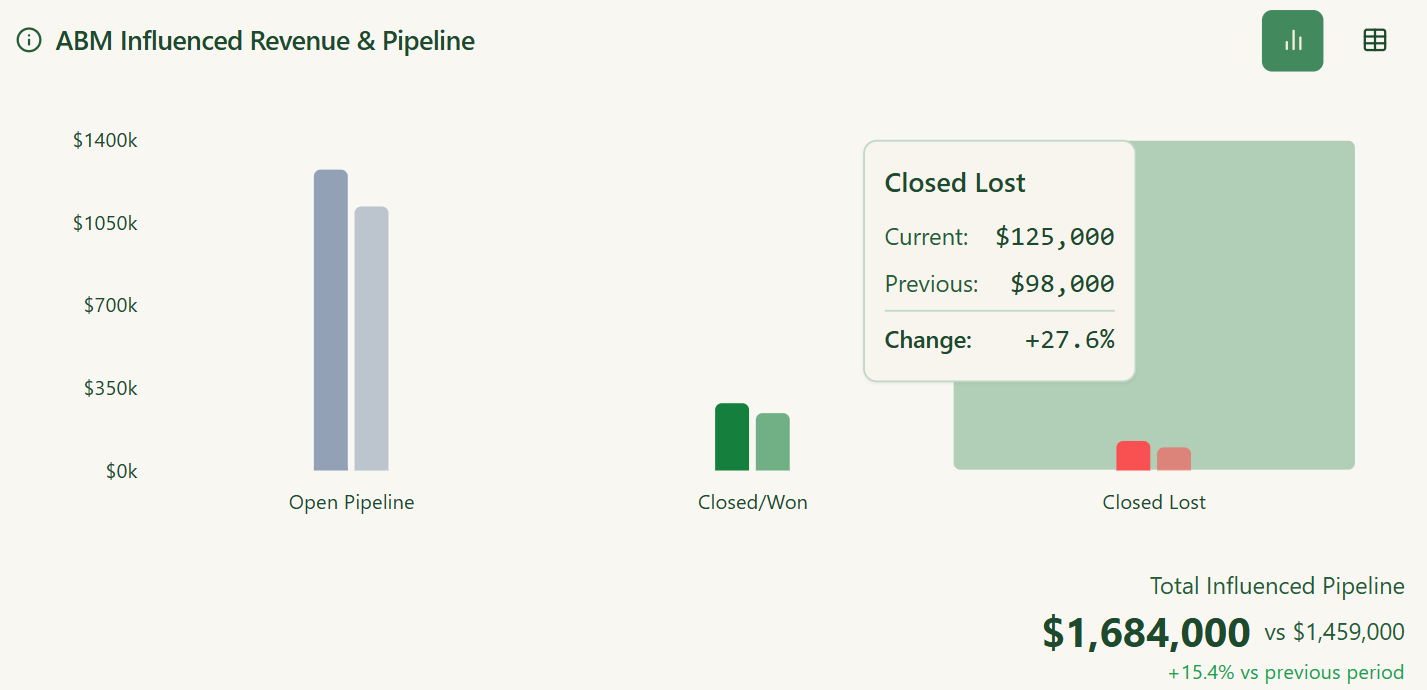
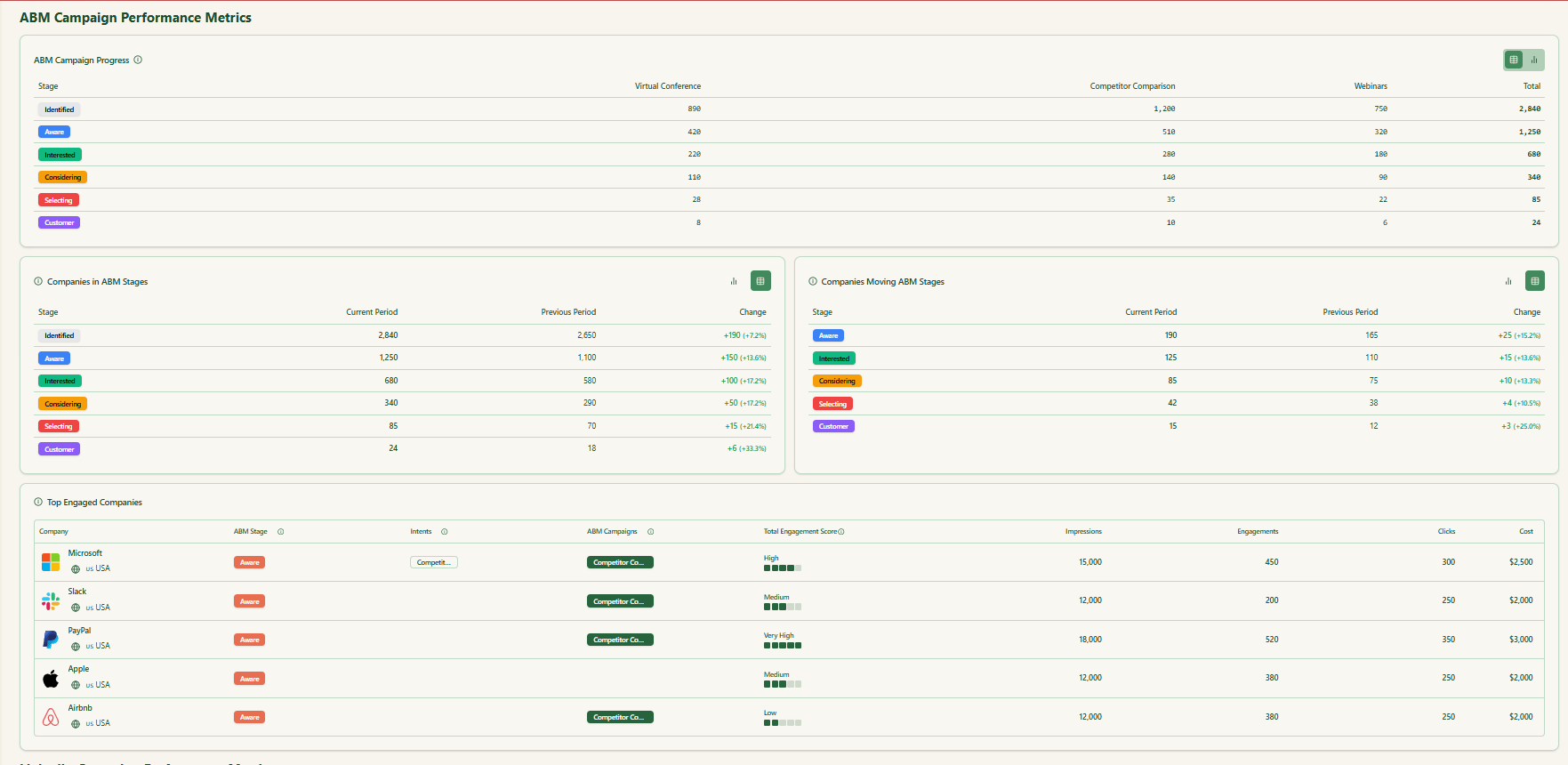
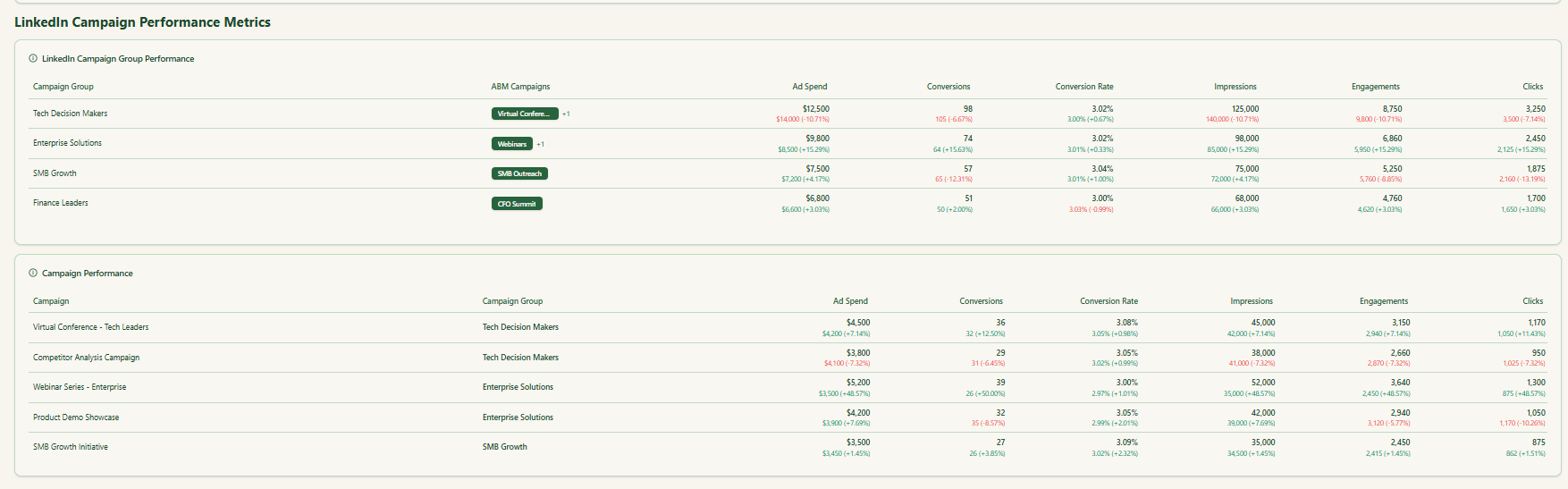

HockeyStack is packed with features spanning marketing analytics, attribution, and account intelligence.
Here are some of its core features and capabilities that ABM practitioners should know about:
At its heart, HockeyStack provides comprehensive multi-touch attribution and funnel analytics.
It consolidates all your marketing and sales touchpoints into one place and lets you analyze which channels, campaigns, and content pieces drive engagement, pipeline, and revenue.
You can choose from various attribution models like first-touch, last-touch, even weighted multi-touch models to see how each touch contributes.
What sets HockeyStack apart is the ability to do account-based attribution and lead/contact level) simultaneously.

The platform shows a timeline of accounts and prospects from the first impression to closed-won with all touchpoints logged along the way.
Additionally, HockeyStack also integrates offline marketing activities and sales touches as well.
To make sense of all this data, HockeyStack provides pre-built dashboards (e.g. a “CMO overview” template) and allows custom reports.

Marketers can break down performance by channel, campaign, content, or account segment.
HockeyStack can capture all interactions with your LinkedIn ads, including impressions that don’t get clicked.
With HockeyStack, you can track if an account that saw your LinkedIn ad later came to your site via direct or organic search and converted.
It will attribute that conversion back to the ad impression, giving you a more accurate picture of LinkedIn’s ROI.
Furthermore, HockeyStack allows you to use LinkedIn ad engagement as a metric and filter in reports.
Another powerful capability is offline conversion upload back to LinkedIn.
HockeyStack can automatically send conversion events (like an opportunity created or deal won in your CRM) back into LinkedIn Campaign Manager. This allows LinkedIn’s algorithm to optimize your campaigns for the outcomes that matter (pipeline/revenue), not just vanity metrics like clicks.
Given its ABM focus, HockeyStack provides rich account intelligence features:

But this is honestly something I don’t endorse because IP-matching tools’ accuracy peaks at a mere 42 percent as per studies like the one from Syft. 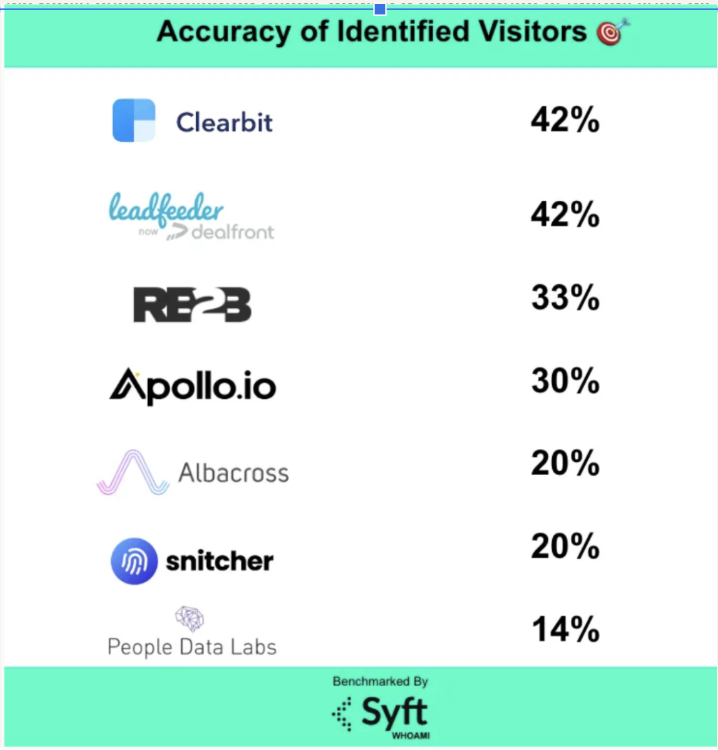

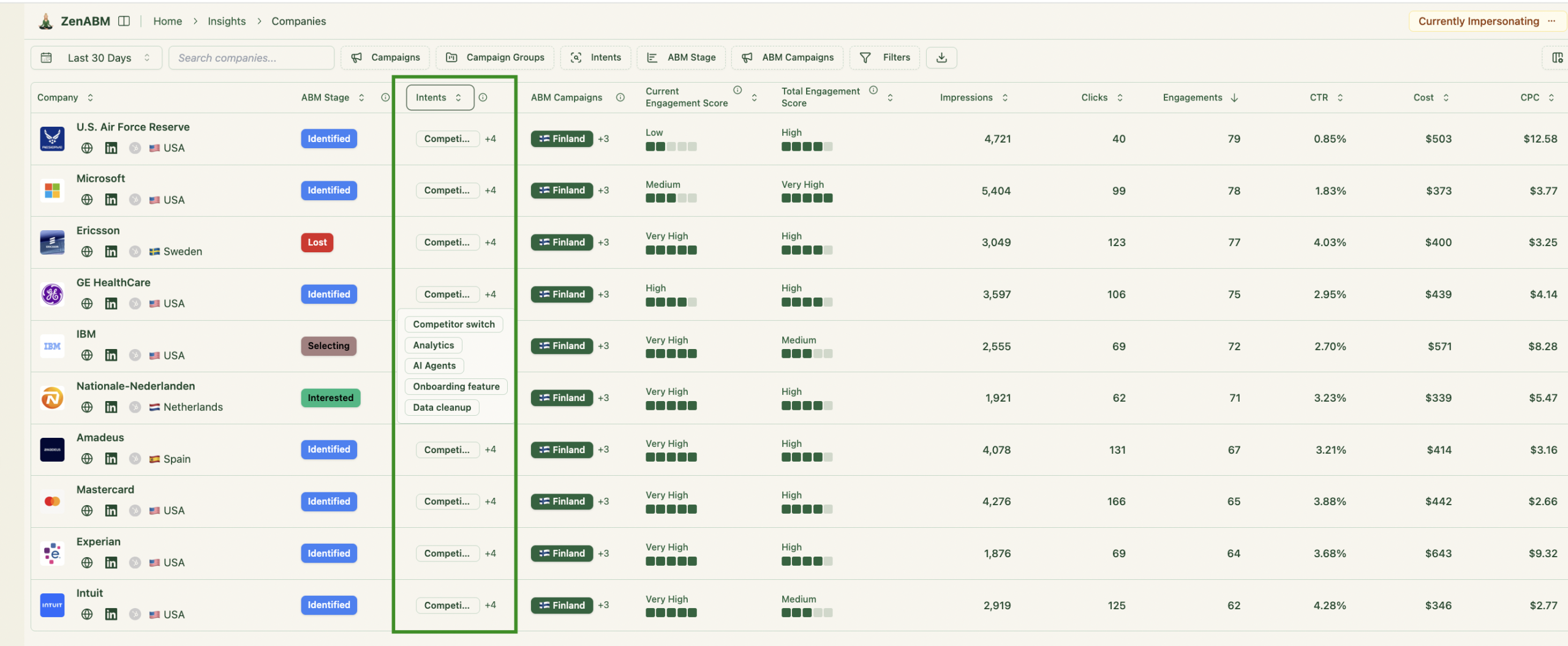
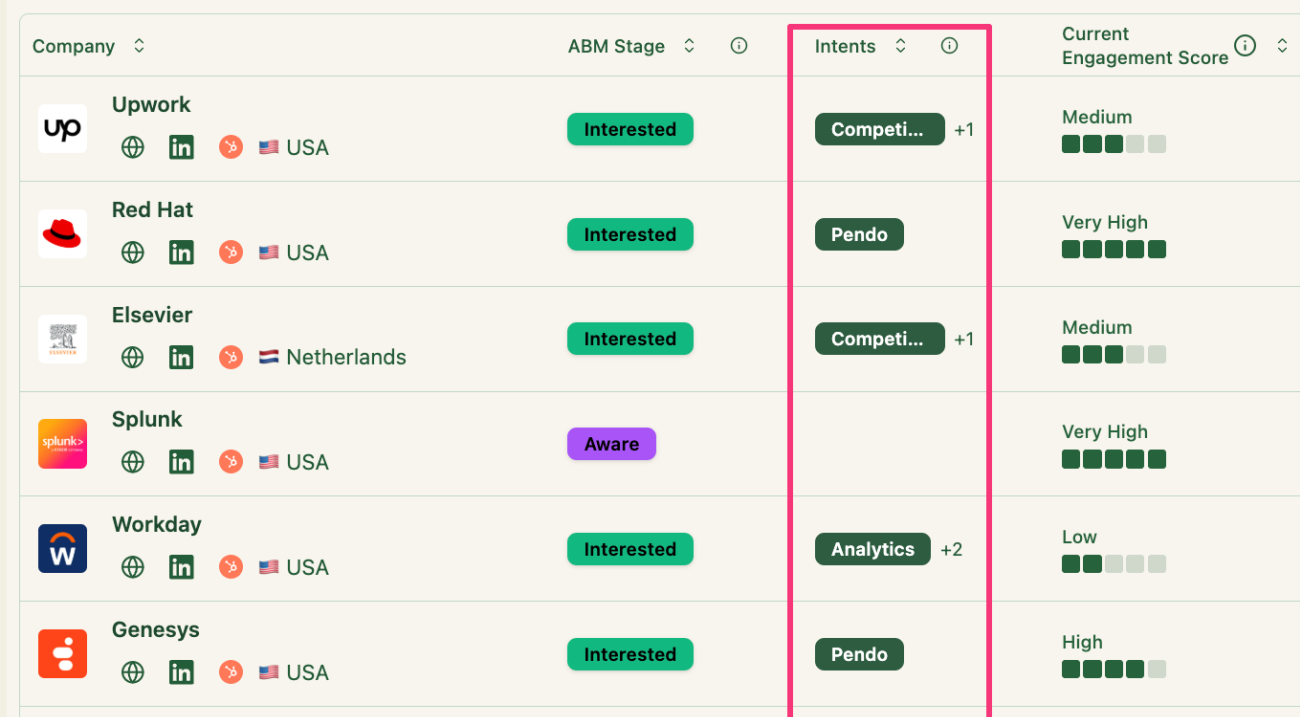
Pro Tip: HockeyStack provides third-party keyword surge data to surface top-of-funnel leads/accounts that might be curious but aren’t truly ready to buy. This type of intent data usually costs extra and, being third-party, lacks context and precision. ZenABM takes a smarter route. It captures first-party qualitative intent by tracking how specific companies engage with your LinkedIn ads down to each ad creative. You can tag campaigns by theme (e.g. Feature A vs. Feature B), and ZenABM will group companies showing interest in each message. That means you’ll know not just who is engaging, but what they’re interested in, so your sales and follow-ups are hyper-relevant from the start.

HockeyStack positions itself as an AI-first revenue analytics platform, with two core AI assistants: Odin and Nova.
Beyond these assistants, HockeyStack supports workflow automation such as real-time alerts when accounts spike in engagement, automatic account assignment to reps based on intent thresholds, and notifications via Slack or email.
Integrations with CRMs and ad platforms allow teams to push high-intent accounts into LinkedIn Ads, sync conversion data for optimization, and trigger custom workflows via webhooks, helping ensure insights are acted on quickly rather than sitting in dashboards.
ZenABM, too, integrates bidirectionally with CRMs such as HubSpot (Salesforce available on higher plans).
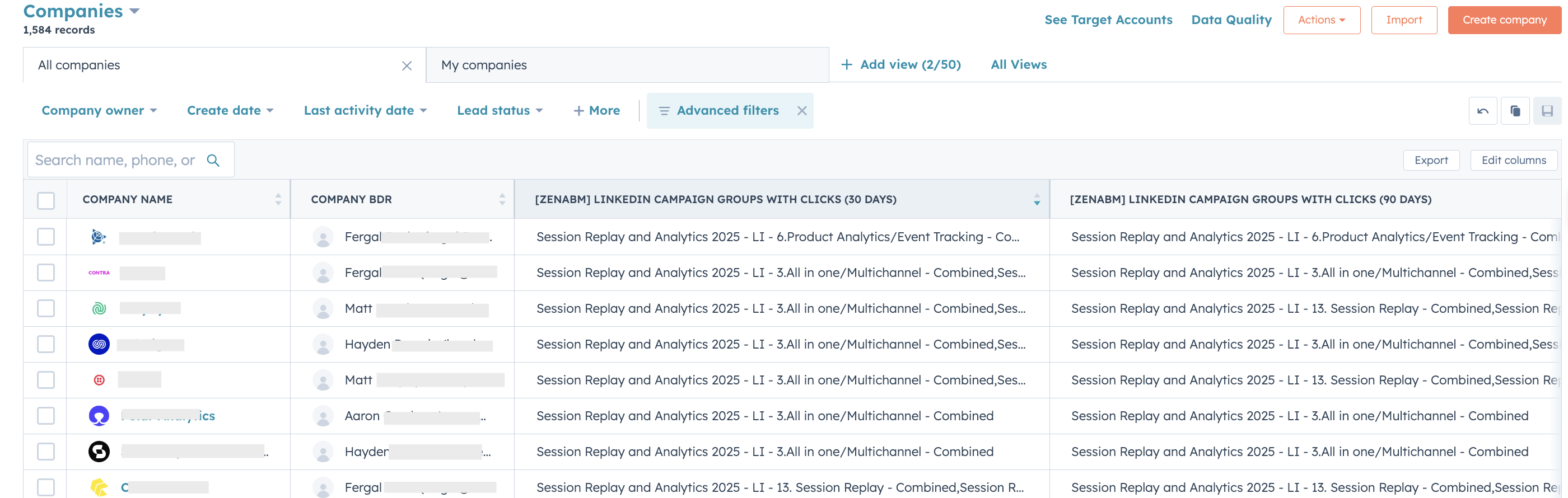
ZenABM pushes LinkedIn engagement data directly into your CRM as company properties, keeping sales teams informed:
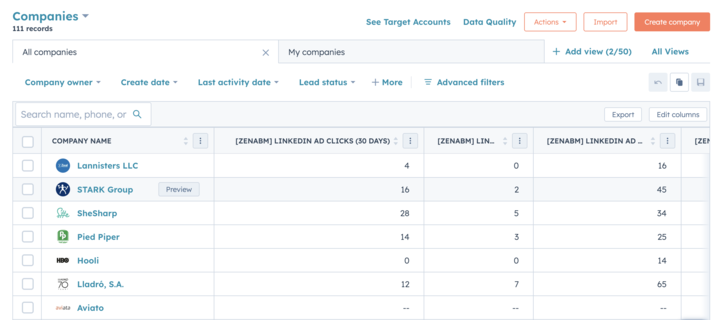
ZenABM can also auto-update account stages to “Interested” when engagement passes a set threshold and assign accounts to specific BDRs for follow-up.
HockeyStack pricing isn’t available on its site.
All one can make out is that the company gives out custom-quoted packages.
But there are some clues from third-party sources:

The biggest drawback of HockeyStack’s pricing approach is the lack of upfront clarity.
Teams often invest significant time in demos and internal evaluations only to discover the price is out of range, which can be frustrating.
For marketers or RevOps leads making the business case, ensure you factor in not just the software subscription but also the implementation and maintenance effort (which is an indirect “cost” in time/manpower).
HockeyStack’s value can be tremendous if fully utilized, but you’ll want to be confident that the insights gained will materially improve your marketing efficiency or revenue outcomes to justify the spend.
In comparison, newer ABM analytics players (like ZenABM and others) have adopted more transparent and lower pricing models (e.g., ZenABM starts at $59/month).
Overall, HockeyStack enjoys strong ratings.
It’s currently around 4.6 out of 5 stars on G2 based on dozens of reviews indicating that customers are generally very satisfied.

But digging into the reviews reveals a mix of glowing praise and constructive criticism.
Here’s a summary of user impressions:
Hockeystack’s pros:
HockeyStack’s limitations:
Because of its breadth and price point, HockeyStack is aimed at serious B2B marketing and sales teams running account-based strategies.
Mid-market and enterprise companies (especially in tech/SaaS) with longer, complex sales cycles stand to gain the most value.
If you have a dedicated demand gen or revenue operations team looking to attribute pipeline across multiple touches, HockeyStack was built with you in mind.
On the flip side, HockeyStack is less ideal for very small businesses or early-stage startups.
The platform’s sophistication (and cost) can be overkill if your annual contract values are modest or if you don’t have the bandwidth to fully implement it.
In those cases, leaner ABM analytics tools or a focus on a single channel like LinkedIn (hello, ZenABM) might make more sense.
ZenABM is built for teams that rely on LinkedIn as the primary ABM channel and want first-party accuracy, automation, and revenue visibility without the price or complexity of multi-channel suites.
Let’s look at its core features:
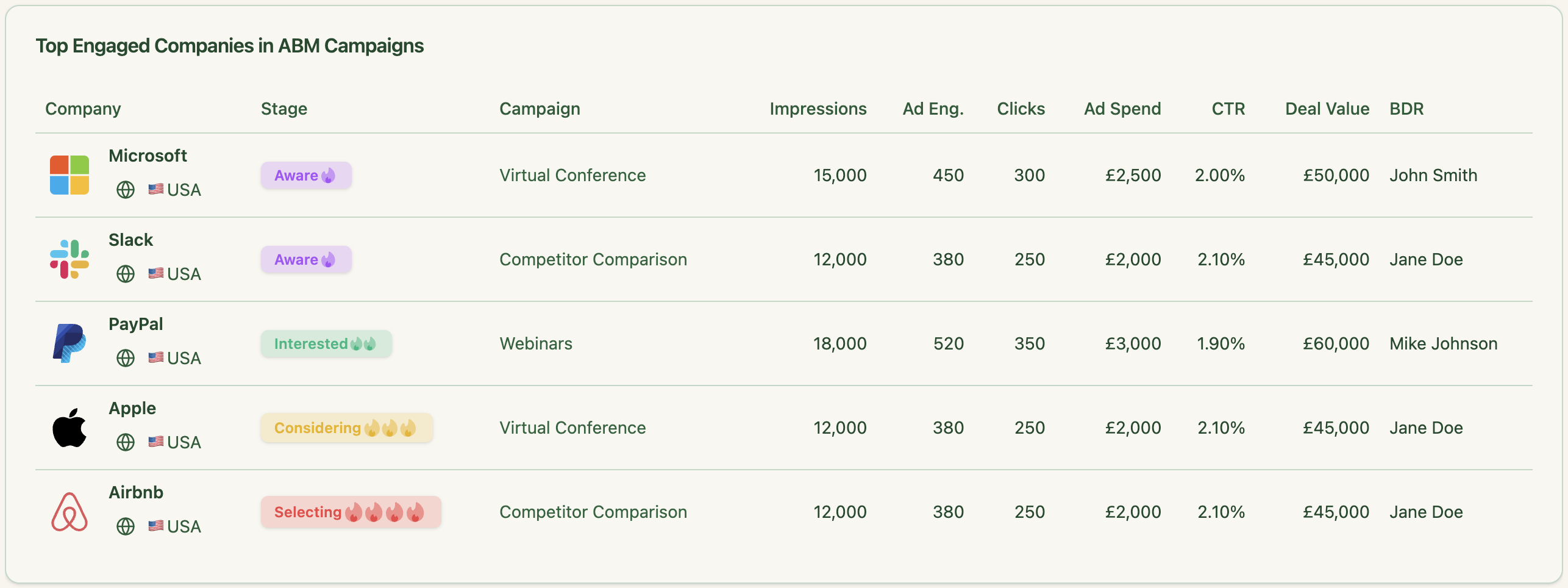
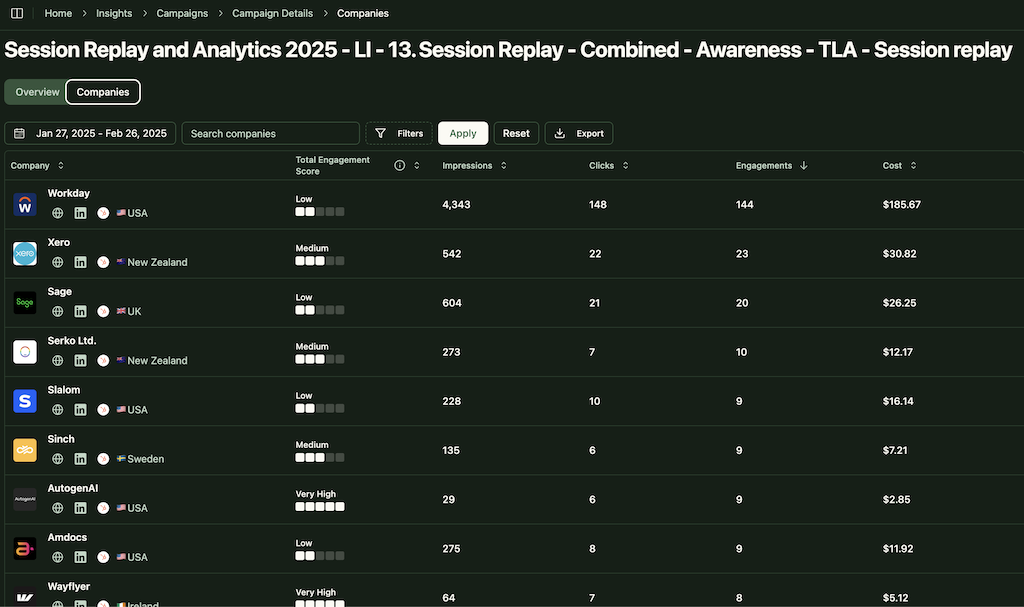
ZenABM connects to the official LinkedIn Ads API and captures account-level data for all campaigns so you can see which companies see, click, and engage with your ads.
Because this is first-party data from LinkedIn’s environment, it is more reliable than IP or cookie-based visitor ID.
A Syft study puts IP-based identification at around 42 percent accuracy.
ZenABM treats LinkedIn ad engagement itself as first-party intent. When several people in one company keep engaging with your ads, that is a strong buying signal without rented intent feeds.
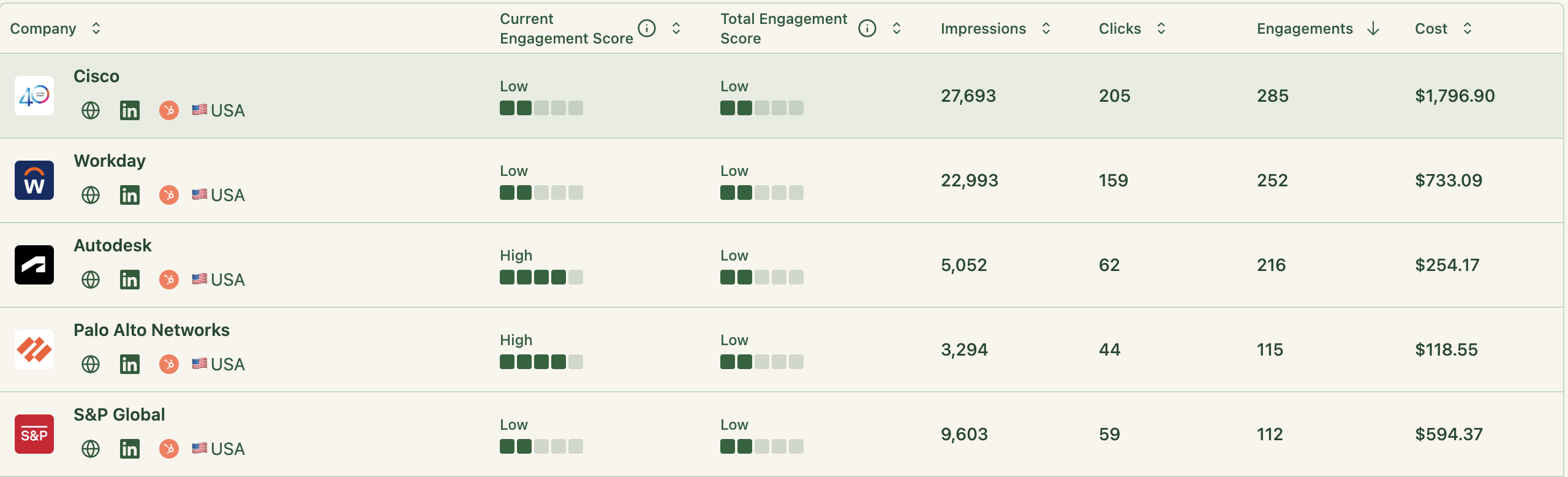
ZenABM updates engagement scores as accounts interact with your ads across campaigns, so you can see who is heating up over short or long windows and let marketing and sales prioritize accounts that show real intent.
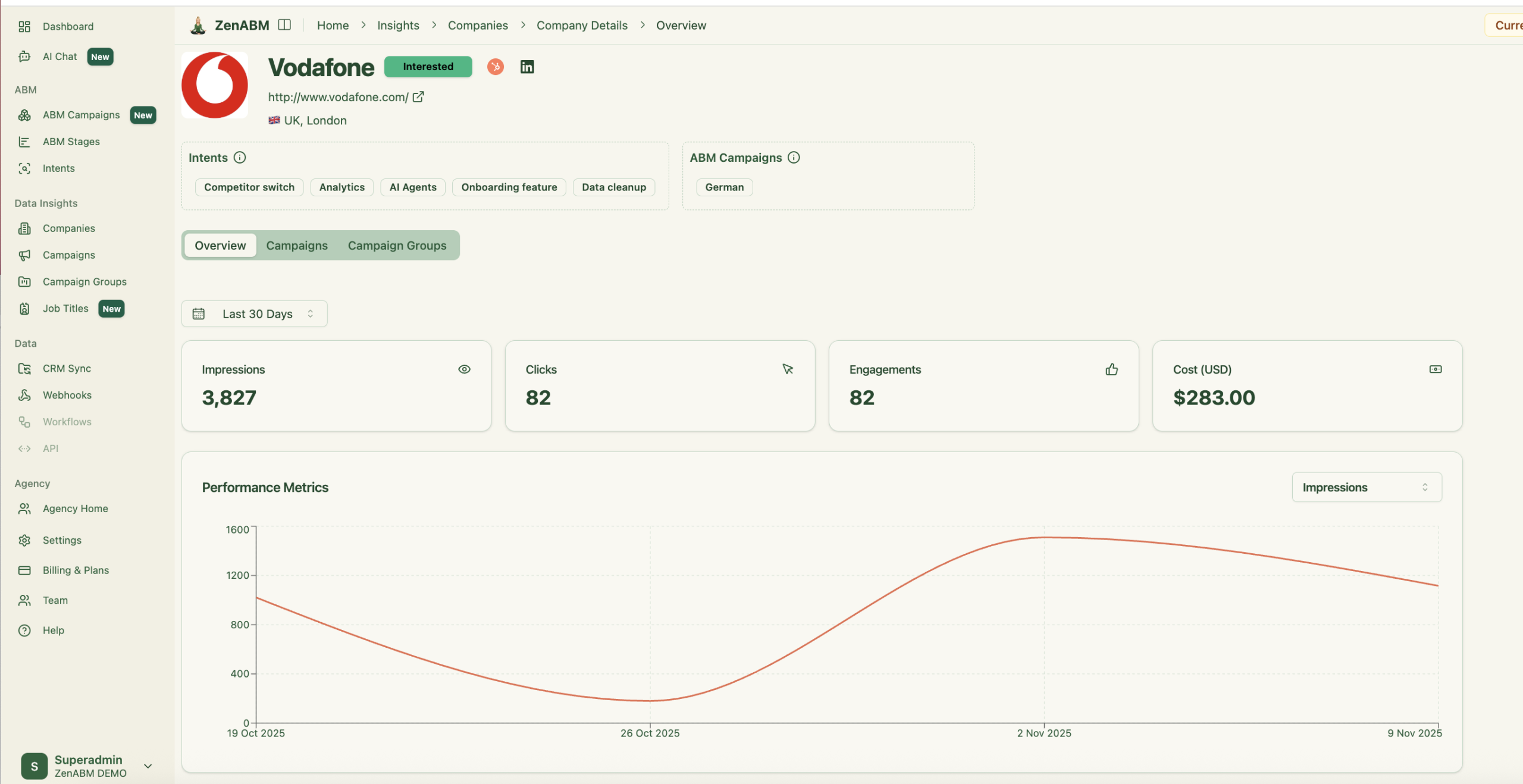
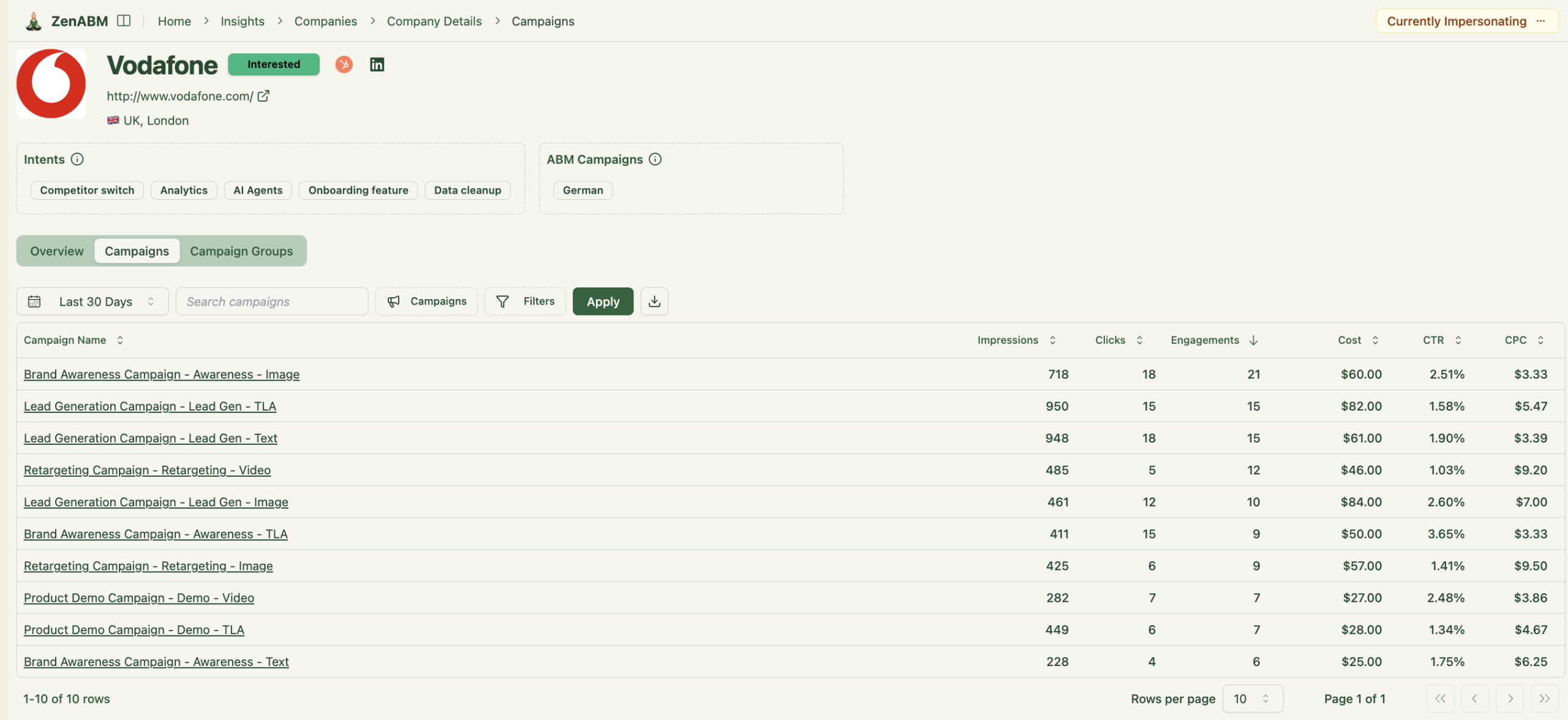
ZenABM also shows the full touchpoint timeline for each company:
ZenABM lets you define stages such as Identified, Aware, Engaged, Interested, and Opportunity and automatically places accounts in the right stage using scores and CRM data.
You control thresholds, and ZenABM tracks movement over time.
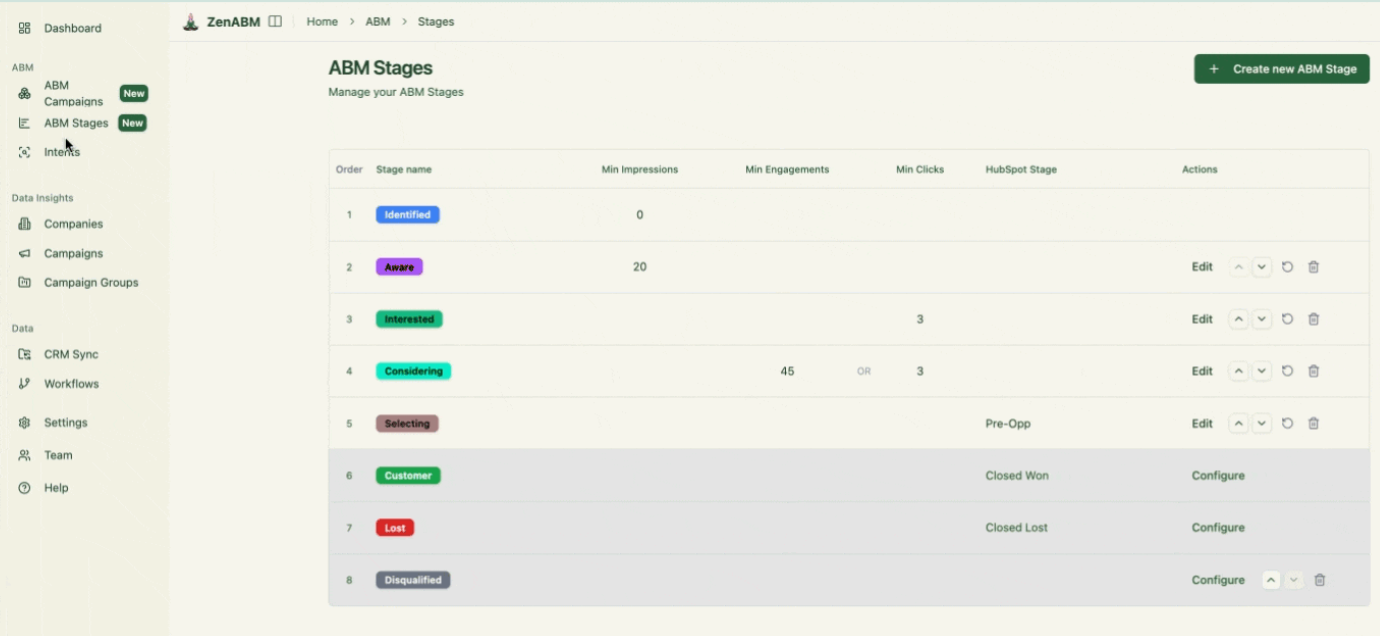
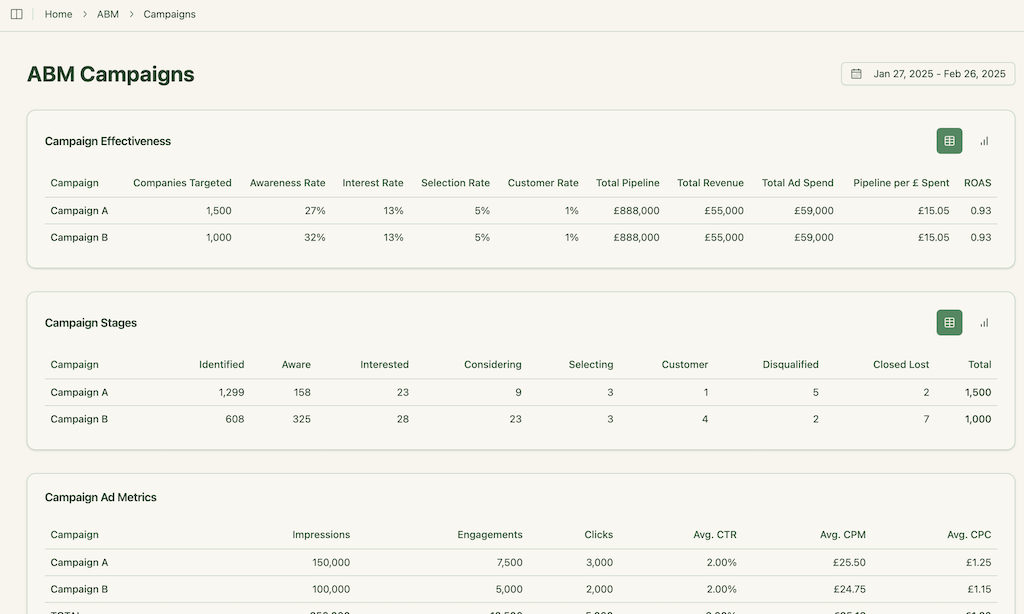
This gives you funnel visibility similar to larger suites, but powered by LinkedIn data.
ZenABM integrates bi-directionally with CRMs like HubSpot and adds Salesforce sync on higher tiers.
LinkedIn engagement data flows into the CRM as company-level properties:
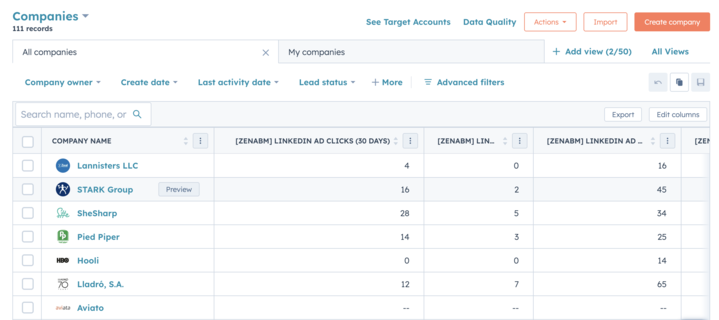
Once an account crosses your score threshold, ZenABM updates the stage to Interested and automatically assigns a BDR.
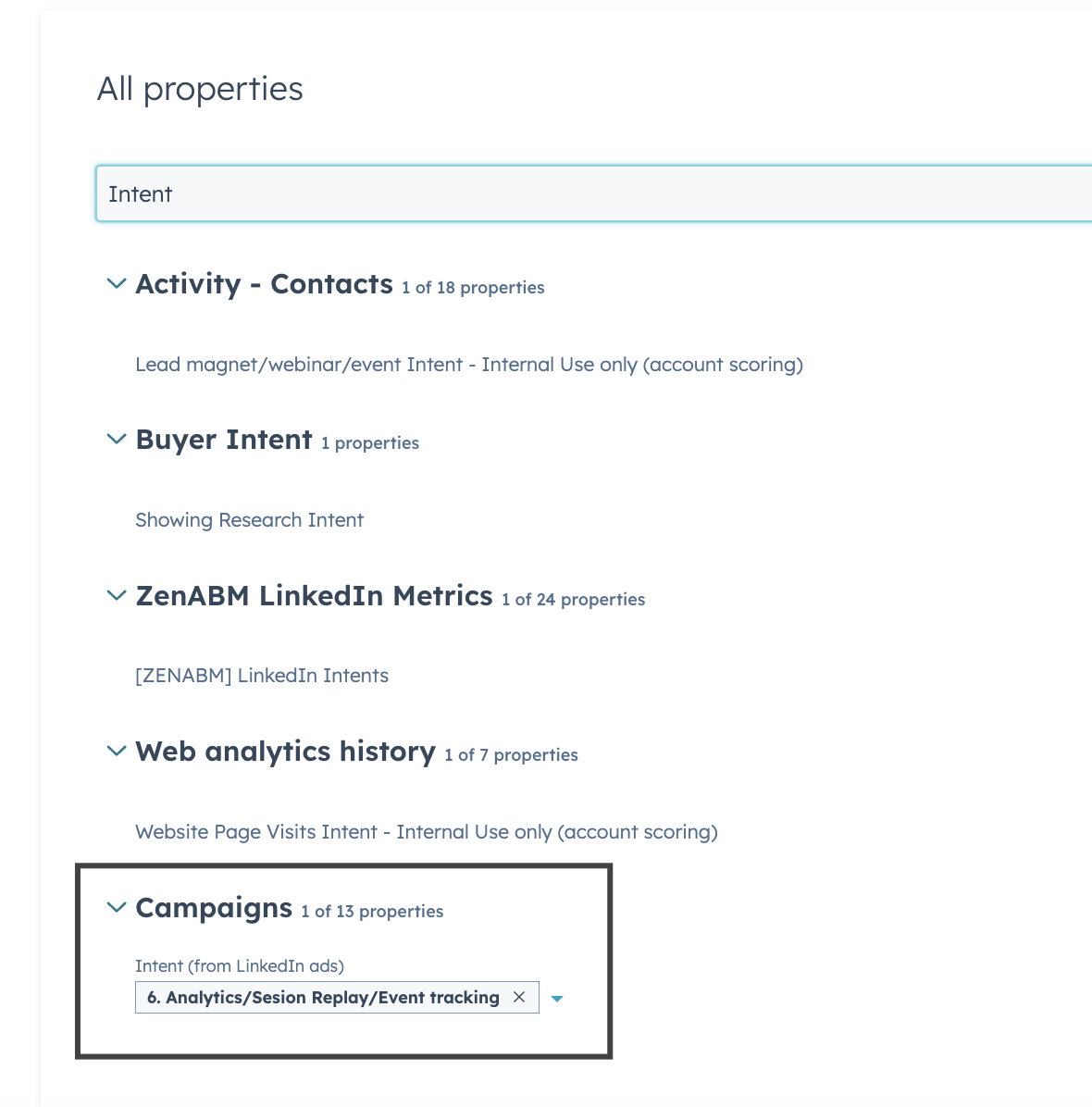
ZenABM lets you derive intent topics from LinkedIn campaigns by tagging campaigns by feature, use case, or offer.
ZenABM then shows which accounts engage with which themes.
This is clean, first-party intent from owned interactions.
You can push these topics into your CRM, so sales and marketing can tailor outreach to what each company has actually explored.
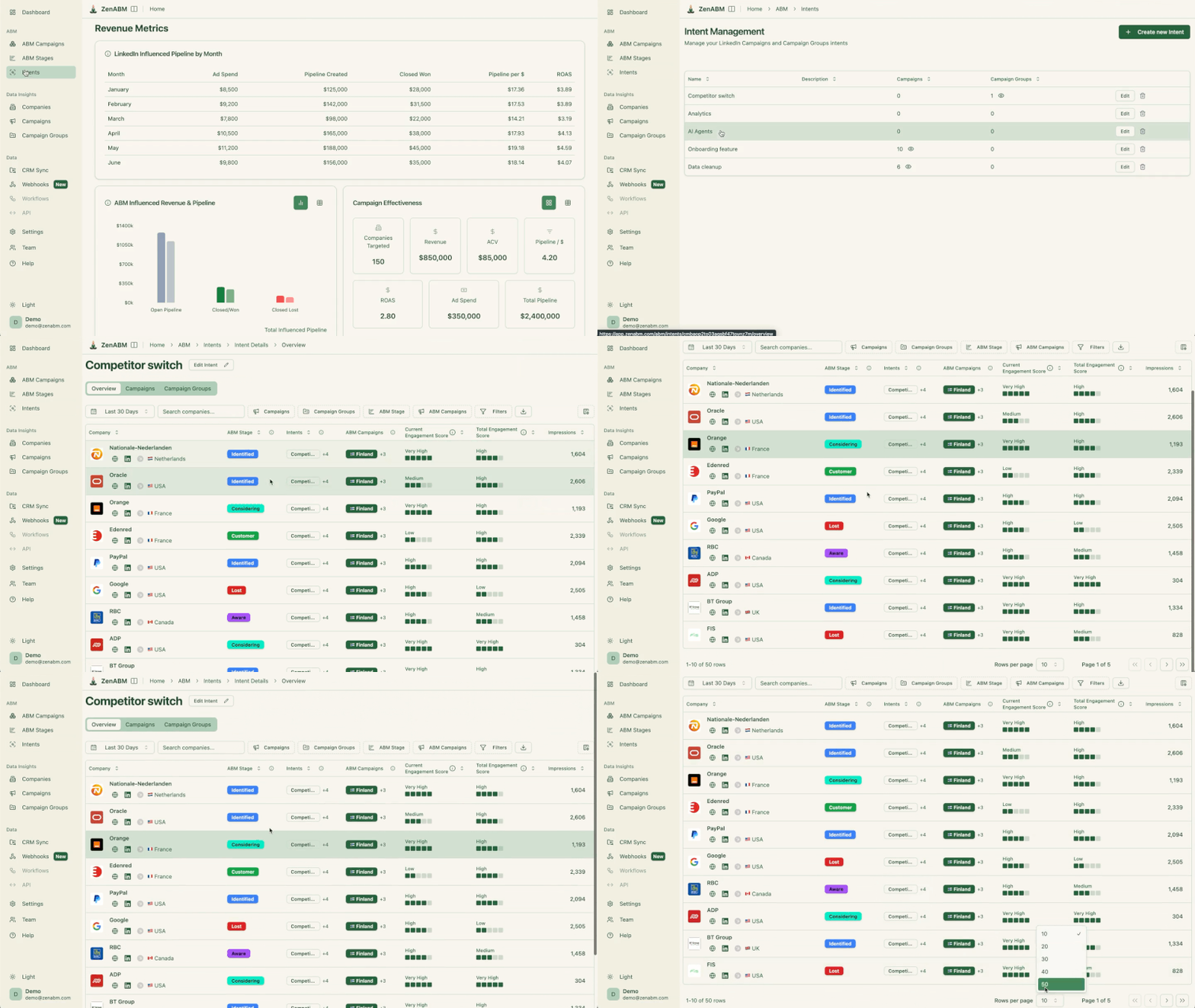
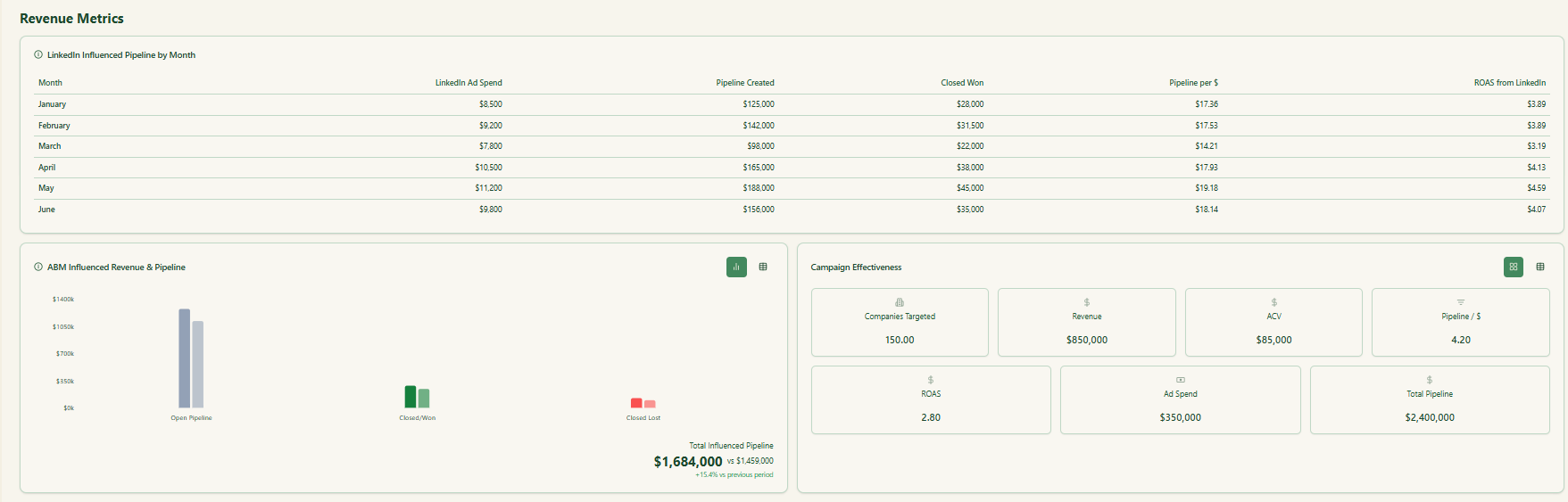
ZenABM ships with dashboards that connect LinkedIn ads to account engagement, stage movement, and revenue.
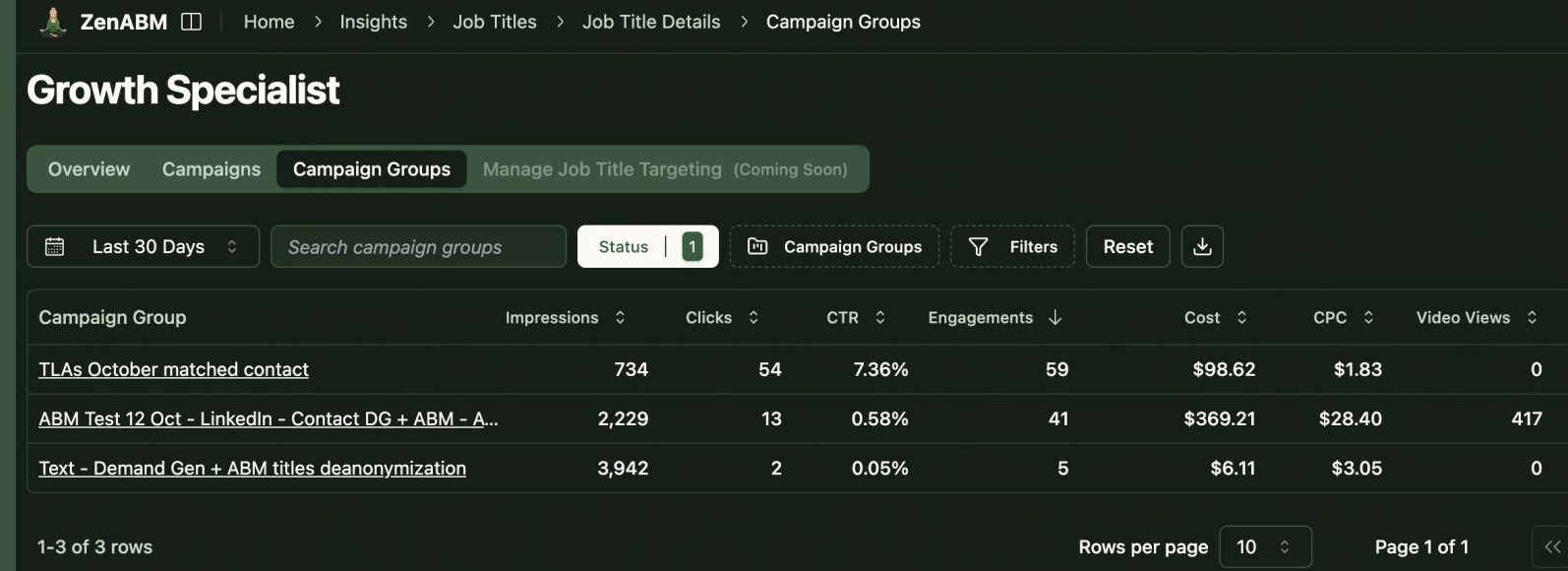
ZenABM shows which job titles engage with your creatives and gives dwell time and video funnel analytics.
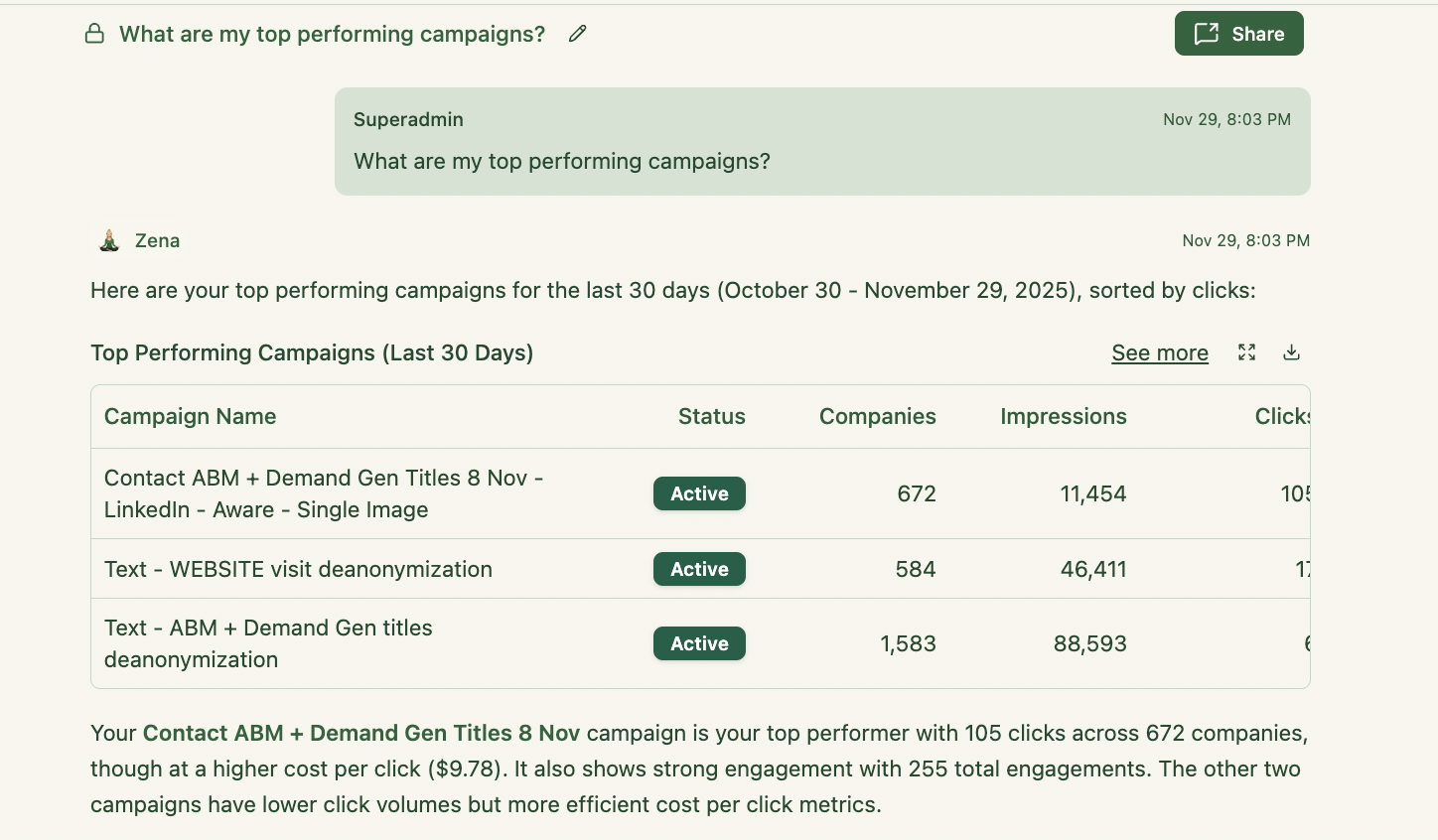
ZenABM provides its AI chatbot called Zena that basically answers all you want from ZenABM in natural language.
You can ask Zena open-ended questions like you would a smart analyst and get company-level answers about:
Under the hood, Zena combines OpenAI with a library of carefully designed prompts and endpoints to join ad engagement, spend and CRM deals so it can explain which campaigns drove pipeline, which accounts turned into opportunities, which formats perform best and which companies are high intent but untouched by sales.
Instead of exporting spreadsheets and stitching pivot tables, you get plain language insights, ready to drop into strategy reviews, weekly sales standups or executive updates.
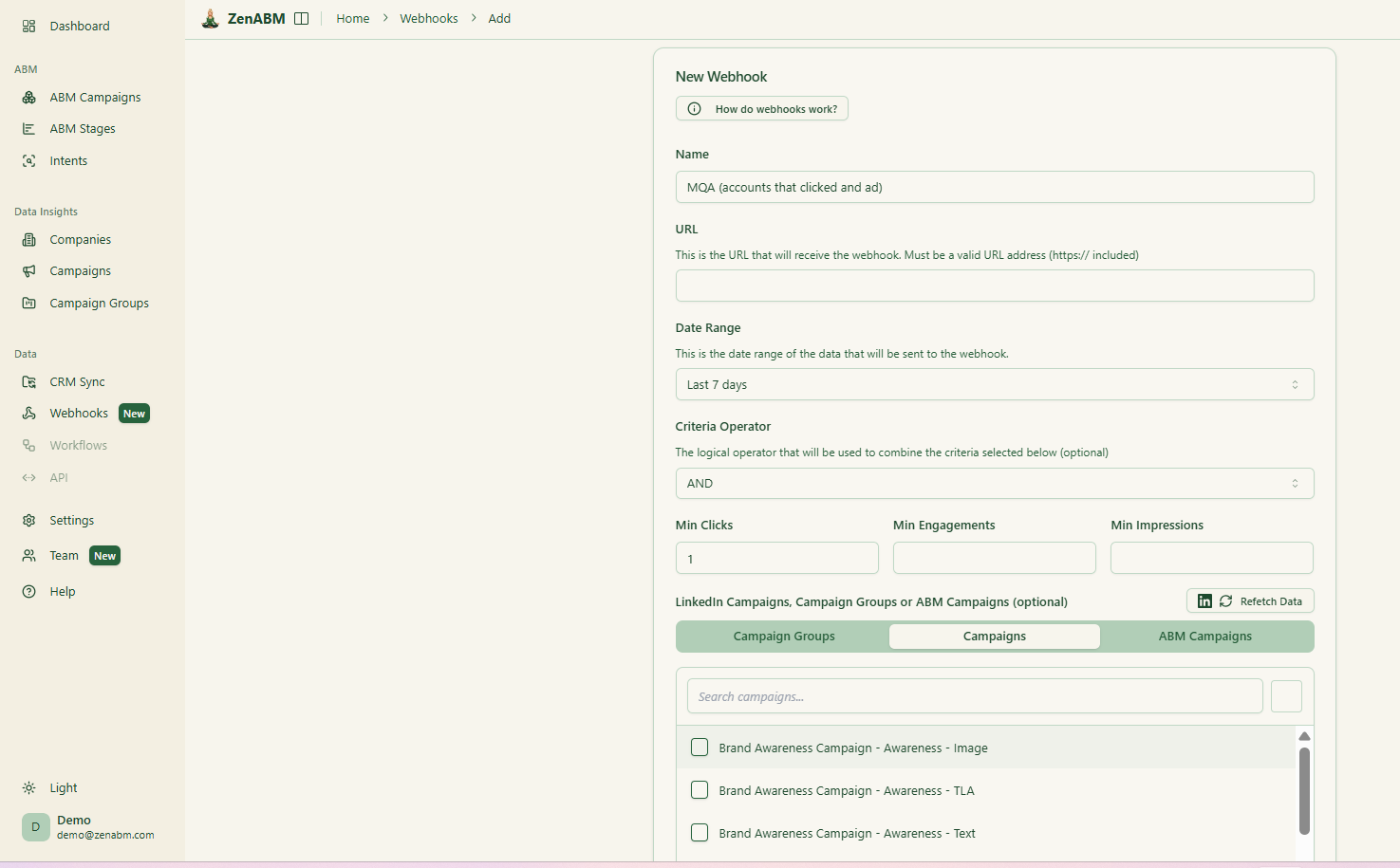
ZenABM’s custom webhooks let you push events into your stack, for example, Slack alerts, enrichment flows, or other ops automations.

Most tools treat each LinkedIn campaign separately. ZenABM lets you group several into one ABM campaign object so you can see performance across regions, personas, or creative clusters.
Instead of juggling fragmented reports in Campaign Manager, you see spend, pipeline, account movement, and ROAS for the entire initiative.
For agencies, ZenABM offers a multi-client workspace.
You can manage multiple ad accounts and clients in one environment, each with its own ABM strategy, dashboards, and reporting, instead of constantly switching accounts in Campaign Manager.
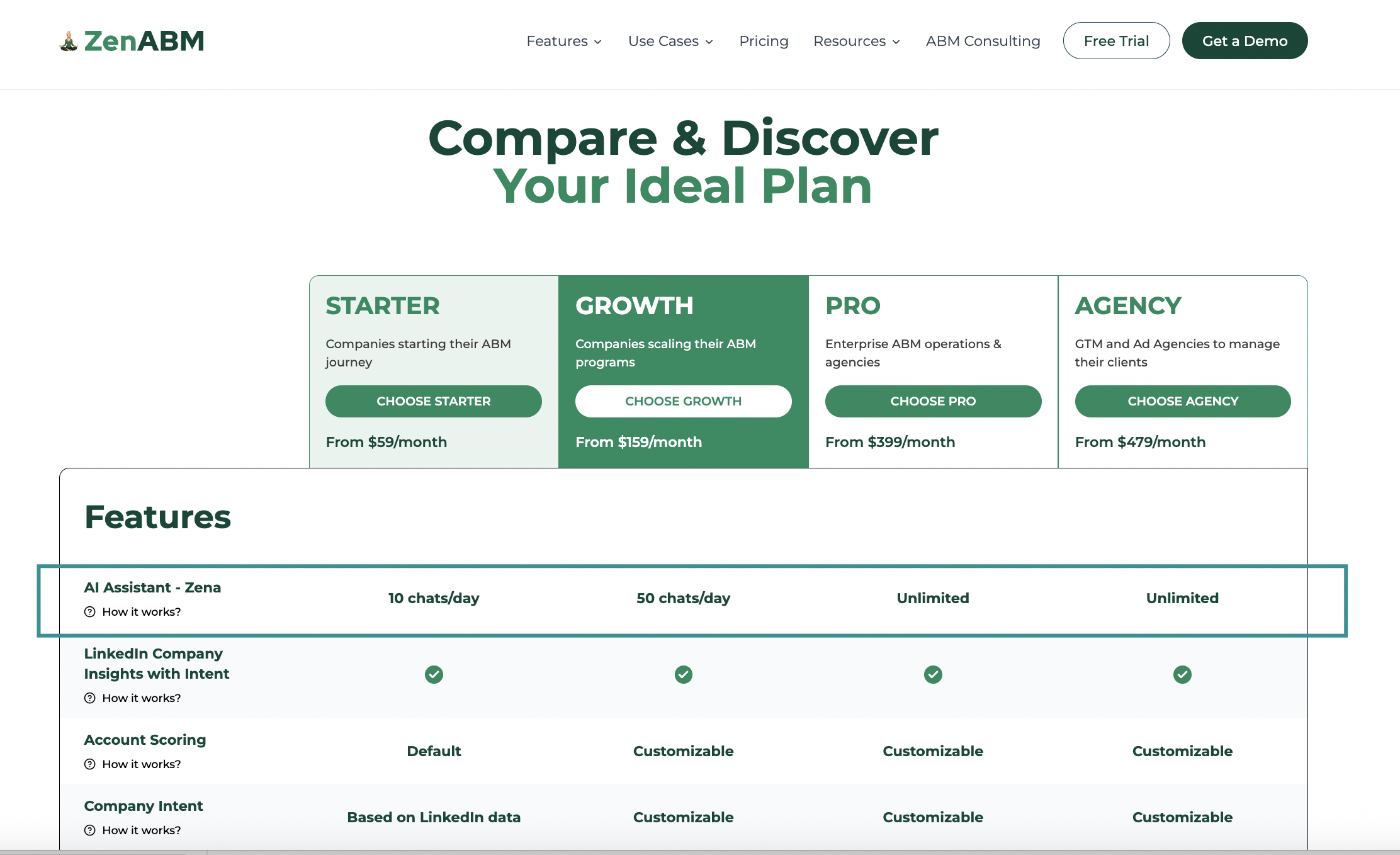
ZenABM pricing details:
HockeyStack is a strong fit if your ABM motion is multi-channel, analytics-heavy, and RevOps-driven, and you have the budget, time, and internal ownership to run a complex revenue analytics platform.
If your goal is to unify every touchpoint across ads, website, CRM, and offline activity into a single attribution model, HockeyStack delivers serious depth.
However, that depth comes with trade-offs: higher cost, longer time to value, ongoing maintenance, and a learning curve that not every team can justify.
If your ABM engine is primarily LinkedIn, and what you really need is:
ZenABM focuses on turning LinkedIn engagement into actionable account intelligence, not just reports.
It captures first-party ad engagement directly from LinkedIn, converts it into intent, scores and stages accounts, syncs everything to your CRM, and shows pipeline impact out of the box, starting at $59 per month.
