



HockeyStack features focus on revenue attribution, buyer-journey reporting, account intelligence, and AI-guided analysis for B2B go-to-market teams, including visibility that can start as early as ad impressions.
This article breaks down HockeyStack features in practical terms:
It also clarifies when HockeyStack’s feature set is a strong fit for an ABM motion, versus when it is more platform than a team needs (third-party benchmarks like Vendr estimate a median annual cost around $28k).
Finally, it explains when a more focused, LinkedIn-first option like ZenABM can work as a replacement or a complementary layer, especially for teams that want account-level LinkedIn engagement and activation without a full-suite analytics rollout.

If you want the short version first:

HockeyStack’s features are built around one core idea: unify marketing and sales activity into a single dataset, then use that dataset for reporting, attribution, scoring, and workflow decisions.
In practical terms, the platform is usually implemented through:
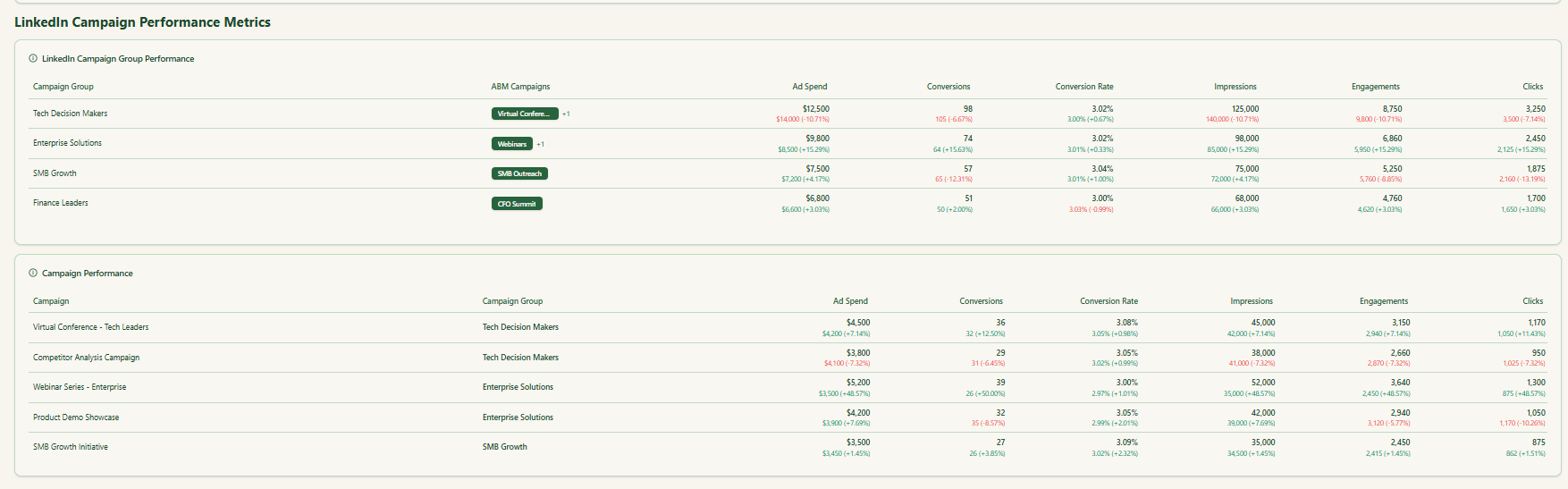
HockeyStack is also listed in LinkedIn’s partner ecosystem and positions LinkedIn Ads as a first-class measurement source. It can pull LinkedIn Ads engagement data (including impressions and engagement) at the account level, then match it with CRM and website activity so influence can be measured beyond clicks.


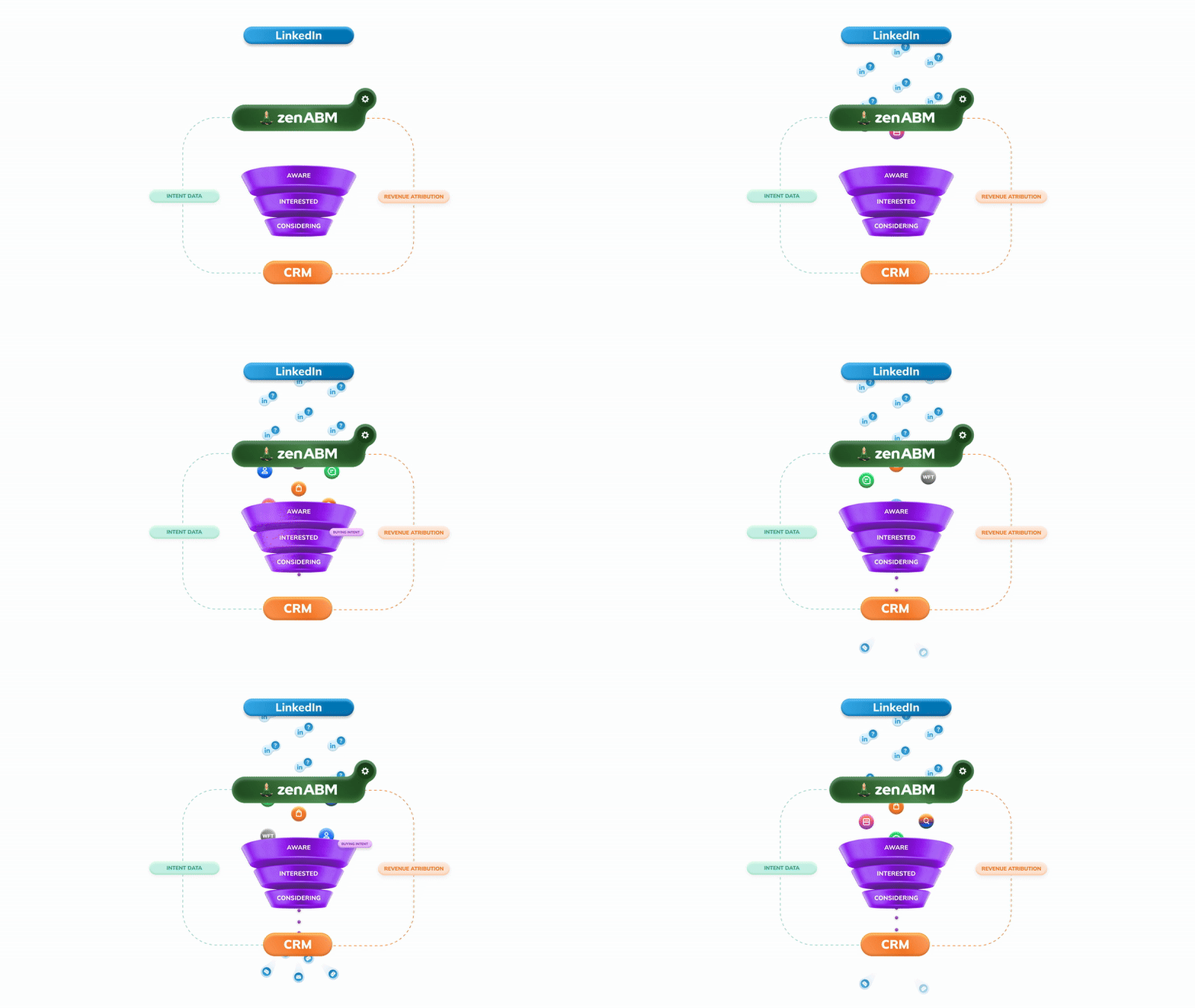
ZenABM, by the way, covers the same LinkedIn-side measurement layer for teams that want a focused solution:


HockeyStack covers attribution, reporting, account intelligence, and workflow support.
Below are the HockeyStack features most ABM and demand gen teams evaluate first:
HockeyStack supports funnel reporting and attribution across marketing and sales touchpoints.
It brings activity from multiple systems into a single reporting layer so teams can analyze which channels, campaigns, and assets are associated with engagement, pipeline, and closed revenue.
It supports different attribution approaches (including single-touch and multi-touch models), and it can report at both the account level and the person (lead or contact) level.

The reporting view commonly presents a timeline, showing touchpoints from early interactions through closed-won, with marketing activity and sales touches logged in sequence.
HockeyStack also supports bringing offline activity into analysis, which matters for teams that rely on events, outbound, or non-digital touches.
For reporting, it provides pre-built dashboards (including executive templates like a “CMO overview”) and supports custom reporting for teams that want their own breakdowns.

Marketers can slice reporting by channel, campaign, content, account segment, and other dimensions, depending on connected data.
HockeyStack’s LinkedIn integration is designed to measure influence beyond clicks.
It can track account-level ad impressions and engagement, then connect that exposure to later actions such as direct traffic, branded search, and site conversions. This allows conversions to be analyzed as influenced by impressions, not only by last-click activity.
It also allows impressions and engagement to be used as reporting filters and segmentation criteria.
A related workflow feature is conversion syncing back to LinkedIn. HockeyStack can send conversion events (for example, opportunity stages and closed revenue outcomes) back into LinkedIn Campaign Manager so LinkedIn optimization can focus on downstream business outcomes rather than only clicks and form fills.
Because HockeyStack is commonly used in account-based motions, it includes account intelligence capabilities such as:

Visitor-to-company matching is useful but not perfectly accurate across markets, network setups, and remote work. Independent evaluations (for example, the Syft analysis) suggest that accuracy can be limited, so results are best treated as directional rather than absolute. 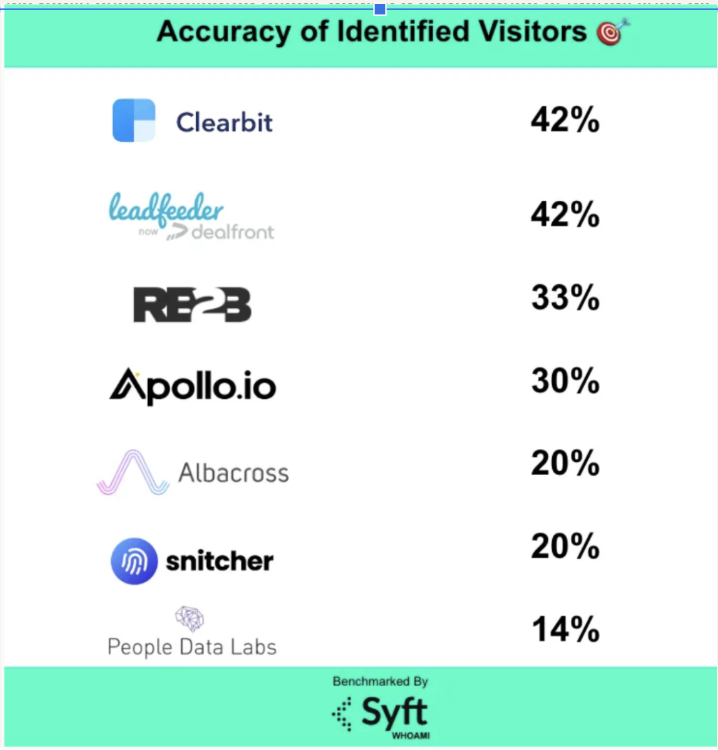

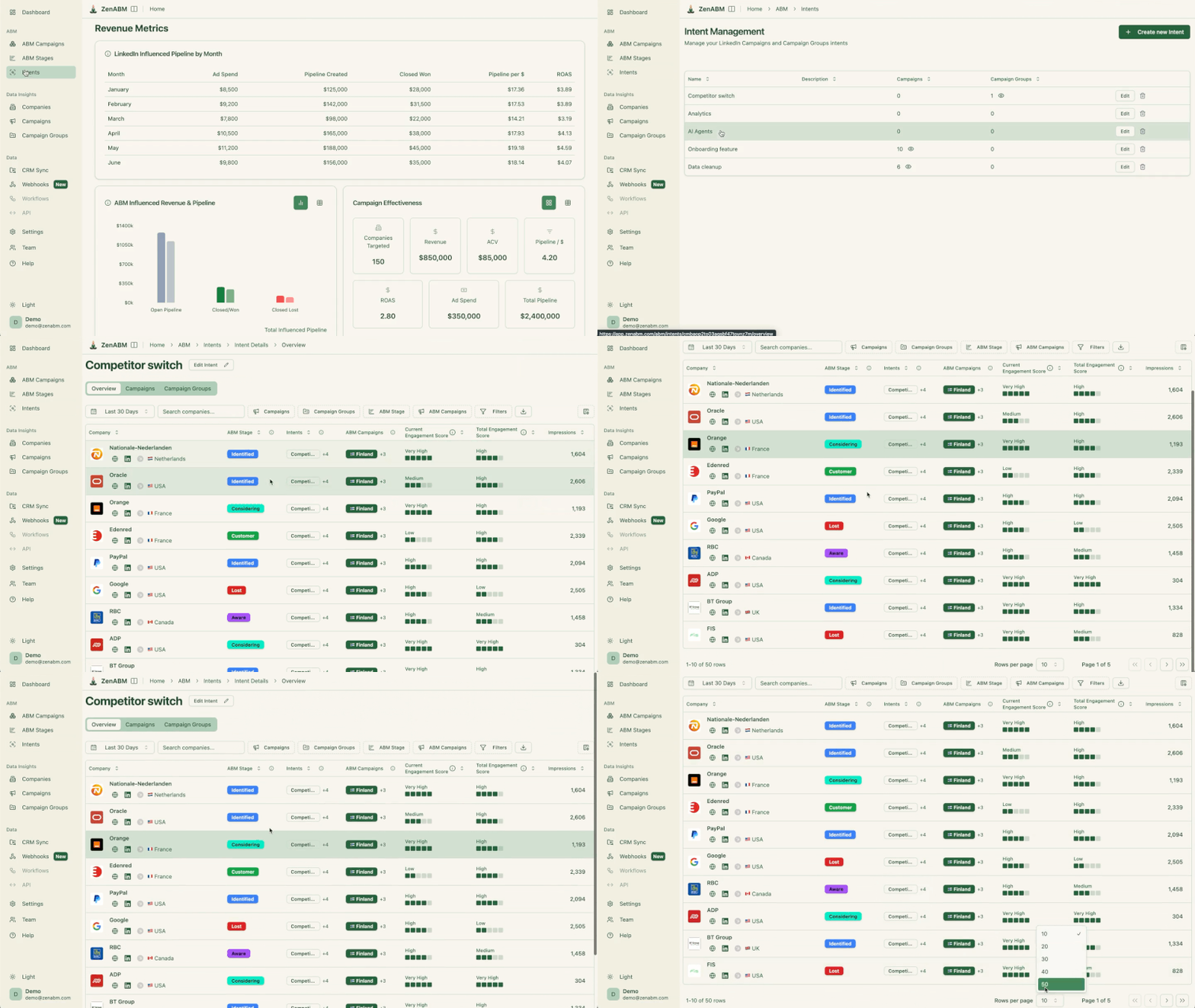
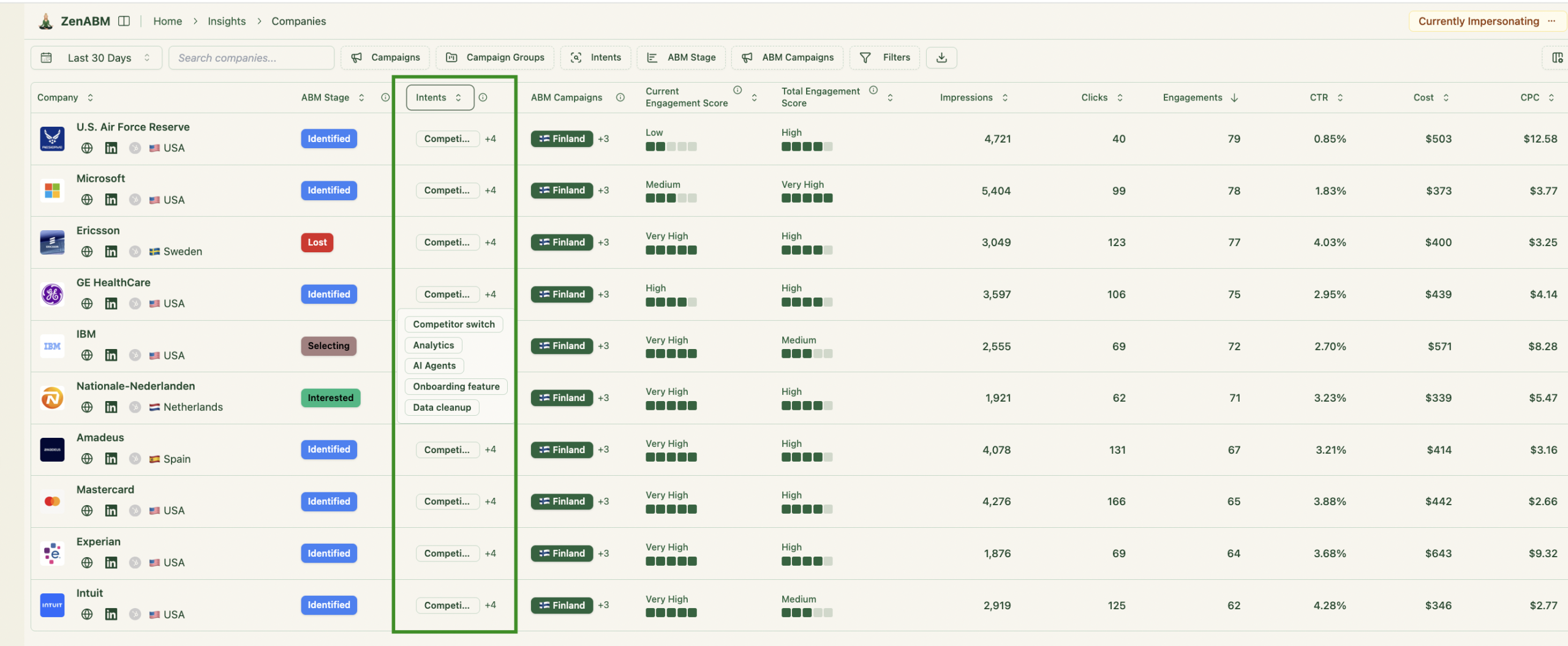
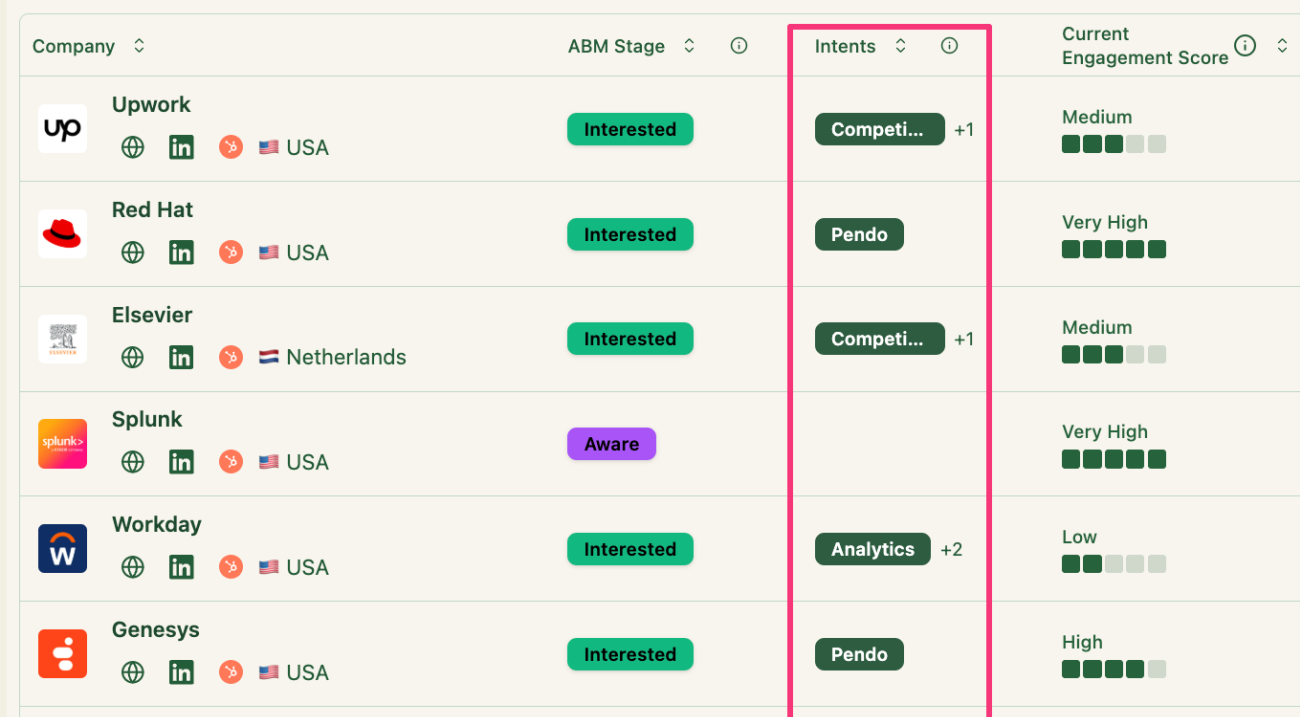
Pro Tip: Third-party keyword surge and external intent feeds can help surface early interest, but they often require extra spend and can be harder to validate without first-party context. ZenABM takes a first-party route by tracking how specific companies engage with your LinkedIn ads down to each ad creative. You can tag campaigns by theme (e.g. Feature A vs. Feature B), and ZenABM will group companies showing interest in each message. That means the signal includes both “who” and “what they engaged with,” which supports more targeted follow-up.

HockeyStack positions AI agents as a primary interface for analysis and actioning insights, with two named assistants: Odin and Nova.
Beyond AI assistants, HockeyStack supports automation such as alerts when accounts spike in engagement, routing and assignment workflows, and notifications through channels like Slack or email.
Integrations with CRMs and ad platforms can support workflows like syncing conversion events, pushing segments for activation, and triggering custom workflows via webhooks so insights are acted on rather than sitting in dashboards.
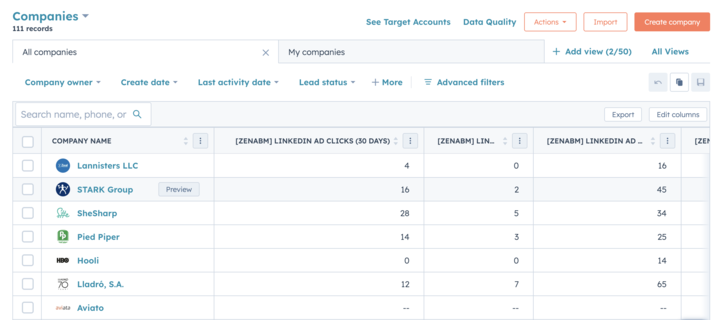
ZenABM, too, integrates bidirectionally with CRMs such as HubSpot (Salesforce available on higher plans).
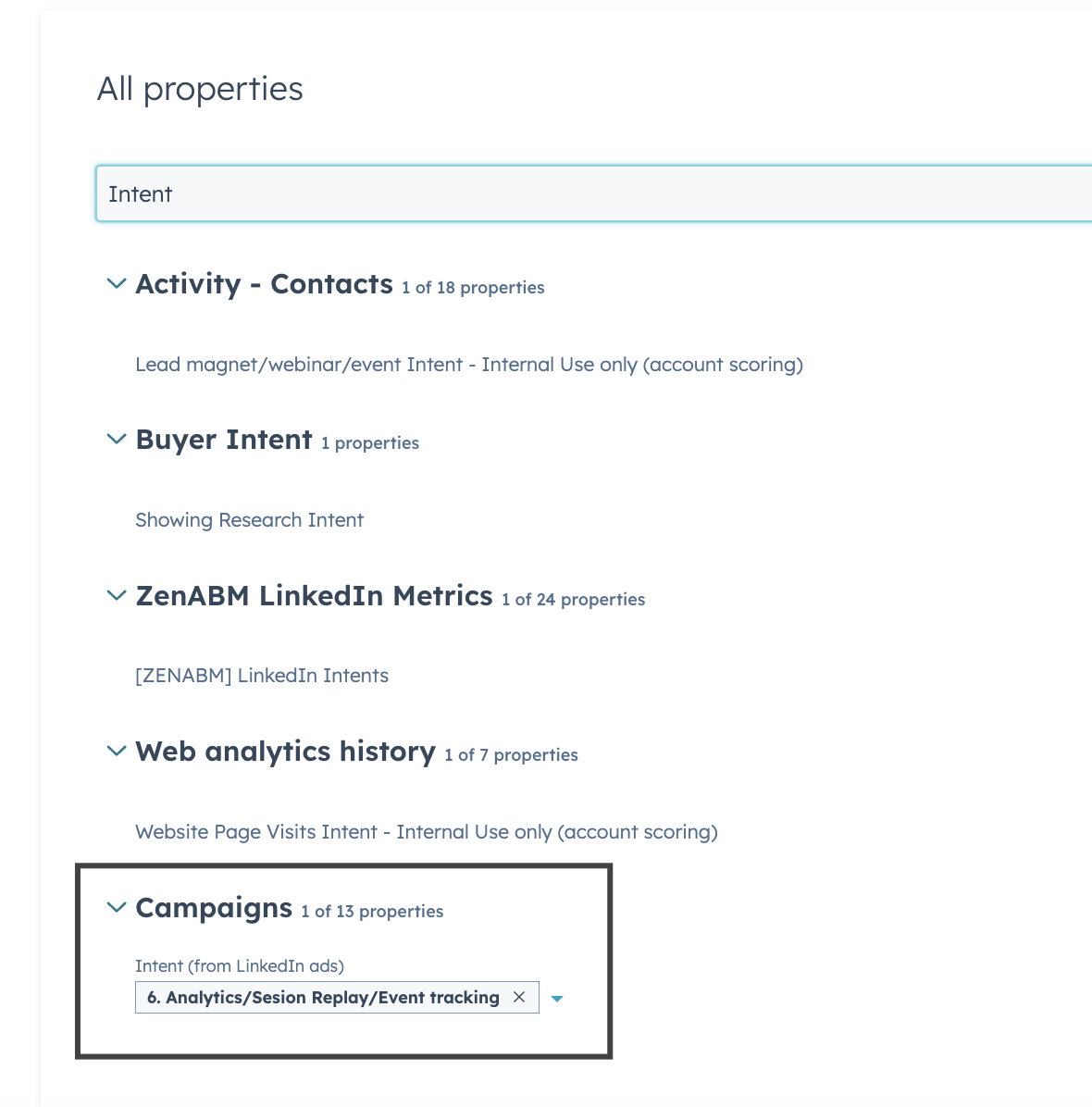
ZenABM pushes LinkedIn engagement data directly into your CRM as company properties, keeping sales teams informed:
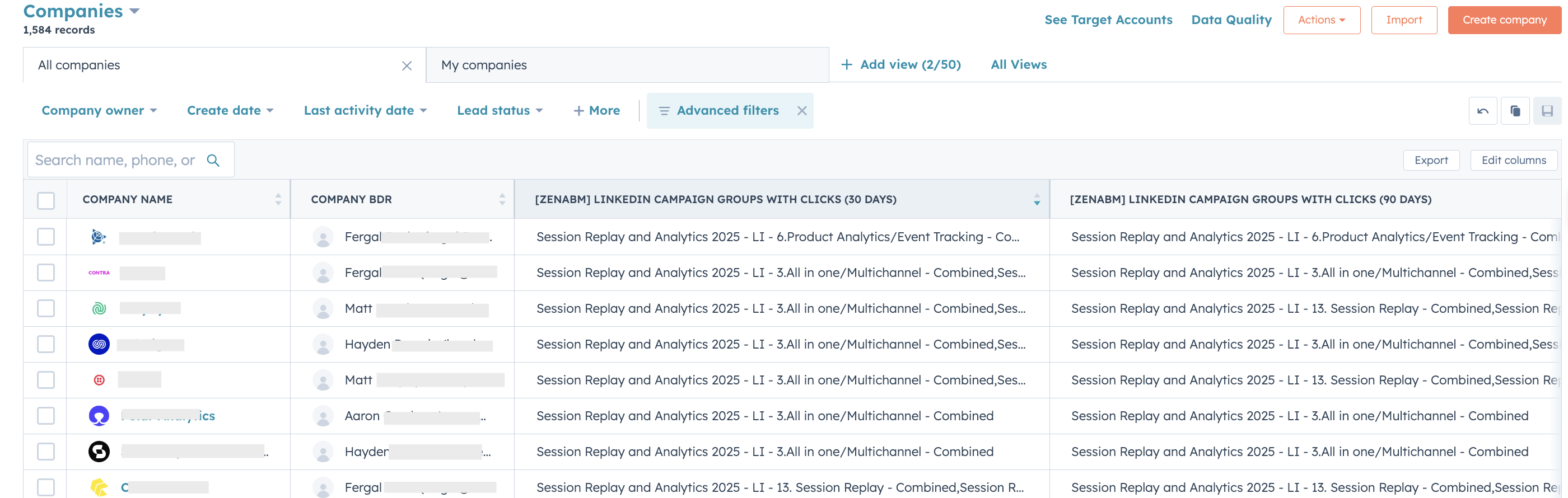
ZenABM can also auto-update account stages to “Interested” when engagement passes a set threshold and assign accounts to specific BDRs for follow-up.
HockeyStack does not publish a simple tier-by-tier pricing table on its main pricing page, and most buyers should expect a custom quote.
That said, there are a few consistent public signals:

The operational reality is that pricing is only one part of the investment.
Teams should account for implementation effort, data QA, and ongoing reporting ownership. Those time costs can be meaningful if the platform is not clearly adopted and maintained.
HockeyStack can deliver significant value when it becomes the reporting system of record, but the ROI case usually depends on whether the team will use it to materially improve marketing efficiency or revenue decisions.
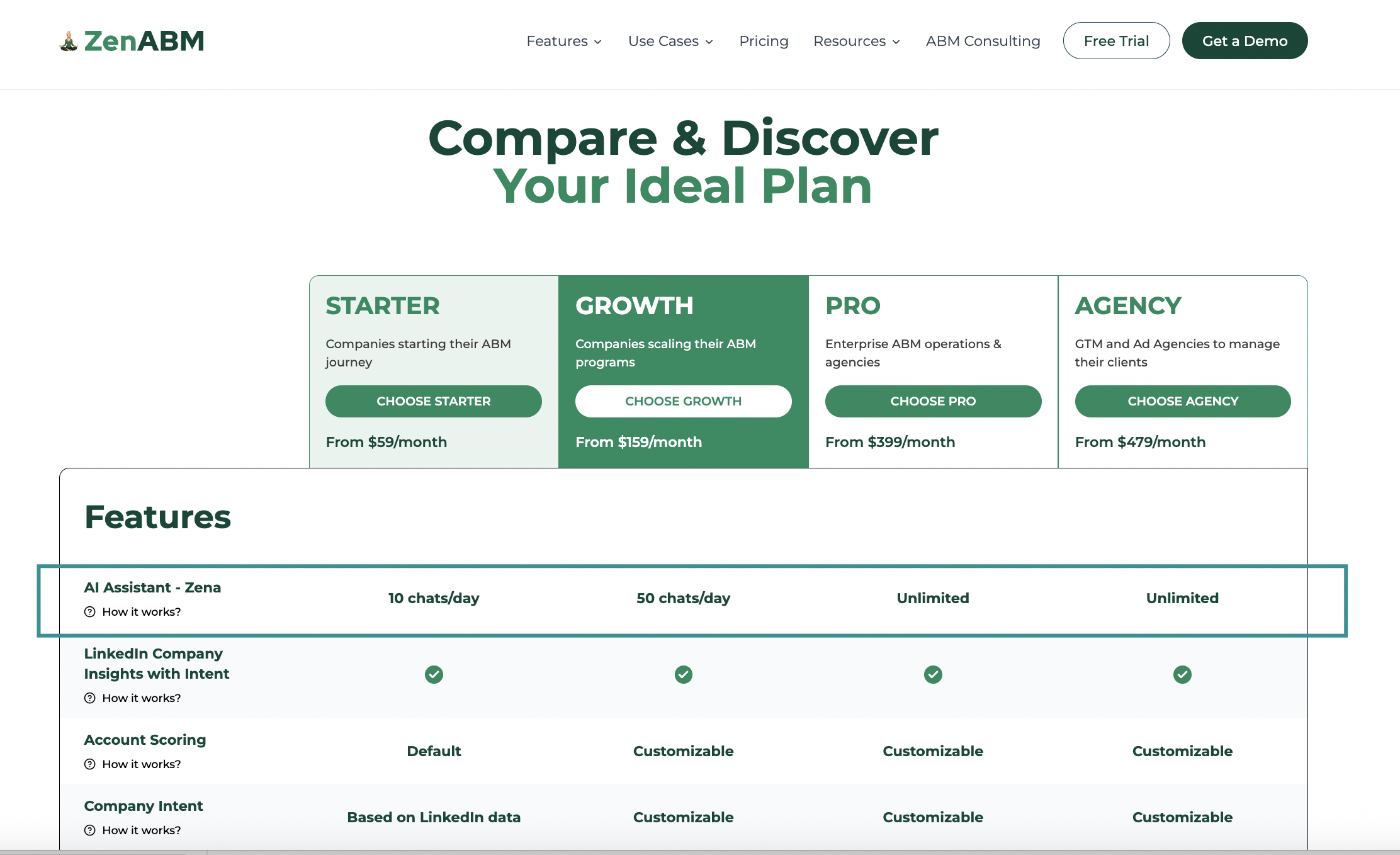
In comparison, newer ABM analytics players (like ZenABM and others) often provide more transparent and lower entry pricing (for example, ZenABM starts at $59/month).
HockeyStack is generally reviewed positively across common software review sites, with recurring themes around attribution clarity, reporting consolidation, and support.
It is currently shown around 4.6 out of 5 stars on G2, based on verified reviews.

Reviews typically include both strong praise and practical caveats.
Here is a condensed summary of the patterns:
Hockeystack’s pros:
HockeyStack’s limitations:
ZenABM is built for teams that run ABM primarily on LinkedIn and want first-party account engagement, CRM activation, and pipeline visibility without a full multi-channel analytics suite.
Let’s look at its core features:
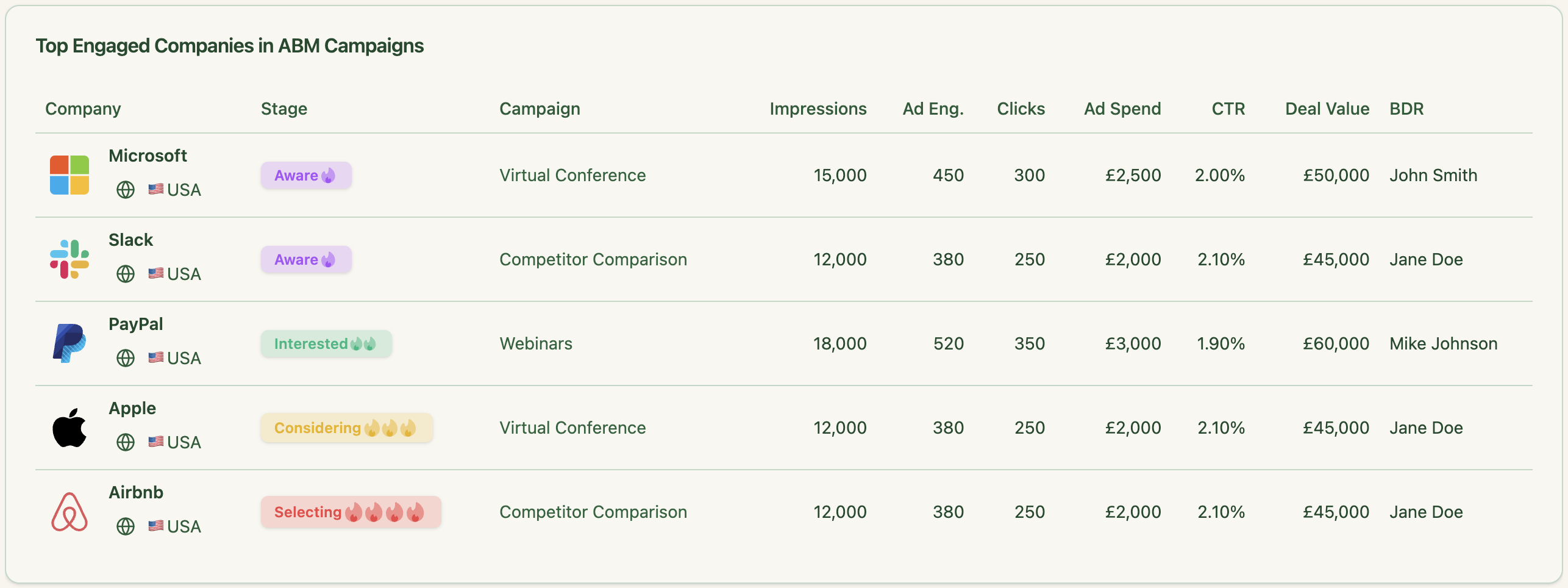
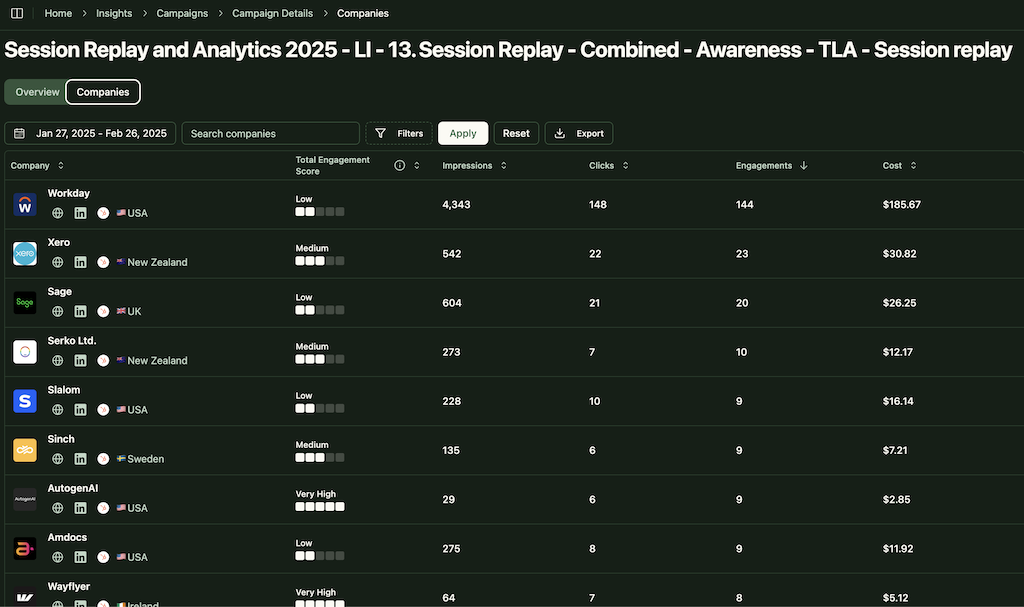
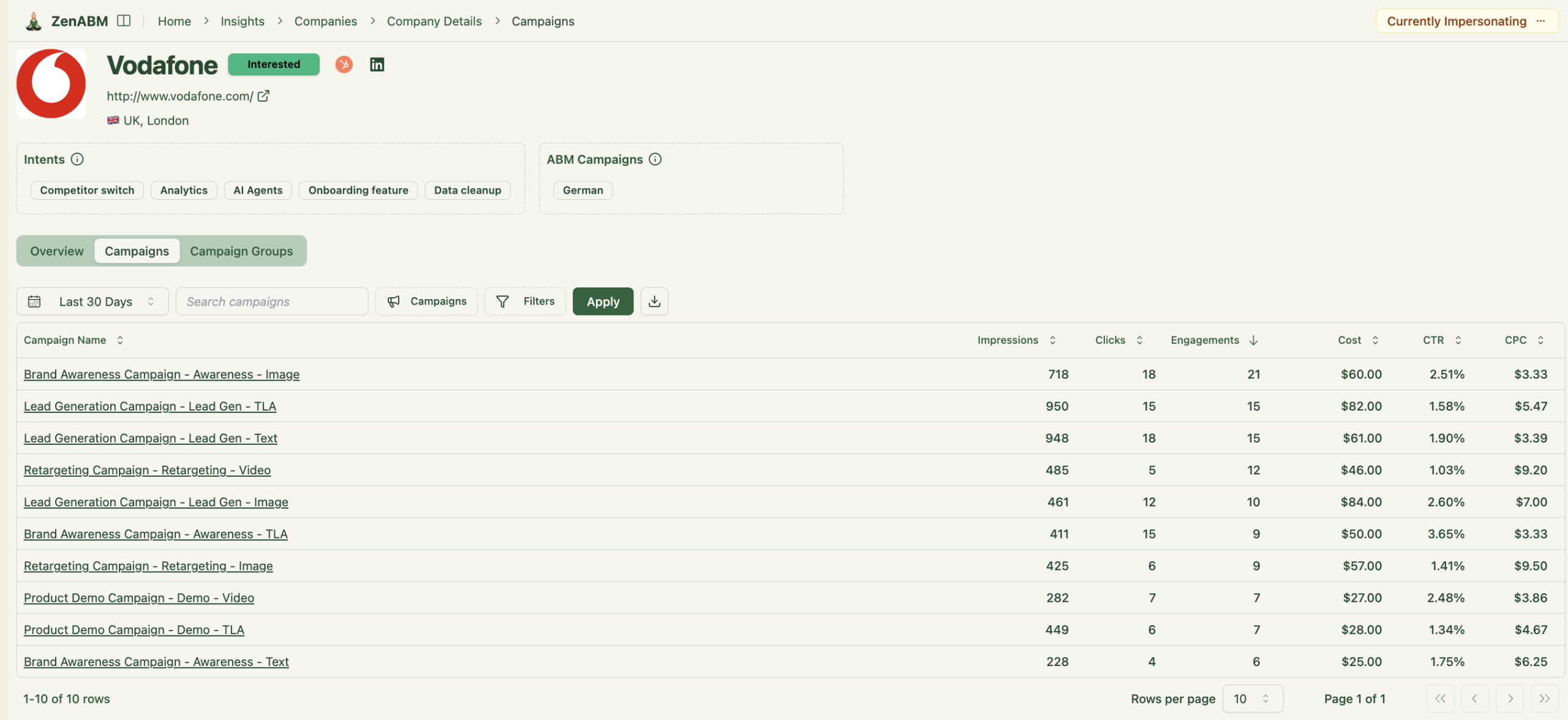
ZenABM connects to the official LinkedIn Ads API and captures account-level data for all campaigns so you can see which companies see, click, and engage with your ads.
Because this is first-party data from LinkedIn’s environment, it is more reliable than IP or cookie-based visitor ID.
A Syft study puts IP-based identification at around 42 percent accuracy.
ZenABM treats LinkedIn ad engagement itself as first-party intent. When several people in one company keep engaging with your ads, that is a strong buying signal without rented intent feeds.
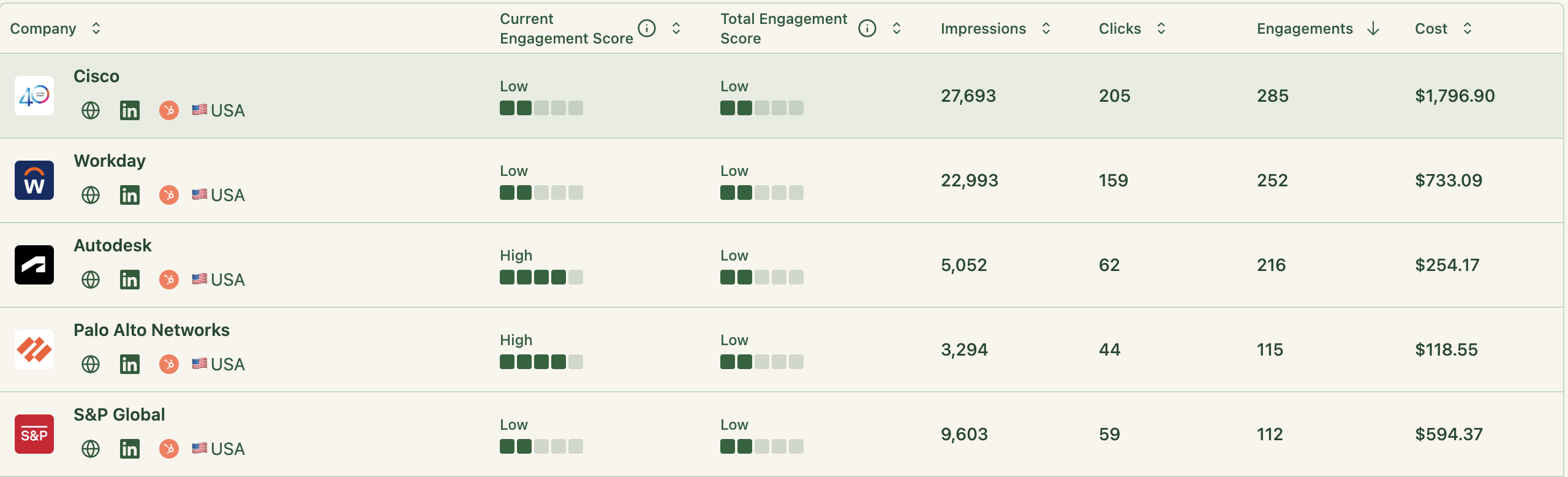
ZenABM updates engagement scores as accounts interact with your ads across campaigns, so you can see who is heating up over short or long windows and let marketing and sales prioritize accounts that show real intent.
ZenABM also shows the full touchpoint timeline for each company:
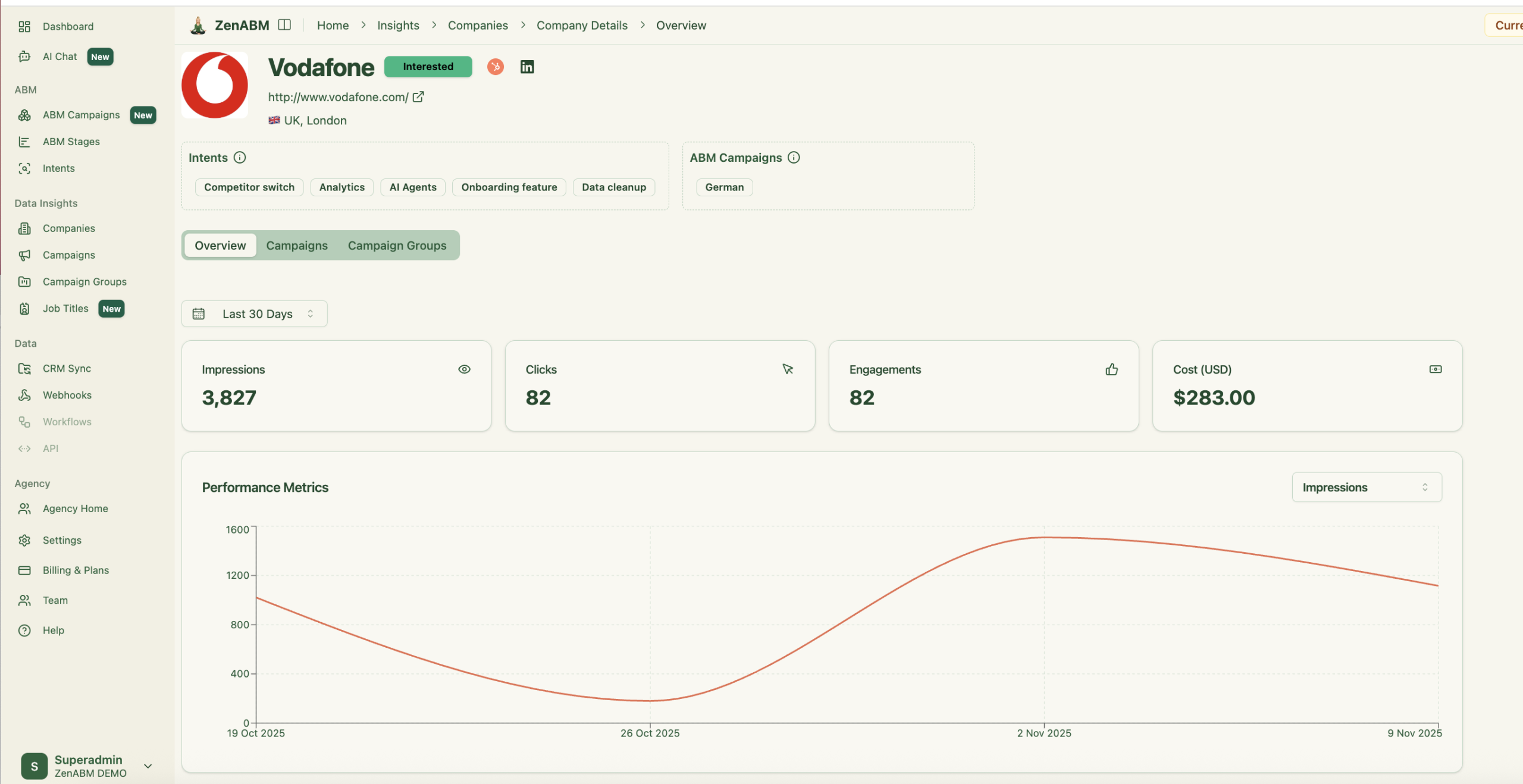
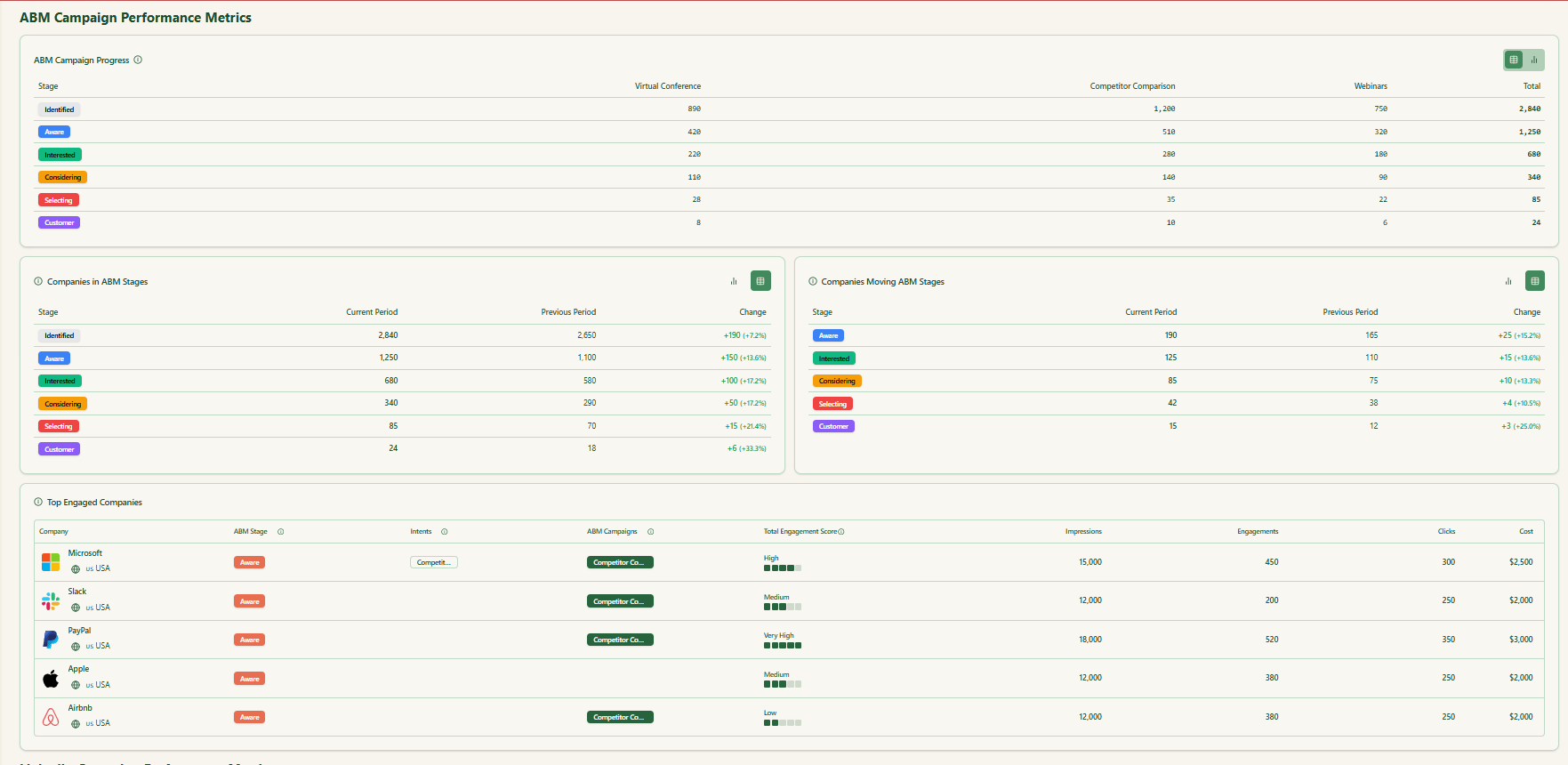
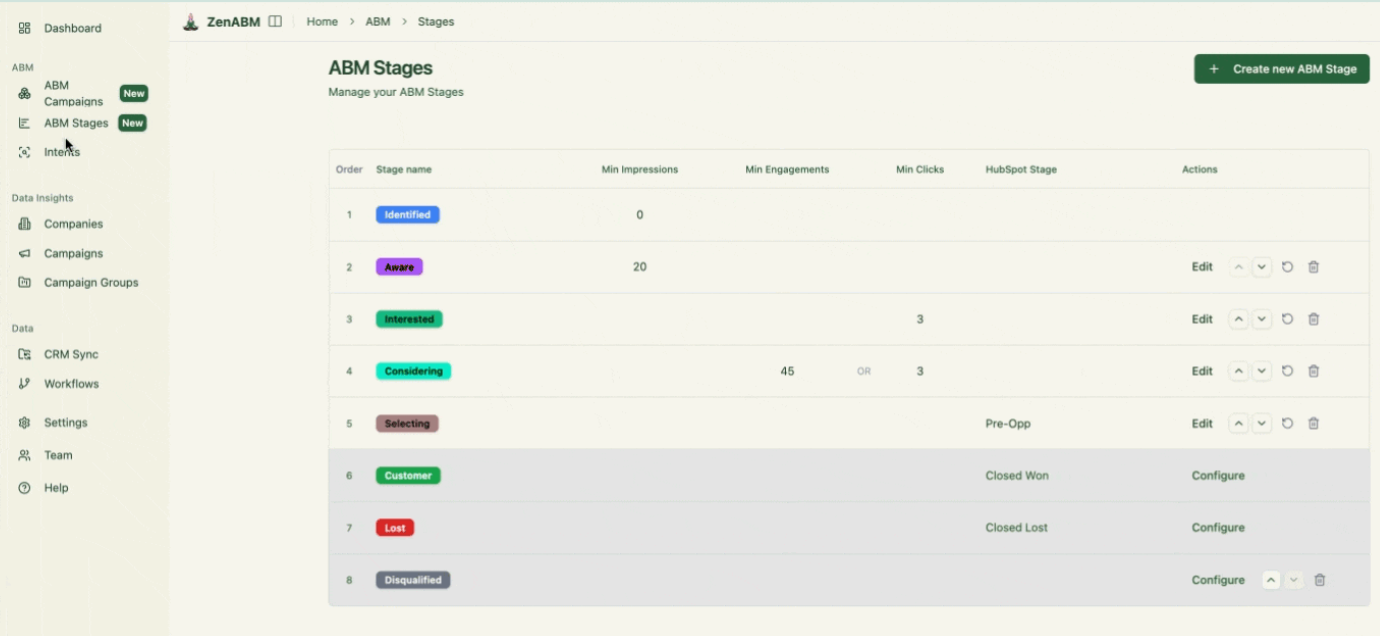
ZenABM lets you define stages such as Identified, Aware, Engaged, Interested, and Opportunity and automatically places accounts in the right stage using scores and CRM data.
You control thresholds, and ZenABM tracks movement over time.
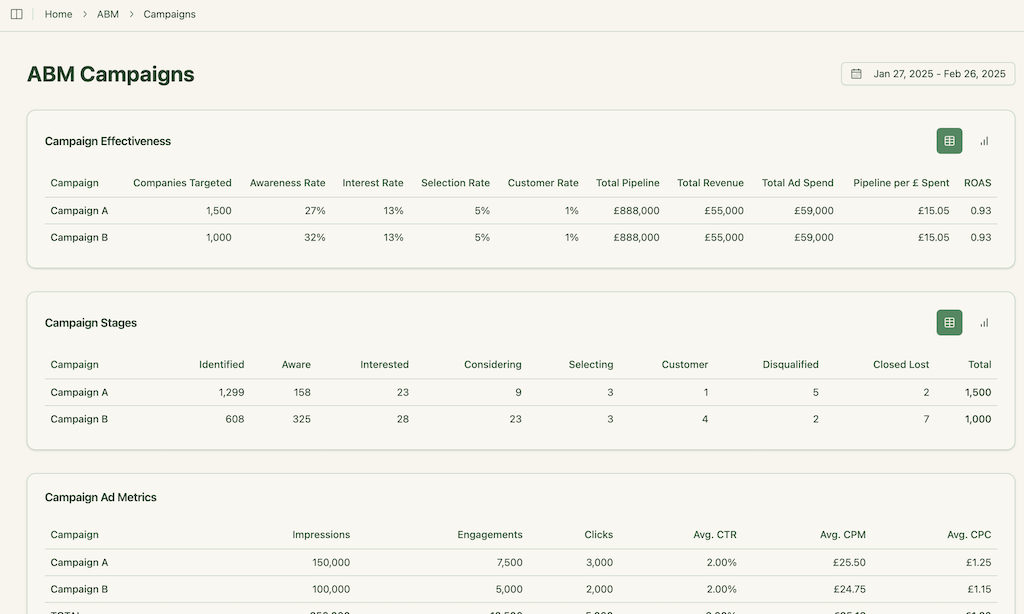
This gives you funnel visibility similar to larger suites, but powered by LinkedIn data.
ZenABM integrates bi-directionally with CRMs like HubSpot and adds Salesforce sync on higher tiers.
LinkedIn engagement data flows into the CRM as company-level properties:
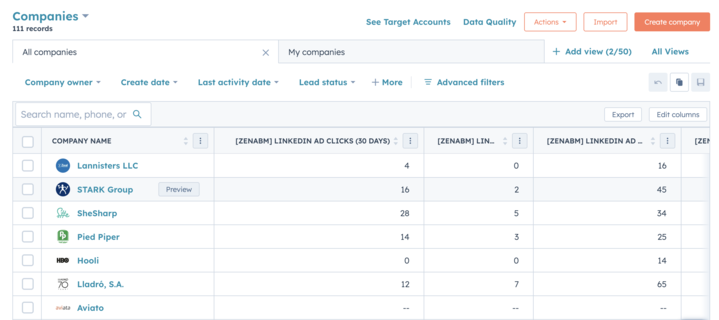
Once an account crosses your score threshold, ZenABM updates the stage to Interested and automatically assigns a BDR.
ZenABM lets you derive intent topics from LinkedIn campaigns by tagging campaigns by feature, use case, or offer.
ZenABM then shows which accounts engage with which themes.
This is clean, first-party intent from owned interactions.
You can push these topics into your CRM, so sales and marketing can tailor outreach to what each company has actually explored.
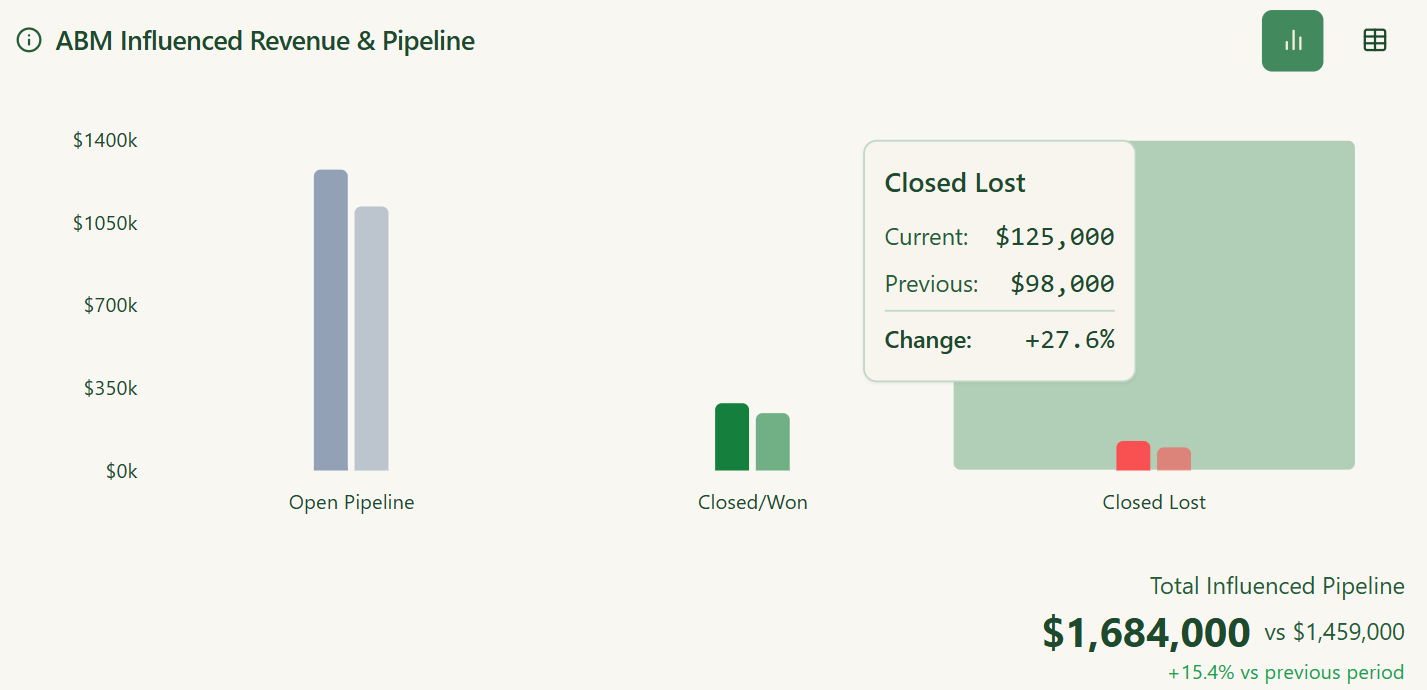
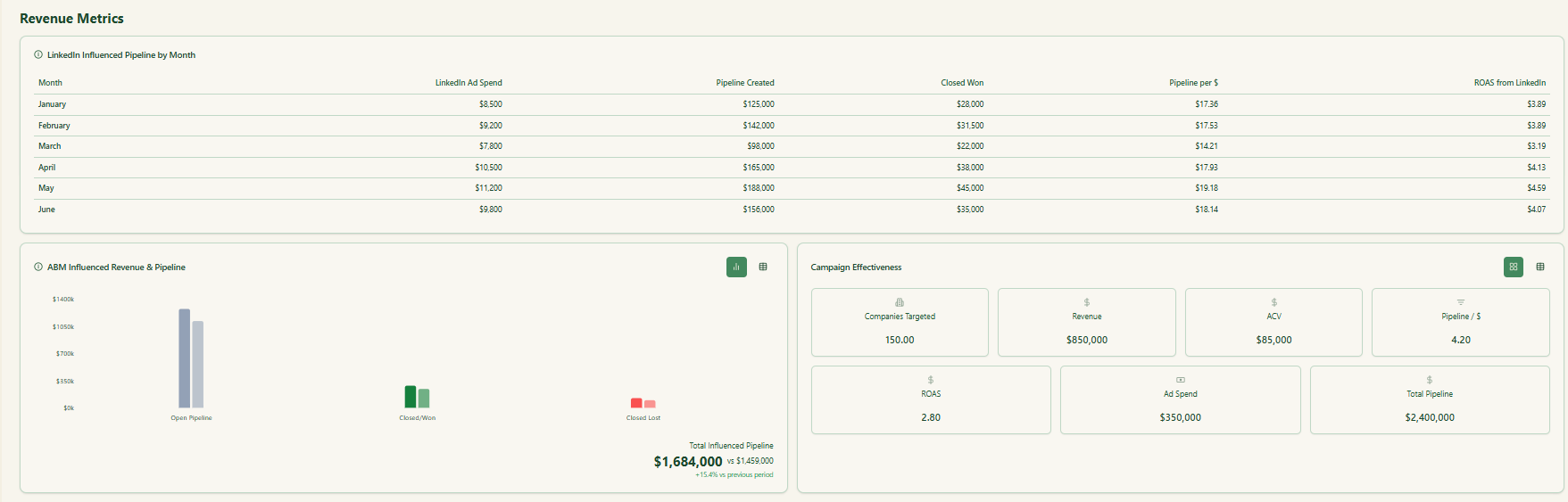
ZenABM ships with dashboards that connect LinkedIn ads to account engagement, stage movement, and revenue.
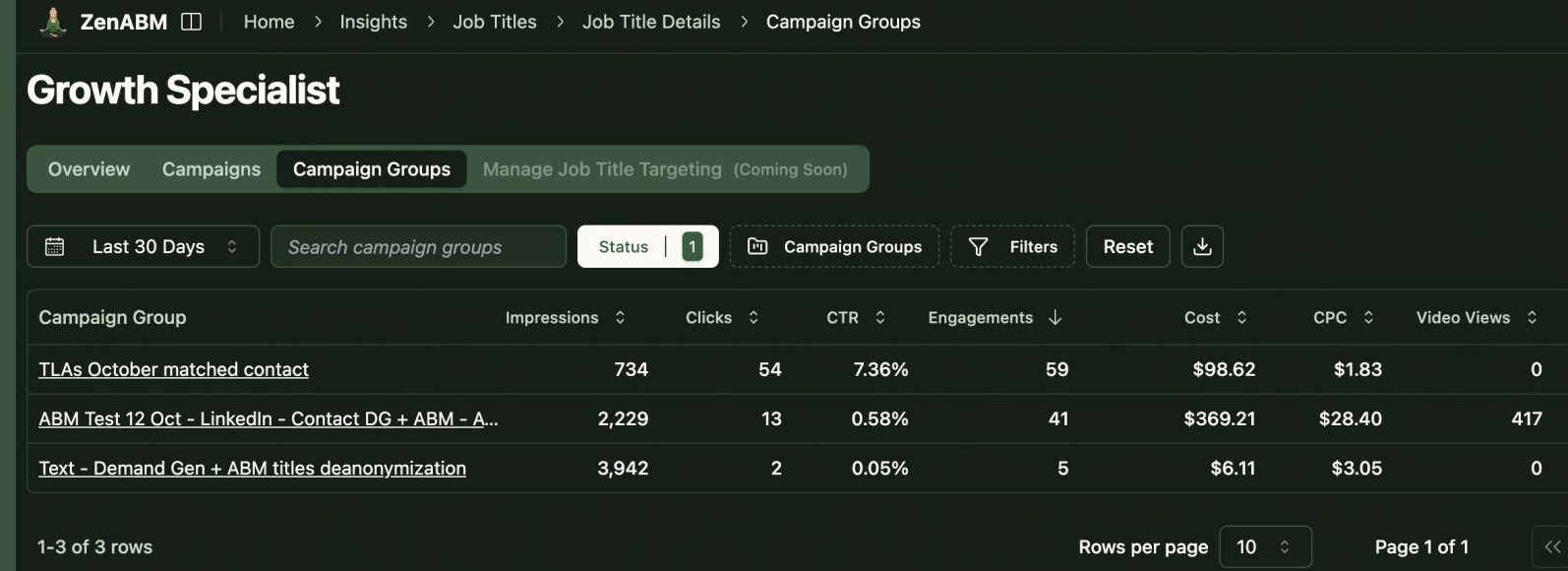
ZenABM shows which job titles engage with your creatives and gives dwell time and video funnel analytics.
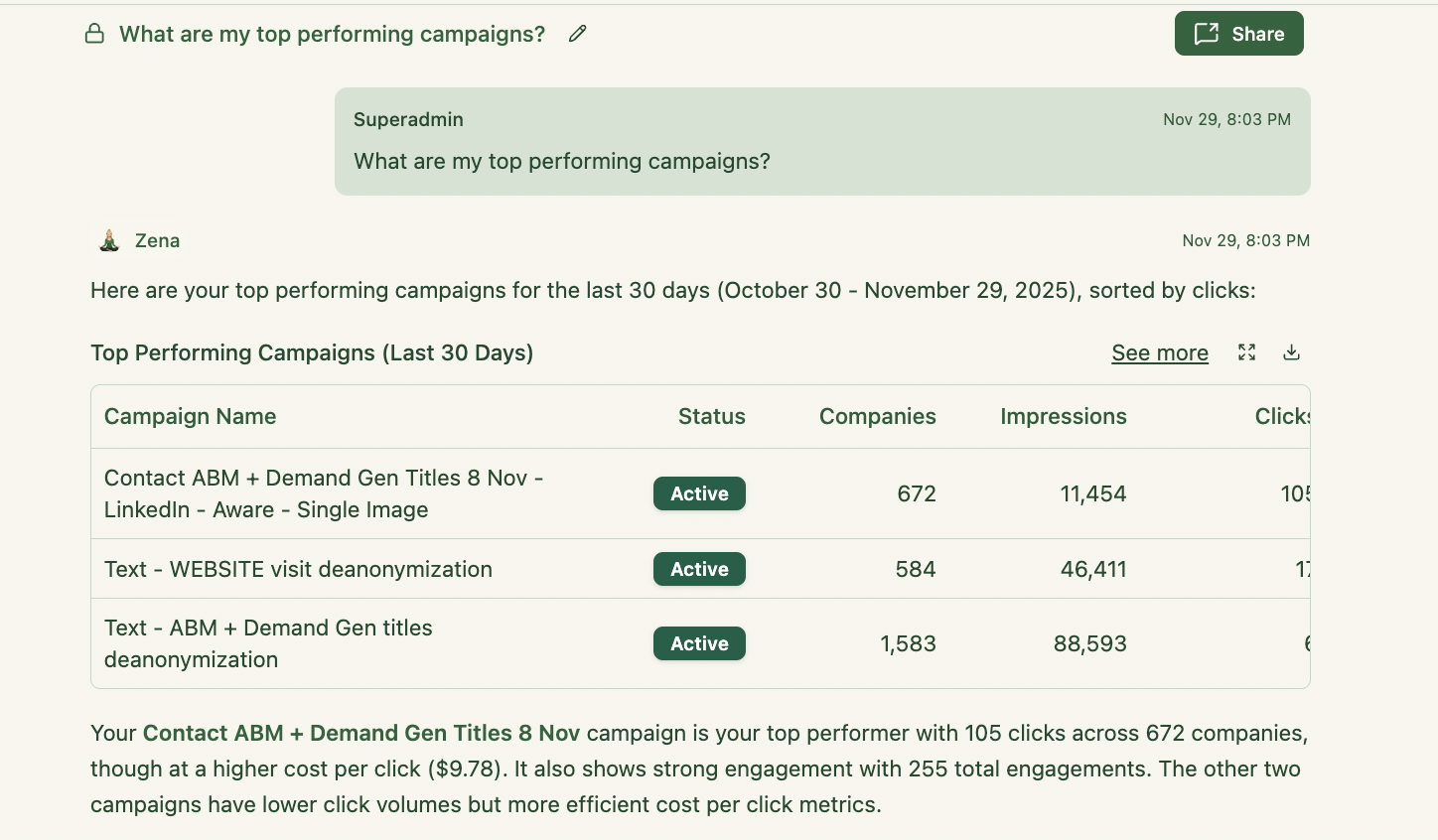
ZenABM provides its AI chatbot called Zena that basically answers all you want from ZenABM in natural language.
You can ask Zena open-ended questions like you would a smart analyst and get company-level answers about:
Under the hood, Zena combines OpenAI with a library of carefully designed prompts and endpoints to join ad engagement, spend and CRM deals so it can explain which campaigns drove pipeline, which accounts turned into opportunities, which formats perform best and which companies are high intent but untouched by sales.
Instead of exporting spreadsheets and stitching pivot tables, you get plain language insights, ready to drop into strategy reviews, weekly sales standups or executive updates.
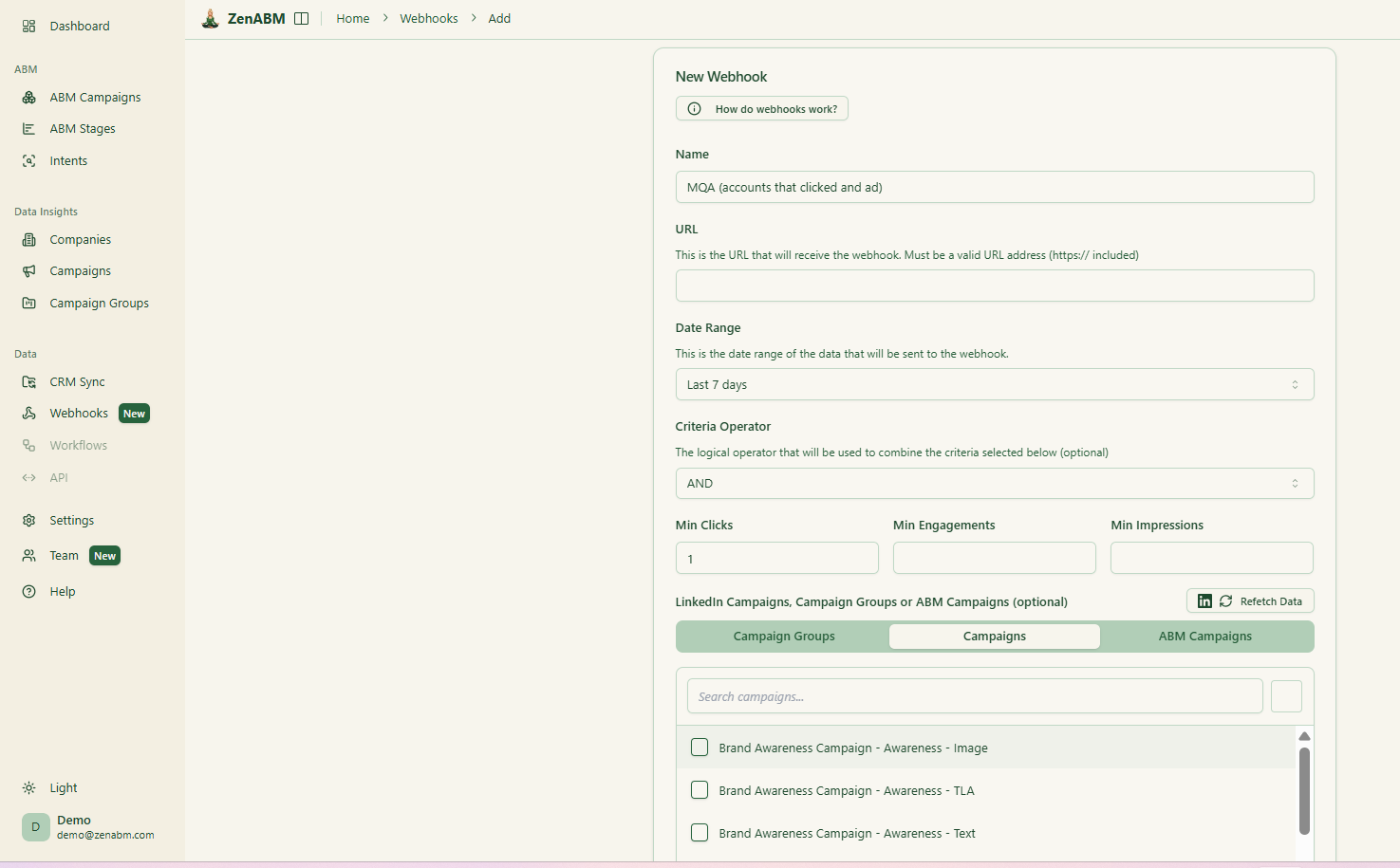
ZenABM’s custom webhooks let you push events into your stack, for example, Slack alerts, enrichment flows, or other ops automations.

Most tools treat each LinkedIn campaign separately. ZenABM lets you group several into one ABM campaign object so you can see performance across regions, personas, or creative clusters.
Instead of juggling fragmented reports in Campaign Manager, you see spend, pipeline, account movement, and ROAS for the entire initiative.
For agencies, ZenABM offers a multi-client workspace.
You can manage multiple ad accounts and clients in one environment, each with its own ABM strategy, dashboards, and reporting, instead of constantly switching accounts in Campaign Manager.
ZenABM pricing details:
HockeyStack is typically a fit when the GTM motion is multi-channel, reporting-heavy, and run with RevOps discipline, and the team has the budget and ownership to implement and maintain a revenue analytics platform.
If the goal is to unify touchpoints across ads, website, CRM, and offline activity into a single reporting and attribution layer, HockeyStack is designed for that depth.
That same depth comes with trade-offs: higher cost, longer time to value, and ongoing operational effort to keep the system clean and adopted.
If the ABM engine is primarily LinkedIn, and the practical requirement is:
ZenABM focuses on turning LinkedIn engagement into actionable account intelligence.
It captures first-party ad engagement directly from LinkedIn, converts it into intent, scores and stages accounts, syncs everything to your CRM, and shows pipeline impact out of the box, starting at $59 per month.
