

©2026 ZenABM - All Rights Reserved.

There is a really thin line between being everywhere your buyer is and making them feel surveilled or creeped out.
So, multi-channel, full-stack account-based marketing (where you coordinate LinkedIn ads, email, events, direct mail, and outbound into a cohesive account experience), which is the most effective approach for enterprise deals, can also be the easiest to get wrong.
See, when every touchpoint adds value, it feels like a well-timed, relevant presence.
But, when touchpoints are disconnected, irrelevant, and excessive, your campaign can feel like harassment.
This post covers Joana Petrova’s session at the ZenABM ABM Bootcamp 2026, where she shared her framework for running multi-channel ABM that surrounds target accounts without crossing the line into being creepy.
Though if you prefer watching, you can access the full session on YouTube here.
In case you’re short on time:
1. Full-stack ABM is powerful for enterprise deals, but it can cross into “creepy” when touchpoints feel disconnected, mistimed, or excessive.
2. Real full-stack ABM is coordinated, not “run 7 channels at once.” Same message, adapted per channel, timed to the account’s buying stage.
3. Joana’s recommended channel order:
4. The best personalization is stage-based, not “Hello [Company Name].” Wrong-stage messaging feels “off” (and sometimes creepy).
5. Sales + marketing alignment is non-negotiable: shared metrics like stage progression, pipeline influenced, and engagement by fit keep everyone operating on the same account list.
6. Practical anti-creep rules:
7. ZenABM supports coordination by turning first-party LinkedIn engagement into account timelines, stages, CRM properties, and automated BDR assignment so follow-up is timely and relevant (not random). It also provides pipeline dashboards, first-party qualitative intent, custom webhooks, impression-capping via company exclusion, job-title analytics, and AI chatbot Zena for natural language analytics. All this for just $59 per month!


Full-stack ABM is not just about running many channels simultaneously.
That is spray and pray with extra steps.
Full-stack ABM means coordinating multiple channels around a single account with the same message, adapted for the context of each channel, and timed to the account’s buying stage.
The key word is coordinated.
Example:

Joana recommends building your full-stack ABM program in a specific channel order or hierarchy, not all at once:
Start with LinkedIn paid because it generates signal data:
This data informs everything that comes after.
Running other channels before you have LinkedIn signal data might feel like flying blind.
Next comes email outbound triggered by LinkedIn signals.
Once accounts hit your Interested stage in LinkedIn, which is 3+ clicks, and high-intent page visits, trigger an email sequence personalized to the specific content they engaged with.
Email outbound to unengaged accounts (before LinkedIn has warmed them) turns out to have a really low conversion rate, so warming up is necessary.
Then comes LinkedIn outbound.
Here, sales team reaches out to engaged accounts on LinkedIn and the timing is critical.
The outreach must happen only after after the account has already seen your brand through ads multiple times.
A LinkedIn connection request from your BDR to an account that has seen your TLAs multiple times (about 8) converts significantly better than the same request sent cold.
The fourth layer is about more physical or in-person touchpoints like events (private dinners, webinars, conferences, etc.) and direct mail, and this layer is meant for accounts with the highest revenue potential.
Also, the messaging in the direct mail has to be personalized, thoughtful, but not silly like branded merchandise.
Note: These in-person engagements also work for mid-tier accounts that have engaged significantly but not responded to digital outreach.
Last, but not the least, layer is about customer proof and peer references.
See, when an account is in active evaluation, the most effective touchpoints are often peer references like customers who will talk to the prospect about their experience.
So, facilitate these introductions rather than continuing to send marketing materials.

Joana’s most important practical principle for avoiding the “being creepy” problem is personalization by account stage.
She has seen that it consistently outperforms personalization by account name.
Account name personalization (“Hello [Company Name], I wanted to share…”) is technically personalized but contextually irrelevant if the message is wrong for where the account is in their journey.
For instance, a late-stage account seeing your awareness-level content gets confused.
An awareness-stage account seeing your comparison page feels sold before they are ready.
Both feel wrong.
Maybe, not creepy exactly, but off.
Stage-based personalization works because it matches what the account actually needs right now:

A tool that can help: ZenABM scores engagement in real time and visualizes the full account timeline, so you can align messaging with buying stage instead of blasting the same message everywhere.


Full-stack ABM fails when sales and marketing are measuring different things and working different account lists.
In fact, any ABM motion fails if sales and marketing aren’t aligned.
I mean, isn’t ‘sales and marketing being aligned to pursue the same accounts’ the very definition of ABM?

The affect of sales and marketing being not aligned is just more severe for the full-stack kind of ABM.
Joana is direct about this: “You cannot run full-stack ABM if marketing is measuring impressions and sales is measuring meetings booked. They need to be measured on the same outcomes.”
Here are the shared metrics that can make full-stack ABM coordination possible:
A tool that can help: ZenABM pushes account stage data and engagement scores to HubSpot as company properties.


Then sales can filter their HubSpot view by “Accounts in Interested stage” and get a prioritized outreach list without any manual report from marketing.
In fact, ZenABM can automatically assign hot accounts to BDRs in your CRM:

This ensures sales and marketing alignment in your full-stack ABM motion is effortless
Joana’s rules for coordinating full-stack ABM without crossing into harassment:
Joana emphasizes that every touchpoint must add its own value.
For instance, If the email would not be worth reading on its own, do not send it just to create a touchpoint.
Touchpoints for the sake of frequency build resentment, not awareness.
Again, even valuable touchpoints must have a limit, especially for outbound ones.
Joana advises capping outbound touches to 3 per week for an account.
This frequency, ensures you are present.
Above it, you can get annoying.
Some more tips in this regard:

Note: LinkedIn ad impressions do not count toward the thrice-weekly-outbound limit, because they are ambient awareness, not active outreach
Full-stack ABM becomes creepy when touchpoints are disconnected, mistimed, and based on guesswork.
It works when every channel is coordinated around real engagement signals and account stage.
ZenABM helps you run full-stack ABM using first-party LinkedIn engagement as the coordination layer, so outreach feels timely and relevant, not random and excessive.

ZenABM connects directly to the official LinkedIn Ads API and captures engagement at the company level. This becomes your coordination layer for full-stack ABM.
Instead of guessing which accounts to email, call, or invite to an event, you act only on accounts that have already engaged with your LinkedIn ads.
That shift alone reduces the “cold intrusion” problem dramatically.
Full-stack ABM feels creepy when awareness-stage accounts receive late-stage messaging.
ZenABM scores engagement in real time and visualizes the full account timeline, so you can align messaging with buying stage instead of blasting the same message everywhere.
When LinkedIn engagement moves an account from Aware to Interested, that is when email outbound and BDR outreach should activate.
Not before.
ZenABM lets you define ABM stages such as Identified, Aware, Engaged, Interested, and Opportunity, and automatically moves accounts between them based on engagement and CRM data.
This is where coordination becomes operational instead of manual.


Once an account hits your “Interested” threshold, ZenABM can trigger CRM workflows and assign a BDR automatically.
No awkward cold connection requests. No premature outreach.
ZenABM lets you tag campaigns by feature, use case, or offer and map engagement back to specific accounts.
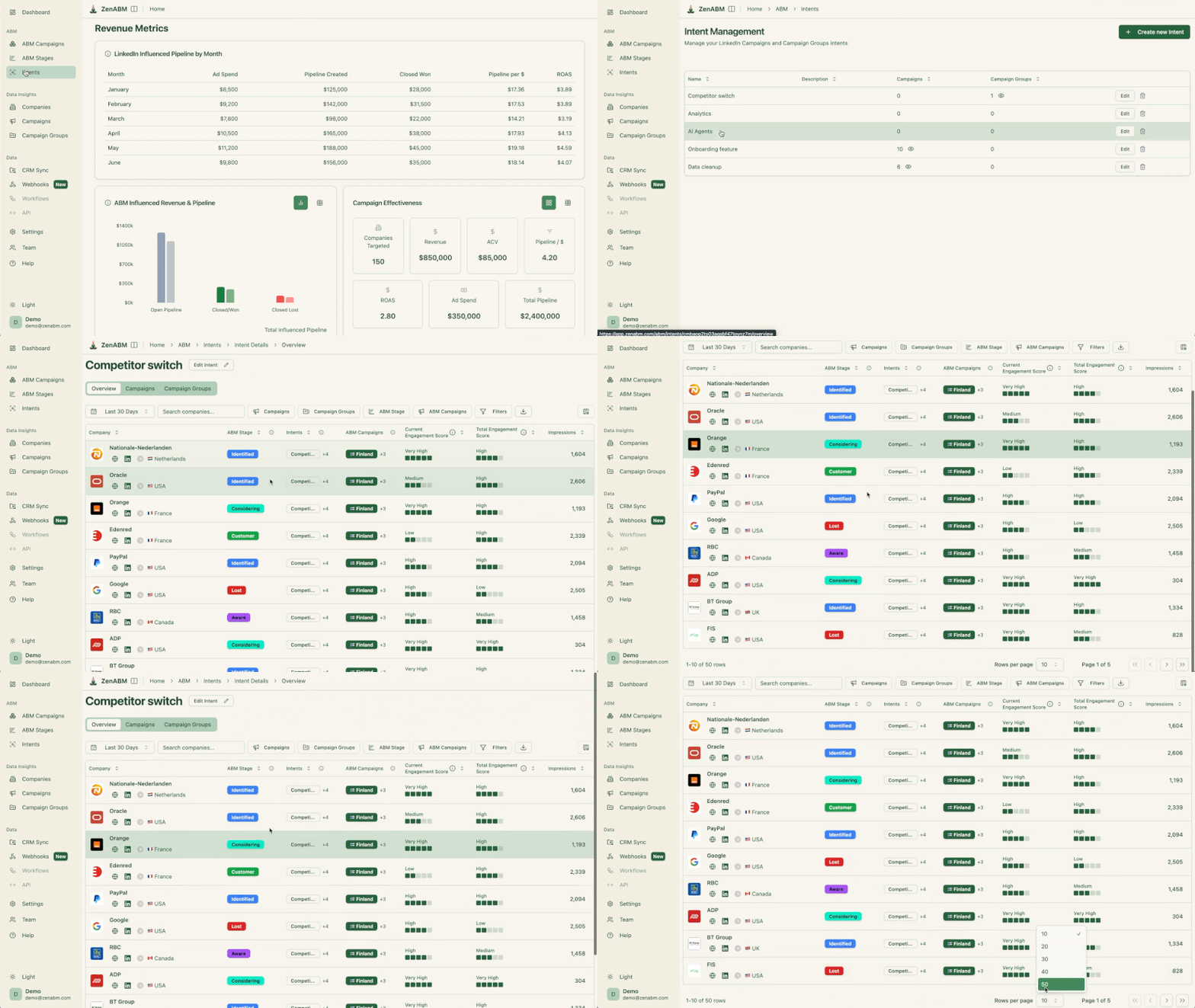

This means your outbound email can reference the exact topic the account engaged with, instead of sending a generic “just checking in” message.
That is coordination. Not creepiness.

You can also see which job titles engaged, helping sales tailor outreach naturally to the right stakeholders.
Full-stack ABM becomes overwhelming when a few large accounts absorb too many impressions.
ZenABM allows you to exclude companies that cross a defined impression threshold across one or multiple campaigns.
This keeps awareness ambient and balanced, rather than repetitive and intrusive.
ZenABM connects LinkedIn engagement, account stage progression, and revenue outcomes in one view.


Instead of treating LinkedIn ads, email outbound, and sales outreach as separate efforts, you evaluate them through shared account progression and pipeline impact.
Zena, ZenABM’s AI analyst, answers questions like:
That visibility is what allows you to coordinate channels intelligently instead of guessing and overwhelming accounts.

ZenABM’s custom webhooks push engagement and stage-change events into Slack, CRM workflows, or enrichment tools.

ABM Campaign Objects let you group multiple LinkedIn campaigns into one coordinated initiative so performance is measured holistically, not in fragmented dashboards.
In short: ZenABM gives you the signal layer, stage control, and routing logic required to run full-stack ABM that feels timely and relevant instead of aggressive and disconnected.
Full-stack ABM only feels “creepy” when it is powered by guesswork and executed like a volume game.
If you want to be everywhere your buyer is without triggering the surveillance vibe, follow Joana’s rule: earn the next touchpoint.
Start with LinkedIn paid to generate real engagement signals, then layer channels in sequence, only when the account’s behavior justifies it.
Personalize by stage, cap outbound at three touches per week, and make sure every message would be worth reading even if it was the only touch they got that month.
The other half is operational: stage movement must trigger action, not become a dashboard that nobody checks.
If your team keeps slipping into disconnected outreach, it is usually because the signal layer and routing layer are missing.
Tools like ZenABM fit cleanly here by turning first-party LinkedIn engagement into account timelines, stages, and CRM-ready triggers, so your “full-stack” motion stays coordinated and timely instead of noisy.
Give ZenABM a try for free now or book a demo to know more!
Also, feel free to contact me or Joana herself, if you have more questions 🙂
Full-stack ABM is a coordinated approach to reaching target accounts across multiple channels – LinkedIn paid advertising, email outbound, LinkedIn outbound, events, direct mail, and peer references – with consistent messaging timed to the account’s buying stage. The key distinction from single-channel ABM is coordination: all channels work from the same account list, signal data, and messaging framework.
Ensure every touchpoint adds independent value – not just frequency. Match message to channel context. Limit active outbound to 3 touches per week per account maximum. Personalize by buying stage rather than just by company name. Respect explicit opt-outs immediately. Use LinkedIn exclusions for competitors and existing customers.
Agree on shared metrics before launching: account stage progression and pipeline influenced. Use ZenABM to push engagement data to HubSpot so sales can self-serve their prioritized outreach list without waiting for weekly marketing reports. Run a joint weekly review of the top engaged accounts and agree on which touchpoints each team will own that week.
Email outbound, triggered by LinkedIn engagement signals – not cold email to your full target account list. Accounts that have already engaged with your LinkedIn ads convert at 3-5x the rate of cold-contacted accounts. Get the signal data from LinkedIn first, then layer email outbound on top of those signals. LinkedIn BDR outreach should follow the same sequence – after LinkedIn ad exposure, not before.
