



The disconnect between marketing campaigns and sales conversations is where most ABM pipelines go to die.
Marketing warms an account with 50+ ad impressions over three months, building familiarity, trust, and specific interest in your solution.
The BDR, seeing none of that data in their CRM, sends a generic cold email.
The prospect, who has been engaging with your content and already knows your brand, gets treated like a stranger.
This problem is not rare.
In Kamil Rextin’s (founder at 42 Agency) session at the ZenABM ABM Bootcamp 2026, he revealed that 47% of leads at one of his agency’s clients were never touched by sales at all. The campaign worked, but the system was broken.
Account-based sales is the practice of aligning sales reps with the same accounts that marketing is targeting, giving them visibility into engagement data, and timing their outreach based on signals rather than arbitrary cadences.
It is the sales counterpart to account-based marketing, and it is what fixes the broken Kamil was talking about.
Let’s dive deeper into it!

In case you want a quick rundown:
Before we get into the tactical workflow, it is worth understanding why the traditional handoff between marketing and sales is fundamentally broken for ABM, because the fix requires a different architecture, not just better communication.
In traditional demand gen, alignment is transactional: marketing generates MQLs and passes them to sales.
The handoff is a clean, defined moment, and each team’s accountability is clear on either side of it.
ABM has no clean handoff moment.
Marketing and sales are engaged with the same accounts simultaneously, from the first ad impression through the close, which means the old “throw leads over the wall” model does not just underperform; it actively sabotages the program.
The numbers paint a bleak picture of how common this problem is:
The Reddit community on r/sales and r/b2bmarketing is equally blunt about this.
Protected by anonymity on Reddit, some SDRs have even openly admitted to ignoring “ABM leads” from marketing when those leads arrive without context.
And I guess it is because, without engagement data attached, an “ABM lead” is indistinguishable from any other cold name on a list.
So, the fix is not motivational, but architectural: the engagement data has to flow into the CRM automatically, in real time, so sales can see it without asking for it.
In a well-orchestrated ABM program, three groups touch the account at different stages, and all three need the same data.
If any one of these layers is blind to what the others are doing, the account experiences a disjointed set of interactions rather than a coherent buying journey.
| Layer | Role | When They Engage | What Data They Need |
|---|---|---|---|
| Marketing | Warm accounts with ads, build awareness | Identified through Interested stages | Campaign performance, account progression, creative fatigue |
| BDRs/SDRs | Outbound to interested accounts | Interested stage (5+ clicks / 10+ engagements) | Which campaigns engaged, intent type, contact data |
| AEs | Run the deal, manage the buying committee | Considering through Selecting stages | Full engagement history, buying committee exposure, deal influence |
Two notable points regarding these layers:
The most damaging misalignment in most organizations is not between marketing and BDRs (that gap gets a lot of attention) but between marketing and AEs.
AEs see a deal in CRM with a “marketing” source tag, but they do not know which campaigns the account engaged with, which personas interacted, or what content resonated.
This means they walk into discovery calls with less context than the prospect has about your company, and that imbalance shapes the entire deal dynamic from the first conversation forward.
In an account-based sales model, BDRs are not lead qualifiers in the traditional sense.
They are the conversion layer between marketing awareness and sales pipeline, and their effectiveness depends almost entirely on whether they have access to the engagement signals that tell them which accounts are ready for outreach and what those accounts care about.
BDRs should focus 80% of their effort on Tier 1 accounts (the top 10 to 15% of the target list), where signal-based outreach achieves 15 to 30% response rates compared to 1 to 3% for cold spray-and-pray tactics.
That 10x improvement in response rate is the clearest proof that account-based sales works, but only when the BDR has the engagement data to know which accounts qualify as Tier 1 right now.
The mechanism that makes account-based sales work is pushing marketing engagement data into the CRM, where sales can see and act on it without asking for reports, waiting for weekly syncs, or manually reviewing dashboards.
ZenABM handles this by pushing LinkedIn ad engagement data into HubSpot or Salesforce as company properties.
What data gets pushed to the CRM via ZenABM:
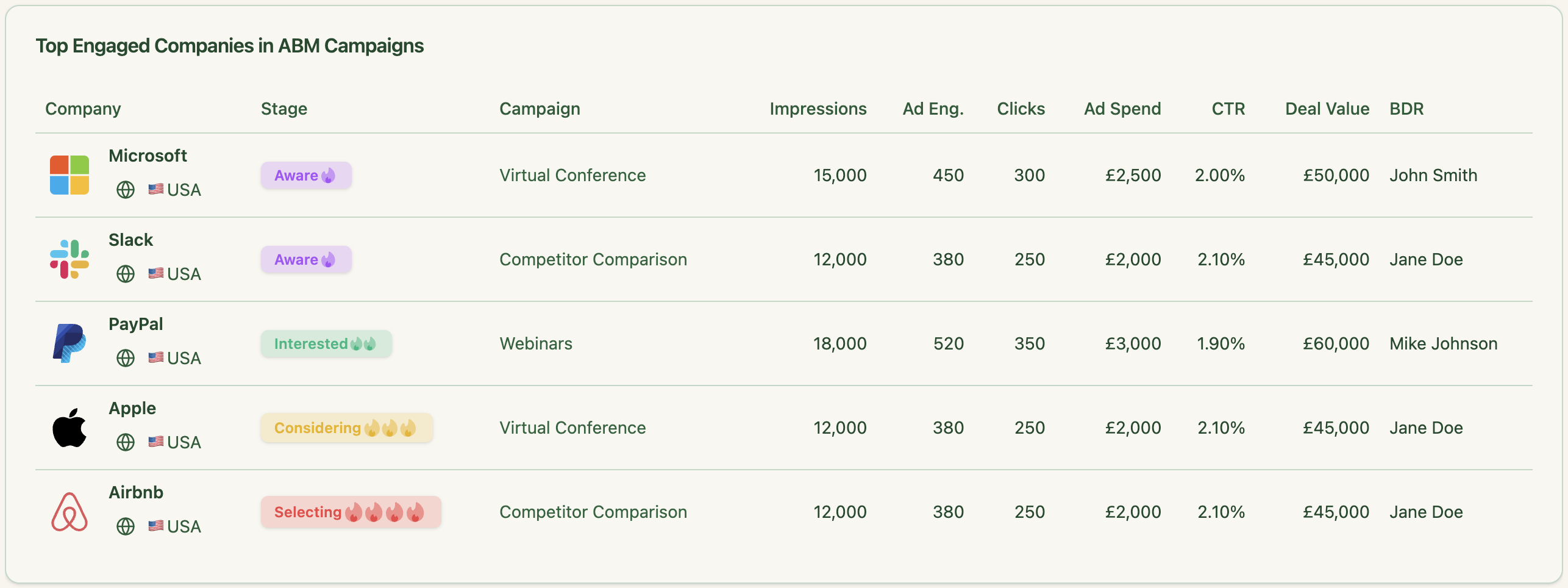
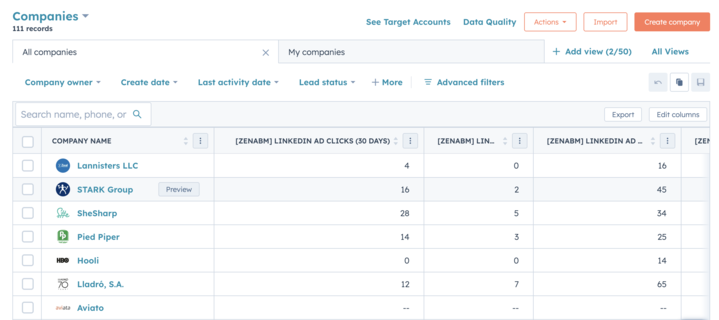
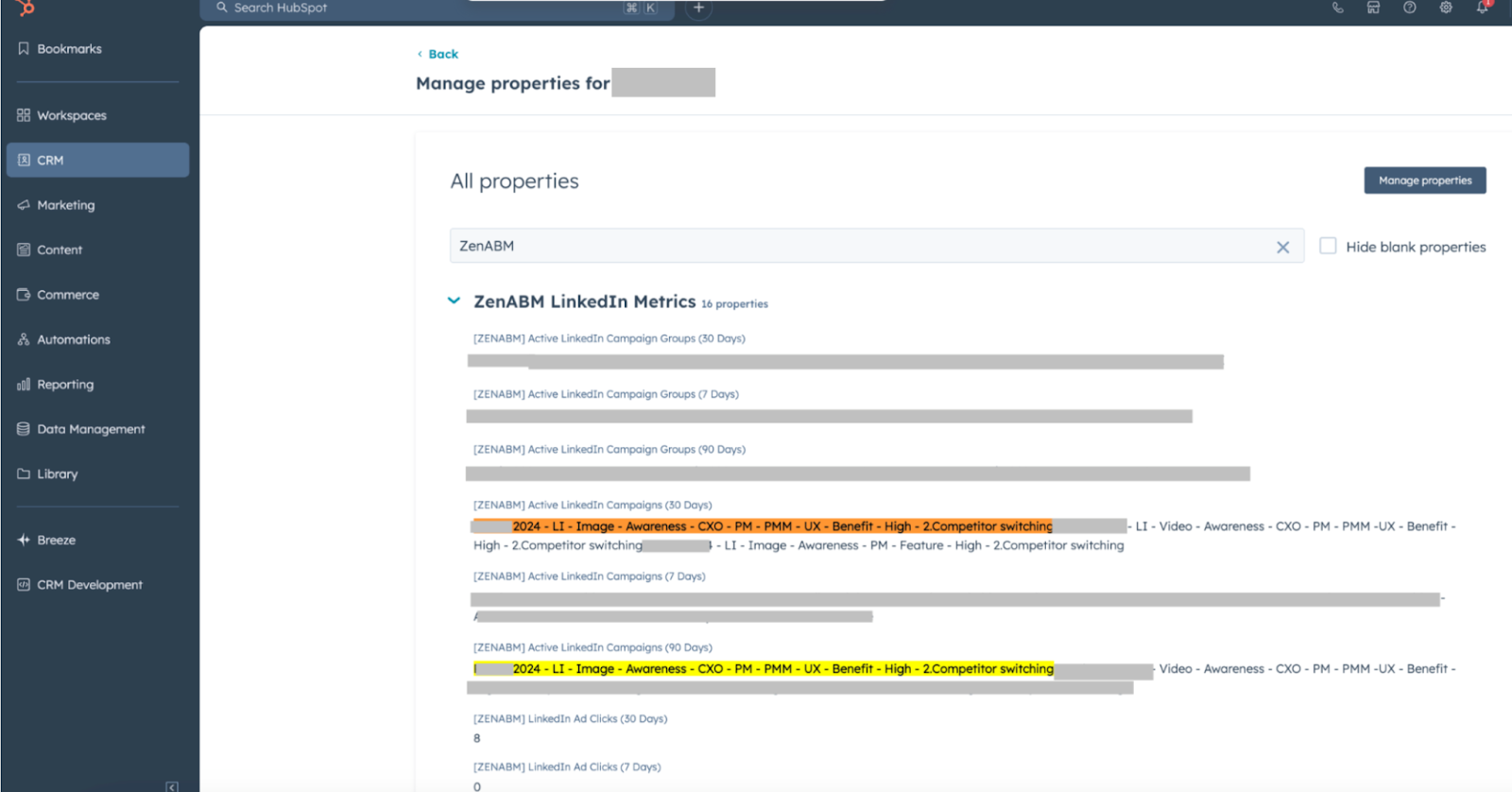
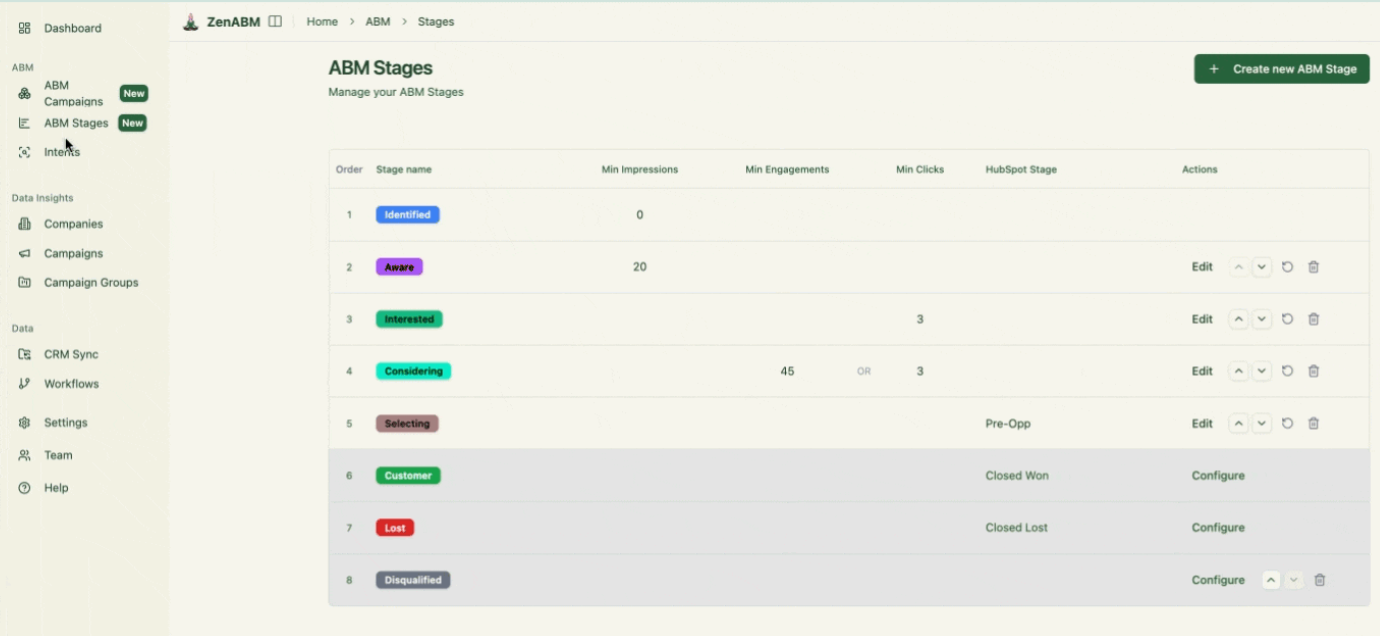

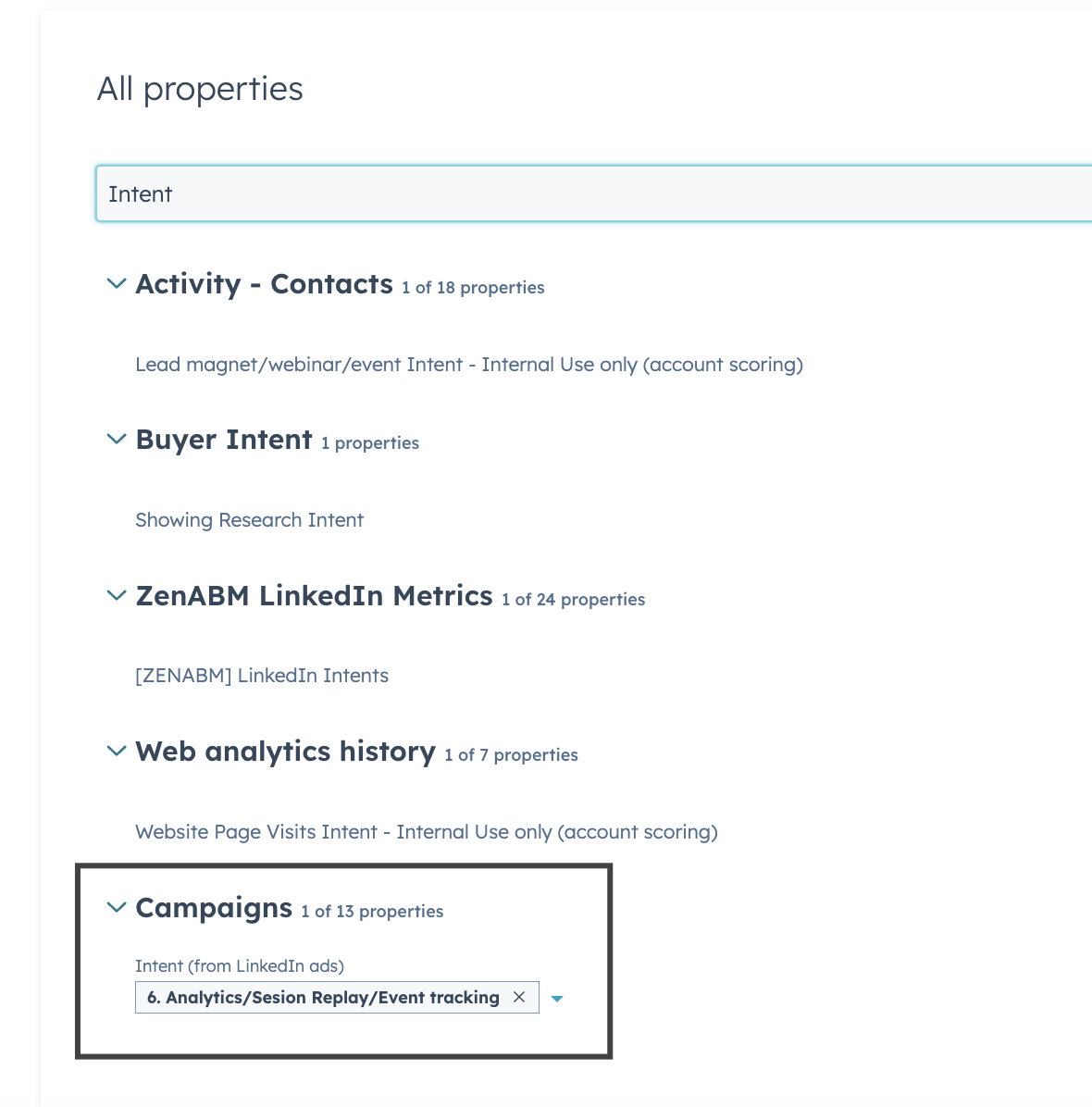

What this looks like for each rep:
When a BDR opens a company record, they see: “This account has received 73 LinkedIn ad impressions in the last 30 days, clicked 6 times, engaged with the ‘competitor switching’ campaign, and is currently in the ‘Interested’ stage.”
That single view tells them when to reach out (now, because the account just crossed the threshold), what to say (lead with competitive differentiation, not product education), and how warm the account is (6 clicks in 30 days is well above the Interested threshold).
In fact, ZenABM also allows you to automate BDR assignment – as soon as an account hits the “interested” stage, ZenABM assigns that account to a BDR in your CRM.
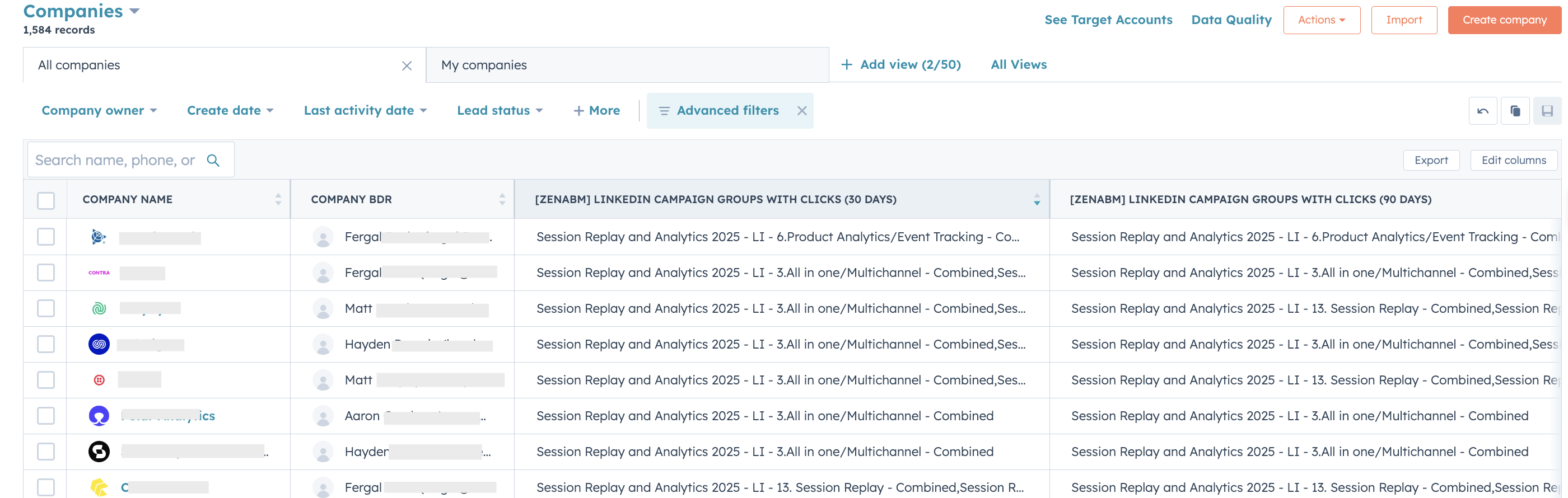
When an AE takes over the deal, they see the same data plus the full timeline: when the account first saw an ad, when engagement accelerated, which content topics drove the most interaction, and which job titles within the account engaged.
This context is gold for discovery calls and proposal positioning, because the AE walks in knowing what the prospect has been researching rather than starting from scratch.
And if your sales team has access to your ZenABM dashboard and they are not just limited to the CRM, they get to see the entire multi-channel engagement journey of each account:

The traditional ABM handoff creates a 4 to 7 day lag between marketing detecting intent and sales taking action.
Marketing sees the signal, manually exports data, updates the CRM in 1 to 2 days, and the BDR notices and acts on day 4 or later.
By that point, the buying window may have closed, or a competitor may have reached the account first.
Account-based sales requires same-day signal-to-action.
ZenABM, as discussed before, helps with that speed: when an account crosses an engagement threshold in ZenABM, the stage update pushes to the CRM immediately, and assigns the account to a BDR in your CRM.
Making engagement data useful for sales requires specific CRM configuration, because raw data dumped into company records without structure is just noise.
Here is what I recommend setting up in HubSpot (Salesforce works similarly):

Configure these company-properties in your CRM:
Dashboards to set up:


Some automations you must set-up:
When a prospect sees one message in an ad and hears a completely different pitch on a cold call, the outreach feels random, because it is.
The CRM configuration exists to prevent this by making the campaign content visible to the rep before they write a single email.
If the account engaged with competitor switching content, the BDR leads with competitive differentiation.
If they engaged with product analytics content, the BDR leads with analytics use cases.
This matching is what turns account-based sales from a concept into a system.
ZenABM, as we discussed above, provides various types of CRM syncs to handle this (BDR assignment in your CRM, LinkedIn ads engagement data pushed into CRM, qualitative intent pushed into CRM, etc.).

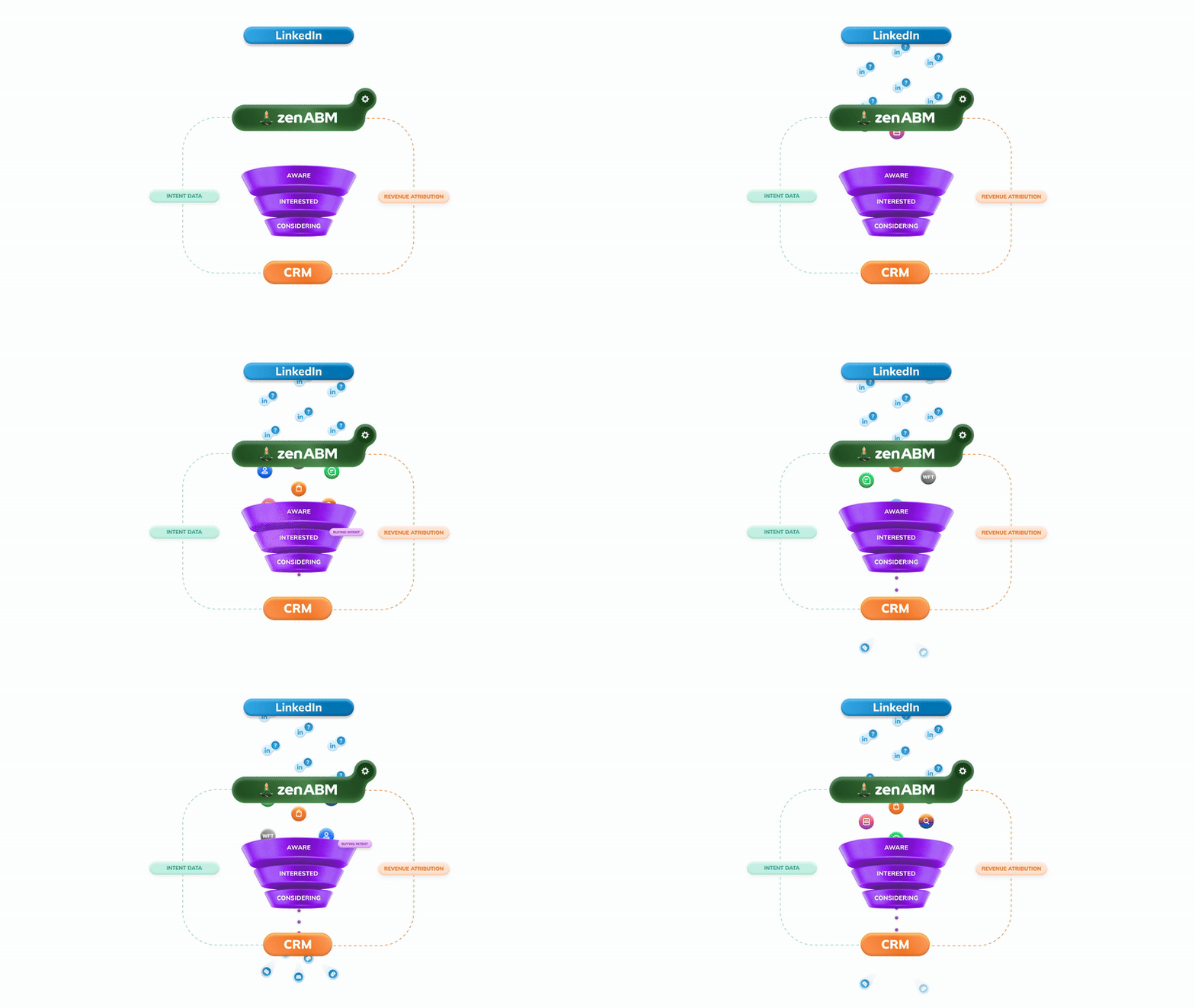
BDRs use engagement data to time outreach.
AEs use it differently.
They use it to understand the buying committee, position against competitors, and navigate the deal with context that would otherwise take weeks of discovery to uncover.
Before a discovery call, the AE checks the company’s engagement timeline in the CRM or in a tool like ZenABM.

They can see which campaigns the account engaged with most heavily, which tells them what problem the account is trying to solve.
If the account spent most of their engagement on “competitor switching” content, the AE knows to lead with competitive differentiation, not product education.
If they engaged heavily with “enterprise security” content, the AE knows security is likely a buying criterion and can prepare accordingly.
This is not a marginal advantage.
An AE who walks into a discovery call already knowing the account’s primary interest area can skip 10 to 15 minutes of exploratory questioning and get straight to the conversation the prospect actually wants to have, which shortens the sales cycle and builds immediate credibility.
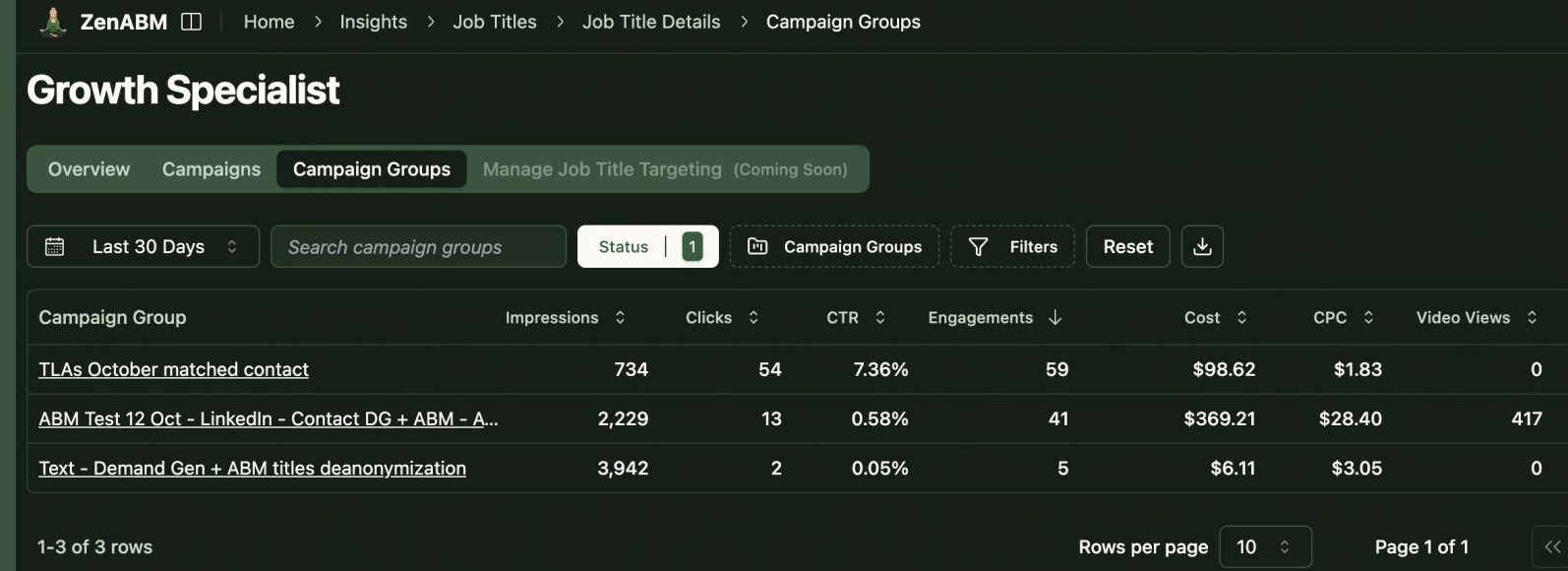
ZenABM shows which job titles at a company clicked LinkedIn ads, and the audience insights break down engagement by persona.
This gives the AE a partial buying committee map before the first call: they know which roles are already aware of the solution, which personas engaged most heavily, and which team members might need additional attention.
This matters because B2B buying decisions involve 6 to 10 people on average, and in larger deals, that number can reach 15 to 25, say a peer community survey by Gartner and experts like Debjit Sen (Founder at Engrow).

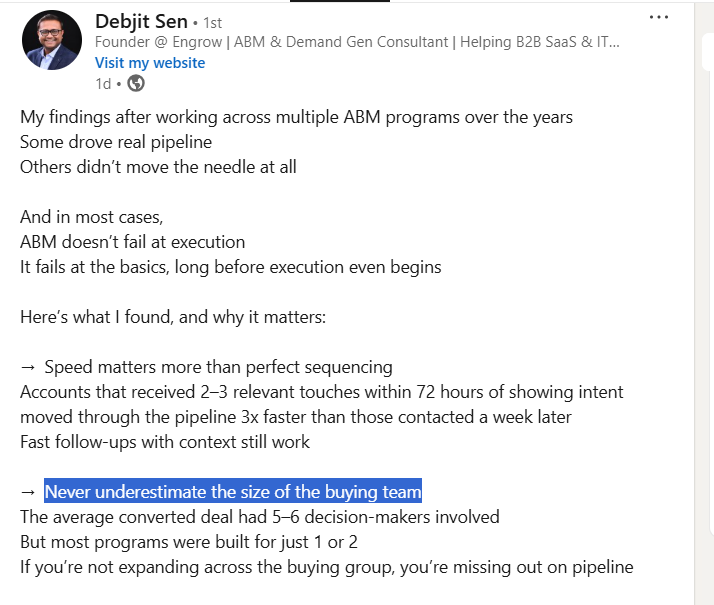
An AE who can see that the VP of Engineering and two senior developers engaged with technical content, but no one from procurement or finance did, knows exactly where to focus their multi-threading efforts.
Marketing does not stop running ads when a deal enters pipeline.
In an account-based sales model, marketing continues serving WARM campaign ads to the buying committee during evaluation, which reinforces the value proposition, addresses objections through content, and keeps the brand top-of-mind during internal discussions the AE cannot attend.
As Philip Ilic, in his LinkedIn post, described: “Warming up your prospects with thought leader ads before doing outbound is super powerful. Aligning your outbound with your LinkedIn ads has never been more important.”

This applies equally to the AE deal cycle: accounts that continue seeing ads during evaluation close at higher rates than those where marketing went silent after the opportunity was created, because the buying committee continues to see reinforcing content throughout their internal decision-making process.
Multi-channel research supports this: prospects who receive touches across both marketing and sales channels move down the pipeline 234% faster than those with sales outreach alone.
Here is how the full workflow runs from first impression to closed deal, with each step building on the one before it:
COLD campaigns build awareness through Thought Leader Ads, educational content, and social proof.
ZenABM tracks company-level engagement and moves accounts through stages automatically.
The median impressions before a company opens a deal in our data is 58, which means accounts typically need sustained exposure before they are ready for sales contact.
ZenABM pushes the stage update and intent data to HubSpot or Salesforce.
The BDR receives a Slack notification within minutes.
The key here is that the system does this automatically, without anyone manually reviewing dashboards or exporting spreadsheets.

The BDR references the intent signal in their first touch, using the campaign name to determine what the account cares about or simply look for the qualitative intent in ZenABM.
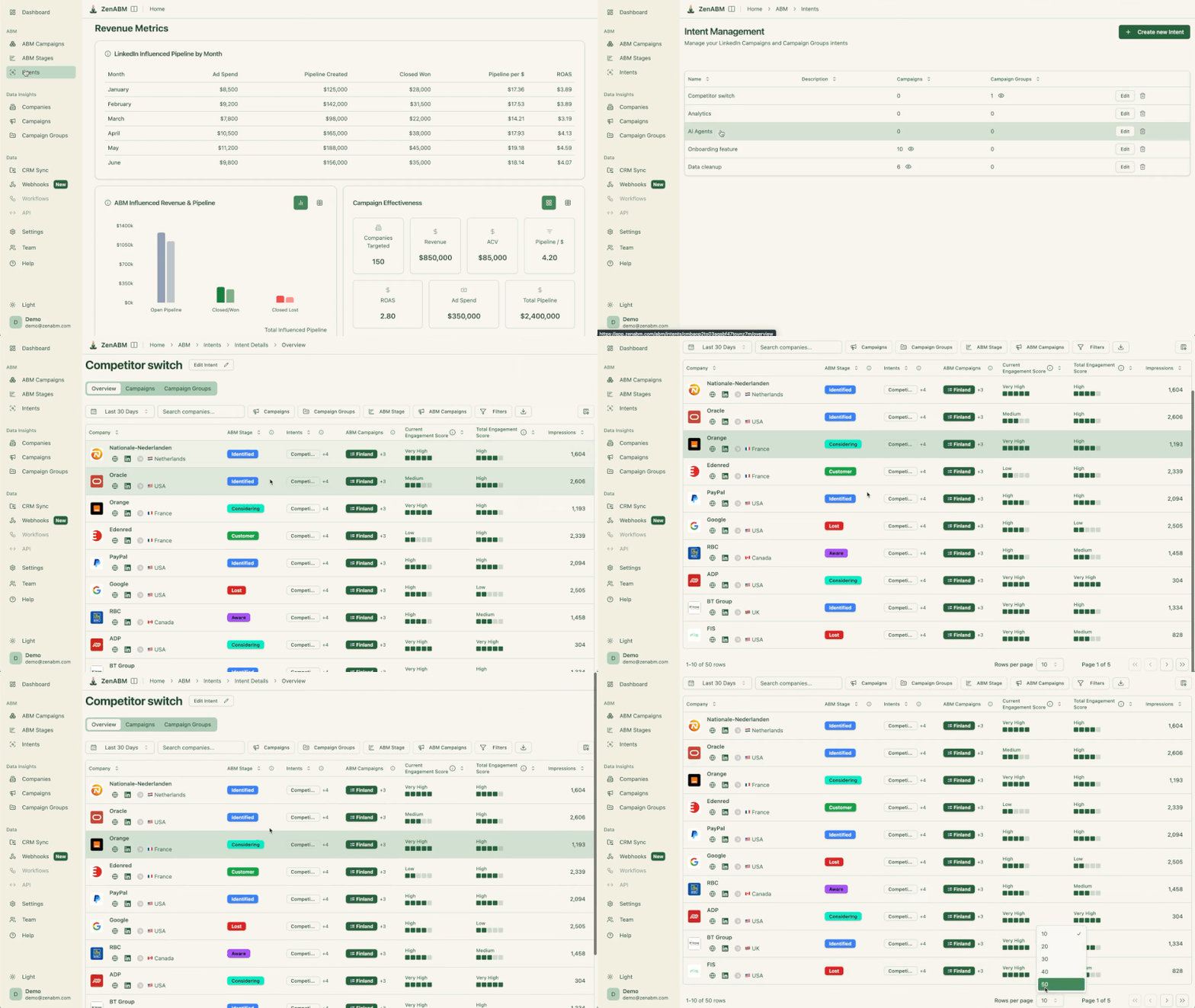
Multi-channel outreach follows: email (SmartLead or Instantly) plus LinkedIn (HeyReach or Expandi).
The messaging matches the campaign content the account engaged with, not a generic template.
The BDR hands the opportunity to the AE with full engagement history visible in CRM: which campaigns drove engagement, how many impressions and clicks accumulated, what intent topics surfaced, and when engagement peaked.
The AE does not start from scratch; they start with months of accumulated context.
The AE knows the account’s interest areas, which team members have engaged, the competitive angle (if they engaged with competitor content), and how long the account has been warming up.
This context shapes the discovery questions, the demo flow, and the proposal positioning.
WARM campaign ads continue serving the buying committee: product comparison content, case studies from similar companies, ROI data, and implementation guides.
These ads address objections the AE may not be able to tackle in meetings because they target committee members the AE may never speak with directly.
Full attribution is available: which campaigns contributed, how many touchpoints occurred before the first meeting, total engagement timeline, and pipeline per dollar spent.
This data feeds back into the next cycle, improving targeting, creative, and budget allocation.
The key difference from traditional sales: the rep never starts cold.
By the time they engage, the account has been warmed by 50+ ad impressions, has shown specific intent, and the rep knows what matters to them.
This is what account-based sales produces: shorter cycles, higher win rates, and better positioning from day one.
These mistakes can sabotage your account-based sales motion:
This is the single most common failure mode, and Reddit’s r/sales community is full of BDRs admitting they check their ABM platform “once a day to keep management off their backs, then go back to LinkedIn.”
The fix is architectural, not motivational: engagement data must push automatically into the CRM as company properties that are visible in the rep’s daily workflow, not buried in a separate platform that requires a separate login.
If there is no agreed definition of when an account crosses from marketing territory to sales territory, you get one of two failure modes: sales calls on accounts too early (low engagement, low conversion, sales loses faith in the program) or marketing holds accounts too long (high-intent accounts sit without a sales call and momentum is lost).
Define the threshold explicitly: for example, 5+ clicks in 30 days plus at least one high-intent page visit. When an account crosses that threshold, the alert fires and the BDR has 24 hours to act.
Many ABM programs treat opportunity creation as the finish line for marketing.
In reality, the buying committee continues evaluating during the deal cycle, and the members the AE never meets are forming opinions based on whatever content they can find.
Continuing to serve WARM ads during evaluation keeps your messaging in front of the full committee, not just the champion who is already on your side.
If marketing measures campaign engagement and sales measures deal velocity, there is no shared language for evaluating whether the program is working.
The fix: measure account-stage progression as the primary metric that both teams own.
These are metrics that marketing influences through ads and sales influences through outreach, and both teams can rally around them because they directly predict the pipeline.
When the prospect sees a TLA about onboarding analytics and then receives a cold email about your full product suite, the outreach feels random.
The intent data in the CRM exists specifically to prevent this: if the account engaged with onboarding analytics campaigns, the BDR leads with onboarding analytics.
This matching between ad content and outreach messaging is what makes account-based sales feel orchestrated rather than coincidental.
Account-based sales is not a philosophy or a mindset shift.
It is an architecture: engagement data flows from LinkedIn ads into the CRM as company properties, stage thresholds trigger automated alerts and BDR assignments, intent signals tell reps what to say before they write a single email, and marketing continues supporting the buying committee throughout the entire deal cycle rather than going dark after the opportunity is created.
The difference between an ABM program that generates pipeline and one that generates frustration almost always comes down to whether sales can see what marketing has been doing.
When they can, BDRs reach out at the right moment with the right message and AEs walk into discovery calls already knowing what matters to the account.
When they cannot, every sales conversation starts from zero, no matter how many impressions marketing delivered.
ZenABM is the layer that makes this architecture work: it tracks company-level LinkedIn ad engagement, assigns ABM stages and intent signals automatically, pushes everything into HubSpot or Salesforce as actionable company properties, and auto-assigns accounts to BDRs the moment they cross your engagement threshold.
Starting at $59 per month with a 37-day free trial, you can have the full account-based sales data flow running before your next pipeline review meeting. Try ZenABM free for 37 days and give your sales team the engagement context they need to stop starting cold.
Some common questions about account-based sales and their answers:
Account-based sales aligns sales reps with the same target accounts that marketing is warming through ABM campaigns. Reps use engagement data (which accounts are interacting with ads, which topics they care about, how engaged they are relative to other accounts) to time outreach, personalize conversations, and navigate deals with full context. It is the sales counterpart to account-based marketing, and without it, ABM is essentially an expensive awareness program with no conversion mechanism.
ZenABM pushes LinkedIn ad engagement data (impressions, clicks, engagements, ABM stage, intent signals) into HubSpot or Salesforce as company properties. Reps see this data directly in the CRM company record without needing to log into a separate platform. Configure filtered views so BDRs see “Interested” accounts sorted by engagement score and AEs see active deals with engagement context alongside deal stage information.
BDRs should start outreach when accounts reach the “Interested” stage (5+ clicks or 10+ engagements in 30 days, plus at least one high-intent page visit). Reaching out earlier wastes effort on accounts that have not shown enough engagement to be receptive, and reaching out later risks losing the buying window to a competitor. AEs take over when a meeting is booked, armed with the full engagement timeline and intent data from the BDR handover. See the account-based sales development guide for the complete BDR workflow.
Yes, and this is one of the most underappreciated elements of account-based sales. Continuing WARM campaign ads to the buying committee during evaluation reinforces your value proposition and addresses objections through content that reaches committee members the AE may never speak with directly. Research shows that prospects who receive touches across both marketing and sales channels move down the pipeline 234% faster than those with sales outreach alone. Marketing does not stop at opportunity creation in an account-based model; it supports the entire deal lifecycle.
At minimum: LinkedIn Campaign Manager for running ads, ZenABM ($59 per month) for account-level engagement tracking, intent signals, ABM stage scoring, and CRM sync, HubSpot or Salesforce as the CRM where all data converges, and a Slack integration for real-time alerts. For automated outbound once accounts hit the Interested threshold: SmartLead or Instantly for email sequences, HeyReach or Expandi for LinkedIn outreach, and Clay for contact enrichment. The ZenABM-to-CRM push is the critical integration that makes all other tools in the stack actionable, because without account-level engagement data flowing into the CRM, everything downstream operates blind.
