



Linklo is a LinkedIn Ads campaign automation platform.
It sits on top of LinkedIn Campaign Manager and adds operational controls that Campaign Manager does not provide, most notably hour-based scheduling (dayparting), budget pacing safeguards, and rule-based controls to manage how ads are distributed across target companies.
In ABM terms, Linklo is best understood as a LinkedIn execution and delivery control layer, not a full ABM suite.
This analysis explains what is Linklo, what it actually does, what it does not do, and how it compares to ZenABM (a first-party, LinkedIn-focused ABM analytics and activation platform).

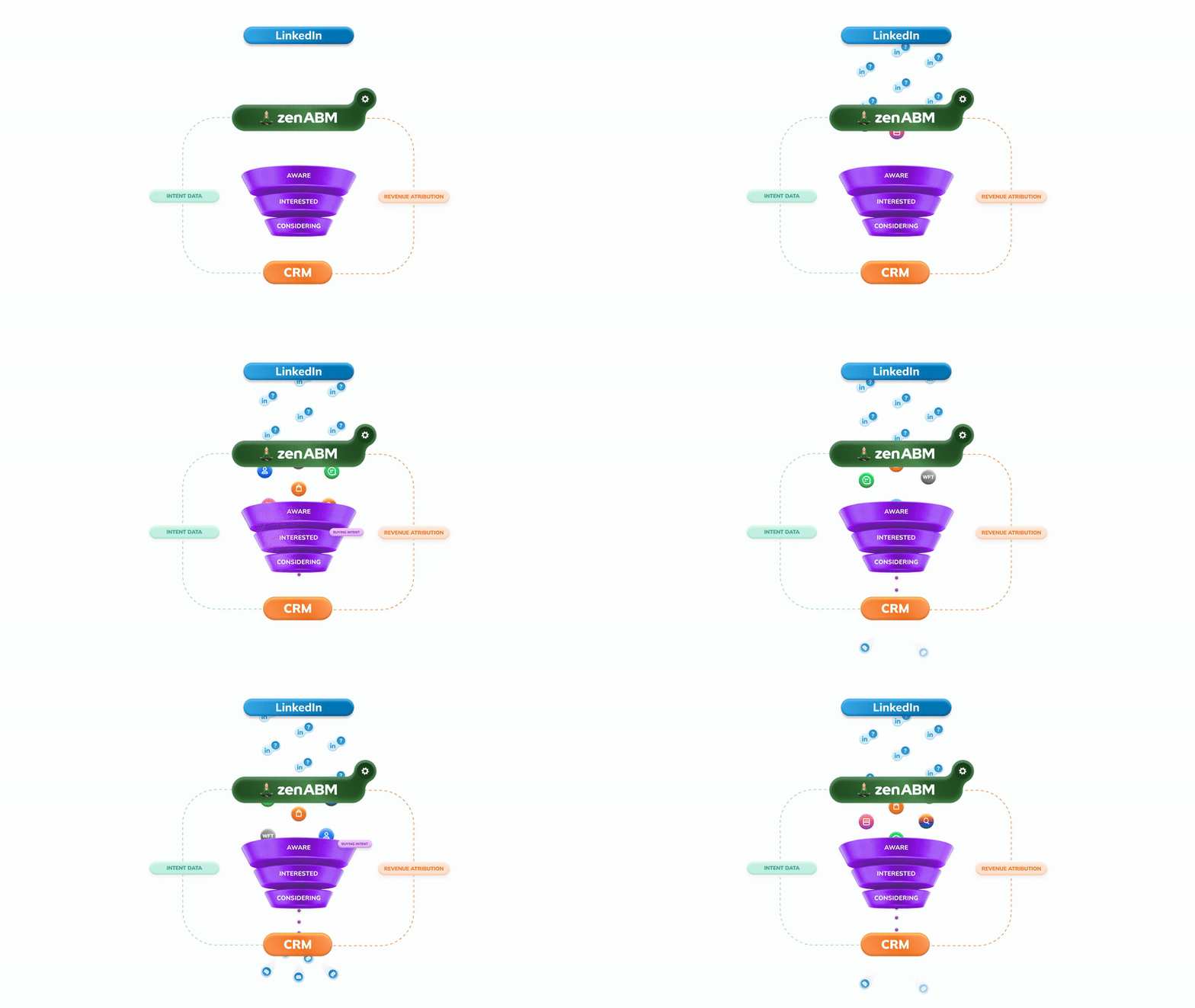
In case you want it short:

Linklo is built specifically for LinkedIn Ads.
It connects to your LinkedIn Ads account and aims to reduce manual campaign operations while adding controls that Campaign Manager does not natively offer.
In practical terms, Linklo is an “operations and guardrails” layer for LinkedIn advertising, particularly relevant when campaigns run across multiple time zones, multiple campaigns, or a target-account-driven ABM setup.
Its core offerings:
Linklo’s most direct value is automated scheduling for LinkedIn campaigns.
LinkedIn’s native platform allows you to set campaign start and end dates, but it does not provide the ability to run ads only during specific hours of the day.
Linklo addresses that gap by letting teams schedule ads around business hours or historically higher-performing engagement windows (for example, weekdays during working hours, rather than overnight).
This is primarily an efficiency play: concentrate spend into the windows when the target audience is most likely to engage, and reduce wasted delivery when intent is typically lower.
Linklo provides a feature called Company Flows, designed to control how impressions are distributed across companies.
The ABM problem it targets is common: LinkedIn delivery can concentrate impressions into a subset of accounts, while many other target accounts receive minimal exposure.
Company Flows aims to correct that with rule-based controls, for example:
This is still LinkedIn execution logic. It does not coordinate sequencing across email, website, outbound, or other channels.
Linklo is not an intent data provider in the way platforms like Bombora-style networks or broad ABM suites position themselves.
Its intent-adjacent value is primarily operational: identifying high-performing time windows (via timing patterns and reporting), then applying schedules and rules to concentrate delivery into those windows.
This is useful for spend efficiency and campaign management, but it is different from account-level intent interpretation tied to messaging themes, buying stage, or pipeline outcomes.
Pro Tip: “Timing intelligence” is not the same as buyer intent. Timing can indicate when an audience is more likely to click or submit a form, but it does not explain what themes, problems, or product areas a buying committee is responding to. ZenABM focuses on first-party company-level intent derived from your own LinkedIn ad engagements, showing which accounts engaged with which themes, how interest shifts over time, and how that aligns with ABM stages and CRM context.
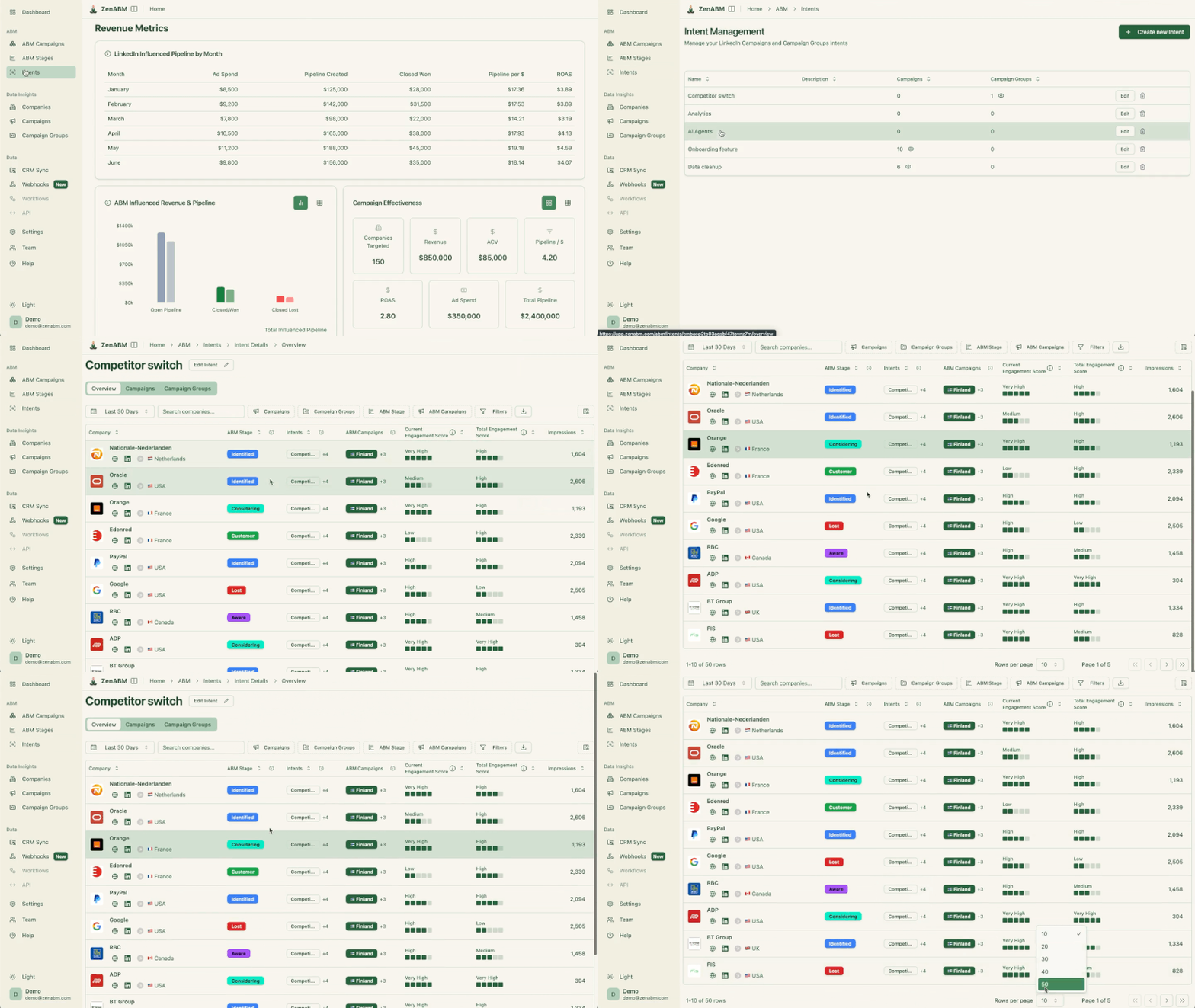
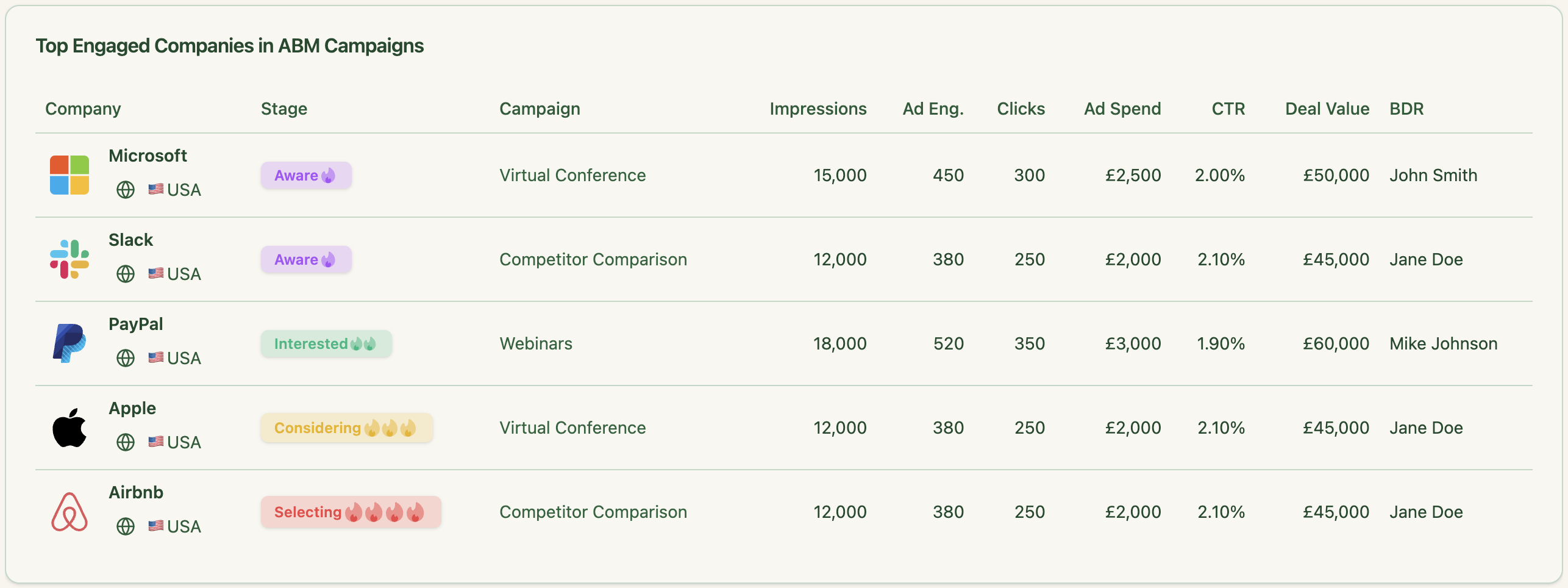
Userpilot, using ZenABM, built their whole ABM campaign structure around this first-party company-buyer’s intent obtained from LinkedIn ads instead of third-party tools:

Linklo’s public feature positioning is centered on LinkedIn execution controls (scheduling, budget guardrails, A/B testing, and company exposure logic).
It does not publicly position itself as a product that pushes account-level engagement insights into a CRM or provides bi-directional sync with HubSpot or Salesforce.
In practice, leads still flow through your existing LinkedIn lead gen forms and whatever connector or automation you use, but Linklo is not presented as the system that enriches CRM company records with LinkedIn engagement intelligence.
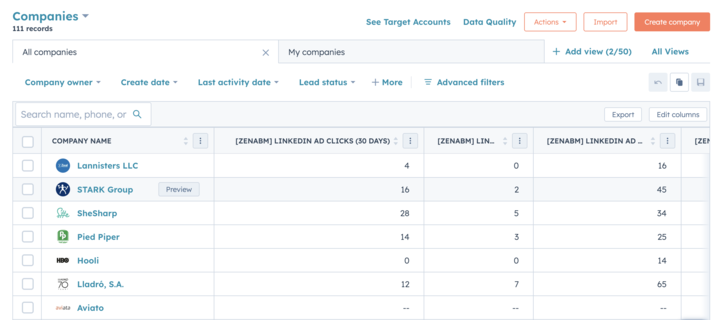
ZenABM, by contrast, is explicitly built around bi-directional CRM sync:

Linklo does not generate personalized creatives or write messaging.
Any account-level personalization still depends on how you structure campaigns, creatives, and audiences inside LinkedIn.
Where Linklo can help is delivery control: ensuring the right companies get sufficient exposure, suppressing already-converted companies, and progressing companies between campaigns based on measurable thresholds.

A detailed Linklo pricing isn’t public.
That means there is no reliable public breakdown of tiers, feature limits, account limits, or what is included in each plan.
If pricing clarity matters for procurement, the practical path is to start the free trial (if eligible) or request a demo and ask for:
As a benchmark, many LinkedIn utilities in this category tend to be subscription-based and cancelable, which is lower commitment than large ABM suites with annual contracts.
If the goal is a LinkedIn-first ABM platform with transparent pricing and a broader analytics and CRM activation layer, ZenABM is positioned as the more comprehensive option.

ZenABM offers account-level LinkedIn ad engagement tracking, ad engagement-to-pipeline analytics with plug-and-play dashboards, account scoring, ABM stage tracking, CRM sync, first-party qualitative intent, automated assignment of BDRs to hot accounts, custom webhooks, and ad engagement tracking at the job-title level.

Public third-party review coverage for Linklo is still limited.
On G2, Linklo is listed but currently shows no published user reviews, and G2 also notes that pricing information is not available on the listing.

That means evaluation tends to rely on product demos, trial usage, and peer conversations rather than validated review volume.
On social platforms and forums, Linklo appears primarily in the context of a workaround for LinkedIn’s lack of native hour-based scheduling.
In one thread about scheduling LinkedIn ads (a common pain point among practitioners), Linklo is mentioned as a known option, even when the commenter has not personally run it.

ZenABM is a first-party platform built specifically for LinkedIn-first ABM.
Where Linklo focuses on execution controls inside LinkedIn, ZenABM focuses on account-level visibility, CRM activation, and revenue linkage from LinkedIn ad engagements.
Its core features:
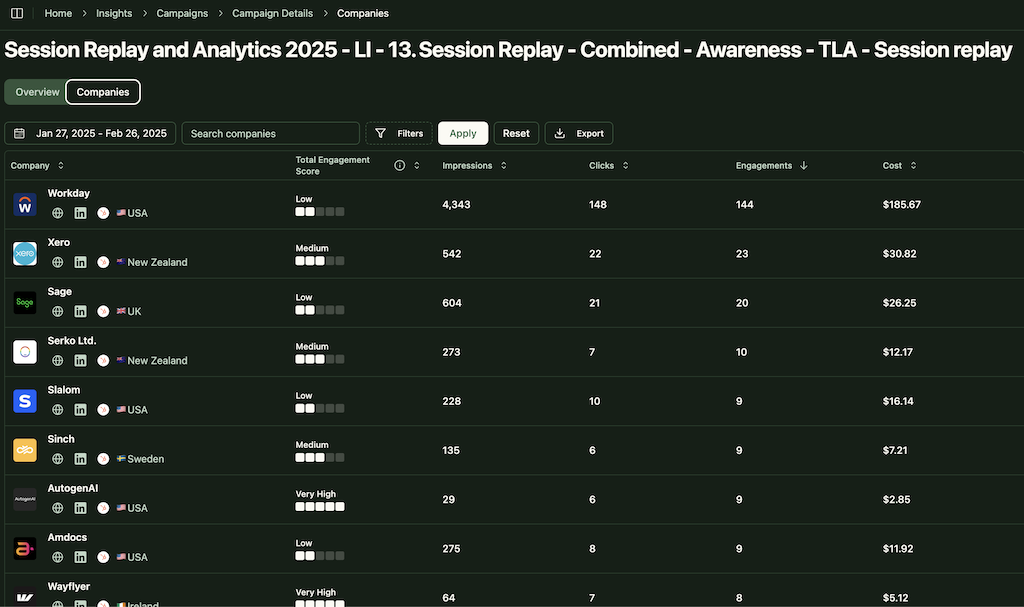
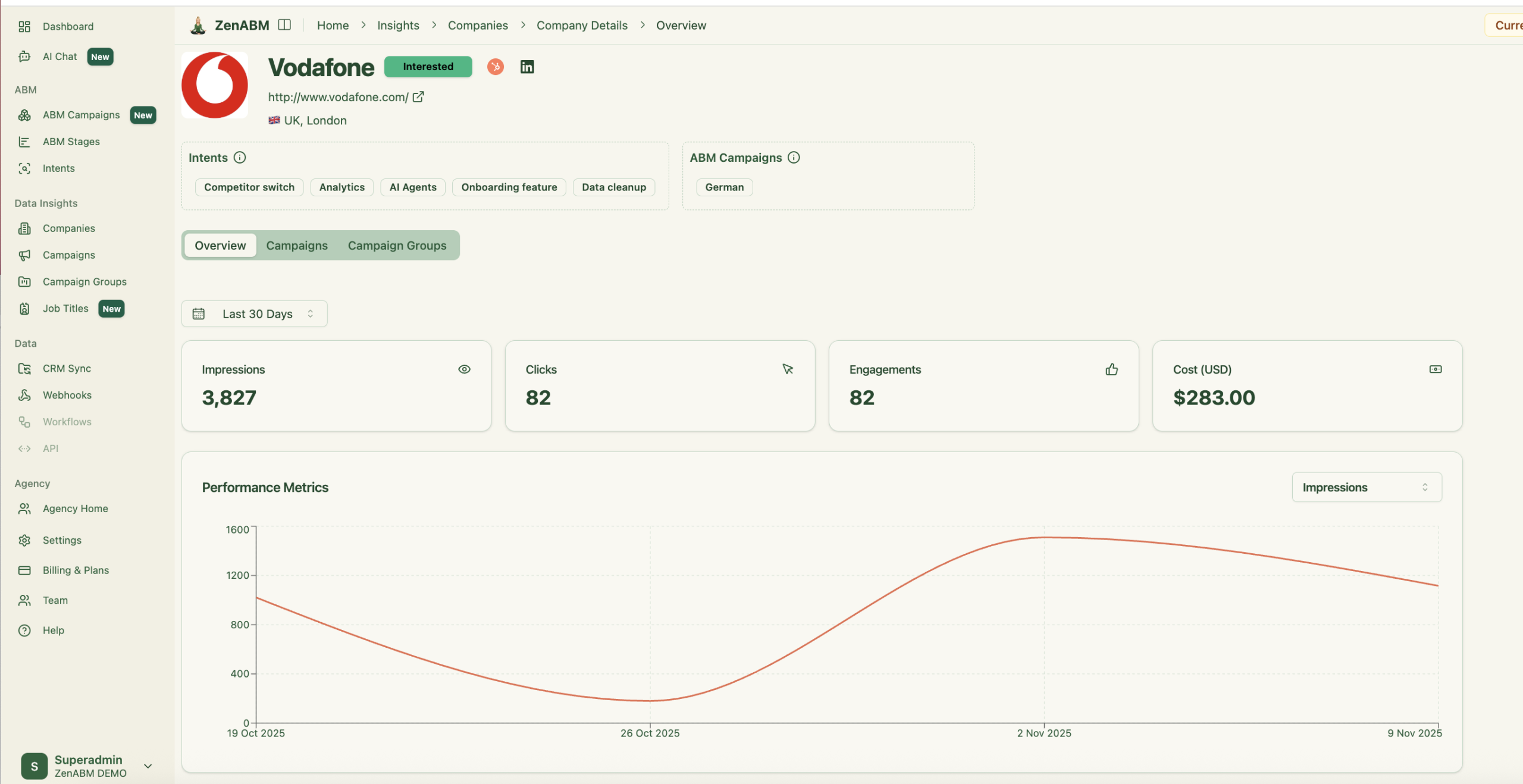
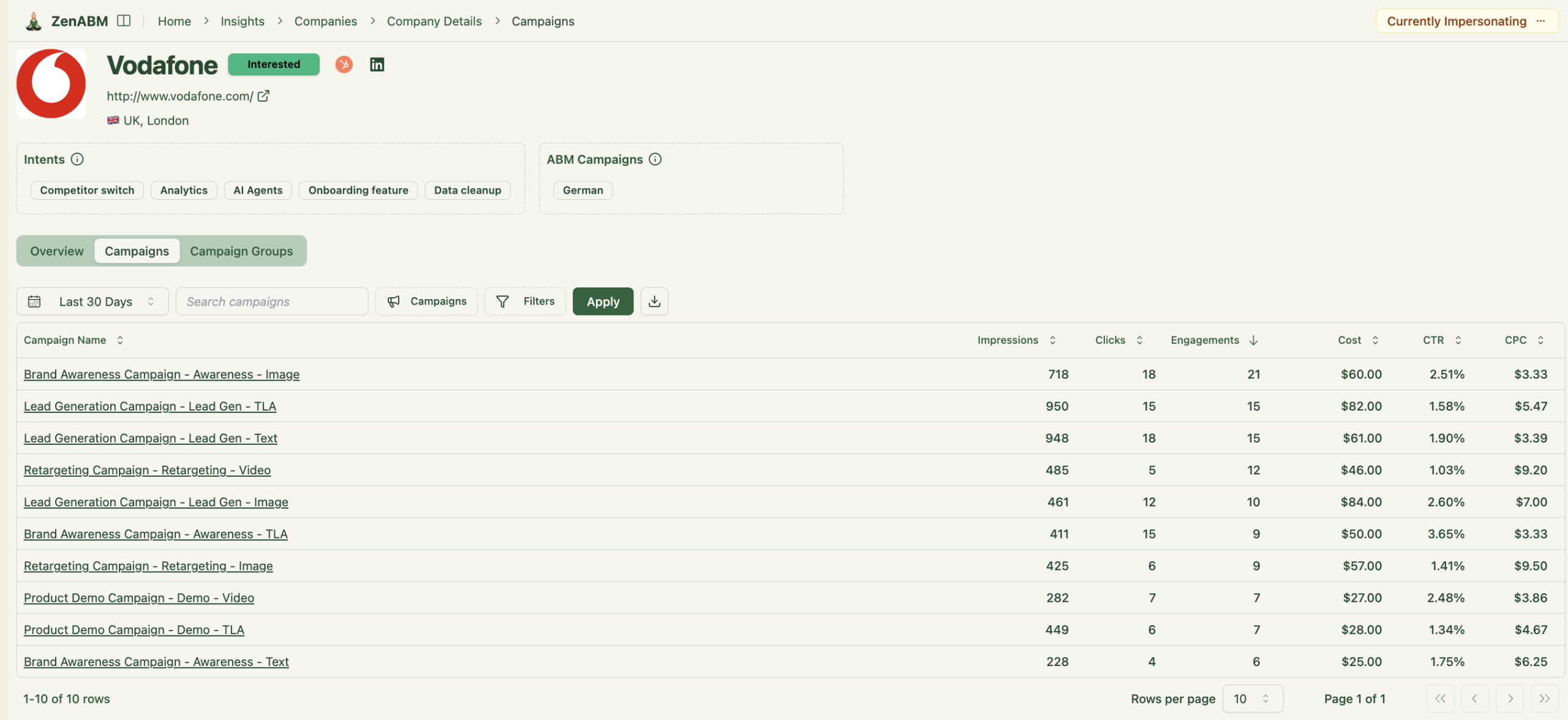
ZenABM connects to the official LinkedIn Ads API and captures account-level data for all campaigns so you can see which companies see, click, and engage with your ads.
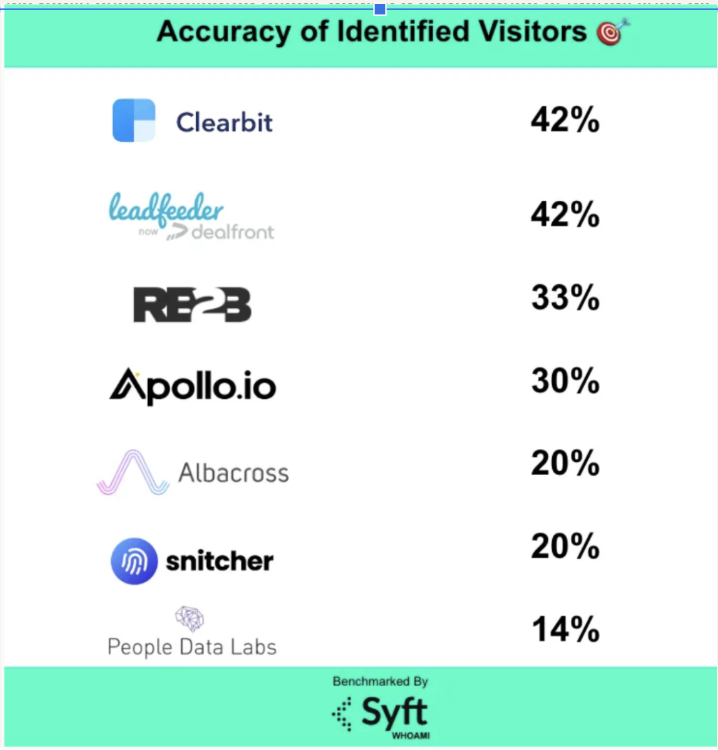
Because this is first-party data from LinkedIn’s environment, it is more reliable than IP or cookie-based visitor ID.
A Syft study puts IP-based identification at around 42 percent accuracy.
ZenABM treats LinkedIn ad engagement itself as first-party intent. When several people in one company keep engaging with your ads, that is a strong buying signal without rented intent feeds.
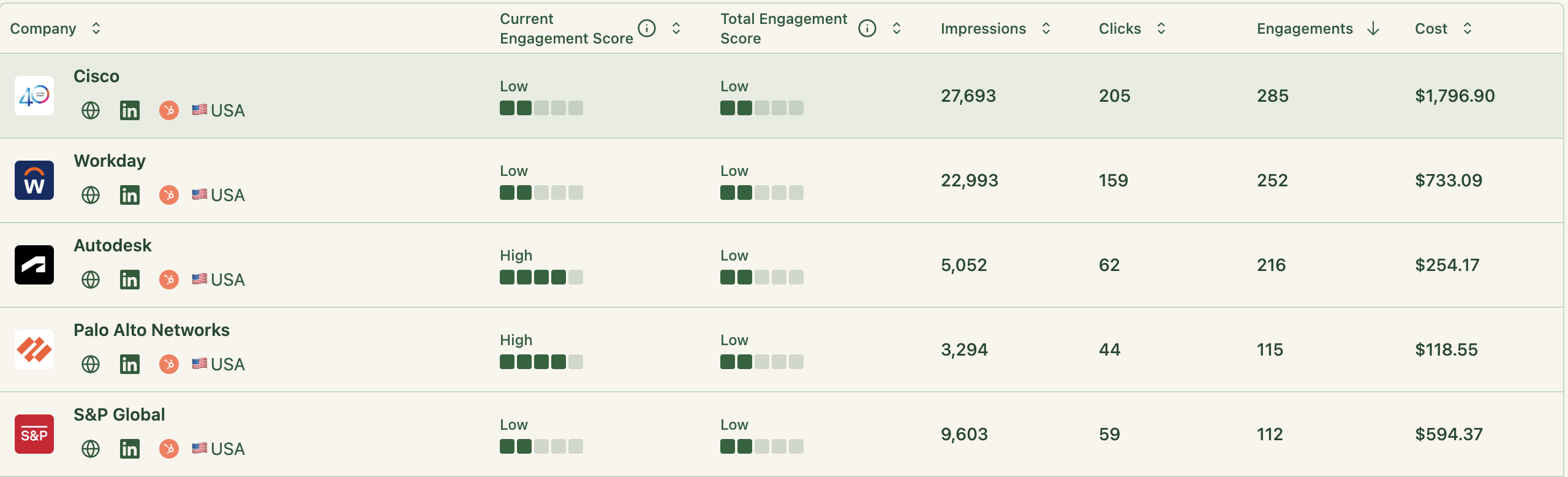
ZenABM updates engagement scores as accounts interact with your ads across campaigns, so you can see who is heating up over short or long windows and let marketing and sales prioritize accounts that show real intent.
ZenABM also shows the full touchpoint timeline for each company:
ZenABM lets you define stages such as Identified, Aware, Engaged, Interested, and Opportunity and automatically places accounts in the right stage using scores and CRM data.
You control thresholds, and ZenABM tracks movement over time.
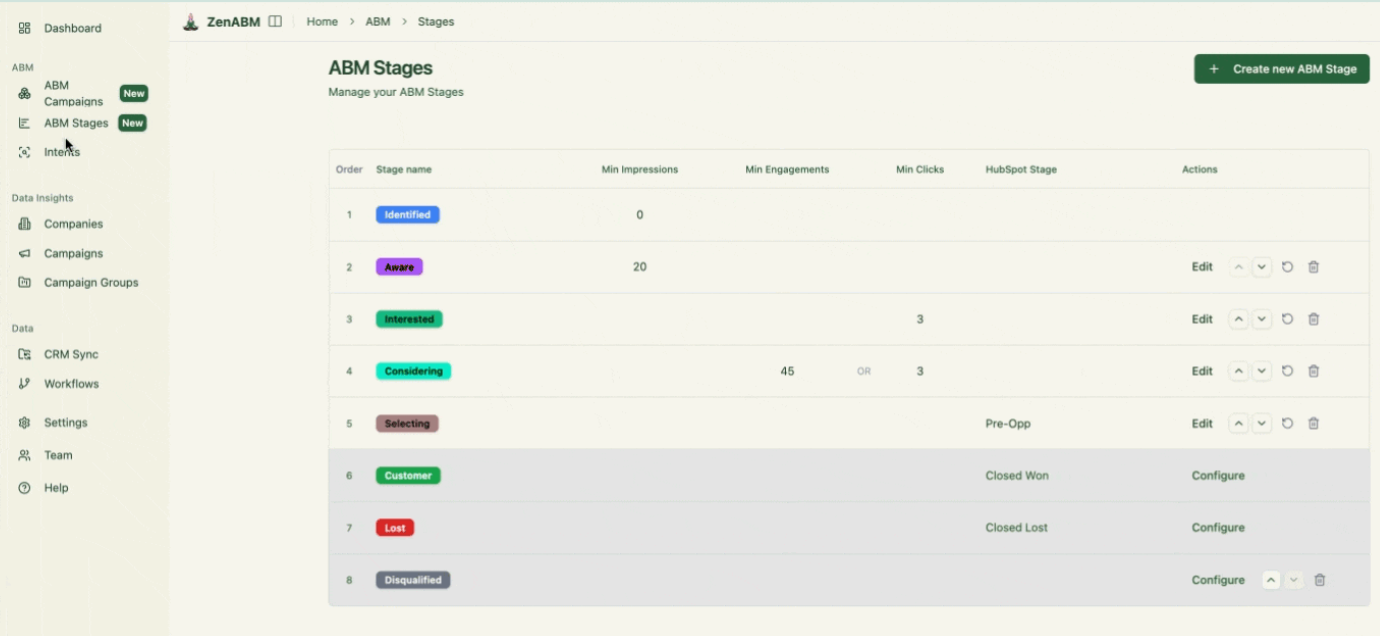
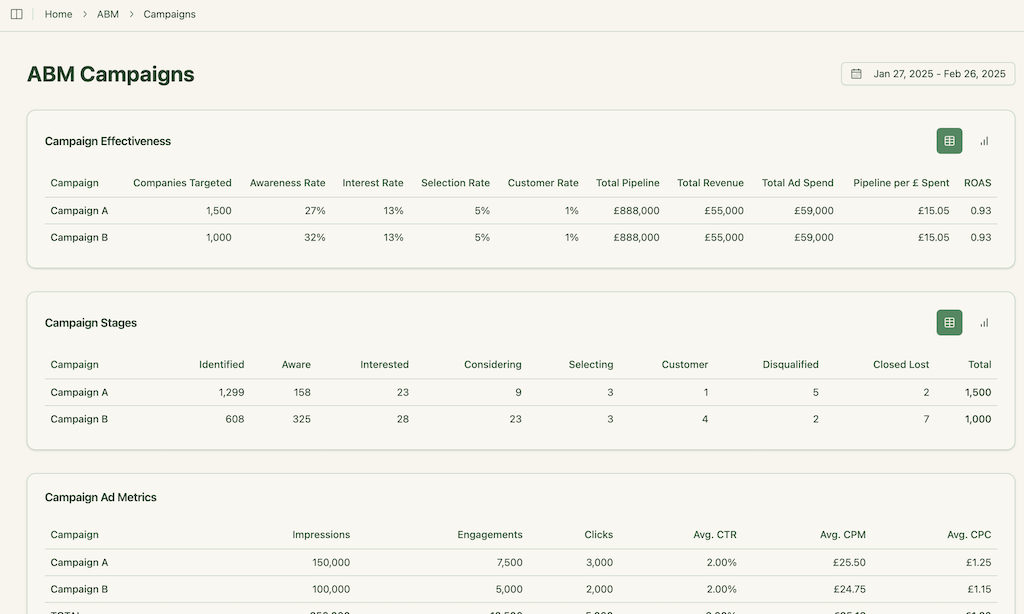
This gives you funnel visibility similar to larger suites, but powered by LinkedIn data.
ZenABM integrates bi-directionally with CRMs like HubSpot and adds Salesforce sync on higher tiers.
LinkedIn engagement data flows into the CRM as company-level properties:
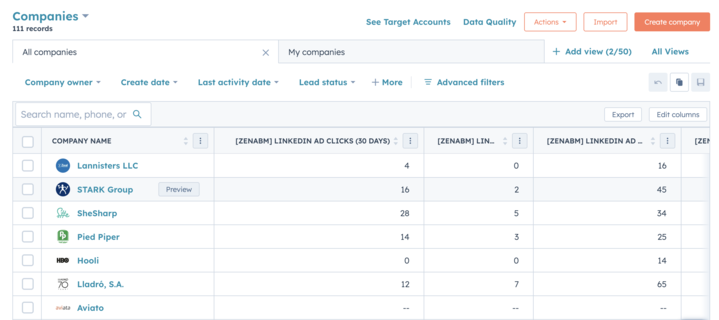
Once an account crosses your score threshold, ZenABM updates the stage to Interested and automatically assigns a BDR.
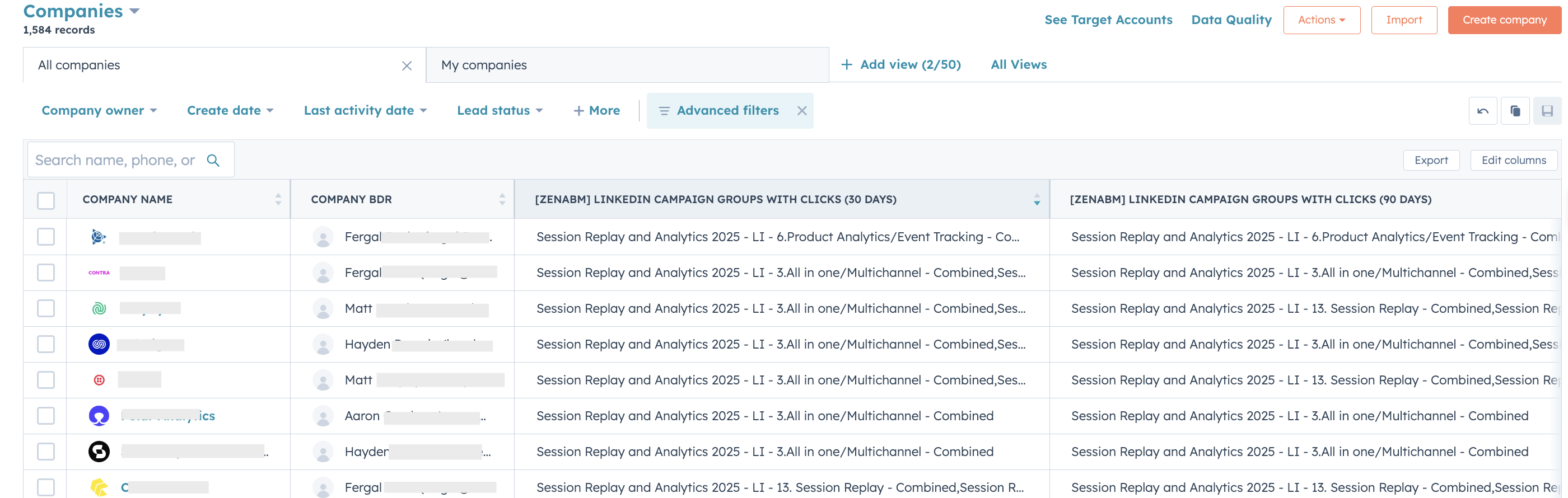
ZenABM lets you derive intent topics from LinkedIn campaigns by tagging campaigns by feature, use case, or offer.
ZenABM then shows which accounts engage with which themes.
This is clean, first-party intent from owned interactions.
You can push these topics into your CRM, so sales and marketing can tailor outreach to what each company has actually explored.
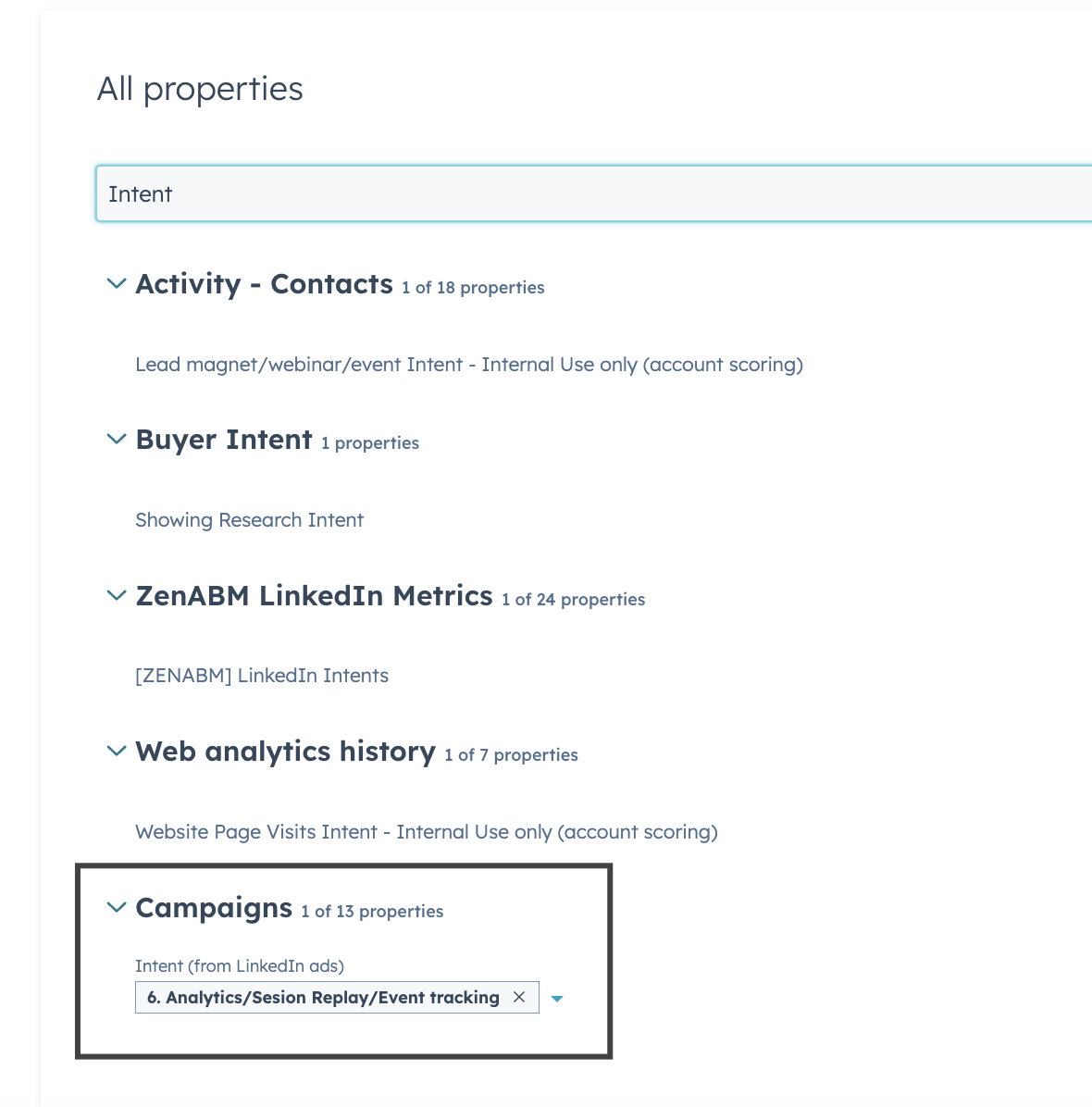
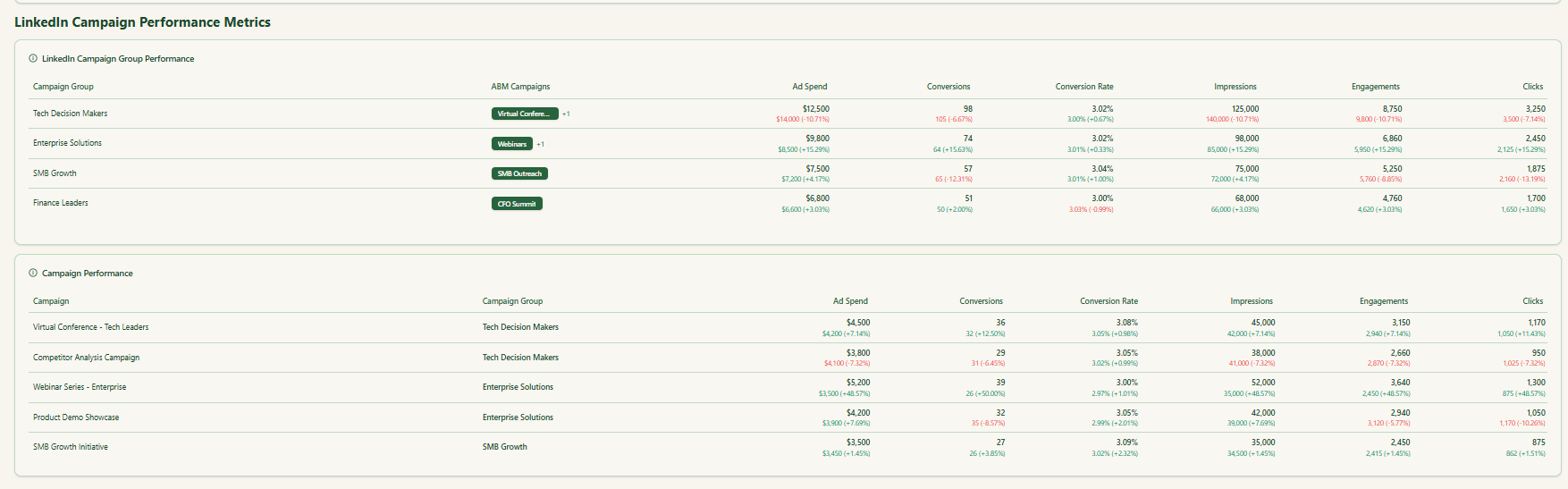
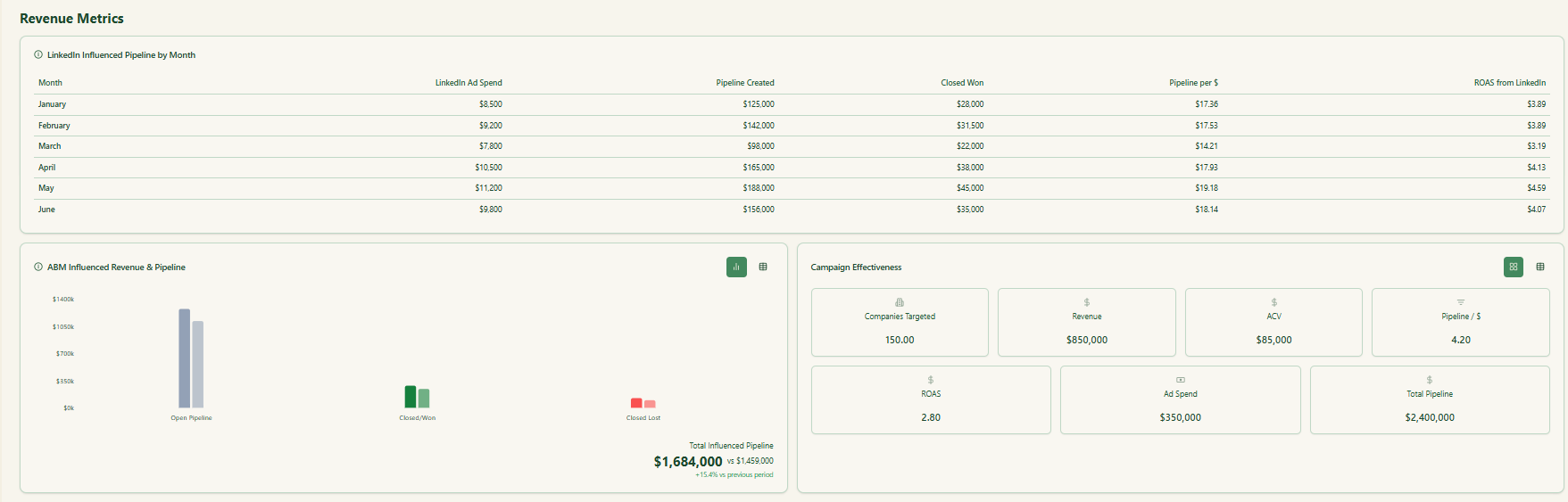
ZenABM ships with dashboards that connect LinkedIn ads to account engagement, stage movement, and revenue.
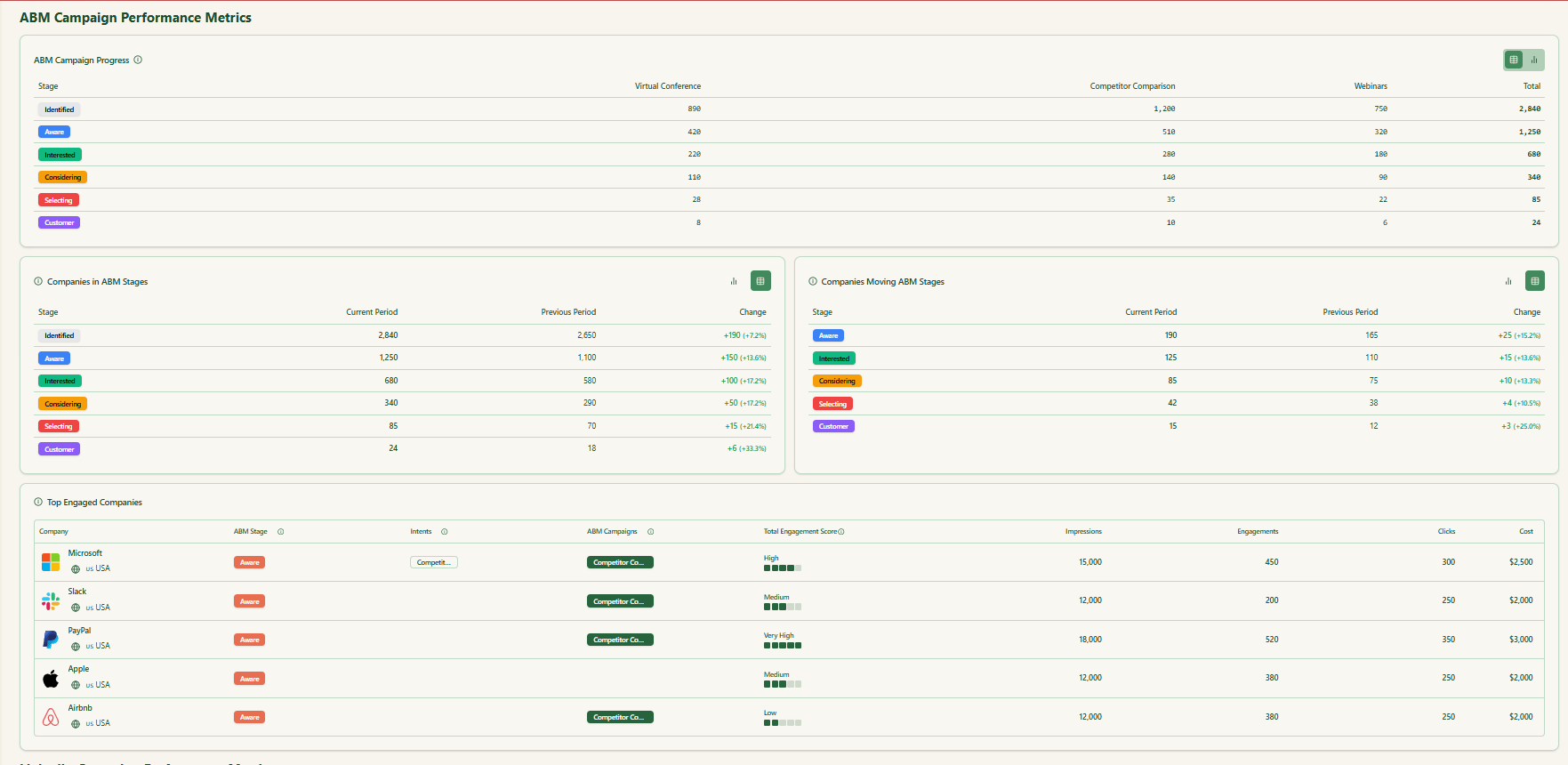
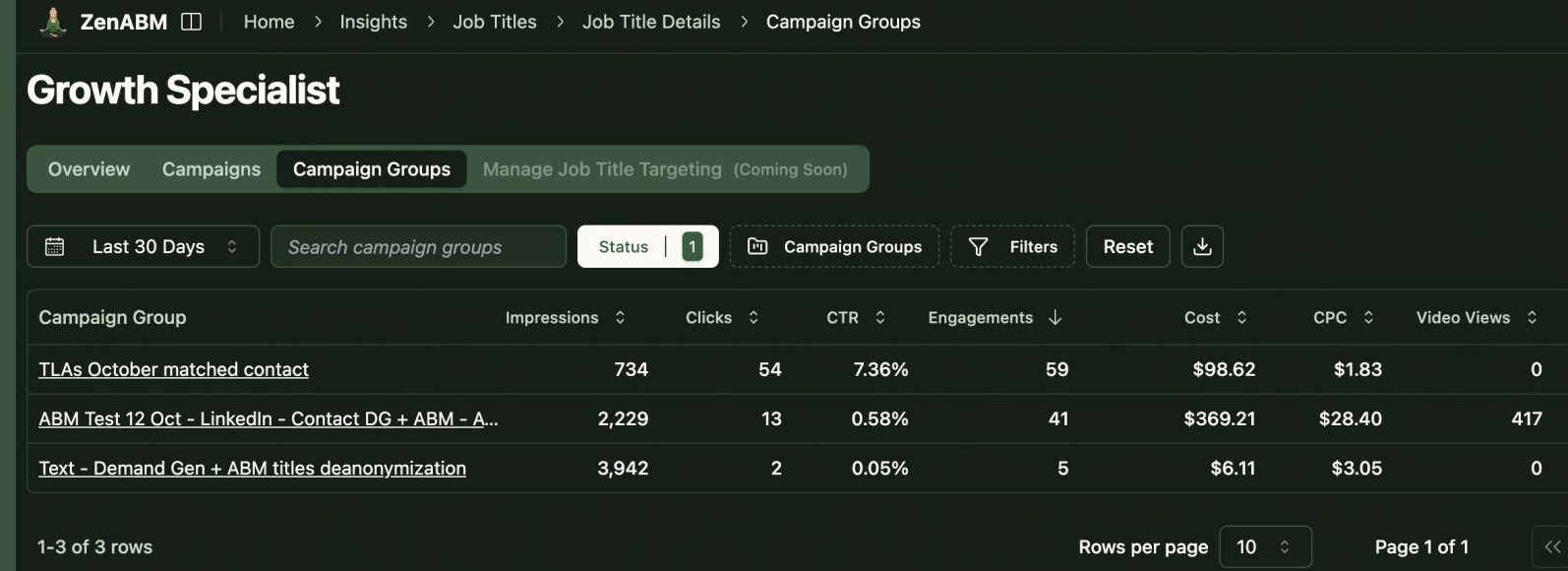
ZenABM shows which job titles engage with your creatives and gives dwell time and video funnel analytics.
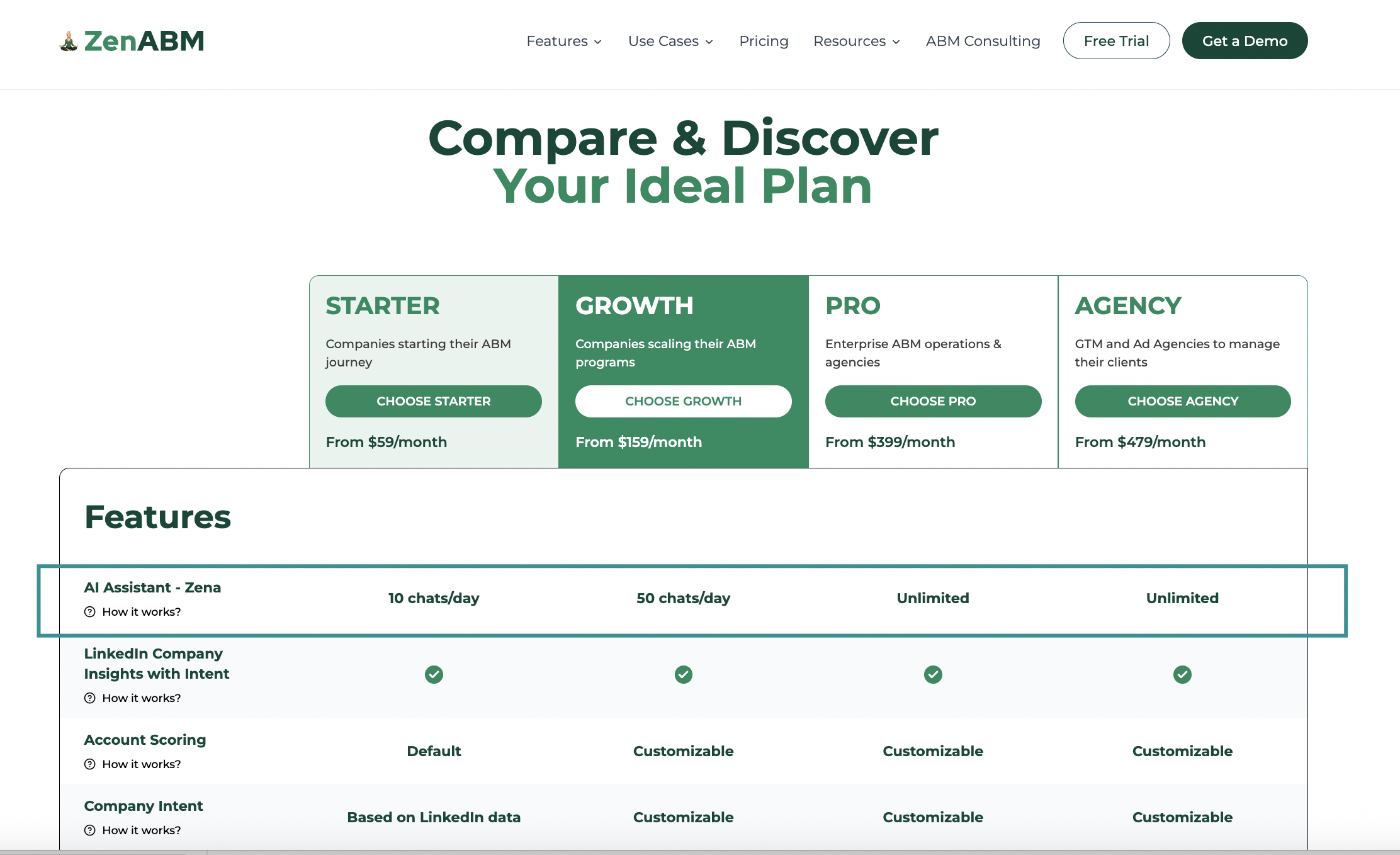
ZenABM provides its AI chatbot called Zena that basically answers all you want from ZenABM in natural language.
You can ask Zena open-ended questions like you would a smart analyst and get company-level answers about:
Under the hood, Zena combines OpenAI with a library of carefully designed prompts and endpoints to join ad engagement, spend and CRM deals so it can explain which campaigns drove pipeline, which accounts turned into opportunities, which formats perform best and which companies are high intent but untouched by sales.
Instead of exporting spreadsheets and stitching pivot tables, you get plain language insights, ready to drop into strategy reviews, weekly sales standups or executive updates.
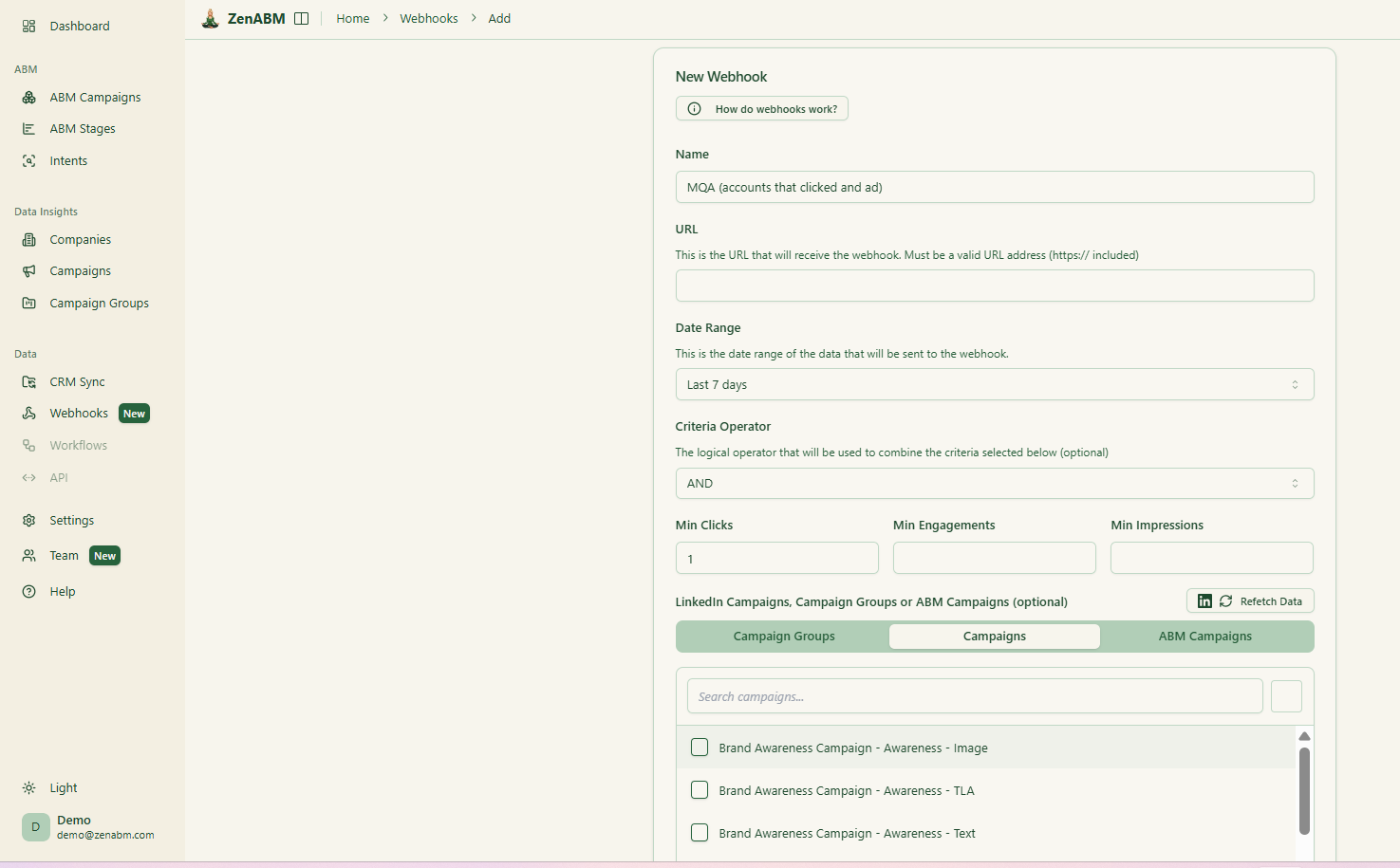
ZenABM’s custom webhooks let you push events into your stack, for example, Slack alerts, enrichment flows, or other ops automations.

Most tools treat each LinkedIn campaign separately. ZenABM lets you group several into one ABM campaign object so you can see performance across regions, personas, or creative clusters.
Instead of juggling fragmented reports in Campaign Manager, you see spend, pipeline, account movement, and ROAS for the entire initiative.
For agencies, ZenABM offers a multi-client workspace.
You can manage multiple ad accounts and clients in one environment, each with its own ABM strategy, dashboards, and reporting, instead of constantly switching accounts in Campaign Manager.
ZenABM’s pricing is public and tiered:
Pricing is available monthly or annually (annual includes two months free), and the product offers a 37-day free trial so teams can validate fit before committing.
Linklo is a LinkedIn Ads automation product.
It is most relevant when the core problem is operational control: hour-based scheduling, budget overspend prevention, creative testing visibility, and managing company-level exposure so a few accounts do not absorb the majority of delivery.
It is not positioned as an ABM measurement layer, CRM activation layer, or pipeline attribution system.
For teams that need account-level LinkedIn engagement intelligence, buyer intent interpretation tied to messaging themes, ABM stage progression, CRM sync, and pipeline reporting, ZenABM covers the strategic analytics layer that Linklo does not aim to provide.
