



In this guide, I compare Recotap vs. Influ2 on features, pricing and ABM fit so marketing and sales teams can quickly see which platform fits their playbook.
I also cover how ZenABM can work as a better alternative or a complementary layer on top of your existing stack due to its unique features.

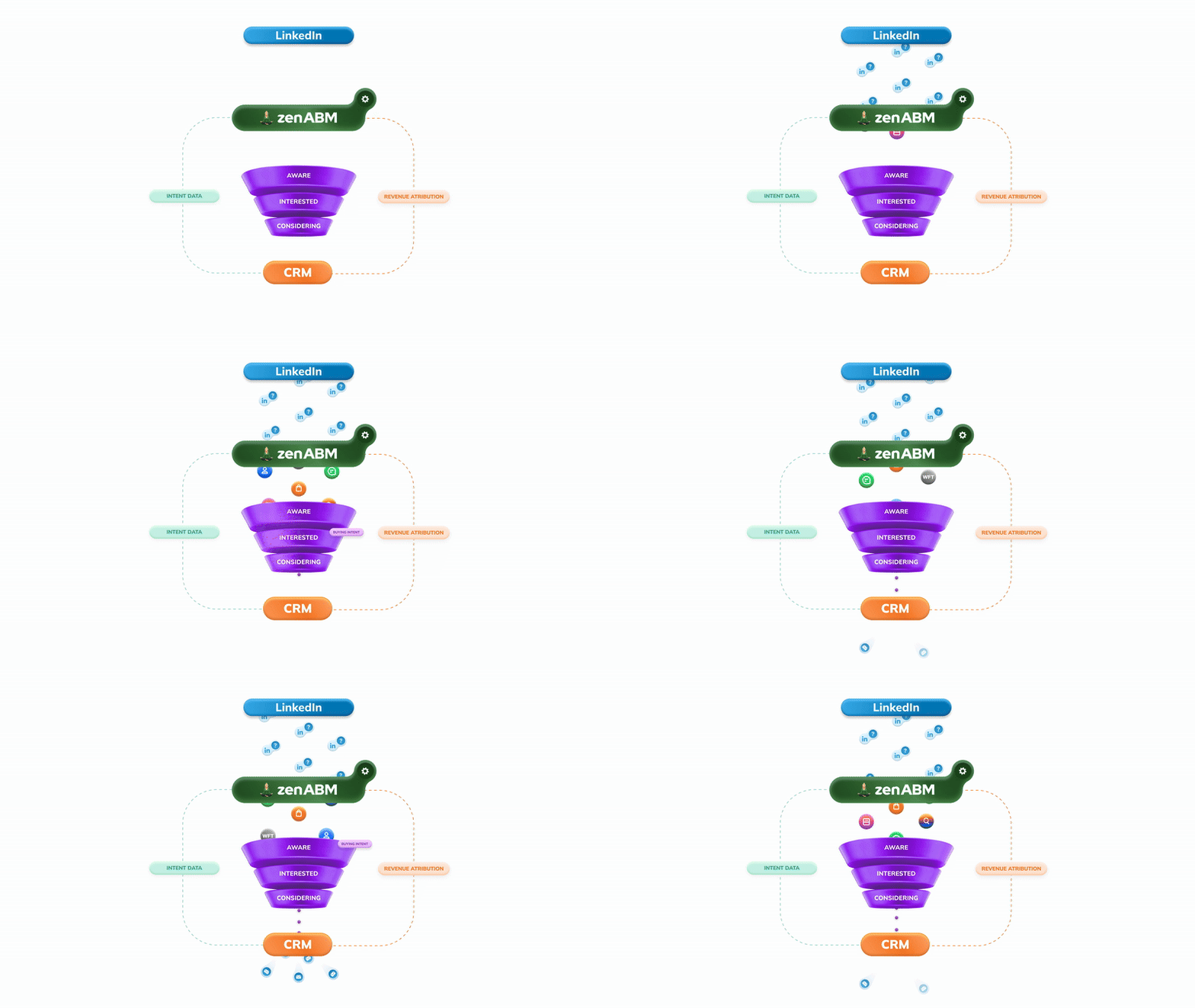
In case you’re short on time, here is the snapshot:
Recotap positions itself as a LinkedIn-first ABM platform for B2B teams that want tighter control over which accounts they target and how those accounts move through the journey.
Recotap acts as an all-in-one ABM layer across data, ads, web and analytics.
Recotap pulls data from your CRM, marketing automation, website and third-party intent providers into a single account profile so you can actually see what each company is doing across channels.
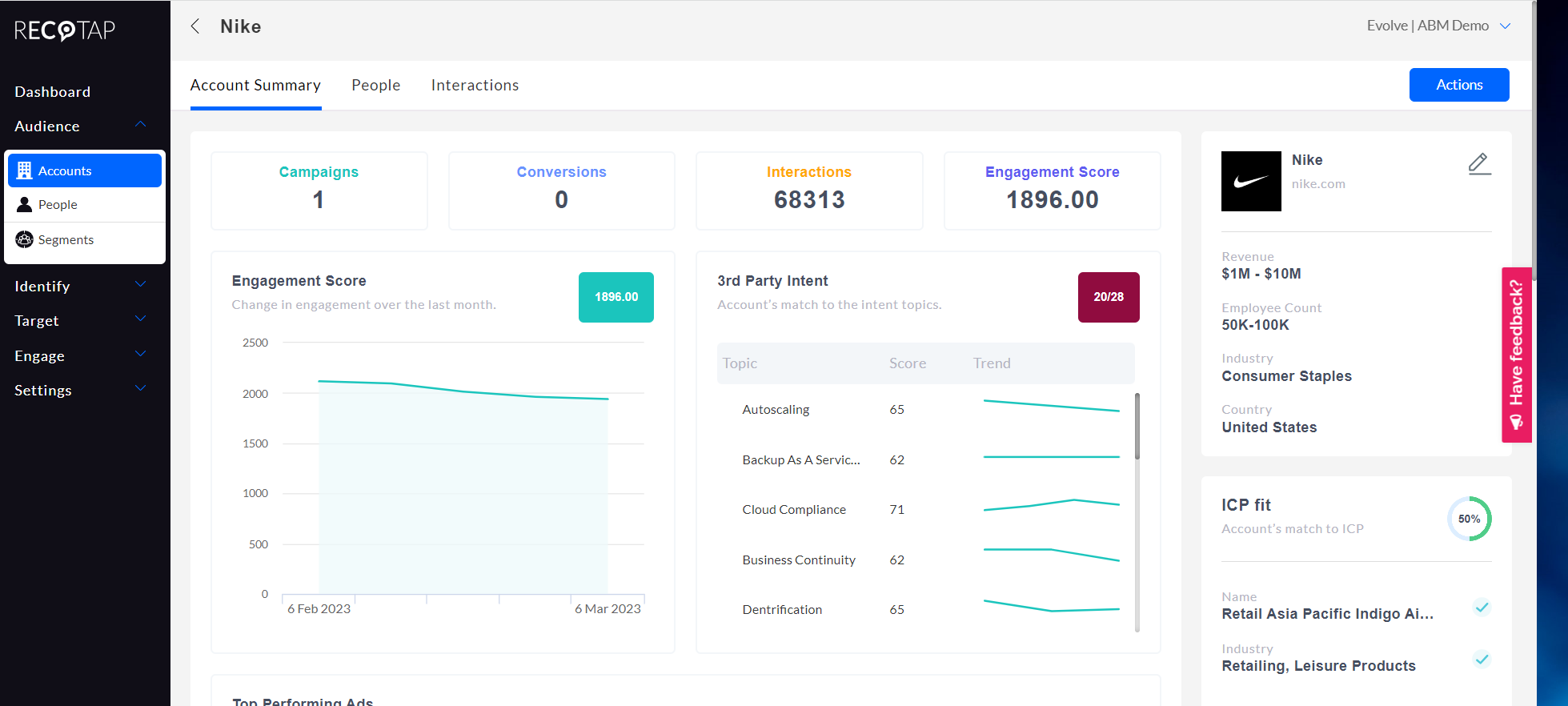
It combines visits, ad clicks, external intent (Bombora, G2, TrustRadius) and CRM data so you can segment and score accounts by both fit and activity instead of guessing.

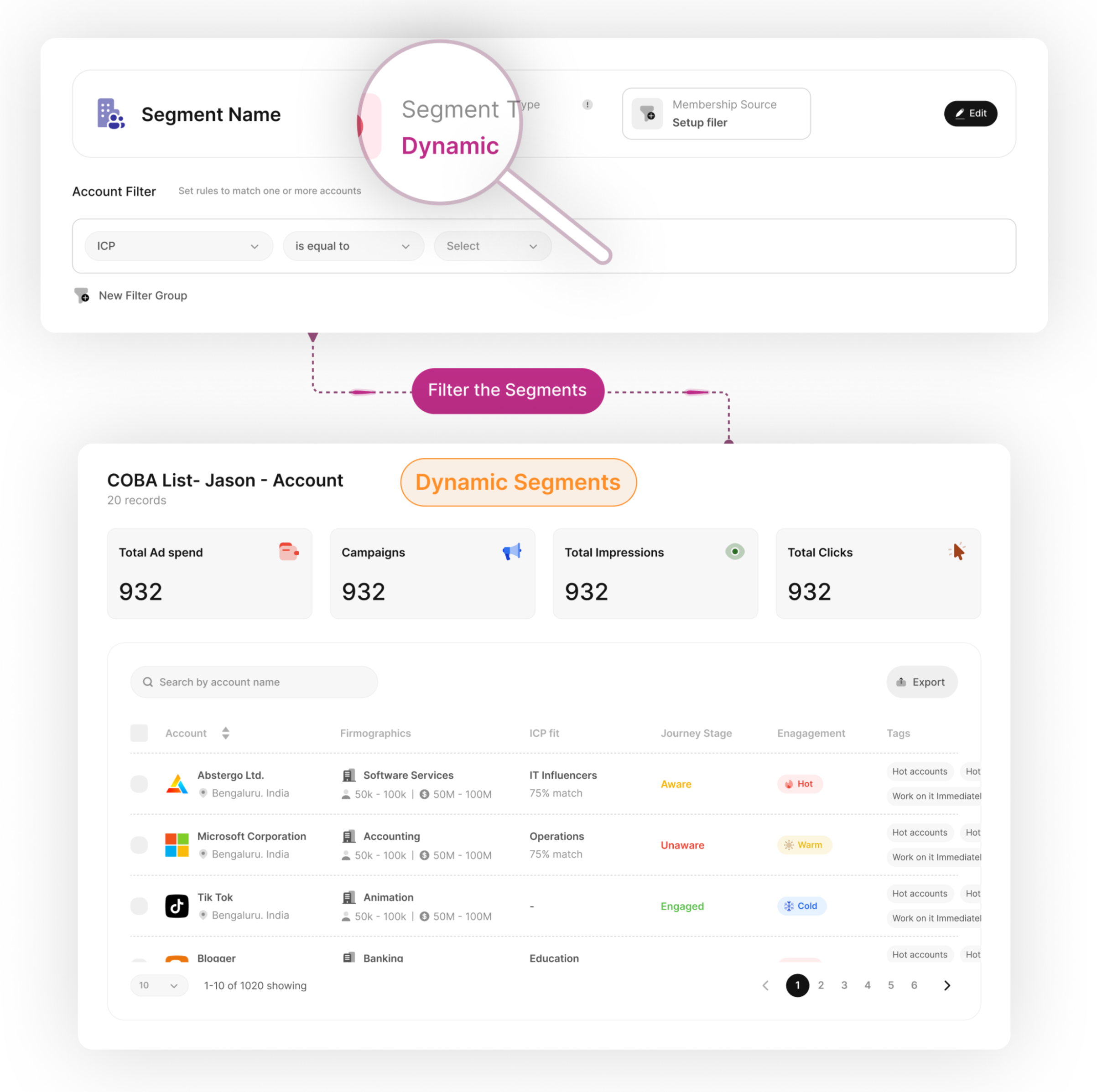
You define segments using firmographics, engagement, ICP fit and intent, and Recotap keeps lists refreshed automatically, so target account lists are not a spreadsheet hobby. Its AI also labels where an account is in the journey, from early research to close to sales.
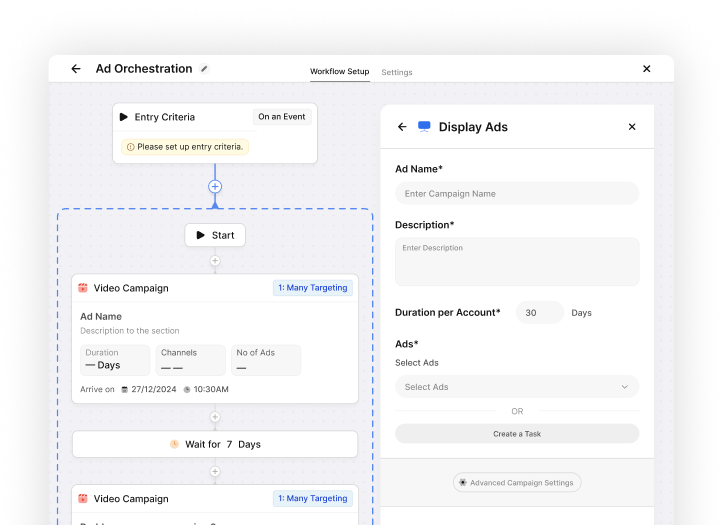
As an official LinkedIn Marketing Partner, Recotap supports advanced LinkedIn Ads management. It helps you roll out account-based LinkedIn campaigns and tailored LinkedIn ads at scale.

You can spin up 1 to 1 landing page experiences for key accounts, similar to what web modules in tools like Terminus or Demandbase try to do.
Recotap integrates with major CRM and marketing automation platforms so sales and marketing work from the same data.
Salesforce and HubSpot CRM sync accounts, contacts and deals, and Marketo or Pardot covers nurture. It also connects to sales tools like Outreach and Salesloft, plus Slack and Teams, so reps get alerts when a target account heats up.
Recotap ships AI-powered analytics and revenue attribution dashboards.
Its Revenue Impact view ties campaigns to pipeline and revenue and helps you see how account journeys progress from first touch to closed won.
Recotap tracks intent spikes, refreshes segments and triggers outreach when an account hits a hot score. Reviewers say the UX tries to keep ABM manageable instead of overwhelming.
Recotap’s ABM Signal Hub merges first-party engagement data from CRM, website and marketing tools with intent from G2, TrustRadius and Bombora to give a fuller account view.
The intent scoring engine ranks accounts by readiness and sends hot ones into campaigns or sales queues. Real-time sync lets Recotap trigger LinkedIn ad sequences as soon as interest shows up, often compared to lighter versions of what 6sense or Demandbase do.
Recotap publishes pricing, which at least stops the mystery.
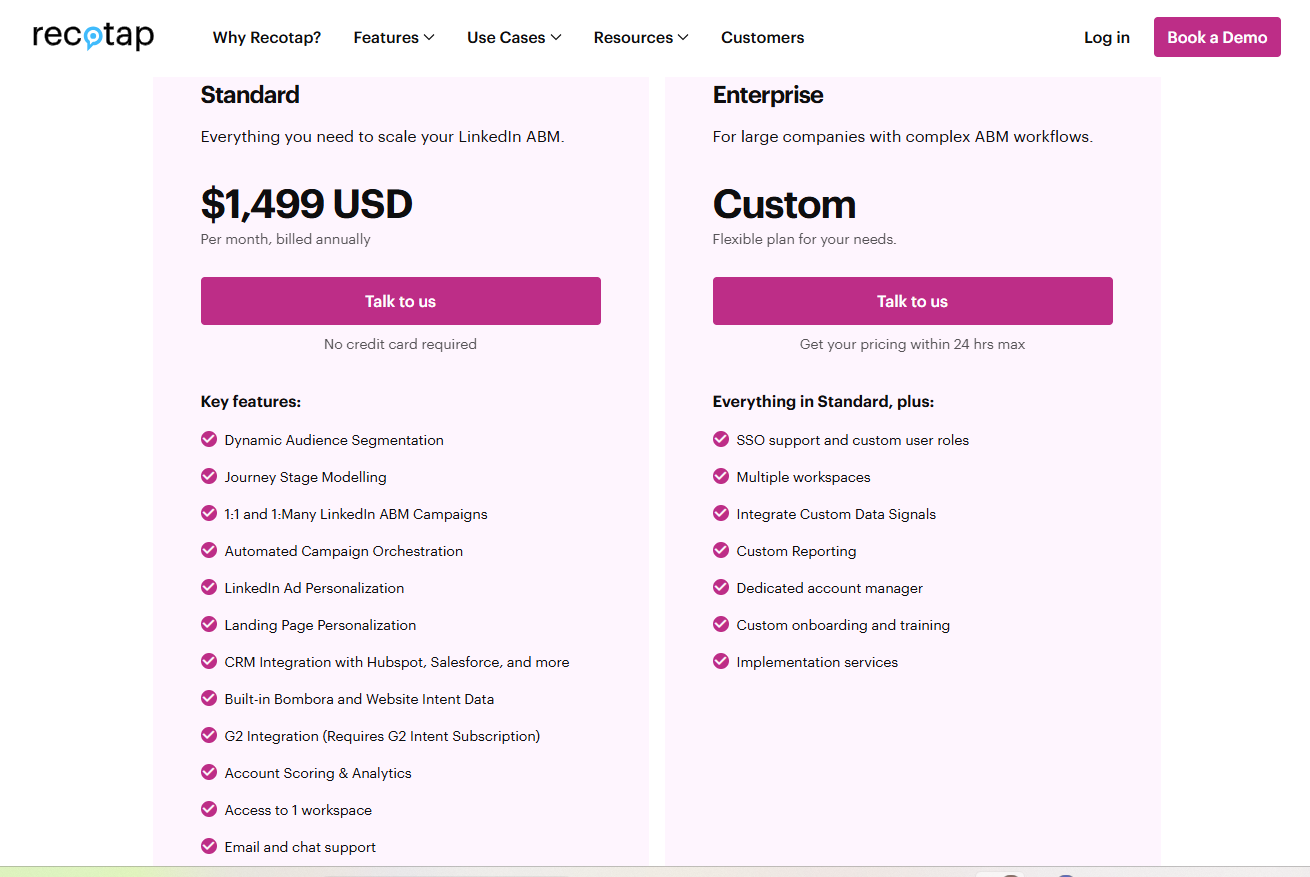
Given Standard already sits above $10K per year, ZenABM is the cheaper, LinkedIn-focused option starting at ~$59/month, with the top tier still under $6K per year.
ZenABM still covers core LinkedIn ABM needs such as account-level ad engagement tracking, account scoring, ABM stage tracking, routing hot accounts to BDRs, bi-directional CRM sync, custom webhooks, qualitative company intent and plug and play ROI dashboards.
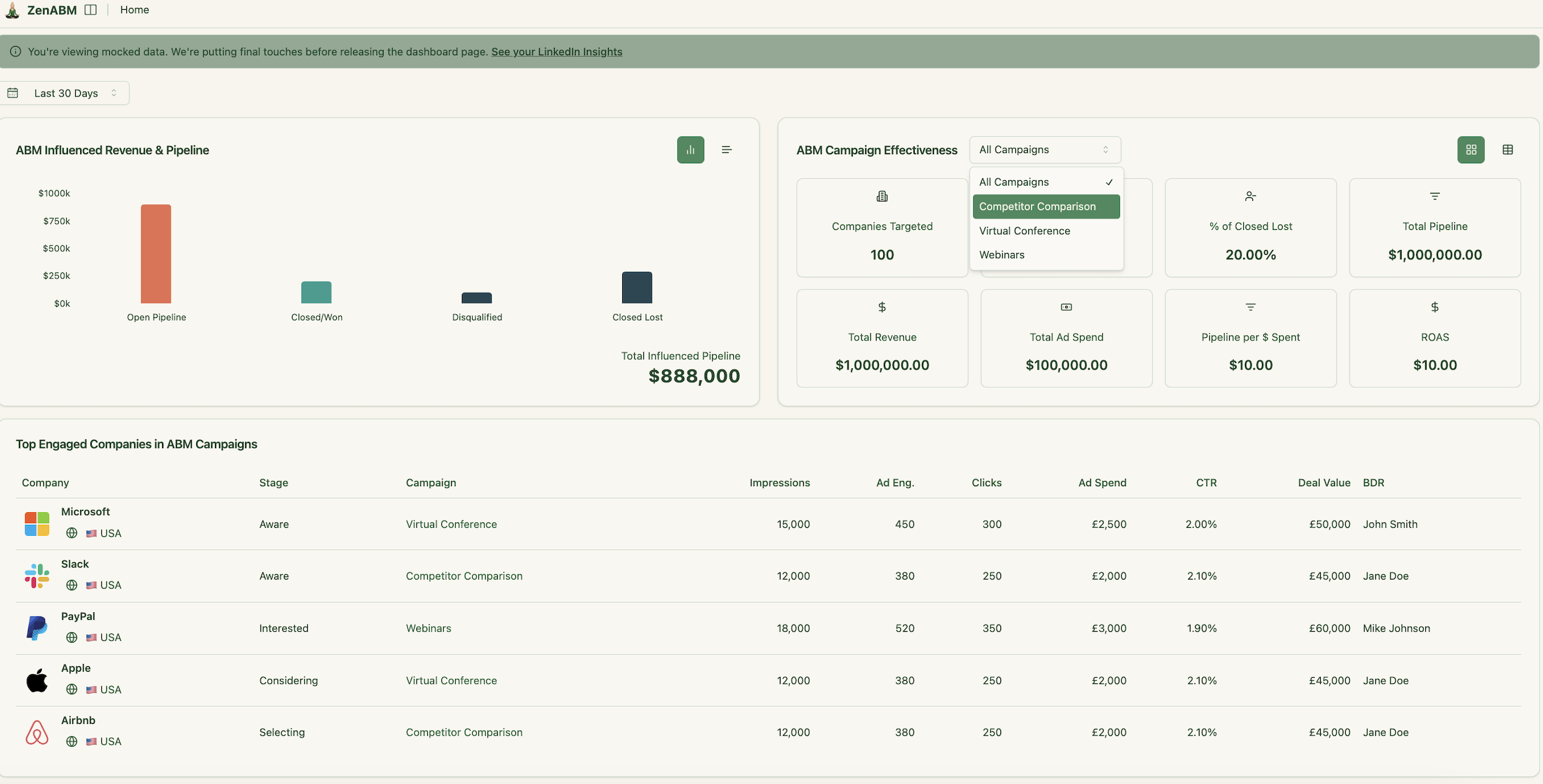
Recotap holds a 4.7 out of 5 rating on G2 from 47 reviews.
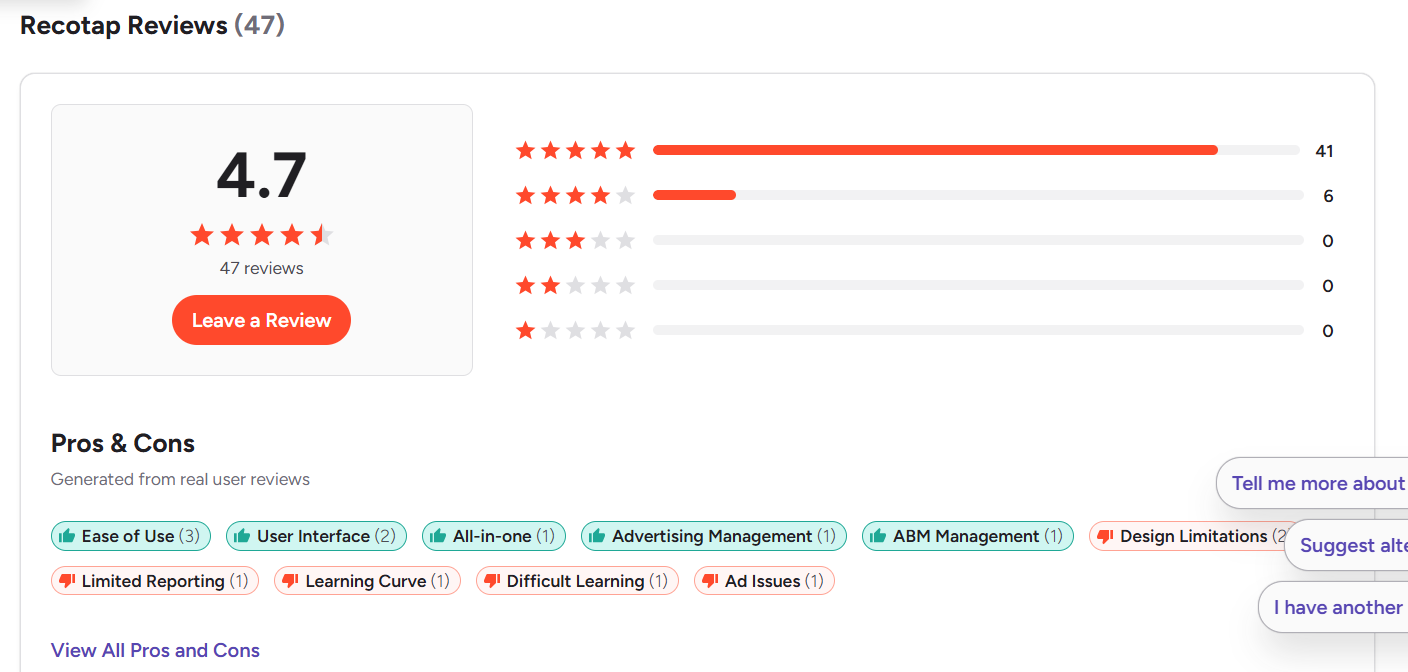
Most reviewers are based in Asia, so Recotap’s current go-to market is clearly APAC heavy.
Users often praise:
Common issues:
TrustRadius and other sites are still relatively quiet on Recotap.
Influ2 calls itself the first person-based ABM platform and focuses on getting ads in front of specific people inside your target accounts.
Influ2 is built around person-based advertising and giving sales contact-level insight.
Unlike many ABM platforms that operate at the account level, Influ2 shows ads to named individuals across major ad networks.
You can, for example, pick the CIO of Acme Corp and have them see ads on LinkedIn and later on news sites. The pitch is less waste on irrelevant employees.
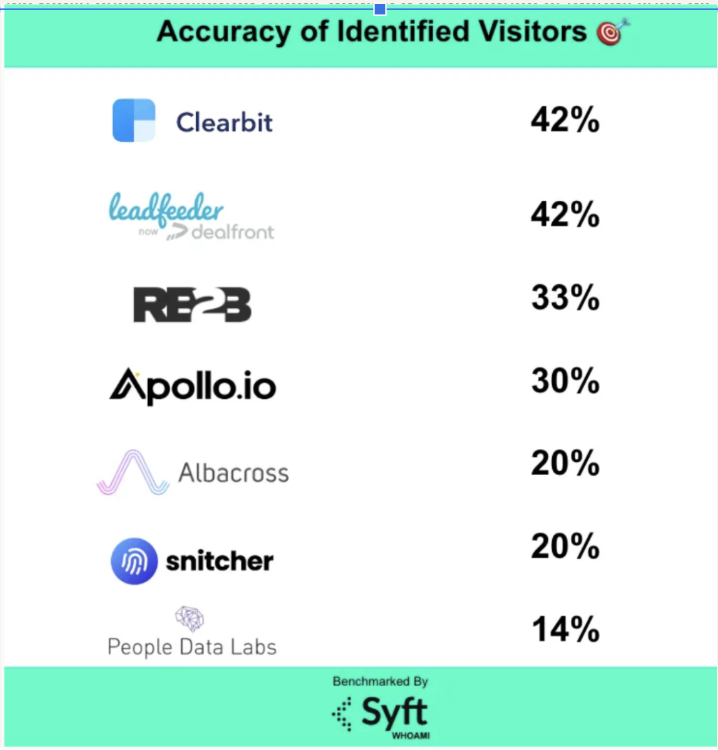
Matching is not perfect, though. A Syft study found IP-based website visitor identification accuracy at roughly 42 percent.


Influ2 tracks impressions, clicks and visits per contact, so sales can see which people actually interacted and adjust outreach accordingly.

Influ2 also layers in third-party style signals, such as keyword searches and websites visited by those contacts.
Pro Tip: That kind of borrowed data is often noisy. Buying decisions are made at the account, not just from one person’s browsing. ZenABM focuses instead on first-party, company-level intent from your own LinkedIn ads. You see which companies engaged with which campaigns and how their interest shifts over time.

Influ2 lets you build simple journeys where ad sequences change as a contact clicks or ignores creatives, similar to automation workflows but focused on ads. In practice, the quality depends heavily on your logic and content library, and some users feel personalization could be more flexible.
Influ2 integrates with major CRMs and marketing platforms such as Salesforce, HubSpot, Marketo and Microsoft Dynamics, as well as sales tools like Outreach and Salesloft.
It can also feed alerts into Slack or Teams when a target account contact engages, and updates CRM records with ad engagement. For an ABM platform, typical implementation time of around a month is relatively quick.

Influ2 dashboards show how many buying groups were influenced, how many opportunities were opened or progressed and how much revenue is tied to people who saw or clicked ads, with revenue influence reports for leadership.
Given the person level targeting, privacy is front and center.
Influ2 promotes a privacy first matching approach that is GDPR and CCPA compliant and is SOC 2 Type II certified, using hashed emails and first party data instead of random third party cookies.


Sales teams get a ranked list of hot accounts and the specific contacts inside them who are most engaged.
Influ2 keeps pricing behind a “Contact us” form, but third-party chatter fills in some gaps:


For scrappy teams with a tight ad budget, the model is harder to justify.

Influ2 holds about 4.6 out of 5 on G2 across 150+ reviews.
Common positives:
Frequent drawbacks:
The key differences between Recotap and Influ2 are summarized here.
| Aspect | Recotap | Influ2 | Best suited for |
|---|---|---|---|
| Core positioning | LinkedIn first ABM platform for identifying, engaging and converting high-value accounts | Person-based advertising and an ABM platform that targets specific contacts | Teams choosing between account-centric ABM and contact-centric media |
| Primary unit of focus | Account-level data, segments, journeys and scoring | Individual contacts inside target accounts | Orgs that plan around account journeys vs those obsessed with named decision makers |
| Data and intent model | ABM Signal Hub merges CRM, MAP, website behavior and Bombora or G2 or TrustRadius intent to score accounts | Tracks contact level ad engagement, and adds third-party style keyword or browsing signals | Stacks wanting blended first and third-party account intent vs teams chasing granular but noisy person signals |
| LinkedIn capabilities | Advanced LinkedIn ABM campaigns, 1 to 1 and 1 to many, with dynamic segments and journey-based orchestration | Shows ads to named contacts on LinkedIn as part of multi-channel journeys | Teams building structured LinkedIn ABM programs vs those layering person-specific ads on top |
| Other channels | Focuses on LinkedIn and web personalization, plus integrations into the rest of the stack | Activates individuals across LinkedIn and other display-style inventory | LinkedIn and web-led ABM vs broader media saturation of specific people |
| Website personalization | Built in 1 to 1 landing pages and personalized web experiences by account | No native web personalization, instead feeds contact insights into sales and CRM | Teams that want coordinated ad plus web journeys vs those focused on ad only influence |
| Analytics and attribution | Revenue Impact dashboards connect campaigns to pipeline and revenue at the account level | Dashboards show buying groups influenced, opportunities, and wins tied to contact-level ad engagement | Companies that care about account journeys vs teams that want “who saw what” at the person level |
| CRM and sales integrations | Bi-directional sync with Salesforce and HubSpot, plus MAP and sales tools like Outreach and Salesloft | Integrates with Salesforce, HubSpot, Marketo, Dynamics, Outreach, Salesloft, Slack and more | Stacks that need account-centric sync vs stacks that want contact-level signals in sales tools |
| Automation | Dynamic segments, AI journey staging and triggers for LinkedIn and sales playbooks when intent spikes | Automated contact journeys and ad sequences based on individual engagement | Teams building ABM programs around account stages vs teams doing ad-based nurture of individuals |
| Pricing level | Standard at about 1,499 USD per month annual, Enterprise custom, 10k plus per year territory | Custom pricing, credit style model, perceived as top tier “$$$$$” and viable mainly for large deal sizes | Mid-market and enterprise ABM budgets vs large ticket sales motions with room for premium media |
| Complexity and learning curve | Suite-style surface area with some complexity, but UX built to simplify ABM when configured | New mental model around person-based ads, with setup and integration effort | Teams ready to run ABM from a central platform vs teams ready to experiment with a new ad paradigm |
| ABM breadth | Covers data unification, LinkedIn ads, web personalization, segmentation, automations and revenue analytics | Focuses on media and signals, not full ABM orchestration | Companies choosing between a full ABM platform and a specialized person-based media tool |
Recotap behaves like a compact ABM platform built around LinkedIn. It unifies account data, stages accounts, runs LinkedIn and web experiences and then ties those motions back to the pipeline. If your motion is account-first, journey based and LinkedIn-heavy, Recotap is the more natural choice, assuming you are fine with the price.
Influ2 is for teams that care most about saturating specific decision makers with ads and seeing contact-level intent. You trade breadth and cost efficiency for precision, which only really makes sense when each deal is large enough to justify the spend.
If what you really need is first-party accuracy on LinkedIn, account scoring, ABM stages, CRM sync and revenue attribution, this is where ZenABM comes in.
In fact, even for teams running multi-channel ABM, ZenABM adds a focused LinkedIn analytics and intent layer.
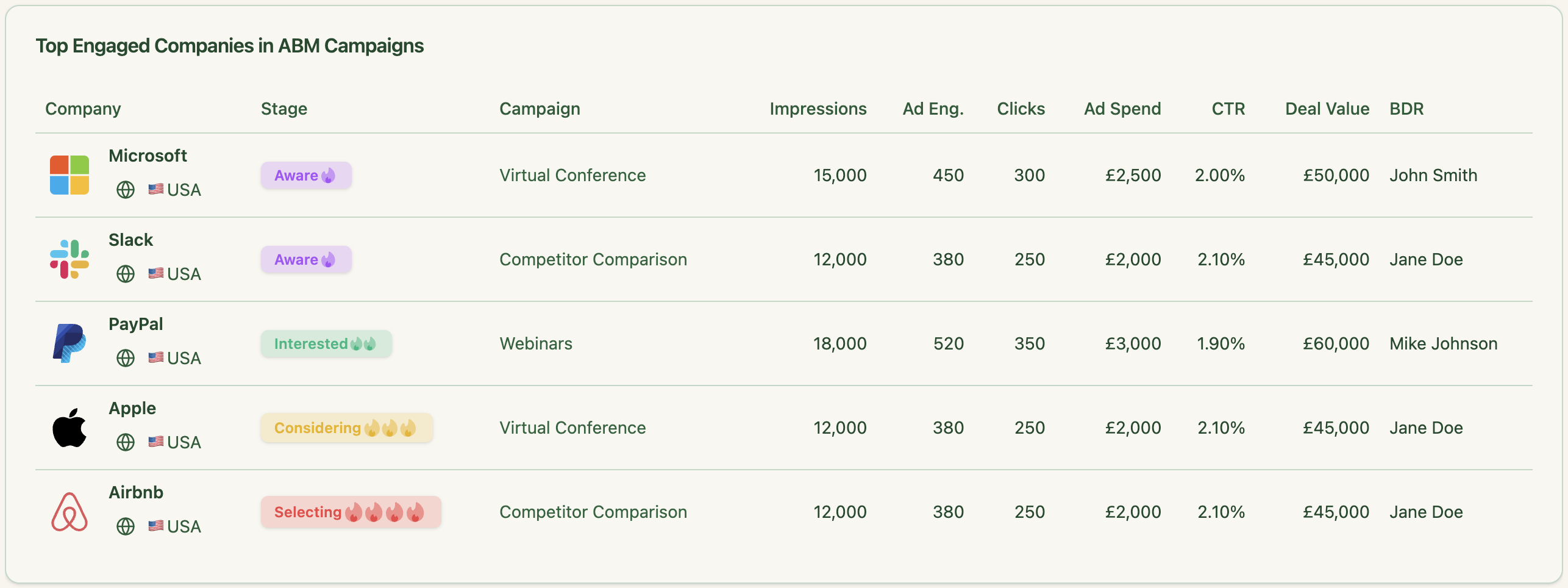
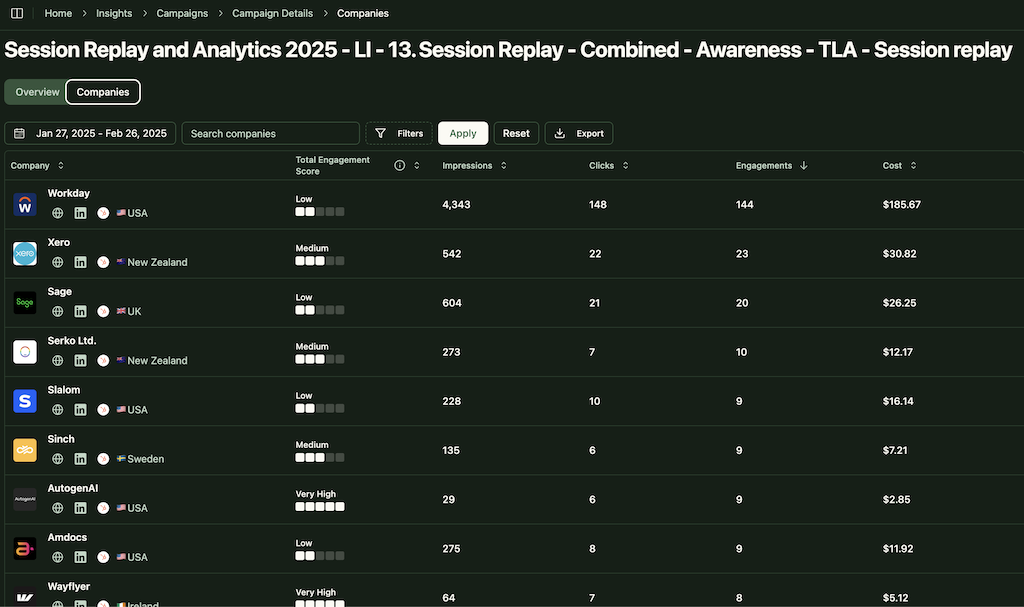
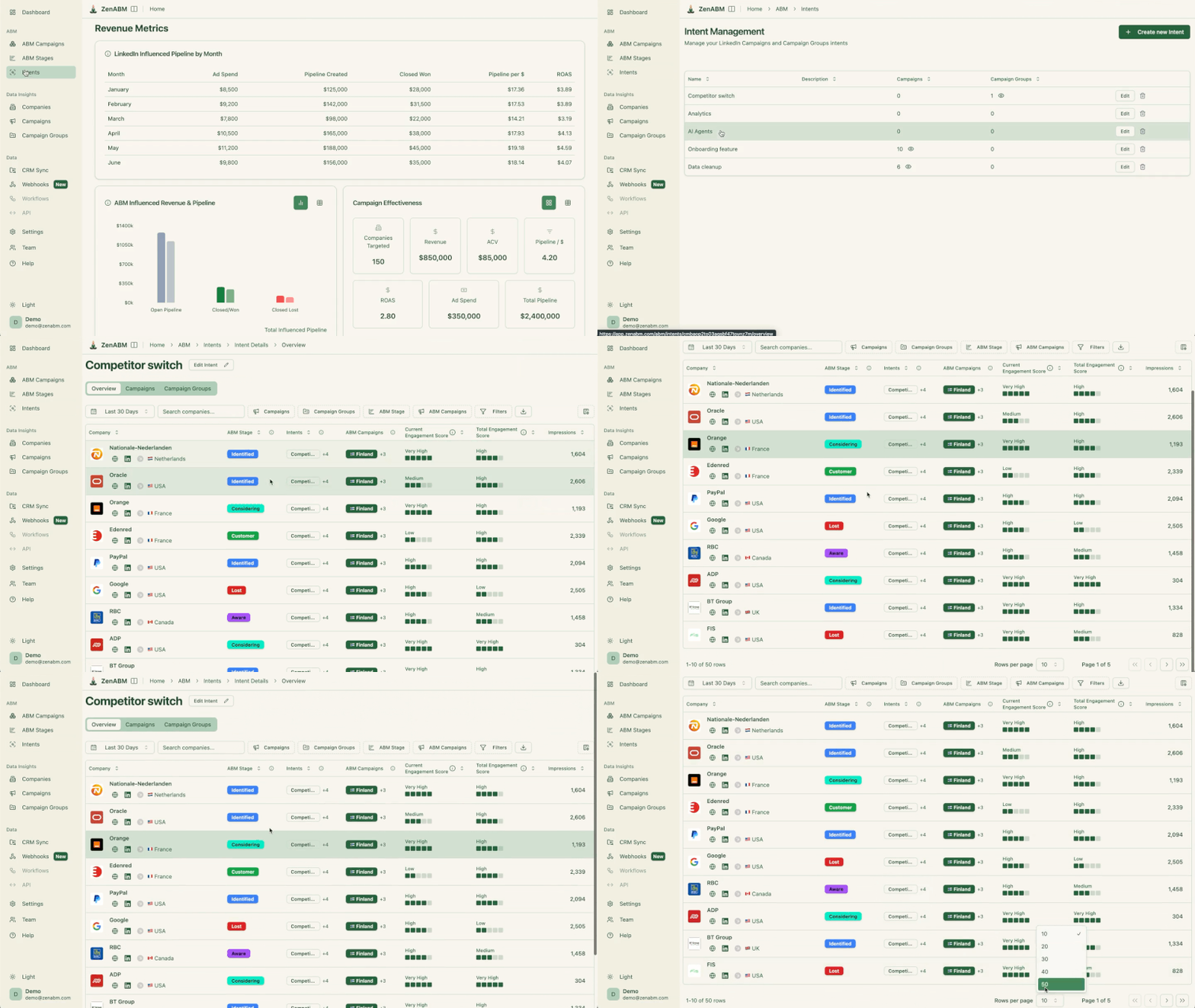
ZenABM connects directly to the official LinkedIn Ads API and records account level data per campaign.
You see which companies view and engage with your ads based on first party LinkedIn data instead of fragile IP or cookie matching. A Syft study caps IP based identification near 42 percent accuracy, so ad engagement is treated as the stronger signal.
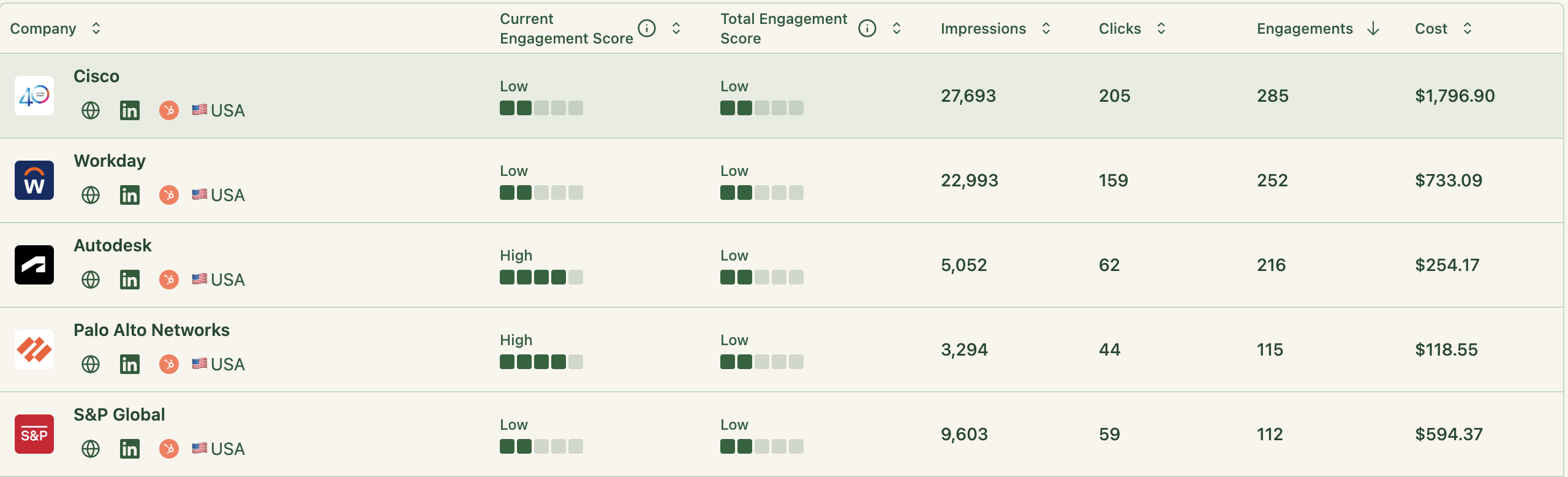
ZenABM updates engagement scores continuously as accounts interact with your ads. You get a full touchpoint history and can define stages such as Identified, Aware, Engaged, Interested and Opportunity.
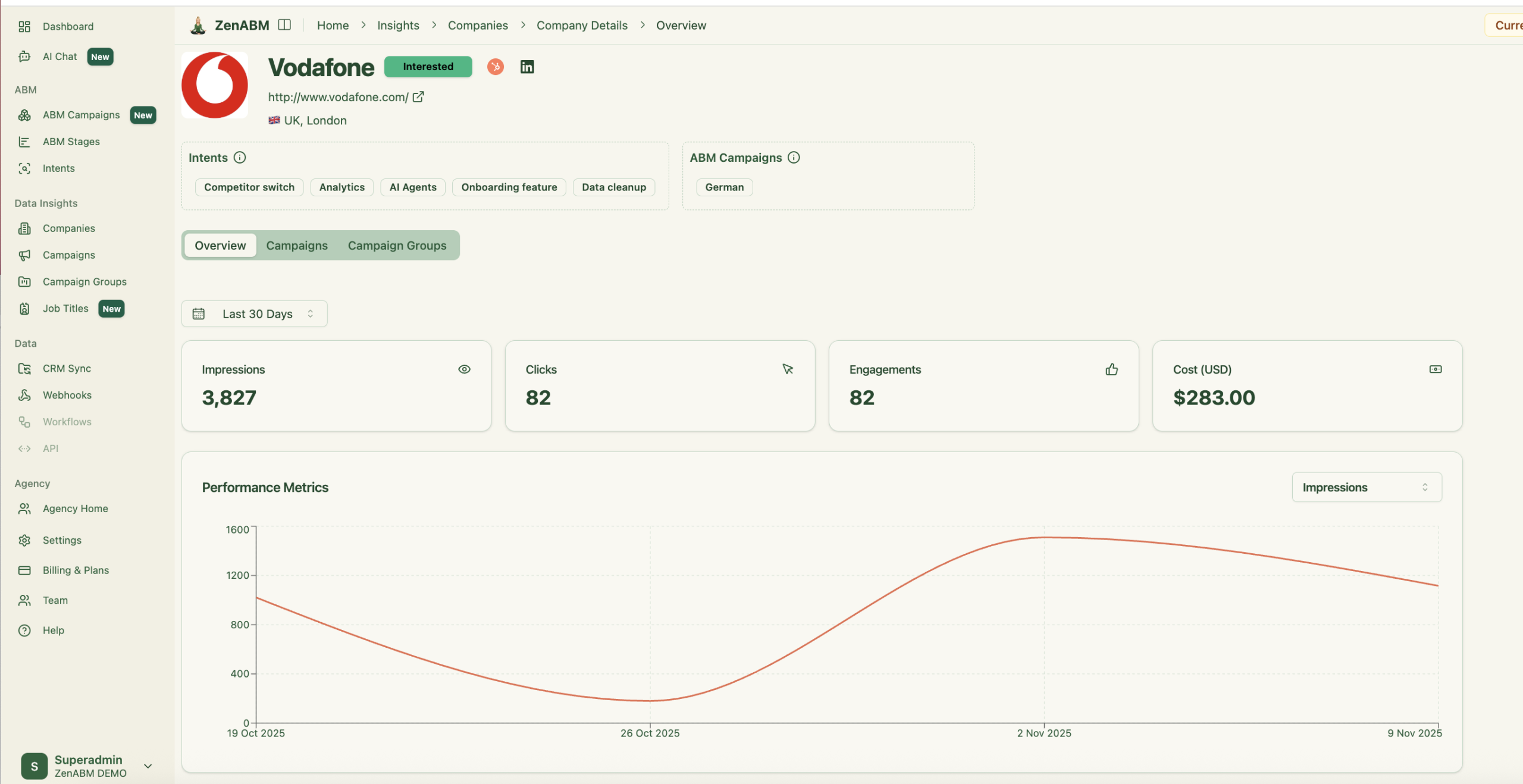
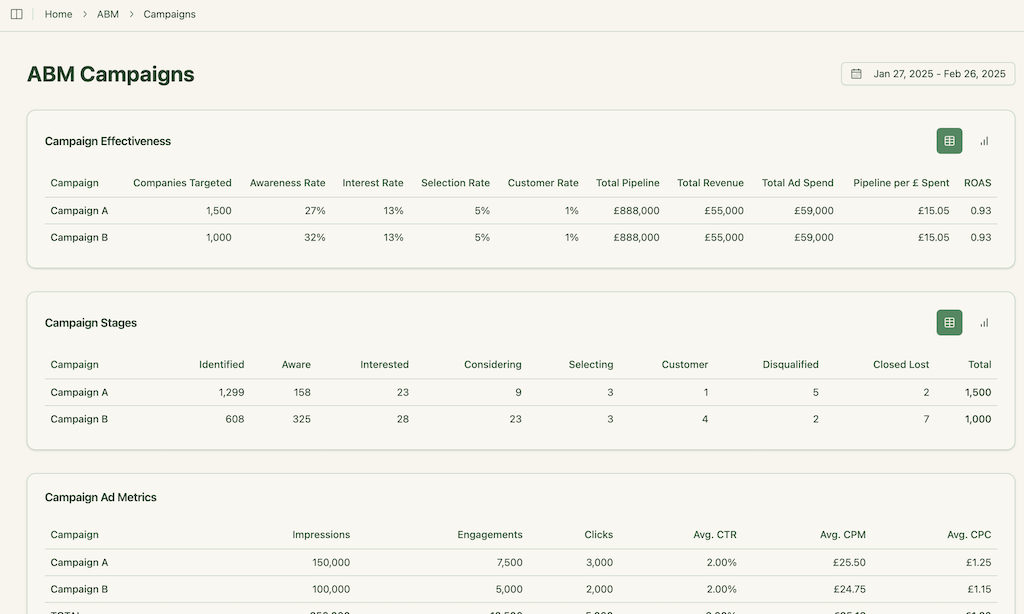
ZenABM syncs bi-directionally with HubSpot and supports Salesforce on higher plans. All LinkedIn metrics can be written as company properties inside your CRM.
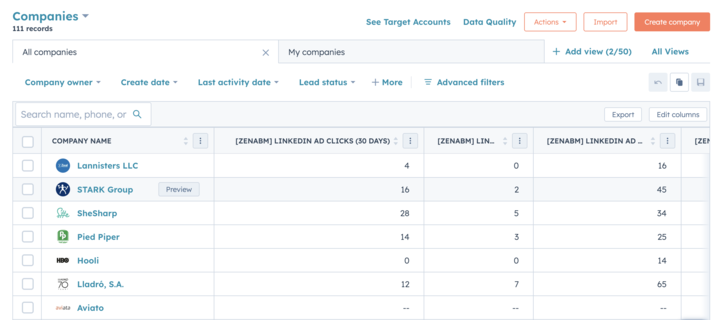
When an account crosses your scoring threshold, ZenABM can update its stage and auto assign a BDR for timely outreach.
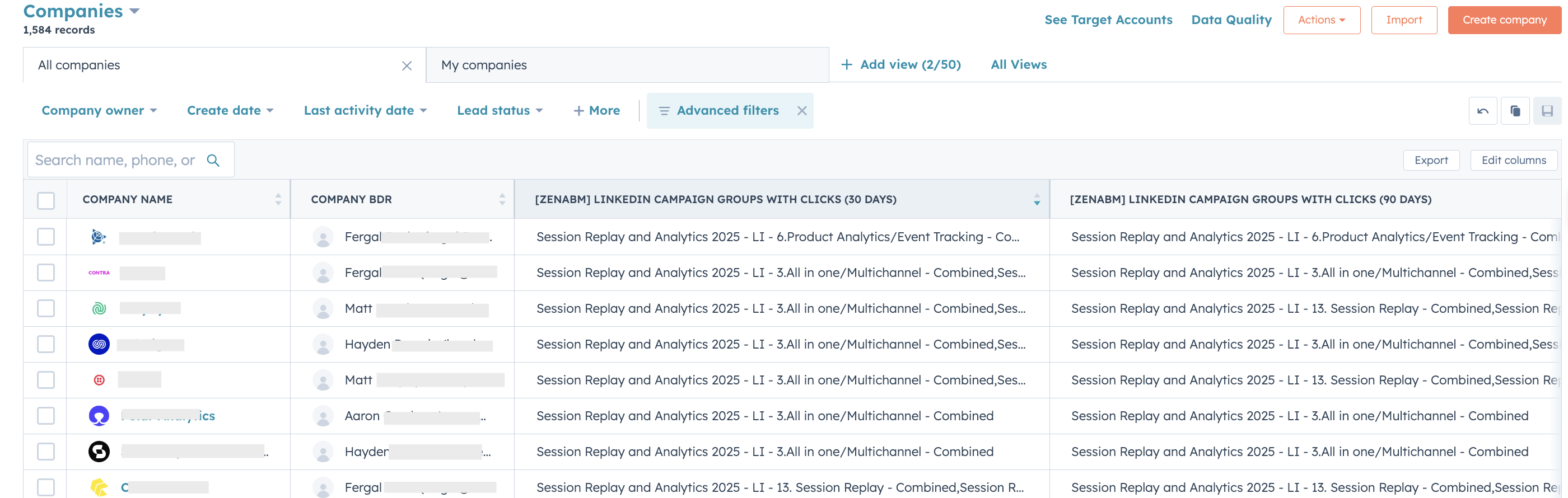
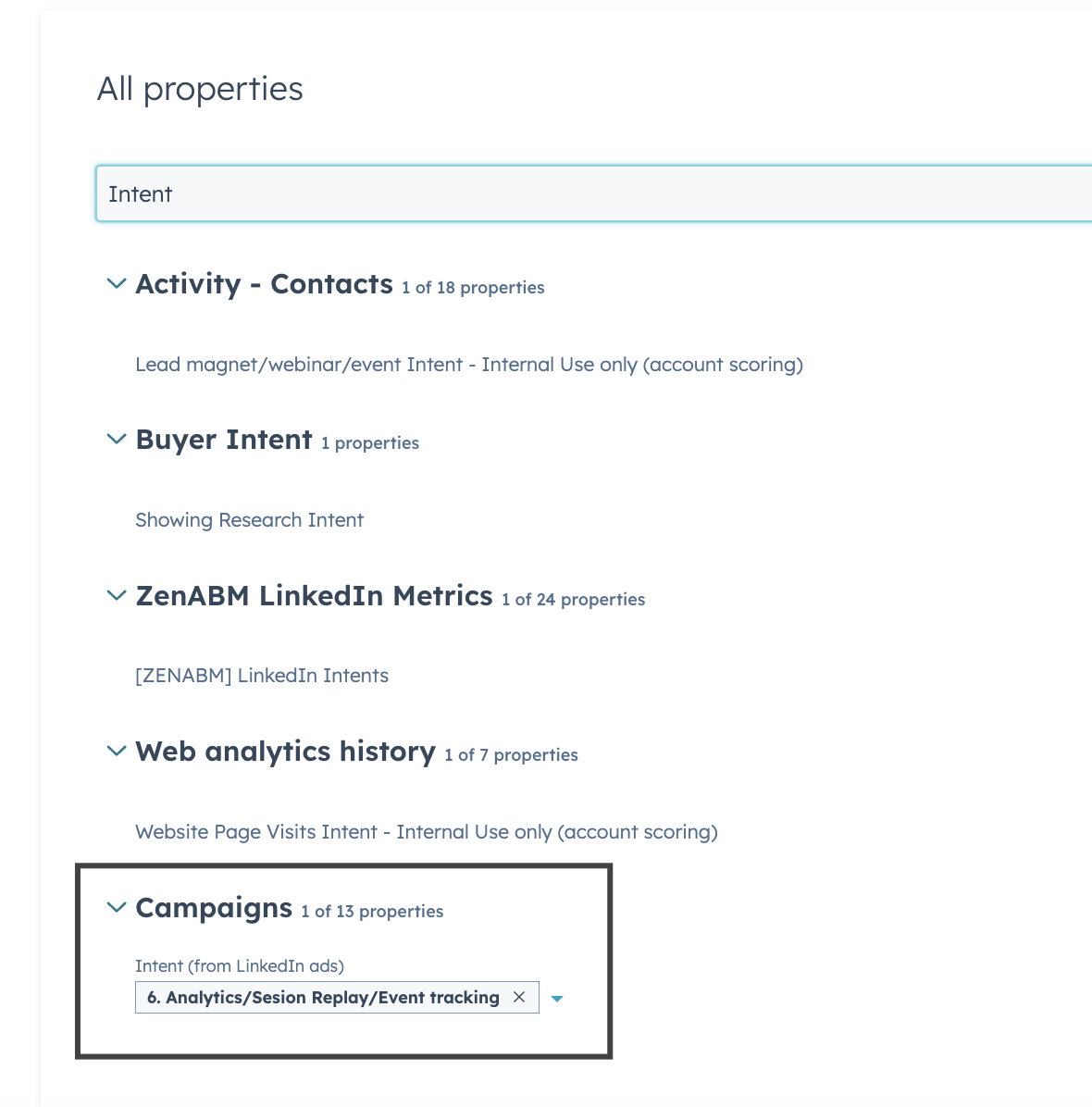
ZenABM lets you pull intent topics from LinkedIn campaigns and tag campaigns by feature, use case or offer.
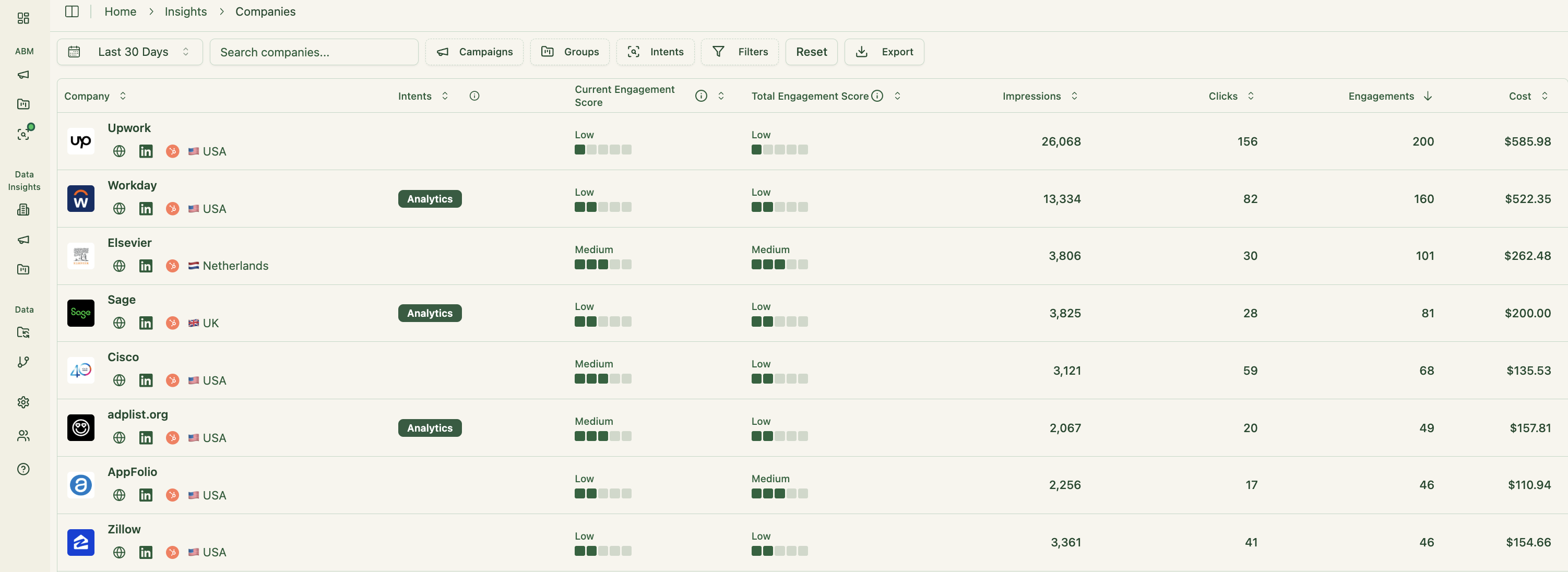
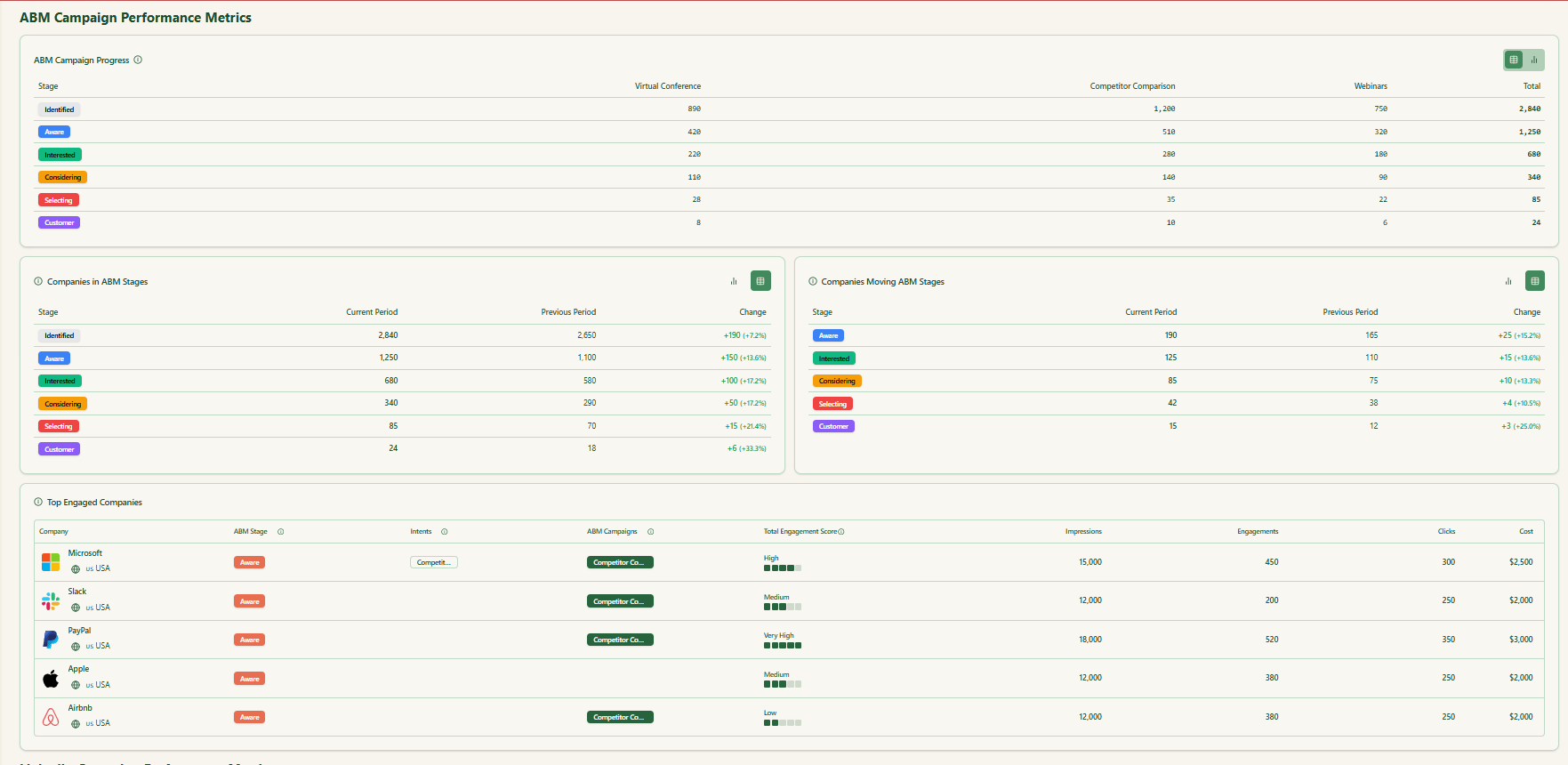
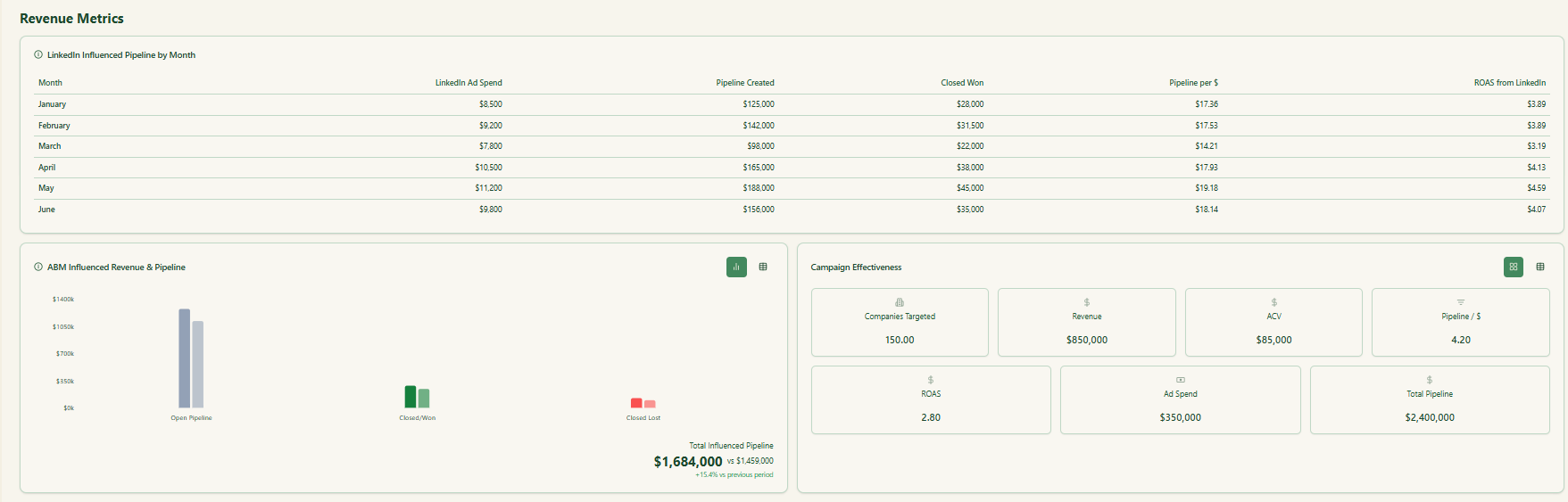
Its ABM dashboards connect LinkedIn ads to account engagement, stages and revenue. Because ZenABM tracks deal value and ad spend per company and campaign, it can calculate ROAS and pipeline per dollar automatically.
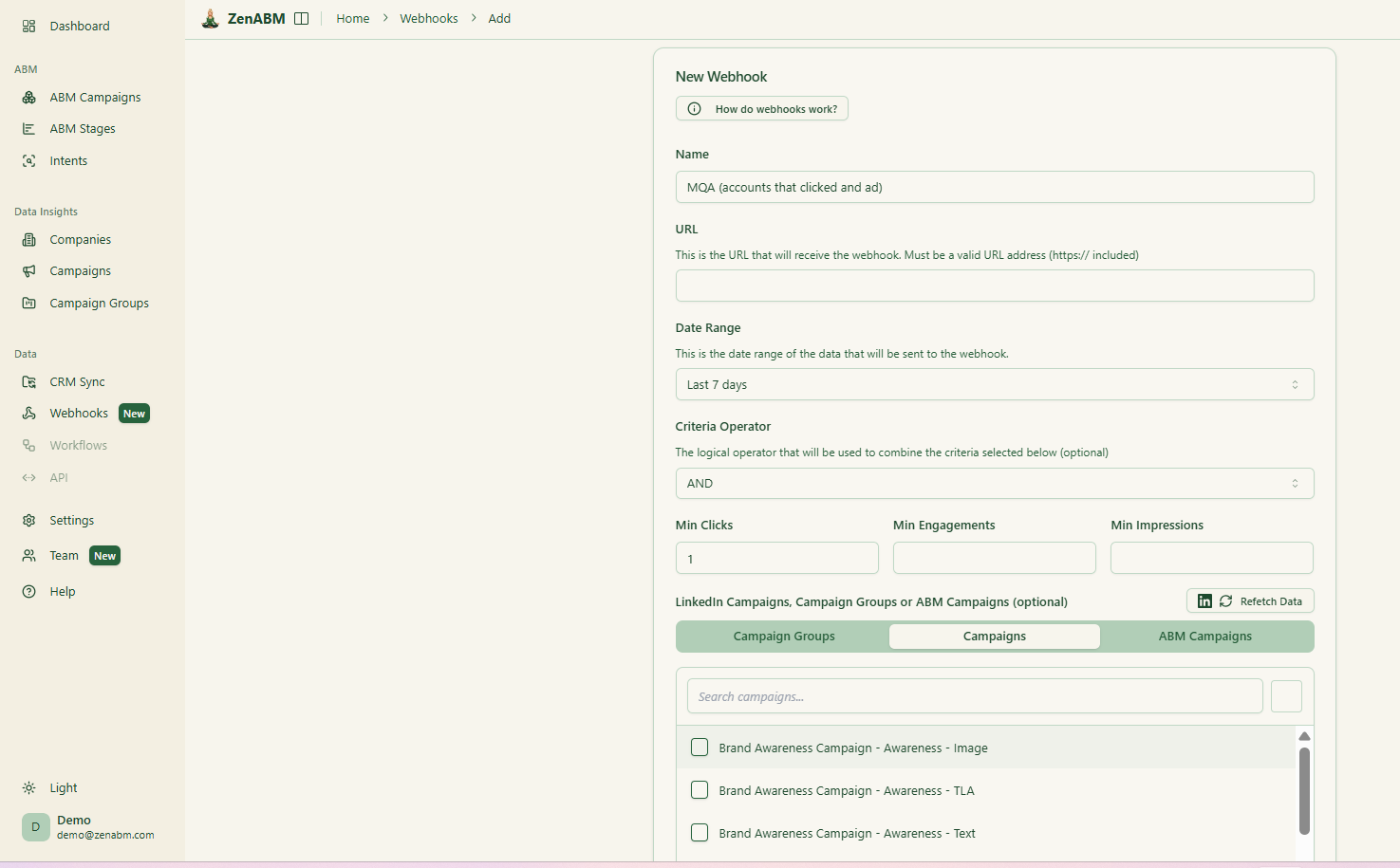
ZenABM webhooks send events into your stack for Slack alerts, enrichment flows and other automation, and job title analytics show which roles are most engaged.
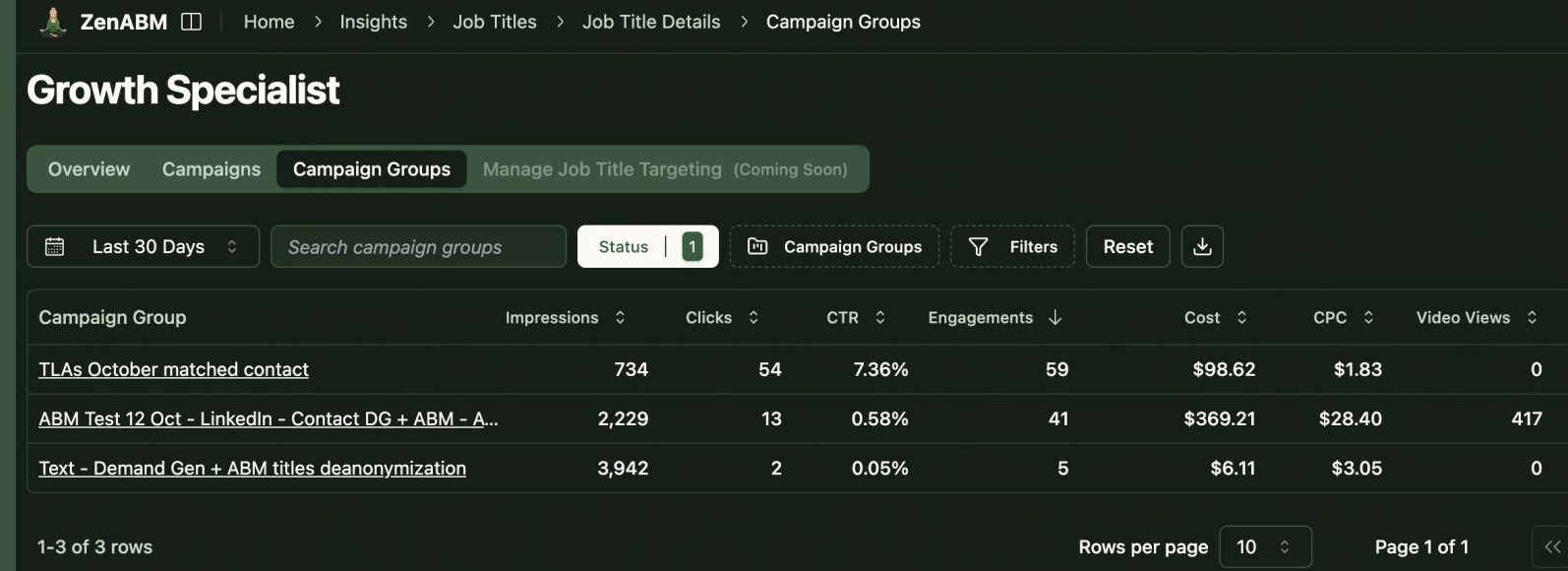
You can also group campaigns into ABM campaign objects and view performance across markets, personas or creative clusters rather than toggling between isolated reports.
ZenABM includes an AI chatbot on top of your LinkedIn API data and ABM model, so you can ask questions like “Which accounts moved from Interested to Selecting last month?” or “What is my pipeline per dollar on retargeting campaigns?”
Agencies can use the multi-client workspace for several ad accounts and ABM campaigns without endless switching in Campaign Manager.
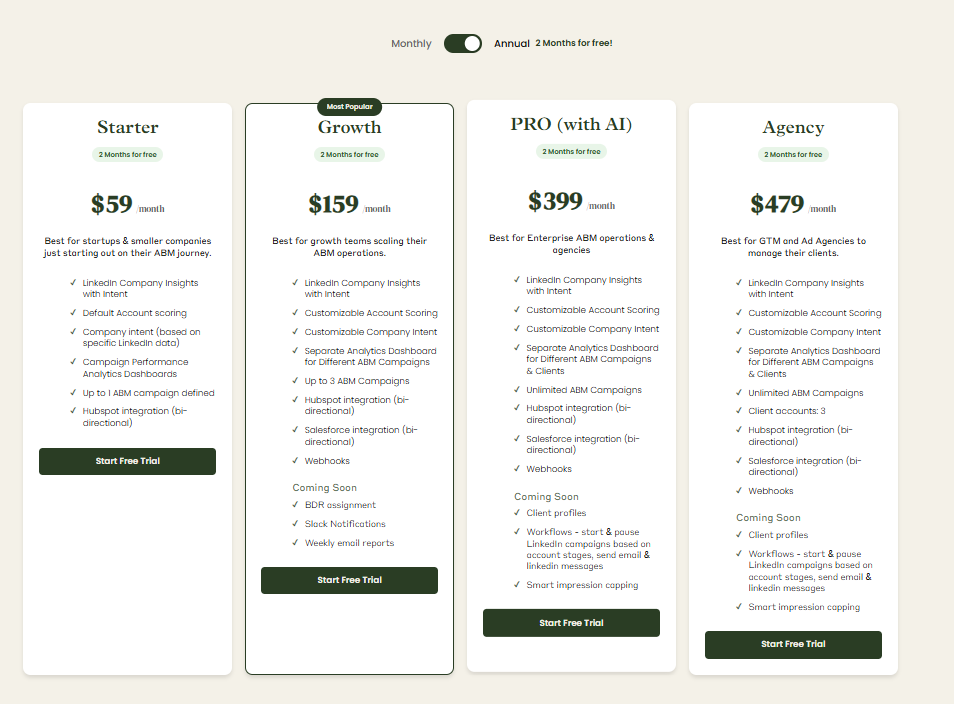
Plans start at $59 per month for Starter, $159 for Growth, $399 for Pro (AI) and $479 for Agency.
The Agency plan still stays under $6,000 per year, and all tiers include core LinkedIn ABM capabilities. Higher tiers mainly lift limits and add Salesforce sync, and every plan comes with a 37-day trial.
Recotap suits teams that want a structured ABM program built around accounts, LinkedIn and personalized web, and have the budget to match.
Influ2 suits teams that want to pay a premium to get in front of specific decision makers and see contact-level signals, usually in large deal, enterprise-style motions.
If you mostly need clean company-level LinkedIn engagement, first-party intent, sensible ABM stages, CRM sync and simple ROAS by company and campaign, ZenABM gives you that without extra bloat or enterprise pricing.
