



Linklo bills itself as a LinkedIn Ads optimization platform built for account-based marketing-like precision.
It lets you schedule LinkedIn ads, balance ad reach across target accounts, integrate “intent” timing, and generally squeeze more efficiency from LinkedIn’s notoriously expensive ad channel.
But does Linklo truly help your ABM strategy, or just add another tool (and cost) to your stack?
Is it worth the price? An underperformer or an overkill?
In this analysis, I’ll break down Linklo’s ABM capabilities, pricing model, and real-world sentiment.
I’ll also discuss how ZenABM (a first-party LinkedIn-focused ABM platform) might be a better alternative.

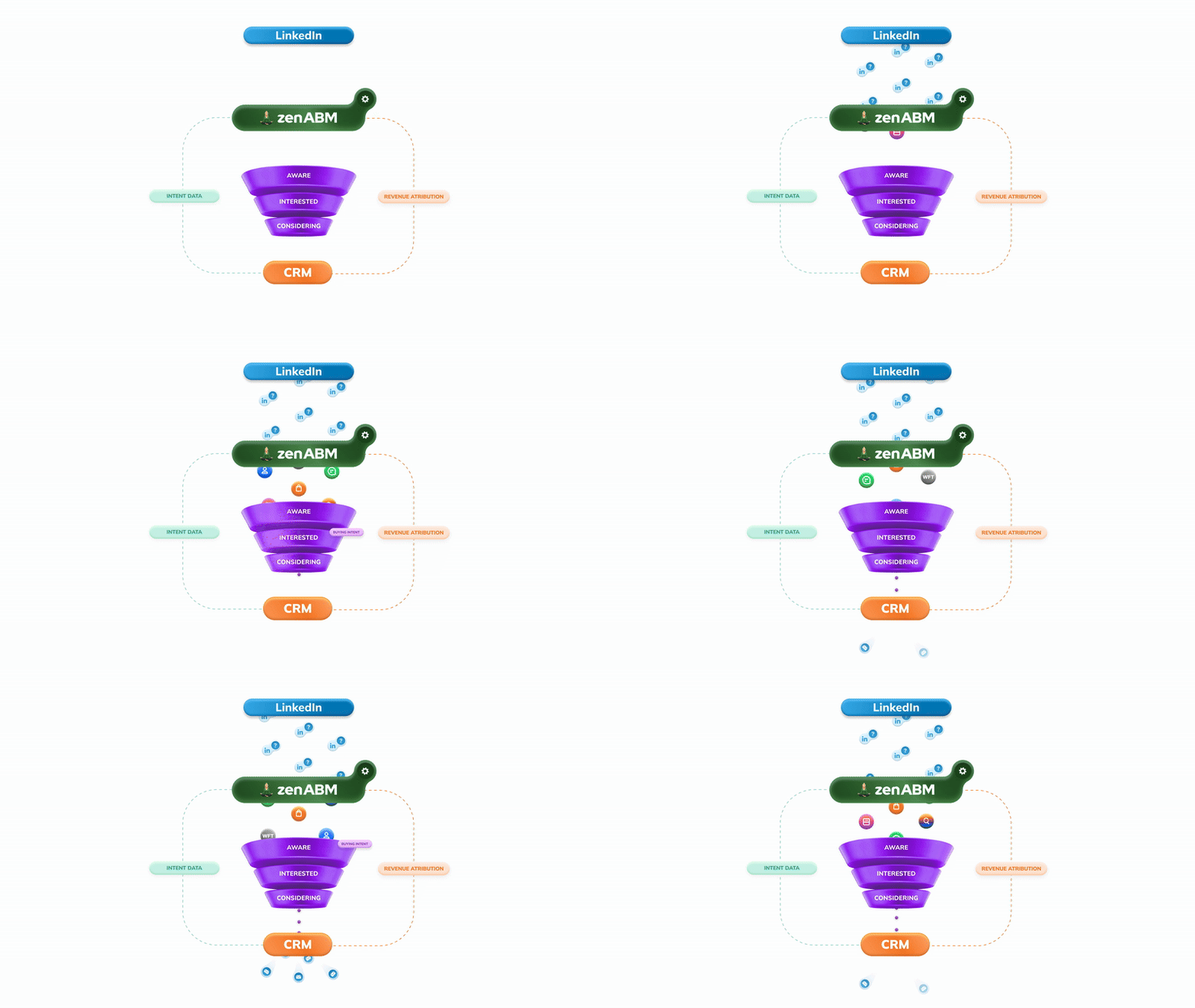
In case you want it short:

Linklo is laser-focused on LinkedIn Ads.
In fact, that’s the only advertising channel it manages.
The platform is essentially a power-user layer on top of LinkedIn Campaign Manager, addressing features LinkedIn itself lacks.
Its core offerings:
Perhaps Linklo’s flagship capability is automated scheduling of LinkedIn ads.
LinkedIn’s own ad platform infamously does not let you daypart or automatically pause campaigns on a schedule.
Linklo fills this gap by letting you set precise times for campaigns to run (e.g. only weekdays 8 am-8 pm).
The idea is to focus budget “where buyers actually engage” – e.g. during business hours, instead of frittering away spend at 2 am.
Linklo provides proprietary Company Flow™ feature to “balance reach/frequency and orchestrate ABM-style sequences” across your LinkedIn campaigns.
In plainer terms, this means Linklo tries to ensure your target accounts each see your ads in a balanced way.
Instead of LinkedIn’s algorithm dumping impressions into only a handful of accounts, Linklo’s Company Flow feature evens out the delivery so one company doesn’t gobble most of your impressions.
Company Flow also implies the ability to sequence ads, meaning you could show Ad A to an account first, then Ad B later as a follow-up.
However, let’s be clear: this is within LinkedIn only.
Linklo isn’t coordinating email touches or Sales Navigator InMails or any off-LinkedIn channels in those sequences.
It’s not a full orchestration platform like, say, Terminus (which coordinates ads, email, web personalization, etc.).
Linklo doesn’t provide any third-party intent data from sources like Bombora, etc.
It assumes you already know your target account list and focuses on delivering ads to them efficiently.
The closest thing to “intent” in Linklo’s toolkit is its use of engagement timing data.
By analyzing when your audience tends to engage on LinkedIn, Linklo can schedule ads during those intent-rich windows (e.g. if decision-makers engage more on Tuesday mornings, it will concentrate spend there).
This is useful, but it’s a far cry from the qualitative intent data that ABM platforms offer.
Pro Tip: Linklo provides no kind of intent data. Other ABM suites like 6sense, RollWorks, etc., provide intent data, but I don’t even prefer that. Third-party intent looks exciting until you realize it’s stitched together from mystery browsing data and hope. It tells you what a single contact might be googling, not what an entire buying committee actually cares about. ZenABM skips the guesswork by giving you first-party company-level intent straight from your own LinkedIn ads. You see which accounts engaged with which themes, which feature groups they reacted to, and how their interest changes over time.
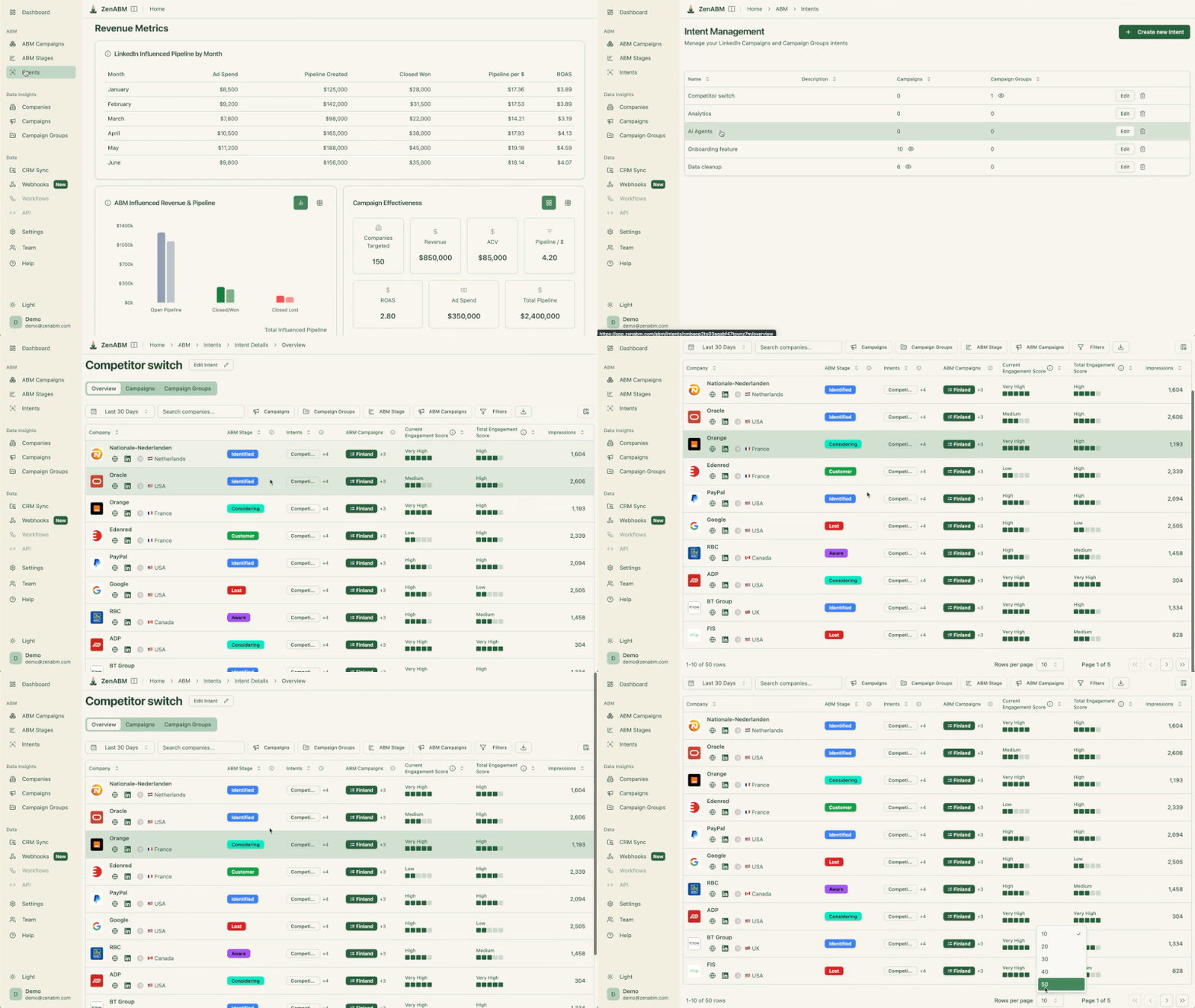
Userpilot, using ZenABM, built their whole ABM campaign structure around this first-party company-buyer’s intent obtained from LinkedIn ads instead of third-party tools:

Linklo, being a lean LinkedIn-focused tool, currently has no native CRM or marketing automation integration.
The platform seems to operate mostly within its own dashboard on top of LinkedIn.
You use Linklo to adjust campaigns, and of course, your leads still flow into LinkedIn’s native lead gen forms or your CRM via LinkedIn’s connectors, but Linklo isn’t pushing account-level insights into your CRM.
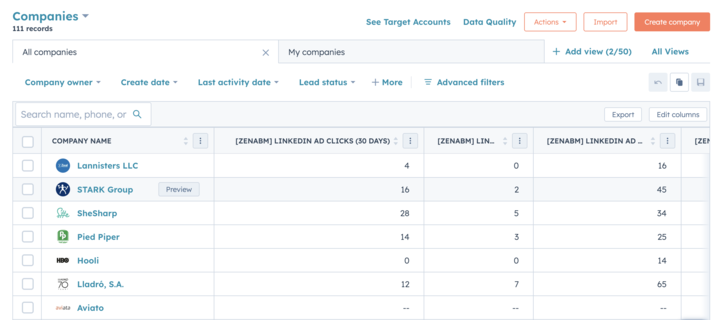
ZenABM, on the contrary, does provide bi-directional CRM sync:

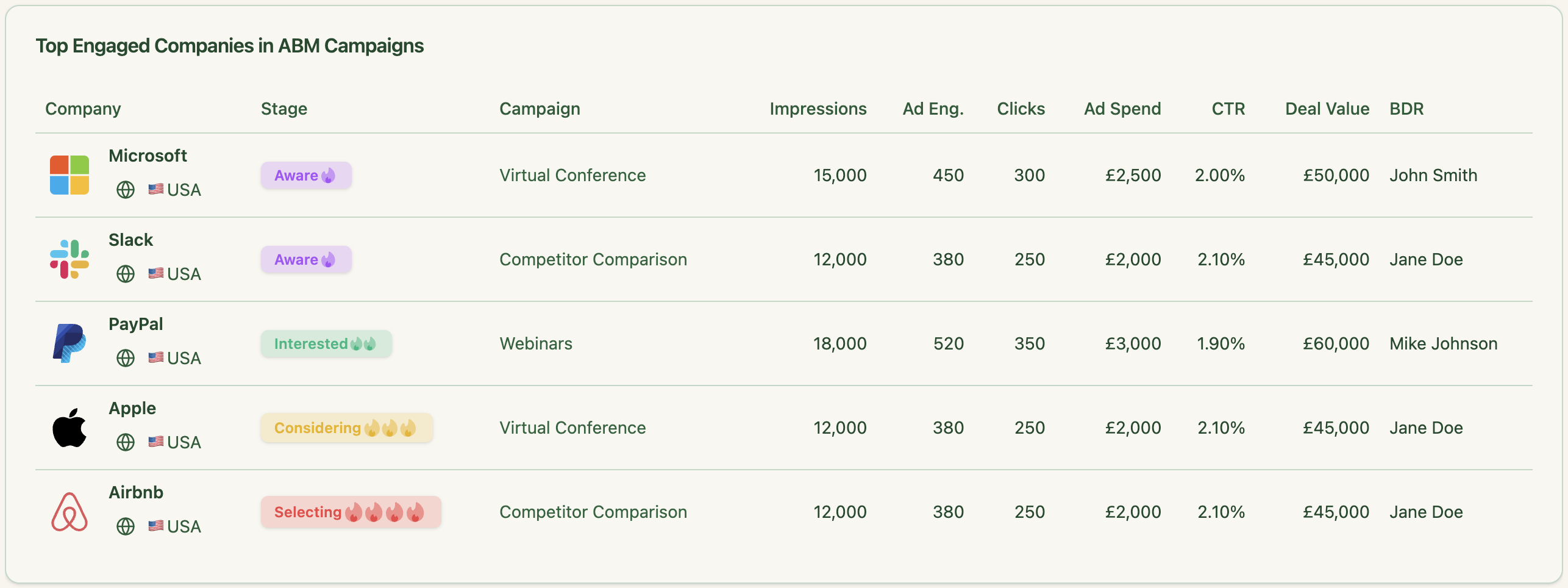
Personalization in ABM usually means tailoring messaging or creatives to each account or segment.
Linklo itself doesn’t create personalized ad content for you.
You still have to design the ads.
However, by orchestrating sequences and controlling frequency per account (via Company Flow), Linklo enables a form of personalization: you could line up different ads for different stages or industries and use Linklo to ensure each account sees the right sequence.
Linklo pricing isn’t available on its site.
Neither is anything available on review sites in that regard.
Again, if you are looking for a LinkedIn ABM tool with clearer pricing, I present ZenABM, starting at just $59/month.

ZenABM offers account-level LinkedIn ad engagement tracking, ad engagement-to-pipeline analytics with plug-and-play dashboards, account scoring, ABM stage tracking, CRM sync, first-party qualitative intent, automated assignment of BDRs to hot accounts, custom webhooks, and ad engagement tracking at the job-title level.

For a grounded view, what are actual users (or tire-kickers) saying about Linklo?
The truth is that public user sentiment is sparse.
Linklo launched in 2023 and hasn’t amassed many reviews on major platforms yet.
On G2, for example, Linklo is listed in the Social Media Advertising category but currently sits at 0 reviews.

TrustRadius and other review sites similarly have no substantial data on Linklo (a TrustRadius search turned up empty as of late 2025).
On social media and forums, the chatter I did find was a mix of curiosity and cautious optimism.
On Reddit, Linklo’s name has popped up in discussions among pay-per-click and LinkedIn Ads practitioners.
In one thread about scheduling LinkedIn ads (a question born out of frustration with LinkedIn’s limitations), a user mentioned Linklo as a known solution, though they admitted they hadn’t used it yet.

One alternative to Linklo is ZenABM.
It is specifically designed for LinkedIn ABM, so it can either be a complete, lean and affordable alternative to Linklo for teams that mainly advertise on LinkedIn.
Let’s look at its features:
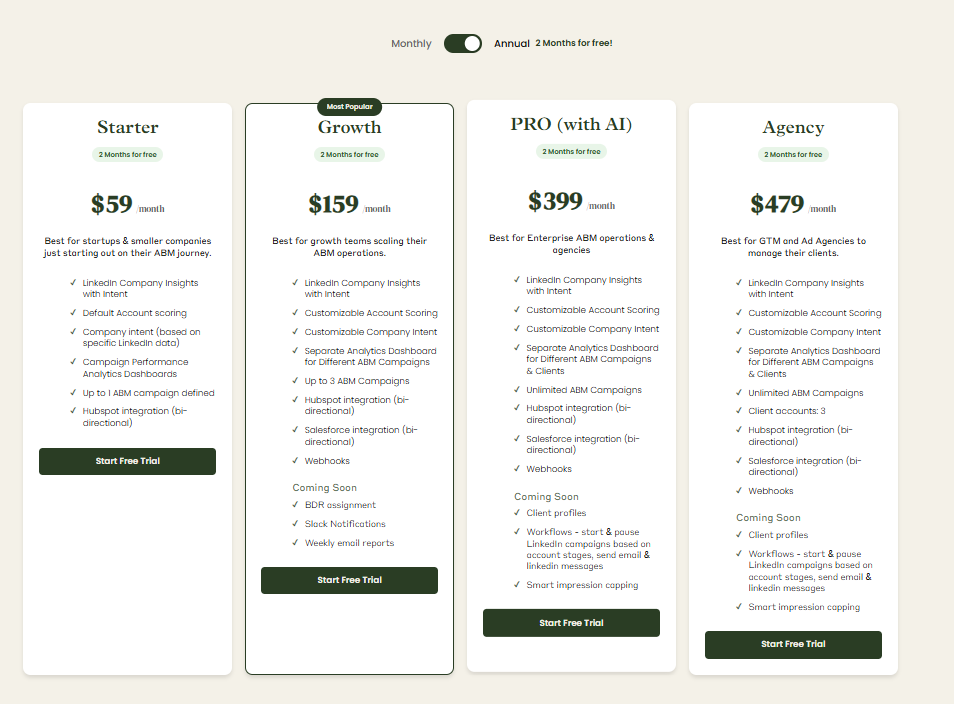
Plans start at $59/month for Starter, $159/month for Growth, $399/month for the Pro (AI) tier, and $479/month for the agency tier.
Even the highest tier costs under $6,000/year.
All plans cover essential LinkedIn ABM functions, with higher tiers mostly expanding limits or adding Salesforce integration.
Pricing is flexible (monthly or annual with two months free), and a 37-day free trial allows teams to try before buying.
Linklo helps sharpen how your LinkedIn ads run, especially with scheduling and pacing, but it stops short of giving you the deeper ABM visibility most teams need.
If your goal is true account-level insight, real buyer intent, and pipeline attribution, Linklo becomes just one more tactical tool in the stack.
ZenABM covers the strategic layer Linklo cannot, giving you first-party engagement data, scoring, stages, intent, and revenue insight for a fraction of the cost.
For LinkedIn-heavy teams, it is the more complete and affordable way to run ABM.
