



LinkedIn message ads land directly in your target accounts’ LinkedIn inboxes.
Unlike sponsored content that competes for attention in the feed, message ads feel personal.
They look like a direct message from a real person.
For ABM campaigns, this creates a unique opportunity to reach decision-makers in a format that is harder to ignore.
And Message ads are among the more polarising formats.
They can work extremely well for the right use case, but they are easy to get wrong.
In this guide, I will cover exactly how to use LinkedIn message ads for ABM, what benchmarks to expect, and when you should (and should not) use them.

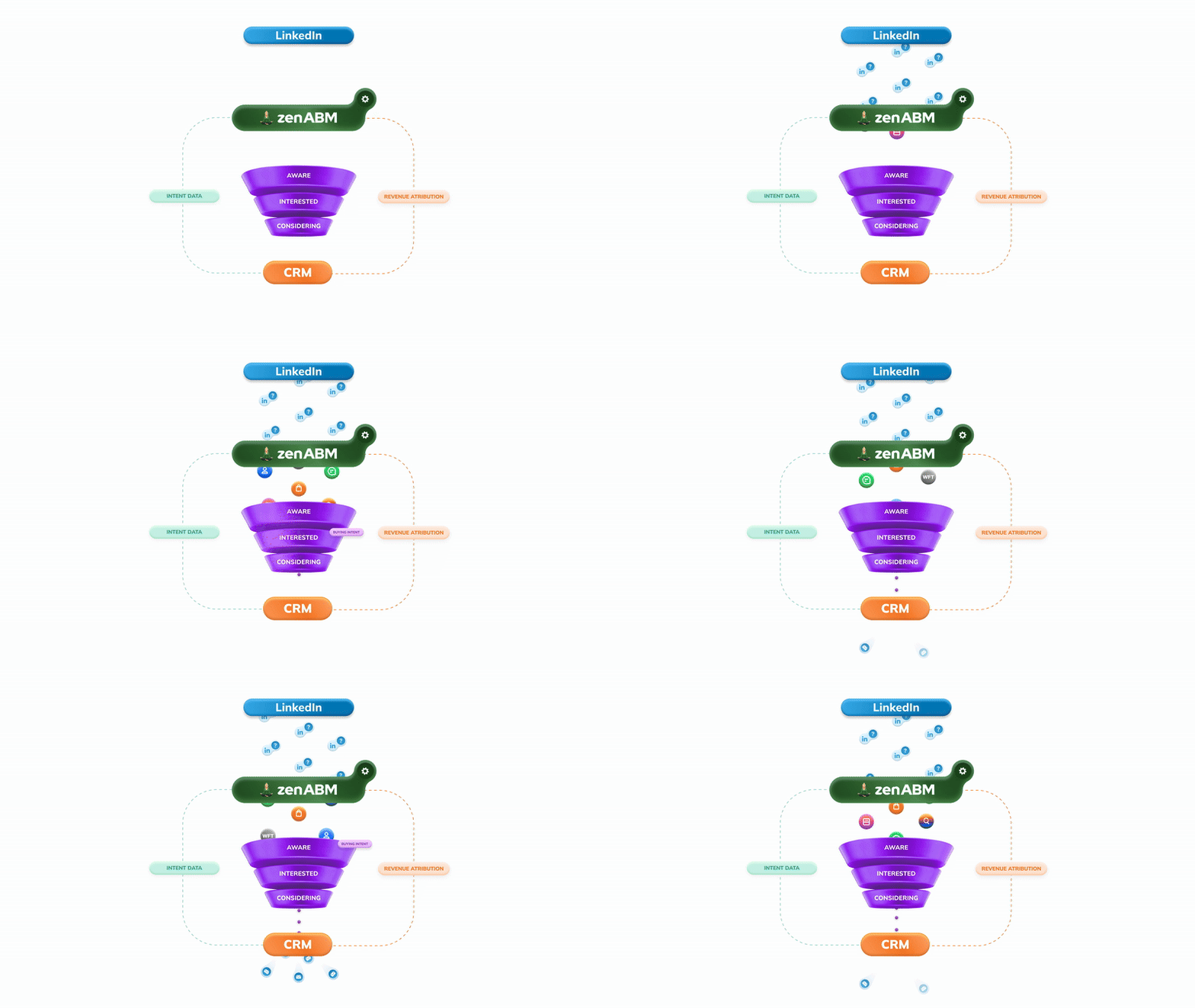
In case you want a quick rundown:

LinkedIn message ads (formerly called Sponsored InMail) are ads delivered directly to a LinkedIn member’s inbox.
They appear as a message from a specific sender, typically a person at your company, not a company page.
The recipient sees the message in their LinkedIn messaging tab, complete with a subject line, body text, and a CTA button.
Here’s what message ads look like inside one’s inbox:

Key characteristics of LinkedIn message ads:
Here are the steps to set up LinkedIn message ads for account-based marketing:

Start by choosing the campaign objective.
For message ads, I recommend using the Website Visits objective for most ABM use cases.
Avoid the Website Conversions objective:
“Do not use website conversions. It’s a more expensive version of website visits.” — Maximillian Herczeg, former LinkedIn employee and Founder of Comrade
After the objective is set, select the right sender and be serious about it, because the sender profile matters even more than the message copy.
Choose someone whose title and photo will resonate with your target audience.
For C-suite targets, use a C-suite sender.
For practitioners, use a peer-level sender.
Also, try to ensure that the sender is a first-degree connection of your LinkedIn page.

The third step is actually where most mistakes happen.
I’m talking about uploading your company list as a matched audience.
For this step, I suggest you:


After the TAL stuff is done, it’s time to finally write the copy of your message ads.
Recommendations:
Avoid:
Message ads use a cost-per-send (CPS) pricing model.
You pay for each message delivered.
So, set your bid based on how many target account members you want to reach.
Remember the frequency cap: you can only reach each person roughly once every 45 days, so plan your cadence accordingly.
Based on data from ABM campaigns tracked through ZenABM and the LinkedIn ABM Performance Benchmarks Report 2026, here are the benchmarks you should expect from message ads:
The 30% open rate sounds high compared to email marketing, but remember, LinkedIn message ads have a built-in advantage.
They are only delivered when the recipient is active on LinkedIn, so the “open” is almost guaranteed if the person checks their messages.
The real metric that matters is the CTR, and at ~3%, message ads significantly outperform most other LinkedIn ad formats in terms of click-through.
Scenarios where LinkedIn message ads work the best:
Sending event and conference invitations is the strongest use case for message ads in ABM.
When you are inviting target accounts to a webinar, workshop, or in-person event, a personal message from a real person at your company feels natural.
The ~$11 CPL for conference/event invitations is hard to beat with other formats.
The message format works because event invitations are inherently personal. “Hi [Name], I wanted to invite you to…” reads like something a colleague would send, not an advertisement.
If you have a genuinely valuable piece of content, like a a benchmarks report, an industry analysis, or a detailed guide, message ads can be an effective way to deliver it to specific people at target accounts.
The keyword is “genuinely valuable.”
If the content is a thinly disguised product pitch, the message format will make the recipient feel tricked.
Lastly, message ads work great for BOFU outreach to engaged accounts.
See, when accounts have already engaged with your ABM campaigns on LinkedIn (visited your website, clicked on ads, consumed your content), a message ad offering a direct conversation can be effective.
And this is not cold outreach; it is a warm touch with accounts that have already shown interest.
As Emilia said in the ZenABM ABM Bootcamp:
“When accounts are starting to engage with your ads and show interest, don’t just leave them to their own devices, engage them.” – Emilia Korczynska, VP Marketing at Userpilot and co-creator of ZenABM ABM Bootcamp
Well, if there are great avenues for message ads, there are bad ones too:
Message ads don’t work if they land in the inboxes of completely cold target accounts.
I mean, for accounts that have never heard of you, a message ad can feel spammy.
It sits right next to their real messages from colleagues and connections, and an unsolicited pitch from an unknown company creates a negative first impression.
Secondly, message ads asking someone to “book a demo” or “schedule a call” without any prior relationship rarely perform well.
The format creates an expectation of personal, relevant communication, but a sales pitch does not meet that expectation.
While LinkedIn does allow you to attach Lead Gen Forms to message ads, I would caution against this approach.
Lead gen forms collect contact information, but the leads are typically low intent.
For ABM, where you already know which accounts you are targeting, collecting more contacts is less valuable than driving meaningful engagement.

LinkedIn conversation ads are a more interactive version of message ads.
While message ads have a single CTA button, conversation ads offer multiple buttons that branch into different paths, like a choose-your-own-adventure message.
For ABM, simple message ads work better over conversation ads in most cases.
Here is why:
That said, conversation ads can work well for qualification if you want to route different personas to different landing pages within the same campaign.
But for most ABM scenarios, a targeted message ad with a single CTA is more effective.
Apart from how the copy should look (that we already discussed), here are some additional tips for making LinkedIn ads messages work for your ABM motion:
The 45-day frequency cap means you get limited shots with message ads.
Make each one count.
Do not waste a send on a weak offer.
Save message ads for your highest-value invitations and content.
Ensure the sender is relevant to the audience, because it matters!
For example, a message from “VP of Marketing” resonates differently than one from “Account Executive.”
So, choose a sender whose title and background will create credibility with the specific people you are targeting at your ABM accounts.
Message ads should not be your only touchpoint, and should also not be aloof from the rest of your efforts.
I mean, ABM is all about reinforcing all th touchpoints together for a compounding effect, right?
So, use them alongside single-image ads, spotlight ads, and thought-leader ads to create a surround-sound effect for your target accounts.
Regarding measurement: Do not just measure open rates and CTRs. Use company-level engagement tracking to see if message ad recipients from target accounts take further action on your website or engage with other campaigns.
This is also where a tool like ZenABM becomes more useful than a basic campaign report.
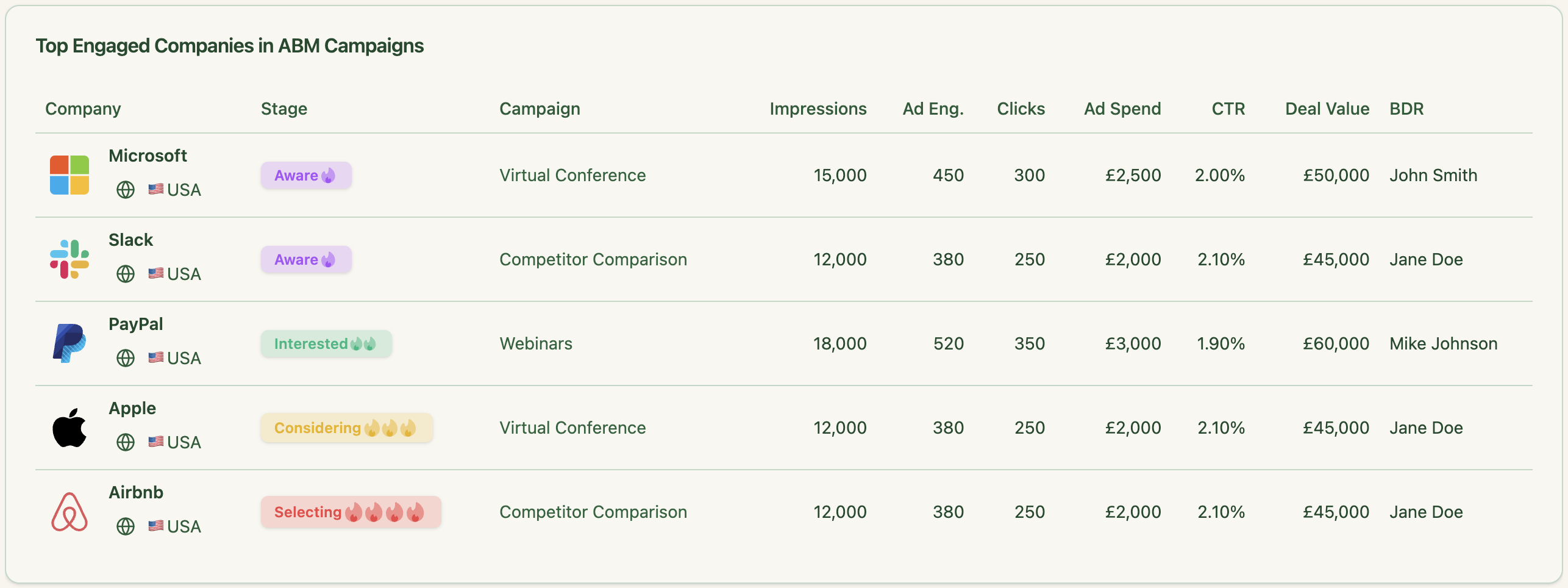
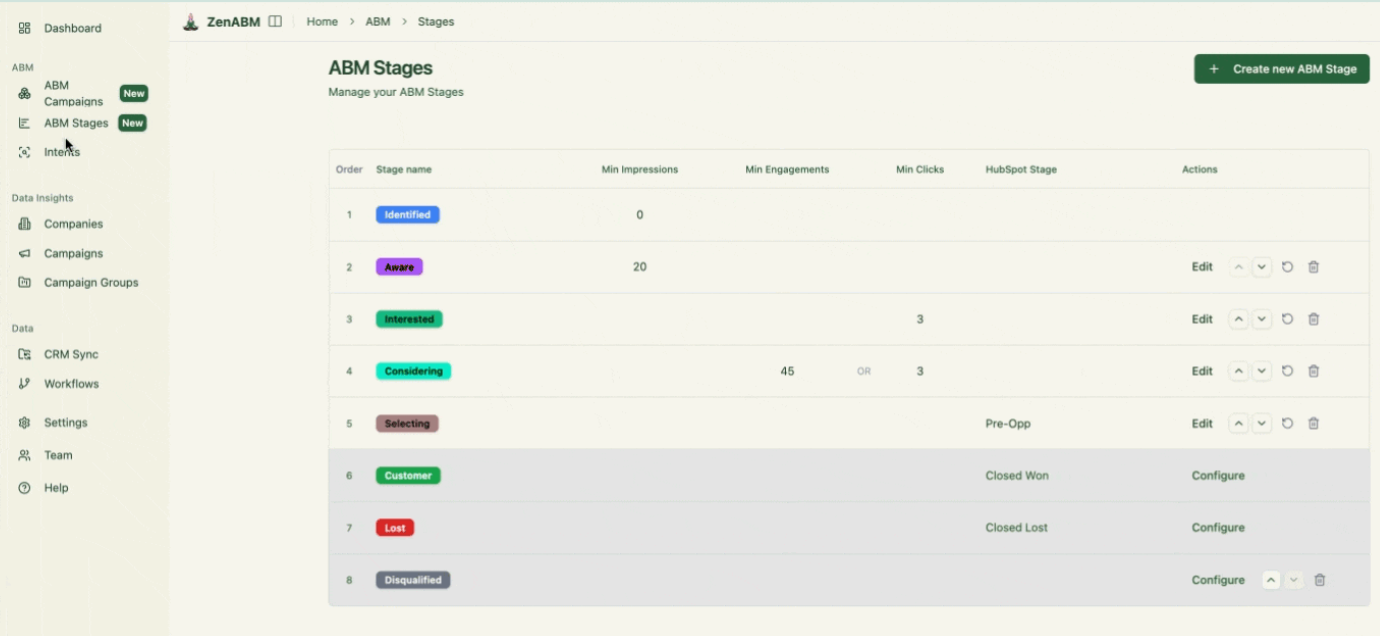
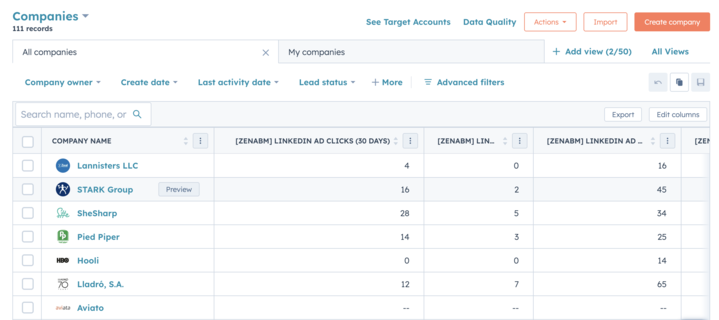
Its CRM sync and ABM stage tracking let you see whether the accounts that engaged with a message ad actually moved from awareness to consideration to pipeline, instead of leaving you stuck with inbox metrics that look good but mean little.
LinkedIn message ads work best when they feel like a timely, relevant nudge to accounts that already have context on who you are.
They are especially strong for event invitations, content distribution, and BOFU outreach to engaged accounts, but weak for cold sales pitches to unaware accounts.
And if you want to operationalize that properly, not just report on it, ZenABM gives you a few genuinely useful levers: company-level LinkedIn ad engagement, automated BDR assignment when target accounts cross engagement thresholds, and custom webhooks that can trigger downstream workflows once the right accounts start responding to your ABM motion.
Try ZenABM for free (37-day free trial) or book a demo now to know more!
LinkedIn message ads use a cost-per-send pricing model. For ABM campaigns with targeted audiences, expect to pay between $0.50 and $1.00 per send. For event invitations, the effective cost per lead is around $11 based on benchmarks from ABM campaigns.
LinkedIn limits how often a member receives message ads from the same advertiser to roughly once every 45 days. This means you need to plan your message ad cadence carefully and save sends for your most important communications.
Yes. Unlike spotlight ads and text ads, message ads are delivered to the recipient’s LinkedIn inbox and can be opened on both desktop and mobile. The message appears wherever the recipient checks their LinkedIn messages.
For ABM campaigns, I generally recommend driving to a landing page rather than using Lead Gen Forms. Lead gen forms collect low-intent contact information, and since you already know which accounts you are targeting in ABM, the value of collecting more contacts is limited compared to driving meaningful website engagement.
LinkedIn message ads (formerly called Sponsored InMail) are paid advertisements delivered through LinkedIn’s ad platform. They are different from regular InMail, which is a LinkedIn Sales Navigator or Premium feature for sending direct messages. Message ads are sent at scale through Campaign Manager, while InMail is sent individually through the LinkedIn interface.
