



In this guide, I have compared InsightSync vs. HockeyStack on features, pricing and ABM fit so your marketing and sales teams can quickly see which platform aligns with their ABM motion.
I have also discussed how ZenABM can work as a lean LinkedIn-first alternative or serve as a complementary layer due to its unique features.

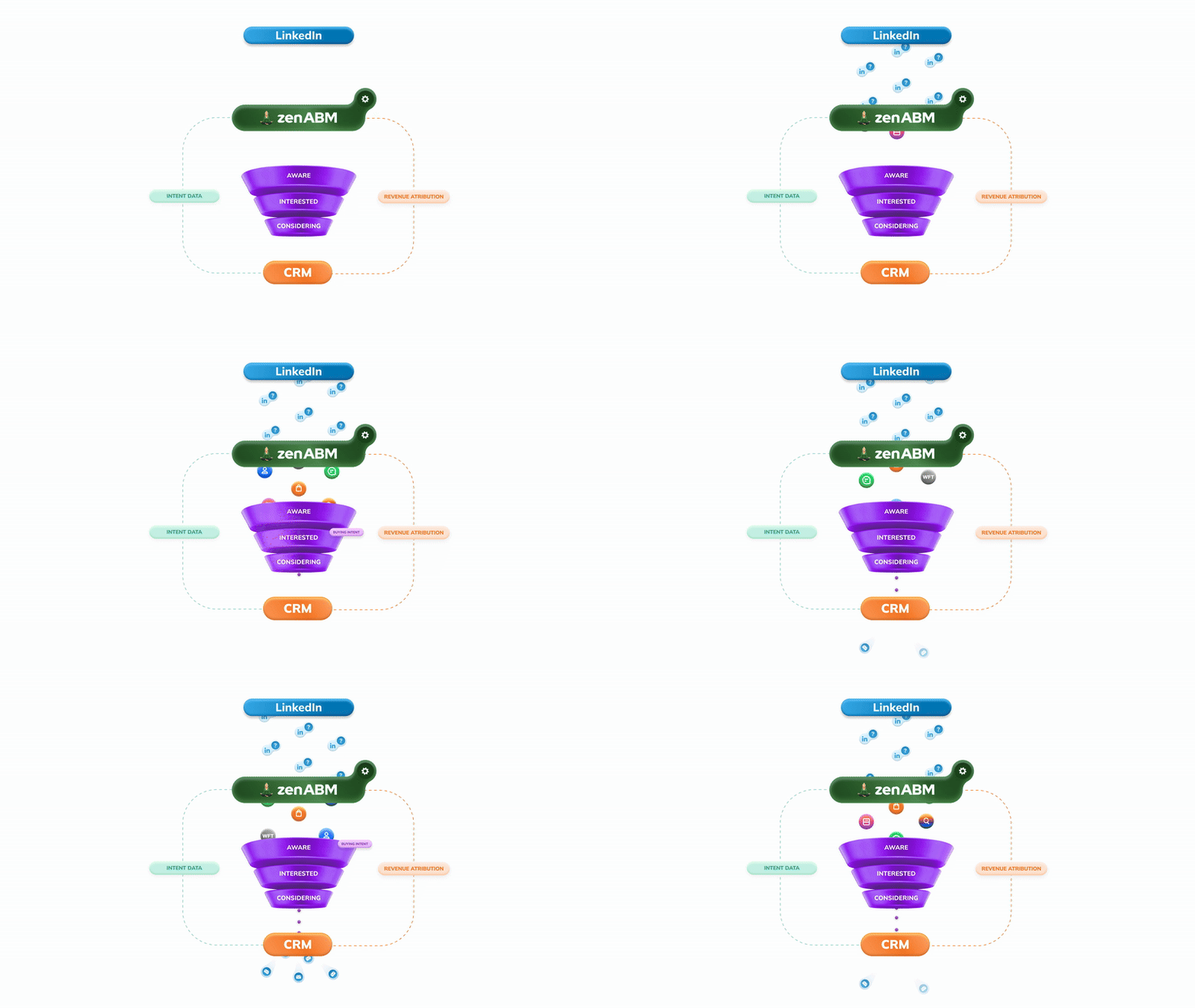
In case you want a quick InsightSync vs. HockeyStack comparison:
| Category | InsightSync | HockeyStack |
|---|---|---|
| Platform Type | ABM intelligence and competitive insight platform | B2B revenue analytics platform |
| Main Focus | Account engagement and competitor awareness | Attribution and revenue analytics |
| Primary Strength | Competitive intelligence plus ABM views | Multi-touch funnel reporting |
| ABM Orientation | Analytics-first, channel agnostic | Analytics-first, channel agnostic |
| Ad Execution | No | No |
| Intent Signals | Engagement across channels | Website plus third-party intent |
| CRM Integration | Limited native support | Strong analytics-centric sync |
| Pricing Transparency | Medium | Low |
| Typical Annual Cost | Eight to twelve thousand | Twenty-five thousand plus |
A third option: ZenABM gives account-level LinkedIn ad engagement, pipeline dashboards, account scoring, ABM stages, CRM sync, first-party qualitative intent, automated BDR assignment, custom webhooks, an AI chatbot Zena that gives deep LinkedIn ABM analytics in natural language, and job title analytics starting at $59 per month.
InsightSync is a newer ABM and competitive intelligence platform that pulls target accounts, engagement and competitor research into one shared system.
The promise is simple: tighter GTM alignment without adding another media buying tool.
InsightSync combines three main modules in one ABM platform.
This is InsightSync’s main edge over ABM-only tools.
The Competitive Intelligence Hub tracks competitors and market moves in one place.

InsightSync aggregates competitor content from news sites, press releases and internal or external blogs into one feed so you are not juggling scattered alerts.
You can tag items by competitor or topic, react, share with colleagues and set alerts for chosen tags or keywords, such as when a rival announces a new funding round or acquisition.

The CI Hub stores structured profiles for each competitor, including logos, partners, alliances, pricing notes and positioning, so everyone works from the same reference.

InsightSync ingests PDFs, whitepapers and internal decks and lets you query or summarize them through AI search.

The ABM Hub revolves around three questions:
It becomes the home for your account-based marketing workflows.
You can import or build target account lists from your CRM or CSV files.
Each account becomes a record you enrich over time with firmographics such as industry, size and tech stack.
Once your TAL is set, InsightSync tracks engagement from ads, email and meetings in a single timeline.
You can weight actions so high intent steps like demo requests outrank casual newsletter opens and high scoring accounts bubble up as sales ready.
InsightSync flags accounts that heat up or cool down so teams double down where momentum grows and step in when important accounts go quiet.
Account level views also support shifting budget to active segments and adjusting messaging where engagement lags.
InsightSync is positioned to grow with ABM maturity and references automated outreach workflows, though public details are still limited.
Important context: InsightSync’s ABM Hub is channel agnostic and analytics-focused. It is not an ad network or full marketing automation tool like Demandbase or RollWorks. You still run campaigns in LinkedIn, HubSpot and other systems while InsightSync ingests data for reporting and attribution.
For LinkedIn-heavy teams, ZenABM connects directly to the LinkedIn Ads API.
It pulls company-level impressions, clicks, engagement and spend, scores accounts, syncs this data into the CRM as company properties and routes hot accounts to BDRs automatically.
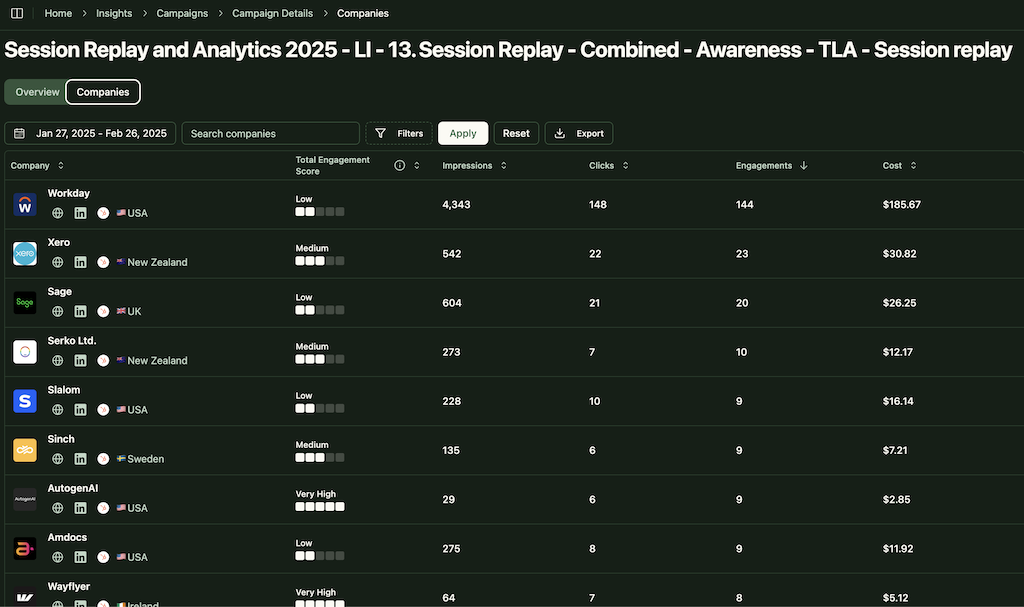
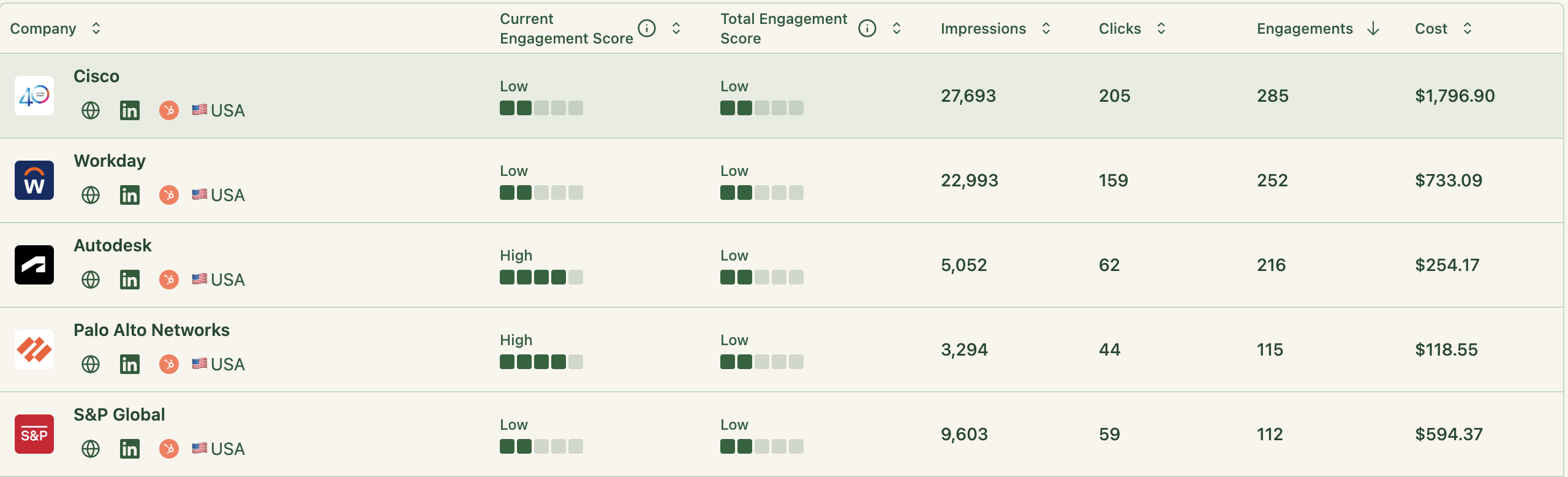
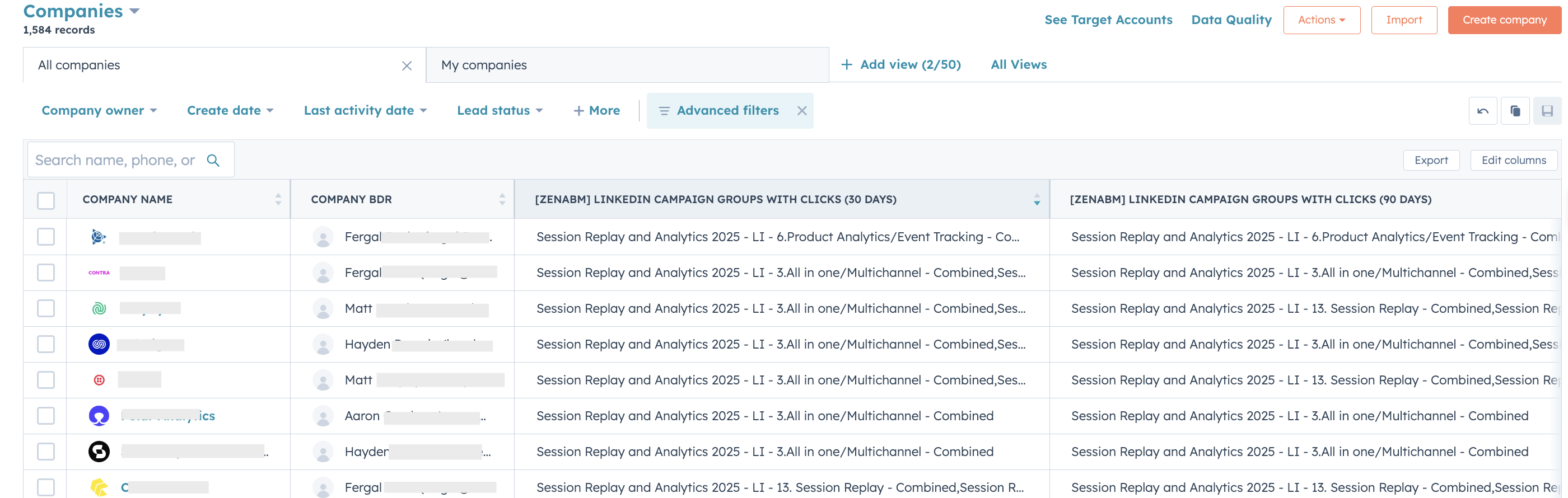
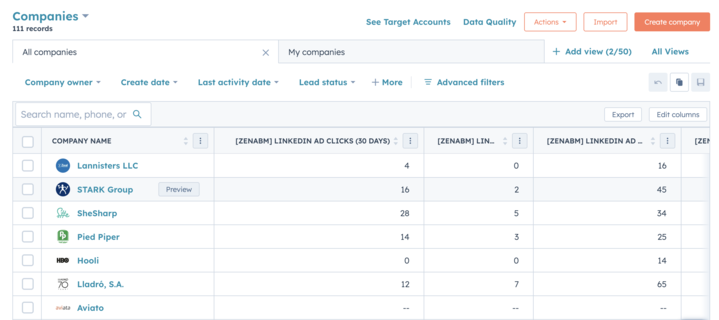
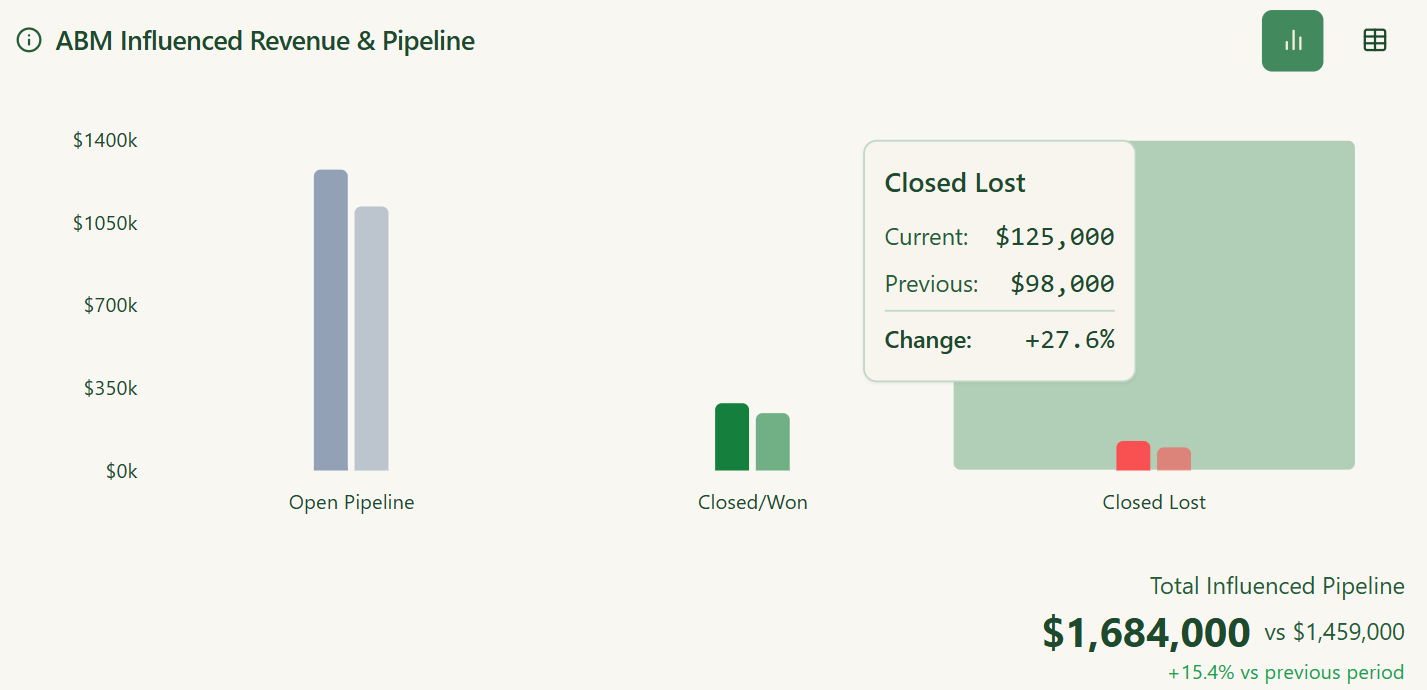
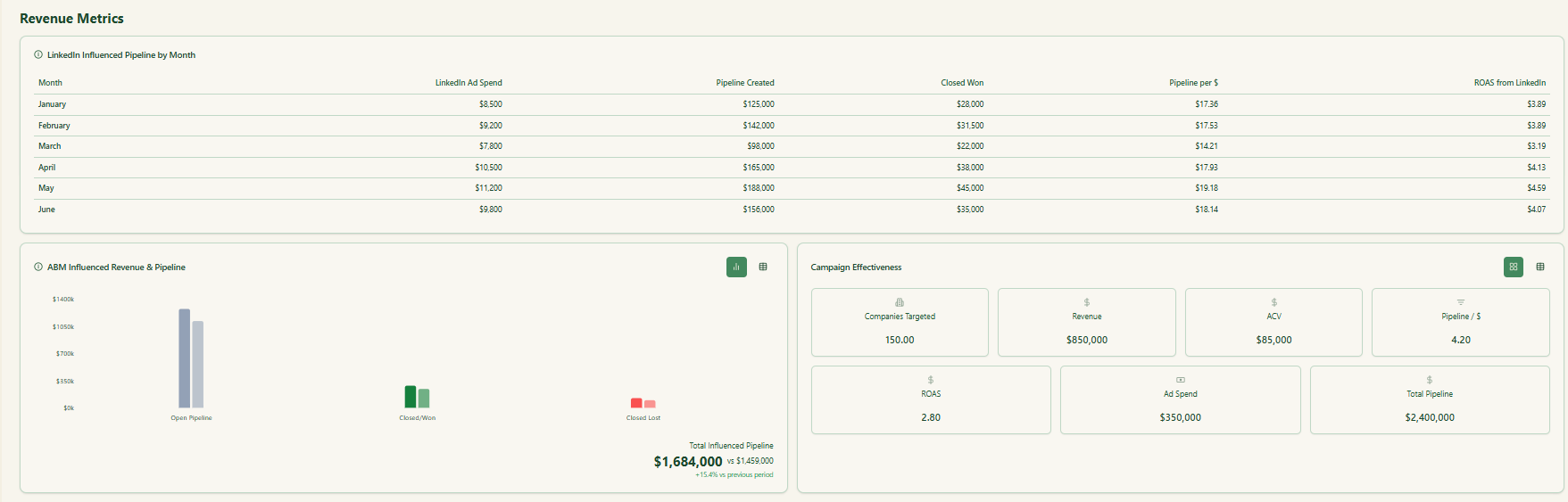
ZenABM then ties ad engaged accounts to CRM deals and provides revenue dashboards so you can measure LinkedIn ABM impact on pipeline and revenue.

InsightSync’s Engagement Hub consolidates account activity such as web visits, ad clicks, email opens and event attendance across contacts.
It surfaces trends like rising interest or sudden silence, so teams prioritize active accounts and re-engage those going quiet.
At the contact level, you can see who viewed pricing, who registered but skipped webinars and who stays engaged, helping sales refine outreach and marketers improve content.

These patterns help you map buyer roles and intent, estimate funnel stage and trigger timely follow-ups.
The Engagement Hub does not execute campaigns. Its role is to keep marketing and sales aligned on account engagement and behavior.
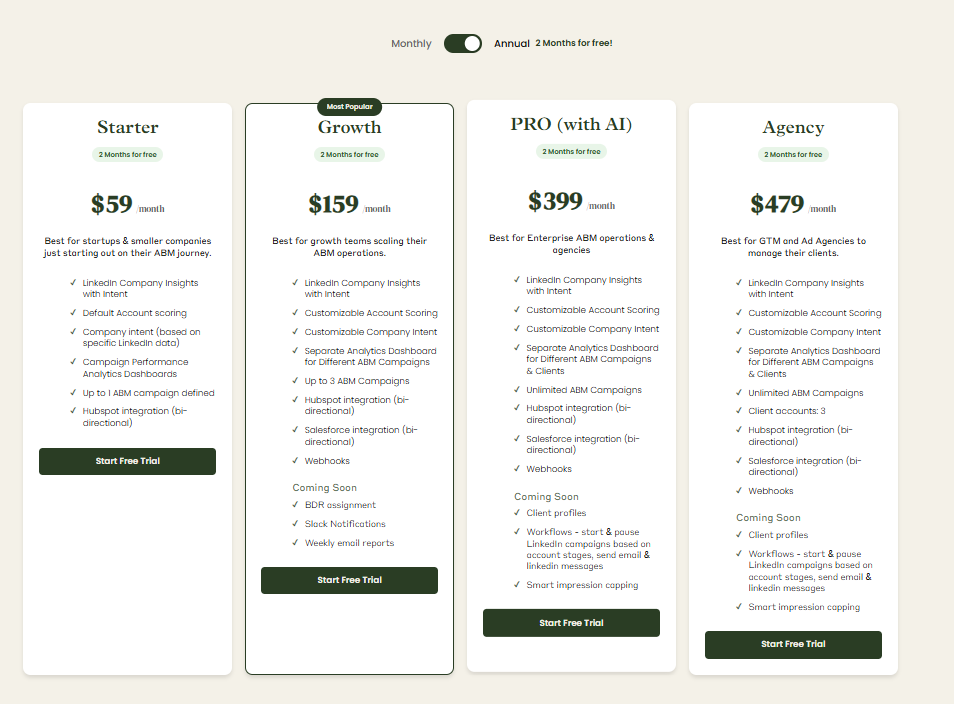
InsightSync targets teams that want a combined ABM and CI backbone and is priced in the premium band.
Here is the pricing as of late 2025:

InsightSync is cheaper than big ABM suites, but still a mid-market to upper mid-market spend. It works best when you treat it as a CI system, ABM analytics layer and light CRM adjunct combined.
Earlier stage or lean teams may find the roughly €8K per year entry point heavy.
By comparison, ZenABM starts at about $59 per month for its starter plan.
Public feedback on InsightSync is still light, but some themes show up:

HockeyStack is essentially an AI-powered B2B revenue analytics platform designed for account-based marketing.
Let’s look at its core features, pricing and reviews.
HockeyStack offers a broad set of features across attribution, analytics, and account intelligence.
Here are some of its core features and capabilities that ABM practitioners should know about:
At its core, HockeyStack provides multi-touch attribution and end-to-end funnel analytics.
It centralizes marketing and sales touchpoints and shows which channels, campaigns, and content influence engagement, pipeline, and revenue.
You can switch between attribution models such as first-touch, last-touch, and weighted multi-touch.
HockeyStack supports both account-level and lead/contact-level attribution in parallel.

The platform visualizes a complete journey from first impression to closed-won, with all touchpoints logged.
Offline marketing and sales activities can also be incorporated.
HockeyStack includes pre-built dashboards such as a “CMO overview” and supports custom reporting.


Performance can be analyzed by channel, campaign, content, or account segment.


HockeyStack captures all LinkedIn ad interactions, including impression-level data.
You can track whether an account that saw your LinkedIn ad later converted via another channel and attribute that conversion back to the ad impression.
This provides a clearer view of LinkedIn ROI beyond clicks.
LinkedIn engagement can also be used as a reporting filter and metric.
HockeyStack supports offline conversion uploads to LinkedIn Campaign Manager, sending CRM events like opportunity creation or deal-won back to LinkedIn.
This allows LinkedIn’s algorithm to optimize campaigns for pipeline and revenue outcomes instead of clicks.
HockeyStack includes several account intelligence capabilities:

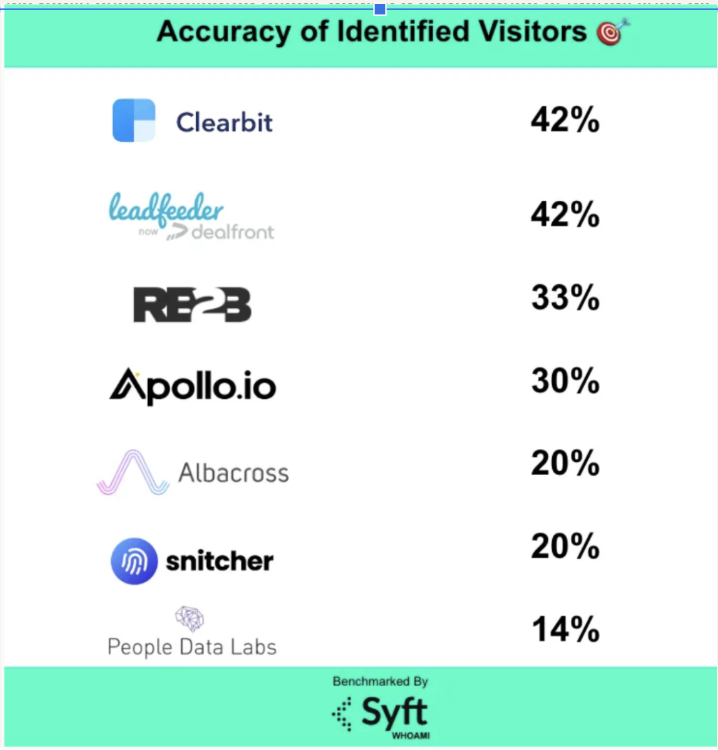
This approach has accuracy limitations. Studies like the one from Syft show identification accuracy peaking around 42 percent.

Pro Tip: HockeyStack relies on third-party keyword surge data, which often surfaces early-stage curiosity rather than true buying intent and typically comes at an added cost.
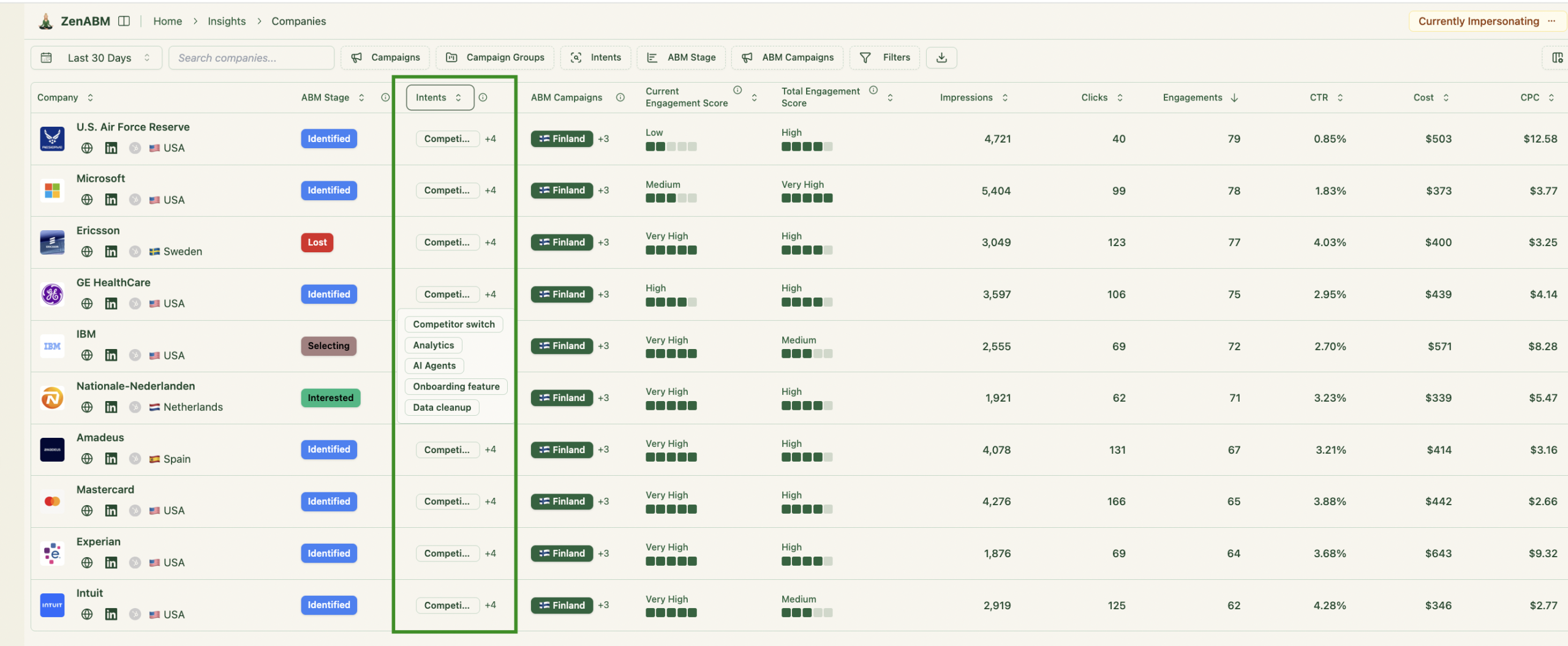
ZenABM takes a different approach by capturing first-party qualitative intent through company-level LinkedIn ad engagement. Campaigns can be tagged by theme, allowing ZenABM to group companies by what messaging they respond to. This reveals not just who is engaging, but why.
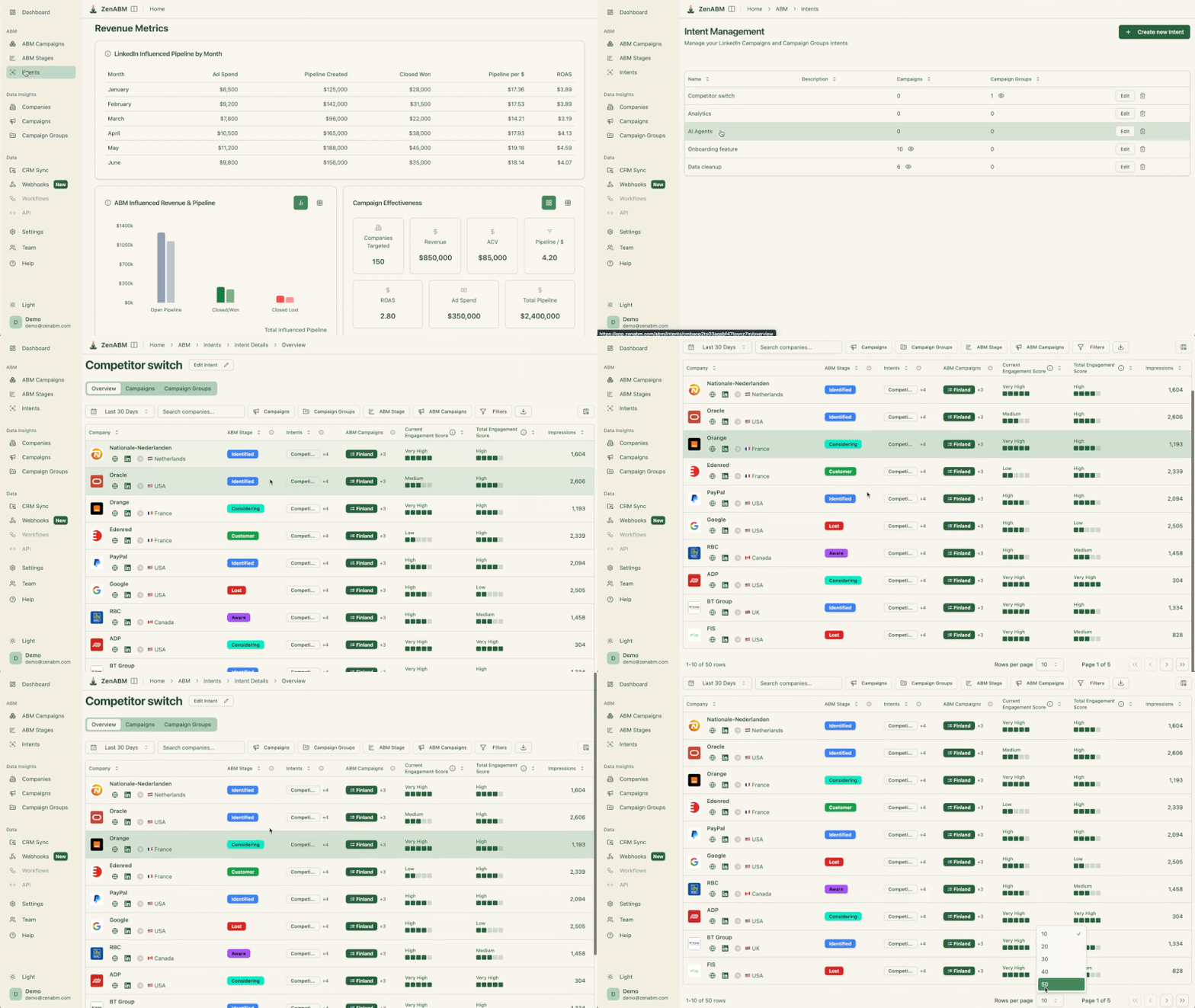

HockeyStack positions itself as an AI-first revenue analytics platform with two assistants:
HockeyStack supports automation such as engagement spike alerts, account routing, and Slack or email notifications.
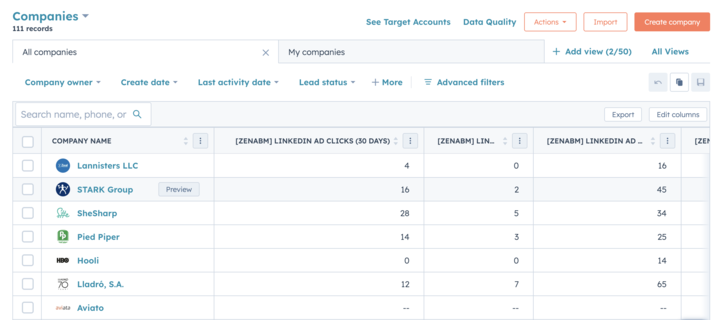
It integrates with CRMs and ad platforms to sync conversions, push high-intent accounts into LinkedIn Ads, and trigger workflows via webhooks.
ZenABM integrates bidirectionally with CRMs and pushes LinkedIn engagement directly into company records.
HockeyStack pricing isn’t available on its site.
All one can make out is that the company gives out custom-quoted packages.
But there are some clues from third-party sources:

The biggest drawback of HockeyStack’s pricing approach is the lack of upfront clarity.
Teams often invest significant time in demos and internal evaluations only to discover the price is out of range, which can be frustrating.
For marketers or RevOps leads making the business case, ensure you factor in not just the software subscription but also the implementation and maintenance effort (which is an indirect “cost” in time/manpower).
HockeyStack’s value can be tremendous if fully utilized, but you’ll want to be confident that the insights gained will materially improve your marketing efficiency or revenue outcomes to justify the spend.
In comparison, newer ABM analytics players (like ZenABM and others) have adopted more transparent and lower pricing models (e.g., ZenABM starts at $59/month).
Overall, HockeyStack enjoys strong ratings.
It’s currently around 4.6 out of 5 stars on G2 based on dozens of reviews indicating that customers are generally very satisfied.

But digging into the reviews reveals a mix of glowing praise and constructive criticism.
Here’s a summary of user impressions:
Hockeystack’s pros:
HockeyStack’s limitations:
InsightSync vs. HockeyStack differences are summarized here (along with ZenABM for perspective).
| Dimension | InsightSync | HockeyStack | ZenABM |
|---|---|---|---|
| Product Philosophy | Align GTM teams with shared intelligence | Explain how revenue was influenced | Operationalize LinkedIn ABM |
| Primary ABM Unit | Accounts and engagement signals | Accounts and contacts | Companies and buying groups |
| Main Question Answered | Who is engaging and what competitors are doing | Which channels influenced pipeline | Which accounts are buying ready now |
| Intent Signal Source | Cross-channel engagement | Website plus rented intent | First-party LinkedIn engagement |
| Intent Signal Quality | Medium | Medium and noisy | High and contextual |
| Account Scoring | Weighted engagement based | AI driven scoring | Transparent rule-based scoring |
| ABM Stage Tracking | Basic | Partial | Explicit and configurable |
| LinkedIn Ad Visibility | Indirect only | Influence level only | Company and campaign group level |
| Competitive Intelligence | Core capability | None | None |
| Advertising Channels | None | Analytics only | LinkedIn only |
| Website Visitor Identification | Partial | Partial | Not required |
| Revenue Attribution | Influence reporting | Advanced multi-touch models | Deal-matched LinkedIn attribution |
| Sales Activation | Alerts and shared views | Insights and alerts | Automatic BDR routing |
| CRM Sync Depth | Light and analytics-oriented | Analytics-oriented | Operational and bi-directional |
| AI Layer | Document and content search | Odin and Nova assistants | Natural language ABM analytics |
| Implementation Effort | Medium | Medium | Low |
| Time to Value | Weeks | Weeks | Days |
| Pricing Model | Subscription plus setup | Custom enterprise contracts | Flat SaaS pricing |
| Typical Annual Cost | Eight to fifteen thousand | Twenty-five to forty thousand | Under six thousand |
| Best Fit | GTM teams needing CI plus ABM views | RevOps and analytics teams | LinkedIn-first ABM teams |
After we have discussed InsightSync vs. HockeyStack for ABM, let’s visit the third option: ZenABM.
ZenABM is built for teams that rely on LinkedIn as the primary ABM channel and want first-party accuracy, automation, and revenue visibility without the price or complexity of multi-channel suites.
Let’s look at its core features:
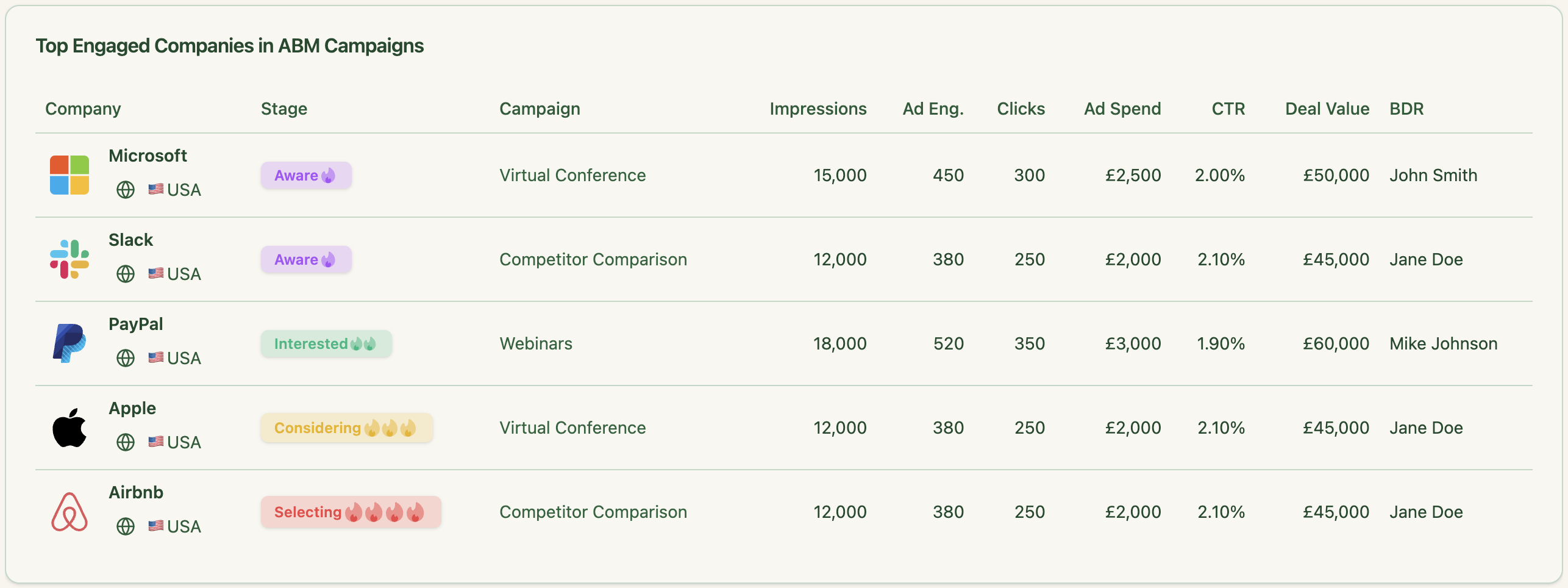
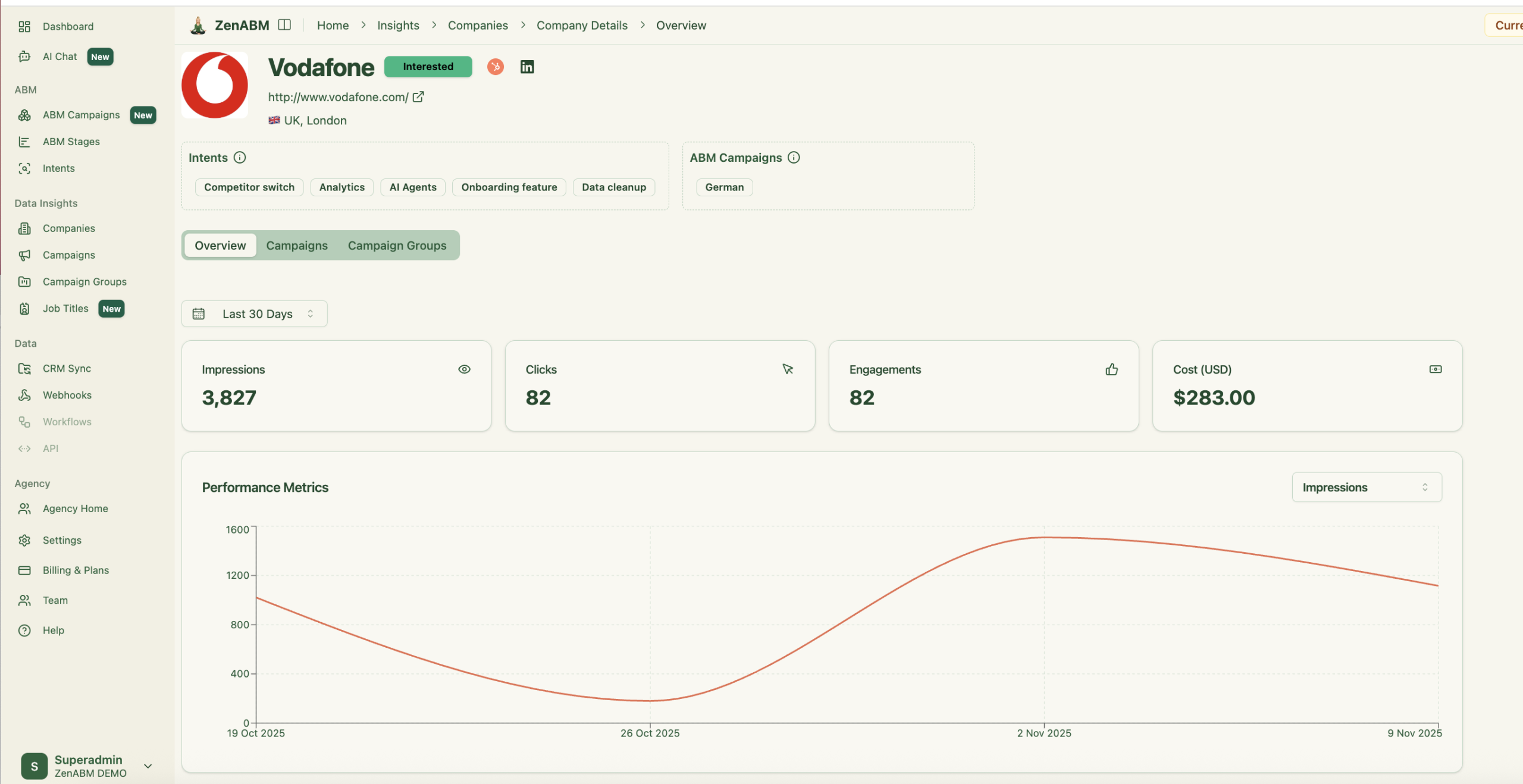
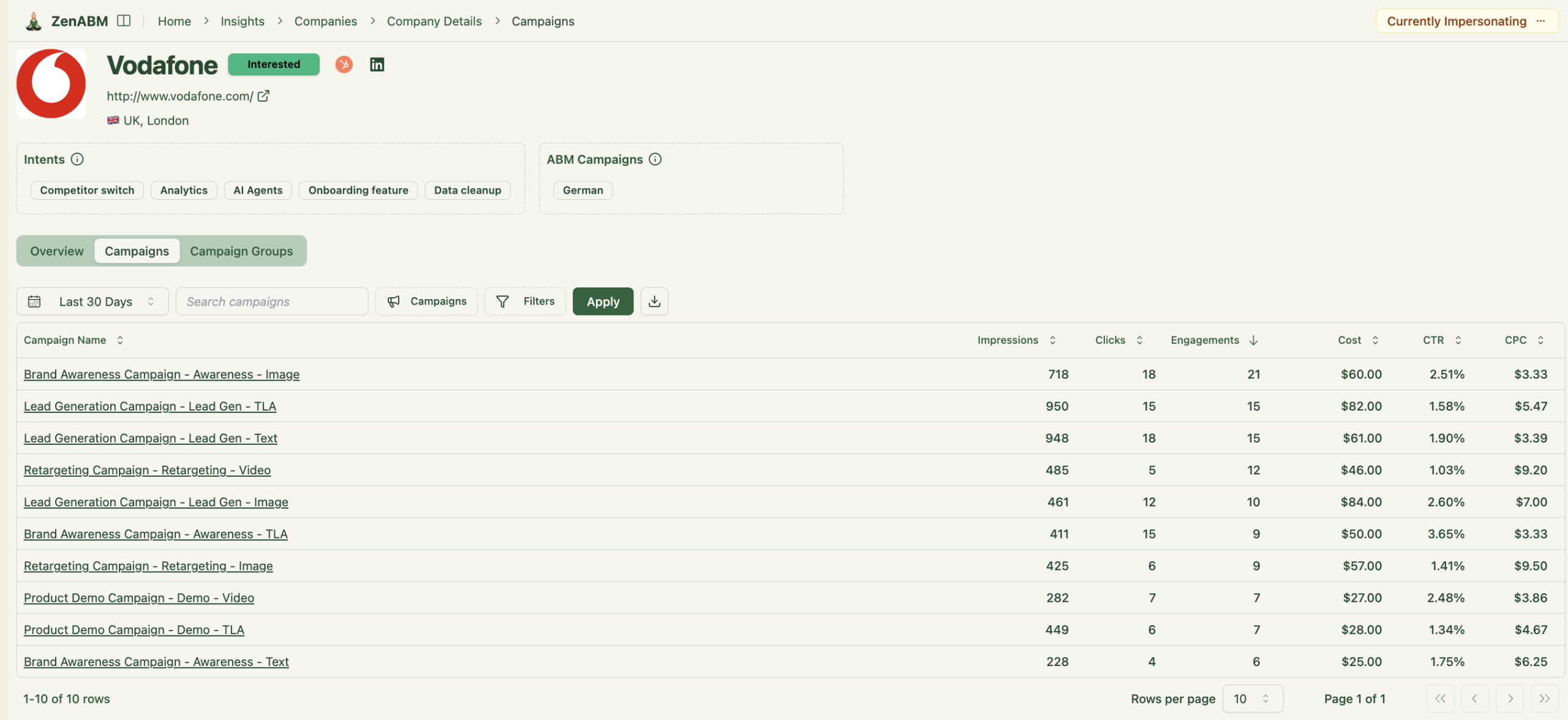
ZenABM connects to the official LinkedIn Ads API and captures account-level data for all campaigns so you can see which companies see, click, and engage with your ads.
Because this is first-party data from LinkedIn’s environment, it is more reliable than IP or cookie-based visitor ID.
A Syft study puts IP-based identification at around 42 percent accuracy.
ZenABM treats LinkedIn ad engagement itself as first-party intent. When several people in one company keep engaging with your ads, that is a strong buying signal without rented intent feeds.
ZenABM updates engagement scores as accounts interact with your ads across campaigns, so you can see who is heating up over short or long windows and let marketing and sales prioritize accounts that show real intent.
ZenABM also shows the full touchpoint timeline for each company:
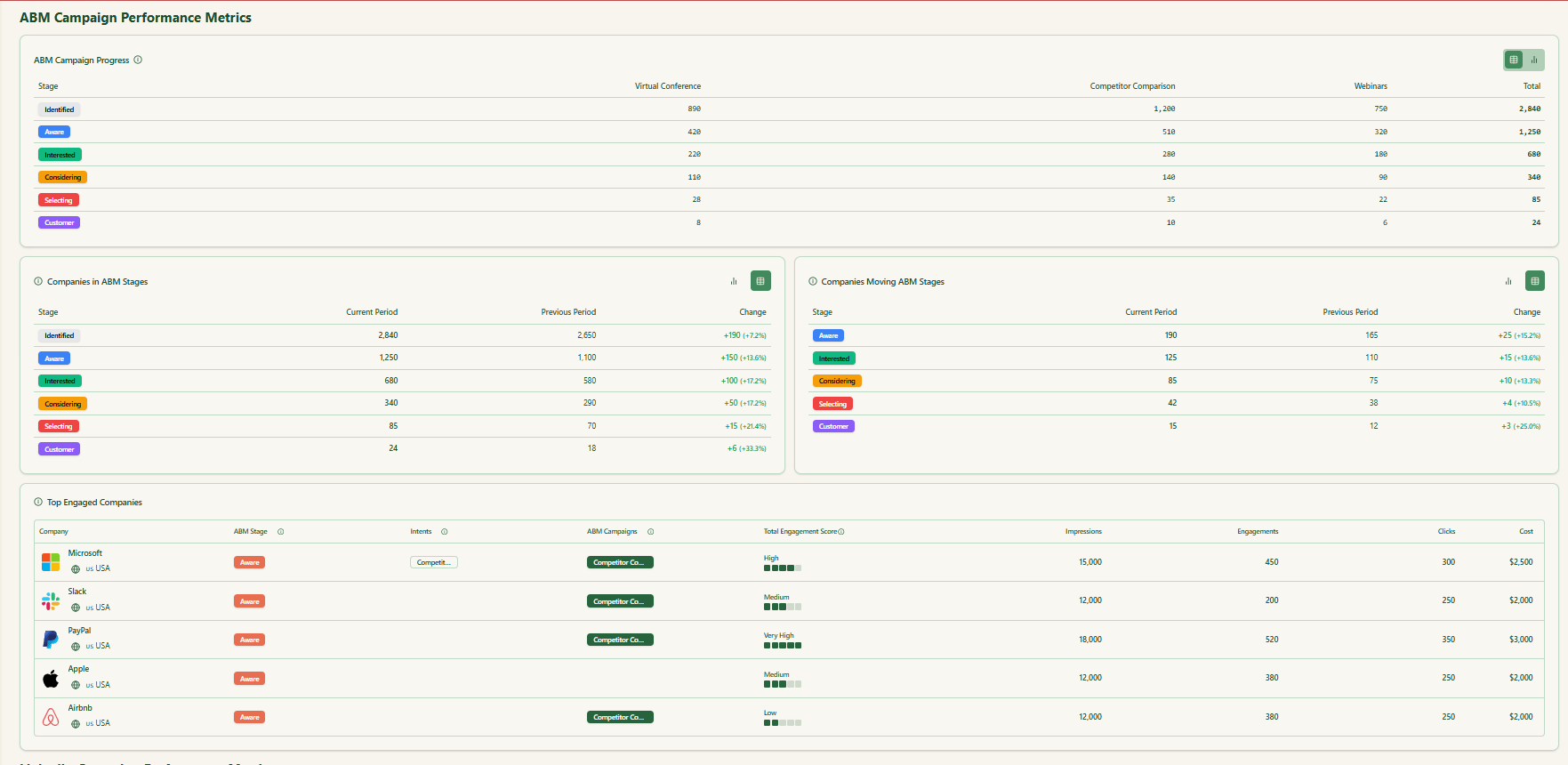
ZenABM lets you define stages such as Identified, Aware, Engaged, Interested, and Opportunity and automatically places accounts in the right stage using scores and CRM data.
You control thresholds, and ZenABM tracks movement over time.
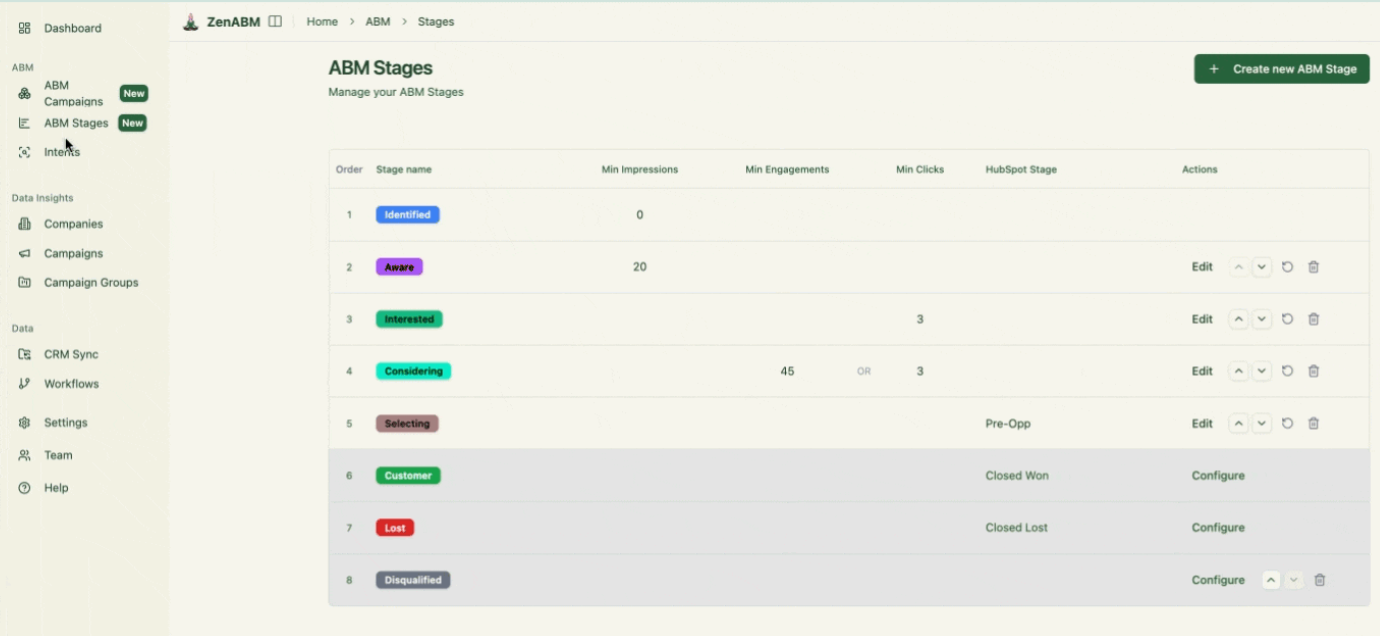
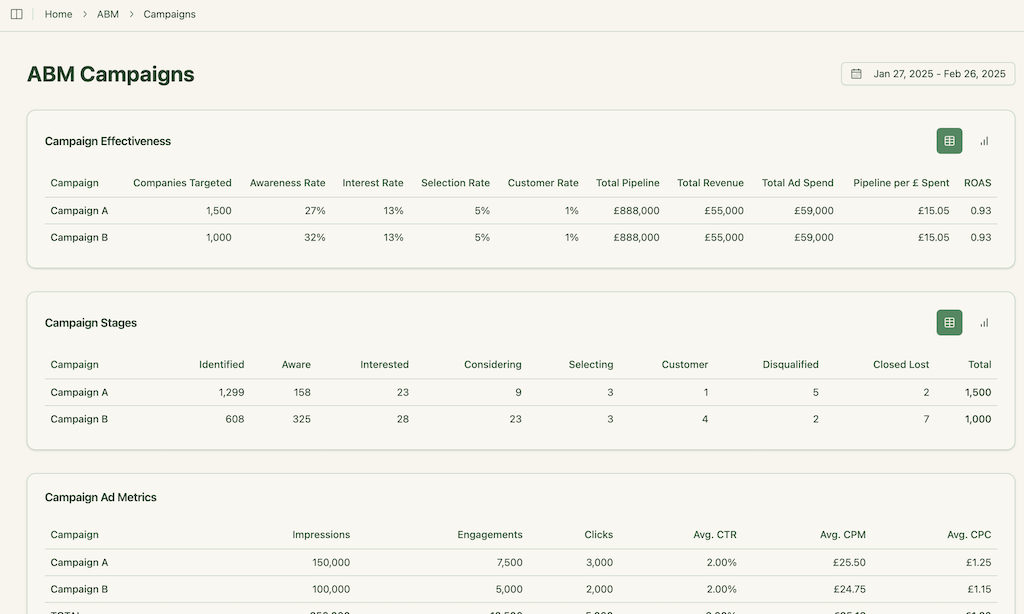
This gives you funnel visibility similar to larger suites, but powered by LinkedIn data.
ZenABM integrates bi-directionally with CRMs like HubSpot and adds Salesforce sync on higher tiers.
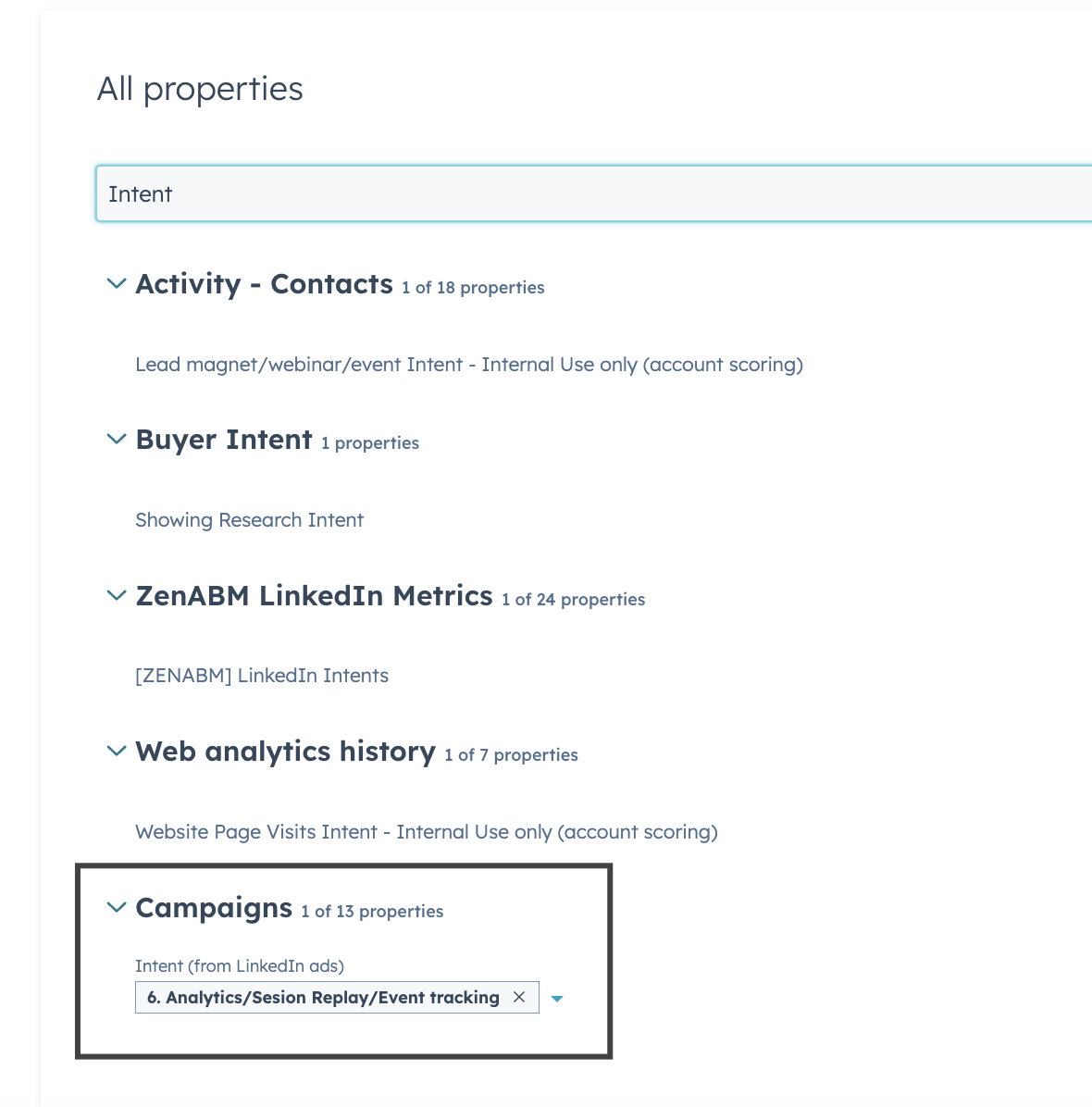
LinkedIn engagement data flows into the CRM as company-level properties:
Once an account crosses your score threshold, ZenABM updates the stage to Interested and automatically assigns a BDR.
ZenABM lets you derive intent topics from LinkedIn campaigns by tagging campaigns by feature, use case, or offer.
ZenABM then shows which accounts engage with which themes.
This is clean, first-party intent from owned interactions.
You can push these topics into your CRM, so sales and marketing can tailor outreach to what each company has actually explored.
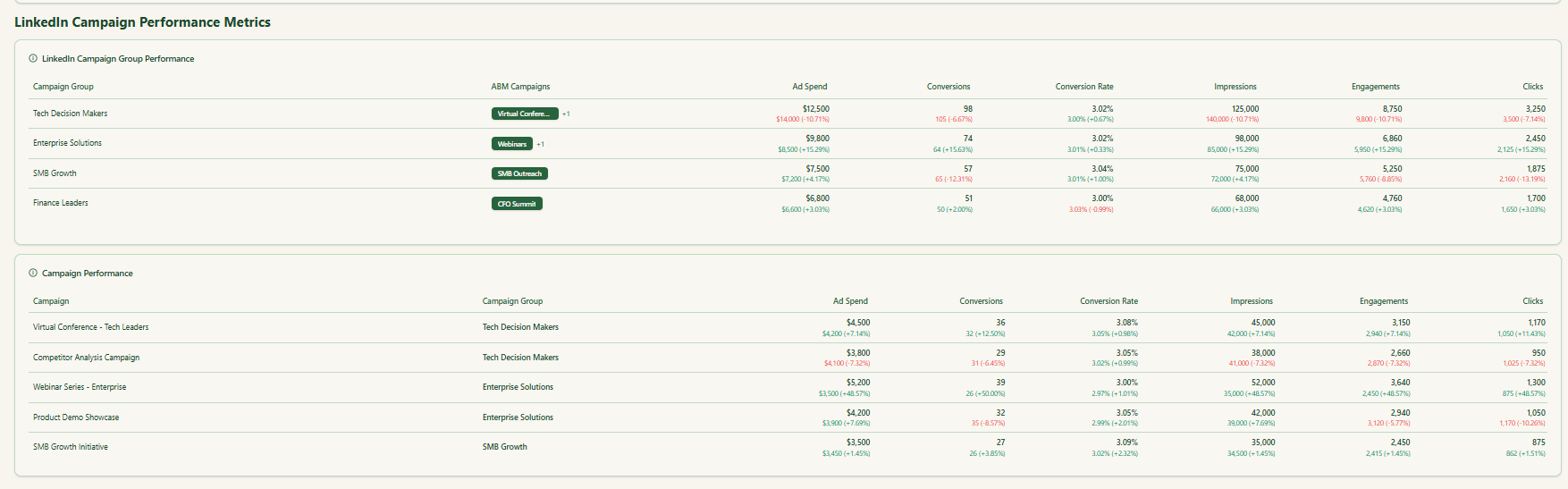
ZenABM ships with dashboards that connect LinkedIn ads to account engagement, stage movement, and revenue.
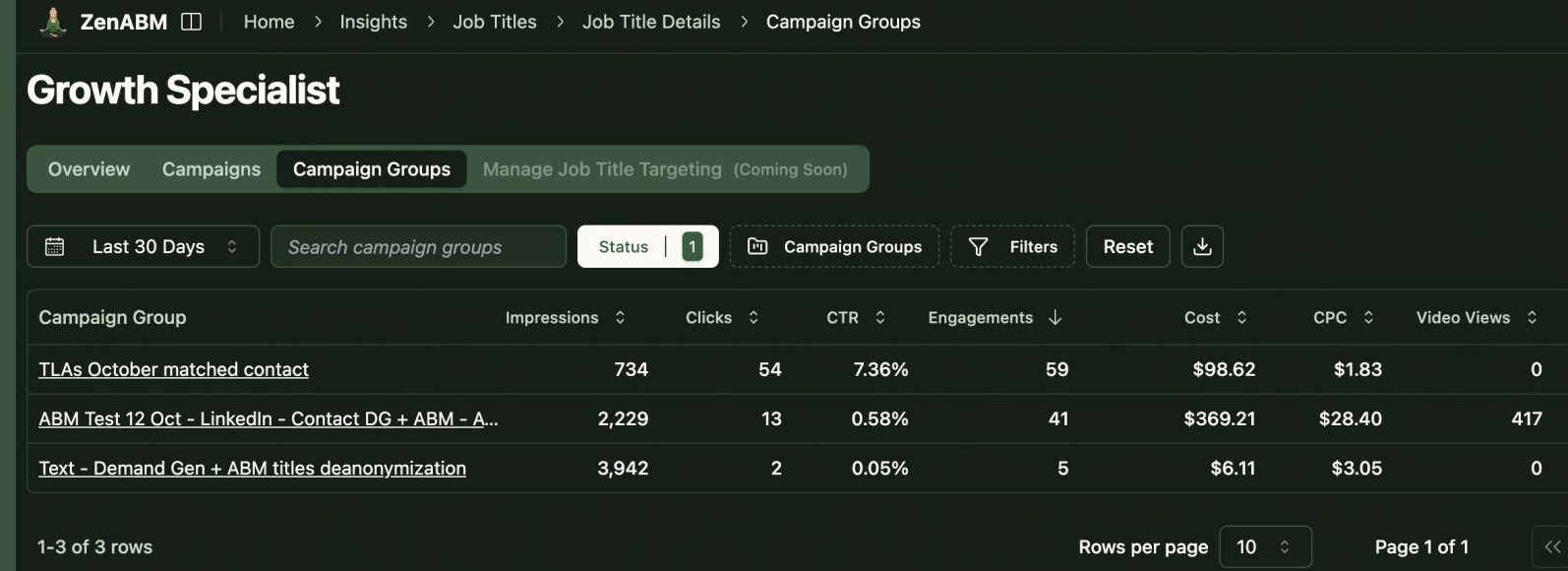
ZenABM shows which job titles engage with your creatives and gives dwell time and video funnel analytics.
ZenABM provides its AI chatbot called Zena that basically answers all you want from ZenABM in natural language.
You can ask Zena open-ended questions like you would a smart analyst and get company-level answers about:
Under the hood, Zena combines OpenAI with a library of carefully designed prompts and endpoints to join ad engagement, spend and CRM deals so it can explain which campaigns drove pipeline, which accounts turned into opportunities, which formats perform best and which companies are high intent but untouched by sales.
Instead of exporting spreadsheets and stitching pivot tables, you get plain language insights, ready to drop into strategy reviews, weekly sales standups or executive updates.
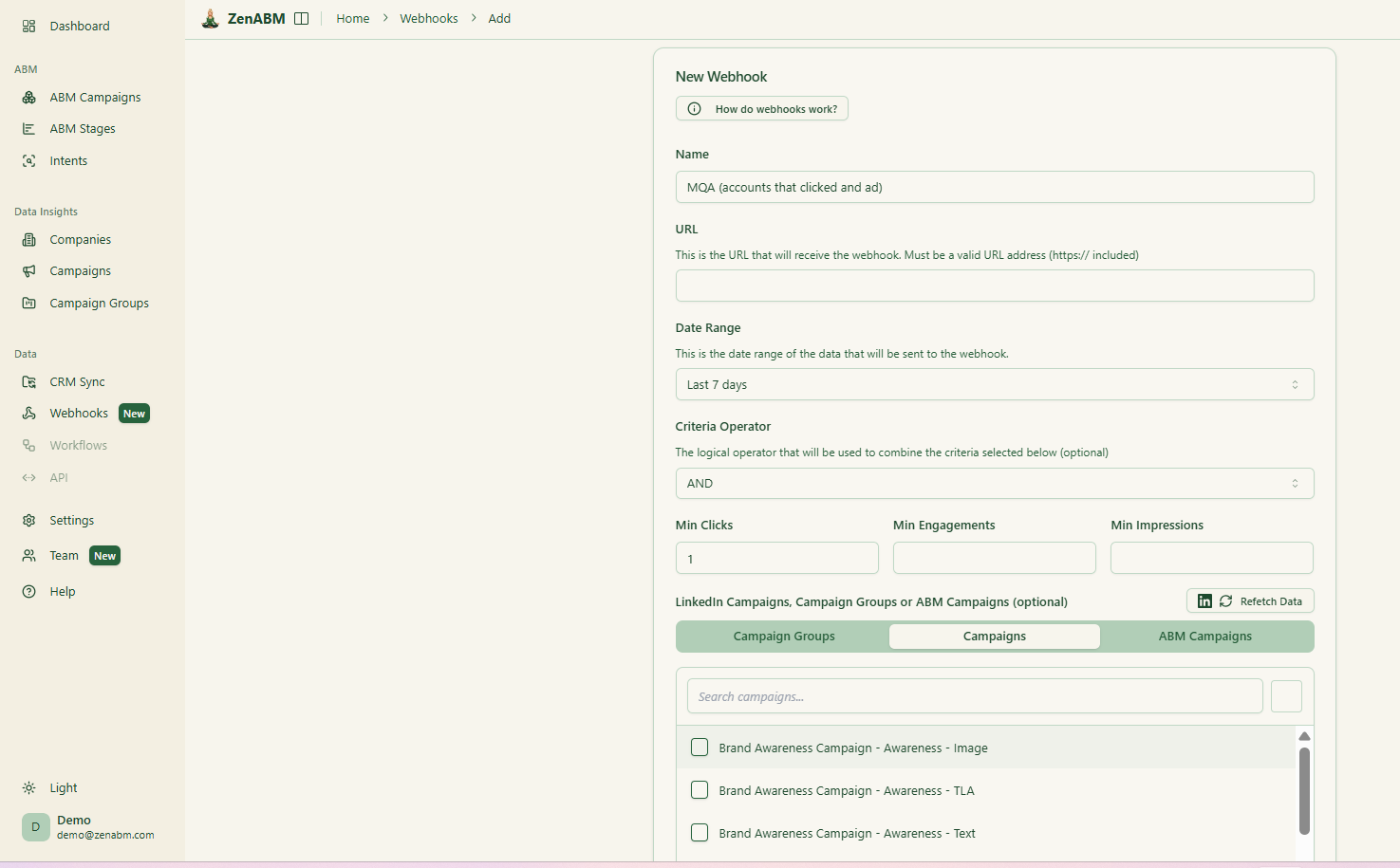
ZenABM’s custom webhooks let you push events into your stack, for example, Slack alerts, enrichment flows, or other ops automations.

Most tools treat each LinkedIn campaign separately. ZenABM lets you group several into one ABM campaign object so you can see performance across regions, personas, or creative clusters.
Instead of juggling fragmented reports in Campaign Manager, you see spend, pipeline, account movement, and ROAS for the entire initiative.
For agencies, ZenABM offers a multi-client workspace.
You can manage multiple ad accounts and clients in one environment, each with its own ABM strategy, dashboards, and reporting, instead of constantly switching accounts in Campaign Manager.
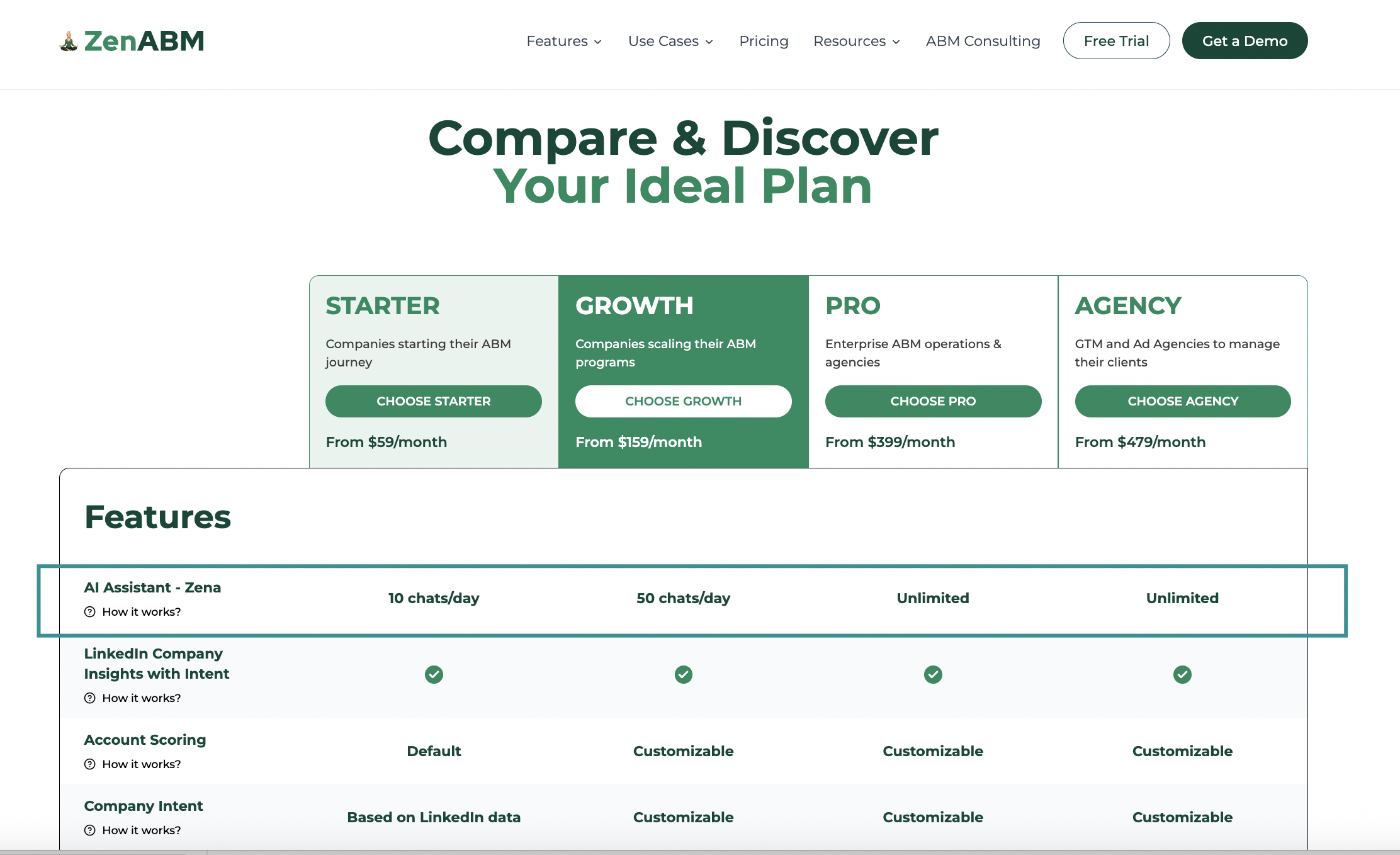
ZenABM pricing details:
Choose InsightSync if your biggest problem is internal alignment and competitive visibility, not ad execution or pipeline routing.
Choose HockeyStack if your priority is understanding attribution, funnel velocity and revenue influence across many channels.
Choose ZenABM if LinkedIn is your core ABM channel and you want first-party intent, account scoring, CRM workflows, BDR routing and revenue visibility without enterprise pricing or operational drag.
