

©2026 ZenABM - All Rights Reserved.

If 60% of your pipeline is frozen, your acquisition budget is stranded.
Every new deal you generate has to compensate for the stalled opportunities sitting in your CRM, going nowhere.

Most ABM programs focus entirely on generating new pipeline, and almost none of them have a systematic approach to reviving the pipeline that already exists.
That is an enormous missed opportunity.
This post covers Stefan Repin’s session at the ZenABM ABM Bootcamp 2026, where he shared his tiered pipeline revival framework: specific tactics for reactivating frozen B2B deals based on deal size, industry, and cultural context.
You can also watch the full session on YouTube here.

1. If 60% of your pipeline is frozen, your acquisition budget is compensating for dead weight. Revival > new acquisition.
2. Multi-threading is non-negotiable. Single-threaded deals close at ~5%. Multi-threaded close closer to 30%.
3. Tier revival tactics by ACV:
4. Use “Account Love Letters” for high-impact, no-ask re-engagement.
5. Localize tactics by culture. What works in Latin America may fail in Germany or Japan.
6. Detect revival signals early. Re-engagement often starts silently through LinkedIn exposure.
7. Use ZenABM to:

First of all, you must identify the exact root cause behind your frozen pipeline, because the revival tactic that works for one root cause will fail for another.
Here are the top five root causes that Stefan has observed in his career:
Let’s start with the most common cause: misaligned value proposition.
If what you promised in the initial pitch does not match what they actually needed, the deal will stall because the champion won’t be able to build a compelling internal business case with the framing you gave them.
Fix: reframe the value proposition around a different pain point and reopen the conversation with new evidence.
If the conversation ends at something like, “Come back in 3 months” with no specific date, no specific trigger, and no agreed-upon follow-up mechanism, it will disappear.
Fix: get a specific date and a specific event before the conversation ends. Ask questions like, “What would need to be true on March 15th for this to move forward?”
Next comes internal priority shifts at your target account.
This could include budget reallocation, a change in leadership, or the fact that a competing initiative took precedence.
These shifts are, in fact, pretty common reasons enterprise deals go cold and are the hardest to influence externally.
Fix: patience, relationship maintenance with the champion, and a trigger to re-engage when the blocking event resolves.
The fourth cause is ‘champion energy loss,’ which means your internal champion lost enthusiasm, lost influence, or left the company altogether.
So, the deal that was being carried by this champion is gone with them.
Fix: To ensure the entire deal doesn’t rely on one champion, you’ll have to up your account penetration game. The most common way to achieve a good account penetration rate is multi-threading that builds relationships with multiple stakeholders, so no single departure kills the deal. This has become even more important now, because buying committees are only getting bigger. Experts like Debjit warn that you must not underestimate the size of DMUs in B2B.
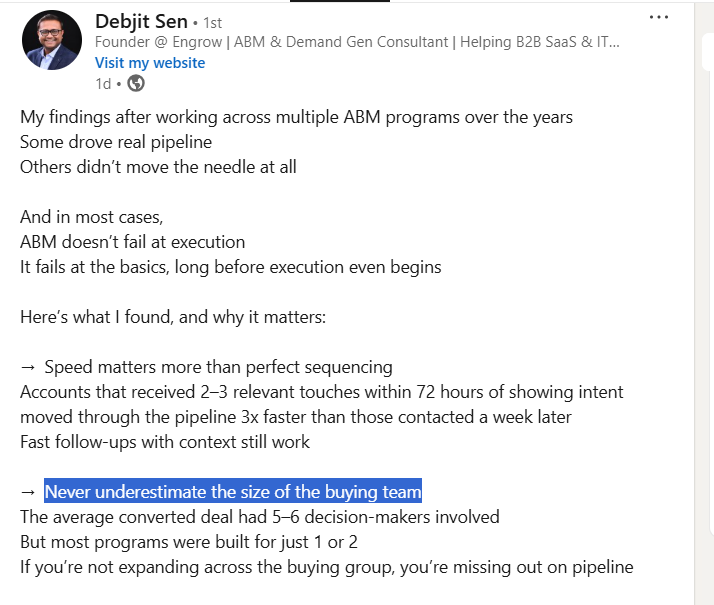
Moreover, sources like a study by Usergems also support the importance of multi-threading: Single-threaded deals, where only one contact is engaged, have a 5% close rate, compared to 30% for multi-threaded ones.
That’s why a winning account penetration strategy always involves multi-threading: mapping, engaging, and nurturing every stakeholder with influence.
Finally, the last cause is about how the buyer feels after interacting with your sales.
If the conversation was too salesy, they may go quiet because continuing such a conversation feels like being deliberately sold to
Fix: change the engagement mode entirely from salesy pitch desks to peer-to-peer, education-first, and no-ask-attached kind of meetings.

Stefan’s pipeline revival tactics are tiered by ACV because the investment level that makes sense for a $500K deal is very different from what makes sense for a $15K deal.
At an ACV level of 450k and above, the economics justify significant investment in relationship-building activities that create organic reconnection opportunities.
Examples:
The next tier that ranges from $10k to $50k in ACV deserves personalized, research-based engagement that demonstrates you have invested time in understanding their specific situation.
Examples:
Finally, the smallest tier containing accounts with ACV below $10k, low-cost and scalable revival tactics must be applied across a large number of frozen deals simultaneously.
Examples:

One of Stefan’s most effective revival tactics is what he calls the “Account Love Letter.”
It is a publicly published post that deeply researches a specific target account and builds a custom strategic plan for them.
The format:
Stefan’s result from using this approach: he published a love letter for a target company focused on their ABM gap. The COO of that company reached out within days and introduced him to their CMO.
The tactic works because it demonstrates genuine investment, provides real value, is public (the decision maker’s peers can see they are being recognized), and contains no sales ask.
The prospect’s reciprocity instinct does the rest.

Stefan spent significant time on a point that most B2B playbooks ignore: pipeline revival tactics work differently across cultures.
What reopens a conversation in the US fails in Germany.
What works in Latin America may be inappropriate in Japan.
His observations:
When pipeline freezes, the problem is rarely “no engagement.”
The problem is invisible engagement.
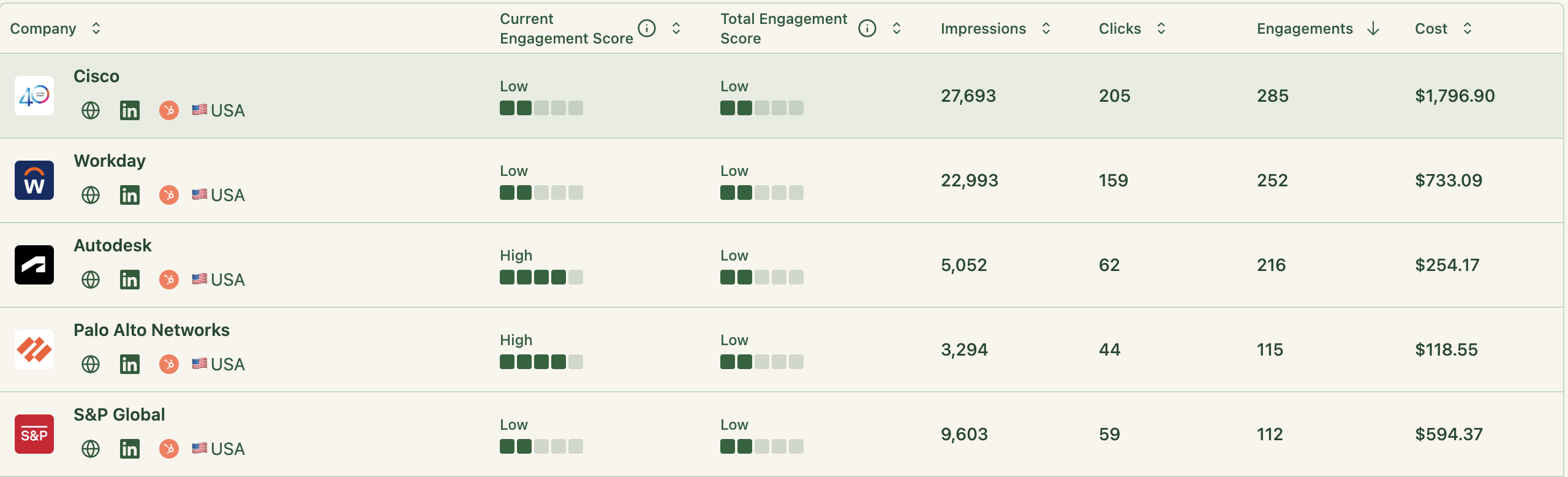
Accounts may be re-heating quietly through LinkedIn exposure, multi-touch ad interaction, or stakeholder-level engagement, but without company-level visibility, revival opportunities are missed.
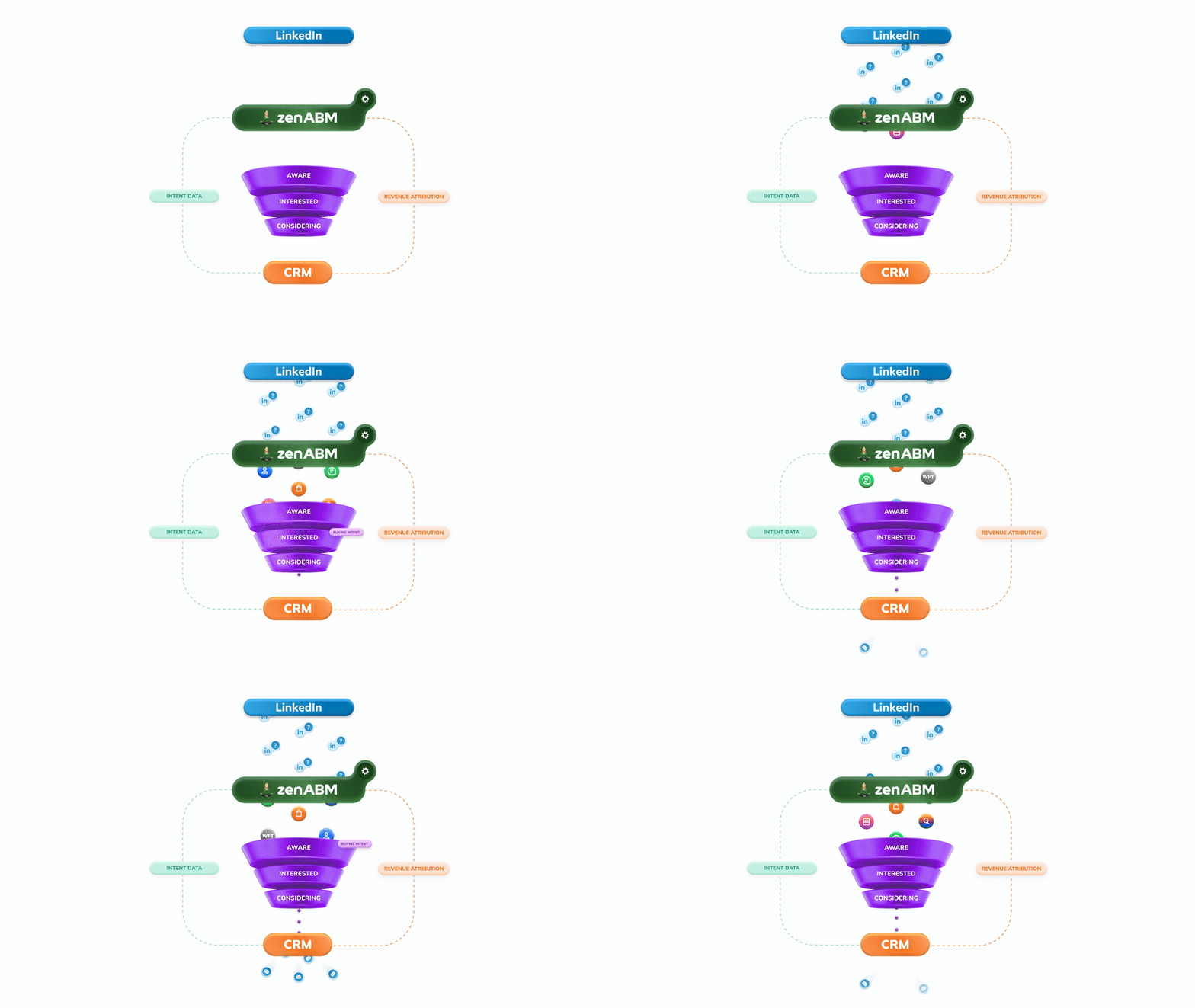
ZenABM turns LinkedIn engagement into a structured revival signal you can act on.
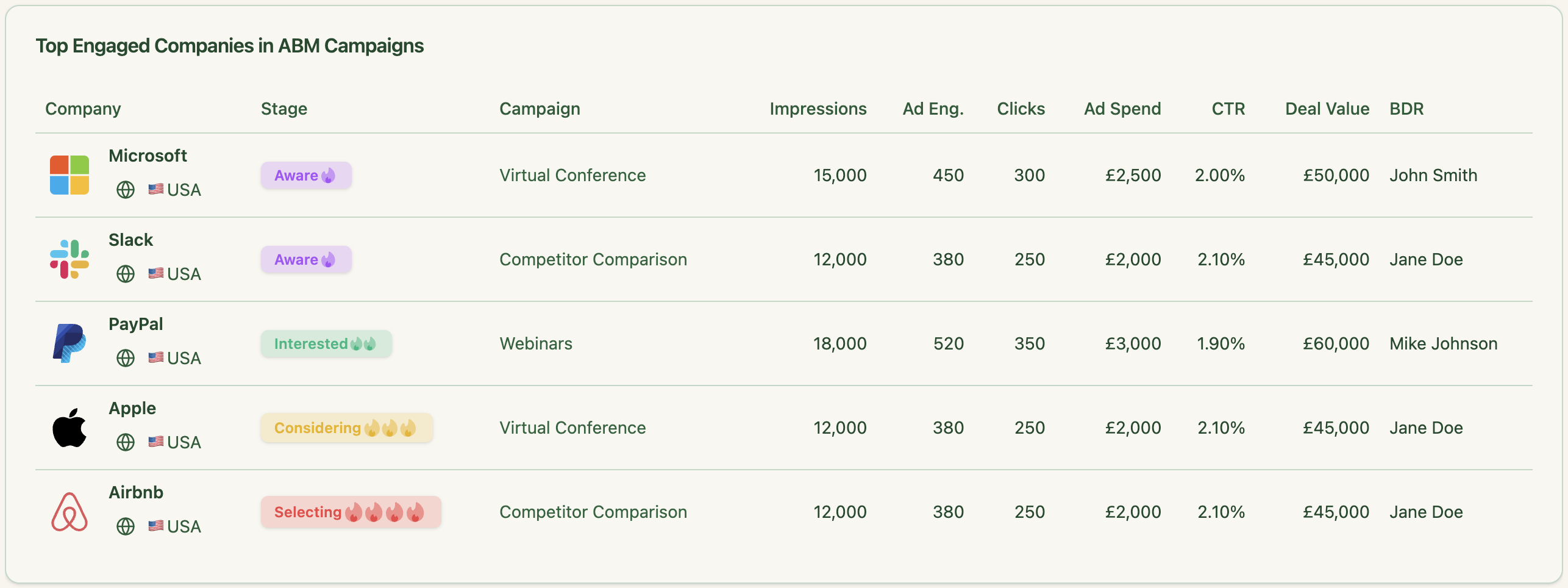
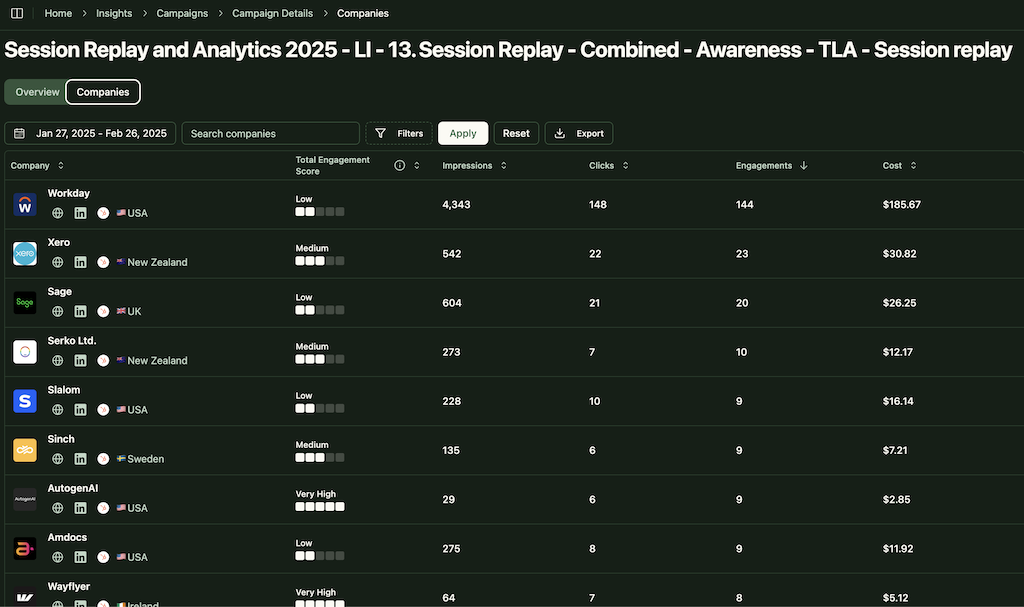
ZenABM connects directly to the official LinkedIn Ads API and captures engagement at the company level.
For pipeline revival, this answers a critical question:
Instead of blindly reactivating every cold deal, you can prioritize accounts already showing fresh signals.
Not all engagement equals revival intent.
ZenABM focuses on meaningful signals: landing page clicks, repeat exposure, multi-touch activity across campaigns, and stakeholder-level engagement.
When multiple stakeholders from a stalled account begin interacting again, that is a revival trigger — not random noise.
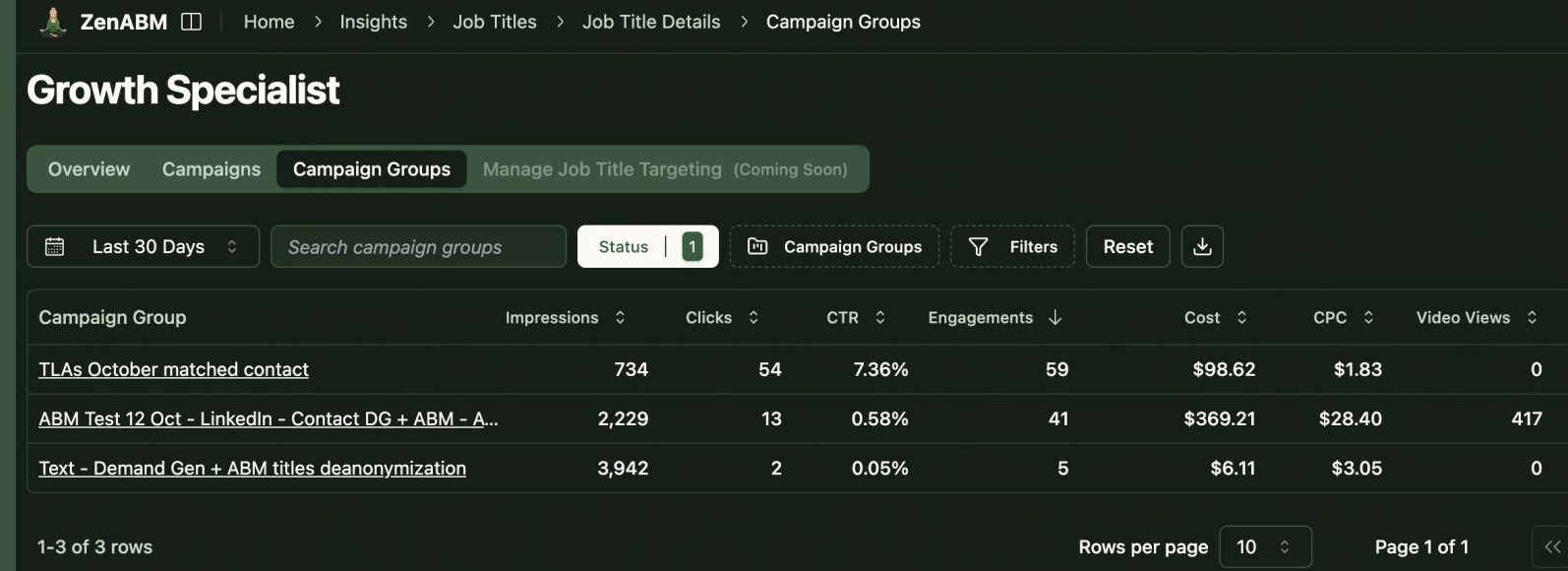
You can also see which job titles are re-engaging.
If a new stakeholder appears after your original champion went silent, that may signal internal change, priority shift, or buying committee expansion – all key revival moments.
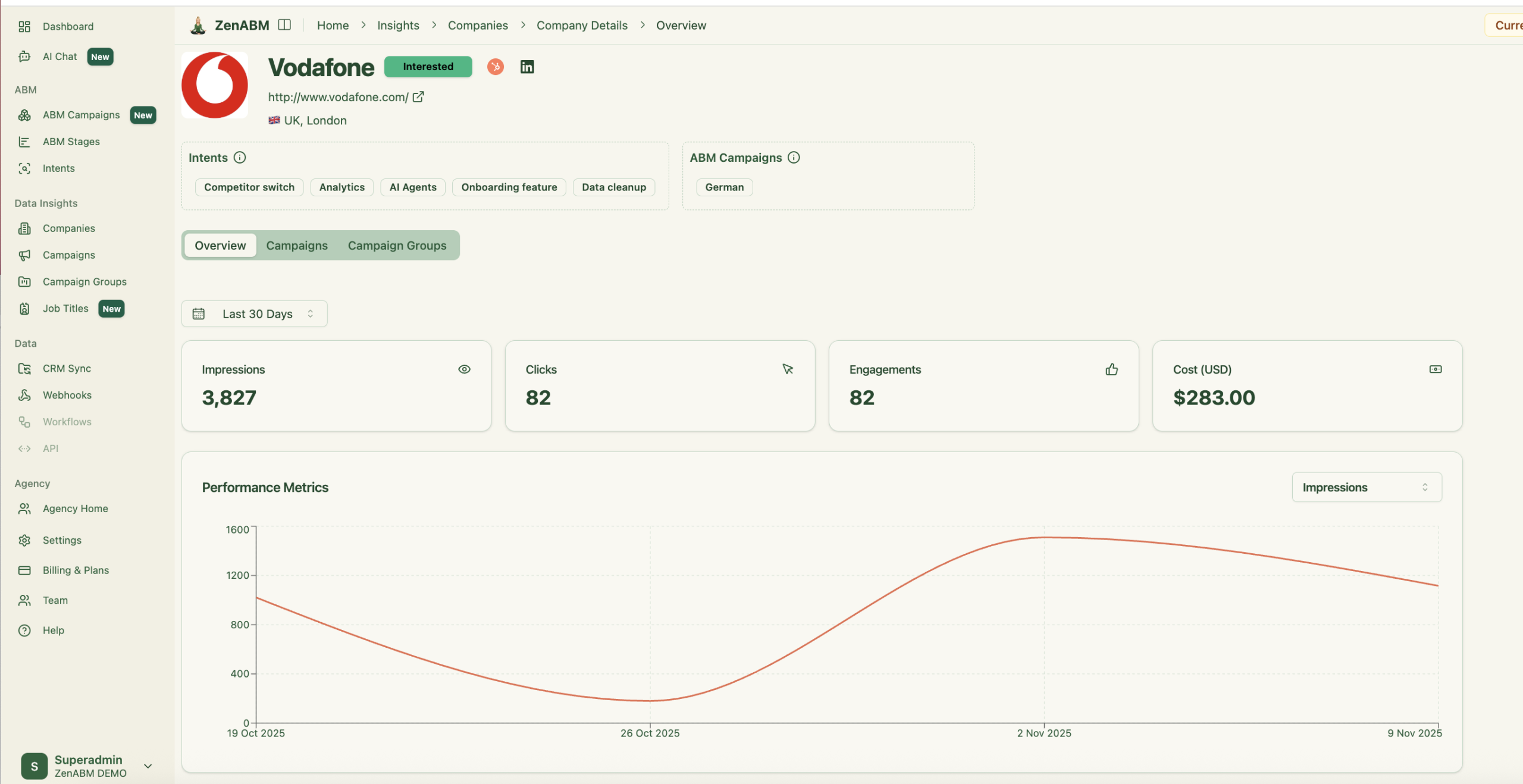
Pipeline revival is rarely triggered by one action.
It is cumulative.
ZenABM visualizes full engagement timelines for each company, showing how exposure builds again before a reply, meeting, or opportunity update appears in CRM.
This helps you:
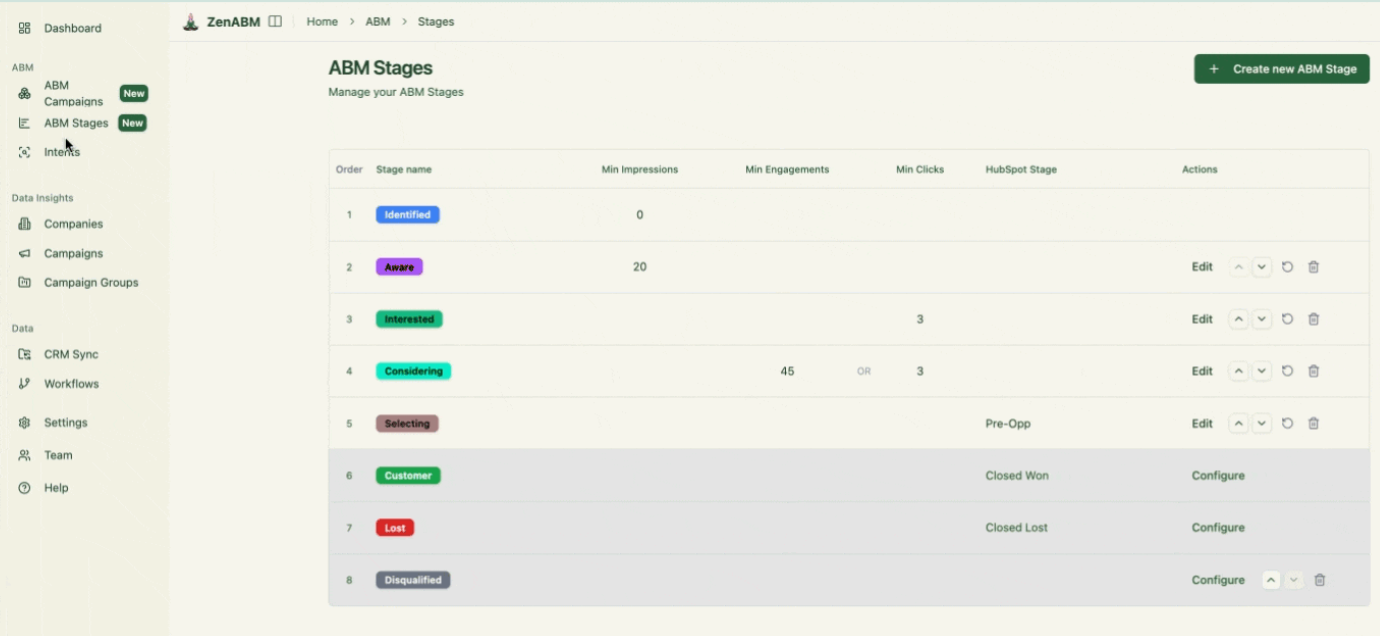
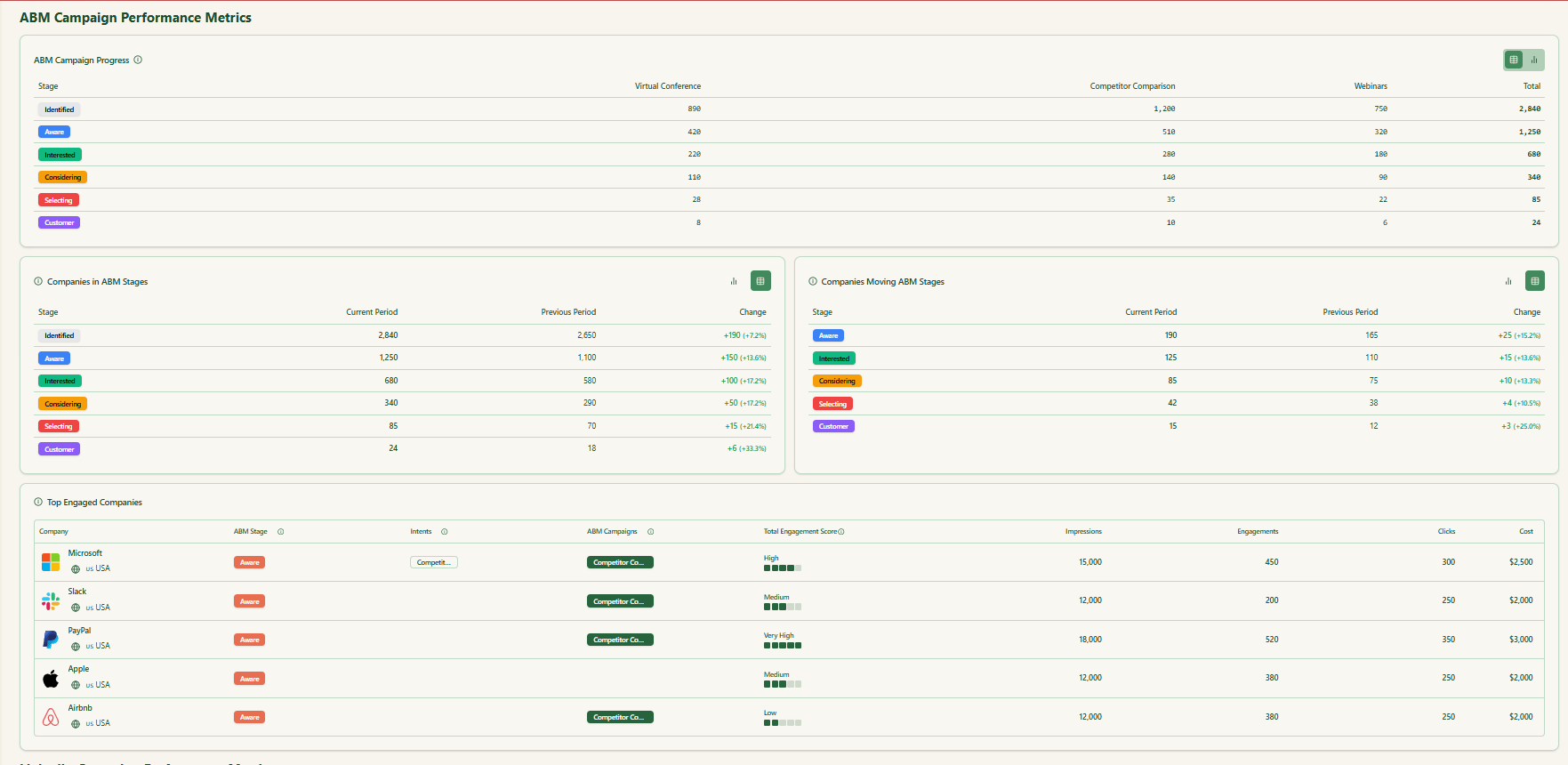
ZenABM allows you to define ABM stages such as Identified, Aware, Engaged, Interested, and Opportunity.
When a frozen account crosses a defined engagement threshold, ZenABM can:
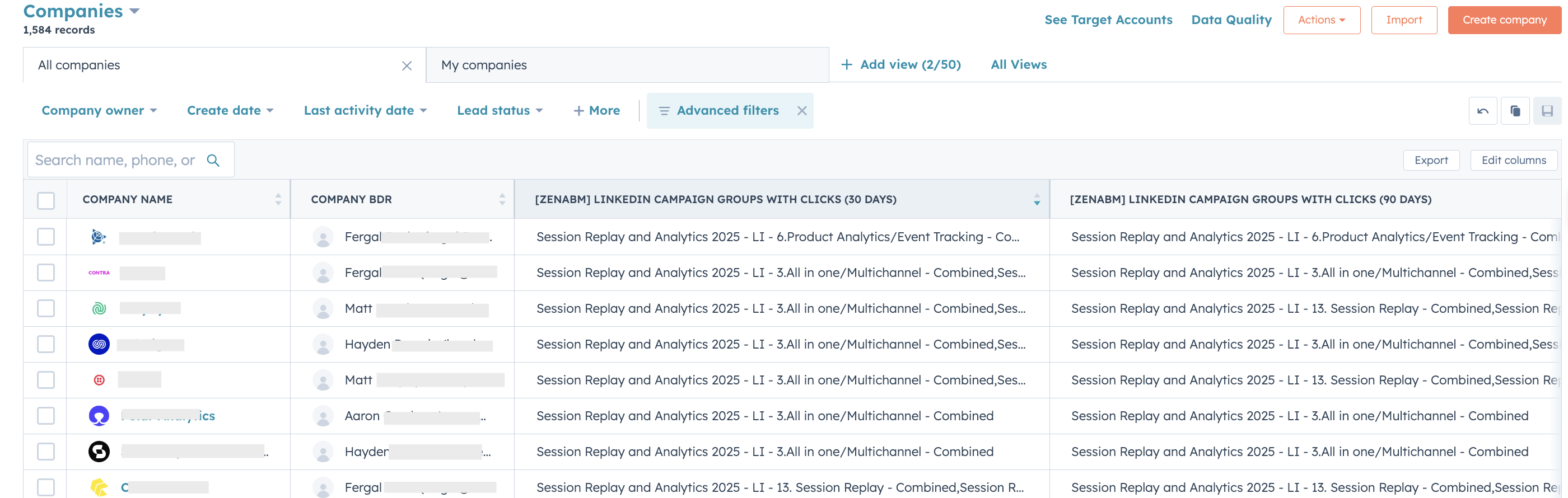
This solves the most common revival failure: accounts showing renewed interest, but no one noticing in time.
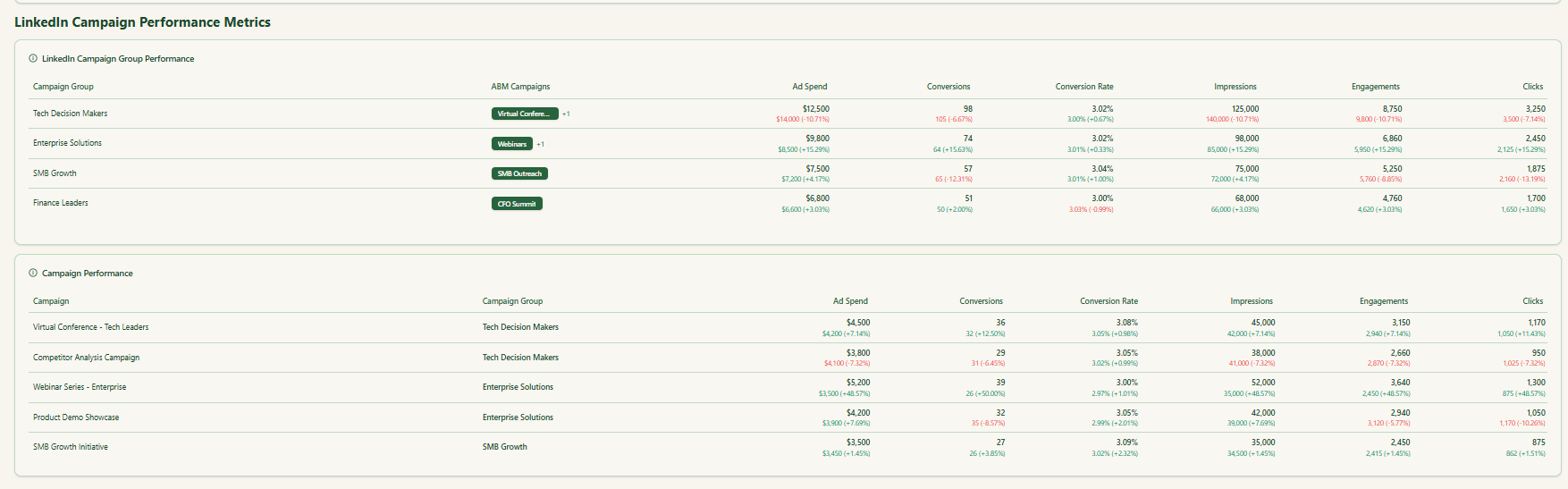
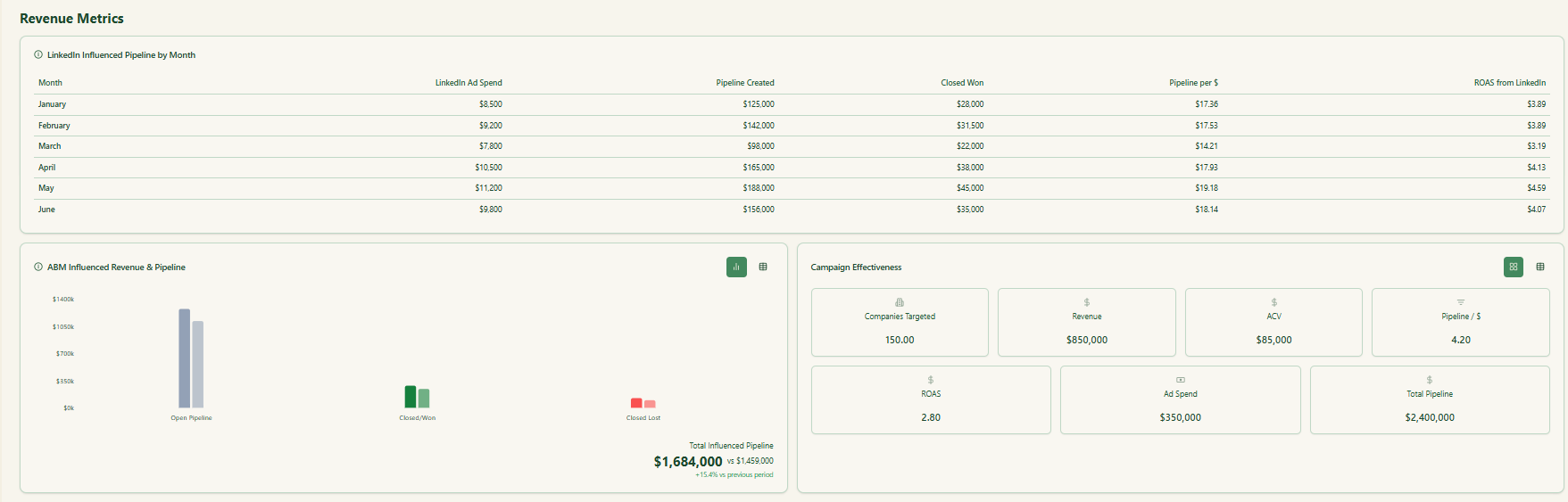
Revived deals are often misattributed to “last touch” outreach.
ZenABM connects exposure, re-engagement, stage movement, and revenue at the account level, so you can measure which revival tactics truly worked.
Instead of digging through dashboards, you can ask Zena, ZenABM’s AI analyst:
Pipeline revival is not about chasing every cold deal. It is about identifying which accounts are quietly warming again and acting at the right moment.
When engagement becomes visible at the company level, revival shifts from guesswork to a system.
That is where tools like ZenABM become less about “tracking ads” and more about rescuing stranded revenue.
If your CRM is full of frozen opportunities, the next win may already be re-engaging. You just need to see it in time.
Try ZenABM for free (37-day free trial) or book a demo now to know more!
Start by diagnosing why the deal went cold: misaligned value prop, timing issue, internal priority shift, champion energy loss, or buyer feeling sold. The right revival tactic depends on the root cause. Then tier your revival approach by ACV – high-ACV deals justify significant investment in relationship events and personalized research; lower-ACV deals need scalable digital tactics like public prospecting, research co-creation, and podcast invitations.
When you have confirmed the account is no longer a good fit (they went a different strategic direction, they are no longer in your ICP, or they have explicitly ruled you out permanently). For deals that went cold due to timing or internal priorities, keep them on a light-touch nurture track – circumstances change. A deal that went cold due to budget cuts may reopen in the next budget cycle.
The Account Love Letter is a publicly published LinkedIn post or article where you deeply research a specific target account and build a custom strategic plan for them – “what I would do if I were building [function] at [Company Name] right now.” You publish it, tag the relevant decision makers, and make no ask. The tactic demonstrates genuine investment and provides real value, triggering the prospect’s reciprocity instinct to re-engage.
For the right ACV and the right culture, yes. Strategic gifting (under $100 but highly personalized and relevant) works well for $10-50K ACV deals, particularly in relationship-driven cultures like Latin America. Generic gifts (Amazon cards, branded merchandise) do not work. Gifts in formal cultures like Germany are often inappropriate and can backfire. Always localize your revival tactics to the cultural context of the account.
