

©2026 ZenABM - All Rights Reserved.

In this article, I’ll break down everything B2B marketers need to know about Radiate B2B:
I’ll also discuss whether it’s the right fit for your ABM strategy or an expensive overkill, and where a smarter, more agile alternative like ZenABM might make more sense as a replacement or a complement due to its unique focus on LinkedIn ABM.
In case you want a quick rundown:
Radiate B2B brings together capabilities that span advertising, data intelligence, and sales enablement, essentially bundling several functions under one ABM platform.
Below are its major feature areas:
At its core, Radiate B2B enables account-specific digital advertising across multiple channels.
The platform serves as a B2B/ABM ad network to get your message in front of target accounts wherever they go online:

Radiate B2B provides a multi-source intent engine, which combines third-party, first-party, and ad engagement signals to show which accounts are actively in-market.
It includes built-in Bombora intent data, surfacing companies researching relevant topics across thousands of sites, even if they have never touched your brand.
Alongside that, Radiate tracks anonymous website visitors and converts them into identifiable companies, complete with intent scores based on page depth and frequency.

It also captures advertising engagement as an early intent signal, showing which accounts viewed or clicked your display and LinkedIn ads.
All signals are cookie-independent and continuously cleaned for accuracy.
These inputs are unified and ranked using machine learning, so sales and marketing instantly know which accounts are heating up.
The result is a prioritized, action-ready list of accounts that actually deserve attention right now.
Pro Tip: As we just discussed, Radiate B2B provides third-party keyword surge data from sources like Bombora to surface top-of-funnel leads/accounts that might be curious but aren’t truly ready to buy. This type of intent data usually costs extra and, being third-party, lacks context and precision. ZenABM takes a smarter route. It captures first-party qualitative intent by tracking how specific companies engage with your LinkedIn ads down to each ad creative. You can tag campaigns by theme (e.g. Feature A vs. Feature B), and ZenABM will group companies showing interest in each message. That means you’ll know not just who is engaging, but what they’re interested in, so your sales and follow-ups are hyper-relevant from the start.


Radiate B2B turns ABM insights into action by deeply integrating with the tools revenue teams already use.
It syncs bi-directionally with HubSpot and Salesforce, pushing intent scores, ad engagement, and account stages directly into CRM workflows for instant routing and follow-up.
Accounts can be auto-staged and assigned to BDRs the moment engagement crosses defined thresholds, so hot accounts never sit idle.
Radiate also connects with Clay and other systems via APIs, letting teams trigger outreach, enrichment, or alerts anywhere in their stack. Net effect: intent data stops being dashboard theater and starts driving real sales motion.
Btw, ZenABM also connects bi-directionally to your CRM (HubSpot and Salesforce).


Radiate B2B reports performance by account, not just campaign totals.
You can see impressions, clicks, trends, and intent score changes per target company, giving ABM teams and sales a clear account-by-account view of engagement and funnel movement.
For funnel and pipeline analytics, Radiate B2B Connects ad exposure to downstream outcomes like demos and opportunities.
It reports outcomes such as 20–30% account engagement, 2–3× demo lift, and higher deal values, with attribution showing how ad-engaged accounts influence pipeline.
Finally, it also surfaces best-performing hours, creatives, and segments, and flags gaps like high-intent accounts with low ad engagement.
By combining intent and ad data, it highlights where targeting or messaging needs adjustment.
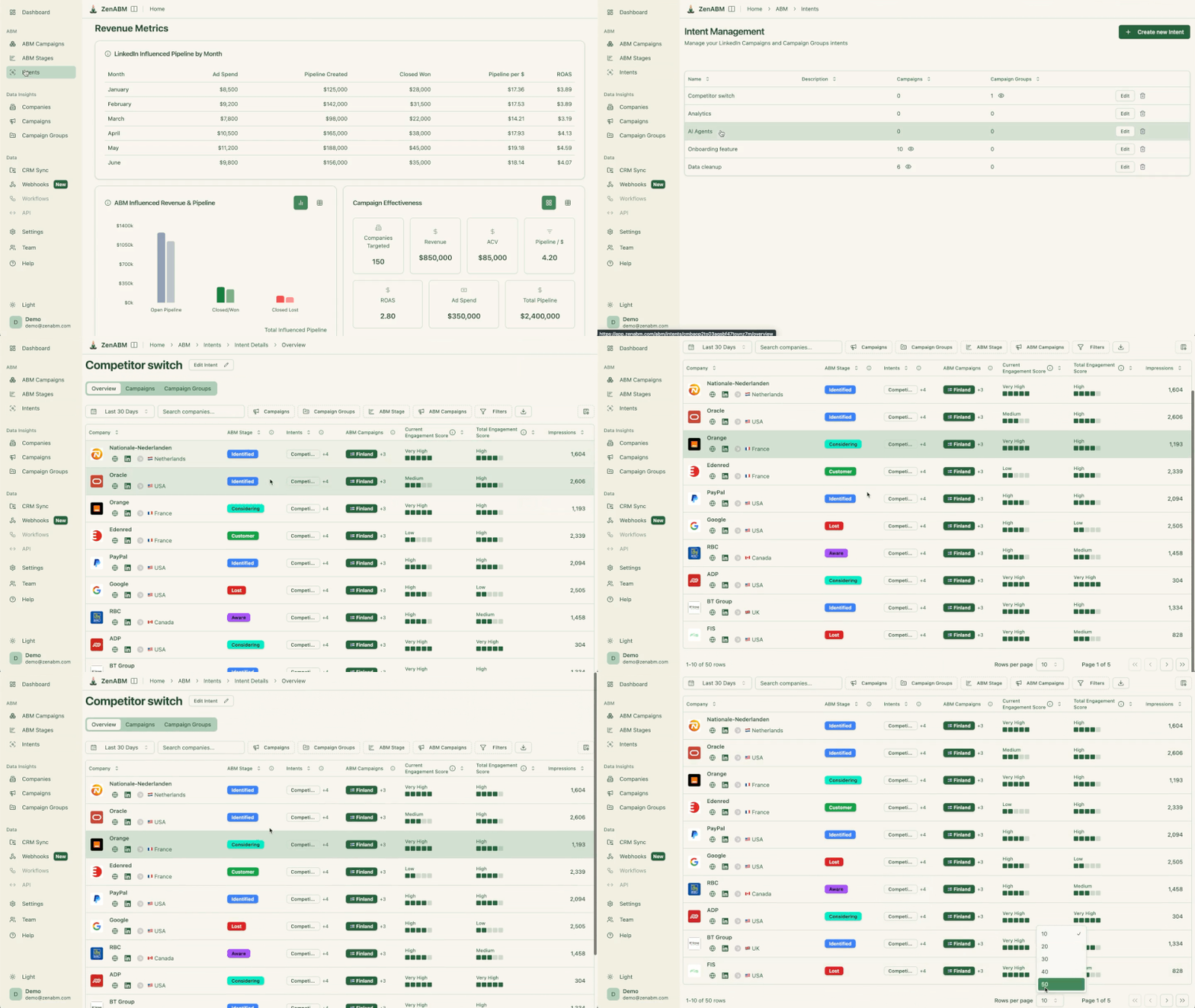
ZenABM also provides dashboards that tie LinkedIn ads directly to account engagement, stage progression, and revenue, letting teams track performance from high-level ABM programs down to individual ads while calculating ROAS, pipeline per dollar, and true pipeline contribution using deal value and ad spend per company.

It also includes job-title analytics with dwell time and video funnel insights, showing exactly who engages with what.

On top of that, ZenABM’s AI chatbot, Zena, lets you query your LinkedIn and ABM data in plain language to understand ad engagement, campaign performance, account movement, job-title response, and budget waste.

Under the hood, Zena connects ad data, spend, and CRM deals to explain which campaigns drove pipeline, which accounts converted, and which high-intent companies sales missed. The result is analyst-grade insight without spreadsheets, ready for sales standups, strategy reviews, or exec updates.
Radiate B2B is designed to plug into this ecosystem rather than stand apart.
Here’s a table enlisting Radiate B2B’s integrations:
Integration Category | What Radiate Supports | How It’s Used in Practice | ABM / Revenue Impact |
|---|---|---|---|
CRM Integration | Native integrations with HubSpot and Salesforce. Syncs intent signals and ad engagement data to account and company records. | Radiate populates CRM fields such as:
Enables dynamic lists (e.g. accounts with ≥3 ad engagements in a week). | Sales works directly inside CRM without logging into Radiate. Enables reporting on downstream impact, such as:
|
Marketing Automation & Email | Works natively via HubSpot. | Intent signals can trigger:
| Converts intent data into automated workflows instead of static reporting. Reduces lag between buying signals and marketing response. |
Sales Engagement Tools | Direct integration with Clay. | High-intent accounts can be:
| Sales focuses on accounts with verified intent signals instead of cold lists. Improves SDR efficiency and outbound conversion rates. |
Analytics & BI | API access and data exports available. | Radiate data can be pulled into BI tools such as:
| Enables advanced analysis like:
Useful for RevOps and leadership reporting. |
Ads & Personalization Partners | Designed to share data with personalization and ABM tools. | Intent data can inform:
| Extends intent beyond ads into the full buyer experience. Aligns ads, website, and outbound around the same account signals. |
Radiate B2B’s pricing model appears to be subscription-based with tiered plans and optional add-ons, rather than pure pay-as-you-go ad spend.
Here’s what we know:
ZenABM, on the contrary, starts at just $59/mo!
And multiple brands are already building pipelines with it.
Radiate B2B’s user impressions and reviews:
ZenABM is built for teams that rely on LinkedIn as the primary ABM channel and want first-party accuracy, automation, and revenue visibility without the price or complexity of multi-channel suites.
Let’s look at its core features:


ZenABM connects to the official LinkedIn Ads API and captures account-level data for all campaigns so you can see which companies see, click, and engage with your ads.
Because this is first-party data from LinkedIn’s environment, it is more reliable than IP or cookie-based visitor ID.
A Syft study puts IP-based identification at around 42 percent accuracy.

ZenABM treats LinkedIn ad engagement itself as first-party intent. When several people in one company keep engaging with your ads, that is a strong buying signal without rented intent feeds.

ZenABM updates engagement scores as accounts interact with your ads across campaigns, so you can see who is heating up over short or long windows and let marketing and sales prioritize accounts that show real intent.
ZenABM also shows the full touchpoint timeline for each company:


ZenABM lets you define stages such as Identified, Aware, Engaged, Interested, and Opportunity and automatically places accounts in the right stage using scores and CRM data.
You control thresholds, and ZenABM tracks movement over time.


This gives you funnel visibility similar to larger suites, but powered by LinkedIn data.
ZenABM integrates bi-directionally with CRMs like HubSpot and adds Salesforce sync on higher tiers.
LinkedIn engagement data flows into the CRM as company-level properties:
Once an account crosses your score threshold, ZenABM updates the stage to Interested and automatically assigns a BDR.
ZenABM lets you derive intent topics from LinkedIn campaigns by tagging campaigns by feature, use case, or offer.
ZenABM then shows which accounts engage with which themes.
This is clean, first-party intent from owned interactions.
You can push these topics into your CRM, so sales and marketing can tailor outreach to what each company has actually explored.

ZenABM ships with dashboards that connect LinkedIn ads to account engagement, stage movement, and revenue.


ZenABM shows which job titles engage with your creatives and gives dwell time and video funnel analytics.
ZenABM provides its AI chatbot called Zena that basically answers all you want from ZenABM in natural language.
You can ask Zena open-ended questions like you would a smart analyst and get company-level answers about:
Under the hood, Zena combines OpenAI with a library of carefully designed prompts and endpoints to join ad engagement, spend and CRM deals so it can explain which campaigns drove pipeline, which accounts turned into opportunities, which formats perform best and which companies are high intent but untouched by sales.
Instead of exporting spreadsheets and stitching pivot tables, you get plain language insights, ready to drop into strategy reviews, weekly sales standups or executive updates.

ZenABM’s custom webhooks let you push events into your stack, for example, Slack alerts, enrichment flows, or other ops automations.

Most tools treat each LinkedIn campaign separately. ZenABM lets you group several into one ABM campaign object so you can see performance across regions, personas, or creative clusters.
Instead of juggling fragmented reports in Campaign Manager, you see spend, pipeline, account movement, and ROAS for the entire initiative.
For agencies, ZenABM offers a multi-client workspace.
You can manage multiple ad accounts and clients in one environment, each with its own ABM strategy, dashboards, and reporting, instead of constantly switching accounts in Campaign Manager.

ZenABM pricing details:
Radiate B2B is a powerful all-in-one ABM platform that combines multi-channel advertising with deep intent data, including third-party signals from Bombora, making it well-suited for teams running large, omnichannel ABM motions.
That breadth comes with tradeoffs: higher cost, heavier workflows, and the risk of noisy third-party intent that smaller or LinkedIn-focused teams may not fully need.
For leaner, faster execution centered on LinkedIn, ZenABM offers a sharp alternative, using first-party LinkedIn engagement as its core signal with real-time analytics, automation, and far lower spend.
In practice, the two can even work together, with Radiate driving broad awareness and ZenABM refining engagement, scoring, and deal visibility downstream.
Ultimately, the right choice depends on scale, budget, and channel focus.
Thankfully, both tools offer free trials, so you can test what actually drives pipeline instead of betting on slides.
