



In this guide, I break down how N.Rich and Madison Logic differ on features, pricing, and where they fit in an ABM stack, so marketing and sales can see which one actually suits their motion.
I also show how ZenABM can act as a lean, LinkedIn-first alternative or sit on top of either tool when you only need precise LinkedIn ABM analytics.

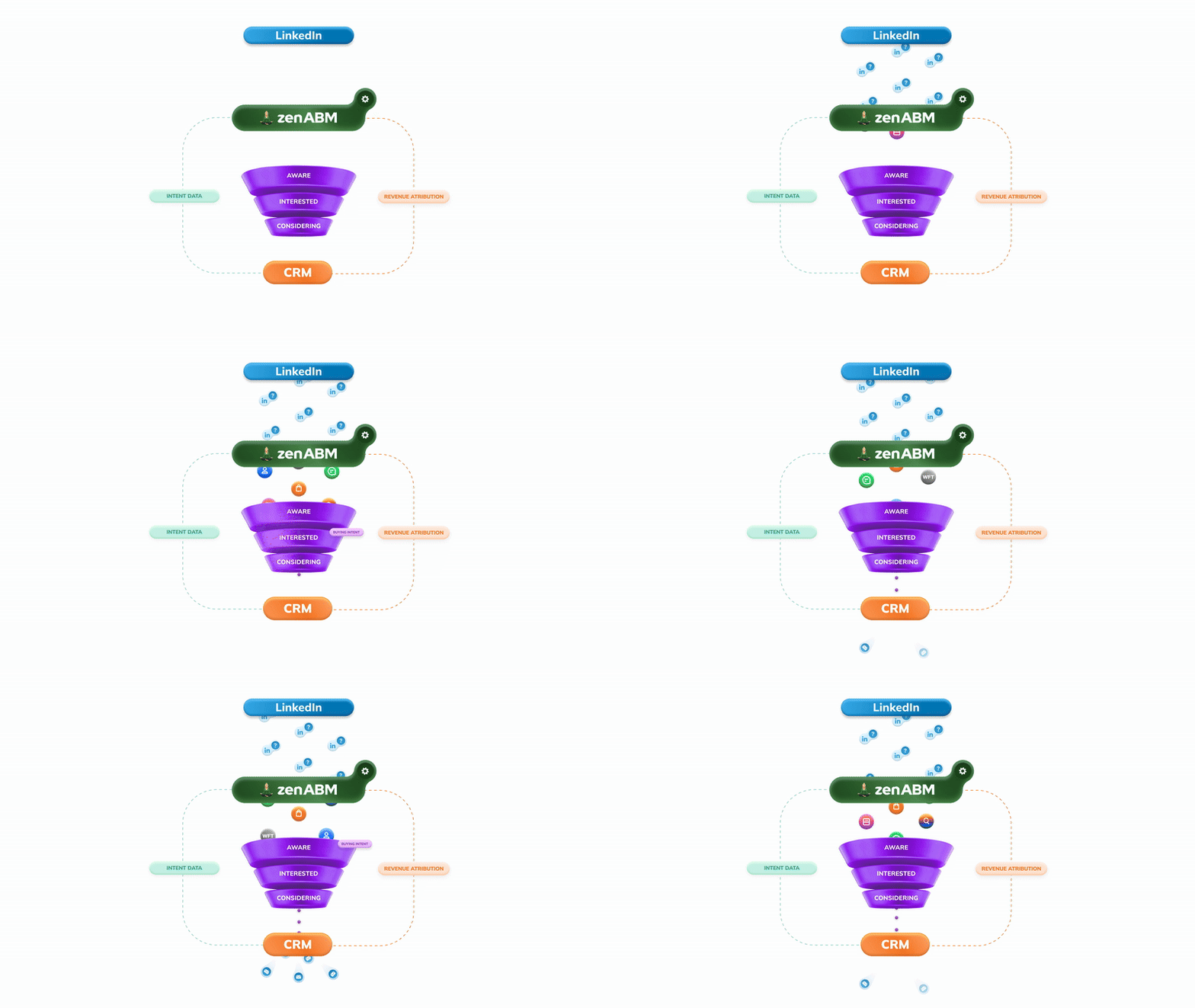
In case you’re short on time, here is the snapshot:
N.Rich presents itself as an agile ABM execution layer for mid-market and enterprise teams. Under the hood, it is a B2B DSP with intent, ICP, and ABM workflows built on top.
Core N.Rich capabilities for ABM include ICP building, intent scoring, programmatic campaigns, and account-level analytics.

N.Rich pulls in CRM opportunity data to learn what your best customers look like and then scores new accounts against that pattern.
You can spin up target lists in minutes using filters such as industry, employee count, and tech stack.

The goal is to move beyond gut-feel account picks, although output still depends heavily on CRM data quality.

N.Rich blends first-party signals (site visits, ad engagement) with third-party intent feeds to highlight accounts researching key topics.
Accounts receive intent scores so sales and marketing can focus on those showing the strongest interest.
The platform tracks thousands of topics and syncs them into your CRM for timely, theme-based outreach.
N.Rich ships with a built-in DSP to run programmatic display to target accounts and supports native and video formats.
You can connect LinkedIn Ads to keep display and LinkedIn campaigns aligned, and Capterra reviews note a simple campaign builder that supports bulk creatives and A/B tests.

N.Rich provides account-level analytics so you can see how engagement connects to pipeline and revenue.

The Opportunity Attribution dashboard links impressions, clicks, and visits with opportunities and closed deals so you can see which accounts actually moved.

The system also calculates an ICP Sales Velocity Score for each account and can sync all of this back to the CRM on higher tiers.
N.Rich integrates with the main CRMs and marketing tools.
Native connectors exist for Salesforce, HubSpot (Marketing and Sales Hub), and LinkedIn ads, letting you pull CRM data for segmentation and push back engagement, topics, and velocity scores.
Some connectors are reserved for higher plans, and N.Rich also offers firmographic and technographic enrichment so you can see what tools target accounts use.

N.Rich has simple tiered pricing tied to team size and ABM maturity. All plans aim to turn intent data into deals, with clear published ranges.
For smaller teams starting with intent-driven ABM.
Includes 1 Intent Report, 10 topics, 1 marketing seat, 3 sales seats, 1 N.Rich account, 1 ABM campaign, and chat support.
For teams scaling ABM and needing closer sales marketing alignment.
Includes everything in LITE plus:
For global, mature ABM programs with advanced orchestration needs.
Includes everything in GROWTH plus:
All plans benefit from N.Rich’s deep data and native ABM orchestration, but you still need to talk to sales for exact quotes.
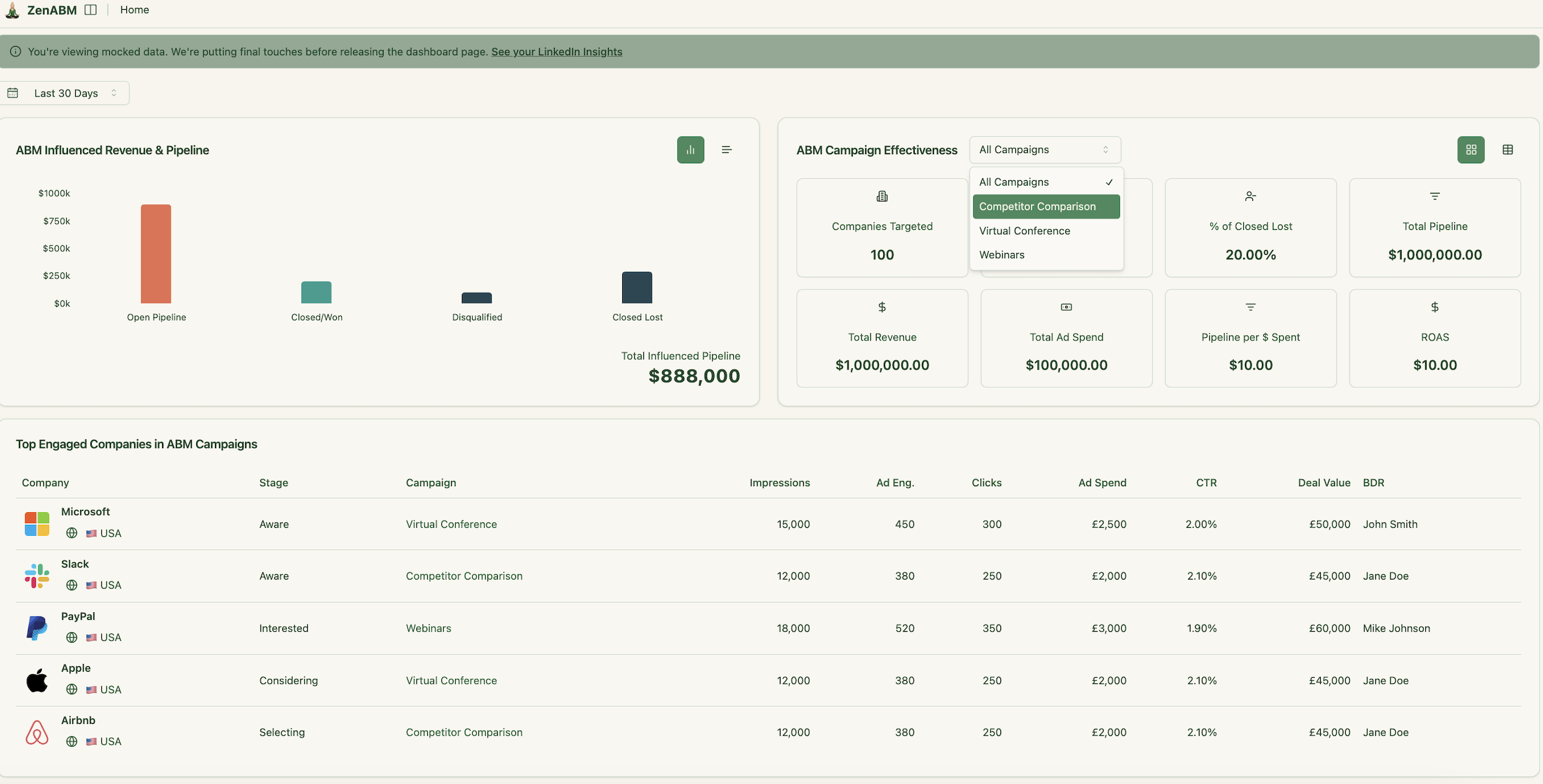
Note: because N.Rich starts above $10K per year, ZenABM often looks leaner for LinkedIn first teams, starting at ~$59/month, with the top tier still under $6K per year. You still get core LinkedIn ABM essentials: account-level ad engagement tracking, account scoring, ABM stage tracking, hot account routing, bi-directional CRM sync, custom webhooks, qualitative intent, and plug-and-play ROI dashboards.
N.Rich scores 4.7 out of 5 on G2 (around 99 reviews), which suggests customers are broadly satisfied.

Across G2, TrustRadius, Reddit, and similar sources, a few themes show up.


Madison Logic is an enterprise ABM platform built to put your paid programs in front of named accounts across several channels at once.
Here is a shorter look at what it does, what it costs, and how users feel about it.
The Activate ABM™ platform bundles content syndication, ads, and intent data in one system.
Madison Logic coordinates content syndication, display, LinkedIn ads, CTV, and digital audio from one platform.
You can reach target accounts via assets such as whitepapers, webinars, LinkedIn Sponsored Posts, and streaming TV spots.


Madison Logic claims over 20 years of B2B intent data and a large graph of accounts and contacts across many industries.
These signals feed ML Insights, which scores and prioritizes accounts considered in the market.
The platform can syndicate your content through its publisher network to generate MQLs from target accounts.
Madison Logic promotes strict filters, but some marketers see syndication as opaque and uneven in lead quality, with one Redditor calling it “a blind network with no way of filtering out of spec leads.”

Madison Logic runs programmatic display and LinkedIn campaigns against your account list.
As a LinkedIn Marketing Partner, it can sync account segments into Campaign Manager and include LinkedIn as part of orchestrated sequences.
The aim is sustained account exposure across display, social, and other channels, although display networks still struggle with banner blindness and fake traffic.

Madison Logic also offers CTV and digital audio campaigns, which only a few ABM vendors handle, as long as you have budget and creative capacity.

ML Measurement and the ML Intent Dashboard tie engagement back to pipeline and revenue.
The Intent Dashboard, launched in late 2025, centralizes intent, engagement, and benchmarks, then surfaces hot accounts and suggested next actions.
You get views of account engagement, cross-channel performance, pipeline impact, and movement through stages.

Madison Logic built its edge on deep intent data.
Its data arm later became Bombora, and the platform still blends first-party engagement with Bombora Company Surge plus firmographic and technographic data in the ML Data Cloud.
Targeting is based on firmographics and job details, so you can reach specific roles and regions through syndication, display, and LinkedIn.
However, third-party keyword surge intent often skews toward curiosity rather than true purchase intent, and some G2 reviews mention a heavy top-of-funnel skew.

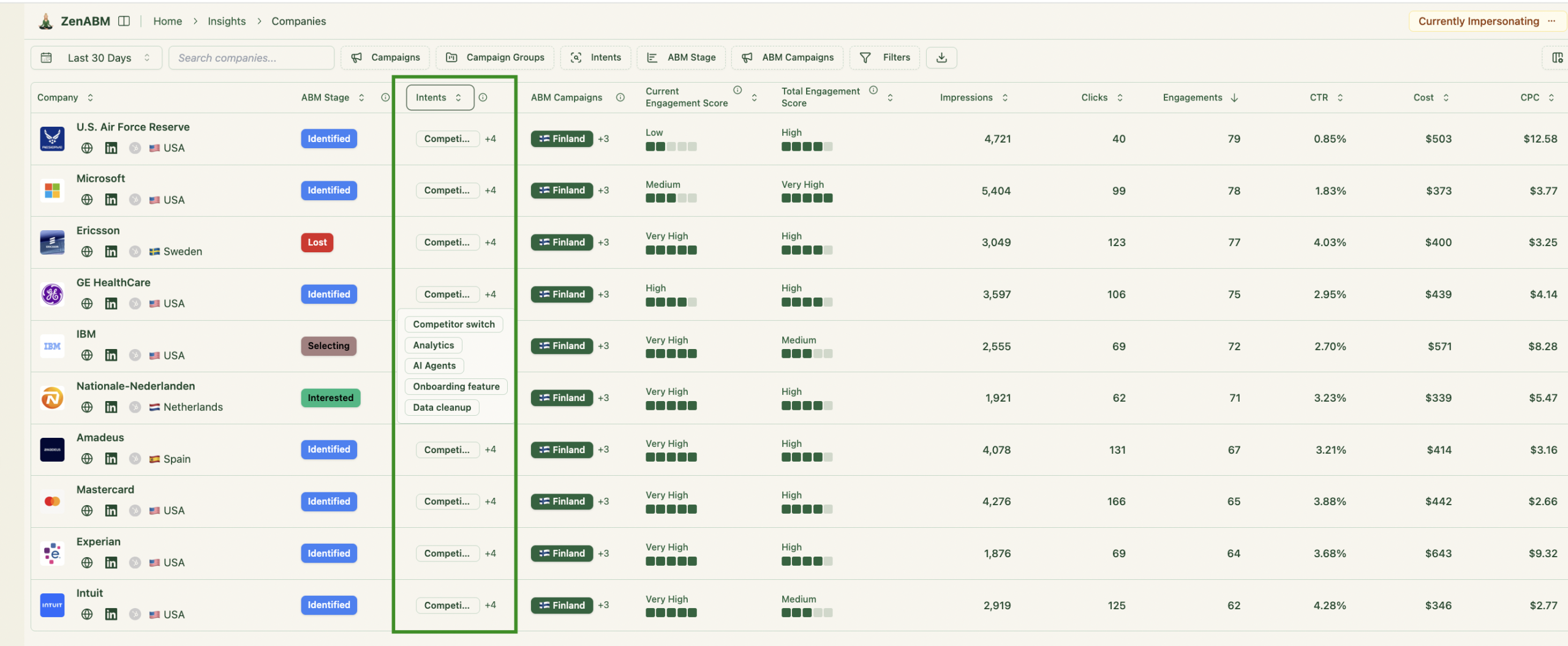
Pro Tip: Third-party surge data can be expensive and noisy. ZenABM takes a different route and focuses on first-party qualitative intent by tracking how companies interact with each LinkedIn ad you run. You tag campaigns by theme, and ZenABM groups companies by what they actually click.
This gives sales and marketing concrete interest signals instead of guesswork.
Madison Logic hooks into major CRM, MAP, and sales tools, making it a fit for complex B2B stacks, although setup effort and maintenance can vary.
| Platform | Integration Details | User Notes |
|---|---|---|
| Salesforce (CRM) | Embeds account insights and engagement data and connects campaigns to the pipeline. | “The integration with Salesforce is everything when it comes to our reporting.” |
| HubSpot, Marketo, Pardot (MAP) | Pushes leads and engagement data into nurture flows that sync with the CRM. | Some users mention early setup friction and occasional manual CSV fallback. |
| LinkedIn Marketing Solutions | Exports account segments into Campaign Manager for activation. | Reported to streamline activation and save time for campaign launch. |
| Gong | Feeds intent-based insights into call prep and follow-ups. | Used to personalize conversations with AI-supported cues. |
| Convertr | Enriches leads in real time with intent scores and topics. | Helps route qualified leads faster into the right workflows. |
| Adobe Experience Platform | Feeds intent data into Adobe tools such as Journey Optimizer. | Supports full funnel personalization for enterprise programs. |
Madison Logic does not publish pricing publicly, which usually means custom enterprise deals.
Public benchmarks suggest:
User feedback highlights real strengths along with predictable tradeoffs.
Pros:


Cons:
Once you know both platforms, the contrast becomes clearer.
| Feature category | N.Rich | Madison Logic |
|---|---|---|
| Core positioning | ABM and intent platform with its own DSP and CRM driven ICP builder | Enterprise ABM platform focused on broad reach and rich audience data |
| Primary focus | Convert intent and CRM insight into targeted ads and measurable pipeline via its own DSP | Reach high-value accounts across channels and feed intent into paid and content plays |
| Main capabilities | B2B DSP, ICP builder, TALs, intent scoring, ABM campaigns, account analytics, attribution | Data cloud, content syndication, display and social ads, CTV and audio, measurement dashboards |
| Channels covered | Programmatic display with DSP plus coordination with LinkedIn Ads | Syndication, display, LinkedIn, CTV and audio through a large publisher network |
| Intent model | Blend of first-party engagement and third-party topics tracked | Long-running third-party intent plus Bombora-style surges and firmographics |
| Account analytics and attribution | Account-level analytics, opportunity attribution, and ICP velocity scores | ML Measurement and ML Intent dashboards for engagement, pipeline impact, and stages |
| Integrations | Salesforce, HubSpot, and LinkedIn ads | Salesforce, MAPs, LinkedIn, Gong, Convertr, Adobe Experience Platform and others |
| Data and enrichment | Firmographic and technographic enrichment aligned to ICP work | Large account and contact graph and ML Data Cloud for selection and prioritization |
| Pricing profile | Published tiers starting around $10K per year, plus onboarding and usage | Custom enterprise pricing where platform, media, and account volume can reach high five or six figures |
| Typical pros from users | Good intent and targeting, clear analytics, strong support after setup | Wide reach into target accounts, unified intent and engagement, helpful support |
| Typical cons from users | Set up effort, integration friction, and some feature limitations | Steep learning curve, integration issues, early-stage leads and high cost |
| Ideal team profile | Mid-market or enterprise teams wanting intent-driven programmatic and LinkedIn with solid attribution | Large B2B organizations with heavy ABM budgets and appetite for multi-channel complexity |
| Best use case | Turn ICP and intent signals into targeted ads and track pipeline impact | Run global ABM programs that mix syndication, display, social, and CTV with third-party intent |
| Where ZenABM fits | Acts as a LinkedIn first layer when you need precise company-level ad engagement and first-party intent inside the CRM | Acts as a lean LinkedIn ABM layer when you need company-level LinkedIn metrics, stages, and ROI without a full suite |
N.Rich suits teams that want a focused ABM execution layer built around ICP, intent, and a native DSP. It is a fit when you care about picking the right accounts, running programmatic plus LinkedIn, and tying those efforts cleanly to the pipeline.
Madison Logic suits organizations that want a wide reach across syndication, display, LinkedIn, CTV, and audio and can live with higher cost and complexity in return for depth of data and multi-channel coverage.
If your main growth lever is LinkedIn and you mostly need first-party accuracy, account scoring, ABM stages, CRM sync, and revenue attribution, both can feel like overkill.
As I just said, if your main growth lever is LinkedIn and you mostly need first-party accuracy, account scoring, ABM stages, CRM sync, and revenue attribution, both can feel like overkill.
This is where ZenABM comes in.
In fact, even if you are using or decide to use N.Rich or Madison Logic, ZenABM has unique features that make it important for your ABM tech stack.
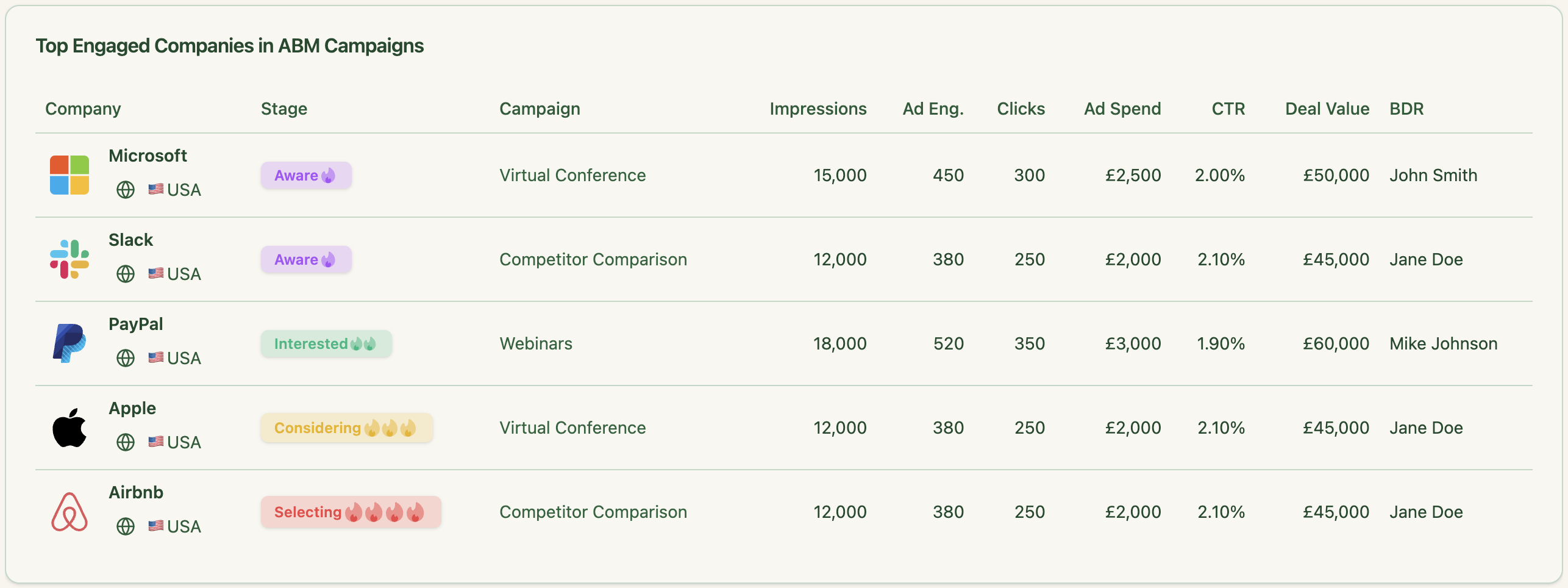
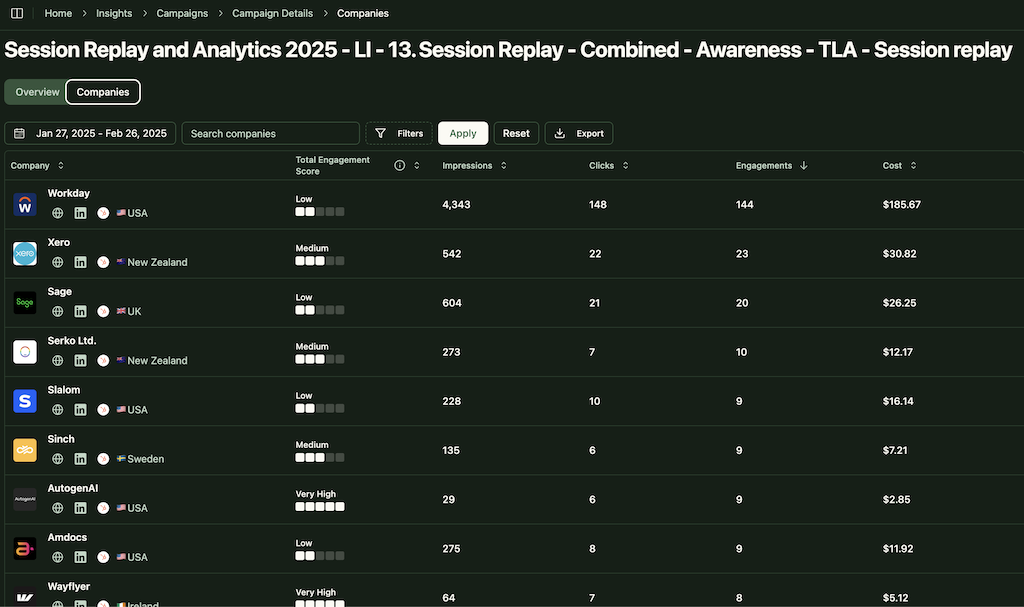
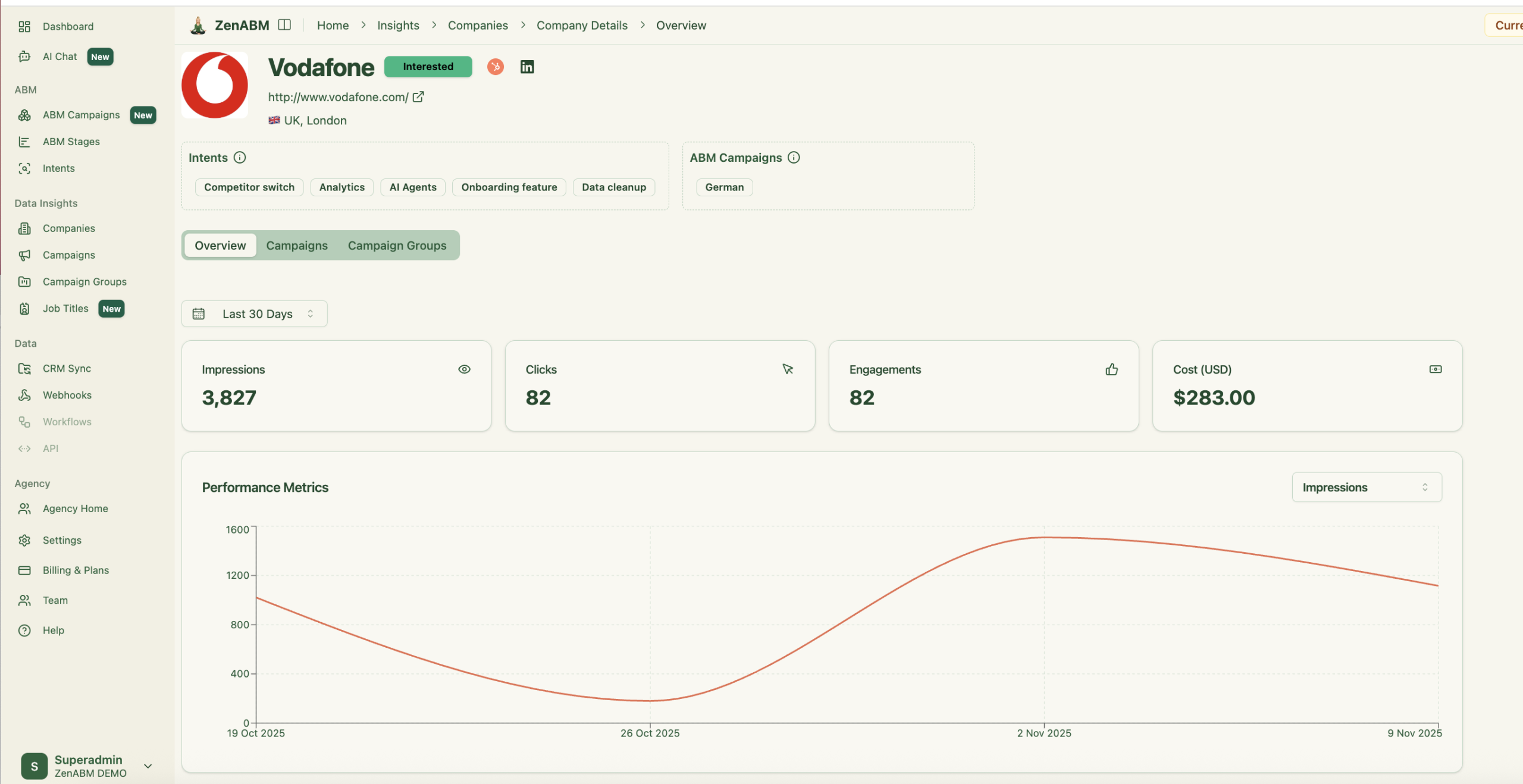
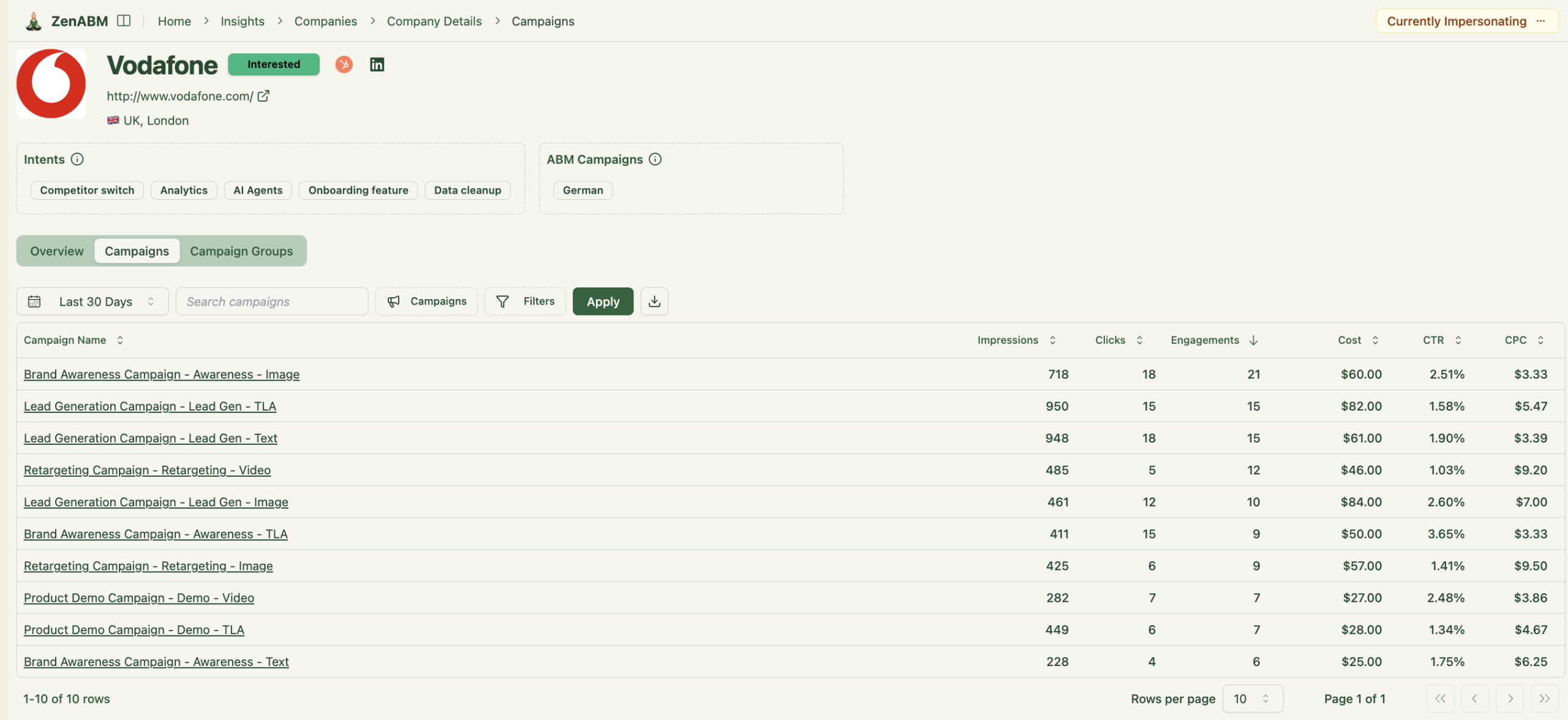
ZenABM connects directly to the official LinkedIn Ads API and records account-level data for every campaign.
You see which companies view and engage with your ads with account-level attribution, based on first-party LinkedIn data instead of noisy IP or cookie matching.
A Syft study suggests IP identification accuracy peaks around 42 percent, which is why ZenABM treats ad engagement as the primary intent signal.
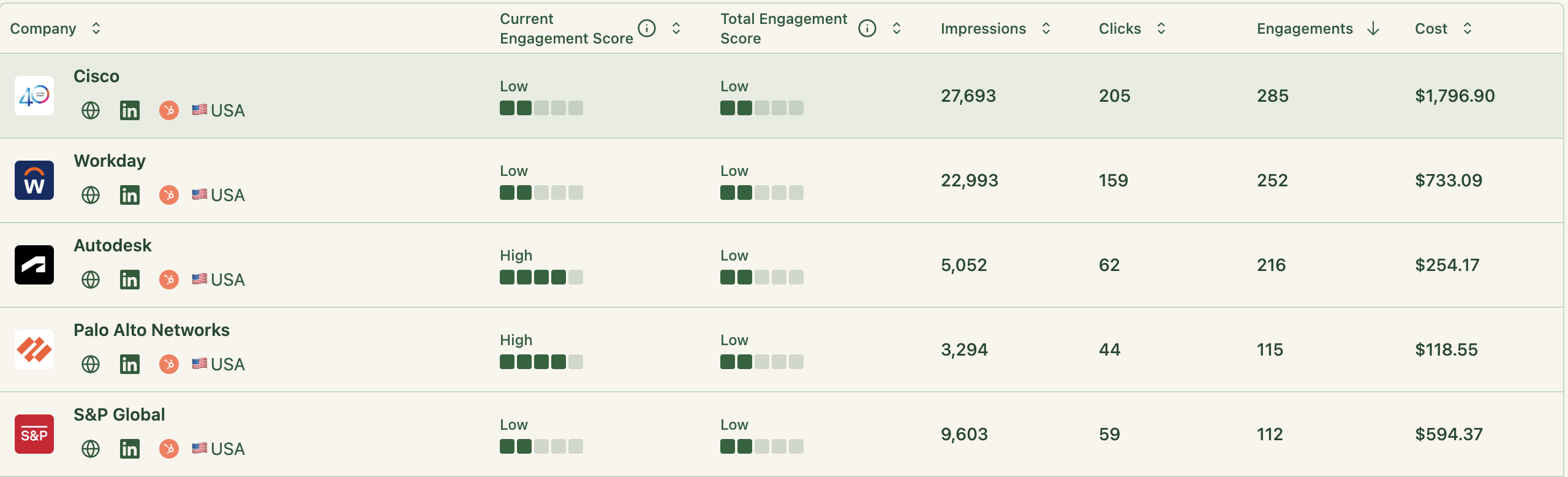
ZenABM updates engagement scores continuously as accounts interact with your ads, across short and long windows.
Scores help prioritize accounts and the interface shows a full touchpoint history for each company.
ZenABM lets you define custom stages such as Identified, Aware, Engaged, Interested, and Opportunity, then places accounts in the right stage based on scores and CRM signals.
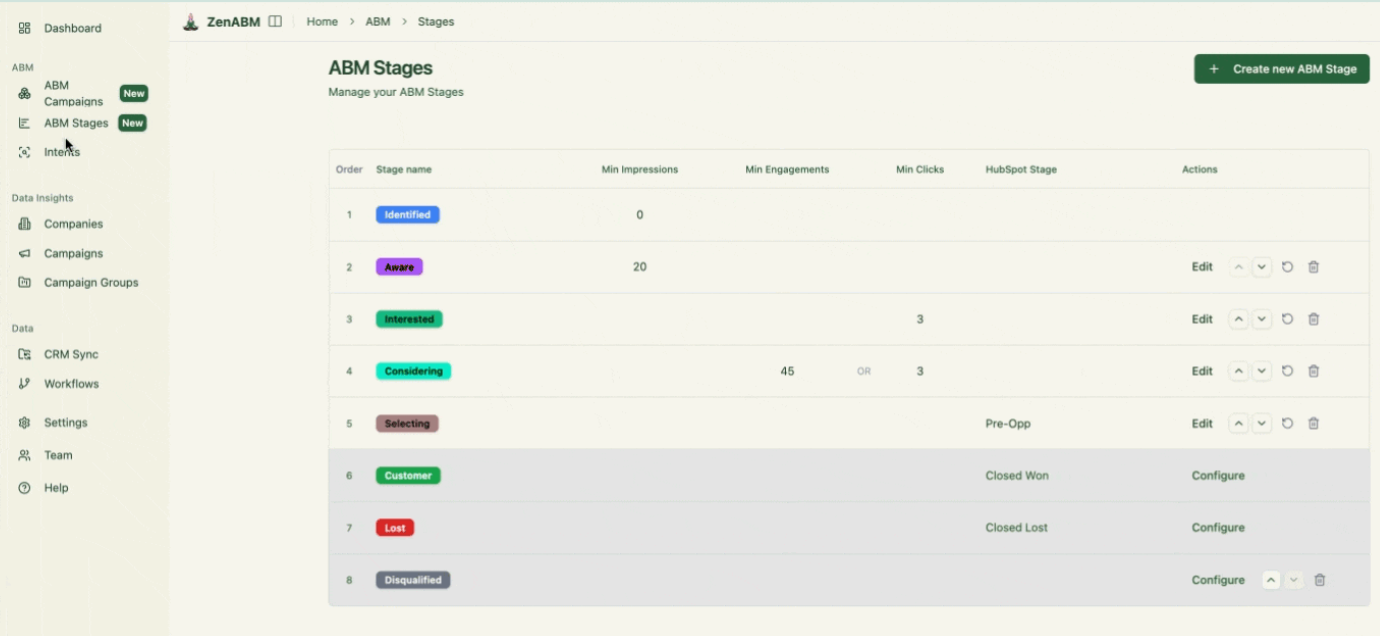
This gives you funnel visibility close to large ABM suites, but concentrated on LinkedIn engagement.
ZenABM syncs bi directionally with HubSpot and adds Salesforce support on higher plans.
All LinkedIn metrics can be written as company properties in your CRM.
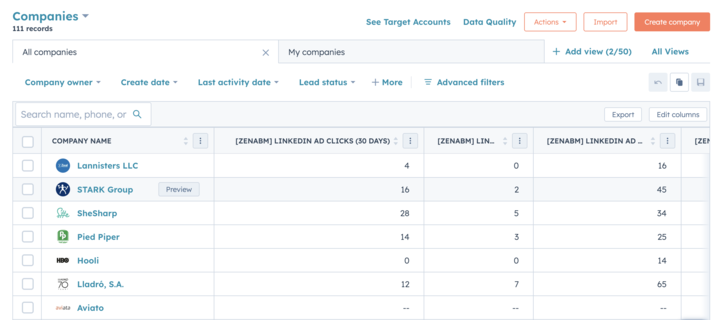
When an account crosses your score threshold, ZenABM updates the stage to “Interested” and assigns a BDR.
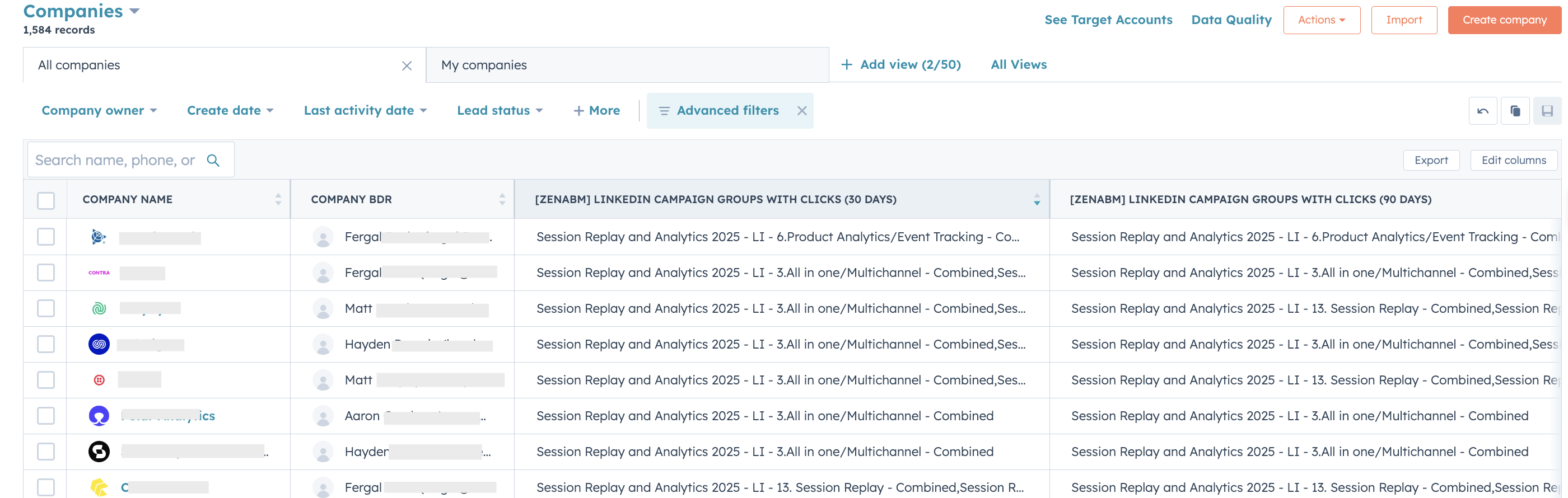
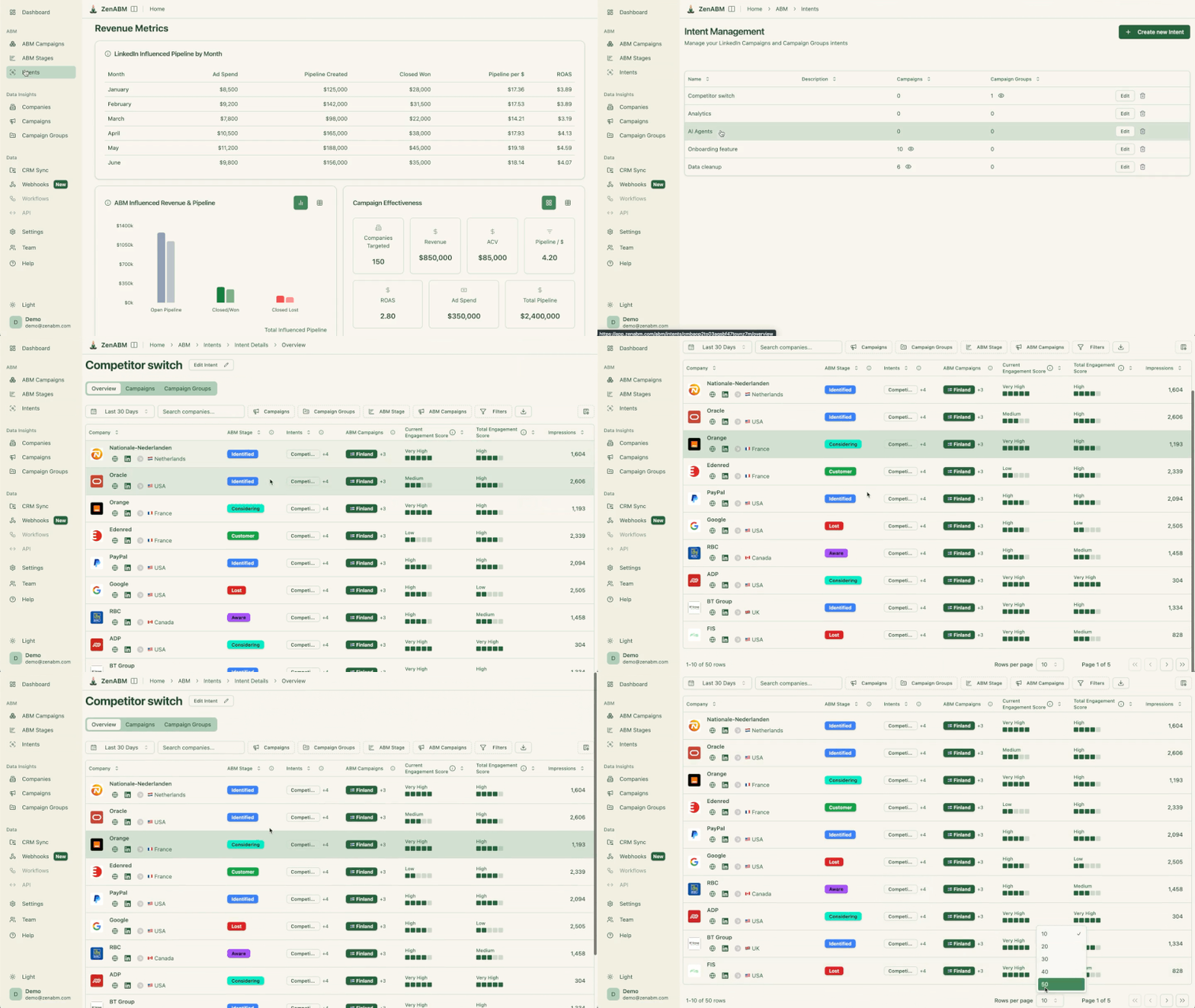
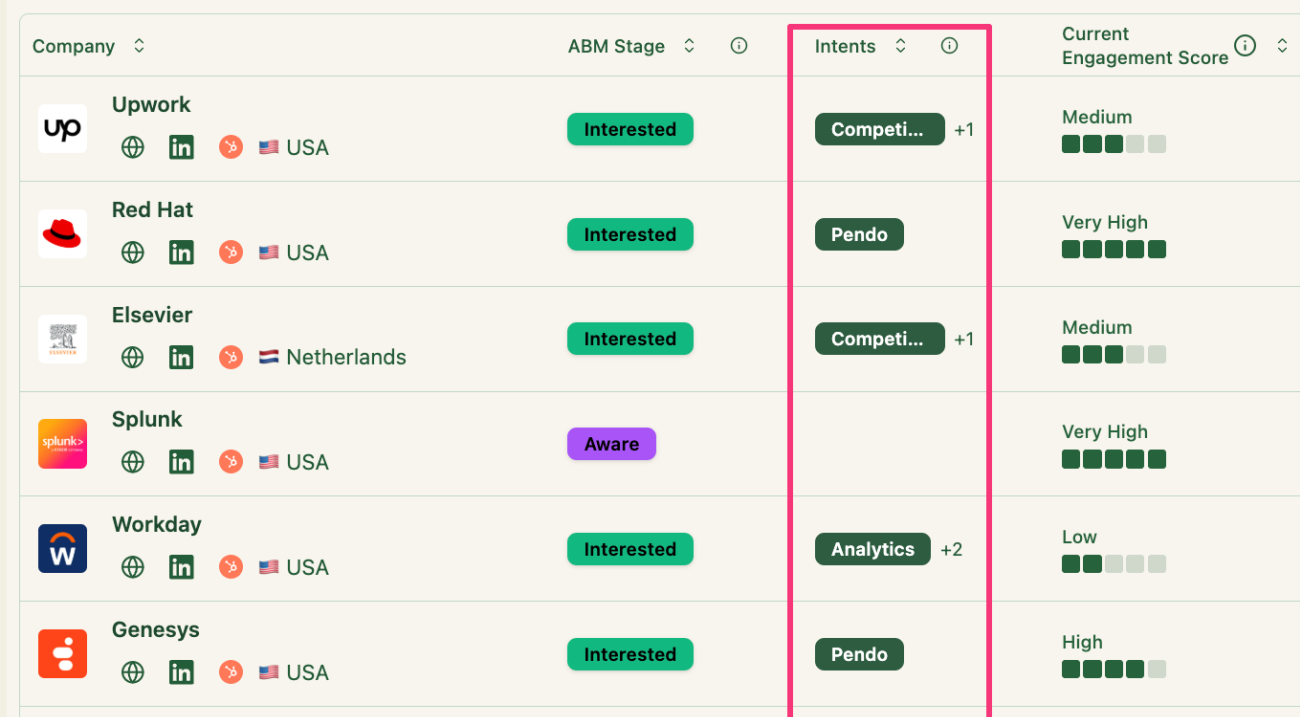
ZenABM lets you pull intent topics from LinkedIn campaigns. You can tag each campaign by feature, use case, or offer.
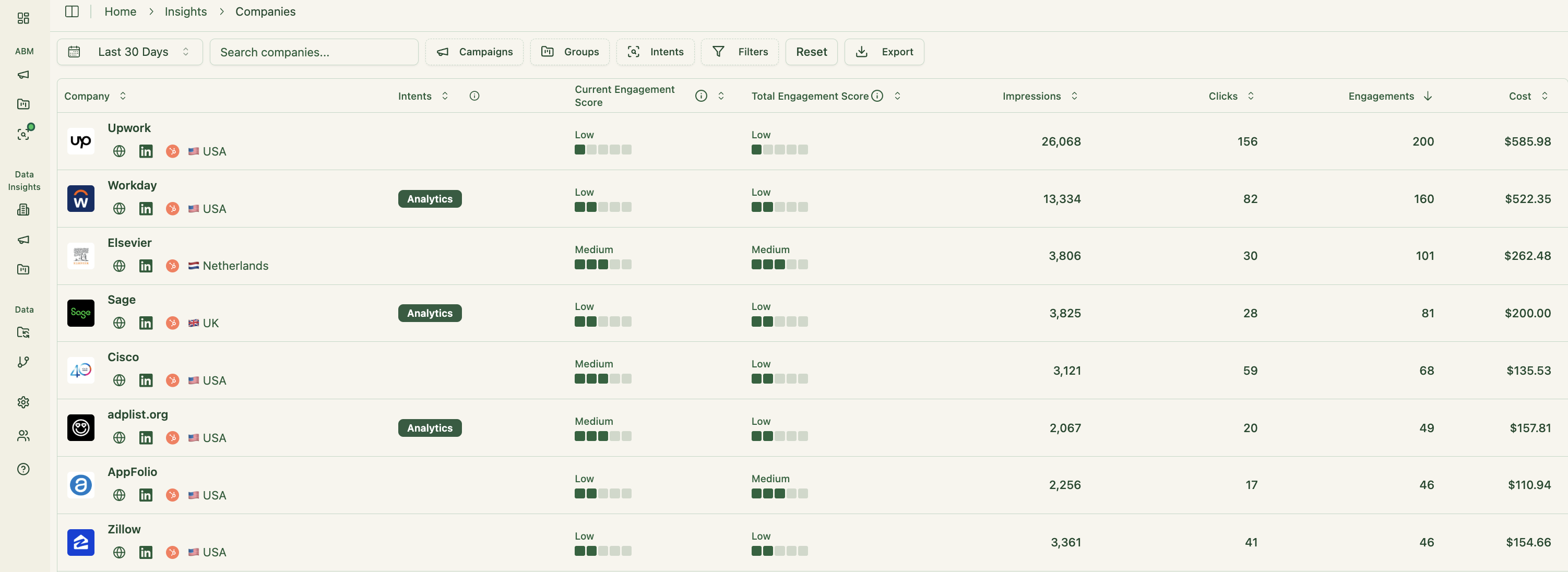
ZenABM then reports which accounts engage with which themes and lets you sync those topics into the CRM.
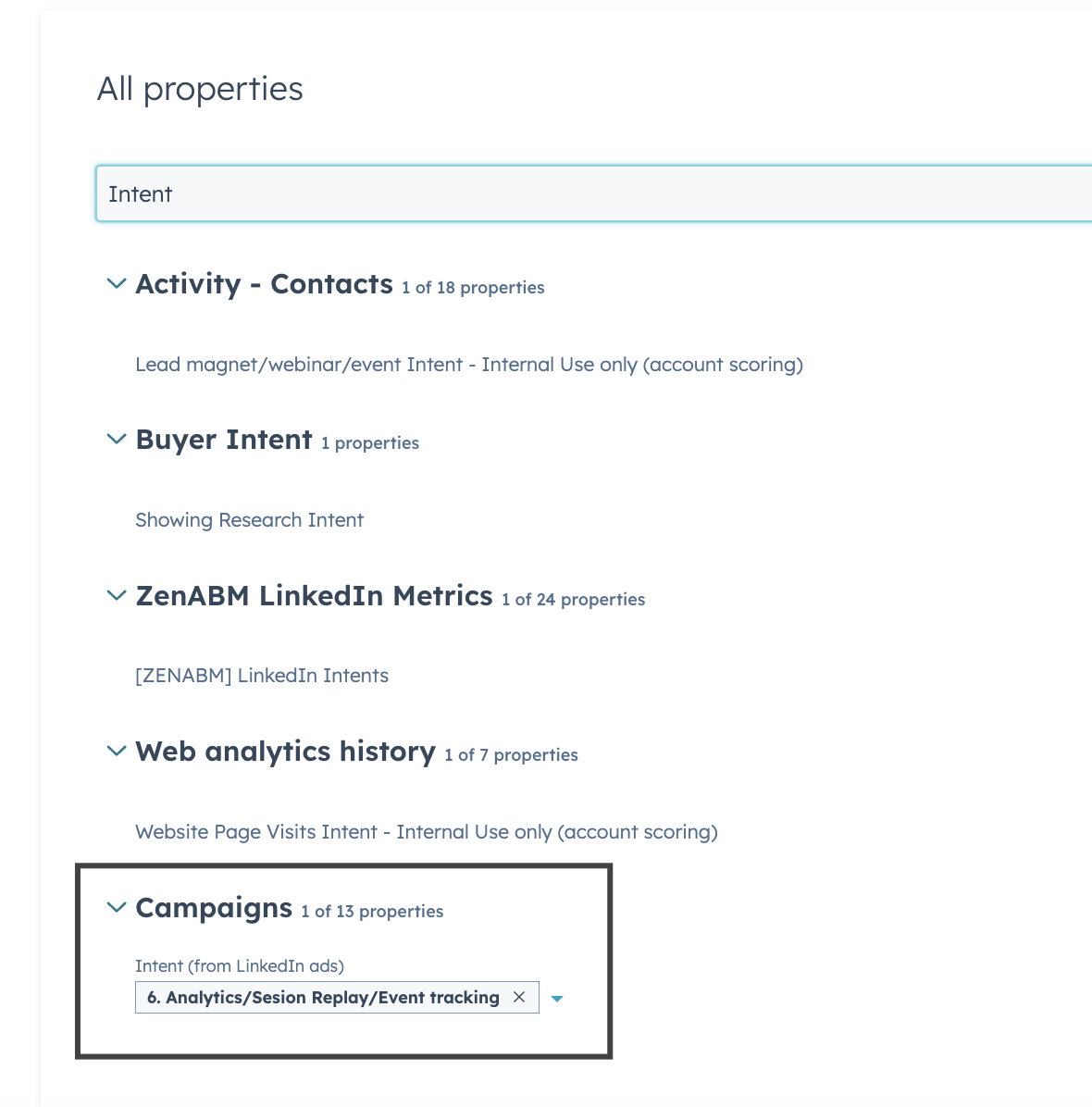
Reps can tailor outreach to what each account has actually explored instead of guessing.
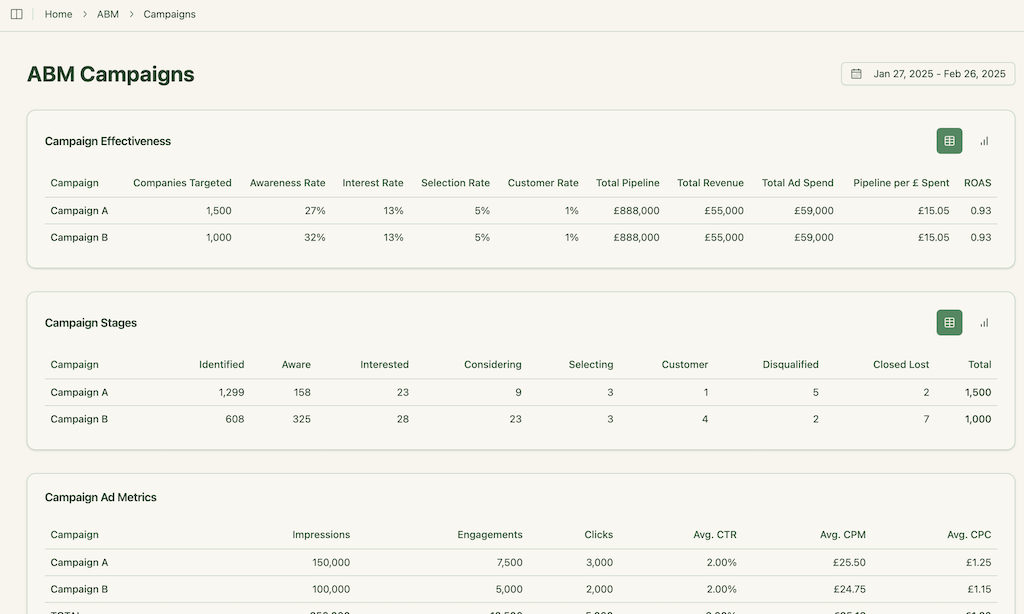
ZenABM includes ABM dashboards that tie LinkedIn ads to account engagement, stages, and revenue.
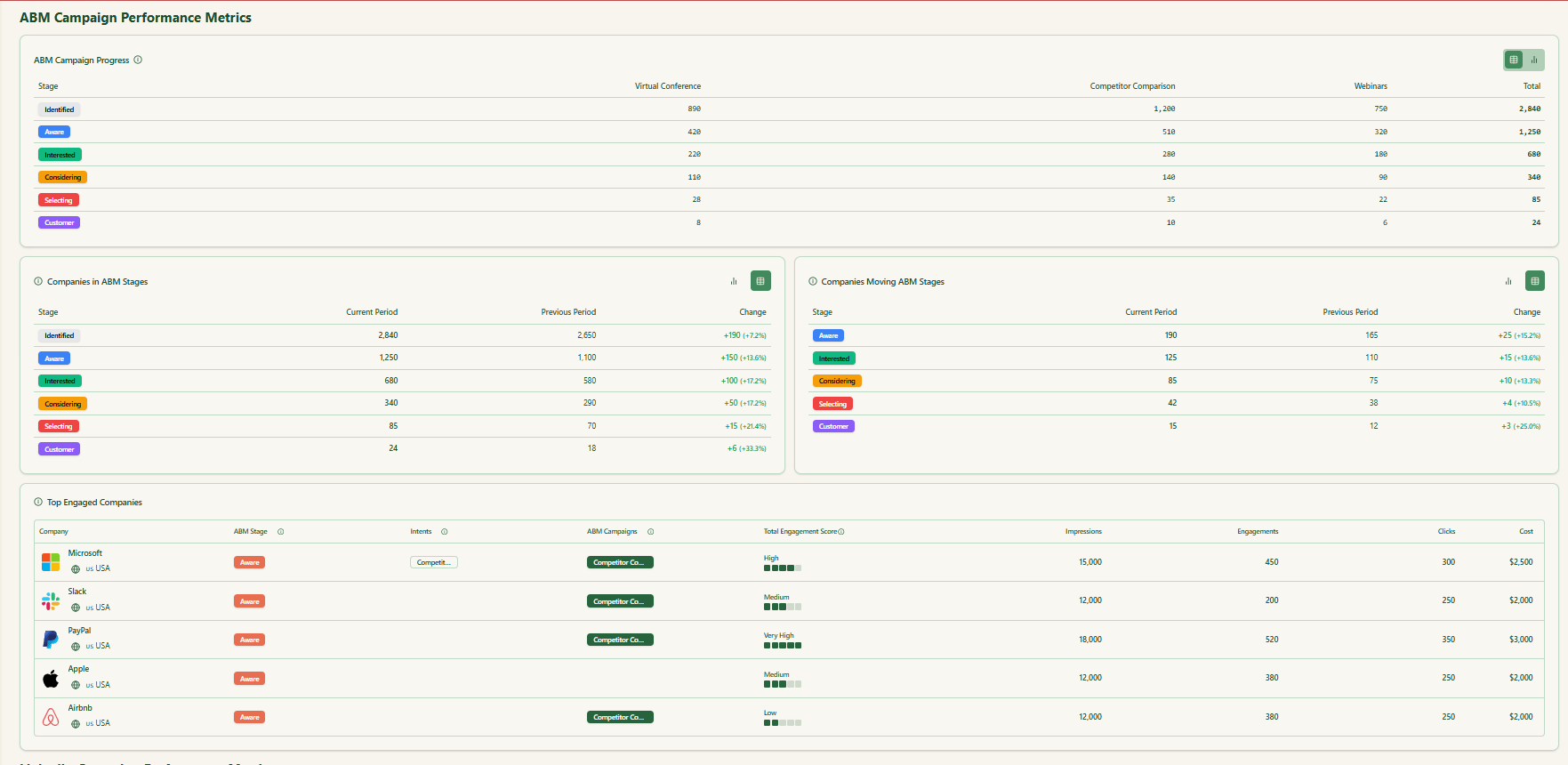
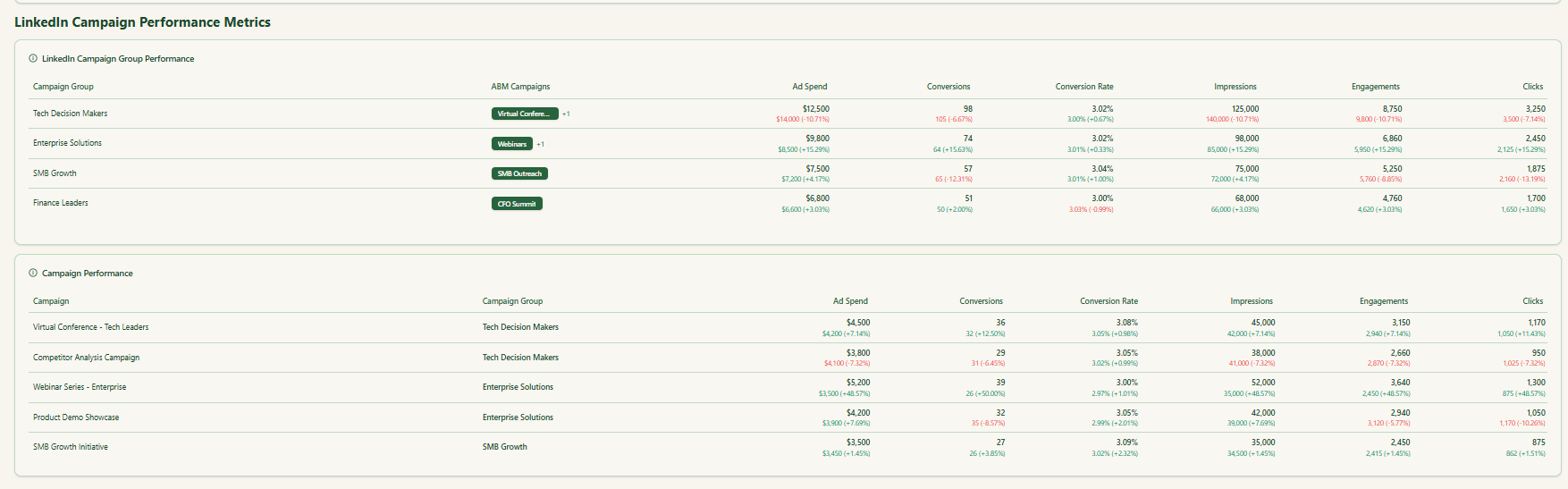
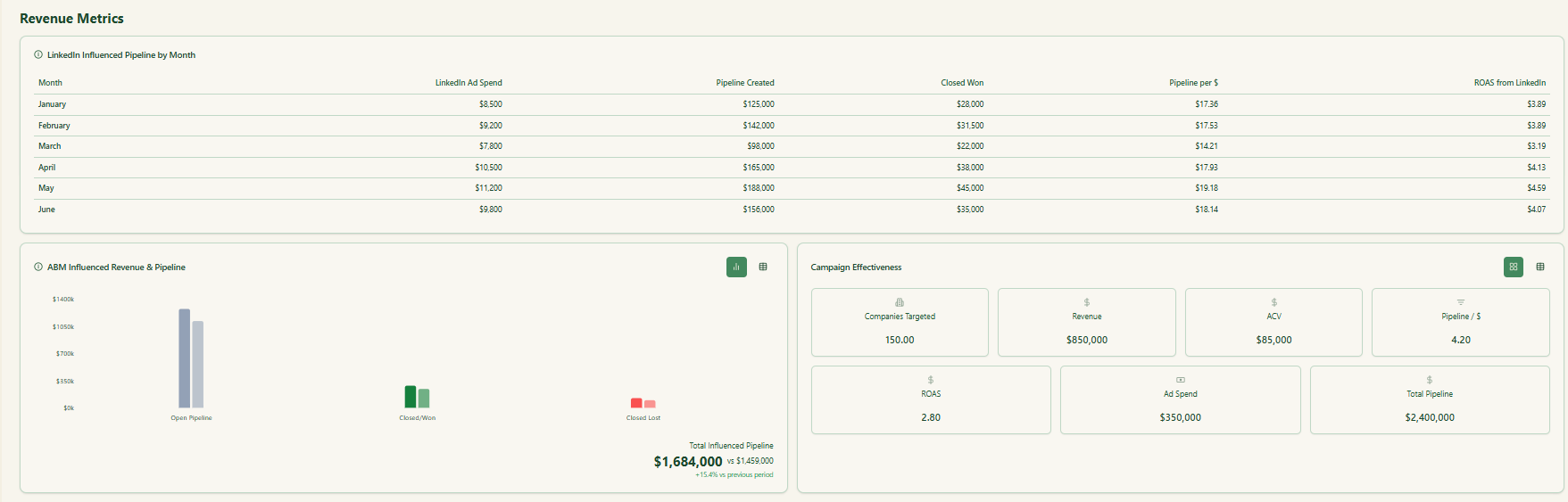
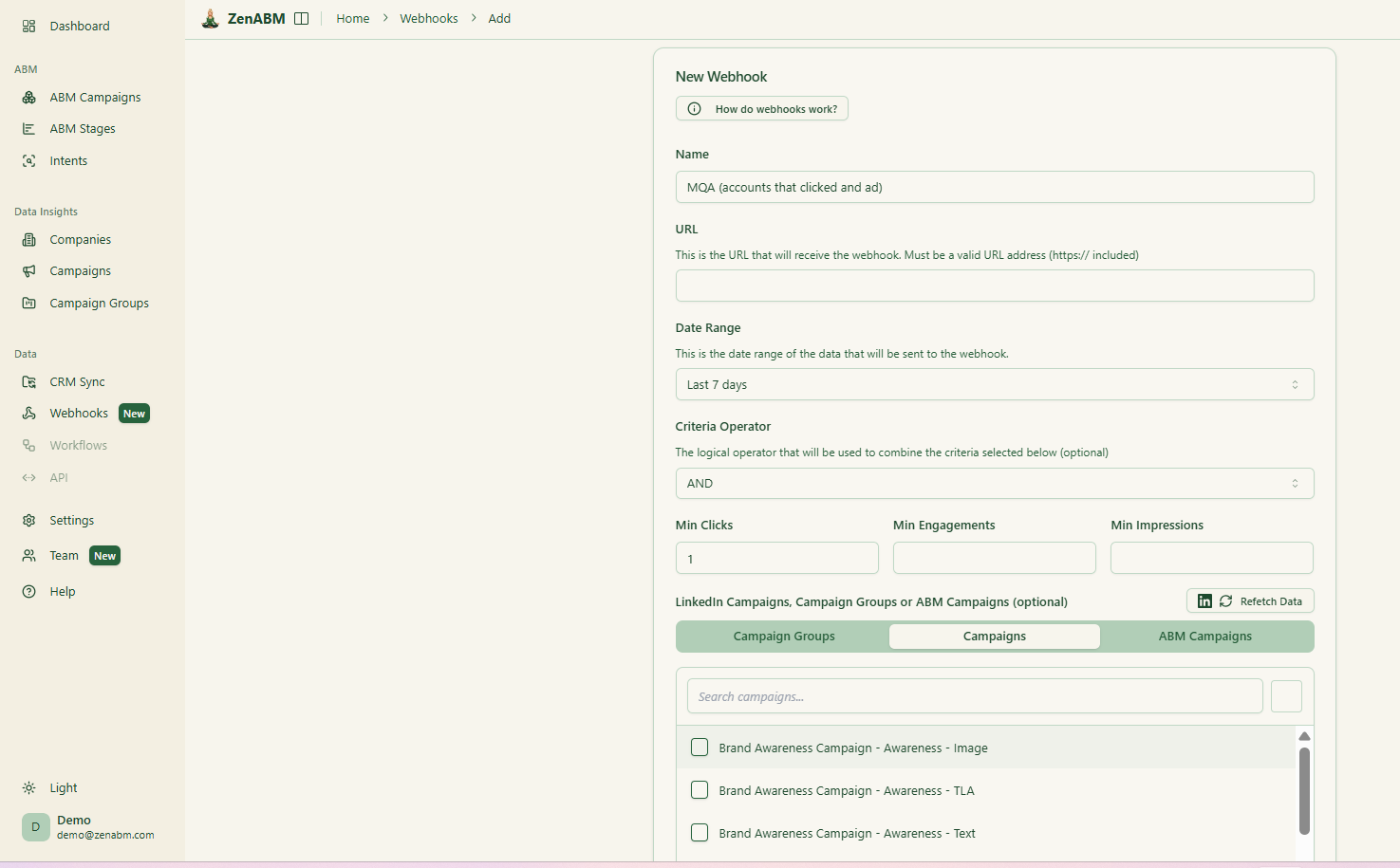
ZenABM’s webhooks send events into your stack for Slack alerts, enrichment flows, and other automation.
ZenABM shows which job titles interact with your creatives and how long they stay, plus video funnel analytics.
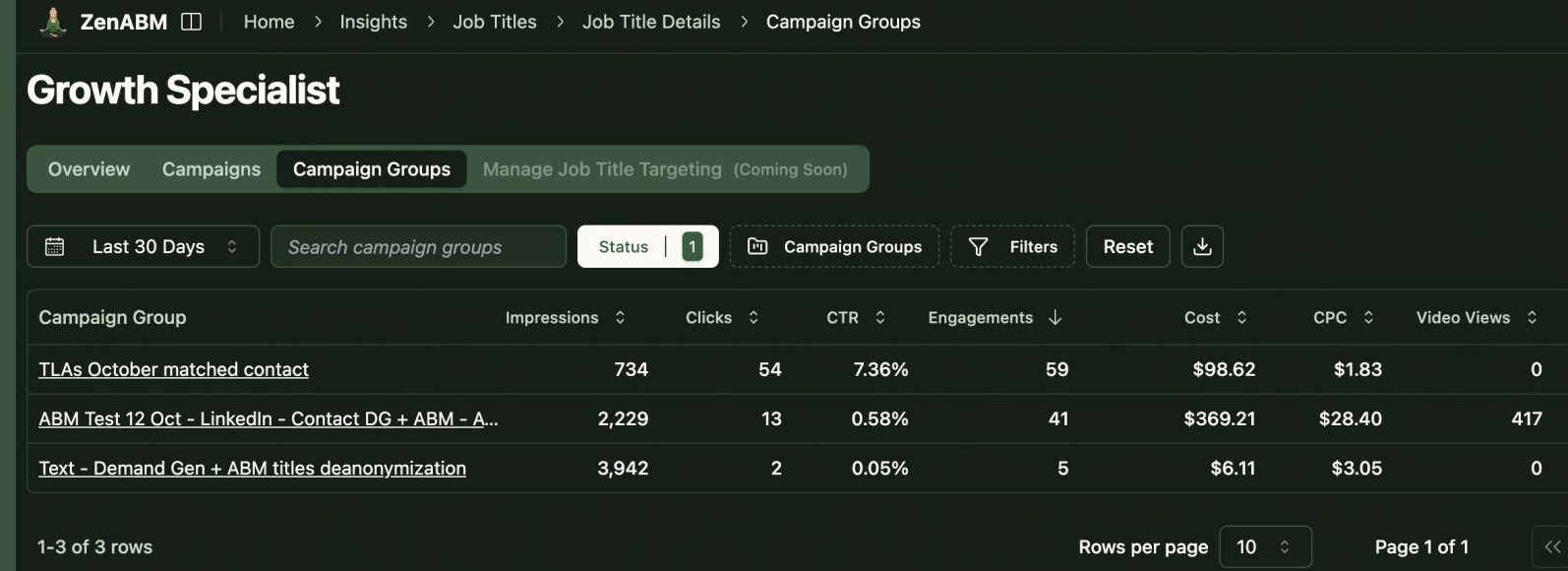
Instead of treating every LinkedIn campaign in isolation, ZenABM lets you group them into ABM campaign objects.
You can view performance across markets, personas, or creative clusters in a single place rather than juggling fragmented reports inside Campaign Manager.
ZenABM includes an AI chatbot on top of your LinkedIn API data and ABM model.
You can ask questions such as “Which accounts moved from Interested to Selecting last month?” or “What is my pipeline per dollar on retargeting campaigns?” and get answers that reference live data instead of exports.
ZenABM supports agencies via a multi client workspace so you can manage several ad accounts and clients in one environment with their own ABM campaigns, dashboards, and reporting without constant account switching in Campaign Manager.
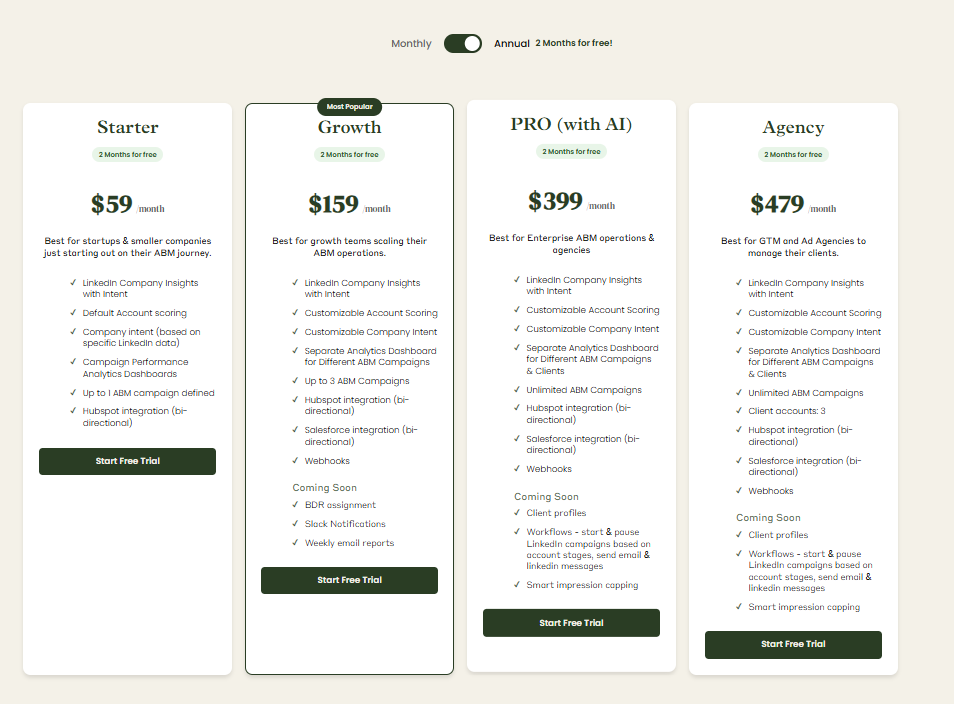
Plans start at $59/month for Starter, $159/month for Growth, $399/month for Pro (AI), and $479/month for Agency.
Even the agency plan stays under $6,000 per year, with all tiers including core LinkedIn ABM capabilities. Higher tiers mainly raise limits and add Salesforce sync.
Monthly and annual billing are available, and every plan comes with a 37-day free trial period.
N.Rich is a good fit if you want a DSP-backed ABM layer focused on intent, ICP, and measurable programmatic plus LinkedIn performance.
Madison Logic is better suited to enterprises that want multi-channel ABM at scale and have the budget and team to handle a heavy platform.
If your real priority is winning more pipeline from LinkedIn with accurate first-party signals, clean ABM stages, CRM sync, and revenue dashboards, ZenABM gives you a far simpler and cheaper route. You still get account-level LinkedIn engagement, qualitative buyer intent, and automated BDR routing without paying for a giant syndication engine.
