

©2026 ZenABM - All Rights Reserved.

Madison Logic is an enterprise ABM suite, while Dreamdata bills itself as a B2B “Activation and Attribution Platform” that maps buyer touchpoints and ties them to revenue.
In this guide, I have compared Madison Logic vs. Dreamdata on features, pricing and ABM fit so your marketing and sales teams can quickly see which platform aligns with their ABM motion.
I’ll also discuss how ZenABM can work as a lean LinkedIn-first alternative or serve as a complementary layer due to its unique features.
In case you want it short:
Category | Madison Logic | Dreamdata |
|---|---|---|
Core Purpose | Enterprise ABM activation suite spanning syndication, display, LinkedIn, CTV and intent data | Revenue attribution and buyer journey analytics with activation across ad platforms |
Main Strength | Massive multi-channel reach and strong enterprise intent signals | Deep multi-touch attribution and pipeline-level clarity |
Weakness | High cost, complexity, top of funnel heavy, syndication quality variance | Premium pricing, learning curve, and report customization limits |
Best For | Large ABM teams needing cross-channel presence and intent-driven targeting | Data mature GTM teams needing performance and revenue attribution insights |
Intent Data Type | Bombora surge plus first-party engagement across channels | Account activity scoring from cross-platform touchpoint aggregation |
Advertising Channels | Display, LinkedIn, syndication, CTV, digital audio | LinkedIn, Google, Meta and other paid channels via synced audiences |
Attribution Depth | Good for ABM stages and engagement tracking | Advanced multi-touch attribution with several model options |
Integrations | Salesforce, HubSpot, Marketo, Pardot, Gong, Adobe and more | Salesforce, HubSpot, Dynamics, MAPs, ad platforms, data warehouses |
Pricing Visibility | Opaque enterprise pricing with media costs | Starter at ~$750 per month, enterprise tiers higher |
Overall Fit | Enterprises with multi-channel ABM needs and large budgets | Companies needing attribution visibility and funnel diagnostics |
A third option: ZenABM gives account-level LinkedIn ad engagement, pipeline dashboards, account scoring, ABM stages, CRM sync, first-party qualitative intent, automated BDR assignment, custom webhooks, an AI chatbot (Zena) and job title analytics starting at $59 per month.
Madison Logic is an enterprise ABM platform that helps you reach named accounts across several paid channels from one place.
Here is a condensed look at what it does, what it costs and how users see it.
The Activate ABM platform combines content syndication, ads and intent data in a single system.
Madison Logic coordinates content syndication, display, LinkedIn ads, CTV and digital audio in one platform.
You can reach target accounts through whitepapers, webinars, LinkedIn Sponsored Posts and streaming TV or audio placements.


Madison Logic claims a large B2B intent graph built over many years and a broad set of accounts and contacts.
These signals feed ML Insights, which scores and prioritizes in market accounts so you know who to focus on.
Madison Logic can syndicate your content through its publisher network to generate MQLs from target accounts.
The vendor highlights tight filters, although some marketers view syndication as opaque and inconsistent on lead quality, with one Redditor calling it “a blind network with no way of filtering out of spec leads.”

Madison Logic runs programmatic display and LinkedIn campaigns against your account list.
As a LinkedIn Marketing Partner, it syncs segments into Campaign Manager and includes LinkedIn as part of multi-channel sequences.
The goal is sustained exposure across display, social and other channels, even though display networks still struggle with bots and banner blindness.

For teams with creative capacity and budget, Madison Logic can also activate CTV and digital audio campaigns as part of an ABM mix.

ML Measurement and the ML Intent Dashboard connect engagement to pipeline and revenue. The Intent Dashboard centralizes intent, engagement and benchmarks, then surfaces hot accounts and recommended next steps, with views for stage movement and cross-channel performance.

Madison Logic built its edge on deep intent data.
Its data arm later became Bombora, and the platform still blends first-party engagement with Bombora Company Surge, plus firmographic and technographic data inside the ML Data Cloud.
Targeting uses firmographics and job attributes, so you can reach the right roles and regions via syndication, display and LinkedIn.
Third-party keyword surge intent can skew toward curiosity rather than purchase intent, and some G2 reviews point out a strong top-of-funnel tilt.

Pro Tip: Third-party surge data can be noisy and expensive. ZenABM instead focuses on first-party qualitative intent by tracking how companies interact with each LinkedIn ad you run. You tag campaigns by theme, and ZenABM groups accounts by what they actually click, giving sales and marketing clearer signals.

Madison Logic connects to major CRM, MAP and sales tools, which suit complex B2B stacks, although setup and upkeep can require ops effort.
Platform | Integration Details | User Notes |
|---|---|---|
Salesforce (CRM) | Embeds account insights and engagement data and connects campaigns to the pipeline. | “The integration with Salesforce is everything when it comes to our reporting.” |
HubSpot, Marketo, Pardot (MAP) | Pushes leads and engagement data into nurture flows that sync with CRM. | Some users mention early setup friction and occasional manual CSV fallback. |
Exports account segments into Campaign Manager for activation. | Reported to streamline activation and reduce launch time. | |
Gong | Feeds intent-backed insights into call prep and follow-ups. | Used to personalize conversations with AI-supported cues. |
Convertr | Enriches leads in real time with intent scores and topics. | Helps route qualified leads faster into the right workflows. |
Adobe Experience Platform | Feeds intent data into Adobe tools such as Journey Optimizer. | Supports full funnel personalization for enterprise programs. |
Madison Logic does not share list pricing publicly, so most buyers will see custom enterprise quotes.
Public benchmarks suggest:
User feedback reflects strong capabilities along with predictable tradeoffs.
Pros:


Cons:
Dreamdata bills itself as a B2B “Activation and Attribution Platform” that maps buyer touchpoints and ties them to revenue.
Dreamdata aims to be a central place to connect marketing spend to revenue.

Dreamdata provides several attribution models, such as first touch, last touch, W-shaped, time decay, and data-driven options. It aggregates CRM, website, and ad data into a single timeline so you can see how content and campaigns contributed to a deal, not just the last click.


Dreamdata rolls data into revenue analytics dashboards, showing pipeline and ROI by channel, campaign, and content. You can track metrics like Time to Revenue and pipeline velocity by stage. Some users on G2 note that not all pre-built reports are useful, and the learning curve is real.

By the way, ZenABM also provides account-based LinkedIn ad revenue attribution dashboards starting at $59/month.

Dreamdata automatically organizes contact-level touchpoints into account journeys so you see how buying committees move from first touch to close. Its ABM view helps marketing show influence on deals and track account-level engagement.

The “Reveal” module identifies which companies are engaging most, scores their activity, and flags high fit visitors.

Dreamdata lets you build audiences using filters across all your data and sync them to ad platforms. For example, you can create a segment of accounts that visited your pricing page twice and retarget them on LinkedIn.

It also supports one-click conversion syncing, so events like SQLs or closed deals flow back into ad platforms for revenue-based optimization.
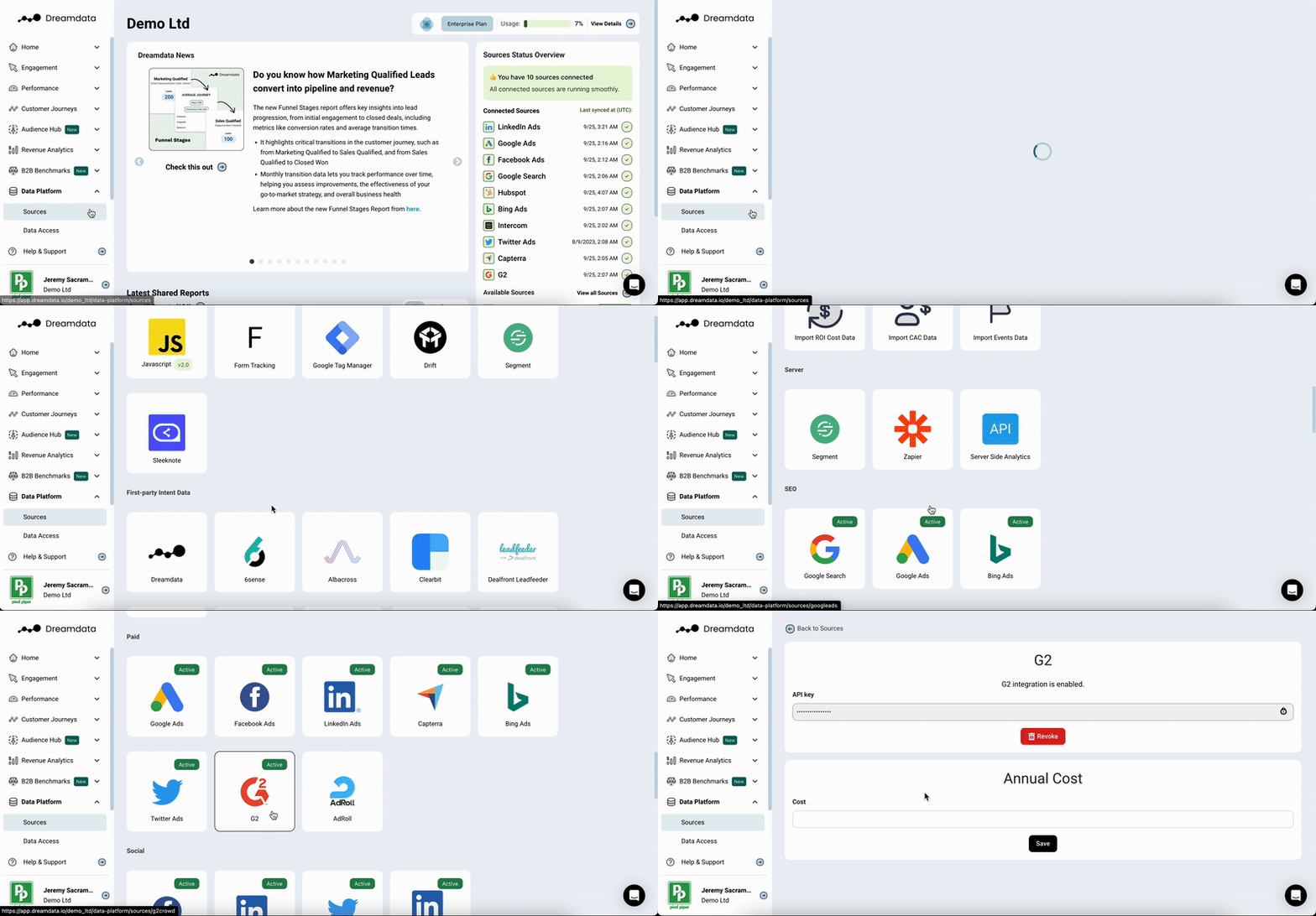
Dreamdata has 40+ integrations across CRMs, marketing automation, ads, analytics, and more.
Big ones:
Dreamdata is not very transparent about pricing on its homepage.
Here is what is publicly available:

If you are looking for a leaner tool, ZenABM starts at $59/month. It offers account-level LinkedIn ad engagement tracking, plug-and-play dashboards, account scoring, ABM stage tracking, CRM sync, first-party qualitative intent, automated BDR assignment, custom webhooks, and job title-level engagement tracking.

Dreamdata reviews cluster around three themes:
The key differences between Madison Logic and Dreamdata are summarized here.
Feature | Madison Logic | Dreamdata | ZenABM (Alternative) |
|---|---|---|---|
Primary Focus | Enterprise multi-channel ABM with syndication, display, LinkedIn and intent | Revenue attribution, buyer journey mapping and activation | LinkedIn first ABM with first-party intent and account-level insights |
Intent Data | Third-party intent, Bombora surge, content engagement | Account engagement scoring through touchpoint tracking | First-party LinkedIn ad engagement and qualitative buyer intent |
Advertising Channels | Display, LinkedIn, content syndication, CTV, audio | Activation across LinkedIn, Google, Meta and others | LinkedIn campaigns only for cleaner accuracy and control |
Attribution | ML Measurement ties engagement to pipeline | Full multi-touch attribution with several models | Account-level LinkedIn pipeline attribution dashboards |
CRM Integration | Salesforce, HubSpot, Marketo, Pardot, Gong, Adobe | Salesforce, HubSpot, Dynamics, MAPs, ad platforms | HubSpot and Salesforce sync with automated BDR routing |
Best For | Large enterprises running broad ABM across channels | Revenue ops and analytics-heavy teams needing attribution clarity | LinkedIn-centric ABM teams need reliable first-party insight |
Pricing | Custom enterprise pricing, often expensive | Starter at ~$750 per month, enterprise tiers higher | Starts at $59 per month, max tier under $6k per year |
Neither Madison Logic nor Dreamdata is “better” in a vacuum. It depends entirely on what motion you run and how much pain your team can tolerate.
Madison Logic works for enterprise ABM teams that want a multi-channel presence and can afford syndication plus programmatic costs.
Dreamdata is for revenue ops and analytics-heavy teams that need attribution clarity across long B2B cycles. Both come with complex onboarding, higher costs and the usual maintenance overhead.
ZenABM is built for teams that rely on LinkedIn as the primary ABM channel and want first-party accuracy, automation, and revenue visibility without the price or complexity of multi-channel suites.
Let’s look at its core features:


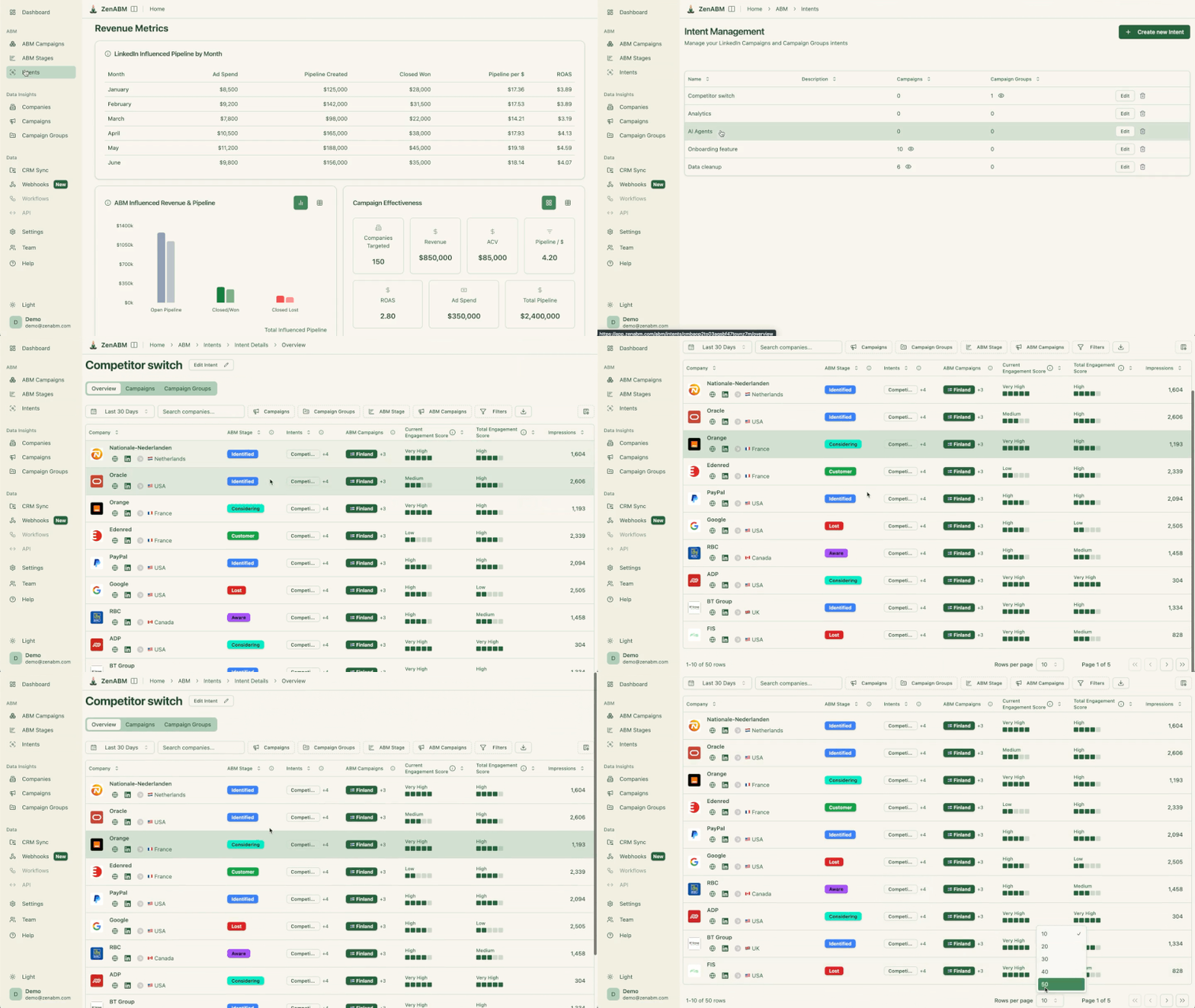
ZenABM connects to the official LinkedIn Ads API and captures account-level data for all campaigns so you can see which companies see, click, and engage with your ads.
Because this is first-party data from LinkedIn’s environment, it is more reliable than IP or cookie-based visitor ID.
A Syft study puts IP-based identification at around 42 percent accuracy.

ZenABM treats LinkedIn ad engagement itself as first-party intent. When several people in one company keep engaging with your ads, that is a strong buying signal without rented intent feeds.

ZenABM updates engagement scores as accounts interact with your ads across campaigns, so you can see who is heating up over short or long windows and let marketing and sales prioritize accounts that show real intent.
ZenABM also shows the full touchpoint timeline for each company:


ZenABM lets you define stages such as Identified, Aware, Engaged, Interested, and Opportunity and automatically places accounts in the right stage using scores and CRM data.
You control thresholds, and ZenABM tracks movement over time.


This gives you funnel visibility similar to larger suites, but powered by LinkedIn data.
ZenABM integrates bi-directionally with CRMs like HubSpot and adds Salesforce sync on higher tiers.
LinkedIn engagement data flows into the CRM as company-level properties:

Once an account crosses your score threshold, ZenABM updates the stage to Interested and automatically assigns a BDR.

ZenABM lets you derive intent topics from LinkedIn campaigns by tagging campaigns by feature, use case, or offer.
ZenABM then shows which accounts engage with which themes.
This is clean, first-party intent from owned interactions.
You can push these topics into your CRM, so sales and marketing can tailor outreach to what each company has actually explored.

ZenABM ships with dashboards that connect LinkedIn ads to account engagement, stage movement, and revenue.


ZenABM shows which job titles engage with your creatives and gives dwell time and video funnel analytics.


ZenABM provides its AI chatbot called Zena that basically answers all you want from ZenABM in natural language.
You can ask Zena open-ended questions like you would a smart analyst and get company-level answers about:
Under the hood, Zena combines OpenAI with a library of carefully designed prompts and endpoints to join ad engagement, spend and CRM deals so it can explain which campaigns drove pipeline, which accounts turned into opportunities, which formats perform best and which companies are high intent but untouched by sales.
Instead of exporting spreadsheets and stitching pivot tables, you get plain language insights, ready to drop into strategy reviews, weekly sales standups or executive updates.

ZenABM’s custom webhooks let you push events into your stack, for example, Slack alerts, enrichment flows, or other ops automations.
Most tools treat each LinkedIn campaign separately. ZenABM lets you group several into one ABM campaign object so you can see performance across regions, personas, or creative clusters.
Instead of juggling fragmented reports in Campaign Manager, you see spend, pipeline, account movement, and ROAS for the entire initiative.
For agencies, ZenABM offers a multi-client workspace.
You can manage multiple ad accounts and clients in one environment, each with its own ABM strategy, dashboards, and reporting, instead of constantly switching accounts in Campaign Manager.

Plans start at $59 per month for Starter, $159 for Growth, $399 for Pro (with AI), and $479 for Agency.
The agency plan still stays under $6,000 per year.
All tiers include core LinkedIn ABM features. Higher tiers mostly increase limits and add Salesforce sync.
Plans are available monthly or annually, and every plan includes a 37-day free trial.
Madison Logic and Dreamdata take two very different approaches to ABM, one leaning into multi-channel activation and the other into attribution intelligence.
Both can work for mature teams, but come with high costs and complexity.
If your ABM motion is centered on LinkedIn and you want a simpler setup, first-party accuracy and cleaner pricing, ZenABM is the more efficient option. It works as both a full alternative or a complementary layer to either platform.
