



Satlo brands itself as a LinkedIn Ads analytics and buyer intent platform.
In this deep dive, I’ll break down what Satlo offers, its pricing, reviews and feasibility for your business.
I’ll also discuss how ZenABM (a first-party LinkedIn-focused ABM platform) might be a better alternative.

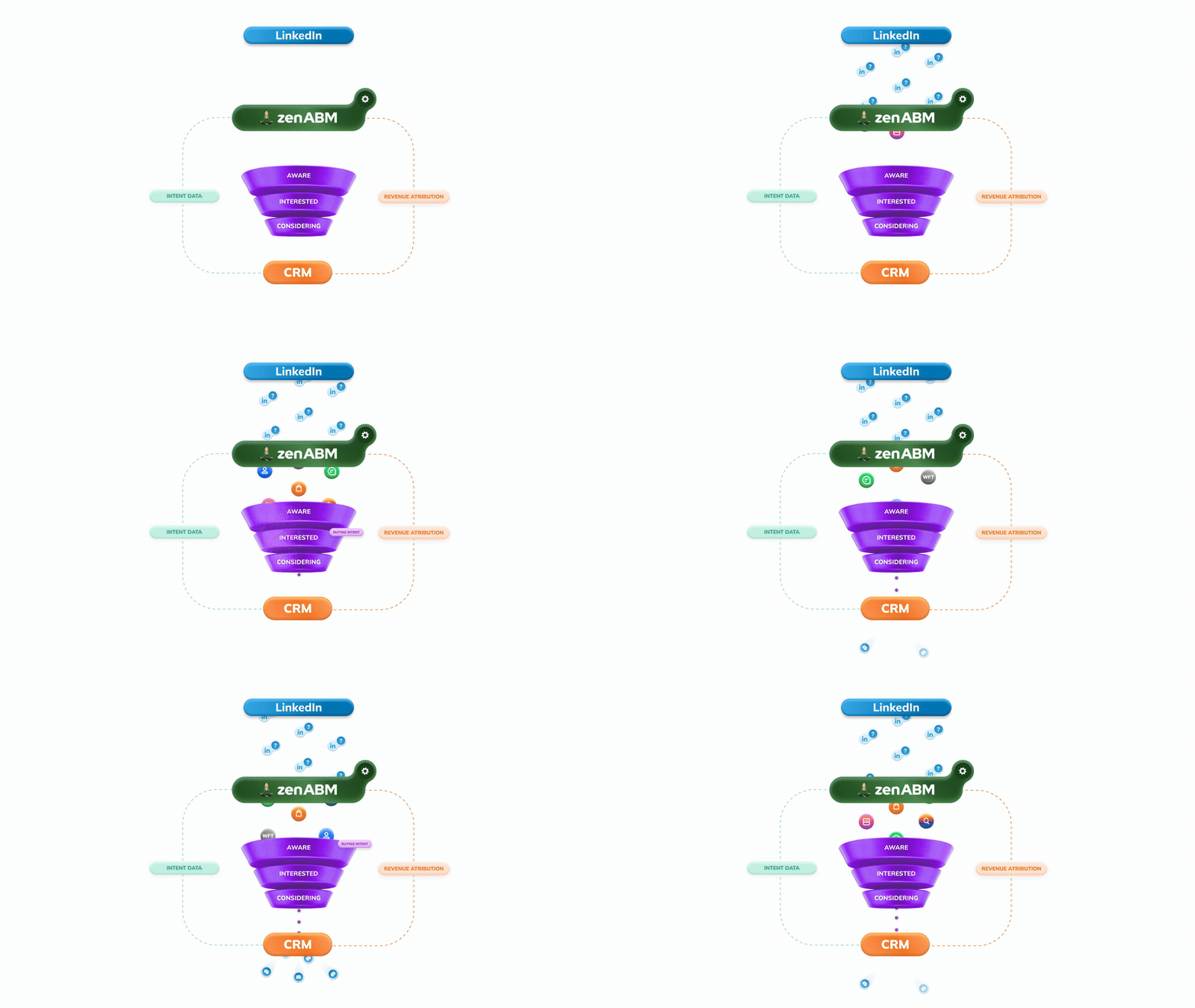
In case you want it short:
Satlo loudly bills itself as an ABM platform bridging the gap between advertising performance and sales activation.
It positions itself as the solution to LinkedIn’s limited reporting, enabling B2B marketers to detect buyer intent signals and deliver qualified opportunities directly to sales teams.
Let’s take a deeper look at its key features:
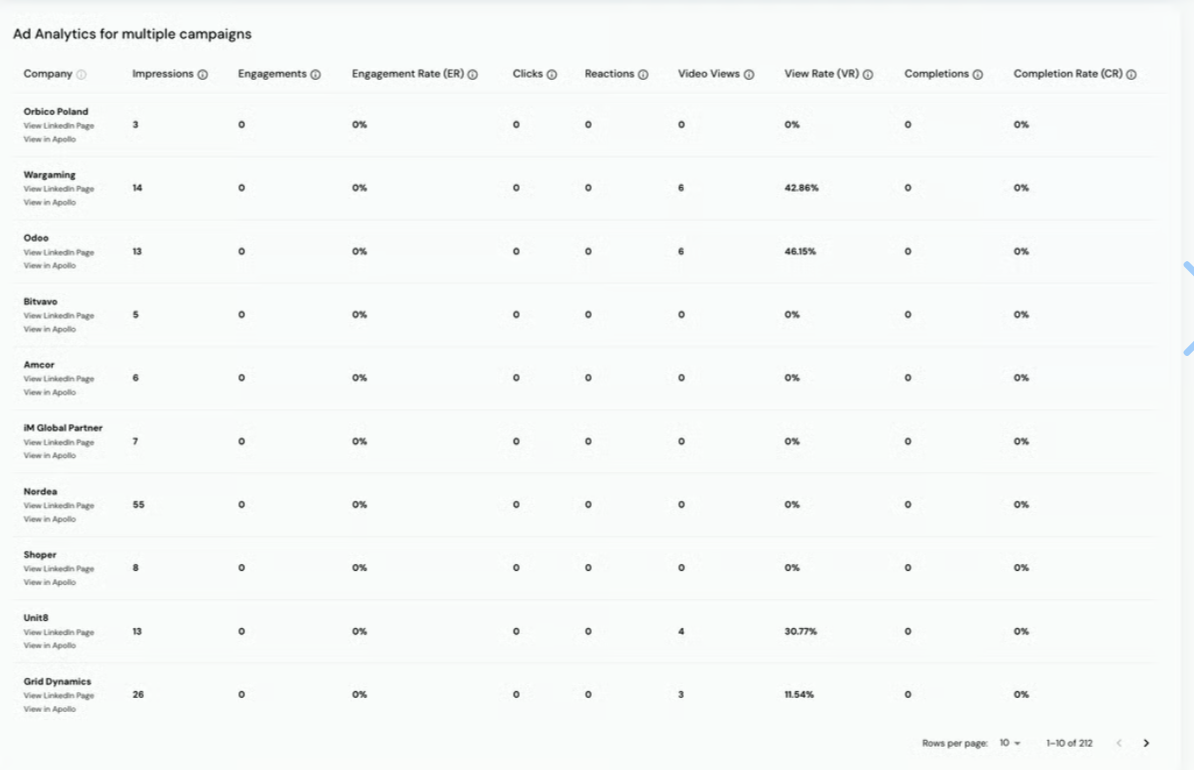
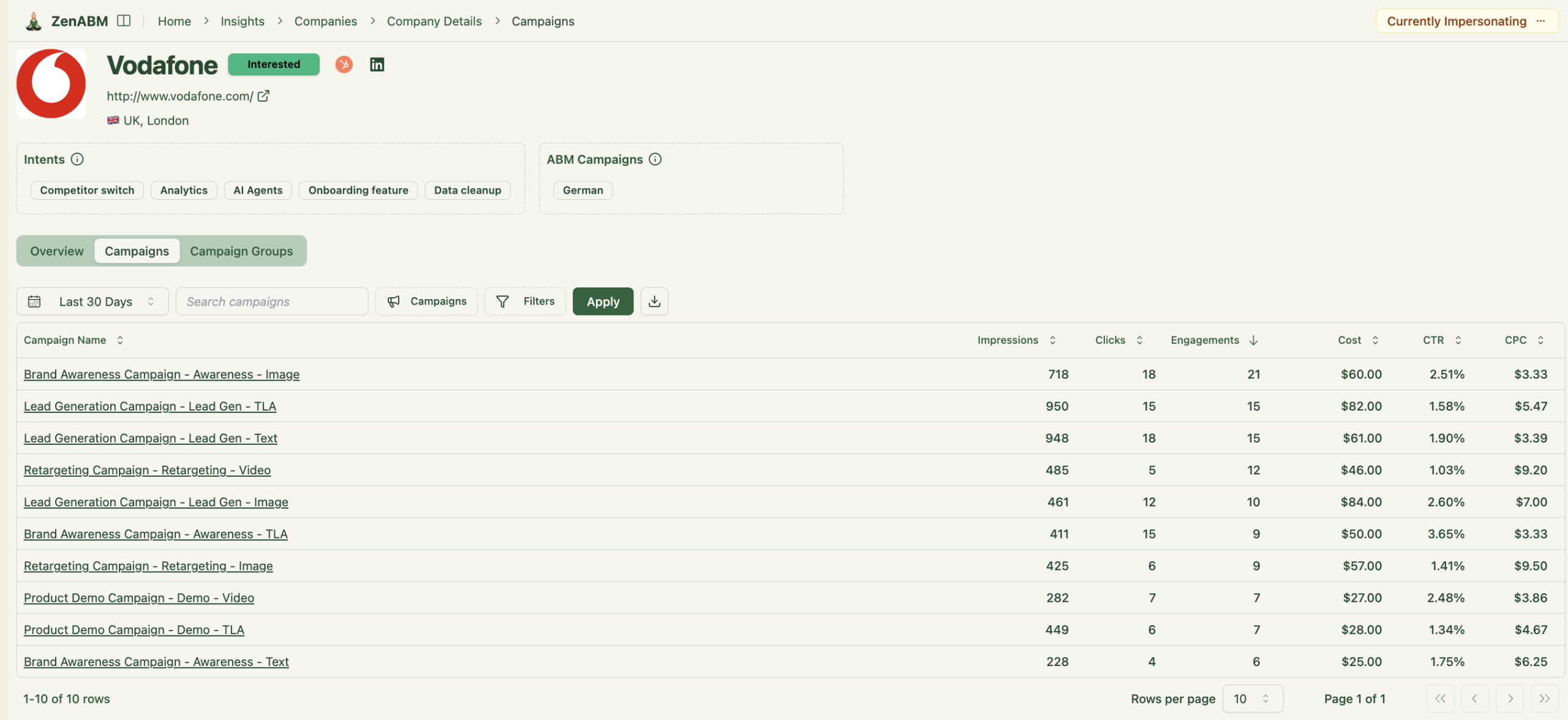
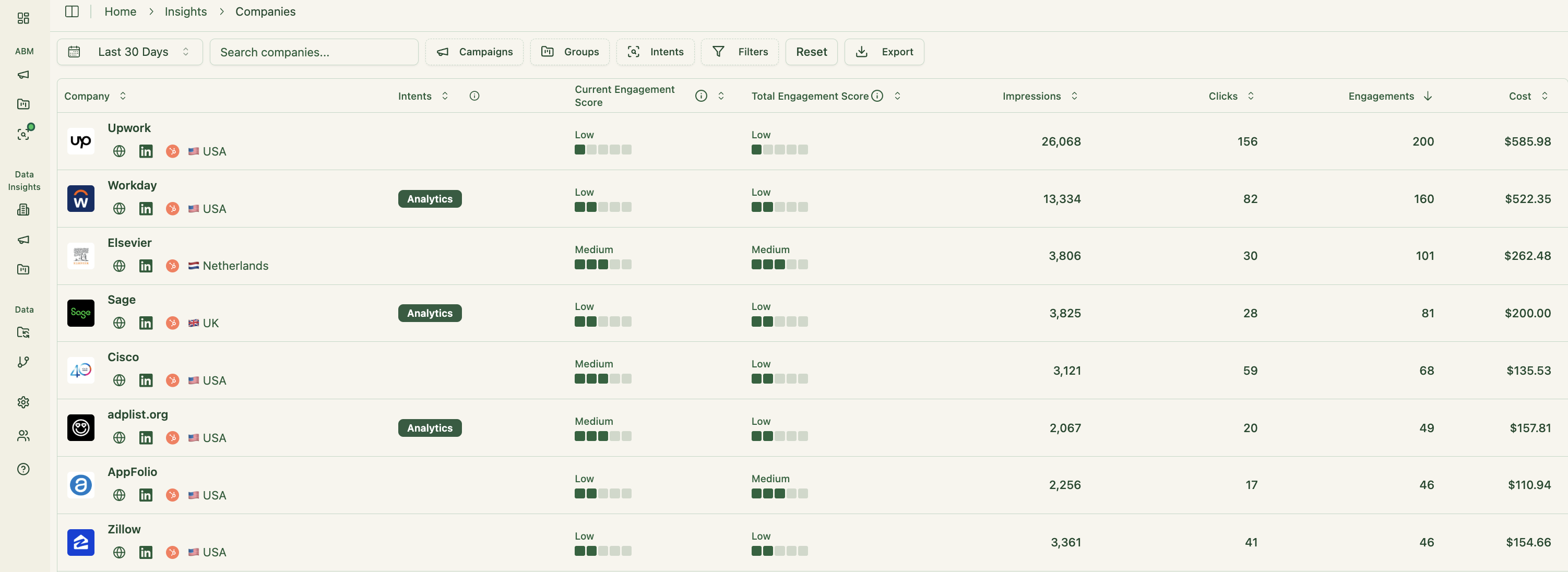
Satlo gives a company-level breakdown of LinkedIn ad engagements (clicks, impressions, etc.), something, as Satlo’s website rightly points out, isn’t given by LinkedIn Campaign Manager.
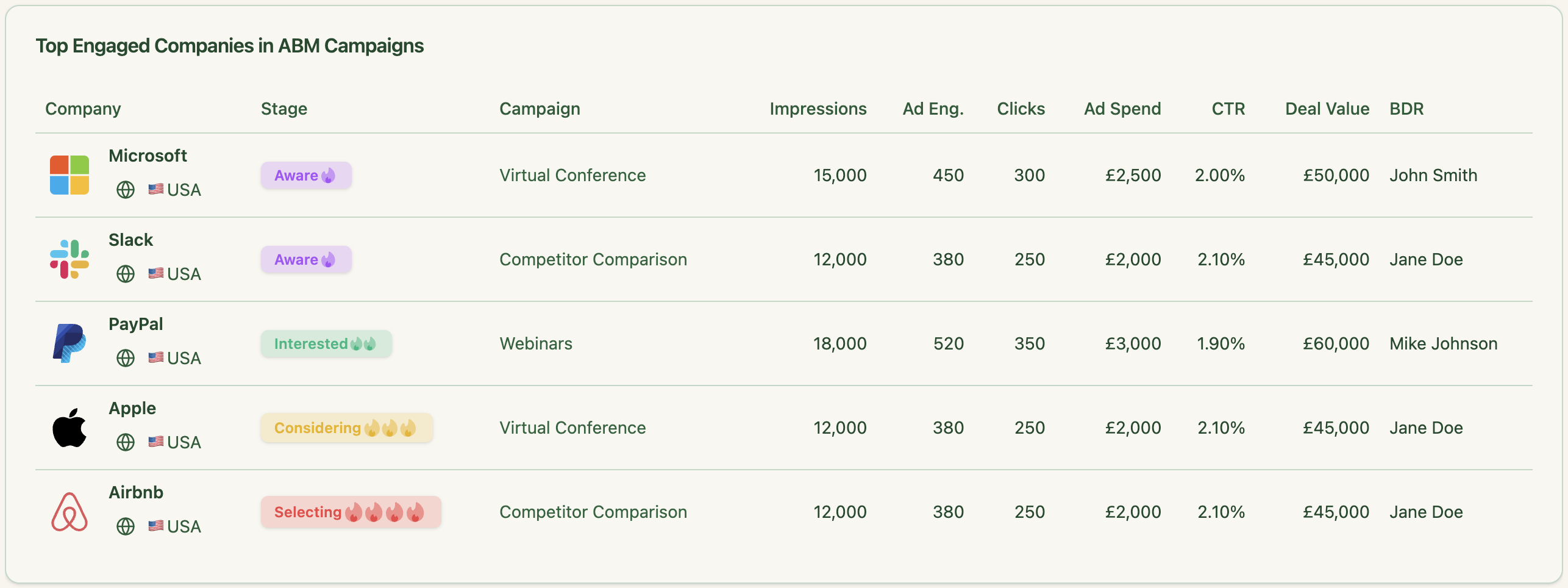
ZenABM does the same, btw:
Satlo provides integrations with tools like HubSpot and Apollo, especially to push company leads to sales.
So, Satlo will find which companies engaged with your ads and then write that list into your CRM.
Pro Tip: ZenABM similarly focuses on CRM sync (HubSpot and Salesforce), but gives a lot more than Satlo:
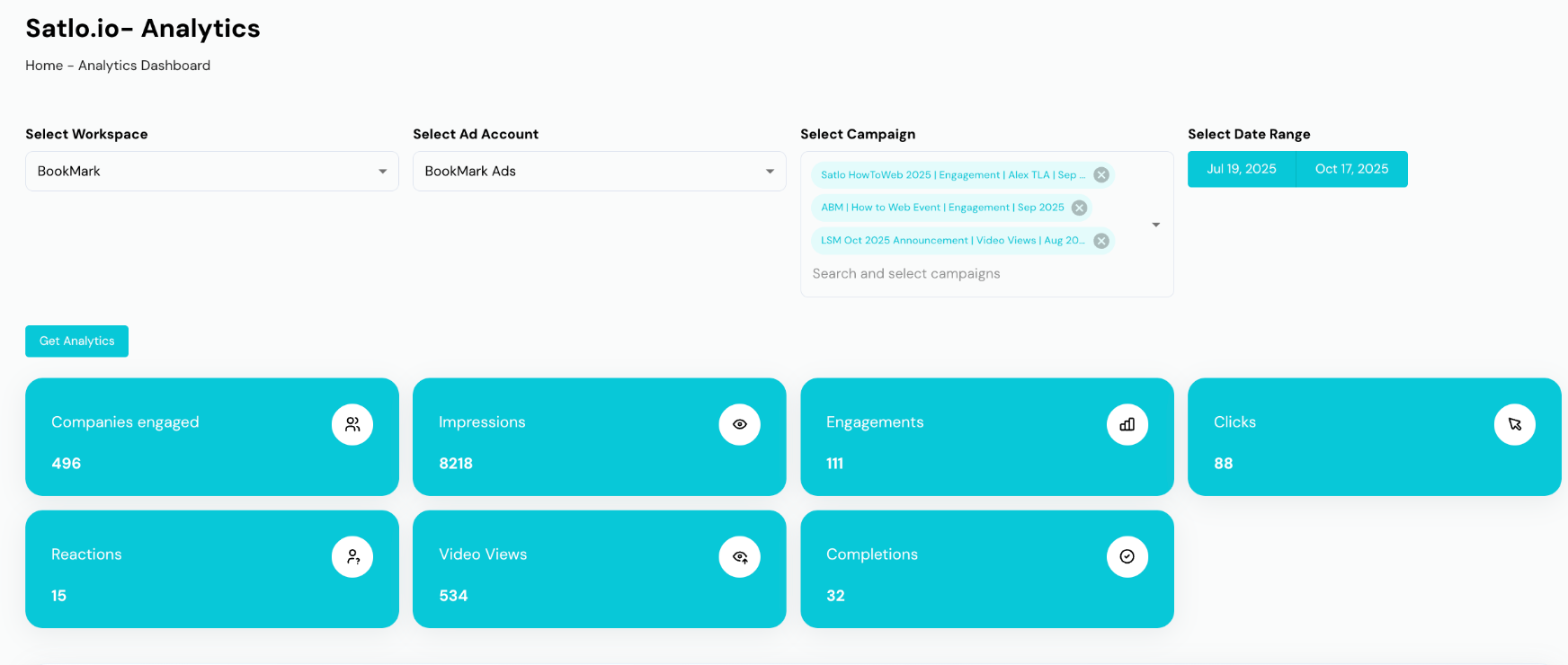
The platform offers dashboards and exports that let marketers slice and dice their ad performance by account. Satlo’s website and G2 profile highlight things like:
Satlo’s AI companion is an integrated feature within the platform that analyzes engagement from all companies reached by your LinkedIn Ads, surfaces actionable sales steps, and provides intent-based signals for your target accounts.
It functions across your ad accounts and data history (unlimited historical LinkedIn Ads data included) and is available starting in their “Pro” subscription tier.
The goal is to enable marketers to pinpoint which accounts have moved from passive exposure to active interest based on campaign interactions and engaged companies rather than only individual clicks.
Satlo offers three pricing tiers designed around how many LinkedIn ad accounts you manage and how deep you want your insights to go.
All plans include unlimited historical LinkedIn Ads data and the ability to export audiences and performance to Excel.
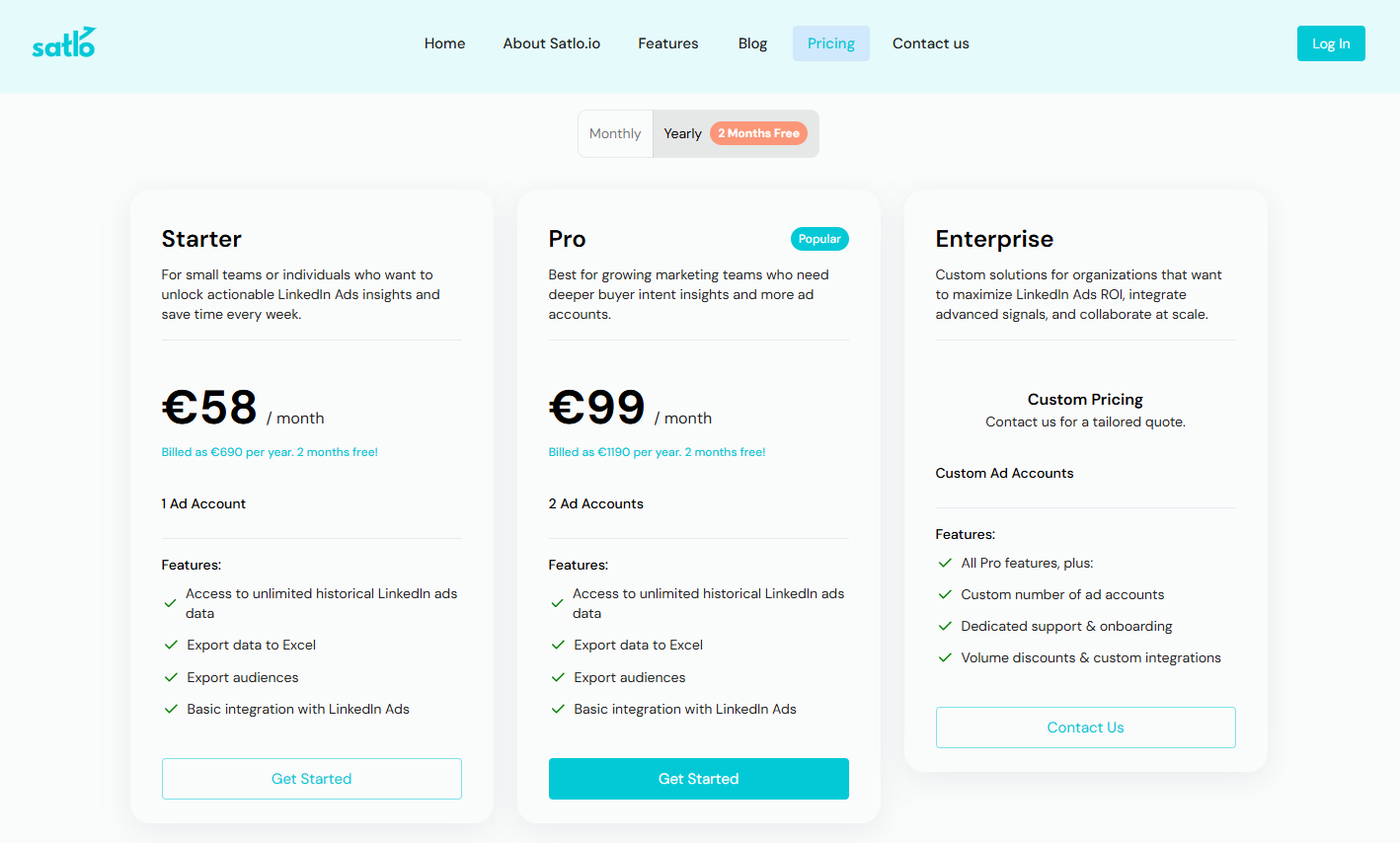
Built for individuals or small teams that want faster LinkedIn Ads analysis without complexity.
Includes:
Designed for growing marketing teams that need broader coverage and deeper buyer insights.
Includes:
For organizations managing multiple ad accounts or requiring advanced integrations and support.
Includes:
Satlo also offers a 14-day free trial and uses Stripe for secure payments.
If you are looking for a similar-priced yet better tool, I present ZenABM, starting at just $59/month.
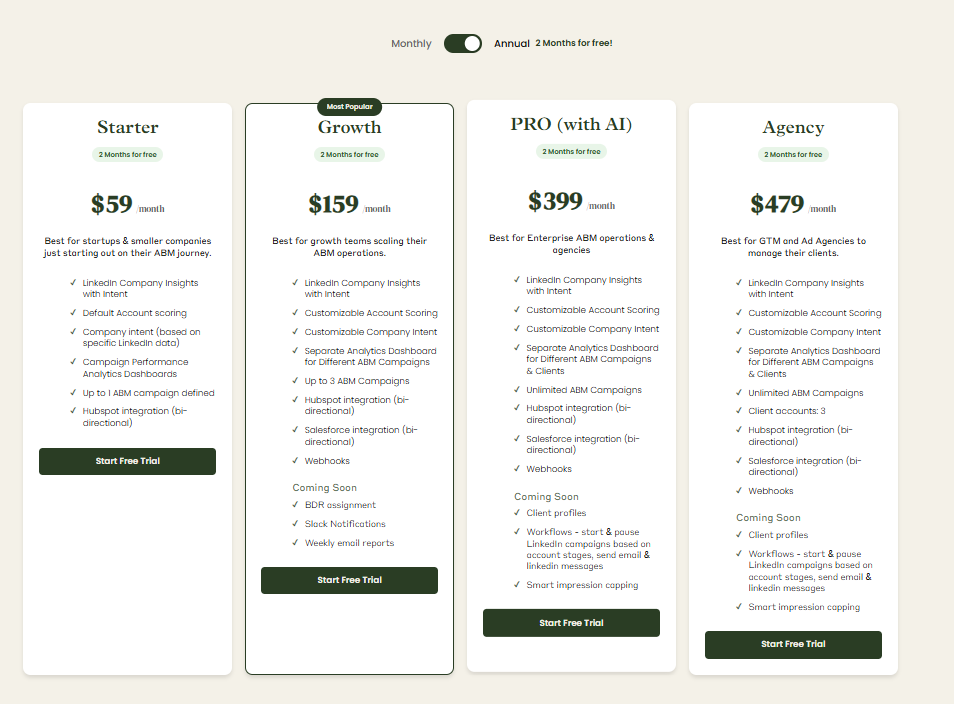
ZenABM offers account-level LinkedIn ad engagement tracking, ad engagement-to-pipeline analytics with plug-and-play dashboards, account scoring, ABM stage tracking, CRM sync, first-party qualitative intent, automated assignment of BDRs to hot accounts, custom webhooks, AI chatbot, impression capping, ABM objects, and ad engagement tracking at the job-title level.

G2, TrustRadius, Reddit, LinkedIn – there’s almost no chatter about Satlo.
On G2, there is precisely 1 review for Satlo (as of Nov 2025), with an astonishing 5.0/5 rating.

That sounds great, but a single review isn’t a trend.
It’s from a small-business LinkedIn marketing consultant, who basically praises Satlo for saving her time and giving valuable insights.

In forums, Satlo is hardly mentioned.
A Reddit search yields nothing but unrelated stuff, and even broad ABM or LinkedIn Ads communities don’t have threads on Satlo specifically.
ZenABM is specifically designed for LinkedIn ABM and is a better alternative to Satlo.
Let’s look at its features:
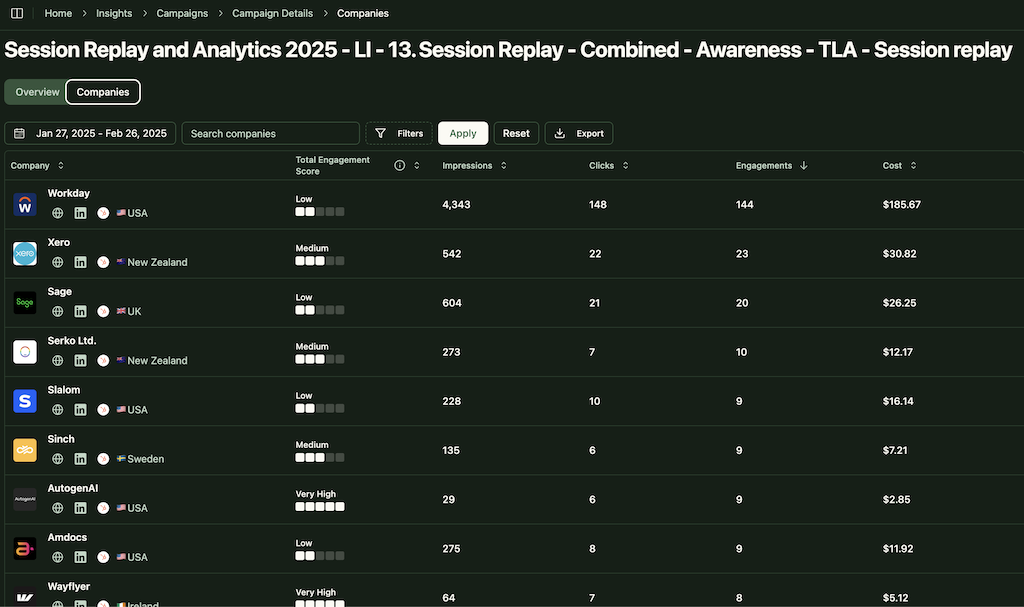
ZenABM integrates directly with the LinkedIn Ads API to pull account-specific data from all campaigns.
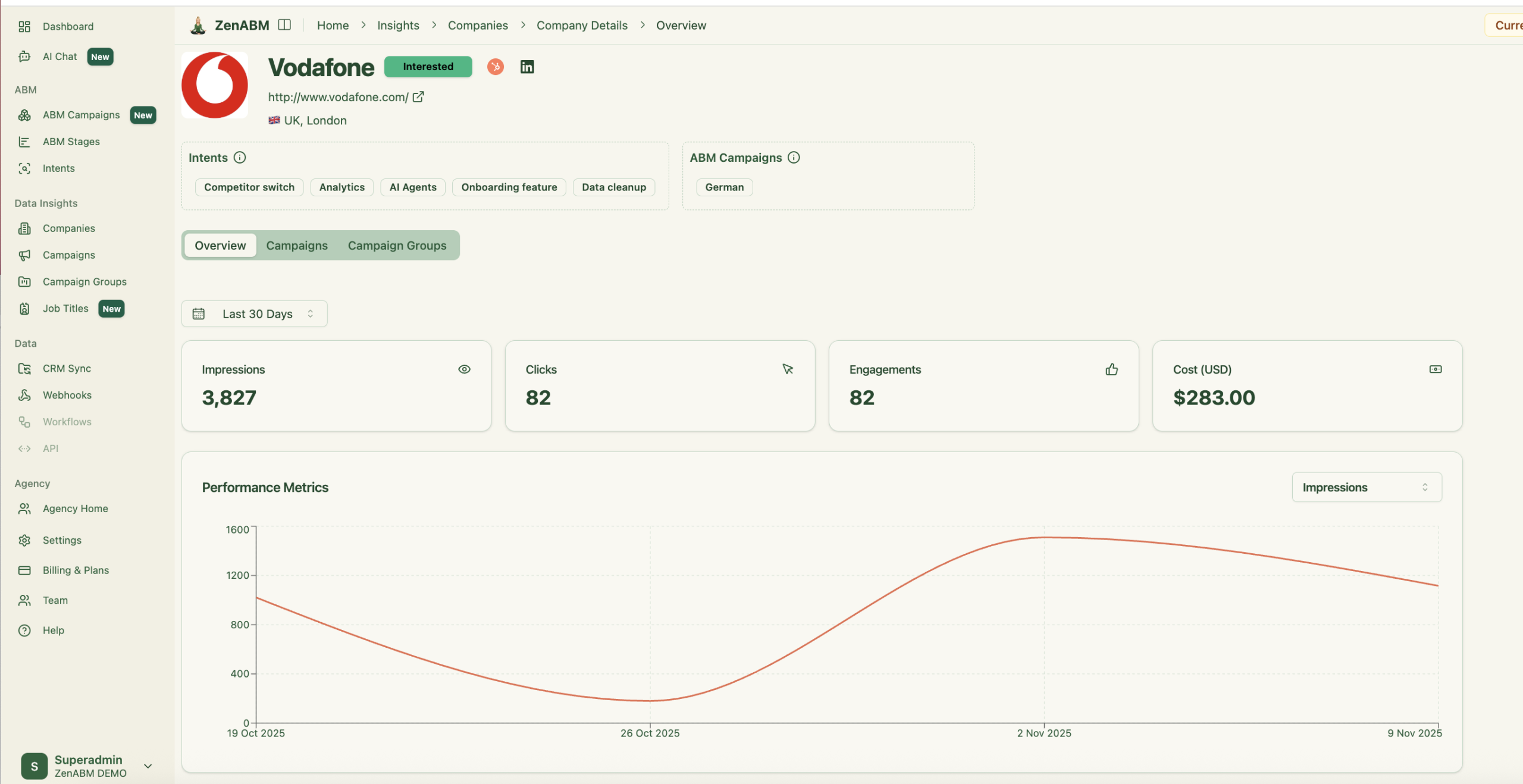
This allows you to identify precisely which target accounts are interacting with your LinkedIn ads (impressions, clicks, etc.), all mapped to individual companies.
Pro Tip: ZenABM can also reveal anonymous website visitors for free. Retarget them with inexpensive LinkedIn text ads, and ZenABM will identify the companies that saw your impressions.
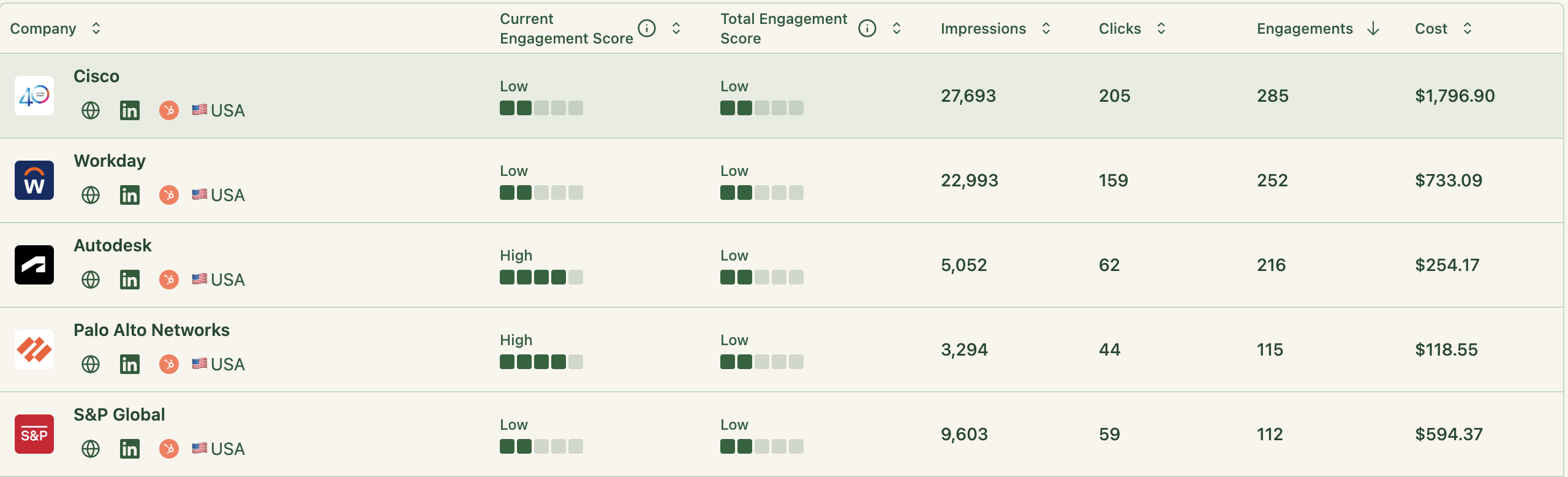
ZenABM continuously updates engagement scores from ad interactions. You can monitor recent trends (like the past week) or historical patterns to identify accounts heating up.
These scores help marketing and sales prioritize high-value accounts for follow-up.
Plus, the tool displays the full touchpoint timeline of each account:
ZenABM enables you to define your ABM funnel stages (e.g., Identified → Aware → Engaged → Interested → Opportunity) and automatically classifies accounts using engagement and CRM information.
You can set your own thresholds for “Engaged” or “Interested,” and ZenABM will track stage transitions automatically.
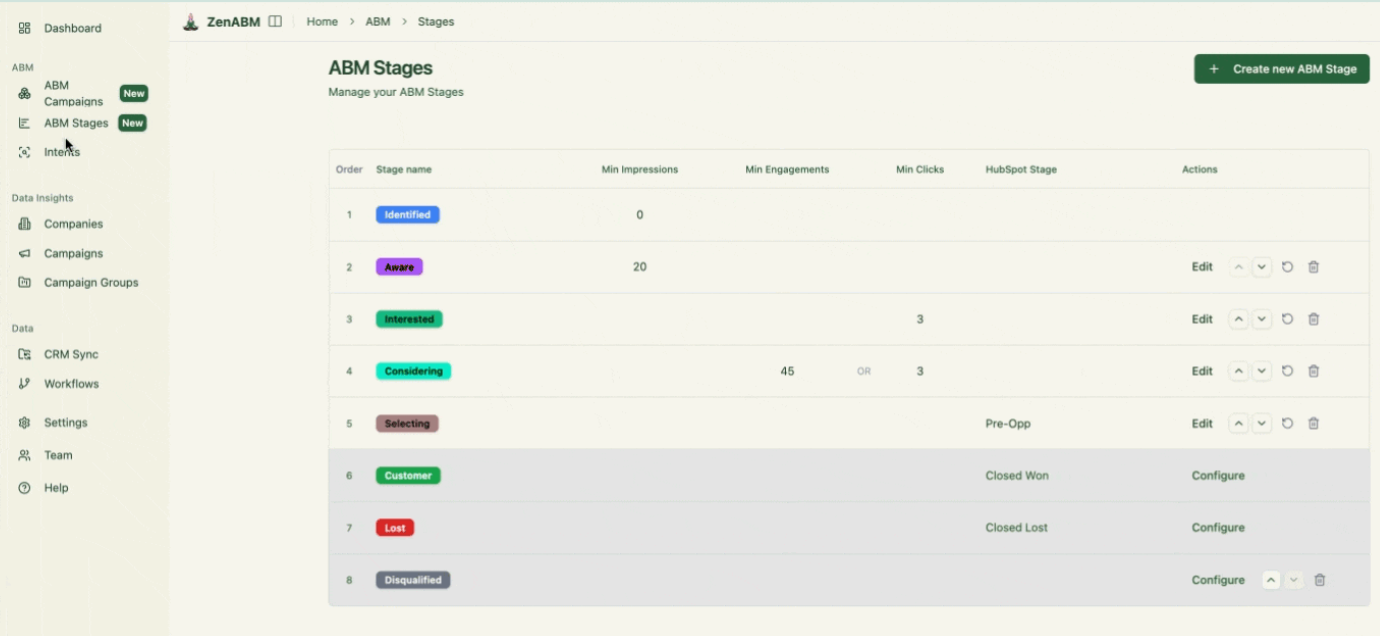

This delivers full-funnel visibility like enterprise ABM platforms, highlighting where accounts stall and where progress accelerates.
ZenABM integrates bidirectionally with CRMs such as HubSpot (Salesforce available on higher plans).
LinkedIn engagement data feeds directly into your CRM as company-level properties, keeping sales teams informed:
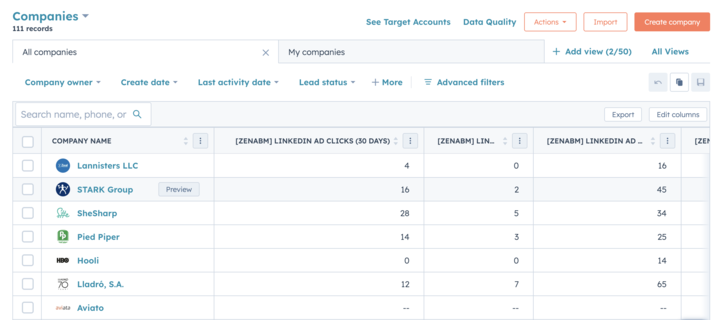
ZenABM can auto-update account stages to “Interested” when engagement passes a set threshold and assign accounts to specific BDRs for follow-up.
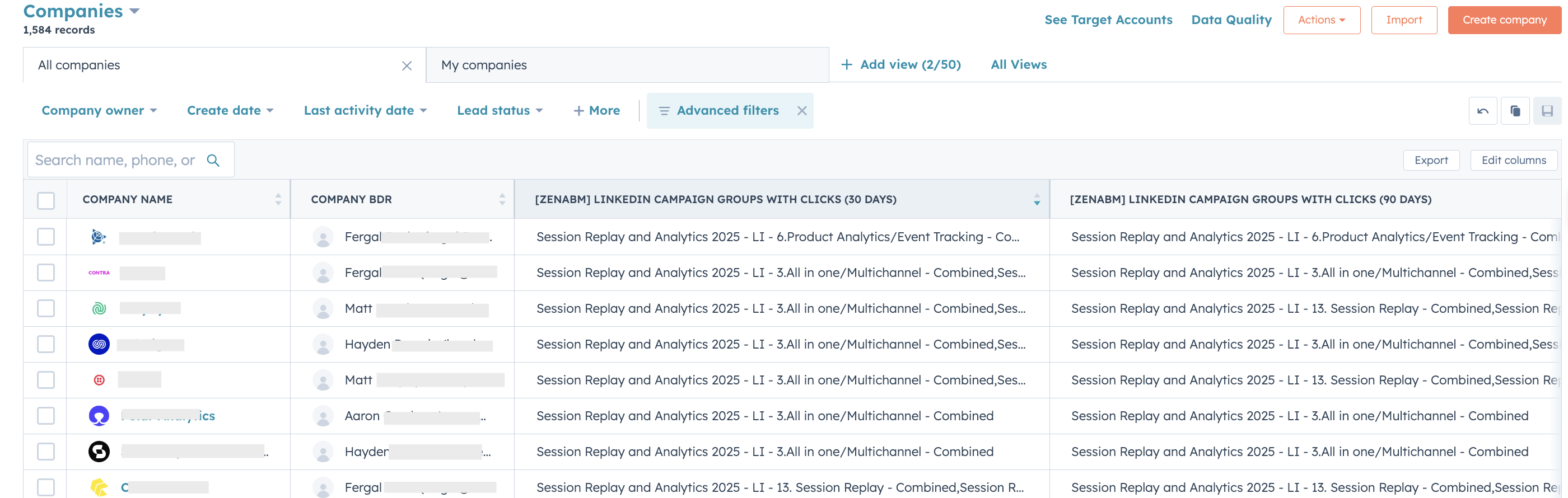
ZenABM allows you to tag campaigns by theme (like “Feature A” vs. “Feature B”) and shows which accounts engage with which themes, revealing their priorities.
This is genuine first-party intent. Instead of paying for inferred keyword interest, you get direct proof like Account Z clicking “Feature A” ads, demonstrating actual buying interest.
These insights also sync to your CRM, supporting highly targeted outreach and relevant messaging.
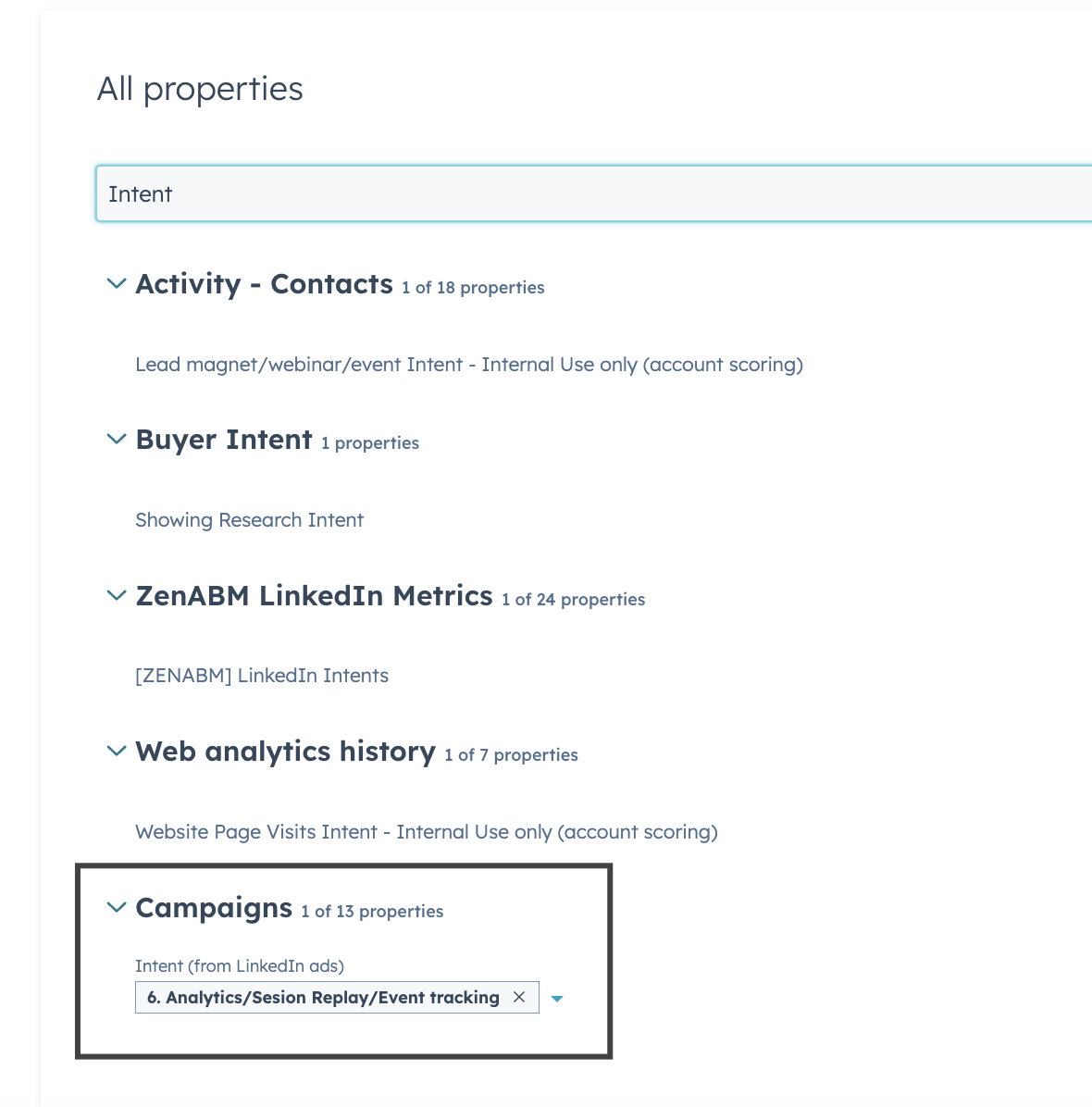
Your sales reps can instantly see which topics or pain points each account reacts to most.
This feature is fairly unique to ZenABM, making it a worthwhile add-on even if you already have an existing subscription to some other ABM tool.
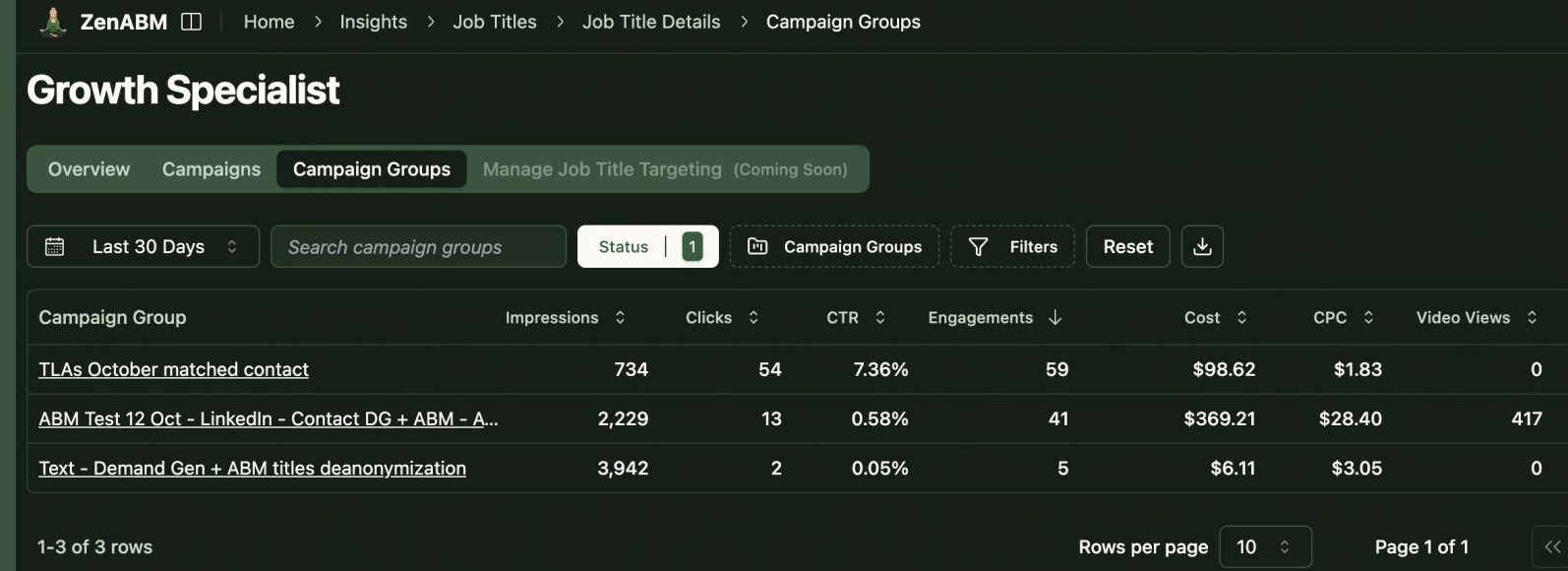
ZenABM also gives a breakdown of the specific job titles that interact with your ads.
Raw metrics, dwell time, full video funnel – all available out of the box.
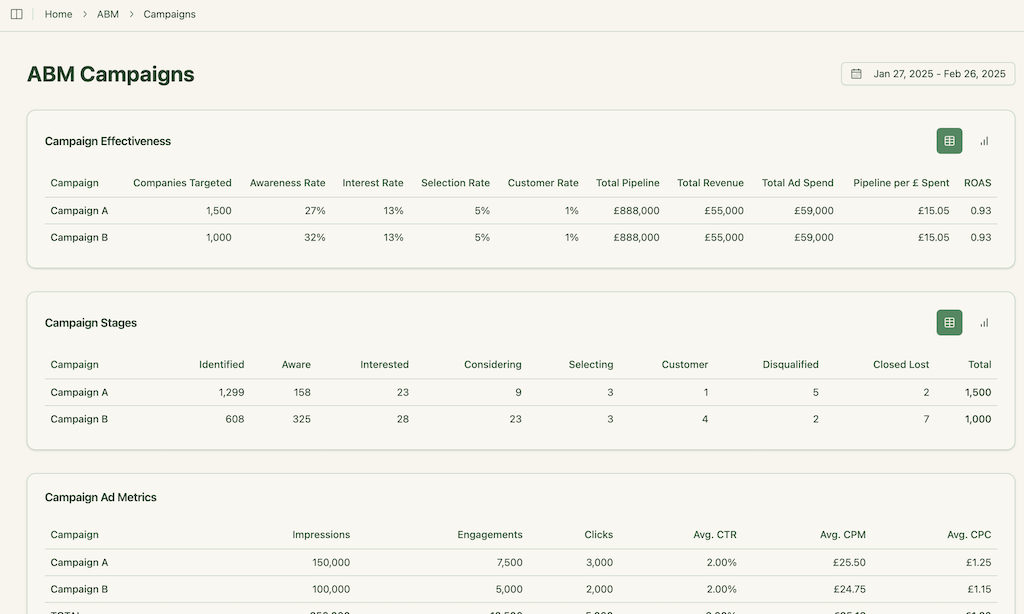
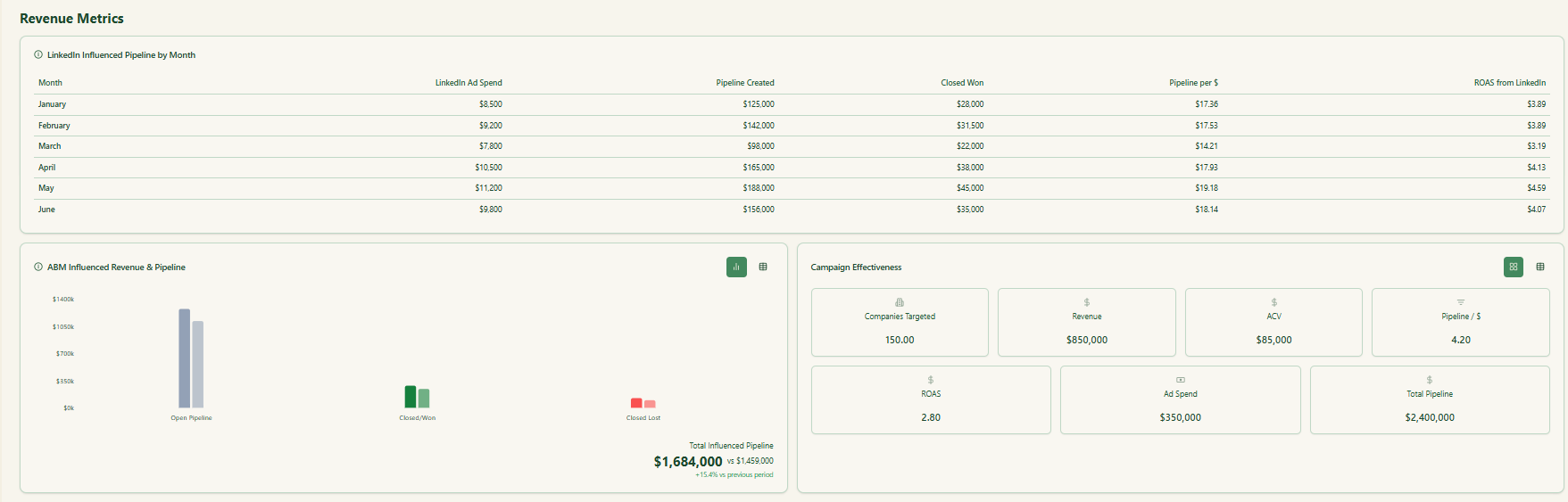
ZenABM includes pre-built ABM dashboards linking ad exposure, engagement, funnel stages, and pipeline metrics.
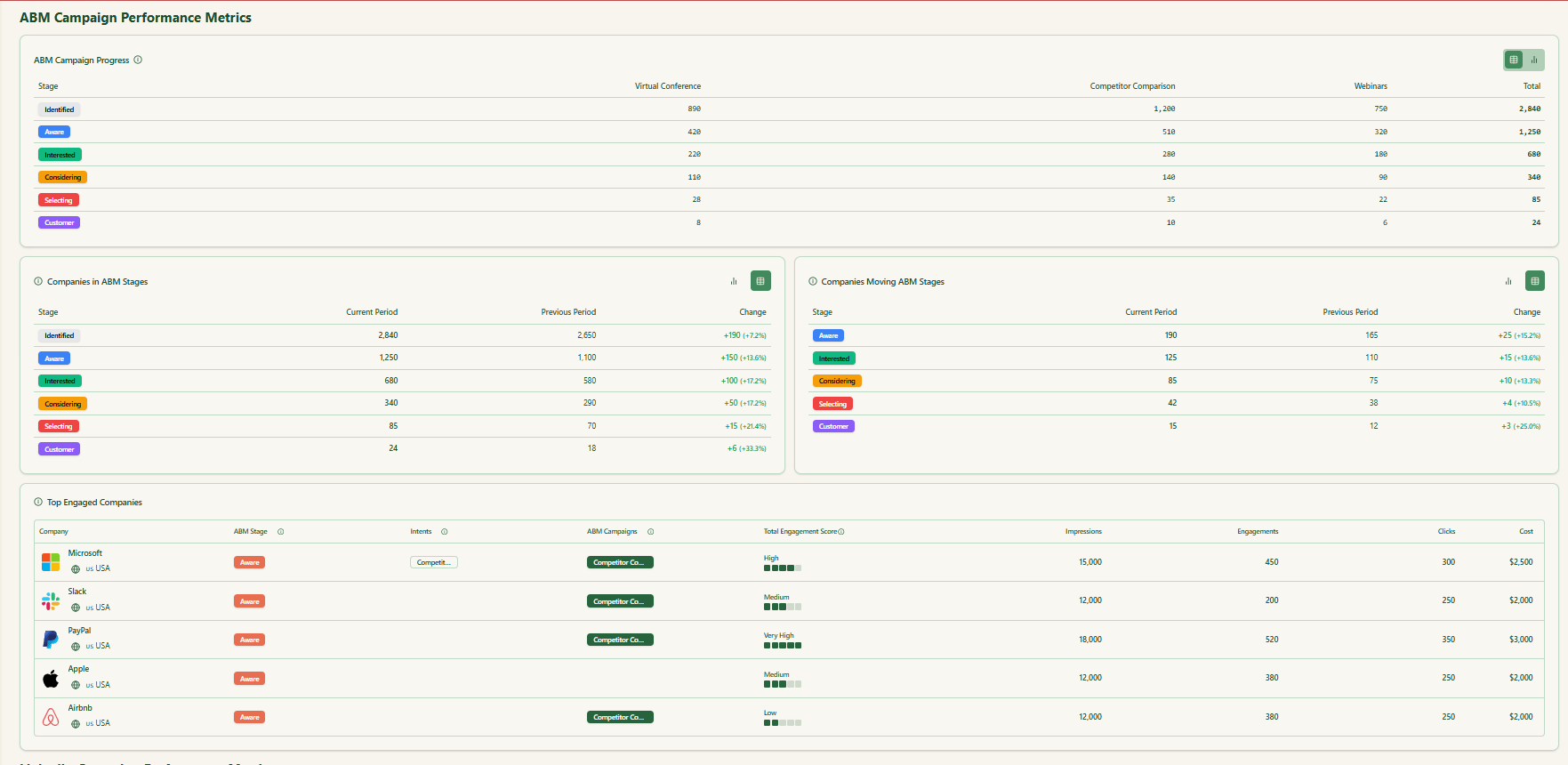
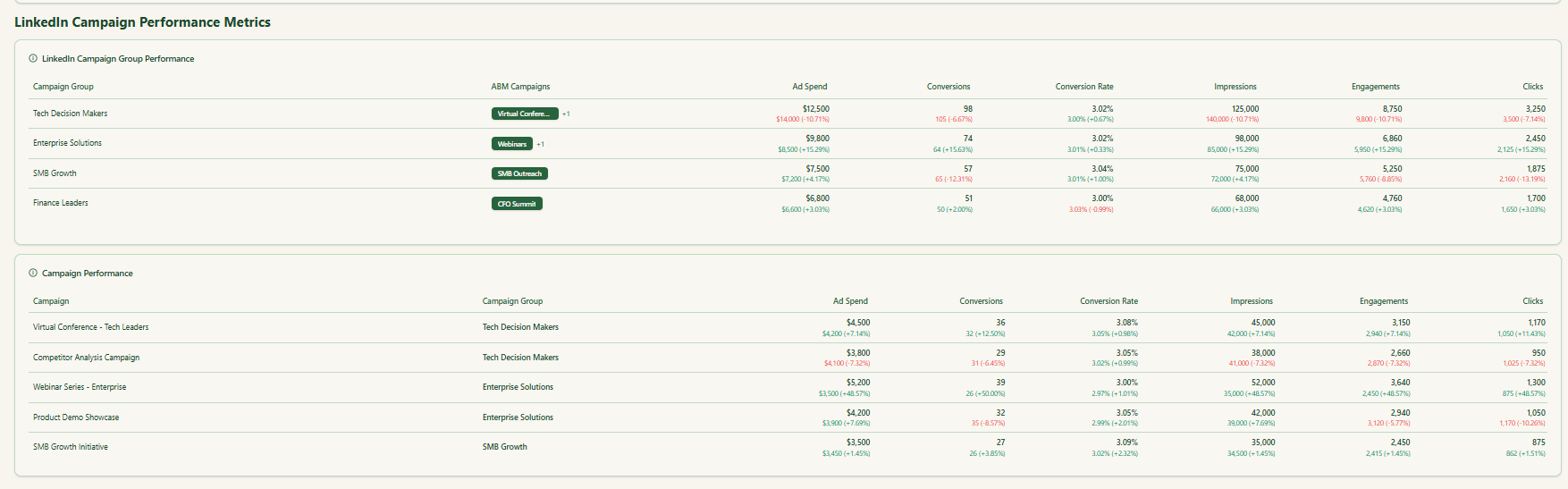
Unlike standard analytics tools that treat every LinkedIn campaign separately, ZenABM lets you combine multiple campaigns into one ABM campaign object.
This gives a unified view of performance across markets, persona variations, or creative groups.
You can see the total influenced pipeline, account movement, spend, ROAS, and progression for the entire initiative instead of fragmented reports inside Campaign Manager.
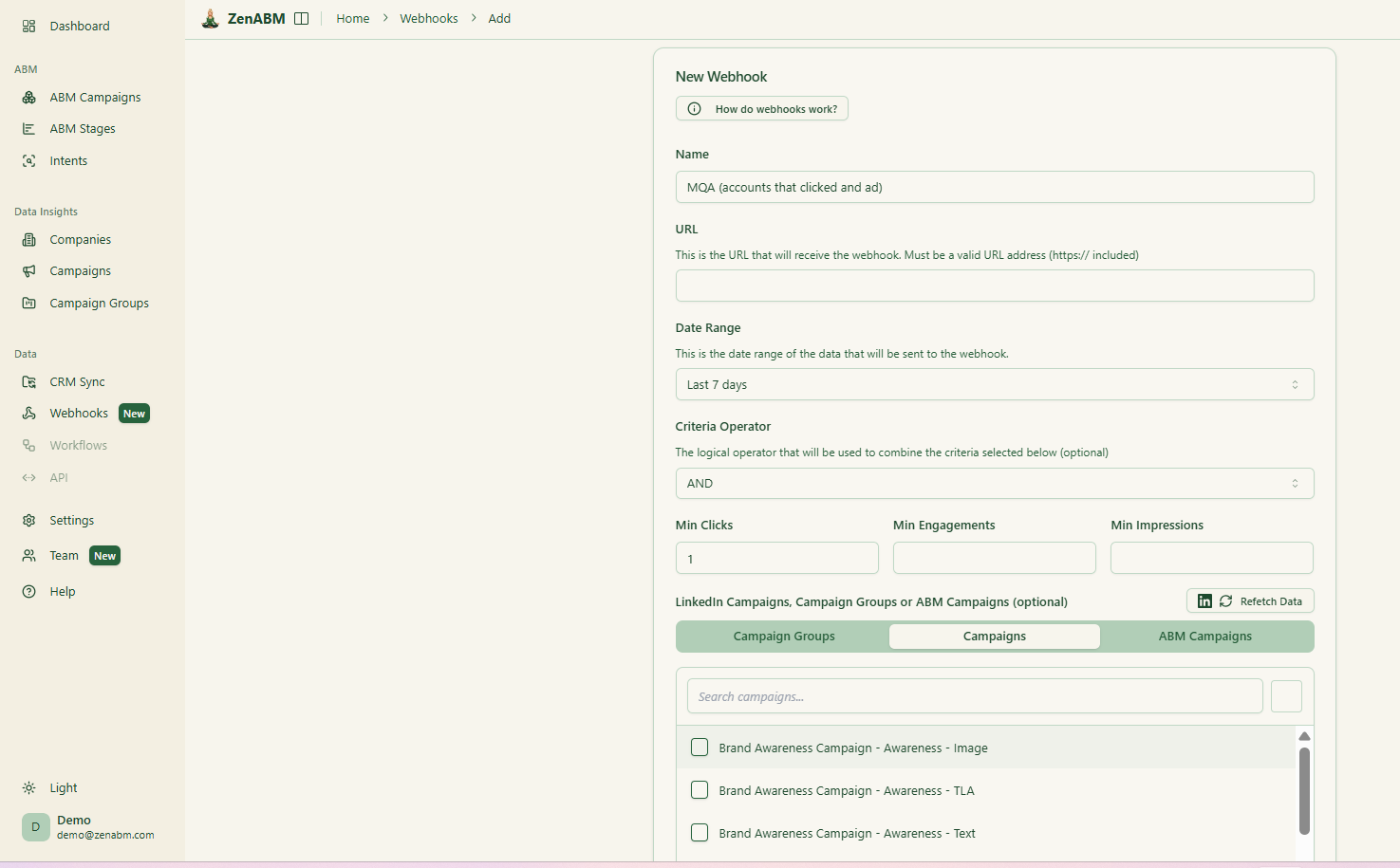
With the newly rolled out custom webhooks, ZenABM can fit into any of your workflows as needed.
ZenABM now includes an AI chatbot layered on top of your LinkedIn API data and processed ABM insights.
Instead of exporting CSVs or building Looker dashboards, you can literally ask questions like “Which accounts moved from Interested to Selecting last month” or “What is my pipeline per dollar across retargeting campaigns” in natural language.
The AI pulls from raw ad engagement, ABM stages, intent tags, campaign groups, and CRM properties to give instant, contextual answers.
ZenABM now supports agencies with a dedicated multi-client environment.
Agencies can manage unlimited ad accounts and clients in one place, with separate dashboards, ABM campaigns, and client-specific analytics.
This removes the headache of switching accounts in LinkedIn Campaign Manager.
Plans start at $59/month for Starter, $159/month for Growth, $399/month for the Pro (AI) tier, and $479/month for the agency tier.
All plans cover essential LinkedIn ABM functions, with higher tiers mostly expanding limits or adding Salesforce integration.
Pricing is flexible (monthly or annual with two months free), and a 37-day free trial allows teams to try before buying.
Satlo gives you a clearer view of how companies interact with your LinkedIn ads and offers basic intent scoring, exports, and CRM syncing, but the platform is still early and limited in scope.
With almost no public reviews, minimal attribution depth, and a narrow feature set, it works more as a lightweight reporting layer than a full ABM tool.
If you need stronger account insight, first-party intent, ABM stages, scoring, multi-campaign attribution, and CRM driven workflows, ZenABM provides a far more complete LinkedIn ABM stack at a similar price point.
