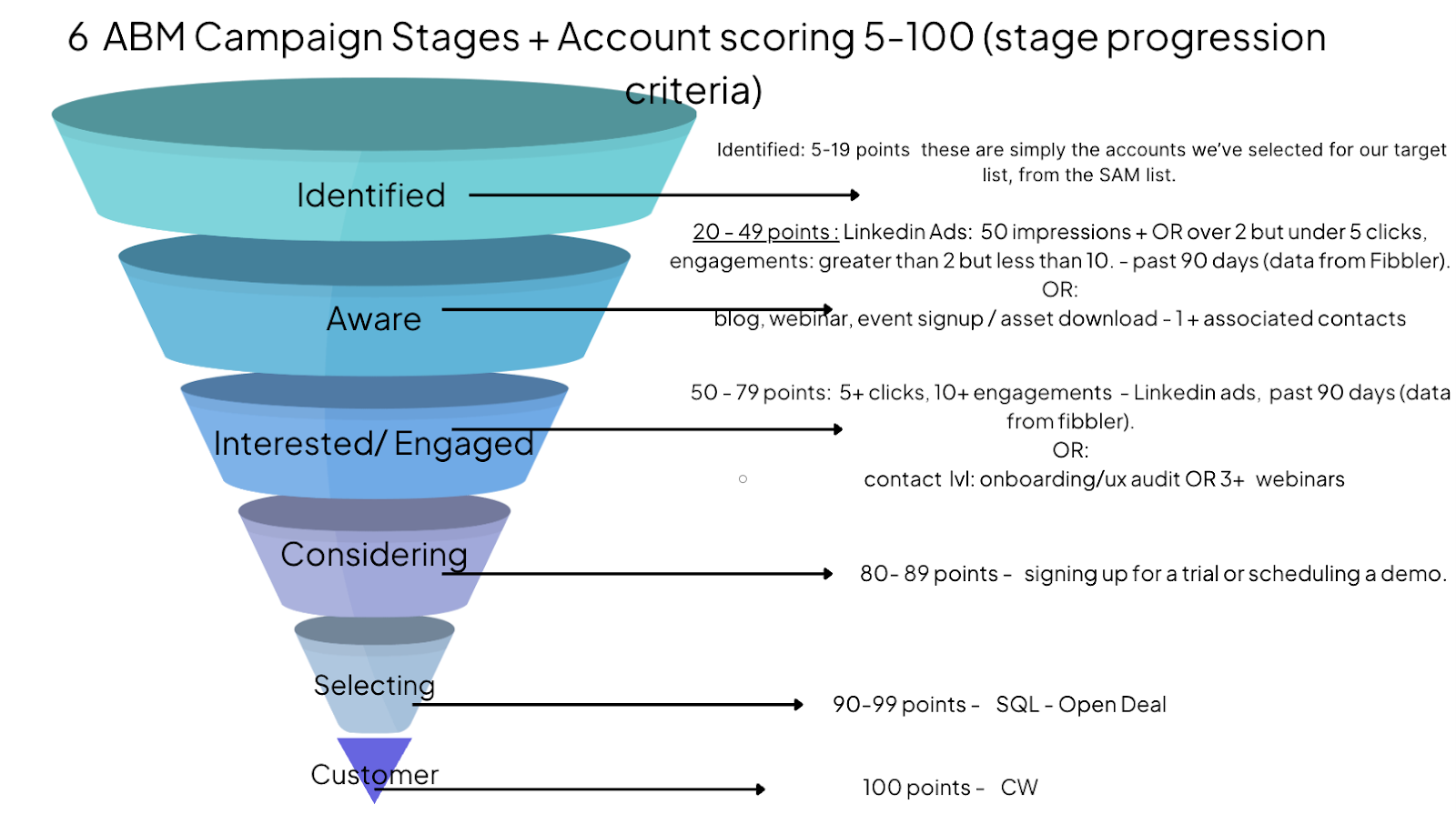


In this article, I have shared three primary ABM strategy examples (one-to-one, one-to-few, and one-to-many). how to execute each like a pro, and also how ZenABM can help you along the way.
Let’s go!
1. The article provides detailed ABM strategy examples across three core ABM types: One-to-One (Strategic ABM), One-to-Few (ABM Lite), and One-to-Many (Programmatic ABM).
2. Choosing the right ABM type depends on the number of target accounts and desired personalization.
3. One-to-One ABM (Tier 1: Strategic ABM)
Collectively, these moves serve as crisp ABM strategy examples for Tier 1 pursuits.
4. Keys to Success in One-to-One ABM
5. One-to-Few ABM (Tier 2: Cluster ABM)
6. Keys to Success in One-to-Few ABM
7. One-to-Many ABM (Tier 3: Programmatic ABM)
Programmatic plays like these become repeatable ABM strategy examples for broad-yet-focused reach.
8. Keys to Success in One-to-Many ABM
9. ZenABM’s Support Across Tiers
Overall, these ABM strategy examples demonstrate how effective ABM relies on tailoring your approach based on account potential and resource availability.
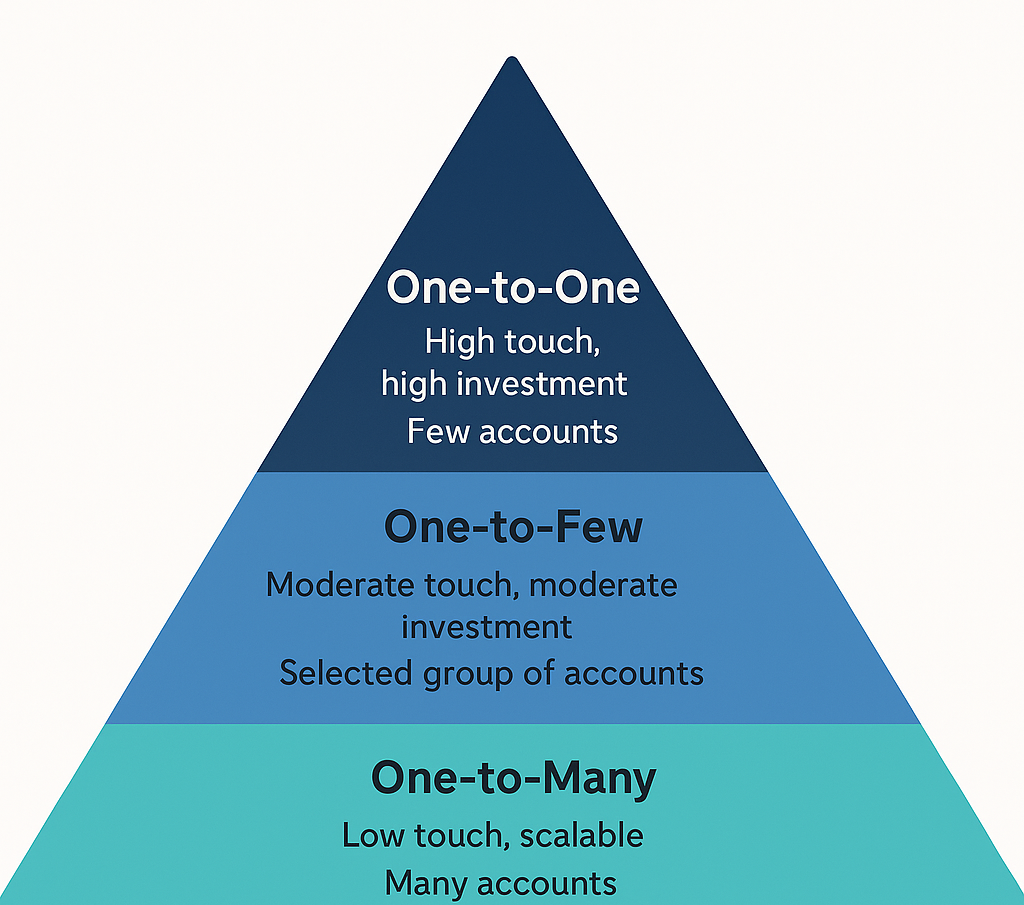
One size does not fit all in ABM.
The approach you take will depend on how many accounts you’re targeting and how deeply you can personalize for each.
Mature ABM programs often segment their target account list into tiers, with a different strategy for each tier
These are your highest-value dream customers (think Fortune 500 logos or accounts with 10x your average deal size).
They get the white-glove treatment: Highly custom, one-to-one campaigns tailored specifically to each account. This is ABM at its most personalized and resource-intensive level.
These accounts are very valuable but share common traits with each other.
Here you use a one-to-few (ABM Lite) approach, grouping target accounts into small segments (e.g. by industry or use-case) and running campaigns to each cluster.
It’s a balance between personalization and scale.
These are solid-fit accounts that you target at scale with broader campaigns.
This programmatic one-to-many approach lets you cast a wider net among hundreds of accounts, using broader messaging to identify which accounts show engagement and intent.
It’s the least personalized, but most scalable ABM style.
In practice, “one-to-one”, “one-to-few”, and “one-to-many” aren’t just buzzwords. They dictate how you design and execute your campaigns. Let’s break down each type and see how to knock it out of the park.
As the name implies, in one-to-one ABM, you focus on one account at a time (or a very small number of accounts) and build campaigns entirely bespoke to each target.
This approach is also known as “Strategic ABM.” It’s high-touch, high-effort, and laser-focused on key individuals within a single account.
I mean, here you’re essentially treating a large account like it’s an individual market. And yes, it’s done for Fortune-500 kinds of logos (but that’s not some rule etched in the ABM stone).
Here’s how to go about it:
Start by digging into the accounts:
You need to know their company inside-out, including recent news, financials, initiatives, and even personal info about executives, if it helps design your approach to best fit the prospect.
Here’s a free template for making such account dossiers with all the accounts’ details in one place:
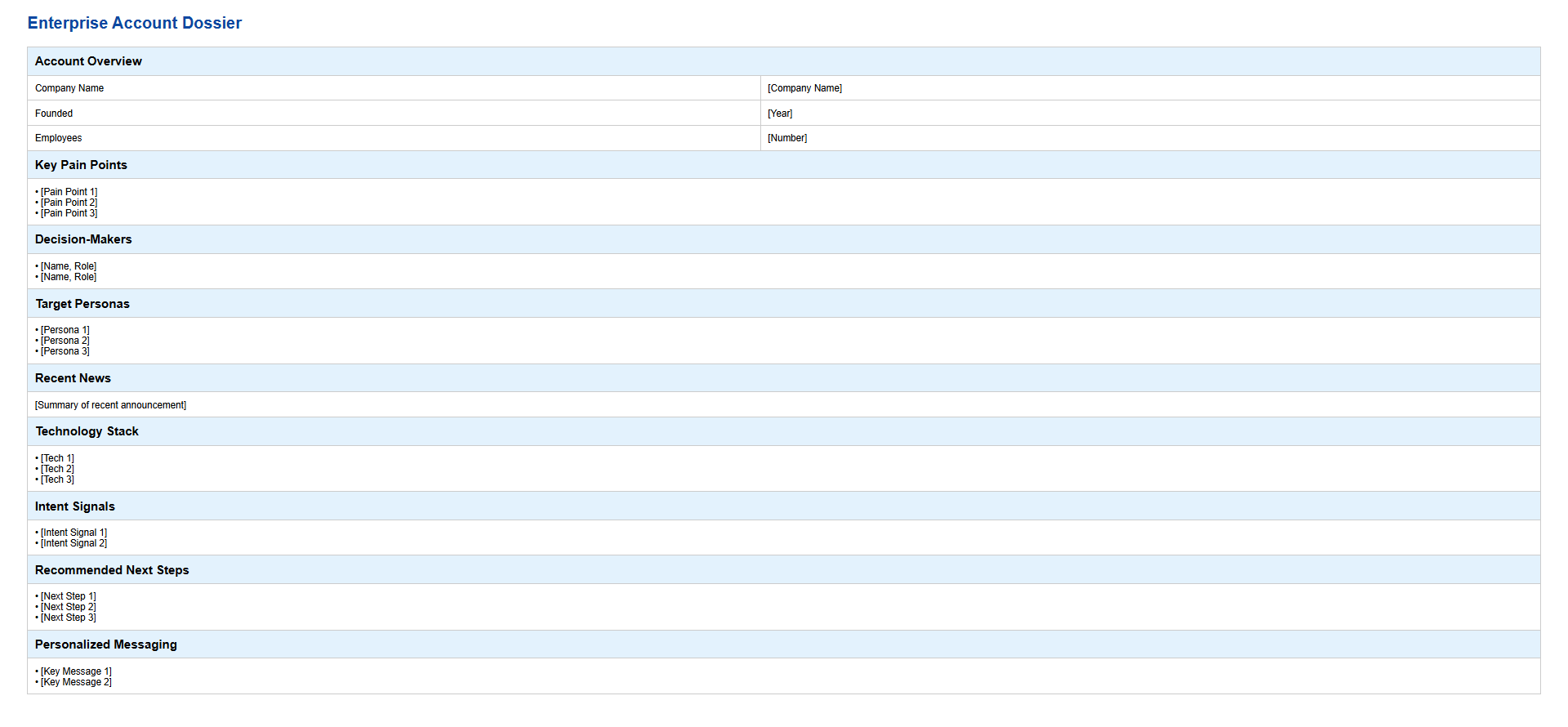
Here’s a similar one for Excel users:

Download it here.
Frame your product or solution in the context of that account’s unique challenges, because generic pitches won’t cut it here. Consider these as foundational ABM strategy examples for strategic pursuits.
For example, if you’re targeting ACME Corp, you should send something like “Here’s how [Your Solution] can help ACME tackle [Specific Challenge] in the next 12 months.”
One-to-one ABM often involves creating content unique to the target account.
This could be a custom demo environment with the prospect’s branding, a personalized whitepaper addressing that company’s use case, or a personalized video from your CEO to their CEO.
Some teams even build microsites or mini landing pages just for that account, complete with the company’s name and logo:

Tools like Demandbase can help you with this type of web personalization:
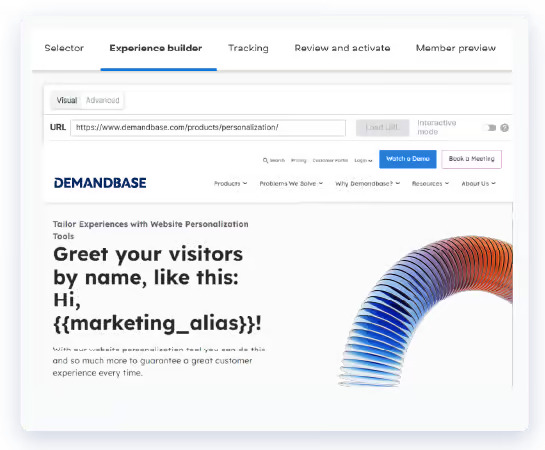
You can literally greet your visitors by their company name and talk directly about their specific problem and how your product/service can fix that.
Utilize every channel at your disposal to reach that account’s stakeholders.
That might include:
The Most Unhighed One-to-one ABM Strategy Example: Forget gifts or events. Intridea (a web product company), which wanted to target Ogilvy, literally set up a billboard with their sales pitch in front of Ogilvy’s office! It remains one of the boldest ABM strategy examples for single-account pursuits.

Often, one-to-one ABM involves executive-to-executive engagement.
Your CEO or VP might reach out to their counterpart at the target account to build rapport.
High-level outreach, like an invitation to a VIP dinner or a personalized congratulatory note on a company milestone, can open doors that typical marketing can’t.
It shows the account that they are so important, your company’s leadership is directly invested in winning their business (and people love to feel important!).
Because only one account is being targeted at a time, marketers really get creative in One-to-one ABM.
The GumGum team, for instance, wanted to target T-Mobile, but instead of throwing out generic ads or sales pitches at them, they figured out that T-Mobile’s CEO loved Batman, and they sent him a Batman-style comic book about T-Mobile:

This one is my favorite ABM strategy example ever.
One-to-one ABM is too extensive. You can’t do it for any random account or in any situation.
Before choosing an account for this strategy, consider this: Target accounts with potential for very large deals or strategic value. These might be enterprise accounts with complex buying committees and long deal cycles. One-to-one is also useful if you’re trying to land your “whale” customers, change the perception of your brand at a specific account, or even protect a major customer from competitors. The investment is big, so you do it where the return will be big.
I mean, not every fish is worth chartering a boat, right?
Note: Sometimes accounts with medium deal values can also be treated with some one-to-one ABM tactics. This is when the account is highly engaged with your brand and also fits your ICP perfectly.
Remember these core principles to ensure a successful One-to-one ABM strategy:
Moving down the pyramid, we have one-to-few ABM, sometimes called “ABM Lite” or cluster-based marketing. This is a segmented approach where you target a small group of accounts (often 5–10) that share similar attributes.
Instead of crafting completely bespoke campaigns for each account, you create campaigns for clusters by utilizing the commonalities among those accounts. It’s a way to achieve some of the personalization benefits of one-to-one interactions, but in a more scalable manner.
Suppose you sell a B2B SaaS solution for enterprise IT teams. You identify a cluster of 10 target accounts, all in the financial services industry and all facing a similar challenge (say, legacy infrastructure management). With one-to-few ABM, you’d build a campaign specifically addressing that cluster’s profile.
For example:
You craft messaging that speaks directly to financial industry IT pain points (e.g. “How banks and financial firms can modernize IT infrastructure securely”). This is one of the clearest ABM strategy examples for verticalized messaging.
This message will resonate with all accounts in that cluster because they share industry regulations and challenges.
You might create a whitepaper or webinar tailored to “IT modernization in finance: 5 trends for 2025,” featuring insights that feel customized, even though multiple companies are the audience. These are pragmatic ABM strategy examples that scale content without losing specificity.
It’s not one company’s logo on the cover, but it’s far from generic. It’s highly relevant to that segment.
Each account in the cluster will feel like the content is speaking to their situation.
You can still personalize within the cluster campaign.
For instance, your email outreach could use the same base content but swap in each company’s name in key places, or reference a relatable industry stat. It’s not the fully bespoke microsite you’d do for 1:1, but you might have a personalized intro in your outreach like “Hi [Name], I know as a [Bank] you’re dealing with X, Y, Z…” – something that shows you understand their context.
One-to-few campaigns often utilize content marketing, targeted ads, and mini-events or roundtables.
For example, you could run LinkedIn ads only to those 10 target accounts (and others like them) promoting the finance IT webinar or a case study, to generate interest.
You might host a private roundtable or virtual event just for companies in that cluster, like you can invite IT leaders from those target banks to a discussion on industry challenges (positioning your company as a facilitator/thought leader).
This kind of semi-exclusive event scales your effort (one event, multiple target accounts) while still feeling special to attendees. Roundtables and narrow webinars are reliable abm strategy examples for Tier 2.
A Real-World Example: An agency called FullFunnel executed a one-to-few ABM campaign for a client (Iridium) by hosting a tailored virtual summit for their target accounts. They segmented Tier 1 and Tier 2 accounts, sent personalized invites via email and SMS, and even followed up with content hubs and workshops post-event. The result was impressive – 2,320 sign-ups, 34 sales-qualified leads, and 5 new customers. All this was from a campaign run by just a 3-person team on a $3,000 budget. This is one of those ABM strategy examples that prove impact without massive spend.

One-to-few is ideal for your Tier 2 accounts. I’m talking about those that are valuable but maybe not “whale” status.
It’s also the go-to approach if you have many target accounts but limited resources; you can’t do 50 one-to-one campaigns, but you could manage 5 clusters of 10 accounts each.
Use one-to-few when you can identify logical groupings among your target accounts: common industry, geography, company size, or business challenge.
For example, if you’re targeting mid-market tech companies and healthcare companies, you’d likely split those into separate clusters since their contexts differ. Each cluster gets a personalized treatment, but you’re not starting from scratch for every single account.
The trick is to find the right balance between scale and personalization.
You want the cluster to be small enough that the content truly resonates, but large enough that you’re gaining efficiency.
Many ABM practitioners aim for clusters of about 5–15 accounts that are enough to move the needle in aggregate, but not so many that your messaging has to become watered down.
According to ABM experts, typically, you might target 5–10 accounts per cluster in a one-to-few program.
Also, make sure:
One-to-many ABM, also called Programmatic ABM, is ABM at scale.
It’s about targeting dozens, hundreds, even thousands of accounts with broad campaigns that rely heavily on automation and technology.
One-to-many blurs the line between classic demand generation and ABM; the difference is that you’re still account-specific. You have a target account list and you measure success by account engagement, not just lead volume, but you’re marketing to the masses of target accounts with lighter personalization.
Imagine you have a list of 500 target accounts that fit your ICP. You likely can’t research each in depth or create custom content for each (that’s what one-to-one is for), but you also don’t want to spam them with generic ads.
So you take a programmatic approach:
You break that big list into segments based on common traits.
For instance, segment by industry, by persona (job role), by company size, or by observed intent signals.
Each segment will get somewhat tailored messaging.
For example, all accounts in the “FinTech, 200-500 employees” bucket see ads or content that address challenges typical of mid-sized FinTech companies. Meanwhile, the “Enterprise IT >5,000 employees” segment gets a different set of messages focusing on big-company IT pain points.
This segmentation is critical. Even at scale, relevance matters. If you just blast the same message to 500 accounts, it’s not really ABM, it’s just broad marketing (In fact, even broad marketing has become personalized now, and random email blasts are frowned upon).
A successful one-to-many ABM still delivers the right message to the right cluster of accounts.
One-to-many relies on tools to execute.
You might use an ABM platform or ad network (6sense, Demandbase, LinkedIn Matched Audiences, etc.) to serve ads only to your target accounts.
You could also use marketing automation to send semi-personalized email drips to contacts from those accounts. Intent data tools can monitor which accounts are showing buying signals like visiting certain websites or searching certain keywords, so you can prioritize them.
It’s not that you can’t do one-to-many without fancy tools. Yes, you can start lean with smaller tools.
In fact, one marketer on Reddit shared his one-to-many ABM strategy example where he handled the program with just HubSpot, LinkedIn Sales Navigator, and well-defined ICP segments:

The key is the strategy (again) and a clearly defined account list. However, as your program grows, tech helps manage scale:
ZenABM, for instance, can help with these JTBDs if your primary ad channel is LinkedIn.
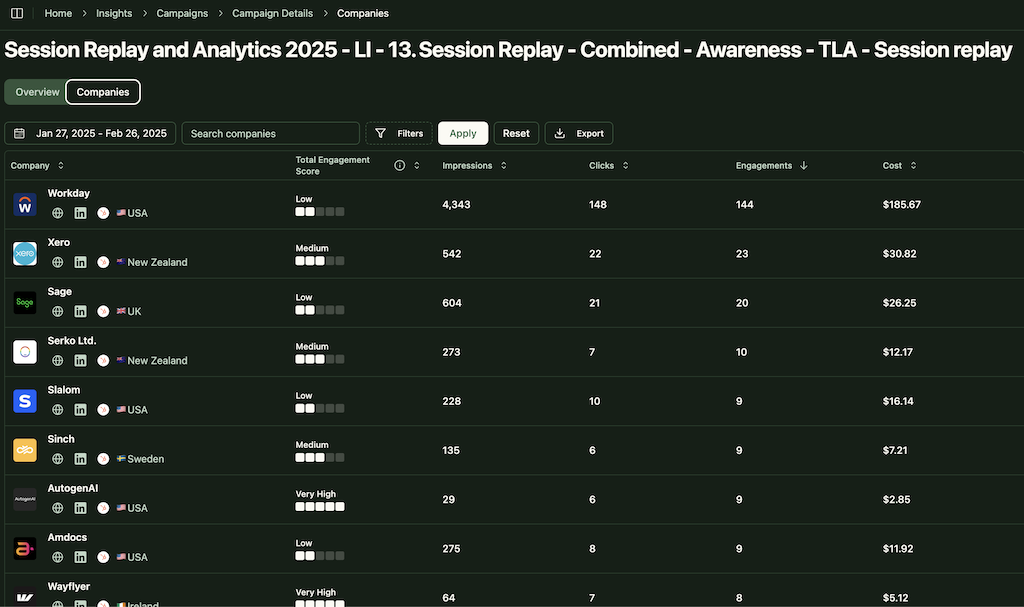
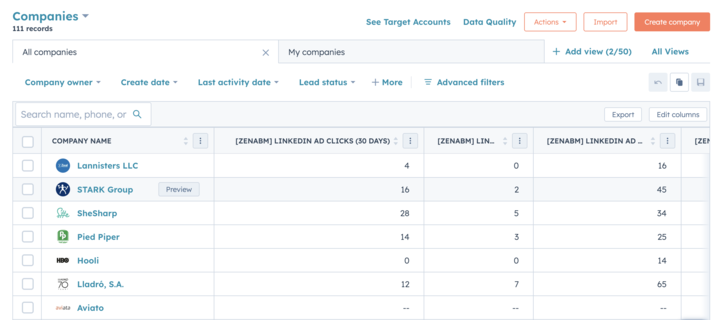
Usually one-to-many takes an “always-on” approach. You’re running digital campaigns that continuously reach your target accounts across channels: display ads, social ads, content syndication, maybe even targeted content on your website, like dynamic web personalization that shows different case studies depending on the visitor’s industry.
The idea is to keep your brand in front of those accounts so when they’re ready to solve a problem, they think of you.
For instance, you might run LinkedIn Sponsored Content that promotes a blog or video highly relevant to a problem your ICP faces. If 500 accounts see it and 50 of them engage meaningfully (clicked, visited your site), those 50 become “engaged accounts”; you can then follow up with more specific outreach. These cadences are dependable ABM strategy examples for surfacing intent.
One-to-many is often the top-of-funnel fishing net for ABM.
You’re trying to identify which accounts in your broad list are actually interested.
For example, your one-to-many LinkedIn ad campaign might get a subset of accounts to click through to your content. Those accounts showing engagement, say, Account A had 5 people click and spend time on your site, can be flagged for a more personal follow-up, like a BDR reaching out or moving them into a one-to-few or one-to-one play.
I have discussed a real-world ABM strategy example based on “Lead with value, then follow up with a personal touch.
One-to-many is your go-to for Tier 3 accounts: good-fit accounts that are worth marketing to, but not worth an individual pursuit yet.
Often, companies starting ABM will use a one-to-many pilot to prove out the approach, especially if their average deal size is on the lower side for a full 1:1 investment.
If your ACV (average deal value) isn’t very high, you can’t justify one-to-one, but you can still do ABM by tightly focusing on, say, the top 500 accounts in your CRM rather than blanketing the whole world.
One-to-many is also useful for broad demand generation with an ABM lens. For example, launching a new product to specific target accounts, or generating awareness in a new vertical by specifically going after accounts in that space with your campaigns. Pilots like these often become internal ABM strategy examples for stakeholder buy-in.
At Userpilot, they ran a one-to-many ABM campaign with intent-based ads, i.e. ads that were based on their tool’s features.
They served these ads to their primary TAL and observed hot accounts, and also which particular ads they were engaging with the most to gauge their intent:
They used ZenABM for this:

Then, based on their intent and ABM stage, they showed them hyper-personalized ads and even BDR outreach after certain engagement levels – so essentially those engaged accounts were treated with 1: few and even 1:1 campaigns once they got qualified for it.
Their campaign structure:
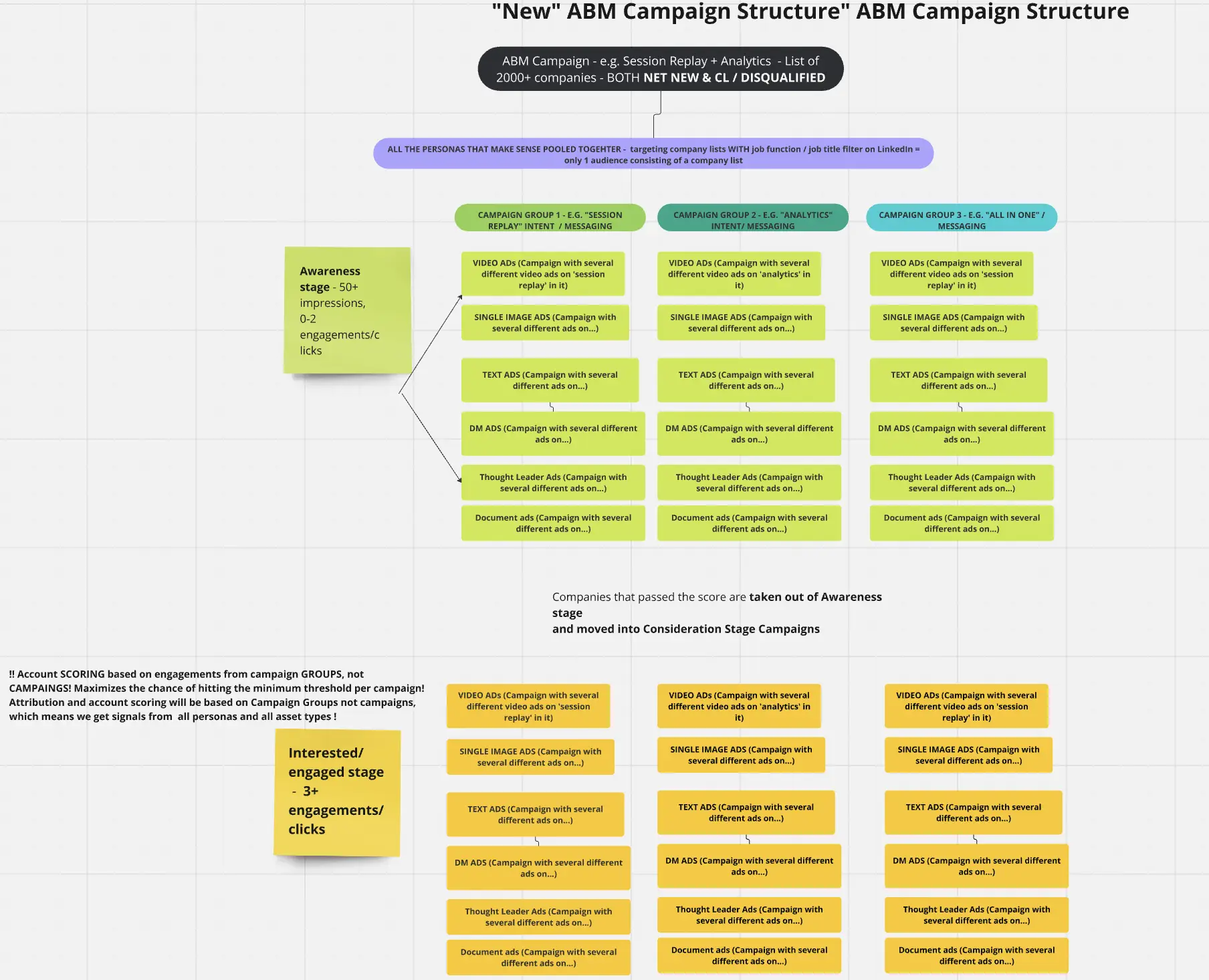
I’d say this is the best way of running one-to-many ABM without making it a broad demand-gen motion. You start with a broad campaign but give personalized treatment to engaged accounts instead of being stuck in the tiers/strategy that you started with.
In fact, ABM expert Rhiannon Blackwell (ABM Leader at PwC) gave similar advice in a guide by Momentum ITSMA.
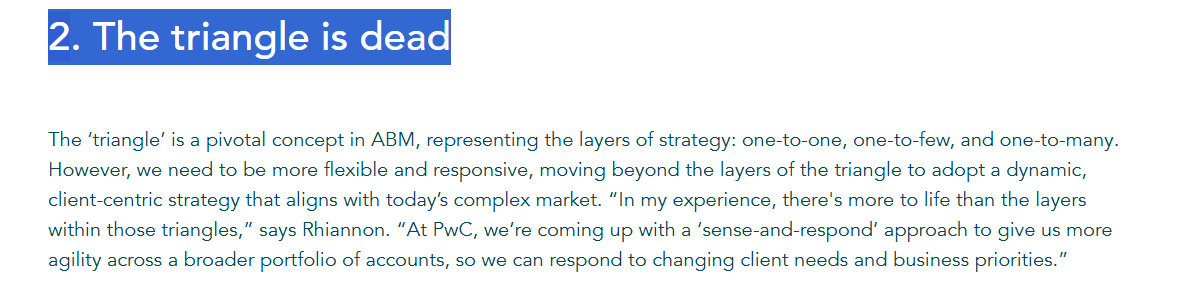
She said that this triangle is almost dead (yeah, that’s a kind of hyperbole for sure):
Here’s a more balanced version of her claim: “We need to be more flexible and responsive, moving beyond the layers of the triangle to adopt a dynamic, client-centric strategy that aligns with today’s complex market.”
Bottom Line: One-to-many ABM identifies which accounts are showing intent so you can double down on them with one-to-few and one-to-one campaigns.
Here are some tips you must remember to ace your one-to-many ABM efforts:
Let me show you how ZenABM can help you ace ABM, no matter the tier.
ZenABM matches the companies engaging with your ad campaigns to the ones in your CRM deals to calculate the impact of ads on pipeline and revenue.
Then it lays that all out in plug-and-play dashboards showing metrics like ROAS, pipeline per $ spent, etc.

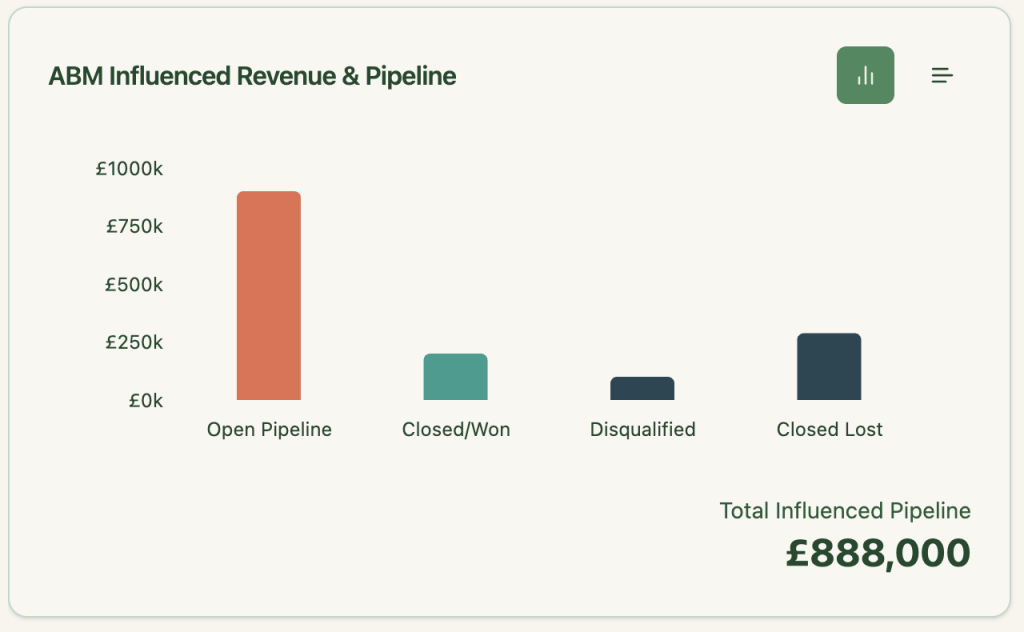
This helps identify which campaigns deliver real returns and reallocate the budget accordingly.
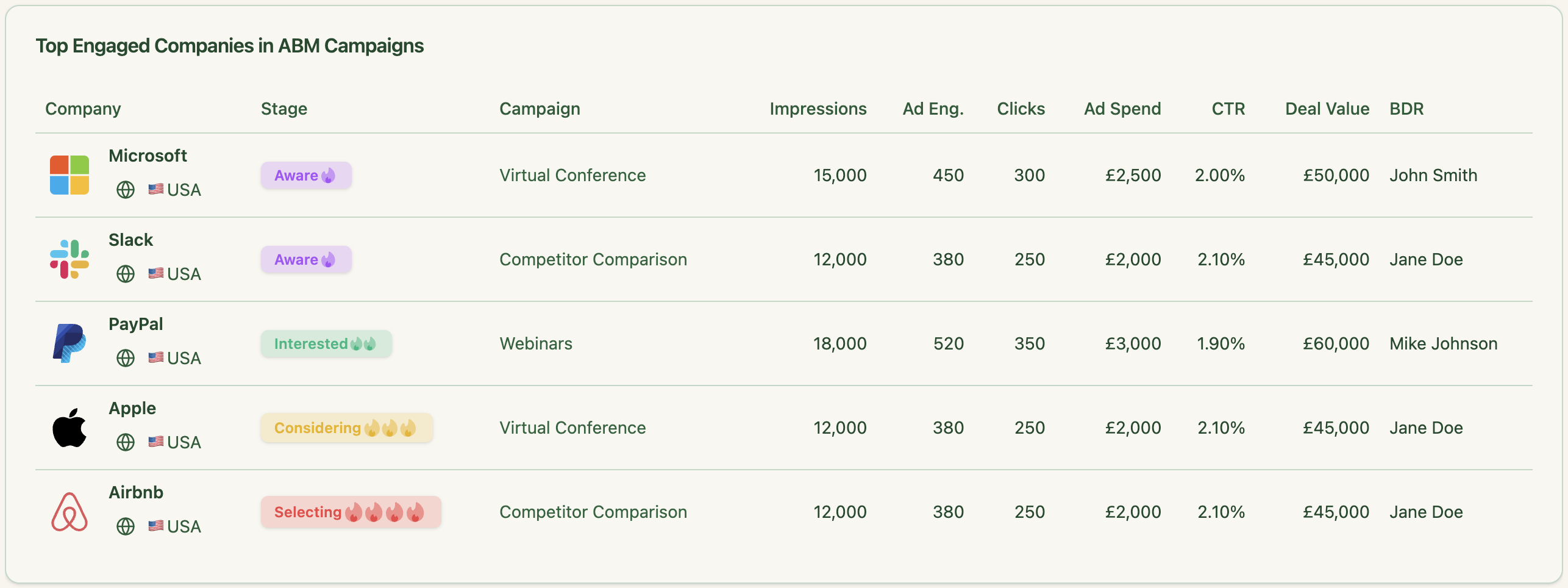
ZenABM pulls verified data from the LinkedIn Ads API, giving impressions, clicks, CTR, spend and engagement for each campaign and group at the company level.
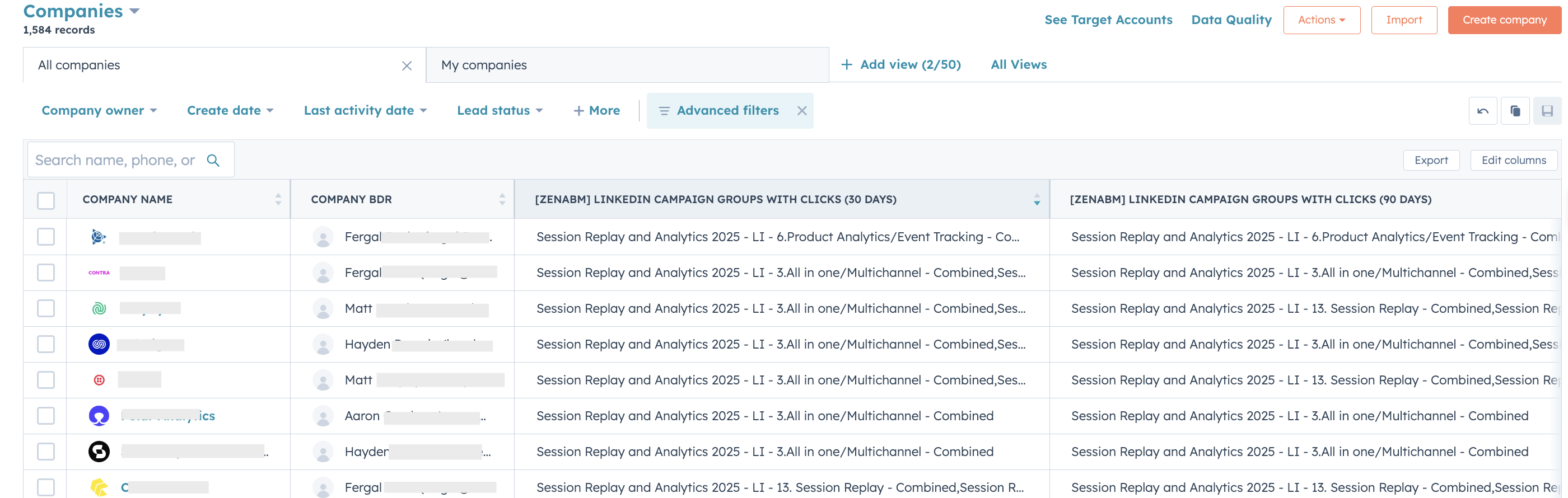
You can label each campaign with its intent, such as a feature or a pain point. ZenABM then groups companies by the themes to which they respond.
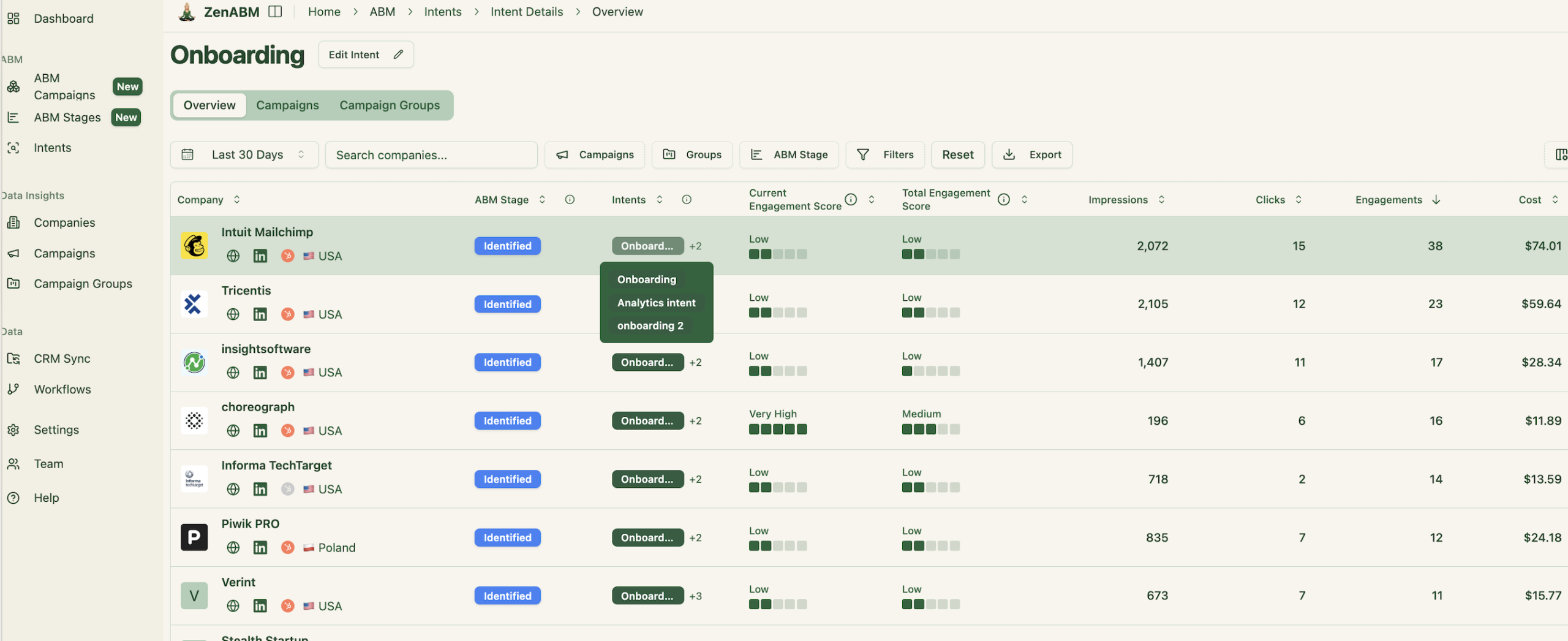
This helps you know which feature/quality of your business is the most relevant to your audience so you can double down on it. Plus, you also get to know each company’s buying intent.
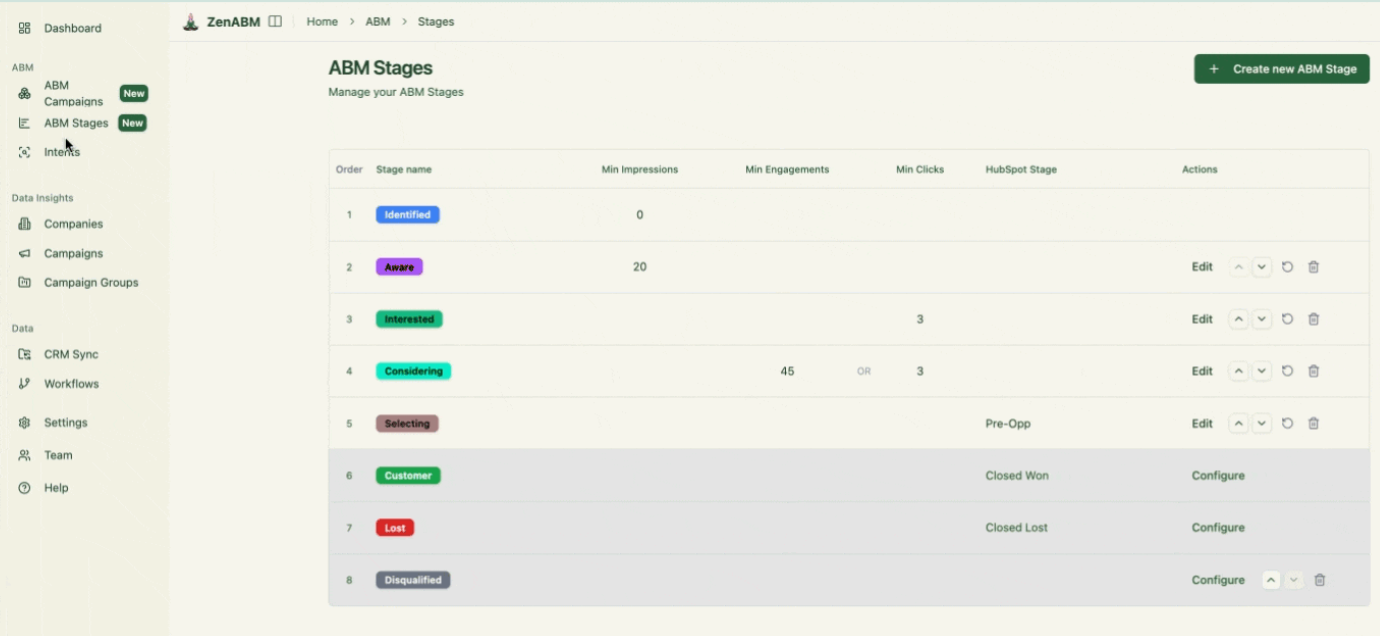
The platform places accounts into stages like Awareness and Interest using ad and CRM signals. Thresholds are editable.
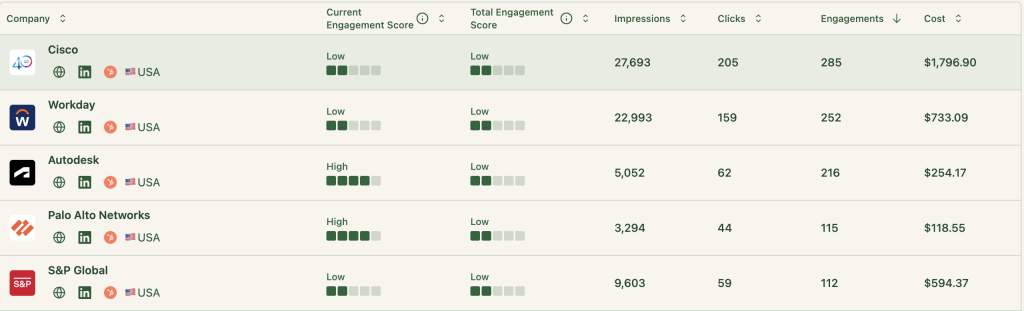
Two scores calculated by ZenABM help your sales prioritise accounts:
ZenABM writes impressions, clicks, scores, stages and intent back to Salesforce or HubSpot and assigns BDRs once an account meets your criteria.
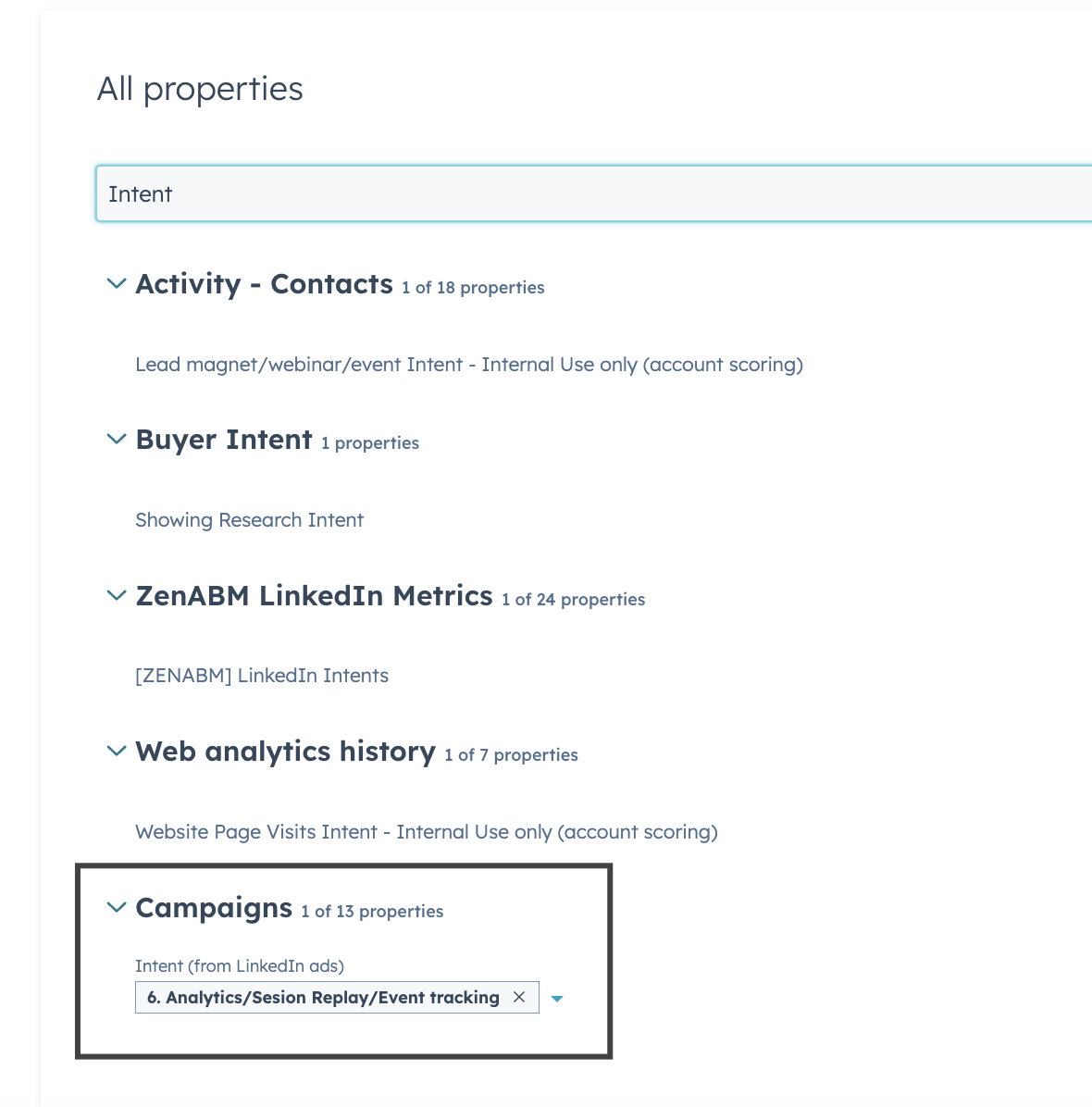
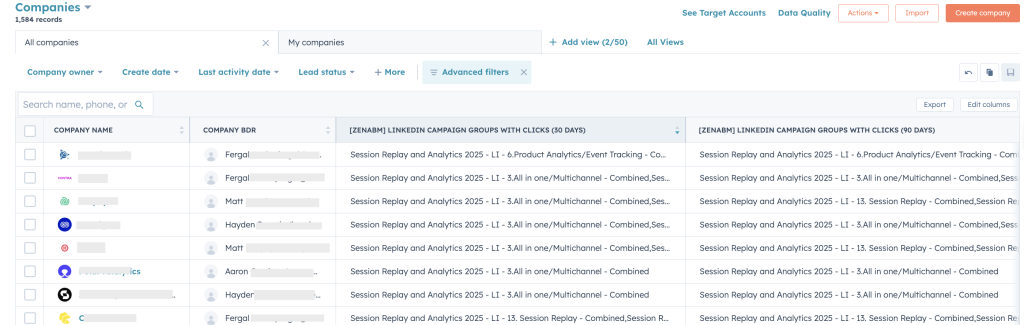
This ensures your BDRs act immediately when accounts become ‘hot’ and also incorporate the accounts’ buying into their outreach messaging. That’s critical for personalization.
In this article, we dove deep into concrete ABM strategy examples, exploring one-to-one, one-to-few, and one-to-many ABM approaches at an expert level, and I hope it was helpful! Save this page and reuse the ABM strategy examples as prompts for your next campaign planning session.
And yeah, if you want to try ZenABM, you can get a free trial or book a demo here.